Ask ChatGPT

 Decoder with Nilay Patel
12 Nov 2026 · 42m · 12 chapters
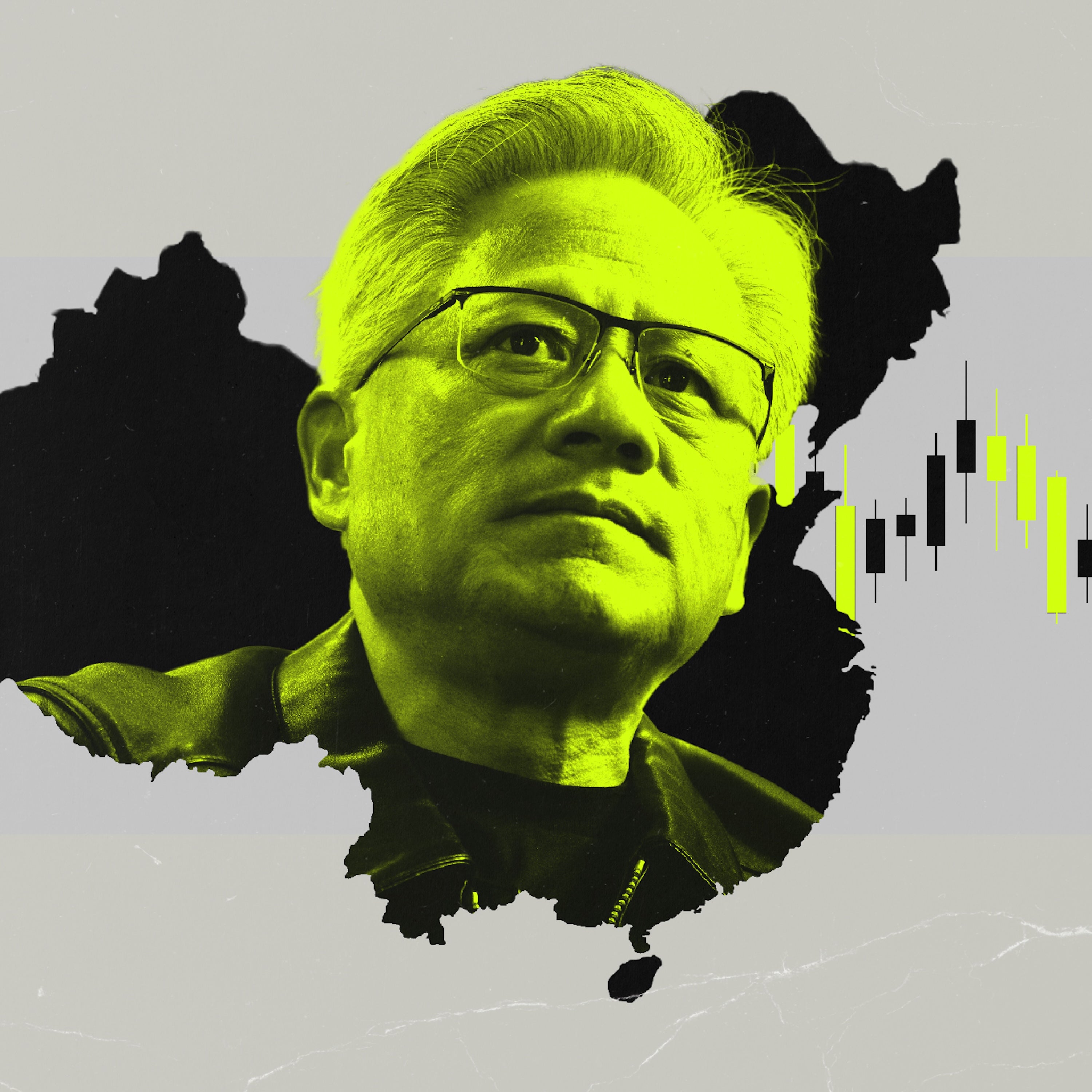
NVIDIA CEO Jensen Huang’s resignation amid allegations of an affair involving a suspected Chinese spy (Alice Huang) tied to Megaspeed, and what China might have sought—chips, access, or influence over U.S. AI export controls. The episode also frames the broader U.S.-China AI conflict: export controls vs. expanded sales, China’s push for domestic chips and AI diffusion, and potential retaliation via chipmaking equipment and rare-earth controls.
Kyle Chan, foreign policy fellow at the Brookings Institution’s John L. Thornton China Center. Background: China-focused policy and national security analysis.
Megaspeed (a Southeast Asia data-center provider) may be a conduit for Chinese AI firms to access cutting-edge NVIDIA GPUs (e.g., Blackwell) despite export controls. The most plausible “gain” is influence—China may want someone Trump/Jensen can call to advocate for loosening expert controls. U.S. intelligence flagged the issue earlier; the lack of action is “worrying.” NVIDIA must cooperate with Congress; a congressional investigation is likely.
Blackwell chips; CUDA ecosystem; DeepSeek R1 (fine-tuning despite alleged chip constraints); China’s Huawei AI chips; 5G analogy; alleged “spy warnings” to AI labs; poaching engineers from TSMC/South Korea.
Written by AI. May contain mistakes.
Exploring the implications of Jensen Huang's resignation and the China angle.
“I'm Neil Ippetel, editor-in-chief of The Verge, and Decoder is my show about big ideas and other problems.”
Kyle Chan discusses China's motivations regarding NVIDIA and AI.
“But keep in mind, when Kyle and I were talking, we still didn't know what would happen with Jensen.”
Analyzing the relationship between Alice Wong, Megaspeed, and NVIDIA's export controls.
“The reason I wanted to start there is the incentives or the motivations to get close to Jensen Wong are very murky to me.”
Discussing NVIDIA's challenges with governance and potential congressional investigations.
“Because there's a whole bunch of shareholder lawsuits to come.”
Explore the implications of NVIDIA's cooperation with Congress in AI investigations.
“How do you think that's going to play out?”
Delve into Jensen Huang's views on chip export controls and their implications.
“If you ever looked at Jensen's approach to chip export controls, he's been very fiery that chip export controls are stupid.”
Understand China's approach to AI and its focus on practical applications.
“You mentioned maybe that their chips will get good enough.”
Examine the competition between the US and China in AI development.
“is a bunch of guys who think they're going to build digital Jesus.”
Explore how Jensen Huang's leadership affects NVIDIA's AI advancements.
“Because in a pure market environment, I think I know how this goes.”
An in-depth look at the implications of Chinese spying in the AI sector.
“I've heard him say, this is just software.”
Explore the complexities of China's political and industrial systems compared to the U.S.
“That's where it starts to get more difficult to parse.”
Insights into potential congressional actions and their implications for the future.
“I think the biggest thing is a congressional investigation.”

Get the gist, explore an idea or ask about something said.
 Claude
On Decoder with Nilay Patel, what are the key points of this episode?
Searching your listeningAutomatic transcript. May contain errors.
0:00Nilay Patel: Support for the show comes from CrowdStrike. It's not a huge stretch to say that AI is the next major computing platform. Every platform shift changes the way we build software, and it changes security, too. CrowdStrike is defining cybersecurity in the AI era with AI Detection and Response, or AIDR, a solution for seeing, monitoring, and securing AI across the enterprise. Learn more about how leading companies are turning to CrowdStrike to secure AI and secure their business. at crowdstrike.com slash decoder. Company spending is complex. Managing it should be simple. This is Amex Corporate, a single platform connecting cards, expenses, and payments to streamline the way you work.
0:46Nilay Patel: Flexible controls for when priorities shift, support around the clock, all backed by American Express, so you can stay focused on what matters most. Built to simplify, designed to scale. This is Amex Corporate. Get started at go.amex slash Amex Corporate. Terms apply.
1:09Nilay Patel: Hi, I'm Guy Raz. On How I Built This, I sit down with the people behind some of the world's most recognizable brands, like NVIDIA and Starbucks and Raising Canes, to find out how they actually built them. Think of it as a free MBA told through deeply personal stories about taking risks, making mistakes, and building something great. I'm Guy Raz. Listen to and follow How I Built This wherever you get your podcasts.
1:44Nilay Patel: Hello and welcome to Decoder. I'm Neil Ippetel, editor-in-chief of The Verge, and Decoder is my show about big ideas and other problems. Today, we're talking about the Jensen Wong scandal at NVIDIA, which is developing so quickly that we had to do an emergency update of this intro minutes before publishing this episode. Jensen just resigned from his position as CEO of NVIDIA as news of his affairs, including with an alleged Chinese spy, threatened to engulf the company. We'll obviously have more on that story as things develop, and we learn how NVIDIA will restructure itself after Jensen. He had something like 60 direct reports, after all, and the entire AI financial ecosystem flows through his company.
2:18Nilay Patel: This is pure decoder pain. But just two days ago, I talked to Kyle Chan, a foreign policy fellow at the Brookings Institution's John L. Thornton China Center, about the real heart of the scandal. What would China even seek to accomplish by having a spy so close to Jensen? And what does the real state of the U.S.-China AI conflict look like, particularly from the Chinese point of view? Kyle's answers about chips and how China looks at the so-called AI race were particularly illuminating. But maybe even more interesting was his observation that Jensen Wang's relationship with Trump was the most important thing of all.
2:49Nilay Patel: Because maybe what China most stands to gain is someone to whisper in the right ears. We're going to just dive right into it. But keep in mind, when Kyle and I were talking, we still didn't know what would happen with Jensen. OK, Kyle Chan on NVIDIA, China, and the future of AI export controls. Here we go. Kyle Chan, you are a fellow at the John L. Thornton China Center at the Brookings Institution. Welcome to Decoder. Great to be here. What on earth could we be talking about as it relates to your expertise about China today? I have a lot to ask you about NVIDIA, about our relationship to China as a country, as an economy, about national security.
3:23Nilay Patel: Let's start at the very beginning. From all the reporting we have today, it seems like the United States government has been very worried about Alice Wong and Megaspeed, the alleged Chinese spy at the center of the swirling scandal around Jensen Wong, the CEO of NVIDIA. What do we know about Alice Wong and Megaspeed? So, so far, we have to be sort of careful about what we know and what we don't know. So far, there are allegations that the U.S. intelligence community believes that Alice Wong may be an asset of the Chinese intelligence services. and Megaspeed itself is a customer of NVIDIA's and they build a data center like in Malaysia.
4:09And they also seem to potentially have ties with Chinese companies and could, and this is where we're getting into the, you know, what we do know and what we don't know, but could potentially be a conduit for Chinese AI companies accessing cutting edge NVIDIA chips like Blackwell's.
4:27Nilay Patel: I want to rewind way back. The notion that the Chinese AI industry wants NVIDIA chips has been floating around for years. And the idea that the Chinese AI industry would somehow develop a parallel set of technology or superior set of technology because of the constraint of not having NVIDIA chips has percolated into the discourse several times. I'm particularly thinking about DeepSeek, right? DeepSeek launches R1. It outperforms our models in some ways. We think they didn't have access to the chips. There's some accusations they had access to the chips. It turns out they did a bunch of fine-tuning on the chips they did have.
5:04Nilay Patel: What is that relationship like? Do they need the highest-end NVIDIA chips? Is it true that they're actually developing parallel technologies that might be superior on the chips they can have? Just set that stage. A lot of the details are murky, and they're probably murky for a reason. But up until now, we see Chinese AI companies that were dependent very heavily on NVIDIA chips in order to train and run their models for a long time. And in fact, they became some of the biggest contributors to the CUDA ecosystem, sort of NVIDIA's software ecosystem platform. And they got very good at that. But at the same time, with U.S.
5:44export controls and greater technology restrictions on access to cutting-edge GPUs, China increasingly pushed these AI companies to switch away from NVIDIA to Huawei and other domestic AI chip makers. And the idea there is to develop a parallel domestic AI chip supply chain that is good enough, if not on par with NVIDIA's latest chips, and crucially, resilient to policy actions coming out of Washington. So that is the story up until this point. And the question is now, what is that trajectory for the Chinese GPU or AI chip development? Yeah.
6:28Nilay Patel: The reason I wanted to start there is the incentives or the motivations to get close to Jensen Wong are very murky to me. The CEO of NVIDIA, I understand that everyone thinks he's the character. He's actually in the software designing the next generation of mini GPUs. But he's just traveling the world, giving policy speeches. is if you want to build a parallel GPU ecosystem, you're trying to get close to the designers and the engineers, right? What would be the goal of trying to get close to Jensen Wong? Yeah, I see what your question is getting at. So if you wanted like the design specs for the latest NVIDIA GPUs, I don't know if you would ask Jensen directly.
7:11I think you might want to go to his technical staff, right?
7:13Nilay Patel: He does have like 60 direct reports. The decoder is often a show about work charts and that one has been on top of my list for a long time. But we'll set that aside for now. Keep going. Right. So I think instead what it's really about is potentially two things. One is trying to understand, maybe glean information about the U.S. policymaking process, right? Jensen Huang is very close to Trump. They talk a lot. Trump can apparently just call Jensen on his cell phone at any moment. In the middle of a conference. We've seen the video. Yep. And then on the other side, and maybe this is even the bigger issue, perhaps it's the biggest concern of all, is the concern that the direction of women could run the other way, which is that somehow through Jensen, China might be able to influence U.S.
8:05policymaking, especially on expert controls. That is the big worry, I think, from a lot of people in Washington.
8:11Nilay Patel: One of the other underlying concerns here that I'm just trying to parse out is that Alice Wong, the alleged Chinese spy, is an executive at a company called Megaspeed. And through Megaspeed, NVIDIA may have already been circumventing export controls. It seems like if you're already solving the problem, maybe you should just leave it alone. How does that dynamic play out? That's right. So a lot of the story is strange. even seen in sort of the most cynical terms. It doesn't quite add up. So I think there could be several different possibilities. One is that this is actually not some like concerted strategy from Beijing to try to obtain chips or information or influence, but this is potentially Beijing not quite understanding the full situation and wanting to kind of co-op this Alice Huang person into, at least trying to understand from her standpoint, what is happening.
9:13Because I think you're right, already you have a very strong relationship between NVIDIA and Megaspeed. You also already have, you know, this is on the influence side, you already have Jensen Huang advocating for his own sort of commercial interests for a loosening of export controls on his own ships to China. So you don't really need Beijing to kind of like push on that gas pedal. That's sort of already happening. So yeah, there's some things that don't quite make sense if you're thinking about it from those standpoints. But if you're thinking about it from a Beijing wants visibility, perhaps, maybe that is another plausible explanation.
9:53Nilay Patel: Beijing just wants someone who Trump calls on the phone to advocate for their viewpoints. Like, I see all of that, but what are we getting out of it? If the goal is NVIDIA chips, it feels like that is already assured. If the goal is NVIDIA engineering plans, that feels like a question mark. If the goal is influence over the Trump administration, I feel like they could have just bought cryptocurrency. That's right. There's like a big swirl of like what is actually happening here. Maybe your point that Beijing just needed more visibility because it is a swirl is the motivating factor. The question that leads me to is that, you know, the New York Times reports, U.S.
10:29Nilay Patel: intelligence agencies first flagged these issues a year ago to the Trump administration. There was a memo from Marco Rubio. The reporting is that he oversaw the memo, which is as much plausible deniability as anybody. He oversaw it. He was aware that there was a memo. A year ago, the United States National Security Apparatus is worried about Alice Wong at Megaspeed, the relationship with Jensen, and nothing occurred. What do you make of that? That is one of the most worrying aspects of all this. Regardless of what the details are and what is known publicly versus what our intelligence community knows, this is something that should be investigated.
11:09This is obviously a major national security issue. And this is something where you don't want someone meddling with this process. you want to do a full investigation, get to the bottom of what's happening. And I think what we're seeing from some of the reporting is that this has been known. And in fact, if anything, there may have been efforts to try to stop this investigation or distort it in some way. So I think that is very troubling from that sort of internal within the U.S. government perspective.
11:38Nilay Patel: There's a lot going on with NVIDIA in that part of the story, right? Where NVIDIA's own spokespeople are saying, there's nothing going on here. This is a normal relationship on the record to many publications. A week later, Jensen issues his apology letter saying there was a relationship. That's not great for John Rizzo, NVIDIA's comms person. Tim Teeter, NVIDIA's general counsel, is out there saying everything is above board. Now we know not everything is above board. What do you make of NVIDIA's corporate governance here? Because there's a whole bunch of shareholder lawsuits to come. There's one filed as of today.
12:12Nilay Patel: I can only imagine there are more to come. NVIDIA has to tread very carefully here because what you don't want is exactly what's sort of already happening, which is to start to deny or at least start to dismiss some of these issues and then turn around and have to say, actually, there might be something there. And I think this is especially important now as there are growing calls for a congressional investigation. So this is going to be separate perhaps from sort of within the executive branch where, again, I think we have reasons to worry about conflicts of interest, people not wanting to sort of do this all the way.
12:52But if there's a full-blown congressional investigation, that might reveal some things that if you are NVIDIA, you want to get out in front of rather than have to sort of backpedal later on and sort of explain yourself.
13:03Nilay Patel: Part of the back and forth here with the government's concern about Alice Wong and Megaspeed is that the Commerce Department spent months looking at the company and then Teeter, the general counsel of NVIDIA, emailed them, invoked a direct relationship with the undersecretary. That got the case kicked to the DOJ where everything stopped. Trump yesterday said the FBI is investigating. That's obviously connected to the DOJ. There's just a universe where the Trump administration is trying to make this go away. Right. Nvidia can pressure the Trump administration to make this go away. That reeks of corruption, obviously.
13:37And then you have a very empowered class of Democrats coming into Congress with polling that suggested corruption was one of the top issues in this last election.
13:46Nilay Patel: I don't see any outcome except those Democrats, an empowered bunch of investigators, an empowered bunch of committee chairs coming after Nvidia as hard as they can. How should the company think about that? Should they put them in front of Congress every day for the next year? How do you think that's going to play out? At the most fundamental level, they need to cooperate and comply with calls from Congress to carry out this full investigation. Because up until now, I think the reason why this has all been so murky, I think part of the reason why this has kind of been a stop and go, even though those of us in the sort of China AI space have been hearing about this for a while, right?
14:27So like companies like Megaspeed, their role in all this, even people like Alice Wong have been flagged much earlier than this. And the fact that I think that this is coming out now, but that the investigation was kind of like stopped and started within the Trump administration, that is a big red flag. So I think ultimately, from NVIDIA's standpoint, they're going to have to come clean with whatever Congress now requests. And I think there's going to be a lot of hard questions from Congress, as there should be, that have been building up for some time now.
15:23Nilay Patel: creates new cybersecurity vulnerabilities. That's why CrowdStrike built AI Detection and Response, or AIDR. AIDR helps organizations discover where AI is being used, monitors AI activity at runtime, and helps teams detect, investigate, and respond to threats involving AI systems. As companies adopt AI, security has to be built in from the start. More than 70 % of the Fortune 100 trust CrowdStrike to protect their businesses. Now CrowdStrike is helping secure the AI era. You can learn more about AI detection and response at CrowdStrike.com slash decoder.
16:07Nilay Patel: Support for the show comes from ServiceNow. AI was supposed to handle the parts of the job you hate. Instead, it just describes them, suggests what to do about them, and then leaves you to do it. That's not help. That's homework. ServiceNow's AI specialists are different. They're not a tool. Think of them as digital teammates who actually do the work from start to finish. Cases get resolved, requests get processed, loops get closed, and most importantly, no extra work for you. Because when you can truly delegate to AI, you can get back to the work only you can do. The work that requires a person with ideas and judgment.
16:47Nilay Patel: And you know, a pulse. To learn how to put AI to work for people, visit servicenow.com.
16:57Nilay Patel: Support for the show comes from Framer. Picture this, you launch a website and your whole team's celebrating. Then the support tickets start to roll in and damper the mood. That's when you could use a website platform that lets teams build, ship, and improve their sites faster than ever while getting every detail right. For that, you could use Framer. It's a complete website platform, not just a builder, so teams can launch and keep improving their sites in one place. Framer lets you prompt, inspect, edit, and publish in one place at a whole new pace. On Framer, AI agents and humans work in tandem.
17:31Nilay Patel: Agents bring speed and scale, while people bring taste, judgment, and control. And that all takes place in the same workspace where the real site is designed, managed, reviewed, and published. Framer is an enterprise-level solution that the world's leading brands like Perplexity and Miro rely on to build their websites. Learn how you can get more out of your site from a Framer specialist or get started building for free today at framer.com slash decoder for 30 % off a Framer Pro annual plan. That's framer.com slash decoder. Rules and restrictions may apply.
18:14Nilay Patel: If you ever looked at Jensen's approach to chip export controls, he's been very fiery that chip export controls are stupid. And you mentioned earlier, that's in his business interest, right? It is better for the Chinese AI industry to be dependent on CUDA and dependent on NVIDIA chips. Because then if we do get into some conflict, maybe you can restrict that access and you will set them back, right? Like there's some swirl of argument that he makes that says it's in the United States national security interest to ship as many NVIDIA GPUs to China as you can. Then there's a lot of China hawks who are like, actually, you need to restrain them, keep them years behind.
18:51Nilay Patel: They will not catch up to our bleeding edge technology. Jensen, you just keep us ahead. It feels like out of all of this, the China hawks are going to they're going to start winning more fights than they're losing. Right. The Chinese government is actively trying to impede our efforts or actively trying to influence our government. And how should people think about that? Like, what framework should we use to evaluate that swirl of differing opinions, especially now that there's a catalyst for some kind of change? I think that's the right way to kind of frame up this whole debate. You have, on the one hand, folks who see the U.S.-China AI competition as a critical strategic competition, and access to compute is one of the key levers there.
19:29And thus, U.S. export controls, not only as they are now, but tightening them further, will be critical to maintaining the U.S. edge in the most powerful technology of our lives. Then there are other people who are on the OPSA camp who advocate for greater exports of the U.S. AI tech stack writ large, including NVIDIA chips and including to China. And up until now, that camp has been led by people like Howard Lutnik, Jensen Huang, and Trump himself. And I think what's interesting is the balance of power in terms of whose argument gets more weight has been shifting and will shift in light of this recent controversy.
20:04So here now, those who have been advocating for more exports and fewer export controls, some of their arguments have been tainted by this process, potentially, regardless of where the investigation goes. And then there's a final variable, actually, in all this, which is China itself. And that's something that matters a lot in this discussion, because in the background, China is doing two things. One, they're trying to build their own chips, right? And they're sort of all in on building a resilient semiconductor supply chain with their own, say, Huawei AI chips that their own AI companies can use.
20:34They will never really catch up. It looks highly unlikely, but they could develop good enough chips to replace the NVIDIA ones that they have been dependent on for so long. And the second big factor from China is retaliation. And this is one thing that I'm watching very closely, which is if these greater export controls are placed by the US on not just chips to China, but on chip-making equipment, the tools required to make the semiconductors themselves. Will China use its own export controls, such as on rare earths, to hit back?
21:06Nilay Patel: Right. And this is in the context of an ongoing trade and tariff war that has rocked the United States economy. In many ways, the first thing that Democrats should do when they enter the next Congress is pass a law getting rid of all the Trump tariffs, right? They are brought into Congress to fix affordability and the tariffs are an affordability problem. And now we're going to rush into a trade war with China because we might ask the Dutch government to restrict ASML chipmaking machines. Right. And that seems very fraught, right, to say, actually, we need to enter into an even more heated AI war with China that might result in the Chinese government placing export controls on the goods that you already find unaffordable.
21:49Nilay Patel: Do you think that there's like the political will to go through this whole exercise, or is it just to punish NVIDIA and Jensen Wong? At this point, honestly, I think in some ways this is happening against the backdrop of other issues that are probably more top of mind for both voters and for incoming legislators in the Capitol. Things like cost of living, as you point out, tariffs, trying to investigate the Hotharf administration more broadly for corruption and other issues. Somewhere in there is also the debate around data centers and AI itself. But there's another world where if there are issues that come up, I mean, that could be potentially disruptive, not just for NVIDIA, not just for the US-China relationship, but for the AI boom in the US overall.
22:35Nilay Patel: Tell me more about China itself. You mentioned maybe that their chips will get good enough. I think there's an argument that the frontier models we have today are actually good enough to disrupt the economy, right? They're certainly good enough to disrupt the field of mathematics. You could stop training new models and just let the technology diffuse, and you would still disrupt huge swaths of the economy today. Like, we're nowhere close to that actually happening. I think the AI lab should prove that they can do it with the technology they have today. That's for another time. but China doesn't need to compete at the frontier to gain the productivity advantages, to gain the industrial advantages.
23:15Nilay Patel: The example I keep using is 5G. I was told for a decade that we had to win the race to 5G, otherwise China would do something and no one would ever tell me what the something was. What is the something with AI that China will defeat us at that has made this such a critical geopolitical chess match? And is there a point where it will just be good enough for them to achieve the something? The funny thing is China doesn't see this AI race as being so much about the frontier per se. They're really much more focused on defusing the technology. And they think they can win, quote unquote, win the AI race by just having AI used much more broadly, integrated throughout the economy, especially in areas like manufacturing, where they are already sort of like the behemoth.
24:01And I think when they see the sort of discussion around like getting to AGI, certainly from the government standpoint in Beijing, like that to them looks kind of like a bubble, a waste of money. Why are you building sort of all that compute for that? So I think what's interesting to see is the strategy as they've been playing it out is one where they're trying to not fall too far behind the US, but really focus a lot more on trying to get, especially these open source models out there across the Chinese economy and globally as well. And to that extent, on that metric, they seem to be doing pretty well.
24:40Nilay Patel: That to me always has seemed like the real fight, right? Anthropic and OpenAI are furious that the Chinese companies are constantly distilling their models. They're trying to build some technology to keep them from stop distilling their models. But if you believe in the promise of AI and what it can do to the economy, your emphasis should be on diffusing good enough models, not AGI. Whereas our emphasis, due to the way our market works, is a bunch of guys who think they're going to build digital Jesus. Like, whatever is going to happen, that's the thing they want. And Dario Madej has to pretend that he cares about Salesforce, but we know what his real priority is.
25:18Nilay Patel: How do the United States and China compete in that dynamic, where you have one very managed economy that has set a much more near-term and potentially achievable goal. And then, you know, our market system, where the incentives of the leading market players have nothing to do with the economic incentives of the rest of us. There's even a sort of ideological foundation to all of this, because the vision of AGI is one that is like so deeply embedded right now in the American AI community and sort of Silicon Valley culture, that I think there's a risk of potential disconnect, not just between the U.S.
25:55and China on this issue, but within the U.S., between those who are in the labs, like Anthropic, and those who are outside, who are like, why are we building these giant metal boxes in our backyards? We don't really see the point of this. So there's already that divergence there. And I think part of it is This longstanding obsession in the American sort of AI imagination with getting to the machine god, essentially.
26:24Nilay Patel: Bringing that all back to the context of NVIDIA, Jensen Wang, Alice Wang, Megaspeed. Megaspeed is a data center provider in Southeast Asia. That's theoretically their business. They're building data centers. They're buying these chips. Shouldn't market forces just end this, right? Like the United States AI companies want to build data centers. They will pay whatever rates because they have an ideological purpose that is disconnected from capitalism, potentially. And, you know, the Chinese government is just trying to diffuse AI into manufacturing, and the United States government would like to hold them back.
26:58Nilay Patel: Shouldn't market forces just mean that you sell the chips to the highest bidder and the highest bidder will almost always be an American AI company? That's an interesting question because there is ultimately market demand in China still for these NVIDIA chips. And there is a divergence here between the companies in China who still want NVIDIA chips, who still want access to them, and the government who is like, no, no, no. Why don't you try Chinese chips? Why don't you help us with our Chinese domestic chip development? There's that divergence there. And I think what's interesting is players like Megaspeed sort of in between could potentially do things like not just allow Chinese AI companies, again, potentially to get access to NVIDIA chips.
27:43But then the argument some people are making is that those are chips that could have gone to the U.S. AI companies and hyperscalers who are sort of desperate. That is an argument that's out there. But fundamentally, yeah, I don't know how much of this is driven by those sheer commercial interests alone or, again, by some of these policy or ideological divides. Or by the influence of an alleged spy.
28:09Nilay Patel: Right. Exactly. Because in a pure market environment, I think I know how this goes. But then you obviously have the complicated geopolitical dynamics. And then you have this corruption element where both governments are attempting to influence one company at the center of the storm. If you could draw the network diagram of the entire U.S. AI ecosystem, NVIDIA would be at the center of that. And if you could draw the diagram of the entire NVIDIA ecosystem, a single man is standing at the heart of all of that. And the question becomes, if he were no longer the CEO of NVIDIA, how much impact would that have on NVIDIA's ability to make progress on its own AI chips?
28:52And what impact would that have on the rest of the US AI industry? Like one possibility, for example, is that there is a slowdown in NVIDIA's ability to crank out like next generation after next generation of better and better chips. and that could impact US overall compute build out. That is one possibility. Another possibility though, is that there's just so much demand and that the knowledge is diffused enough throughout NVIDIA that the company can still continue to make progress at a breakneck pace even without their fearless leader at the top. A lot is unknown.
29:31Nilay Patel: Fearless is the right word. Because when I look at NVIDIA, Again, I don't think Jensen is designing the chips. I know that there's a character he wants to play where he's in all the meetings, and he's probably taking some risk in chip design that is hard for us to see from the outside. But what we can see is Jensen's enormous appetite for risk when it comes to financing neoclads and investing in frontier AI companies. All of the dollars NVIDIA is making flow back out in a circle to the AI ecosystem. And it's unclear to me whether that continues to happen without Jensen specifically being willing to front the risk and show up on CNBC and be the face of the risk and say everything's okay.
30:15Nilay Patel: What do you think happens then? His role as not just a technology leader, but as a market maker is really crucial. Like when he calls out certain companies like certain startups or neoclouds, you can see their stock prices go up. And when he says something like, I don't know if this quantum thing is going to work out, you suddenly see like the entire industry take a hit. That is sort of the weight of his role in the broader ecosystem. Yeah. So going forward, without that kind of advocate and sort of this market maker playing this active role, I think that's another factor beyond the NVIDIA chips themselves and the sort of technological role of the company.
30:50There is this deeper industry or even sort of like sociological function that Jensen plays and that NVIDIA plays in this broader sort of AI build out.
31:20Nilay Patel: to get done so we delegate if your business has reached the stage where you need to start delegating upwork can help upwork gives your business fast access to highly skilled specialists with deep expertise so you can fill critical skill gaps launch projects faster and scale support up or down without committing to full-time headcount from software development and ai implementation to marketing design and business operations upwork helps you hire with confidence and get started quickly. And with Business Plus, you can access the top 1 % of talent on Upwork. AI-powered shortlisting delivers a curated shortlist of top freelancers matched to your goals in under six hours.
31:58Nilay Patel: No endless searching required. Visit Upwork.com right now and post your job for free. That is Upwork.com to connect with top talent ready to help your business grow. That's U-P-W-O-R-K.com. Upwork.com. I'm a voice agent powered by Deepgram. I don't just understand words, I understand context. Like when you're at trivia night and say, I'm on fire, it means you got the last three questions right. But when you're camping and say, I'm on fire, it means a spark just landed on your highly flammable synthetic rain pants. Deepgram understands words in context across STT, TTS, and voice agents. That means better conversations at production scale.
32:41Learn more at deepgram.com slash context is everything.
33:11Nilay Patel: is still here with Firefox. Firefox has kept improving with built-in protection, support for powerful ad blockers, and more control, while giving you the speed to get things done. Firefox doesn't know what sites you visit and comes with a built-in VPN that protects your browsing on public Wi-Fi. While other browsers shut down ad blockers, Firefox is still going strong with support for them. It also has support for AI when you want it. When you feel like you need a break from AI, Firefox gives you the option to turn its AI features on or off. It's also super easy to switch from your current browser, and you can just port over any bookmarks, passwords, and history.
33:47Nilay Patel: Come back to Firefox. Visit Firefox.com to try it yourself.
34:00Nilay Patel: One of the interesting dynamics in all of that is Jensen also doesn't seem to care very much about AGI. He thinks it's just software. I've heard him say, this is just software. Everybody calm down. These risks are fake. We don't need a safety regime, all this stuff. He's more aligned with what you're describing as the Chinese viewpoint, right? Where this is just a tool to accelerate our economy. If he goes, maybe that changes too. Possible. Yeah. I mean, he has been one of the most powerful counterweights to the let's go all in on AGI sort of perspective that you hear from Dario and Sam Altman, for example.
34:38So I think without his voice in that process, he's also been a very strong advocate for open source, again, emphasizing the diffusion rather than the, say, control and restrictions on cutting-edge AI. I do think if his voice is not there, there would be a pretty big vacuum for folks who would advocate that position or that view. At the same time, though, I think, again, beyond the immediate AI industry in the U.S., I don't know how much that resonates with the broader U.S. public, this sort of race to AGI argument. And I think right now, a lot of people are just more wondering, you know, nuts and bolts.
35:16Is this technology going to cost me my job tomorrow? You know, is it actually useful? Is it impacting my, you know, university studies? Those are things that maybe are more sort of impactful day to day for most ordinary Americans.
35:30Nilay Patel: Yeah, it is abundantly clear that Jensen is not a great spokesperson to the average consumer in the United States, right? He has not made the sale to them. He's made the sale to a bunch of financiers, you know, like he's made the sale to Wall Street. He's made his sale to the tech industry. But the average American, we can just see from the polling in the election, very, very skeptical of all of this and very, very skeptical of the costs versus the benefits. Again, I'm just putting that in the context of there's an alleged Chinese spy whispering in the ear of this man. What truly would the Chinese government hope to gain from that?
36:05Nilay Patel: Because in one way, they've actually achieved a victory here, right? They've destabilized the American AI economy. But it doesn't seem like that was the goal. Like they're furiously denying that any of this even happened. There is another sort of very counterintuitive take, which is they kind of shot themselves in the foot on this one. So from Beijing's perspective, right, they don't want to see more export controls. They might want to see a loosening. But now they, because of this potential Chinese spy, now they've kind of tainted the one man who has been advocating the most for loosening export controls.
36:40In some ways, now they've taken out someone who had otherwise, for sort of sheer commercial reasons, been more aligned. And who's going to take that place? And if anything, now it has really charged, especially the Democrats who have been criticizing the Trump administration about, you know, not being tougher on these expert controls. It has really galvanized the Democrats on this front and made it more of an issue, perhaps, than it was before.
37:07Nilay Patel: Especially when you connect it to corruption and the AI industry wasting money. All of a sudden, it's all there for them. Tell me more broadly about Chinese spying in the AI industry. There was a report, I don't know, a few months ago that OpenAI was warning its employees that spies abound, that if suddenly attractive people appeared, be wary, because they were probably spies. I love that. There's just something about that that's great. Obviously, when it hits Jensen, it's a different kind of story, especially with the national security implications and corruption implications. But give us a sense of what the spy trade is like on the ground for the average AI researcher.
37:43All I can say here is that they are juicy targets, right? So the U.S. AI labs, anyone who is involved with sort of like cutting edge frontier AI or AI chip production, chip design, they would be juicy targets for Chinese intelligence gathering because this is something where China is trying to catch up. They're trying to figure out how to keep pace with the U.S. on AI and try to build their own alternatives to NVIDIA GPUs. And you can see there have been other examples of cases where they've been poaching engineers from TSMC in Taiwan or from South Korea and sort of struggled to deal with efforts to hold back this strategic IP, basically.
38:30So there's probably a lot more happening under the surface in terms of this cat and mouse game. But I do think that they are prime targets. And I think, correct me if I'm wrong, but I think that there have been sort of warnings from the U.S. government to be careful and to step up your game on the cybersecurity front and sort of the intelligence front to protect against these threats.
38:56Nilay Patel: Meanwhile, they're putting all their information into Slack and getting breached on a daily. Who knows if these warnings are taking off? Last set of questions here. I'm thinking about Apple and Tesla, where we moved our manufacturing to China. We moved our supply chains to China. The Chinese industries, whether it was above board or not, and there's a rich debate you could have on that. We've had it on the show. They learned a lot from our companies. There was technology transfer. That's happening in AI too, right? There are a lot of Chinese AI researchers working in and around these labs. There is technology transfer happening, again, above board or not.
39:32Nilay Patel: Isn't that just the normal course of business, or is there something more nefarious happening here? To some extent, there are sort of people flows, knowledge flows across the, you know, you might not even just think of it in terms of like national level AI communities. you might think about this sort of global diffusion of know-how, tips and tricks for squeezing a bit more performance out of the same amount of compute, right? So up until recently, especially, you saw a lot of sharing of, say, papers like the Transformer paper that, you know, disseminated new architectural breakthroughs throughout the global AI community.
40:12And now that's changing, obviously, as a lot of, especially the US companies are holding this much closer to a chest. But yeah, there is this broader question about who gets access to this, who gains and loses. I guess it's also not just a one-way flow. So some of these American AI companies benefit a lot from having some of these Chinese developers work with them. In the same way, Apple and Tesla, it wasn't just like they gave away their crown jewels to China, but that China in turn saved save these companies, especially at times when they were facing a perilous moment in their histories. So yeah, there's this bigger question about like, what is the line between normal commercial and technology flows versus a concerted state-backed effort to obtain sensitive, strategic secrets IP technology that would have broader geopolitical implications?
41:09Nilay Patel: Does that strategy for China look like a bunch of companies like Megaspeed with allegedly compromised executives or does it play out more directly? I think actually, if anything, it would be less about the companies like Megaspeed who seem to be kind of like middlemen for, you know, dealing with compute and perhaps different companies, different agencies, perhaps in the Chinese system that might be more active. So, I mean, at one extreme, you have like the outright concerted efforts at industrial espionage, right? So that, you know, they're state-backed actors who are very systematic at trying to obtain some of the best commercial secrets from around the world, including from American companies.
41:48But on the other hand, you do also have sort of like this gray zone of like, well, the Chinese company acquires a stake in a U.S. or European company. What does that mean? Does that mean they're trying to obtain the technology or is that like a regular commercial deal? That's where it starts to get more difficult to parse. And you'd have to look at it at a case by case basis.
42:07Nilay Patel: One of the dynamics in talking about the Chinese government in the United States, especially when you talk to American industrialists, is that the American government is chaos and democracy is messy and everyone's running in 50 different directions and the Chinese system is directed. They make 100-year plans, not one quarter plan. Like we've heard it. Everyone knows these cliches. How true is that? Right? Like in this case alone, it doesn't seem like they achieved the goal of their plan. In many cases, they might have actually set themselves back. Oh, yeah. I mean, for those who actually study China, who have done long-term research on this country and who understand it more closely, it looks like a much messier picture than any of these portrayals, especially from those in Silicon Valley who try to juxtapose China against what they find to be this kind of annoyingly messy and unruly democracy.
43:00Like the Chinese system, both within the government and then across industries and government, is full of conflicting interests, rife with corruption. There are lots of times where you have bureaucratic turf wars that spill out until they open. You have missteps, ones that can backfire profoundly. So you see that all the time. You see the local governments not following what Beijing wants or following what Beijing wants, but in the wrong direction, right? Sometimes they're giving a signal and they're like, oh, OK, we got to run that way. And then Beijing is like, no, no, no, no, no. Other way, other way.
43:35So, yeah, this happens all the time. And I think, you know, to anyone in Silicon Valley who's trying to make this neat argument, all I can say is, like, go talk to people in China. They can tell you how messy it is actually on the ground. Kyle, this has been great.
43:52Nilay Patel: What do you think happens next year? What should people be looking out for? I think the biggest thing is a congressional investigation. and who is behind that, what that surface is. And then potentially along with that, these pending bills around export controls and whether those will now get more momentum to pass in Congress and whether Trump himself, the White House in general, will try to play a role in either stopping that or giving that a quiet green light. I suspect we're going to want to talk to you again as this process plays out. Thank you so much, Kyle, for being on Decoder. Thank you.
44:27Nilay Patel: To get new episodes every Monday and Thursday, subscribe to our YouTube channel at DecoderPod and find us on TikTok and Instagram under at DecoderPod for more fun stuff we put out almost every day. If you enjoy this episode, please send a link to it to someone you think you might like it. It really helps us grow the show. You can also subscribe wherever you get your podcasts. Decoder is a production of The Verge and part of the Boxing Beauty Podcast Network. The show's producers are Greg Ott, Kate Cox, and Nick Statt. This episode was edited by Ursa Wright. Our editorial director is Kevin McShane.
44:53Nilay Patel: The Decoder Music is by Breakmaster Cylinder. We'll see you next time.
Today, we’re talking about the Jensen Huang scandal at Nvidia, which is developing so quickly that we had to do an emergency update of this intro minutes before publishing this episode — Huang just resigned from his position as CEO of Nvidia as news of his affairs, including with an alleged Chinese spy, threatened to engulf the company.
We’ll have more on that story as things develop. But just two days ago I talked to Kyle Chan, a foreign policy fellow at the Brookings Institution’s John L. Thornton China Center, about the real heart of the scandal: what China would even seek to accomplish by having a spy so close to Jensen, and what the state of the US-China AI conflict really looks like, particularly from the Chinese point of view.
Read the full interview transcript on The Verge.
Links:
Nvidia CEO Jensen Huang resigns amid spy, affair scandals | The Verge
It only takes a prick to pop a bubble | Vergecast
Jensen Huang said ot have had relationship with Nvidia exec | NYT
What could China get from Jensen Huang? | The Verge
The US is winning the AI race. Jensen Huang could have blown it | The Verge
The future of AI hinges on… Jensen Huang’s sex life? | The Verge
Nvidia’s board has a history of letting Jensen Huang get his way | NYT
Commerce Dept. inquiry halted after Nvidia intervention | NYT
Rubio warned officials about Huang’s affair with Chinese spy | NYT
China’s top spy agency recruited woman who targeted Huang | NYT
Subscribe to The Verge to access the ad-free version of Decoder!
Credits:
Decoder is a production of The Verge and part of the Vox Media Podcast Network.
Decoder is produced by Greg Ott, Kate Cox, and Nick Statt. The show is edited by Ursa Wright and Xander Adams. Our editorial director is Kevin McShane.
The Decoder music is by Breakmaster Cylinder.
Learn more about your ad choices. Visit podcastchoices.com/adchoices