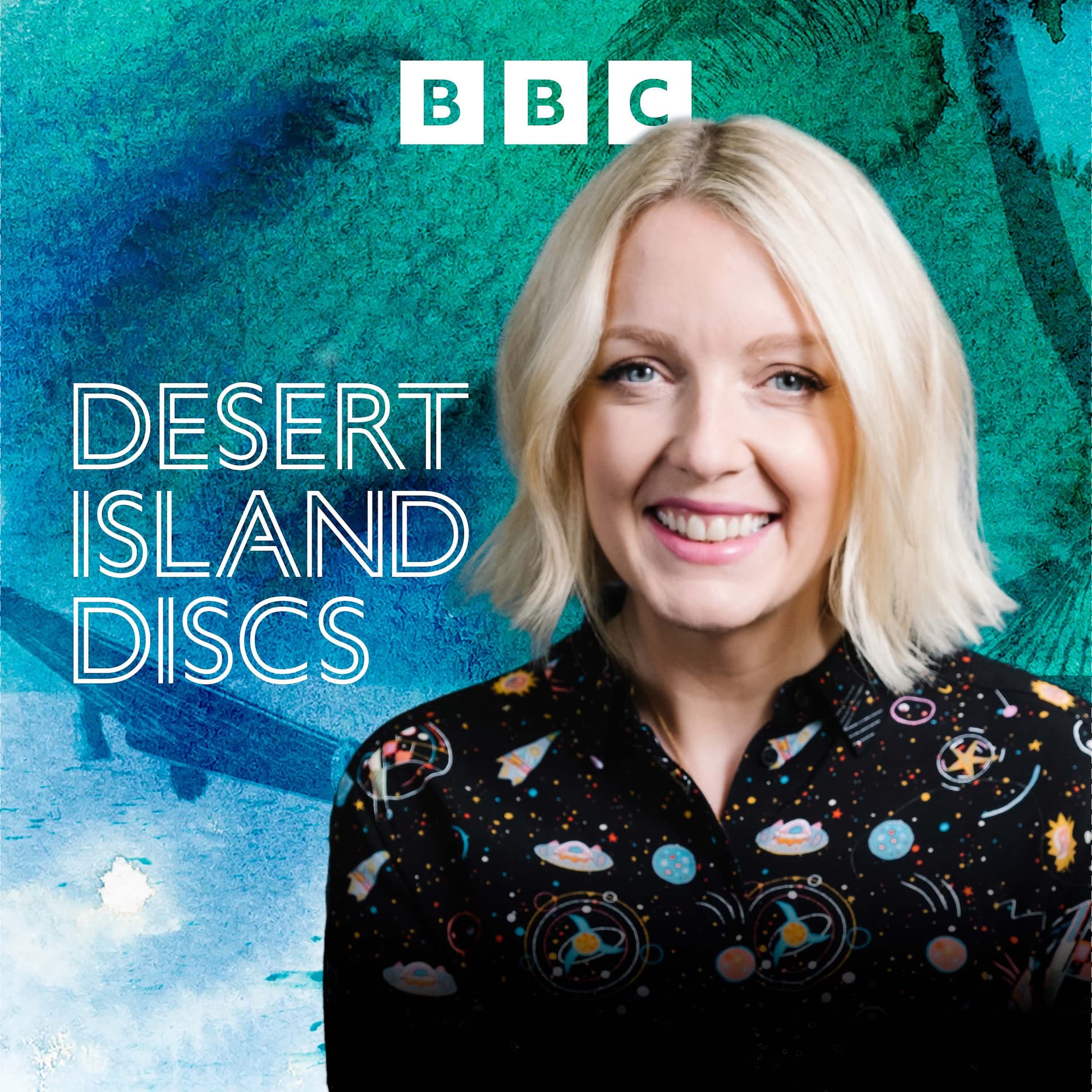
In short
Podcast Notes: Desert Island Discs - Angela Harding, Artist
Episode Overview
- Host: Lauren Laverne
- Guest: Angela Harding
- Episode Focus: Angela Harding, an artist, printmaker, and illustrator, shares her life story, inspirations, and the music that has shaped her.
Guest Background
- Early Life:
- Born in Stoke-on-Trent, June 1960.
- Artistic family: Father (Stephen) was a headteacher with a love for poetry; Mother (Joan) taught pottery.
- Middle child of three daughters, all of whom attended art college.
- Education:
- Left school at 16 to pursue nursing (at her mother's request) before studying Fine Art at Leicester Polytechnic.
- Graduated with a first in 1982.
- Professional Journey:
- Spent 20 years in the art world, including teaching and consultancy.
- In 2008, made a pivotal decision to become a professional artist focusing on linocuts and silkscreen printing.
- Current Work:
- Known for prints featuring British wildlife, especially birds.
- Work includes book covers, greeting cards, and other merchandise.
- Resides in Rutland with her husband, Mark, and whippet, Oaty.
Music Selections Angela shares her eight music tracks she would take to a desert island, each with personal significance:
- "I Wanna Thank Ya" - Angie Stone (featuring Snoop Dogg)
- Represents love for family and evokes feelings of joy.
- "The Thought Fox" - Ted Hughes
- A poignant poem that connects her to her father's love for poetry.
- "Cuckoo!" - Benjamin Britten
- Reflects her fascination with nature and the British countryside.
- "Rise" - Public Image Ltd.
- Symbolizes her wild youth and experiences as an art student.
- "My Lady Story" - Anohni and the Johnsons
- A soft, beautiful song linking to her personal journey and her husband.
- "La Conga Blicoti" - Joséphine Baker
- A family favorite that resonates with her love for celebration and community.
- "Skeleton Tree" - LYR
- Ties to her creative process and the emotional depth in her work.
- "Marie douceur, Marie colère" - Marie Laforêt
- A powerful anthem celebrating strong women, inspiring her artistic journey.
Book Choice
- "Bird School" by Adam Nicolson
- A book about familiar bird species, encouraging a deeper connection with nature.
Luxury Item
- Lino Printing Set with Champagne
- A practical choice for her art practice, with a luxurious touch to enhance creativity.
Key Themes
- Nature and Art: Angela’s work is deeply inspired by the British countryside and wildlife, particularly birds. She discusses the raw beauty and power in her artistic representations.
- The Creative Process: Angela emphasizes the importance of constraints in her work, likening them to a form of discipline that guides her creativity.
- Personal Resilience: Sharing her experiences of loss, including the death of her premature daughter, Angela highlights the emotional complexities of motherhood and art.
- Evolution of Artistic Identity: Reflects on her journey from a traditional art education to embracing printmaking as a means of self-expression and professional fulfillment.
Conclusion The episode is a rich exploration of Angela Harding’s artistic journey, weaving her personal experiences with her love for nature and music. It highlights the importance of creativity in processing life’s challenges and the joy of sharing that creativity with the world.
Host's Closing: Lauren Laverne expresses gratitude for Angela's insights and the joy of her artistic contributions, inviting listeners to explore more episodes of *Desert Island Discs*.
Written by AI. May contain mistakes. Listen to the episode to check what was said.
Transcript
Automatic transcript. May contain errors.0:00Hello, I'm Lauren Laverne and this is the Desert Island Discs podcast from BBC Radio 4. Every week I ask my guests to choose the eight tracks, book and luxury, that they'd want to take with them if they were cast away to a desert island. For rights reasons, the music's shorter than on the original broadcast, but you can find a version with longer music tracks on BBC Sounds. Listeners will also get access to episodes 28 days earlier than everyone else. I hope you enjoy listening.
0:45My cast away this week is the artist Angela Harding. In a digital age, her carefully crafted work is a breath of fresh air. She specialises in printmaking, handmade scenes featuring British wildlife created using a process that dates back a thousand years. One image can take weeks to complete. Her work, created in her home studio, has earned her fans around the world. It has graced the covers of best-selling books by former castaways, including Val McDermott, Isabella Tree, James Rebanks and the poet laureate Simon Armitage. You'll also find her on everything from notebooks to tea towels and her advent calendars have become a collector's item.
1:25She has five books of her own under her belt too, exploring her love of the British countryside. She discovered printmaking while she was a student of fine art in the early 1980s. Cutting into the lino used to create each image lent it power. As she puts it, it has a bit of violence to it. She says, it's interesting, especially in these days of AI, that publishers will still wait for me, sitting in a shed, in my garden, with my chisel. Angela Harding, welcome to Desert Island Discs. Thank you, Lauren. Lovely to be here. It's great to have you. So, Angela, when I'm looking at one of your prints, I really feel the environment that you're depicting, whether it's the cold of the snow or, you know, the spray and the sound of the sea.
2:08When a piece is finished and you're looking at it for the first time, what do you see and feel? As the maker, you see the mistakes. But, you know, you start with an image in your mind, generally inspired from the place that I'm in. I like to go to the places that I'm commissioned to work about, whether that's Minchin Hampton Common or the Scottish Isles or down in Sussex on the Napa State. Actually being in the landscape is something that I try to convey in my work. But when I finish a piece, I really am starting to think about the next piece. That's generally what happens. Spoken like a true artist.
2:45On to the next thing, always. You might think of English wildlife as quite a sort of delicate subject matter, but actually there's a real power to your images and there's often this undercurrent of darkness in there. What's going on there? Well, I think nature is, you know, it's not a sentimental place. You know, a lot of the poets and writers that I admire, Seamus Heaney and Ted Hughes, they highlight the rawness of the natural world and my work is used on book covers. And I think it's what gives it that little bit of edge, really, that it isn't just a sentimental portrayal of the world that surrounds us.
3:21You know, that everything basically is looking for lunch. Or it is going to be lunch. Or it's going to be lunch, you know. So that's the fight that's out there. And within that, you're trying to pick up on the beauty that's there as well. And aesthetically, you kind of have that juxtaposition is mirrored in the look of what you do, isn't it? because you have these kind of graphic black lines created by the printing process and then sort of soft wash of colour that you add. I find the images that become the work by working directly onto the lino. I mean, I do do drawings and have sketchbooks, but often the more powerful images that I do have been a sort of direct response to feeling something, seeing something and making it.
4:04And the stronger the feeling I have about something, the bigger the piece tends to be. There you have your limitations through process. And also that's part of what I think is why I became a printmaker is I like the almost housework. I don't like housework actually, I have to say, but the housework of printmaking is it imposes some rules on you. OK, so what do you mean by that? Well, when you paint, which I do paint as well, the options are so multiple. But when you print, you have a limited palette and you have a limited size to the press or the screen that you're using. And generally, if you're an illustrator or a commissioned illustrator, you've got limited time.
4:47So all those things are constraints that you have to work within. Also, as it's print, you're working in a mirror. So it's the reverse. Yes, you're working backwards. You've said that having dyslexia has been quite helpful to you in that regard. I think I found my place in the world through printmaking. I was officially doing a painting degree, but I found myself continually living in the print room and very comfortable with the images that I produced because it seemed to turn everything the right way round. So tell me a little bit, Angela, about this idea of violence in creating your art and the appeal of that.
5:24What exactly do you mean? I think it stems from, again, if you go back to art school days, that drawing was very implicit in what I was doing but most of my drawing came from dead things that I found and it's like a traditional way of learning your craft really and in those days I was living away from the college in Melton Mowbray and would cycle into college and collect roadkill on the way in and tie it to the handlebars and that became very much my subject matter as well as when I got back home I was living in a little cottage I would just boil up the heads and have a display of skulls that I would draw Did you pre-worn visitors when they came in?
6:07I was an art student. Everyone was up for schools. I get it. And what about when you work your studio in Rutland? I've seen a photograph and it looks out onto countryside. It looks so tranquil and beautiful. It is. Do you like to work in peace and quiet or do you ever listen to music? Music is very important to the way I work and you were describing a sense of violence but hopefully there's a sense of movement in what I do. and when I start a new piece, if it's not for a commission for a book or it's a piece that's a personal piece of work, I will actually lay out the lino, put on some music and the lino's already prepared and it's sort of inked black and then I'll use chalk and start to build up the rhythm of the piece by the music and the drawing.
6:52All right, well let's dive into your music today, your first choice today, Angela Harding. What's it going to be and why have you chosen to take it with you? You can't listen to Angie Stone and not start dancing. And this one in particular, I want to thank you, reminds me of so many things. And the love I have for my family and my husband and just makes me want to move and hopefully makes them want to move too.
7:46I want to thank you. Angie Stone featuring Snoop Dogg. So let's go back to the beginning then, Angela. You were born in Stoke-on-Trent in 1960, the middle child of three daughters to Stephen and Joan. I believe your parents met at an evening class. What was it? My mum and dad met at a sculpture class. They both loved art. My mum was sculpting a head and my dad used to carry a head home for her every evening. So that's how they met. Tell me a bit more about your dad, Stephen. What did he do for a living? Well, my father was a sort of major influence on me and still is, even though he's not with us anymore.
8:22And my father was from an upper-middle-class family, really, in Stoke-on-Trent and they were integral to the potteries industry. His family made specific tools that were used in the pottery industry. With mechanisation those tools became redundant so my grandfather who I never met had to sort of change the nature of the business. So my father actually broke out the mould of being part of this small family business to go to Cambridge. So he was the first one of the family to go to university. What did he study? He studied English when Professor Leavis was there. He had a wonderful time. This was in the late 40s, 1940s, and always talked fondly of it and provided me with that love of poetry and educated me long after I'd done very badly at school.
9:19I got to know Dad, really. He went more in my 20s, really. So you became closer when you were adults. Yeah, when we were adults. What did he do with his degree? What did he do for a job? Well, he actually wanted to stay on, but the family said no, that he had to go and get a job. And he worked for the British Council. He was in Izmir working in Turkey. And one of his famous stories was that he was a very young, quite nervous man. And he'd had an accident during the war, which is why he wasn't in the services. He had really shaky hands. By a sort of series of circumstances, He'd only just arrived in Turkey.
9:56He found himself representing Britain on Bastille Day at the French Embassy and was quite nervous about it. And there he was meeting the ambassador, the ambassador's wife and all the dignitaries. and they were served with a variety of cakes to which my father says he doesn't know why he did it but he went for the meringue with cream and with his shaky hands and his nervousness the tension mounted on this meringue until he was opposite the ambassador's wife who had had an ample chest on display and there was a minor explosion
10:35which he didn't know it's to wipe or run. But sadly, while my dad was working for the British Council, my grandfather had an accident. In those days, there weren't many cars around, but he was quite wild, my grandfather, apparently. But he managed to have a car accident. My father had to come back and help with the business. Your dad sometimes appears in your work, doesn't he? He does, yes. He was a great walker and a great whippet owner. And particularly in my early illustrations, and still to this date, If there's a little man with a stick and a whippet, it's generally my father. We walk many miles together.
11:11And he got to see your work. He got to see himself in your work. What did he think of that? He did. He didn't get to see me working with the Poet Laureate, which he would have loved, but he did get to see me working with Faber and Faber doing book covers. The first book cover I did for them was John Keats, and I was able to give him a copy of that, and that was very special. Let's have some more music, Angela. It's your second choice today. What have you gone for and why? Well, this is Ted Hughes reading The Thought Fox and I have my dad to thank, as I say, to a long introduction of many poets.
11:45But this one in particular is poignant because not only has my dad had a great love of Ted Hughes, as I do, but I actually got to illustrate the cover of The Thought Fox so it feels apt to have this in his beautiful voice. The Thought Fox I imagine this midnight moment, Forrest. Something else is alive, beside the clock's loneliness, and this blank page where my fingers move. Through the window I see no star, something more near, though deeper within darkness is entering the loneliness. Cold, delicately as the dark snow, a fox's nose touches twig, leaf. Two eyes serve a movement That now and again now and now and now Sets neat prints into the snow between trees And warily a lame shadow lags by stump and in hollow Of a body that is bold to come across clearings An eye, a widening, deepening greenness Brilliantly, concentratedly coming about its own business Till with a sudden sharp, hot stink of fox It enters the dark hole of the head The window is starless still The clock ticks The page is printed Ted Hughes reading his poem The Thought Fox So we've heard Angela about your dad and his love of poetry Yes What about your mum, Joan?
13:13So she studied art, was she able to pursue that as a career? Well my mum was unusual because she came from a very working class family There's five of them in a tiny terraced house behind the Mitchelam factory in Stoke So she really did reach high ambition by getting to go to art college. And she studied sculpture in the 1950s and actually applied for a job to work in as a stonemason in a church. She applied by letter and signed the letter J Wood and sent her samples of her drawings and was lucky to get that job. But when she turned up, they're expecting John Wood, not Joan Wood. So, yeah, she did that for a while before we were born.
13:56And then she went into teaching and actually went into ceramics. She did ceramics for all of her life. Do you have any of her work? She was never known for her delicate touch. They were all quite hefty. And at her funeral, we heaved some into the wake afterwards. And people, if they could pick them up and take them, they could take them with them. And so I have one in the bathroom, but I don't have much, actually. So growing up, you always loved wildlife, Angela, and apparently you had a little orange case full of bird's feathers that you collected. I did, yes. The bird case was stuffed with a variety of feathers you would get from the butcher.
14:35I was friends with Janet Hodgkin, who was a butcher's daughter and gave me pheasant feathers and duck feathers you'd get then. but also I just love finding them in the garden or out on woods and this sort of jewel-like quality of a jay's bath, winged feather just the pigeon feathers are beautiful, you know Were you drawing them yet? I was drawing but not very well My elder sister Sarah could draw like a young prodigy she always had that ability to so I was obviously in her shadow and my younger sister is very good at drawing too So we all, you know, we all had this artistic bent. And my mother, as I stated, come from a working class background and married my father, seeing it as a moving up the social ladder, really, and didn't want her daughter slipping back from that social ladder.
15:29And so she didn't want us to go to art school. So we all went. But she'd gone then. So, you know, by that time, it was us making our own decisions. That's interesting though, isn't it, for the girl who had her head carried over? Yeah, no, and she remained artistic all her life. She was from a certain era and I think she just saw us, me in particular, I was supposed to be a nurse and marry a doctor and my sisters, as she saw, who were cleverer than me, they would have been the doctors. Oh, wow, OK, so she was pretty clear about where she was. She was quite prejudiced, really, quite bullying, so it was a bit of relief when we were left to our own devices with Dad.
16:09You mentioned being dyslexic earlier, Angela. How did that affect you at school? Did it hold you back in your studies? I didn't really do much at school. It was in the days when dyslexia wasn't really recognised. I've never been formally diagnosed, but I think I have an unusual way of viewing the world. So however that is, I'm a slow reader, but I love books. So I've just learned to read at my own pace, really. So what was the school's response to you struggling in that way? They just ignored you, really. You just ended up in the naughty group, which fitted me fine, really. Reid did it. Yeah, and when I got to, I couldn't get hardly any O-levels.
16:51I'd got enough, you know, to scrape through. But then when I got to, my mum wanted me to do this pre-nursing course. This is just before she left. So I did sign on to do that. but I spent the day getting there on the bus and then the rest of the day walking home, you know, so I didn't really attend much. And what about the naughty group and fitting in there? What kind of thing did you get up to? Sitting next to me was Anthea Turner, actually. We were in the same class. You were both in the naughty group? Yeah, we were both in the naughty group and we both did all right in the end. Yeah, she had the desk next to me.
17:23We went to a Catholic convent school. The best teachers were given to the more academic girls And so we got quite a few rejected nuns who were nice, interesting characters, swore a lot for, you know, teachers, one of them in particular. So swearing nuns. Swearing nuns. The downside was I can only be naughty to a certain level because my mother taught there. I was in her class for some things, some lessons when we were doing craft. But then because she was there, she wouldn't let me do art. That was one of the downsides. I had to do domestic science, which I failed abysmally, and I hate cooking with a passion to this day.
18:07Angela, let's go to the music. I want to hear your next piece. What have you chosen to take to the island next? Well, a reflection of my love of birds. This is Benjamin Britton, whose music I love in many different pieces he does, and he represents Suffolk and the beauty of the reed beds around there. but this one in particular is about the cuckoo and the cuckoo is a marvellous bird because it's mysterious and actually the village where I live is called Wing, ironically and there's a myth that's not just for Wing because other villages have it too that to keep spring, the people of Wing captured a cuckoo and kept it to stop winter coming and they were known as the Wing Fools so I undoubtedly am one of those Wing Fools.
18:56What do you do?
19:01In April I open my bill In May I sing night and day In June I change my tune In July far far I fly In August away
19:30I must
19:40Cuckoo, from Benjamin Britten's Songs from Friday Afternoons, sung by the choir of Downside School, Pearlie with Viola Tonnard on the piano and Benjamin Britten conducting. So, Angela Harding, you mentioned your mum leaving, Your parents divorced when you were in your teens. What impact did that have on you? Well, it's sort of, we'd gone from this very conventional, aspiring, middle-class family, Catholic. The Catholicism was very important. Going to church on a Sunday and all the feast days in between. You know, there's a lot of time spent at church to all of a sudden the whole thing sort of imploding.
20:19And I think that's sort of partly why we all ended up at art school as well. You know, it was like we were all a bit lost, I think, really. But at the time, I would have been 15, 16. And I officially went with my mum as we didn't have a house to go to. So me and my little sister were with my granddad sharing a bed, not just a room, a bed with bullets down the middle to stop us fighting. And my elder sister was with my dad and my other grandmothers. But eventually everything obviously got sorted out. and it became apparent that my little sister, even though she was very little at the time, she had only been 10, 11, wasn't going to stay with my mother and went to live with my father who hadn't been awarded the finances from the breakup.
21:08So my mum got the money, as it did happen in those days, the judge thinking to provide for the children, but she got the money but she didn't take the children really. There is an assumption that children will stay close to their mum and obviously you can hear you just adored your dad and the way that you're talking about him and your relationship with your mum sounds more complex. Yes. How did you feel and how did you deal with living with your dad and being supported by a single dad? Because it's unusual now, it must have been more unusual. It was very unusual. I suppose I give thanks to my boyfriends at the time's families who took you in and I became part of their families really.
21:45And so my mum got offered a job in Yorkshire and she left And I think she, you know, we weren't tiny babies, but we were a long way off grown up. But I don't think she could see a way of being part of our lives. It was easier to go away and start again. And she did have somebody she was hoping, I think, to form a relationship with, but it never worked out. So neither my mum or my dad ever met anybody. They lived all their lives on their own. And were you able to maintain contact with her? I would see her probably once a year, which was always fraught. So no, not really. She was a harsh person to do that because I can't imagine doing that to my children.
22:28She had great energy and I thank her for that. Hopefully I have that too. And so you made it to art college, studied for a fine art degree at Leicester Polytechnic. Yeah, I did. Did you enjoy your time there? I did. I think that's when I started to really find my feet. You got a first, Angela. Yeah. For someone who struggled at school and had been told that, you know, they didn't have the potential to do what you wanted to do. That must have been so rewarding. It was, yes. My father, Blottom, he came to see the degree show and took me out for a knicker block of glory to celebrate. And my mum, I told by telephone and she said, first, are you sure?
23:09But, you know, she just couldn't quite believe it. But I did sell work and I sold enough work from that show to fund my first solo trip across Europe. I got on what's called the Magic Bus, which is three days nonstop from London, Victoria to Athens with one or two adventures on the way. Yeah, it was that first finding your love of travel, really. And, you know, I had this sort of urge to travel independently and meet people. Angela it's time to go to the music tell us about your next disc well this sort of wild time I would say long before children and responsibilities and the gathering of people at my dad's cottage because my dad wasn't there he bought the house but it was just a load of art students so to celebrate this we've got public image rise I could be wrong I could be right
24:09I could be wrong I could be wrong, I could be right I could be black, I could be white I could be right, I could be wrong I could be white, I could be black Your time has come, your second skin Public Image Ltd and Rise So Angela, after your degree, you spent some time travelling. You were doing voluntary service overseas in Bangladesh. What motivated you to do that? Was it the work itself or were you out for an adventure? I think if I'm honest, I was out for an adventure and I think I took more than I gave, I think, with the BSO. I worked in a rehab centre for paralysed people. You arrived and you did three months at language school, so I was my pigeon Bengali, he was still there, Slightly.
25:05And then in the afternoons in those three months, you got to know the people in the project. And my department was a tin shed, which was the OT department. And we were setting up bridges between the commercial world and the hospital world. And my role really was to try and improve those designs they were doing. We had one tin shed as a carpentry department and the other tin shed was my craft OT department. and the other part of my job was to visit people who'd been released to go back into the community because the alternative was begging so and some people made that choice but we were trying to provide income and one of these products was teddy bears and my I think it was virtually my first week of working solo I was visiting an ex-patient who is now rehabilitated back to her home and so I went to visit her in this tiny camp and collecting the teddy bears these were very important source of income for this lady and so I gathered up the teddy bears ready to take to get a good price and establish the market that would then go forward for her in the future and I got into the rickshaw with the sample bears beautifully packaged and said to the rickshaw driver in my Pigeon Bengali, please take me to whatever address it was.
26:30It's obviously a long time ago since I was there. They have an open sewer system and the people just go to the toilet in the street and there's areas where the poo gathers into like a large pit and on this particular day there was quite a sort of crust formed which I hadn't noticed that as I got out of the rickshaw I thought what was solid ground wasn't solid ground and I fell into an open sewer up to my waist but all I could think about was these teddy bears which I held in my arms above my head and kindly people pulled me out of the sewer and my flip-flops floated to the top.
27:17And then I looked at the rickshaw driver and said, my pigeon Bengali, can you take me back? to have a good shower. And the teddy bears were all right and all was well. Thank goodness. You headed back to Britain eventually, Angela, and you became the artist in residence at Uppingham School. Yes. And it was there that you met your first husband, Tim. Now, the two of you started a family, but I'm sorry to say that your first daughter, Lydia, was born very prematurely. She was, yes. You lost her. She couldn't be saved. Yes. I think nowadays might be different, but she was not further enough along to be classed as a stillborn but that's what it felt like to me, the little baby girl that we had.
28:01It must have been a devastating experience to go through. It was, it was and I feel for every woman who's had to go through that and every father of course and it was difficult for Tim as well. And pregnancy was not an easy route for me. After that I fell pregnant again and ended up in hospital again and it was very touch and go whether I kept Holly, my daughter, and I remember seeing the scan with all the blood clots around her and feeling so, so responsible. You know, you had Holly and then you had your son, George. George as well. Were you supported? Were you able to talk about the difficulties that you had in having your family with people?
Read the full transcript
28:42You know, as you say, the conversation then wasn't where it is now. No. It's difficult enough now to talk about baby loss. I will never forget, obviously, that daughter. But there was, I think, of those days, a sort of sweep it under the carpet and get on with it, sort of a bit more attitude, really. And thankfully, I think those things have changed. Angela, it's time to hear your fifth choice today. What's it going to be? OK, well, this is sort of a family tune, the difficulties of having a family and then the family arriving. And I suppose it's such a soft, beautiful song. It's also an introduction to my husband, Mark, who, when I met him, had only three records.
29:25He had the complete works of Leonard Cohen, Manic Street Preachers and Vindaloo. By Fat Les. Yeah. Well, he's got the classics. Why would you need any more? And this, Anthony and the Johnsons, was the first, I think it was a CD in those days, that we bought together that expanded the collection. Going beyond fat there, see you. Yes. But we both loved this. And my husband's a man of great energy, so I sort of toyed with getting something that was a bit wilder, but in the end, I think this sums us all up. My womb's an ocean full of grief and rage Ooh, ooh, ooh, ooh My lady's story My lady's story
30:24Nailing story
30:29Nailing story
30:33Antonila Johnson's and My Lady Story. Angela Harding, you eventually got your own studio in 2008, I think. You were in your late 40s by then and you decided that was the right time to make a go of it as a professional artist. Yes. What had been stopping you and what changed? Well, after doing the part-time MA, I did a series of part-time teaching jobs working in higher education. And it's quite exhausting going from college to college. And in between, I was doing my work, but not as I do now. And then I was also part of a charity called Leicester Print Workshop, which took quite a lot of my time.
31:12and I heard of a job working for an art consultancy which meant actually being on the other side. It was commissioning artists for site-specific areas and actually working with professional artists. It opened my eyes actually to, well, there's people who make a living out there. So I did that job for just three years and stopped making while I was doing it and learnt so much, as much as being at art school, I think, really. And so when that job came to an end, and I was near my sort of late 40s, I thought, you've got to give it a proper go or forget about it. And it coincided with me and my husband, my first husband got divorced, and all the financial settlement had been sorted out.
31:59So I paid myself a wage and gave myself a timeframe and set some goals. And I gave myself, a certain amount of time and then if I didn't make a living I would have to go and get another job. Was it scary? It was scary. It was scary because I'd always got the sort of part-time income coming in. You knew you were getting a certain amount of money. I was by this time living with Mark and he got two children, I got two children. We got mortgage, all those pressures of not having a lot of money. So when you do give up a regular income, it's sort of like you don't believe it's ever going to come out of thin air.
32:43How are you going to create it? But I think Mark, being a small businessman who'd worked for himself all his life, I could see he set that example and gave me the encouragement to say, you can do this. And this is at this point that I changed my style quite a bit to be more a lino-cut artist because I could do it at home. I didn't have to go and use a lot of equipment and I could do it quickly. And so after getting into certain galleries, I was contacted by a card publisher that did specific printmaking cards. And that was a big stepping stone to becoming professional because they were like little adverts going out with your images on.
33:27Yeah, absolutely. It's interesting, isn't it, that balance between the art and the business, the two sides of that coin. How disciplined are you? I mean, you know, can you engage your creativity in business hours or do you have to wait for inspiration to strike? I thank my children for setting that discipline because all those years back when they were little, when I think I had a lot more energy, if I'm honest, I would put them to bed about half past seven and then I would always start work again, you know, and I kept that discipline for years of my own time of making things being in the evening.
34:00I followed that discipline through. And also the big difference of this sort of reinvention of my art career at that point was the digital age. And my children being teenagers, they helped me with Instagram and as it was then Twitter, you know, so I engaged them in my business. Social media manager. Social media manager. And yeah, no, I've always been a disciplined person and worked hard. I think we should have some more music, Angela Harding. It's your sixth choice today. Yes, well, this is Josephine Baker. And if anybody knows me, they know I love a party. And La Conga is a sort of a bit of a family joke.
34:42If anybody asks you a song that represents me, the children would come up with and the young people would come up with this one. But also, for me, it reminds me of this fantastic community that I've found myself surrounded by fellow artists. Not that we see each other a lot, but there's a body of printmakers and illustrators working in publishing. And I was lucky enough to be invited to Mark Hull's 50th birthday, held in York Cemetery at this mausoleum. and the ticket that came was like a work of art in itself. The theme of the party was a French bohemian. Some people had just got pieces of paper and made these amazing outfits.
35:30I'd gone dressed as Gerard de Nivelle, who is a poet from Paris, who walked the streets of Paris with a lobster on a blue ribbon. And I thought, this is all very well and good, until I found myself in my hotel room having to leave it on my own, dressed in my outfit, the lobster and a moustache. Anyway, the La Conga was part of the music at this party was just amazing and they had a brass band, you know, playing pop music as well as doing the conga and we all did this sort of mad conga around this. With the lobster? With the lobster, yes. The lobster on a blue ribbon. Good to know. Yeah, yeah, yeah, yeah, yeah, yeah.
36:18Blicoti, coti, moni, y 'allaisi, si y 'euxi. Tant la conga, yeah, blicoti, pour danser, retenti. Yeah, la conga, yeah, la conga, blicoti.
36:45Josephine Baker and La Conga Blicotti. Angela Harding, you share a boat with your second husband, Mark, and sail around the British Isles. He's built you a special table so that you can work while you're at sea. Talk me through it. He has, yes. Mark's a former carpenter, cabinetmaker, very skilled man. And the boat is a clinker-built boat, wooden boat, and made various adjustments on board for me to be able to do my work. But obviously when he's sailing, he needs to be able to fold everything away. And the little table that we have that comes down for me to work on, I've done many a book cover on there, including Val McDermott's Christmas is Murder.
37:25That was done on the Butley River. Oh, how perfect. So you're happy to be creative away from the studio. You don't have to be in one place. All I need is a couple of chisels and a piece of lino and off I go. It's fantastic for watching geese gathering in the evening. You can sit on the back of the boat and these great squadrons of Canada and grey-like geese go over you. Another very special place right at the other end of the country that I know you visited was former castaway Isabella Trees Estates, NEP. Because you won an award for your illustration for her book Wilding. and you spent some weeks on the estate to gain inspiration.
38:06What did you see? What did you experience? I did. She gave me a little bothy to live in, in the middle of the estate, from which I could become part of being in the place, rather than just visiting for the day and doing a few sketches. Actually waking up there and seeing the fox trotting around the edge of the pond and looking for lunch or breakfast, most likely, or watching the deer. I take my bike, which I do everywhere, and you can pedal around and see things from one end of the estate to the other. And then come back and I have prepared blocks ready to do pieces for the book. And I was so sort of enamoured by what I saw there.
38:49There's such a response to what Isabella and her family have done to re-engaging with nature, to revitalising, to bringing back things that have been on the edge of trouble, really. And cycling round the lanes of the estate was like being back in my youth, the amount of wildflowers and birds, and particularly jays. and jays are a very integral part of the natural world there in that they eat acorns and the acorns they don't eat, they bury in the ground and from that then you get more oak trees coming. So one of the pieces that I did that's in the book is about the jays and also the deer, the beautiful red deer that wander around the estate and I spent one day looking for the deer all over the place to come back to then find them outside the house.
39:46it's always the last place yeah yeah Angela anybody walking into a bookshop today will see your beautiful eye-catching covers how much detail are you given about a manuscript before you start working on a cover for a book I think it's an unknown thing that actually you're getting hardly anything you're giving a brief and a synopsis in the early days that would be a very short synopsis and quite a tight brief but as I became more established as an illustrator of books I was given more trust to do more things that I felt were the right thing but then working with Simon Armitage he actually sent the poems for the book Blossomize before the book was published and that's such a different way of working and it almost felt like being an art student again that you were able to have an instinctive and emotional response to the words that you've been given.
40:46And words and music are the way I work. So to have his words line my studio before anybody had seen them was a huge privilege and such a different way to work and I hope gave the book a certain energy. Angela, I think on that note we should have your next disc. Well, this is Simon Armitage's band, LYR, and this is a particular favourite called Skellington Tree.
41:19Skeleton tree, skeleton tree Can't believe
41:32Deep inside there's a lie for relief Skeleton tree, skeleton tree Can't believe LYR and Skeleton Tree. So Angela Harding, there is of course the saying about not judging a book by its cover, but as someone who spends such a long time and puts so much work into the covers you create, what do you hope that people see when they look at yours? Well, mine and other people's, there's a lot of artists working in book covers and it would be very nice if publishers just made the illustrators' names a little bit bigger. I mean, I'm very lucky that they do with mine now, but all illustrators work very hard on those covers and they are what, you know, gets books noticed.
42:21I was lucky that my sort of reinvention of myself in this sort of later part of my life to become a professional artist coincided with publishers getting a bit worried about the digital age and people buying Kindles. And I think there was actually more effort put into the decorative book, the beautiful book, the gift book. I think also there's a rekindling love at that time that I fell into of craft process that people got a bit tired of seeing Illustrator, you know, the programme covers done by that. And whatever it is about the wobbly broken line of an artist's work or my own, mine particularly wobbly, but other people's aren't, but it shows the personality in the person and people respond to that.
43:10And it's a wonderful thing to see your work in print, you know. We used to call it leaping up and down in the kitchen moments when something new happened in my career. And when I had my first book cover, that was a leaping up and down moment. And then actually when I saw it in a shop, I actually did leap up and down. And do you think that kind of treasuring of the handmaid and the item and the human made will continue even in this dawning age of AI. Yes, well, I have seen my own work transferred into AI, which is, I didn't think it looked like my work anymore, but I've seen the same book cover done by AI with given the same brief.
43:50What, are you able to do anything about that? Not really, because it was a foreign publication. They'd kept the same black and whites that are done inside, but they'd changed the cover through AI, and it, well, to my eyes, it looked very odd, but I don't know what their book sale figures are like. So it's a worrying time for all of us in the creative industries, but I still have faith, I'm afraid, that people will use artists. Maybe that's naive of me. I hope you're right, and me too. Now, it's time to cast you away, Angela, and there's a lot in your life which actually makes me feel quite optimistic about your time on the island, including the fact that you like your own company and you like going back to basics when you travel.
44:32In fact, you once cycled on your own in quite, you know, DIY conditions, quite kind of lo-fi conditions, we might say, 3 ,000 miles around the coastline of the UK. I did, yes. I was only 24, 25 at the time and I didn't drive, so I used to cycle everywhere, so I was particularly fit. But I did do some training before it. And most people were doing Landzone to John O 'Groats, but no, because of my really bad sense of direction, I thought, if I keep the sea on one side, I won't get lost. It was a crazy thing because I was living in the Midlands at the time. So I cycled from, I was living in Stoke.
45:13Yeah, so a bit higher up. Cycled from there to Chester, then all around the Welsh coast, down to Land's End. I only went as far as the south coast, as far as Brighton. And then went straight up the east coast over the Tilbury Docks until I got to John O 'Groats. and then camping all the way yeah camping sleeping in bus shelters i'm so glad my children are not like me but i do think this this augers well for the island how do you feel about but i love people that's i'm going to miss people and obviously my family what kind of landscape are you hoping for well in my mind's eye i was thinking about this the the island i picture as you know jason the Argonauts, sort of like one of those magical islands where you never know what you might might meet a sort of statue that comes to life around the corner.
46:03That's in my mind's eye, it is a magical place that I'm going to end up, I reckon. Yes, I love that idea. Absolutely. Well, one more track before we cast you away. What's it going to be your final choice? Well, this is for all the strong women that I know. And I came across this track very recently on my residency in Fair Isle. The wonderful Fair Isle Marie, as she calls herself, is a woman of immense energy. Marie introduced me to this track and I just feel it's got the energy, the power and the force that you need as a woman to drive you through to what you want to achieve. So thank you, Marie, for introducing me to this wonderful piece of music.
46:48This is Marie Laforêt with Marie de Sœur Marie Collère.
47:33Marie-La Fauré and Marie-Ducer, Marie-Colère. So, Angela Harding, I'm going to send you away to the island. I will give you the Bible, the complete works of Shakespeare, and you can take one other book with you. What will that be? I'm going to take Adam Nicholson's Bird School, A Beginner in the Wood. This one I particularly love because it's about birds that we see every day and it's about getting to know them better. And it's a bit naughty because it has got Thomas Buick's illustrations at the back as well. So you're sneaking in. I'm sneaking in some of, you know, my great love is Thomas Buick.
48:09And with a beautiful front cover by the artist Clive Hicks Jenkins. And also, as I said earlier, I believe this is a magic island that I'm going to. And magically, a iPhone will appear for me just to scan the QI card so I can hear the bird songs that it refers to as well. Well, that's a lovely idea for readers at home, but no communication devices on the island, I'm afraid. You are cast away. I'm told, though, that you have a special request about the Shakespeare. What's that? I do. I know you get the complete works of Shakespeare, but I would like, as part of that, Twelfth Night illustrated by Eric Revillius, which is another one of my favourite artists.
48:49So I'm sneaking quite a bit of naughtiness in here, I'm afraid. Well, you can't do the iPhone, but I can definitely give you the Revillius. Brilliant. That seems fair enough. That is very fair. Thank you. What about a luxury item? What will that be? Well, my luxury is actually when I buy lino, it comes in a roll, which is usually about three metres, which is a lot of lino. But I would like a three metre roll of lino, ready prepared. So you paint it black so that as you chisel, you can see what you're doing. But every two feet, I would like a strategic glass of champagne to encourage me. So you're working your way along.
49:27Yeah. Yeah. To the champagne. This is a magical island. Absolutely, it's yours. And finally, which one track of the eight that you've shared with us today would you see from the waves first? I think because it's a sort of summary of me, my love of movement, love of my family, it would be Angie Stone. I want to thank you. Angela Harding, thank you very much for letting us hear your Desert Island Discs. Thank you, Lauren. It's been a joy.
50:04Hello. It was lovely chatting to Angela, and I hope she's very happy on her island, making new linocuts with a little glass of champagne to help the creative process along. There are more than 2 ,000 programmes in our archive that you can listen to. We've cast many other artists away over the years, including Helen Oxenbury, Maggie Hambling and Quentin Blake. You'll also find Angela's friend, the Poet Laureate, Simon Armitage, in there too. You can hear their programmes if you search through BBC Sounds or on our own Desert Island Discs website. The studio manager for today's programme was Jackie Marjoram.
50:37The executive production coordinator was Susie Roilance. The assistant producer was Christine Pavlovsky. The content editor was Mugabe Turia. And the producer was Sarah Taylor. Join me next time when my guest will be the musician Rolling Stone, Ronnie Wood.
51:09Nature Bang. Hello. Hello. And welcome to Nature Bang. I'm Becky Ripley. I'm Emily Knight. And in this series from BBC Radio 4, we look to the natural world to answer some of life's big questions. Like, how can a brainless slime mould help us solve complex mapping problems? And what can an octopus teach us about the relationship between mind and body? It really stretches your understanding of consciousness. With the help of evolutionary biologists. I'm actually always very comfortable comparing us to other species. Philosophers. You never really know what it could be like to be another creature.
51:47And spongologists. Is that your job title? Are you a spongologist? Well, I am in certain spheres. It's science meets storytelling. With a philosophical twist. It really gets to the heart of free will and what it means to be you. So if you want to find out more about yourself via cockatoos that dance, frogs that freeze and single-cell amoebas that design border policies, subscribe to Naturebang from BBC Radio 4, available on BBC Sounds.
From the publisher
Angela Harding is an artist, printmaker and illustrator. Based in Rutland, Angela’s work is inspired by the countryside of the British Isles, and in particular British birds. Alongside her many prints and artistic creations, her award-willing illustrations can be found adorning many a book cover.
Angela was born in Stoke-on-Trent in June 1960, the middle of three daughters to Stephen and Joan Harding. It was an artistic household: her father, a headteacher, passed on his love of poetry to Angela, her mother taught pottery, and all three sisters would end up going to art college.
She left school at sixteen and, at her mother’s behest, did a pre-nursing course before pursuing her passion for art. She studied Fine Art at Leicester Polytechnic from where she graduated with a first in 1982.
After indulging her love of travel – both on her bike around Britain as well as on a Magic Bus across Europe – Angela spent twenty years working in the art world, from teaching to consultancy. During these years, she married and raised two children, then divorced and married her second husband, Mark.
In 2008, she made the life changing decision to pursue a career as a professional artist: she abandoned the media she had previously worked in and concentrated on linocuts and silkscreen printing.
She has worked as a magazine illustrator and today her prints can be found on everything from book covers to tea towels and greeting cards. Her advent calendars – first produced in 2015 – have become a collector’s item. She has also published several books of her own.
When she’s not on her boat sailing around the British Isles, Angela lives in Rutland, with her husband Mark and her whippet, Oaty.
DISC ONE: I Wanna Thank Ya (featuring Snoop Dogg) - Angie Stone DISC TWO: The Thought Fox. Written and read by Ted Hughes DISC THREE: Britten: Songs from \"Friday Afternoons\", Op. 7: Songs From Friday Afternoons, Op. 7: \"Cuckoo!\". Performed by Choir of Downside School, Purley, Viola Tunnard (piano), Benjamin Britten (conductor) DISC FOUR: Rise - Public Image Ltd. DISC FIVE: My Lady Story - Anohni and the Johnsons DISC SIX: La conga blicoti - Joséphine Baker DISC SEVEN: Skeleton Tree - LYR DISC EIGHT: Marie douceur - Marie colère - Marie Laforêt
BOOK CHOICE: Bird School - Adam Nicolson LUXURY ITEM: A lino printing set with champagne CASTAWAY'S FAVOURITE: I Wanna Thank Ya (featuring Snoop Dogg) - Angie Stone
Presenter Lauren Laverne Producer Sarah Taylor
There are more than 2000 programmes in our archive available for you to listen to. We have cast away other notable artists including Helen Oxenbury, Maggie Hambling and Quentin Blake. You’ll also find the Poet Laureate, Simon Armitage in our archive too. You can find their episodes on BBC Sounds or on our Desert Island Discs website.