In short
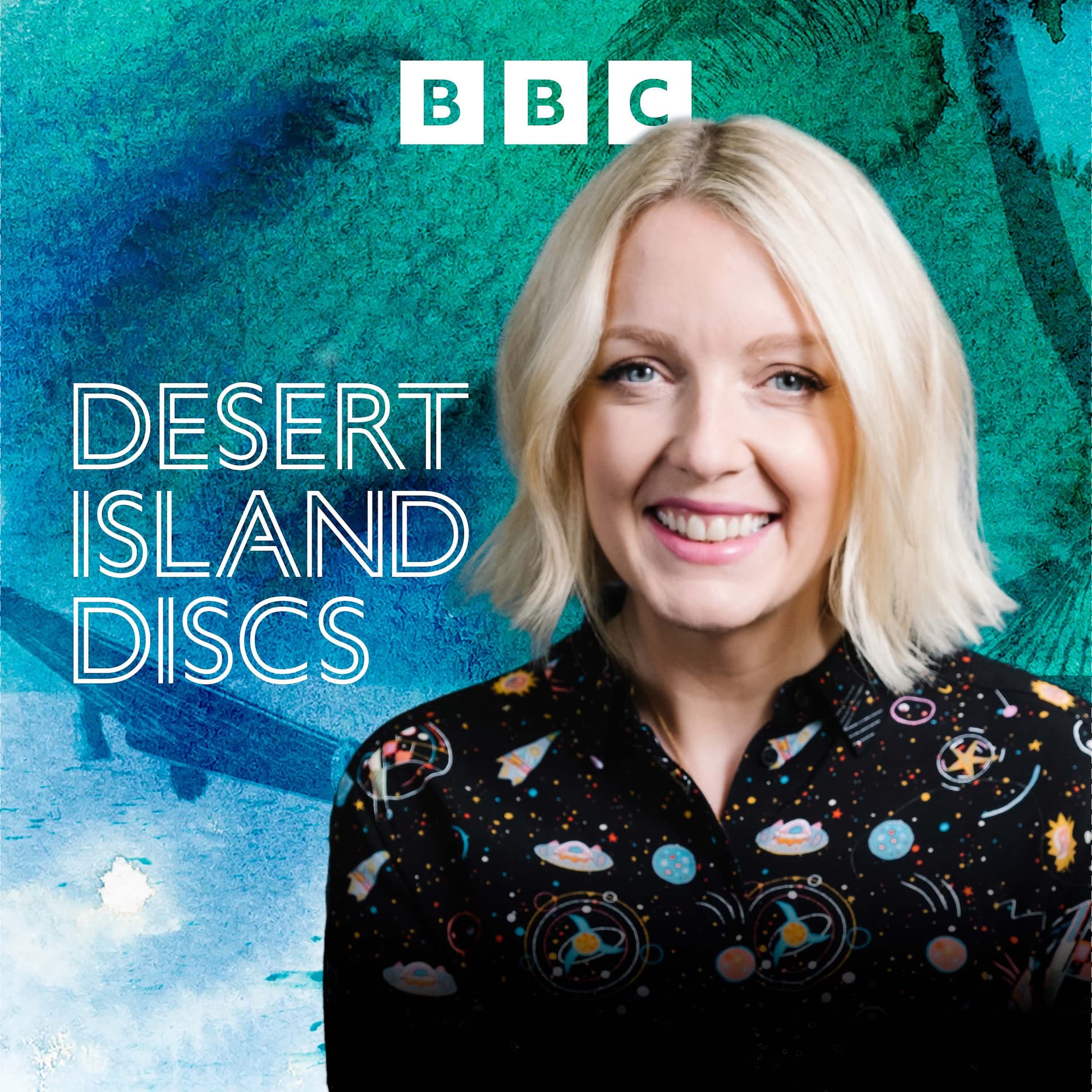
Podcast Episode Notes: Harry Hill, Comedian on Desert Island Discs
Episode Overview In this episode of *Desert Island Discs*, hosted by Lauren Laverne, comedian, writer, and broadcaster Harry Hill shares his life story through his choice of music, a book, and a luxury item he would take to a desert island. Known for his work on television shows like *You've Been Framed*, *Junior Bake Off*, and *TV Burp*, Harry reflects on his career transition from medicine to comedy and his experiences in the entertainment industry.
Guest Profile
Harry Hill
- Real Name: Matthew Hall
- Career Highlights:
- Presenter of *You've Been Framed* and *Junior Bake Off*
- Creator of *TV Burp*, which won multiple awards including three BAFTAs
- Transitioned from a medical career to comedy in 1990 after realizing his passion for performance
- Personal Life:
- Born in Surrey; raised in Kent
- Lives in London with his wife Magda and their three children
Musical Selections Harry Hill selected eight tracks for the episode, each representing different aspects of his life:
Disc Choices
- Ernie (The Fastest Milkman in the West) - Benny Hill
- First single he ever bought; fond childhood memories associated.
- Have I The Right - The Honeycombs
- Connection to medical school; reminisces about singing with friends in pubs.
- Grandad’s Flannelette Nightshirt - George Formby
- Nostalgic ties to childhood and friendship; reflects on school camaraderie.
- Gay Bar - Electric Six
- A fun and comedic association with his past work on *TV Burp*.
- Life During Wartime - Talking Heads
- Inspired by a live performance that motivated him to raise the bar in his comedy.
- Hey Bulldog - The Beatles
- A testament to the joy and playfulness of music; highlights the fun in the music.
- Never Give Up on Love - Steve Brown
- A tribute to his late friend and musical collaborator, Steve Brown.
- Life Is The Name of The Game - Bruce Forsyth
- Connection to his wedding; appreciation for Bruce Forsyth's influence.
Book Choice
- Don Quixote by Miguel de Cervantes
- Chosen for its depth and humor; Harry feels it would provide great entertainment on a desert island.
Luxury Item
- Bucket and Spade
- A humorous and practical choice, reflecting a desire for play and creativity on the beach.
Key Themes and Discussions
- Transition from Medicine to Comedy:
- Harry's journey from a trainee doctor to a successful comedian was marked by passion for humor and performance.
- The impact of his stepfather's death led him to reassess priorities and pursue comedy.
- Influence of Comedy in Childhood:
- Growing up in a large family fostered a sense of humor and camaraderie.
- His mother and stepfather’s involvement in amateur dramatics inspired his early performances.
- Creative Process and Challenges:
- Discusses the pressures of creating content for television and the balance between creativity and audience expectations.
- Shares insights into the dynamics of live performances and the constant need to engage the audience.
- Friendship and Collaboration:
- The importance of his friendship with Steve Brown, both personally and professionally.
- Reflections on the grief of losing a close collaborator and the void it leaves.
Conclusion Harry Hill’s emotional journey, from a comedic childhood to a successful career in entertainment, encapsulates the joy and challenges of pursuing one's passion. His selections of music and reflections on life reveal a playful yet introspective personality, illustrating how deeply intertwined his experiences are with the art of comedy.
Episode Credits
- Presenter: Lauren Laverne
- Producer: Paula McGinley
- Production Team: Includes Donald MacDonald (studio manager), Christine Pavlovsky (assistant producer), and Mugabe Turia (content editor).
---
These notes serve as a comprehensive summary of the episode while highlighting key points of interest from Harry Hill's life and career as discussed in the podcast.
Written by AI. May contain mistakes. Listen to the episode to check what was said.
Transcript
Automatic transcript. May contain errors.0:00BBC Sounds. Music, radio, podcasts. Hello, I'm Lauren Laverne and this is the Desert Island Discs podcast from BBC Radio 4. Every week I ask my guests to choose the eight tracks, book and luxury, that they'd want to take with them if they were cast away to a desert island. For rights reasons, the music's shorter than on the original broadcast, but you can find a version with longer music tracks on BBC Sounds. Listeners will also get access to episodes 28 days earlier than everyone else. I hope you enjoy listening.
0:51My castaway this week is the comedian, writer and broadcaster Harry Hill. He's carved out a career as one of the most popular comics on primetime TV with shows like You've Been Framed, Harry Hill's Alien Fun Capsule, Junior Bake Off and a hit series TV Burp. Over the course of 11 years, it won three BAFTAs, three Royal Television Society Awards, a Rose Door and seven British Comedy Awards. His surreal send-ups of British pop culture are as unpredictable as they are delightful. One of his shows played out each week on a musical number by the Delia Smiths, a female singing group dressed as the TV cook covering songs by Morrissey.
1:28Another featured the K Factor, an X Factor spoof about knitting, which was eventually won by a character called Peter the Duck. Then there was the time he staged a fight between EastEnders Phil Mitchell and Mr Blobby to establish which of them was better at making a dramatic entrance. It's all a world away from his first career as a doctor. He hung up his stethoscope in 1990 and won the Perrier Award for his Edinburgh Fringe show just two years later. He says, writing good original gags is really hard, but when it works it's a fabulous feeling. You want to punch the air or run out into the street and tell the joke to the first person you see.
2:02Harry Hill, welcome to Desert Island Discs. Thank you very much, Lauren. Actually, that K factor is the only thing I ever got in trouble with ITV over. Oh, really? Why? Because we cut the head off and knitted Simon Cowell. And they sent someone down to have a word with us. Well, it does sound a bit strong, to be fair. At least you could stitch it back on. So talk me through that feeling of coming up with a really good idea. When a joke works, how do you know? Well, I love jokes. My favourite type of joke is set up punchline, which is quite old-fashioned, really. The truth is you never know. I mean, sometimes you really know straight away, but nine times out of ten you don't know.
2:39And if you look back over history, there are only, you know, a few jokes, really. The types of joke, and it's just a way of reinventing them. I'm really interested in the form of jokes. I mean, you know, I'm sure this isn't of interest to most people, but just the form of it and how you can subvert that. So, you know, I do a lot of stuff with my ventriloquist dummy Gary, my son Gary from my first marriage. Hello, Daddy. Hello, Gary. Yes, I'll be with you in a sec. And it would be fair to say, as this is radio, that, you know, usually when Gary is performing, your lips move as well. I have to be with Gary.
3:15Obviously, I can't speak for Gary, but I have to be there with Gary to support him, largely. So there's all these kind of old-fashioned tropes which I grew up on, you know, I grew up in the 70s, so all this stuff was still on TV, you know, kind of remnants from the, I suppose, the musicals or the kind of variety days. And that's my interest, I suppose. And the great thing about, you know, if there is a good thing about being Harry Hill is that I can get away with pretty much any silly behaviour. Well, and also that you get to invite other people to do that, right? And to be playful. You know, they come to see you live on tour or they watch one of your programmes because they're up for that.
3:54And that must actually be really a particular joy. It must be a nice dynamic between you and your audience. Well, it's thrilling, you know, when it works. But, I mean, there's still, you know, no comic, however long you've been doing it for, necessarily finds every moment fun. You know, you've got to be really on top of it. I mean, you relax at times. You know, I've just come off a sort of 75 dates on a tour. Blimey. And you'd think by date 74 you would have got the hang of it. But there's still moments where you're kind of thinking, oh, no, I'm losing them. Or, you know, what do I do now? So, Harry, how did you go about selecting your music today?
4:35I tried not to overthink it. But then I woke up this morning and I thought, look at this list. I mean, this is like, this is never my intention. Is it too late to change it? But I tried to go with, you know, stuff that's, you know, reminds me of places and people, I guess. Let's get stuck in. Disc number one, what have you got for us, Harry Hill? Well, you know, this is the first single I ever bought and I wish I could say it was something edgy, but in fact it's Ernie the Fastest Milkman in the West by Benny Hill. Where does it take you back to when you hear it? Well, I was seven. I mean, it was played on the radio all the time.
5:10It was number one for weeks. The song is a little story about a milkman who falls in love with a girl but has a love rival that's a two-ton Ted from Teddington who drove the baker's van. and he dies in a hail of, well, the actual killer blow is a stale pork pie that catches him in the eye and only a bit of the dust. But I think that, and I was thinking this morning, would that kill you? There's only one way to find out. Yeah, yeah. What would that be? Just keep throwing the pies, find the stale as pies you can. Yeah, so yeah, it was fun, you know, and there was a thing in the 70s which was this thing for the novelty song.
5:52So in the charts at any one time, there was some silly song that was very catchy and it was often by a comedian of the day, you know, like Tommy Cooper, Edmund, and I kind of wish that still happened a bit, you know.
6:08You could hear the offbeat's pound as they raced across the ground and the clatter of the wheels as they spun round and round and he galloped into Market Street, his badge upon his chest, His name was Ernie and he drove the fastest milk cart in the West. Now Ernie loved a widow, a lady known as Sue. She lived all alone in Lily Lane at number 22. They said she was too good for him. She was awry, proud and chic. But Ernie got his cocoa there three times every week. Harry Hill singing along with every word to Ernie, the fastest milkman in the West by Benny Hill. So Harry, let's go back to the beginning for you.
6:47around about the time that you first discovered comedy. You were born in Surrey, 1964, the second of four kids, becoming five when your half-sister came along. What did you enjoy about growing up in a big family like that? Well, I mean, I'm not sure I did like being in a big family. I probably would have preferred to have had a bit more, you know. The thing about being in a big family is you can never get any privacy. It was a relatively small house, you know, on this big sort of 60s housing estate out in rural... I mean, I grew up in Kent, and the thing with a big family, you just can't get away from the sort of noise.
7:20I just remember, you know, there wasn't a lot of spare money. You know, the other part of being in a big family is this sense of humour, this kind of gang where you can all basically gang up on someone. If my sisters had a boyfriend, we'd all just pick on him. There's a lot of in-jokes. I mean, I guess that's true of all families. We did feel like a unit. You know, my brother was a lot younger than me, maybe four or five years younger than me, and he was very annoying. is... I mean, I remember we used to have physical fights. You know, we used to sort of roll around on the floor. Tickling was very big in the 70s.
7:55I don't know if people still tickle each other. It was massive. I remember from the 80s, I remember it being huge as well. Bring back tickling. How about a show, Celebrity Tickling? Oh, that would be so good. Feather on the end of a stick or something. And I know that, you know, given that there wasn't a lot of money around, as you just mentioned, TV was a big thing. That was like your family's leisure activity, wasn't it? Well, it was, I think, that window on the world. You know, it was, that's how you found out about things. What were you watching? Doctor Who. We'd watch Bruce Forsyth's Generation Game, which I just loved.
8:26A lot of people might look at Bruce and think he's quite old-fashioned, but actually I think what he was doing is very modern. He didn't come on and tell gags. He worked with the crowd. He worked the cameras. You know, he would do that thing where he'd turn to the camera and look directly at you at home. My dad always wanted to watch, my stepfather always wanted to watch the news at nine o 'clock and that was really annoying because on BBC 2 at nine o 'clock were all the interesting programs you know Monty Python and Spike Milligan's Q series I remember watching it and thinking yeah he's talking to me, he's saying to me this is what you need, you know it was like that it was sort of like some people get with music an awakening, exactly and he had that anarchic spirit that you have I mean so he was someone actually I don't really have that, I don't have that but it's in your act, it's part of your act I fake it, but I think he had it.
9:13Harry, as well as TV, I know that your mum, Jan, had a big influence on you. Tell me a bit about her. She's great fun. I mean, she's still alive. You know, she's 88 and she's still bright as a button. Yeah, so her and my stepfather, Tony, they were in a local amateur dramatics group, Staplehurst Amateur Dramatics Group. He used to write the panto and he would often be the dame in the panto. And this guy, actually, he was not outwardly outwardly a lot of hugely funny. To me, he's always seemed a bit careworn. You know, he'd be on the first train out, you know, if it's a commuter, and he'd come back about 7 o 'clock, he'd have his whiskey, he'd have his dinner, and he'd sit down in his armchair.
9:52And I think there was a lot going on. He inherited four kids, you know, when he married my mum. And I always think, I mean, I didn't think it at the time, but now I think, wow, you know, that's quite a guy to take that on. Yeah. But then we would go and see him at the Panto, and he'd be dragged up and being Widow Twanky. Transformed. Yeah. What kind of roles did your mum get, bearing in mind that he's getting dragged into anything? Oh, fairy, you know, she'd be the fairy. Fairy bungle, she was... I don't know what that was. She still does a bit of that. Does she? Yeah, she's having a drink. Will she still do her fairy bungles, if you ask her?
10:23Yeah. Get her on the phone. Mum. So my mum would say, do you want to come down the shops? Or, you're coming down the shops. We go down to Lipton's. and on the way we'd bump into Mrs Harmer, a couple of doors down, and she'd start telling her a story. It was, you know, I don't know, some story about something that happened at the school or some local bit of gossip. And then we'd walk on a bit further and she'd see someone else and then she'd start the story. And by the time we got to Lipton's, the supermarket, she would have this story completely ironed out, you know, with sort of... She would have like a tight two minutes.
11:03Yeah, exactly. You know, and it would end with a punchline and a da-da. So, I mean, yeah, I guess you pick all this stuff up subliminally. I mean, I don't know whether that's why I am the way I am, but... And what about your dad, Keith? Tell me about him. Well, he was in the amateur dramatics as well, but not the same one. So my parents got divorced when I was about six, I think. So, I mean, I grew up with my mum and stepfather, and then I'd see my dad every two weeks. He'd come and pick us up. It was that thing, that custody thing. Yeah. And was it difficult to kind of form a close relationship because of that?
11:43It didn't help. It's a tricky one. You know, divorce, I think, particularly at that time because people didn't do it. I mean, everyone's parents are divorced now. I mean, if your parents aren't divorced, you're unusual. But back then, people just stuck it out. And did you feel that? Did you feel like it was a bit of an odd situation? Yeah, I didn't like it. I was quite happy for them to be divorced, you know, in that they were obviously both much happier. But it was a bit, you know, there weren't those sort of conversations. No one ever sat me down and said, how are you feeling? How are you feeling?
12:16It wasn't any of that. And, you know, I don't know if that's a good thing or a bad thing, but, you know, you just kind of muddle through, don't you? I don't know. All right, Harry, let's take a break for some more music. It's your second choice today. What are we going to hear next and why are you taking it with you? Have I the Right by the Honeycombs. It's another bit of froth. I bought a whole load of singles from a jumble sale. You know, jumble sales were the thing in rural Kent in the 70s and 80s. And I bought this, a job lot of singles, one of which was Have I the Right by the Honeycombs.
12:49And when I was at medical school, me and my mate Matt, probably my best friend at medical school, was this guy Matt Brassock, who's sadly no longer with us. and he was a brilliant pianist and in those days we would go to the pub and most pubs, or a lot of pubs, had a piano still and we'd have a few drinks and at some point he would get on the piano and I would sing Have I the Right by The Honeycomb. Have I the right to hold you You know I've always told you That we must never, ever part Oh, have I the right to kiss you? You know I'll always miss you I've loved you from the very start Come right back to me It's quite a coy way of asking someone out, isn't it?
13:41Have I the right to kiss you? The honeycombs and have I the right. So, Harry Hill, as a kid, would you describe yourself as happy? Yeah, it was great fun. I mean, we were on this sort of housing estate, but it backed onto fields. And so we would go home from school, run over the fields and muck about, you know, and then my mum would call us in for our tea. You know, summer holidays, six weeks, you're thinking, great, here we go. And we'd always have some little plan, you know, like my friend Adam, who, he had a shed where we would do sort of science experiments, you know, and we started this. What kind of thing?
14:17Well, we were always trying to make something explode. Yeah. You know, so this is... Innocent, more innocent times, yeah. Yeah, we weren't trying to further some cause. It was just for our own interest, you understand. So we used to make stink bombs and smoke bombs and stuff and used to sell them to the other kids at school. How did that go? A little business that you... Yeah, Stapleless Chemical Industries. Well, it was very popular. So there were three of us in Stapleless Chemical Industries, me, Adam and Patrick. And me and Adam were kind of the brains behind it as far as making the produce.
14:53So a smoke bomb might set you about 5p, a stink bomb maybe 7p because there was a bottle involved. And Patrick used to be like the sales guy, he'd handle that. And then he came to us after a while and said, we were sort of saying, well, where's the money? And it turned out that he had been letting the stuff go on tick. He wasn't taking the money. And so, in fact, we had made 60p. So we decided to wind up the business. We split the money because the pressure was getting to Patrick and that didn't seem fair. Well, it's difficult being a young industrialist, isn't it? Yeah, yeah. You were also, as we would imagine, with the 70s...
15:31It's not exactly diary of a CEO, but yeah. But in this rural childhood of the 70s, were you a Cub Scout? Yes, yes. That was pretty common back then. Yeah, I mean, I didn't really want to be a Cub Scout and then I was a Scout. But once I joined, my mum wouldn't let me leave. And I think probably in retrospect, it was like free babysitting for her. And my first kind of attempt to, you know, on a stage was the Cub Panto. So I was Widow Twanky. Oh, that's a plum roll. Yeah. Following in your stepdad's footsteps. Yeah, I guess I was. And I remember doing it and being on, you know, doing these jokes and everyone laughing.
16:14and I was thinking, quite clearly remember thinking, this is easy, you find this easy, you're good at this. How old were you? Nine, yeah. And actually I was singled out for special praise in the Kent Messenger. Do you remember what they said? Undoubted star of the show. Yeah. When you were 14, I think, your stepfather got a job in Hong Kong and you all moved there. How did you feel about it? Well, I mean, I burst into tears. I couldn't believe it. You know, we were literally sat around the TV. he gets home from work and he says, we're moving to Hong Kong. And I was thinking, we're not. I remember finding out it had the most densely populated square mile in the world, I think, at that time.
16:57And I'm in a sort of little village. I remember just getting off the plane. It was like a fog, it was like a really humid noise, just loads of noise, great big high-rise buildings. So I remember stepping off the plane and just saying to myself, you're not going to like this. And I didn't like it. You know, I really didn't like it for the first six months. Well, let's find out what happened next after some music. It's time for your third disc, Harry Hill. Oh, yeah. So this is Granddad's Flannelette Nightshirt by George Formby. I am a ukulele player, not a particularly good one, although I've let it lapse.
17:32I was once a member of the George Formby Society of Great Britain. Yeah, me and my friend Rob. So Rob was at school, was my kind of best friend at school, and he had a 78 of George Forby singing this song, and he would stand in the playground and sing this to us. And he'd do it at parties and things. I mean, we were kind of odd kids.
18:00Now in our family we've got an heirloom They handed it to me a year ago It's been in our possession since Grandad was a lad I'll tell you what it is and then you'll know It's me Grandad's flannelette night shirt In it I was christened one day Down at the church, they were in the world George Formby and Grandad's flannelette night shirt So Harry Hill, you moved to Hong Kong and started a new school, so an international school. Now, you'd had a happy childhood, but I think you were also quite shy when you were little. Is that fair to say? Well, when I hit my teens, basically, I think. Yeah, I was a very shy kid.
18:50And joining that school, so it was an international school, so people were coming and going all the time, and they weren't interested in being my friend, Lauren. Hard to believe. Yeah, but school was tough. And then gradually, after I think about six months, you know, I made a couple of friends and I did that really by being funny, I think. And what about teachers? Were there any that you connected with? There were a couple of teachers. I mean, we had a really, I mean, because Hong Kong was like a small kind of little area, the local TV, so the English speaking TV, there were two channels and my history teacher was the newsreader.
19:26So you'd see him in the history lesson in the evening. He'd be saying, you just in from the South China Sea. That must have seemed incredibly impressive, especially to a TV-loving kid who's just kind of come from the sticks, effectively. Yeah, and he was quite cool. He was very laid back. So who is, what was his name? Paul Gillingham. And I remember once he, we had to do this talk about, I don't know what it was. I remember my talk was about using child labour in the Victorian era, like chimney sweeps, you know, when they'd send kids up. I can't remember the details, but I'd done these diagrams and everyone got up and did their talk.
20:01I did my talk and then he pulled me aside at the end. He said, did you notice that everyone listened when you did your talk? You're good at communicating with people and that's kind of a useful thing to be aware of. And had you noticed what he said? Yeah, I had. I mean, I absolutely had them in the palm of my hand. Harry, after a couple of years, the family returned to Kent. Were you relieved, pleased to come back? I didn't want to come back because by then I'd got used to it And, you know, the city was an exciting place to live in. You'd just walk out the door, get on a bus, and you'd be in Wan Chai or, you know, Central, and there'd be, you know, cinemas and all sorts of stuff.
20:42So, Harry, you were back in Kent at a local grammar school. You took science A-levels. And obviously this put you on the path to becoming a doctor, as you did, we know that you did. But, you know, from everything else that you've said, you were this very creative, communicative kid who sort of should have been going in a completely different direction. How committed were you? I couldn't agree with you more. Well, how committed were you to... I took a wrong turn, Lauren. That's all I can say. I took a wrong turn. Where? How did it happen? Towards science. Well, I think it was this science company that we set up.
21:15It involved us buying... The explosions? Yeah. The steam pumps? Stapolose chemical industries. It involved us buying a lot of chemicals. You know, in those days you could buy mostly ingredients for, well, explosives and stuff in the chemist. And I had to have a kind of cover for that, and that was that I was interested in science. I mean, I was genuinely interested in biology. I think biology is really interesting. And then what happened was my parents went to a parents' evening and the physics teacher said, my mum said, oh, he wants to do medicine. I mean, she was keen for me to do medicine. You know, who wouldn't be?
21:48Of course, yeah. And the physics teacher said, oh, no, no, there's no way he's going to get to medical school. and they reported that back to me and I thought, right, I'll show you. So I sort of went into medicine out of spite. It was mad. But part of it, sorry to interrupt, but part of it was also that I couldn't articulate what I wanted to do. If someone had said, if you had three wishes, what would they be? One would be, I'd like to be a comedian. But I couldn't say that out loud. I couldn't say it to my parents who were very middle class. And why was that? Was that because you couldn't sort of see a path?
22:23I couldn't see the root. Oh, right. It wasn't a kind of shyness and embarrassment. Yeah, it was a bit of that. A bit of that, not being able to say it. And so you studied medicine at St George's Medical School in South London, where you threw yourself in with the Drama Society. What kind of productions did you take part in? Well, there's a big tradition, and I don't know why there's a big tradition, of reviews, medical school reviews. And that's what I did. I mean, the medical school review, how it would work is you'd write a sketch and you'd come to the meeting and if you'd written a sketch, you'd be in.
22:55You know, there was no sort of editing process. Can you give me an example of the kind of piece that you would be putting? I remember once there was a thing, it was like a waiting room and I was dressed as a pancreas. Someone else was dressed as a kidney. So it was kind of not a million miles away from my sense, you know, the stuff. From everything that would follow. Yeah, but I wrote a hell of a lot of stuff. And did you enjoy it? I loved it, yeah. It just felt easy. It's all I think about. That feeling of, yeah. It's all I think about. I can do this. This is easy. All year. Yeah, so you started as a trainee doctor in 1988.
23:30Yeah, I qualified in 88. My first job was in orthopaedics, and I didn't know any orthopaedics. So I go to the, I arrive on the ward, and I have to go around with my trolley, and I didn't know anything. I couldn't answer anyone's questions. How did that feel? From that moment, I just felt out of control. I mean, that's how I felt, you know. And I remember this, he was quite a young man. He'd had his leg in plaster. And he said to me, oh, doctor, how long is this going to be in plaster for? I didn't know. And I said, well, how long did the other doctor say? And he said, six weeks, about six weeks.
24:05And I said, well, how long have you had it in for? He said, two weeks. I said, well, I'm expecting you to have it in for another four weeks. You know, it was like that. I was just busking it the whole time. and I learnt most of it in the first few weeks from the Ward sister, is the truth. Harry, we'll find out what happened next in a moment. What happens next? We've got to make some room for the music. It's number four. What are we going to hear? This is Gay Bar by Electric Six. I don't know anything about Electric Six, but I know this song and I found it really funny. It really makes me smile.
Read the full transcript
24:37And when I used to do TV burp, Jill Halfpenny who was on EastEnders she opened a nail bar on Albert Square and I used every time we had a clip of Jill Halfpenny in the nail bar I would sing this but I would sing nail bar instead of gay bar girl I want to take you to the nail bar nail bar nail bar
25:12I want to take you to a gay bar I want to take you to a gay bar I want to take you to a gay bar gay bar, gay bar Let's start a war Start a nuclear war Electric Six and Gay Bar. I must make an appointment to get my nails done, Harry Hope. Yes. So, Harry, comedy was an itch that you were desperate to scratch the whole time you were training to be a doctor and you teamed up with your friend Rob and eventually you managed to get a gig in South London as a duo. And what did you say the act was? We were called the Hall Brothers. You know, my real name's Matthew Hall. So this is the same Rob that used to sing Grand Theft Auto at Nightshirt.
25:56And if you asked anyone at our school out of our year who would be the comedian, it would be Rob. He is the funniest person I know. But he didn't want it as much as me. First gig, how did it go? So this is at the Tunnel Club. It was run by this guy Malcolm Hardy, who's a sort of legendary, kind of an anarchist, a really sort of naughty. He gave a lot of people their first breaks and he probably put off a lot of people as well Well, because it was a tough gig. And we had printed off these leaflets. You know, this is a kind of naive enthusiasm of ignorance. We printed off these leaflets about ourselves.
26:31The Hall brothers were the phone number, my phone number. Put them out on the tables. And we go on, we go down to silence. And then after a while, they roll up the leaflets and throw them at us. And then Malcolm faded down the mics and faded up the music. And that was that. And that was that. But at least we had each other, so we kind of laughed about it. I mean, given the choice, I'd much rather have been in a double act because I think, you know, it's not lonely now, but I think at times it used to be a bit lonely, particularly if you're an open spot turning up, no-one wants to talk to you. You know, you're basically the weak link in the night, potentially.
27:12So, Harry, there was a turning point, though. In 1990, you decided to give up medicine for good. Yeah. Why did you make the decision? What pushed you to do that in the end? It had been a long time coming, and then my stepfather died of cancer. And I thought, you know, he's a man that sort of worked all his life. And they always used to talk about, you know, what they were going to do in retirement. How old was he? Maybe 54. And I thought, I don't want that to be me. I mean, the other part of it was that I think if I'd said to him, I'm giving up to be a comedian, he would have been quite disapproving.
27:50He would have wanted you to have the sensible job. Yeah, so it probably kind of set me free a little bit from that. But really, I was just kind of at the end of my tether with it. I mean, you must have seen some very upsetting things as a doctor as well. I mean, that must have been difficult for you if your heart wasn't in it. I think it's difficult even if your heart's in it. I mean, the first six months I had to break the news to this bloke. his wife had died in an operation unexpectedly and they had young children. And I was completely out of my depth. I told him and he started crying and then I started crying and I thought, this isn't good.
28:29You're not supposed to be... I mean, I'm not really in a very... It certainly wasn't a very emotional... I mean, actually what it makes you do is bottle up your emotions. Yeah, how long did that... The bottling. Yeah, the bottling. How long did the bottling go on for? Until I had kids, I think. Something about having kids that sort of... We're uncorked. Uncorked you, yeah, yeah. So I went to my consultant. He said, oh, let's have a careers chat. He was a nice bloke and he seemed quite interested in me. And, you know, I wasn't a bad doctor. You know, if I'd sort of stuck at it, I probably would have been, I don't know, I would have ended up as a GP.
29:02Actually, when I gave it up, I said to my mum, look, I'm going to try for a year. I'm going to give myself a year off to sort of have a go. And she said, what you need to do is get a GP practice with a really strong amateur dramatic script, which would have been my future. Could you have been happy do you think? I don't know I mean you know what all these kind of sliding doors things but it was that moment. So what about your mum because you said that she it sounds like she was quite supportive of you she wasn't horrified when you said that you wanted to give up. She had enough on a plate she was recently widowed and actually it meant that I had a bit of time off you know I moved home for a bit because basically I was pretty much broke you know the year turned into two years so I never had that moment where I said I'm giving it up for good, Mum I'm a comedian now you didn't have to have the big EastEnders moment the dramatic reveal leaving the square can you remember your last shift though?
29:57as a doctor no, I remember getting in the car and this sounds impossible I remember getting in my car it was an old Toyota Corolla P-Reg Corolla driving out of the hospital car park I turned on the radio and the tune that came on was Eric Burden and the Animals You've Got to Get Out of This Place It's no word of a lie I mean I'm sure I must have confabulated it must have been the second song or the third song but that is my memory and I remember driving away the kind of weight lifted and I thought wow this is really exciting and it was it was incredibly exciting and terrifying in equal measure Alright Harry let's have some more music This is your fifth choice today.
30:43Oh, yeah. Life Cheering Wartime, Talking Heads. So I'm a big Talking Heads fan. You know, I love David Byrne. And I went to see American Utopia. It looked fantastic. All in suits and all the musicians, their instruments are wireless. They're choreographed. They're free roaming around the stage and all of that, yeah. I mean, I was kind of just up out of my seat. Not dancing, just because I wanted to be closer to it. It was just electric. And I thought, here's a guy, you know, he's what, 60-something, 65 or something. He could have just played, you know, done it. And we all would have gone home happy.
31:20But here's a guy who's just pushing it and pushing it. And I came away thinking, this is how you need to approach stuff. You need to raise your game. So I've tried to do that. I mean, in my live work, I did write a routine after that, funnily enough, that doesn't really bear any relation to that show. But in my mind, I always associate it with that inspiration. And what was the routine? It was about the differences between tray bakes and tares and tares and shares. And about how you can allocate all people as either a tray bake or a tares and share. Oh, yeah. I get it. I think David Byrne would like that.
31:58Yeah, well, he's a tares and share. He's a tares and share, isn't he?
32:11Heard of some great sights I find a highway A place where nobody knows The sound of my mind Oh, I'm in the distance I'm getting used to it now Lived on a brownstone Lived on a ghetto I've lived all over this town Talking heads and life during wartime. So, Harry Hill, at this point, I think we should talk about the fact that the name on your birth certificate, as you mentioned, is actually Matthew Hall. When did you become Harry Hill exactly? Well, when I started, I was Harry Hall. I mean, a lot of my act is kind of, I don't know, tongue-in-cheek kind of throwback to those old, so, you know, Arthur Askey, Max Miller, they're all double, you know, alliteration, that thing.
32:59So I thought Harry Hall, and I liked Harry Hall because it was H-A, H-A, so it was ha-ha contained within it. But then you had to get an equity card and you couldn't have the same name as someone else in equity. And there was an actor lady called Harry Hall, H-A-R-I, I think it was. I think it was Harriet. And you could write to them and try and get permission. She said no. So I thought, you know, what do I do? Anyway, settled on Harry Hill. And does it help to have a stage name and that slight separation between the person and the persona? Yeah. I mean, it wasn't deliberate, but it's great. It's worked out really well because you do have two sides.
33:37It's apart from you know who your showbiz friends are because they will call you Harry. You know, Rob calls me Matthew. Obviously my family do. And the other thing is to have an outfit, a uniform like I have. You know, I can be Matthew and then I put the outfit on and I'm Harry. So tell me about the uniform and how that took shape. You know, I always thought that you should put on a show. And so I was buying my clothes from charity shops. and in the 80s, 90s, the clothes that were in those shops were from the 60s and 70s and that's what I bought. It was a 60s suit and I had this one shirt with a big collar and what I found was when I wore the shirt with a big collar, people would say to me, oh, that's good, yeah, that's good.
34:22And so it's that old thing of if it works, keep it in. And you know that experience of, like you say, kind of slipping into character almost before when Matthew becomes Harry. How big a change is that? How different are the two? Well, it's a big change when I'm live. You know, I have to have an hour to myself. No, I don't really want people talking to me beforehand. I'm in the dressing room. It's not a character. It is me. It is a persona, if you like. It's part of me. But I have to sort of pace up and down and work myself up. And if I don't do that, it's not as funny. And what about your first solo gig?
34:53It was at the Aztec Comedy Club in South London. How did it feel to be embraced? Was it a triumph? It was a Mexican restaurant in South Norwood, and I got there very early. I'd written these jokes on a great big long... I got all these pieces of A4 paper, so it was, like, as tall as me, this script that I'd learnt. And I went on, and I got... The first gag got a laugh, and it completely threw me, because I had been rehearsing it without laughs. And fortunately, I'd written the list on my... Like, the set list on my hand, so I was able to recover, and actually I got a booking from that. And Harry, it sounds like once it came together, once things started working, it sort of happened relatively quickly for you because by 1992, you know, that's when you won the Perrier for Best Newcomer at the Edinburgh Festival.
35:44Yeah, I was absolutely driven. Remember, I had gone from doing 80, 100 hours a week as a doctor, getting up at the crack of dawn. Suddenly I had all this time free during the day So I really felt like I had something to prove, you know, so I would get up and I would write jokes and I would bash the phones. I would phone these people up. Most of the time they didn't answer. You'd leave a message. They wouldn't get back to you. And I would just bug them and bug them. And if they didn't get back to me, I would go to the club and say, oh, hello, I've been phoning you. And they think, oh, Christ, who's this?
36:18Better give them an open spot. So I was absolutely merciless in my pursuit of it. And was that an important part of your success, do you think? just that oh absolutely yeah you know the it's not the funniest people that get on it's the pushiest and i was um very pushy yeah let's have some more music harry hill it's number six it's the beatles as i once said to george harrison that didn't go down very well i'm i went up to him and said oh george i'm a mad beatles fan his face there's a kind of look of absolute panic in his eyes anyway sorry we digress so this is uh hey bulldog and the reason i like this one i could have chosen any of their tracks, but it feels to me like John and Paul are having fun.
37:01You know, they're mucking about doing dog impressions at the end of it. You know, I was in a band with my friend Steve and Mark and we used to do this in the soundcheck. Sheep dog, standing in the rain Move dog, doing it again Some kind of happiness is measured out in my What makes you think you're something special when you smile? Childlike, no one understands Jack Knight, in your sweaty hands Some kind of... The Beatles and Hey Bulldog. Harry Hill, in 1997, you got your own television series on Channel 4 and that enabled you to give your imagination free reign. What are your memories of making it?
37:52I was a big fan of Stuart Lee. Stuart Lee was a friend of mine by then and he was the script editor. And really what I should have had is someone to rein me in a bit probably rather than someone egging me on. So my favourite bit was fly versions of TV shows. How do you shoot that? So it was a miniature set with a Perspex box over it. So we had fly family fortunes, I think. or we had fly blind date. So you'd get a fly wrangler, a bloke would turn up. Yeah, to, like, hire someone. You can just, like, catch... Yeah, and he'd have a stocking. It would be like a lady's stocking full of flies. And there was a classic moment, and Stuart always remembers this, is that the director, Robin Nash, who was a very old-school light entertainment, he did the two Ronnies.
38:44Actually, he did Top of the Pops for a long time. Right. of him shouting to one of the cameramen, put the camera on the fly's face. But yeah, it was brilliant. Harry, in 2001, you started writing and presenting TV Burp on ITV. Essentially, it's a funny look back at the week's TV. A sideways look. A sideways look at the week's TV. A look in a scant at the week in telly. It ran for 11 series. It won many awards, but it was tough to make and took quite the workload was quite intense and the pressure was intense. How was that for you? I've made a lot of TV shows and most of them have been a lot less successful.
39:27Well, they've all been a lot less successful. Let's not beat around the bush than TV. But I don't have many. I don't look back at those years particularly fondly because of that stress. I would start the week with no show, knowing that on Saturday I'd have to write. I'd sit down Saturday morning and write a show. We'd work one week in advance of preview tape. So I would sit down with a blank page on the Saturday and at the end of that day I'd have to email it to the producer. And you would have been watching VHSs, I guess, in those days. Yeah, so it wasn't just me. It was Dan Mayer, Paul Hawksby, David Quantic, Brenda Gilhooly.
40:07They were the ones that were really good at it. and me and we would watch TV all the time, all day long. There were no shortcuts. That was the problem with it. You did actually have to watch the full two and a half hours of Emmerdale. You just had to watch it. You couldn't fast forward through it. Don't get me wrong, the best day was the recording day. But always I would come, you ask my wife, I would come back every time I came back from a recording. I'd go upstairs, she'd be in bed, and I'd say, I've got to get out of this. I've got to get out of this. You know, it was bad, you know. And then I'd watch it on the Saturday and I'd think it was great.
40:46You know, I mean, I did really enjoy watching it. I wondered about, you know, finding yourself on primetime and being so successful and whether it was a bit of a challenge balancing, you know, your kind of inner anarchic sense of humour with that kind of primetime mainstream sensibility. Was that ever tricky? I never felt restricted by it. And actually ITV never really got involved. So I never felt, in fact, I felt kind of emboldened by it. And I think the beauty of that show for me was smuggling in that kind of sensibility into people's living rooms at primetime. And I always think that there's a temptation to patronise the mainstream crowd just because they're, I mean, it used to really wind me up as people would say, what about the little old lady in Bradford?
41:35And I'm thinking, well, how old is this little old lady? What is she, 70, 75? She was a punk. So I was always keen to push it. It's time for some more music, Harry Hill. Your seventh choice. What's next and why are you taking it to the island? Oh, so I might choke up on this. I worked for a long time with a friend of mine, Steve Brown, who's my musical director. I mean, he would call himself a musical director. I used to call him a keyboard player. but he wrote all the music for anything I ever did. So he wrote TV Highlight of the Week or, you know, any of that stuff, the theme tunes for all my shows.
42:13And we did a lot of stuff together. We did X Factor the Musical. We did another musical about Tony Blair. And we were best of friends. I say were because he died in February 2024. I'm sorry. Yeah, and it was quite sudden. and I haven't really come to terms with it, if I'm honest. So there's a big gap. We would talk on the phone two or three times a week and we'd always be laughing. And he was the person I would talk to about the business. And a lot of the time we would phone each other up and just kind of slag off other people. You must miss that. Well, you need someone to be able to do that with.
42:55And I haven't found that person yet. Yeah, I miss him terribly. and we were working on a kids' musical based on these kids' books I heard out years ago called Tim the Tiny Horse. And he'd written the songs for it and he'd sent me the demos, which is him playing them on a ukulele. And this is a song from that, which is Never Give Up On Love. Love is better than ice cream With the strawberry jelly underneath Love is better than chocolate And it's slightly better for your teeth Love is better than funfares It's a ride where you never touch the ground Love is better than Christmas And it's every day the whole year round Never give up on love Steve Brown and Never Give Up On Love.
43:49Harry, you've had an incredible career, but not all of it has gone according to plan exactly. No, most of it hasn't. Yeah. So let's talk about some of the bits that kind of veered off track a little bit. You mentioned co-writing a musical, I Can't Sing, based on The X Factor. It had Simon Cowell's blessing, but it didn't run in the West End for as long as you were hoping. How do you bounce back from something like that? Well, the truth is, you know, if I had to choose one thing from my career that I enjoyed the most, it would be that. I mean, I remember we did all these rehearsals in a different rehearsal room.
44:28They said, oh, should we go and visit? They're putting the set in at the Palladium. I remember standing at the back of it, and I'd played the Palladium. I remember standing at the back with Steve, right at the back of the dress circle, and I said to him, I'll give it six weeks. I said, there's no way we're going to fill this. And pretty much it was six. It ran for six weeks. It became clear to me, after a little while, that the people who like The X Factor don't really go to musicals and the people who go to musicals don't really like The X Factor. And how did it... It was just a really bad idea.
45:01How did it feel, though, for you? I mean, how did you deal with it? I was heartbroken. Were you? I wasn't really heartbroken. Because you can't be heartbroken about this sort of, you know... You'd be a complete baby if you actually got really, really upset about, you know, professional failure. And I think if you... Some people do, though. Well, they're babies then. I didn't have anything riding on it I mean apart from ego and kind of the amount of time I'd invested in it but I welcomed the change it was pretty much one of the first things I did after TV Burt finished I didn't want to go and do another TV show I wanted to have some fun and it was just enormous fun from start to finish It's time to cast you away to the island how do you think you'll get on there?
45:42I think I'll be okay in a way those old Cub Scout skills you know I used to be able to do a few knots, you know, around two and a half inches was a speciality. You know, we used to lash things together. I remember I made a wash stand once. I mean, it's not the first thing you'd make. But if you needed one, handy. Yeah, so I'm kind of handy like that. For TV burp, I watch pretty much every episode of Ray Mears. Yeah, that and Bear Grylls. You know, I know how to sort of, I think you have to hide inside a dead cow, don't you, to keep warm. That's what I'll be doing. First night I'll probably just sort of, you know, stay up.
46:25Second night I'll be inside the cow, if you need me. Good to know. Before we cast you away, though, your final track today, what's your last choice going to be? So we talked about Brucey, Bruce Forsyth, who I met a few times. He gave me a couple of bits of advice which I, you know, I take. I remember I was moaning to him once about how the show was going to be received. You know, I'd forgotten what the show was. I said, oh, you know, he said, what are you worrying about the show you've just done? He said, you should worry about the show you're going to do next. Right? And he said, do what I do.
47:03He said, as soon as you finish your show, he said, go on holiday. He said, and I do that. So, yeah, so this is Life is the Name of the Game, which is the theme tune to The Generation Game, written and sung by Bruce Forsyth. And when me and Magda got married, that's the tune we came down the... It's not an aisle, really. It's Wandsworth Registry Office, but that's the sort of tune we arrived on. And actually, it's a really sweet lyric. You know, life's the name of the game and I want to play the game with you.
47:35MUSIC PLAYS Life is the name of the game And I want to play the game with you Life can be terribly tame If you don't play the game with two Life is to go as you please And I'd be so pleased to go with you Life is the name of the game, Bruce Forsyth. So, Harry Hill, it's time to cast you away to our desert island. I'm giving you the Bible, the complete works of Shakespeare and one more book of your choice. What will that be? Well, I think it should be a big book, a thick book that you could also use to kill small mammals with. So I'm going to go for Don Quixote by Cervantes. I started reading it a few years ago.
48:21It's a very thick book. And I thought, this is a funny book, actually. And actually, I should come back to it, but I've never found the time to. So this will be a good opportunity. Perfect opportunity. You can also have a luxury item. What will that be? Well, I'm assuming that this is a sandy beach. So I thought maybe a bucket and spade because where's the fun of a sandy beach? without the ability to make sandcastles. And finally, which one track of the eight that you've shared with us today would you save from the waves first, if you needed to? I'm going to say Never Give Up On Love. It's the Steve song.
48:54It's just nice to hear his voice. Harry Hill, thank you very much for letting us hear your Desert Island discs. My pleasure.
49:22Hello, I hope you enjoyed my conversation with Harry. I'm not sure sleeping inside a cow is the way to go, but what do I know? We've cast away many comedians, including Dara O 'Breen, Greg Davis and Victoria Wood. Bruce Forsyth, Harry's comedy hero, is in our archive too. The studio manager for today's programme was Donald MacDonald. The assistant producer was Christine Pavlovsky. The executive production coordinator was Susie Roilance. The content editor was Mugabe Turia. And the producer was Paula McGinley. Next time, my guest will be the scientist, Professor Dame Carol Robinson. I do hope you'll join us.
50:18I'm Hannah Fry. And I'm Dara O 'Brien. And we are back for another series of Curious Cases. Where we investigate the scientific mysteries sent in by you. Are crows capable of complex emotions? What happens to our brains when we fall in love? And I was wondering, why do we lie? I think that one might be aimed at you, Dara. How would you know? That's what a liar would say. We tackle the mysteries of the universe through audacious experiments and expert insight. Curious Cases on Radio 4. And available now on BBC Sounds.
From the publisher
Harry Hill is a comedian, writer and broadcaster best known for presenting popular television shows including You’ve Been Framed, Junior Bake Off and the multi award-winning TV Burp.
He was born Matthew Hall in Surrey and brought up in Kent. He became a Cub Scout and got a taste for performing when he was nine after playing Widow Twankey in the Christmas pantomime.
In 1983 he started studying medicine at St George’s Medical School in London and began work as a trainee doctor in 1988. He wrote and performed in medical revues during this time and comedy became his true passion. In 1990 he made the decision to follow his heart and leave medicine to try his luck as a stand-up.
In 1993 Harry got his first show on BBC Radio 4 – Harry Hill’s Fruit Corner. Four years later he starred in his own television series on Channel 4 which allowed him to channel his off-the-wall humour in a series of wildly unpredictable comedy sketches.
In 2001 he started writing and presenting Harry Hill’s TV Burp on ITV which looked back at the week’s television output in a series of comedy sketches and inventive parodies. The show won three BAFTAs, three Royal Television Society awards, a Rose d’Or and Seven British Comedy Awards.
Harry lives in London with his wife Magda. They have three children.
DISC ONE: Ernie (The Fastest Milkman in the West) - Benny Hill DISC TWO: Have I The Right - The Honeycombs DISC THREE: Grandad’s Flannelette Nightshirt - George Formby DISC FOUR: Gay Bar - Electric Six DISC FIVE: Life During Wartime - Talking Heads DISC SIX: Hey Bulldog - The Beatles DISC SEVEN: Never Give Up on Love - Steve Brown DISC EIGHT: Life Is The Name Of The Game - Bruce Forsyth BOOK CHOICE: Don Quixote by Miguel de Cervantes LUXURY ITEM: A bucket and spade CASTAWAY'S FAVOURITE: Never Give Up on Love - Steve Brown
Presenter Lauren Laverne Producer Paula McGinley