In short
Desert Island Discs - Episode Summary: Mina Smallman, Activist
Episode Overview In this episode of *Desert Island Discs*, host Lauren Laverne interviews Mina Smallman, an activist known for her work advocating for women's safety and police reform, following the tragic murder of her daughters, Bibaa and Nicole, in 2020. The discussion dives into Mina's life, her journey into activism, and the personal experiences that shaped her advocacy.
---
Key Themes and Discussions
Background of Mina Smallman
- Early Life and Career:
- Mina was born in London to a Nigerian father and a Scottish mother.
- She had a 20-year career as a drama teacher before entering the priesthood, becoming the first woman of color to be an archdeacon in the Church of England in 2013.
The Tragedy
- Murder of Her Daughters:
- In June 2020, Mina's daughters Bibaa and Nicole were murdered during a birthday picnic in Fryent Country Park.
- The police's response was criticized as they did not launch an official search for the missing women, which was only initiated by family and friends.
- Two police officers were later jailed for misconduct after taking selfies with the victims' bodies.
Activism and Advocacy
- Motivation to Fight for Justice:
- Mina expresses her commitment to preventing violence against women and to reforming the police.
- She describes herself as a "reluctant activist," driven by her experience and the need for justice.
- The 2021 IOPC report criticized the Metropolitan Police for their failures during the case and recommended an apology to Mina.
Personal Reflections
- Dealing with Grief:
- Mina recalls the moment she learned of her daughters' deaths, describing a deep, primal scream that encapsulated her grief.
- She reflects on the emotional toll of her daughters' murder and the societal issues surrounding violence against women.
- Conversations with Others:
- She shares anecdotes about engaging with others about police conduct, highlighting the importance of dialogue and understanding different perspectives.
Music Selections Mina chose eight tracks that represent significant moments in her life, including:
- "Silly Games" - Janet Kay: Represents her connection to reggae music and her cultural heritage.
- "I Know That My Redeemer Liveth" - Handel: A moment of shared joy with her sister during a difficult time.
- "Easy Terms" - Barbara Dickson: Resonates with her experiences of her mother’s struggles.
- "Amazing Grace" - The Pipes And Drums Of The Military Band Of The Royal Scots Dragoon Guards: Ties to her experiences in community and spirituality.
- "We Are The World" - USA for Africa: Symbolizes collective action for good causes.
- "Miss Independent" - Ne-Yo: Reflects her daughters' strength and independence.
- "Hit Me With Your Rhythm Stick" - Ian Dury and the Blockheads: A tribute to her daughter Monique.
- "I Look To You" - Whitney Houston: Chosen for its significance during her daughters' funeral.
Books and Luxury Item
- Book Choice: *Woman in White* by Wilkie Collins - Chosen for its gripping narrative and personal resonance with themes of dysfunction.
- Luxury Item: Hair moisturiser - A practical choice for self-care in isolation.
Final Thoughts
- Mina expresses a desire to find peace and reflect on her journey on the desert island, emphasizing the importance of living hopefully rather than defensively.
---
Conclusion Mina Smallman's story is one of resilience in the face of unimaginable loss. Through her advocacy, she channels her grief into activism for change, aiming to ensure her daughters did not die in vain. This episode illuminates the personal and systemic issues surrounding violence against women while highlighting the transformative power of music and community.
Written by AI. May contain mistakes. Listen to the episode to check what was said.
Transcript
Automatic transcript. May contain errors.0:00BBC Sounds. Music, radio, podcasts. Hello, I'm Lauren Laverne and this is the Desert Island Discs podcast. Every week I ask my guests to choose the eight tracks, book and luxury they'd want to take with them if they were cast away to a desert island. And for rights reasons, the music is shorter than the original broadcast. I hope you enjoy listening.
0:46My castaway this week is the activist Mina Smallman. She was a teacher for 20 years before following her faith and training for the priesthood. In 2013, she became the Church of England's first woman of colour to be appointed an archdeacon, serving Southend in the Diocese of Chelmsford. But it's as a mother that she became a campaigner. In 2020, her daughters, Biba and Nicole, were murdered in a senseless attack after a birthday picnic in a local park. The horror of her daughter's deaths at the hands of a complete stranger was compounded by the news that two policemen who were guarding the crime scene posed for and posted selfies with Biba and Nicole's bodies in the background.
1:27They were later jailed for misconduct. When friends first reported her daughters missing, the police didn't launch an official search for them and it was their loved ones who eventually found them. On hearing the news of her daughter's deaths, she says she simply screamed. Four years on, that scream has turned into a demand for change, an end to violence against women and girls and for reform of the police. She says, I'm here to speak out, to fight for a better tomorrow and make sure that Bieber and Nicole have not died in vain. And I believe that if my girls could see me now, they would be saying, yeah, go for it, Mum.
2:04Mina Spallman, welcome to Desert Island Discs. Thank you for having me. You're most welcome. So, Mina, campaigning wasn't a path that you'd envisaged for yourself. And you describe yourself, I think, as a reluctant activist. How have you managed to turn yourself into such an effective one? every time I hear that a woman has been murdered at the hands of a man a woman or a girl I go into at least two days of mourning because I go back to that moment in time and then I come out right okay can I help these people this isn't for everyone you know when you are in this tragedy I know I'm unusual that I'm doing this but it's only because I've been equipped to do it I you know my training as a drama teacher as a priest I find it easy life you know your early life yes yeah I've always challenged authority don't tell me what I can and I can't do.
3:12Don't tell them what they can and they can't do. But it was a reaction from meeting women who have lost their daughters. They are not in a position to do what I do, but the love and support I receive from them is they are saying, you speak for me, I can't do what you do, but thank you for doing it. But you will talk to people about your story, even if it's just an audience of one. There's one car journey that I heard about. So you and your husband, Chris, were being driven back to Ramsgate after a TV interview. And you got the sense that the driver, he thought you were a bit of a police basher, I think.
3:51It was really funny. By chance, we were given a luxury car, TV screens. You have everything you've got. And I thought, all I want to do is watch a film. I was absolutely exhausted. It's about a two and a half hour drive. I sat down and he said oh so what have you been doing today and I said well I've been doing an interview about and he said oh I don't go for this police bashing and that was it you were off I was off and Chris fell asleep and when we were like 20 minutes away I was still talking this drive of me and him were having this exchange and how did it go did you talk him around yeah If it takes one man at a time, because that man, he may know 20 other men who all know 20 other men.
4:42And he will now know the story and know that I am not bashing the police, but we all have a part to play. And so, yeah, he did turn around. He did. We ended up good friends at the end of the journey. Oh, I love that. It's time for your first disc, Mina. What have you chosen? It's Janet Kaye's Silly Games. As a young teenager, we were all listening to Lovers Rock. My first husband was from Jamaica. His parents became my chosen parents. And Bieber's favourite song was Hey Fatty Boom Boom. So the genre of reggae music for me is key. It holds a very special place in my heart.
5:32For so long it's a shame Oh baby Every time I hear your name Oh the pain Boy how it hurts me Inside Janet Kaye and Silly Games Mina Smallman, you were born in London in 1956. Your father, Hector, who was known as Billy, was Nigerian. Your mother, Catherine, was Scottish. How did the two of them meet? They met in Manchester because they were in the same jazz band. My father was in the jazz band for recreation. He played the drums. And my mum was an amazing singer, so she was the lead singer. Complete opposites. My mum, a real firecracker. My dad, very conservative, quiet. But they were both very attractive people and had that in common and just fell for each other.
6:35What were they doing in Manchester? Well, my mum had moved down from Scotland. She already had my sister, Anne. Her father had remarried. Her mother had died when she was 14. She then moved to Manchester to be with her dad. but it didn't work out really and so but my father was studying medicine. You've described your dad as quiet and academic and he taught you to be proud of your heritage and your identity from quite an early age while you were still at infant school I think. What did he tell you? I didn't know I was black I was brought up by a white foster family and you know you see yourself as the people around you it was never brought to my attention.
7:19So this is from when you were nine months old or so to when you were about five five and so when I went to school they read a book it was story time and it was little black sambo the pictures in that book are so cartoon-like of caricatures of of black people you know huge lips huge nose with a bone through it as well so the kids were chastising me in the playground calling me little black sambo and I found it upsetting and I went home and I said dad guess what they're calling me and so he said to me you don't look like that you look like Queen Cleopatra and she was the most beautiful woman in the world I had no idea who Queen Cleopatra was but I knew what a queen was so when I went around the playground I was saying to everybody I'm Cleopatra Quite right too.
8:15So your parents were chalk and cheese. We've got a bit of a sense of your father. Tell me about your mother, Catherine. What was she like? She was amazing, really. But she had mental health issues. She had a lot of internal anger about her situation. She had a difficult upbringing. Yeah. So she was a late baby and she was rejected by her mum. my grandfather was a minor and he was the one who really reared her brothers and sisters were a lot older and she actually found her mother who had gassed herself um she came home and found her on the kitchen floor and she ended up I'm sure looking for love having an illegitimate baby She was jilted.
9:02Is that your big sister? Yeah. She was jilted by Anne's father. And so she had a lot of anger issues. You describe her as amazing. It's so nice to hear you use that word. But having that kind of volatile, complicated parent, they can be someone that when you're old enough to understand it, you can admire and you can feel positive about, but difficult for a child who's looking for stability from that person. Eventually, my parents separated. But the issue was I was well behaved, never got into trouble. So I often got forgotten and was very difficult. She had a difficult childhood. And so I would get the lash back from my mum for the frustration that Anne was giving her.
9:50And Andrew, my brother, he came along seven years later and he was the boy that she'd always wanted. so you got the brunt you say the lash back, was that physical then? yeah, it was physical and emotional she could be incredibly cruel how did you process that? how did you cope with that as a little girl? I found alternatives and I met my first husband when I was quite young 13 and his mum, oh my goodness her Jamaican name was Precious and it couldn't have been more perfect for her because she really was precious and she took care of me like her own and I loved her and always will. Mina, let's take a minute for some more music.
10:35It's time for your second disc. Tell us what we're going to hear next and why you're taking it with you to the island. Handel's Messiah was introduced to me by my sister Anne who came out as gay in the 60s and got into drugs and had to go into an institution. and one of the things that they did there was music therapy and so when she came out... So this is like a rehab, is it? Yes. And so she got this little portable record player and one day, once she was home, she said, Mina, come and have a listen to this. And this music gave me a window into paradise. It was a moment of sheer bliss and shared peace that me and my sister shared together.
11:56The kommt auf dem Sand KNあ
12:05Wenn man nicht đi
12:22I Know That My Redeemer Liveth, from Handel's Messiah, performed by Dame Joan Sutherland with the London Symphony Orchestra, conducted by Sir Adrian Bolt. Mina Smallman, as you mentioned, your parents placed you in foster care in Essex when you were nine months old. At that time it wasn't uncommon for West African kids to be privately fostered while their parents established themselves in this country. Your foster parents were Bill and Rose Petey and you lived with them until you were five. What do you remember about being part of their family? I'm one of the fortunate ones. I mean I know that many children of colour who were put under the same situation had horrendous times.
13:04But I had an idyllic childhood. bill worked at the fords factory as did his two sons and rose was a stay-at-home mum everything had a routine wash day was monday i remember shelling peas i used to eat more than i shelled i think sweet peas that would be cut and brought in i still love that smell and apparently my family would take me home for weekends and I had no recollection of that and Anne said to me don't you remember as soon as you'd arrive this is in Cricklewood you would walk straight into the sitting room you would open the sideboard you'd put your hand in take your dummy out put it in your mouth I never had a dummy when I was with the PTs so I of itself I needed I needed soothing.
14:02I needed soothing. And what was life like in that house in Cricklewood? How would you describe your home life? Chaotic. The day-to-day living was very fraught, very lonely. What was happening? Because they'd met when your dad was at medical school. That's right. But that must have not worked out because he didn't pursue that career. No. As I was told, he was the youngest son and his father died while he was studying, but he didn't inherit all of what he could have done. And so he had to switch from medicine to electrical engineering. And I don't think he ever really got over it. Electrical engineering must have been a good, steady job, but money was still really tight at home.
14:49Why was that? We found out later that he had two wives in Nigeria he had a son to one and a daughter to another. Okay, so he was sending money back. He had to. Being a Nigerian person of middle class, you would bring shame on your family if you didn't provide. So your life at Cricklewood, the ramifications of that, was this kind of instability and volatility. Your parents split up eventually. How did your mum make ends meet? How did she support the three of you? well you have to give her credit where credit's due she was a worker so she used to do factory work and I found out later to subsidize our income she would was a sex worker right I was able to put the dots together and she could have been anything highly educated and she put herself through doing the test for the GPO.
15:53And then finally, she was one of the first to operate computers. So she was a computer programmer. Oh, wow. So she made good in the end. So she made good. I wonder about your perspective on your relationship with her. It's so complex when you've grown up in an abusive relationship. An abuser generally isn't abusive all the time. Unconsciously, as a victim of that, You're blaming yourself. I must have done something wrong. I must have caused this. Why doesn't this person love me? And so you're constantly trying to get their attention to love you. It's time for disc number three, Mina. What have you chosen?
16:38Well, I became a Mormon. I found comfort. And this is another one of these chosen families in the Mormons. and the music coordinator, she loved theatre and she said, I've got a ticket for Blood Brothers. It's one of my favourite plays. Would you like to come with me? For people who don't know, it's about twin boys that are separated at birth. You've got the one twin that stays with the Liverpudlian mum in poverty and you've got Edward who's given to the middle-class family adopted and it's the struggle that the the working class mum has this song that we're going to listen to in a minute it's called easy terms and every time I hear it I well up with tears because it's about someone who is using not appropriate debtors you know people who give you money I remember living through this myself.
17:42My mum would have borrowed money and he'd come round for the money and my mum would say, go downstairs and say, I'm not in. And it just reminded me of how hard it must have been for my mum not to be able to provide what she would have loved to provide and the sleepless nights she must have had about how she was going to keep everything together. Only mine until the time comes round to pay the bill. Then I'm afraid what can't be paid must be returned. You never ever learn that nothing's yours.
18:39Easy Terms from Willie Russell's Blood Brothers, performed by Barbara Dixon. Mina Smallman, given that life at home was difficult and often pretty stressful, I wonder whether school was a bit of a refuge for you. Did you enjoy it? Oh, I loved it because it was normal. It was predictable. I threw myself into school I joined every single club that you could possibly I was in the netball team the rounders team country dancing I did everything athletics the acting I used to put on my own improvised plays But you left school Mina when you were 16 by then you were going out with an older boy called Herman Henry you had two daughters Biba and Monique before you were 20 but you were determined to get back into education and you took your O and A levels at college.
19:27What was driving you? I just thought, I need more. I need more stimulation. So I went back to school, basically, because I was going to follow the model of my mother-in-law, Precious, who was a nurse. And, of course, I was in a college with all these naughty teenagers who were doing retakes, who had mucked about in class. and they were disrupting the lessons and these lecturers weren't equipped to you know they were used to teaching people who wanted to learn so I would stand up and say right I want to listen to this if you don't want to listen you leave now I'm paying for this and you're spoiling it and so be quiet and little did I know all the lecturers has got together and said you know she wants to be a nurse she's a born teacher isn't she and so they conspired to get me to do their access course which led to teaching but you taught at so many schools you had a 20-year career what kind of teacher were you I was a scary one you know if I sent for you kids would all go what have you done And if I walked down the corridor, the kids would say, Miss is coming.
20:51I was the go-to for the dyslexics, the ADHD, fair and firm. You'd studied for your English and drama degree at the Royal Central School of Speech and Drama. Who were you hanging out with back then? Good friends of mine were Jason Isaacs, James Purfoy. I could just go on. A lot of people apply for the teaching course hoping that they may get some kind of acting experience. But I just wanted to be a teacher. That's what I wanted. And so this particular year, organised by Jason Isaacs, he put together a play called Barman Gilead. It was going to be the premiere of it at the Edinburgh Festival. so three of us decided we would apply to be the singers in this particular play and we got in and we ended up going to the Edinburgh Festival the Fringe and we were an acapella group and we taught the whole cast which was huge these songs Barman Gilead and Amazing Grace and we'd been doing street theatre and singing and we were coming back and we were going over this bridge in Edinburgh I looked down and there was a Scottish pipe and drum just put in their stuff back on the van and so I shouted down to them play us a tune and they said no we're going home now we're going home now oh go on play us a tune we sing amazing guys could you and that no no no no So they shouted back, you sing it.
22:40So we sang down to them. And as in it was a soul version of it. And as we're singing it down to them, gradually they start taking the instruments off the van. And start playing them. And start playing. And so we're still looking down at them. And they're playing and we're singing. and when we finished there was this roar of applause and when we turned around we just the whole bridge was covered in people who'd been listening to this and it was the most amazing thing I think I will remember it always. Well I think you better on that note Mina introduce your next disc for us are we going to hear it?
23:27Yes so as a good Scottish girl I love the bagpipes and the drums and so we're going to listen to Amazing Grace from the military band of the Royal Scots Dragoon Guards.
24:13The military band of the Royal Scots Dragoon Guards with Amazing Grace. Mina Smallman, your first marriage was volatile and that ended in 1989. You became head of drama at an all-boys school around that time and I think that is where you first encountered an English teacher called Chris Smallman. Yes. Did sparks fly between the two of you straight away? No. In actual fact, the head took me to the staff room and Chris was in there. The head then, Mr Connop, said, oh, I'd like to introduce you. This is Williamina who's come for an interview to be our drama teacher. And so Chris said, what happened to the other one?
24:59and I could see the head's face like what don't say that and um so he then hurriedly said oh because Chris actually teaches a few periods in the drama so you'd be working together so when I left the school that I was currently at said oh how was it I said they were lovely but I met this weird guy who apparently teaches some of my drama. I said, he's a bit of a twit, actually. Well, something worked because you got married in 1992 and you had your daughter, Nicole, Nikki, later that year. Your relationship with your own mum had been very fraught at times. Who did you model your mothering on? Oh, it was Mummy Petey.
25:47You know, my mothering skills and my... So you're a foster mum. Yeah. Everything about the way I am as a mum comes from that. And also Herman's mum, Precious. And Biba and Monique, well, Monique was an accident. She's my little gift, as was Nikki. But Biba was planned. I actually wanted to create a family. I was desperate to have someone to love. And I always believed that if I loved my daughter and my children, they would love me back forever. That's the security I wanted. And your faith had always been, you know, in the background of your life. I know you went to Sunday school when you were a little girl.
26:27That was another, you know, the school clubs all week and then Sunday school on Sunday was a big thing. You started theological training while you were still teaching. Why was it important to you to follow that spiritual path at that point? um it spoke to me you know I've met Christians and know Christians who've never had the still small voice I felt that and I know that it's true everything I am now I owe to this this force beyond our comprehension that has held me during my darkest times and you're ordained as a priest in 2006 where was your first parish? Embarking so Thamesview Estate I knew instantly like I knew the kinds of kids that I wanted to teach that I didn't want to be in a posh parish I wanted to be with people who didn't have it all but could have it all if just someone believed in them and we went to get fish and chips the day we moved in and I went up to the local precinct and I said I'm I'm the new vicar and they said we've got a church here I said yeah and it actually ran a nursery so it was like a hall church nothing posh about it at all but it became a hub for the community and I loved it yeah Mina it's time for some more music this is your fifth choice today what have you gone for and why we are the world the artists who sang on this were my music story with my sister and she would sing the main and I would be the backup singer and I would play the bunk bed so I would be the percussion and you know I'd do the do-ups And I just couldn't choose an artist.
28:27I couldn't choose. So I thought, why not have them all? Everyone's in here. Oh, yeah. Yeah. Why not have them all? And I love that idea of, I think there was a note on the door, leave your ego at the door. It is people who have a lot of power taking time out of their lives to do something good for the world. when people do that you know the recent riots and when the people came forward and said this is not who we are that's my message of hope there are so many more good people than there are bad it's just the bad people can be so scary sometimes but we don't let them win we can't let them win and leave your ego at the door I think that's always important
29:22We are the children We are the ones who make it brighter again So let's start giving There's a choice we're making We're saving our own lives It's true, we make a better day Just you and me
29:47USA for Africa, and we are the world. Mina Smallman, your daughters, Biba and Nicky, were quite far apart in age, but they were very, very close as sisters. Tell us a bit about them as individuals. What were they like? All of my girls, they're so different. I mean, Biba was the pocket rocket. She was tiny, but feisty. And as teaching was for me, social work was for her. She found her thing. It was her thing. Yeah. And Nicky was like a flower girl from the 60s. You know, I always think of her, you know Alice in Wonderland, you know the door mouse or whatever, the one that's always like asleep. Oh, yeah.
30:27She was like very kind of laid back, you know. But if she wasn't there, she'd be missed. On Friday, June the 5th, 2020, Bieber and Nikki met some friends in Friant Country Park in Brent for a birthday picnic for Bieber. This was during the first lockdown, which is why they were celebrating outside. When did you first get an inkling that something wasn't right? Adam phoned. So this is Nikki's boyfriend? Yeah, about 7pm the following day and said, have you heard from Nikki? I said, no, I haven't. What's the matter? He said, well, she's not been home. and I thought, well, that is unusual. And he said, I've phoned the police, we've checked the hospitals, they're not anywhere to be found.
31:14And I thought, this is strange. So I said, let me phone the police. I just thought maybe, you know, the mum of spoke to this woman handler. She said, OK, leave it with me. Never got back to me. By Sunday morning, there was still no sign of Bieber and Nicky and no official police search had been launched. so family and friends started looking for them themselves. Can you begin to describe your state of mind at that point? By this time we were frantic. So you were at home, manning the phones and then Chris went out to look at the park and it was Adam who found your daughter's bodies. Yeah, yeah.
31:57And he just said, Mina, Mina, I need you to sit down. And he said, they're gone. I let out this primal scream. It comes from the core of your soul, really. And once I'd got over that, I thought to myself, oh, God, I've got to phone Chris. Chris is on his way. He was going to join the search. Yeah. He was still on the road. And I said, oh, can you pull over? He said, oh, I'm nearly there. I'm nearly there. I said, can you just pull over? I need to pull over. And he said, have they found them then? I said, just pull over. And he did. and I told him. And I think I was on my own. He was on his own.
32:39And it's like I've never in my entire life ever experienced a sense of there is no hope. That feeling of disconnection from the world. The days that followed must have been just a blur. And it was then just a few days later that the police told you that two constables who'd been ordered to guard the crime scene had taken photographs of your daughters and shared them with colleagues in WhatsApp messages. How did you begin to process that news on top of what you were already dealing with? You've got nothing in the tank. You have nothing to give. We'd gone to London to start preparing for the funeral and even Graham he was the person the lead person on from the IOPC when he was telling me his chin was trembling he said I don't actually know how to tell you this because I have two daughters myself I was thinking my god what is he going to tell us and when he told us I completely lost it my language was so blue when they left they must have said did you say she was a priest you know that must have said and everything about you're shaking me now oh yeah yeah everything about women who have been let down you know the carrics the cousins the police whose job it is to protect the vulnerable the oath that they take do not do this job to lord it over people do the job because you want to be part of good so many more of our police are that's who they are they stand in the gap for us and we've seen the worst and the best and you'll never hear me bash the police I bash the ones who have managed to squeeze in through poor lack of vetting, lack of funding, hidden pockets of filth that's been allowed to blossom.
Read the full transcript
35:08I have no words for them and I will take them down. And I was celebrating when those two were sent to prison. Mina, let's take a break for some music. What have you chosen for us next? Well, one of the things our family always did, we were a party family. One of the performers I really enjoyed is Neo. and I got tickets and Neo came to the O2 a few years back and I bought tickets for myself Bieber and Nicole I don't know when why anyone buys a seat because as soon as the first song happened we were up and dancing and one of the songs I love is Miss Independent because it sums up how my girls are how I brought my girls up to be to be women who know their femininity happy to be who they are they know themselves they don't have to prove themselves to anybody and when they enter a room you think oh yeah they look good and they look confident
36:49Miss Independent. NEO. Mina Smallman, in October 2021, the Independent Office for Police Conduct, the IOPC, published its report into the deaths of Bieber and Nicky. That report highlighted the failings of the Metropolitan Police in the way that it responded when they were reported missing. The then Met Commissioner, Dame Cressida Dick, issued a public apology. What was your response to the apology? Oh, it felt like a slap in the face, really. Sorry is like, you say sorry when you bump into someone at the supermarket. This is another issue with huge institutions, is the arrogance. The same report also said that there was no suggestion of racial bias playing any part in how the missing persons report was dealt with.
37:39How did you feel about that conclusion? How do you feel about that? Sometimes racism doesn't have language. It's not verbalised. It's what you fail to do and what you communicate within the structures. So you're saying that in your view, the fact that they didn't mount a search was because of the ethnicity of your daughters? That's right. Because the first phone call they received from Nikki's friends, they asked for a description of both Nikki and Bieber. So they knew right from the start that they were looking for two women of colour. And so give me the explanation why they didn't look for them.
38:29Bieber's a social worker. Nikki's 27, got a job. Never done this before. What are the reasons? It turned out that the woman I spoke to, the call handler, had then got in touch with my granddaughter and asked her. So this is Bieber's daughter. This is Bieber's daughter. Monet, and asked her whether I was a bit of a nervous worrier. Now, I know what my granddaughter was doing. She said no. After speaking to her, they phoned the patrol crowd that were on their way to Nicky's and cancelled the search. My only hope is that I've made my point and they will do better. In March 2023, Baroness Louise Casey's review of the Met in the wake of the murder of Sarah Everard by a serving officer condemned the force as institutionally racist, misogynistic and homophobic.
39:31I wonder what your reaction was to the review. I thought it was well written, unbiased. The term institutional racism doesn't describe the individuals between that institution. It means that the systems that prevail enable and have enabled. Sir Mark Rowley, the current Met Commissioner, has accepted the findings of the review, but he has rejected the language. So he rejects the term institutional racism. Yes. And my response to that, and I've said this to him and we have lively debates. I've said to him, that is just semantics. acceptance of institutional racism isn't about a white person's perception of institutional racism it is the institution saying I see you I get it now it's time for your penultimate disc if you wouldn't mind it's time for some more music disc number seven what are we going to hear next and why are you taking it with you to the desert island today hit me with your rhythm stick by ian jury and the blockheads this is for my monique my middle daughter lots of people ask lots of questions about bieber and nicole but i have three daughters and recently I've made a point of saying something about her because it's really hard to be the last one left behind and I want her to know that she doesn't have to fill that gap and that she's entitled to have a life and Monique was not gifted with any sense of coordination we would do party games like music statues, musical statues, and we'd give the kids, you know, they'd win a coin of some sort.
41:36Monique had no rhythm whatsoever and she did it under duress. But one day I had the radio on while I was doing some housework and this song came on and it was like someone had given her a blue ice pop. she was running around and this music she was banging her head and when it got to the chorus hit me, hit me, hit me she would go absolutely insane and run up and down and it was just so lovely to see her so freed Hit me with your rhythm stick Hit me, hit me Shit I thought it's me but it Hit me, hit me, hit me Hit me with your rhythm stick Hit me slowly Hit me quick, hit me, hit me, hit me.
42:36Ian Dury and the Blockheads, hit me with your rhythm stick. Mina Smallman, in July 2021, Daniel Hussein was found guilty of killing Bieber and Nikki in a random attack as part of what he saw as a satanic sacrifice. He was sentenced to life imprisonment. remarkably you have been able to forgive him how did you manage to reach this point actually it was a gift you know we call it the grace of god i don't even think about him and when i'm talking to you now i have no emotional connection it's as though he doesn't exist And that is a gift because I am a typical mother bear. Everything in me would want to do him a damage.
43:26And I don't need that in my headspace. That would be too much. And what about the policeman who took the photographs? Can you forgive them? No, no, that hasn't happened. And I think the issue is it's to keep the fire alive that makes me want to continue to challenge institutions to do better. Grief can put such a huge strain on a relationship but the kinds of experiences that you and Chris have been through together are unimaginable How have you been able to pull each other closer instead of being torn apart by everything that's happened? We've never judged each other on how we grieve Chris has never given me a hard time and said oh come on, don't sit on your own or he doesn't judge me.
44:20And he does walk in football, plays tennis. And I've never said to him, how can you go and play football at a time like this? How could you? We have allowed each other the space that we need. And we laugh together every opportunity we can. It's what keeps us going to find the joy in things where we can. Yes, and on that note, you and Chris planted a cherry tree in the gardens of Canterbury Cathedral. What was the significance of that moment for you? Chris and I, we were fortunate enough to do a trip to Japan. I wanted to see the cherry blossom. And in Japan, it kind of is the whole spectrum of life, you know, from the buds to when it blooms.
45:06And there are times when it's dormant, doesn't look like much. but then suddenly life springs forth and I think that is the truth of life in general you know we hit rocks and bumps and there are times when we think will it ever will we ever laugh again will we ever think of beautiful things again and then the cherry blossom blooms and you think yeah that's where we are now when we think of the girls I think of them in full life in full blossom and that's the significance of the cherry. Mina it's time for us to send you away to the island in just a moment I wonder how you're feeling about the prospect of life there and how you'd like to spend your time.
45:56Yeah I always thought I was an extrovert and then I worked out I'd been masquerading all the time so actually I'm an introvert so you're looking forward to it yeah I do I like a bit of peace and quiet I shall just ponder on all the wonderful journeys I've been on in life take time to savour the rich experiences that I've had and it was through becoming a priest that I accepted I cannot control my environment. So I'm choosing to live hopefully rather than defensively. Well, we'd love to hear one more track from you before you go. Your final choice today, Meena Smallman, what's it going to be? I look to you and it's Whitney Houston.
46:44When the girls had their funeral, it was during COVID. You could only have, you know, no more than 30. Bearing in mind we had two coffins there and so we had people standing outside in the churchyard and we did CDs rather than because we couldn't have the music. and this song reminds me of the funeral. On that day, there were so many people there to support us, people from High Wycombe where Bieber was a social worker, from the pub that Nicky had worked in, ex-students of ours, colleagues, friends, school friends and they were all there holding us. Yeah, this is important to me. As I lay me down, heaven hear me now.
47:45I'm lost without a cause, after giving it my all. Winter storms have come, and darkened my sun. Whitney Houston and I Look To You. Mina Smallman, I'm sending you away to the island now. I'm going to give you the Bible, the complete works of Shakespeare, and of course, another book of your choosing. What have you gone for? The Woman in White, Wilkie Collins. When I went back to college, it was the English literature text, and it was the first time I'd read anything like that. And I loved it. I just thought it was so gripping. And interestingly, it had so many kind of resonated with me on so many different levels, you know, dysfunctional relationships and everything.
48:41And when we got to Ramsgate, there's a plaque just 200 yards away from us. Wilkie Collins lived here. And so often things come full circle for me. You can also have a luxury item. What would you like? I think I'd go for hair moisturiser, a big tub of hair moisturiser, just to keep it a bit moist. And finally, which track of the eight that you shared with us today would you save from the waves if you needed to choose just one? It would be Whitney Houston, I look to you. Mina Smallman, thank you very much for letting us hear your Desert Island Discs. Thanks for having me.
49:45Hello. I hope you enjoyed my conversation with Mina, who sounds like she will relish the peace and quiet of island life. We've cast many activists away, including Malala Yousafzai, Sinead Burke and the actor and campaigner Liz Carr. The studio manager for today's programme was Sarah Hockley, the production coordinator was Susie Roilance and the producer was Paula McGinley. Next time, my guest will be the designer, Sir Johnny Ive. I do hope you'll join us.
50:25I'm Nicola Coughlin and for BBC Radio 4 this is history's youngest heroes rebellion risk and the radical power of youth she thought right I'll just do it she thought about others rather than herself 12 stories of extraordinary young people from across history. There's a real sense of urgency in them. That resistance has to be mounted, it has to be mounted now. Subscribe to History's Youngest Heroes on BBC Sounds.
From the publisher
Wilhelmina – Mina – Smallman is an activist who campaigns for the safety of women and girls and police reform. She is a former teacher and priest who was the first woman of colour to be an archdeacon in the Church of England.
In 2020 her daughters Bibaa and Nicole were murdered as they celebrated Bibaa’s 46th birthday in Fryent Country Park. It later came to light that two policemen, who were guarding the crime scene, had posed for and posted selfies with Bibaa and Nicole’s bodies in the background. They were later jailed for misconduct.
When friends first reported her daughters missing the police didn’t launch an official search for them and it was their loved ones who eventually found Bibaa and Nicole. Mina’s anger at the failings of the Metropolitan Police, led her to start her fight for justice. In 2021 an Independent Office for Police Conduct (IOPC) report, highlighted the Met’s failings and advised the force to apologise to Mina and her family.
Mina was brought up in London. She was a drama teacher for over 20 years before training for the priesthood. She was ordained in 2006 and took up her first job as vicar at Christ Church on the Thames View estate in Barking. In 2013 she was appointed the first woman archdeacon of Southend in the Diocese of Chelmsford. She retired as an archdeacon in 2016.
DISC ONE: Silly Games – Janet Kay DISC TWO: Handel: Messiah, HWV 56 / Pt. 3 - 43. Air: I know that my Redeemer liveth Performed by Dame Joan Sutherland (Soprano), London Symphony Orchestra, conducted by Sir Adrian Boult DISC THREE: Easy Terms - Barbara Dickson DISC FOUR: Amazing Grace - The Pipes And Drums Of The Military Band Of The Royal Scots Dragoon DISC FIVE: We Are The World - USA for Africa DISC SIX: Miss Independent - Ne-Yo DISC SEVEN: Hit Me With Your Rhythm Stick - Ian Dury and the Blockheads DISC EIGHT: I Look To You - Whitney Houston BOOK CHOICE: Woman in White by Wilkie Collins LUXURY ITEM: Hair moisturiser CASTAWAY'S FAVOURITE: I Look To You - Whitney Houston
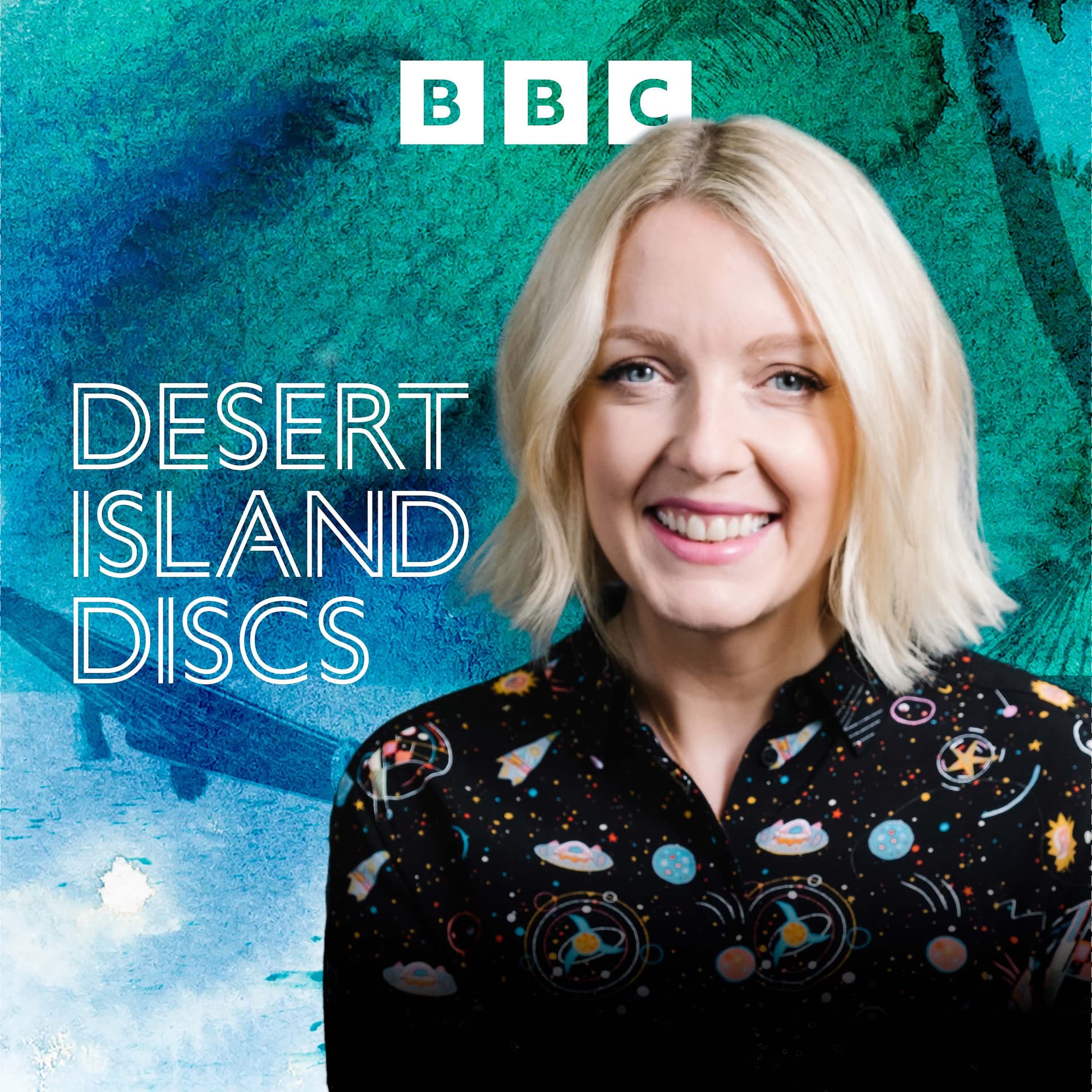
Presenter Lauren Laverne Producer Paula McGinley