In short
Podcast Episode Summary: Professor Dame Carol Robinson on Desert Island Discs
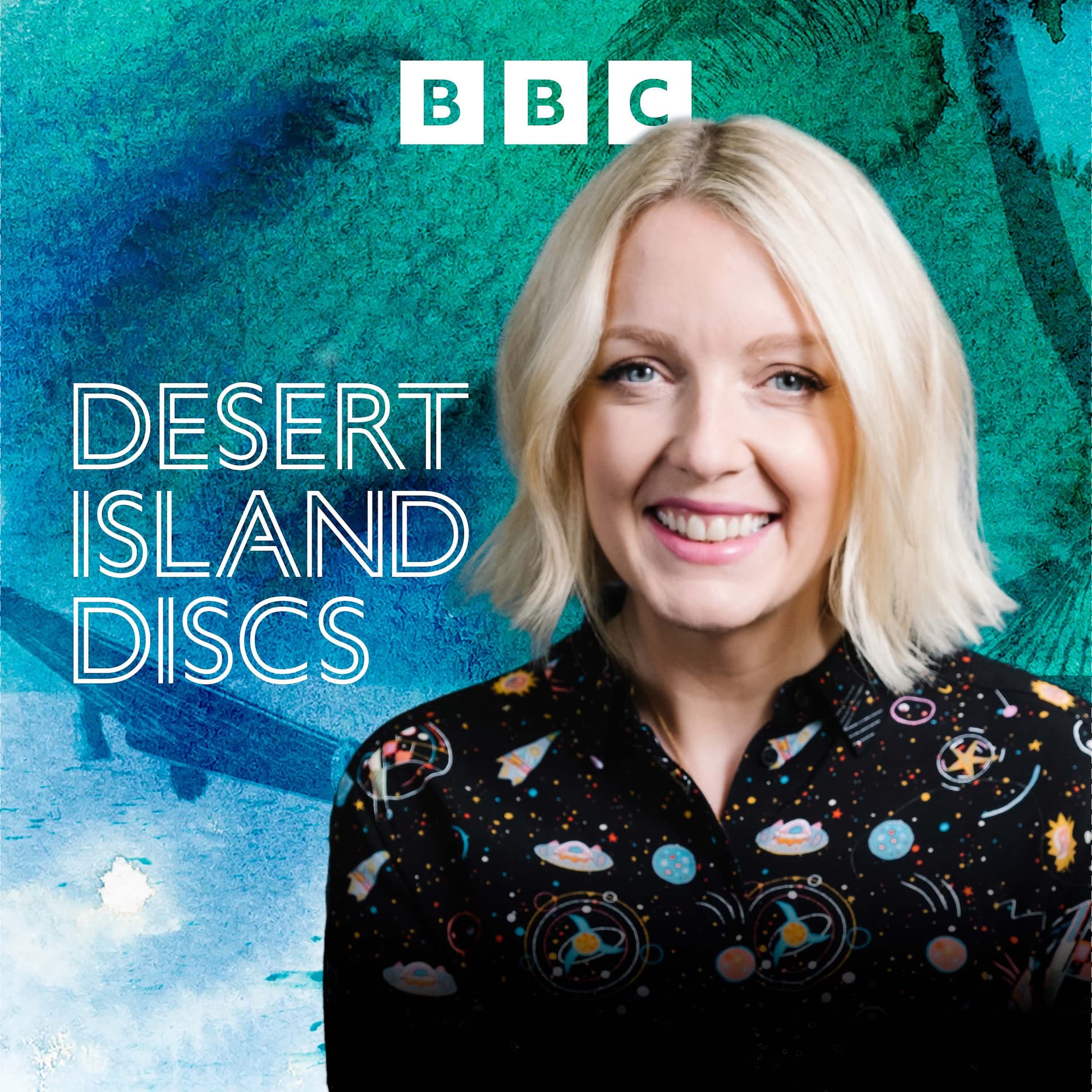
Overview In this episode of *Desert Island Discs*, host Lauren Laverne interviews Professor Dame Carol Robinson, a pioneering scientist known for her contributions to chemistry and the development of mass spectrometry techniques. As the first female professor of chemistry at both Cambridge and Oxford, Robinson shares her journey into science, her personal life, and the music that has accompanied her throughout her life.
Early Life and Education
- Childhood Interests:
- Born in 1956 in Beckenham, Robinson exhibited an early curiosity about nature, collecting flowers, shells, and later breeding mice to explore genetics.
- Developed a love for chemistry, often studying the periodic table as a child.
- Entry into the Workforce:
- Left school at 16 to work as a laboratory technician at Pfizer, where she first encountered the mass spectrometer.
- Pursued evening and weekend studies, obtaining ONC and HNC in Chemistry, eventually earning a PhD from Cambridge.
- Career Break:
- Took an eight-year break to raise her three children, after which she returned to a scientific career.
Scientific Contributions
- Mass Spectrometry:
- Robinson utilized mass spectrometry to study complex macromolecules, fundamentally changing the approach to drug discovery and understanding biological processes.
- Founded the Kavli Institute for Nanoscience Discovery in 2021, focusing on interdisciplinary studies in nanoscience.
- Breakthroughs:
- Successfully preserved proteins in their folded states during mass spectrometry, challenging existing beliefs about protein structure in gas-phase environments.
Personal Insights
- Drive and Competitiveness:
- Attributes her competitiveness to her background in sports, particularly running.
- Describes her approach to science as fearless and driven, often pushing against the norm.
- Family Dynamics:
- Discusses the influence of her parents on her career aspirations and personal decisions, particularly her mother's traditional views and her father's modesty.
- Hobbies and Interests:
- Enjoys running, which she uses as a reflective practice, and has a fondness for music, often using it as motivation.
Music Selections Robinson's eight chosen tracks reveal her personal memories and inspirations:
- Girl on Fire - Alicia Keys: A motivating and empowering song.
- She’s Leaving Home - The Beatles: Reflects on her experience of children leaving home.
- Dance of the Knights - Prokofiev: Evokes memories of family and sports.
- Sonnet - The Verve: Highlights the importance of friendships.
- Wild Horses - The Rolling Stones: Associated with her second husband.
- Golden Brown - The Stranglers: Reminds her of a memorable experience at a Cambridge May Ball.
- Stairway to Heaven - Led Zeppelin: Emblematic of her life’s journey and emotions.
- The Scientist - Coldplay: Represents her dedication to her scientific colleagues.
Book and Luxury Item
- Book Choice: *The Herbal Apothecary* by JJ Pursell, to explore medicinal herbs and concoctions on her desert island.
- Luxury Item: A portable mass spectrometer, combining her scientific passion with enjoyment.
Key Takeaways
- Fearlessness in Science: Robinson emphasizes the importance of being bold and innovative, often pushing boundaries in her field.
- Balancing Career and Family: She successfully navigated the challenges of motherhood while pursuing her professional aspirations.
- Supportive Work Environment: Founded the Kavli Institute to foster a collaborative and supportive culture in scientific research.
Conclusion Professor Dame Carol Robinson’s journey from a curious child to a leading figure in science illustrates the intersection of personal passion, professional excellence, and the importance of supportive communities. Her eclectic music choices reflect her life's milestones, and her scientific innovations continue to influence drug discovery and molecular research.
Written by AI. May contain mistakes. Listen to the episode to check what was said.
Transcript
Automatic transcript. May contain errors.0:00BBC Sounds. Music, radio, podcasts. Hello, I'm Lauren Laverne and this is the Desert Island Discs podcast from BBC Radio 4. Every week I ask my guests to choose the eight tracks, book and luxury, that they'd want to take with them if they were cast away to a desert island. For rights reasons, the music's shorter than on the original broadcast, but you can find a version with longer music tracks on BBC Sounds. Listeners will also get access to episodes 28 days earlier than everyone else. I hope you enjoy listening.
0:51My cast away this week is the scientist Professor Dame Carol Robinson. Her pioneering work uses a machine called the mass spectrometer, which she's employed in new ways to study complex macromolecules in their natural state, paving the way for innovations in drug discovery and novel ideas about the way our bodies work. Today she has a global reputation and works at the Kavli Institute for Nanoscience Discovery, an organisation she founded. She's been awarded scientific prizes from all over the world, is a former president of the Royal Society of Chemistry and was the first female professor of chemistry at both Oxford and Cambridge universities, but her path towards this scientific life of excellence has been unconventional.
1:36She left school at 16 and started work as a laboratory technician, studying for her degree in the evenings and at weekends. She took an eight-year career break to bring up her three children against the advice of many of her peers before picking up the mantle once again, achieving scientific breakthroughs and pushing mass spec technology to places previously thought impossible. She says, as a scientist, I've always been quite fearless about going in my own direction. That has been my mantra throughout my career. I never wanted to follow the crowd. Professor Dame Carol Robinson, welcome to Dazz Island Discs.
2:11Thank you. It's a real pleasure to be here. Carol, we're delighted to have you here. And you are fearless then. Also, I hear extremely competitive. Where does that come from in you, do you think? I think competition came really from my sporting career, which was not always that good, but I always liked to run and I always wanted to win. So maybe it coming from there and my father would have liked me to be playing at Wimbledon. He was very competitive on my behalf. So he was a good tennis player and I think wanted the same for me. And what about at school? You know, I heard you were quite competitive about your grades.
2:44I was competitive at maths. I think that's one of those things where you can sort of start a race to get through all the thumb cards and then people would try and catch me up and then I would push on and try and maintain my lead. There is a bit of an assumption Carol especially among non-scientists that labs are sterile controlled environments but you've said that labs can be unruly places where magic happens. Tell me more about that. That sounds a bit dangerous but magic is I suppose it's that breakthrough when you get really excited that something that nobody thought would ever work finally works and they just wow that's so exciting it's so um yeah magic but magic is unbelievable whereas this is believable but we never quite thought we would get there so maybe magic you also see a lot of beauty in these spectra you know in observing the data that the mass spectrometer creates tell me about that because i find that very interesting.
3:43I'm glad you find it interesting. Most people can't understand why I would find it interesting because you look I'm looking for patterns and I look at peaks and signals so yeah I find it quite beautiful when they arise from the sort of noise then out pops these peaks and it's just a magical moment. I do like patterns I like symmetry I'm very into understanding patterns and what they're trying to tell me and often we say we can't interpret at my spectrum but that's because we're not thinking about it correctly so I like that what's it trying to tell me what can I read in these lines you mentioned um being sporty as a kid and your dad encouraging you to go down that route um you are a runner still I think tell me about that part of your life running I was a sprinter at school so I've always loved running I think there's a sort of thrill about the speed that you can get from your own body um and then And as I got older, of course, I wasn't very fast at all, but I still enjoy it.
4:42And I like to run. I like to run every other day if I can, because I like to think about something in the lab that I can't understand or a meeting I'm going to. You know, what are the points I'm going to make? So it's a time when you work out problems. It is. It is. And it's, you know, often people want to run with me and I try and make an excuse because actually I quite like the headspace that I get from running. Do you listen to music? I do. Yes, quite often. And if I do run with my daughter, we have certain tracks that we really like. Well, I think on that note, we should dive in then, Professor Dame Carol Robinson, with your first.
5:19What's disc number one? So it's going to be Girl on Fire by Alicia Keith. And I find this a very motivating song. It's something I run with my daughter to for a while. And I think it's quite empowering. And if I've got a difficult thing going on, I often play this. This girl is on fire. This girl is on fire She's walking on fire This girl is on fire
5:59Looks like a girl but she's aflame So bright she can burn your eyes Alicia Keys and Girl on Fire. So, Carol Robinson, you were born in Beckenham, 1956, the middle child of three. Tell me about yourself as a little kid. What were you like? I was inquisitive, probably... I wouldn't say naughty, but too inquisitive. So I would break rules by trying to find something out, and one day I remember climbing out of my bedroom and sort of escaping out the window. Out the window! and trying to look down on the people on the street just as a sort of different view of the world. My mother came in and was horrified and coaxed me back in and then put bars up on my window.
6:48So I think I was explorative, perhaps, better than naughty. OK, so your poor mum finding you out the window on the ledge and then having to put bars on the window. So it sounds like she had her hands full with you. What was her attitude to this inquisitive little girl that she had? I think probably not great because she wanted me to be more of a little girl. So she would make me dresses and I would tear them. She would do my hair in curls and I would run around and it would be straight again. I think she wanted me to be a proper little girl and I probably wasn't. And you were, as we've already mentioned, very good at maths from an early age.
7:29What did you love about it and how did that go down with your friends at school? I would have some cards in my bedroom and I'll invite them around, but mostly not interested in coming to my house. But we used to play in alleyways between houses in those days and get up to all sorts of things. Explorative science, I'd call it. So, Carol, you were one of three, you know, two brothers either side. What was it like for the three of you growing up? What was the family dynamics like? Oh, I idolised my older brother, David, I think, and my younger brother, I was very protective, Richard. And your mum, was she a homemaker?
8:06She was. I mean, I always thought she was very smart, but obviously the war came along and they didn't really get the chance to do so much. But she was, yeah, she was at home. And she had, by the sounds of it, quite a traditional outlook. She did. Tell me a bit more about your relationship and what she was like. It was an OK relationship. I don't think we always saw right eye. I never really felt she was all that proud of my career. She would have preferred me to be the mother at home with my children. And I was starting to move on. I didn't want to be that person. I wanted to have both things, I wanted to have my career and my family.
8:41And I think she didn't think that was great. You said that she was very shy herself. She was, yes. She kind of visited that on me quite a bit, quite a self-conscious person. And she would always say to me, don't show off, don't put yourself forward for things. One time I was chosen for the lead part in a play and she said, oh, you don't want to do that, be showing off. I was, oh, I thought it would be good. So there was that kind of conflict between this, I think. And if ever I gave a lecture, she would say, how can you give a lecture? You're so quiet. And I said, no, I can get there. I can do this.
9:16But I think that did undermine my confidence quite a bit in my early career. I don't think she meant to, just did. and well and it sounds like it was her own her own anxiety actually projected onto you rather than really who you were yeah I think that was true because she was very self-conscious and her father when we went there we would just sit there and we weren't allowed to say anything you know it was very austere sort of upbringing and you sit there with a nice dress and behave I mean she got to see some incredible success in your career and she did celebrate some of it I know that there was one moment that she marked with a gift to you she did in fact I'm wearing it today it's a watch that she gave me and I was actually so surprised because I became a Royal Society Research Fellow and this is the sort of junior fellowship that you get and I was so happy because it was an independent career for me you know it meant I could start my own group and I remember thinking well that's the biggest award I'm ever going to get and she said oh we must mark it because my father had sadly passed she said he would have been proud we must buy you a watch and so she put me a watch that you know she couldn't afford really but I'm so happy that she did because it's a great memory and then you know you went on to be the head of the Royal Society of Chemistry so you know many more kind of yes landmarks but we just marked the first one because we thought that would be it you thought you got to the top of the ladder but actually I thought oh this is amazing I never thought I'd get this and then of course yeah Let's have some more music Carol this is your second choice today tell me about track number two Yeah so She's Leaving Home I think is a sort of beautiful narrative tale by the Beatles and it reminds me of when I left home and my mother was clearly upset and then my all three of my children I found it quite heartbreaking when they left home although of course I was proud of them and they were all going off to university and you sort of hold it together and say, oh, it's fabulous, go and enjoy yourself and then sort of cry all the way home.
11:21But, you know, it just always reminds me of those moments. I think it's a really great, beautiful record. She, we gave her most of our lives Is leaving, sacrificed most of our lives We gave her everything money could buy She's leaving home after living alone for so many years.
11:54Father snores as his wife. The Beatles and She's Leaving Home. So, Carol Robinson, we've heard about your mum. Tell me a little bit about your father, Dennis. He worked in insurance. Is that what he wanted to do with his life? No, he always said you don't really do that because you've got a vocation for doing it. you just do that because he wanted to be a vet. And then, of course, the war and either that or a professional tennis player, but neither of those came along. So he went into insurance. Do you know much about his wartime experiences? No, he never talked about it. And I guess the only time he talked about it was when he was teaching me to drive, which was always an angst moment.
12:36And he would say, well, don't argue because I taught people to drive tanks. I said, yeah, but I've got a mini. It's not the same. And so the whole sort of father-daughter thing broke down during driving lessons, I would say. But he was quite, I guess, quite modest, didn't really talk about it. I always think he was very smart. He came very high up in the grammar school rankings, you know, so I was super proud of him. But, you know, he never really talked about it or, unfortunately, had the opportunity to make much of it and then went into insurance which was he told me never really wanted to go into insurance that's just what you do and there isn't anything else open to you.
13:17And did he ever talk to you or allude to the frustrations that he had about those lost opportunities? No sadly not I think he didn't really open up to me. Sometimes I like to think he would and I'd try and engineer opportunities where we would talk but he was quite a closed person I think. Yes and you've already you know used the word modest which obviously chimes with your your mum you know it sounds like they were quite similar personalities then. They were and they they played tennis together and you know I think they were happy-ish as much as can be expected and my mother managed to get him as her tennis partner so she was good at maths she worked out how the draw was going to go and When they met?
14:02Yes, that's how she did it. She worked out how the draw was going to be done and then sort of fixed it so that she would be his partner, which I like that story because it shows that she was actually not as modest and as quiet as I thought she was. Strategic, I love that. So when you were 10, the family moved to Folkestone. Did that new environment broaden your horizons? It did. I do remember being brought up in back-to-back streets and then having countryside and the sea and the Romney Marsh. It was beautiful. So I suddenly started being very interested in nature, collecting lots of different plants.
14:38I'd never seen them like this before. I just had the park, which was grass, and the garden, which was small. But then suddenly I thought, oh, wow, look at all of this, and picked them all and brought them home and identified them all. It became a bit scientific because I started putting them into classes and, you know, sorting it. And what about animals? You said, you know, plants. I did. Shells and stuff. And then I started to have almost like a mini zoo, which didn't go down very well, but I did like breeding animals, or they would breed themselves. I just gave them the opportunities, and we used to buy mice 5p each and put them in a thing and then see what you had.
15:16It was quite an experiment, actually, because you get some beautiful crossings going on. I always cared for them. I didn't mistreat them in any way. What was in the mini zoo then? So you had mice? I had mice, rabbits, guinea pigs and hamsters. You said, Carol, that your friends weren't that interested in doing competitive maths with you, but maybe the menagerie encouraged them to come and visit. A little, but not as much as I'd hoped. I'd made signs, I'd put things up on all the cages. I thought you might be interested in the names of all these animals, but no, not really, no. Were you quite solitary then, as a kid?
15:50Potentially, I think, sadly. and it did bother me because I would see other people were much more popular than me and maybe they didn't have weird things going on like menageries and some cards and so yeah I had some close friends but I wasn't like the popular girl in the class. And when were you happiest do you think as a little girl? Perhaps when I was out with my father at the tennis we would go and watch something at Wimbledon he would go on the outside courts and so that was super exciting so yeah I think I enjoyed those days Let's have some more music Carol it's your third choice today what are we going to hear next?
16:28So growing up with my children every Saturday was influenced by how Sunderland Football Club did which as you know can be a bit up and down but this tune when they run out onto the pitch just is so moving for me so it is Dance of the Nights from Prokofiev's Romeo and Juliet And how did you come to support Sunderland? My husband, the father of my three children, is from Sunderland and I think you cannot get away from supporting Sunderland if you have that in your bones
17:22Thank you.
18:01The Dance of the Night from Prokofiev's Romeo and Juliet, performed by the London Symphony Orchestra and conducted by Claudio Abado. Carol Robinson, you passed the 11 +, but you didn't go to the local grammar school. Why not? Well, this was really my father's choice. He felt that if I went to the grammar school, I would learn Latin and all good things. But if I went to the technical school, I would learn a skill set that would get me a job. So he was keen that I did needlework, cookery, typing, all of these things that at that time had a lot of cachet, I guess. And my brothers were really expected to do extremely well and they didn't really care what I did.
18:43It was in some ways, you know, I wasn't under any pressure. So that was quite good for me. And I could just do what I wanted. I was a bit under the radar. It wasn't in our plan for her to go to the grammar school. She could go there and she could do this. How did you feel about that? And how did you feel about that attitude? Did you resist it? No, I don't think I knew any better, actually, because my mother said, well, you know, being a secretary is a very good job. And typing and sewing and cooking, these are all skills that you're going to need. and I didn't really challenge it. You went to the technical high school then in Folkestone.
19:17Tell me about your time there. How do you look back at it? I look back at it as a very odd place, to be honest. Why did I learn how to set a tea tray that had all the cups in the same direction? And it was almost like we were supposed to be at a finishing school, but we weren't. And what about the academic subjects? Because you did have some of those. And I know you enjoyed chemistry lessons with your teacher, Mr Lester. Oh, yeah, he was great. So we had not good chemistry for a long time, and I thought it was a really not interesting subject at all. And then we had a newly qualified teacher come in, Mr.
19:50Lester. He was very good looking, very sort of dashing, and we all thought, well, let's work hard. Suddenly chemistry was... Yeah, this is the thing. We all loved it. I guess it doesn't matter where your motivation comes from. If you get interested, you will work at it. And this is when I started looking at the periodic table because he introduced it, but he introduced only what we needed. And then I'll tell him a few things that he doesn't think I know. And then he would say, no, stop, stop going there. Just keep it within the syllabus. I had one in my bedroom and I would, I don't know how much to go into this, but elements on the left and elements on the right of the table and how they would interact and what would happen to their atomic structures.
20:31And I drew it all out in books and things. And I was super excited. I thought, oh, it's such a logical subject. I love it. So you thought you'd discovered this, you didn't know that it was already known? I've been known for hundreds of years. You hadn't been taught it? No, I hadn't. It wasn't so much that it hadn't been discovered, it was more, oh, I remember thinking, oh, there's patterns arising here, you know, I can see why this goes here and this goes here. Because he told me, well, just think of it as waxy things, interacting with, you know, hard things or something. And I just, well, it can't be like that, there must be something, something that's governing this.
21:08It can't just be that those things like those. Why? Why do they like them? And so I remember trying to work all that out. You got back in touch with him later. I did, yes. What did you say and what did you think about the career that you chose? I wrote and said, oh, you probably found me a bit annoying, you know, at the back of your class. And he said, of course I remember you. And I shall follow your career with much interest. So if he's listening, you know, he really started a great career for me. So you left school, Carol, when you were 16. and you did pass some more levels. Why did you want to leave instead of carrying on in education?
21:41I didn't think that people who stayed on did very well at our school. I mean, there were examples, but they used to be announced from the stage. You know, so-and-so's got into university and we'd all clap and it would be amazing. But hardly anybody did. And I just remember thinking, well, I probably won't be one of those girls that makes it. So I might as well start working now and see what happens. And were your parents keen for you to leave or would they have liked you to stay on? I don't really think they had any idea what I was going to do and I didn't really either. But I saw in the local paper an advert for Pfizer and I thought I could do that.
22:18I like chemistry. I'll do that and see what happens. And also I needed a bus. Only just 16 couldn't drive and there was a bus to Pfizer. I thought that's the job I'm going to try and get. Well we'll find out where that bus and that new job took you next but first I think we'd better hear disc number four please Carol Robinson, what's it going to be? It's Sonnet, The Verve and I like this because it reminds me of all the friends in my life and how important those people are to you as you go through different phases of your life My friend and me Looking through her rare box of memories
23:20The Verve and Sonnet So Carol, let's talk about what happened after you left school. You answered an ad to be a gas liquid chromatographer at Pfizer, the Pharmaceutical and Biotechnology Corporation. What exactly is a gas liquid chromatographer? I just thought it was an amazing sounding name, but then it turned out to be not very interesting. It was actually an instrument that you put in a potential drug here and at the end you'd just have a peak and another sort of shape. And I remember thinking, well, there must be a reason why some things go through very fast and some things go much more slowly.
23:57I'll try and work it out. I'll try and make the job interesting. Because basically I could do the job and, you know, a machine could have done the job. I didn't really need to do much. Dissolve it, put it in and then read the results. But trying to work out why. I started this notebook of observations and that for me was good because people around me noticed my book. of observations. So then in this role as a lab technician you were kind of rotated around the different labs at Pfizer. So at what point do you come across the mass spectrometer? Yes I walked in as the room was filled with this instrument it's huge in those days and I thought wow this is amazing it reminded me of some sort of car showroom on its side or something and all these bits and glowing valves and flashing lights and it was really exciting I can't describe it and you would look down the oscilloscope and and your peaks would arrive and yeah it was this stuff of dreams really so and the oscilloscope so that's the the like little viewing that's right yeah viewing port yes your window into the world is there and what exactly does the mass spectrometer do?
25:10So it tells you the mass of all the things that are in that particular sample that you're analysing. So if, for example, it was a chemist who'd made something in a synthesis, so he's trying to make a candidate drug, then he would give this to me and I would inject it into the instrument and then the peaks would appear. And then in those days we would have to count all of the different masses by hand and work out what was what. It was very satisfying So you enjoyed that right from the off. I did. And the machine in those days was quite temperamental, wasn't it? But you were good with it. I was, well, I don't know if I was good with it.
25:48I was very patient with it and I loved it. And so I, yeah, a bit like my temperamental mini. So I was always fixing it and trying to make it, tune it and make it better. So I felt an affinity for the instrument that, and I would have, you know, many electric shocks. You wouldn't get them so much now, but I'd have shocks. and one day I was sort of, my foot got sort of stuck in one of the electronic drawers and then it was a great big flash and, you know, it was a big shock and I was sent back in my seat. So yes, lots of things happen that don't happen anymore. And still you kept going? Yes, still liking it.
26:22Well, you know, that was its way of telling me, don't put your feet up there, that's not a good place. The technology was quite new back then, a new era, certainly for scientists in the UK. What was the data that was being produced actually used for? So initially we were using it to work out what small molecules had been synthesised by chemists, research chemists. You could also look at metabolites, so how drugs were broken down in the body. It was used for that as well. And then later it was moved into proteins and proteomics, so we could tell all of the proteins in human cells, for example. and your aptitude was spotted quite quickly by a supervisor who described you having green fingers and was he the person who encouraged you to go back to college and pursue your education yeah i mean i had this thing that if i couldn't get a spectrum i would work and work and work until i did and i think a lot of times people just say oh it's not working and give the sample back and just say that yeah sorry tried everything's not going to fly or it's not going to work but I said, oh no, there's other things we can do.
27:28Let's try this, let's try that. So I think he was impressed with that. Let's have some more music, Carol. It's your fifth choice today. What are we going to hear next and why are you taking it with you today? This disc, Wild Horses, The Rolling Stones, is when I met my second husband, David, and he sent me this track and I thought it had a really nice meaning behind it. How did you meet? Oh, we met at the Vice-Chancellor's house. I think she knows that, the current Vice-Chancellor. I was being introduced as a new professor in Oxford and he was there representing the Medical Sciences Division. Actually, at first I thought he was just showing me around as a fellow scientist and then I realised that we had more in common than just a scientific background.
28:15Childhood living is easy to do. The things you wanted, I bought them for you.
28:43The Rolling Stones and Wild Horses. So, Carol Robinson, you studied for a national certificate, then a higher national certificate, and then you got a degree from Medway College of Technology. All of that took seven years. How did you manage your studies while holding down a full-time job? Yeah, I sometimes wonder that. I worked every evening, pretty much, and then I did work weekends. What was driving you? I started to feel not having a degree was quite a big disadvantage because the people around me at Pfizer who had degrees were treated much better and given much more credit for things so I started to feel it was a bit all a bit unfair and if I wanted to this is the competing bit again I guess but if I wanted to compete I better get myself a degree and even when I got the part-time degree I still felt that they valued somebody who'd gone through the proper route or the other route I guess is the way to put it.
Read the full transcript
29:43So you left Pfizer in 1979 after graduating. Why did you decide to leave? Well mainly because of that whole issue of you know you're a graduate but you're not one of the better graduates who've been to proper university you've done a part-time course. I actually thought I had much more of a skill set because I'd been working for seven years but that sort of argument didn't really wash. A new graduate coming in was immediately on a different scale to the technicians. And even though presumably you'd be showing them how this machine worked and how to get the best out of this. Constantly I was training new people and constantly they were on this other scheme to me and I thought I'm going to make a difference here, I'm going to go.
30:24So Carol, you started studying for a PhD at the University of Wales but you didn't finish it, why not? That was quite a tough time for me. That was a very male-dominated era in the lab where everyone was expected to pitch in and lift a gas cylinder and there would be no difference between the men and the women in the lab. So I didn't mind that. You were expected to do things you physically couldn't do. And I would often be walking home at two in the morning or something because the machine had broken. Or I would sleep on the machine, really. I don't know how I did that, but I just put my head on it.
30:59I was so tired, I'd sleep. And I wasn't allowed to work in the day. Only postdoctoral researchers were allowed to work on the day. So I would start at six and I was expected to hand over the machine still working at 8 a.m. the following morning, having had a pot noodle in the lab. That's what we used to eat. So it doesn't sound like you were getting a lot of support then from your lecturers. I mean, if you were, you know. No, it was quite lonely. And I really, I became ill. I had glandular fever because I was working so hard, antisocial hours and not sleeping properly. And so I applied to various places.
31:34Could I come and do a PhD? And then I was very fortunate. Ian Howe was my supervisor, second supervisor. and he said I'll have a word with somebody at Cambridge and then very fortunately they accepted me. So that's amazing, isn't it? It is amazing. What's even more amazing is that PhDs, which generally take three to six years to complete, you've finished yours in two. Yeah, that's because I'd wasted a year's money in... Well, not wasted, spent a year's money already, so it's a three-year thing. I'd already had one year, so I had to do it in two. I think I was trying to prove myself as well. I was always feeling like I was the underdog imposter, whatever you like to call it.
32:18Tell me about the first hall dinner. The first hall dinner was terrible. Homemade dress and sitting at the high table and the question was, where was your first degree? And everyone were very high-ranking universities. And I said, oh, I made away at Maidstone College and part-time. Oh, was it a correspondence? course. No, it's a proper registered course. But everyone starts laughing. Oh, could you row? How did you get in? Oh, maybe the lecturer quite fancied you. It was so demeaning, so embarrassing. And this time the whole table's kind of laughing and I'm feeling two inches high. And I remember saying, that's it, never go to another dinner, ever, in my whole life.
33:05Did you? Of course. I've been to many. And now I host them and now I make people feel I hope very included. What does it matter? Why do we care? Why do we care what degree? You're here, it's wonderful, let's celebrate. And I never ask people those sorts of questions because I know how it can feel. All right, Carol, let's have some more music. It's your sixth choice today. What's next and why? So I've chosen Golden Brown by The Stranglers because I was fortunate enough to go to a May ball while I was at Cambridge. And again, this was something I never thought, I'd be able to afford or anything like that but somebody said to me, I've got a spare ticket would you like to come?
33:43I said, oh, I'd love to and quickly rocked up a dress and went. What was the dress like? Did you make it? I did. Talk me through it. A sheath of silk and then because I like shape and asymmetry I thought it was quite a good design. And does this music take you back there? Yes, so the Stranglers had played at King's College Cambridge, not while I was there but it became a sort of anthem of that college and that's where I went and this was played a lot so it reminds me of that beautiful summer in the dress that didn't fall off and had a great time.
34:38Every time, just like the last, on the ship, tied to the mast, two distant lands. The Stranglers and Golden Brown. So, Carol Robinson, you got married in 1982 for the first time. You had your first child the following year and then went on to have two more children. And you decided to take a career break until they were established at school. That lasted for eight years. Was that a difficult decision for you to put your professional dreams on hold after working so hard to get your qualifications? No, it's an interesting thing. I've never once regretted that. And people think I should have or why didn't I?
35:19But I loved having my three children. I had Stuart, then Paula and Colin. And watching their interactions and their development was one of the best times, I would say. so once the kids have reached school age you saw a job advertised that pretty much had your name all over it how did you spot the ad yeah so they were i'd taken them to as i often did to story time quite time for me reading the back of the new scientist and there was a job at oxford so this is in a library it was the local public library and there was this advert mass spectrometrist required at Oxford. Wow, that is me. That is fate intervening.
35:59It was. So tell me about the job and also how you were feeling about it because, you know, I would guess eight years is a long time in science. Had you been able to keep up with what was happening? Well, I tried to keep up, but I wasn't very well prepared. I talked about my PhD, which was eight years out of date and they had a current person interviewing against me. So I felt he's going to get it, not me. But I really tried. I really tried in that interview and they showed me a spectrum and I was off. So you started working as a postdoctoral research fellow at Oxford University and you were reunited with the mass spectrometer, your beloved machine.
36:39You started looking into bigger molecules, including proteins. Now, forgive me for trying to simplify this, Carol, but the challenge was to keep the proteins folded once they went into the machine. Why was that so important? Yeah, so the proteins would go in, and most people didn't mind if they unfolded and became like a linear string. But I wanted them to be coiled and folded and curled because those folded states are the ones that interact with other proteins. So I was thinking, if I could just keep that, then I'll learn about its friends and neighbours and all the things that are close by in the cell.
37:16So the key was to keep the proteins folded, but that meant the spectrum wasn't as clear when it came out of the machine. Okay, so it was this trade-off and you were determined to preserve the folded state. What did people around you, your fellow scientists, think about what you were trying to do? Well, firstly, they would say it's very ugly. Why do you want those peaks to look so fat and so broad? It could be sharp and if you denatured it like this, then you would get much better spectra. I said, I know that, but I don't want to do that. I want it to be like this. So you want to see these proteins in their natural state?
37:51I do, and I don't mind if they've got other things attached to them which make them look a bit ugly. That's all part of their charm. So let's see what we can learn from them. So the prevailing belief at the time was that proteins couldn't maintain their structure outside of water. But you showed that proteins in their folded states could be preserved in what's known as the gas phase, and that was pioneering discovery. how did you manage to get them to maintain their structure and still get the information that you needed so what we were trying to do was to cool them to so they didn't have so much energy that they would start unfolding kind of keep them as cool as you possibly could transition them in to the gas phase in a very cool solution in which they were happy and then don't disturb them too much don't excite them too much keep them calm and cool and keep them happy flying along in a folded state how did you feel making that breakthrough i do remember these days i remember thinking oh wow that's so exciting but then no one was excited and i remember being quite disappointed by that i was thinking can't you see look what we could learn and they're just oh we don't really need that we've got other ways of doing it we're not really interested and so So that was a bit sort of a down time because I remember thinking, but surely this is so exciting and why doesn't no one else think so except me?
39:14So you were the lone voice at that point. What about the manufacturers of the mass spectrometer? What do they think? Because you were using the machine in a way that it hadn't been used before. Exactly. And I remember them saying to me, why don't you just do what everybody else does? I said, of course I don't want to. And they said, oh, you're like some kind of a witch that comes in with these magic spells to get the instrument to work in a different way oh is that how you see me I'm just trying to do what I'm interested in and I remember being a bit frustrated because I'd go to a manufacturer and they said no no we've engineered it to do this and I'd say but I want to do this and we'd have a small discussion or disagreement I'm not sure and then I'd said well I want a valve here so that I can adjust the pressure here and they said well that's not necessary.
40:01I said, no, if you don't give me that valve, I'll put a drill in it and make my own valve. And it's, no, no, you're not putting a drill to it. So yeah, we had conflict there, I guess. So they would modify it for you so that you didn't start. In the end, they did. And then people would say, oh, I want a Carol Robinson mass spec. So it wasn't so bad. Well, we'll find out what it revealed next. But first, I think we'd better have some more music. Your seventh choice today. What's it going to be, Carol? Stay Away to Heaven, I'm sure you've had that lots of times by Led Zeppelin and this was a tune that we played at our wedding and it was for me very moving and yeah, I love this music.
40:41This is your second wedding then Carol, where did you get married? Oh, we got married in a stately home just outside Oxford. And my son and David's daughter did readings. And my eldest son gave me away, as they say. And my first granddaughter followed me down in her tiny dress. So she was just one. A little flower girl. Yes. There's a lady who's short All that glitters is gold And she's buying a stairway to heaven When she gets there she knows If the stores are all closed With a word she can get what she came for Led Zeppelin and Stairway to Heaven So Carol Robinson, you became the first female professor of chemistry at Cambridge in 2001 and you won the Rosalind Franklin Award from the Royal Society a few years after that.
41:41Your win, though, attracted some surprising headlines. What do you remember about what they had to say? I remember that one because it did say mother wins prize rather than scientist wins prize. And the woman who's writing the article called me and said, I see it comes with 30 ,000. That's a lot of shoes. And I really felt she was trying to provoke some kind of a comment from me, which was not great. How did you react? I think I just ignored that thing and didn't answer but if it was a man it would be a pioneering scientist wins top award or something but if it were as a mother she's won a prize and it's amazing What did you win it for?
42:24Oh the mass spectrometer, very nice So tell me a little bit about the potential medical applications of your research Yeah so I remember we were looking at these small molecules and then there were targets that they interacted with and they were the proteins that we'd managed to get to fly. And these particular proteins were ones that are in the membranes of our cells and so they actually need like a giant soap bubble to flow through the mass spectrometer because they're not happy just being in water or aqueous. So you have to have a detergent or a soap. You push that through and I remember thinking these are the targets of 50 % of drugs.
43:05If we can learn ways to read what they're telling us, we could learn much more about these drug targets. And which diseases are we talking about? So these are hormonal imbalances. So one of the ones that we're looking at is an androgen surge. Could we control that? This would really help with fertility problems. So, yeah, I'm super excited about this. In 2021, you founded an institute to study, among other things, brain and mental health, infectious diseases and malaria. It's called the Kavli Institute for Nanoscience Discovery. And I know that its name has a very special meaning and says a lot about your approach to science and the people who work in it.
43:48I've worked in a lot of different places and seen a lot of different labs and a lot of different cultures. and then I decided I would make it be the institute that I'd always wanted to work in when I was younger. So it's kind, the subliminal message, Cavley Institute for Nanoscience Discovery and that's to spell this message that I want you to be considerate, be supportive, be collaborative and really evolve this culture where everybody's supported and enjoying their work. So those are the values. is it true that you used to cook for the team? I do cook for the team. I don't know how you found that.
44:28I cooked for the team only last week. A barbecue for 30 people. Yeah, no, I quite like it because I think it's a way of sort of saying I appreciate all the things that you do and take the day off and start cooking early and hope that it turns out okay. Thank goodness you did all that domestic science at school, Carol. It comes in handy. Carol you're also incredibly tenacious in the lab and you've got expressions that keep you going when you're up against it what do you say to the team? Well I often say it's not working yet and the yet is the critical work because a lot of times people say it's not working and I say okay you mean it's not working yet you haven't quite found the sweet spot you haven't quite got the conditions right we will find what we need to do so yet is the key word Carol I'm about to cast you away to the island what will you miss the most?
45:22As you pointed out I was quite shy and quite alone a person but I've become much more sociable as I've got older and I have quite a lot of friends and family of course and I'll be very sad and miss them a lot particularly I now have four wonderful grandchildren and I won't see them growing up so yeah it's a bit cruel to cast me away to be honest Sorry about that Well, we'll let you take one more track before you go. It's your eighth choice today, your final disc. What is it? Yeah, so I'd chosen The Scientist by Coldplay because I wanted something for all the scientists I've ever worked with. And this isn't quite right because it's about breakup, but it does have in it.
46:03No one ever said it would be easy, and that's something I often say to my group. We don't do it because it's easy. We do it because we want to find out the answer. so this kind of resonates with me.
46:46Coldplay and The Scientist, the perfect choice for you, Carol Robinson. So it's time I'm going to cast you away to the island, Carol. I'll give you the books, of course, the Bible, the complete works of Shakespeare and one other book. What will that be? So I'm going to take The Herbal Apothecary. I think I'll be surrounded by plants and flowers and I will have a lot of fun trying to identify them and then making concoctions from them. It's something I like to do. I read a beautiful recipe in there where she took all these flowers and then made a sort of foot bath. And I thought, oh, actually, I quite like the sound of that, making potions.
47:24That'll cool you down on the island. I think so, yes. Yes, that sounds all right. Okay, you can have that. You can also have a luxury item. What will that be? Well, this is one you won't have heard of, I don't think. A portable mass spectrometer. I think I would be so sad not to have one. This is a first. Okay. Now, the deal with the luxury item, Carol, is that it's not supposed to be practical. Well, it is a bit practical, but it's also a joy. But I know that you can see the beauty in the spectra. I can, I can. And I feel that together with my book of how to make things, I could then study them in my portable mass spectrometer.
47:59So it's not really practical, it's a luxury. I tell you, it's a luxury. It's sensory stimulation. Absolutely. Artistic exploration, the expanding of the mind. And if I'd made things and I couldn't look at them in the mass spec view, I would be sad. I don't want that. It's a happy thing. Well, you've talked me around. It's yours. And finally, which one track of the eight that you shared with us today would you save from the waves first if you had to? I think it would be the Stairway to Heaven because it moves me every time. Professor Dame Carol Robinson, thank you very much for letting us hear your Desert Island Discs.
48:33It's been my pleasure.
48:56Hello, I hope you enjoyed my conversation with Carol and I'm very pleased she's got some scientific pursuits in mind on the island. I especially like the sound of a footbath. We've cast away many scientists, including Professor Dame Ejoma Ochebu, Professor Brian Cox and NASA's Dr Nikki Fox. The studio manager for today's programme was Sarah Hockley. The assistant producer was Christine Pavlovsky. The executive production coordinator was Susie Roilance. The content editor was Mugabe Turia and the producer was Paula McGinley. Next time, my guest will be the former England rugby player Maggie Alfonsi.
49:29I do hope you'll join us.
49:40I'm Rory Stewart, and I want to talk about heroes. When I was a child, I imagined a heroic future for myself in which I would achieve great things and die sacrificing my life for a noble cause before I was 30. But my experiences in the Middle East and in politics showed me that there was something deeply wrong with my idea of heroism. From BBC Radio 4, my podcast, The Long History of Heroism, explores ideas of what it meant to be a hero through time. How have these ideas changed? Who are the heroes we need today? Listen to Rory Stewart, The Long History of Heroism, first on BBC Sounds.
From the publisher
Professor Dame Carol Robinson is a scientist who was the first female professor of Chemistry at both Cambridge and Oxford Universities. She has been awarded scientific prizes from all over the world for her pioneering work studying complex macromolecules using an instrument called the mass spectrometer.
Carol was drawn to science as a child growing up in Folkstone where she started collecting flowers and shells before moving on to breeding mice because she was fascinated by their genetic makeup. She grew to love chemistry in particular and pored over the periodic table in her bedroom.
She left school at 16 and joined Pfizer, the pharmaceutical and biomedical company, as a laboratory technician. At Pfizer she began working with the mass spectrometer which measures the mass of all the atoms in a particular sample. She studied for an ONC and HNC in Chemistry in the evenings and at weekends and later gained a PHD in Chemistry from Cambridge University.
She was appointed DBE in 2013 for services to science and industry. In 2021 she founded the Kavli Institute for NanoScience Discovery, an interdisciplinary science institute dedicated to studying structures and materials at an ultra-small scale.
Carol has three children from her first marriage and lives in Oxfordshire with her second husband David.
DISC ONE: Girl on Fire - Alicia Keys DISC TWO: She’s Leaving Home - The Beatles DISC THREE: Prokofiev: Romeo and Juliet Suite No. 2, Op. 64b: I. Montagues and Capulets - Dance of the Knights. Performed by London Symphony Orchestra, conducted by Claudio Abbado DISC FOUR: Sonnet - The Verve DISC FIVE: Wild Horses - The Rolling Stones DISC SIX: Golden Brown - The Stranglers DISC SEVEN: Stairway to Heaven - Led Zeppelin DISC EIGHT: The Scientist - Coldplay
BOOK CHOICE: The Herbal Apothecary: 100 Medicinal Herbs and How to Use Them by JJ Pursell LUXURY ITEM: A portable mass spectrometer CASTAWAY'S FAVOURITE: Stairway to Heaven - Led Zeppelin
Presenter Lauren Laverne Producer Paula McGinley