
 Ask ChatGPT
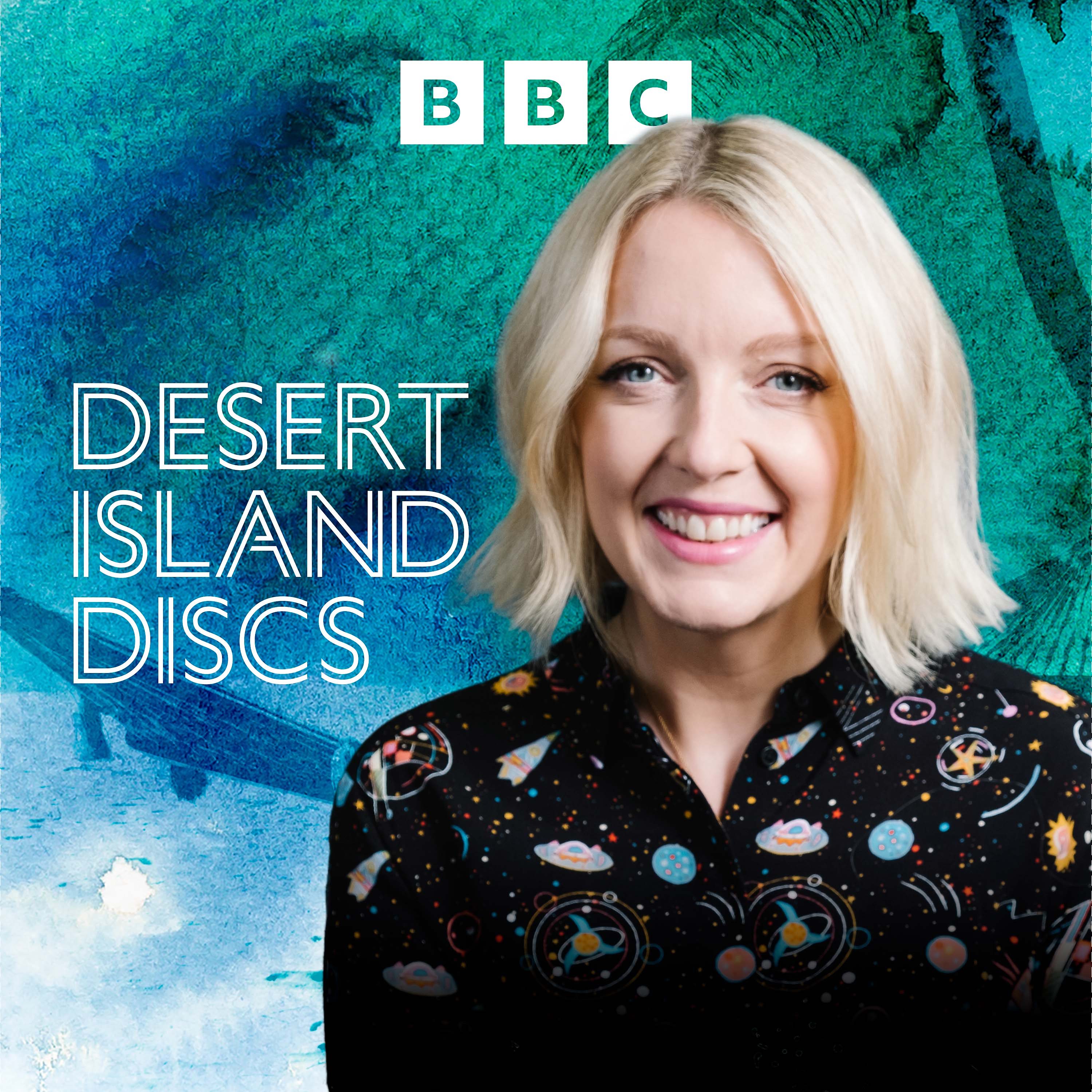

- Podcasts
- Desert Island Discs
- Professor Dame Ijeoma Uchegbu, scientist
In short
Desert Island Discs with Professor Dame Ijeoma Uchegbu, a pharmaceutical nanoscientist, discussing how chemistry and nanotechnology can deliver medicines to hard-to-reach parts of the body, her career shaped by rejection and doubt, and her experiences of migration, racism, and race-equality work in academia.
Guest background
Born in Hackney, East London (1960) to Nigerian parents; studied pharmacy from age 16; PhD completed while caring for three children; co-founded a pharmaceutical company in 2010; appointed President of Wolfson College, Cambridge; later Provost’s Envoy for Race Equality at UCL.
Key claims
Nanoparticles can increase drug efficacy and reduce side effects by targeting diseased tissue; a long-fiber molecule helps nanoparticles stay intact; nasal delivery can bypass the blood-brain barrier; her opioid-crisis candidate is designed to avoid addiction and tolerance.
Notable examples
Drug delivery to the back of the eye via eye drops instead of injections; clinical trials for severe allergic eye disease; nasally delivered encephaline-based pain therapy; initiatives reducing UCL awarding gaps and removing eugenicist names from buildings.
Written by AI. May contain mistakes.
Chapters
0:30
Introducing Professor Ijeoma Uchegbu
Overview of Professor Uchegbu's background and her scientific work.
“of nanoparticles to take medicines to hard-to-reach areas of the body, increasing efficacy and reducing side effects.”
2:17
Passion for Chemistry
Professor Uchegbu discusses her love for chemistry and its everyday applications.
“Now, Ijeoma, I know that you're interested in the chemistry that underpins our everyday lives, the kind of thing that non-scientists might not appreciate.”
4:29
The Journey of Discovery
Exploration of the challenges and rewards of scientific discovery.
“And who's the first person that you tell when something like that happens?”
6:02
Cultural Roots and Personal History
Ijeoma shares stories about her Nigerian heritage and family background.
“You have the other hand as if you're counting notes.”
7:35
Growing Up with Foster Care
Professor Uchegbu recounts her experience with foster care and family dynamics.
“Then he decided to call me Ijeoma, which means have a good trip.”
10:40
Reuniting with Her Mother
Discussion of Ijeoma's reunion with her biological mother and its emotional impact.
“And my father, when he arrived and he decided to set up his life, every weekend he would play music.”
14:01
Processing Grief and Family Dynamics
Explore how personal loss and family relationships shaped Ijeoma's early years.
“It's probably not something you could process at that age.”
16:48
The Influence of Music and Language
Discuss the cultural significance of music in Ijeoma's household and language barriers.
“We had a small record player in our bedroom, you know, sort of taking it out and just marvelling at the fact that I could now afford my own music.”
18:09
Moving to Nigeria: A Life-Changing Transition
Ijeoma shares her experience of moving to Nigeria and the challenges she faced.
“when are we going to get around to the dissections?”
21:05
Discovering a Love for Science
Learn about Ijeoma's journey to discovering her passion for science in Nigeria.
“It was coming from if you had a fight with someone, that would be the first thing that would come out.”
Show all 26 chapters
22:28
Rebellion Through Music
Ijeoma reflects on the cultural impact of Fela Kuti's music during her university years.
“But I then realised, well, but physics was the same, maths was the same, chemistry was the same, biology was the same.”
23:29
Struggles and Resilience in Academia
Ijeoma recounts her challenges as a single mother pursuing a PhD in London.
“where the military couldn't hear it and we would dance to it.”
27:15
Nanoparticles and Their Medical Applications
Understand the significance of nanoparticles in modern medicine and their functions.
“and so I felt that I needed to win that approval as a scientist in the making before actually telling him I've got these challenges.”
28:00
Understanding Nanoparticles and Their Medical Applications
Learn about the role of nanoparticles in targeted drug delivery and their potential to reduce side effects.
“So nanoparticles are tiny particles, a thousandth of the width of a human hair.”
28:56
Music's Influence on Personal Memories
Discover how a song can evoke memories of childhood experiences and feelings of belonging.
“This is Coat of Many Colours by Dolly Parton.”
30:10
Love Story: Meeting Andreas
Hear the heartwarming story of how Ijeoma met her husband during a conference in Germany.
“Ijeoma Achebu, you were awarded your PhD from the University of London in 1994.”
32:01
Innovations in Nanotechnology for Medicine
Explore how Ijeoma designs molecules for drug delivery and the challenges of getting drugs to the brain.
“And then in 2006, you became the professor of pharmaceutical nanoscience at the School of Pharmacy, University of London.”
34:06
Addressing the Opioid Crisis with New Therapies
Learn about a new non-addictive nasal spray that could revolutionize pain management.
“And we are developing a nasal spray for pain as well.”
35:21
Developing Eye Drops for Allergic Eye Disease
Discover the innovative work in creating eye drops that target severe allergic eye diseases.
“Share my life Take me for what I am Cause I'll never change All my colours for you Take my love I'll never ask for too much Just offer you Whitney Houston with I Have Nothing.”
39:44
Race Equality Initiatives in Academia
Understand the importance of addressing race equality in higher education and the awarding gap.
“And it used to make me cry because the lyrics are so, they're so gentle.”
42:00
Addressing Educational Inequality
Learn about initiatives to reduce degree awarding gaps for ethnic minorities.
“if you came into university with a particular set of A-levels and you were from an ethnic minority background, compared to a white student coming in with those same A-levels, you were less likely to get this good degree.”
43:38
The Impact of Eugenicist Names
Discover why removing names of eugenicists from campus buildings matters.
“So I'll tell you why it makes a difference.”
44:35
Reflections on Loneliness and Nature
Ijeoma shares her thoughts on isolation and the beauty of nature.
“but one of the proudest things I've ever done is lead that work to get rid of those names.”
45:33
Choosing a Meaningful Book
Explore Ijeoma's choice of 'Angela's Ashes' and its significance to her.
“Or even if you're here, send your children away so that you can study.”
47:15
Planning for Survival on an Island
Ijeoma discusses her practical approach to surviving on a desert island.
“I mean, it is a bit on the practical side, but there's plenty of precedent for taking seeds.”
48:29
Final Thoughts and Key Takeaways
Ijeoma reflects on her journey and her chosen song to save.
“one track of the eight that we've heard today would you rush to save from the waves if you needed to.”

Ask about this episode
Get the gist, explore an idea or ask about something said.
 Claude
On Desert Island Discs, what are the key points of this episode?
Searching your listeningTranscript
Automatic transcript. May contain errors.
0:01BBC Sounds. Music, radio, podcasts. Hello, I'm Lauren Laverne and this is the Desert Island Discs podcast from BBC Radio 4. Every week I ask my guests to choose the eight tracks, book and luxury, that they'd want to take with them if they were cast away to a desert island. For rights reasons, the music's shorter than on the original broadcast, but you can find a version with longer music tracks on BBC Sounds. Listeners will also get access to episodes 28 days earlier than everyone else. I hope you enjoy listening. Thank you.
1:00of nanoparticles to take medicines to hard-to-reach areas of the body, increasing efficacy and reducing side effects. She's currently working on a drug that can reach the back of the eye without the need for painful injections. She's also developed medicines for neurological conditions that can cross the blood-brain barrier, painkillers that could help ease the opioid crisis, and she's finding new ways to target cancer. She was born in London to Nigerian parents. Growing up in both countries led her to fall in love with what she calls the universal language of science. She passed the entry exam to study pharmacy at university when she was just 16, but faced challenges as she followed her academic path.
1:40She completed her PhD while she was in sole charge of three young children and struggling to make ends meet. In 2010, she co-founded a pharmaceutical company to work on real-world applications of her research, which won the Royal Society of Chemistry's Emerging Technologies Prize. Last year, she was appointed President of Wolfson College at the University of Cambridge. She says, I would tell my younger self to work on what you're interested in and ignore all barriers as they are there for a reason, to be broken. Professor Dame Ijeoma Uchebu, welcome to Desert Island Discs. Thank you so much, Lauren, for having me.
2:17Delighted that you're here. Now, Ijeoma, I know that you're interested in the chemistry that underpins our everyday lives, the kind of thing that non-scientists might not appreciate. Can you give us some examples? Yes. So as we're talking now and sitting in this room, all around us is chemistry. The air itself is full of chemical compounds and these chemical compounds, we're breathing them in. They're floating over our lungs and into our cells and they're enriching our cells. And the cells are being enriched by just taking oxygen out of the air and giving forth carbon dioxide. And even when we consider our skin, our hair, those are all chemicals, proteins, fats, various chemicals holding us together in one piece.
3:03So we are walking chemistry experiments then? We are walking chemical reactions. As you've just spoken to me, a chemical reaction has taken place and produced sound. so we are walking chemical reactions. You've got such a passion for your subject and you love research. Why in particular does that excite you that part of the job? You're never bored. You will get disappointment so it's very hard to fund research, it's very hard to get your papers into the journals you want them to be published in but you will never be bored and you could go to bed one night and you're thinking of something, wake up in the morning, you're having a shower, you've clarified your idea, you walk into your lab and you try it out.
3:49You mentioned the difficulties that you can face though. I think you've said every day I don't get rejected for a paper or a grant is a proud day. Rejections are 90 % of a scientist's life. It is indeed because money's tight and money is always awarded around a competition. Only the top 10 to 15 % of grants get funded. So you're more likely to get a no than a yes. You've just got a paper accepted after trying two journals. Each time I got a rejection, it was painful. You actually feel the loss, the lost opportunity. And what about that moment of discovery when you've made it through, you've done the research, and then you make a discovery?
4:29What does that feel like? And who's the first person that you tell when something like that happens? Those aha moments are not so easy to come by. Because the first thing as a good scientist is that you must be consumed by doubt. So even when you see the data and you've interpreted it in a particular way, there's always a part of you that thinks, what if I got a part of this wrong? But we did have a time when we realised we were onto something. What we did was that we wrote it up, we were working, I was working together actually with my husband Andreas. We had developed this new molecule that we were going to use to package drugs to take them to particular parts of the body and we tested it, a quick test, and we found that it didn't destroy cells.
5:12So we thought it should destroy cells based on what we've read. We wrote it up and sent it for publication. So we kind of told each other, this looks particularly interesting. So when do you pop the champagne? I mean, the two of you, you're being very kind of like level and professional. Very level. When do you let yourself get excited? So we get excited. So recently we've gone into the clinic. So we've taken this molecule that I remember drawing in my notebook we've made it and now we've put it into human testing then we get the results that say that the human testing went well that's the time we pop the champagne and the gap between drawing the molecule and popping the champagne is almost three decades oh blimey okay so so it doesn't happen straight away hope you picked a bottle with a vintage yeah let's get started then tell us about your first choice so my first choice is a song called chop my money and in brackets i don't care and this is a song by p squared an afro beat musician and we always play this has to be played we have house parties at christmas we have them at new year three generations are dancing on the dance floor there's a specific dance you have to do and that dance is that you have the palm of your hand outstretched.
6:28You have the other hand as if you're counting notes. As soon as he says chop my money, all of us are doing this. It's crazy.
6:56I don't care, I don't care, because I get a plenty. I don't care, I don't care, I don't care, I don't care. Chop my money, I don't care, by P-Square. So, Ijo Mochebu, you were born in Hackney, East London, in 1960. Your parents, Jane and Gilbert, had come to the UK from Nigeria shortly before you were born. And am I right in thinking that your name has an auspicious connection to their journey? It absolutely does. So my mother arrived. She's 19 years old. She's pregnant with me when they came over. My dad, 30 years old, and they've come to study. And my dad has almost liquidated all his assets.
7:37So for him, this was a big move. And he bought a house in Hackney. They had tenants to pay their way. Then he decided to call me Ijeoma, which means have a good trip. So he was hopeful. He really hoped it was going to be fine. What kind of welcome did they get when they arrived here? Well, as you can imagine, it wasn't that friendly for them. Definitely, my father told me stories of him being chased by a group of boys and their large dogs as he was coming back from work. So he would have to sort of peer around the corner, check whether these boys were not there or whether they were there, and then sprint to his house because he'd be chased by dogs.
8:19But he said he brought it to a stop because one day he approached one of these young boys at the bus stop and he said you know what I'm going to do I've bought an axe so I would advise you not to bother because if you do your dog could make contact with that axe he said it never happened again says a lot about your dad taking the bull by the horns in that way want to find out a lot more about him but you said they came to study so so what were their subjects what were they so my father, he studied electrical engineering and did a HND at a polytechnic. And my mother, she studied anthropology at London School of Economics, LSC.
8:57They came actually to study and then to go back. That was their plan. And that was interrupted by the Civil War then, presumably. Exactly. So he couldn't go back. And he postponed it and started work as a telecommunications engineer. And so a lot of time spent where he was waiting to go back. And I remember each time at home, we'd sort of say, well, this summer we're going back. And we'd all think, well, what does that mean? When you were a baby, your parents placed you with a foster parents, a white family. Do you remember them looking after you when you were little? I really do remember being in the family and being with my auntie Pat is what I called her and her older children.
9:39And it was just a lovely time with this family. And I've often said that the only way I knew I was different was I was looking at their palms and thinking they should be brown because my palms are white and the soles of their feet should also be brown. But I noticed that it wasn't like that. And you were fostered so that your parents could complete their studies and work. They were obviously busy building a life in this new country. Exactly. And it was very common for West African parents to actually send their children to this arrangement. And also bear in mind that they were. So my mother's quite young.
10:10my father also comes from a culture where everybody looks after everybody's children that extended family culture the extended family culture the poking your nose in everybody else's business culture as well where you know what are you doing to your child i think that's a bad idea and i think you should change and people have no qualms actually telling you how to live your life so that's the culture they came from hey jama let's let's go to the music don't worry about your family after it though this is your second choice today what are we going to hear and why So you're going to hear Jeremy by Sir Victor Waifo.
10:43And my father, when he arrived and he decided to set up his life, every weekend he would play music. And he'd set up these speakers. So he'd play it in the living, in the front room, front room in those days, this space where nobody was allowed. And then we'd hear it in the back room. And this was a record he always played.
11:34Joromi by Sir Victor Waifo Ijeoma Ochebu, your father came to collect you from your foster mother's house when you were four. Your parents had separated by that point and your mum had moved out of the family home. When did you next see her? I met her once when I was 13 years old and I had a glorious weekend with my mother. Lots of shopping, a suitcase full of goodies. Would you like to eat this or would you like to eat that? And I'm really fond of food. So I had a great time because she would say, what would you like to eat? and I would think of something completely outlandish and she said right that's it I'm making it for you so that kind of attention was really amazing because by the time I met my mother our family had swelled to six children so there's one out of six struggling for parental attention and then suddenly I've got this one-to-one it was amazing and I can't really explain why it took so long for us to to meet but I remember when she came to hug me she was trembling I mean I was fine I was all blasé teenager you know quite cocky uh but but she was trembling so you could see that it meant so much to her and you weren't able to find out what had happened the the reason that she hadn't been able to keep in touch no I know so so that time when I met her I know we never had that conversation I guess I was so pleased that I'd met her you know because I'd only actually realized that I had another mother to be honest so your father had married again married again and I didn't really realize that um yeah that she wasn't my mother until I think about two and a half years before I met my mother you know I was quite a boisterous child always getting into trouble and and my father sort of called me and said you know I want to talk to you about this and and did you ever think that um you know your mother is not your mother and I And I thought, I'm just going to be nasty and say yes, because I think it's going to hurt.
13:34And he said, well, you're absolutely right. And then, of course, I dissolved into tears because that was not what I was expecting. So meeting my biological mother was quite special. And I'm so happy that it happened before she died. And when did she die? When did you lose her? She died about a year after I'd met her. She'd emigrated to the States. She'd married again, had another child. And my sister was only four months old when she died and she died in her sleep. So she would have been 33. It's probably not something you could process at that age. You must have only come to understand it better as you've grown up yourself.
14:13Absolutely. For example, when I was told that my mother had died, I actually didn't believe it. I thought they're at it again because they don't want me to form a bond or they don't want me to get hurt. and this is the final straw. So I'll go along with it. And then actually when I'm older, I'm sure to find her and we can rectify this nonsense. They being your family. Yeah, that this was just something they were saying to sort of make sure I didn't pine or anything like that. So I went along with it. Then after a while, you're thinking, well, actually, I haven't seen her for 10 years. Must be true.
14:48It is something that's hard to process. But at the time, you're just getting on with it. You're building a shell around yourself so that you don't get further hurt. I think that's what I did. So as you mentioned, your dad played music in the front room. Who would be there with him? His friends. So people would visit him and they'd be members of the Nigerian community and they would come along and there would be lots of shouting and lots of eating. So he was sort of almost a leader of the group because he had emigrated a lot earlier. he would always he'd always have the one-liners ready I think he also fancied himself a bit of a man about town and things like that so I think he was having a really he was having a really nice time but he wanted to get back to Nigeria did that stop him putting down roots here you know you said he was mixing with people from the Nigerian community here I think now with hindsight I do realise that, for example, we never had many English people visit us.
15:50At home, he would speak Ibo definitely, you know, and we didn't speak Ibo. We spoke English, but we could understand Ibo. Ibo is the language spoken in Southeast Nigeria. So I don't think he was making an effort to, you know, you really need to get to know your surroundings. I remember he would say, right, I'm going to read to you tonight. and he'd get a book and start reading and we'd be cracking ourselves up at the pronunciation of the names. We'd be like, no, actually... So he would be, because it was English, he would be murdering Enid Blyton or whatever. Murdering the words. But he'd take time to read to us, which was really, really sweet.
16:29It's time for your third disc, Jorma. What are we going to hear? So we're going to hear Love to Love You, Baby by Donna Summer. And you always remember the first record you ever bought. I remember going to the store, getting the album. I'd been admiring it for a long time before I'd got all my money together to coming home. We had a small record player in our bedroom, you know, sort of taking it out and just marvelling at the fact that I could now afford my own music. And this was the first record I bought.
17:33Donna Summer and Love to Love You Baby. So, Ijeoma, the first record that you ever bought, I mean, there is an undeniable subtext. Blissfully unaware. OK. Unaware completely. Ijeoma Achebu, you were a bright little girl and did well at school. What about science? Did that pique your interest at all? At that point, not really. At that point, not really. And science teaching in those days wasn't like it is now. So no experiments really in primary school. When I got to secondary school, I went to a grammar school. when I got to secondary school, we would do a lot of writing and we would always say, when are we going to get around to the dissections?
18:12When are we going to get around to actually doing things with our hands? I fell in love with science when I went to Nigeria. So tell me about that. You were 13 when you made the move. Obviously, you'd been brought up with an expectation that it was going to happen at some point. How did you feel about moving? The good thing about that was suddenly we had new clothes. So that was all I was thinking about. I I wasn't thinking too much about leaving my friends. But then towards the end, I remember my form teacher said, go and tell the head teacher that you're leaving, that this is your last week.
18:46And I've been this bravado. I'm going to Nigeria. I'm going to leave you all. I'm going to be in the sun. I went to see the head teacher and I just fell apart. I remember being in her office sobbing. and I remember her telling me at least you'll have Christmas in the sun as if that was something that was comforting I then became absolutely bereft that I would never see this place again so that was really really tough and then when I got to Nigeria it was even tougher because I then had a skin condition that sort of confined me to my bedroom so this wasn't it was kind of analogy to An allergy to the sun.
19:25Yeah, to strong sunlight. And I looked like I was a burn victim. So really awful. And people would come, you know, I'm in this dark room. They'd have a look. And it's from their expression that you realise, actually, you're not looking that great because of the way they looked at you. And was it painful? That must have been awful. Painful, weeping. But eventually it settled down. So it delayed me starting school for a bit. but also when you turn up at school looking like a burns victim and you're not speaking like everybody else nobody wants to be your friend and so I went from being the popular child to being someone who people just said you know I really don't want to be your friend that was difficult in especially in the beginning I remember one one particular classmate saying you're just an ugly monster.
20:14But you know what I did? I resorted to comedy. So I used to literally put on one woman plays and I'd have people laughing. And so I would actually use, you know, that to make friends. And eventually I did make friends. But of course, with hindsight, going to Nigeria was the best thing that ever happened to me. The very best thing. Because 1970s Britain was not like Britain is now. You could be racist. It didn't matter. You could be racist in school. You could be racist in the job market. You could have signs saying no black people. And had you grown up with that, seeing that? With that, seeing that.
20:58Racist abuse in the classroom. It was acceptable in those days. And then was that coming from, who was that coming from, other students? It was coming from if you had a fight with someone, that would be the first thing that would come out. And no person that looked like you in any position of authority. I think I had one woman from the Caribbean that was a teacher when I was in primary school. That was the only person I saw in a position of responsibility who was black. Yeah, so in that case, you know, going to Nigeria, what was that like to just then be in a completely different social environment?
21:34It was unbelievable because then when I was, even though I went to a grammar school in Hackney, I had zero ambition. I wanted to go and work in a shop as soon as I could. I was thinking about I need to earn seven pounds a week so I can go dancing on a Saturday, buy myself a new frock from Marks and Spencer and have a good time. I go to Nigeria I see a completely different life I see people in positions of authority that kind of looked like me they didn't speak like me but they looked like me suddenly I thought yes I really do want to go to university and it was around this time that you discovered a love of science exactly how did it happen so I've I've come from a very different curriculum in the UK very different geography very different history very different English language because now I have to learn English language by the rules.
22:29But I then realised, well, but physics was the same, maths was the same, chemistry was the same, biology was the same. So I took refuge in those subjects, which were very similar to what I was learning in the UK. And then I really began to enjoy chemistry, really enjoy it. Why chemistry in particular? I think because you're actually studying, and we weren't even doing things about inside the atom, just the atom you know we were that was the level we were at and how you could build these atoms together to make different molecules was actually to me it was i i felt it was wondrous almost hey joma i want to hear more about what happened next but first i'd love to hear some more music it's your fourth choice today what have you gone for i've gone for zombie by fella nicolat bokuti now zombie is a very special record because this was a record about the nigerian military dictatorship where what Fela was doing was showing that actually this was not competent leadership.
23:28And it was banned, but we would play it at university where the military couldn't hear it and we would dance to it. A little bit of rebellion.
24:00Zombie, oh, zombie. Zombie, fellakuti. Ijo Morochebu, you read pharmacy at Benin University and then completed a master's in pharmaceutical chemistry at the University of Lagos. By this point, you'd got married and you had three daughters, but your marriage was failing, so you decided to return to London. What was the plan? Oh, wow, I wish there was a plan. There was no plan. The plan was to get away and also to see if I could get a PhD. That was it. So, yeah, I turn up Heathrow with my three children with one suitcase between us and 500 pounds in my pocket. And we didn't have anywhere to live.
24:49So we were in a homeless person's shelter in Bayswater, a bed and breakfast for the homeless. They used to have a lot of them in those days. And we lived in one room and we shared a bathroom and facilities with other families. it was pretty hard and you know with the kids I sort of said to myself I've got to do something by way of applying for you know jobs so I go to the library and take the little one when the other two had gone to school how old were they at that point eight four and one and a half oh my goodness one and a half year old the eight and four were in primary school and the one and a half in child care.
25:28But before, you know, I had anything to do, because£500 doesn't take you very far, I had to apply for things. And so I had the first offer of a position to really look at trying to get drugs out of plants. It paid really well. I mean, it doesn't sound like a lot of money, but it was£14 ,000 in those days. I mean, for someone who's got£500, it's quite a lot. But then I went for another interview and was offered this position that was looking at nanotechnology. It wasn't even called nanotechnology then, just little particles. and this position was giving me a student stipend of 6 ,800. So I'm faced with these two choices and I thought getting drugs out of plants is pretty old-fashioned and would I have an enjoyable career?
26:10And so let's go the hungry route, the 6 ,800 route and go for the other position. That says quite a lot about you, that you made that choice with three little kids living in a homeless shelter to pursue your curiosity. I mean, that's very much usually the preserve of people who can afford that kind of thing, isn't it? I know, but I thought to myself, I wanted to do something. I've come a long way. I've left everything I know. I need to make sure it's worth my while. So I need to make sure I'm doing something I enjoy. And I've never looked back. But I hid the fact that I had children from my boss.
26:44Yes. So were you able to maintain that throughout all the time you were studying? Not at all, because I've got a big mouth. It eventually fell out of me. Fell out one day. I was talking an anecdote and I said, my daughter says, and he says, which daughter? Where is she? I said, well, she's at school. They are at school at the moment. He said, how many have you got? So I told him I've got three children. And my supervisor, Sandy Florence, couldn't do more for me. So supportive. Why had you kept it to yourself? What was the reason? I was scared. I was scared that I wouldn't be taken seriously. I was scared that he would think that I haven't got enough time for the PhD.
27:19and so I felt that I needed to win that approval as a scientist in the making before actually telling him I've got these challenges. But I shouldn't have done that because actually the moment he knew, he couldn't do enough for me. Tell me about during those tough times, Adjoma, what kept you going? I didn't have a choice. I had to do everything on my own. So that keeps you going. There's nothing that keeps you going more than your child looking at you and saying, well, I really need this or the other. And you have to feed them and you have to give them the things they need. Eventually, you found somewhere permanent to live and you could start working on nanoparticles, a subject you were fascinated by.
28:02What is a nanoparticle? I mean, how small are we talking? So nanoparticles are tiny particles, a thousandth of the width of a human hair. You cannot see them. You need a very powerful microscope to see them. so what do they do we use them to create medicines that have fewer side effects all we're doing there is making sure when you have a drug compound so you have a chemical which is a drug it goes to an area where you have the disease and less of it goes to an area where you have healthy tissue so if you've got a disease in the brain for example a brain tumor we make sure we get more of the drug going there and less of it going into your bone marrow and poisoning your blood.
28:49So this increases the efficacy and the side effects are fewer and reduced. That's all we do. It's just a shuttle. Ijoma, it's time for some more music. Your fifth choice today. What's next? This is Coat of Many Colours by Dolly Parton. This really reminds me of when I went to secondary school in Nigeria. So this is a song about a very poor child, and I wasn't poor in Nigeria at all, we were very middle class, but going into school with clothing which doesn't quite fit with the rest of her classmates, and that ridicule. But what Dolly Parton sings about is a triumph over the ridicule. I didn't get that, I had to work through it quite laboriously, so that's why I really like the song.
29:36My coat of many colours That my mama made for me Made only from braves But I wore it so proudly Although we had no money While I was rich as I could be In my coat of many colours My mama made for me
30:03So with patches on my breeches Dolly Parton and coat of many colours. Ijeoma Achebu, you were awarded your PhD from the University of London in 1994. Now, by that time, I think you'd met your second husband, Andreas. How did it happen? I had gone to a conference in Germany and I met Andreas. We got chatting one evening, you know, almost throughout the night. we kept on talking then I had to leave so we're driving to the strange station then Lauren suddenly I looked at the snow and I started to cry I thought I'll never see this guy again and he said I can see you're crying and I'm crying inside too and I thought what a cheesy line but anyway we got to the station and then I leaned over and sort of gave him a platonic kiss then he hugs me and says I love you and I'm like what this is after how many days four days four days but we've only maybe had conversation for two so anyway he came to visit and then of course we started this long distance relationship so where was he was he he was in Germany oh I should have said he was in he was living in Munich and I was living in in the UK anyway eventually he came to live with us and I was over the moon but I wanted to get married and he was like well you know I don't really believe in it all this kind of nonsense that men say I don't really believe in it i asked him three times shall we get married no no anyway at one point he then said well since we're going to las vegas for a conference i think we should get married in las vegas and in fact when i went uh to vegas i was just newly pregnant so a lot of morning sickness in that vegas trip yeah so then our family grew and and now there were six of us four daughters and my husband and I.
31:56That sounds perfect. And it was the start of a new chapter. So got married in 1998. And then in 2006, you became the professor of pharmaceutical nanoscience at the School of Pharmacy, University of London. Your research up till that point had been about using nanotechnology to make new medicines. So how do you do that exactly? I actually had to design a new molecule. So this is a molecule to put the drug inside, right? It's a molecule that will make the nanoparticles. And the difference that this molecule had compared to other molecules was that it was very big, at least 100 times longer than the other molecules.
32:35But what this means is that if you imagine a ball of wool and the ball of wool is made of tiny, tiny fibers of wool and you scrunch that all together in your hand and that's your nanoparticle. But you can imagine that a puff of air and all the fibers will fly away because they're very small. if you have longer fibers they can get tangled up into each other so if you squash them together you can have a nice little tangle and if you blew that the fibers wouldn't blow away because they're a lot longer which means that they're not going to fall apart in the body prematurely and they would last for a long time and get to their site of action for example it's very hard to get drugs into the brain if you take an injection put the drug in your blood it's hard for it to pass from your blood to your brain.
33:24Really difficult. There are all sorts of obstacles in the way. And those are drugs that are relatively small. If you've got a gene, so drugs that are relatively small, they're about 180 Daltons, just say 180 units. If you've got a gene, it's a million units. So what we do when we package it in nanoparticles, we can get the gene into the brain by going through the nose. So you can get the nanoparticles past the blood brain barrier, because that's the key thing. That's the key. In fact, when you go through the nose, you don't actually encounter the blood-brain barrier. The blood-brain barrier is when you're going through the blood.
33:56But through the nose, you go straight into the brain. So this is a drug that's delivered nasally. So is it a spray? Is it a drop? It's a nasal spray. Yes, it's a nasal spray. And we are developing a nasal spray for pain as well. We've taken a compound in everybody's brain. We've all got this compound called encephaline and we've made it into a nasal spray. and we've actually given it to a company in the States and they are developing it with government funds because the government wants to address the opioid crisis. So this has advantages over traditional opioids, doesn't it? What are the advantages exactly?
34:31The advantage is that because it's a compound that's in our brains, it won't be addictive. Most opioids, they cause their problems by being addictive. This compound shouldn't do that. And what about kind of drug resistance and accidental overdose because that's a big issue isn't it with opioids so accidental overdose normally happens when you've got addiction so you you want to take more and and you pointed at something important when you take these opioids they don't work as well as they did the second time so you have to increase the dose increase the dose increase the dose what we found with our therapeutic is that they keep on working it doesn't lose its efficacy so you don't have what we call tolerance analgesic tolerance so then you won't have to take more each time it's time for some more music at your disc number six what have you got for us it's I Have Nothing by Whitney Houston and this was the song I used to play when Andreas would come by when he would come and visit we had this long distance relationship which lasted from 1993 to 1996 I would play this trying to get him to understand that he needs to relocate.
35:43It worked. Share my life Take me for what I am Cause I'll never change All my colours for you Take my love I'll never ask for too much Just offer you Whitney Houston with I Have Nothing. So Ijeoma, you have your own pharmaceutical company with your husband and you say you're trying to apply your science to real world problems. Now part of your work focuses on making medicines to treat diseases that lead to blindness. What are the difficulties and what are you working on in that area? So the one that we went into clinical trials with, and that's the first time the company had done a clinical test, is really looking at a form of allergic eye disease, but a very severe form.
36:48So people that have this form of allergic eye disease, they have nodules inside their eye and the whole eye is inflamed. So you can imagine on the inside of your eyelid, you actually have hives, that kind of thing. And to treat these diseases is very difficult. They can either take steroid drops, but if you take steroid drops for too long, you have side effects, you have very high intraocular pressure, something called glaucoma, or you have a cataract forming. So you can't take steroids for too long. Or they can take drugs by mouth that suppress the immune system, but then they suppress everywhere.
37:26So then what we've taken into the clinic is something that we can use, which will only suppress the immune system around the eye. It doesn't get into the blood, so it increases the safety. And is that taken orally or topically? It's taken as an eye drop. The second area that we're interested in is that we can give eye drops where the actual drug compound goes to the back of the eye, the retina. And that's important because patients at the moment they have to get an injection into the eyeball but that injection into the eyeball comes with all sorts of side effects. You can't put an injection into the eyeball every day and all the time and for years and years.
38:01And anyone who had to have that would prefer an eyedrop I'm sure would prefer an eyedrop so we are developing eyedrops where the medicine will go to the back of the eye without the requirement of a needle and when might they be available we've started the trial of the the eyedrop for the allergic eye disease we've started that and so if all goes well in two to three years we should have something that could be used by patients but the um eyedrops the back of the eye we're only starting those trials and how do you feel about the responsibility that you have to you know the people that you're trying to reach that you're trying to help we don't see the subjects we're not involved in that at all it's all done by an arm's length company and and that's the way it should be done but i you get reports that some of the subjects wanted to know a bit more about why we're doing it and you know they feel quite enthused that they're part of the trial and that made me really happy actually to be honest i thought that the first time i hear that the eye drops have gone into the eye with the molecule eye design that I would be ecstatic over the moon, skipping about, really happy.
39:06It wasn't like that because the first time, is it okay? Yes. What about the second time? And the third? And even when the trial was over and it was, all the results came in and we wanted to make sure it was safe and well tolerated, which we were able to establish, there was still a feeling of, okay, it's safe and well tolerated, but now we have to show it works in the disease. And so There's always a next thing, I'm afraid. I wish I could just relax and enjoy it and have fun. Maybe one day. It's time for some more music. What are we going to hear next, Adjelma? So Touch Me in the Morning by Diana Ross was a tune that used to play on the radio when I was a teenager in London.
39:46And it used to make me cry because the lyrics are so, they're so gentle. And I would lie there listening to it because you kind of had to get up and go to school, but I'd steal five minutes just listening to Diana Ross. Touch me in the morning Then just walk away
40:17We don't have tomorrow
40:24But we had yesterday Diana Ross and Touch Me in the Morning. So Ejoma Echebu, in 2015, you were appointed the Provost's Envoy for Race Equality at University College London. It's quite a title, quite a role. What made you decide to take it on? Yeah, so I had never been involved in any race equality initiatives at all. And I got a note from the provost saying, would you come to the meeting and be part of this self-assessment team? I was furious. I thought, why me? I'm a scientist. I'm not a social scientist. That was my feeling. But anyway, I went to the meeting, too scared to sort of say no to the provost.
41:11And then we started talking about the data. And I was horrified. I had no idea. so okay I'm a black woman doing my science and going into spaces and seeing that I'm the only one a lot of times in those days and noughties and the teens but I thought it was demographics I thought there are not many black people in the UK and in Glasgow you know hardly any my yes because you're at Strathclyde for a long time at the university there and what did you find out then what what opened your eyes so I got in there and the first thing I saw which really upset me was the awarding gap. And the awarding gap is defined as the percentage of students that would get a particular degree.
41:53So the good degrees are first class honours and second class upper. So if you came into university, and it still exists in our sector, if you came into university with a particular set of A-levels and you were from an ethnic minority background, compared to a white student coming in with those same A-levels, you were less likely to get this good degree. this annoyed me and then I asked the provost I said I need to have a role in this so I've gone in from I'm just going to sit at the back and sneer at everybody to now I'm leading this this is my issue and so so is this in is this just in science or is this also the whole sector but it can be changed I led a lot of different initiatives and we found that some faculties reduce their awarding gap year on year by adopting a whole heap of measures making sure they had diverse reading lists making sure they had diverse examples making sure that in small group settings you actually ask the student their name multiple times instead of ignoring them so so is that about the lecturer perhaps being reticent to address students in case they get their name wrong then exactly the embarrassment of there's so many vowels in each other oh my god i'm going to get it all mixed up.
43:10I'll just pretend she's not here. Whereas actually what Ijeoma wants is ask me my name again and I'll tell you. I don't mind if you ask me four times. It's frustrating because that's such a small thing. A small thing. But the students said they would prefer that because a lot of them get ignored. So Ijeoma, you were involved in the consultation to remove the names of eugenicists from buildings on the university campus. Some people listening might not understand why that makes a difference to a student walking on a university campus many decades later. So I'll tell you why it makes a difference.
43:46If you consider theoretically that one of my descendants would have had to sit their exams in that building. If you think about sitting exams, it's incredibly stressful. I used to always find this stressful. And then you see the name of the lecture theatre that you're sitting your exam in, and you wander over to the library or you check your phone to see what this person's famous for. And then you're horrified that this person actually believes that because of your ethnicity, you are less than. So what I thought is that by getting rid of the names and they were removed in 2020, even if my descendants theoretically had to sit their exams in that room, my descendants' descendants would never have to sit their exams in a room named after a prominent eugenicist that thought they were less than.
44:34So one of the proudest things, of course I'm proud of my children, proud of my science, but one of the proudest things I've ever done is lead that work to get rid of those names. Those names were there for 100 years and they're gone now. I'm about to send you off to the island. I wonder how you're feeling about it. Is there anything that you're bracing yourself for? I couldn't cope with the loneliness. I think I'd be dead in a few weeks because I like people. I like chatting to people. Is there anything that you think you might embrace about island life? Yeah, I think looking at the water every day would be a gift.
45:15But that's about it. Well, we'll let you take one more tune with you. Your final track today, what's it going to be? I'm so glad I'm standing here today by The Crusaders with Jo Cocker. And whenever I hear this song, it always makes me emotional because when I started on this journey coming to the UK, many people told me this was a bad idea. Don't do it. Stay behind. Or even if you're here, send your children away so that you can study. So I had all that kind of advice, which I didn't take. and I'm just happy that it all worked out, to be honest, that's all. Your kids must be so proud, and your grandchildren know.
46:01I hope they are, but, you know, I'm just mum and grandma to them, so I don't know, but, yeah, to survive it and do it, sometimes I can't believe it. I really can't. Some said I was hopeless
46:23My tangle in the night
46:30Strong hearts just keep going That is why I'm still standing here today Come together I'm so glad I'm standing here today. The Crusaders with Joe Cocker. Ijo Murochebu, I'm going to send you away to the desert island. I will give you the Bible, the complete works of Shakespeare, and you can take one other book. What are you going for? So I'm going to go for Angela's Ashes by Frank McCourt. It's a book I read about 15 years ago, and it's never left me. And he talks about the very hard life he had growing up in Ireland. But the way he writes the book, you always feel hopeful and that feeling of having hope is something that I think I've carried around with me I'm a very optimistic person my husband makes fun of me that you're so optimistic that you really think that when it's raining it's not but um and I think it's it's very important to have optimism because there's so much that you could be unhappy about but if you feel that the future is going to bring you joy happiness fulfillment it keeps you going you can also have a luxury item what are you going to take with you a variety of seeds so that i can grow some food for the year after i've foraged for food hoping i don't die of starvation because i really like food so if you can give me some yam seeds, some corn seeds, some rice seeds with a little bit of a how-to, then I can probably catch some fish, make some rice.
48:19Oh, just the thought of it. Sounds quite nice. I mean, it is a bit on the practical side, but there's plenty of precedent for taking seeds. So it's yours. Finally, which one track of the eight that we've heard today would you rush to save from the waves if you needed to. It's got to be The Crusaders with Joe Cocker. I'm so glad I'm standing here today because I am glad I'm standing here today. So yeah, that's the record I'd like to save. Professor Dame Ijeoma Uchebu, thank you very much for letting us hear your Desert Island Discs. Thank you for having me.
49:16MUSIC PLAYS
49:34conversation with the Joma. I wish her many happy planting days. We've cast away a range of scientists, including Professor Brian Cox, Professor Alice Roberts and Professor Tim Spector. The studio manager for today's programme was Sarah Hockley. The assistant producer was Christine Pavlovsky. The production coordinator was Susie Roilance and the producer was Paula McGinley. Next time, my guest will be the writer, Abdul Razak Gurnah. I do hope you'll join us.
50:13From BBC Radio 4 and The History Podcast. There are lots of funny people in our family. I'm Joe Dunthorn. Funny people. And this is Half Life. She finished her job, she dropped dead. My father finished his job, he was dead within a week. I mean, that's all quite a weird kind of story, you know. And so we call it, like, the curse of this memoir. An eight-part podcast about how the past lives on inside us. I wonder how you feel after all of this. Even when we try to ignore it. All of the bombs will detonate sooner or later. Listen to Half-Life on BBC Sounds.
From the publisher
Professor Dame Ijeoma Uchegbu is Professor of Pharmaceutical Nanoscience at University College London and President of Wolfson College, University of Cambridge.
She has devoted her career to harnessing the potential of nanoparticles – which are less than a thousandth of the width of a human hair - to take medicines to hard-to-reach areas of the body such as the back of the eye and the brain. Using nanoparticles in this way is said to increase the efficacy of medicines and reduce side effects.
Ijeoma was born in London where her parents had settled from Nigeria. At 13 she moved with her family to Nigeria where she developed an enduring love of chemistry.
In 2010 she co-founded a pharmaceutical company Nanomerics with her husband. The company is currently developing eyedrops to treat blindness and a nasal spray to target pain which she hopes will go some way to addressing the opioid crisis. Earlier this year Ijeoma was appointed a DBE in the King’s New Years Honours List.
Ijeoma lives in Cambridge with her husband Andreas.
Presenter Lauren Laverne Producer Paula McGinley
DISC ONE: Chop My Money (I Don’t Care) - P-Square DISC TWO: Joromi - Sir Victor Uwaifo DISC THREE: Love to Love You Baby - Donna Summer DISC FOUR: Zombie - Fela Kuti DISC FIVE: Coat of Many Colours - Dolly Parton DISC SIX: I Have Nothing - Whitney Houston DISC SEVEN: Touch Me in The Morning - Diana Ross DISC EIGHT: I’m So Glad I’m Standing Here Today - The Crusaders with Joe Cocker
BOOK CHOICE: Angela’s Ashes by Frank McCourt LUXURY ITEM: A variety of seeds CASTAWAY'S FAVOURITE: I’m So Glad I’m Standing Here Today - The Crusaders with Joe Cocker
More from Desert Island Discs
All episodesWe use cookies.They keep VO running smoothly and help us improve it. Privacy policy