In short
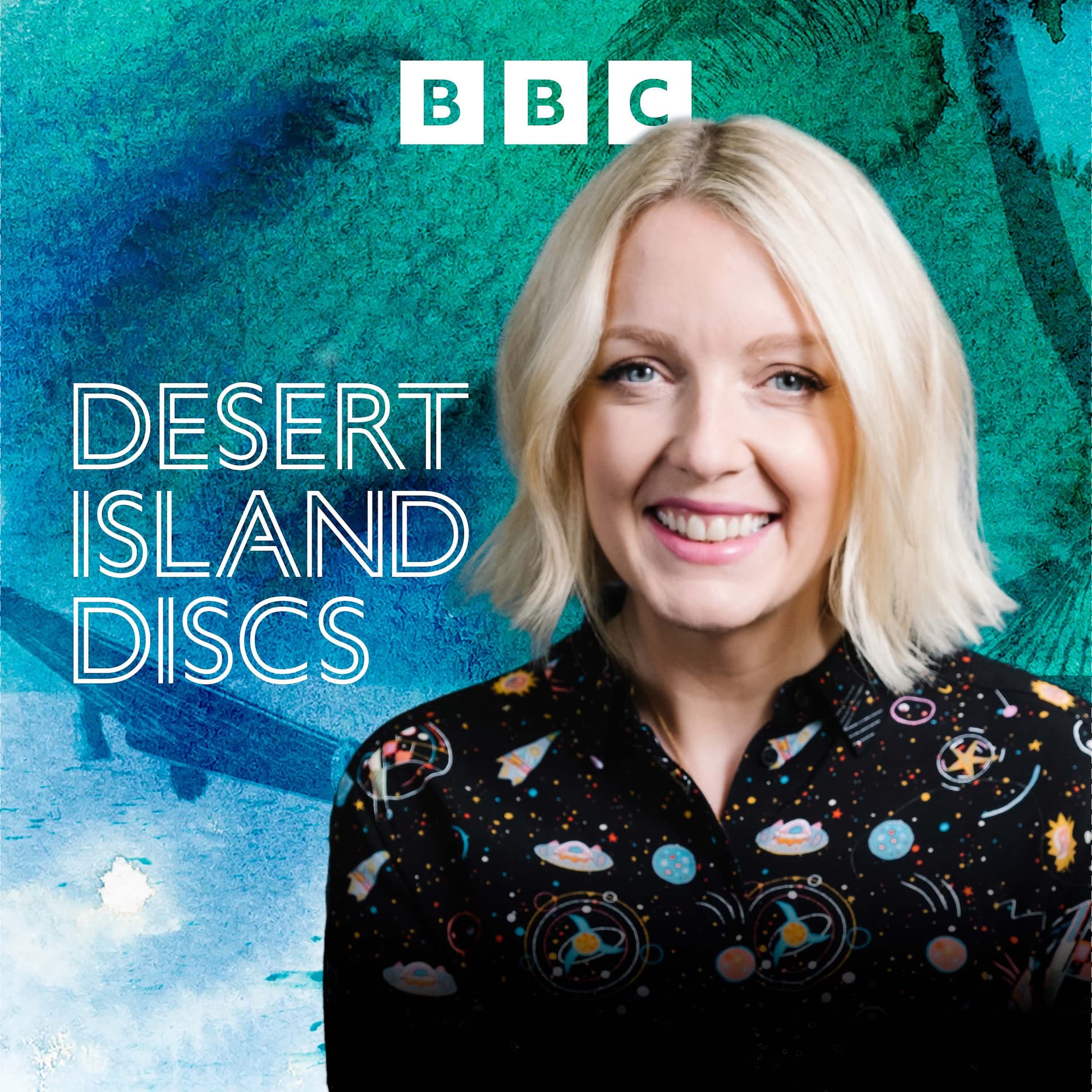
Desert Island Discs: Roula Khalaf, Journalist
Podcast Episode Overview
- Host: Lauren Laverne
- Guest: Roula Khalaf, editor of the Financial Times
- Date: [Date of episode not provided]
- Episode Theme: Roula Khalaf shares her life experiences through music, reflecting on her journey from her childhood in Beirut to becoming a prominent journalist.
Guest Background
- Early Life:
- Born in Beirut in 1965 during the Lebanese Civil War.
- Studied communications at Syracuse University and completed a Master's in International Affairs at Columbia University.
- Worked at Forbes before joining the Financial Times in 1995.
- Career Highlights:
- First female editor of the Financial Times.
- Covered major events in the Middle East, including the Arab Spring.
- Awards:
- Foreign Commentator of the Year (2016)
- Feature Story of the Year from the Foreign Press Association (2013)
Music Selections Rula Khalaf selected eight tracks that hold personal significance to her life and experiences:
- Misunderstanding - Genesis
- Connection to teenage angst and memories of growing up in Beirut.
- Dernière Danse - Indila
- A song that evokes the feeling of escape through dancing, reminding her of her youth.
- Oghneyat Al Bostah - Ziad Rahbani
- Reflects the absurdities of living through war, highlighting a blend of normality and abnormality.
- Feeling Good - Nina Simone
- Associated with her early adult life in New York, symbolizing freedom and vitality.
- Zina - Babylone
- Reminds her of Algeria and the cultural connections she cherishes.
- Ya Laure Houbbouki - Fairuz
- A lullaby that holds sentimental value, reminding her of her mother.
- Good Riddance (Time of Your Life) - Green Day
- Evokes moments of bonding with her son through music.
- 7 Seconds - Youssou N’Dour ft. Neneh Cherry
- Emphasizes the significance of identity and the human experience.
Book Choice
- Title: "A Peace to End All Peace: The Fall of the Ottoman Empire and the Creation of the Modern Middle East" by David Fromkin
- Chosen for its personal connection to her experiences and its relevance to understanding regional dynamics.
Luxury Item
- Item: A notebook and pen
- Symbolizes her commitment to storytelling and reflection.
Key Themes and Discussions
Journalism in Crisis
- Khalaf discusses the challenges faced by journalism today, including threats to media freedom, economic pressures, and the volatility of truth in the digital age.
- Emphasizes the importance of trust in journalism and maintaining high standards to inform the public accurately.
Personal Reflections
- Shares her childhood memories and the impact of war on her family life, including her parents' influence on her career path.
- Discusses the resilience built through her experiences in conflict zones and how it shapes her perspective as a journalist.
Identity and Belonging
- Khalaf expresses her comfort in having dual identities as both Lebanese and British, countering the rising tide of nationalism with a message of inclusivity and understanding.
Conclusion
- Rula Khalaf reflects on the interconnectedness of her life experiences, cultural heritage, and professional journey, all illustrated through her chosen music.
- The episode highlights the power of storytelling, the importance of journalism, and the personal journeys that shape our identities.
---
This summary captures the essence of Roula Khalaf's experiences and insights while providing a detailed account of her musical choices and their significance.
Written by AI. May contain mistakes. Listen to the episode to check what was said.
Chapters
Tap a time to open that second in VOIntroducing Rula Khalaf
0:46 to 2:13
An introduction to journalist Rula Khalaf and her career.
“She's the editor of the Financial Times, august bible of city traders, business leaders and policy makers.”
Challenges in Journalism Today
2:13 to 3:35
Rula discusses the evolving challenges faced by journalism today.
“So colleagues and fellow journalists have described you as a very hands-on editor.”
The Importance of Trust in Media
3:35 to 4:58
Rula elaborates on maintaining trust as a cornerstone of journalism.
“Because you've got a very volatile kind of current events landscape and then also the platforms are changing too.”
Rula's Musical Choices
4:58 to 6:14
Rula shares her first music choice and its significance in her youth.
“So I think that this is a pivotal time and it's an existential time for journalism and for the media industry.”
Childhood in Beirut
6:14 to 8:02
Rula recounts her childhood memories of Beirut before the war.
“There must be some kind of mistake I waited in the rain for hours You were late Now it's not like me to say the right thing But you could have called to let me know Genesis and misunderstanding.”
Influences of Family
8:02 to 10:34
Rula shares insights about her parents and their impact on her life.
“They worked in the same company and sort of lent him money at some point.”
Rula's Second Music Choice
10:34 to 11:38
Rula discusses her second music choice and its deeper meaning.
“And it's, you know, one of the small pleasures of life that I can still, I call him every single day.”
Life During the Civil War
11:38 to 14:04
Rula describes how the Lebanese Civil War affected her family and life.
“What is disc number two and why are you taking it to the island?”
Living Through Uncertainty: Childhood Memories
14:04 to 16:43
Explore Rula Khalaf's childhood experiences during the Lebanese Civil War and how they shaped her family's dynamics.
“And most of my memories there is my mom just being very worried about him.”
The Allure of War Correspondence
16:43 to 18:21
Rula discusses her fascination with war correspondents and the romanticized view of reporting from conflict zones.
“So I know that these are sort of practical things where it's less clear to me.”
Show all 25 chapters
Music and Memory: The Impact of War
18:21 to 19:36
Rula shares how a particular song reflects the absurdity of life during war and her personal experiences.
“This is a song called Ognia al-Bosta, the song of the bus.”
Discovering the Power of Words
19:36 to 21:07
Rula recounts a pivotal moment in university that highlighted the importance of storytelling and self-expression.
“MUSIC PLAYS Ugniyata Ulb Busta by Ziyad Rahbani.”
The Roots of a Journalist: Family Influences
21:07 to 23:08
Rula reflects on her upbringing in a politically charged household that fostered her interest in journalism.
“Were you the kind of kid who was reading the newspaper, you know, listening to the news as well as reading books?”
Navigating Education and Career Choices
23:08 to 25:06
Rula describes her journey from studying architecture to pursuing journalism amidst familial expectations.
“So I just looked around and thought, well, that sounds creative, you know, architecture.”
Breaking into Journalism: The Belfort Interview
25:06 to 28:00
Rula recounts her experience interviewing Jordan Belfort and the challenges of exposing his fraudulent activities.
“But then when I got to Syracuse, I discovered that, you know, there is one of the best communication schools in the country.”
Reflections on a Film and Early Career
28:00 to 30:52
Rula discusses her mixed feelings about a film representation and her early work covering the Algerian Civil War.
“that means that a version of you is in the film.”
The Role of a Foreign Correspondent
30:52 to 34:12
Rula explains the importance of foreign correspondents in conveying the essence of stories beyond mere facts.
“It is by an Algerian singer whose stage name is Babylon.”
The Unimaginable Reality of the Arab Spring
34:12 to 36:58
Rula recounts her experience witnessing the fall of Hosni Mubarak during the Arab Spring and its significance.
“And then late at night, after midnight, my colleagues and I just walked from our hotel to Tahrir Square, where everyone was celebrating, the military was celebrating, you know, Um Kul Tsoom was playing.”
Navigating Challenges in Saudi Arabia
36:58 to 39:58
Rula shares her unique perspective as a female journalist reporting in Saudi Arabia, including meeting women.
“I thought it was one of those moments when you think, did this really happen?”
Family and Professional Duty During Conflict
39:58 to 42:06
Rula discusses the challenges of balancing family responsibilities and her commitment to reporting in conflict zones.
“I go up to the mountains, stay with my parents a couple of days.”
Engaging Women in Journalism
42:06 to 43:06
Learn how targeted strategies are improving women's engagement in journalism.
“You can have a mix of pictures, but it takes not just throwing any picture onto your homepage or your print pages.”
Musical Bonding with Family
43:06 to 44:16
Discover a personal story about music and bonding with family.
“And I mean, on both of these issues, you know, I'm not satisfied and I'll probably never be satisfied.”
Identity and Nationalism
44:16 to 45:34
Explore the complexities of holding dual identities amidst rising nationalism.
“life Good riddance time of your life, Green Day Rula Khalaf, I know that you regularly go back to Beirut now.”
Anticipating Desert Island Life
45:34 to 46:36
Get insights on how someone plans to adapt to life on a desert island.
“And I think that the way you address it is by refusing to do that.”
Literary Choices for the Island
46:36 to 48:35
Rula shares her book selection and luxury item for desert island living.
“All right, Rulu, well, we'll let you have one more disc before we cast you away.”
Transcript
Automatic transcript. May contain errors.0:00Hello, I'm Lauren Laverne and this is the Desert Island Discs podcast from BBC Radio 4. Every week I ask my guests to choose the eight tracks, book and luxury, that they'd want to take with them if they were cast away to a desert island. For rights reasons, the music's shorter than on the original broadcast, but you can find a version with longer music tracks on BBC Sounds. Listeners will also get access to episodes 28 days earlier than everyone else. I hope you enjoy listening.
0:45My cast away this week is the journalist Rula Khalaf. She's the editor of the Financial Times, august bible of city traders, business leaders and policy makers. These are challenging times for traditional newspapers. Advertising revenues falling and digital technology and social media have transformed how people consume news and information. An increasingly fractured media landscape is also having an impact on the type of stories that cut through. But she's no stranger to challenge. She was born in Beirut and grew up during the height of the Lebanese Civil War. Fascinated by the foreign correspondents who stayed at the nearby Commodore Hotel, She set her heart on becoming a journalist like them and moved to the US, where she started her career at Forbes magazine in New York.
1:31She got her first scoop exposing the business practices of Jordan Belfort, the so-called Wolf of Wall Street. Do look out for the character based on her in Martin Scorsese's biopic. She joined the FT in 1995 as a foreign correspondent. Her beats included Syria, Iran, Iraq and covering the Arab Spring. In 2020, she became the paper's editor-in-chief, managing over 600 journalists around the world, whilst leading the charge to win over new readers beyond the boardroom. She says, glamorous is not the word that I would use for my job. It's fulfilling, it's fascinating, it's exciting. But we're very calm here, calm and professional, and always have been.
2:10Rula Khalaf, welcome to Desert Island Discs. Thank you for having me. So colleagues and fellow journalists have described you as a very hands-on editor. How often do you find yourself in the newsroom? Every day, possibly every hour. And when they describe me as a hands-on, I don't know whether, I mean, that's their nice way of describing me because they also describe me as very interventionist. Oh, so this could be double-edged. It is definitely double-edged. I think some of them like it. Others may think of, no, not again. And especially on stories that I know intimately. I think that I can be too much, but there's nothing like running a big story.
2:51I love the buzz of a newsroom, but I'm also, I think, a reporter at heart. And do you miss that? Do you miss being on the ground part of you? Definitely, especially in moments of big crises like, you know, a possible revolution in Iran. You know, I've covered other periods of unrest, but I can contribute differently today as well. So I'm reporting even if I'm not writing, I'm reporting and just running to the newsroom and telling other reporters what I just found or how I can help them. I see my job today as being sort of a support system for everybody else and might be able to reach people that they can't reach.
3:34What do you think is the biggest challenge for journalism today? Because you've got a very volatile kind of current events landscape and then also the platforms are changing too. So I tend to think of it as three forces that are challenging journalism today. The first force is something we were used to, which is the freedom of the media is under threat. But the freedom of the media is now under threat in more countries and, you know, including in the US, frankly, I have to worry about my correspondence in the US in a way that I never used to. Related to that is that the truth itself is challenged today.
4:13You can have different narratives about how you got to a certain situation or different opinions. But today, what we are witnessing is an attempt at creating a different narrative of the truth. And there are different narratives of the truth. And then you have all the economic headwinds and the technological headwinds. So on the economic side, as you know, a lot of local journalism has now disappeared because creating quality journalism is very expensive and they simply can't afford it anymore. And in an AI world, the truth is challenged, but there's also a threat of disintermediation. I'm sure that you've seen deep fakes everywhere on social media these days.
4:59So I think that this is a pivotal time and it's an existential time for journalism and for the media industry. So how do you respond to those many prongs of that challenge that's coming at you? Well, in some ways, we are lucky because trust, which I always say trust is really our currency. So I think that you have to maintain extremely, extremely high standards in order to protect that trust. Well, Rula, it is time to go to your music. Tell me about your first. The first one is a Genesis song. I associate Genesis, Jethro Tull, Dire Straits, very much with teenage angst. And two of my best friends when I was a teenager growing up in Beirut, we had the Saturday afternoon sort of crying sessions where we would get together, talk about boys and, you know, our lives, our families.
6:01and, you know, one of us would end up crying. That was just kind of the rule. There's plenty to cry about when you're a teenage girl. You've just got to let the hormones out sometimes. So the one I picked is Misunderstanding. There must be some misunderstanding There must be some kind of mistake I waited in the rain for hours You were late Now it's not like me to say the right thing But you could have called to let me know Genesis and misunderstanding. So Rulakalaf, you were born in Beirut in 1965, the middle of three children. What are your memories of the city before the war broke out? Well, I was very young before the war broke out.
6:59And many of my memories of Beirut are very related to the war. But I have sort of snapshots in my head of picnics in the mountains with extended family. You know, my mother wearing this beautiful long green dress because, you know, my parents used to go to parties. And it was much later on that, you know, I knew that this was kind of the heyday of Lebanon, the Paris of the Middle East, the Switzerland of the Middle East. The thing I remember most is spending summers at my grandparents. You know, we call it the mountains. I mean, it's about 40 minutes from Beirut. So memories of childhood are very, very tied to that house, to, you know, the cat and the vine leaves.
7:50It's very sort of very basic. My memories are very, very basic of that time. It sounds peaceful, though, when you describe peaceful. Very peaceful. Yeah, happy. Very, very happy, very peaceful. So tell me more about your parents. Let's start with your mother, Therese. How would you describe her? my mother met my dad. She had a more important job than him. They worked in the same company and sort of lent him money at some point. And that's how they got together. But then when she had children, she gave up work and she was, the family was absolutely everything to her. And by family, I don't only mean, you know, my brothers and I, but my dad as well.
8:35who always had this joke that dad is home. That means that my mom is peeling an apple because my dad loved to have apples when he got home. But she was just a very, very kind and very protective mother to the point where, you know, I mean, I remember I was, I don't know, maybe 30 years old. I go home on holiday and she'd still give me sort of spending money. I mean, I was totally independent. Mom, I'm a war correspondent. Do you need spending money? And she'll put something in my pocket. She sounds wonderful. She was. Sadly, we lost her about 17 years ago. I'm sorry. I mean, she gave up working, as you say, when she had you.
9:20But she sounds like she was very determined that you would succeed. Oh, absolutely. She really drove me and wanted me to be absolutely, you know, independent. And you have to remember that when you grow up during a time of instability, you know, your parents don't know what's coming. And so they want to equip you best they can in order to, you know, sort of send you out into the world so that you can make it on your own. And what about your father, Abba? So he had a very senior job at the American Life Insurance Company. Tell me about it. Yes. So my dad was, during the day, he was sort of a manager and he also loved politics.
10:05And he was in government for a while when the Civil War broke out. He was economics minister. He was economics minister. And my father has been, you know, a huge influence on me and my brothers. He has an incredible presence. I mean, you see him, he walks into a room and people turn their heads. He's very tall, lanky, very good looking man. Also, you're smiling ear to ear. As soon as you started thinking about him, you just started beaming. Yes, I've just seen him two weeks ago. And it's, you know, one of the small pleasures of life that I can still, I call him every single day. And I think that my dad was always wise, but also extremely, extremely ethical.
10:51And he was also very attached to a secular version of Lebanon. Lebanon is a confessional system based on different religious groups. They get, it's like a pie and it's divided. So the president has to be a Christian, the Speaker of Parliament, a Shia Muslim, the Prime Minister, a Sunni. And the civil war was partly about this balance of power. There were a lot of other factors, but it is always the struggle in Lebanon is always over who gets a bigger share. And, you know, my father and a lot of other people, which is like a merit based system. And I think that is mainly what drove him into politics.
11:36Rula, it's time to go to the music. Your second choice today. What is disc number two and why are you taking it to the island? Disc number two is Dernière Danse by Indila. I became quite obsessed with the song more recently when I heard my son, my youngest son, who's 16, play it on the piano. So I started listening to it and I loved it. And I think one of the reasons is because it is about sort of dancing as an escape. And I have always felt that dancing is an escape. I don't know whether that's a remnant of that period. You mentioned in Lebanon the sort of the pre-civil war, but Lebanon also knows how to have a good time despite everything and sometimes because of the instability and the war.
12:30And, you know, I love dancing. And so it really spoke to me.
12:46Oh, my sweet suffering I remove the sky the day and night I dance with the wind and the rain A little love, a brown sugar And I dance with the sun Dernier danse in Dila. Rula Khalaf, in 1975, the 15-year Lebanese Civil War broke out. How did life change for you and your family? The first thing that changed is that we couldn't stay where we were living. It got to be too dangerous because we were very close to the Green Line, which separated East and West Beirut. And this is where you had a lot of the violence broke out. So we had to move and we went to stay with my grandparents, then rented a house near them.
13:40Then one night we were just dragged from there and we stayed in a villa in some kind of forest. I remember asking my dad once, were we squatting? Like, whose house is this? No, no, no, no, no, no. We called the owners and they said this was safe. And it got to a point where, you know, my dad decided that it was too dangerous. And so we moved to Egypt. We lived in Cairo. my dad had decided to stay in Beirut. And most of my memories there is my mom just being very worried about him. So he stayed behind. What was he doing? Was he able to work or was he engaged in politics? I remember he stayed in a hotel in Beirut.
14:25And because he'd been a government minister when the war broke out, I think that it was for both his sort of activities that he felt he had to stay. and he would come for periods of time. So we spent a year in Egypt, then we went back. We thought it was the end of the war. And, you know, every time we went back, we changed school. And then we were there for a few years and we had to move again. We went to Greece and we lived in Athens for a couple of years, then again went back thinking the war was over, new school. And the very same story. Yeah. I mean, that uncertainty must have been so difficult to manage for your parents, you know, three children to look after.
15:09Did you see their anxieties, their worry? I certainly saw my mother's worry. She had this kind of tick where her, you know, left eyebrow lifted. And she always also, I mean, I remember times when we were in Beirut where she would just like clean frantically, just clean, clean, clean. and for no apparent reason. So there was always, we always felt when my mom was anxious and we knew something was wrong. I think for children, especially when you're quite young, your stability and your home, your safety is really around your parents. If you're with your parents, then you feel safe. And it's the parents who worry about the rest.
15:51So I don't think that we felt unsafe, you know, Except, yes, there were times when she had to wake us up and we'd have to hide between walls. But otherwise, most of what I remember is just the anxiety of my mother rather than my own or my siblings. But that can be quite tricky to manage, can't it? Because as a kid, you're taking this in, but you can't do anything about it. So it definitely kind of must take a toll on you, have an effect on you. I mean, I wonder if you look back and you think, oh, that's why I do this. or is there anything that you have connected? Well, there are things I do and then there are things I feel.
16:29So things I do that I think are related to that time are I've got this habit of always sleeping on the side of the bed that's closest to the door. I know that that's related to the way I grew up. I have to sleep in pyjamas. I can't not sleep in pyjamas. Like I have to be ready. Ready to get out of bed at any moment. So I know that these are sort of practical things where it's less clear to me. And, you know, I haven't done any therapy, but I'm sure there is a, you know, psychological impact, what that psychological impact is. I've, you know, I've never really looked, frankly. I think it certainly made me a lot more resilient.
17:12I also feel that, you know, I'm not afraid of war. So I really am fearless when it comes to war. I'm I'm not afraid. And that has obviously helped me a lot in my job. At one point, you lived near the Commodore Hotel, where all the foreign correspondents who were covering the war stayed. When I say that name, you're smiling already. What memories does it conjure up for you? I knew of all the stories where, you know, militiamen would go in to meet journalists. And there was just something, I mean, perhaps stupidly, but something quite romantic about being a war correspondent. And so I think that contributed to what I then started to think I wanted to do.
17:55What captured you about it? What did that life seem to offer that you found attractive? To me, it was adventure. It was a different way of looking at the situation that we were in, which was a situation of war and conflict. And these were people who sort of came and went and they were writing about us, but they weren't really stuck there. They weren't really living it. Rula, it's time for some more music. Your third choice today. What are we going to hear next and why? This is a song called Ognia al-Bosta, the song of the bus. It's by Ziyad Rahbani. He's the son of the Lebanon's most famous singer, Fayrouz.
18:38He had a great influence on her. He was also very funny. And he had these plays that were, you know, they were mostly comedy. And this song comes out of one of these plays. And it talks about, in a way, I mean, never mentions the war. It's just about a trip on a bus. But to me, it is about the absurdity of living in war, normality and abnormality sort of coexisting. And this is how, you know, we all experienced the war. We had our normal life that was really, really abnormal.
19:36MUSIC PLAYS Ugniyata Ulb Busta by Ziyad Rahbani. Rula Khalaf was there a particular moment when you became aware of the power of words and storytelling? I think that moment came when I was at university and I had a professor by the name of John Keats who was encouraging us to just write feelings and connections. And I remember writing a piece. I didn't know whether I was a good writer. I knew I wanted to write, but I didn't know whether I could be a good writer. And I remember him talking to me after class one day and saying, this is very special. And it was, you know, it was a piece that was connected, obviously, to Lebanon.
20:31and the ability for me to sort of express myself. I mean, I'm not someone, notwithstanding the fact that I'm in front of you right now, I'm not someone who likes to talk about herself. So it was a kind of discovery for me that this is, you know, words are very important. They're an important tool. They're an important weapon. And you know what? I may have it. And so I think that was the moment. And I kept that piece. And I think it was about sort of the two sides of war, how war could also make you stronger. Living in war could also make you stronger. And I think perhaps that's why I've always carried that element of war with me rather than delving into what, you know, how traumatic it might have been.
21:16Every writer starts as a reader. Were you the kind of kid who was reading the newspaper, you know, listening to the news as well as reading books? I read the local newspapers. I think my first link to journalism was the fact that, you know, my dad is at heart a writer and did write regularly. He still writes from time to time. But it's also just the discussion at the dinner table, the fact that it was always about politics. But it was also the fact that news was so important to our lives. We'd have to listen to so many different radio stations. Everything was partisan. So you had to triangulate and try to figure out what was going on.
21:58It wasn't just one radio station that would inform you. You really had to listen to every single party's radio station. So this is what I grew up in, is this sort of thirst for information and this sort of family interest in politics and what it means. Your path to becoming a journalist wasn't straightforward. In 1983, you started a degree in architecture at the American University of Beirut. So why had you chosen to study architecture? Well, I wouldn't exactly say I chose to study architecture. Who chose me to study architecture? I didn't actually choose. But education and, you know, going to the best schools and the best universities, this was what my parents always thought about.
22:46And so it was always assumed I would go to the American University of Beirut. So I wanted to do communications and broadcast journalism. And there was no degree. You know, the American University of Beirut did not offer that degree. And my parents said, no, you have to, because otherwise you won't have a degree with which you may be able to then go abroad. So it has to be the American University of Beirut. So I just looked around and thought, well, that sounds creative, you know, architecture. It's the most creative I could find. So I did a year there. And then it was a very, very bad year in Lebanon.
23:24And so then, you know, my parents insisted that I had to go abroad. So your parents had moved to Cyprus by this point, I think. Yes. My younger brother went with them. My older brother went to the US for university. So you were there just, you know, 18? I was there with my grandparents. How was it? Oh, it was one of the best years of my life. I mean, you're on your own. Your grandparents are not asking what you're doing or where you are. I mean, there was a curfew in Lebanon and we never, ever abided by the curfew. What were you doing? How do you have normal kind of teenage nightlife and adventures?
24:02Because you're trying very hard to have a normal life. So you turned 18 round about that time. What did you do to mark the occasion? So we're having a party at my boyfriend's house, which was very, very close to where I lived. And clashes break out. And it was so violent that we had to have my birthday on the stairs. We couldn't even be in the house. And we just stayed on the stairs. I remember we sang Happy Birthday. And, you know, that was the last year in Lebanon. It was a very dangerous time. And so my mother went to Syracuse University, where my brother was, and she actually applied for me because I refused to sign an application.
24:50So she just applied for me. So you didn't want to move? I didn't want to move. No, I was very, very attached to Beirut at the time. I didn't want to move. But then everybody around me also was moving. So it was a year when there was an exodus of young people, especially. But then when I got to Syracuse, I discovered that, you know, there is one of the best communication schools in the country. And so I go there and I ask whether I could switch. And so then that's what I did. I could then follow my dream. Let's have some more music, Rula Khalaf. This is disc number four. What is it? It is Feeling Good by Nina Simone.
25:34and I associate this song with New York, which is where I went after university. And I loved New York. It was a wonderful time to be sort of in your early 20s, living in New York City. What more could you ask for? And so it was about feeling good.
26:06Blossom on the tree You know how I feel It's a new dawn It's a new day It's a new life For me And I'm feeling good Nina Simone and Feeling Good Rula Khalaf, in 1990 you joined the American business magazine Forbes initially as a fact checker. And then in 1991, you got your first scoop. It was an interview with the disgraced former stockbroker Jordan Belfort, the self-proclaimed Wolf of Wall Street. What do you remember about the interview? I only got the interview because I'd gathered enough information to expose what he was doing. And so then I convinced him to have an interview. And he thought that it was a real privilege for the Forbes magazine is contacting him.
27:02And so he was quite excited, very charming, very smooth. He kind of thought it was going to be a bit of a puff piece, did he? Absolutely. And what did you know about what he was doing that you wanted to expose? So I knew already, I talked to a lot of the people who had worked for him over the years. And I know that he was a petty stock pusher, that, you know, a lot of people had lost money. And so I remember he came to Forbes for the interview. and, you know, I was all charming and he felt really comfortable and we talked a lot. And then when he saw the piece, he was furious. Well, I'm not surprised.
27:40You described him as a twisted Robin Hood who takes from the rich and gives to himself in his merry band of brokers. He described you as an insolent reporter who deserved an A for cleverness. Yes, that was quite good. I remember my husband discovered the book. Like, you know, I forgot about him. And my husband discovered the book and discovered what he said. He was so excited. And of course, because Martin Scorsese's film draws on the book, that means that a version of you is in the film. What was seeing that like? It is, but it's not... I mean, they picked a foreign name and someone sort of slightly foreign looking, but never contacted me about it.
28:18And I didn't like the film. I thought the film was really, really exaggerated as well. So I didn't like the film. Rula, in 1995, you moved to London where you joined the Financial Times as the paper's North Africa correspondent. You were covering the Algerian Civil War back then and a complete rookie in terms of that job. How did you prepare for your first assignment? The FT cared about the war because Algeria was a major exporter of gas to Europe. and because Algeria was rescheduling its debt. So a lot of banks were interested in Algeria. And so, you know, companies like BP were also interested in Algeria.
29:00So our readers had a reason to understand what was going on in Algeria. And I remember I had to fight quite hard to go. And I think the editors were quite split on whether it was dangerous or not. And I remember that it was a tragic, tragic story. There were massacres everywhere. and, you know, everybody was killing. And I wonder how all of that landed with you emotionally. I mean, relatively recently, having been through parallel experiences yourself, I'm sure. While at uni, when I did my master's, I took some courses in the history of North Africa and I think I was just really interested in North Africa.
Read the full transcript
29:40So I think that is what drew me. Was there something, you know, deep down that had to do with my past? I did not look, but it is entirely possible. On one of your trips, you were actually pregnant with your first son. Were you ever frightened for both of your lives while you were there? Yes, it certainly gave my family a lot of cause for concern. I remember I was six months pregnant. I think it was my second or third trip to Algeria. And I was more careful than usual because, you know, usually when I used to go to Algeria, I tried, they would always put minders and my, you know, my main objective was always to get rid of my minders and just to be able to go out on my own.
30:25But I remember on that trip, I didn't. And what was most dangerous is the way that they were driving. And I kept saying, you know, I'm pregnant, I'm pregnant. This is the real danger for my child. It's not the violence in Algeria. It's your driving. And obviously, in retrospect, was not a good idea. And I do not recommend that anyone does what I did. But, you know, he likes to say he went to Algeria before he was even born. Rula, let's go to the music. It's your fifth choice. What's next? Well, guess what? It is by an Algerian singer whose stage name is Babylon. He's someone who grew up during the Civil War.
31:07and my husband and I just recently in the last couple of years discovered Zina and it's one that we listen to all the time. I mean, we might listen to it like ten times and it reminds me of Algeria and it reminds me of that time.
31:55Babylon and Zina. Rula Khalaf, during your career, you've covered crises and conflicts in Iran, Syria, Lebanon and Israel. What did you learn about the role of a foreign correspondent? Well, it's a very good question, especially in the age of AI, where people wonder what, you know, can we not just replace a lot of what we do? I mean, a foreign correspondent gives you the feel, the smell, the touch. they're the only ones who can actually tell a story. You know, the story of people, which matters enormously. Even if you're a very data-led news organisation, the stories of people and their experiences matter.
32:43And for you at the FT, I mean, you know, you say you don't cover wars in the traditional sense. What do you hope to convey in your coverage, in your articles? So I say we don't cover wars in a traditional sense in that we don't do the blow by blow of the actual fighting. There used to be a joke among foreign correspondents that if Rilla has arrived, that means the war is over and we're now going to analyse and, you know, she's come to analyse. It must have been thrilled to see you every time. Absolutely. I mean, they'd be leaving, I'd be going in. I think we have actually become, over time, and I think I have contributed to that, we do cover more than we used to.
33:25But what we are trying to convey to our readers is the significance of an event, whether it's a war or it's a fraud case or it's a sudden movement in markets. What we try to do is the same, and it is to explain and to convey and to try to give information before everybody else on what is happening and what it means and why you as an FT reader should care about it. You have said that bearing witness to the fall of the Egyptian president Hosni Mubarak during the Arab Spring of 2011 was one of the most thrilling moments for you. Can you tell me what you saw that day? It was, that night was exhilarating.
34:09I mean, we finished, we wrote thousands and thousands of words. And then late at night, after midnight, my colleagues and I just walked from our hotel to Tahrir Square, where everyone was celebrating, the military was celebrating, you know, Um Kul Tsoom was playing. So it was just the music, the flowers, the children hugging the military. It was a moment that you did not think was possible. It was sort of the unimaginable became a reality in that very moment. You've also filed stories from Saudi Arabia. What kind of challenges were you facing there? I always felt that I had an advantage in reporting in Saudi Arabia.
34:56I mean, Saudi Arabia is now a very different country. much, much more open. But when I was reporting from Saudi Arabia, you know, if you were a male reporter, then you didn't have access to the world of women. You really could not meet with women, whereas I could meet with men and I had an entry into the world of women. You were a friend of the Saudi journalist Jamal Khashoggi, who was killed in 2018. Tell me, what did you admire about him? I think he had a very, very deep understanding of both the Saudi regime and Saudi society. And he was not a kind of an anti-regime activist, really. He knew too much almost.
35:42He understood too much. And he wasn't afraid to say it when he felt that he needed to. I think the reason that he was seen at the time as a threat is because he started writing a lot more in English. He wrote some pieces for the FT as well before he was writing for the Washington Post. And I think that he was seen a threat because he was so credible. How did you find out about his death? I found out through a journalist who had been in touch with him. and I knew that he was due in London at some point. And, you know, usually we would like meet up and have coffee and just talk. And, you know, I remember that news started trickling out that, you know, he'd gone into the embassy and he's not out yet.
36:38And a lot of it was on Twitter. It was sort of the heyday of Twitter. And it became clear that he wasn't coming out of that embassy. And how did you feel? You'd been due to meet him, you were hoping to see him quite soon after that? I just found it, I thought it was unbelievable. I thought it was one of those moments when you think, did this really happen? Why would something like this happen? So I think it was extremely, extremely shocking. It's time to take a moment for the music. Rula, your sixth choice today. I have to go back to Fayrouz now. She's probably the most well-known symbol of Lebanon.
37:27And it didn't matter what faction you were with during the war. Everybody loved Fayrouz. The song I picked, Ya Loro Hubuki, Lore Your Love, is a song that reminds me of my mom because she loved it. But it's also the lullaby that I've always sang to my children. It's not a very well-known Fayrou's song, but it's the one that I'm most attached to.
38:24Yalohubuki Firouz. So Rula Khalaf, I mean your family have had to deal with you going to work in very hostile territories obviously I know that there was a moment too when you had to get one of your sons out of Lebanon in 2006 What happened? In the summers I used to sort of drop my son at my parents for a few weeks and I tried to do several trips at the same time And I dropped him off and I went to the UAE. I had, I think, an interview with the central bank governor. And the next day I wake up and there was a Hezbollah had kidnapped several Israeli soldiers. And I just knew that there would be then a retaliation.
39:18and as expected, the airport gets bombed. There was no way to go back to Lebanon. My parents had the responsibility of my son, also my sister-in-law and her children and I knew I just, you know, I had to go back and get him. So I flew to Syria. Somebody, you know, found me, a driver who would come and pick me up because the roads were very dangerous then. And the Israelis were bombing infrastructure. And so bridges would just collapse. And so I drove back to Beirut, totally empty, you know, empty streets. It was a very, very tense time. I go up to the mountains, stay with my parents a couple of days.
40:03And then, you know, we arrange to get everybody out. And we end up going back to Damascus. And, you know, we each, you know, I take my son back to London and my sister-in-law and her kids go back to the US, I think. And then once that was done, I go back immediately to Lebanon. You went straight back in to cover the story. I mean, the war was, as soon as actually the war had ended, I went back. But it wasn't, you know, it wasn't maybe, I don't know, a couple of weeks. But that still says a lot about your character. That's my job. But it's also this epic journey to extract your family and then, OK, everyone's safe.
40:43I'm going back towards the danger. I think I was less dangerous probably by the time I got there. But that is what my, you know, I think I was still Middle East editor then. So that was my job. You became editor of the Financial Times in 2020, the first female editor in the paper's 132 year history. The paper's readership used to be predominantly men in their 50s who worked in business. What are you doing to broaden that? I think the readership is still predominantly men in their 50s. But a few years ago, before I became editor, I was involved in a project where we wanted to look at female readership.
41:28And we did some research and what we discovered is that the FT is seen by women as very intimidating. There was one description that really stuck with me is it's a man with his back turned. This is how it was described. And we have many women who have access because their companies subscribe on their behalf. And we really wanted them to engage. And so we did a whole range of projects from, you know, we started with a bot that would tell you that there weren't enough pictures of women. It was very organic, actually. You can have a mix of pictures, but it takes not just throwing any picture onto your homepage or your print pages.
42:16So it just takes a bit more thinking. To get to that, you had to implement certain programs. But after a while, it becomes part of what you do. And are you seeing the results of that yet? Is it working? It's definitely, definitely improved. We have now, what we do is we have targets for the number of engaged women. And every year we have a new target and we reach that target. We were very pleased last year. My recommendation was to try to be more ambitious in our targets. And it also helps that we have more women who write columns and, you know, more senior women in general. And are you taking the same view on ethnic diversity too and the same approach to it?
42:59To a certain extent, we've learned a lot from what we've done in the women projects. It's not as good. And I mean, on both of these issues, you know, I'm not satisfied and I'll probably never be satisfied. But I think we've tried to take some learnings. Let's have some more music, Ruler. It's your seventh choice today, your penultimate disc. What are you taking to the island next? It's a song that I made my eldest son learn on the guitar because I loved it and I wanted him to play it so that I could sing it. I'm totally tone deaf, I'm sorry to say, but we'd sit on his bed. Once he did, he indulged me and we'd sit on his bed and it was sort of a moment of bonding.
43:47It is Good Riddance by Green Day.
43:53road Tom grabs you by the wrist directs you where to go so make the best of this test and don't ask why it's not a question but a lesson learned in time it's something unpredictable but in the end is right I hope you had the time of your life Good riddance time of your life, Green Day Rula Khalaf, I know that you regularly go back to Beirut now. What do you enjoy most about being there? we're a strange group of people the people who's you know are both Lebanese and British or Lebanese and American and so going back to me is well first it's it's going home to where I was born it's family and it is connecting with all these people that I I never get to see had we you know had we lived a normal life we'd probably get together every weekend you know we no one would have left.
44:57You use the word both and that sort of bothness is very interesting and I know it's very important to you. You're a committed internationalist describing yourself as a citizen of the world and I wonder how you feel about the fact that there's so much nationalism in the air. I mean globally does that identity as an internationalist ever feel under threat or compromised? I never felt that. I've always been very comfortable with my two identities. You know, I'm both Lebanese and I'm British. I think that there are people who want me to feel uncomfortable about it. And I think that the way you address it is by refusing to do that.
45:40I firmly believe that you can be both, you know, Lebanese and British and be entirely committed, entirely loyal and entirely comfortable with that. What are you hoping for on your desert island, Rula? It's almost time to send you there. How will it feel to unplug from the news? I think that's going to be a big change for you. Unplugged from the news? I really think I'll go crazy. I don't think that's possible. How do you think you'll handle desert island life? I think I'm going to have to do a lot of jogging, a lot of running. I need to find something else that can be as thrilling as news. Is there anything?
46:26Well, I mean, I'm sure there'll be things there. There'll be, you know, it depends how thrilling you find the wildlife. If you're keen on swimming, do you like coconuts? There are many questions we can pursue. All right, Rulu, well, we'll let you have one more disc before we cast you away. Your final choice today, what's it going to be? Well, speaking of identity and immigration, Yusendur with Nene Cherry. It's one of, I love Yusendur. I've listened to him for a very long time. And he, of course, the Senegalese and is very outspoken about racism. And this is Seven Seconds is about the first seven seconds of your life before you confront the world and the ugliness.
47:24We're living in, it's not a second, we're seven seconds away, just as long as I stay. I'll be waiting, it's not a second, we're seven seconds away, just as long as I stay. Yusendor and Nenicherry with seven seconds. So Rula Calaf, I'm going to send you away to your desert island. I'm giving you the Bible, the complete works of Shakespeare, and you can take one other book of your choice. What will it be? The book that I always recommend and that has sort of a personal connection to it because I've kind of lived the consequences of it is David Frumkin's A Peace to End All Peace. It's a very ironic title and it's about the collapse of the Ottoman Empire and the creation of the modern Middle East.
48:22And what about a luxury item to make life a little bit more enjoyable there? I have to say a very expensive and durable pen and a very, very, very, very big notebook. And finally, which one track of the eight that you've shared with us today would you save from the waves first, Rula? I'll take Feirouz so that I can think of my children. Rula Khalaf, thank you very much for letting us hear your Desert Island Discs. Thank you. Thank you.
49:23Hello, I hope you enjoyed my conversation with Rula. I'm not sure how she'll get on being unplugged from the news, but maybe the jogging will help. We've cast away many journalists and foreign correspondents over the years, including Lise Doucette, Jeremy Bowen and Lindsay Hilsom. The studio manager for today's programme was Sarah Hockley, the executive production coordinator was Susie Roilands, the assistant producer was Christine Pavlovsky, the content editor was Mugabe Turia and the producer was Paula McGinley. Next time, my guest will be the Explorer and Chief Scout, Dwayne Fields. I do hope you'll join us.
50:09I'm Noel Titheridge, and for BBC Radio 4, from Shadow World, this is Impulsive. What happens when someone's personality changes completely? It was completely out of character. Never done it before, never done it since. And it's because of a prescription drug. I asked myself, why would you do such a thing? What were you thinking? I've been uncovering the shocking side effects linked to medications called dopamine agonists. for BBC Radio 4 from Shadow World. This is Impulsive. Subscribe to Shadow World Impulsive now on BBC Sounds.
From the publisher
Roula Khalaf is a journalist and the first woman to serve as editor of the Financial Times in its 138‑year history. She joined the paper in 1995 as North Africa correspondent, covering the Algerian civil war before reporting more broadly across the Middle East, including Syria, Iran and Iraq, and later the Arab Spring.
Roula was born in Beirut and grew up there during the Lebanese civil war which began in 1975. She studied communications at Syracuse University in New York State and then completed a Master’s degree in International Affairs at Columbia University.
She joined Forbes Magazine in 1989 before relocating to the UK. Her work has earned several awards, including Foreign Commentator of the Year at the Editorial Intelligence Comment in 2016 Awards and the Foreign Press Association’s Feature Story of the Year for her reporting on Qatar in 2013.
Roula has two children with her husband Assaad and lives in London.
DISC ONE: Misunderstanding - Genesis DISC TWO: Dernière Danse - Indila DISC THREE: Oghneyat Al Bostah - Ziad Rahbani DISC FOUR: Feeling Good - Nina Simone DISC FIVE: Zina - Babylone DISC SIX: Ya Laure Houbbouki - Fairuz DISC SEVEN: Good Riddance (Time of Your Life) - Green Day DISC EIGHT: 7 Seconds - Youssou N’Dour ft Neneh Cherry
BOOK CHOICE: A Peace to End All Peace: The Fall of the Ottoman Empire and the Creation of the Modern Middle East by David Fromkin LUXURY ITEM: A notebook and pen CASTAWAY'S FAVOURITE: Ya Laure Houbbouki - Fairuz
Presenter: Lauren Laverne Producer: Paula McGinley