

- Podcasts
- Design Tangents
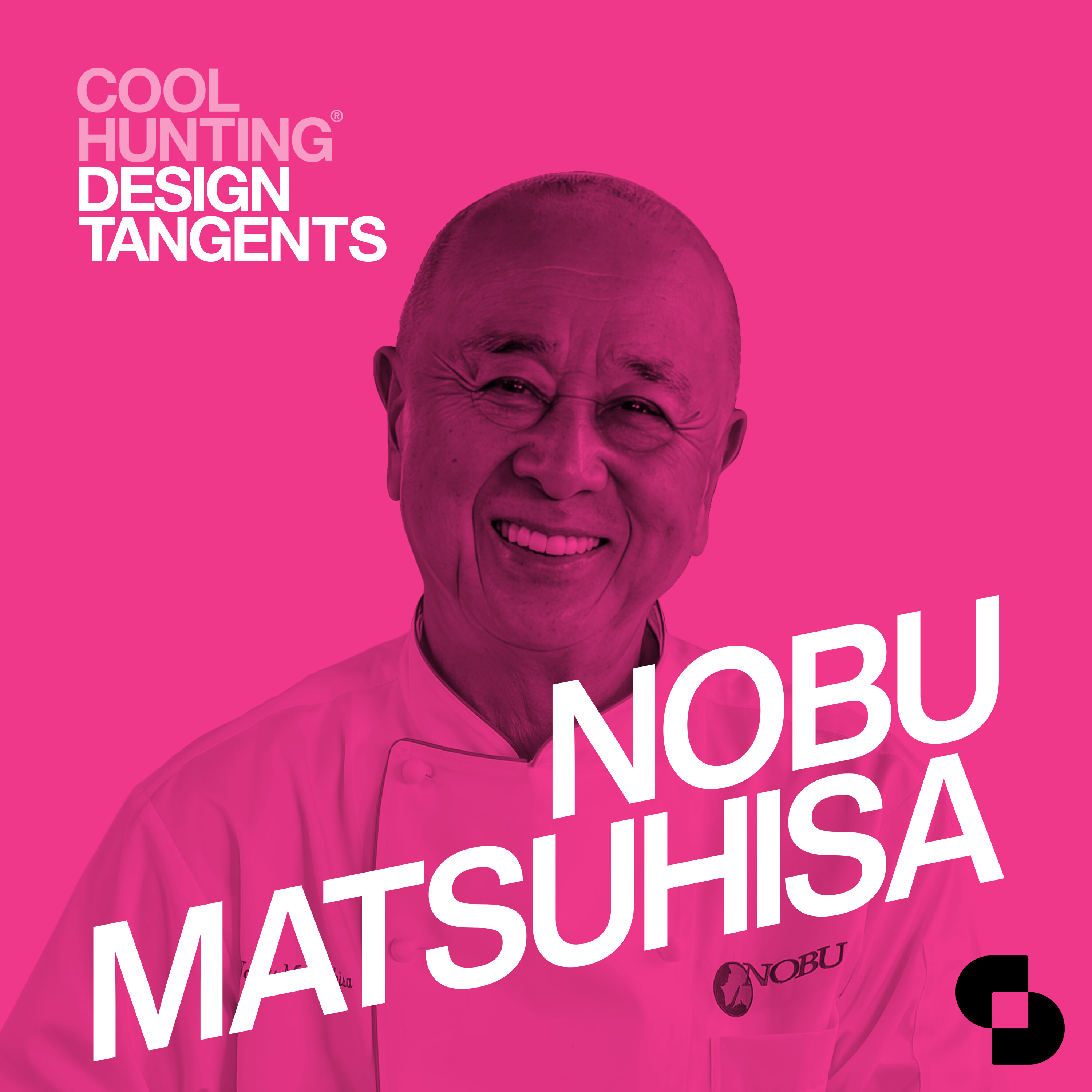
- Nobu Matsuhisa: Chef and entrepreneur
 Design Tangents
 Ask ChatGPT
In short
Chef Nobu Matsuhisa discusses building Nobu’s global restaurant/hotel empire, how travel and local ingredients shape new dishes, and how hospitality design and service (omotenashi) create a consistent “Nobu experience” across five continents.
Guests
Chef Nobu Matsuhisa, Japanese chef and hotelier; founded Nobu restaurants starting with a 38-seat LA location in 1987 and expanded with Nobu New York in 1994. Hosts: Evan Ornston and Josh Rubin (Design Tangents). Other referenced figure: David Rockwell, designer of Nobu New York.
Key claims
He travels 9–10 months/year to “check” quality and inspire new dishes while trusting teams; Peru changed his cooking by introducing local ingredients and ceviche flavors; innovation is simple, step-by-step, and non-wasteful; design and service matter as much as food.
Notable examples
Maui onaga fish sourced via local fishermen; breakfast bento and miso cod as consistent favorites; Peru dishes like arroz con pollo and ceviche; David Rockwell’s “no step inside the restaurant” design change.
Written by AI. May contain mistakes.
Chapters
Meeting Chef Nobu Matsuhisa
Hosts introduce Chef Nobu and discuss his restaurants and travel.
“I love that we often record our podcasts in person with our guests.”
Nobu's Journey and Philosophy
Chef Matsuhisa shares his journey, challenges, and team philosophy.
“you're traveling constantly to all of these locations.”
Culinary Influences from Peru
Discussion on local ingredients and culinary experiences in Peru.
“So finally, after 38 years, I'm here, you know, I'm so much proud.”
Creative Process in Cooking
Chef Nobu explains his creative process for developing new dishes.
“and they're thinking about ways that ingredients from Maui, unique ingredients here, can be new dishes that you create for the restaurant here.”
The Importance of Visual Presentation in Food
Learn why visual presentation is crucial in the culinary arts.
“So always they make the food to three meals every day, but not gorgeous, not beautiful, but feel hot.”
Creating an Experience Beyond Food
Explore how the design and service of restaurants enhance customer experiences.
“Food obviously is incredibly important in your world, but also there's an experience, right?”
Collaboration with Designer David Rockwell
Hear about the challenges and stories behind designing notable restaurant spaces.
“But, you know, always I try my best way, means best food, best service.”
Lessons in Leadership and Team Values
Understand the importance of mentorship and building a team culture in restaurants.
“That's why after this one, he understands noblesse concept.”
Nurturing Growth Across Generations
Learn how Chef Nobu cultivates talent and values in his team.
“Nobu restaurant has so many different country peoples, means so many different culture peoples working.”
Philosophies Shaping Life and Culinary Journey
Explore how Chef Nobu's life experiences influence his culinary philosophy and world view.
“Chef, what philosophies guide your work and your personal life?”
Show all 14 chapters
Cultural Appreciation Through Travel
Nobu shares insights on learning from different cultures through travel and how it informs his culinary philosophy.
“now traveling meet different peoples, different cultures I learn lots lots to more like different cultures people is people you know, and how can I say, a little bit difficult, but heart is the same.”
The Importance of Resourcefulness in Innovation
Nobu discusses his approach to innovation in food, emphasizing resourcefulness and waste reduction.
“or is it out of creativity or something else altogether?”
Engaging with the Next Generation
Nobu reflects on the future of hospitality and the importance of communication with younger generations.
“And what role would you like to play in that transformation?”
Simplicity as a Key to Meaningful Living
Nobu emphasizes the value of curiosity and simplicity as ingredients for a meaningful life in culinary arts and beyond.
“could these be a recipe for a meaningful life?”

Ask about this episode
Get the gist, explore an idea or ask about something said.
 Claude
On Design Tangents, what are the key points of this episode?
Searching your listeningTranscript
Automatic transcript. May contain errors.
0:00So, Japan, fresh fish eat only wasabi and soy sauce. But the first time I eat ceviches, wow, my open eye.
0:14Welcome to Design Tangents, a podcast from Cool Hunting exploring the creative process and inspirations that drive changemakers. I'm Evan Ornston. And I'm Josh Rubin. Aloha, Evan. Aloha, Josh. I love that we often record our podcasts in person with our guests. And this one may be the furthest we've traveled, to Maui, where Chef Nobu Matsuhitsa has just opened a Nobu restaurant at the Grand Waialea, a Waldorf Astoria resort. The resort has undergone a pretty substantial renovation, including all of its rooms, its spa, and all of its dining. And our love of food, especially Japanese food, is something we really nerd out on.
0:54One of the biggest names in Japanese food, at least outside of Japan, is Chef and Hotelier Nobu Matsuhisa. I am so excited that we get to speak with him today. Me too.
1:11Chef, it is such a privilege to meet you. Thank you. Welcome to Design Tangents, and thank you for making time for us. We're in Maui at the Grand Wailea Resort, the home of your newest restaurant. You are so hands-on with your restaurants and your hotels and all your other projects. We know you must be traveling nonstop. Visiting each hotel and restaurant even once a year puts you on the road a lot of the year. We tried to count how many times we've been to your restaurants and how many locations and also the hotels. And we kind of lost count, actually. Your dishes always are delicious. We love that each place has a unique element that is inspired by that location.
1:59And we, honestly, actually, one of my favorite meals is the breakfast bento at the Nogu in Las Vegas. Same. In the Caesars, that bento is quite delicious. So are the soba yuzu blueberry pancakes. And I, as a matter of fact, just stayed at the Portman Square Hotel in London a few weeks ago. So we're very engaged with your brands and all of its presences. There are so many locations and you are so hands-on and involved in ensuring that every Nobu experience is a true, authentic, appropriate Nobu experience. you're traveling constantly to all of these locations. Do you have certain travel rituals when you arrive in a new place?
2:51Is there a practice that you have for settling in? I travel in almost 10 months a year because we have a restaurant in the five continents and it means each restaurant has a family. You know, I like to see the teams, families. I don't want to say too much about food control because I trust all my teams. I have to be the checker anyway, you know, but always not too much to go the different way. Because I started in 1987, the first Nobu opened New York in 1994. So now it's over 30 years. So it means this is between the 30 years, so team grow like the family. They know the philosophies, qualities.
3:47That's why I like to trust all of my teams. But sometimes I like to see, because I'm still running to see something to create for the new dishes. So it means I'm traveling, so I see different cultures. So it means different food, different peoples, of course different weather, different ingredients. And traveling means my job and at the same time enjoy myself. You're very active on Instagram and we saw you played golf yesterday. You showed a nice tour of your room. So it seems like you're very engaged with when you arrive somewhere. Well, so Hawaii, it's used to, I come so many times. you know, Hawaii is a very peaceful island, especially Maui.
4:38I love Maui. And also, I have a lot of friends. Yesterday, or actually this morning, I met Chef Gordon. You know, he's a music producer. And also, like 30 years ago, he was my chef agent. So he was my agent. So I met him, then he invited us to play golf. So it means walking and enjoying to meet the friend. So enjoy the weather, you know, this kind of like my reset myself. It's important to make time for yourself as much as you can. Yeah. Going back, you opened Matsuhisa, the first one in Los Angeles in 1987. Did you have any idea back then that you would have this very large empire of restaurants and hotels you probably never even imagined?
5:34Well, I understand your questions, but beginning, 1987, so I have no money, then only 38-seat restaurants, and I work hard, and every morning I go to fish market, vegetable market, I have no credit, only pay cash, and I start a little by little, but I never give up. So finally, after 38 years, I'm here, you know, I'm so much proud. But I can tell from all my experience, I'm a very lucky person because a lot of people means like a family, kind of, you know. I don't want to say the employee. I like to say my team, my family, my teams, my staff. And they trust me, I trust them, and also I work hard, and also my teams work so hard.
6:36So that's why since 1994, the Nobel New York Open, you know, like teams getting bigger and bigger. And each team has like corporate leaders. and so these leaders to traveling with me you know of course quality controls education for the next generations and create new dishes all the communications so that's why now we have I don't know how many restaurants we have and so keep the growing but the beginning since my restaurants open I never ever think about so this restaurant keeps growing. But I'm so much proud right now. It's a lot to be proud of. We know that going back to your time in Peru, before you started opening your own restaurants, you discovered some local ingredients and started to figure out how to integrate those into dishes that you were preparing.
7:38And we love that that's still very much your foundation. Can you talk a little bit about the creative process to make those dishes which are specific to each location? So training start very traditional Japanese cooking, especially sushi. And I was 18, then I was 23. So after six or seven years of training, I moved to Peru. But beginning, first time I went to Peru and tried the Peruvian food, example called arroz con pollo, the chicken rice with cooked cilantro, garlic. So beginning, I cannot eat because Japan, rice is a steamed rice, just plain, very simple. But Peru with the chickens, garlic, cilantro, and cooked with beers and not water, you know, so much different.
8:39Also another dish is called ceviche. So Japan, fresh fish eat only wasabi and soy sauce. Very simple. But the first time I eat ceviches and slice and onions, cilantro, garlic, chili paste and cooked with lemon juice. So it means first time I eat ceviche, wow. You know, it's like my open eye because completely different way. After this experience, so my cooking style is different. Use a lot of local ingredients. And, you know, sometimes, you know, example, the miso, miso, the paste, try to make the freeze dry. And like cook the fresh fish sashimi with hot olive oils, you know. because cooking started more freedom after Peru experience.
9:40And here we are in Maui, and we've been talking to your team and the team at the hotel, and they're thinking about ways that ingredients from Maui, unique ingredients here, can be new dishes that you create for the restaurant here. Maui, it's like a famous, it's like a fish come from, you know. So even this morning, some Hawaiian cultures and something ceremony, you know, fishermen, so catch fish and bring the onaga, you know, the fresh fish and give it to me, you know, and some ladies of the play. I don't know what they say, but maybe, you know, like a few of the cultures. So then I so much appreciate because, you know, fishermen straight give me the hand to hand the fresh fish.
10:31So then this is appreciation, big appreciate. So it means like I like to appreciate the buck. So tonight, so we have this onaga fish. After this one, I'm going to the kitchen. I like to try something to creation. You know, it's never used to never always never think about what I do. But I depend to see the fish and some ingredients. Depends to talking with the people. Hey, Nobu, how about this? Then I start idea come from. So always Nobu's way, usually blank. But sometimes like one point, one second. Okay, let's do this one. and start the appreciations, then somebody gives it to me, I like to give it back.
11:20So it means always my philosophy, always like this. Starting blank gives whoever you're working with the opportunity to really participate. So cooking's all my life. I don't know anything about besides cooking. But most happy time, somebody gives me the homework. Like, how about this? Can you make it this way? I'm so much, this moment, I'm so much excited to, okay, let's do it. I think as a customer, it's really great to know that any Nobu, anywhere I go on five continents, I can have the miso cod if I want it. But I also have the option of having a dish that's inspired by local ingredients that comes up just by you being there and being inspired, working with the team there to create those dishes.
12:08I think that makes it really exciting. Yeah. But so somebody gave me like an opportunity like that one. I try it. Then come dishes. But after this one, the most important, which way is more better? But the first dish, I did it. Somebody tasted it. Even me, I tasted it. Oh, this way is more better. Then still after this one, you know, some my chefs, another country, another restaurant, the chefs, give the idea come from this. they create also his way, you know. And like not only me, now we have some good teams and the chefs more exciting to working together and something created, worked together.
12:54Then, of course, chefs are different cultures, not only Japanese, you know. I learn from them too. And the penta talking about the creation dishes, this one, this time, most I am excited to time. How important is the presentation of the dish, the design of the food on the plate? It's visually is very important. And also, you know, kind of like the paint artist, even the music architect have to be balanced. So especially so food is like the fresh and, you know, so make table at the make dish. So sent to the front of the guests. customers see this one, oh, wow. You know, it's like my first impression have to be like a wow.
13:45Then I have to try this. But not only looks beautiful. It's I want like from the guests feel like this is hot. You know, and the example, I grew up from my mom and my grandma. So always they make the food to three meals every day, but not gorgeous, not beautiful, but feel hot. But now I am professional chef, so it means, of course, it's feel hot, but visually very important, and the color, balance, portions, qualities, you know, all the details. So it's, especially the professional chefs have to be, and also the flavor too, you know, and not too much complicated and simple. Simple food can keep eating again the next days.
14:47So that's why the presentation and the visually, I think the first impression is most important for me.
15:00I'm Jeremiah Brent, host of Ideas of Order, a podcast from California Closets. At its core, Ideas of Order explores how we assign meaning to our spaces and how those spaces nurture us, our relationships, our creativity, and ultimately shape our lives. In each episode, I sit down with designers, creators, entrepreneurs, and cultural voices for layered conversations about intentional living, belonging, and the homes that hold us through all of it. This is an invitation to slow down and explore what really matters. Tune in wherever you get your podcasts. Ideas of Order, a podcast by California Closets.
15:46Food obviously is incredibly important in your world, but also there's an experience, right? Patrons are coming to a restaurant, to a hotel, and there's more than just food. You have design, you have that whole experience of when people are in those spaces. How do you think about the physical design of those spaces? About the food? Not about the food, but about how the restaurants look, how the hotel rooms look. Okay. So basically, you know, of course, food has to be tasty. Customers make them happy. But the restaurant means the plus service. You know, hotels have to stay at least one night, two nights.
16:33So, have to make them feel comfortable. So, this is like a Japanese philosophy called omotenashi. So, it means service. You know, like good food, good service, for me, it's best restaurant. But sometimes, food is also, service is great, means good restaurant. But, you know, always I try my best way, means best food, best service. So it's, again, like all the balance, all the details, and service is very important to all our restaurant and hotel business hospitality. So Omotenashi is most important. We have a friend in common, or maybe more a mentor in common, David Rockwell. I used to work for David and worked at Rockwell when they opened the first hotel in Las Vegas.
17:28which was really exciting. Yeah. So I have the story. So it's David Rockwell. Yes, please tell. So my first restaurant in 1994, the Noble New York. Yeah. You know, we had a lot of meetings. And so David Rockwell, he designed it. But he designed more like a theater. So it means, you know, restaurant doesn't have to be the step inside the restaurant. So we mentioned so many times. So, David, please, you know, don't make the step inside the restaurant. He said, okay. Then, like, almost end of the construction, I fly to LA to New York. So, first step into New York restaurant. So, restaurant, one step.
18:16Already done. So, because, you know, designer, it means just looks nice. and more like high and low can be more like more actions. But the restaurant has people walking and cannot be one step, especially one step inside the restaurant. Of course, customers don't know think about the step. After the dinner and try to go down, one step is very dangerous. So then almost finish. I see this one. A little bit of an argument with David. David, take it out. So then the dining rooms all make the flat. So it means, so first, working with him. Now, after this one, you know, David understand some of the restaurants to like a no step inside the restaurant.
19:11But huge restaurants are different. But, you know, and we like to communication. So something happening and like a land from this mistake, kind of. It may not surprise you that when I saw David a few weeks ago in Milan, I said, we're going to sit down with you and have you on the podcast. And he said, well, I should be on the podcast too. We said, of course, you should come on the podcast. But he also said the same story. Yes, and he said, of course, Chef Nobosan was always right. Yeah, because it's an argument. Because, you know, the restaurants make, the designers make this easier. But after, we have to work every day.
19:53So it means most easy or comfortable. This is most important. That's why after this one, he understands noblesse concept. That's funny. In your memoir, you offer so many valuable lessons about leadership. You talk about resilience in the face of adversity. You talk about maintaining humility across the team. You know, always learning the importance of mentorship. How do you maintain that at scale? So I mentioned the teams. So teams like our family, you know. So since Restaurant New York opened over the two years, so these two years, example, this guy here, Hirotohara, it's almost his working since the beginning.
20:46So he started to work with waiters, captain, assistant manager, then the GM. Now the company is COO. He's like my boss now. So I have to listen from it. So it means I have the two daughters, and they know my philosophy, what they want. So like Nobu restaurants, we have so many restaurants we have. Each restaurant, somebody has Nobu experience, the manager, chefs. So then they educate for the next generation, each restaurant, each hotel. So that's why, you know, and one by one, the step by step, not immediately came like this moment. So, you know, have to come to history like 30 years. So we educate or training and now, you know, all the team, they know what they do.
21:40but still I'm traveling with them to each restaurant, still I like to communicate with all the people, young people I like to explain to myself to advise why don't you try this way I never say to do this always I learn listening to them, I like advice, so everything from my experience so they control the teams they control the restaurant but you're what I'm hearing is that you're for each new location the way you're ensuring that these family values that this team these team values are carried through is by bringing people from an existing location who have been with you and been practicing and doing the work for a while to then introduce that at the next location and build the same kind of environment and the same kind of culture in the kitchen, in the front of house, as in the existing locations, which is wonderful.
22:50Nobu restaurant has so many different country peoples, means so many different culture peoples working. But we have the Nobu cultures, you know, so it means they understand what they're going to do. That's why I'm a very lucky person. So the last 30 years, it's like we create the Nobocultures restaurant. I think maybe you're lucky, but I think you're being humble. I think this is all from you, right? This is a culture that you have created. This is a, you know, these are teams that you have created. Father have to be trust kids, you know. And then, you know, I like maybe my background in Japanese.
23:35It means not too much play. Also, my mother, my grandmother, it's educated me, hey, don't play games, always try your best. So this is, then I learned from them. Now I teach into my, I talk, like I said, don't do it. But my philosophy is never play games, always try my best. And then, of course, they look for the features. I like to give to chance for the next step. So, you know, now I like to watch into all the young people, like more passions, what they're looking for. I like to give the chance for the next step. Example, give the key. Okay, I give you a key, so this means a chance. So they got the key, open the door.
24:28After open the door, so they have to go to himself. You know, but so from before the key, I can give the chance. So because from also this is from my experience too. Somebody gave to me the new doors, open the key. You know, I got it. Then I opened myself. Then I step, step by step, one by one. So I went to the front. Now I'm here. So now, you know, everything I can advise to the young people from my experience. Chef, we're going to take a quick break. And when we come back, we'd like to talk a little bit more about how your culinary journey has informed the other aspects of your life philosophies.
25:12the surround newsletter connects you to the best podcasts shaping the design industry and creative world get new episodes standout recommendations special series announcements and industry insights all delivered straight to your inbox subscribe to the surround newsletter now at surroundpodcasts.com
25:39And we're back. Chef, what philosophies guide your work and your personal life? So my philosophy is always I like to try my best. I don't want to be any excuse. Of course, it's about the food, you know, qualities and simple and clean, tasty. So this is about food, very important. done. Myself, the philosophy is try my best, keep doing, then step by step. So even one millimeter, a goal front a day, I'm very happy. I never rush. So because I learn from this one, the step by step. So because I used to, I was anchorage Alaska, so restaurant start a fire almost i tried to kill myself but my family so rescue to my life so after this experience and i never go rush i like to one by one step by step so means learn from the appreciation and love and love means you know means big heart and means passions and I don't really lie to to my life it's also a little scare to my my experience because almost to try to kill myself I don't want to be anymore happening like this.
27:18That's why I like to go from step by step. So this is my philosophy. Obviously we know how place influences the food, but what about how you see the world? I travel in 9-10 months here and almost every week to different countries. So each country has own cultures. Culture means food cultures and history, language, and religions. and of course as I was born in Japan and grew up in Japan but I know Japanese cultures very well but used to only I know Japanese cultures now traveling meet different peoples, different cultures I learn lots lots to more like different cultures people is people you know, and how can I say, a little bit difficult, but heart is the same.
28:22Passion is the same. Sometimes, you know, people say they're mentally different, but for me, it's people is people. So it means when I open the heart, so somebody open heart to me, it's one second to come connect. But a lot of different countries, the cultures, the peoples, respect their own cultures. Now, I learn from traveling, I respect other cultures. So it means I understand because each culture, people grow there, of course, trust on cultures. But, you know, and of course I trust my Japanese culture, but I learned from traveling, understand different cultures, what they do. Thinking about art, design, technology, how do you see your way that you see the world of bringing your traditions and the things you know can inspire things outside of food?
29:23Like everything comes from the fashion also, you know, even food, like a car, right, and music, architect, art. And so I like to follow to watching, including traveling, so see fashions. And then, you know, one day I create and not my mind, you know, I like to. so from people around I see that from my eye what people are looking for but not everything is perfect, sometimes music you know, like I grew up in the 90s Elvis Beatles more before but now the new music it's like boom boom boom so same sounds but young people like it but I can understand much but so when I'm listening like that music oh the young people like right now this music love it so means I like to try more involved about this one I understand more so means never perfect but I like to try to what they do, what they want what they have to do so means after this one Okay, I tried to do it.
30:51So then one step, go front, understand more. That's why they never stop. Never think of this is, I don't want to say no. I like to try to one time. So step, go to one step, understand more. So it means challenge. It's like challenge is something understand more. And like, yeah, challenge is understand more. So it means always I try. My challenge means I have to try this. I'd love to hear a little bit about how you approach innovation now. Is it still sometimes out of necessity, or is it out of creativity or something else altogether? So my food concept, you know, I don't want to waste anything.
31:44That's why the beginning, I have no money much. I cannot buy all the expenses of product. But sure, we can buy now. But still, I don't want to waste anything. You know, it means I learn from the culture too, this one. Because, you know, the fish, fishermen and like a catch, then we can buy from them. So it means like this morning, you know, the Hawaiian culture, the ceremony, the fishermen give them fish, appreciate this one. You know, and buy anything, but I don't want to waste anything. I have to use all because this is from appreciation, fishermen, farmers. It's making the workers, you know, it's all the peoples.
32:33And kind of like a win-win, you know. And it's like I like to make the peoples, not myself. It's another people have to be wing. So try to wing, share to more peoples. So this is, you know, very simple. But simple is understand, people understand more clearly. You know, sometimes too much difficult, complicated, very difficult to understand. I'm a very simple person. So kind of this collective innovation. Chef, we're going to take one more quick break. And when we come back, we'd like to talk a little bit about the future.
33:21Chef, how do you envision the future of hospitality in general, beyond the Nobu universe? And what role would you like to play in that transformation? Well, I never think about too much features. You know, always try my best at this moment. but I like to keep my philosophy, education for the next generation too. You know, qualities, and simple, clean, tasty. It's about my food, right? But I say food is like a fashion already. I mentioned about this. But in the future, myself, working same. Maybe I like to see more peoples. I like to see more different cultures, different products. And then I like to talk more young people because young people have different ideas or different flavors, different fashions, you know.
34:40But when I'm still alive and, like, communicate with young people, we like to more communicate together. So I like to educate for the next generation, but different way, I want to learn from another young generation people. So it means, you know, again, never rush, and it depends on what I'm doing, what's happening. And always something is happening. I try my best to make a clear problem. So, you know, I'm not a smart person, I told you. I cannot think about the two long features. But you're very open and you're very approachable. So I can see how younger people would feel comfortable, you know, talking to you.
35:30You're not like a threatening boss, you know. I don't want to say to you, hey, do this, do this, do this, but, you know, always I like to communicate the first. And, you know, but each person has a difference, but sometimes people argument each other. But the problem, the middle of the table, we discussed about this one. Sure, even different cultured people understand each other. So it means communication is very important. Communication makes the features. It's my way. you've shared a few philosophies could these be a recipe for a meaningful life? are there other ingredients that go into this recipe for a meaningful life?
36:15give me an idea
36:19I think for me, curiosity always learning I think is an important ingredient for a meaningful life it's to be constantly inspired So don't think, you know, it's not complicated. You know, I understand that even I'm traveling, so young chefs show me new dishes. They think about too much, you know. Like, I said it's simple, but the young chefs want to try more, more, more, more, more, you know. So it means more and more is already start to complicate. So that's why always trying to do something, have to be back to basic, you know, not too much thinking, too much process. Have to be example, so tuna fish, doesn't matter the salmon, you know, they have their own flavor.
37:19so I don't want to mess to this flavor but sometimes you know like too much ingredients together this means lost original flavor so that's why I like to but it is basic you know I like to keep all the basic even the feature too
37:44Thank you Chef Nobu-san for giving us your time and for inspiring us with all of your stories and advice. Listeners, let us know what you think of this episode by leaving a review on Apple Podcasts or your podcast network of choice, hopefully a positive one. And thanks to Master & Dynamic, the official headphones of the Surround Network, and to our great behind-the-scenes team at the Surround Podcast Network by Sandout Design Group. To hear more podcasts like Design Tangents, head to surroundpodcast.com, where you can hear shows like Clever, hosted by Amy Devers, We're The Future of XYZ with Lisa Grelnick.
From the publisher
As a young chef Nobu began working in Peru and quickly embraced a lack of traditional Japanese ingredients as an opportunity to innovate using local flavors. This fusion of cuisine and culture birthed what later became known as “Nobu style.” Today there are more than 80 Nobu restaurants and hotels around the world. Some might call this an empire—to Nobu, it’s a family. Josh and Evan caught up with Chef Nobu recently in Maui during the opening weekend of Nobu Maui at the Grand Wailea Hotel. Together they talked about his travel routines, grounding philosophies, respect for place and generosity of heart.
See Privacy Policy at https://art19.com/privacy and California Privacy Notice at https://art19.com/privacy#do-not-sell-my-info.