
In short
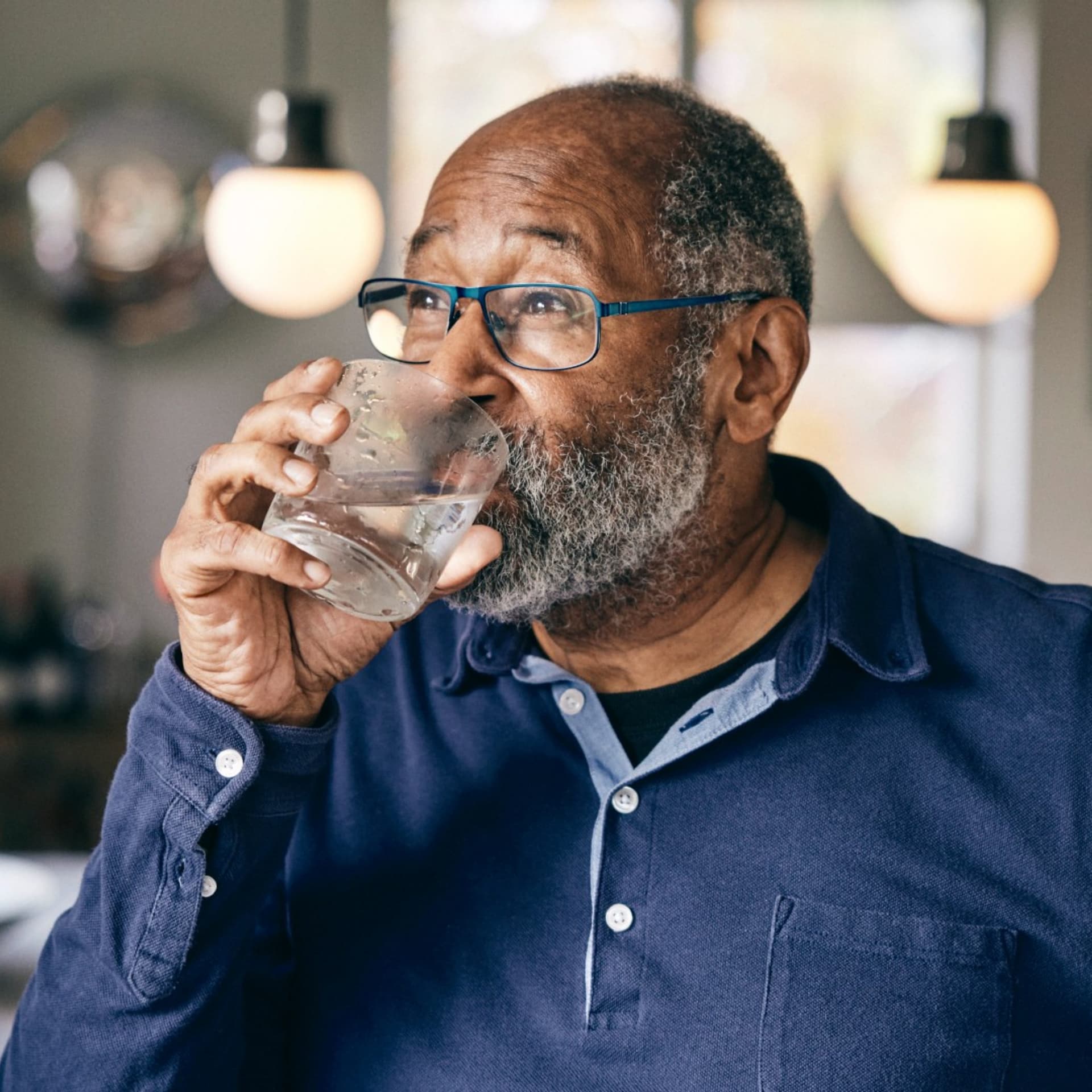
Hydration and health, and how access to clean water (including groundwater) affects disease, safety, and future risk under climate change.
Guests (backgrounds)
Claudia Hammond hosts. Yael Velleman is Director of Policy and Innovation at Unlimit Health, focusing on how clean water limits disease spread. Anthony Achievati is a Yale architecture professor studying groundwater and tube-well infrastructure; he’s based in India. Neil Turner is a nephrologist (emeritus professor, University of Edinburgh) and explains hydration physiology and dehydration.
Key claims
Most people with free access don’t need “preventive” extra drinking; thirst regulation is usually sufficient. Drinking too much suddenly can be dangerous (e.g., marathon/MDMA-type scenarios). Globally, 2.2 billion people lack safely managed drinking water; 115 million rely on surface water. Groundwater use is often unregulated; over-extraction can cause subsidence/sinkholes and even Earth-axis shifts. Lack of running water in healthcare increases sepsis/antimicrobial resistance risk.
Notable examples
Tube wells: in New Delhi, over a million privately owned tube wells. Zambia’s drought-flood-cholera cycle; Kariba Dam stopping reduces electricity and borehole pumping. Tube-well water may require reverse osmosis where arsenic/heavy metals occur. Electrolyte drinks: potentially life-saving in cholera, but little benefit for most people.
Written by AI. May contain mistakes. Listen to the episode to check what was said.
Chapters
Tap a time to open that second in VOAudience Perspectives on Water Intake
1:59 to 3:01
Learn about common beliefs regarding daily water consumption.
“So the big question, how healthy are hydration habits around the world?”
The Evolution of Hydration Culture
3:02 to 5:14
Discover the cultural shifts in water consumption among youth.
“Yes, we have somebody in the middle just here.”
Understanding the Role of Water in the Body
5:15 to 8:37
Understand the essential functions water serves in our bodies.
“And we'll come on to how much you need to drink.”
The Importance of Clean Water Access
8:38 to 10:31
Explore the critical need for clean water and its global implications.
“It is possible to drink too much water, but the body can adjust over time to very different water intakes.”
Architecture and Water Infrastructure
10:32 to 14:00
Learn how architecture intersects with water accessibility issues.
“I suppose as well as it being clean it matters whether it's easy to get hold of and that could affect your health as well if it's not easy to get hold of.”
The Global Importance of Tube Wells
14:00 to 16:50
Learn about the critical role tube wells play in cities and their implications.
“So for many cities today, the tube well is what the elevator was to Manhattan in the first half of the 20th century.”
Health Myths Around Drinking Water
16:50 to 19:46
Explore common health claims about water drinking and their validity.
“And we've been speaking mostly about water so far.”
Cultural Drinks and Hydration
19:46 to 22:32
Discover traditional drinks from around the world and their hydrating effects.
“Yeah, some people think that things with alcohol in and things with caffeine in don't count as fluid.”
The Importance of Clean Water Access
22:32 to 23:24
Understand the critical need for clean water in healthcare settings.
“We can't even think about having things like alcohol-based hand rubs or the kinds of alcohol gels that we sometimes carry around and use with us to keep us safe.”
Groundwater Dependency Across Regions
25:21 to 28:06
Examine how groundwater reliance differs globally and its implications.
“Now we talked about the current situation around the world, but next we are looking to the future.”
Show all 21 chapters
Consequences of Over-Extraction
28:06 to 29:25
Learn about the harmful effects of groundwater over-extraction on the earth and infrastructure.
“So it really varies in terms of the water table level and the kinds of soils that it's in.”
Water Access and Health Risks
29:25 to 31:27
Explore how limited access to clean water affects health in communities.
“And I've even seen research suggesting that the extraction of groundwater is causing the earth to tilt, which kind of seems extraordinary.”
Impact of Climate Change on Water
31:27 to 33:49
Understand the complex relationship between climate change and water supply issues.
“you have uh when also when you have so many privately owned bore wells or tube wells that offers an opportunity for waste water and contaminants just from the surface to enter into the aquifer.”
Antimicrobial Resistance and Groundwater
33:49 to 35:56
Learn how groundwater contamination may contribute to antimicrobial resistance.
“So is the idea the antibiotics reach the wastewater because they go through our bodies and the wastewater reaches the clean water and this is how it could be polluted.”
Exploring Freshwater Under the Sea
35:56 to 37:35
Discover the potential of undiscovered aquifers beneath ocean beds as a water source.
“And yet that is obviously going to increase.”
Understanding Dehydration
37:35 to 40:08
Gain insights into the physiological effects and dangers of dehydration.
“Now, of course, if people can't get enough water, there is a risk of dehydration.”
Future Water Supply Challenges
40:08 to 42:00
Examine the escalating challenges in global water supply and the need for increased funding.
“So, Yale, it's very clear that we need water, but are we likely to see more people experiencing a lack of water in the future?”
Success Stories in Water Management
42:00 to 44:20
Learn about successful water management strategies in various countries.
“global health and development overall, which is a really big source of concern, and also pulling out of the World Health Organization, which is going to undermine how we do things.”
Audience Q&A: Water Usage and Metrics
44:20 to 47:25
Explore audience questions about water consumption metrics and personal preferences.
“So what else do you want to know about hydration, health, climate change, disease, how it all fits together, any of those things?”
The Value of Electrolytes and Water Accessibility
47:25 to 50:31
Discuss the role of electrolytes and the challenges of water access in different regions.
“Yes, one there, and then we'll go towards the back.”
The Ethics of Water Management
50:31 to 51:22
Debate the privatization of water and its implications for human rights.
“So, yeah, I don't think that privatization has proved to work very well.”
Transcript
Automatic transcript. May contain errors.0:00Claudia Hammond:This BBC podcast is supported by ads outside the UK.
0:05Yael Velleman:Prep for a busy week with Whole Foods Market. Start your day with fully cooked breakfast sausages from Amy Liu, 365 brand frozen waffles with no bleached flours,
0:15Neil Turner:and of course Whole Foods Market eggs, which are all cage-free or better. In the evening, bring home a build-your-own family meal that feeds four for just$35. Choose one entree and two sides.
0:27Yael Velleman:Shop smarter, not harder, at Whole Foods Market.
0:33Claudia Hammond:Cha-ching! That's the sound of Lowe's Labor Day Savings.
0:37Yael Velleman:Get up to 45 % off select major appliances and save up to an additional$100 on select laundry pairs. Plus, get three bags of Miracle-Gro.75 cubic foot garden soil for just$10.
0:50Claudia Hammond:Labor Day deals are on now at Lowe's. In-store and online. Valid through 9-9. While supplies last. Selection varies by location. See Lowes.com for more details. The soil offer excludes Alaska and Hawaii.
1:12Neil Turner:Hello and welcome to The Evidence from the BBC World Service. I'm Claudia Hammond and in this series we take a single health issue and we delve deep into the research behind it with the help of an expert panel and our live audience. Do say hello. Hello. And today we are back in the gorgeous reading room at Welcome Collection in London to talk about hydration, water and health. And two floors below us, a brand new exhibition called Thirst in Search of Fresh Water has just opened and I looked round it last night and it is absolutely fascinating and I hope that some of you in the audience here today have had a chance to have a look too.
1:50Neil Turner:Now since we're in the UK and we're talking drink, can I get a big cheers to this topic from the audience? Cheers. Very good, and cheers to you too. So the big question, how healthy are hydration habits around the world? Are we drinking too much water or not enough? And where is access to clean water an issue, and how might this change in the future? Well, we have with us today Yael Velleman, who is Director of Policy and Innovation at Unlimit Health, where she focuses on how being able to get clean water can limit the spread of disease. Welcome, Yael. And we have Anthony Achievati, who is Professor of Architecture at Yale University in the United States.
2:31Neil Turner:Now his work on groundwater is in the exhibition that's on here right now, and he's currently based in India. And Neil Turner is a kidney expert or nephrologist and emeritus professor at the University of Edinburgh in Scotland. Thank you all so much for joining us. Great that you could be here. But I'd actually like to start with our audience here, because I'd like to know what you've heard about how much water you should drink each day and whether most of us are drinking enough of it. Could anyone put their hand up if they can tell me what they've heard about how much water they should drink and whether we drink enough or not?
3:07Neil Turner:Yes, we have somebody in the middle just here. Eight cups. Eight cups a day. Anyone else? Two and a half litres. Two and a half litres. Interesting. Any advance on those? Any advance on those? Okay. So we have eight cups, two and a half liters. And while we were speaking about this in the BBC's science unit, one of our producers there, Iman Moyne, who grew up in Texas, had this to say about what she's noticed about hydration habits in younger Americans.
3:39Yael Velleman:So hydration is all the rage these days. So back in high school, we used to have to get permission to leave class. and fill up our water bottles, which is something that we did pretty regularly. And when you would go, usually some kid would pass you and say, hydrate or dihydrate. It's a phrase that's so popular. You can definitely get it on stickers. I think a lot of people's water bottles probably say hydrate or dihydrate on them because it's such a hard, fast rule. You bring your water bottle with you everywhere, and you have to pick the right color that matches your vibe. That's why mine were always orange.
4:18Yael Velleman:but yeah student athletes were particularly very passionate about hydrate or dihydrate it was a big thing during gym class but also everybody else and then it was a problem too because you weren't allowed to have your water bottles in certain classrooms because like you couldn't have water in the chem lab and then there'd just be this giant pile of water bottles outside the classroom door so you'd have to go step out of the room and take a chug and then come back in which was also a big problem during testing when we had big standardized exams we always had to put our water bottles on the other side of the gymnasium.
4:48Yael Velleman:If you wanted to go have a drink of water, you'd raise your hand, the proctor would come to you and be like, okay, go have some water. And you have to waddle over to the side of the room and be monitored as you drink water from your water bottle. But it was this whole rainbow of different water bottles because everyone had one.
5:04Neil Turner:So Neil, it's definitely the case that in some places you do see a lot of people carrying water bottles now these days, that that seems to have become much more of a thing and that there is this hydration culture that Iman talks about. And we'll come on to how much you need to drink. But it does seem to be a message that a lot of us are familiar with that perhaps we're not drinking enough water. Now you study our kidneys and I know that they're crucial to the way the body handles liquids. So hydration is very much your area. Why do we even need water? What is it doing for us? What's it doing for our bodies?
5:35Yael Velleman:Well, water's pretty basically essential. We're about 55 to 60 % made of water and our blood is 90 % water. And you see, we pee it out. And so we've got to take some in. Yeah, it's absolutely vital. Quite a lot of our chemical metabolic processes need water and they're fairly sensitive to the amount of water that there is for them to work properly.
6:01Neil Turner:Now, is it true that most of us need to be drinking more? I mean, I've been looking at the guidelines and they vary from country to country. So in Germany and Denmark, it's about six glasses a day or one and a half litres. in Romania it's two to two and a half litres a day and a member of our audience there mentioned two and a half litres and then the Spanish guidelines say drink when you're thirsty so what does the evidence actually say about the optimal amount of water we should have in a day
6:26Yael Velleman:I'm pretty keen on those Spanish guidelines they sound good these are all very familiar numbers and some of them are go back quite a long way into history for where they've first come from There's a story that the eight cups a day comes from an American recommendation in 1945. That was based on the average amount of fluid taken in today, not water. And it excluded the water that you eat in food, which in some diets is a lot. Now, in reality, most people put out an average of about one and a half to two liters a day. and drinking a bit more than that is the average norm. And the body, it's so important to the body that your thirst is very tightly regulated to make sure that you stay the right concentration inside.
7:20Neil Turner:So is it true that lots of us are not drinking enough water or not? No, no it's not.
7:26Yael Velleman:People who have free access to water, that's a very important if, people who are healthy and who have free access to water maintain their body volume very naturally through thirst they drink more if they need more they don't need to drink preventively no more than you need to breathe harder preventively and what role do our kidneys play in all this what role do they play in hydration well they're very important aren't they i knew you'd say that the kidneys filter about 150 litres of fluid into the kidneys every day and about 1 % of that comes out as urine so the 99 % the kidneys reabsorb that's very finely controlled by receptors in the base of the brain that detect how concentrated the blood is and if the blood gets more concentrated it tells the kidney to reabsorb more water Take back more, keep more water in the body.
8:27Yael Velleman:And that is normally quite enough for us to keep things under control as long as we keep drinking when we feel thirsty.
8:37Neil Turner:So if you carry a bottle of water around with you and drink from it all day, is it possible to drink too much water?
8:45Yael Velleman:It is possible to drink too much water, but the body can adjust over time to very different water intakes. So the alarming stories that we occasionally hear of people drinking too much while running a marathon or when they take ecstasy or some psychiatric conditions, people drink a lot of water. If that happens very suddenly before the body can adjust, then your blood gets dangerously dilute. And yeah, that can be a very serious problem. But if you increase your intake gradually or you habitually drink quite a lot, you'll be absolutely fine. and there are people out there who drink less than a litre a day and there'll be people out there who drink seven or eight litres a day.
9:28Neil Turner:So how much water we should be drinking and how much water we do drink does vary but of course not everyone has access to clean and safe water and I know this is something you've worked on extensively, Yael. Why is it so important to have clean water?
9:44Claudia Hammond:Oh goodness, well, water is life. We simply cannot survive without water and that water needs to be clean. It needs to be free of pathogens. It needs to be free of chemicals, anything that will endanger our health. But it's also important not just for drinking. We can't keep ourselves clean. We can't keep our homes clean. And in many countries where sanitation systems rely on water, we also can't have a functional sewage system. So water is required for everything. And then there's also irrigation and even recreation, just as important to enjoy a good relationship with water. So how many people in the world still don't have water that is safe to drink?
10:31Claudia Hammond:Well, globally, usually we look at household data. so the latest data we've got our estimates for 2022 and about 2.2 billion people globally don't have what we call safely managed drinking water and when we say safely managed we mean that it's available it's on the premises and it's free from contamination chemical or pathogenic.
10:59Neil Turner:I suppose as well as it being clean it matters whether it's easy to get hold of and that could affect your health as well if it's not easy to get hold of.
11:07Claudia Hammond:Yeah absolutely and out of that 2.2 billion people we still have 115 million globally who rely on surface water so that's where there is no water on the premises and people have to go and fetch that water sometimes from quite far away they can be exposed to risks when they travel to do that they can be exposed to risk when they're fetching the water, for example, children being attacked by crocodiles or hippopotami. And we do have some diseases that are based in the water, parasitic infections that can infect you when you go into the water to fetch it.
11:44Neil Turner:So in many parts of the world, it can be quite difficult to access water. And Anthony, you're an architect, and yet water is very much your field. And you've spent a lot of time in the last two decades looking at this issue of where and how we get water. How did that come about, that an architect is focusing on water and wells?
12:02Yael Velleman:Well, it really comes about, it's biographical, I suppose. I grew up for a time not far from the Mississippi, lived in New Orleans, then Rome, and developed a kind of romance for rivers and cities. And I knew after I finished my undergraduate education, I was interested in studying a major river basin. So I applied for, and much to my surprise, got a fellowship to map the Ganges of the Ganga River in India by foot and by boat. and I thought it would take a year, but it took a decade to do. And so I became very, very interested in the ways in which cities depend upon water, where that water comes from, and the quality of that water as well.
12:40Neil Turner:And one of the things you look at in particular is tube wells. What is a tube well? What does it look like?
12:46Yael Velleman:Tube wells are driven or bored into the ground. They're usually made of pipe or PVC. They can go anywhere from a metre and a half to 300 metres below the surface of the earth, sometimes even much deeper. And then they're a mechanised pump attached to them that's either powered by usually petrol or by electricity to draw up that water to suck it up. So I would think very deep or sometimes shallow straw that's a mechanised system to draw up water.
13:14Neil Turner:And in the exhibition that's on here at Welcome Collection that I was looking at, you have some extraordinary 3D diagrams in a way. They're aluminium prints. And they show the layers of infrastructure in three different cities. There's Phoenix in the US, Delhi in India, and Jakarta in Indonesia. And you can see at the top, you can see roads and you can see the transport network. And then there are all these vertical lines, like hundreds and hundreds of vertical lines, representing these tube wells that are underground. Are there just thousands of these things?
13:44Yael Velleman:Yes, really there are millions of these things. in a metro area of New Delhi that's about 34 million people, we estimate well over a million privately owned tube wells are sunk into the ground. And so that city depends a great deal on groundwater or water taken up by tube wells. So for many cities today, the tube well is what the elevator was to Manhattan in the first half of the 20th century. It's critical to them. And yet they're very understudied, mostly because they're unregulated. So in most parts of the world, if you have the means, you can bore down into the ground and drop groundwater.
14:22Yael Velleman:And so it creates all kinds of unintended consequences on cities.
14:26Neil Turner:And is that water for drinking or for irrigation? What are people using it for?
14:31Yael Velleman:Most of the groundwater that's consumed in the world in many countries is for irrigation. Indonesia is a bit unique. Most of the groundwater, 93 % of the groundwater consumed in Indonesia is for drinking. But most parts of the world, it's for irrigation.
14:46Neil Turner:And of course, the health benefits of water are often touted. So actually, I'd like to ask our audience here whether any of you have heard of any supposed health benefits that can come from drinking plenty of water. And I thought we could put each of those to Neil and see whether it does make a difference to that thing or not. Has anybody heard of any health benefit that drinking plenty of water could give them? Yes, there's lots of hands up. Flushing out toxins, which I don't believe. Flushing out toxins, that's a good one. Any more? Yes, there's one just there. It reduces anxiety. Reduces anxiety.
15:20Neil Turner:Clearer skin. Clearer skin. That's a good one. Reduces headaches. Reduces headaches. All these things from water. Makes you feel better. Brilliant. So, Neil, that is a long list there. So, we can do some true or false with these. Flushing out toxins.
15:37Yael Velleman:Well, seeing as the kidneys already filter 150 litres a day, you're going to have to drink a lot of water to increase the filtered toxin that goes out. So no. Reducing anxiety? I hadn't heard that one before. I drink tea, you know, when I'm anxious. That seems to be good. I don't know about water.
Read the full transcript
15:58Neil Turner:What about getting clearer skin?
16:01Yael Velleman:Like many things to do with thirst and drinking, very little actual evidence that it does.
16:07Neil Turner:That's an interesting one because you often hear that. You often hear, oh, what you need to do is drink lots of water and you'll have a lovely clear skin. Not really true then.
16:14Yael Velleman:I don't think so.
16:16Neil Turner:Reducing headaches.
16:18Yael Velleman:Well, headache can be a sign of dehydration. So I'm not going to say no to that. In some people, maybe they've ignored the thirst and they're getting the headache and it's a sign. I don't think it's generally found to be useful as a remedy for general ordinary headaches or migraine headaches. Some people might.
16:39Neil Turner:And then the final one was making you feel better. I guess if you're thirsty and then you get some water, certainly when it's hot like it has been here in the UK recently, then you feel better, don't you, when you get to drink some water?
16:49Yael Velleman:Yes.
16:50Neil Turner:And we've been speaking mostly about water so far. Neil, I know you mentioned liking a cup of tea, which I do too. But, of course, the liquid that we use to survive doesn't have to be plain water. So we asked our listeners around the world to tell us a bit more about what they regularly drink where they live. And here's what Lubov Kostova from Bulgaria and before her, Andy Filidoro from Argentina told us.
17:14Yael Velleman:Mate, it's a traditional Argentinian and South American drink. And it comes from a plant, like a tea plant, which is original from Paraguay, North Argentina and South Brazil. And it began with the Guarani culture. Mate is not just a drink. It implies a whole ritual to prepare it and it is a synonym of gathering. In family, friends or working environments, there is a moment where someone starts the mate and is the person pouring it that shares his mate with his mate. This is a traditional way of drinking it and it implies a cultural moment of sharing among beers. Ayran is a mixture of Bulgarian yogurt with water and some add to it a dash of salt
18:18Neil Turner:which actually makes it a really good drink during the summer when you sweat a lot and lose a lot of the salt in you.
18:25Yael Velleman:Then you can turn that into a little bit more sophisticated version or the Bulgarian cold soup in inverted commas. It's yogurt and water and cucumber and garlic and parsley, sort of think of diluted tzatziki. And it is especially popular. We actually have it instead of soup or on the go in a cup.
18:51Neil Turner:You can really take that with you all day long. And a particular favorite of mine, but I know I share this with other people as well, is slices of watermelon. Watermelon with pieces of Bulgarian white cottage cheese, which makes a lovely salad. And it's very, very refreshing during the summer as well. That sounds lovely. Have any of you tried any of these things, yerba mate or this Iran, the salty yogurt drink?
19:22Claudia Hammond:Yeah, both. I grew up in a community with a lot of Argentinians, so we've had a lot of mate over the years.
19:30Neil Turner:Yeah, yeah. And what about you? What about either of you? Have you tried these things?
19:33Yael Velleman:No, I don't think I have. You must have had lassi, though, in Delhi. Plenty of lassis, yes. Which is salted or sweetened yogurt.
19:40Neil Turner:Yeah, so will all these other things hydrate us in the same way? I mean, even things like tea or, I don't know, beer, you sometimes hear, well, those things are only going to dehydrate you.
19:49Yael Velleman:Yeah, some people think that things with alcohol in and things with caffeine in don't count as fluid. Well, they do. Of course they do.
19:56Neil Turner:And the amounts of water or the amounts of liquid that you can get from food can be quite big, can't they? So watermelon was mentioned there. But I was reading about pizza even being 40 % water, which you would not think of pizza as having lots of water in it. I suppose you pour it into the dough when you make it.
20:13Yael Velleman:No, it's right. Almost all food contains quite a lot of water and some contains huge amounts of water, but particularly fruit. Watermelon is a particular example and vegetables are mostly water. So yeah, up to half of your intake of water can come from food.
20:31Neil Turner:That's really amazing. And does our sense of thirst, Neil, change over the lifespan? You sometimes hear people saying that older people don't always drink enough water. Is that something to do with thirst or is that a bit of a myth?
20:43Yael Velleman:I think it's a myth. I think we heard earlier about the importance of being able to access water. And we were talking about healthy people. But if you're unwell and you can't reach the water by your bed, then you can run to these tragedies of people becoming dehydrated in care homes or even in hospitals just because they aren't being offered the water. Or they may not be able to ask for it. So yes, being able to access it, even elderly people, if they are well, will drink enough.
21:18Neil Turner:And Yale, I guess worldwide, being able to get water in hospital and for hospitals to run a tour must be hugely important.
21:25Claudia Hammond:Absolutely. I mean, I've personally seen many healthcare facilities and hospitals without running water. And it's absolutely terrifying. Even if you do have a hospital with a water supply, it's not always available at the point of care. So when a medical professional is examining or delivering a baby, are their hands clean? Is the surface on which the babies are delivered clean? Many times you'll find that it isn't. And we have a high risk of sepsis, of healthcare-acquired infections. Consequently, people are having to be treated as a preventive measure with antibiotics, which then contributes to antimicrobial resistance, which is a really important emerging threat.
22:10Claudia Hammond:So people have got to have antibiotics just because there wasn't clean water there when they're in hospital? Absolutely, absolutely. And as was mentioned, water really is an unequal issue. And it's usually tied to levels of income and social and economic factors. So in these circumstances where we don't have even water, We can't even think about having things like alcohol-based hand rubs or the kinds of alcohol gels that we sometimes carry around and use with us to keep us safe. But beyond that, I think it's a habit of public health people to think just about the physical health of people. But just the dignity of it, thinking about the possibility of having to give birth in a healthcare facility with no running water, no functional toilet.
23:02Claudia Hammond:The indignity of that, the impact on the way that you feel, and also the impact on whether or not you're going to choose to come and deliver your child in a healthcare facility like that. You might just choose to stay at home and then you're exposing yourself and your baby to other kinds of risks.
23:19Neil Turner:So it sounds as though the knock-on effects of not having access to clean water are greater than you might think, that it can affect health in all sorts of ways. So that is the present, but we are breaking for the BBC News now. and after that we're going to look to the future. We'll be discussing what evidence we need next to better understand the relationship between hydration and health as well as how water access might be changing with the climate. I'm Claudia Hammond and I'll be back soon with Yael Velleman, Anthony Acciavati and Neil Turner and our audience here at Welcome Collection for the second part of the Evidence from the BBC.
23:56Thank you.
24:28Yael Velleman:Thank you. I'm Glenn Washington, host of Snap Judgment, the award-winning storytelling podcast from KQED. Every week, Snap deals a new card, like the girl whose sister was a monkey, the man who lived in the woods for 30 years, or the woman who snuck her lover out of prison in a dog crate. Pick a card, any card. Snap Judgment from KQED. New episodes every Thursday, wherever you get your podcasts.
25:08Neil Turner:Hello, I'm Claudia Hammond. Welcome back to The Evidence from the BBC. I'm in the reading room at Welcome Collection in London with a live audience and hundreds of medical books and artworks relating to health. And today we are talking about water, how we get it, who has it and how this affects our health. Now we talked about the current situation around the world, but next we are looking to the future. And on my panel, I have Yael Velleman, who's Director of Policy and Innovation at Unlimit Health. Anthony Acciavati, who's an architect whose work on groundwater features in the exhibition Thirst here at Wellcome Collection.
25:47Neil Turner:And Neil Turner, a kidney expert or nephrologist and emeritus professor at the University of Edinburgh. Now, Anthony, your expertise is in this water found in the ground rather than collected from rain in reservoirs. How much does dependency on groundwater vary around the world?
26:05Yael Velleman:It varies quite a lot in terms of areas that depend upon it. But generally, areas where you have private groundwater extraction, it's because there's either no municipal water supply, it's unreliable or polluted. And so then you might think places that seem to have almost nothing in common, like the Sonoran Desert with Phoenix, Tucson, Jakarta, New Delhi, Addis Ababa would have such different relationships with water, but yet they all have very similar patterns of urbanization because of the atomistic approach to a very decentralized system of privately extracting groundwater.
26:47Neil Turner:If you get water up from one of these tube wells, does it have to be clean before you can drink it?
26:53Yael Velleman:Well, so tube wells were originally introduced, especially in parts of South Asia as a means of providing potable water because surface water bodies were oftentimes polluted or unreliable. So there's a public health dimension to the idea that you could drop groundwater and drink it. We know though that with heavy metals or things like arsenic, you really have to do reverse osmosis, which is to push the water through a kind of membrane to be able to make it potable. So most groundwater, I would say, you can't just drink straight out of the tap, though millions and millions of people do.
27:30Neil Turner:And if you take too much water out from under the ground, is it going to run out or can it replace itself in some places?
27:37Yael Velleman:So it really varies. So in a place like, let's say, in Saudi Arabia or Arizona, in Saudi Arabia, when they're drawing up groundwater, that's usually referred to is fossilized water, so it's 30 ,000 years old.
27:50Neil Turner:You're drinking 30 ,000 year old water? Yes.
27:53Yael Velleman:Wow. And in Arizona, it's just a little bit younger, 20 to 24 ,000 years old. But in a place like, let's say, in northern, in the Indo-Gangetic plains of Pakistan, India, and Bangladesh, sometimes that water is 6, 12, 18 months old, depending upon how you're extracting it. So it really varies in terms of the water table level and the kinds of soils that it's in. So that depends a lot on the kind of age and quality of the water. And then there's also all kinds of unintended consequences that happen with over extraction in terms of subsidence.
28:29Neil Turner:Yeah, what happens if you take too much?
28:31Yael Velleman:So when you take too much, subsidence is when the water is being extracted faster than it's replenished in the soil, so it compacts. So think of it almost like when fruit dehydrates, it gets smaller. So when that happens, it can cause sometimes kilometer-long cracks in the earth. It can cause sinkholes. And this doesn't respect public or private property whatsoever. So in much the same way that we think of a hurricane or a tornado as not really caring if it's hitting public or private property, the overextraction of groundwater can cause buildings to sink. It can cause foundations to crack, huge sinkholes to open up in streets and in landscapes and cities and outside of them.
29:15Yael Velleman:So it creates quite a bit of havoc and it's why cities like Jakarta and Mexico City are sinking faster than say Venice because of the amount of extraction that they do.
29:25Neil Turner:And I've even seen research suggesting that the extraction of groundwater is causing the earth to tilt, which kind of seems extraordinary.
29:34Yael Velleman:So it's estimated that between 1993 and 2010 the Earth shifted its axis by about 80 centimetres because of how much groundwater we collectively take out. That's more than the melt of Greenland and Antarctica. So this kind of decentralised system which really has allowed billions of people to thrive is threatening to bleed parts of the Earth dry as well as, of course, at a planetary scale shift its axis of the earth.
30:02Neil Turner:And this is hard, isn't it, Yale? Because people need this water. So you can see why people would want to get water from these wells. We've heard how essential it is.
30:10Claudia Hammond:Yeah, absolutely. And I think it's important to remember that people don't just use the one source. So when we talk about X number of people have access, what does that actually mean? So one example for that, an area of eastern Uganda that I've been to several times, people do have I guess you could say relatively good levels of access to borehole water so similar to the kind of water that you're referring to and they use that water but only for drinking because the water is quite hard they can't really use it for cooking because it spoils the rice it spoils the beans they don't use it for laundry because the soap doesn't lather as much so whilst they have good access to improved water on paper they're still having to use contaminated river water where there's a risk of parasitic infection every single day for these other domestic needs so you know people do what they need to do to meet their daily needs and sometimes it puts them at risk but health isn't always the main priority water is always more
31:18Neil Turner:urgent yeah so anthony if there is subsidence could that then have an impact on on health i guess i guess water that's that's not clean that's dirty could then inundate places very much so so
31:30Yael Velleman:you have uh when also when you have so many privately owned bore wells or tube wells that offers an opportunity for waste water and contaminants just from the surface to enter into the aquifer. So then you can end up quite literally consuming your own excrement. Or you can have lots of microplastics get in. And once things are inside the earth, it's very hard to get them out. So it becomes a major public health concern as well when so many people are tapping into a shared aquifer, yet we don't usually think of it as being shared in the way that air is. yet a commons like an aquifer is so vital to so many millions and millions of people in many cities and landscapes across the world.
32:16Neil Turner:And Yale, when we're thinking about access to water in the future, how much of an issue is climate change there?
32:22Claudia Hammond:It's quite a big issue for different reasons and it can sometimes get a bit complicated. You can have a situation where there's not enough water, so increased aridity. you could also have too much water all at the same time and the combination of drought followed by by too much rain can cause flooding which can then lead to disease outbreaks. A really good example of that we have at the moment in Zambia where there's an ongoing cholera outbreak which is quite severe. They had a couple of years of drought, which then were followed by severe flooding, causing damage to infrastructure, displacing people from their homes.
33:11Claudia Hammond:But also, one of the major dams on the Zambezi River, the Kariba Dam, which is a hydroelectric power dam, stopped functioning because there wasn't enough water. Then there's no electricity. No electricity means the pumps for the boreholes stop functioning as well. No running water, no flushing of toilets and then that also increases the risk. And then just to add to the sort of nexus between all of these issues, that means that Zambia is having to fire more coal which then potentially contributes to more climate change and the cycle begins all over again.
33:52Neil Turner:And Anthony I've also seen the suggestion that the use of groundwater might one day increase antimicrobial resistance how would
34:01Yael Velleman:that happen well so one of the issues that I think is a kind of slow moving crisis but one that is not being studied enough is this issue of antimicrobial resistant genes so you have the over use or prescription oftentimes actually not even prescribed of antibiotics in places especially in New Delhi and around Lahore in South Asia. And there's a real concern, we've already started to see AMR appear in surface water bodies, but given that so many millions of people depend upon groundwater, there's a real concern, especially with wastewater percolating into groundwater, that we're going to start to find AMR also in groundwater, which is an incredibly problematic condition if that does happen.
34:47Neil Turner:So is the idea the antibiotics reach the wastewater because they go through our bodies and the wastewater reaches the clean water and this is how it could be polluted.
34:56Yael Velleman:Yes, so we have those kind of antimicrobial resistant genes that are effectively in surface water bodies and then percolating down into groundwater, oftentimes through wastewater, is where we're imagining the vector might be.
35:09Claudia Hammond:Is this a concern you've heard about in the world of water? Yes, absolutely. And just to add to the human part of the infection, we also have a lot of antibiotics used in livestock rearing and then run off from that as well as from any industry including pharmaceutical industries that release water with antibiotics. All of that creates a pressure on the environment and increases the likelihood of resistance emerging as well.
35:41Neil Turner:And is groundwater likely to become less safe in the future?
35:45Yael Velleman:I think it really varies from place to place. So I've been quite amazed on the one hand how much we take out. We take out 959 cubic kilometers. That's two Lake Eries or 127 Loch Nesss here in the UK. And yet that is obviously going to increase. But then there's been areas of the world, say, in South Delhi in India, where communities have come together and they've recharged the aquifer. So where they had subsidence or sinking come together using rainwater harvesting to actually recharge it so the ground actually starts to go back up, which is hard on buildings because most buildings don't like to move up and down so much.
36:25Yael Velleman:But there are great examples of ways in which in the future, I think, going forward, we can think of this more collectively and start to recharge them and understand groundwater access is not a privatized atomistic condition, but really one that ought to be shared. But the first step, I think, is really how do we start to visualize that shared commons? Because we have ways of sharing the way we understand the air, but we still really lack visualizations of the interior of the Earth and how we extract so much of it to terraform the surface.
36:56Neil Turner:And is it true that there might be more freshwater underneath the sea, which sort of seems like a counterintuitive idea? How does that work?
37:04Yael Velleman:Yes, so there's quite a bit of research being done, some of it being done now in Italy, just off the coast, the Adriatic, to study if there are in fact aquifers underneath the Adriatic and other seas and oceans here on the planet. A lot of that's been undetected because of the ways in which we go about modeling groundwater. It's mostly based upon differential in gravitational pull of the Earth. So it's done through satellites. And so there's prospecting that's happening now to see if there's groundwater or aquifers quite literally under the beds of the sea, which maybe in the future we'll need to rely on if we start to run out of potable water.
37:47Neil Turner:Now, of course, if people can't get enough water, there is a risk of dehydration. And Neil, we were talking earlier about how we're often encouraged to drink more water. And if plenty is available, then it's easy to forget how critical it is. Of course, when it's precious, you think about it a lot. So I want to look a bit at what happens in the body when you don't have enough water. What is dehydration exactly?
38:10Yael Velleman:So we often refer to dehydration in two slightly different ways. So one is when you're just short of water, when you haven't had access to water. And because water is such a large proportion of us, you don't need to lose very much of your total body water before you start feeling not just thirsty but ill. and eventually because water is 90 % of blood eventually your blood pressure drops which means that your heart can't pump your kidneys don't work, nothing works and yes, so it can quite quickly be fatal if you become severely dehydrated of course the other way we become dehydrated is through excessive losses so if you have cholera, torrential diarrhea or if you bleed or lose fluid because your guts aren't working, you're vomiting, all of these things lead to you potentially quite rapidly decompensating and becoming very seriously ill.
39:12Neil Turner:And it's a really short time, isn't it, that the body can manage without water for compared with food?
39:16Yael Velleman:Yeah, I think, and presumably these are from temperate climates, you can't survive many days without water, but you can survive weeks without food.
39:27Neil Turner:And do you know why that is? Why are humans so at risk from dehydration? I was reading that a mouse can go without water for longer than we can.
39:35Yael Velleman:We don't really store water. We're not camels. So we do depend on having the intake every day to keep the equilibrium going there. And we do need enough water to produce urine. Otherwise, the toxins which the body generates naturally, without you having to be drinking toxins, will accumulate and you'll get sick from your kidneys not working. So I guess it just illustrates how vitally important it is that we do keep the body's metabolic systems just at the right level. Homeostasis, keeping things the same.
40:10Neil Turner:So, Yale, it's very clear that we need water, but are we likely to see more people experiencing a lack of water in the future? Is it going to go the wrong way, if you like?
40:19Claudia Hammond:Well, it seems to not be going the right way fast enough. So, for example, if we were to meet the sustainable development goal on drinking water and sanitation by 2030, for water we would need to be investing six times more than we are now. And that's even without taking into consideration the inequality between different regions and between different countries. We're moving at different pace. So, for example, about 70 % of the world has access, but in Africa, in sub-Saharan Africa, it's only just over 30%. For sanitation, we'd need to be investing a lot more again, and for hygiene, probably about 13 times more than we're spending at the moment.
41:12Claudia Hammond:It's also important to keep in mind that we've got more pressures now on water supply than we have had before. So it's not just climate, it's also global conflict, instability, the financial crisis. All of these things are contributing to instability and displacement. And it's very telling to see that just from the beginning of 2025, we've already had 100 ,000 people infected with cholera and over 1 ,700 deaths. It is something that we're very concerned about and is becoming worse.
41:46Neil Turner:And isn't there more pressure on funding as well? You say you need 13 times more funding. This is the moment where there's a funding crisis in global health.
41:54Claudia Hammond:Yes, there is. And sadly, we've seen a very big global player, the US, pulling funding out of global health and development overall, which is a really big source of concern, and also pulling out of the World Health Organization, which is going to undermine how we do things. But there are positive stories out there and where there is good leadership and where leaders understand that development is the result of and not a precursor to improving access to water supply sanitation and better housing we are seeing good examples out there.
42:36Neil Turner:What sorts of things so are there are there successes that we could learn from as we go forwards?
42:41Claudia Hammond:Yeah there There are. So historically, East Asia is a good example. So countries like Singapore and South Korea that have placed improvements in water supply and sanitation as fundamental to their development story, if you like, and that has come from the highest levels of government. More modern examples, countries like Rwanda and Botswana that are doing very well. And again, because at the highest level of government, the leadership of the country is placing those improvements to health and well-being as fundamental to development and not waiting for development to happen before they can invest in that.
43:20Neil Turner:Yeah. Can it be quite hard to get people to invest in water? Is it less obvious why that's useful to an economy as, say, investing in, I don't know, roads or broadband?
43:29Claudia Hammond:Yes, absolutely. It is harder and for various reasons. One is that it does cost a lot of money. Spending needs to be done and the benefits might take a while to see. So we're talking about, you know, 5, 10, sometimes 20 years, a generational impact of these improvements. That's not always very attractive to politicians who are thinking just about their next election campaign. So it can be a bit of a hard sell. And historically, investment in the social sectors, which water supply and sanitation sometimes fall into, has seen as a kind of net cost to the economy rather than a long-term investment.
44:14Claudia Hammond:And that's a mindset that still needs to be challenged and shifted.
44:18Neil Turner:Well, it is time for our audience at Wellcome Collection in London to get the chance to ask their questions now. So what else do you want to know about hydration, health, climate change, disease, how it all fits together, any of those things? Do put your hand up if you'd like to ask a question. Oh, lots of questions. Yes, there's somebody in the second row just here.
44:36Claudia Hammond:Thank you. I have one question for Neil and one question which is both for Anthony and Yale. If you're in a restaurant in London, would you order tap water or mineral water? Why? and for Anthony and Yale there's another metric that we often use which is the litres per day per capita in the global south it's probably around 100, 130 in the global north it's much more how valuable do you think is this as a metric to understand parity in water
45:07Neil Turner:as infrastructure and water supply? Thank you for those so Neil, in a restaurant in London and I suppose it doesn't matter where you are would you have tap water or mineral water?
45:17Yael Velleman:I would always have tap water, unless I was particularly keen on having effervescent fizzy water. London tap water, UK tap water is very safe. And no, there's no reason to do otherwise. And it's an awful waste of plastic or glass to be drinking stuff that is more engineered than it needs to be.
45:39Neil Turner:Yael, can you explain to us this metric of litres per day? Is this all the water that people use per day?
45:47Claudia Hammond:And so it normally takes into account everything from drinking, eating, cooking, cleaning, flushing the toilet, having a shower, going for a swim. And not just what you do in your own household, but also what happens when you go to work, when you go to school, when you go to health facility. Basically, all of that. I think it is a useful metric. It does definitely show the disparities. and if you're living in a city and you've only got the bare minimum that you need to survive, which is 15 litres a day, that doesn't get you very far. It won't help you to keep your clothes clean and your house clean and your basic hygiene needs looked after.
46:36Claudia Hammond:Anthony, do you think it's a useful measure?
46:38Yael Velleman:I think it's certainly useful but I also think that as more and more parts of the world face water scarcity and insecurity, they're going to have to learn from places that, you know, economize water. So I think, you know, a bakka shower in northern India is so common, and I think probably more and more parts of the world are going to have to do that, which would reduce the amount of water that you consume. So I think that in some ways, more and more parts of the world are going to look and have to adapt in the way that, say, places that have water scarcity or have water abundance and drought oftentimes have developed a very different choreography.
47:17Yael Velleman:So I think it's certainly useful. But I think it can also be pedagogical in teaching other people how to live better too.
47:25Neil Turner:Thank you. Let's take another question. Yes, one there, and then we'll go towards the back. Electrolytes have become really trendy over the last few months slash years. I wanted to know what are the benefits, and are they really beneficial? sure or is it really a sign of privilege we have in the global north and if we could uh potentially well my question was would it be actually quite helpful um for those living in the global south to meet the need the health needs and requirements that they require yeah yeah so neil you see a lot of these electrolyte drinks now are they are they are they good and could they be helpful in the
48:02Yael Velleman:global south so i think the evidence for electrolyte drinks um improving performance comes from very high level performance i don't think that for the average amateur athlete it's going to make much difference the reason they're about is because they're heavily advertised and people are making a lot of money out of them and you can say the same for a lot of other things
48:24Neil Turner:including a lot of other drinks but could they be useful in places where people don't have enough water?
48:30Yael Velleman:Well, there are electrolyte solutions for people who are losing fluid very rapidly, and they've been absolutely life-saving in cholera epidemics, for instance. But there isn't a real need for it. Most diets will include enough of the electrolytes that we must have.
48:49Neil Turner:So I think we've got time for one more question. Yes, just here in the front.
48:55Claudia Hammond:hello my question is for yale um if we consider that water is a human right as united nations has said like a few years ago do you think does it make sense is it right for to leave water for private companies to manage and also having water as a commodity in stock market like yes what about the owning of water yeah that's that's really difficult um and i here i might be starting to use my opinion but um water uh from the nature of it is is not something that is very uh amenable to privatization um it's the kind of thing that tends to be um monopolized by a single provider and therefore the market doesn't function the way that you would like a market to function.
49:53Claudia Hammond:Where we are seeing models work better is where water isn't necessarily privatized, but it's commercialized so that the services themselves are running better, so that more people can afford to have water connections, for example, and paying a more reasonable tariff. And it's important to point out that people living in conditions of poverty often pay more for water because they're having to buy it through more expensive routes. So paying for water by the jerry can is more expensive than having a water connection and paying a water bill. So, yeah, I don't think that privatization has proved to work very well.
50:41Claudia Hammond:and there's a lot that we can do to make sure that the human right to water is realised.
50:48Neil Turner:So drinking water is absolutely crucial for every one of us but something we might not think about all that much unless we haven't got any and then of course that's all you think about. Now thank you so much to our panel, Neil Turner, Yael Bellaman and Anthony Acciavati and thank you to Welcome Collection for hosting us in their lovely reading room and to our studio engineers, Duncan Hannant and Emma Hart, and to the producer, Margaret Cesar Hawkins. Now, thank you to all of you in the audience for coming. I'm Claudia Hammond, and to hear more on global health, do join me every week on the BBC World Service for Health Check.
51:22Neil Turner:Bye for now. Thank you.
51:37Neil Turner:you listen. Be the first to listen to your favourite shows like Evil Genius, Good Bad Billionaire and You're Dead to Me with a subscription to BBC Podcasts Premium on Apple Podcasts. You can also enjoy a range of our podcasts ad-free with an Amazon Music subscription.
From the publisher
On this episode of The Evidence, Claudia Hammond discusses all things hydration with a panel of experts. Where do our hydration guidelines come from? How do we determine the perfect amount of water we should drink? What are the issues with water access that people and populations face aroud the globe? And how will climate change affect the amount of water we need, and our access to it. In front of a live audience at the Wellcome Collection in London, Claudia discusses these questions and more with Neil Turner, nephrologist and professor emeritus at Edinburhg University, Yael Velleman, Director of Policy and Innovation at Unlimit Health, working at the intersection of water access, sanitation, and disease; and Anthony Acciavatti, an associate professor at Yale Architecture School and creator of the exhibtion Groundwater Earth: The World Before and After The Tubewell.