In short
Whether DIY music scenes and TikTok creators can teach each other—specifically how lo-fi “lore” storytelling, fan research, and analog presentation can reshape music journalism, fandom, and parasocial relationships in the attention/creator economy.
Guest
Royce (Shoshinboy on TikTok), early-20s viral TikTokker who makes VH1-style “history of music” videos (often Cure, Nirvana, Phoenix, Arctic Monkeys). Background: voracious reader; grew up deep-diving via YouTube comments, blogs, forums; DIY/punk-influenced ethics; does unscripted, bullet-pointed “friend conversation” storytelling; uses primary sources (era interviews, band books) to chase mythology/urban legends.
Key claims
His work is a form of journalism; gimmicks (talking into a phone, VHS/VCR setups) can be playful attention hooks if backed by research and perspective; platform economics reward “algorithm-friendly” content, not necessarily challenging art; nostalgia can be harmful; creators shouldn’t be forced into constant personal parasocial branding.
Notable examples
Everett True’s Nirvana biography and Careless Talk Is Life magazine; his viral “Pavement on Conan” video (70k overnight) and Nirvana at the VMAs (2M); “Jet Monkey Pissing in Its Own Mouth” review; Robert Palmer “The Cure” story; DIY guitar-building and VHS-to-TV filming.
Written by AI. May contain mistakes. Listen to the episode to check what was said.
Chapters
Tap a time to open that second in VOUnderstanding Journalism in Content Creation
1:30 to 6:10
Learn how different forms of storytelling can be perceived as journalism.
“This is the Drowning Sound podcast, mapping the future of music.”
The Impact of Music Biographies on Passion
6:10 to 8:30
Explore how music biographies can ignite a deeper appreciation for music.
“And I ended up going off and listening to the Raincoats and finding different ways into music that I wasn't very familiar with.”
From Inspiration to TikTok: The Creative Journey
8:30 to 11:15
Follow the journey of turning music knowledge into engaging TikTok content.
Spotting Moments for Creative Expression
11:15 to 14:00
Learn how to identify compelling moments for creating engaging videos.
“And then within a week, it's like 2 million people are looking at your face, talking out of an old TV.”
Navigating Video Creation with ADHD
14:00 to 15:11
Learn how ADHD influences the creative process and video making.
The DIY Ethos in Music and Video
15:11 to 16:44
Explore the DIY mentality in music and how it informs video content.
“I mean, I feel like it is like, it's very casual.”
Researching Music: Sources and Mythology
16:44 to 18:11
Discover the importance of research and primary sources in music discussions.
The Evolution of Music Journalism
18:11 to 19:39
Examine the changes in music journalism and the impact of social media.
“folklore mythology or these like little connections, these little things that you notice that someone else noticed, like it's, it's just so fun.”
Genuine Connections in Music Media
19:39 to 21:39
Discuss the value of authenticity in music journalism and content creation.
Challenges of the Creator Economy
21:39 to 24:40
Understand the complexities of monetization and authenticity in the creator economy.
Show all 16 chapters
Collectives and New Media Structures
24:40 to 28:05
Explore the concept of collectives in the music industry and their potential.
“something I feel like is genuine in like a quality piece of media or piece of art is not necessarily something that is going to get latched onto by the algorithm.”
The Broken Model of Music Advertising
28:05 to 29:39
Explore the challenges of advertising in the evolving music landscape.
The Pros and Cons of Patreon for Musicians
29:40 to 31:27
Discussing the implications of using Patreon for musician support.
The Shift in Artist-Fan Relationships
31:28 to 32:46
Analyzing the impact of social media on artist-fan dynamics.
Music Journalism Perspectives
32:47 to 34:12
A deep dive into the essence and evolution of music journalism.
“but i adore their music and i almost like don't really want to know too much about them yeah they They seem like cool, nice guys.”
The Complexity of Nostalgia in Music
34:13 to 36:15
Examining the cultural implications of nostalgia in music today.
“Like as a concept, as a thing of the culture, I kind of hate it.”
Transcript
Automatic transcript. May contain errors.0:10Can musicians and DIY culture teach creators, TikTokers, YouTubers anything about how to make lo-fi, interesting human content? And can TikTokers and creators teach musicians a different way of thinking about approaching the internet, approaching culture, approaching fandom, parasocial relationships, building crowds? Those are the themes in today's episode where I meet pretty much my favourite TikToker. He makes these brilliant VH1 style kind of like history of music, podcasty type, videoy type things that are reasonably long. They're not too long. They're TikTok length. they're not like quick fire TikToks.
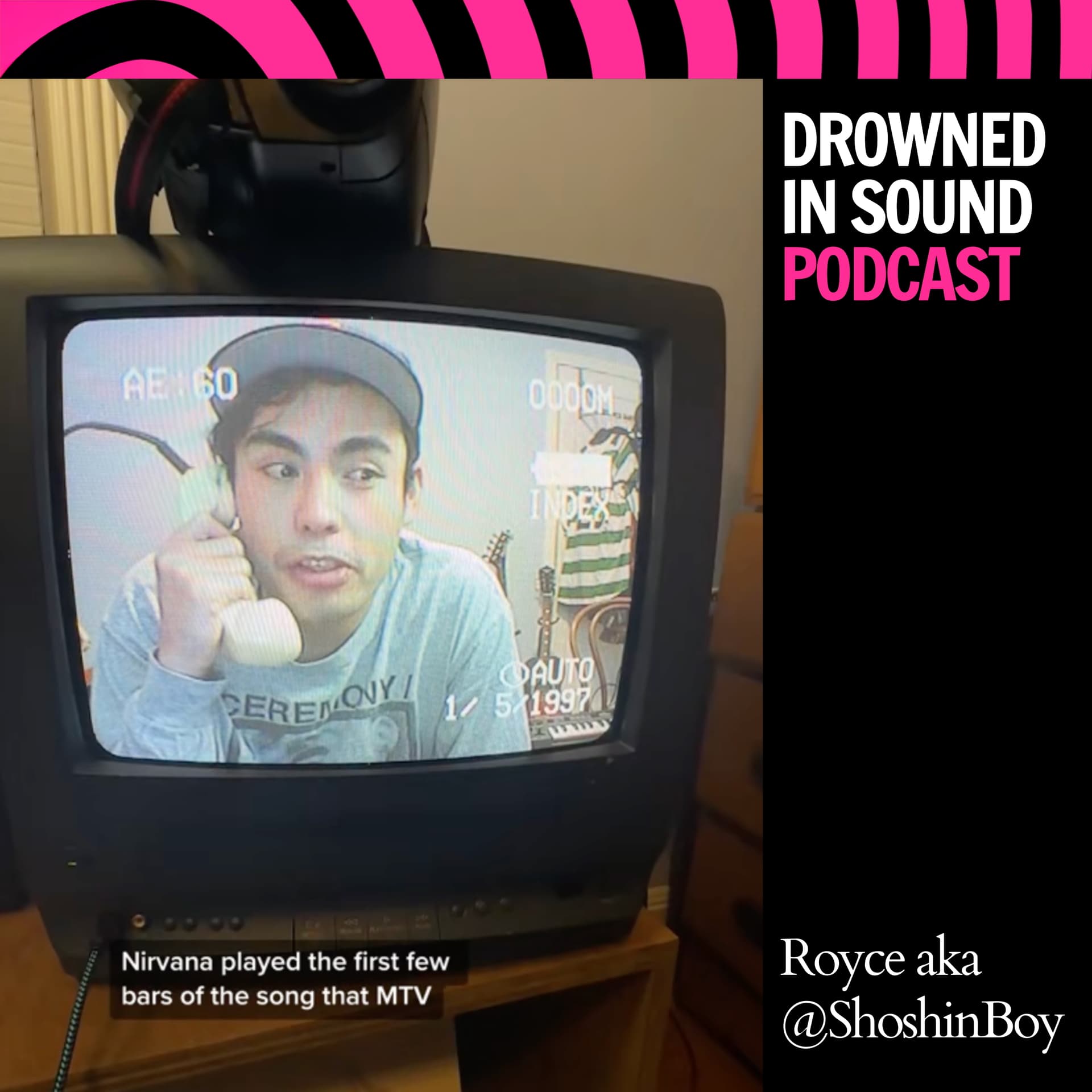
0:51He picks up an old telephone, talks through an old VHS TV and it's just brilliant. Like he's done videos about The Cure, he's done videos about Nirvana, he's done videos about Phoenix, the Arctic Monkeys. It's a brilliant way of mapping the past and glancing into the future, looking at the lessons we can learn about lore and world building and just the magic of being a fan. Royce, Shoshin boy as he's known on TikTok, is really passionate, really smart, really thoughtful, really interesting. And this was a great conversation. It happened a little while ago. Don't think anything in here is particularly out of date.
1:28We've edited out a couple of bits that were. And I will catch you at the end. This is the Drowning Sound podcast, mapping the future of music.
1:40what would you in your mind describe as journalism i i find it really interesting that when you reached out to me because i i've never considered what i do journalism until till you reached out to me which i find kind of interesting um i don't to me journal has always felt like uh like more interviews like more like being in the trenches you know get getting those primary sources doing the interviews uh reviewing gigs and all that i feel like i'm just telling stories in a way but but when you mentioned it i like almost like reassessed what i'm doing on tiktok in a different context and like i wouldn't argue it how do you view it because there's a level of research that goes into what you do and it's storytelling and you're building something for an audience I think it's a form of journalism and like and actually I think a lot of what people consider to be journalism is often just kind of promotion and puff pieces or it's like criticism but without any real real journalism to it it's like it's music criticism and I think what I really like about your videos is you bring music appreciation into a kind of everyday like something pops up in your phone and you consider something you haven't thought about before and I think that to me is what some of my favorite critics and music writers can do and I think it's really interesting that you've it seems from some of the things that you've posted about that you've kind of grown up with music writing and that some of that is kind of gone in like in a weird way like you're kind of doing what vh1 might be doing now if it was around i appreciate that yeah i mean that makes a lot of sense that that's how it's being perceived because like to me like the whole impetus of it was just essentially you know playing that game when you're when you're hanging out with friends and just like sharing videos like oh have you seen this or have you seen that and that's kind of the angle that i've been taking where it's coming from an appreciation it's coming from like the conversations I have with friends are basically almost exactly what ends up in the TikToks in a certain way.
3:58But I think just like who I am and like that background that you alluded to in terms of just like being like such a voracious reader of like blogs growing up and just like going down, you know, forum deep dives or like YouTube deep dives as a kid, like that's just kind of who I am. So that let's introduce you to the audience a little bit. So um you're i'm trying to guess even how old you are because some of your cultural references um have a feeling you're probably in about your 20s yeah that's all right i i uh early 20s i won't say uh i i try not to say not not out of vanity i just i find it very amusing that no one knows how old i am and it's something that i kind of realized early on and it just it's been kind of running joke uh because i've gotten everywhere from like 17 to like 37
4:57um and so how did how did you kind of get into music and at what point so i think there's probably two questions here to kind of this join the dots between you sort of alluded to the fact that you've been a big music fan from quite a young age like what was your kind of journey to to how you've got now to kind of putting videos out what was the moment made you think i should probably start posting on tiktok i mean i've talked about this on on the tiktok but i guess like there is like a moment i feel like i could point to or is like this is me thinking about music in a different way instead of just kind of taking what's being presented to you whatever your parents are listening to what's on the radio and that was uh the the everett true nirvana a biography that I think my dad got for me and my brother, uh, because like we had seen like the making of Nevermind's like documentary with Butch Vig, uh, got really into that.
5:58And he got us, it's this like 500 page tome. And I read that thing back to Ford probably three or four times like in class, you know, ignoring the teacher, just reading that. And I would go and like any time a band was mentioned i'd immediately go google it and look them up so like that's like the it's the web of like you know some of it i liked some of i didn't like some of it maybe i like learned to like later in life but that just being this like entry point into essentially like alternative music like punk music maybe like more i remember reading that ever true book too and And I was probably aware of a lot of the music in there, but not heard a lot of it.
6:46And I ended up going off and listening to the Raincoats and finding different ways into music that I wasn't very familiar with. But I think Everett's got that amazing skill of just sharing his passion and it feeling quite infectious. And there was definitely something when he started Careless Talk Cost Life magazine. I don't know if you've come across that magazine that he was the editor of. He made that magazine with Steve Gullick, who did a lot of the iconic Nirvana shots as well. And I think they just like bring a whole world to life, which is really amazing. You've told me a little bit about that kind of really turning you on.
7:24And did you kind of get into reading blogs and magazines off the back of that? Weirdly enough, this might be a generational thing. A lot of it was just, and I think it reflects in kind of what I'm doing on the TikTok. it was just YouTube, right? Finding live videos and just reading the comments and seeing like what people mentioned there and just like, you know, following the link rabbit hole to like whatever the logical conclusion it brings you to, you know, that was a lot of it. It was really interesting reading that Everett True biography and kind of, I'm super intrigued in like your thoughts on it because I think by the time I got my hands on that, like melody maker as it was was dead um a lot of the magazines were dead and so it was like all the blogs um what was the moment when you kind of realized that you could start taking some of the things you were finding and sharing your passion and knowledge for it on tiktok like you could go and you could find like the video where i figured out that i could hook up my vhs camera to the tv and then talking to the phone yeah i scrolled back and saw it was such a cool moment to see you going does this work and then do i do this like it's like the whole idea it's so funny that it's kind of uh like gotten out of hand in that it started off like my whole channel started off like as as a joke in a way in that like i feel like on tiktok and like talking about like the future of like music criticism or journalism and just media it's i was watching you know all these tiktoks you know got like downloaded during the pandemic and we got you know all addicted to it and you start realizing that in order to draw an audience like you people had these like little gimmicks so these little ways to you need to capture someone's attention like the first two seconds right and like sometimes like someone will have a good gimmick and like you'll like you'll pick up with the pudding down and like sometimes it's very transparent and like the only thing there is the gimmick and there's nothing really like propping it up uh so like the i the whole talking into a phone and a tv was kind of like a joke on like what is the most absurd thing you could do to grab someone's attention that is just on its face like how analog can i be whilst playing youtube clips exactly like it's like it's it's old-fashioned it's like weird it it's it takes so much effort to like hook like there are so many wires and cords in this room to hook everything up um and like it's like a little funny joke to myself but then uh i think i i posted a video about pavement playing on conan uh because like i i made that video where i was like this is a funny gimmick huh and like people were like yeah that's kind of funny and then i was like yeah what if i like to the gimmick but try to actually make something and i i just talked about pavement playing on conan and it was like literally the most pure sense of like these are comments i made when showing this video to friends like these are little jokes or little observations that we had and i i did that in like it got like 70 000 views like overnight yeah i was like there might be there might be something like you know this is the dopamine release of getting likes and stuff like that or i was like i guess i gotta do another one and then another one and then i think like within a week i did one on nirvana uh at the vmas and that got like two million views wow which was i mean it was it was stressful because it was like and your videos before that were doing like a few hundred views weren't they Yeah, like nothing.
11:10It was just like me. Like I have DIY projects. I like, like build guitars and stuff like that to no one, just like my friends. And then within a week, it's like 2 million people are looking at your face, talking out of an old TV. And it's, it's, it's overwhelming, you know? Yeah. And with those first few videos, were you scripting them or were you just literally hitting record and just saying what you were thinking? oh it's yeah it was just like talking into a camera for 20 minutes and then i would edit it down which to a certain extent is still what i do like i don't actually script the videos yeah like i have a notebook where i like write down bullet points and uh yeah i do like you know probably like watching like youtube vloggers growing up there's like a lot of jump cuts in my videos and stuff like that which i find kind of funny because it's like a jump cut feels very like 2011 and tiktok is obviously very 2023 and the tv and everything is very like late 90s it's like such a mishmash of technology um i try to just like approach it like a conversation that i'd have have with my friends you know and like i'll info dump on my friends like i'll i like like i love sharing this and i love just like connecting with people and uh how when you spot something do you know you want to make a video about it like have you have you already got like a long list of things you want to make videos about or is there you're just on a diving down a rabbit hole and you realize ah this clip of the cure to like playing before robert palmer feels like something that is something that maybe you and your friends know about but what kind of wider culture for instance i didn't know that cure story and the way you introduced it was if like it's like a big thing in like rock legend and i was like i'm a big cure fan and i wasn't familiar with it so how do you sort of spot your moments i mean yeah that's super funny because like and like that kind of is like the frame of reference of like the internet and how in a lot of ways things are so compartmentalized and there's like a subculture a subculture a subculture like that story has been something that i had been aware of since i was like 11 years old for whatever reason I don't know how I came across it uh and so like that that like there will be video ideas like that where it's like in the back of my mind like oh I at some point need to get to that like that was one that I had in my back pocket where I was just like at some point I'm gonna have to talk about you know the cure you know fuck Robert Palmer fuck Robert rock and roll story uh and then some will just like be spur of the moment like I'll find something and be like it's like 2 a.m but I got to do like three four hours of research on this because it just it's occupied my brain to that extent because I thought it was quite interesting you did like back-to-back videos on parliament samples and I thought that was really interesting to see whether maybe you started making a video and found something else you're like okay that's a whole other video oh no that that's exactly how that went down where it was like I mean that and you probably could or I could probably point if I were to scroll through like the videos that I posted, like there is some connection from one to the next one, like in my brain.
14:26And it might, you know, several layers of abstraction down, but like, there is like a direct link where it's like this thing led me to thinking about that, which maybe led me to think about something completely different, which like led to the next video. And that's just like kind of how my brain works like i i have like diagnosed adhd which is probably immediately apparent to anyone watching my tiktoks or whatever um i feel like that kind of helps it feel a little like natural and like keeps it fun ultimately because like the videos take like probably more work than is a parent so like if it weren't fun and like it weren't like what i am like naturally compelled to do i probably wouldn't be doing it you know what i mean well i think it's also going back to a lot of those artists that you would have been reading about in the Everett True book, like they're really lo-fi, but there was a lot of work went into doing those like bad tape recordings and like Daniel Johnston recording what, 100 copies of the same tape and just performing it live each time.
15:27Yeah, absolutely. I mean, I feel like it is like, it's very casual. It's what I'm compelled to do. But I think, yeah, it is something that I hadn't even thought of until you just mentioned it was probably instilled in me and like the kind of like the DIY mentality or ethics you know I got like really into punk in high school and college in that like at the end of the day like if I'm making a video it's because I I have an opinion on something or I have a perspective or I have something I genuinely you know want to share I I I probably haven't or very rarely put out a video because like I'm desperate like I oh I need views or like oh I think this is like what's gonna get a bunch of hits it's like I I usually am grounded in actually having something to say and so like that's where like all the thought goes into you know is like I do a ton of research that never ends up on screen because it's if I don't do that research then I don't have an actual perspective I'm just reading a wikipedia page which is something i try to try to avoid i try to bring something to it myself where does your research take you is it reddit rabbit holes is it old reviews like what sort of things are you looking at i try to um and like the most fun for me is is to find you know primary sources from like contemporary sources from like whichever time i'm talking about like for that cure video uh i found like a lot i i found interviews from around that era um i was like finding you know books written by the cure um because that always tends to uncover like things like that i at least find really interesting and like things that tend to like not be on a wikipedia page or like i guess like things that maybe aren't true because they're urban legends and you know it's ultimately a game of telephone uh with a telephone yeah a game of telephone with with a telephone and like that that's why i find it so fun it's like uncovering all these things and like the internet both makes it super easy to find those sources and like very hard at times and that kind of sensation of bringing the mythology and kind of taking it up a notch like that's kind of what being a music fan is all about isn't it's finding those little kind of gems that makes people even more excited yeah i mean absolutely i mean like it's like i think a lot about like why we even care about some of the things that i care about and it is that it's like it's the idea of like folklore mythology or these like little connections, these little things that you notice that someone else noticed, like it's, it's just so fun.
18:27And it, the way it like can build community or like connect you with people. Like I'm like talking to you from like what, 5 ,000 miles away. Yeah. Like that's incredible. Like that is awesome. Um, I love that. And so like, I guess these things matter cause we, we say they do. Yeah, definitely. And did you ever consider like starting a fanzine or a blog or did you do those kind of things? And like, is that something that you kind of felt compelled to do? i think like those thoughts are definitely in my head especially i mean like i hosted a college radio show for like one semester uh i like toyed with like starting a label in in college uh like yeah everyone was like i should start a podcast right um yeah and i don't know like i never really did it until tiktok i don't know if like it felt like that ship had sailed but by the time like i was sentient enough and you know capable and able and left to actually like strike out and try which is such an interesting thing and like how media comes in cycles and these institutions come and go you know because like i think when i was thinking about that it's like who's gonna read my blog when there's you know stereo gum pitchfork round and sound like there's so many it's like why would people and i still sometimes have this thought it's like why would anyone care what I have to say about it you know well I was lucky because there weren't blogs really when I started mine I pitchfork existed but I'd never heard of it and so I think there's there's definitely a moment where it felt a bit pointless to start a blog and we were quite lucky because it meant a lot of people came to us to write rather than start their own thing um but I think that's was a particular moment in time I think now that people can explore streaming on their own some of the good things that social media can do and I worked for Six Music the BBC station for about four years running their social media channels and I really liked that I could post about Jeff Buckley's Grace one minute and it was an anniversary and some people were commenting I've never heard of this record before and then go off on a journey and discover it the next minute I might be posting about like a new release from Wet Leg or someone some new band that people haven't heard of before and like that would again would spark an older generation to go off on a journey and I think knowing that from people just scrolling they might just go off and find their new favorite record is quite a nice feeling sometimes I think it's it's really interesting because I listened to the podcast where you were talking about you know the start of Droughton Sound and like the whole landscape is so different than it is now and how there really wasn't anything blogs weren't a thing like it wasn't an established medium and how like you had to you know design the web pages yourself and I found that like super interesting because that that was wild to me to hear because it's like I've always existed in a world with music blogs and I think in a way though that probably is why like what you were doing was able to connect with people is because it was coming from like a very genuine place sometimes like if we're going to talk like the future of music journalism sometimes i'm a little skeptical now moving forward because it seems like every new thing coming out whenever someone's you know starting a tic tac page or whatever like it's always a step towards something bigger you know it's it i feel like i could see maybe when i articulate myself well like i feel like you see all the time in in like it's kind of like the whole thing with with the joke about the gimmick on my page is that uh people see that like the pot of gold at the end of the rainbow and you almost see that in the intent and from the angle that sometimes it doesn't feel like it's coming from a genuine place if that's making any sense that makes perfect sense because i think we're in what people call a creator economy and it's like well it's an attention economy me too and the idea that you are either earning money or attention or you're getting the attention to upsell to something else like it just feels disingenuous and it feels like people aren't creating for the platform they're creating to extract wealth from the people viewing them on the platform and i think i think if we were in a world where tiktok paid you because you entertained a certain number of people on their platform it would be a very different experience like even like rumble where all the alt-right are headed like that platform doesn't pay people it still monetizes by putting google ads on their videos and i think the economics of where we're at like for instance i can imagine if you posted a video saying i'm running this show downtown in um san francisco or a promoter booked you instead of booking a dj they had you come on stage and do like in conversation with someone talking of like Matt Halders is in town like you would sit down and chat to him about some of the video clips you've made like a you'd love it I imagine yeah absolutely you'd bring some people in is that is that an offer is that like you know yeah but I think that idea of like you've you've not started this channel to do anything other than just talk about the music you love which I think that purity and I think that probably comes from the culture that you've come from and the music that you've loved like i think that's that's something that's that's quite rare and i think it's very easy to spot people that are doing things just for the music no yeah yeah i really appreciate you saying that because like i i think that like at its core i i just want to be genuine and like i said i'm only doing this because it's it's fun and it's what i'm compelled to do anyways it it's it's such a weird landscape it's such an interesting and somewhat bleak landscape.
24:33I do genuinely like people should be paid for their work, like creative should be paid for their work. But there is this thing where it's like, something I feel like is genuine in like a quality piece of media or piece of art is not necessarily something that is going to get latched onto by the algorithm. It's going to be rewarded with with with views in the intention economy and i think that is it's it's kind of it's kind of depressing you know we see the same thing in music though like the things that jump through aren't the most kind of challenging pieces of music and they're not necessarily like to think that all of the greatest songs of all time are sat on our phones and our computers right now but you can only listen to what you can think of and remember and that becomes even harder when you're just on a smart speaker like trying to get people's brains to jolt towards things like that's that's a huge challenge and I think there's very little investment because the value of it is so hard to quantify like and I think in a weird way like sometimes the value of music is all over the place because it means everything but if you don't like it it means nothing and I think that's that's something that's something that's really hard and it's the same with writing as well isn't it's like if someone writes something and you don't agree with it or you see a video and you don't agree with it it's worth nothing but if someone shares an epiphany with you that's suddenly changed your whole view on the world then that's worth that's kind of priceless there's this idea that i like talk about often like with my friends or just in general where it's just like i don't think the idea of selling out exists in the year 2023 you know acknowledging the idea that just to even pay rent or exist as a creative online in the current economy is it's so difficult that it's like it's i don't know how i feel about that you know necessarily uh because i am like i said of the opinion like people should be rewarded for the labor and like if they're going to put in the labor and like make things that people care about they should you know at at least be able to pay rent, you know, at least be able to exist.
26:49I keep thinking about this idea of like collectives and like record labels being a structure, like the meta label stuff is really interesting, which is Yancey from Kickstarter's new project. And a lot of what they're talking about is basically forming collectives and sharing in however much you share in the product that's created and like some of what they've been doing is putting out magazines and things and just the collective endeavor is not really about making money it's just ensuring that one person isn't but isn't burdened with all the work or all the costs um and i've just been thinking a lot about there was for a while these like creator um hubs and houses and all that nonsense with youtubers and i just wonder what's the like low level kind of like sub pop version of that where you sign a bunch of people to make stuff for the next like three years and then you build an audience and then you monetize that audience like if sub pop would turn around to you like i don't i'm not suggesting that this isn't the kind of thing some labels are thinking about and if one in ten of your videos was talking about a classic sub pop record or a new release like you'd be pretty stoked because you'd be being funded for your other nine videos and you'd probably be just digging through the sub pop catalog of records you already like so it'd be a really good overlap and they wouldn't be choosing someone who didn't kind of sit in that nexus but i just don't think that like we're drowning sound we always struggled with advertising because the price to advertise on the site just didn't make sense to labels especially once facebook and youtube popped up and they could target the exact person they wanted um i don't know it just it definitely feels like the model because of the way the platforms are structured are broken and it seems like you have to be in the top one percent at the top one percent just like ed sheeran and taylor swift on spotify to make sense even if what you're doing resonates with like one of your videos reached two million people and i bet you didn't see a penny yeah whenever i thought i was like aware of like kind of how ad structures work and in you know how ad revenue and like tiktok and like youtube worked uh and then i realized once i started getting views like oh it's like way less than i even realized you know um the model does just kind of seem broken uh i do not know what the answer would be i don't like it seems like patreon seems like the the most viable direction that i've seen that it seems like the the one place where I'm actually seeing people being able to like you know pay rent but the the flip side of patreon is you end up super serving with extra stuff a kind of minority of your followers like a lot of musicians have like a few hundred or a few hundred of their fans and they end up spending more time creating things to keep the value for those people which which makes sense but like we did a drowning sound patreon years ago and I got people complaining that they weren't getting anything extra and I was like but you're funding to make this entire website and community free online they're like yeah but I'm funding like don't I get something else and I was I had a couple of odd conversations because the patronage or the patronage of Patreon didn't quite sit in the same way like for instance some of our community now funds the forums but they don't want to be credited because they don't want to kind of they don't want it to seem bad for those that can't afford to contribute um like i quite like using twitch where people can just like gift subscriptions to other people um that feels like a kind of pay it forward like a nice model um so you can have a free subscription to a creator's channel because you happen to be online when someone bought like 40 subs um and the creator obviously gets the money from that and when the cost of living and people's financial situations are so different even in the same town let alone around the world you can see how that's going to really vary because like if you're a creator that's popular in Saudi Arabia then the economy is completely different as long as you're appealing to the super rich but if you're appealing to the poor in one of those countries you're not necessarily going to get the same levels of support so yeah so i think so much of the economics of creating things but it also then starts to become like do you want to be sonic youth or are you quite happy being daniel johnston like all these things start to kind of shift as well don't they what you create and who you're creating it for there is also that idea that another thing i think about in terms of like patreon or just kind of how the media landscape is looking is that like a lot of you're speaking to and like a lot of like what Patreon and those avenues tend to like cultivate is that like sort of like parasociality that I find like interesting like it feels like like the big viable way to you know make money as someone content creator I guess I kind of hate that word is to cultivate some sort of like parasocial relationship with your audience you know which has its caveats and I have a lot of thoughts on that but it does kind of mean that a lot of the bands that I loved growing up that I loved because there was like this sense of mystery it was like they weren't trying to cultivate like a personal relationship with every single fan like it was like they were purposely trying to be as opaque as possible and there's a certain appeal to that that I think is maybe being lost now that you know every single label like telling every single artist that like they need to be on tiktok they need to like constantly be like putting things out constantly relating to fans on this like personal level it's like what what's gonna happen to that recluse rock star that like just wants everyone to fuck off and i think like you posted a video about phoenix not so long ago and i don't really know anything about phoenix but i adore their music and i almost like don't really want to know too much about them yeah they They seem like cool, nice guys.
32:59Like the drummer's amazing. But I don't have any need to know what makes them tick.
33:13So from your video about the greatest review of all time, are you still sure that the Jet Monkey Pissing in Its Own Mouth review is the greatest review of all time? Yeah, I mean that. See, I'm laughing even now just thinking about it. That is like, I think, one of the greatest things ever put on the internet. Well, then that's good. That means the audience agreed and didn't change your mind. The fact that so many people told me they knew exactly where I was going with that introduction made me laugh even harder a second time. It's like, oh, I've somehow amassed an audience that I could really relate to on that level.
33:53I love that. so at the start i asked you what is journalism to you what is music journalism and of the things we've just discussed is any of is any of that shifted because journalism and music journalism i think are slightly different things but i'm just curious whether you've got any fresh thoughts oh man that's such a good question like both these are good questions i feel like i am disappointed in my answers i feel like music journalism yeah it is like journalism i think it is like the the things that you know give you a deeper understanding or like maybe a closer relationship with these these this thing that we love which is music you know um whether that's something new or something that you already have a relationship with i have a question written down here that's just nostalgia question mark because i didn't really know how to to approach the fact that like some of your best performing videos really lean into a kind of shared history um and i wonder to what extent you want to break out of that sometimes like obviously you've only really been doing the channel since about february haven't you from yeah yeah that's not right at all i mean yeah oh the nostalgia question mark is like that can get me going talking for hours i mean i guess i'll be inflammatory and say that like I kind of hate nostalgia, ironically enough.
35:17Like as a concept, as a thing of the culture, I kind of hate it. Does that make any sense? It makes sense. There's a brilliant Simon Reynolds book all about that as well. I had this phrase that like, I feel like every single time I say it, it's like, it's a jinx that ends up happening. And I guess I won't name any names necessarily, But it'll be like, man, when nostalgia comes for insert band name here or like when nostalgia comes for like insert this movie here, nostalgia is dead. It's over. And like every single time it ends up happening because like I think nostalgia could be great in uplifting things that certainly deserve to be uplifted.
36:00But like so oftentimes, sometimes nostalgia comes from things that should have just are better off in the past, you know? uh and it's kind of a difficult thing it is like kind of an uncomfortable thing for me we're just like i've made jokes i always refer to myself as a nostalgia merchant because that's kind of is what i am selling uh i don't know how i feel about that i'm gonna end the episode there i'm gonna end you with a self-deprecating question um love it thank you so much for your time i think that was i think we covered a lot of ground and i think about every three minutes of this podcast could probably be another hour long so oh yeah i can talk for hours i really really appreciate i'm like super flattered that you even asked
36:58what a seriously lovely guy like that conversation took place a little while ago but I don't think anything in there is particularly out of date obviously some of the chronology and timeline I've followed him online much longer now and he's put out lots more videos since we had that conversation but I think Royce just shares so much warmth depth knowledge wisdom and above all he really gets into the idea of law and I just love that concept that music needs a much richer kind of world built around it and not always done by the artist sometimes the most amazing stories come from the fans building their own concepts and perceptions around a project.
37:39I wrote some other notes. There was a moment where we talked about having like a creator house or like a collective approach to approaching the web around music content and I think that on the one hand you could say oh that's just what magazines are bringing together a collection of like-minded individuals but I think there's something more than that in this need for uniting people and feeling like you're part of a collective or a community as comes up in most of these episodes and I think that something needs to be said about how isolated and siloed people are. I once joined something called the Lonely Writers Club which I think I mentioned in the episode with Yancy from who was the co-founder of Kickstarter who's now working on MetaLabel and recently launched something called a corps artist corps which i'll probably talk about in another episode and um the lonely writers club was really lovely it was just a discord channel with some sub channels in there with people talking about the writing people who don't have a sub editor sharing it to get other people's feedback thoughts feelings suggestions improving as a writer there were like drop-in sessions people could not pitch their ideas but tell people what they're working on so they could sort of talk through it and think through it with a collective of people which was really helpful and really nice and I definitely have felt that sense of being lonely like even when Drowning Sound had a team of people it was quite fragmented like that's one of the nicest things about it was we had like a behind the scenes message board just for the staff at one point and we had like a Yahoo group which must have been back in like 2001 2002 or so and um that would now be a Slack I guess or a discord or something like that and I think that something about remote working and especially doing a project that's kind of a solo project definitely needs that and I think with a lot of artists I speak to as well like they really thrive off having a network and community of musicians they can be in touch with and get a sense of whether they're losing their mind or not anyway so I hope you enjoyed that conversation go look up Royce online Shoshinboy I really hope I've said that right as well.
39:48I realise I've said it twice and I haven't actually checked with Royce how to pronounce the word, which I should have done. And I did not. And at the BBC, they would have a whole team I could phone to check the pronunciation of words. So this has been the Drowning Sound podcast. And that was an episode about the future of music journalism, which does fit with our theme this season around the future of music. It was just one of those episodes I sat on for a bit longer than I should have done, just like the Alana one last week and just like one of the episodes I've got coming up next week unless I record something new in the meantime and I think that this conversation about the creator economy and journalism and music it all overlaps like all the challenges facing music all the challenges facing the media are all challenges facing every business in a very online world so I would hope that even if you don't work in music that was a useful kind of series of things to think through definitely go back and listen to summer season two if you haven't already i interviewed john who started the quietest i interviewed jerry who edits prog magazine i interviewed emma garland who's one of my favorite journalists i'm talking about kind of intersectional reporting on war zones and gender and the ways in which music writing could really evolve to be both political and musical related writing um i spoke to people from the big issue i spoke to greg cochrane about um climate journalism and how he's become a climate journalist and music journalist sometimes he's a music journalist that writes about climate and that was a really like inspiring conversation for me and greg is great and we've got to know each other a lot better since that conversation and I keep seeing him at music and climate related events so this has been the Drowning Sound podcast I've been Sean Adams your host this has been produced by Josh Craggs who's cut it all together for me and uh you've been you I'll see you next time bye
42:03Thank you.
From the publisher
Nirvana, TikTok, analogue aesthetics, and virality don't usually go together. Meet the creator who is bucking all the trends.
How do you build genuine community around music in an attention economy designed for extraction? What happens when Nirvana's DIY punk ethics meets TikTok algorithms? Can analog aesthetics and primary source research create alternatives to clickbait culture?
This week, Drowned in Sound founder Sean Adams talks with Royce aka ShoshinBoy - the TikTok creator behind viral music history videos that blend VHS cameras, rotary phones, and deep cultural excavation. From viral Nirvana content (2 million views) to uncovering forgotten Cure folklore, his analog-meets-digital approach reveals how authentic passion can cut through algorithmic noise.
Inspired by DIY punk rock culture, ShoshinBoy developed research methodology that prioritises primary sources and contemporary context over Wikipedia aggregation. His anti-gimmick gimmick - talking through vintage technology while analysing YouTube clips of Arctic Monkeys, The Clash, Pavement and many more - started as platform critique but evolved into genuine community building around shared musical mythology.
The conversation explores creator economy extraction, the death of mysterious rockstars in parasocial media landscapes, and why nostalgia both preserves and destroys cultural memory. Most importantly, it reveals how DIY ethics can survive on corporate platforms when creators prioritise community service over algorithmic optimisation.
Edited by:
Josh Craggs at Dubble Audio
Chapters:00:00 – Introduction 04:30 – Defining journalism 08:37 – Everett True's book to TikTok virality 11:59 – The analog setup: Anti-gimmick philosophy 17:05 – Primary sources vs Wikipedia 24:11 – Creator economy critique 34:04 – Nostalgia as cultural force 42:15 – Alternative funding 45:04 – The future of musical mythology in algorithm-driven culture
Quotable Moments:"I think that like. At its core, I just wanna be genuine and, and like I said, I'm only doing this 'cause it's fun and it's what I'm compelled to do anyways." [24:00]
"I don't think the idea of selling out exists in the year 2023. Acknowledging the idea that just to even pay rent or, or exist as a creative online in the current economy is, is it's so difficult." [26:00]
Continue the Conversation:- Email sean@drownedinsound.org with your thoughts on DIY ethics in the creator economy
- Join the discussion in our community forum about preserving musical mythology
- Share your experiences building authentic community around music passion
- @shoshinboy on TikTok - Analog music history through VHS and telephone
- Shoshin Boy on Instagram
- Everett True – Live Through This: American Rock In The 90s - The story of the grunge phenomenon by Everett True
- Careless Talk Costs Lives Magazine - Everett True's magazine mentioned
- Meta Label - Yancy Strickler's collective-focused creative platform
- Artist Corps - Creative collective experiment mentioned
- Simon Reynolds - Retromania - Book on nostalgia culture referenced
Sean Adams is the founder of Drowned in Sound, an independent music publication that has championed underground and independent artists since 2000. Through the DiS podcast, newsletter, and community, Sean explores how to build a fairer, more sustainable music industry while supporting the artists and fans who make it meaningful.
This evergreen episode of the DiS podcast was recorded in 2023 and explores how DIY punk ethics can survive and thrive in platform capitalism, revealing alternative paths for creators who prioritise community building over algorithmic extraction in the attention economy.


