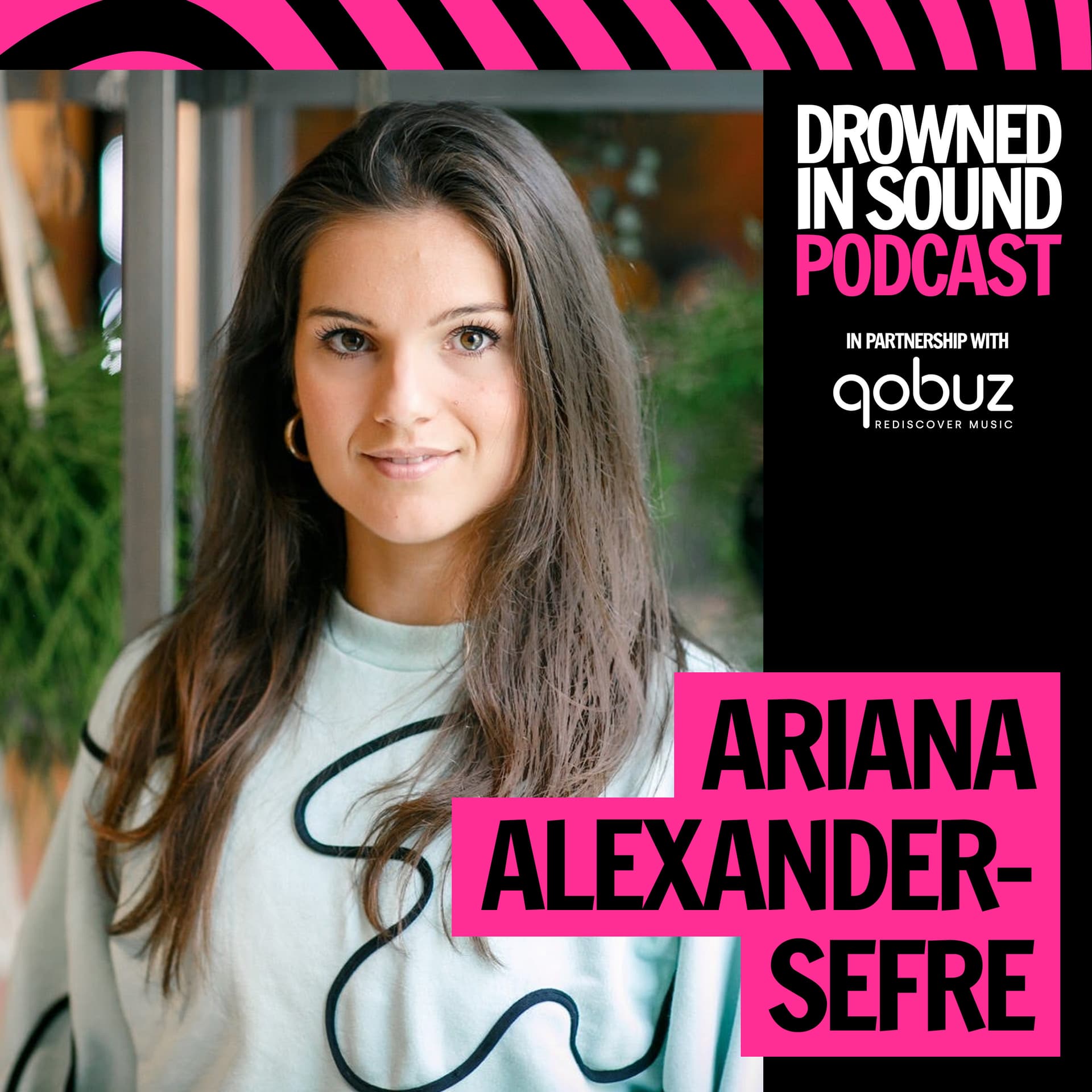
In short
Introduction to Drowning Sound’s new podcast Sounds Like Change, arguing that music is a serious tool for mental health, identity, and social liberation; protests need soundtracks, and songs can carry stories and empathy that language alone can’t.
Guests
Ariana Alexander Seffery (host/creator). Background: 10 years at the intersection of music, mental health, and social justice; ran music well-being mental health social enterprises; built Spoke for 6 years, training hundreds of artists with neuroscientists and clinical psychologists to embed evidence-based mental health practices into lyrics. Also includes Sean Adams (founder of Drowning Sound) as the pilot “guest.”
Key claims
music shapes emotions and can reach systems that healthcare/government can’t; artists’ lived experiences correlate with listeners’ emotions; collective movements rely on music.
Notable examples
Black Panthers; Palestinian liberation movement; David Bowie “Low” (Side 2); Pennywise and skate punk; Common “The 6th Sense/“; Roots “Things Fall Apart”; De La Soul; Gil Scott-Heron; Public Enemy; De Prez “Let’s Get Free” (wolf-in-puddle metaphor); Sean’s “Drowning Sound” origin via online music communities/Napster.
Written by AI. May contain mistakes. Listen to the episode to check what was said.
Chapters
Tap a time to open that second in VOIntroducing Ariana Alexander Seffery
0:44 to 1:48
Ariana shares her excitement about hosting Sounds Like Change and its themes.
“and she will introduce you to what Sounds Like Change is and who we've been talking to and why it exists.”
Ariana's Background in Music and Mental Health
1:48 to 2:45
Ariana discusses her experience at the intersection of music, mental health, and social justice.
“mental health and I guess social justice as well.”
The Healing Power of Music
2:45 to 6:44
Ariana explores how music influences identity and plays a role in social movements.
“to share the idea that music isn't this light touch, soft sort of form of entertainment that can be dismissed.”
Research Insights on Music and Emotion
6:44 to 8:10
Discussion of how artists' experiences shape their audience's emotions and the importance of using music in mental health care.
“who, you know, our healthcare systems, our governments, et cetera, just can't reach.”
Dream Guests for Sounds Like Change
8:10 to 9:24
Ariana shares the types of guests she hopes to feature on the podcast.
“looking after ourselves does ultimately help the collective.”
Questions and Structure of the Podcast
9:24 to 9:41
Overview of the questions Ariana will ask her guests and the format of each episode.
“and how we can shift towards something more positive and hopeful and connected.”
Pilot Episode Transition
10:40 to 11:25
Sean introduces a segment from the pilot episode of Sounds Like Change featuring himself.
“And now back to this episode of the Drowning Sound podcast brought to you in partnership with Cobuzz.”
Personal Reflections on Music's Impact
11:25 to 14:03
Sean shares his memories of music that awakened his consciousness to social issues.
“And this is a segment of Sounds Like Change.”
Reflections on Music and Activism
14:03 to 18:14
Discover how personal experiences with music shaped the guest's worldview.
“had used this allure and like really pumped kind of cocaine and products into the marketplace, created an addiction and created people and then create the prison industrial complex.”
Childhood Memories of Music
18:14 to 18:34
Explore the guest's early experiences with music and their emotional impact.
Show all 11 chapters
Influences from Family and Culture
18:34 to 19:54
Learn how family influences and cultural background shaped musical tastes.
Transcript
Automatic transcript. May contain errors.0:00Ariana Alexander-Sefre:Welcome to a slightly different edition of the podcast, one in which I'm introducing an interview with the host of one of the new podcasts that Drowning Sound is launching, a podcast called Sounds Like Change, and a bit of the pilot episode, which was with me. So weirdly, I am the guest on this week's Drowning Sound podcast. I am Sean Adams, the founder of Drowning Sound. And yes, this is the Drowning Sound podcast. We are brought to you in partnership with Cobuzz. and if you go to drenonsound.org forward slash playlists you can find this week's playlist which will, I think, be a selection of songs which politicised me, some of which we mention in the interview in the second half of this episode.
0:41Ariana Alexander-Sefre:But first, I want to introduce you to Ariana and she will introduce you to what Sounds Like Change is and who we've been talking to and why it exists. Over to me asking Ariana a question.
1:04Ariana Alexander-Sefre:Hello, this is Sean from Drowning Sound and I wanted to introduce you today to the host of a brand new podcast produced by Drowning Sound. It's called Sounds Like Change and our host is Hello there, my name is Ariana Alexander Seffery and I am beyond excited to be hosting this podcast Sounds Like Change, which is, I guess, all about music as a tool and a vessel for hope, collective strength, liberation, building the future that we want to build, and all of these really important themes of today. So who are you? What do the audience need to know about who you are and some of the things that you've done before?
1:47Yeah, so I've spent the last 10 years working in the intersection between music, mental health and I guess social justice as well. I've run two music, I guess, well-being, mental health platforms, social enterprises. The last six years I have spent building a platform called Spoke, which is all about working with music and lyrics as a tool for better mental health so delivering mental health care through music and lyrics we have created a system where we train we've now trained hundreds hundreds of artists by a team of neuroscientists clinical psychologists to essentially understand how to bake proven mental health care and things like well-being practices awareness tools into their lyrics i guess partly within this podcast i want to share the idea that music isn't this light touch, soft sort of form of entertainment that can be dismissed.
2:57It is an integral part of society, of humanity, and it should have a more
3:06Ariana Alexander-Sefre:prominent role in culture shaping and social change so would you say that music can be healing to both the individual and for a person to change for a person to look at systems to want to heal the world for want of a better term um the music plays sort of two roles and i guess then there's the third component where almost like moments and movements need soundtracks and the without music protests would be very strange and silent obviously there are silent ones um and also music is a great way of kind of telling stories with empathy um or creating the space where people are empathetically open to listen to an artist that they admire make a statement maybe for 30 seconds between songs on stage that's going to resonate with people differently like how no of course no it absolutely is yes to all the above I mean at the if you think about it on the most basic level at the helm of every subculture that's ever existed you have music genres or a bunch of artists that represent those genres and therefore that subculture and when we listen you know a lot of the time we will just listen to lots of different music for pure enjoyment.
4:28But then music also is where people see their identity. It's where it's how sometimes our politics and ideas of, you know, social structures lie. You know, I will sometimes listen to certain artists because they are a mirror of my own personal stories, struggles. And this is incredibly important. So it transcends the sound itself and it actually goes into identity. And so that's why music is at the forefront of so many liberation movements. Think about the Black Panthers, the Palestinian liberation movement. You have these artists and these songs that really represent the movements and actually can then bring people in because the songs and the artists at the helm of that, they can tell the stories in a way that might be a little harder for people to tell purely through, even through just like a podcast and me explaining what a movement might represent.
5:34You know, song can share emotion in a way that sometimes language can't. And so yes, basically to all of the above, the layers of importance are quite frankly, you know, well, I did, I did a load of research on it. And maybe I'll mention one piece of research that people might find quite interesting, even though when I say it, you'll think, oh, well, that's obvious. There was a piece of research I did, which was looking at how artists shape the emotions of their listeners. And what I found was that there's a really strong correlation between the emotions and the, I guess the the experiences of an artist as the experiences and emotions of their listeners so for example if an artist is more likely to talk about a certain systemic injustice or they are maybe they've got ADHD or maybe they have suffered with depression or anxiety you know there's certain life experiences they have their audience is more likely to have that experience as well And when I say that, that's obvious.
6:40You're like, of course, that's the case. But then you think, well, why have we not thought about working with artists and within music as channels and vessels to some of the most underrepresented people who, you know, our healthcare systems, our governments, et cetera, just can't reach. and this is one of the many reasons why I'm incredibly passionate about this whole area.
7:10Ariana Alexander-Sefre:So who would be some of your dream guests for Sounds Like Change? You don't have to name them, you can just describe the types of people if you prefer. So people who are either in music, they might be artists themselves which is great, there are so many artists who are also you know change workers who are fighting for systems change but maybe it's people who are just change workers and systems change leaders themselves. They could work in absolutely any industry, but I guess the overall theme is that they believe in the power of collective strength, of working towards a more hopeful future. And also, it does help if they also understand the power of music and the way music can shape us on a cultural and societal level, as well as a personal individual level as well.
8:08Because, you know, there is no denying that looking after ourselves does ultimately help the collective. So I think anyone that really sits in that intersection of arts and change making would be a fantastic guest.
8:26Ariana Alexander-Sefre:And what are some of the things you ask all of your guests? What song most faithfully captures the world you want to help build and why? And then the podcast will start with us listening to 15 to 20 seconds of that song. And then our guest will speak a little bit about why they chose that song. And the last question that I ask every guest is what message would you want to share in a hundred years time with our collective descendants? And between those two questions are lots of different questions about them personally, their connection with music, their work, how they see and work towards a more, I guess, hopeful future.
9:13So each episode is really interlaced with inspiration, personal insights, hope, and I guess a better understanding and awareness of where we are today in society and how we can shift towards something more positive and hopeful and connected.
9:41Ariana Alexander-Sefre:This episode of the Drowning Sound podcast is presented in partnership with Cobus, the platform that pays artists four times more than the industry standard, that has high quality audio, that has human curation, which as a human curator is something that I truly value over the kind of algo slop that you get on some platforms. you can really hear the difference. I know lots of places talk about the audio qualities and as soon as I moved across it sort of felt like I was rediscovering music which is one of the platform's slogans. If you're worried about your playlists you can use Soundiz. It's a really good tool that's part of the sign-up process when you join Cobuzz.
10:20Ariana Alexander-Sefre:It just transfers everything across. If you'd like a free trial of this platform that's independently owned and made for music enthusiasts head to drownedinsound.org forward slash playlists, where you can hear not only our playlists, but get a free trial. You can also find these details in the show notes to this episode. And now back to this episode of the Drowning Sound podcast brought to you in partnership with Cobuzz.
10:56Ariana Alexander-Sefre:so that was ariano and i talking and now we're going to switch roles and this was an episode which we originally recorded as a pilot it's actually going to appear in season one of the podcast it might be a tiny bit different to the other episodes but yes this is sounds like change featuring me, Sean Adams from Drowning Sound. And this is a taste of the episode. Make sure you subscribe to hear the full episode and to hear my answers to the full questions in coming weeks. This is a Drowning Sound podcast. And this is a segment of Sounds Like Change. When did music first wake you up to something bigger than yourself or to the world that you were directly involved in?
11:38Ariana Alexander-Sefre:My first memories of music are listening to an interesting combination. So Side 2 of Low by David Bowie, my mum said I was obsessed with when I was about four or five. And it's just like beautiful instrumental music, which is odd because it took me probably another 20 years to reconnect with instrumental music like this piece. We also listened to Low to Bob Marley. I definitely felt something in those records but didn't fully understand people talking about civil rights movement and social justice but there was definitely a time when I was getting into those like 14, 15 and like one half of my music listening was like skate punk.
12:22Ariana Alexander-Sefre:so like bands like pennywise criticizing the capitalist system register machine um and those records kind of had an anger and a rage to them but they didn't really have a focus um and i remember listening to the roots things fall apart and commons is it water like chocolate it's named after the book isn't it um like really socially conscious hip-hop um lots of most deaf and I mean I was growing up in a seaside town in Dorset like I wasn't growing up in some multicultural um kind of place where I understood a lot of what was being said within the music but I remember being really caught up in wanting to know more um like the first book I became properly obsessed with was Anne Frank's diary because I couldn't understand how humanity could do something like that to a child and there's definitely elements of just like picking up on injustice but I think the one piece of music that really unlocked it for me is the opening song to Let's Get Free by Deb Prez and it's this metaphor about how they catch wolves in the arctic and the wolf sees a puddle of water and goes and licks and licks it but there's a blade hidden in the water and it slowly kills itself and it's this like really visceral metaphor and then it's like and that's what they did to us with drugs and like how the incarceration system in america had used this allure and like really pumped kind of cocaine and products into the marketplace, created an addiction and created people and then create the prison industrial complex.
14:19Ariana Alexander-Sefre:And it was such a visceral opening to a record because it's this like old guy talking over this like swaying sample it's not it's not a big kind of bombastic opening because as soon as it switches it goes into bigger than hip-hop which has just got the thickest thickest bass line on it um i just remember listening to that record and being awed by it like the ability to just have such clarity of thought and to take like the first time i heard it i mustn't have had a clue what was about to happen because I'd heard the Bigger Than Hip Hop track, which is called Hip Hop, and was obsessed with it. And then pressing play on the record for the first time, that was a, like, I've got goosebumps thinking about it now and I must have been all of like 16, 17.
15:09Ariana Alexander-Sefre:And so, yeah, so that was really powerful and sort of probably a transcendent rather than an awakening moment. Yeah, it sounds like you probably learned a lot from that. But would you say that's, I don't know, like, was that the first time that you felt attract I guess give you this sense of either injustice or did you manage to connect with people over that message that you were learning from it I'd love to know like maybe practically kind of what came out of that experience for you well I was quite young and angry and like I'm not angry but not like I think I was reading things like no logo around the time and I just got the internet so I was like looking up all these things which weren't mostly like trying to understand the Mayday protests and like figuring out like things that I felt like no one was telling me about the complexities of the world and it was interesting because late 90s on online there was lots of like get rich quick schemes and pyramid schemes and like yeah the like hyper capitalism of the world and then at this next point you'd be you'd be exposed to news stories which weren't being reported on tv and that started to give me a sense okay the world's a much bigger place than i mean i already knew and felt that the world was far bigger because i was quite lucky that my grandparents were like quite worldly like i helped my nan set up the inner wheel website which is like this charity groups and they were the first inner wheel in the world to have their own website which uh my nan was quite excited by and they did lots of like my nan worked on she was a hairdresser and then she worked on the exchange desk at thomas cook which meant we got some cheap holidays as a kid so i kind of got a scent and she'd go off to egypt and come back and tell me all about it and things so um but yeah and the answer to your question how did i feel activated by it i guess there was a couple of friends i had conversations with that maybe would i wouldn't have had normally um i think that it led me to kind of trying to like listen to a lot of their inspirations um which having napster at the time was like sitting and waiting like four hours for a razelle track to download or um getting into gil scott heron through like fine chatting to someone on napster and going can you tell me if there's any good songs other than the revolution will not be televised and like chatting to random music fans online um which i guess a lot of that gave me a sense of the importance of community and how there's like this like collective wisdom out there and you've just got to find a way of tapping into it so I guess there was that which probably led to starting Drowning Sound and the other things I was doing.
18:13I mean I mean it almost leads perfectly into the next kind of yeah theme and area I'd like to go into which is about us as a collective but I just very quickly I'm very interested in going back to something you said about when you were three or four and really just feeling yeah I mean the song and the instrumentals that you were feeling very connected to do you happen to remember what that felt like like in your body what what was it that it was doing to you well my mum had a vw beetle
18:48Ariana Alexander-Sefre:which was very loud um and i think that it gave me a kind of calm and something to drift off into because i imagine like most kids fall asleep in the car so i suspect that that was part of it um but i think that it's interesting because that record was written in berlin in just like the shadow of the Berlin Wall um and I don't think that you get that feeling from it but I just know that my mum tells me about how like I would often ask for the second side or like would be sat in the passenger seat and rewind the tape um yeah so and I only found this out when I got into Segar Ross my mum's like oh this sounds like side two of low that you used to like and I was like well I used to like like which is one of the greatest albums of all time but I would have been way too young to have I just probably was switching between Prince and The Cure and like my mum's tapes in the car admittedly she had lots of Simply Red in there as well so well I think everyone did
19:55Ariana Alexander-Sefre:well from me and Ariana back to me um I hope you enjoyed that taste of Sounds Like Change and if you want to follow along and hear the other proper guests not the uh producer stepping in to test it out and road test and crash test the format though I did actually really enjoy the conversation and hopefully you enjoyed getting to know me a little bit better because obviously as a host of a podcast I don't get to talk as much as the guests though maybe sometimes I do tweak as much as some of the guests if you want to follow along there will be a link to subscribe on your podcast platform of choice if you subscribe on Apple for instance you'll be signed up and get new episodes.
20:38Ariana Alexander-Sefre:There's also going to be a Sounds Like Change channel over on YouTube. And I would really recommend signing up there because A, it helps us and the algorithm. And B, if you subscribe to the audio podcast and you kind of forget to tune in, it might pop up in your YouTube feed one day. That would be handy. Of course, we'll also be on some social platforms. For now, we've got an Instagram account. If you go to Sounds Like Change pod, you can follow us there. Give us a follow. Tell your friends. Tell your friends that are political. Tell your friends that just love music and they hopefully will enjoy this podcast because Ariana's got some great guests with some amazing stories, some really moving stories, actually.
21:15Ariana Alexander-Sefre:I had the privilege to sit in on some of the recordings and honestly, some of the guests, their stories and the way in which they talk, both about music and about their work, organizing, campaigning, just really, really powerful and really, really moving. So sounds like change. It's coming very, very, very, very soon. If you're listening to this podcast in May or June, you can definitely download lots of episodes. If you're listening to it in April, then just sign up. There's a little trailer and we'll have some new episodes falling into your feeds ASAP. This has been the Drowning Sound podcast, brought to you in partnership with Cobuzz.
21:56Ariana Alexander-Sefre:If you go to drowningsound.org forward slash playlists, you can hear this week's playlist, which is my selection of political tunes, plus get yourself a 30-day free trial to the ethical high-def music streaming platform. I've been Sean Adams. This has been the Drowning Sound podcast. You have been you, and I'll see you next time. Bye.
From the publisher
Drowned in Sound is thrilled to reveal the first series in our new podcast network, with more shows to be announced soon.
Hosted by music and social change expert, start-up founder, and campaign organiser Ariana Alexander-Sefre, Sounds Like Change brings together artists, thinkers, and changemakers to explore the profound role music plays in shaping our mental health, identities, and collective futures.
The podcast manages to merge a fresh perspective on activism with an len through which we clearly can see music as a cultural force with the power to shift how we feel, relate, and act in a society that has left so many of us feeling hopeless
Each episode starts with a song of hope chosen by the guest, then moves from personal stories to wider societal questions, and ultimately toward imagining better futures. Conversations are interwoven with moments of sound and reflection, creating space to feel and process.
In this edition of the Drowned in Sound podcast, we introduce you to Ariana and share a taste of the pilot episode, with Drowned in Sound founder and our podcast host, Sean Adams, talking about the role artists like Dead Prez and David Bowie played in his political awakening.
Ahead of the first episode, you can now subscribe to Sounds Like Change on Apple Podcasts, YouTube, or wherever you get your podcasts. Give the show a follow on Instagram here. To contact the show or pitch ideas please email podcasts@drownedinsound.org.
This week's playlist + Qobuz free trial.
Visit https://drownedinsound.org/playlists/ to hear Sean's political awakenings playlist and discover new music in rich Hi-Res lossless quality. Start your 30-day free trial of Qobuz at https://qobuz.com/dis.
Edited by: tell.studio (Phil, Louisa, Owen, Matt)


