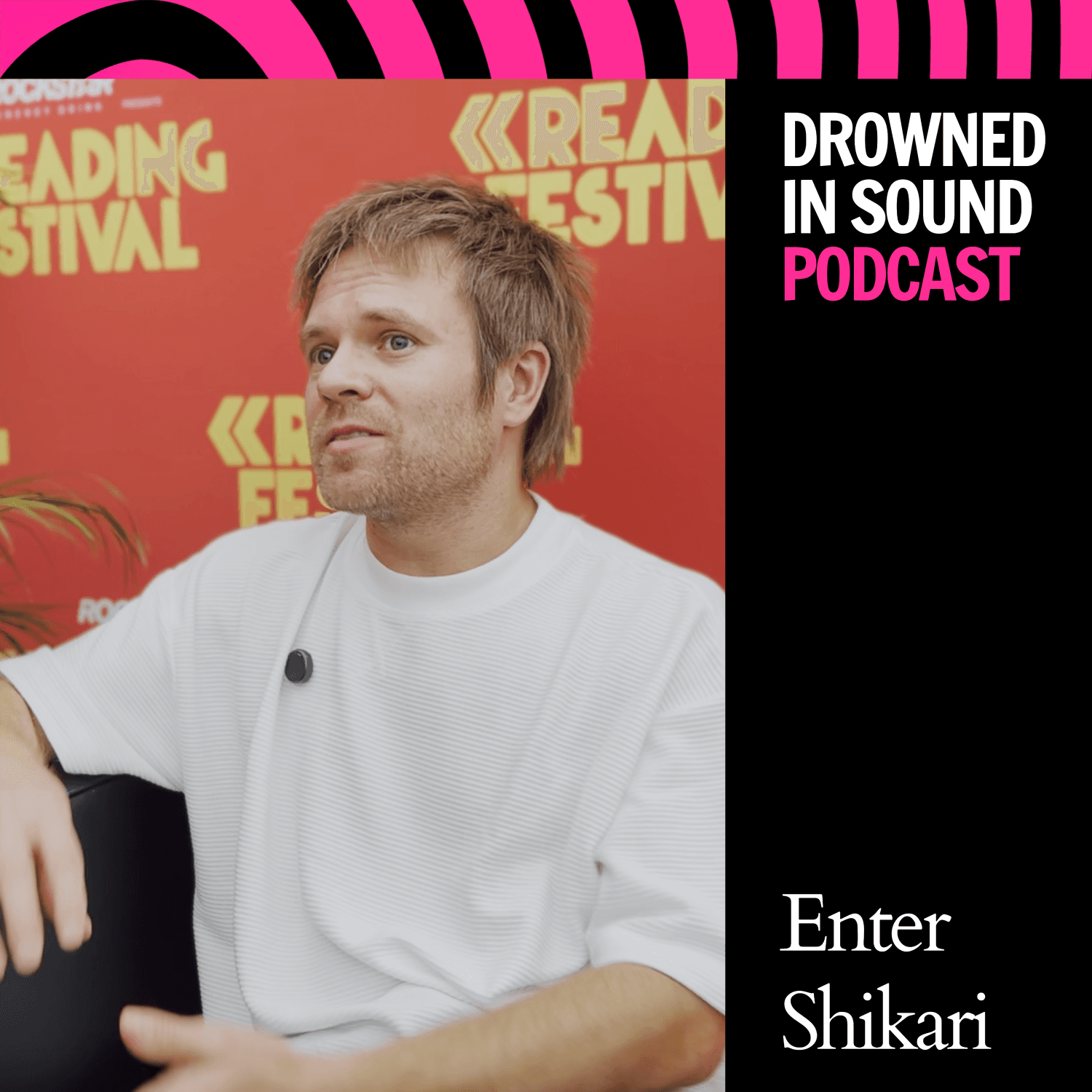

In short
Grassroots music protection and systemic change, with Enter Shikari frontman Rou Reynolds linking live-music policy to broader crises (climate, Gaza, neoliberal individualism). He discusses the grassroots music levy, the “Enter Shikari model” (a voluntary £1 ticket levy introduced in May 2023), and a UK government fan-led review of music/live music issues.
Key claims
big venues should support grassroots; community and human connection matter more than narrow economics; society needs to “evolve beyond” profit-first systems; silence during atrocity enables harm.
Notable examples
Reading Festival main-stage performance (Aug bank holiday 2025); 2010 Reading “Free Gaza” shirt; “8% of eligible shows” currently using the levy; CO2 >430 ppm context; Gaza described as war crime with mass displacement/starvation/murder.
Guests
Rou Reynolds (Enter Shikari). Co-host/producer mentions Emma Wilkes (staff writer; previously hosted Reading special and Glastonbury dispatch).
Written by AI. May contain mistakes. Listen to the episode to check what was said.
Chapters
Tap a time to open that second in VOThe Context of Current Crises
0:00 to 0:41
Understanding the serious humanitarian issues impacting Gaza.
“This is the coordinated mass displacement, mass starvation and mass murder of the Palestinians in Gaza.”
The Grassroots Music Levy and Its Impact
2:20 to 4:25
Discussion on the grassroots music levy and its acceptance in the industry.
Supporting Grassroots Venues
4:25 to 5:56
Exploring the importance of supporting grassroots venues and community ties.
The Role of Community in Music and Society
5:56 to 9:20
Discussing how grassroots venues foster community amid modern challenges.
“Dovetails perfectly, it's my next question.”
The Connection Between Crises
9:20 to 13:05
Examining the links between grassroots music crises and broader societal issues.
“and all the things that I think humans want and strive for and need to have a healthy mind, I think, really.”
The Urgency for Systemic Change
13:05 to 14:00
Rou Reynolds emphasizes the need to evolve beyond exploitation for survival.
“But that's the big question of this century.”
Navigating the Music and Climate Landscape
14:00 to 16:45
Explore the interconnectedness of the music industry and climate issues.
“That's the big question of this century.”
Reflections on the Interview with Rou Reynolds
16:45 to 21:11
Insights on Rou Reynolds' thoughts and the current music scene's political engagement.
“You know, it's such a slow moving beast.”
Call to Action Against Atrocities
21:11 to 25:42
Rou Reynolds delivers a powerful message on social justice and activism.
“And I don't know how he holds all of this in his head.”
Transcript
Automatic transcript. May contain errors.0:00This is not a natural disaster. This is the coordinated mass displacement, mass starvation and mass murder of the Palestinians in Gaza. This is not a tragedy, it is a war crime.
0:16We have to evolve beyond a system that puts the short-term profit of a select few above the long-term survival of our species.
0:40if there's a crisis in grassroots music who are the artists that have been doing anything about it well in today's episode i've met a musician who fronts a band who've done more than most raoul reynolds is a bit of a legend if you're a fan of the band you'll already know that if you've been following the band as long as Drown and Sound has, but I think we tipped them in 2008. And last weekend, the August bank holiday 2025, we saw them perform the main stage at Reading Festival alongside Brimming the Horizon, Chapel Rhone, all sorts of music legends. And Rao made some of the most powerful speeches of the summer, not just of the weekend.
1:21I think the way in which he talks about the climate crisis and what's happening in Gaza is so moving, so filled with rich insights from experts. And I think that's the thing I really admire about him, the way in which he uses his space and his platform to really bring a kind of academic, intellectual, but accessible way of talking about big, complex topics. And in this conversation, we break some of those things down a little bit, in particular at the grassroots music levy and the fan-led review of music which is going to happen over the next few months with the UK government to try and get some of the big issues with live music addressed and Emma Wilkes and I, Emma's our new staff writer if you've previously would have heard her on the Reading special the previous episode to this and she also hosted our Glastonbury dispatch.
2:15Emma's now going to be contributing to the dranninsound.org newsletter every week or most weeks and um this conversation is just one of those moments where you meet an artist moments before they go on stage and do something special and at the time a few of the words he say may not seem that big or remarkable i'll join you at the end with a few thoughts and we'll try and share those speeches in full
2:48back in may 2023 you introduced the one pound levy on your tickets you're one of the first artists to do it and i think it was in parliament referred to as the enter shikari model yeah how does it feel that that's kind of taken off and now kind of voluntarily something people are doing in the industry brilliant yeah um i guess it's exactly what we would have wanted i'm not sure what we expected to happen really for us it was just like we need to do something we were getting a bit sick of like the conversation not progressing and nothing happening and we often came up a lot against a lot of brick walls and like oh no you can't do that can't do this and so for us it was just like a bit of a no-brain okay well we've got this arena tour this is our tour we can try something and that's what we did really and then luckily it sort of and had you seen anything like it before was there like something you'd seen in like other industries or you just thought it's a booking fee already why can't we just add it yeah well you know we're in an era where the the extra added fees seem to be increasing not only in the amount but also the amount of types of fees and it you know if the the ticket buying experience is is a bit like booking an easy jet flight oh and this fee oh no you know it's just so there was part of us it's like oh we don't really want to do it like that but it just felt like this is a the simplest way perhaps and you know i think most people want to support like grassroot music venues is a it's a very it's not controversial at all um so it was like yeah you know what let's just do it and see what happens um yeah because we as i say we were just sick of the nothing happening you know only 8 % of eligible shows are doing the grassroots levy at the moment and that's kind of led to another debate about whether it should continue to remain voluntary or whether it should be something that is written into law so what are your thoughts on that is it something that you want to see be made mandatory for all shows of a certain size or do you think voluntary is the better way to go um i don't know because it depends where the who takes the hit doesn't it really like I would like to see you know the real big venues your your arenas and your stadiums not holding back from supporting the grassroots because they're you know we all know about the sort of the stream that comes up through the grassroots and then you get your superstars and that keeps the arenas going and that floods the music business with a bit more wealth and power and longevity um and so it's it it's obvious that we have to support those venues so i think for me that feels like the main thing that needs to be done and then i think artists i suppose can choose um but when you're at a certain size i suppose it it for us it just seems it just seems to be the right thing to do you know i don't want to make like keep making it sort of twee and trite or whatever and just like that we came up through grassroots venues so we have to support them like but that kind of is what it boils down to you know we wouldn't be here so many artists I'd say most artists wouldn't be here without the grassroots venues and it's I also hate just talking about it through the lens of like economics and like the music what the business the music industry of the UK brings into the the country and everything um because also what's more important is the community that it provides you know whether it's high art or low art or whatever you describe it as the full hierarchy like it all creates human connection and that's that's like the most important thing so um to support venues that are our breeding grounds not just for new artists but also for human connection in a world that's more divisive than ever, I think is just so important.
6:41Dovetails perfectly, it's my next question. What did the St Albans scene kind of give you and how has it prepared you to do things like play the main stage of Reading today? I think, you know, from an early start, it instilled into us the importance of the communal side of it because, you know, we never expected to become what we are and have this job, this career even, you know, so it instilled in us early just to, the most important thing is the communal aspect to it and the strengthening of community ties and the yeah that I think that kind of thing can only be learned like if you want to really feel it and it has to be an emotional thing within you so we feel very lucky that we had like such a thriving scene really like and had all of those experiences that that kind of set us on the road that we've gone down because i guess in albans is like it's not a kind of destination town or city as it's no like got a big premier league football club or like it's like a small like i came from weymouth down in dorset and i worked at the grassroots venue there and like bands came through to play to 100 people and like sponge the ska band would always sell it out and like it was like all these bands that came through the town and like i got to know so many people like i went to a party after a club night and someone played me kaios for the first time and like and then someone else was like oh you should read this book and it was like don de lilo or something it was like 16 17 being exposed to culture through going to shows i think it's hard to underestimate how important that is and part of me wonders whether the the kind of push for grass roots venue is actually a push for something quite a lot bigger yeah because community is something which as much as people want to talk about stopping the boats and saving our own and all that nonsense like they're not really talking about what it is like they're not part of communities and like grassroots venues feels like a community in a way that other things don't yeah question i mean yeah yeah the the the neoliberal trajectory from the 1980s onwards has isolated us all it's individualism you know everyone for themselves um you know everything from youth clubs to all you know all types of spaces where people have traditionally been able to come together and make connections have either lost their funding or just you know been left to uh try and work completely themselves and it's in a world where every every moment of our time oh we must be productive you know everything becomes a side hustle it just we oh the modern world isn't now made for community and connection and a sense of grounding and belonging and all the things that I think humans want and strive for and need to have a healthy mind, I think, really.
9:30So, yeah, you're absolutely right. It's part of a bigger movement, I think, for like, well, actually, we don't really like the direction that society's going in, really. I think it's that simple. Yeah, I can definitely sort of feel a sense of pushback as well. I think you could feel more and more in other than like the yearning for connection that people have but there's actually something quite encouraging in that in a way isn't that because it means that people do want to go and change something and we might actually start to see a little bit more a shift instead of the sort of decline that we kind of seen in like civilization like the last the last few decades yeah yeah no it's like super encouraging and emboldening and i think it it plays into um the defense of the fact that humans aren't just these rapacious, like, profit-seeking creatures who are all out for themselves, you know.
10:24It's actually very natural and inbuilt in us to strive for community. But you wouldn't think it. We're living through a polycrisis, and obviously you've spoken a lot about grassroots music, but also you've been speaking about climate change since they dot. And so, like, how do you see the overlap between the crisis in grassroots music, climate change, colonization, all of those things.
10:51So I've always been really interested in the broader picture. And I think from the beginning, one of Ender Shikari's main mission statements was to try and provide broad perspective. Because it's so rare that in our fast-paced lives that we actually get to look from the bird's eye view and see, okay, oh, this is connected to that, that's in Jersey. And like, you know, if you look back into the start of the environmental movement, like in the 80s, when you had that amazing book by Donella Meadows, Limits to Growth, that was like the start of it. And there was this very broad look and it was like, oh, the whole way we structure society, the, you know, capitalism, market-based economics, however you want to describe it.
11:44is going to lead us in a very, very dark place. And it has been ever since, since the 80s. And so I think when people start joining those dots, it becomes very interesting because then you're talking about system change. And that's something that when we started as a band, you'd just be frowned at or like, oh, that's, I don't know, idealistic or utopian or whatever. This is the only way things are. this there is no alternative as uh maggie said are you feeling a dose of the like the rebecca solnit hope at the moment of just like some lots more people seem to be waking up
12:26for the first time in recorded history atmospheric co2 concentrations have surpassed 430 parts per million now for context the last time CO2 levels were at that high at that height consistently was 15 million years ago long before homo sapiens roamed the planet when the sea levels were 30 meters higher and the temperature was 4 degrees hotter we can't go on like this we can't go on like this it is clear we have to adapt we have to evolve beyond the system of mindless exploitation and mindless extraction
13:18we have to evolve beyond the system that relies on endless growth instead of balance
13:28we have to evolve beyond the system that puts the short-term profit of a select few above the long-term survival of our species.
13:43But that's the big question of this century. Will we evolve beyond capitalism to become true guardians of this planet and all life on it? Or will we continue to be led by greed and stupidity and business as usual into the collapse of civilization. That's the big question of this century. It's the season finale, people. That is the great unknown.
14:22Do you think the interconnected nature of everything is starting to make a lot more sense to people like bretta being on the palestine um flotilla like the i'm currently working on a project around the emissions of war and how they're not included in the paris agreements and they want to put out the agenda of a cop this year oh yeah like peace is good for the planet like yeah yeah like do you think there's a from when you started out to now do you think there's been a bit of a shift and do you think things like looking at the grassroots music as an ecosystem looking at music as an ecosystem like if lucian grange is making all that money like what's going on with the rest of the industry if he can walk away and it's not going back into the system like do you think that people are starting to become more alive to that yeah i think however whatever encourages you to think from that broader perspective you know it obviously doesn't matter like if you come at it through an environmental background or from music industry or or what but being encouraged to to take a step back and go oh actually hold on a minute this whole the whole way that this is organized is actually not anywhere near the best way that it could be organized like we need to uh rethink things yeah i think it's there's a lot of acceptance of that train of thought now um which there never was so it's exciting i think we're out of time i had one other question for you which was just when you go on stage today there's a lot of things happening in the world how do you decide what to talk about that is one of the we used to joke about the hardest thing to do is pick a set list you know we got seven albums it's really difficult and it is genuinely but now there's that as well like well what what do you use your platform to try and express um i don't know how to answer that because i don't know we just sort of um you know we try and do it by what songs we're playing so this song is about this should we speak about this one today or should we speak about this one and just try and like keep it varied um i mean obviously at the moment like I think Gaza takes precedence because it's just so horrific and it seems to be no end in sight.
16:30But then also, you know, I was speaking to a climate scientist just last week and it's like, Jesus Christ, like we are on a terrifying trajectory. And it's hard to speak about that on stage because a lot of people, especially here in this festival, we don't realize it. You know, it's such a slow moving beast. but that really is the most important thing in human civilization because climate is ephemeral whereas weather we can feel and sense yeah yeah there's like there's a lot of conversations at the moment in the car being i mean quite a lot of circles different climate people and like you just see this change that's happening and it's like i think people are starting to realize okay we join economic justice to climate justice we can join that yeah and then it feels I was like, yeah.
17:19Anyway, thank you so much for your time. Thank you. No, pleasure. Thanks for having me.
17:30Well, it's back to me, back in my studio at home now, not backstage at Reading, with a bar within walking distance. Although I think there is a bar within walking distance of where I live. I'm just not going to walk to it because I'm not in that mood right now. anyway the interview I really thought Raoul was really interesting I just love how switched on he is how articulate he is how much thought he's put into different things really loved hearing about the St Albans music scene and it made me think maybe I should do a series of interviews with artists just talking about the music scene they grew up in and how important it is because it feels like something lots of us can relate to and doesn't matter how big a band you are you've probably come from a scene at some point it'd be nice to see how those have changed over the years and how maybe different artists from the same scene have very different experiences or different genres in the same cities or same towns how different that can be anyway it's just a thought I had if you think that's an interesting idea do let me know um I think that there is something unique happening in music right now and I I say unique I think artists have been talking about politics for a long time but I think it's different how much it's resonating and how much people are wanting to hear these things said on stage.
18:51The way in which audiences react when someone says something which feels like it's not being discussed in the media or in their friendship circles you just sort of notice this different shift in tone of how audiences are reacting and responding and I think that we are craving change and systemic change at such a huge huge level that the call for collective action the call for not necessarily civil disobedience but of things that we can do things that we can think about things that we can ingest and share with others feels more important than ever and if it hasn't been obvious with this podcast that's been really what I've been trying to I guess fish for when I speak to people when I ask a question I'm looking for them sometimes to say the thing that I'm thinking or hoping that they're thinking or thinking about how as an artist they might have processed the world differently how they might have a different way of expressing something that as a fan or as a human we can empathize with in a different way because artists have this incredible power to process the world which is why they create such brilliant music that moves us and shapes us and makes us think about things whilst we might be moving our bodies or just moving around particles in our brain or our emotional fields and all the other things that musicians do and I hope that if you listen to this podcast you're starting to see that there's hope and amongst all of the heaviness and I think within all of the rage that we're feeling and hearing this summer there is a lot of people really pushing for something and I'm hoping that I might not be one of the world's strongest men pushing but I might be someone that's trying to make sure we're pushing it just in the right direction and I think that is what this podcast is aimed to be.
20:52Anyway, that's enough from me and my lemsip-filled brain because I seem to not be running at 100 % after going to a big rock festival. Who would thought it? But here are some of Raoul's speeches, who is far, far, far more eloquent than I would ever hope to be. And I don't know how he holds all of this in his head. If there was an autocue on stage, I definitely couldn't see it. and it feels like some of this information that he's carrying around and like reeling out and the quotes he's doing that's not a skill i have though to be honest i did just do this four minute rambling without any notes so maybe i could do it if i tried hard enough to do my revision it's not my forte right enough rambling goodbye you've been you i've been me we've been drowning sounds goodbye
21:54It's such an honour to be back at Reading Festival.
21:59We've had the honour of playing here so many times over the years. I just want to talk about one of those times. 2010. Was anyone here at Reading Festival in 2010? 15 years ago.
22:15Well that year on stage I wore a t-shirt with big print on the front that said Free Gaza. Back then I was a young man who was just learning about this thin strip of land on the eastern Mediterranean. I was just learning about our people, the Palestinians, who alongside Jews and Christians had lived there for millennia. I was just learning about the state of Israel and how it treated Palestinians like second-class citizens It subjected them to constant intimidation, humiliation, subjugation And forced them to live in what was often described as an open-air prison That was 15 years ago We've all seen just how fucking horrific things have got now We've seen the firepower equivalent of six Hiroshima atomic bombs dropped on Gaza in the last two years.
23:15Every single school and university destroyed, almost 300 journalists murdered, doctors killed, maimed, detained, children shot in the head by snipers. It has to be repeated again and again that this is not a tragedy this is not a natural disaster this is the coordinated mass displacement mass starvation and mass murder of the Palestinians in Gaza this is not a tragedy it's a war crime
23:55so if you're watching this live stream genocide on your phone and your heart breaks every day take strength in knowing that you still have your humanity left and the world hasn't beaten it out of you yet.
24:12Ntishikari would like to reassert their solidarity with the Jewish people, Muslims, Christians, atheists and everyone around the world who demands an end to this atrocity.
24:26Open the borders and let the aid into Gaza now. Stop. Stop supporting and arming Israel now.
24:41Just play some music. No politics please, stick to the music. No politics please. We've had that for 20 years. have and for 20 years we've ignored it and I'll tell you why. To be silent in times of atrocity is to assist in maintaining that atrocity.
25:07Listen I'll end by paraphrasing a great Jewish sage Rabbi Tarfon who once said it is not the duty of you alone to heal this world but you must not refrain from trying so we will not refrain from standing up and we will not refrain from speaking up and we will not refrain from trying to help heal this world
25:34love only free Palestine
25:41One, two, three, four, five, six, seven.
From the publisher
How do artists decide what to say when everything from grassroots music to the climate is in crisis?
Backstage at Reading Festival, Drowned in Sound’s Sean Adams and Emma Wilkes sat down with Rou Reynolds, the frontman of Enter Shikari, one of the UK's most politically engaged bands. We discuss a range of topics including the St Albans music scene and how they pioneered the grassroots music venue levy - adding £1 to arena tickets to support small venues.
With 20 years of activism and seven albums under the band’s belt, Rou’s learned that having a platform means constantly choosing which crisis at a time or polycrisis deserves the spotlight. And we chat a lot about the interconnected issues and the need for system change.
Edited by:
Josh Craggs at Dubble Audio
Chapters:
03:00 – How the £1 venue levy actually works in practice 05:00 – Why supporting grassroots is community organizing, not charity 07:00 – How St Albans scene prepared Enter Shikari for mainstream success 09:00 – The neoliberal isolation crisis and music's role as antidote 11:00 – Connecting Gaza, climate crisis, and music industry exploitation 12:30 – Climate speech: "430 parts per million" and the season finale 16:00 – The impossible choice: which crisis gets the platform tonight? 22:00 – Reading Festival Gaza speech: "This is not a tragedy, it's a war crime"
"To be silent in times of atrocity is to assist in maintaining that atrocity"
Continue the Conversation:
- Email sean@drownedinsound.org with your platform responsibility experiences
- Join the discussion about choosing battles in poly-crisis times
- Subscribe to DiS newsletter for weekly insights on building alternatives
Links:
- Enter Shikari Official
- Music Venue Trust
- Rou chats from COP in Glasgow on the Sounds Like A Plan podcast


