In short
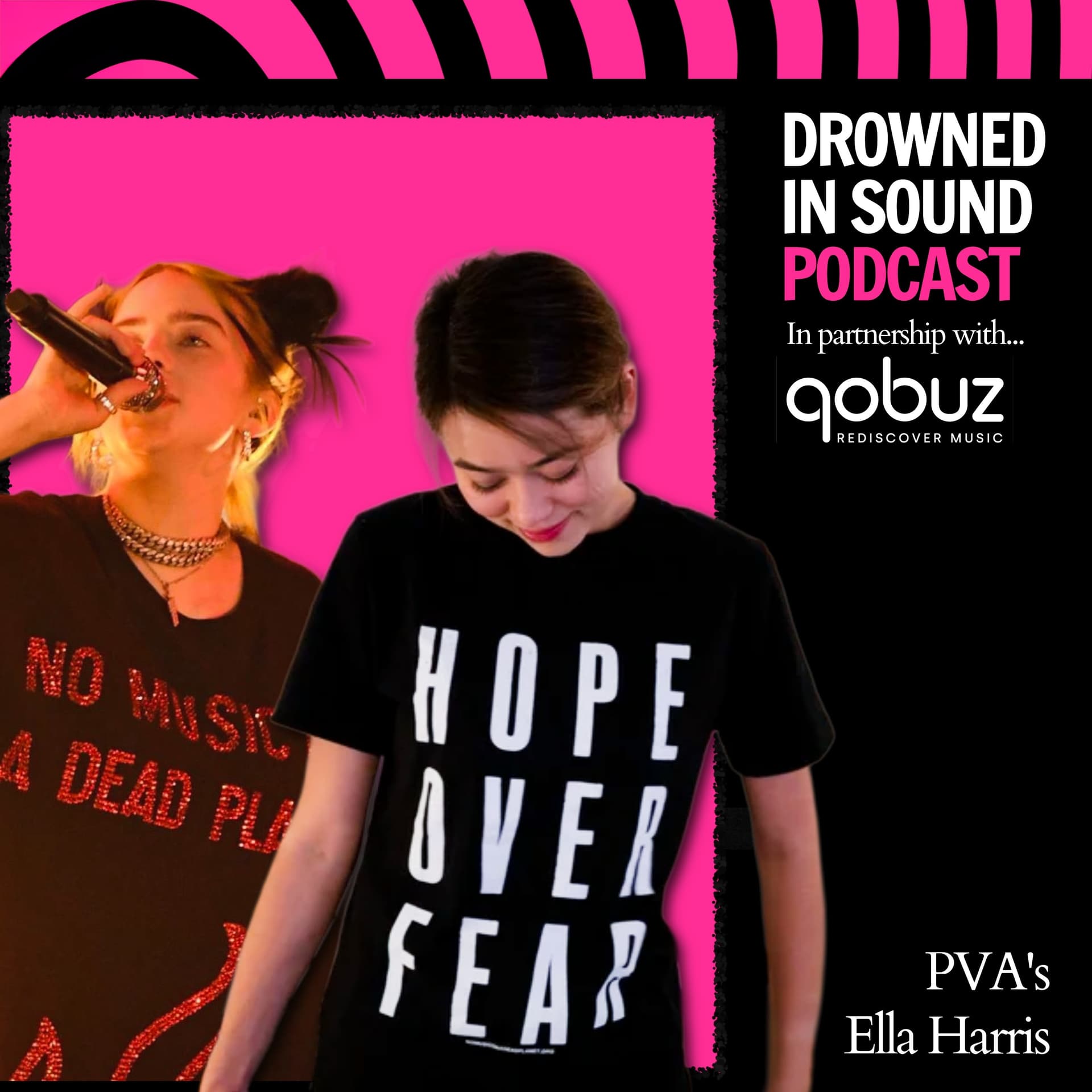
Drowned in Sound Podcast Summary: Episode on Hope Over Fear with Ella Harris
Episode Overview Podcast Title: Drowned in Sound Episode Title: Why Hope Over Fear Trumps No Music On A Dead Planet: DiS meets PVA’s Ella Harris Host: Sean Adams Guest: Ella Harris (PVA front-person and Music Declares Emergency Campaigns Manager) Released: January 2026 Key Themes: Climate action, music fandom, grassroots organizing, sustainable touring, community building.
Key Quotes
- "My brothers are 20 and they're always like 'we are so cooked.' And I'm just like no we're not. There's hope but you just gotta believe, you gotta believe in something."
Introduction In this episode, Sean Adams interviews Ella Harris about the transition from the "No Music On A Dead Planet" campaign to the more action-oriented "Hope Over Fear" initiative, which aims to create community-centered action hubs in grassroots venues to tackle the climate crisis.
Main Topics Discussed
- The Shift to Action: The importance of moving from awareness to actionable steps in promoting climate activism within the music community.
- Empathy in Music Fandom: How music fandom serves as a powerful empathetic practice that can mobilize fans and artists towards collective action.
- Touring Economics: The financial realities artists face while touring, including cost disparities between different modes of transportation (e.g., trains vs. flights).
- Artist Activism: The fears artists face in speaking out about issues, particularly the climate crisis.
- Community and Infrastructure: The need for a supportive infrastructure in grassroots venues to help sustain local music scenes and facilitate community engagement.
Episode Breakdown 00:00 – Introduction: No Music on a Dead Planet
- Overview of the episode's focus on climate action through music.
02:10 – Wearing Multiple Hats: PVA and Music Declares Emergency
- Ella discusses her dual role as a musician and campaign manager, highlighting the connection between her artistic work and activism.
05:00 – Music Fandom as an Empathetic Practice
- Ella emphasizes the role of music in fostering empathy and community connections, which can be leveraged for social change.
07:30 – From Merch to Movement
- Discussion on how merchandise can serve as a gateway for fans to engage with activism, including sustainable production practices.
10:45 – Action Hubs and Future of Grassroots Venues
- Explanation of the action hubs initiative aimed at empowering local venues to become community organizing spaces.
15:30 – Touring Economics and Energy Costs
- Examination of the structural limits artists face regarding touring logistics and the environmental impact.
19:00 – Artists, Activism, and the Fear of Speaking Out
- Ella shares insights into the barriers artists face when addressing social issues.
24:30 – Nature, Creativity, and Why Hope Needs Infrastructure
- Importance of investing in sustainable infrastructure within the music community to support collective climate action.
31:00 – What £500 Million Could Fix in the Music Ecosystem
- Discussion on financial support for grassroots venues and artist sustainability.
35:00 – AI, Empathy, and What Human Music Does Best
- Reflection on the unique aspects of human creativity in music as compared to AI-generated content.
38:30 – Outro: Depth, Not Breadth
- Concluding thoughts on the importance of deep, meaningful engagement in music and activism.
Key Takeaways
- Empathy is Central: Music fandom is inherently empathetic, creating a strong foundation for community organizing and activism.
- Action Over Apathy: The transition to the "Hope Over Fear" campaign represents a shift from passive awareness of climate issues to proactive community engagement.
- Infrastructure Matters: Building supportive infrastructure within grassroots venues is crucial for sustaining music scenes and fostering community activism.
- Shared Responsibility: Collective action from fans, artists, and industry stakeholders is necessary to effect meaningful change in the music ecosystem and beyond.
Call to Action
Listeners are encouraged to
- Support grassroots venues and artists through purchasing music and merchandise.
- Engage in community initiatives that promote sustainability and climate action.
- Share positive feedback and support within the music community to foster a more empathetic environment.
Additional Resources
- [Music Declares Emergency](https://www.musicdeclaresemergency.com)
- [Music Venue Trust](https://www.musicvenuetrust.com)
- [The Green Rider](https://juliesbicycle.org/resource/green-rider/)
- [Hope Over Fear Campaign](https://www.musicdeclaresemergency.com/hope-over-fear)
Related Episodes
- Tori Tsui: "How Music Fans Became Climate Activists"
- Giles Bidder: "Why Festival Headliners Still Need Part-Time Jobs"
- EarthSonic Live: Music, ecology, and collective action.
Conclusion This episode highlights the critical intersection of music, activism, and community building in the fight against climate change, led by passionate individuals like Ella Harris who believe in the power of collective action.
Written by AI. May contain mistakes. Listen to the episode to check what was said.
Chapters
Tap a time to open that second in VOExploring Music and Activism
0:46 to 2:33
Discussion about Ella Harris's dual role in music and activism.
“Hopefully it was a few days ago and in this episode we cover everything from the climate crisis to their new campaign, Hope Over Fear.”
Music Declares Emergency: Core Mission
2:34 to 5:36
Ella explains the mission and operations of Music Declares Emergency.
“and have been in that position for the last year of my life.”
Action Hubs: Community Engagement
5:37 to 8:13
Discussion on the purpose and impact of Action Hubs in grassroots venues.
“And whenever I meet someone who's really connected to music, who like, for example, Quake Bass, we produced our album with, I would see him as like a, he just like channels music through him.”
Vision for Future: Hope Over Fear
8:14 to 12:31
Ella shares her vision for the future and the importance of hope in activism.
“they're at risk of shutting down like so many are already shutting down so many are struggling with landlords, rising prices, but they're really important.”
Artist Engagement and Community Impact
12:32 to 14:03
A conversation about the role of artists in community engagement and activism.
The Role of Music in Activism
14:03 to 18:02
Explore how music can impact activism and the barriers artists face.
“I didn't even know what publishing was until like we were talking about sync and I was just like, what is this?”
Understanding Music Value and Accessibility
19:35 to 23:23
Discuss the importance of understanding the music industry and its economics.
“Have you replaced your drummer with a drum machine so you can tour?”
From Artist to Advocate
23:24 to 28:00
Hear about the transition from being an artist to working in music activism.
“And we ran some workshops alongside that to coincide on lots of things like getting people into the music industry alongside The Root who do accessibility into the music industry.”
Experiencing Nature's Healing Power
28:00 to 28:52
Explore how personal experiences with nature can lead to healing and creativity.
Hope Over Fear in Activism
28:52 to 30:28
Discuss the importance of envisioning a better future in the climate movement.
“And I feel like I'm really, I used to always think of my brain as something that was against me.”
Show all 23 chapters
Navigating Musical Identity and Activism
30:28 to 31:57
Delve into the relationship between music, personal identity, and activism.
“yeah yeah and she's amazing and and again it's just it's I think and Lewis you know having his background in NR and PR.”
The Challenge of Writing Political Music
31:57 to 33:58
Examine the difficulties artists face in creating impactful political music.
“But like, you know, I love, I, I, but like, there's nothing like, you know, political bang, you know, there's nothing like a song, like, um, walks from, uh, uh, and they do what they told you.”
Connecting Music and Environmental Issues
33:58 to 34:29
Explore the relationship between music and environmental activism.
“And yet I can't think of a great song that's done for the climate movement, what punk songs did for social injustice.”
Art, Nature, and Activism
35:10 to 37:48
Investigate how nature inspires art and activism to foster protection of the environment.
Personal Experiences Shaping Musical Themes
37:48 to 39:28
Discuss how personal experiences influence the themes in music and songwriting.
Financial Sustainability in the Music Industry
39:28 to 42:00
Explore the financial challenges artists face in the current music industry landscape.
“Yeah, I feel like 70's going to be like that.”
The Evolution of Touring Support for Artists
42:00 to 46:08
Explore how touring support has changed and the financial struggles artists face.
“talking about this in her six music with Hugh um Lambrini girls yeah yeah from Lambrini girls and And it's really, really stark when you start actually seeing it painted out like that.”
Empathy and Sustainability in Music
46:08 to 48:14
Discuss the importance of supporting artists and creating sustainable practices.
The Human Element in Music Creation
48:14 to 53:13
Reflect on the unique human qualities that make music special amid AI advancements.
“But I think that's much more easy to be replicated by AI learning.”
The Power of In-Person Organizing
56:00 to 57:24
Discover the unique advantages of real-world collaboration in community organizing.
“And that's definitely very up my street.”
The Role of Fans in Climate Action
57:24 to 59:26
Learn how music fans can collectively impact climate change through their choices.
“it's hard to find hope giving people projects that are able to address some of the systemic issues we've got.”
Exploring Previous Episodes on Climate and Music
59:26 to 1:00:14
Gain insights from previous discussions on the intersection of climate justice and music.
PVA's Influence on Music and Playlists
1:00:14 to 1:01:15
Explore how PVA's music and new playlists are shaping listeners' experiences.
“Right, that's enough waffling from me, I think.”
Transcript
Automatic transcript. May contain errors.0:00Ella Harris:What is an action hub and why are Music Declares Emergency selling t-shirts to fund them? Well, in this episode of the Drowning Sound podcast, I sit down not just with one of the representatives of Music Declares Emergency, but also the front person of the absolutely brilliant PVA, three-piece band from London, whose debut album Blush was nominated for our alternative to the Mercury Prize, the Neptune Music Prize. and they have just released an absolutely extraordinary new album called No More Like This and I talked to Ella Harris who wears both hats. She's the music declares emergency person and also the front person of PVA.
0:39Ella Harris:So we talk a little bit about that new record which came out a couple of weeks ago, January 23rd, 2026, depending when you're listening to that. That might be many months ago. Hopefully it was a few days ago and in this episode we cover everything from the climate crisis to their new campaign, Hope Over Fear. We also talk about speaking songs because Ella's band PVA, she kind of speaks. And to go with this podcast, which we make in partnership with Cobuzz, you can hear a very special playlist. And it's a couple of hours long of songs I absolutely love that are a bit more spoken than sung. And some of them are almost wrapped there is some absolutely extraordinary things on there including chloe savani speaking over a beautiful solwax track there's some latigra there's a track the kate jackson from the long blonds did which i absolutely adored um so yeah there's lots on there so you head to droninsound.org forward slash playlists you can not only get a free 30-day trial to the ethical music streaming service but you can also find the link to that playlist and a companion playlist which we put together with every episode of this podcast.
1:49Ella Harris:And as is the rule, I must now say it's time to get into this. This is our interview with Ella Harris from PVA and Music Declares Emergency. I'll catch up with the end with a few thoughts.
2:12Ella Harris:So let's begin, Ella. Could you introduce yourself and the various different hats you wear to all of our audience? My name's Ella. I'm a musician and singer in the band PVA. I'm a visual artist and kind of creative director, trying to like build that hat a little bit in the next few years. and I'm the campaigns manager at Music Declares Emergency and have been in that position for the last year of my life. I'm really enjoying it and looking forward to continuing on. So at the time we're talking, your second album is about to drop as PVA. Yeah, and our single's literally just dropped. We've had a single drop while we're sitting here.
2:56So I'm sure my phone's doing lots of things right now, but I'm not going to look at it for a while.
3:00Ella Harris:um so i'll talk a little bit about both of the kind of your music projects and what you do at music declares emergency because i think that for the average music fan who listens to this and the musicians who tune in and people in the industry i think there's an understanding of you make amazing no music on a dead planet merch and you got the hashtag trending when you had to use it to get on the main stage screens at redding and yeah you kind of have done all these great projects but what in at its essence does music declares emergency do because it's more than just merch yeah and this is one thing i really i like to build into our narratives i think um we we do merch and we have the kind of no music on a dead planet and more recently the hope over fear campaign t-shirts and i think merch is a really important part of music fandom and we really believe like it can be done differently, more sustainably.
3:56So we work with T-Mill to, you know, it's like print on demand and it's in a reusable, like a factory powered by renewables and it's a circular model and all of this stuff. And we really believe in that. But I think people who maybe see it just as this kind of merch awareness campaign, a campaign of like music fandom showing your beliefs on your chest that's that's one thing we see that as like
4:24Ella Harris:the entry point i mean it's a bit like the ramones some people might they're actually a band yeah yeah exactly exactly rihanna's red album um but like yeah that that that's an entry point but but it's it's at the heart of what we believe because music fandom music uh music as a collective experience you know is such an important tool for one connecting emotionally to other people and also to building communities and you know sustainable community infrastructure and so a lot of our work we work in the industry we're sort of building partnerships within the industry within the lives circuit trying to promote engage and advocate for sustainable infrastructure and um even simple things like a rider which you can print out absolutely and kind of go absolutely please don't put plastic bottles on our ride yeah yeah and there's lots of there's there's so many organizations working um in parallel to what we're doing and there's so much interesting work that's out there at the moment our main kind of focus and mission statement in 2026 is sort of um engaging artists industry and fans through um building the no music on a dead planet movement in real life through action hubs in grassroots venues um this is primarily because you know i think there's a big apathy at the moment a disconnect the digital world is really pulling people maybe away from empathetic understanding um and i also think this is getting a little bit deep but um you know i think to be a music fan is an empathetic practice because We're going, we can go deep.
6:06Ella Harris:Yeah, yeah, yeah. But this is a real thing, I believe. And whenever I meet someone who's really connected to music, who like, for example, Quake Bass, we produced our album with, I would see him as like a, he just like channels music through him. It's like a magical thing. And we'll go into him later because I have lots to say about how wonderful he is. But, you know, he's such an empathetic and political person as well. And I think it's really, you know, people who listen to music can hear someone feeling so evocatively I don't know how that can't make you empathetic if you connect to that and if that makes you feel something like that is an empathetic relationship between an artist and a fan and so we're using that kind of as a as a core idea because I think music is an emotional tool to connect people it's it's long-sighted that that is a truth and it's a really amazing tool to engage people with political understanding but we have to make those connections in real life as well and that's why live music is such an amazing experience and that's why there's lots of viral moments now at live shows like you know artists advocating for you know marginalized groups or against genocide or all of these things so what we're trying to do is is we're trying to build opportunities for people to build these communities in real life alongside grassroots organisations who are already established in those areas, like not kind of, you know, working together, working stronger.
7:37Ella Harris:So what would someone do at an Action Hub? Because I know that the new merch you've got, the hope over fear, which I was one of your models on Instagram. Yes, yeah. And you've got the world is another world as possible. And our future, our fight. And the money from those is going to go towards creating these action hubs yeah what what would one of those look like yeah so we're working on the kind of rollout and strategy development of the action hubs but we're working with music venue trust um in partnership to identify grassroots venues that could that are already established pillars of community which grassroots venues are and they're at risk of shutting down like so many are already shutting down so many are struggling with landlords, rising prices, but they're really important.
8:25Ella Harris:And energy bills, which is very relevant to... Very, very relevant. And we've got some interesting ideas around that as well alongside Music Venue Trust. But it's often these venues don't have the capacity to implement things like let's get off the grid and own our power with solar panels, for example, or let's make our venue more accessible by installing a disabled bathroom and a wheelchair user ramp to get into the venue. Like they don't have the capacity or the funds. I mean, one of the things about solar that really surprised me, I worked with Max Richter for a while and they put back into the grid.
9:00Ella Harris:So it's not even like they're off the grid. They're a contributor to it. It's like, imagine if the grassroots venue was like powering the local primary schools and all sorts of other things. I mean, that's such a beautiful idea, isn't it? It's such an amazing idea. And I think it's so important to, you know, build into storytelling for climate action, for direct action. These spaces that are already established, we're not trying to invent a space. We have these spaces that already kind of do that job. They bring people together. Like I met all of my friends pretty much at grassroots venues between the ages of 16 to 25, at gigs, you know, at celebrations.
9:40But it would be amazing if one day there was like a workshop there, a Skillshare. Imagine if you went during the day. Like what we want to do is we want to go to festivals and recruit people to join these action hubs in their local area. They come and spend time at their venue, maybe meet people across generations, genres, divides, who knows? And, you know, we're bringing in artists to potentially host Skillshare's production workshops. and hopefully people can join these action hubs and build onto their CV, get into the music industry and we have more people in the music industry who are politically minded, sustainably minded, you know, that's our vision for it and it's an ambitious vision but I think there's a tangible energy and it shows how many artists got involved in the campaign compared to in previous artist advocacy campaigns.
10:30It was really uplifting to see how many people got involved and wanted to be a part of building um building community through grassroots venues i think it's a really of the moment um you're going quite quickly towards the target as well from what i saw like yeah yeah merch is selling yeah i mean it looks really cool yeah is it by anthony anthony burrell yeah yeah we worked with him i wanted to build some new designs into 2026 and some more hopeful designs as well i love no music on a dead planet is iconic and it's been seen by millions, I think, of people.
11:05Ella Harris:Often seen on the videos on this podcast because I'm often wearing it. Yeah, yeah. I decided not to today because I thought it was a bit like when you wear a band's t-shirt to their show. Yeah, I've got so many now because I always get a little sample of a new design and I just got like a bit of my wardrobe that's which no music on a dead planet t-shirt am I going to wear today? But yeah, I think it's nice to bring in some hopeful messaging and it aligns with our mission statement for 2026. but you know hope over fear hope is something you can do and you can build in yourself and build in your community um another world is possible is reimagining a future and actually creativity as a tool for that you know reimagination imagining something that doesn't feel currently tangible takes creativity and takes collective creativity and that's a really important thing and also our future our fight seeing it as a you know this is all of our futures generations over and all of that you know so i think those are things that everyone's feeling and you see it so many people are building in these kind of in real life structures like we're not the only ones doing action hubs at all like um hope over hate and earth sonic and there's loads of loads of amazing kind of organizations who are sort of uh things like mcmillan where they just like bring people together for i'm slightly jealous of old ladies sometimes they have all these amazing events organized throughout the week yeah that's like lunchtime drop-in type of things yeah i'm like why can't there be stuff like i don't i don't think i've ever seen like on the listings on a um venue like board games at midday absolutely like you do you do when i've been on tour you do turn up to some venues and there's like some locals that pop in and like they're sort of hanging out in the venues but a lot of venues are closed until the doors open and it's yeah they are community spaces aren't they yeah talking to venues i think there's also it would be it would be good for them as well because it makes them more fundable as well if they can demonstrate that community impact is happening within their venues and that's one thing music venue trust flagged to us is actually this you know if we if we if we got our community to you know using the action hubs to to for example making the venue more accessible making the venue more sustainable you know that's great for the venues and that helps them sustain and that helps and bring more people in so I think it's sort of this like reciprocal model as well and that's why there's a lot of focus I think across across our um I was about to say scene that's my music head on but like across like all the different organizations working in this space it's a real like a recognition and a turn to focus I think and also I you know as an artist myself I think it's sometimes hard because artists can feel commodified um you know if it's really beneficial for artists to go on socials and share their voice and their values and it really influences a lot of their music fans but sometimes when that is something that maybe is just the only thing that is being used for charity outreach I think it can maybe feel a bit like you know and you're getting so many different charities reaching out to you yeah it's potentially a it might feel like a commodification I think sometimes for me it feels like a commodification and you want to feel like you you you can use your creative abilities and your energy like this kinetic energy to actually like make some impact we all do so I think hopefully we'll be able to offer artists you know that kind of space like even if it's going into their local action hub and hosting something or you know passing down some wisdom like there's so much random stuff in music and activism that you only learn through doing like that no one could write a guide I don't think about how to kind of get involved in grassroots organizing or in music and it's sort of gatekept sometimes and it's like if that information was more readily accessible there'd be more people getting into that I mean even something as little as how do the lights work at a gig yeah like there's loads of people that go to gigs all the time.
15:09Ella Harris:What is PRS? Like what is PRS? I didn't even know what publishing was until like we were talking about sync and I was just like, what is this? I still don't really, and that's such a big part of income now and that's a whole conversation about ethical sponsorship. So it's like if people actually had this information more, like over time you could start building a bit more of an understanding rather than like, you know, coincidentally just stumbling across bits of knowledge and then that kind of going, oh, how does that make me feel about this? How does that make me feel about this? yeah it's super interesting I just think it's I think I've gone a bit off topic for all these things are off topic I think that that everything's a starting point and like for instance we could talk about the fact that we don't have energy security and the fact that we don't have renewables means that the cost of energy for venues is one of the reasons venues are closing absolutely like we could talk about the fact that artists don't like to speak up about things like climate crisis because they think, oh, well, our fans are just going to say that we travel around the world.
16:11Ella Harris:Absolutely, by planes. I think my first conversation with Lewis that co-founded Music Declares Emergency was like, no, it's the fans that make all of the emissions and it's poor public transport. So we could talk about the need for better local governance and the inability to travel home after some shows. And the supporting, and I think that's as well for fans, it's like accessibility of options, transport accounts. I think it's 76 % potentially of emissions for a show. But, you know, if you can't get a train home for a show and you have to get an Uber, then obviously that's going to be the case.
16:44And for artists, you know, if your fee for a show abroad, for example, or to even Scotland is 500 quid. Oh, can you play in Glasgow? Here's 500 quid. Trains are 150 each and you've got five of you. But the flights are 30 quid. obviously you're going to fly and your management will make that decision because you know it's it's it's it's really hard I think to um think in individual actions and not look at it as a systemic thing and I think it's good that people are considering systemic but I think social media sometimes allows people to micro in with these particular things I think that is why it's a bit of a fear like the coliseum of now like you know you put yourself out there it's a vulnerable position and people can come back and be very um very aggressive and very opinionated but i i i don't believe artists should stop using their voice because of that i think we just need to support them in in ways of storytelling and ways of you know also i think honesty i love phoebe from lambrini girls being on hugh stevens just being like yeah this is this is the reality i I think also painting it, you know, it's not sexy.
17:57It's not like mad men cool. Like maybe you're not living this glamorous rock and roll lifestyle. But if everyone has a bit more of an understanding of how the music industry is working, then maybe we can actually start to challenge these systemic issues that cause people to...
18:15Ella Harris:Were you reading our mission statement before coming in? Oh no. Because that's literally like, for me, like people don't understand the value of something unless they understand the complexity behind it.
18:32Ella Harris:This episode of the Drowning Sound podcast is presented in partnership with Cobus, the platform that pays artists four times more than the industry standard, that has high quality audio, that has human curation, which as a human curator is something that I truly value over the kind of algo slop that you get on some platforms. You can really hear the difference. I know lots of places talk about the audio qualities and as soon as I moved across, it sort of felt like I was rediscovering music, which is one of the platform's slogans. If you're worried about your playlists, you can use Soundiz. It's a really good tool that's part of the signup process when you join GoBuzz.
19:12Ella Harris:It just transfers everything across. If you'd like a free trial of this platform that's independently owned and made for music enthusiasts, head to drownedinsound.org forward slash playlists where you can hear not only our playlists but get a free trial you can also find these details in the show notes to this episode and now back to this episode of the Drowned in Sound podcast brought to you in partnership with Cobuzz
19:45Ella Harris:one of my big missions is to try and make music appreciation like we have for food like if the BBC had cookery programs like we like we would have songwriting programs yeah rather than just watching someone perform something you would understand the cultural references and the history that's gone into the different genres and influences absolutely you'd understand what each synthesizer does and like and in doing so when you hear something that's made by human beings you'd have a sense of the skill involved absolutely to create the thing they've made and you might value it differently or yeah take the time to listen to what someone's done and I think like people that get into poetry suddenly have like a different level for like what they expect from like songs and poems and writing and it's like so i think that so much of what we see as music fans like i've seen people go oh tickets over 20 pounds are a rip-off and it's like yeah like you said like yeah there aren't it's not like the train tickets are cheap yeah it's it's like difficult In fact, are you able to even tour by train?
20:48Ella Harris:Have you replaced your drummer with a drum machine so you can tour? No, no. That's the thing. I'm even in the position I'm in, being high up in a climate music charity. I still, in my band, can't necessarily implement sustainable changes because we're normally making a loss on everything. we don't have any money never have any money you know don't have tool support like it's it's it's it's hard graft one of my criticisms of the kind of carbon offset world is like for one they can't plant as many trees as people are buying but two people could be building infrastructure like if you bought trucks which use renewable energy like absolutely like and artists could then hire them for cheaper like that would instantly change the amount of emissions each van is laying out i know that's small but you would feel less guilty about getting in some like 15 year old van splitter van to drive around the country absolutely and often like with us it's not even like the splitter van is too expensive you know we're just kind of carpooling yeah and then that's what look at that that's three cars doing three journeys but that's the reality and lots of opportunities um you know, that require you to move around the country, even live sessions and this and that, like you, you, you don't get paid for those.
22:11So of course you're going to carpool or, you know, just try and find the cheapest possible way to do it. Like, you're not going to be thinking, oh, you know, if I was sitting there in those conversations being, what about an electric van? Like, you know, I think I'd get laughed out the door, not because of malicious intent or a lack of care about the planet or, you know, our beautiful world. It's like, you know, we're looking at trying to make this minus number less of a minus number um we can't you know and then we can't be hiring this expensive new fan that we had to find charging points for and all this stuff
22:44Ella Harris:and i think it's that thing of like the infrastructure is often like and then there's economic justice and social justice to that because absolutely like you can't charge someone that makes over 100 grand a year more for a ticket than someone that's on minimum wage yeah so all of the economics of everything is based on making it as accessible as possible to as many people as possible absolutely which is why like ticket touting to me is such an awful there's loads of people profiting from music yeah and i did a whole episode about it so i won't dwell on it too much but like the interconnectedness of all these different issues which i think i guess my my next question which this leads into is how did you end up going from being an artist that probably needed a second job to keep going because we all know i've interviewed 101 part-time jobs giles talks to everyone about the jobs they do why did you decide that going to work at a kind of organization like music declares was important to you yes so before i worked at music declares i was very much in that part-time job lifestyle for the eight years we've been doing pva um I was working as a barista at a bar I was a nanny I was a waitress you know doing all of this stuff but alongside I ran a and I'm not sure if you've heard of this but we were called Group Therapy Collective and during the lockdown we released two complations with you know on it now Yard Act were on it mandy indiana when they were called gary indiana um lots of lots of uh familiar faces jaskin fendrix did a track death crash lots and lots we had 60 on each compilation and that um and we were raising funds for help musicians black minds matter uh music venue trust we'd our first compilation was more of a focus on the grassroots venue and the grassroots scene and the second was on mental health, supporting mental health in music.
24:47And we ran some workshops alongside that to coincide on lots of things like getting people into the music industry alongside The Root who do accessibility into the music industry. All of that to say, I love doing that. And I did that unpaid and I loved it. And we ran events at the social and we were doing all of this work and I just saw at this moment this connection between music and activism and I just couldn't quite shake it and then went off and was working in a bar and doing this and doing that and had a bit of a sense of disenchantment by the world, feeling really also feeling really sad at the time because we were touring so much and it just felt a bit like we couldn't do anything sustainably.
25:39had a love for the natural world had a had an awareness of the issues of the climate crisis and political injustice but just felt a bit kind of lacking anything like i couldn't i didn't know how to speak out i didn't know how to be sustainable i didn't know anything just so
25:58Ella Harris:one of the themes for this season of the podcast is around resilience which yeah it's almost like you know what my questions were because i was next going to ask you which is having that sense of purpose something that makes all of the awful stuff um like i'm very purpose-driven and something that's to do with my neurodivergence yeah but like having a sense of all these things are bad rather than feeling kind of like activated by it actually feeling like you're able to contribute even if it's a small incremental change do you think that helps like obviously you said you're raising money for mental health charities and things like do you think it really helps to know that what you're doing is working towards something yeah I think so um I think I've got well I'm a person with PTSD so I think due to years of nervous system kind of spiking and I think I was very aware of things that felt wrong um we prescribed forest bathing no I wasn't I actually don't know what that is.
27:04Ella Harris:Oh, it's a thing they prescribe people in Japan. Oh, well, like kind of Wim Hof-y style. No, it's like just go and sit in a forest and things like that. Oh, yeah. I mean, nature is my remedy. I love being outdoors. I love it so much. I love gardening. Yeah, nature is my great healer and has saved my life in many ways. Growing up in London as well. So for context, not really ever having a connection to nature because I grew up in Hackney and then like moved to North London and it's just like you know we had a park that we all drank cans of beer in and it was a really like big beautiful forest and all that um so yeah I have fallen in love with it especially touring going around the UK and just seeing how beautiful the country is and just being like whoa what the hell big district highlands like my god this is Wales like this is a beautiful beautiful beautiful land Wales are just unreal yeah magical as well they've got magic in the land like there's when you're a green man you're like literally you're all connected to this did you ever play festival number six in port merion no i haven't played that one there's a drive there's loads of beautiful little ones i still am yet to discover they stopped doing it after about 10 years but there's part of the drive there i was like i didn't know like parts of wales were proper mount like yeah i knew about brecon beacons and things but these were like full-on like big hellies and yeah i climbed penny fan and it was like which is the highest point in the breaking beacons and it was like amazing experience up in the clouds you're just like wow but i just you know i didn't even think that those experiences were fun when i was a teenager because i was just living in the city just like fun was being out with people being social but it wasn't like um being in nature i didn't really access that as like a healing thing until my 20s um i was going to say with the hope over fear campaign and another world is possible like there's a lot of discussion in the climate movement i talked to tori choi on the podcast to talk sort of about sort of dumerism and how that like people have gone from denial to doom and like actually the thing that we need is people to envisage something bigger and better yeah yeah yeah to work towards something you sort of have to envisage what it is yeah not what it isn't yeah my brothers are 20 and they're always like we're so cooked and And I'm just like, no, we're not.
29:20There's hope. Like, you just got to believe. You got to believe in something. And I feel like I'm really, I used to always think of my brain as something that was against me. But now I really see it as something that's working with me because I feel quite creative. And I feel like I can create new ideas. That's something that I feel strongly about myself. and it's like you know and that's been so nice applying that to more like political activism and infrastructure conversations and I'm so grateful for the team at MD because I think they really give me space to bring in my kind of maybe more like music brain but like apply it to the work we're doing you know looking at things like how can we use music marketing ideas to engage people in activism or like understanding of um climate issues and you know how can we as an artist myself like what experiences an artist might inform how we approach artists and and we have that with Faye as well MD you know amazing she was in the band savages savages yeah goddess yeah yeah and she's amazing and and again it's just it's I think and Lewis you know having his background in NR and PR.
30:37I think we're managing to kind of touch a lot of ground and our community manager Phoebe is like an avid music fan as well so it's been really nice to bring her into the mix and just yeah I think we've got a few different perspectives in the team and bringing in a lot of partners as well and other orgs who are like we said already kind of doing established work I think is really important you know.
30:59Ella Harris:So we've touched on the edges of you being in PVA and this new record you've got like it's quite escapist it's sort of a record about desire and kind of thinking about like it it feels like it must be quite a nice release and escape and like you've not gone oh i'm gonna write a load of climate bangers because this is what i'm doing it's like the ability to actually go okay well i make all these things in the rest of my life has that liberated you to make the music more what you want the music not that the first album was like yeah yeah record or anything no no not at all but um yeah i think i was actually we did a feature with the quietest the other day and we were having this conversation about political music and like self-reflective music and find it really hard to write um if you think about like all the different ways of music there's like writing songs that like you know emotional kind of maybe more about me or like how or like the character of me and like responding to the world and relationships between people and then there's like you know the political bangers and then there's like the experiential stuff like shout out charlie like let's go on my private jet and like let me sell you this lifestyle it's really cool lifestyle and um i think the political the conversation we were having was the political songs and the like lifestyle commodification songs quite easy to I think in this kind of new AI landscape be turned into into stuff yeah but I think the thing about self-reflective music emotional music again it's this kind of deeper magic I think that um it's quite hard to I think AI learning won't quite ever get the neck of and And I think that is the music that like deeply connects people to things.
32:52But like, you know, I love, I, I, but like, there's nothing like, you know, political bang, you know, there's nothing like a song, like, um, walks from, uh, uh, and they do what they told you. And they do, you know, like I, I wish, like I have a deep wish that one day I'll write a bagger that just like rouses people and wants them to like topple something. But it is interesting though.
33:14Ella Harris:You were talking about empathy at the start. but Billie Eilish, her music has a deep empathetic connection to our audience, which means when she does speak, she's built this kind of connection. Yeah, that's a really interesting point. I hadn't really thought about that. I think that there's probably a lot of artists that don't feel like they have that depth of connection. If they feel like their fan base is fleeting, it might, in a weird way, sorry, this is not meant to be psychoanalysis. No. But I think there is something about the artists that do speak up and do speak out. that are not necessarily doing it in their music.
33:48Yeah.
33:48Ella Harris:Because I think it's sort of notable that the peril of the planet is such a huge existential topic. Absolutely. All of the music I love deals with these big existential, melancholic topics. And yet I can't think of a great song that's done for the climate movement, what punk songs did for social injustice. Yeah, I don't think we necessarily have one. And maybe we don't need one.
34:28Hi there, it's Emma here. I'm Gay Crash and the podcast to quickly tell you about the Drowned in Sound newsletter. every Wednesday I invite myself into your inbox with permission of course to share opinion writing and resources tell you about cool things that you should be involved in within the world of music activism etc I also bring track of the week and a little bit of hopeful news for you because we all know that the news cycle can be grim at the best of times drowned in sound newsletter every Wednesday in your inbox sign up now
35:09Ella Harris:i have a theory and i'd be curious what you make my thing is that cassandra jenkins making records about nature yeah probably does similar to what we were just talking about yeah of making you feel in love and in awe of the natural world absolutely then activates you to want to protect absolutely and i think i think building yeah building visual worlds as well um you know building it into campaign visuals building the natural world building um sampling you know uh using nature as an instrument um as earth percent have been working on doing but also loads of people do and it's also one of the kind of traits of like you know some of my favorite you know japanese ambient musicians like bringing that into it um you know years and years and years ago and i think that's kind of you know recognizing the connection between um between music and nature but doing i just think doing so yeah implicitly is that the word like kind of low-key um like that nts blood orange doing some gardening love that like let's do more interviews so lovely yeah let's just do more content like that like let's just get people in these spaces rather than talking about like well save these spaces was really really urgent it's just like okay just go like go show people enjoying them and give people cross you know like i i said i didn't feel like i had an access to nature growing up because i didn't really know that that was something that could make me feel good because i we had some london parks like north london little parks that yeah one of the episodes shot in weed in and stuff you know what i mean so it's just like one of the episodes we did last year was about um purpose disruptors yeah and they did a radio show from the walthamstow wetlands doing bird watching whilst making radio show and the radio show itself is no more like this is majorly inspired by walthamstow wetlands because i used to go on like a three-hour walk there every single day when i lived in stanford hill um which is when we were writing this album yeah that place is like that place has got magic i think um do you know jock mcfarland the painter um he paints like wetlands like london scenes he also paints um a lot of the east coast like kind of whitstable and stuff kind of a bit turner vibes but um yeah he does he's got these amazing paintings of like canary wharf and like kind of a lot of the east east end um and the wetlands and it's like you know these skyscrapers in the background you've got these like and they're just they're amazing they're so good um he did an exhibition at the ra that i went to see kind of around the time we were writing the album and i just yeah it's that kind of you know when you just see nature in its sort of raw form in london it's so magical because it's such a juxtaposition and i think yeah more about those spaces um and getting more people there as well is really important and getting more people to experience that kind of magic and you know i i actually got like you know when i went to green man for the first time that was like the first time i think i'd gone to wales potentially like that i remembered and i was like 22 and we woke and you know we were just like excited we were playing our first ever festival you know got the beers in having a lovely time coming from london like you know party party party and then you just wake up and you're like in the brecon beacons and you're just like whoa and it's just like it was this feeling of like okay and you burn the green man you're like oh wow you know and it's like that like check that that's core memory for me and that's like one of the ways i fell in love with nature and that is because we got the opportunity as a grassroots band to play the rising stage of a festival and they paid us enough that we could make it there and we you know all of this stuff so it's like maybe i wouldn't have been writing about nature as much or maybe i wouldn't have been kind of trying to combine the music and the activism as much if it wasn't for those kind of early experiences where you get to travel and see that kind of stuff it's interesting because i was listening to the record trying to like not overanalyze the lyrics but try and work out where your other hat lies and it's interesting then when you're talking about kind of people creating art of nature and i think some of what we talked about earlier about empathy and it's like how human a lot of what you write about is like we need to protect humans and the planet and i wonder if in a way the more in which you can make people because i think it's i love the way in which like even at the most loud points of some of your tracks you're often quite quiet speaking and like you really have to tune in to you and And it's quite a, like, your brain's oscillating between should I be dancing or listening?
40:03Yeah, I feel like 70's going to be like that.
Read the full transcript
40:05Ella Harris:And I love loads of, like, speaking songs or however people talk about them. And I'll probably link to a playlist underneath this episode because I made a playlist a few years ago. And it was just like... What is it called? Sprechgang. Yeah. Yeah, yeah, yeah. I always saw that word and I was like, what is that word? and i think that there's something in the storytelling and all of those things all about what makes us human and um yeah it's such a special record and i hope that people from listening to you will get a sense of like what they might be in for and i don't think i don't want to i normally when you interview an artist you go quite deep into like let's take the record apart and let's reconstruct it for people um we've been talking for a while and i sent you a couple of quite big questions yeah i want to make sure we have time for them yeah um so the question i ask all my guests is if you had 500 million pounds um how would you spend it to fix some of the things we've been talking about um okay so i would split it into two 250 millipots yeah okay so we got our 250 millipots um one side grassroots venues community owned or like you you know, they own their venues, like buying off all the landlords, all of that stuff.
41:20Immediately, like, yeah, give that money to like save our venues, you know, music venue trust. They're kind of because I believe so deeply that we need a thriving grassroots scene across the country to bring in like a diverse range of voices into music. It's like, there's just, I'm only starting to you know you go into the music and this is no shade to anyone that's come from there but so many people who are like privately educated yeah and yeah who can afford to to you know survive and take the grind because you make no money off of music and Phoebe was talking about this in her six music with Hugh um Lambrini girls yeah yeah from Lambrini girls and And it's really, really stark when you start actually seeing it painted out like that.
42:13And then you start kind of going back. And I'm sure if you actually go back into, you know, it's always been the way with music. And I'm sure because...
42:20Ella Harris:Well, I think there was a point when I first got into music where major record companies over, like there was tour support, which is basically a loan from your record deal to cover the costs of investing in touring. Like we didn't have tour support even for the Blush Tour or for the US Tour or anything. So we were making losses and all of those. but I think grassroots venues could kind of have a fee that made sense for them and made sense for the artist and then a lot of the costs were picked up by someone else yeah so you could be a working class person yeah signing a record deal having some money in the bank yeah and have the record company invest in your touring absolutely we now have a booming live industry and yet it's sort of down to the artists and the managers to invest absolutely up to a point in their touring and And just getting some stuff like at the grassroots venues, like there's rooms, there's lodging.
43:09In Europe, that's a really big thing. Like in the Netherlands, if you play a show, they'll like put you up in this amazing place on the venue. And it's great. And you save so much money. And just having catering facilities like a kitchen. So you can just like not eating out every single night, like all of this stuff. these small things like greatly reduce the cost of a tour and make you close to breaking even more quickly so we just need to invest in that stuff happening in the venues and then my second 250 milli again i think it's quite a similar thing um would be looking at a sort of easy to access grant um for artists and artists teams for kind of touring within the uk again it's this idea of touring within the UK because we have the amazing like you know there's lots of grants PRS, PPL, Momentum Fund, MEGS with BPI for international touring there's there are ways of accessing big money for I need to record an album or any but you know it's really it's hard to get we've never we've got MEGS once we've never got PRS grants or anything like that so it's it's hard to access.
44:14Ella Harris:There's often thousands of people applying. Yeah yeah yeah especially in London you know. Yeah and I applied for like an arts council thing and they were like oh yeah we've had like 3 000 entries for 15 grants yeah it's hard and sometimes you get lucky and obviously keep trying but you know i think everyone should keep trying because it's like everyone there's no hierarchy of who deserves funding it's just you know it's just if you get lucky and if you've got a strong grant writer if you at right place right time kind of thing but um you know in lockdown help musicians you could just apply for 500 quid um no questions asked really as long as you were like a musician and i think more kind of stuff like that it's like oh we've been offered this opportunity in glasgow but you know we we want we need to drive up or we wouldn't need to make it at all or you know oh we need to do rehearsals or we need to do this it's it's more of like a kind of um like a like a mutual aid fund for musicians to kind of start off their careers and get going to the point of maybe you know then they're kind of getting to the point where there's sign they have tour support and all of that stuff but it's that kind of pre pre sign time i think would be really really important and would so many bands i know have stopped and so many good artists have stopped because they just couldn't make it work financially and they kind of just lost the fight um we're so resilient like cockroaches almost i think we just keep going because we believe in what we're doing but we've taken some big knocks and we haven't really made any money off the band for a long time and you also started when we were in lockdown didn't you it's like well yeah we started sort of did starting to get a footing and then that is and then we had we had south by southwest um then we were going to tour japan and then we were gonna tour with baxter jury and then do like a uk ee tour at the end of the year and then it was south by southwest got canceled japan got canceled baxter got canceled and then it was just yeah lockdown for two years so you must be excited to have another record coming now because this feels like a second chance feels like a second chance feels like there's a bit new energy it's a bit is a different sound we feel different we feel more mature we feel more assured yeah um and just yeah feeling really really excited i hope people hope people like it so quick summary of this conversation then merch like i wanted to get into the remill stuff because i think that was quite interesting like that's one way artists can make a difference yeah like how they approach their shows like funding the grassroots so that people have got maybe a bit more money and bandwidth to think about the changes they can make yeah is there anything else that we should underscore for people the little things that both artists and fans can do yeah so i think i think supporting the grassroots scene and always like supporting artists buying their music on band camp um maybe yeah kind of finding finding creative ways to uplift artists voices because if artists are um sustained in their careers then they can yeah like make these more sustainable choices and then also develop and build their kind of political voices as well through experience making those changes um so yeah just supporting artists if you love an artist you know it makes such a difference to even get someone buy your album on band camp digitally band camp friday um it does for us like we we make a lot of our income through that and not even income it's you balance out well yeah yeah yeah we we we don't lose as much money but it's important and i always try and do it as well and yeah you know buy merch when you go to shows and all of that stuff and and just kind of trying to show up for artists and and support them and and don't just comment negativity you know don't just comment critique comment positivity as well if you see something that's good comment that that's good like try and balance out your critiquing commentary to your positive commentary and try and build a more empathetic lens to view the world hopefully save your nastiness for the fascists that deserve yeah exactly stick that stick that in reforms comments yeah take that rage copy and paste it so this is the first episode i've recorded since all the world went crazy over christmas and the start of this year and to me a lot of what i'm seeing is oil for energy natural resources to power things like ai and memory cards which i'm using right now to record this episode um to power all the data servers all those kind of things we talked about climate and obviously technology is a part of that and ai is obviously a huge new thing and then we've got humanity and empathy and all the the ways in which like no way i don't think could make a song like push because it's such a extraordinary sonic landscape and then to put the words that you have to it like it's just like that's something that only humans can do what do you think that this moment tells us about where the world is headed and what we need to be pushing gently back against yeah not to pun intentionally on the word push there yeah yeah yeah um so I think the thing with music and I think maybe we're losing it a little bit in music and I'll touch upon that but there is such a deep empathy and relationship between the listener and the artist because for someone to talk so emotionally through their music and for you to hear it and for you to think about your own experience and and move to it and be part of it that is such an empathetic relationship and I think an issue maybe with music a bit more at the moment is we're pushing experiences we're pushing VIP experiences luxury experiences and and and this is you know part of branding and this is part of you know building a lifestyle brand around your artistry and it's a big thing with social media and with artists.
50:18But I think that's much more easy to be replicated by AI learning. And I think we could end up in this kind of world where it becomes so indistinguishable between the music that's artists made and the music that's AI made because they're all just like, I'm doing this and this is what's happening and I bought this and this makes me feel like this when I do this. and I think sometimes human music is is when you go into that intangible when you go into that poetry of life when you go into the small moments that don't make sense but they just make you feel like that is that is that is sometimes what is so magic in music and I think we need to as an industry platform and programming and more opportunities for that kind of music to permeate and reach more people or you know as much as um you know these big kind of artists who are like you know pop stars who are like and my life's amazing and look i'm doing this and this is all this it's just like it's a dangerous game if if if we don't show a 360 spectrum of or a 365 spectrum or a 365 although i'm really curious to see the moment because again i think it's interesting with her artistry like how she's starting to build in these you know this thing but admit and i think it's quite intentional but i do worry because it's so popular then it just becomes the norm and then some people don't necessarily get that kind of creative you know direction and complexity and it's very like 2d and um and then we have a whole industry where it's just like look at me i'm a hot girl and this is this and this is this and
51:57Ella Harris:then we're back in the 2000s to be fair by by touring with backing track she's saving some money on taping bodies around the world exactly so we're talking about charlie xcx for anyone was a bit lost yeah yeah yeah no i think i think i think and i love charlie and i love pc music so much and it was such a big inspiration i'm just really worried now that it's going to be so easy for like all ai to just sound like you know like auto-tuned vocals hyper poppy and that's fine like you know if ai music is going to be like that you know i'm sure it still won't have the complexity nuance and uh human understanding and experimental kind of nature of the pc music crew like you know and like you know Sophie and like Charlie and like AG like it's never gonna be like that but I think the music industry doesn't necessarily notice that complexity in that music and notice that they just see it as oh people like this okay let's put money and then and then you know Warner AI like and then all of a sudden it's just kind of more kind of you know low quality and you just hear it in the cafes and it's just like you know trained on non-consensual copyrights so exactly so I just think you know I love I loved with our album it just felt really human and the process was really human and really vulnerable and even if it's not permeating and popping off and viral moments like I'm just really proud of it and I think uh more more people I hope feel empowered to kind of make their weird music and do their weird thing because you know I was chatting to the dry cleaning lot and it's like just keep doing your thing just keep doing your thing because it's sick and it's just like don't who cares if our reels aren't booming who cares like let's just keep doing our thing because it's gonna connect with people and that's the important thing that is the thing about music so depth not breadth yeah i like that exactly
53:58Ella Harris:I really loved that chat with Ella. She was everything I expected her to be, having swaps of emails with her in the past and listening to her records. There's something about an artist who has so much empathy and channels that into a mission and decided to get involved in something like the climate movement. I love the fact that Green Man was sort of what radicalized her or was like her origin story of getting involved in things. I love that so many of the different topics we talked about were really hopeful and not just to people in the doom spiral of how bad the world is. That episode was recorded a little bit earlier in January so the PVA album is actually out now.
54:42Ella Harris:So yes and go listen to the song Send not Push as I think I said in the podcast. Yeah, Send is extraordinary. So if you haven't listened to PVA before, start there and then get into the rest of the catalogue. There's a couple of records and they are doing lots of live shows in amazing grassroots venues. So make sure you try and catch them live. So having said all that, I think the Hope Over Fear campaign is a pretty amazing thing. I was really thrilled to be asked to be part of it by wearing some of the merch when they launched. I was alongside people like Idols, the anchoress who I managed took part.
55:15Ella Harris:there were so many artists that just off the top of my head I would struggle to list them all because loads and loads of great musicians have taken part in this campaign. I got the Another World is Possible t-shirt which is great and I sometimes wear it underneath my No Music on a Dead Planet jumper which if you watch this podcast on YouTube you may have seen me wearing quite a few times because it's a nice fit and it's just about right when you're sitting in a very bright studio So not to get too overheated and too cold. Anyway, is that TMI? Isn't that what the end of podcasts are for? This is the bit where you actually get to know a little bit about me and what makes me tick.
55:52Ella Harris:So yeah, there was a few other things that I thought were really interesting. The Action Hubs are obviously just going to be these great spaces to bring people together in brilliant grassroots venues. And that's definitely very up my street. And I was thinking a lot about the different organizing I've done over the last few years. And most of it's been through WhatsApp and Zoom calls. and how different it's been when we have had in real world meetings, IRL as the internet jargon goes. And I think that something changes when you're in that close proximity. The types of conversations you have not being asynchronous or not being it's your turn to speak on a Zoom call can often be quite different.
56:37Ella Harris:Obviously, with some Norris spicy brains, they can start to go all over the place and off topic. um but sometimes those places where you go off topic is where you find maybe something that's outside of the perceived or received wisdom of what you're doing and why you're doing it i also think that there's a lot to be said for getting to know someone and how they got involved in things and why they're involved in things so there's definitely something really powerful that happens when you bring people together who maybe have a shared goal or maybe just have and if that shared goal is to stop reform or I know the music declares as a charity so they're not it's up to the people that come to the hubs I think to decide what they're doing but I think in a time where it's hard to find hope giving people projects that are able to address some of the systemic issues we've got.
57:33Ella Harris:If those people want to come together and look at ways in which our political system could do with some pressure being applied to it by people who care, then I think that's going to be really powerful. But equally, organising isn't just about trying to address things with the institutions that are out there. Some of it can be actually going and doing things like planning food for food banks. It could be finding ways in which you can do lift shares so that more people can go to more events. I think there's lots of different things that organisers are going to find these hubs are going to be useful for.
58:11Ella Harris:So I'm really grateful to Music Declares Emergency for starting this project. And if you click in the show notes, go grab yourself one of the t-shirts and let me know which one you got or jumpers. Yeah, because they got some great merch. I think if you've been listening to this podcast for a while, you'll know that what we're all about is trying to help you as music fans find your collective power and in that it might sound grandiose but really as a fan you have some power on your own but collectively we're able to do lots and lots of different things and I hope that the artists listening to this really think about taking those 30 seconds to a minute on stage to make a small difference to what fans are focused on and thinking about and i think that as fans making the decision to take the bus instead of a cab or taking not driving if the train is an option can make a big difference because if we all make that difference when we go to a show then that adds up and that show itself has not produced as much carbon um the artists themselves are just one car if there's a thousand of us in our cars that's obviously going to be much worse um yeah there's a lot to be said about pushing your mayors and local authorities and mps to ensure that your public transport does allow you to go to shows and the nighttime economy is really crucial as you would have heard in the episode that we did with tom keel like our soft power and exporting music is really crucial so i think that that's really key if this is your first time listening by the way we've done a few recent episodes about the climate crisis climate change but i actually like to think of them as being episodes about nature and how we protect it and why we should protect it um if you go back to my interview with tori choi i think that's a really great foundational conversation about where the music industry is situated in the climate movement the climate justice movement um then there's the episode about new year's day which was designed for you to take on a little walk in your local woods or park or beach or wherever you're like whatever nature you're lucky enough to be near and i do speak to the rspb in that episode as well as the organizers of this brilliant event in manchester museum which is the natural history museum all about music's role in the climate justice movement there's a few other episodes that you could dip into but maybe most relevant to this episode it was my recent chat with giles bidder from 101 part-time jobs because obviously a lot of what ella's talked about in that is about the economics of touring and the changes that can be made.
1:00:49Ella Harris:Right, that's enough waffling from me, I think. So yeah, go listen to the PVA album and head to drowninsound.org forward slash playlists to listen to our speaking songs playlist because I've spent ages putting it together and I think there's some amazing stuff on there. And if you don't gum away from that playlist with discovering a new artist that you absolutely adore, I will be shocked. Most of the tracks are a few years old. Some of them are much, much older like Laurie Anderson but I think there's just generally something special in the kind of half-spoken half-sung the almost-wrapped kind of spoken poet kind of approach to making music it's something the PVA do wonderfully and it really inspired this week's playlist which you can also get a 30-day free trial to our partners Cobuzz when you go grab the playlist and listen to it over there I've been Sean Adams this has been the Drowning Sound podcast you've been new and I'll see you next time.
From the publisher
"My brothers are 20 and they're always like 'we are so cooked.' And I'm just like no we're not. There's hope but you just gotta believe, you gotta believe in something."
That quote accidentally captures Music Declares Emergency's strategic shift from awareness to action. After five years of "No Music On A Dead Planet" the Hope Over Fear campaign is building action hubs in grassroots venues - real physical spaces where fans, artists, and local communities organize around the climate crisis.
In this episode, PVA front-person and MDE Campaigns Manager Ella Harris explains how the campaign works, why music fandom is inherently empathetic practice that translates to organizing power, and how she balances making escapist art (PVA's intimate new album No More Like This) with building climate infrastructure.
The conversation tackles touring economics (trains cost £150, flights are just £30), why even festival headliners need day jobs, artists' fear of speaking out, and what £500 million in carbon offset funds could actually fix if redirected toward infrastructure.
This is about hope over fear. Real-life organizing over digital despair. Infrastructure over individual guilt.
This podcast is brought to you in partnership with Qobuz, the ethical music streaming platform. Visit drownedinsound.org/playlists to discover new music in Hi-Res lossless quality and start your 30-day free trial at qobuz.com/dis.
Edited by:
Josh Craggs at Dubble Audio
Chapters
00:00 – Introduction: No music on a dead planet
02:10 – Wearing multiple hats: PVA and Music Declares Emergency
05:00 – Music fandom as an empathetic practice
07:30 – From merch to movement
10:45 – Action hubs and the future of grassroots venues
15:30 – Touring economics, energy costs, and structural limits
19:00 – Artists, activism, and the fear of speaking out
24:30 – Nature, creativity, and why hope needs infrastructure
31:00 – What £500 million could fix in the music ecosystem
35:00 – AI, empathy, and what human music still does best
38:30 – Outro: Depth, not breadth
Continue the Conversation:
Head to the Drowned in Sound community to chat about the topics in this episode.
Subscribe:
Get weekly essays, interviews, and insights from the Drowned in Sound newsletter - exploring music, culture, and resistance.
Links & Resources:
Music Declares Emergency - Learn more about the No Music On A Dead Planet movement, the Hope Over Fear campaign, and how artists, industry, and fans can get involved.
Music Venue Trust - Support and protect the UK’s grassroots venues
The Green Rider - Ideas for ‘green’ clauses for inclusion as part of your tech or hospitality riders.
Hope Over Fear Campaign - The campaign funding real-world action hubs in grassroots venues, focused on collective climate action and community organising.
No Music On A Dead Planet - The global artist-led movement connecting music, fandom, and climate justice.
About the host:
Sean Adams is the founder of Drowned in Sound, an independent music publication championing underground and independent artists since 2000. DiS explores how music fans discover their collective power through journalism, podcasts, and community organizing.
Related episodes:
- EarthSonic Live: Music, ecology, and collective action from Manchester Museum
About Ella Harris:
Ella Harris is the front-person and vocalist of London post-punk/electronic trio PVA, whose second album 'No More Like This' (produced by Kwake Bass) explores desire, devotion, and emotional indentation through trip-hop-influenced soundscapes.
As Campaigns Manager for Music Declares Emergency, she leads the Hope Over Fear campaign, establishing action hubs in grassroots venues across the UK and Ireland. Previously, she founded Group Therapy Collective during lockdown, releasing two compilations featuring Yard Act, Mandy Indiana, and others to raise funds for Help Musicians, Black Minds Matter, and Music Venue Trust.
Guest links:
- PVA on Bandcamp: https://pvaareok.bandcamp.com
- PVA on Instagram: @pva_are_ok
- Ella Harris on Instagram: @lime.zoda


