In short
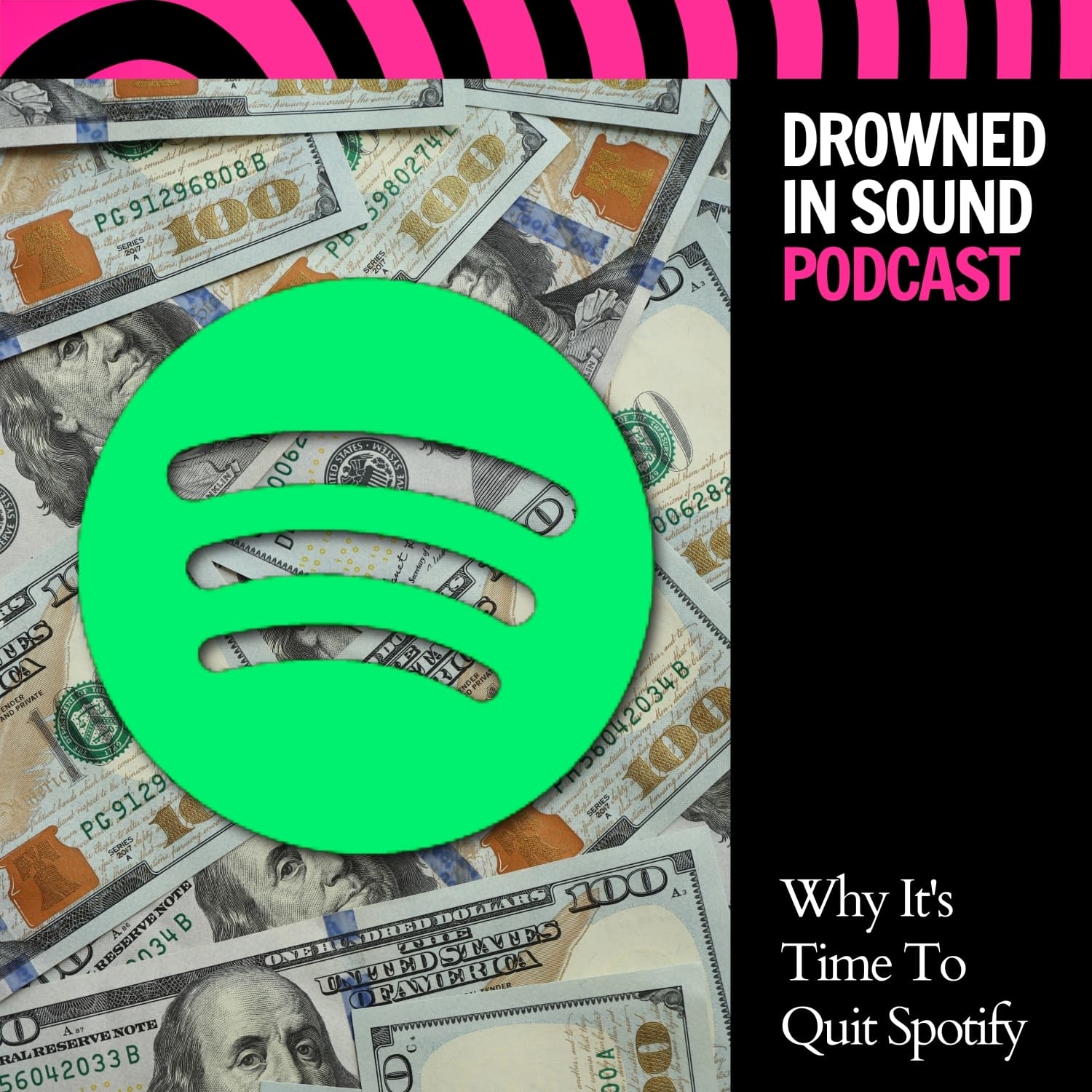
Musicians and fans are boycotting Spotify, arguing the platform devalues artists and is financially tied to military/AI harms. Central trigger: Spotify CEO Daniel Ek investing about 600 million euros (nearly 700 million USD) in Helsing, an AI military startup; Laura also cites Spotify’s low per-stream payouts, AI-generated music being platformed, and broader “winner-takes-all” consolidation.
Guest backgrounds
Laura (Minor Birds) is a Washington DC–raised musician and pacifist; she has released protest records (e.g., Generals, Be Here Now) and has organized politically since early 2000s DC protests. She discusses civil-rights influences and activism around immigrant/queer rights.
Key claims
“Participation is perpetuation”; Spotify money helps fund war tech; Ek’s wealth contrasts with artists earning fractions of pennies per stream; autonomous AI drones increase life-and-death risk; AI/tech is worsening climate and human-rights harms.
Notable examples
Clips and names cited include Novo, Violetta Zeroni, Nailer by Nature, Dan Mangan; AI music example “Velvet Sundown”; platform alternatives discussed include Deezer, Tidal, Apple Music, and especially Qobuz (human curation, higher artist rates).
Written by AI. May contain mistakes. Listen to the episode to check what was said.
Chapters
Tap a time to open that second in VOThe Power Dynamics of Streaming
0:10 to 1:20
Discussing how streaming reshapes the music industry and economics.
“Why are so many musicians boycotting Spotify at the moment?”
Daniel Ek and Military Investments
1:20 to 2:38
Criticism of Spotify's CEO for investing in military AI startups.
“I thought I'd just play you a few little clips from Novo, Violetta Zeroni, Nailer by Nature, and the musician Dan Mangan.”
Musicians Taking a Stand
2:38 to 3:56
Introducing Laura, a musician protesting against Spotify's practices.
“The Walrus published an article called The Death of the Middle Class Musician.”
Viral Reactions and Awareness
3:56 to 6:06
Laura shares her experiences and reactions to her protest videos.
“the news that Daniel Ek had invested 600 million euros into Helsing, an AI military startup, it made me want to burn down the whole world.”
The Ethics of Technology in Warfare
6:06 to 8:00
Discussing the implications of AI technology in military applications.
“And to know that our music was being used to help fund it.”
The Role of Music in Society
8:00 to 11:00
Exploring how music connects people and the responsibility of musicians.
“But again, no human is illegal on stolen land.”
Alternatives to Spotify
11:00 to 14:00
Discussing various music platforms and their impact on artists.
“It's like we've watched all of these movies.”
The Similarities of Streaming Platforms
14:00 to 14:40
Exploration of the similarities across various music streaming platforms.
The Role of Human Curation in Music Discovery
14:40 to 15:20
Discussion on the importance of human curation versus algorithmic recommendations.
“There's like all these different resources.”
Nostalgia for Music Sharing and Discovery
15:20 to 17:00
A nostalgic look at music sharing and the community aspect of music appreciation.
“And so this to me, this algorithm, this reliance on algorithm and this reliance on AI, we've been just slowly boiling like little frogs in the pot, you know, by saying like, oh, well, that algorithm really gets me.”
Show all 23 chapters
Exploring Alternatives to Spotify
17:00 to 19:00
Investigation into alternative music streaming platforms and their implications.
“You know, I mean, just the authorization of the police state is so sad to me.”
The Unique Features of Qobuz
19:00 to 21:00
Overview of Qobuz and its human curation and artist support.
“nerd and just like loves music and loves all types of music.”
Artists' Response to Spotify's Policies
21:00 to 23:00
Discussion on artists' reactions to Spotify's handling of AI-generated music.
“I think that they are a company that is comprised of music lovers and that's their main interest.”
A Call for Collective Action Against Spotify
23:00 to 26:20
Plans for an open letter and a song release advocating for changes in Spotify's practices.
“So can you tell us what you've got planned?”
The Devaluation of Music and Artists
26:20 to 28:00
Deep dive into the historical devaluation of music and its impact on artists today.
“Yeah, you lose a third of your income, yeah.”
The Value of Art and the Artist's Struggle
28:00 to 29:36
Discussion on the devaluation of art and the pressures musicians face.
“I want to ask you, like, why you think that this is OK?”
Resource Allocation and Global Inequities
29:36 to 31:09
Exploration of resource management and social injustices affecting communities.
“And I'm not letting some asshat named Daniel take it away from me or anybody else.”
Political Unrest and Human Rights Violations
31:09 to 33:59
Analysis of protests in Indonesia and broader implications for human rights.
“And that's what we're seeing everywhere.”
Activism Through Music and the Impact of Political Events
33:59 to 39:06
A personal account of how political events shape musical activism and expression.
“And this is like this is all from a party who supposedly believes in like individual rights.”
The Need for Change in the Music Industry
39:06 to 42:09
Discussion on the challenges artists face within the music industry and the potential for more ethical practices.
“throughout our humanity and throughout our culture and throughout politics.”
Navigating Alternatives to Spotify
42:09 to 45:39
Learn about tools and strategies for transitioning away from Spotify.
“And I hope that they will come around and see that this is a piece in that storytelling that they can just add.”
Exploring New Music Platforms
45:40 to 48:22
Discover the benefits of independent music platforms and their future.
Introducing Exciting New Artists
48:23 to 49:05
Hear a compelling recommendation for a rising artist worth listening to.
“Her lyrics are just really powerful, potent, empowering, almost poetic in a way that's haunting or haunted without it being particularly goth, but maybe she's a bit goth.”
Transcript
Automatic transcript. May contain errors.0:10Why are so many musicians boycotting Spotify at the moment? And why are music fans following them? I just wanted to play you a quick clip of Liz Pelley, who wrote a brilliant book this year called Mood Machine, which has really stirred up the conversation about the problems of both Spotify and capitalism in general.
0:30Streaming is reshaped music. Over 600 million people globally have streaming subscriptions, with most of them paying about$12 a month. And for musicians, it's never been easier to release work into the world. But ease of access doesn't mean things are becoming more fair. Streaming services have so much power and influence. With a whole new world of corporate middlemen, an already highly consolidated industry has only become even more consolidated. Music today is a winner-takes-all economy, and the biggest winners of all aren't even musicians. Spotify CEO Daniel Ek has a net worth of almost$10 billion, while musicians make, on average, fractions of pennies per stream.
1:12Labels, we got you, but do you got us? Loads of people have been posting about disarmed Spotify across the internet. I thought I'd just play you a few little clips from Novo, Violetta Zeroni, Nailer by Nature, and the musician Dan Mangan. And I think these clips give you a sense of both the fury, the rage, and the interconnected issues that Spotify have found themselves getting very, very tangled up in. This is Spotify, and many people are angry with its CEO and founder, Mr. Daniel Ek. You see, he's a billionaire worth over 10 billion US dollars. People are angry because he's decided to lead a 600 million euro investment round for an AI defense startup called Helsing.
1:58The music, the time, the attention, the money that you pay to Spotify is all going towards investing in military AI drones. I have seen Spotify grow into becoming one of the largest music streaming apps in the world. But that process has been extremely violent and insidious, starting from paying their artists literally pennies, creating AI bands. But the most insidious of them all is the CEO, Daniel Ek, has sold almost$650 million worth of Spotify shares just to invest it into military AI. Three stories broke in the last week that are seemingly unrelated, but totally related, all helping to paint a picture of what the dystopian hellscape looks like for artists moving forward.
2:46The Walrus published an article called The Death of the Middle Class Musician. several of my peers are directly quoted in this article and you got daniel eck who's the ceo of spotify who's just invested 700 million dollars in a military ai startup called helsing in this episode of the drowning sound podcast i meet a musician who is leading the charge her name is laura she makes music as minor birds she sometimes plays in the postal service live band which is pretty cool if you're into the noughties electronica group but she recently released a protest track on Spotify, removed all of our catalogue and joined a movement of musicians who are leaving the platform and encouraging many of you to follow them.
3:27And just so you know, at the end of this podcast, I will play you Laura's protest track.
3:43so my first question for you laura is as a pacifist how do you feel knowing that your music exists on a platform that's contributing to the military industrial complex when i read the news that Daniel Ek had invested 600 million euros into Helsing, an AI military startup, it made me want to burn down the whole world. I mean, I already hated Spotify for all the reasons, they have been paying artists shit for years. But then to know that music, which I make as a means of connecting with other people, as a means of healing myself and hopefully finding those spaces where other people feel alone, feel sad, feel, you know, all the feelings that we feel as human beings.
4:31To know that that had been co-opted by someone who swore that he couldn't pay us anymore and suddenly could invest hundreds of millions of euros slash US dollars into war. There's not much that has made me angrier in a long time. It made you film a video and post a video. And it's not something which, as someone who's known you for years. I've seen you do that often. And you posted a series of videos entitled Disarm Spotify. And what were some of the initial reactions you got? Because they had millions and millions of views. And I'm sure there's probably a few recurring responses. I think most people were in disbelief.
5:12You know, a lot of people use tech platforms have no idea what's going on behind the scenes. You know, even as I sit here in front of my Apple laptop computer and have my iPhone sitting next to me, we are often unaware of how complicit we are in the systems of harm that are created by those tech platforms. And so with Apple, for example, you know, we know about cobalt mining. We know about just all of these, again, systems of harm that that result in modern day slavery. and I think that what I felt as a musician was like holy shit I'm a part of this modern day indentured servitude slavery that I didn't I didn't sign up for that but I did you know when I signed up to the platform I signed up for that so yeah I was really shocked at how viral that clip went i mean i've had a few things have a few thousand likes uh but this has had almost four million across tiktok and instagram um and i think most people were just really unaware and they were disgusted by it um particularly musicians we all knew we were getting paid shit rates um but i think that the idea that so many people in this time are advocating for a free Palestine and are advocating against war in Ukraine and, you know, what needs to be done to stop this, what's happening in Sudan and all over the world.
6:43And to know that our music was being used to help fund it. And look, I know that there's some conversation about like, oh, but Helsing is a defense military company. It's going to create, you know, defense shields that are going to help Ukraine. And to that, I say, that's bullshit. We cannot believe this eternal lie that the only thing that stops war is more war. The only thing that stops gun violence is more guns. You know, like I live in the US, which is just, we watch people try to feed us these lies over and over and over again. But the truth of the matter is they don't care about, they don't care about rights.
7:23They don't care about individual rights to bear arms or whatever the fuck it is. they care about lining their own pockets and that's what we see again and again and again people who get into power who earn lots of money aren't necessarily interested in innovation for the good of the world they are innovative interested in innovation for the good of their own bank accounts war is very profitable like it's off this property and and like war machine seems to be if it's not that it's like people's like insurance and pensions and like the places where our money goes is not always the most ethical um and i think the thing with the fact that it's not just drones like defense drones it's ai drones which means that these are literally the things we were warned about in terminator and all of the kind of dystopian sci-fi movies the idea that they could be flying on the streets of LA right now and with all the ice raids and things is like that's where it starts to get quite terrifying quite quickly how do you feel about the fact that it's not just oh he's investing in like the equivalent of the Iron Dome for is for Ukraine it's like these are drones which control themselves and fly themselves and we know what some of the people behind some of these ai companies are like um the intelligence is not always there and the the fact that only about five years ago like autonomous vehicles had an issue with if they were driving if there wasn't grass on the side of the road because they'd only ever been trained on roads with grass um i think that was like maybe six or seven years ago they had to to add to the algorithm this is what you do when there's water and this is what do when there's a pavement um the idea that ai technology has got that smart that quickly that it can make decisions over life and death um in a war zone that's that's the bit for me that was most terrifying when i read the headlines because i'd seen the investments in the past and i thought oh okay they're just like gopros with a rifle on and someone controlling it with a like playstation controller but these are self-controlled machines of death like i don't really know what my question is i just know how horrifying it is it's horrifying and living in la right now feels like an extension of a proving ground um because these ice raids are ongoing um and they are ongoing right now with just thugs you know masked goons who are going and just racially profiling people and saying you look like you're probably illegal.
10:12But again, no human is illegal on stolen land. And they've also got like an iPhone app, haven't they? They hold up to people's faces. Right, because there's all this technology, there's all this facial recognition technology, which has proven again and again to be unreliable. A lot of this stuff is researched and practiced and used, tried out in Israel against Palestinians. And we even know that, you know, as they were arrested, as the IDF, IOF was arresting Palestinians and saying, well, you're Hamas because we took a scan of your face and that's that's what it says you are. It's wrong, you know, and people's lives are at risk because of this.
10:55And to think that anybody could be safe from this. This is the thing that always gets me. It's like we've watched all of these movies. We've watched all of these movies where the genius inventor makes the thing and the invention turns on it. Right. So it's like we're doing it to ourselves. Even these people who are profiting right now are putting themselves in danger and they're fools to think otherwise. I mean, Daniel Ek literally looks like Lex Luthor in Smallville. Yeah. It's like classic villain. I guess I should say that I've done a lot of research and I can't find any public links from Helsing AI to Israel.
11:38But I haven't seen any denials. And I think we probably need some more journalists to ask more direct questions. But Spotify don't comment on very many things. and this isn't spotify this is their ceo who's taking the money from the company and becoming the director of this war firm yeah um i guess one of the things that i've seen in your comments come up a lot is people thinking well you're just a musician you can just like you can remove your music but that doesn't make that much difference but what has made a difference is the snowball effect like since your video went out like that story had been on the ft for about a week at that point in time and i noticed the snowball like we've had a dm chat with like here's another person that's left here's another person that's left and we've seen shushu and um godspeed and like who Kajibone, Deerhoof, King Gizzard.
12:40King Gizzard and the Lizard Wizard. Yeah, it all has to start with someone, right? But I keep coming back to this phrase these days with all this techno-fascism that we're witnessing, which is participation is perpetuation. And I just don't want to participate in the proliferation of war and violence around the world. Like musicians should be responsible for part of the creative solutions, right? This is this is music is inherently concerned with our shared humanity. It is the language that connects us across cultures and across political divides and across every kind of divide you can think of.
13:20and the idea that we would the only kind of the only kind of wedge i'm interested in music uh driving and anything is this sort of like revolutionary wedge which is like we will not do this anymore we the people stand up and and stand up against this bullshit this rising tide of fascism and police state no thanks not interested that i guess that is the thing that music can be available anywhere and everywhere but people are mostly on spotify because that's their audiences are and i wonder at what point some of the larger artists with larger audiences are going to start to make this change as well i know that contractually there's reasons why some of them can't do it but the audiences can make those decisions on their own they can choose where they listen to music it's this pretty much the identical database across all the different platforms and i know that i've found from i've basically tried every platform now including some that no longer exist um because streaming platforms have come and gone over the last decade but i think that trying them all out they're almost all the same they do almost the same things yes some of them have better algorithmic playlists but that takes most of the fun out of music discovery anyway some are a bit more human curated but with almost anything now you can have a personalized experience just by putting a little bit of effort in like if you're used to having discover weekly tell you what's out this week just open up the home page of rough trade shops they've got the exact same list walk into amoeba records and see what they've got racked like you can find out what albums are out this week pretty easy there's metacritic there's any decent music There's album of the year.
15:07There's like all these different resources. Well, let's have a return. Let's have a return to music blogs and to journalists and to DJs and to actual human curation, you know, which is that's that's what we used to. Right. And so this to me, this algorithm, this reliance on algorithm and this reliance on AI, we've been just slowly boiling like little frogs in the pot, you know, by saying like, oh, well, that algorithm really gets me. I haven't heard myself say that when I was using Spotify. Oh, you know, but I really like that radio feature. They've figured out my weird style that likes 70s African jazz and like, you know, 60s psychedelic rock and like whatever my weird tastes are in like 90s PJ Harvey adjacent punk pop.
15:52you know and i won't say punk pop because that's not i'm sorry anytime i start talking about my taste in music i get really nervous because i feel like i've dj'd in the past and you get your record crate out and you're like what is everyone gonna think when i pull this record out anyway sorry that was the side i know you're cool you don't you don't need to convince anyone else the um if any if anything maybe we should start sharing random photos of our record crates yes Like, get people to listen, like, pick something from my crate and go find it online. Yes, exactly. Or ask me about my pile of records.
16:25Yes. Well, as you know, my friend William L. Burke, who was featured, you know, speaking about nuclear disarmament, a dear friend from D.C., and he was, you know, featured in front of his wall of CDs. And everybody online was freaking out about these titles they could see in his collection. Like, let's do that. Let's make that a social music sharing platform. The disarming Spotify and rearming people's shelves. Yes. The annoying, that was such a beautiful thing. And the small worldness of it being the person you used to DJ with in Washington. Exactly. And like also the small world of like what is happening in DC right now.
17:03You know, I mean, just the authorization of the police state is so sad to me. It makes me feel sick. So the big question everyone really wants to know is if you're going to leave Spotify, where do you go? I've done a bit of digging. I found that Deezer seems to have some links to Israel. Their investor seems to be quite tied up in military in different ways. I dug into Tidal and Jack who used to run Twitter is now the main shareholder and the main shareholders in his company are all of the big investment banks and investment firms that all seem to be have links that don't take very long to get you towards companies which are either heavily invested in fossil fuel or heavily invested in war.
17:48Apple such a big company like there's all the there's various different things about apple as a company but music is quite a tiny bit of what they do and if you've got an apple phone you've probably got a three-month free trial that came with it that you've not used or if you've got a laptop it's got probably a three-month free trial that you've not used so even if just from now till christmas you can use a different platform and try it out um there's lots of tools to export your playlists um but you and i both kind of did some digging in quobuz or cubas cobus seem to say it differently cobus is that how you've been officially told to say that's well i i mean i did i asked the eminette i said how do you pronounce it and they said cobus okay so it's q q o b u z but independently owned you know they aren't they don't have a bunch of shareholders with investments in military or war so they're kind of and they've sent you a few documents and things haven't they what have you learned about them the thing i love about them is that they're fully humanly curated.
18:49They have their recommendation page is all, you know, it's all written by humans and journalists. And it reads, the thing I love about it is that it kind of reads like your favorite best friend who is like a huge music nerd and just like loves music and loves all types of music. So if you look at their weekly recommendations, it has everything from jazz to classical to punk to indie rock to like uh beautiful folk harmony music you know it's like it's kind of all over the place um and i i really um just appreciate them and they they got back to me very quickly my old label saddle creek connected me with title apple and kobuz uh immediately after my my video went viral they also try to connect with deezer and no one has gotten back apparently they're notoriously not very communicative.
19:47But they, I don't know, they might be understaffed. Who knows what's going on? Maybe they're just not interested in talking to artists. So I can't really speak to them other than the research that you found. Maybe from the quick bits of digging, maybe they don't want to be flagged as the next one not to use. Yeah, maybe so. But the thing that I like about Cobas is that they are in it for the audio quality. They also pay artists the highest rate of any of the DSPs. And there was an interview. I asked them what their AI policy was because, as we know, the other problem with Spotify is that they are allowing and platforming fully AI-generated music like the Velvet Sundown.
20:29And they kind of don't see a problem with it. I read somewhere that YouTube music was going to demonetize any AI-generated music or voices. but YouTube is problematic in a whole other way. And so Kobuz, basically when I asked them, I was like, what's your AI policy? I don't think they have one yet necessarily, but they did send me an article in which their CEO was interviewed and said, if you find me liking an AI band, someone shoot me. He's not interested in that. I think that they are a company that is comprised of music lovers and that's their main interest. as opposed to like all of these other tech platforms which found that there was a gap in in what the world needed in terms of how do we get product from point a to point b and they were like oh we can do this but it was never about the love of music um yeah i think i said to you i've scrolled daniel x feed for like two years worth of posts trying to find him being passionate about music i found him being passionate about data i got very excited when uh ed sheeran joined the billions club or something right trying to find him being excited about um a piece of music he's just heard or a new album that's come out or even meeting famous musicians that doesn't seem to be something that i've seen him post about i did i did a lot of scrolling it was a uh kind of got hilarious the amount i kept going i love your commitment because well it was more the the idea that spotify has thousands and thousands of employees quite clearly has loads of comms people working for it surely someone can just draft him a tweet every so often to go really excited that katie perry's got a new record out like a few of those posts come from their official account right like he's the he's the director of one of the biggest music companies in the world I think I looked and he had a Spotify playlist and he hasn't updated it since like 2012 when Calvin Harris put some music out.
22:33It's like you run this big company. You could have people do this for you just to make you look cool. But the truth of the matter is, why would he have wanted to show his love of music? Because if his real interest is proving to future tech investors that he's really good at tech, he doesn't want them to think that he's just some guy who likes music, you know? I guess the big thing is you're going to be putting another video out this week to encourage fans and artists to reconsider whether they want to stay on Spotify. So can you tell us what you've got planned? So I'm going one step further than releasing a video.
23:11I'm actually releasing a song on Spotify. Monday, September 1st is Labor Day in the US. Yes. And I wrote an open letter to Spotify from all musicians, fans, creators. This includes, you know, authors, podcasters, comedians, anybody who uses Spotify who disagrees with what Daniel Ek is doing and who basically wants to see huge changes or else they will leave the platform as a fan, leave the platform as a creator and say, we're not going to participate in this. and I'll be honest it's hard to get people to sign on to an open letter because artists hands are tied you know people are people are beholden to their record contracts and don't actually have a lot of freedom over whether they can stay or go I wanted to see if we could gather like the weight of a artist to get us to a tipping point right to show them like hey you're gonna lose you're going to lose all of your money if you don't start making huge changes um but anyway getting these people to sign love letters a little hard so what i decided to do was to create my own song my own open letter from my own voice and post it on spotify um i have taken all of my music off of spotify um there's like one or two things through various labels that i am still trying to get off but I was in that conundrum that a lot of musicians are in which is like okay I've taken my music off Spotify but how do I tell people who maybe don't follow me on on social media who maybe don't know that that this is why who maybe aren't going to necessarily notice if my music doesn't start doesn't keep coming up on their automatic playlists or read my bio you know if I leave some note there.
25:06So I decided to release the song. I tried to call it Disarm Spotify, which got rejected by Spotify. Surprise. So I had to go back and I resubmitted it. I called it Labor Day Love Letter. And it starts out, dear friends, you know, in protest of Daniel you're investing this money. I've taken my music off of Spotify. Here's why. Here's why I recommend you also leave the platform and we'll see if it actually goes live. I got some email saying that it didn't comply with the terms of the distributor because it was spoken word, but nothing said it wasn't going to go live. And you can see that it's in the queue to be released.
25:50That's my own little protest. I feel like I didn't know that I was going to become an internet troll, but everybody we've got to find our own little means of getting our voices heard right and do you want people to drop that song on their playlists do you want people to share it and like are you going to pay to boost it in the algorithm oh it was really funny because i can't i feel like i'm not allowed to name names but someone who has access to my artist profile um offered to pitch it to playlists because you know what happens if you pitch to playlists right You give up a portion of your income.
26:26Yeah, you lose a third of your income, yeah. This is so insane. And so, okay, can I give a momentary rant? Can I go all the way back to the beginning? You can go right back. We can keep this on record or off record. Oh, this can go right on record, please. Yeah, okay. The main issue that I have with Spotify and with everything that's happening right now, not only in the music industry, but in the world is how are we participating in our own devaluation? Right. And so as a musician, I have watched from when Apple said songs are going to be 99 cents each. Albums are going to cost$9.99. And I remember there were a lot of conversations within labels that said, wait, why are they dictating what music is worth?
27:12We should be the ones determining the prices. And Apple said, well, you're either in or you're out. You know, do you want us to sell your music? Do you want the stream of revenue or not? And everybody was like, okay, I guess we'll take it. And Apple was like, well, we'll, you know, we can always renegotiate this later. Well, it never got renegotiated. And then DSPs came up and you had people like, well, Spotify, of course, was like, well, we can't really afford to pay that much because we don't have a ton of users yet. But once we get users, we're going to increase those pays per stream. Never fucking happened.
27:43It was the same thing with Pandora and internet radio. And I remember going to see the CEO of Pandora speak in like 2008 or nine. And he basically was like, well, we can't really afford to pay people that much because we wouldn't be able to afford, you know, to pay for the people who are making this platform run. Meanwhile, this guy was bragging about having the most expensive hamburger he ever had on a rooftop at a restaurant in San Francisco and saying artists should get used to making money selling t-shirts on tour and not selling music this is just this is just how they're going to make music and I wanted to I wanted to run up and literally just like put my hands around this guy's neck he was making me so angry I actually stood up I could have turned him into a hamburger I could have turned him into a hamburger I raised my hand and I was sitting next to Saddle Creek my record label in the audience And they saw my hand shut up and they all just sunk down in their seats like that.
28:41And I was like, hi, I'm a musician. I tour. I want to ask you, like, why you think that this is OK? Like, what if we asked you that we told you that as CEO of your tech company, that you weren't going to be able to make money by creating this tech and putting all this money into into making this platform work? But you were going to have to go on the road and leave your family for months at a time and figure out how to design and produce and sell t-shirts and that's how you're going to make money like can you think about how insane that sounds right so we as artists have been subject to this systematic devaluation of ourselves of our art and at the end of art and music itself and that's me so angry, which is like art and medicine are this incredibly powerful energy that we need as humans to survive and to like, to revolutionize, you know, like this is our fucking power.
29:43And I'm not letting some asshat named Daniel take it away from me or anybody else. And as we watched this quote unquote, AI revolution, which is horrible for the planet, you know, I read an article the other day and it's like okay so chat gbt it's like not that bad now you know it's like oh maybe it takes a sip of water to to do something but once it snowballs you know and gets into what it's fully capable of it's going to require so much so much so many more resources and that is going to take it's already like on course to do like like a whole country's worth of energy yes in like in like most months yes it's like that's just insane i think in the u.s it's sort of like it it it is the equivalent of the entire state of florida's energy bill for the year but you know we're we're we're entering water wars territory where we don't we aren't going to have enough clean water for people to drink and we're going to choose to feed it to the robots like this that is insane you know and but that's a choice and that's a choice that we can decide to make right now um and i'm watching what's happening in indonesia and i'm like i want some of that energy for the for the people of the world which is like no we're not going to allow the people in power who are rich writing themselves checks for pay raises while the rest of us cannot afford to live day to day you know um there was for anyone that's not been watching the news can you let us know what's been happening in indonesia basically uh the government of indonesia said like we need pay raises and they wrote themselves additional pay raises that includes the police force and the people went fucking crazy they said absolutely not this is not okay and they've been rioting in the streets uh and i guess a police vehicle ran over a 21 year old man who wasn't even part of the protests he was just a delivery motorcycle driver and then this is just made things works right because yes can i get it it's escalating it's not even but it's not about the money it's about the people.
31:48It's about the cost of human lives. And that's what we're seeing everywhere. You know, there was an article first thing this morning in the Washington Post that was talking about, again, Trump and Netanyahu's plan to turn Gaza into the Riviera of the Middle East. And they're talking about building AI smart cities, you know, replacing thousands of years of history and people's lineages that goes back generations and generations. and beautiful works of architecture and cultural importance with just AI, brand new AI cities that are going to take all of our resources away from each other, that erase our culture, that erase art and music and our ability to communicate and connect with one another.
32:37I'm livid, you know, because it is the same thing happening everywhere and it's not okay. and it's like to go back to daniel ek he donated to trump's inauguration like to me the joe rogan podcast and that that was the line where i just decided to stop putting making playlists on the platform it's like i was only making playlists for the artists for the last few years anyway i wasn't really making them i wasn't using the platform i was just logging in because if I could help some independent artists get some juice in the system it seemed like it was worth spending the little bit of time I had to do that and the the idea that some of his money went into with everything that Trump's doing now and everything he's enabling emboldening around the world like the defunding of USAID how has that benefit benefited the average Spotify listener like it's increasing all these different changes around the world like we've just announced in the uk um there's going to be chicken pox vaccine and i think that's primarily because in the u.s it's been sort of vaccines of uptake is drip dropped off well they announced which means we've got these diseases coming back at scale yes and they announced i think yesterday i read an article yesterday that it will be pretty impossible to get a covid vaccine in the u.s this fall um I think it's only going to be available in 17 states and you have to be you have to prove that you're high risk to get it.
34:15And this is like this is all from a party who supposedly believes in like individual rights. You know, they're like, we believe in states rights because we want people to decide what's right for them. Well, this should also I mean, if you it's like you're not then saying we actually care about people's choice and whether or not to get a vaccine. You're actually actively stopping people from getting vaccinated. I mean, I can't. We could go into the whole. We should believe in science. That's a whole other podcast. But we could quite easily do a Joe Rogan length podcast. I guess I want to just jump back a few steps because I first heard your music and we became friends after that.
34:59And I mean, I was a fan of your music. I didn't just hear your music. and there was a piece that you did for under the radar magazine like their protest special which made me much more aware of your kind of politics and involvement in kind of organizing like could you just take people through a little bit of some of the journey you've been on with politics and how that's dovetailed with your music I'm from Washington DC and graduated from college just before 9-11. And I was immediately very aware of what was happening, you know, to grow up in D.C., to be around D.C. punk, just to live in a highly politicized world.
35:46You're very aware of it. I was raised by a mom who raised me on civil rights leaders and with a keen awareness of human rights and really caring a lot about it. You know, Harriet Tubman, Martin Luther King Jr. Just every person who has fought for equal rights throughout American history specifically. And so after 9-11, I remember watching this ramp up to war in Iraq and Afghanistan and thinking like, no, like so clearly every cell in my body was like, no, this is actually going to create so many more problems. And how can we even think that the reaction to what happened on 9-11 should be a hundredfold?
36:35You know, like this is not going to fix anything. It's actually just going to perpetuate violence. It was so clear to me. So I was protesting on the mall in the early 2000s. It's just always been, you know, immigrant rights, queer rights, just people's rights have always been at the forefront of my mind. in 2012 I put out a record called Generals which was the question of like why do we fight why do we fight it was sort of a concept album and like what's the answer and I wrote the whole record's worth of songs to come up with the answer that like love is the answer and and that's the legacy that I want to leave and it's kind of just a recurring theme in my music in 2017 I made a protest record right after Trump was inaugurated for the first time called Be Here Now.
37:25And I was just like listening to the news in real time and in two weeks wrote and recorded this record, one of which one song on this record is called Hold On. And it's a song for immigrant rights. This was after the so-called Muslim travel ban was enacted. We were already seeing racist, violent targeting of immigrants then. And to me, it was like, oh, if he gets elected again, it's going to be so much worse. I don't think anybody understood how much worse it was going to get the second time around. And so after October 7th, like immediately, I had the same reaction that I had after 9-11, which was like, oh God, the reaction of turning this into a hundredfold worse, you know, reaction.
Read the full transcript
38:18It's like going to snowball this violence and snowball this devaluation of our humanity. And there is nothing that makes me angrier, sadder, sicker than watching what we've witnessed for nearly two years now. I don't understand how we can watch an active genocide and watch the main news media who by the way are owned by bezos amazon music you know it's like all of these google youtube all of these things are in bed together and are erasing our humanity in favor of profit profit over people um and so it's so this this thread that is through my music is a result of the thread that I have witnessed in my lifetime throughout our humanity and throughout our culture and throughout politics.
39:10It is the same story. There are a lot of people who are very outwardly political, very outspoken about Trump, very outspoken about what's happened in Gaza, but completely silent on the platforms within which they exist upon um the economic models within which they get paid like where are they when are they going to show up and why aren't they showing up i'd like to think that the reason that certain artists are not seeing this part of the puzzle is because a they believe that that the platform is necessary to communicate their message to people, that the music is the most important thing. And maybe they believe that we all participate in a little bit of harm every day.
40:04And so the good that music brings on the platform is better than the harm that the platform um, in acts. I disagree with that. Again, participation is perpetuation. Um, I also think that there's a little bit of the, um, you know, in survival, what is it? The four Fs you have fight, flight, freeze, or fawn. And I think that there's still this like fawn name that people are doing in music and celebrity culture by believing that if you, it's tied to your own survival, right? So you say, oh, if I stay on Spotify, I can still communicate with my fans. I can still get paid the stream of income. And for some people, it's not small.
40:54I was talking to Saddle Creek, my record label, when I told him I wanted to take all my music off. And they said, we support you 100%. And also, we are afraid of what would happen if all of our artists decided to delete their music. And I said, okay, but I'm not saying let's lose that stream of income altogether. I'm saying, let's try to move people to a more ethical streaming platform, by the way, which will pay more than you're currently getting paid by Spotify. So everybody needs to get out of this fear mindset, right? It is, and this is the problem with music in general. You and I have talked about this, which is somehow the film industry has learned to work communally.
41:36There are unions in the film industry. And in music, everybody's still in this like cutthroat mindset of like, you know, oh, there's only a little there's enough over here. We all have to fight for the little crumbs to get our way to the top, which is just a pile of crumbs. It doesn't make any sense. And so if we could figure out how to actually come together and work together collectively for our collective betterment and collective survival, we're all going to come out a lot stronger. You know, I hope that there are artists, I won't name names because there are artists who I genuinely, genuinely appreciate for the ways in which they are being very, very outspoken about Gaza and a lot of other important human rights issues.
42:25And I hope that they will come around and see that this is a piece in that storytelling that they can just add. They can add to what they're offering. um so i'm just saying like come on everybody who's listening the water's fine it'll get even better the more people who come over
42:58i probably missed the disclaimer in this episode the fact that laura and i are friends if that wasn't obvious i was a fan of her music and we've hung out a few times she's brilliant and she's written for drowning sound in the past too i will link to the piece she's written for drowning sound actually in the show notes and you should follow her on instagram she's laura bird on instagram and she's on tiktok and she's on youtube and all the other platforms there's minor birds um the beautiful little actual bird and and i guess if you've listened to that and you're thinking how do I wean myself off Spotify.
43:33As someone that's a year and a half spotty sober or whatever the term might be, I think that it's pretty easy. There's loads and loads of tools to export your playlists. There's one called Soundiz, which is sound two I's and a Z. I used that one when I moved quite a lot of my playlists across. I think it's free up to like 150 songs on a playlist or something like that. And then I think there's like a small fee if you want to pay for the premium version there was a few others I just had a quick look and there's one called Tune My Music which I think I've used to like grab the text of playlists in the past Free Your Music and one called Song Shift I also saw that Apple have just announced that they've actually built a tool for you just to move your playlists across to Apple so that might be worth looking at too if you've got an Apple device check whether you've got a free three-month trial because it often comes with a laptop or with a phone so if you're thinking of leaving Spotify that might give you a few months up to Christmas of not paying for something and Apple paying for it for you.
44:32In the show notes I will include a link to Quobuzz. Drian and Sam will get one pound if you sign up which is obviously great to support us and we will use that money to invest our time in recommending music and getting kind of independent journalism funded so it'd be great if you could do that try that and also from what I can tell from my research and Laura's too they're one of the most ethical of the platforms that are out there. I think that if you're moving across, it does take a little while to get used to a different interface. That's pretty normal. If you're used to reading BBC News and you suddenly read CNN, it is laid out slightly differently.
45:12So we should all be slightly used to things moving around a little bit and getting used to it. So that's a thing to get used to. There are certain quirks from a thread on the Drowning Sound Forum. One of the things that people have mentioned is that Tidal I think you have to be online when you first open the app in order for it to know that your subscription is still active so if you're going on a plane open it before you get into airplane mode and that's that was like a little glitchy thing that a few people found I don't know if it happens on every phone and every device it might just be maybe if you've not opened the app for like a week it maybe needs you to be online to check you've still got an active subscription um i've seen a few different people say a few different things about curation on the platforms personally i think you'd be far better off to spend more time reading music journalism than relying on algorithms i think the personalized approach to algorithms can really let you down like in a weird way you can use if you've got a list of like your 30 40 favorite acts you could use ai to like are there any new releases by my favorite acts send me a notification like you put like here's my music taste and put it into a project and then say what's out this week that would fit my music taste i know it's going to be bad for the planet by using ai to do that but probably a smarter way than relying on an algorithm to kind of talk you through it because it will go off and it will read pitchfork and it will read running sounds and read all these other places you can then click on those links to read those things on those websites i think another thing to do is look at your local venues listings see which artists are playing dip into some of those records find something new to listen to that way you don't have to listen to something that came out on friday you can listen to something that's two three four years old it's still going to be new to you and something that's 40 years old that you might have never heard before i think when you join a new platform you might be able to change some of your habits and get out of that like what's out this week and on the home page my personal view is that we will see more independent platforms appear over the next few years and i've spoken to some people that are building things it's not easy there are a lot of buffers and barriers especially the major labels licensing their catalogues so I think that once those things change I think that's going to be pretty good for music because having more choice can't be bad for anyone and having platforms that may be designed and feel like they're made by music fans for music fans rather than by corporations for people that work at corporations I think if you work at a major record company Spotify feels like it's made for you.
47:47I think if you're someone who's in an independent record shop it feels completely like a world away. So and I think if you're just a music fan trying to get into music I think that there's a lot more that can be done for browsing and exploring music, being kind of led a little bit, having some expertise but above all having that whiz, that thrill, that energy, that infectious passion for music that comes from a human being who's just heard something that they cannot stop listening to if you're going to listen to one thing today go listen to sophia rizella we interviewed her at reading she is by far one of the most exciting new artists i've heard in years i can't get enough of her music she's got all of the like heaviness to the base of billy Eilish and Nine Inch Nails.
48:39Her lyrics are just really powerful, potent, empowering, almost poetic in a way that's haunting or haunted without it being particularly goth, but maybe she's a bit goth. She does cover herself in mud on stage and she's an amazing violin player. She was classically trained and she plays guitar like Prince. So what more would you need from a new artist that you're going to get into who's not even released a debut album yet but she's got a ton of tracks and her videos are really interesting on youtube so dip into a few of those that has been a longer outro than normal if you've enjoyed this podcast please hit subscribe on youtube please subscribe on whichever platform you get your podcasts if that platform is spotify you do know there are about 10 other apps you can use to listen to podcasts so um please consider a different app um please consider the power of moving your information your time and attention but above all your money from a platform that's not necessarily putting the money where your values might be matched there might be a platform that's giving more money to artists like the quobuzz royalty rates as laura said are much better and i think that as fans individually you might not feel you have that much power but collectively we have a lot and i think we should hold these platforms to a much higher standard if they're going to take 120 pounds plus of our money each year and just to allow us to access the same database of music which is available on other platforms so if you're paying for an interface what are you really paying for and with that i've been sean adams this has been the drannot sound podcast you've been you and I'll see you next time.
50:31Dear friends, I will be releasing two new Mind of Birds albums this fall, but I won't be releasing them on Spotify. In protest of CEO Daniel Ek's investment of 600 million euros, nearly 700 million US dollars, in Helsing, an AI military startup of which he is now chairman, I have removed all of my music and will not release any new music here unless big changes are made. Let me be clear. Spotify, their CEO, and shareholders have profited millions on the backs of unpaid and underpaid artists. At approximately 0.003 to 0.005 cents per stream, Spotify pays one of the worst streaming rates in the business.
51:14In addition, they are allowing and platforming fully AI-generated music in bands like the Velvet Sundown. Over the years, they've pitted musicians against one another to compete for playlisting spots. But now we're up against robots who do not need to pay rent or buy groceries, who will not fight for fair pay or workers' rights. We are living on the brink of climate collapse, worsened by big tech doubling down on AI initiatives that suck down water and power and pollute the environment. We need leaders who will step up and take responsibility to do better. Our collective survival depends on it.
51:51Music is not simply a commodification to make the rich richer. Music connects us across languages and cultural divides. It is the medicine that heals broken hearts, opens doors to compassion, and leads us through revolutionary times with a shared song in our throats. I believe in creative solutions for the future, not more war, violence, hate, division, and destruction that we're seeing explode in the U.S., Ukraine, Gaza, Congo, Sudan, and around the world. I will not continue to participate in my own devaluation, in the devaluation of other artists and musicians, or in the devaluation of art and music itself.
52:33In short, I will not allow my songs to be turned into bombs. I hope you will join me and other musicians in this fight. You can find my music on other platforms and find me on tour across the U.S. this fall. Please support every visionary who is actively and intentionally building the fair, equitable, and just world we all deserve to live in. No kings. Nobody's illegal on stolen land. Protect the vulnerable, the dolls, the trans kids, the animals, the fragile ecosystems. Free Palestine. Fight and organize with all the love and creativity in your heart. Thank you. Keep going.
From the publisher
Have music artists finally had enough of the multi-billion dollar streaming platform?
Laura Burhenn makes music as The Mynabirds and has played in the Postal Service's live band. When she learned Spotify CEO Daniel Ek invested $700 million in military AI startup Helsing, she pulled her music and uploaded a protest monologue.
Her "Disarm Spotify" TikTok videos sparked millions of views and a wave of artist departures followed. Recent acts that have taken their music down include King Gizzard & The Lizard Wizard and Godspeed You! Black Emperor.
In this episode, we're not just talking about streaming rates but getting into the wider systemic issues with music being turned into bombs.
Featured voices from the movement: Novo • Violetta Zironi • Naley By Nature • Dan Mangan
Edited by:
Josh Craggs at Dubble Audio
Chapters:
00:00 – Musicians boycotting Spotify: the fury and the interconnected issues 04:00 – When music money becomes military funding: the Daniel Ek investment 09:00 – AI drones and the dystopian timeline we're already living 13:00 – The snowball effect: how individual protest becomes movement 18:00 – Platform alternatives: Qobuz, ethics, and where artists go next 23:00 – Releasing protest music on the platform you're protesting 27:00 – Artists participating in their own devaluation: the bigger picture 35:00 – From DC punk to Palestine solidarity: political music evolution 40:00 – Why outspoken artists stay silent about their own platforms
Continue the Conversation:
- Email sean@drownedinsound.org with your platform organising experiences
- Join the discussion about collective action in the creator economy
- Subscribe to DiS newsletter for weekly insights on music and resistance
Try Qobuz (Ethical Streaming Alternative): Artists get paid 10x more than Spotify. Human-curated playlists. High-quality audio. Start your free trial via DiS (supporting independent music journalism).
Links:


