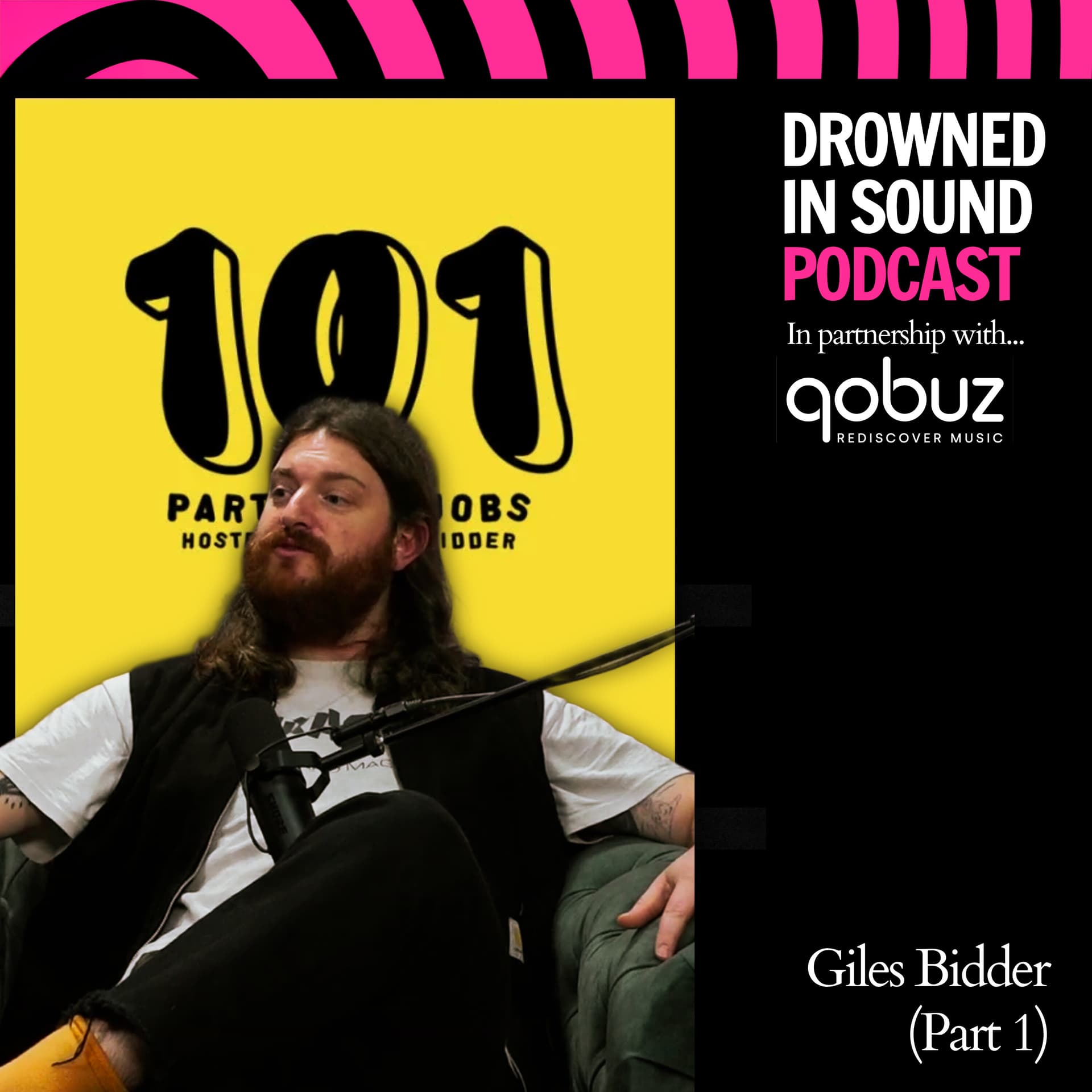
In short
Drowned in Sound Podcast Episode Notes
Episode Title
Why Some Festival Headliners Still Need Part-Time Jobs (Part 1)
Podcast Description Drowned in Sound examines the intersection of music and society, exploring how the music industry influences culture and how artists, fans, and workers can work toward systemic change. Topics include streaming economics, sustainable touring, climate, technology, and workers' rights.
Episode Overview In this episode, hosted by Sean Adams, the conversation features Giles Bidder, the host of 101 Part Time Jobs. The discussion provides a candid look at the hidden labor behind music culture, focusing on the realities of sustaining a creative career in the modern economy. The episode touches on various themes, including touring economics, the myth of "making it," and the invisible labor that supports the music industry.
Key Points and Discussions
- Introduction to Giles Bidder
- Background: Host of 101 Part Time Jobs, which focuses on the diverse jobs musicians undertake to sustain their careers.
- Impact of Podcast: Over 600 episodes created, showcasing the stories behind artists' survival in the industry.
- Emergence of 101 Part Time Jobs
- Motivation: Born from the need to address the instability of creative careers, particularly during difficult times like lockdowns.
- Personal Journey: Bidder reflects on his own career’s patchwork of jobs, using the podcast as a means to document and make sense of these experiences.
- Touring Economics and Career Realities
- Myth of Success: Many artists, even those headlining major venues like the Roundhouse, still rely on part-time jobs.
- Economic Precariousness: Discussion about how the perception of "making it" in music often doesn't align with the reality of financial stability.
- The Value of Music
- Cultural and Economic Disparity: Music is described as "socially priceless but economically precarious."
- Invisible Labor: Much of the work that supports the music industry goes unnoticed, with artists often doing jobs outside of music to make ends meet.
- Importance of Customer-Facing Jobs
- Skills Learned: Working in customer-facing roles builds respect and understanding of the audience, which is vital for artists.
- Social Responsibility: The conversation highlights the need for artists and workers to engage in roles that foster community and respect.
- Reflection on Podcasting and Creative Expression
- Podcasting as a Medium: Recognized for its role in sharing stories and human experiences, creating a space for dialogue about the music industry and broader societal issues.
- Community Impact: The discussion emphasizes the importance of music in fostering connection and addressing loneliness, especially during challenging times.
- Conclusion and Future Conversations
- Ongoing Dialogue: The episode sets the stage for a follow-up discussion, promising to delve deeper into the challenges of sustaining creative work and the podcasting process.
- Call to Action: Listeners are encouraged to continue the conversation on the Drowned in Sound community platform.
Resources and Links
- 101 Part Time Jobs: [Link to the podcast](https://101parttimejobs.com)
- Drowned in Sound Community: [Join the discussion](https://community.drownedinsound.com/)
- Listen to Music: [Drowned in Sound playlists](https://drownedinsound.org/playlists/)
- Qobuz: [Start your free trial](https://qobuz.com/dis)
Episode Chapters
- 00:00 - Intro
- 01:26 - Giles as a guest
- 04:05 - Music scenes and education
- 07:45 - Reasons for starting 101 Part Time Jobs
- 11:25 - The "making it" myth
- 13:55 - The reality of artistic financial struggles
- 16:10 - Economic disparity in music
- 19:25 - Discussions on class and basic living
- 20:15 - Importance of customer-facing jobs
- 23:55 - Hard work versus opportunity
- 29:10 - Experiences with bad workplaces
- 31:55 - The ethical considerations in podcasting
Reflection The episode serves as a vital commentary on the intersection between music, work, and societal values, shedding light on the struggles and resilience of those in the creative industry. The insights shared by Giles Bidder offer a deeper understanding of the complexities artists face and challenge the conventional narratives surrounding success in music.
Written by AI. May contain mistakes. Listen to the episode to check what was said.
Chapters
Tap a time to open that second in VOExploring Giles Bidder's Journey
0:45 to 3:00
Discussion about Giles's background and insights into podcasting.
“And yeah, there's like a 20-year gap between that first gig and hosting that rock show.”
The Impact of Part-Time Jobs on Artists
3:00 to 5:00
Giles discusses his experiences and the importance of part-time jobs.
“and producer or co-producer with his co-producer, Olivia, who he gives a lovely shout out to in this episode of the 101 Part-Time Jobs podcast.”
Love for Radio and Music Evolution
5:00 to 7:00
Conversation about the evolution of music and the love for radio.
“It was, I had, I could only work this out kind of like 15 years later, but as soon as I got paid 50 pounds as a 15 year old playing music, nothing could compare to that.”
Navigating the Music Scene
7:00 to 10:00
Giles shares insights into the music scene and discovering new artists.
Challenging Perceptions of Full-Time Musicians
10:00 to 12:00
Discussion on the misconception of musicians as full-time professionals.
The Reality of Music Economics
12:00 to 14:02
Insights into how artists sustain themselves financially.
The Changing Landscape of Artist Careers
14:02 to 17:01
Explore how artists are now more involved in their creative processes and the economic challenges they face.
Valuing Music Beyond Monetary Worth
17:35 to 21:05
Discuss the disparity between the value of music and how it is priced in the market.
“One of the sub-premises of this podcast is I think the value of music is priceless.”
The Reality of Survival in the Music Industry
21:06 to 25:28
Examine the financial struggles faced by artists and the importance of sustaining a living while pursuing passion.
“It's not the only way to show your appreciation either.”
Insights on Podcasting and Editing
26:29 to 28:00
Gain insights into the podcasting process, including editing and what makes content engaging.
“brought to you in partnership with Cobuzz.”
Show all 14 chapters
The Art of Podcast Storytelling
28:00 to 29:28
Learn how storytelling elements enhance podcast engagement.
“Like one of my favorite books is Donna Tartt's The Secret History.”
Navigating Work Culture and Experiences
29:28 to 31:30
Explore the complexities of work environments and personal stories.
“If there are three stories that I get out of an episode, I'm like, that was a good one.”
The Challenges of Modern Employment
31:30 to 32:58
Discuss the dissatisfaction with current job structures and leadership.
The Role of Podcasts in Sharing Humanity
32:58 to 34:15
Understand how podcasts create a shared space for human connection.
“and you have all these people that have never really learned how to use email.”
Transcript
Automatic transcript. May contain errors.0:00Giles Bidder:Why do people start podcasts and how do they sustain them? And not just sustain them for a few episodes or a couple of seasons, but over 500 episodes. That's exactly what this week's guest has done with the brilliant 101 part-time jobs. I was thrilled to sit down with Giles Bidder as a listener to the pod and as a previous guest on the podcast. It was just really great to find out a bit more about him, what makes him tick, his advice if you want to start a podcast, which if you stay to part two is one of the best bits of advice. It's so clear, there's so much clarity to it. We talk a little bit about hanging out with Matt Berringer from The National.
0:37Giles Bidder:We talk about kind of human discovery and human curation, which is a recurring theme on this podcast. we dig in a little bit to his past his first ever gig in a scouts hut or a youth club um opening for a band who went on to much much bigger things than his band but charles is someone who loves audio who loves radio shortly after we recorded this episode he got to host the radio one rock show which if you go on the pbc sounds app you can bookmark and save and have a listen to that later because what a thrill to host the show on Radio 1. And yeah, there's like a 20-year gap between that first gig and hosting that rock show.
1:17Giles Bidder:And I think you'll be able to tell from listening to Giles that he isn't someone that's just drifted along and made things happen. He's someone that's really dug in, done the work, and done, I think he mentioned at one point, over 50 jobs. So speaking to musicians about their part-time jobs is obviously something he's very qualified to do. I love that at one point in this episode he just lights up talking about Thrasher magazine and I find it quite interesting that we've begun this chat by talking about some of the punk bands that we were both into when we were in our teens there is also a few moments in here where we both talk about our love of radio and whilst this is a podcast about podcasts which is a bit meta it is also a little bit of our love for a man called Sean Keaveney who I was very lucky and fortunate to work with and I worked at BBC Six Music and Giles now produces his weekly radio show, the Community Garden Radio Show.
2:12Giles Bidder:So there's a little bit of radio love which is quite meta on a podcast about podcasting and really it's a podcast about music, humanity, listening, caring and the dignity that artists deserve and that creativity deserves in a world that's going slightly mad. This is the the Drowning Sound podcast, brought to you in partnership with Cobuzz. And if you head to drowningsound.org forward slash playlist, you can hear a selection of songs by artists which featured on the 101 Part-Time Jobs podcast. There are tunes from Peaches, The National, I forgot what else we put on there, The Beths. There's some really great stuff on that playlist.
2:53Giles Bidder:So yeah, over to me at the Shaw Studios just before Christmas in 2025, talking to Giles Bidder, the host, and producer or co-producer with his co-producer, Olivia, who he gives a lovely shout out to in this episode of the 101 Part-Time Jobs podcast.
3:21Giles Bidder:How often have you been a guest on a podcast? Maybe two or three times. So is it weird to sit in the other chair? Yeah. You were like offering to get me water and stuff.
3:31Sean Adams:You're so used to being the host. I like it. I like being, I think there's something about doing a show that's mine that I like. I at least contribute probably the most in the room to the vibe.
3:43Giles Bidder:Yeah.
3:46Sean Adams:Which I enjoy. I like hosting. I like when people come around. It wasn't meant to be my first question. No, but it is your first question.
3:51Giles Bidder:But maybe we just roll, maybe just rumble in.
3:53Sean Adams:This is it. You know, yeah, I like it because also how many times, so many times in my life, playing music or as like a junior journalist or and i've done so many jobs i mean which is why i started the show i've done like 52 or three jobs wow every job i've done i've been like a junior position and i don't mind following actually that's not true i do mind following the rules a lot of time but i prefer being like oh this is a space that is positive and you can do your own thing and you know i just don't i think in so many environments people try and tell you what you are and try and put you uh put you down or like have a thumb on your forehead figuratively uh and i really enjoy hosting the room where i'm like none of that bs you know and enjoy that i don't want
4:43Giles Bidder:to psychologically analyze you right from the start but you think there's a reason why you've had so many different roles like is it just you haven't really found like quite clearly you've been very consistent and done over 500 podcasts. Yes. So the role of being podcast host definitely suits you and your brain and your way of working.
5:00Sean Adams:It was, I had, I could only work this out kind of like 15 years later, but as soon as I got paid 50 pounds as a 15 year old playing music, nothing could compare to that. Like no job that paid me minimum wage I was ever going to take seriously. I had the problem like in my mid to late twenties, I was like, why can't I take anything seriously? And I think that's because of it. like i was playing music in a ska band and then like later on i've kind of like more indie rock punk rock band um that was the transition that lots of people made
5:31Giles Bidder:there's a lot there was a lot of like late 90s early 2000s ska bands that post arctic monkeys
5:39Sean Adams:got a bit more jangly i don't really trust anyone in a punk rock band today who wasn't in a ska punk band 20 years ago you know the menzingers are a good example they were in a a ska punk band. Tiger's Jaw were in a ska punk band. Yeah, ska punk really, I mean, all roads lead back to ska punk.
5:57Giles Bidder:Did you ever listen to the Bravery ska punk band before they were the Bravery? No. That was one of the weird - Is it also like, was it one of Interpol or someone? There's like lots of these quite cool bands and you like dig out like what their band they were in before.
6:09Sean Adams:Yeah, this is where people learn and where people like have a bad gig or a good gig and then work out what to do next. I've been thinking a lot recently about how I grew up in an area with youth centers. Yeah. Like I'm going to be on Radio 1 over Christmas, covering the rock show. I saw.
6:27Giles Bidder:I was going to ask you about that.
6:28Sean Adams:I'm buzzing about it. And when I got the call, it was the 13th of November this year. It was 20 years to the day that I played my first gig in a post-hardcore band opening for Enter Shikari at Amersham Scout Hut. and that was a youth center a scout hut where like a promoter who's now quite a big manager was putting on shows diy you didn't call it diy no you call it putting on a show you called it happened and someone made it happen you called someone printed someone used their school printer to print some flyers and then gave it to like every gave it to someone from every high school in the area in in bucks and kind of uh Hertfordshire and if you're lucky you got introduced to it as a teenager i was super lucky you know i remember the day someone gave me a flyer i'm like look at it like you know i was a blink 182 fan pennywise fan got this flyer never heard any of the bands but it was like this is happening next friday it's five pounds in yes i'm going did we talk about our shared love of pennywise when i was on no one part-time job i'm actually i do like land of the free but i'm not like a huge no i loved it when i was like the same age like same
7:33Giles Bidder:as you like 15 16 like went for register machine into pennywise yeah i always found no effects a bit cringe but i quite like the silly songs it's interesting the way we draw these lines and we
7:43Sean Adams:have our like micro prejudices against particular bands like i didn't like mxpx yeah uh i didn't
7:49Giles Bidder:love lag wagon uh we're definitely losing a whole generation of people with this bit of the chat um so just going back then so you've done over 500 episodes of 101 part-time jobs yeah i think i was on about episode 110 or 20 or so i did try and look but i think you've taken the numbers off they were all numbered up until 500 weren't they?
8:10Sean Adams:I mean I have got them wrong I mean I've like numbered things wrong
8:14Giles Bidder:I did a quick, I'd used AI to see how many because I was like I'm sure 500 was recently and it thinks you've done nearly 600
8:21Sean Adams:Yeah well so I would go through I'd basically change my mind when we went to Reading and Leeds for example and we did the miniature episodes I didn't put the episode number on them so I have done more than over 500 which is zoomed up and i like now's a great time for reflection because the 500 episode was just a few weeks ago doing radio one over christmas things are changing you know it's becoming more of a business and so i've been reflecting a lot on it and i do come back to like why do i do it and it is because i didn't have anything else better to do um but also i in my late 20s and i'd worked so many jobs that weren't as good as writing for the enemy or playing in bands and getting paid 50 quid which i'd done really early on in life at like 15 16.
9:20Sean Adams:um that i'm like oh actually i can put all of those experiences into one i can put the bad and the good experiences into this one project and that's 101 part-time jobs and i just feel relieved that it came at a time where i was on universal credit i had time i'd gotten into a fresh relationship so my home life for the first time ever was good and i could stay at home and enjoy it rather than kind of run around all the time and like trying to chase something
9:50Giles Bidder:and then lockdown hit yeah so between those factors it's like because it looks like scrolling right back in the feed you started a few episodes at 20 end of 2018 yeah you in 2019 and then you just seem to like bosh through lockdown yeah like like now you're doing like two or three episodes a week like and the names of the people on there you've got all the top of the festival lineup artists but then you've got like whoa you've got all these like small acts and i'm like and i skimmed back and i'm like i'm sure six months ago i hadn't heard of that band
10:23Sean Adams:and now they're like all over the place yeah well that's a massive part of the show is that we've got to introduce people to music because there's so much music out there good music that you don't know of but you need to find out about it from somewhere um human creators human people and that's part of our job to the music discovery if you were writing some kind of application form but you know we're introducing people to good music like naima bach we had on this week or last amazing songwriter uh like what from your eyes well we we had them on fairly recently but a lot of people don't know that band um i mean it happens all the time junior brother we just had on today's episode to some people he's been going for a long time has released three albums i think the end is his third album a lot of people haven't heard of him so that's the other thing as though is that when we're introducing people to bands that band or artist might have been going 10 years yeah um that's music isn't it there's always something around the corner and our remit is to put on artists that are good and interesting and some of them are headliners others are not and kind of within those not headliners they will have their core audience but there'll also be lots of
11:36Giles Bidder:people that have never heard of them before so we're 10 minutes in and someone might be listening to this thinking i've never heard this podcast yeah what's it all about what where did the idea start and has it evolved a little bit since you started it yeah so first of all the show is about all the mad stuff that people do in life to do what they're trying to do yeah ultimately which
11:59Sean Adams:is obviously quite that sounds quite vague doesn't it but we live in a time of like work reform quiet quitting realizing that actually we can't people used to get a job and then pay for things they need yeah that's what my parents did you know they worked 45 years and a job and got a house and had kids like that's not the same for our generation and we need to i think it's important to reflect that as a bigger picture but also on an individual level
12:31Sean Adams:um the way it started is because when i was playing in a band and i'd get home from tour and we had a booking agent i remember getting a booking agent and then moving my stuff back my mum's house and being like oh well i'm gonna but i'm very thankful that my mum let me live there as well um and i was like oh what happens now quiet silence and then i just worked loads of different part-time jobs and you know music doesn't really pay like for most people ever no
12:57Giles Bidder:like any like there's bands that play the roundhouse and they've got other jobs yeah like i remember is it always always i don't know always did you pronounce it always i'll say always with a double v yeah double v um like when they played the roundhouse and some pretty big dates around europe they are i wrote they were touring when they weren't some of them were teachers and things and they were yeah i think one of them's just like research scientist or something and then like grizzly bear spoke quite a lot about the economics being in a band some of them producers like ed was like a photographer for national geographic or something at one point it's like yeah and they're a band that for most artists growing up they think well they're selling out the roundhouse it must be like minted and it's like no there is this perceived wisdom that and i understand it when you're physically looking up at a band
13:49Sean Adams:you're like what else do they do in life you know how could they do anything else yeah um but the economics and music isn't there for people to have full careers outside you know unless they're really smart and i think that's what we're seeing now and also you know we are living in a time where we learn more and more about how an artist operates like we know that billy eilish directs our music videos we know that charlie xcx is like pivotal to her creative vision uh that we didn't have as much of that before like whatever 15 years ago and so the times are changing what we learn about artists and with that is like well how do people afford it because you know who does it benefit to say that who does it benefit for artists to lie and be like yeah this is our full-time job when it's not well also doesn't benefit them like i think i remember reading self-esteem talking
14:40Giles Bidder:about social media and burnout but her main job at one point was being the social media producer for her own music right on top because and then it's like you speak to other artists and basically their main job is selling their merch yeah like yeah that's the bit that's like making them the money they can live off of because the tour is covering its own costs and the the records are going to make money eventually you've got other people whose job when you zoom out a bit is making music for sync it just happens to be that the music that they make is the music that gets synced and it's the economics of music and the number of different roles like being a manager like i pick up some of the slack for some of the artists i work with like that's part of the collaborative process of working with artists but there's no way most of this stuff's sustainable for
15:32Sean Adams:being a manager is not sustainable is it i mean you must have worked for years for free yeah it's the same thing and the thing that i being a manager is my part-time job yeah it's the thing i was always fascinated before um this was a show and like the thing i was confused about ultimately was like how could it feel so good to make something that's meaningful to people putting out records that people sing along to and have tattoos of themselves on and come to your live show and then the other side of it is like almost basically um being penalized for that in regular day-to-day life how do you reconcile how do you make sense of those two things i don't know and so that's why i started the show because that happens all the time you know i've got tattoos of bands that i love and those bands definitely didn't make any cash but they changed my life yeah they changed the way i think about the world like music is so powerful um for social change for to bring people together to make people less lonely in the in the time where people have been the most lonely they've ever been people feel seen make people feel
16:42Giles Bidder:seen it like go for a breakup you're listening to jeff buckley like whoa someone can feel how intense all the emotions running my body are right now for sure and like how does how does our country
16:51Sean Adams:not value that that's messed up
17:02Giles Bidder:hi there it's emma here i'm gay crashing the podcast to quickly tell you about the drowned in sound newsletter every wednesday i invite myself into your inbox with permission of course to share opinion writing and resources tell you about cool things that you should be involved in within the world of music, activism, etc. I also bring track of the week and a little bit of hopeful news for you because we all know that the news cycle can be grim at the best of times. Drowned in Sound newsletter every Wednesday in your inbox. Sign up now.
17:42Giles Bidder:One of the sub-premises of this podcast is I think the value of music is priceless. and how we price and value music is not anywhere near what music's worth like if you're syncing a song for a catwalk show you're going to pay thousands of pounds to use that song for a few seconds on in front of loads of people but that's what it's worth in that moment if i want to play a song right now the artist is going to get a grain of a penny if you were to shave the penny up it's like it's like where's the impetus to make the art but in that moment that's going to mean everything to me yeah and i think like i mean i once had an argument maybe as overstating it i wrote a sunday times column saying this the best albums of all time shouldn't be three for five three for ten pounds in the front of hmv because the greatest pieces of art of all time yeah are worth a priceless and are worth like millions yeah so why is it that you can buy the records that we're told are the greatest albums of all time three for ten pounds in the front of hmv yeah and it's like not that they should be priced out of people being able to afford them but music that's meant to be the best which i don't always believe in that concept there was air quotes there for anyone listening um like it should be i don't know it's like it feels like we've turned music into something that the people making it the impact it has isn't valued in the the way and it's also it's like sometimes i feel like i'm paying it forward like when i've released records and lost like a couple of thousand pounds i'm like i don't care that record meant the world to me like there was a band called jenny forever from sweden that made this like beautiful emo shoegazy kind of post-rock music um i have probably had 50 emails from people that that either formed a band or change the music they were making because of that record yeah i've not had that from working with metric martha wainwright like all these records that sold pretty well i don't think i've even had it with the kaiser chiefs like bat for lashes i've had a few people go see you release bat for lashes like and used it as a kind of hook to start an email but the value of like that yanni forever record one it was amazing to discover their music start working with them help them kind of get their footing but two just like yeah we didn't sell that many records we sold a few thousand records but like we were in the time of the transition to streaming and people were just quite happy to stream it another good example of that is giller band
20:21Sean Adams:yeah massive influence on fontaine's dc probably all irish bands um massive influence on lambrini girls the drummer i think his name's dan from lambrini girls and a member of male yeah forget her name produced this lamborini girls record who let the dogs out it sounds unreal and guilliband i'm pretty sure you know without i don't know but you know i don't think they're making much money no uh but they've influenced directly directly influenced the biggest headliners of 2026 pontines dc so how do you value that i don't know and you know i mean money's not everything I hope they be members of their Patreon.
Read the full transcript
21:05Sean Adams:Money's not everything. Money shouldn't be everything. I think that is...
21:08Giles Bidder:It's not the only way to show your appreciation either.
21:10Sean Adams:It's not, but people need to survive. You know, I can only speak from my experience. I grew up in a very middle-class family. Like we had a nice house in the countryside. My family's downwardsly mobilized. You know, my brother and my sister don't earn loads of money. You know, we grew up in, as kids, we were like comfortable but at some point you need money to live it sounds mad even with the fact that i have to say that out loud but it's almost like so many i mean talk about jobs but you know jobs you go into at least the jobs i've had it's like you're lucky to have them you're lucky to have this experience like well actually i'd just quite like to sort of cover my rent and like go out for a curry and have a couple of beers and hang out with my mates yeah that's all i really want to do can we do that please i mean i work but apparently not
22:02Giles Bidder:apparently we can't and like we should be annoyed about that i worked three jobs to pay for my first reading ticket i worked in a kitchen at a sailing center i must have made 300 toasties i worked in a record shop which basically the best job ever on a sun worked from 10 till 6 on a sunday for three pounds an hour but it's still the best job ever because i could buy records at cost price
22:26Sean Adams:yeah um you have a means to do it like you have a reason to do those jobs and also i think it's important that people work especially customer facing jobs yeah um gareth from los campesinos he was on 101 the other day and he said it should uh be um if you're going to be in a band it should be conscription conscription sorry to do a customer facing job yeah which is true you know You should know how to be polite to someone. You should know how to say please and thank you. That pays a lot forward in life. And also running a merch store. Running a merch store, seeing how it works. Obviously, you can see how there are contradictions and conflicts of conversation here.
23:04Sean Adams:And I think it's very normal and human to have contradictions. Because I do think that people should work jobs that help you respect life and respect what you're going to do later on in life. But also like pay these jobs enough where people can live. Yeah, it's difficult. Coffee shops, you know, independent coffee shops. How could they pay someone more than minimum wage when they're trying to survive themselves?
23:35Giles Bidder:What is, is that one of the most consistent jobs that comes up in the episodes? Yeah. Have you done like a spreadsheet of all the jobs people have had? I haven't, no, but that is a good idea.
23:44Sean Adams:That is nerdy. A lot of -
23:46Giles Bidder:That's nerding me, the data analysis.
23:47Sean Adams:so i'm not a numbers person i'm a feelings person what what feels like the most consistent job people have had yeah i think supermarket jobs yeah coffee shop jobs ones where you can kind of turn up and leave and no one really bats an eyelid you can take three months off and come back again hopefully but i don't even think those ones like people won't hire you twice you'll be you have to be lucky for someone to hire you twice with after you've been away for three months um i think it's a bit like living in london where i don't know how i've survived in london but i can i can identify a few things like just right time right place right price i think that that's like a cat that's the common thing i think where people you know land with the butter up but side up someone tried buttering a cat once see which and it is like a it's just a series of landing on your feet i think there's also something to do with like where ambition meets opportunity as well i think the people that we're seeing on stages have asked to play shows they've given themselves opportunity um they've also just happened to be there at the right time whatever um but obviously it's a difficult conversation where it's like well if someone's like oh well i've got to where i am by working so hard it's obviously not all that yeah but it's not all luck either i think it's somewhere in the middle
25:28Giles Bidder:this episode of the dronin sound podcast is presented in partnership with kobus the platform that pays artists four times more than the industry standard that has high quality audio that has human curation, which as a human curator is something that I truly value over the kind of algo slop that you get on some platforms. You can really hear the difference. I know lots of places talk about the audio qualities and as soon as I moved across it sort of felt like I was rediscovering music, which is one of the platform's slogans. If you're worried about your playlists, you can use Soundiz. It's a really good tool that's part of the sign-up process when you join Cobuzz.
26:08Giles Bidder:It just transfers everything across. If you'd like a free trial of this platform that's independently owned and made for music enthusiasts, head to drownedinsound.org forward slash playlists where you can hear not only our playlists but get a free trial. You can also find these details in the show notes to this episode. And now back to this episode of the Drowned in Sound podcast brought to you in partnership with Cobuzz.
26:41Giles Bidder:before we go too deep into a conversation about resilience and also about someone to start a podcast how do they go about it we might split this into two parts i think that second part can be really interesting um there's so many episodes what have been some of your standout moments or shocking moments or confusing moments or cringe
27:03Sean Adams:I think the first thing that comes to mind are the ones that I'll text my family and friends about. Matt Berninger, classic example. Then it kind of goes to people who I interviewed at the time and I thought, this is really interesting. I don't know what's going to happen. Kneecap, Cameron Winter. And then it goes to the ones that remind me of why I do it. because there will be times where I don't really know if an episode's good when it's happening. Friends will tell me afterwards that one was good, that one was kind of boring. Yeah, fair enough. And I think that's kind of the slow burn of the format in itself.
27:49Sean Adams:Like, especially when it comes to editing, I do a lot of the editing. I do most of the editing.
27:57Sean Adams:And sometimes it'll be like, do I chop that bit or do I, let it do a slow burn. Like one of my favorite books is Donna Tartt's The Secret History. And there's that middle section that's so dense and it's actually pretty dull. But everything is like a landslide narrative after that. So I do know that happens in podcasts as well. Like I love Ellis and John. And they're already working out
28:19Giles Bidder:which bits of this so far we should have edited. So sometimes the payoff is worth it. Yeah. I think there is that thing though of also what's interesting to you you'd hope is also interesting to listener yeah i think i've got a
28:34Sean Adams:pretty good idea of that like i'm pretty ruthless yeah i'm like is this interesting like yes if someone's telling me this at the pub would i politely smile along or would i be like oh damn yeah that's interesting tell me more it's interesting because i've barely edited stuff
28:47Giles Bidder:out of our podcasts and i don't know whether that's because i find it all interesting yeah and i'd love to like the listeners of of like some of the people that have already talked to about the episodes i think sometimes having those bits where actually you can process what's just being said so the thing that comes after it doesn't have to be as like whoa that's like like you can give people space to think yeah it's that space to think is really important
29:14Sean Adams:i often think when i'm listening to other shows and that's kind of my research for 101 is if i finish an episode and i've learned two or three stories that will stay in my mind and anecdotes, scenarios, stories. It comes down to storytelling for me. It's all about stories. If there are three stories that I get out of an episode, I'm like, that was a good one. That was a good one. So that's what I try and do. Fishing for stories. Definitely. And that's why we'll finish every episode with what's the maddest job that you've done? What's a good work gaffe that you've done? Is there a time where you accidentally charge someone 100 pounds instead of 10 or just put an extra digit?
29:53Sean Adams:Those are the ones that you're like, that's funny. and I also love that kind of we I think we all know it's like that first day of school feeling when you're at work you don't really know what you're doing and you're ready you're rouge and you feel it and it makes you even go more rouge uh that is like I love that feeling because it's quite hard to reconcile that feeling in the moment um and then you'll go home and like double think it and triple think it and just think you're an idiot and yeah I like to share the message that everyone feels that and when i do think about it like i don't want to come across like grandiose or anything but it is important like culture and communication is important like i was at this you know good night out campaign they do amazing work of providing resources they did provide resources for how um various venues across the world now will deal with a specific situation like gender violence, people who have maybe drank too much and whatever else, like how to deal with those situations in a nightlife environment.
30:54Sean Adams:What they've done is they've just created this resource called, I think it's called Nightlife Navigator, where venues and promoters will put up, will contribute to the website, their sort of ways and workflow of dealing with those kinds of situations and you can kind of apply that to a lot in life no matter what you're doing and i think that's what 101 is doing for people who are playing in bands but also people generally like finding their way through life uh which i think is the important it's just an important thing like to have advice i didn't get loads of advice growing up about what it means to
31:37Giles Bidder:be an adult just didn't and so no there's so many things that you pick up and like you can have a really bad boss and you think that's normal and that's what every boss is meant to be like and
31:51Sean Adams:that's the right way to be a boss yeah fuck that hell no i don't want to live in that world like there's actually behind doing this show behind 101 there's actually quite a lot of anger that fuels it because i'm pissed off i'm pissed off that the work environment is what it is that we know like fuck that hell no you know there are jobs you should go to there go to the place to work you go home you get paid you can pay for where you live you can pay for your food you can pay for your curry and a few beers out with your friends like that's what it should be other jobs where maybe you're taking more of a risk like you should still be able to cover yourself and you shouldn't do things out of exposure for exposure you shouldn't do things out of fear like we do live in a massively fear-based world and no surprise that people are quiet quitting and sort of thinking about quitting their jobs and traveling the world it's because like most jobs are shite and most bosses are shite like it feels like quite radical that i'm saying
32:52Giles Bidder:that no it's like pretty obvious but people have been scared to say it it's also for instance email came into the workplace and you have all these people that have never really learned how to use email. And I know it sounds like a really obvious thing to say, but some people's jobs is literally just email.
33:07Sean Adams:Oh yeah. I mean, how many things have you done where you get the train home after your job, after your day's work and you're like, all I did today was receive information and give information. I don't know who that helped. I often think that like people become doctors because they want to help people there are more ways to help people there's lots of different ways like say i know it sounds a bit like of a extreme example but actually like having a nice conversation in a coffee shop can really change someone's day well not to zoom out and be
33:41Giles Bidder:existential and meta at the same time but like the reason why podcasts are so popular is because if you're sat on a really boring train ride maybe right now listening to this just to stare someone in the year um like there is that idea of you can listen into a chat with people who are talking about something that you find interesting and the humanity that we all are trying to share is something that i think podcasts have created that space for i know that obviously at the top end of the far right podcast that's not necessarily why that's kind of being key to
34:14Sean Adams:their success as well because you do have people who want to get fitter meaner stronger yeah um And of course, yeah, fine. That's a perfectly valid way to live, of course. But there are shows that definitely take advantage of that. Of course, everyone wants to get healthier. So when you have someone saying, I've got this health podcast, I've got what you need to know, that's a position of power that really needs to be respected.
34:53Giles Bidder:as this episode is quite long we've decided to put a little part two and part one kind of format this week so if you look in your feed you will now find part two if you want to carry on hearing my conversation with giles bidder from 101 part-time jobs on the drowning sound podcast brought you in partnership with kobuzz and if you go to drowning sound.org forward slash playlists you will find a selection of songs by an artist featured on the 101 part-time jobs playlist, plus it kicks off with this week's track of the week, selected by Drannan Sound's very own Emma Wilkes. So, I'll see you in a little bit for part two.
35:48Thank you.
From the publisher
From scout-hut gigs to the economics of touring, DiS sits down with Giles Bidder - host of 101 Part Time Jobs for an unsentimental look at how creative lives are actually sustained today.
In this first instalment, Sean Adams talks to one of the UK’s most quietly compelling broadcasters about the hidden labour behind music culture. Over nearly 600 episodes, Bidder has built one of the most humane music podcasts around, asking artists, writers, and comedians not about their success but about the jobs they’ve done to survive.
Giles explains how 101 Part Time Jobs emerged as both portfolio and refuge: a way to make sense of a patchwork career, rediscover belonging, and document how people navigate a system that rarely works in their favour. Along the way, the conversation takes in touring economics, merch, sync, class, and why even bands who play the Roundhouse still need “normal jobs.”
What emerges is a stark but generous thesis: music is socially priceless and economically precarious. Until that gap closes, culture will continue to run on grit, goodwill, and vast amounts of invisible labour.
Visit https://drownedinsound.org/playlists/ to discover new music in rich Hi-Res lossless quality and start your 30-day free trial of Qobuz at https://qobuz.com/dis.
Edited by:
Josh Craggs at Dubble Audio
Chapters
00:00 - Intro
01:26 - Sitting in the “other chair”: Giles as guest, not host
04:05 - Ska/punk origins, micro-prejudices, and how scenes teach you
07:45 - Why 101 Part Time Jobs began: Universal Credit, lockdown, stability
08:55 - Human curation and introducing unknown artists
11:25 - The myth of “making it”: Roundhouse bands with day jobs
13:55 - Why meaningful art can still leave artists broke
16:10 - Music is priceless but paid in grains of pennies
18:20 - Gilla Band, Lambrini Girls, and invisible cultural impact
19:25 - Class, rent, and the radical idea of simply covering your life
20:15 - Why customer-facing jobs matter (merch, coffee shops, respect)
23:55 - Hard work, timing, and opportunity
25:20 - Standout episodes and the “slow-burn” edit
29:10 - Bad bosses, anger, and fear-based workplaces
31:55 - Power, responsibility, and attention in podcasting
Continue the Conversation:
Head to the Drowned in Sound community to chat about the topics in this episode.
Subscribe:
Get weekly essays, interviews, and insights from the Drowned in Sound newsletter - exploring music, culture, and resistance.
Links & Resources
101 Part Time Jobs (Giles Bidder)
Community Garden Radio (Shaun Keaveny)


