In short
Dwarkesh Podcast: AMA Episode Notes
Podcast Title Dwarkesh Podcast
Episode Title AMA: Career Advice Given AGI, How I Research ft. Sholto & Trenton
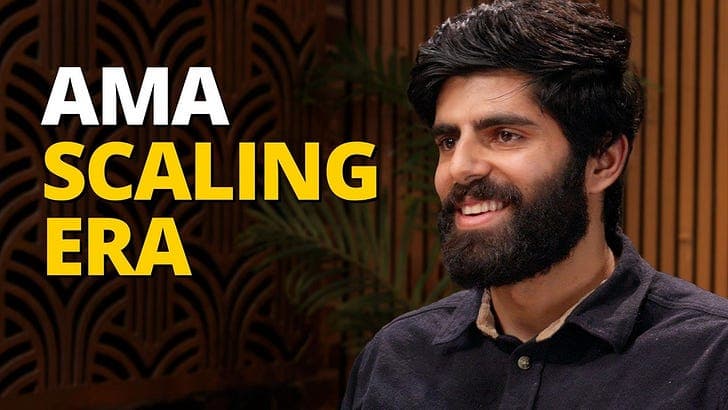
Episode Description In this Ask Me Anything (AMA) episode, host Dwarkesh is joined by friends Trenton Bricken and Sholto Douglas, researchers at Anthropic. The discussion covers Dwarkesh's new book, career advice for AGI, guest selection criteria for the podcast, research methods, and various lighthearted topics.
Key Highlights
Book Launch Announcement (0:00:00)
- Dwarkesh announces the release of his new book, “The Scaling Era: An Oral History of AI, 2019-2025”.
- The book features insights from interviews with AI lab CEOs, researchers, and scholars across multiple disciplines.
Why Should People Care About the Book? (0:04:57)
- The book distills significant discussions on the nature of intelligence and the implications of AI on society.
- It presents multi-disciplinary insights, making complex concepts accessible and relevant to a broad audience.
Discussion on AI Models and Knowledge Connections (0:10:52)
- Debate on whether AI models can make cross-domain connections like humans do.
- Trenton and Sholto discuss the limitations of current AI models in making novel connections despite having vast knowledge.
Career Advice for AGI (0:15:20)
- Discussion on what skills and fields of study might be beneficial as AI evolves.
- Emphasis on leveraging AI tools to enhance individual capabilities and management in various sectors.
Selecting Guests for the Podcast (0:25:12)
- Dwarkesh explains his criteria for choosing guests, prioritizing those whose work is interesting and will contribute to his own research.
- He notes that less well-known guests can sometimes provide more valuable insights than high-profile individuals.
Personal Insights and Challenges (0:35:16)
- Discussion on the realities of managing a podcast and the ongoing learning process.
- Insights into balancing various aspects of life while pursuing long-term goals with the podcast.
Growing the Podcast (0:40:50)
- Strategies for expanding the podcast’s reach and audience.
- Importance of engaging with new media formats, such as YouTube shorts.
Key Takeaways
- Interdisciplinary Approach: AI is fundamentally linked to various fields, illustrating the importance of a multi-disciplinary perspective in understanding its implications.
- AI Limitations: Current AI models face challenges in making connections akin to human intelligence, indicating a need for further development in AI capabilities.
- Career Path Suggestions: Individuals should focus on enhancing their leverage through deep knowledge and adaptability in the face of rapid technological changes.
- Guest Selection: Choosing guests based on personal interest and the potential for interesting conversations rather than fame can lead to rewarding experiences.
- Podcast Growth: Continuous experimentation with content formats and audience engagement strategies is vital for long-term success.
Concluding Remarks The episode emphasizes the evolving landscape of AI and its implications on various sectors, encouraging listeners to remain adaptable and engaged. Dwarkesh’s insights into career advice and guest selection highlight his commitment to fostering meaningful discussions and learning through the podcast medium.
---
For those interested in deepening their understanding of AI and its implications, Dwarkesh's book is a recommended read, available for purchase through the provided links.
Written by AI. May contain mistakes. Listen to the episode to check what was said.
Transcript
Automatic transcript. May contain errors.0:00Today, this is going to be an Ask Me Anything episode. I'm joined with my friends Trenton Bricken and Shulta Douglas. You guys do some AI stuff, all right? A double. They're researchers at Anthropic. Other news, I have a book launching today. It's called a Scaling Era. I hope one of the questions ends up being, why you should buy this book. But we can come two words with one stone. But, okay, let's just get at it. What's the first question that we got to answer? Thanks, man. So I want to ask the flyball question that I heard before of why should ordinary people care about this book? Like why should my mom buy and read the book?
0:38Yeah. First, let me tell you about the book, what it is. So you know, these last few years, I've been interviewing AI lab CEOs, researchers, people like you guys obviously, but also scholars from all kinds of different fields, economists, philosophers, and they've been addressing, I think what are basically the gnarliest, most interesting, most important questions, we've ever had to ask ourselves, like, what is the fundamental nature of intelligence? What will happen when we have billions of extra workers? How do we model out the economics of that? How do we think about an intelligence that is greater than the rest of humanity combined?
1:19Is that even a coherent concept? And so what I'm super delighted with is that with Stripe Press, we made this book where we compiled and curated the best most insightful snippets across all these interviews. And you can read Dario addressing wider scaling work. And then on the next page is Demis explaining deep minds plans for whether they're going to go the RL route and how much the Office Euro stuff will play into the next generation of LLums. And on the next pages, of course, you guys going through the technical details of how these models work. And then there's so many different fields that are implicated.
1:59I mean, I feel like AI is one of the most multi -disciplinary fields that one can imagine because there's no field, no domain of human knowledge that is not relevant to understanding what a future society of different kinds of beings will look like. There's, you know, you can have that carol shulman talk about how the scaling hypothesis shows up and primate brain scaling from chimpanzees to humans. On the next page might be an economist trying to argue with Tyler Cowan explaining why he doesn't expect explosive economic growth and why the bottlenecks will eat all that up. Anyways, so that's why you're motioned by this bug.
2:32It's just like it is the distillation of all these different fields of human knowledge applied to the most important questions that humanity facing right now. I do like how the book is sliced up by different topics and across interviews. Yeah, yeah. So it does seem like a nice way to listen to all of the interviews in one digestible way. There's two interviews I've done that haven't been released publicly before that are in the book. So one was that Jared Kaplan, who's one of your co -founders, and this is another example where he's like a physicist and he's explaining scaling from this like very mathematical perspective about data manifolds.
3:12And then on the next page, you have a totally different perspective. It's like Goran talking about, you know, why can't we just have like distilled into it? Like why did general intelligence actually evolve in the first place? What is the actual evolutionary purpose of it? And it's like page by page, right? You can just get addresses. Even for me, I mean, like the person who's been on the other end of these conversations was actually really cool to like read it and just be like, oh, I actually like, I now I realize how these insights connect to each other. Yeah, the only other thing that stood out to me as well is the introduction section.
3:39I don't think this is not to you. Like, yeah, that was really the only thing that was not worthy. I just mean in turn, stood out in accessibility is the introduction section and the diagrams for like all the different inputs that enable you to train a machine learning model. Strike press books are also just beautiful and have these nice like side captions for explaining what parameters are, what a model is, these sorts of things. Actually, when we did our episode together, a bunch of people, I don't know if you saw this, independently made these blog posts and on key cards and shit where they're like explaining the cause because we just kind of passed over some things.
4:19And hopefully we've given a similar treatment to every single interview I've done where you can read a very technical interview with a lap C or something or an engineer or a researcher. And then the side is like here, here's like more context, there's more definitions, here's more commentary. And yeah, I feel like it elevated the conversations. So in other words, my parents will finally understand what I do for jobs. I wouldn't do it. They're gonna write well. In my parents' world. You're gonna write as well. All my need to know is that my name's an unbooking. You're a co -owner. They're like cool.
4:55Should we get into the A -Made questions? Let's do this. All right. So Brian Krav asks, the issue you raised with Dario, and occasionally tweet about relating to models not making connections across some sort of combinatorial attention challenge. What are your thoughts on that now? Do you solve it with scale, thinking models or something else? By the way, so the issue is, one of the questions I asked Dario is, look, these models have all of human knowledge memorized. And you would think if a human had this much stuff memorized, and they were moderately intelligent, they couldn't be making all these connections between different fields.
5:27And there are examples of humans doing this, by the way. There's Donald Swan or something like this. This guy noticed that the way what happens to a brain after magnesium deficiency is exactly the kinds of, I don't know, the structure you see during a migraine. So he's like, okay, you take magnesium supplements and we're gonna cure a bunch of migraines. And it worked. And there's many other examples of things like this where you just like notice two different connections between pieces of knowledge. Why if these LLMs are intelligent or they're not able to use this unique advantage they have to make these kinds of discoveries?
5:59I feel a little shy, like me giving answers, on the ice shit. What do you guys hear? But so, Ashley Scott Alexander addressed this question in the museum a the writes and he's like, look humans also don't have this kind of logical omniscience, right? It's, he was the example of in language, if you really thought about like why are two words connected? It's like, oh, I understand like why, why rhyme has the same etymology as the other word? If you really thought about, but you just like don't think about it, right? There's like this common story of explosion. I don't know if that addresses the fact that human, we know humans can do this, right?
6:30But the humans have, in fact, done this. And I don't know of a single example of LLM's ever having done it. Actually, yeah, what is your answer to this? I think my answer at the moment is that the pre -training objective doesn't necessarily like, in Buzer, there's like nice flexible general knowledge about the world, but doesn't necessarily imbue the skill of making novel connections or like research. Yeah. The kinds of things that people are trained to do through PhD programs and through like sort of the process of exploring and interacting with the world. And so I think like at a minimum, you need significant RL in at least similar things to be able to approach, like making novel discoveries.
7:10And so I would like to see some early evidence of this as we start to build models that are sort of interacting with one, trying to make scientific discoveries and like, sort of like modeling the behaviors that we expect of people in these positions. Because I don't I actually think we've done that in a meaningful, scaled way as a field, so to speak. Yeah, riffing off that with respect to RL, I wonder if models currently just aren't good at knowing what memories they should be storing. Like most of their training is just predicting the next word on the internet and remembering very specific facts from that.
7:42But if you were to teach me something new right now, I'm very aware of my own memory limitations. And so I would try to construct some summary that would stick. And models currently don't have the opportunity to do that. Memory scaffolding in generals just very primitive right now. Right. Well, it plays part 2 right now. Exactly. Yeah, we're like someone worked on it. It was awesome. It got far, but another excited and thropic employee then like iterated on the memory scaffold and was able to like very quickly improve on it. Interesting. So yeah, that's the one. I do also just wonder if models are idiots of aunts.
8:19The best analogy might be to Kim Peak. So Kim Peak was born without a corpus callosum, if I recall correctly. Each hemisphere of his brain operated quite independently. He could read a page of a book, so he'd open a book, there'd be two pages visible. Each eye would read one of the pages. And he had like a perfect encyclopedic memory of like everything he'd ever read. But at the same time, he had other debilitations functioning socially, these sorts of things. And it's just kind of amazing how good LLMs are at very niche topics, but can totally fail at other ones still. I really want to double click on this thing of why there's this trade -off between memorization.
9:01Like why does cutting it off? Like apparently it's sort of connected to this debilitation. But like Wiki Text is not that, it's like five megabytes of information. The human brain can store much more. So what is a human brain just not want to still memorize these kinds of things? and is actively pruning. And yeah, I don't know. But we don't have to do it right now. We'll do it for whatever time. The one thing I'll say on that is like, there was another case to use someone with a perfect memory. So they never forgot anything. But their memory was too debilitating. It'd be like your context window for the transformer is like trillions of tokens.
9:36And then you spend all your time attending to pass things and like are too trapped in the details to extract any meaningful generalizable insights from it. Terrence Deacon, whose book he recommended, had this interesting insight about how we learn best when we're children. But we forget literally everything that happened to us when we were children, right? We have total amnesia. And adults have this in between where we don't remember exact details, but we can still learn in a pretty decent way. And then, Elements are in the opposite end of this gradient where they'll get the exact phrasing of wiki text down, but they won't be able to generalize in these very obvious ways.
10:10Yeah, a little bit like Gwen's theory, optimize a theory, no? Yeah, yeah, yeah, yeah. I think I probably got it from that. Yeah. Yeah, yeah, yeah. Yeah, yeah, yeah. Gwen has definitely had a big influence on all this from this. That's right. I mean, I feel like what's underappreciated on the podcast is like, we have this like group chat and we also just like meet up a lot in person. And just all the offer from the podcast just comes from you and a couple other people just feeding me like ideas and nudges and whatever. And then I can just use that as an intuition pump during the conversation. Yeah, you're not the only one.
10:42What do you mean? Oh, like I'd benefit immensely from just hearing what everyone else has to say. Yeah, I've done. Yeah, it's all regurgitation and like, I got a question. Yes. Maybe rabid, maybe rabid monkey asks, imagine you have a 17 year old brother slash nephew just starting college. What would you recommend he study given your AGI timelines? I don't know, become a podcaster. I feel like that job's still going to be around. It's funny because I started computer science. And in retrospect, I mean at the time, you could have been kind of a software engineer or something instead you became a podcaster.
11:19It's kind of a new responsible career move. But in retrospect, it's like, it's great. I kind of worked out. Just as these guys are getting automated. I get asked this question all the time. Yes, okay. And one answer that I like to give is that you should think about the next couple of years as increasing your individual leverage by a huge factor every year. So already, software engineers will come up and say, I'm two times faster or new languages and five times faster than I was last year. I expect that trend line to continue. Basically, as you go from this model of what I'm working with some model that's assisting me on my computer.
11:53And it's basically a pairing session to I'm managing a small team through to I'm managing a division or a company basically that is targeting a task. And so I think that deep technical knowledge in fields will still matter in four years. Like it absolutely will because you will be in the position of managing dozens or like you sort of your individual management bandwidth will be maxed out by trying to manage like teams of AIs. Yeah. And maybe AIs, maybe we end up like a truly singularity world where you have AIs, managing AIs and this kind of stuff. but I think in a very wide part of the possibility spectrum, you are managing enormous, vastly more resources than an individual could command today.
12:37And you should be able to solve so many more things with that. That's right. And I think I would emphasize that this is not just Coke. It genuinely is the case of these models, lack the kind of long -term coherence, which is absolutely necessary for making a successful company. You're just getting a fucking office is kind of complicated. right? Yeah. It's like you had to deal with all these. So you can just imagine that for a sector after such like the economy is really big and really complex. Exactly. And so especially if it's, I mean, I don't know the details, but I assume if it's like a data sparse thing where you kind of just like got to know what's actually what is the context of what's happening in the sector or something, I feel like you're being in a position.
13:15Maybe the other thought I have is that it's it's really hard to like plan your career in general. And I don't know what advice I'd imply because I remember being super frustrated. I mean, I was in college and the reason I was doing the podcast was to figure out what it is I wanted to do. It wasn't the podcast itself. It would go on like 80 ,000 hours or whatever career advice. And it's just like in retrospect, it was all kind of mostly useless and just like, just try doing things. I mean, especially with the AI, we just like don't know what it's going to, like it's so hard to forecast what kind of transformations there will be.
13:47So try things, do things. I mean, it's such a banal vague advice, but I am quite skeptical of career advice in general. Well, maybe the like piece of career advice on an obstacle is put yourself close to the frontier because you have a much better vantage point. That's right, right? Like you can study deep technical things whether it's computer science or biology or like and get to the point where you can see what the issues are. Because it's actually like remarkably obvious at the frontier what the prototype is. It's very difficult to see. But actually do you think there is an opportunity? Because one of the people, One of the things people bring up is maybe the people who are advancing their career and have all this tacit knowledge will be in a position to be accelerated by AI, but you guys four years ago or two years ago when you were getting discovered or something, that kind of thing where you have a GitHub open issue and you try to solve it, is that just like that's done and so the onboarding is much harder.
14:38I would still walk what we look for in hiring. So, you know, yeah. I'm in favor of the learn fundamentals, gain useful mental models. But it feels like everything should be done in an AI native way, or like top down instead of your bottom up learning. So first of all learn things more efficiently by using the AI models and then just know where their capabilities are and aren't. And I would be worried and skeptical about any subject which prioritizes wrote memorization of lots of facts or information, instead of ways of thinking. But if you're always using the AI tools to help you then you'll naturally just have a good sense for the things that it is and isn't good at.
15:17That's right. Yeah. Next one. What is your strategy, method, or criteria for choosing guests? The most important thing is do I want to spend one to two weeks reading every single thing you have ever written, every single interview you have ever recorded, talking to a bunch of other people about your research? Because I get asked by people who are like quite influential often to be like, would you on your podcast. And more often than not, I say no, for two reasons. One is just like, okay, you're influential or something. It's not fundamentally that interesting as an interview prospect. Not from like, I don't think about the hour that I'll spend with you.
15:56I think about like the two weeks, because this is my life, right? The research is my life. And I wanna have fun while doing it. So just like, is this gonna be an interesting two weeks to spend? Is it gonna help me with my future research or something? And the other is, big guests don't really matter that much in the, in like, if you just look at one of the most popular episodes or what in the long run helps the podcast grow. By far, my most popular guest is Sarah Payne. And she before I interviewed her was just like a scholar who was not publicly well known at all. And I just found her books quite interesting.
16:29Same goes with, so my most popular guest are Sarah Payne and then Sarah Payne and Sarah Payne and Sarah Payne and Sarah Payne and Sarah Payne. Um, uh, and by the way, from a viewer minute adjusted basis, I host a CRP and podcast, right? Occasionally. And that is David Reich, who is a geneticist of ancient DNA. I mean, he's like somewhat well known, but he had a best -selling book, but he's not like, he's not Saudi and Adela, or Mark Zuckerberg, who are the next people on the list. And then again, I think at like pretty soon, it's like you guys or Leopold or something, and then you get to the lab CEO's or something.
17:02So big names just don't matter that much and like for what I'm actually trying to do and so just like well And it's also really hard to predict who's gonna be the David Reiker Sarah Payne so just like have fun who talked to whoever you want to spend time researching and it's a pretty good Proxy for what will actually be popular. What was the specific moment if there was one that you realized you the producing your podcast was a viable long -term strategy I think when I was shopping around add spots for Mark Zuckerberg episode. And which were, you know, like, now that I look back on it, it's like, not in retrospect that mind -blowing, but at the time, I'm like, oh, I could actually hire an editor.
17:42A full time, or maybe more editors than one. And from there, like, turning into a real business, that's when I, because before, I just like didn't, people would tell me, like, oh, these other podcasts are making whatever, whatever amount of money, and I'd be like, how? You know? I have this running joke with one of my friends that, I don't know if you've seen me do this, but every time I encounter a young person who's like, what should I do with my life? I'm like, you gotta sort of blog. You gotta be the Matt Levina VI. You can do this. That's like an entirely empty niche. You could, like, you can, and I was running joke with them where they're like, you're like a country bumpkin who's like won the lottery.
18:17And you're like, you know what, everything was like, guys, this crash pack. Get this crash pack. I'm not. I do want to press on that a bit more because your immediate answer to the 17 year old was to start a podcast. Yeah. So what niches are there, what sort of things would you be excited to see like new blog's podcasts? I mean, I wonder if you guys think this too, but I think this like Matt Levino of AI. Absolutely. It's like a totally open niches of our fries I can tell. And I apologize to those who are trying to fill it in. I was like, oh, I know where have at least one book that's trying to do this.
18:51But the other thing I'd really emphasize is it is really hard to do this based on other people's advice or to say like here's a niche I'm trying not to feel like a specific niche. And if you think about any sort of six -off -swole new media thing out there, there's it has two things which are true. It's like often not just geared towards one particular topic or interest and two it's the most important thing is that it is propelled by a single person's vision. It's not like a collective or whatever. And so I would just really emphasize, sorry, the thing I really want to emphasize is it can be done to, you can make a lot of money at it, which is not the most important thing, probably for the kind of person who would succeed at it, but still is just worth knowing that it's a viable career.
19:39Three, that, yeah, that basically you're gonna feel like shit in the beginning where it's like, all your early stuff is gonna kind of suck. Maybe some of it will get appreciated, but it seems like that advice to say still stick through it in case you actually are terrible, because some people are terrible. But in case you are not, just do it, right? What is the three months of logging on the side of really going to cost you? And people just don't actually seriously do the thing for long enough to actually get evidence, or get the sort of RL feedback on like, oh, this is how you do it. This is how you frame an argument.
20:13This is how you make a compelling thing that people will want to read or watch. blogging is definitely underrated. I think most of us have probably - So you both had blogs which are relevant. I don't know if they're actually relevant to getting with that. They were like somewhat relevant. But I think more so that we have all read, almost all the blogs that do it in depth, like trees is on AI. That's right. Like if you write something that is high quality, it is almost invariably going to you, like share it around Twitter and read. Oh, this is so underappreciated. Yeah. So two pieces of evidence.
20:43I was talking to a very famous blogger you would know, and I was asking him how often do you discover a new, like, undiscovered blogger? And he was like, man, it happens very, very early, like maybe once a year. And they ask him, how long after you discover him or her is the rest of the world discover them? And he's like, maybe a week. Which, and what it suggests is like, it's actually really efficient. Oh, so I have some more takes. Oh, yeah. This is the M .A. So I believe that slow compounding growth in media is kind of fake. Like the appolition or an S. It's not like it was really given an audience for a long time for years or something.
21:25It was really good. I just agree or agree with it. And if it's good enough, it literally everybody who matters. And I mean that literally will read it. I mean, I think it's like hard to say zero shots, something like that. but the fundamental thing to emphasize is the compounding growth, at least for me, has been, I feel like I've gotten better. It's not so much that somehow the three years of having 1000 followers or somehow like a compounding, you know, I don't think it was that. I think it was just like, it took a while to get better. Yeah, suddenly when Leopold posted that, like the next day, it's almost like you can feature like being so almost sta - well, not it wasn't, but it was stapled to walls to speak on Twitter.
22:02That's right. Everyone was talking about it. You read any event And for the following week, every single person in the entire city was talking about that essay. Yeah. Like Renaissance Florence. That's right. That's right. The world is small. Yeah. What would you say was your first big success? I'm trying to think back to when I first found your podcast. I distinctly remember you had your blog posts on the Anna Smarabelos and Jeff Bezos retweeted it, I think. Yeah. I'm trying to remember if it was even before that or not, but yeah, what I'm curious you're like, that was it. Okay. Yeah. I mean, it wasn't something where I'm like, it was some big inside that deserve to blow up like that.
22:38It was just taking some shots on goal. They were all like whatever inside porony and then one of them, I guess caught the right guys' attention. And yeah, but I think that was it. That's something else, which I would appreciate. Which is a piece of writing doesn't need to have a fundamental immune side. So much as give people a way to express cleanly a set of ideas that they already are like, aware of in a sort of broad way. And if it's really crisp and not like articulate, then even still that's very valuable. And sorry, the one thing I should emphasize, which I think is maybe the most important thing to the feedback loop, it's not the compounding growth of the audience, I don't even think it's the compounding, like it's me getting more shots on goal in terms of doing the podcast.
23:18I actually don't think you improved that much by just doing the same thing again and again. If there's like no rewards like knowledge, you'll keep doing whatever you were doing before. I genuinely think the most important thing has been, The podcast is good enough that it merits me getting to meet people like you guys. Then I become friends with people like you. You guys teach me stuff. I produce more good podcasts. So hopefully slightly better. That helps me meet people in other fields. They teach me more things. Like with the China thing recently, I wrote this like blog post about a couple stories about things that happen to China.
23:49And that alone has like netted me an amazing China network in the matter of like one blog post, right? And so hopefully if I do it to episode on China, it will be better as a result. And hopefully that happens to a garage field, that we're field. And so just getting to meet people like you is actually the main sort of flywheel. Interesting. So move to San Francisco. Yes. If you're trying to do AI, yeah. Next questions. Shall we do? Can we do a very important question? From Jack Paget. How much can you bench? Sure. You can't lie because we both don't need to answer. At one point, I did bench 2 .25 for four.
Read the full transcript
24:34Now I think I'm probably like 20 pounds lighter than that or something. The reason you guys are asking me this is because I've gotten left in with both of you. And I remember Trent and I were doing like pull ups and bench and then we like bench and need like throw on another plate or something. And then like instead of pull off, see like be cranking out these muscle ups. So I'll take the good picture. Yeah, so they both bench more than me, but I try my best. Ask again in six months. Yeah, yeah, exactly. What's your favorite history book? There's a wall in behind you. Mm -hmm. Oh, I mean, obviously the Kiro LBJ biographies.
25:20Yeah, sorry. The main thing I took away from those books is LVJ had this quote that he would tell his debates in his early 20s he thought debate to these like poor Mexican students in Texas. And he used to tell them, if you do everything, you'll win. I think this is an underrated quote. So that's the main thing I took away. And you see it through his entire career where there's a reasonable amount of effort which you know goes by like 2080. You do the 28 to get the 80 % of the effect. And then if you go beyond that to get like, oh no, I'm not just gonna do 20%, I'm gonna just like do the whole thing.
25:54And there's a level even beyond that, which is like, like this is like just like unreasonable use of time. This is have gonna have no ultimate impact and still try doing that. Yeah. You've shared on Twitter using Enki, even like a cloud integration. Do you do book clubs? Do you use good reads? And what are you reading right now? I don't use, I don't have book clubs. I do, but this way of repetition has just genuinely been a huge uplift in my ability to learn. Mostly because it's not even the long term impact over years. Though I think that is part of it. I do regret all the episodes I did without using specific cars because all the insights have just sort of faded away.
26:38The main thing is if you're studying a complicated subject, Or at least for me, it's been super helpful to consolidate. So it's like, if you don't do it, you feel like a general where you're like, I'm gonna wage a campaign against this country and then you climb one hill. And then the next thing you gotta retreat and then you climb the same hill, there might be a sort of more kosher now. I'm sorry, I knew that the question was what I'm reading right now. Oh, my friend, Elvaro Daemonard, author of Fantasticernachronism. Can I just pull it off actually? It's right here. Yeah. I hope he's okay with me sharing this.
27:16But he wrote, he made like 100 copies of this translation he did of his favorite Greek poet. And they're like, yeah, Kavaffee. Hopefully I didn't mispronounce it. That one has an inscription for Gwern because that's his coffee. But it's super delightful and that's what I've been reading recently. Any insights from it so far? Poets will hate this framing. I feel like a poetry is like TikTok.
27:49Where it's like you get this like quick vibe of a certain thing, and then you like swipe. And then you get the next vibe, swipe of our... No, that's just... How do you go about learning your things or preparing for an episode? Like what does that, you mentioned the one to two week period where you're like deep diving in a person. What does that actually look like? It's very much the obvious thing. Like you read their books, they have papers, you read the papers. If they have colleagues, you try to talk to them to better understand the field. I will also mention that all I have to do is ask some questions.
28:25And I do think it's a much harder to learn a field to be a practitioner than just learn enough to ask interesting questions. but yeah, for that, like it's very much the obvious thing you'd expect. Based, Carl Sagan asked, what are your long -term goals and ambitions? Yeah, the AGI kind of just makes the process of a long -term like harder to articulate, right? You know the Peter Tiel quote about, what is your 10 -year plan and why can't you do it in six months? Because especially salient, give it timelines. For the foreseeable future, to grow the podcast and do more episodes, maybe more writing, but yeah.
29:08So we'll see what happens after like 10 years or something. The world might be different enough. Yeah, so basically podcasts for now. Something you've spoken to me about, and particularly when you're trying to hire people for the podcast was what you wanted to achieve with the podcast. Like in what way do you want the podcast to shape the world? So to speak, do you have any thoughts on that? Or because I remember you talking like, I really want people to actually understand AI. I'm like, how this might change their lives or like, you know, how, like what we could be doing now to shape the world such that ends up better.
29:39Yeah. I don't know. So I have a, I've contradictory views on this. On the one end, I do, I do know that important decisions are being made right now in AI. And I do think, I mean, roughing on what we're saying by socialish or a earnest. If you do something really good, It has a very high probability of one -shotting the relevant person. You know, people are just generally reasonable, like you make a good argument at ill -go places. On the other hand, I just think it's very hard to know what should be done. You've got to have the very correct world model, and then you've got to know how in that world model the action you're taking is going to have the effect you anticipate.
30:22And even then last week, I've changed my mind on some pretty fundamental things about what I think about the possibility of an intelligence explosion or transformative AI as a result of talking to the epoch folks. Yeah. Basically the TLDR is I want the podcast to just be an epistemic tool for now until I think it's just very easy to be wrong. And so just having a background level of understanding of the relevant arguments is the highest priority. Makes sense. Yeah. What's your sense? What should I be doing? I mean, I think the podcast is awesome. And a lot more people should listen to it. And there are a lot more guests I'd be excited for you to interview.
30:56Nice. So it's pretty good. It seems like a pretty good answer for now. Yeah, I think making sure that like there is a great debate of ideas, not just AI, but on like other fields and everything is incredibly high leverage and value. Yeah. How do you groom your beard? It's majestic. I don't know what to say, just genetics. I do trim it, but no beard oil. I sometimes I do be wrong. I'll often once every couple of days. That's not sometimes. That's pretty often. Do you have different shampoo for your head in your beard? No. What kind of shampoo do you use? Anti -dangerous. Do you condition it? Yeah.
31:40How often do you change it?
31:44We're giving people the answers that they want. Big deal oil. Yeah, you can sell some ad slots to different shampoo companies and we can edit it. Maybe we sell them ad slots. Sorry, you had this idea of merch. Do you want to explain this? Yes. Yeah. So people should react to this. Someone should make it happen. Doorkesht wants merch, but he doesn't want to admit that he wants it or he doesn't want to make it himself because that seems tacky. So I really want to plain white tea with just Warkesh's beard in the center of it. That's it. Nothing else. But you were saying it should be like how different texture than the rest of the show.
32:20Oh, so, so, and I'm just really griffing off it where maybe like a limited edition set can have some of your beard hair I can actually sewn into the shirt.
32:32That'd be pretty cool. I would, I would, I would pay. I would pay for that. Okay. So much. I've got like patches all over my head. It depends on how much hair if it's like one is like in there somewhere or if it's like the whole thing. Do I have to dry clean it? Can I wash it? That's like on the delicate setting.
32:52But really, I think you should get merged. If you want to grow the podcast, which apparently you do, then this is one way to do it. You're in here and you're in here. Oh, yeah. Oh, yeah. Yeah. Which historical figure would be best suited to run a frontier AI lab? This is definitely a question for you guys. Oh, no, I mean, I'm curious what your take is first. You've spoken to more of the heads of AI labs than I have. I was gonna say, LVJ. Sorry, is it a question who would be best at writing an AI lab? Or would be best for the world? Let's ask what outcome do you want? Yeah, what I'm talking about.
33:26Because I imagine it seems like what the best AI lab CEO, succeed at, is raising money, building up hype, setting a coherent vision. I don't know how much it matters for the CEO themselves to have good research taste or something, but it seems like their role is more as a sort of emissary to the rest of the world. And I feel like LBJ would be pretty good at this. Like just getting the right concessions, making projects move along, coordinating among different groups to maybe, oh, Robert Moses. Yeah. Again, not necessarily best for the world, but just in terms of making should happen. Yeah, I mean, I think best of the world is a pretty important for your condition.
34:08There's a load of awkward quote of great people, I very, very good people. So it's hard to think of a great person in history who are like, I feel like they'd really move the ball forward and I'll try to trust their moral judgment. We're lucky in many senses with like the set today. That's right. Like the set of people today are both like they try and care a lot about the moral side as well as yeah just sort of drive the labs forward. This is also why I'm skeptical of big grand schemes like nationalization or some public -private partnership or just generally shaking up the landscape too much because I do think we've we're in like one of the better I mean the sort of like the difficulty of whether it's alignment or whether it's some kind of deployment safety risks that is just like the nature of the universe is gonna make that some level of difficulty.
34:58But the human factors in a lot of the counterfactual universes, I feel like we don't end up with people, like we could have been a universe where they don't even play lip service. This is like a not an idea that anybody had that you could have ASI take over. I think the thing we live in a pretty good counterfactual universe. Yeah, we got a good set of gameplays on this. That's right. That's right. How are you preparing for fast timelines? If there's fast timelines and there will be the six month period in which the most important decisions in human history are being made. And I feel like having an AI podcast during that time might be useful.
35:33That's basically the plan. Have you made any shorter term decisions with regards to like spending or health or anything else? After I knew Rude Zuckerberg, my business bank balance was a negative 23 cents. When the ad hit money hit, I immediately invested it in an Nvidia. So that is the... Sorry, but you were asking for sort of a futuristic perspective. No, no, just in general. Like, have you changed the way you live at all because of your AGI timelines? I never looked into getting a Roth IRA. He brought us Fiji water before. Which is in plastic bottles. What have you guys changed your lifestyle as a result?
36:20Not really. No. I just like work all the time. Were you doing that anyways? Or were you not? I would probably be going very intensely at whatever thing I'd picked to devote myself. Yeah. I'm about you. I canceled my 401k contributions. Oh really? Yeah. Yeah. That felt like a more serious one. It's hard for me to imagine a world in which I'm like, have all this money that's just sitting in this account and waiting till I'm 60 and things look so different than. But you could be like a trillionaire with your marginal form. I guess, but you also can't invest it in like specific things. I don't know.
37:02I might change my mind in the future and can restart it and I've been contributing for a few years now. On a more serious note, one thing I have been thinking about is how could you use this money to an altruistic end? And basically if there's somebody who's up and coming in the field that I know, which is like making content, could I use money to support them? And I'm of two minds on this. One, there are people who did this for me, and it was kind of actually responsible for me continuing to do the podcast. When it just like did not make sense as a, there were like a couple hundred people listening or something, I just want to shout out, Unilvar and Asi, we're doing this.
37:39And also Leopold actually for the Foundation News for his day running. On the other hand, it's like, I feel like I would, it's the thing about what that blogger was saying, that the good ones you actually do notice, it's hard to find a hidden talent. Maybe I'm totally wrong about this, but I'd feel like if I put up a sort of grand application, I'd give you money if you're trying to make a blog. I'm actually not sure about how well that would work. There's different things you could do. I'll give you money to move to San Francisco for two months. and like, you know, sort of meet people and like sort of get more like context and taste and feedback on what you're doing and like, it's not so much about the money or time.
38:18It's like putting them in an environment where they can more rapidly grow. Like that's something that one could do. I mean, you also, I think you do that like quite proactively in terms of you like deliberately to reduce people that you think will be interesting to each other and this kind of stuff. So yeah. Yeah. No, I mean, that's very fair and I obviously I've benefited a ton for moving to San Francisco. go. And it's unlikely that I would be doing this podcast, at least on AI, to degree I am if I wasn't here. So maybe it's a mistake to judge people based on the quality of their content as it exists now and just throw money at them, not throw money, but give them enough money to move to SF to get caught up in this intellectual milieu and then maybe do something interesting as a result.
38:56Yeah. The thing that most readily comes to mind is the maths program for AI research. And this seems like it's just been incredibly successful at giving people the time, the funding, and the social status, justification, to do AI safety relevant research with mentors. Oh, and you have a similar program. We have the Anthropic Fellows program. What is your, I know you're probably selecting first sighted different thing, but I assume it's going to be power law dominated and have you noticed a pattern among the, even with some mass fellows or your fellows, who is just like, this was, this made the whole thing worth it.
39:33Yeah, I mean, there have been multiple people who enthralled back in other labs have hired out of this program Yeah, yeah, so I think the return on investment for it has been massive Mm -hmm And yeah, apparently the fellows I think they're 20 of them are like really good Oh, what is the trick to making a work well or finding that one person? I think it's gotten much better with time where the early fellows Some of them did good work and got good jobs And so then now later fellows like the quality bar has just risen and risen and risen and there are even better mentors now than before. So it's this really cool flight wheel effect.
40:08But originally it was just people who like didn't have the funding or time to like make a name for themselves or do ambitious work. So it was kind of like giving them that niche to do it. Right, right. Right. Seems really key. Yeah. You can do other things that doesn't have to be money. You know, like you could put out ideas for things you'd be really interested in reading. That's right. I like providing. Right. Yeah. There's something coming there. Okay, so if this episode hopefully will launch Tuesday at the same time as the book by the way which you can get at Striped -up press slash scaling, but on Wednesday, which is the day after hopefully there's something useful for you here.
40:45Okay, fighting. Yeah, any other questions we want to ask The thing I have a takes on which I rarely get asked about is distribution Dispression of AI. No, sorry like mr. Beast tell the distribution. Oh Oh yeah, yeah. Where are people? I think rightly focus on the content. And if that's not up to snuff, I think you won't succeed. But to the extent that somebody is trying to do similar things, the thing that consistently underrate is putting the time into getting distribution, right? I just like random takes about, for example, the most successful thing for my podcast in terms of growth has been YouTube shorts.
41:30And the thing you would never have predicted beforehand. And you know, they're like responsible for like basically at least half the growth of the podcast or something. That by that. Yeah. Well, when you're predicted. Like I mean, like, I mean, I guess there's the contrast of like the long form deep content and like YouTube shorts and stuff. But I definitely think they're good hooks. That's right. Yeah. Yeah. And I like takes on how to write tweets and stuff. the main intuition being like right like you're writing to a group chat. Yeah. To a group chat of your friends rather than this like formal or whatever.
42:02I don't know. I mean, just like these sort of like, yeah, no, I mean, what else comes to mind here? Well, maybe it's interesting. The difference between like TikTok and YouTube sure. Oh, yeah, we've never cracked TikTok. Yeah. Why not? Like, you've tried. Yeah. I mean, I've done everything. I know. Have you read these poems?
42:23Maybe you're like in a bubble bath. I feel like some deer shampoo on. The reed and poms? I've been incredible with you. I bet you that would get viral. You have to do that now. No, but I assume. Reading a poem on Cross Your Lakes. Last episode was the Interpreter Nability Challenge. No, it's George Hatch and the Bubble Bell. I just saw the books somehow, yeah. We literally do it like Margot Roni. Exactly. Explaining the CD on his Instagram. Yeah, yeah, it's a lot of scale.
42:58And that's how you crack distribution. That's how you do it.
43:05But yeah, no, like when we did our episode, it launched and you were sharing interesting tidbits about how it was doing and the thumbnail you wanted to use and the title. And I think I even asked you like to share more details because it seemed interesting and cool subtle things. But it seemed like you also kind of just hated it, like playing this game of like really having to optimize all these knobs. So like when I when I realized I mean talent is everything so having I'm I'm really lucky to have three to four editors. So I'm just like incredibly proud proud to work with. I don't know how to hire more of them.
43:42Like there's just so good and self directed. So honestly, I don't have the tips to how to crack that. I hired those guys. So one of them was a farmer in Argentina. One of them was a freshman master in the Sri Lanka. One of them was a farmer editor for one of Mr. Beast's channels. The other is a director in Czechoslovakia who makes these AI animations that you've seen in the notes on China and he's working on more essays like that. So I don't know how to replicate that catch again. God, that's a pretty widely cosnet. I'm going to be honest to have. But they're all like God. And this was just through your challenges and just tweeting about.
44:18That's right, yeah. I had a competition to make clips in my podcast. I rounded up a couple of them this way. Yeah, it's hard to replicate because I've tried. Yeah. Why do you think this works so well with the video editors? Because you try to similar approach with your chief of staff. Yeah. The difference is, with the video editor, I think there is this arbitrage opportunity where there are people, it is fundamentally a sort of, are you willing to work hard and obsess about getting better over time, which all of them go above and beyond on, but you can just find people in other countries who are like, and it's not even about the wages.
44:58Like I've 10x their salaries or something like that. It's just about getting somebody who was really de -til -oriented. And there is this global arbitrage there, whereas with the general manager, by the way, so the person I ended up hiring and who I'm super excited to work with is your childhood best friend, Max Herons. And he would have plenty of other opportunities. There's not this weird arbitrage where you find some farmer in Argentina. But it is striking that you were looking for a while. I just kind of mentioned offhand that Max was looking for something new. This is going to be a total 12 -year -old learns about the world kind of question.
45:36But I genuinely don't know how big companies hire. Because I was trying to find this person for a year. And I'm really glad about the person that ended up hiring, but it was just like, if I needed to hire 100 people for a company, let alone a thousand people. I just like do not know how to find people like this at scale. Yeah, I mean, I think this is like the number one issue that startups CEOs have hiring. Like it's just relentlessly the number one. And the thing I was stunned with is how it didn't seem like my platform helped that much. I got like close to a thousand applications across the different rounds of publicizing it that I did.
46:09And a lot of, I think, really cool people applied. But the person that I ended up hiring was somebody who was just a reference, like a mutual friend kind of thing. And a couple of other top contenders were also this way. So it's weird. Like the best people in the world don't want to apply, at least to things like this. And you just got to seek them out. Even if you think you have a public platform or something. Yeah. Yeah, I mean, the job might just be so out of distribution from anything else that people would do. That's right. So, and Chitia Ray asks, how do you make it on Substack as a newbie writer?
46:47I think if you're starting from scratch, there's two useful hacks. One is podcasting because you don't need to have some super original new take. You can just interview people who do and you can leverage their platform. And two is writing book reviews. Again, because you have something to react to rather than having to come up with a unique world view of your own. There's probably other things and it's really hard to give advice in advance, just try things, but those I think are just good, cool starts. The book reviews is a good suggestion. I actually use like Guarn's book reviews as a way to recommend books to people.
47:21This is a totally undersupplied thing because if anybody has book reviews, Jason Furman is this economist who has like a thousand good reads reviews and I like I probably have visited his good reads on a hundred independent visits. I see him with the Grown Book Reviews or something, right? So book reviews are a sort of very undersupplied thing if you were looking to get started making some kind of content. I like that. Yeah. Cool. Thank you guys so much for doing this. Yeah, this was fun. We'll turn the tables on you again pretty soon. Yeah. How does it feel being a hot seat? It's nice.
47:58It's nice. Nobody ever asked me a question. Nobody ever asked how is to walk out?
48:08Yeah, super excited for the book launch. Thank you. The website's awesome, by the way. Oh, you have to say yes. Stryph .press slash scaling. Cool. Cool. Thanks guys. Thanks. Okay, I hope you enjoyed that episode. So as we talked about, my new book is out. It's released with Stryph Press. It's called the scaling error. And it compiles the main insights across these last few years of doing these AI interviews. And I'm super pleased with how it turned out. It really elevates the conversations and adds a necessary context and just seeing them all together even reminded me of many of the most interesting segments and insights that I had myself forgotten.
48:47So I hope you check it out. Go to the link in the description below to buy it. Separately, I have a Clips channel now on YouTube. People keep complaining about the fact that I put Clips and the main video on the same channel. So request granted, there is a new Clips channel, but please do subscribe to it so we can get a kickstarted. And while you're at it, also make sure to subscribe to the main channel. Other than that, just honestly, the most helpful thing you can do is share the podcast. If you enjoyed it, just send it on Twitter, put it in your group chats. Share it with whoever else who you think might enjoy it.
49:20That's the most helpful thing. If you want to learn more about advertising on future episodes, go to dwarkesh .com slash advertise. Okay, see you on the next one.
From the publisher
I recorded an AMA! I had a blast chatting with my friends Trenton Bricken and Sholto Douglas. We discussed my new book, career advice given AGI, how I pick guests, how I research for the show, and some other nonsense.
My book, “The Scaling Era: An Oral History of AI, 2019-2025” is available in digital format now. Preorders for the print version are also open!
Watch on YouTube; listen on Apple Podcasts or Spotify.
Timestamps
(0:00:00) - Book launch announcement
(0:04:57) - AI models not making connections across fields
(0:10:52) - Career advice given AGI
(0:15:20) - Guest selection criteria
(0:17:19) - Choosing to pursue the podcast long-term
(0:25:12) - Reading habits
(0:31:10) - Beard deepdive
(0:33:02) - Who is best suited for running an AI lab?
(0:35:16) - Preparing for fast AGI timelines
(0:40:50) - Growing the podcast
Get full access to Dwarkesh Podcast at www.dwarkesh.com/subscribe