In short
Dwarkesh Podcast Episode Notes
Episode Title
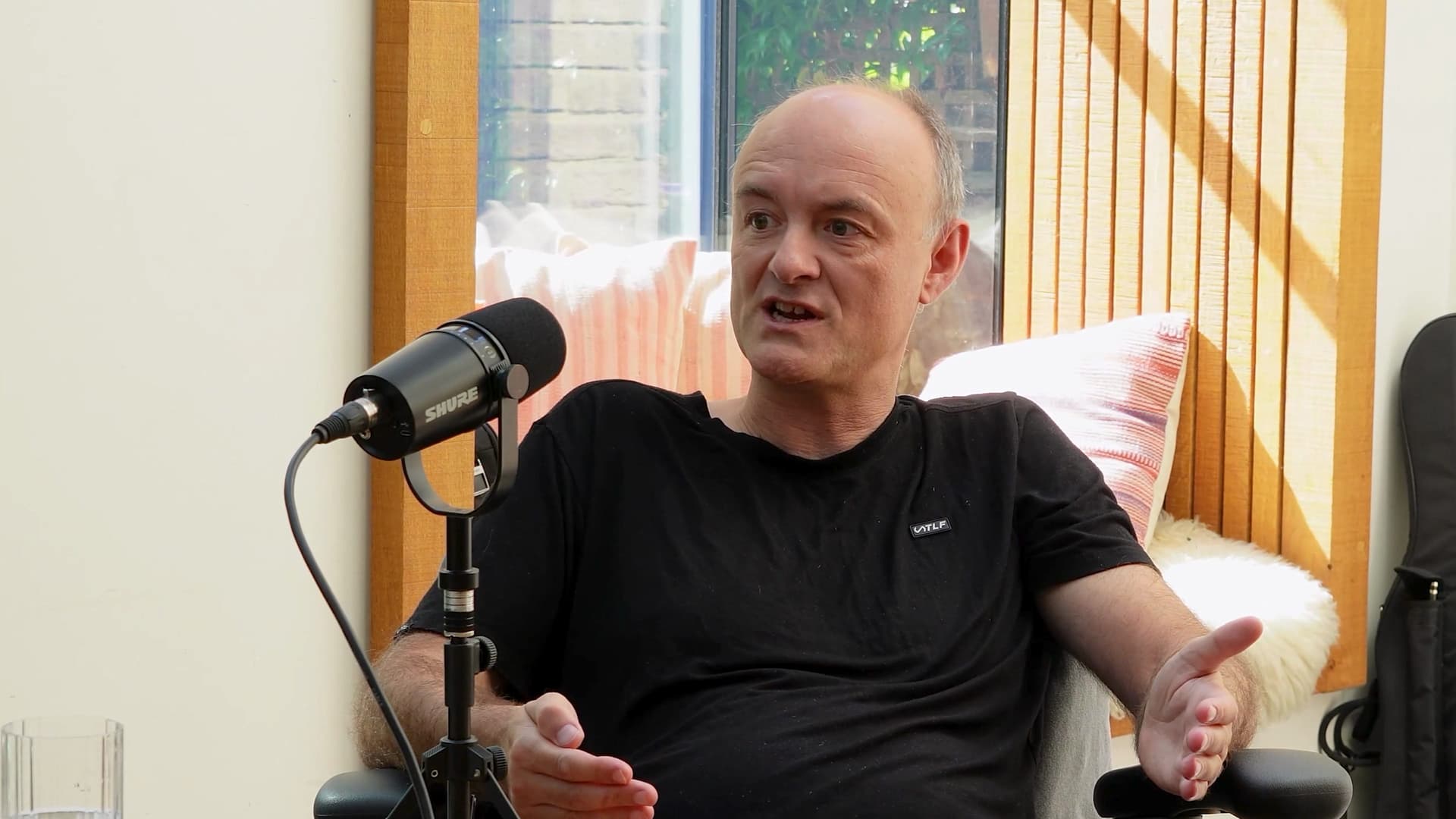
Dominic Cummings - COVID, Brexit, & Fixing Western Governance
Description In this episode, Dominic Cummings, former Chief Advisor to Prime Minister Boris Johnson during the COVID pandemic and mastermind behind the Brexit campaign, discusses the dysfunctionality of Western governments and potential solutions to rectify these issues.
Key Participants
- Dominic Cummings: Chief Advisor to Boris Johnson, director of Vote Leave.
- Host: Dwarkesh Patel
Timestamps & Key Highlights
(00:00:00) - One day in COVID
- Cummings reflects on the chaotic environment of working in Number 10 during the COVID pandemic, highlighting daily unpredictable crises and the lack of effective communication systems.
(00:08:26) - Why is government broken?
- Discusses the structural issues within the British government, including outdated bureaucratic processes and the chaos that hinders effective governance.
(00:29:10) - Civil Service
- Examines the role of the civil service, emphasizing the disconnect between bureaucratic processes and the urgent needs of governance, particularly during crises.
(00:38:27) - Opportunity wasted?
- Cummings argues that despite a strong mandate post-Brexit, the government failed to enact meaningful reforms, largely due to internal conflicts and a lack of prioritization.
(00:49:35) - Rishi Sunak and Number 10 vs 11
- Discusses the tension between Number 10 (Prime Minister's office) and Number 11 (Chancellor's office), emphasizing the need for integrated decision-making.
(00:55:13) - Cyber, nuclear, bio risks
- Highlights the risks associated with national security and how governmental dysfunction affects response strategies.
(01:02:04) - Intelligence & defense agencies
- Analyzes the inefficacies within intelligence and defense sectors, pointing out how bureaucratic inertia can hinder operational effectiveness.
(01:23:32) - Bismarck & Lee Kuan Yew
- Reflects on effective governance strategies from historical figures, contrasting their approaches to contemporary political dysfunction.
(01:37:46) - How to fix the government?
- Proposes that a fundamental restructuring of government priorities is necessary to break the cycle of dysfunction.
(01:56:43) - Taiwan
- Discusses the geopolitical implications of Taiwan and Western policy responses, arguing against aggressive posturing and emphasizing diplomatic approaches.
(02:00:10) - Russia
- Analyzes the dynamics of Russian influence and the implications for Western governance and military strategy.
(02:07:12) - Bismarck’s career as an example of AI (mis)alignment
- Draws parallels between Bismarck’s strategies and modern discussions around artificial intelligence and bureaucratic organization.
(02:17:37) - Odyssean education
- Cummings introduces the concept of an "Odyssean education," advocating for a holistic educational approach that fosters critical thinking across disciplines.
---
Key Concepts
- Breakdown of Governance: Cummings argues that centralization and bureaucratic inertia lead to inefficiencies, particularly evident during crises like COVID-19.
- Civil Service Issues: There is a need for a thorough overhaul of the civil service to promote agility and responsiveness in government operations.
- Priority Management: The government's focus should shift from media-driven responses to substantive issues that affect the populace.
- Crisis Management: Proposes that effective governance requires decisive leadership that can navigate crises without succumbing to bureaucratic entanglements.
- Historical Lessons: Cites historical figures like Bismarck and Lee Kuan Yew as models for effective governance that can be emulated in contemporary politics.
Arguments & Discussions
- The discussion revolves around the notion that Western democracies are increasingly facing crises that expose their structural weaknesses, necessitating a refreshing of governance practices.
- Cummings emphasizes that understanding history, effective communication, and a blend of competence across various fields are essential for contemporary leaders.
- He critiques the current political class for lacking genuine priorities and for being overly focused on media narratives rather than substantive policy issues.
Conclusion Dominic Cummings presents a critical view of the current state of Western governance, particularly within the UK, advocating for a comprehensive transformation in how political structures are designed and operated. He calls for prioritizing actionable governance and learning from historical precedents to navigate future crises effectively.
---
Final Thoughts The episode serves as a stark reminder of the complexities and challenges facing modern governments, highlighting the urgent need for reform, better communication, and a focus on substantive rather than superficial governance.
Written by AI. May contain mistakes. Listen to the episode to check what was said.
Transcript
Automatic transcript. May contain errors.0:00Okay, today I have the pleasure of speaking with Dominic Cummings, who was the Chief Advisor to Boris Johnson when he was Prime Minister, and before that he masterminded the Brexit campaign. Let's start with talking with your time in number 10, which is your time as Chief Advisor. What is the thing about the government and being in that famous ministry? What is it that most people don't understand? When you go through that door, you're basically going into a sort of a kind of rabbit warren of old townhouses that have been kind of knocked together behind the scenes. It's nothing like any kind of modern office building.
0:39It's a very, very odd physical environment. And I think probably you'd be struck by, first of all, just the constant string of chaos. I think people don't really appreciate what it's like being in a building like that. Every day you've got, no, so for example, in one day on COVID, the day starts off with, are we going to have a lockdown? It then proceeds to the Prime Minister's girlfriend going crazy about the media. It then involves Trump calling up saying, we've got to go and bomb all these people in Iraq, it then goes to the deep state coming in saying we don't think we should because it's probably going to bomb the wrong people.
1:27And then other parts of the system come in and say no, we should bomb them because we've got to stay friends with America. Then there's some other disaster on the news with you know, something flooding. And it's just constant and, but obviously some days are more crazy than others. But I think it's very, if you And if you haven't been in that environment, it's extremely hard to appreciate that you have these handful of people trying to come up with the right answers to extremely hard problems with all the weight of the news flooding in on you. That makes it just intrinsically difficult. Then on top of that, you have these just incredibly old centralized bureaucracies actually trying on a cope with all of this.
2:14In number 10, when we arrived for example, there wasn't even a file sharing system. So a three man startup could at least, you know, write a press release on a Google doc. For example, the British Prime Minister could not, did not have access to such a system. But was it because of security concerns? What was the reason? But because the combination of bureaucracy, security concerns, arguments between, so to say actually, the sort of interesting thing the Google doc states, So we arrived in summer 2019. There is no system for file sharing. We say this is completely insane. We are going to create a system for file sharing.
2:49Months of wrangling into two different parts of the deep state basically argue about whether teams or Google Docs is more susceptible to China and Russia intercepting no resolution. This actually ends up affecting COVID. We force a resolution. We get GCHQ to build a system. still now four years after we started this discussion, the Cabinet Officer Number 10 are still fighting about Google Docs versus Teams and have now recently resolved to hire some consultants, millions of pounds to spend a year doing a study on it. So one very small little thing in a way but probably certainly anyone who's been at the kind of high -functioning company would just be completely stunned by a lot of how So the core of a G7 state actually works.
3:41Yeah, yeah. Hopefully the consultants start a lot to use Google Docs to decide if you're a lot of these Google Docs. Quite. You go into government, you're right. Afterward, you've written on your blog. I had these priorities, these main things I want to accomplish. Day to day, you have all these things that are coming up. Do these things feel like distractions from the thing you went to the government to do? Do they all feel important? I mean, you have this big picture idea and all these things are coming up. I mean, what does that feel like? A fundamental problem with how the British state works is this question of prioritization in the Prime Minister's time.
4:19So you have all of these normal parts of the system that essentially can't really do anything quickly at all, even in the crisis. So the Prime Minister's time in the Prime Minister's prioritization is the most important asset. But also it's something which is constantly pulled hitherto and dither by all of this craziness. One of the things that obviously we wanted to do was fundamentally reorient number 10 away from what it's been since that year, which is a kind of press entertainment service, where the whole building is just built to response to what the media says. And instead say, what do we actually think is important?
4:58And what is the management system you're going to build that actually can maintain focus on those things, whilst the inevitable chaos goes on, right? Because you almost see the so most obviously, for example, some terrorist incidents happen since central London. Prime Minister can't ignore that. It's going to be for the prime minister's time. Politics, the news, the government means that there are things like that happening all day, every day, right? So if you have normal, the normal state of affairs, then the Prime Minister has just pulled from one crisis like that after another. Now some of them are justifiable.
5:35You've got to deal with the terrorist crisis. But in fact, what's happened over the last 20 years is that that's just been the model for how Prime Minister spend practically all of that time. And there isn't a kind of background system with a set of people who are just plotting on going right. The actually important things are science and technology agenda, productivity, reform of the month, the Ministry of Defence, procurement reform, deep state this etc. So that's a fundamental structural issue. We tried to deal with that in various ways. But it led in January 2020, it was clear that this essential question was already a kind of fundamental disagreement between the embarrows.
6:21So in the The first week of January, Trump had just wacked that Iranian guy, his name, I forgot now, the head of the revolutionary, whatever it was, you know, with the drone strike in Iraq. So we're talking in that week about the future, so three weeks off of the election. And he says, well, you know, these first journalists are complaining that, you know, you don't return their calls, you know, now's the time for us to make friends with all these people after the chaos of 2019. And I said, no, I don't think that's right at all. We've just won the, we've gone through hell, we've won an AC majority.
6:59Now we have to change how this building works, and we have to focus on the actual big problems facing the country. And we've got to get number 10 and your time, the PM's time, away from how it's been managed for the last 20 years, which is media entertainment service. And his response was, no, no, no, no, no. It's crazy, everyone will go crazy with this. If we do that, we've got to make friends with the media, we drove them all mad last year. Now it's time for us to, you know, a great reconciliation. And I said, well, we could do that, but if we do that, we'll just be the same as every other government for the last 20 years, which is chasing bullshit in the media all day.
7:40And four years will pass, and we won't actually have done anything. And by then it will be 14 years of conservative government. We've just won an election partly by running against the previous decade of the conservative party. Comple that off again. We're actually going to have to do a whole bunch of things. And also that's why the people are here. Right, we actually want to solve these problems. There is issues get to the heart of a lot of it. You have a manager's question about how you actually manage priorities in such an insane environment. You have a personal problem about a lack of talent.
8:13but you also have this fundamental question of, do the key politicians want to spend their time on the important problems, or do they want to spend their time running around all day dealing with the media? And the answer is almost all of them want to do the second. There's a lot I want to ask about there. It's interesting because the way you're describing it, it sounds like it's a company with the Prime Minister's a CEO who's dealing with all the other operational things that come up, but there is no CEO who has a long -term plan. I'm curious about the media stuff. I want to understand why is the case that they're so obsessed with the media.
8:45Does the media actually matter that much to how people perceive the politicians? How is the media interacting with the things that are happening in the building so that people are constantly thinking of the media? Why is the media so over -present in people's minds here? So, just going back to your first point about the kind of CEO analogy. Imagine if Steve Jobs or Tim Cook or Patrick Colison or someone actually spent a lot part of their day just doing photo ops as well. Like that's actually the reality about how a lot of these these jobs have evolved. So you have a person whose time is the single most precious asset.
9:24Yeah. Who because of the dysfunctional bureaucracy, his decisions or her decisions is the only thing that can actually break down the bureaucratic resistance and make sure something happens. Yet they're actually standing with you know the ambassador from Tongue, the Zonga, where if I come to a country, you know, just doing photo ops for a large part of the day, or going to stupid ceremonies or whatever it might be. So again, I think that, that, and I also shows, but some of the central problems, these people have all grown up in a system where they just don't know any better than dealing with the media for all day.
10:05Now, if you're actually understanding communication, you know that communication is not the same as answering questions to the media, but that's not what they think and it's not how it's not the environment in which they operate and also it's not the incentives in which they work. Again, one of the funny conversations I have with Boris was I said, you know, we should say to the ministers that here's your actual priorities as defined by us, whether or not you get promoted and whether or your career goes well, it's going to be defined by how well your department actually fulfills these goals. Not, we don't care about all of your interviews, we don't care if you are on TV or never on TV.
10:50That's not how we're going to judge because they've all grown up in a culture where they think whether or not they're going to be promoted really depends on are they seen as a a good media performer or do they botch things on the media? Well, that's just a fundamentally bad criteria, not least because their definitions of what's good on the media are themselves terrible, right? Well, by approaching government like that, you're incentivizing them to think that their goal is making friends with the media. So then they get good interviews, that also incentivizes them to leak everything. So again, the whole, the whole, the culture and the incentives are self -reinforcing in a very, in a very negative way.
11:36What would happen if you said, okay, no more interview? The prime minister was somebody who agreed with you and said, no more interviews, ministers, you're gonna, you're gonna do your thing, media is out. How would, how would the media react and how, like, would that matter? So we sort of did that in, in quarter 120, 2020, we actually stopped participating in the number one insider Elite Media show on BBC radio. We just said we think the show is rubbish and it's always from everyone's time and no ministers are going to be going on it anymore. The media went completely crazy. One of the most serious people in the BBC said to me that I was a fascist and a lot of the impeachment like Chris as well because for them being on that show is like is is there a result in debt?
12:22Right. So it was extremely unpleasant and disruptive for both the old media and the MPs who grew up in that culture. How much does it have to do with the fact that in the British political system, the people who are running these departments have to be an MP so they have to be an elected official? Is that why they're so obsessed with the media? Because it's like give a congressman had to become the Secretary of State always. Yeah, so I think so that's part of it though. I would, I would pick up on your, on your language, which I think is, is important, right? Because you say the people who are actually running the departments, of course, they're not running the department.
12:58So, so the, the, they, they, describe themselves as my department, I'm running the department. The media describes them as, I'm they were running the department, but how many people can they Secretary of State for defense fire? Three. Three people. You legally cannot fire. You legally cannot fire anybody else in the building. So who can? So his personal three people that he brings in that he's allowed by the system, he can get rid of those three people. The other hundreds of thousands of people in the system, you can't get rid of a single one on them. So the person who actually is in charge of personnel at the Ministry of Defence is the permanent secretary, stressing the word permanent, right?
13:43The only person in the British state who has the legal and constitutional ability to say this senior person in the Ministry of Defence or the Department of Education or whatever is clearly failing and they must be removed and I ordered that they are removed is the Prime Minister. That itself is problematic because the large positive system will say, well, we can't just dismiss them or if we do dismiss them, then there'll be legal, but you can actually remove them from the post. There are complications and those complications have grown in the last few years because of the way that the legal system and first parts of the law of of evolved.
14:22But the PM can actually remove someone, but only the PM can. So that gives you an idea as well of the tremendous bottlenecks that occur inside number 10. So I tell you a story about that, the kind of summarizes it right. In COVID, the peak of COVID craziness in March 2020, a whole bunch of people come, in fact, actually on the day itself, that the PM tests to post difficult for COVID. Bones for people come into number 10, suit your mother's table and they say, we have a meeting and it's about a supply of PPE to the NHS. Well, one of this PPE that we've ordered is going to be here until the summer.
15:01Okay, but the peak demand is over the next three to four weeks. Well, sorry Dominic, but that's just doing over, it's not going to be here. Why not? Well, because that's how long it takes to ship from China. Why are you shipping from China? Well, because that's what we always do, we ship it from China. But A, we need it now and B, all of the airlines are like grounded, no one's flying anything. So, all of the airlines telling them that we're taking their planes, we're flying all the planes to China, we're picking up all our shit, we're bringing it back here, do that now, do that today, send the planes today.
15:35We did that, but only the Prime Minister could actually cut through all the bureaucracy and say ignore these EU rules on Blar, ignore Treasury guidance on Blar, ignore this, ignore that. I am personally saying do this and I will accept full legal responsibility for everything. So you multiply that kind of problem by hundreds and thousands of problems. You get a sense of why partly why COVID was so crazy. This is normal government, right? But in a crisis, when no part of the system can actually move fast, all of these bottlenecks end up very dramatically escalating to the PM's office. And if you read Jared Kushner's book, I'm more about the White House, very, very similar tales there, that a lot of things that obviously should have been solved elsewhere couldn't be solved at any other part of the system.
16:28and they all end up cascading upwards in the centralized bureaucracies because ultimately only the president or only the prime minister can give certain kind of orders. What if the prime minister or president said, I guess in this case, the prime minister, I am giving a blank check. If I appoint you as minister, whatever you say, I'll just, I'm gonna sign it. So just do, you can rule as if I agree on everything you said. Could they write such a blank check and basically give the minister whatever authority they might want. To some extent, so the system here in lots of ways is, in lots of ways, the Prime Minister has more powers than the President does and is less legally constrained than the President is because in all kinds of gaps in Lecunei in the system, there are kind of ancient assumptions that the PM is operating with the authority of the Crown and Royal Progative.
17:25So the PM can just do a whole bunch of things, particularly, particularly in a crisis and doesn't have to necessarily get approval from parliament. The most obvious example of what you're talking about in COVID was on the vaccine task force. So I said it with others in March 2020, the normal system obviously can't deal with vaccines, but they can't do anything fast. We're watching it deal with all these other logistical problems, we have to create a completely different entity to deal with vaccines. So we essentially appointed someone, and the Prime Minister said, ignore all the EU procurement rules, ignore all UK procurement rules, ignore everything.
18:11You just build the vaccine task force the way that you want to. We're freeing you from all the normal white hall, HR, all the normal things, which add mass affiction. I mean that nobody can do anything quickly. And this is just things take months and months. To a large extent, because of the scale of the crisis, that happened, but still, the vaccine task force was still plagued by lots of parts of white wool saying, well, we don't want you to do this, we don't like this. So the reality is it depends on the characters involved. It depends on how much the person the PMs and power will actually push.
18:50It depends on the extent to which they come to the PM. It depends on the extent to which the PM then shows everyone in the system, I'm actually supporting them. And fundamentally it's prepared to say people will just be removed from their post if they don't if they don't do what they're told. COVID showed how much faster you can do things if the PM's authority is used and you could prepare to drive things through the system and the PM is prepared to say I will deal with legal issues later, but it also showed that even in a crisis where literally thousands of people are dying, you know, day after day after day, that large part of the bureaucracy will still simply say, no, we are optimizing force sticking to the old rules.
19:35And that also happened in an awful lot. What I find interesting is you've written a lot after you got out of the government about, about all these problems. But there's other people who have been at a high level in governments in the UK, US, wherever. And it's weird to me that if there's this much dysfunction, why are they just not noticing it? Are they just refusing to talk about it? Have they just never been in a functional environment where they're maybe in the private sector or something where they realize how dysfunctional this is? Why is everybody not screaming about this as soon as they get out of the government?
20:09It's a mix right. There's a lot of people inside the system who don't actually think of it as being dysfunctional, who just think that's their life. It's completely normal for them. So, you know, we arrive in number 10. I've taken a bunch of people who are actually experts in data science, AI and blah blah. We talked to a bunch of officials about projects around data. And officials say, oh yeah, well here's an example of some interesting projects you've done, you've asked them about it. turns out that they took two, like two and a half years, why did they take two and a half years? Well, the actual project took like eight to 12 weeks.
20:45The rest of the two and a half years was the system emailing each other about legal permissions on what to do. Now, from the people that I brought in from outside, this is obviously insane. Yeah. No one in any normal functioning environment would spend two and a half years emailing each other to do a project taking eight weeks. But for everyone inside the system, this is completely standard. You have to realize that and a lot of the people who are most senior in the system have been in a thing like that for 30, 40 years. They don't know anything different and it just seems completely normal to them that this is what would happen.
21:23And in fact, in 2020 for example, when we, you know, when we did these some things very differently, it was extremely disruptive and extremely unwelcome to Blaschpass system. hence why a lot of what we did was closed down. So did they say, okay, the vaccine task forces here in Operation War Speed and the state have been great successes? We should massively reinforce them. We should build the next generation of vaccines. We should spread the lessons of how the task force operated. No, they basically closed the task force. A sewage monitoring closed, rapid testing, basically closed and forgot to order enough tests the following year.
22:03So if you look back in 2020, most of the people who are most wrong were given awards and honours by the system and promoted to new jobs. The people who are most obviously right repeatedly are for almost all left. What incentive is there for people to speak out about how these things work? All you know, no one expects anything to change. And I think rationally, right? because even after something as big as COVID, where you see what the reaction is, everyone can now see the truth. Well, you can have a one -century pandemic, it can kill tens of thousands of people unnecessarily. It can be a complete carnage for the economy.
22:48And everyone will just go back to normal, and peace will ignore it, and nothing much will change. So if you're a standard official inside the system, all the signals to you are very clear. In 2021, it was even more powerful than that. There were a whole load of legal actions brought to say that the real problem with 2020 was we went too fast and we did things too quickly. People actually bought legal actions against the vaccine task force, they bought legal actions against rapid testing, they bought legal say this is completely insane. Actually the bureaucracy and the sloth kill thousands of voters.
23:33It said yes we're going to investigate all of this and everything, every signal propagated through the system was essentially back to normal. You will be promoted for being the most insane process and you will be demoted and blacklisted if you say this process is insane and we'll try to do better. Okay, so there's two things I'm curious about here. One is what exactly in the system were who exactly is a person who decided vaccine task force has to do what we can't continue it and two, and this might be related, what happens if a PM decides I don't give a shit about these legal challenges, pile them on if you want, is it just going to cost a lot in the way of these, like why does it matter?
24:17Manhattan Project is much in the news with the Oppenheim movie. If you look at the very last bit of General Gross's book on Manhattan Project, he talks about what are the most fundamental principles about why it succeeded. One of those principles is, what these principles is also relevant to government. One of them is the quality of the people is fundamental. Another one is that responsibility and authority are always delegated together. Now, the entire British constitutional system and management structure is based on the fundamentally opposite principle. Responsibility and authority are not delegated together.
24:57So if you're asking about something like the vaccine task force, in the normal system, nobody really is in charge of anything. Lots of people can criticize, lots of people can play, lots of people can argue about things, lots of people can veto almost nobody ever has the authority just to build something or just to do something, right? Why did we create the vaccine task force the way we did? Well, because we were trying to actually embody principles like responsibility and authority and pull together. We brought one person in, we said you are responsible. But once we'd gone, then what happens to that entity?
25:35It's sitting there and mid -Whitehall, right? And all the normal parts of Whitehall just start going back to being normal. So what happens? They say, well, they are exempt from all of these rules on HR, that the Cabinet Office imposes on every part of government. This should change because it's going back to normal. They have to do the following things properly and possibly, we gave them special dispensations because of the extraordinary circumstances of Summit 2020, but these now come to an end. So those sort of things come in. The Treasury says, well, the spending rules and how the people in the Voting Task Force make decisions, well, that was an emergency thing.
26:16So now the normal rules are about. So before you know it, all the different parts of the system have basically said, the thing that you created outside of the normal system now has to were bay, all of the things that it was specifically created to avoid. Right. Now, the system would do that automatically unless there is a very powerful counterforce, fundamentally, only, again, only the PM can say, no, we're not having that. In fact, I will strengthen the vaccine task force. We want to move on to the next generation of vice, etc. If they don't do that, and if the people in charge of it can't call on the PM's authority, very, very quickly the system will just devour the new entity and force it to conform with all of the normal system.
27:06I give you another example of this on Rappetestee, right? So one of the things that we did to get the Rappetestee to work was we got a guy who formerly was commanding officer of the SAS, right, but special forces. And this guy got a bunch of his friends from special forces also to work on rapid testing. When we first created the, when we first got this pushing for number 10, I got the critical people from procurement, commercial, HR, etc, into the cabinet room, with the cabinet secretary, these single most important officials in the whole country. and the two of us said the PM wants rapid testing dealt with as if this is a wartime crisis.
Read the full transcript
27:55We're going to have a second wave, there's going to be thousands more, people getting COVID, there's NHS, people dying etc etc. We can't have any of the normal civil service HR, we can't have any of the normal civil service bullshit on procurement exactly the same as with the vaccine task force, all of this must do that. Everyone's just on the cabinet table, they all not the head. We claim to like all this guy former CS or Austin say, so how is it going? You can you get who you want and everything working great? No. All the same. All the same. So I have to get all of people back in the same room with the country's most universal and say, who the fuck have we got a fire around here to make clear that these people doing testing don't have to do all of your bullshit HR.
28:43Yeah. Well, you actually, that's how extreme things have to be in order to actually, it was only by doing that a second time and making clear that I would get the PM to actually just stop firing senior people in the cabinet office, it's only then that the system will kind of part and go, okay, this element is allowed to be imagined. As soon as that countervailing force is removed, all the normal sea floods back. So at some point we should talk about what it would actually take to change the equilibrium. It might be first useful to talk about how did this come to be? So presumably at some point this is not the way the government function.
29:22How did it end up, is it just the clutch builds up? If it, like, I've been talking about the actual mechanism of how does it end up this way? Well, so in Britain it started in the 1850s when people said, well, the old aristocratic system based on patronage is irrational. We've got a shift and we've got a shift towards a much more merit -acquantic system. We should have officials that are appointed on merit. So you essentially had a transition from pre -1850s aristocratic system based on patronage where all kinds of dodgy corruption in various ways and favours done in various ways, but it also moved much faster and in all sorts of ways much more efficiently, particularly in a crisis.
30:15And you shifted towards what you say is like a modern system where you have our permanent civil service, a supposedly meritocratic. However, over time, you see that this supposedly meritocratic system ends up actually just being a closed cast. It's not actually meritocratic. It's a system that promotes practically 100 % internally and is therefore by definition closed to approximately 100 % of the world's most talented people. Yeah. Now that's defended on constitutional grounds now as well. This is the only civilized sensible way which is taken operate. But of course it's totally self -serving and as we saw it COVID it actually just means massive bureaucracy, very poor people in all kinds of critical positions and a state that's actually paralyzed when it comes to crunch.
31:07It's like a Japanese company where you get in a college and just stay until you die. You know what I mean I live in San Francisco and And if somebody works in like a company for three years or five years, they're, oh my gosh, you've been here for a while. You know, you're like a long term employee. So the idea that you would be the same place for 40 years. Exactly. Is really odd. And imagine sorry to interrupt, but imagine as well what the promotion system is like that, right? And who ends up getting to the top of these systems? A lot of people say, oh, you're so negative about the civil service.
31:35You're all saying that everyone there is rubbish. It's not fair. That's not my view. In fact, if you look at the social service, you actually see a lot of variable people, but most of them are young. What happens is the young, excellent people get weeded out by self -selection, largely, because they go in idealistic, they're there for a few years, but then they look at what the process is to be promoted, and they look at their bosses, and the best of them look at it and go, I don't want to be like that. I don't want to have to make those decisions, I don't want to have to make those compromises, I don't want the job like that where it's almost all bullshit, we can't actually build anything.
32:16So the most entrepreneurial, the kind of people who actually want to get on and do stuff now leave and the most like HR compliant, disastrous people to be in charge of supposedly fast moving agencies are the ones who are promoted to take over. And then that culture itself becomes highly self -reinforcing, right? Once you get a whole lot of cadre of leadership at the top, that's like that. Well, it's extremely difficult to break out of, right? And it's not like, okay, well, IBM has gone wrong, but then you have a whole ecosystem of competition for IBM. So, okay, IBM dies, but the American economy evolves and continues.
32:57In government systems, that obviously can't happen. So, you have like, IBM is dead, but it's still actually in charge of everything. This reminds me there's this wonderful biography of LBJ that Robert Kerr wrote and in volume three, which is about him taking over the Senate, you know, when he gets in the Senate, uh, seniority system is known as a Synility System because you have these people who are in charge of these important committees and they're 80 years old or something and they're in charge of like ways and means. And so he realizes when he becomes a majority leader, like, I can't have this.
33:26If I want to get things done and the young senators in charge and so he engineers ways to get like 40 year olds or 50 year olds in in charge of these committees. What would it take for, could a Prime Minister of the US just say, we're gonna retire everybody who's over certain age or just like, we're gonna retire a whole bunch of people. The people, we see a whole bunch of up -and -comers, we're gonna put 20 -year -olds on the path to management or path to advancement. Who would that be up to to? In the British system, only the PM can do that. And we actually started to do that in summer 2020, right?
33:58So after the first wave of COVID, where the PM nearly dies in March, April. For about eight weeks or so, he was highly aggressive in saying this whole fucking disaster system has got to change. It's nearly killed me. It's killed tens of thousands of other people. We've got to blow the whole thing up and rebuild it. So in summer, we actually got rid of, I'm exactly but say half a dozen roughly of Bessignia Permanent Secretary, so I had to recharge a lot of these departments. And it was described by the insiders as, quote, a rolling coup, unquote, fascism. The vote leave fascist entity is now essentially mounting a coup, a ban style to dismantle all democraticism.
34:53So that was the reaction of large parts of the of the old system to saying half a dozen doffers are going to be removed and we're going to start promoting some younger more dynamic people. And that's part of an overall shift that needs to happen. Clearly a whole, you know, a bunch of different parts of the system have failed. Agents need to be shot. New things need to be created. So it is possible to do. But the tale of that also shows the problems. The reaction from the old system and the media is very severe. Nobody supported us at all, including all the conservatives. Ironically, the people who were most in favor of it were actually the deep state itself, and the most entrepreneurial elements of the deep state, because they'd all seen this system completely implode.
35:46So the closer you were to number 10, the closer you were to actual power, the more you actually appreciated the full horror story of how the apex of the bridge state completely imploded. And so a lot of them, particularly the young ones, said, well, like now it's time you've had a one century pandemic, it's the biggest crisis in the state, the Britain has faced since hit low in 1945. And you've got Brexit done, and you've got the relief team in number 10 who've said before they arrived here, they're gonna change the civil service. Okay, well now obviously this is all gonna happen. Yeah. And it should happen.
36:20Now we can argue about the details of it. But clearly the personnel system needs opening up. The civil service is going to have to have the biggest shake up that it's had in a century or more. Fundamental problem was that the PM then thought, this is going to annoy so many people that I just, I can't face it. Also other dynamics, I'm not sure how much you want to go into, but the fact that Starmer is just so obviously rubbish also meant that Boris and his wife thought, we don't actually have to do very much. So it goes back to this question, are you actually trying to change a lot or not? Our response to Semitrate 20 was, we've said for years that a whole bunch of things are wrong and that the next big crisis will reveal it.
37:06Well we've had the next big crisis and it has revealed it and it's obvious that we're right. Now we've obviously got to make all of these changes and by the way, in the election six months ago, we also promised we were going to make all of these changes. Boris Carey and the majority of the conservative parties, attitude was far more. Kirstal and Ms. Rhabish, changing anything big will just be very disruptive and create lots of enemies. Why are all these people talking about disruption and firing people and rebuilding things? We just want to go back to normal. We hate COVID. We hate, you know, we don't want all these arguments about Brexit.
37:40We kind of want to go back to normal. And for them, what normal is, is like the 90s, right? The kind of default mode for how people in politics think about normality is, can we go back to that lovely time between the fall of the wall in 1989 and the fall of the towers? Right? That period is what people kind of psychologically gravitate back to. So in 720, our attitude was right. Now the state needs to be fundamentally re -engineered, but most of the system was, we're tired, we just want to go back to normal, we want to do what we always do, which is like, chat with each other, give interviews to the media and not change much.
38:23And given that Starmer is so obviously rubbish on the other side, we don't actually have to change very much either. So when I hear the story, I'm thinking, well, you know, on your blog, you've written about all these other reformers throughout history. When they were able to make their changes, was, you know, like a time of crisis, this, Lee Kwan -Yu after the British leave or Bismarck after the pressure loses the Pauline Quars. I mean, you can go down the list, right, the Meiji reformation or something. And in this case, you have COVID, you have Brexit, you have an ADC majority that you've engineered based on campaigning on these things.
38:59And you have you as chief advisor to the PM, somebody who understands these things has thought a lot about them. And in fact, accepted the job on the condition that you would be able to do these things. You have all these things come together. Why was the opportunity wasted? And you mentioned for example, that Boris and Kerry were not interested in changing these things. Presumably, they saw that the problem was there. I mean, if you're a PM and you're seeing these changes, you must the craziness. And also, I mean, wasn't he like a fan of Churchill and he wanted to build a legacy or something?
39:35I would think if I was PM, like most PMs are going to be forgotten, right? You might as well just like go forward and try to do something big, try to be remembered. Why did they waste this opportunity? You know, you have all these things that are going for you guys. Or if something was going to happen, that seemed like the perfect moment to make something happen. Part of it goes back to what I said before that you have like two fundamentally different attitudes towards the whole thing. Boris was prepared to be very aggressive and revolutionary in various ways in 2019, fundamentally because he thought it was necessary for him to survive as prime minister, not for the country, which he didn't care about, doesn't care about, but for himself.
40:20In January 2020, we were already arguing about what the fundamental direction is that we're going to go in. As I said before, my view was we've won, we won, say we're going to do all these things, we now have to actually do all of these things. In order to do all of these object level things, that requires facing these very long term, multi decade long term, some of them over a century, in terms of how the actual constitutional system works, how the civil service works, don't they? Versus his view, which is, that will just sounds like a lot of hard work and making a lot of enemies, and it doesn't really seem necessary because Labour Party is a joke.
41:00And I just want to, I want to be friends with London, I want to be friends with insiders, I want to have a nice time. And the overwhelming majority of people in politics are there, but fundamentally prioritise social relations within the insider network. That is the most, that is just what totally dominates their life day in, day out, year in, year out. Now in some ways it's very odd right because you think what's the point of doing this for 30 years and then you kind of become a minister but you're not actually in charge of anything and you can't actually do anything and then you're spout out and you're not even going to be most of you like not even a footnote in history.
41:43What, what on earth the point of it. It seems completely crazy to me anyway. I think that even misunderstands how they see it. For them, the theatre and appearing on TV is the critical part of it. It's not, have you actually done anything? And the permissible service, a brilliant at manipulating the theatre to keep the egos of the MPs satisfied. So the most obvious way to think about right is the cabinet. You have the most famous door in the world number 10. Every week these characters walk up the street, the cameras are all there, the cameras were, they click, they shout out questions, the Minister smile at the cameras and they think, you know, we're part of the insider gap.
42:32This is the peak thing that everyone aims at. Whilst behind the door, the people actually running most of the government, regarding the cabinet as just kind of bullshit theatre, the meetings are literally scripted, people are given their talking points to read out by the officials, they read them out, they read those out, and the conclusions are all pre -written, so the whole thing is a complete kind of potemkin fast. But from the MP's point of view, while we're on TV, we're treated like we're in charge. Now the fact that the people actually running the Ministry of Defense is not the Secretary of State, the fact that these ministers have like fundamentally no power, the fact that in number 10, officials who are like 28 years old working five meters away from the PM have usually far more power and authority over things than the ministers on TV do, but names are never in the papers, no one knows who they are.
43:34This weird mismatch, right, is never explored, it's never covered, out of funny conversation the other day, I was talking to one of the editors of one of the biggest newspapers in the country. And I said, you know, in the old days, there used to be a parliament page in newspapers that would report what happens in parliament, right? Because that's the center of political activity. Why happens in parliament is important. Why don't you do, Why don't you start a page where you actually report on the deep state? And you say, oh, the Prime Minister's Secretary for Economic Affairs has moved from this job to that job, and it's now being replaced by 31 -year -old so and so.
44:14Because those jobs actually are far more important. If you look at Brexit, the foreign secretary was almost completely irrelevant to all the Brexit negotiations. the Prime Minister's private secretary, a very, very, very able character, much more able than anyone in the current cabinet, totally unknown in the media, name never in the media, far more important. So I said to this editor, well, why don't you have a page and stop that? And he just, well, like everyone would think I lost my mind if I did that. And it would antagonize everyone. The MPs would go completely crazy because preserving this fiction that the charade, the Potemkin charade of the MPs trotting up Downey Street and all being filmed going into Kaepernut, which is, be taking decisions.
44:57So as long as the Potemkin carries on, I just don't break hay faves, they say, WWE, right? Yeah, it sounds like you have two constitutional monarchies in Britain. In some ways, yes. Yeah, yeah. Exactly. Now, what you say, you have these undersecretaries who are, at least 30 when your roles are 28 year olds. And they're the ones in charge. Doesn't this contradict the idea that you have this gerontocracy, people who had to wait 40 years to get promoted to being charged with these departments, this permanent civil service? So it's an oddity in the system, right? And it's purely around the PM. So the way the system works is, in all the different departments, you have the currentocracy is in charge, and you have this appalling HR system that filters out almost all of the best people and promote the most HR friendly types.
45:46But the PM's office is for art historical reasons, slightly odd. So in the PM's office itself, you have roughly a dozen or so, traditionally young, bright people who are put into that job to do specific things as part of kind of training them for the future. So it's just an oddity of how the system works that you have this one set of people who are formally not senior. So these people don't have very senior roles in the hierarchy of the caste system. But they have a lot of kind of an official power and authority because they are talking to the PM every day and they're part of the PM's private office.
46:29So it's just a weird way in which the system works. Yeah, got it. And by the way, if you want to mention the person, the 31 -year -old able person who, who helped with, do you want to mention the one? Well, as a few, I mean, there's a A guy called John O' Evans did Brexit negotiations. There was a brilliant young woman called Hannah who kind of coordinated deep state stuff with MI5 and things like that. Whenever there's a terrorist attack, if a plane is going to fly in department and try to kill everyone and it's going to be shot down, then she's the cog in the wheel that actually like organizes the system to get the right calls and blah, blah, blah.
47:04So there's a lot of people like that who are extreme. I mean, the joke amongst the vote leave team used to be that if you swapped the private secretaries for the cabinet in every single job, you would have a, you would basically improve the caliber of the person by like 10X. So however, lots of those people have now left, right? Hmm. Because of the selection, self selection. Exactly. Okay, I got it. So it's interesting as a foreigner, when I think about the UK and I'm just learning the basics, like what are the problems in the country? And the main thing is, oh, your productivity growth since 2005 has been abysmal.
47:39You guys are much poorer than you guys could otherwise be. This is the main thing that jumps out in my mind. Is there a team in number 10? Is it anybody's job who's a very senior to deal with this specific problem? So now, not really. It was at number 10. Remember, as I said before, how small number 10 is right? So number 10, which in lots of ways is a good thing. Everything to do with economic policy, growth, etc. is all like 99 % of everything to do with all of that is elsewhere, mostly in the treasury, which is actually anti -growth in most important ways. Now, in 2020, we started a whole bunch of things to actually make it a core part to shake up the system, the way that the system worked.
48:26So we changed how the power relations between number 10 and the treasury, also with the cabinet office, and we actually created task forces to start working on lots of these most critical problems, right? So the science technology, you have to start a B -co system, procurement, the planning system, which is one of the major, like one of the really big things that destroys so much value, and there's just so it's such incredible low -hanging fruit. But basically all of that was dismantled by Boris in 2021, after we left because the reason I already said, he came to the conclusion and most of the party agreed.
49:09But remember, in 2020, when it came out that we were working on all of this stuff on growth and taxes and the planning system. The daily telegraph now today, screaming about growth, was totally hostile, most of the TORIODPs totally hostile. Well, most of the conservative party were not agitating for an aggressive pro -growth agenda in 2020. They were actually hostile to it. Speaking of the Treasury, by the way, you helped promote Sunak to Chancellor of the Aschequer. He was from what I understand, relatively unknown, before that. What did you notice about him that made you decide to do that? then maybe tell me more about why you think the Treasury is anti -growth as well.
49:56So, Sinak, he's obviously much brighter than the normal MP. Yeah. He'd actually worked in functional private sector organizations before coming into government, unlike most of the MPs. He was extremely hard working, unlike most MPs and unlike most ministers. he actually dug through the detail and wanted to understand it and could understand it and did understand it. And he seemed much more than the normal MP interested in actually doing a useful work rather than running around the media and giving interviews and all the normal bullshit that they're all obsessed by. So from our point of view, we had a chancellor then at the time who just couldn't do didn't have a self -confidence to grip the officials in the treasury.
50:51So it seems just like an obvious change. And as soon as I didn't understand politics very well, a lot of things he didn't understand. But from my point of view, that didn't really matter because we could do that. We didn't want him to do the politics side of things. We wanted someone in there who also wanted to work with number 10, which is a critical thing. one of the big structural problems in how the British state has worked is that there's a kind of structural conflict between number 10 and number 11. You normally have a prime minister in number 10 that's always wanting to spend money and then you have a number 11 which says we've got to control number 10.
51:30But the number 11 has in lots of ways much more power over Whitehall than number 10 does because is it legally signs off the checks, not number 10. What we wanted to do is eliminate this friction, and that has lots of weird consequences. So one of the most stupid things what is that number 11, the treasury basically hides huge amounts of financial information from number 10, which is obviously completely insane, like how can you have a prime minister making judgments by all sorts of things? If his own treasury is hiding data, it's saying, based on no sense, or whatsoever, but it's completely normal and grim.
52:03We said, fuck that, we're gonna have one team between number 10 and number 11, the data will all be completely transparent. So exactly what the spreadsheets are in the chances of office are instantly, completely accessible and open to the prime minister's office, not something you think ought to be very controversial, right, highly controversial and unprecedented change literally within like three hours of me leaving. It's a pleasure when it stopped it, so anyway. So our thought was, if you're actually going to get to grips with growth and productivity and all these things, you have to bring the number 10 and 11 number 11 systems together that have to have an integrated diagnosis of what the problems are and an integrated plan for what they're going to do to change it and then actually one team of people and then you stop white or also picking you off and using the normal divisions.
52:50Yeah, yeah. Well, what do you think of Sunaq now? I mean, you noticed he was intelligent, hardworking, paid attention to details. Is that enough to make a good PM? He's trying to make the old system work and he's treating the old system with respect and he and It's political disintegration. He doesn't control the government He doesn't even control them but turn the cabinet office. He has no political story. He has no message. He has no grip And he's just buffeted hitherto and thither by events in the same way that every PM has been since in Stature. He had a fundamental choice. Am I going to try and win, which involves challenging the way that the conventional system works, the conventional power system of whitehall?
53:42And am I going to tell a story to the country which is convincing? Or am I going to do what the insiders are telling me to do and keep them happy. He chose to do B with the inevitable consequence. I'm more curious about the sort of broader lessons about personality this reveals than him necessarily. In the American context, for example, like FDR clearly had control of the government. As far as I understand, he wasn't known for being intelligent or being micromanaging details. But you had how to help continue that for a minute. Right. So I mean, what is that reveal about who makes a good PM? Like what if the characteristics needed for a person who can control the government?
54:26It's impossible to be a good PM if you accept the way that the job is currently works. It's totally possible because because of what we've been talking about. You're just buffeted by media events all day and you don't actually control the government. You can't actually make anything happen. If you accept all the constraints and you accept the way that Whitehall works, it's impossible for anybody. It doesn't matter. You could put General Groves into that job. If he did it the way that Sue Nax doing it, General Groves would fail too. You could put in FDR, you could put in Bismarck. The reality is nobody who actually gets a lot of things done historically operates the way that the current Prime Minister is forced to operate by the prevailing system.
55:11they are fundamentally incompatible things. Okay, so if the government is this dysfunctional, I mean, this is the same government that has nukes that deals with biosecurity, I mean, all kinds of things that I'm sure I'm not even aware of, intelligence agencies, counterterrorism, all this stuff. Do these things really, I mean, are the people who are in charge of the nukes as dysfunctional as like not having Google Drive and having like two years of litigation to do a two -week project, is that part also? Lots of ways it's worse. So I saw recently, Peter T. L. said something like, we know that DVLA is a disaster.
55:51Is it DVLA in America or is that here? The people who organize driver's licenses? DME. But we don't see much about how the NSA works. And my assumption said, Peter T. L. is that lots of ways the NSA has worse managed than the people doing driver's licenses. There is, there is, unfortunately, a lot of truth to that. But the position is mixed there in the same way it's mixed generally so you can't say it's just all I should show in the people all rubbish obviously In the kind of in the world of intelligence services and special forces and things like that there are obviously a lot of incredibly able people and incredibly public spirited people people make huge sacrifices to to believe in what they're doing.
56:33But it's also the case that simultaneously, a lot of the very worst, most calling aspects of the bureaucracy happen in that world. And part of it obviously is that they can classify things and use classification to hide extraordinary public disasters. So for example, the situation in terms of China's infiltration of critical infrastructure in Britain, including data systems, is much, much worse than practically all MPs have any comprehension of. But the reality of some of the, I mean, I've been in meetings where these things have been discussed and the PM and now PM then Chancellor have sat literally with their mouths, white, a gog at the extraordinary tales that they'd be told.
57:28And like, what the fuck are you kidding me? The number of MPs who know that is probably like a handful at most. And it's almost all completely hidden. Similarly in the nuclear side, I spent a lot of time in 2020 in bunkers without phones talking to officials about the state of the nuclear enterprise. weapons, safety, infrastructure and the truth is there as well. I mean, absolutely horrific. And it's horrific because the year after year administration after administration, they haven't faced hard problems, they've punted off. So you have a combination of things, you have normal catastrophic procurement, which just means it's totally normal for everyone to be fucked up.
58:14Well, that also applies to the nuclear enterprise. You also then classify a lot of that so that it's hidden and that means it's even easier for things to keep going for longer. It also means that the budget problems are hidden. So a lot of what happens in terms of the public discussion about MOD budgets and the national accounts in general is massively distorted by the fact that in reality you have literally tens of billions of pounds that are going to have to be spent on the nuclear weapons infrastructure that are completely don't appear in the official account at all. And simultaneously you have parts of that infrastructure which are literally watching, like parts of it that just don't work properly, appalling safety that's been neglected for three year after year.
59:08So that's cyber, there's I organized a meeting on bio security in summer 2020 as well, particularly given obviously the time there was COVID we were thinking, is it a lab leak, is it not, what's the truth about all of this. So we organized a meeting, we asked various questions. I didn't say that one of the people that I actually took to the meeting was themselves brilliant young scientist who'd been working in the state actually and the genelia lab for newer science and whatnot. And so all these people inside the system said, don't worry about this Dominic, they're like, this will never happen, this is impossible, this is science fiction, or this is like 10 years away, blah, blah, blah.
59:53And everything was about trying to reassure me that like I shouldn't really worry about this. And at the end of the meeting I said, so James, what do you think about this? Oh, of course these people have no idea who he was. And his Well, pretty much everything that everyone has said is impossible or like we'll take 10 years, I have personally done in the lab in the last two or three years. Yeah. So now, does that mean that the whole system for biosecurity is a disaster? No. Does it mean that everyone involved in it is a nightmare? No, there are obviously brilliant people everywhere. But across all of these things, there are budget horrors.
1:00:31there is a chronic inability to build long -term. There is a constant bureaucratic incentives not to face reality and face the truth. And that's the case across all of these secret systems. Why hasn't there been a disaster? If in many countries, the systems are this much of a shit show. And I mean, this is the West. I mean, Russia has New York's, Pakistan has New York's, and you can only imagine how fucked up their systems are. I mean, what's prevented? You could say, well, the system is so fucked up that actually there was a lab leak, and that was COVID. And so maybe there already has been a disaster.
1:01:16But what is the explanation for why other parts of the system haven't crumbled in a disastrous way yet? If you look at just the public record or the nuclear staff, then I think the only reasonable conclusion that we've got extraordinary lucky through the Cold War. Whether it's the famous hydrogen bomb falling out of the plane and all of the safety devices apart from Wall, I mean, you know, American Ealing you could itself, right? I mean, that was just completely, but I think race of God that that didn't go off. We've been very lucky so far, and there's no reason to expect that luck to continue.
1:01:50And if you look at what's happening in Ukraine now, then you can see that large parts of the system are very happy to dance right on the edge of the abyss. On the Chinese infrastructure stuff, I don't know if you can say more about that, but I'm very curious. If you imagine having a sci -fi novel and you said, what are the whole set of data systems that you really would not want the British state or the American state to be transferring data about? And then imagine it turned out that these things are controlled by owned by whatever Chinese intelligence then that gives you a kind of nightmare picture that is actually the reality.
1:02:35I can't go into specifics of it because the specifics of it are I think illegal to discuss. But if you just wrote a story and imagined what are some of the most obvious ways in which, I mean in fact you probably wouldn't write such a story because you'd think well that's completely applauseable. There's no way that that would happen. There's no way that they were transferred data between A and B about disinformation and then find out later that that was actually controlled by China. That would be fucking mental. How about the intelligence agencies, MI5, MI6, and then the America CIA? How much situational awareness do they have about the most important things?
1:03:16Honestly, if I was like the PM, maybe like on my daily briefing, the top thing I would one is like the training loss on the newest AI models or things like that. But on the things that matter, how much situational awareness to the intelligence system? That's an interesting example. So I say, I think you have to draw a huge contrast between two things, capabilities and analysis, right? There are some extraordinary capabilities that deep state has in the Western world. If you want to dig into people's phones, if you want to require secret information in various ways, then there are some extraordinary capabilities which people have and can be aimed.
1:04:02However, in Britain they are generally aimed not nearly as aggressively as they ought to be. The process for prioritization of things is extraordinarily narrowly awful again, another thing that if you actually wrote it out, no MPs, really no anything about it. But if you looked at the system, people would just be completely appalled. Also, parenthetically, a lot of that kind of stuff is basically being shifted away from politicians over the last 10 years. So it's almost, the large part of that system now, nobody really has any visibility on at all. When I dug into these things inside the cabinet office, I was essentially the only political person in a long time who'd actually even been discussing it with parts of the system.
1:04:51So the officials themselves said to me, because it's been pulled into the cabinet office, I, away from the Ministry of Defence, away from the foreign office and away from the home office, the three parts system that legally in the past had a lot of oversight over what was happening. Now a lot of it happens inside the cabinet office, where there's essentially zero political oversight of any kind, to a large extent that's very bad. It means that the bureaucracy metastases and a lot of decisions and a days without any real challenge. So that's bad, but going back to the main thing. Amazing capabilities are very ways, badly focused, badly prioritized.
1:05:31But the quality of analysis is much, much worse. So, in trying to analyze why, what people might do, how they'll behave in a negotiation, will they start a war, if they do that, those sort of questions, a lot of the work there is poor. And technically, also, I think it's crucial to bear in mind that there just hasn't been focus on, you know, lots of people, I know lots of people who've been watching the world of AI now since at least like 2014 is right, where deep might made a big splash or the a couple of years before that. But even in 2019, 2020, I went into number 10, wearing an eye -t -shirt on the first date, try and make a point to people that people should be paying attention to this.
1:06:28In 2020, that was seen as extremely eccentric. I'd never mind five years earlier. And you're saying, well, if you were president or prime minister, I'd be aiming these amazing capabilities and saying, okay, I assume the GCHQ with the NSA, you know, no, who is running the equivalence of OpenAI in Beijing? Who is running the black project for Chinese intelligence on training runs? Where is the black project data center and who the fuck is running it and where is it in which mountain and how many spice outlets are looking at the prime minister said, I want to know how many H100s in the video we'll ship out next year.
1:07:12Go to T .S. and go to Taiwan, go to wherever. Find out how many China is ordering, what university or state company in China is ordering how much the capability exists to get that information or is just like nobody cares about it. So the main problem is no one cares about it. I mean, obviously if you turned MI6 and GCHQ onto a question like what exactly is China doing with AI, who are the key people, how can we, behind the trap them, and blackmail them, and blah, blah, blah, blah, then obviously you could get an extraordinary amount of interesting information. But, A, the position, the system won't do that by itself.
1:07:52B, the politicians won't tell them to do it, because the politicians aren't really interested in it. see this incredible kind of risk aversion now in large parts of these systems, particularly after one with Iraq and then the legal investigations after post -Arak and terrorism and whatnot. So there's huge kind of self -sensory in large parts of the system and much less aggression than most people would assume. How about defense? So I mean in Ukraine we're seeing this like very asymmetric returns on different kinds of new weapons where you have these cheap drones that are taking out expensive Russian tanks.
1:08:29How communist defence generally and how much are they adopting these new technologies? I mean generally in Britain it's completely shocking. Again in 2020, we had arguments about this between with with number 10 and the MOD. Essentially, you had a bunch of younger people in the again it goes back to this generational thing. There's a lot of younger people inside the MOD and obviously a lot of people in special forces who are looking at the sharp end of this and saying obviously drones are going to completely change how land war operates. Obviously we should be pushing this and exploring ourselves.
1:09:04Obviously we should be thinking about how do you get large numbers of relatively cheap things using a leverage commercial technology and then think about how to add deep state capabilities on top of that etc. But you had also a whole set of the senior people thinking as they always do, fuck this, like this sounds like it's going to cannibalize our budgets. Well, we've already got these drone programs, yeah, but a lot of your drone programs are complete dog shit and the drones fall out the sky and they don't work and they're massively expensive and they should be closed down. There's a drone now that Britain is deploying, trying to deploy in Ukraine called WatchKeeper.
1:09:41In private meetings in 2020, The EmoD admitted the whole program was a complete disaster, they keep dropping out of the sky, they completely shit, and the whole project should be closed down. Of course, once we left, and the system went back to normal, then they didn't close it down, they haven't replaced it, they've just thrown more money at it and lo and behold, the things fall out the sky and fuck up. In 2020, a lot of these arguments were quite theoretical, right? There was some things happening on the fringes, you know, there's the war in Armenian or not, where you could kind of see some beginnings of people experimenting with some of these things.
1:10:18Literally 20, 20, 20, 20, people were saying to me, well, Dominic, you know, our future fighter in 20, 40, 20, 45 is good, it's still going to be manned. And you know, there are all kinds of classifier studies that show that, you know, drones are not going to be able to do this that and the other. Really? Well, let's open up these studies. Let's see what opening eye and deep mind make of these so -so -called studies. Of course, it'll certainly have to be told bullshit. Britain is still going ahead with that, right? Our current plan is to build another fighter in the same way, optionally manned with BAA, a completely ludicrous.
1:10:54So there's huge resistance inside the system to making that kind of shift for all of the normal reasons. The reason I'm especially curious about this is we're seeing how this war in Ukraine is happening, I'm very curious about what this implies for if there was a conflict in Taiwan. Like, how easily could you take out an American or a British aircraft carrier? Having seen the inside of how these things work, like, how confident are you in these war games and these projections? If there was a national conflict in which, like, Britain had to get involved, what do you think would happen? Well, in war games, the British aircraft carrier is flea immediately to the edge of the war game, in order that they don't get sunk immediately.
1:11:33if they're dealing with any kind of serious peer opponent. The aircraft carriers are obviously a joke. I said that like 15 years ago, I think the first time 10 years ago, five years ago, and a lot of meetings about it in number 10, nothing persuaded me of anything other than that the whole thing was a massive waste of money. And that's just becoming more and more obvious, right? I mean, all over the system, all over the West now, people are starting to face the music that are more of these things that they've invested billions in. It's just a totally vulnerable to go asymmetric technology and asymmetric costs where very cheap systems are going to be able to destroy a platform worth multiple billions.
1:12:17A lot of senior people who've taught a lot of shit about it obviously can't admit any of these things publicly, but I think there is growing realization behind the scenes of what the reality is. But the situation in Ukraine should make us even more pessimistic in various ways, right? Because if he said in advance, okay, Putin is going to invade Ukraine, we are going to do simultaneously encourage Ukraine to fight, arm Ukraine, push into a war of attrition. Then we're going to simultaneously ramp up, we're going to ditch one China policy and aggressively ratchet up diplomacy against China on Taiwan and push the world's biggest manufacturer into a closer relationship with Russia whilst fighting a war of attrition against Russia.
1:13:20And then we are not going to actually have a defense industrial plan and a procurement change ourselves in Europe, but obviously that, like, even for you Dominic, that would be just like too ludicrous a scenario to happen. Like, nobody in their right minds would actually get themselves into that situation, right? But that's literally what we've done. But we've pushed the world's biggest manufacturer into alliance with Russia. We have escalated the war of attrition and we have left a completely rotten dysfunctional procurement and manufacturing system for defence continue. The same set of people in charge of the decisions in the MOD and the Pentagon.
1:14:07The same set of bullshit pushed out about the advantages of aircraft carriers and blah, blah, blah. that the whole thing makes up so you know, sense of all. What happens when we have to face the music? And when does that happen? So I don't know, there's a conflict and like immediately whatever, however, we're a personnel on the aircraft career drown. And maybe not even like with defense specifically, just like in general, all these different parts of the government are not only dysfunctional but are getting more and more dysfunctional. Yeah. Is it just gonna be a slow degradation? Or will there be another very clear inflection point like you had with COVID?
1:14:43Well, my assumption is that there just be repeats of the COVID experience and lots of the worse. I mean, I assume that there'll be, you know, if you look at it, like roughly every decade or so, there's some kind of financial crisis, would you another financial crisis? It could easily be worse than the last one. It wouldn't surprise me that if in the next, like within the next two years, there's a worse than 2008 crash, perfectly plausible. Lots of hedge fund people, I've talked to kind of planning on that basis and think that some that is quite likely. We're going to face the music shortly in Russia, right?
1:15:14Because the Ukrainian offensive is not going to be the great success that we've all been told. Remember, last Christmas, right nine months ago, the British and American media will fall off, Russia's about to run out of ammunition. The Ukrainians are going to launch a counteroffensive, they're going to sweep all before them. The idiot Russians are all going to collapse. Well, chickens are going to come home to roost on that now. That's going to get worse. China's point of view, it's the most perfect situation imaginable because they can charge Russia in flated prices to sell them a bunch of stuff, to blow up all of our shit, turning you crazy into rubble.
1:15:54I mean, you don't have to be so ensued to figure out that from China's point of view, this is like an absolute, absolute dream scenario. And if America gets into, was insane enough to get into all over Taiwan, then obviously a lot of these, a lot of, a lot of this would be exposed. And there's a book by a guy who now works at Andrew Hill called The Kill Chain. And the truth is, a lot of classified pentagon staff has said this, a lot of people involved in the system know that if America has a war with Taiwan, then it's going to be catastrophic for America. I mean, leaving aside the obvious risks of escalation to nuclear conflict, I just leave that aside, just in a conventional basis, it's going to be, it will be a catastrophe for America.
1:16:36Okay, so in a hundred years time, I guess it'll be 21, 23, what about what the government does now will matter? I mean, when you read back history at like 1923, what has mattered most? What should be the big priorities? If you were in that experiment on our cells and you look back, what is it that we care most about now? You care about people who come up with new ideas, which is not something that governments do. people are just saying what Nietzsche said but the details of what the British government did in the 1870s and 1880s is almost you know totally forgotten and not really relevant. The thing I think which people obviously pay most attention to is what contributes to war and what contributes to revolution slash collapse slash regime changes of various clients and if you think about what the decisions we make if there's anyone still around in 100 years to look at it, the big things for people will look at things related to that.
1:17:34What were the big things they did that they didn't understand at the time, but which clearly affected the next war, the next revolutions collapse of various kinds. Like does the euro collapse? Is there a revival of fascism and communism in various forms in Europe? Is there a war between America and China or over Taiwan or something. Those would be the big things. And if those don't happen, then we'll be largely forgotten in the same way that like how much do people pay attention to the government in Britain in 1890 to 1895 now? The conflict matters a lot, technology matters, and the matter in ways that are very contingent and hard to predict.
1:18:18Yeah. And very non -linear. An idea is most of all, but almost none of that really comes from government, right? Right. It comes almost by definition from people who are at the time, fringe. Why does democracy work or does it work and why do some democracies work better than other democracies? Britain's been a quote -unquote for, say, 80 years or something, depending on how you define it, say 80 to 100 years, most of Europe since 1945, right? there's a particular regime post 1945 of the kind of pseudo -American empire, which has entrenched a certain kind of democracy in various countries. But that's very, very small change in the sweep of history.
1:19:06It's like saying in the year 100 BC, asking questions about, also, it's a 250 BC about the Roman Republic, right? Well, the Roman Republic has lasted for, you know, for a century or so so far You can't you certainly can't say now democracy has proved to work. I would say The one thing you see in history is regimes are constantly changing. Yeah, and it's not everyone thinks in their own time That we're not going to change like what we've got is going to persist But it's always wrong. The most of the things persist is like a few generations and then there's always chaos and then there's always a change.
1:19:48What is the next thing going to look like and what should it look like? And the reason I asked that question is, I mean one of the justifications of democracy is it's non -Miland era correction and you can fix these mistakes but on this account of what's going on in the government now, I mean not only are errors not being fixed because they're accumulating and constantly increasing. So then is there a system in which these errors are constantly pruned away? Where does the system look like? If you looked at what's happened in the worst over the last few decades, and you brought back some of the people from classical Athens, it would seem quite familiar to them in certain ways, right?
1:20:29They would say, right, so also all some of the Roman aristocrats, They'd say, right, so democracy is having its predictable effects. You have demagogues in charge. You have a constant demand for more handouts, which is gradually bankrupting the country. You have moral and spiritual decay. You have a kind of collapse of internal cohesion. Yeah, pretty much what we'd expect historically. If you brought back the people from, you know, if you look back at the big inflection point, I think is like mid -19th century, run by 1848. Before 1848, you have a bunch of conservatives like Metanick, who had watched the French Revolution, who had watched the Gillotine and the Terror and Bloodshed.
1:21:22And they said, we've got to try and stop this. And they were actually conservative, and they really meant it, and they were really trying to turn the clock back. After 1848, those people were kind of like either fled, retired, feel themselves doomed, and the old kind of aristocrats who thought who called themselves conservatives basically thought well how do we use democracy or universal male suffrage anyway to try and smash the liberals up who are their real enemy at the time, right? How do we use, which is what Bismarck and Napoleon III both tried to do? But if you went back and looked at those people or sort of bought this field back to life and got them looking at our current situation.
1:22:05I think they'd say they'd look at the first half of the 20th century and say, yes, things proceeded pretty much as we said they would. You allowed Christianity to collapse, you allowed the socialists and the Democrats to win. And unsurprisingly, you had the torture chambers of the Gestapo and SS and the NKVD. That's, yeah. How does that chain necessarily imply the catastrophes of the old school? I would assume that if you go down the path of democracy, then you will pretty rapidly end up with the Gestapo and the AKVD. And that is in fact what happened? But why is that the implication of democracy?
1:22:48The little implode. I mean, look what happened in Athens. They tried. It only really worked as long as you had. So I must say this is necessarily what I believe I would say like the reasonable perspective is the all -system work because kind of the old aristocracy managed it and Paracletes being the obvious example from the old out the old out the old out family Once they lost their grip and Demogog's like Cleontica over well chaos Demogogree and Endless demands on the treasury the people vote your handouts for themselves collapses the cycle repeats. So, it was a volume about the Roman Republic, right?
1:23:27So, I think they wouldn't be surprised that the collapse post -war, post -1918, in Western Europe. Right. So, maybe an interesting question is then, you know, if you look at Bismarck who you've done a huge dive on or in that case you have a system where after him the system he set up couldn't survive and Yadda, Yadda, World War 1, Whereas Lee Kwan -Yu, another person you've studied deeply, he had meticulously set up a system so that even after he gave up the leadership, it would be a competent, successful government. I guess we'll see how it turns out. But Singapore seems to be running fine. So then is it just a succession problem of figuring out?
1:24:10Well, first of all, I mean, Bismarck and Lee Kwan -Yu, they both are these strong figures in the context of a democracy kind of? What is the correct model here? And then how does it solve the succession problem? There are two very extreme different examples. With Bismarck, you have a system where there's universal male suffrage, but a kind of gerrymandered constitution written by him personally on a little Baltic island designed essentially to make him the kind of full criminal of the power but in a sort of a lot of ways hidden way. you certainly wouldn't call it a democracy in anything like the Cohen situation.
1:24:48And all the deep state staff used modern terminology, the army, the intelligence service, and everything were obviously completely excluded from that whole power structure and completely in the grip of the Prussian King. Lee Kuan Yew has created a system where I think the most important thing is creating is a certain kind of culture amongst the leadership in Singapore. a genuinely meritocratic culture, a culture where people are actually trying to solve the problems, extremely not like Washington or London now, and where there's a kind of moral reinforcement for that culture, which I think is like without that, everything else doesn't fly.
1:25:32Therefore, it all becomes about generation by generation, like is that moral leadership, does that moral leadership maintain or does it dissolve? Because it's very easy for that sort of thing to go, right? Okay, his son's in charge now, where his son seems to be, I mean, I have studied it very much, but seems to be preserving the fundamental culture, the people running the different agencies, their job is to actually run the agencies properly, right? It doesn't seem to be corrupted, but it's very easy for that to change, right? Say he gets shot tomorrow or dies of, Has a heart attack tomorrow and someone else takes over?
1:26:07Very quickly the signals could go out. Actually your job is not to do pandemic preparation properly. Your job is like, here's how people will be promoted from now on. You'd always expect that as the default right, because that's just what entropy does. It brings us back to what is a system in which not only is a leader somebody who, the person who is initially leader, there's somebody who understands how to take control of to the business such system. So then how do we make that's why history is what it is. Yeah. The Roman Republic lasted for a few centuries much longer than America's lasted so far.
1:26:44And many times longer than democracy in Western Europe so far has been operating. But everything has its time of growth and decay. And it depends on the culture of the elites. It depends on the ideas that they believe in. It depends on to what extent that they public spirited. You know, there's a, when I was over in Silicon Valley, I quoted to some of the guys there, a famous letter that Cicero wrote where he said, everything basically is, you know, going to the dogs because the leading people in the Republic are spending all the time in their wonderful houses tending to their fishponds. And if this carries on then the Republic is clearly do.
1:27:26Yeah. And it was right. It was extremely hard to turn those things around. Right. There's no reliable way to do it. How do you turn round an elite culture? I mean, what tends to happen is it implodes slowly, then hits a crisis is blown up and then something new comes along amid blood challenge disaster. How often do you see a kind of deliberate nonviolent, non -crisis led internal rejuvenation? Yeah, Walter Ant has this quote that a Rome fell for longer than most empires have lasted. But we have these crises constantly, and one could have imagined COVID could have cost us. Yeah, I guess the rejuvenation will have to happen with the, I guess a different generation.
1:28:14Since you've brought up Silicon Valley, by the way, I do want to ask about, I think last year, maybe was it the year before you had a block quest about how in America, a Silicon Valley led or funded campaign in 2024 could have a big impact and give it of the Trumpby Biden version two disaster. What happened, it seems like now you're more focused on efforts back to the UK. What came of that attempt to look into what should make happen in the US? Yes. To what extent is things is going to play out the way that they normally do historically i .e. slow -rot, elite blindness, sudden crisis, collapse, bloodshed, chaos, that's normal, that's what we've less baseline expectation for our own current situation.
1:28:58To what extent can one try to preamp that? The only way really to try and preempt it is that you have to change the nature of the elites and the obvious elite in America to look at is the elite to our most competent building things. So the question, so my point was, if you leave the old system in Washington, New York, to itself, then it's going to produce Trump, the Biden, too, probably. Obviously, you know, people could have heart attacks or whatever, but left to its own devices, that's the way that's where the system is heading towards. The obvious set of people, so could put the country on a different track, other Silicon Valley builders, you should try.
1:29:37But that leads to a basic paradox, which is that the more and more mad the old system of politics and the old media get, the stronger are the cultural, financial, personal, disincentives to competent people getting involved. In fact, the opposite is happening, right? the matter the system gets, the more the competent people retreat to their fish ponds, they look up their build wall gardens and they cultivate their fish ponds, they try and build their own companies where they can do things of value, they spend their time on research, they build hedge funds, they do things which are trying to insulate themselves and other people they care about from Kate the chaos.
1:30:27And as a lot of them said to me personally, you know, if we If I tried to do anything about it, then my investors would go mad, my employees would go mad, my family would think I lost my mind, I have demonstrated it outside the house, who the fuck needs that? The ecosystem is working as intended, it's closed. The old parties and the old media are driving themselves and everyone more and more mad, but the people who could change it are very highly disincentivized from getting involved. What's happened to Elon? Right? Elon literally generally regarded by the old system as a hero, even only what two or three years ago.
1:31:09As soon as he says, shouldn't we take the first amendment seriously and by the way, this Ukrainian war seems insane. Supervillain. And the old system now is completely full of people, like a perfect way I think to understand the old political system in America and Europe is that across the political world, academia and the media, you can see on Twitter, they're all very happy to give their personal takes on Elon Musk as manager and his startup abilities. right? And they take each other's take on that more seriously than they take. These are evidence. Elons, abilities. Now for them, they will think that they're all sensible and they're all rational.
1:32:00For others of us looking at it, we think that it's just like the just a wonderful sign of the old systems complete, complete like madness and inability to face the most obvious things. What are junior academics and political journalists who can't even cheat their own expenses competently? Why do they think that they're competent to make judgments about Elon and his management of SpaceX, right? It's completely crackers, but they don't think it's crackers. They think it's perfectly reasonable. Let's say you did something in the UK, US, wherever, and suppose it succeeds, and it's not somebody like Boris where it's somebody you have qualms about, but better you than somebody else.
1:32:41Let's say it's a hand -picked person, you think it's super competent, and you're a now chief advisor again. Winning the election sounds like the easy bit given the challenges you've talked about in terms of actually taking control of the government. What changes? Because I mean, last time, ADC majority, COVID crisis, a huge mandate on both counts, still the things couldn't happen. I mean, you know, planning reform didn't happen, a bunch of things. What would actually take on the next iteration for you to actually take control of the government? And yeah, I mean, if you have to do a natural regime change as you've called it.
1:33:18Take me out of the equation. Let's think about the general thing. Winning an election in lots of ways is the easy part, right? Because in lots of ways, the madness of the old system actually makes it easier and easier to win an election. because the more divorce reality that the old system gets, the simpler it is to win an election just by actually focusing on the voters, which sounds completely crazy, but the old parties can't do that. Why did we win the referendum in 2016? Because we focused on the voters and the remain campaign didn't. Why did we manage to prevail in 2019? When everyone thought what we'd do was completely mad?
1:33:55Because we focused on the voters. But remember, everyone thought everything we did at every stage was completely mad and stupid and wouldn't work. Where you do things that are actually focused on what voters want to the old system, you seem insane. You wouldn't just expect some sort of like basic like evolutionary or like almost selection argument that like if even one politician forget about like a policy, just like actually strategically trying to win elections, wouldn't the system at least select for that? Because that's presumably who's getting elected. Totally not, no, it doesn't, it doesn't like for that at all.
1:34:28I mean, there's the whole history of Britain since 2016 is a perfect example of it, right? No, we won the campaign. Did they, did the establishment go, oh, like how do we lose that? We controlled the question, we had all the money, we had, we controlled all these institutions, we controlled practically everything with power in the country, and then this startup hobbled with all sorts of problems, somehow won. Hmm, let's investigate. No, of course not. They created a whole conspiracy about Putin, Trump, Facebook, everything else, as an excuse not to face the reality. Then in 2019, when we came along, and we just did very, very obvious things, actually focused on voters outside London, they just made all the same mistakes again and blew themselves up again in 2019.
1:35:16Look at the current situation now between Sunak and Starma, they both repeated, and Trump and Biden. all of them repeatedly every day do things that make no sense if your assumption is that they're optimising for winning the election. Why would we just say, judge me on whether or not I stop the boats. Then when he's told your whole plan and your legislation to stop the boats will not work, illegally can't work because the European Conventional Union writes he just ignores it and does it anyway. It's totally makes no sense if you think they're optimising for winning election. in Donald Trump. If you spent three days doing market research in America, you know that Donald Trump's message should be about the economy and what he should be saying is, this is what I did on the economy last time.
1:36:01This is what I do on the economy next time. The reason why all these legal cases have been brought against me is because people don't want me to do this with the economy. That's what his message should be. What does his message definitely not be? I'll give you about 2020 election and who won. What does he do? Keep You do things which are just like objectively, or you have to do as most simple market research, and you can say they are objectively not doing what is rational, if you assume that they are focused on optimizing for win election. But back to the question of, okay, you won. The other politicians aren't even thinking strategically about how to win.
1:36:38There's something that hasn't happened in a Western government in a long time. What actually went and would you say, who is the last to you as president to was in charge of the government, who is the last to you, Kate Prime Minister, who was in charge of the government? and probably FDR, you'd say. Not even LBJ. Not even LBJ. I don't know enough about LBJ to say. I mean, my impression is that for all his amazing skills, he didn't manage to grip the pentagon and the intelligence services and had all kinds of problems dealing with them. I mean, obviously in some ways LBJ clearly had like an unprecedented grip at least since 1945 over parts of the system for sure.
1:37:15But his was a legislative talent not an executive. Okay, so and then who in the UK would you say? I say Churchill, not even not that you're no I mean that's just objective. He very clearly didn't we feel that just the memoirs of people that worked with it closely The single biggest mistake that you made was that she never actually got to give us the permanent state the permanent civil service She talked about it a bit She did some kind of an sporadic occasional firings and a bit of purging here and there but it was very hot very hot far less than half -hearted it in effectual and contributed to the downfall.
1:37:47It's been since World War II. The problems you've highlighted, everything from the media to the legal challenges, to the civil service itself pushing back. I mean, we went through the entire list. How is this actually going to work? How do you actually have a government? The person is in charge, but what happens next? Sorry, it can't be just one person. there needs to be some subset of the elite or a new or a part of the elite currently not really involved with politics, the decides to get involved with politics, that actually decides that it's fundamental goal is to solve a set of problems. Its fundamental goal is not maneuvering the social hierarchy of existing political immediately.
1:38:35That's the fundamental question. At the moment, approximately everybody in the system is optimizing for their position in the social hierarchy of insiders. That means that no one wants to face reality, no one wants to tell uncomfortable truths. By definition, you can't fix any of these agencies because that means alienating people immediately. All of that can only change if a set of people say, no, here's how we define the problem and solving this is actually what we're here for, not staying friends with the organetes. And that's why this thing, it really happens, right? It's why it normally historically only happens after a disaster.
1:39:20How big does that group need to be? So it's not just the PM, is it the entire cabinet? Is it the, is it the undersecretary? Is it how big does that minimum group need to be to take charge of? We know everything depends on particularly historical circumstances. I mean, you could do it with a relatively small number of people. You could do it with like, if you had the right PM, you could do it with, you know, you could start off with 10 people, but it has to be people that have a common set of what their goals are and who are very able and who are then able to build a network beyond that, right?
1:39:54It can never be no kind of coup or no kind of regime change ever happens if it's a small people that start to stay small. By definition, you have to convert people forcibly or through persuasion or whatever. So what is a new equilibrium for these existing institutions, whether it's a civil service or the media or whatever, suppose you successfully reverse a lot of these trends and there's a bunch of successes that ramp up. Do they keep opposing you? Do they support the sort of new regime? What is a new equilibrium for the blob? Well, by definition, I think, like all bureaucracies end up operating for themselves, right?
1:40:34So you should assume that if you just, so if you do a kind of like a standard approach to this and you say, we don't like these existing bureaucracies, we're going to take over, we're going to scrap them and replace them. Then obviously within not very long, those things are going to operate pretty similarly to what the old things did. The only way I think that there's any chance of it like long term changes, you have to build into the system institutions and public acceptance and elite acceptance of a kind of constant reinvention and rejuvenation and closing and refounding of things. It's the only conceivable way that over a time period like 100 years, you could imagine to go about to your Singapore example, so far it's been successful in preserving that culture, right?
1:41:37Here's what our real goals are and the different elements of the government system have to change to meet those goals and they're constantly adapting and we try and face our failures honestly, like they're, you know, they're a part of what they got wrong on COVID. And my Britain already published actually accepting the errors and trying to fix them already happened. Britain, we're just paying lawyers, you know, probably some of these equates to spend years arguing about it. The only way that you could even imagine something happening long term is if you not just replace the existing elements with new ones, but you also create institutional mechanisms whereby the elites and the public accept these things need constant rejuvenation.
1:42:24And that's a mix of basically sunsetting, closing, and rebuilding. Let's get more specific. So I don't know, let's talk about the Ministry of Defense. Would you just lay off a huge chunk of it? And there's specific projects you've talked about, maybe you would sunset, but what would it look like to re -found the Ministry of Defense, for example, or any specific department? So, what you wouldn't do and what's doomed with that, and seems the Pentagon, is going into those buildings and say, right, let's sit down and talk about a reform program for your procurement system. It's never going to happen and it's never going to happen.
1:43:01What you have to do is you have to set up a parallel thing that says, here's the new procurement system that's going to deal with the following things. And then you have to close the existing procurement system and get rid of like 95 to 99 % of the people involved with it. So the only thing that has any even has any chance of success. Right. But so like what percentage of the people in the current ministerial defense would keep their jobs? How big of a change would it require to have something? I mean, all the order of like 90%. Wow. Okay. But it obviously depends on the department by department, right?
1:43:36Different units. If you're looking at say, I mean, across the government, the place where you could be, as should be, most aggressive, is in everything to do with communications. Everyone has massive communications teams. Everything is worse as a consequence. Lots of those should be called by like 95 to 99%. I mean, I doubt you did this in the Department of Education. When we took part in the Department of Education, the communications team was over 250. When we left, it was less than 50. everything it improved. And if it were to be less than 10, it would have improved again. Well, the examples you gave of people like grows and everything.
1:44:11This is a very particular time in history, wartime, and also depression. So there's not many private sector alternatives. How would you have a situation today where you were able to compete for that talent, not just for these really ambitious, you know, people with number 10, but across the service, service, the best and brightest are going there. And until that happens, is there a way to get the best possible work out of the people who are in the civil service now, where it may be not necessarily like the top of the class, but you know, certain things need to be done. Very able people are extremely interested in politics and extremely interested in government.
1:44:52I don't think the problem is like trying to make them interested in it. The fundamental a problem is that they don't want to get involved because rightly they say, I'll just be in an endless stupid meeting, I can't actually do anything. A lot of them, if you said, would you like to run MI6, would think that would be a great job, right? But I think MI6 would be a great job, and more interesting, even than my own, extremely interesting job and Silicon Valley. But would I actually be running MI6, or would I just be sitting in a whole load of stupid meetings, and similarly for, you know, whether it's health reform or anything else, could you get some of these very able people to do it?
1:45:29Yes, you could. And we saw in summer 2020, when we actually, you know, when briefly for a few months, the whole system opened up and made chaos, there was actually incredible interest from all over, very able people wanting to come in and get involved to help, which I think is a sign that I'm talking about is not just hope, like, like we could actually see it happening in 2020. But also what happened in 2020 is another sign. Once the system started to close back in in quarter three, those people went back to their old jobs. Right? If you're sitting in some very sensible thing, making a lot of money in your wall garden with your fish ponds, you'll drop it if you can actually have real impact.
1:46:13But if you can't have real impact, then you're not there to just leave, you know, sends you but emails for trying to get authorizations for two years. And that's the fundamental thing. So in the UK, for, I don't know, the next four or five years, at least you'll have labor. So if you have a new startup party and let's say it takes control after that, you have another sort of Brexit -like political machine, is that too late for some of the big crises you're worried about, whether it's if there's going to be like a financial crisis or But one big thing that I mean people who have been listening to my podcast will the previous guest Dario Amadei, you see you haven't the RobEx said Yeah, I was a lot of what's the opposite yeah He had a exact phrasing I don't want to mess up.
1:46:57That's something like they can emulate a human was two to three years Right, okay, so you have a government in five years that starts working on it in a correct way Is that too long to solve the crises that are? Well, yeah, yeah, maybe As you know see for the users also things that could be I mean the people in charge could easily created nuclear war in the next 12 months, right? Yeah. The behavior almost only makes sense if they actually wanted to do that. The pessimism of the, the insect optimism of the world. My overall assumption is failure. The Western world will go the same way that everyone else goes in history in failure, collapse and bloodshed.
1:47:36It's probably what will happen. But still you go try. Yeah. What will you personally be doing in these four to five years before this thing can ramp off? Are you more reading and thinking and? There are things in education that I'm interested in doing. In terms of building things outside the government system, the don't rely on the government. I'm thinking about the idea of creating a new political party. Someone I think is going to do it at some point. And my thought has been that the normal path of history is collapse and then people create something new out of that. It's extremely hard to avert crises, but if we're going to, then there needs to be some new political force here, the new political force in America that can replace existing elites.
1:48:33The fact that they're all getting so old and that they're so visibly failing gives some hope that it can happen, but it comes back to this like catch what you do problem. The worst the system gets, the harder it's becoming to get able people to get involved with politics, not easier. And you can own the whole idea of a new party and the whole idea of doing politics differently, everything fundamentally rests on whether or not you can get able people to step forward and do it. And history suggests that's phenomenally hard, that normally that only happens after the crisis comes. Speaking of which, how would you get to if you were doing any party, you had to get these political talent to hop onto your parties label.
1:49:25And I mean, it's sort of a catch -22 because you need voters probably to convince the people to join your political talent or join your party, you need the political talent to track the voters. Exactly. What is it trick to getting these people to ditch the existing system? Well, in the first past the post system, it's extremely hard. I mean, so when I did some research in America recently, I asked about the third party thing, and you see this problem come straight through and focus troops. People say straight away, I hate both the old parties. They're both obviously what they both like obviously can't do a good job We obviously need something you America's got so many wonderful people why the fuck we got all of these ancient old useless people in charge of absolutely everything It's all the nightmare But okay, so imagine the following party comes along and it's got the following people and it says the following things What you think and they people go oh my god, that would be so great But I'm not sure if I would vote for it.
1:50:22Why not? Well, because my vote might be wasted and it might let the crazy people from the other side in. So even if you imagine this wonderful new entity run by the best and brightest in America with an agenda you actually agree with, even then you might not vote for it because you fear that it might let you. You see, so there's a fundamental structural problem with the first past the post system. Now, I mean, if they were the first past the post system, I'm not just to get rid of it, but it does make it structurally very hard to replace one of the old entities. I mean, it's why the whole Brexit thing was why it's such an incredible missed opportunity, because we could leverage off doing it, winning the referendum, the chaos that that created, the collapse of both the old parties in 2019.
1:51:09One of the parties coming to us begging for us to save them. That's going into number 10. Having the majority, you know, like we kind of like maneuver the system into such a place that we could actually then transform one of the old parties into the new thing that we wanted to build. That's very hard, but it's easier than like creating something new and then taking over in a first -best -the -post system. On Brexit, so if it's possible for to build a new political machine that's relatively cheap to do and is much more effective than the current political parties at winning elections. What is it that you did in Brexit and that you would do?
1:51:47Maybe this is a separate question of what you would do or what somebody might do in a future election, but whether it's political modeling, whether it's the use of new technologies or I don't know, like testing things out with social media. What are the tricks that you would use to win elections? I mean, obviously all the AI stuff means that there's there's huge opportunities there, but I would stress, colon void, people, ideas, machines and that order. Why was it that we built tools to help an election that no one else built? The primary question is that we really wanted to win and we really were focused on the voters.
1:52:27And that's why we actually built tools. The old parties aren't focused on the voters and aren't really interested in what they've got to say. Therefore, that's just not what they are thinking about every day. So, I don't think the most important question is the technical side. I think it's, can you create something with very able people that really, really wants to obsess, Jeff Bezos, like obsession on the customer, that we want to focus on the voter? If you can build that culture, then that culture will then build the technology will exploit the tools 100 times better than the old parties will.
1:53:07But is that the first, not the technology? With Brexit, afterwards on your blog, you're writing about why you did Brexit, and the similar to the things we're talking about where the government is dysfunctional in these ways, we've got these crises that can happen in minutes. How similar in retrospect do you think that is to the message that vote leave the organization you chaired, advertised as the reason for Brexit? One way you could say is like, oh, it's customer obsession. like what is a customer here interested in? Is it important for the two to be the same? Like the reason you wanted to Brexit versus the reason that you might advertise Brexit should be done?
1:53:40Any kind of mass communication always involves like huge simplification, huge focus, right? It's just an unavoidable aspect of things. So, any of you forget me and Brexit, like anybody doing politics, there's always like, in the same way that we're basically running Amazon. It's, yeah, it's customer assessed, but there's also a whole bunch of stuff that he's not talking about. The customer's about. Right. So I think that that's just intrinsic to politics, the vast majority of what you're thinking about, what you're talking about, and not going to be the focus of public communications. So how do you think about the bargain with voters?
1:54:16Is it like I have these long term priorities? And the voters want this thing, which I don't really care about. But it's almost like a trade where help me achieve these long -term priorities or give me the power to choose long -term priorities. And these are other sort of like smaller things which I don't think are the most important thing. We'll also accomplish those. Is that the way you think about it? Just the next step, that's always what politics is, right? Because as I said before, that you could only ever talk about a relatively small fraction of all the things that you think are upon. Also bear in mind, right, take civil service reform.
1:54:51So, so this form isn't even a subject of interest to the insiders who have to live with it all day. I mean, I actually have more conversations with people outside politics about that than I do inside politics. It seems very weird, right? But the people inside the system are so completely just accepting existing system that they don't even really talk about that. So, like, are you going to, is a new party going to spend a huge amount of time discussing the intricacies of HR for how some kind of useful service should work, how to create red teams inside white or how to create a startup for a drone army to replace parts of the MOD.
1:55:30No, because most people not interested in all of that, but neither of the insiders, right? Neither of the people, like the thousand most powerful people in the country now also don't think about that. While we're talking about talent, you know, you obviously put out that famous post saying we want weirdos and misfits to come into government. There's lots of weirdos and misfits out there. What is a specific kind that is really effective in government? So there are lots of different guys, right? It depends very much on what you're doing. I mean some of the people we brought in were very technical.
1:55:59For example, you know, you're interested in the whole AI world. There was some very, very technical AI people. It massively depends on the particular roles. I mean there's another set of talent which which is rare in site government, which is just to entrepreneurial project management type, he actually getting things done character. No surprise that we ended up in a crisis, having to use British special forces for a lot of those kind of things, because they're pretty much the only, one of the few elements of the British state that it's still extremely able and has that kind of operational punchy can get things done fast vibe.
1:56:42So it's just it's just highly dependent. Is a war over Taiwan with China worth it for the US and the UK and the West and together? Obviously not, it's completely the same idea. It's an island that you can see from the Chinese coast. It's full of Chinese people. The people in the army are cousins of the people in the opposite army. Yeah. For decades we've had one China policy accepted by Democrats and Republicans across the Western world. It's going to be unified, but it should be done peacefully, not violently. That was the right approach. It's completely crazy for us to be ditching that approach and to be like willfully antagonizing China over a place filled with Chinese.
1:57:25Right. It's fucking stupid. But it has worked in the past where, you know, with this Oviates, they had the huge red army on Europe and with nuclear deterrence, we're able to keep them from conquering the rest of Europe. Why not just have this sort of thing? So what your parallel is that so we threatened the Soviets to say you shouldn't invade Germany and France and Britain is a parallel to say that Taiwan shouldn't be part of China. That's a really bad analogy. What's wrong with strategic ambiguity or we haven't committed to defending Taiwan, but just making China think twice about invading Taiwan.
1:58:00Britain gave TG ambiguity a great run out in summer 1914. How did that work out? I mean, so you want to repeat that with nuclear weapons where the crisis can kill like a thousand times more people and and it happened like a hundred times faster than happened in summer 1940. Right. Over and out in the field with Chinese people. Having lived through a hinge point in history, how does that change? How you read, well, unless you're reading about World War I or something. Also, it's just not credible, right? Do you think it Chinese is sitting there thinking, okay, we know the Taiwan is completely existential for us.
1:58:37And America also thinks it's existential for them. No, of course not. Of course it's not what they're thinking, because it isn't. Right, so you can't just go around threatening nuclear war over something where it's not actually a credible threat. where people think either it's complete bullshit, or they are actually insane. Oh, but that is this entire strategy behind mutually sort of destruction as well, right? And that worked. Like to actually retaliate as kind of insane. But there, it was credible for America, like there the argument for America was, we are defending the Western world. We have NATO, there is a NATO agreement on mutual self -defense.
1:59:21And if you breach that and you're type one of this, then it means war against everyone. That was a lot, lot, lot more credible than there's a little island off the Chinese coast of absolutely like, it's not what you do with us historically at all. It's full of Chinese people, but we're gonna threaten potential nuclear war over it. It's totally non -credible. And doing it makes you sound mad. I was not gonna offend about this and he was defending, extending the nuclear umbrella to Taiwan. And even if it works, It's kind of like having a girlfriend who says, if we break up, I'm gonna burn down your house.
1:59:58We better not break up. Yeah, I'm gonna kill myself with something. It's like, okay, well, I mean, okay, maybe you decide that day to do what you want, but you're also thinking she's mad, and this is a lot sustainable. Yeah, yeah, not responsible. You spent time in Russia when you were a younger man. You were trying to start an airline there, right? Yeah. What did you learn about Russia? And do you think the regime there is long -run stable? I learned a lot of things doing it. I learned that Russia is a mafia state. I learned that London was treated back in the mid -90s as the Moscow taxi driver called it the laundry for the mafia state.
2:00:37Something which people here have not wanted to face because there was a lot of money to be made out of the whole enterprise. Even in 2021, when I said that it's just crazy that we're still doing this. There was a lot of push by literally months before Ukraine war started. It was completely normal in London to defend the way which we've handled the whole thing for the last 20 years. I also learned about incentives a lot. So everything I had to do with the airline was a total fiasco. And one of the things I figured I learned was, I like many naive Westerners got involved with it thinking, well the people obviously want to make the airline work, right?
2:01:23Like that's the whole point of the airline, it's a successful airline, wrong. Actually what most Russians wanted to do was steal from the airline and move the money off shore. And I never realized that and a lot of the people involved with it didn't realize that. So it's very easy for Westerners. You know, Russia was full of Harvard MBA types flying in from JFK and thinking and arriving in Russia, thinking that it was some kind of vaguely normal country. And they like me, learned the hard way that it is not. Did that lesson within Central Depths, for example, is it like isomorphic to other institutions you've seen or was that specific to Russia?
2:02:09I mean, it's more crazy and insane. everything is crazy and more insane in Russia. But I think it definitely helped me deal with, you know, you always learn a lot, I think, from total failures. And having to confront the fact that you just, like, totally misunderstood what I'm with you are getting into. And I completely misunderstood what I was getting into there, get every level. So I think it was very useful for me, actually, when I came back to Britain and they got involved with politics. I was much more careful about like trying not to fool myself and trying to figure out what's real. And not questioning my own assumptions about things.
2:02:51Right. Speaking of which, a character you've highlighted who exemplifies that sort of epistemic humility, Bismarck, and you're going to deep dive on him. So I just want to ask you a bunch of questions, not only about him, but maybe just a study of history in general. First of all, Where in the world do you think Lee Kwan -yu or Bismarck type figure emerging as the leader of that country? Where do you think that's most likely today? I can imagine someone like that emerging in... I mean actually I can imagine someone like that emerging in China or Russia. Actually it's much harder to imagine someone like that emerging in in Britain or America or the Western world.
2:03:30How come? I mean they'd be crushed by the sister right? You can imagine you can imagine in China some Machiavelli in character coming through the CCP. I mean, in some sense you could say like you know sees like it's done that to some extent. A Machiavelli in character comes to exploit the system in a kind of like somewhat mafia way manages to take over and then start install starts you know, the perching people and manipulating the whole thing so that they acquire more and more power. The good thing about the British and American system is that it's proved quite resistant to that sort of thing.
2:04:10But that hits upon a fundamental paradox, right, that our systems have been good at preventing the kind of catastrophe of Stalin type person and taking over. But the very characteristics that make it very hard for a stylist to take over also make it electronically incompetent as well. Yeah, yeah. We're hard for a good statement to take over as well. But we're talking about different periods of history. You are somebody who has actually lived through and participated at a high level in a hinge point in history with masterminding Brexit and then as chief advisor doing COVID. What is it that you now understand about how history is that when you were looking back at previous periods, how do you think about what is written versus what actually happened, knowing how your time has been described in the press and in contemporary accounts?
2:05:04Almost everything, close to 100 % of the things written about me, what I was trying to do, what I thought, what I said, what I wanted to do, what I actually did, like approximately all of it is complete garbage. So it obviously affects how you see everything else, but it can't have any other effect. It was true in the Department of Education, it was true in the Brefferentum itself, it was true in number 10. So it definitely makes me much more skeptical about all kinds of details, I think. like whenever you read history you were, it definitely makes me think all the time. Yeah, but like that might easily be wrong and what else was actually happening behind the scenes.
2:05:51Also just like how much is lost to it, right? If you think about, if I think about my own time in doing the referendum or in number 10, like close to 100 % of like the reality of conversations motivations and calculations, it's basically lost to history. None of it was really recorded anywhere. There might be some sketching what's up conversations here and there. The odd person keeps a diary, which can be useful for sure, but it was pretty rare. Certainly amongst top people. Even if they keep it, I think they destroy it, right? Yeah, yeah, especially we're in a We're in this age where so much is recorded even if you don't try to whereas if you look back at like Bismarck's time There's not you know emails and so forth that you can dig up so yeah But it's it's a bit of a risk of that though because I'm much so now That those guys will cause you sending let's switch to the white and a lot of those letters didn't do end up surviving because they just Defiled in some paper archives somewhere and then 60 years later.
2:06:53There's a war and people get the hands on them For us though, how much of key people's WhatsApp's between Jared and Trump or me and Boris or all these sorts of things, how much of that digital archive actually will be saved in the access to war? Like arguably less than in your days. You were at the Give It Talk or participating in a panel at the Orwell Foundation about Bismarck and you had a quote there that I thought was so interesting and I want you to explain it. But Bismarck's partly a story of how intelligence tries very hard to escape all constraints and all attempts by less intelligent people to force higher intelligence to align with certain goals and values are best highly uncertain and dangerous.
2:07:38What did you mean by that? So it was prompted by studying Bismarck at the same time as having a lot of conversations with people about the whole AI alignment problem and I just occurred to me one day that It's an interesting exercise to consider business career through the prism of the AI alignment arguments. So, here are all the safety features that we're going to try and create. We can constrain it in this way, we can constrain it in that way, if all else fails, we can try and kill it, we switch it off, etc., etc. But if you look at this career, you basically see the AI alignment problem, like just actually living.
2:08:21You see something that's much more able than its competitors. And it defines success fundamentally as expansion of its own power, which also means its own freedom of maneuver. And it treats all attempts to align its goals with border goals as enemy action to be destroyed. And it's highly effective at preemptively destroying them. So it deploys people trying to send and the intelligence services to close it down, it ends up taking over the intelligence services and using them to blackmail its opponents and forcing them into suicide and exile. At every stage, every attempt to create safety features is defeated.
2:09:07And the ultimate thing of switch, just switch it off, switch it off as people start writing letters all across Europe essentially, they say switch it off, but they can't switch it off. What kind of works at the end, right? Well, it's human, so it gets really old. Right. But who was a Kaiser of the kingdom? And in the end, the Kaiser says, you know, I think I can do without you. Who the Kaiser was wrong, of course. And everything immediately started going downhill for Germany thereafter. And in some weird ways, also parallel in the argument, a lot of the key people around Europe started sort of wistfully saying, well, you know, So it wasn't a nightmare to deal with this terrible superhuman AI, but it wasn't a pirate.
2:09:49It didn't just, it wasn't insane. Like, you could at least, you could at least negotiate surrender. Right. Right? It wasn't just a berserk pirate. Yeah. And they all was, some of them almost felt nostalgic for its rationality after it had gone. Oh, you notice that a really interesting, another analogy here is it's set up all All of these things that nobody understands, these assistance of alliances and relationships in Europe. And you can imagine like an AI advisor and you're not sure what's going on, but it's making I don't know, maybe it's like a head for manager that's AI and it's like making a lot of money.
2:10:23And then you're like, but I don't trust it. I'm going to shut it off. And then a few years later, there's like a huge financial collapse because it was doing something you didn't realize that was super important. You shut it off. You didn't understand what it was doing that was super important. You shut it off. Certainly all of this shit that it tried to do, it goes to shit and you have World War 1. Your interpretability program that's running across, across it doesn't really work, it doesn't really explain to you why it's doing these things. And then you think, oh, well, it all looks a bit murky, I'll close it down.
2:10:52And then, yeah, then you find out that actually the structure of the built was super valuable. Yeah, yeah, that's such a great. Why is there not a definitive biography of Bismarck out there? Well, I think what we would say there is really, there's one by, there's a three volume one by Gaelic Otto Flanz. Oh, okay. Done in the 80s, I think. Not very well known, but it's by far the best. Okay, big picture. What is the cause of Britain's no longer being the global superpower at once was? Is it decolonization, post -war socialism? Is it the war itself? The productivity stuff started happening after 2005, but people have been talking about England declining for a long time.
2:11:32What is the big picture cause of that? Well, the most important thing, obviously, is World War One. At the end of that, naval dominance, gone, huge financial reserves are poured into the mud of the trenches in France, all of Europe. I mean, Europe's never recovered from it. Never mind, never mind, just Britain. So I think that was that was the single biggest element to it. Yeah. I was in it like one in eight British men between like 20 and 40. Or it was maybe even higher than that died. In the years afterwards, saw the biggest transfer of property in Britain in basically 500 years. Since the Henry VIII separated as often the Catholic Church, the dissolution of the monasteries and that huge shift in the 16th century.
2:12:25like it was 500 years and immediately after World War One was a similar kind of epic shift as a consequence of that, the scale of the scale of the scale of death and also you also see that echoed in, you know, those blogs on Alan Brooks Diaries through World War Two and it's interesting, he keeps referring back to it as well when he's constantly bemoaning another military disaster and why the British Army is not working so well, his answer was well of course like a whole generation of great leaders was destroyed. I'm curious why the opposite thing isn't more common where you have all these generals who have seen World War I, maybe they're better at fighting World War II as a result.
2:13:01I mean, it seems like I don't know Hitler was a World War I officer and yeah, I mean, the World War II generation did seem special. Did the World War I experience help with them in any way? I mean, I don't know, and I'm not an expert, but it's striking that the view of contemporaries was lots of the best young people were killed and that's why now a lot of the senior echelons are not up to the job. One thing you've emphasized a lot over your writing and Thorecher and Tuckerer is the need for basic research as a way to moving Lindford or to maybe move the westward. But when you look at like England's GDP per capita, it's far behind the US and one thing I was wondering about is like maybe it makes sense for the US to be doing a lot of basic research to expand the frontier.
2:13:47But Brin doesn't even seem to be on the frontier at this point. If it's just about economic growth, you just be copying the things that already work in the US instead of doing a whole bunch of basic research and hoping in like 20 years or something, it contributes to productivity growth or something. The answer is not simple, right? Brin needs to do a whole bunch of things. So some of it is like frontier research, but that's only part of it. Part of the reason for that that also is not just economic growth, but also security and national independence, etc. How much of Europe in 20 years times actually get to have meaningfully independent capabilities in lots of areas?
2:14:25And how much of it is, how much of its choice will only be, do we buy American or do we buy Chinese? Like Britain wants to have its own choices, then it's going to have to build things. The science and technology staff is important for us to develop, but not just for economic reasons, but it's also very, very far from a magic bullet, right? There's a whole bunch of stuff that we have to do that we started work on in 2020. The zoning was a crucial part of it. The whole ecosystem around startups, right? So the applications of the research, that whole ecosystem is a nightmare in all sorts of ways.
2:15:05And it's one of the reasons why constantly great startups here end up selling out early to American companies. All of that needs dealing with. They're just massive regulation of area after area after area, which is which throttle growth. The whole housing market is a complete shit show. I mean, everywhere you look is bad. given that most attempts at fighting NIMBY and red tape and over regulation have failed even the one you attempted to fix planning aka zoning in the UK when you were chief advisor what is the correct strategy to fighting NIMBY because it just seems like really hard to to fight it head on so I think a lot of people look for a magic bullet of communication whereby we come up with the planning and then we persuade everyone and the public all shift and start sharing house building.
2:16:06I don't think that's realistic and I don't think that's the answer. In fact in 2020 we did actually make some changes to the planning rules but I think it's instructive how we did it. We didn't talk about it at all. I actually basically had a communications blackout on the whole thing. And this because talking about it is extremely hard to do even if you're very good at communications. So it was completely pointless trying to do with the current, that number 10 and that prime minister and that conservative party. So my approach to it then was just do it, don't talk about it and talk about other things.
2:16:40So we did actually manage to get various things done then, but without any, like, without most people even noticing. I think overall though, if you really try to do a big scale, the actual answer is that you just do it, you focus public communications largely on other things. When people actually see the effects of it with growth and houses they can afford and businesses starting and growing and thriving local areas and whatnot, then you can point to that but you're not doing it in a theoretical way. It's not politicians promising things. It's being able to point to real change in their areas and say look at what's happened.
2:17:22Now, do you want to go back? Do you want the people who don't like this to take over? You see what I mean? I think the idea of coming up with some kind of agenda on it and then trying to persuade the public about like Massey regulation and mass housing is a fool's - I don't know. Yeah, let's talk about education a bit. You mentioned earlier that that's one of the things you're working on now, but also you've you have a big history here. You read the Ministry of Education and And while there you wrote a very interesting report on an Odyssean education, and this was one of the quotes from that that I thought was pretty compelling.
2:17:59We need leaders with an understanding of Thucydides and statistical modeling who have read the Brothers Care Mazov and the Quark and the Jaguar who can feel Kipling's Kim and succeed in Tetlux Good Judgment project. An Odyssean education focused on humans biggest and most important problems and explain connections between them to strengths and the size. This is a very interesting idea. Do you want to explain a bit about what the idea behind the AdiDocene education was? Politics is the hardest thing. It's the most complicated. There's a reason why it's such as constant failures. Much harder than the hardest start -up.
2:18:36The people who can do well at the top level, you need to be able to look at lots of different things and have some kind of sense for them. If you're just looking at it from a narrow perspective, so generally speaking, the people who are doing it have done history degrees or police philosophy, economic degrees, Oxford type stuff, and then they've got into the world of politics and government. And it's just an incredibly narrow way of looking at the world. It means there's huge skills that you don't have, intellectual skills you don't have, practical skills you don't have. You don't understand how things actually get done.
2:19:17You don't understand why, how regulation actually has its effects because you don't see the call face what it's like starting a business or scaling a business. My view is much stronger having been in number 10 that what I wrote 10 years ago was correct. that, especially having gone through COVID and the horrors around that, the way to deal with that is to have different kinds of skills, different kinds of people with different kinds of skills. But you also need some people who can look across multiple domains at the same time. So I think it's not a surprise, for example, that one of the most useful people in COVID was someone who done physics PhD, who's now working in AI, but had also built to business and it worked with that business in Whitehall.
2:20:13So they could see, they could understand a lot of the actual, they could understand the difficult, similar, difficult science around COVID. They knew what it's like actually running a business. They understood the interface between business world and the government. They, you know, they were familiar with all of those different worlds. And that meant that they were much better able and looking at the overall problems, Dan, the average energy, the average senior official, the average special advisor, etc. Is this a bit of a synthesizer cross -field? Something you can actually train in an analogous to a plateaus academy, or is it just that you have to hire people who have it?
2:20:53Because the reason I ask is, one thing I was thinking while reading this, you have a lot of famous examples in history of scientists and mathematicians. You know, scientists will understand like very complicated things, but they don't understand the very basic insight in high -ex -knowledge problem and their socialists, or they don't understand the basic game theory and their pacifists. Where they can understand complicated things, but having that sort of related transfer between, I understand power laws, therefore I understand the power of scaling in AI, or I understand exponentials, therefore I understand how bad a pandemic could be.
2:21:28That's an additional thing that's hard to train. It totally depends on temperament and personality, right? Two of the most interesting intellectual people 20th century are Donovan Neumann and Kurt Gurdle, who were both friends from fled Europe because of the Nazis and end up in Princeton. Both extraordinary minds, both did things of stunning image -nality. The von Neumann was completely at home in the world of Washington, could also go and deal with bureaucrats and navigate the corridors of the White House, give presentations to politicians, understood how let's have a pre -meeting about this in order to make sure that so -so understands that.
2:22:11And so then the question is presented to the president in the White Order so that this guy doesn't say that before, this person says that, etc., etc., right? All the kind of political skills you need to actually get something done and avoid your meeting turning into a shichou. But co -dirtle is like the opposite. If you're going to put people on a graph, co -dirtle will be like the exact opposite end of that, right? Famously totally useless in every practical way and menist to himself. So yes, you want people with great insulitual ability, but as you say, some of those people can be highly functional in a political environment as some of them are completely catastrophic.
2:22:47Yeah, but it seems like I don't know how he's trained a John Mannohman because then he also assisted the US in thinking about like Cold War game theory and things like that whereas it's just easier to hire those people and actually maybe a different way to ask this question is does the UK train these sort of generalist, maybe a journalist in other words, but like technical people who can synthesize across fields is it just that they're trained at the UK but they go to the private sector or emigrate or is it just that the UK doesn't train them to the same extent as like the US, US does. I think elite universities now definitely don't train this sort of thing.
2:23:25The way that I think about it is this, it's easy to imagine creating new courses for like 17 to 23 year olds where they do a much broader mix of intellectual subjects, where they study a broader mix of intellectual subjects. They read some facilities but they also understand some basics about statistics and tech look type stuff, but also you shove, instead of them just sort of going off to do, you know, waste the time in some holidays, they also go off and work at SpaceX or some kind of start -up or with the military or in a hospital ward, ER room, and they're moving between these worlds of the theoretical and the intensely practical constantly.
2:24:11Now that will be to everyone's temperament, right? Some people have a temperament where they find that interesting and they'll get a lot of value out of it, a lot of people won't. But so you have to think of it in multiple legs. So one thing is create those courses and that will find you a set of people. But there's another set of people who are, you know, Tim Gow is feels medallist mathematician at Cambridge, right? He's gone through one whole thing. Now, are you going to send him off on some course? No. But could people like that be brought into government to help in all sorts of ways? Yes. If they spent time working in government on some practical problems, would they develop a much better understanding of how government actually works?
2:24:57And therefore, be able to come up with new insights about things. Of course they will. I don't mean they all will. because some of them would be like, good, right? And just completely hopeless in that environment and it would be unfair and everyone to end them to involve them in it. But Tim Gower is a good example of someone who personally could cope with the environment and I think would bring great vibes to it. So it's not, I don't think there's just one thing. What we need is multiple experiments with different pathways. Some of it is bringing in older established elite talent and then mixing them up in the system.
2:25:34Some of it is training younger elite talent differently. I think there's no magic, there's no magic bullet to it. You have to try a bunch of things at the same time. Some people will respond very well to an odd mix of theoretical intellectual pursuits and intensive practical things. And that is definitely something worth trying to train and definitely can be trained. How does PPE of politics philosophy economics? How does that fuck up the people who go through it? Because I mean, basically, is it like almost every Prime Minister has gone through it? And even the US president, Clinton was a rose scholar and he went through it.
2:26:13Yeah, what is the way of thinking it instills that you find problematic? I think it just, it encourages this kind of word -sell bluffing basically. Right. That everything becomes just a sort of, that is like, oh yeah, you spend a week, you skin through a few books, you come up with some like vaguely plausible staff. And if you seem, you know, with good manners and a bit of social polish, then suddenly it all seems plausible. And you're all surrounded by people who operate in exactly the same way. So you have a room full of polished social word cells. It's just a very, very, it's a very bad set of people then to throw a problem like COVID.
2:26:55And also it encourages them to think that the kind of like the plausible sounding few sentences to get through this conversation is actually what's important. Rather than what's the truth, what's the actual answer to the problem, how are you actually gonna implement this over many, like everything like that is completely disdained. And it points to a general problem with our system, right? I found it just one of the most important things is that everything to do with operations and management and actually getting things done is the lowest status thing in Whitehall. The highest status thing is A, bullshit about political strategy and verb commerce and media and giving interviews.
2:27:48Everyone wants the word strategy in their job title and it's practically always bullshit in their job title and shouldn't be in the job title. The job will be approved by removing the word from their job title. And nobody wants to be on logistics operations and actually making sure that something happens. And that is, that's at the core of why so many things work the way they do. And you can even just see it in the whole policy process, right, the high status thing is writing the policy and then spinning it to the media. The totally low status thing is, what are the actual implementation details?
2:28:25like has someone already tried to do this in like eight different countries in the last four years and each time it's been a disaster Like no one cares about that. That's left to Much lower status jobs and none of the senior people will pay attention to it And they're actually just like formally separated So one of the things that we did in 2020 was we said it's not 2020 one of the ways in which this which the number 10 system should change is The policy people should be brought together and actually physically sit with the management people which is completely revolutionary idea. Because that way, when you're thinking up the ideas in the first place, you're immediately from the beginning talking to the people whose job it is, like, will this actually work?
2:29:07Rather than what happens now, it is these people sit around, they go to bullshit seminars, they talk to journalists, they talk to MPs, they publish a paper, it's actually full of holes, it doesn't work. That paper then goes off to the implementation people, the policy people then move on to whatever their next thing is, the management of the foundation people look at it go, the citizens are not going to work for all four reasons, but it's their job to make it work. They then have to go back and then start arguing with them, but we already decided that we're going to do this like nine months ago, yeah, but it can't work.
2:29:37But so our idea was, if you put it together, then you'll actually find out on day one or day four, oh, actually this is a cute idea, and it won't work for the four reasons, we have to do it this way instead. And then we'll cares about that. It goes back to what do people care about. but no one actually cares if it doesn't work. Yeah, the Rua Lup is working, right? You can just, it's like having a, you're debugging a program, but it's like, you can only do it a month after you write the program or something. Yeah, exactly. Imagine if you can only debug the program, like 18 months after you wrote the program.
2:30:03What do effective altruist and rationalist types get most wrong about politics? They don't understand how low the caliber of the people are in politics. They don't understand, they got fundamental golden rule, which is the people in politics are almost never actually trying to solve the problem and don't care about solving the problem. I have conversations with ER types where they think that the political people are going to talk to really care about solving the problem X which is fundamentally incorrect. So it's not surprising that a lot of their plans go wrong. I think that they are also susceptible to the idea that elites are more rational and the voters are more dumb and easily manipulated by emotions.
2:30:51But in fact, the truth is the exact opposite, in my opinion, that it's educated elites are by far the easiest to manipulate with emotional propaganda. And the voters are much tougher to fool. But I think the rationalists think it's the other way around. Conventionally, you are seen as or thought of as combative. I mean, in this interview, I've been very polite and pleasant and everything, but does the fact that you're seen as combative, does that help you, you know, maybe get your way when you're in government or something, and is it calculated? It's not calculated. I do have a combative as the right word.
2:31:28I think like, I think the fact that people inside the system know that I actually do have priorities and I do actually care about them. and I don't care what the media says. And I have extremely high tolerance for everyone going crazy in order to actually get what I want. Definitely, obviously, hasn't the fact because people all think, well, maybe we should do a deal with them. He cares a lot about blah. Maybe we should just let him do blah and see if we can persuade him, like, you know, we'll help you with this and maybe you could help us with something else. having priorities, actual priorities is incredibly rare in politics, almost no MPs have them all practically by definition, not worrying what the media says and not worrying about everyone hating you.
2:32:19I think is a very powerful advantage. Inside is constantly say, all the way through referendum and all the way through number 10. These people are just completely crazy, they don't know what they're doing, it's all going to fall down on the heads. That definitely was an advantage because it just means that they constantly fooled themselves and undermined what they were doing. What they were doing, and they didn't learn from 2016, the mistakes they made in 2016, they totally repeated in 2019. And in a system where people who don't have priorities don't actually care about policy, somebody who does, it's got to seem strange to them in their world.
2:32:59Okay, final question. What does pessimism of the intellect and optimism of the will mean to you? If you look at history, then you have to expect that what happens to everyone else is likely to happen to us, are you disaster? Yeah. But that's not a reason for giving up. You have to, you have to try even though you don't think it's going to work. Dominic, this is a huge pleasure. Honestly, I learned so much. I mean, you really can't get this anywhere else. Having somebody who is as thoughtful as you inside government so that you can have both a sort of higher level intellectual picture, but also the level of detail and knowledge of what actually happened and the strategy and information of it.
2:33:39It's just like I couldn't get it from any other interviewer. So this is a huge pleasure. I really enjoyed this. Thank you so much. I really enjoyed it. Hey, everybody. I hope you enjoyed that episode. As always, the most helpful thing you can do is to share the podcast. Then it to people you think might enjoy it, put it in Twitter, your group chats, etc. Just blitz the world. I appreciate your listening. I'll see you next time. Cheers.
From the publisher
Here is my interview with Dominic Cummings on why Western governments are so dangerously broken, and how to fix them before an even more catastrophic crisis.
Dominic was Chief Advisor to the Prime Minister during COVID, and before that, director of Vote Leave (which masterminded the 2016 Brexit referendum).
Watch on YouTube. Listen on Apple Podcasts, Spotify, or any other podcast platform. Read the full transcript here. Follow me on Twitter for updates on future episodes.
Timestamps
(00:00:00) - One day in COVID…
(00:08:26) - Why is government broken?
(00:29:10) - Civil service
(00:38:27) - Opportunity wasted?
(00:49:35) - Rishi Sunak and Number 10 vs 11
(00:55:13) - Cyber, nuclear, bio risks
(01:02:04) - Intelligence & defense agencies
(01:23:32) - Bismarck & Lee Kuan Yew
(01:37:46) - How to fix the government?
(01:56:43) - Taiwan
(02:00:10) - Russia
(02:07:12) - Bismarck’s career as an example of AI (mis)alignment
(02:17:37) - Odyssean education
Get full access to Dwarkesh Podcast at www.dwarkesh.com/subscribe