
In short
Dwarkesh Podcast - Episode Notes: Notes on China
Episode Overview
- Podcast Title: Dwarkesh Podcast
- Episode Title: Notes on China
- Description: An exploration of the author's recent trip to China and various insights on its culture, infrastructure, and the current state of AI, technology, and public opinion.
Timestamps
- 0:00:00 - Intro
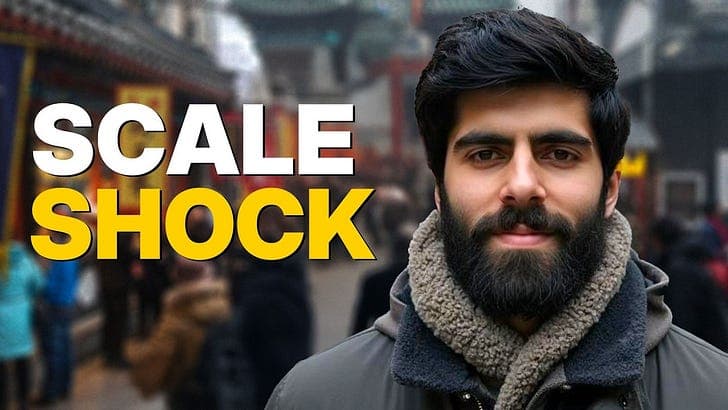
- 0:00:32 - Scale
- 0:05:50 - Vibes
- 0:11:14 - Youngsters
- 0:14:27 - Tech & AI
- 0:15:47 - Hearts & Minds
- 0:17:07 - On Travel
Key Takeaways
Introduction
- The host reflects on his two-week journey through several Chinese cities, aiming to understand the implications of AI and the unknown variables associated with China's role in it.
1. Scale
- China's infrastructure showcases a massive scale, contrasting with the US's approach to construction and urban design.
- Observations:
- Large cities and impressive architecture (e.g., temples and skyscrapers).
- Cities like Chongqing illustrate a cyberpunk aesthetic with vast urban expanses.
- Comparison to the US: China subsidizes supply while the US subsidizes demand.
2. Vibes
- The host notes mixed messages about the state of public opinion in China:
- Young nationalistic sentiment vs. older generations with reformist views.
- Expression about the regime's governance and perceived freedoms.
- Conversations reveal a blend of apathy and discontent among the populace.
3. Youngsters
- Insights into the daily lives and pressures faced by Chinese youth:
- Heavy consumption of TikTok and social media.
- Feelings of stress and anxiety due to societal expectations.
- Many young people prefer lower-paying jobs in less competitive environments over high-stress positions in major cities.
4. Tech & AI
- The Chinese tech landscape is experiencing constraints:
- Discussion with VCs and AI lab researchers highlights capital concerns.
- Regulatory pressures and a bleak IPO market affect innovation.
- Comparison of funding and investment climates in China versus the US.
5. Hearts & Minds
- Strategies for foreign engagement with Chinese people:
- Emphasis on complimenting Chinese culture and values.
- Suggestion that genuine appreciation can undermine the CCP's narrative.
6. On Travel
- The host reflects on the value of travel for personal insight:
- Travel provides a fresh perspective and prompts deeper questions about societal structures.
- Highlights the contrast between in-person experiences and virtual engagements (e.g., Zoom).
Noteworthy Discussions
- The host's encounters with locals provide a nuanced view of public sentiment, ranging from national pride to criticisms of the government.
- The disparity between the rapid infrastructural growth and the aesthetic quality of the buildings raises concerns about future urban planning.
- Observations on the lack of a vibrant public intellectual culture similar to that in the West.
Conclusion
- The episode concludes with a call for understanding China's complexities beyond stereotypes, emphasizing the potential for learning from direct experiences and conversations.
- The host expresses a desire for further insights on China's technological landscape and public opinion, inviting listeners from China to connect.
---
For more episodes and insights, visit the [Dwarkesh Podcast website](https://www.dwarkesh.com).
Written by AI. May contain mistakes. Listen to the episode to check what was said.
Transcript
Automatic transcript. May contain errors.0:00Last week I spent two weeks in China. I visited Beijing, Chengdu, Amisham, Chongqing, Shanghai, and Hongzhou. I went because, look, the big thing I tried to figure out on this podcast is what's happening in AI. And the biggest unknown variable there is what's going to happen in China. I don't even have the answer to this question. This trip was a beginning of my curiosity about the country and not the capstone. But as I learn more about China over the coming months, I hope to share what I learn with you. Scale. It's funny how China has basically the inverse problem in America. We subsidize demand and restrict supply.
0:42They subsidize supply and restrict demand. We can't rebuild fallen bridges. They build bridges to nowhere. In the most desirable cities in this country, every random Victorian house and park bench is a historic site that can't be disturbed. There, though, bulldoze a 500 -year -old temple to build an endless skyscraper complex that nobody wants to live in. My overwhelming first impression was, wow, everything is so fucking big. The cities themselves, the train stations, the airports, the towering, and endless apartment complexes. Travel often teaches you things about a country which you honestly should have included even without visiting.
1:21Obviously, I knew that China is a big country with over 1 .4 billion people. This stupidness scale of the biggest cities was impressed upon me only after I visited. Even in Emishang, a city of just half a million people, which is considered honestly a quaint countryside town by Chinese standards, we found a Buddhist temple of comical scale. We'd enter what seemed like an impressively large compound, only to discover that it was merely the entrance to an even grander structure right behind it. This pattern repeated five or six times, each subsequent building larger and more or eight than the last, like some sort of inverse nesting doll.
2:02And the place had almost no other visitors, by the way. I asked a monk at the temple how they funded this massive site in a city of just half a million people. He told us that it was simply through donations. We probed further about how such an enormous project could have been financed by just ordinary people's contributions. He responded, we've got a lot of supporters dude, and changed the topic. Chongqing is by far the coolest city I've ever visited. It's this insane cyberpunk multi level metropolis with over 20 million people. I wouldn't begin to know how to describe it, but there's a bunch of great YouTube videos which will show you what I mean.
2:44I got a really nice two floor hotel room that overlooked two rivers and one of the most insane skylines in the world for 60 bucks. I'd highly recommend visiting Chongqing if you get the chance. In 1995, a strong, immersive pointed Hubble at a seemingly empty patch of sky, the size of a grain of sand held at arms length. Instead of emptiness, the 10 day exposure revealed over 3000 galaxies. Every speck of light in the image was an entire galaxy containing billions of stars. When I went to top the tallest building in Chongqing, it looked over the city. I thought about that Hubble image. You could zoom in on any direction, and you'd find, behind the fog in the mist, beyond even perhaps the horizon, another skyscraper, each containing hundreds or thousands of people living and working.
3:36We took a 12 -hour train ride from Chongqing to Shanghai. I'm embarrassed to say that my only experience with the actual countryside was via the windows of this train. Still the sights were quite interesting. We saw again and again small patty farms surrounding a handful of 5 to 10 story skyscrapers, plopped in the seeming middle of nowhere. Even in the countryside, it seems that many people prefer to live in large buildings instead of their own small homes. I couldn't top off the train and confirm, but I saw many towns that looked quite ghostly, with no actually visible people anywhere. Outside of Beijing and Shanghai, and sometimes even within, you can tell that the skyscrapers were put up by a country with a GDP per capita of $10 ,000, and potentially half or quarter that when many of these buildings went up.
4:25America and Europe put up a ton of beautiful buildings in the early 20th century when their GDP per capita was similar to China's. One could even argue that those other structures are more aesthetic than anything we're building today in the west. Not so in China, these endless rows of skyscrapers put up in the construction frenzy of the last three decades are ugly, boxes of mostly concrete with visible blight and discoloration all over them. If the great construction binge is indeed over, it'll be a shame that China's infrastructure was built out during a period of particularly uninspired architecture.
5:02Beijing's urban design looks like something straight out of James Scott's scene like a state. The city is dominated by these enormous apartment complexes. Blocks of 10 adjacent 30 story buildings, demarcated by 8 lane roads. The government buildings follow the same pattern. Huge structures divided by extremely wide boulevards. This layout seems designed partly for social control. During zero -covid authorities would lock down tens of thousands of people by simply guarding a few entrance gates. The wide road would also make it easy to move military forces throughout the city. The only break from this pattern of the Hu Tongs, Beijing's all historic neighborhoods.
5:40But even these were in spirit completely. Only a small fraction survived Beijing's rapid modernization push. Dare I say that Beijing is too yin bi? Vibes. I got quite mixed messages about the state of public opinion in China. And this is to be expected in a society where you can't establish common knowledge. One person told me that the new generation is quite nationalistic. Unlike the older reform generation, which personally experienced both the catastrophes of Mao and also the tangible benefits of liberalization. He made the rather insightful point that this tilt in public opinion in China increasingly gives lie to the American talking point that we're against the CCP but not the Chinese people.
6:24In fact, he went on to say that the current regime is way more liberal than what would result from an actual election in China. Another person told me that these Chinese nationalists were only a vocal minority, similar to the Wokes in America circa 2020. While they make up only 10 % of the population, they aggressively shout down others on Weibo, which is China's equivalent of Twitter. Most people find them annoying but feel uncomfortable confronting them directly. And this matches what a student who just graduated from a top university they're told me. The vast majority of his classmates are simply apolitical.
7:00And in our own interactions with locals, we saw little evidence of widespread nationalism or something. And in fact, one of my Chinese speaking tripmaid would mention that he is from the UK to our taxi drivers. They would often respond quite enthusiastically. They'd say, we love the UK. There were very few foreigners. In Beijing, I might have seen half a dozen humanely across entire seas of people. In Chengdu and Chongqing, I barely remember seeing any. And this is a real shame, of course, because Chongqing is again a truly incredible destination to go visit. So rare apparently are tourists that we repeatedly got asked for selfies in Chengdu and Chongqing.
7:42Outside of Chenghai, almost nobody spoke English. And if I went again, I would definitely try to crash course some basic Chinese beforehand. This language barrier did lead to some interesting encounters. At a parking Chengdu, we met an old man who was reading a textbook which said medical English at the top of it. And he asked us to join him for some tea. I think he was just trying to practice his English. He said he loved foreigners. And his favorite period in life was the 80s and 90s when, of course, the liberal forums kicked off. And he told me that he loved ding.
8:20My tripmaid's friend's grandmother was incredibly gracious in hosting us for a dinner while we were at Amishan. We saw a beautiful, orger rug hanging on their walls. The grandfather pointed it out and explained that we have amazing relationships with minorities here in China. And I don't think this is some theatrical attempt to contradict Western propaganda. It seemed like he genuinely didn't know what is said about the treatment of orgers in the West. He was just trying to show his visitor something cool that he had. We kept trying to ask them about their own personal experience over the last seven decades as China has grown and changed.
8:54But the grandfather kept responding with lengthy monologues about military history. Here is the representative exchange. Me, who doesn't speak Chinese, to my tripmaid, who does, he asked them about what job they had when they first moved near Chengdu. The grandfather speaks in Chinese for 10 minutes and I started getting a bit impatient and I started whispering to my tripmaid, hey, what is he saying? My tripmaid, he's saying that the mountains near Chengdu make it a perfect base of retreat in case of an invasion, which Mao was worried about during the sinusovia split. Me, wait, why didn't you ask him about the first job he had?
9:30My tripmaid, dude, I did. Grandfathers are the same everywhere. People say that G is establishing a cultural personality. This may be true within the CCP culture, but I saw no evidence of it in public. I don't think I saw a single picture of G anywhere. Not on billboards, screens, or walls. People don't really bring up G in conversations. I saw some pictures of Mao, but mostly museums, and in one case, I had a T -farm that he apparently used to frequent. The hammer and sickle was also a rare sight, mostly displayed on government buildings. There are indeed cameras everywhere, and I'm going to ask a question, this is going to sound super naive, but I genuinely don't understand why.
10:14There's no crime, and I'll know you'll say it's a prevent protest, which might make sense for major streets, but even random alleyway corners will have a couple of cameras. Are they really trying to prevent somebody from fomenting an insurrection between two garbage cans? Beijing in particular had police officers at attention at what seemed like every single street corner. People were quite willing to chat openly in public spaces about the problems in the country and with the regime. And it's included people who seem to have a lot to lose. Almost everyone I talk to would acknowledge that the economy was bad, and many were willing to implicate the government's decisions.
10:53Some even casually brought up TNMN or the cultural revolution. One person was even willing to discuss the odds of a regime change at a public restaurant, though he may have been an especially careless fellow. Look to be clear, it's an authoritarian system, and I certainly wouldn't feel comfortable doing what I'm doing there. But it definitely is in North Korea. Youngsters. In a shopping mall in Changcheng, a couple of high schoolers came up to us in order to get some selfies, and this felt like a perfect opportunity to learn about young adult life in China. So I whipped out the translate app in my wee chat, and we proceeded rather clumsily to make small talk.
11:31I asked them what they did in their free time, and they said that they watched two to three hours of TikTok every single day. And I asked them what kind of videos they watched. They said it's a whole bunch of sexy girls. I laughed because I thought that they were joking, but then I asked one of them to pull out their phone, and he's to real past like 10 videos on his feed, and all of them were indeed just sexy girls. We chatted up a lot of young people in the nightlife streets. I was struck by how many young people expressed feeling stressed or overwhelmed. We met a musician in Changdu who was writing songs about youth anxiety.
12:06We chatted up some modeling school students, even they complained about the intense pressure they felt. We met a guy who had studied in Australia, but returned to China during COVID. He explained that many of his friends who had prestigious degrees are moving away from Shanghai in Beijing. You can get paid twice as high in this first two -year cities, but competitiveness is insane, and in order to actually land the high school positions, they have to work truly insane hours. 996 is not a myth. He said that many of his friends were opting for less ambitious, but lower -paying careers in smaller cities were the rents lower and the pressures manageable.
12:44I'm still puzzled by how China can have both a demographic collapse and massive youth unemployment. Because you'd think, with fewer young people being born, the ones who are around would be in high demand. And one explanation I heard while I was there is that, look, there's plenty of menial jobs that are available, but today's educated youth who've gone through high school and college just won't take the low school positions that their parents and grandparents did. So there's a real shortage of the high school jobs that would actually match their education and aspirations. I kept asking young people about the public intellectual landscape in China.
13:21Who are the recoverlons of Jordan Peterson and Sam Harris? Who are their podcasters like Joe Rogan and Lex Friedman? The sense I got while I was there is that this kind of popular intellectual ecosystem just doesn't exist there. Like sure, there's a lot of viral, Billy -Billy videos from professors talking about practical matters like how to manage your finances. But grand takes about what's happening in the world and what we should do about it. It doesn't seem like there's that much of that going on. I made a couple of effective altruists in China. They're exceptionally rare. When I asked them about why it's so hard to spread effective altruism or similar worldviews there, they told me that people there just aren't into organizing their decisions using some ideological lens.
14:06They're much more concerned with practical tangible matters. One talking point I heard again and again was that China is still a developing country. And the implication people said this seemed to be that China can't afford to pursue costly idealistic programs around climate change or social safety nets or international aid. It needs to focus on basic economic development first. Tech and AI The biggest surprise from talking to Chinese VCs and researchers at their AI labs was how capital constrained they felt. For example, moonshot AI, which is one of China's leading AI labs, raised $1 billion at a $3 billion valuation.
14:46Meanwhile, just XAI's new cluster and Memphis alone will cost $3 to $4 billion. The tech ecosystem feels quite shell -shocked from the 2021 crackdown. One VC have jokingly asked if I could help him get his money out of China. That's because if you want to keep your money in China, you're basically stuck between quite terrible options. You can either accept the measly 2 % yield from state banks or throw it into China's perpetually struggling stock market. This helps explain why valuations for Chinese companies are chronically low. The excellent opportunities really suck. Even if you build or invest in something great, there's no guarantee that your company will be able to raise the next round.
15:28And even if you do raise again and succeed, the government might randomly cancel your IPO. And even if you somehow make it to the public markets, Chinese equities have been performing terribly for years. It's a good reminder of how easy it is to completely risk an innovation landscape that depends on risk -taking investors. Hearts and minds. In China, liberal, pro -Western voices are often censored or shut it down. If I was the U .S. resident and I wanted to win hearts and minds in China, here's what I do. In every speech where I'm talking about China, I'd make a conspicuous effort to compliment Chinese people, Chinese values, and Chinese culture.
16:07I talk about how my Chinese staffers or the smartest, hardest -working people I've ever worked with. And this honestly is already probably true. I talk about how my daughter is obsessed with ancient Chinese dresses. I talk about how I'm learning Mandarin in my free time, and I have all these live aweshocks, conversations, and Mandarin.
16:31These clips would go viral on Billy -Billy and TikTok. And they'd probably stay up, because it's just a weird thing to censor. The CCP might even think that these displays of affection are grand -isem. But in reality, showing our admiration for the Chinese people, who genuinely are fucking killing it, everywhere they're not held down by communism, undermines the central narrative of the regime. The West is how bent on holding the Chinese people back, that we have no respect or understanding of their culture, and that the CCP is a necessary bulwark against these imperialists. On travel, no estimate has a good block for us about what travel is good for, and what it isn't good for.
17:13You're not going to learn that much about the risk of a war or the state of the AI race by gazing at skylines and chiding up taxi drivers. For the answers to questions like that, you need to be talking to the print slings and the researchers and the CEOs. But if you have access to those people, anyways, you don't exactly need to go to China. You can just hop in a Zoom call with these people. And for the word, that should update you in favor of doing more Zoom calls, not less travel. By the way, I did realize after going to China that I should have just hopped on Zoom calls with all my listeners in China, because the nature of the difficulty of accessing my content in China apparently has just self -selected for a really high quality audience there.
17:51And by the way, if you are in China, I would be keen to hear from you. My email is hello at dorkashpachal .com. And look, I'm keen to learn more about AI, but not just AI. I want to better understand how the protocol system works, how exactly this usually can make decisions. And especially what we can learn from that about how decisions will be made at the brink of AGI, about tech investments and nationalizations and arms races, and so on. And I'd also be keen to hear if you have suggestions for China guests for people to interview on my podcast. So what is the point of travel? I think for me, the answer is that you start asking questions about the places you visit that you wouldn't even think to ask about the place you live.
18:34And another thing I noticed was more personal. Two weeks of being AFK and of having the excuse of using a burner phone, and taking over all my messages and emails, just help clear the cash of thoughts I had about hiring and moving to the place you live. And growth and sponsorships and logistics. And give me the opportunity to just let my shower thoughts drift towards the random rabbit holes that traveling through China spawn for me. And it's a good reminder that what's lacking in life is not time. If you're working on the right thing, you can advance leaves and bounds in just eight hours. But if you're just clearing the slog, you can spend a whole lifetime staying in the same place.
From the publisher
I’m so excited with how this visualization of Notes on China turned out. Petr, thank you for such beautiful watercolor artwork. More to come!
Watch on YouTube.
----------
Timestamps
(0:00:00) - Intro
(0:00:32) - Scale
(0:05:50) - Vibes
(0:11:14) - Youngsters
(0:14:27) - Tech & AI
(0:15:47) - Hearts & Minds
(0:17:07) - On Travel
Get full access to Dwarkesh Podcast at www.dwarkesh.com/subscribe