
In short
Dwarkesh Podcast Episode Summary: Sarah C. M. Paine — Why Dictators Keep Making the Same Fatal Mistake
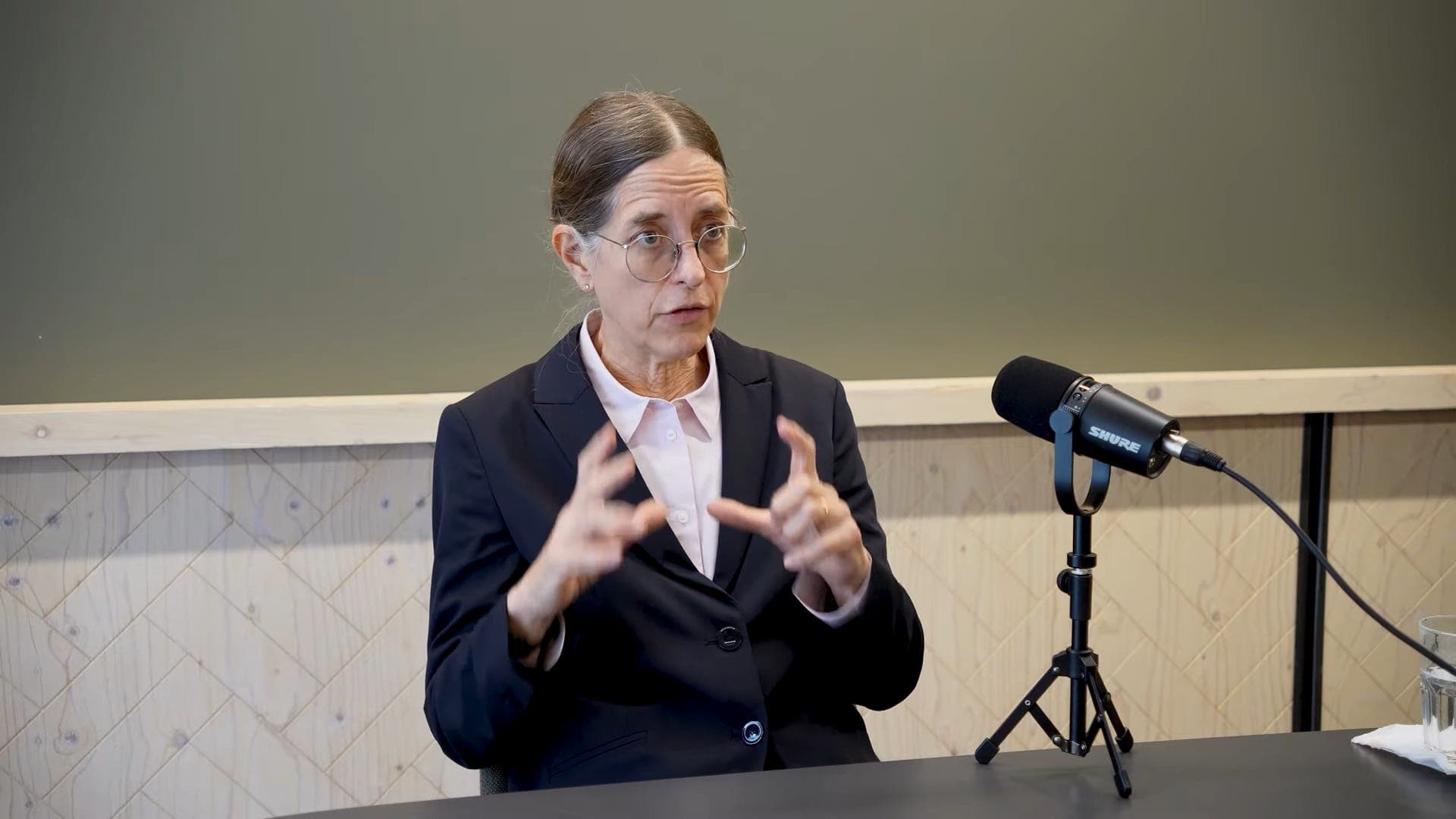
Episode Overview In this episode of the Dwarkesh Podcast, host Dwarkesh Patel interviews Sarah C. M. Paine, a Professor of History and Strategy at the Naval War College. The discussion dives deep into military history, strategy, and the recurring mistakes made by dictators throughout history. Key topics include the different strategic approaches of maritime versus continental powers, implications of historical events on modern-day conflicts, and the lessons we can learn from history to potentially avoid future errors.
Key Topics Discussed
- Grand Strategy
- Definition: Grand strategy is the integration of all relevant instruments of national power to pursue national objectives.
- Importance: The necessity of coordination among military, civilian, and economic strategies to avoid catastrophic mistakes.
- Maritime vs. Continental Powers
- Continental Powers (e.g., Russia, China) focus on territory and land dominance.
- Maritime Powers (e.g., the UK, the US) prioritize trade and commerce over territorial conquest.
- The historical context shows how these strategic orientations influence decision-making and warfare.
- Historical Context
- Discussion on the failures of various empires:
- The British Empire's fall and the rise of communism in China.
- The potential for collaboration between Axis powers (Germany, Japan) versus the Allies during WWII.
- Analysis of World War II decisions, including Hitler's blunders and Japan's overreach.
- Lessons from History
- Pivotal Errors: Dictators often make critical mistakes without a backup plan (e.g., Putin's invasion of Ukraine).
- The impact of leadership decisions on historical outcomes and the repetition of mistakes.
- Taiwan and the Future of Conflicts
- The potential for a Chinese invasion of Taiwan.
- Implications of such an action for global security and the international order.
- Study of History
- Importance of comprehensive study and understanding the context of historical events.
- The significance of languages and direct engagement with primary sources for a deeper understanding.
Key Takeaways
- Dictatorial Mistakes: Leaders like Putin and Xi Jinping may repeat historical miscalculations due to an inability to learn from past leaders' failures.
- International Relations: The dynamics of maritime and continental strategies shape modern geopolitical conflicts, highlighting the need for a nuanced approach to foreign policy.
- Lessons from History: A more profound comprehension of previous conflicts can guide contemporary leaders to avoid the pitfalls experienced by their predecessors.
- Role of Technology: The implications of modern technology in warfare and governance, especially regarding authoritarian regimes, need careful consideration.
Conclusion Sarah C. M. Paine's insights into history and strategy encourage a reflective approach to contemporary issues. By understanding the past, we can glean valuable lessons for the future, particularly concerning international relations and the behavior of authoritarian regimes. The episode emphasizes the importance of informed decision-making and the potential consequences of miscalculations in a globalized world.
---
For further exploration, you can access the full episode and transcript on the [Dwarkesh Podcast website](https://www.dwarkesh.com?utm_medium=podcast).
Written by AI. May contain mistakes. Listen to the episode to check what was said.
Transcript
Automatic transcript. May contain errors.0:00And this notion that Stalin personally is responsible for these millions of deaths, there were millions of people pulling millions of triggers for all these deaths. Initially Hitler did incredibly well. I mean his blitzkrieg incredible. If he quit right there, he would have gotten away with it and probably be considered a brilliant leader by Germans. Putin, he's made a pivotal error. He has no back down plan. He only has a double down plan. For the People's Republic to take Taiwan, I presume it's going to begin with an artillery barrage. I presume that's going to be leveling time in these cities, right?
0:34And watch how it goes in Ukraine. I can't imagine the Chinese being less brutal. You're going to say that's okay. Okay. Today I have the pleasure of speaking with Sarah Payne. She is a professor of strategy and policy at the Naval War College. She has written some of the best military history I've ever read. and we're going to get into history, strategy, all kinds of interesting topics today. My first question, does grand strategy as a concept make sense? So you have these countries, but the people are making these decisions or individuals, and they have so many individual ambitions and desires and constraints from internal politics to factions, they have to appease.
1:16It doesn't make sense to talk about countries having strategies. Before I get going, I have to make a obligatory disclaimer, which is what I'm about to say are my views. They do not necessarily represent those of the US government, let alone the US Navy Department and much plus the place where I work, which is the US Naval War Couch. Okay, so now that's over on to grand strategy. Yeah, it is used. I'm going to define grand strategy as the integration of all relevant instruments of national power in the pursuit of national objectives. If you think about modern governments in the West, they have cabinets, right?
1:53And they sit before the President. Those cabinet portfolios represent the different instruments of national power. And can you imagine trying to run foreign policy without having those people at your table and coordinating? And if you look at countries that have not coordinated all instruments, for instance Japan and World War II, versus Japan during the prior period of the major restoration, By the time the Japanese got into World War II, they're really prioritizing the army and the Navy too, but the military as their main instrument of national power, they are not coordinating with civilians, right?
2:31They assassinate those people and they got into deep dark trouble. They didn't listen to their finance minister who told them it was unaffordable. So yes, grand strategy is absolutely necessary and the idea is you have national objectives. You want to increase security somewhere? you want to improve your own security, that would be your big objective, you want to improve trade, whatever. And then you need to think about all of these different instruments of national power and how you're going to coordinate. Those who don't coordinate get into deep dark trouble. Right. So, but maybe having a coherent grand strategy is the ideal.
3:05Yes. But if we want to understand history, you just mentioned the case of Japan, a previous guest Richard Rhodes, who wrote the making of the atomic bomb, talked about how after the war, the different branches of the military were competing with each other to see who would get more funding and who had access to nuclear weapons was a big part of that and how many. So if through our history, we look and we see lots of competition between the different parts of the government in ways that explain their choices. For example, in the case of Japan, why they invaded China instead of pursuing a maritime strategy, then isn't it more useful to just talk about the factions in the individuals rather than the strategy of the country.
3:46I think it's the individuals making their arguments for what they think the strategy should be. And I'll give you an excellent example of how the sausage is made. So I was using the Eisenhower archives a number of years ago. And so here's the allied commander from World War II, then president of the United States. And what he would do is bring in all the relevant parties to whatever the decision is. He would have them recommend various courses of action and they would differ arguments and counter arguments, and then they would hash it out and come up with some kind of combination of all or choosing one of them.
4:23But yeah, there's going to be a big debate. People have all kinds of different ideas. In fact, this is one of the great strengths of democracy is you have to listen to the counter argument or the counter argument is called you lose the election and the other party is in. But the notion that you're going to streamline it and not have disagreements, that's what dictators do and they have problems that double down on bad decisions. Yeah, that's actually one of the questions I eventually wanted to ask you is that in World War II we see that many of the countries had really coordinated and also really well apportioned budgets and you didn't know spread between their different branches and in the case of Japan they didn't.
5:03I guess is democracy the answer for why the US and Britain better coordinated their? Part of it and I think part of it's a different issue. If you think about who are the strategic leaders of World War II, they're the conscripts of World War I. When I think about people slightly younger than you, maybe your age as well, if they survive to come off that front, then they come back and they want to start families. It's the Great Depression. It's terribly difficult. And then when they get to the age where they're going to be strategic leaders, they have the heart of sending their own children in. And so they thought deeply about what had gone wrong and World War I.
5:38This is in the West Prickly Britain and the United States. And their answer was institution building on a massive scale. And integrating, it is all elements of national power. This is when you have the National Security Act passed in the United States setting up all kinds of organizations, et cetera, national security council, among other things. And then you're setting up the United Nations, NATO, all manner of things that that's a lot of it is coming off of World War I, the horrific war, and then doing a better job in World War II. What I'm curious about is why, you know, you would think that the victors of a war would be the ones whose perception of reality is most inflated, whereas the losers are the one who have to come to terms with why they lost.
6:26Whereas we see the U .S. had such good leadership, you know, pan -Certus Lamey, that there's So many great generals that came out of that time, whereas in Germany, the Hitler himself fought in the World War I. So it's hard to explain why he made so many mistakes. Initially, Hitler did incredibly well. I mean, his blood's creak incredible. And think about Hitler. If he had stopped with the Anschluss, where he gets Austria, and he's going to take Czechoslovakia, and then he says, I'm uniting the German people. If he had quit right there, he would have gotten away within, probably be considered a brilliant leader by Germans.
7:01But then Hubert's right, the Blitzkrieg worked so well as generals told him he couldn't do it, of course it worked. And then he goes further and overextends, etc. When you look at what you think are great generals on the western side, they are great generals. But their success has to do with a whole lot of other people. Think about it. If we hadn't broken the codes, which is the British helped us do that. and the polls who brought out various indigma machines and other things, would it have turned out the same? If you don't have Henry Ford, who's turning his cars into tanks and the people who built Liberty ships, would it have been the same?
7:40If you do not have scientists doing the Manhattan Project, would it have been the same? And think about the enormous mobilization with the United States, where Americans are all on board and in Britain and all over. So when you go, ah, Patton, And Penn has a whole civilian architecture behind him. And so we tend to personify it as the general. It ain't so. It's everybody. Now you mentioned that if Hitler had stopped, I guess in 1939, after he had gone, you know, that expanded the borders of Germany beyond where they had ever been in history. I want you to open in on what is the latest at which he could have stopped and maybe not avoided war but at least solidified and consolidated the biggest possible empire.
8:27So various options could be one is just after 1939. Yeah, they're quick. What if he invades Poland with the Soviet Union, but he doesn't invade Russia after or declare we're on the United States and maybe at some point negotiate a piece with Britain. Would that have been possible? And what would I would after the fall of France? You then you could just control all of Europe. All right, A, I don't know, but B, I think he could make the ploy of, I'm just a continuation of Bismarck. I'm finding these limited war on uniting the German people. That one he could maybe be able to sell. That's why quit after Anshelus.
9:04The moment he's going into genocide against the Poles, because Poland's why Britain gets in the war. The one sees into Poland, we're off to a different race. Right. But is that a race he could have won or at least settled? And that maybe if it wasn't for Churchill and at some point let's say he gets out of the government and then they're just like You know what we'll just have let Hitler have Europe. He doesn't go to war with America Could he just have is it is it possible? There's a world in which Hitler just controls Europe Well, I think the problem with your question is that's not who Hitler was right?
9:34He wrote in mind conf exactly what he wanted to do and that what you're describing is not what he's about if he were about combining with the West and taking parts of the Soviet Union maybe, but that's not what he's about. He's about, it has this whole genocidal program that goes with him. There's another issue is if you take too much, like if you're gonna go kill off the poles, the poles never give up. They've went through three partitions over their history. The Polish identity never disappeared. Then if you do that, it never goes away. You will never have stable borders. And then it's easy for others to fund insurgencies, because you have this dominated population that hates being dominated.
10:14It's not stable. Then you think, after Blitz Creek, suppose that before Stalin Grat, he had stopped. And at that point, didn't you control like 30 % of the Soviet Union? He'll never hold it. He'll choke on his acquisitions. Did Germany have the power under another leader to just hold that whole section of Eurasia? All right, I'm gonna flip this whole argument. So you're talking about people doing territorial conquest, right and taking things and butchering enormous numbers of people to get it. You can watch this in real time in Ukraine This is how it goes. You're butchering a lot of people. You're destroying wealth at an incredibly rapid clip You can do that, but it's really wealth destroying since the industrial revolution in the West There has been a growing consensus that that's probably not the way to do things.
10:59We are far better or crafting international institutions, international laws, treaties that we sign onto, the parts that we want to, and then we adhere to them. And then that allows us to go all over the world, running our little credit card transactions. No one kills us, and you can make a lot of wealth doing that. And that was the conclude that if you look at a since the Industrial Revolution, who's making all the money, people who buy into that system. And the Hitler territorial expansion is in a way, it's a real throwback to improve industrial revolution way of managing your national security.
11:40This is how traditional continental empires always did it. The Industrial Revolution with economic growth, compounding economic growth offers a completely different alternative which says we're going to do compounding wealth by having rules that we can all adhere to, and then we'll run our commercial transactions that way. Now, why was Russia so robust against, not initially, but eventually, so robust against pushing back against the Germans? Despite losing tens of millions of soldiers, the government doesn't collapse, like the Tsars did in World War I, and not only that, but a communist country is able to produce these really advanced tanks in large and reliable numbers.
12:22There's so many mysteries are like, why central planning worked, why the government didn't collapse, despite the fact that Stalin killed also many of these people, he would have been hated, right? So... Ah, but Hitler killed more and was more hated. What you're thinking about is what did the Russians do? I'm going to flip it. What did the Germans do? A useful concept comes from the Samuel Griffith translation of Sunza, which talks about death ground, what's death ground. It's when your enemy puts you on death ground, which means they're going to kill you. And therefore, you have no choice but to fight, because if you don't fight your dead, and even if you fight your odds or poor, but at least that's the only way you're going to get out, the Ukrainians initially welcomed the Germans.
13:04Why? Because Stalin and friends had imposed the terrible famine of the early 1930s on them, and they couldn't imagine that anything would be worse than that until they met Nazis who then had them dig their own mass graves. It's the Ukrainians rethought that whole thing. And if you do this to people, you will conjure a formidable enemy. So that's what happened to Russia. You can see it happening to Ukraine now before your eyes. Go back before the invasion of Crimea in 2014. You've got Ukraine, which has very corrupt government. And people were at sixes and sevens about whether they want to do Ukrainian things or Russian things.
13:47OK, fast forward to now where you have Russians blowing away the people who were most loyal to them in the eastern part of the country who didn't leave. Their apartment buildings are being leveled by Russians. Ukrainians think, ah -ha, you know this idea that we can coexist with these peoples over. And our irony is Putin's forging Ukrainian national identity. And wars often do this. In the United States, we start out with our 13 colonies and they are all very different after the Revolutionary War that starts forging a national identity. And by the time you get to the end of the Civil War, where you have Northern armies, at least those people have been all over the country, they have a real sense of nation by the end of that one.
14:30It's interesting because the strategy we pursued with Germany in Japan was unconditional surrender. Now, do you think of that as different than, obviously we didn't even come to genocide or anything, but you think of that as different than the sort of total unlimited policy objectives that for example, Germany had, and Ukraine or Japan had in China, or we also pursued unconditional surrender against the South in the Civil War, right? So how do you think about it? Because that's also something where your back is up against the wall. Why did that not really result in the same kind of morale? Because the United States did not put the people of these countries on death ground.
15:05The leadership had self put themselves on death ground by where basically the problem for a Tojo Hideki is if he backs down on anything, he's out of office, and then he doesn't know what happens after that. So he personally is on career death ground. And possibly he thinks, well, we were planning to, that he would get executed at the end of the war. But the Japanese people eventually figured out that they weren't on death ground. And in fact, the Japanese people were so exhausted by the whole thing, that they, the society shattered. But the United States was never going to put the German people, start massacring them in the way that the Russians massacred the Poles when they moved in the Germans massacred the Poles.
15:51How do you wind up with eight or nine million Polish deaths in World War II? Think about that's a large number. It's because they're massacred. That'd be massacred. But there was a fire bombing of Tokyo, in Dresden, in Berlin. I think it was in your book that 84 ,000 people died in that one night in a fire bombing in Tokyo. Yes, terrible. Why did that not make them put them into mind frame of a sort of total death round? Well, I don't know, but B, Japan had been at war since 1931 in China. They've been sending large armies. This isn't like recent US wars, the counterinsurgencies in Iraq and Afghanistan.
16:27This is their sending hundreds of thousands of troops to occupy Manchuria. The Chinese don't give up. It goes on and on and on. So by the time you're getting to 1945, it's a long time. Also, they had committed atrocities in China, and they knew all about it, and the atrocities got even better. When there were wounded Japanese soldiers, their commanders ordered their fellow soldiers to execute them, because they didn't want cripples going home. They couldn't deal with them there. And so, rather than have the allies pick them up, they executed them in place. You can you imagine how Japanese soldiers felt about this?
17:05How do we explain the high moral, the famously high moral of the Japanese military, where they would refuse to surrender even after giving orders by their superiors, despite knowing about these things that you were talking about. It's true. It's because it's a different culture. So in Japanese culture, you belong to in groups or out groups. So the biggest in group that Japanese is belong to, what's Japanese people and everybody else. But within Japan, you come from a province, a locality, et cetera. You go school, education, various places. You belong to a job wherever you have and there are various units within your job.
17:41And you owe loyalty. It's obligations in the West. It's all about liberties and my rights in the East. It's about obligations to other people. And so you owe obligations to all of these organizations. And when they are soldiers of thinking about war, they're not thinking about grand strategy, they're thinking about operational success. So the moment you as a soldier start losing a battle, instead of in the West where you can retreat, you can surrender, and it's not dishonorable, because you're going to live to fight another day in Japan, you're a failure. And therefore, if you go to come home back as a failed soldier, you bring dishonor to yourself, your family, your locality, anyone you are associated with.
18:27So that's why it is so difficult for them to surrender. However, by the time you get to the end of the war, they are so exhausted. Think about it. Their economy is, I don't know, I can't remember the statistics exactly. It's something like a tenth of our economy. They have something like a thirteenth of our camera with this colder steel production. And they don't have any local oil production. their importers of food and they're not getting that food. So by the time you get to 45, they're exhausted. And it's a shattering that occurs. And finally, at the very end, you have Emperor Hito, who knew full well earlier, if he disagreed, and he didn't disagree for a long time, that he would be assassinated or be proclaimed deranged.
19:13And he had a perfectly good underage son to be used as a figurehead. that he knew that he couldn't do much about it. At the very end, when he decided he was about to get nuked, that's when he intervenes to break the deadlock and at the cabinet meetings. And there are a variety of people at the very top who realize it's over. Could here of you have intervened earlier? I doubt it. Let's go back more than five years if he intervenes when Japan is overstanding in China. Is there any chance that he could have succeeded? I doubt he thought of Japan over extending in China. What expertise does he have?
19:52He like guppies. He likes studying fish in his backyard. He has no expertise. And then of course there's the hubris of it all. That we're going to dominate this place. And they look at the Chinese as an absolutely feckless backward place. It's had all these warlord things going on. And it doesn't dawn on them that by their extreme brutality in China, the Chinese finally get it gone. We're not the problem, the Japanese are the problem. And it is what the Japanese do that superglues China and is the great impetus to nation building. You can see parallels with Hitler doing the same thing in Russia and also right now Putin's busy canonizing Zelensky and creating a real nation out of Ukraine that's never gonna forget these ongoing events.
20:43Yeah. Well, what I learned from your book that I thought was really interesting and also tragic because of the counterfactual was one of the strategies you suggested could have been that Japan could have if it thought like a continental power, it could have allied with the nationalist to beat the communist in Russia, maybe wage that almost a three -front war with Germany, the nationalist, and Japan beat the communist and prevented the communist from taking hold in China. And given the consequences of communism in Russia and China and how many lives could have been saved, if you know, I guess Hitler was being and then the communist are being, that Japanese choice just seems so tragic.
21:22Let's say they do it. That means Hitler forever. And that means if you're anything but a nice Aryan, your days are numbered. Certainly it will be that have been the most massive ethnic cleanse ever in Europe. Suppose the third -deiracate survived. Maybe it had stopped at the point you were talking about where the German lands were reconstituted. Suppose that had happened, if we look at the Soviet Union, Stalin kills more of his people than Hitler had by that point. And I wonder if we have sort of burnished Stalin's reputation a little bit because we had to ally with him in World War II. But then the cycle we see in the Soviet Union is the inherent corruption and inefficiency of the totalitarian system.
22:07And then it breaks down. There's reform because people realize how crazy things have been. If the Third Reich had survived, would we see that same cycle there with a system breaks down? And would we also remember them the same way as the Soviet Union, where it was so evil, but at some point, you just can't sustain that level of craziness forever. I suspect to be worse. Why? because the Germans are far more efficient than the Russians were in those days. And I remember as well as the Nadienshdam Mandelshdam, she was married to the poet, Osset Mandelshdam, and she was talking from the prison camps and saying, well, at least it's Russians doing this because if it were Germans, there'd be no hope.
22:46With Russians, there's always a hope because they're inefficient, and she's Russian talking about it. Hitler is he's talking about annihilating entire peoples. But so it's Stalin with killing off the Ukrainian entire classes of Ukrainians? Yeah, well his idea is that Ukrainians need to pretend they're Russians and then they can... That's fine if they do that. The question you're asking is it's not a happy ending what you're describing. It's a horrendous ending. What is a scenario in which both Hitler and Stalin could have been defeated in World War II? Is there some system of alliances or counterfactual over that happens?
23:27I think the problem is World War I. World War I has enormous consequences. It is the West, in fact, all sides allowed their generals to make strategy. No one is doing grand strategy in World War I. It's all about operational success. This is what we're all going to do. And then the generals keep sending up people, waves and waves of young men up over the trenches. And what do you think is going to happen to them if you send them over the trenches? This is how you get these horrific death rates, hundreds of thousands in a battle. It's our own day. It's inconceivable. As a result of that war, not only does it up in Europe by getting rid of the the Auster Hungarian Empire, the German Empire, the Russian Empire, gets rid of all of those.
24:18And so you have massive power vacuum. But it puts two really pernicious ideologies on steroids, fascists and communists. And that's how you get all that evil. It's out of a gross mismanagement of World War I. Once they're often running, you've got problems on your hands. And you've got a long solution. So, back to your initial question, does Grant's strategy matter? Yes, it does. Look at World War I when they didn't practice it. And when the civilians, they allowed the officers to make all decisions. Britain is a country that is maritime by geography. Britain built a continental -sized army. That is not Britain's great strength in World War I.
25:04And it was the beginning, the victory in World War I, but at horrific cost was the beginning and the end of the British Empire. Brin is the only country that fights Hitler from, all the way from 1939 to 1945, whereas Stalin only fights Hitler after he himself is invaded and in fact collaborates with him to dissect Poland. And after the war, Stalin, the Russia expands to beyond any ambition that a czar might have from Eastern Europe to menchuria, well, I guess not menchuria, but whereas the British Empire is about to collapse and it loses all its territories, what explains the differing outcomes of the two countries post World War II?
25:56And why did the post war objectives of Stalin succeed? Much more. Was it me like retaining empire versus losing empire? Yeah. OK. They're two fundamentally different kinds of empire. So Russia is a classic continental empire, what it owns is contiguous. Britain's empire was all about trade and having enough calling stations around the world. That was initially what it was all about. You got to have calling stations everywhere and then you want to get the trade through. And then what the British did is they trained and baristas all over the world, but of baristas and lawyers. And local people, right?
26:32And so it lays the basis not on purpose, but in fact, of having international law where people who are eventually gonna be running these independent countries have a legal training to use international law to their own kind of trees benefit. But anyway, so Britain has this non -contiguous event. And after the war, it does not have the ability to hang on to them particularly because nationalism, think about nationalism. Nationalism starts in the Napoleonic Wars. That's what Napoleon leverages. Is Zalovea al -Mas, his armies, because French people feel nationalism and it's incredibly powerful. And nationalism has been spreading its way around the world ever since.
Read the full transcript
27:19Once you have nationalism, have fun hanging on to a non -contiguous empire. because the locals are going to fight and resist. It will make the commercial advantages, well, they won't be commercial advantages. It'll be too expensive to hang on. So Britain, in most cases, did not fight to hang on to its empire. It left and negotiated its way out. Whereas France did the fight in Vietnam, which it lost in the fight in Algeria, which it lost. The British didn't do that. Now Russia is a different event. It's all contiguous, wherever that red army is, it can hang onto it. And so, yeah, it hangs onto Eastern Europe forever, great cost.
28:03But if you look over time, initially Stalin -Me -Bills does quite well. But then you start looking in its 60s, 70s, all of a sudden their growth rates are not like Western growth rates. And yeah, they're still growing, but the difference is growing. And the compounding effects of this are enormous. So that if you fast forward to now Russian standards of living earn, I think Russia's entire economy now, I know it's lost all these territories, is less than Mexico. There's nothing wrong with Mexico, but the Russians have this idea that they have this huge, they don't. Yeah. And the compounding is a very important point because I think Tyler Cohen is this example in one of his books that if US economic growth rates have been 1 % lower every year from 1890 to basically the 20th century, they've been 1 % lower each year.
28:56The US per capita GDP would be lower than that of Mexico's. Bingo, and this is to give a tangential comment. This is how sanctions work. People look at sanctions and go, oh, they don't work because you don't make whoever's annoying you change whatever they're doing. What they do do is they suppress growth So that whoever's annoying you over time, you're stronger and they're weaker. And the example of the impact of sanctions is compared north and south Korea. Right. It's powerful over several generations. Right. Now, but to the question about why Russia did so well. Did so well. Or in terms of after World War II ended up it so much.
29:34But before you say they did so well, look at the tens of millions of people who died. But that's my point. I mean, horrendous the cause. So I should say white Stalin did so well. Well, yeah, because other people died in his life. And he kept his dachshund. The reason I asked it in this way is I'm trying to understand the counterfactual in which it doesn't happen because it was so bad. Did the failure of FDR to be sufficiently anti -communist, especially towards the end of the war, that contributed to how much land that the Soviet Union was able to accumulate? Well, there's a choice at the end of the war.
30:08So there was some talk about whether to invade up through the Balkans and try to put Western armies there. Okay, so let's put you back in time as a serviceman and you look at it and go, do you want to lose your life by going up through the Balkans or are we going to call it a day? And also by the way, Stalin is a land power with a huge army in place. He used me to fighting it advantage. Do you really want to lose your life doing that? And you have US leaders looking at it and going, this is going to be good enough because the cost the cost is too high. Because I mean there's just sort of narrative that the FDR was almost a communist sympathizer.
30:57It wasn't that it was just this strategically didn't make sense. Well, he died, right? So we don't know fully, but he was mobilizing this kind of the United States to prepare for war while the America first is because We're saying no no isolationism is the way to go so he was preparing all of that and yeah, you have to say if you're gonna defeat Hitler If you are an offshore power like Britain and the United States are as in the Napoleonic Wars you need a local continental power with a huge army if you're going to deal with that continental problem. Russia has that army. So you're going to cooperate with Russia in the near term to get rid of the really big problem, which is Hitler who's far more efficient than the Russians are.
31:45He's also located near the high -value areas of Europe, the industrialized parts of Europe. So where Russia is further away, you're going to deal with Hitler first and then if you're going to have Stalin your ally, of course you're going to say nice things about him. Well, that doesn't make you a communist. That just is managing an alliance. We can do spittness phase while you're fighting the war. But why I believe him when he says that any odds are that there will be elections in eastern Europe once the Soviet Union. Oh, well, we tried. We tried very hard. The Britons tried very hard, particularly in Poland because think about why does Britain get into the war?
32:19It's over Poland. and it's not feasible. Right, when you get to the end of the war and the Red Army is fully in control of Poland, there is nothing we're gonna be able to do about it. Americans had enough of the fight. There's cases in history where it seems there is a hinge point. Let's see after the Bolsheviks take over Russia or after Mao is consolidating communist control of China, where I guess in general our bias is to be anti... I don't know, it's always hard to plan some takeover. But in those cases, it seems like the whole, and the way in which they got in was so tenuous and contingent that would it have been possible and desirable for us to extend greater efforts to prevent these regimes from getting in the first place, where we've had to deal with them for decades or sometimes centuries afterwards the consequences of them getting the power.
33:13Well, if you're a Russian of any persuasion, I suspect you'd be really angry that some American from across the seas is going to determine what kind of government you live under. That's a problem there. And then you asked me earlier about overextension. So we're going to go around the entire world and telling others how to live. And then there's another issue which is people like Stalin are a reflection of the country at the time. The notion that one guy Stalin weighs a magic wand and everyone does what he wants. And this notion that Stalin personally is responsible for these millions of deaths, there are millions of people pulling millions of triggers for all these deaths.
33:54There are a lot of people who think it's a good idea. So they are a reflection of a place. Now we, in order to understand this, we personify it with Stalin. It's a very earlier issue about generals. We personify how wars turn out, often by generals, because that gets us a grasp on it. But it's a much more complicated thing. How contingent was the global rise of communism? Because you've done so much research on Russia and China's history. In what percentage of worlds do the Bolsheviks take over in Russia? And if that doesn't happen, this communism spread to China and beyond because there's not the Bolshevik example and support of these global communist parties.
34:39The Russian Revolution is essential to the spread of communism. And how likely is that? And what are the chances that the White Army could have won? Did that make sense? Oh, yeah, yeah, unlikely. If you look at Russian rail networks, they had the two centers, Moscow and St. Petersburg, which the Bolsheviks controlled. So if you're anybody else, that means you're on the end of these different railway lines. And there isn't the ability to link up with everyone. Whereas the Bolsheviks at the center can fan out. And so it gives them, and they also are occupying the industrial centers. So it gives them the ability to pick off their enemies in detail on when that thing.
35:17How about in China? What are the odds that after the war the nationalist could have consolidated control of China? It's difficult the Japanese. The Nationalist don't get credit for all the fighting of Japan. There was no way to get Len Lise aid to them during the war. If you want to get Len Lise aid, and you've got to have ports and railway systems. And if you look at China, the Japanese did a very a very effective blockade of China's coast. So we're trying to fly stuff over the hump, which is the Himalayas, and you're flying jet fuel over the hump so that the planes that you also flow over the hump that you can then use them, it's just, it means there's no way to supply the nationalist armies.
36:01Yeah, they do some things in Burma, which arguably is a terrible mistake. I suspect it would have been far better leaving Shanghai Shack with all that stuff. And then it would have been useful for him in the final stages of the war to get a few wins against the Japanese to make him look good. But basically, the Japanese had eviscerated his armies. And then think about it as a communist. You constantly blame the incumbent government. Oh, all of our problems. It's all about the nationalist corruption. And they are corrupt. Don't get me wrong. But the reason they're having troubles is because of the Japanese.
36:35So the Japanese did in the nationalist. What interesting point you made in your book was that not only were so many nationalists killed in the conflict with Japan, but there was a selection effect that the sort of most competent and brave were the first soldiers to die. And that left them not the best of the corrupt left to fight the communist. That would be speculation. That's also a comment that's been made about World War One. that Britain, for instance, lost so many of its best. And so they don't go on to have children. They don't go on to become strategic leaders. They're unavailable in World War II.
37:17Can you talk more about these consequences of, what are the kinds of people who are most likely to die in a war and what are the broader consequences for? I have no idea. I mean, how would I know of statistical evidences in there? I mean, you know, the obvious is like, able -bodied people are the most likely, right? And then the more able -bodied though? It depends a lot of the people who died in World War II are civilian until they starve to death. A huge number is in fact at the end of the war, what is it? The Pacific, if you look at Japanese deaths from 41, when we get involved to 45, I can't remember the statistics, but it's like tens of thousands of Japanese are dying in 41.
37:57And you finally get up to hundreds of thousands in 44. but it's going into the millions and 45. And it's because of starvation. Is this the intentional starvation of the other planet? It's more times, it's just facts. If you're in a war where you've destroyed all transportation and the ability to get goods anywhere and you kill the farming population all over the world, you get famine. And by the way, this is an argument for when people say, well, the atomic bombs, can you avoid doing that? That ended the war really fast and probably saved millions of lives because they didn't starve. I meant the war was over and all of a sudden you're starting to ship food around.
38:37Why did a Germany in Japan continue the war after it was obviously that they would lose and speaking of the deaths? Weren't millions, I don't know if it's matured, but like a huge chunk of the deaths happened after a 43 when it was quite obvious that they were gonna lose, right? I know. Well, it's because they're all in death ground, the leadership, etc. and then the population has been fed this story that if the other side wins, they're all going to be murdered too. Wars are easy to start, and they are very tricky to end. And this has been your life, right? You have watched the wars in Iraq and Afghanistan, easy to start, very hard to get out of.
39:19And now we're into Ukraine and we'll see how long this goes on. Speaking of which, a broader question is, how well do you think the insights of scholars like you have been integrated into the thinking of military leaders where you're studying you know, people like you have written these extensive books about how empires overextend and how invasions can be more complicated than you think? To what extent does that actually percolate to the military and civilian leadership that they would decide to do in a rock war in Afghanistan or? You're asking the wrong person. You need to interview those people and ask them what influence them.
39:53At my low level in the weeds, I work at the US Naval War College. We have officers from the United States and all over the world who come on in. And then we assign them readings from the kind of scholars you're talking about, what we do in strategy and policy or case studies about wars, and have them think about, a lot of the kind of questions you're asking is what we ask students. and so we assign all these things. How much it influences that later in their career, you'd have to ask them. But surely you must be optimistic about it, or there's a reason why you do this work, right? Presumably you think that better understanding these previous situations helps leaders now make better decisions.
40:35And then I'm curious to what extent do you think that pipeline is functioning? I have no idea about the pipeline, but about me I can answer those. I grew up during the height of the Cold War and started graduate school. It was as it was ending, but I didn't know it was ending. And so I have a full -up Cold War education where I did study the Soviet Union when it was, and they had all these huge programs which no longer exist. And if you want to make good decisions, you have to be knowledgeable. You have to be able to make an accurate assessment about yourself and the other side. And so I've devoted my career to understanding the other side.
41:16And one of the things that I think Americans are particularly prone to is what I call half -court tennis. They study the world from their point of view. So otherwise, they're always focused on team America. It's like half -court tennis. They look only at their side of the court. Balls come from mysterious places. Some people get new rackets, who knows where they come from, and then somehow I'm going to play this game. Well, they know more follow football in this way. I think about people who love football in the States. They know about all the opposing teams and who's strong and blah, blah, blah.
41:47Well, foreign policy, you need to understand the other side. It's not just about me and it's all about the interaction. So I spent my life. I was always wondered about, I'd heard that the Russians were really evil, right, growing up in the Cold War, that while I learned more about it. And so I studied first learning about Russia. And then I decided I was going to learn about China. And I realized, oh, I'll learn about those two Japan's in there. So I got to learn about Japan and wind up studying their relations and tried to be open -minded and understand the world from their point of view. Not that it's right or wrong, but just trying to understand it.
42:20So for your point of view, when you're picking up a book and you want to avoid half -quart tennis, give the book a 30 -second rule. What's that? Go flip to the bibliography, flip through it for 30 seconds, and see if at least some of the citations are in the languages of the countries being discussed. Because how much respect would you have for a book about the United States that has on a single source in England? I suspect the answer would be zero. How do you consume these? Do you read the translations? Oh, no. I can make bad spelling errors in numerous languages. I read these things slowly, lots of large dictionaries.
42:57And so you can look and you say you've got my book, for Asia, go take a look at the footnotes of the back, you'll see their Russian and Japanese and Chinese and then read it slowly. Yeah, it is perhaps the best military history I've ever read and also I've really enjoyed to remember the title of your book on Japan, the Meiji. The Meiji one, it's just Imperial Japan. Right, those and I mean you also have these other textbooks and collections of essays which I which I highly recommend because of the thorough nature and the diversity of sources. Let's actually talk about your research. Maybe tell me more about where you've done research around the world and throughout your different projects.
43:35Because I think people might not know the extent to which for the years you've dug into the trenches on these. I've co -edited with my husband Bruce Elliman, a series of books, Unnaval Operations. The United States is a maritime power. If you want to understand the maritime underpinnings of US security, go to those, particularly a book on peripheral operations, expeditionary warfare, which is what we do. The expedition will be crossing the ocean to get there. And commerce rating and blockades, that that is a key to US foreign policy and the problem, is if you exercise a continental foreign policy, you're prone to get into all sorts of wars you don't need to get into.
44:21That because we have huge oceans that separate us from our problems, It's a major point of strategy of whether interview or not interview. So it's important to understand the maritime position of the United States. So there are these maritime books that if you're interested in learning about that, they're not fun reads. They exist. Now you're asking me about research. Oh, back in the day, what was it? It was a year in the Soviet Union when it was and then a year in PRC right after 10 a minute was delayed for a year. And that was quite exciting. They, the, there are armored trucks all around Beijing university, not to protect the students, but to protect themselves.
45:04Protect themselves. The mutualized something happened. Yeah, and then three years in Japan over the years and three years in Taiwan over the years of just reading deeply in the archives, Donald Rumsfeld has been much vilified the former secretary of defense. But one of his quotations I love is he said he wasn't worried about the known unknowns because he'd go after those But he's worried about the unknown unknowns and that's why you do archival research is what is it that I know nothing about that is actually Terrible important so done a bunch of archival research in Japan It that dries up about World War II that you can get into military archives and they're their foreign ministry archives, but then it's much less afterwards.
45:50And in China, well, China and Russia, they've both closed down. There's no way I wouldn't go into either country this stage. Oh, you think even more so than after TNMN or after during the Soviet Union, it's more hostile than that? We're in the Soviet Union while Gorbachev was empowered. I actually got into the foreign ministry archives there, but only for the Zara's period. And in China, you could still get into various archives using the Qing archives. And then the nationalist archives were much more closed. And then now the archives are just plain closed. Go to Russia now, get yourself arrested.
46:31And China likewise, they've shut down all of these archives. So to compensate for the last, I don't know, it's not quite 10 years, spent two months every summer going to US presidential archives. So starting with, we didn't do it quite in order, but Truman, Eisenhower, and then this last spring we just did the George Bush senior archives. And now I'm in Britain using the wonderful national archives, looking particularly from the 1917 to 1945 period. And I'm researching the Cold War and you go over the Cold War and begin to 47. I would argue the Cold War began in 1917 because we have this notion that, oh, I decide when wars begin or my side, not quite if the other side disclares war on you.
47:24And the Bolsheviks made it very clear that they had declared war on the capitalist order. And there were, Britain was much more attuned to this, worried about communist ideas in filtering till labor movements and all this other stuff. And so I'm reading their archives. Whereas the United States is much more asleep at the switch. To what extent were, not the United States as a whole maybe, but factions within the United States. This is a common sort of theme that, you know, We're the educated classes, very naive about communism, and to an extent, at that play into the delay of the United States and recognizing the Cold War.
48:05You're talking about your books about the rest star of China. Was that the name of the... And then there was another one... Now? There was another... Oh, yeah, yeah. Edgar Snow, there's Jack Reed, 13 days or something. Right. What was it? I think it's George Bernard Shaw made a comment. Is that if you haven't been a socialist before the age of 30, you have no heart. And if you remain one after the age of 30, you have no brains, that it's the idealism of it all. And World War I seem to vindicate so much of what Karl Marx said about how capitalist countries are just imperialists. They don't care about the young.
48:47They just throw them over the trenches and destroy them. Which is still ironic given how communist countries have dealt with their populations and how callously they have wasted them. That's called the big lie. And it is amazing how these big lies live and very powerful. But then when they crumble, they're gone for good. People believe, even when I was in graduate school, there are a bunch of people saying, Oh, Roshet has no drug problem. It has all these bubble ballers better. Because they're believing the Kool -Aid that's being dished out from Moscow, which is lies. Now, what explains the credulity of these people in the US and Britain on the Soviet Union's claims about frame everything from its economic growth to its humanitarian, to the way it dealt with its own populations?
49:43Why were some people so sleep to this? I don't know, but I suspect is the sins of the West are really obvious because we have an open press. And for anyone who'd been through World War I and had any male member in the family who had been at the trenches and came back and talked about it, it was pretty horrific, right? And so you can't believe that anything's worse than that. Or if you go to China under Shanghai Shack and he had a semi -free press, that's how we know about things. And so you look at the incredible corruption going on there. You go, well, how can anything be worse than this? Well, actually, it can be a lot worse than this.
50:25You talk in your book, The War of Zoneja, and I also are about the Japanese occupation of mensuria and how the industrialized the region and how at the end, I think it had 50 % higher GDP or capital than the rest of China. And it was the most industrialized part Asia outside of Japan. Japan also colonized Taiwan. We see those are some of the wealthiest parts of Asia now. Then we also see the impact of the communist counterfactual in other parts of Asia. What should we make of, in retrospect, of the impact of the Japanese occupation given the wealth of Korea, Taiwan, these other areas now? How much of the industrialization under Japan?
51:07Let's go back in time. If you get before World War II, which is one the really huge atrocities that the Imperial Japanese Army commits without any doubt and Going into someone else's country committing a atrocities. That's not a winning game plan If you go before then you think of the Meiji restoration and so they colonized Taiwan they colonized Korea It was brutal in Korea because the Koreans resisted and then the Japanese got nasty Taiwan, much less resistance to this day, the Taiwanese do not have this bitterness about Japan that the Koreans do. All right, so I'm not going to deny there wasn't that there was no, there were any brutality, there was brutality.
51:51But what the Japanese did when they moved into Korea and Taiwan is they set about creating infrastructure. They put in train lines. They set about educating people. Do they put them in the top positions? No, the top positions for Japanese. But they do things like publish all kinds of magazines. So, on credible numbers of technical journals about agronomy and things, so that you have this incredible improvement of output because you're spreading knowledge to the Taiwanese and to the Koreans. And another thing they did, unlike the United States, is they do it from the bottom up. They control the police force and the locality and from there all the way up.
52:32So, they really have local control. When the United States goes into play, went to places like Korea, excuse me, the Philippines, which happens at more or less the same time. Philippine war is like, it's early 1900s. The United States wants to deal with English speaking elites, sound familiar, who are located in the capital. And so we try to negotiate that way, but it never modernizes what goes on. These very traditional and actually not conducive to growth relationships of massive land control by land -doning, not particularly efficient classes remains. The Japanese do it by literally building local organizations from the bottom up.
53:11It's not remotely democratic. People who disagree at the time are treated brutally, do not get me wrong. But it turns out it's a very effective means for economic development. Because when they're booted in 1945, the Koreans and the Taiwanese actually something they work with and then they're often running. And Shankai Shack, who'd been horribly corrupt in the mainland, he could not do land reform in the mainland. Why? Because that's his officer corps. They will kill him. In Taiwan, he can definitely redistribute Taiwanese land. No problem there. He comes in with all the weaponry redistributes the Thai, it's bloody doing it.
53:54He offers the Taiwanese bonds. I think it's going to be like the Laosi bonds that he distributed on the mainland turns out those bonds were worth money. I don't know how many years on it was that people actually collected on there the bonds for all of this. So the Japanese actually had many of the pieces for a really effective plan for economic development. If you look at China under Deng Xiaoping, who's he imitating the Japanese, he's Deng Xiaoping is rather like a parallel his generation to the Meiji generation and think what came after the Meiji generation bad news. Well, we're in the Shijin Pink.
54:34Oh, that's a bad news. We're into bad news. But do not deny the achievements of the Meiji generation. They're enormous. And then because Japan does all the atrocities, they can no longer brag. Yeah, about these previous things. There's so many interesting things there. There's a book How Asia Works by this economist, Drissa Stadwell, where he is trying to analyze why Korea is Taiwan, Japan, but so we're all off to World War II. And in the case of Korea, he tells a story where, I think they have this factory where they're starting to export goods and they're working like six, seven hour days. And the floor manager tells one of his underlings the money that I think the reparations on which we're supporting the Second Amendment growth in Japan.
55:22Maybe they're talking about just the infrastructure in general that came at the cost, you're like your family being raped by Japan. So this is basically a blood money that we're using to grow the economy. You better work hard to make sure it was worth it. But, okay, sorry, the broader question I wanted to ask was, so the economic development with Japan is doing in, you mentioned Korea, Taiwan, if they hadn't made this mistake of fighting a war with America. Let's say something like the Japanese Empire survives and isn't crazy, militaristic. I don't even know if this is a question, but I'm just thinking about the counterfactual where you could have this really wealthy and prosperous area of Asia.
55:59Let's go back to our wonderful America firsters of the 30s and the Great Depression hits and it's a mess. And so what we decide is we're gonna have tariffs. This is the Holly Smooth tariff in 1930. We're just gonna wall it off because we gotta keep jobs for Americans. Okay, this is half -quart tennis. You're not thinking, well, what's everybody else gonna do? retaliate exactly in kind. So for the Japanese who had been good citizens within the international order, they had maintained really high positions in the League of Nations, which we'd been irresponsible and never joined. The Japanese, this pulls the rug on all the Japanese who said we need to cooperate with the international order.
56:45Japan's trade dependent. What are they going to do? No one will trade with them. They're closest people want, okay, they look at the world like, oh, well, we need an empire because we got to have it big enough so that we get food and the basics for us. And that's where it so 30 is Holly smooth, 31s invasion of Venturi. So let's go back to grand strategy. This is Americans having no grand strategy of not thinking deeply about life is an interaction right? I can tell you whatever I want to but then you're going to make your own decisions. If I don't consider what your decisions might be, I'm going to be in deep dark trouble.
57:20And I think about Holly and Smute, they didn't live to see what they brought. A lot of young men across the world died because of that, people like them, failure to think more broadly and think about it the lesson of the Great Depression. The moment the international economy starts getting a cold, there are meetings of bankers and foreign ministers the world over to prevent it from going crazy ever again. Because I realize what the consequences are. You take people who are poor already and then you have a great depression, you get desperate decisions. And then once you start a war, it's very difficult to stop.
57:57So it's a great lesson. So what Japan then is making an ugly decision because it's stuck. And so they go into Manchuria, which is where all their investments are to protect them. China's got this crazy civil war going on. Japan, if it had just sat in Manchuria and just sat, they probably would have been just fine. because they do stabilize maturia. They are bringing some income back in. But the moment that they escalate big time in 37, they were on their economy. And it takes a number of years to play out fully. It's a disaster for themselves most of all. Just broader picture of what I'm learning from these military histories, and especially your books is, there's these bigger forces of like, which country has more production and so on.
58:42But then you can have these individual mistakes, a single mistake, like a single decision point by single person, that cascades and then you know, you overestimate China and I'm going to be moral and I get to you feel like the need to invade America. And the importance of leadership in preventing these sorts of catastrophic mistakes. Yeah, no, it's pivot, what I would call pivotal error. Japan's decision to attack Pearl Harbor is a pivotal error. They are already grossly overextended in China, they want to cut out foreign aid. They think, oh, remember, the Hawaii is not a US state, doesn't it become a state dollar, $59 or something?
59:19And they probably take this racist view of Hawaiians, if whoever they think Hawaiians are. And so their idea is we're going to take a newspaper, slap the dog on the snout on the dog of quit. And instead, you create great power allies all across the Pacific for the Chinese. So yeah, there are pivotal errors that you can make at which point there is no return for the status quo anti. You have seen Putin make a pivotal error, right? He was getting away with hanging onto the Donbass and the Crimea. Now we made the pivotal error to try to take the whole Lenshallata. There is no going back on that error.
59:58Actually, that I want to ask you about that. So, you know, Japan and base Venturaria in 1931, Hillary and base Poland in 1939, and in retrospect, we think of them as part of the same great global conflict, whereas they were separated by eight years. I wonder if you think of Ukraine today as eight years down the line or the things that could come, maybe not as a consequence, but at the same time as this, which could lead to another global situation. Do you think that it could cascade into something like that? Of course, yeah, this is the problem with all of this. because of course it could, and there are many people working to prevent this from happening.
1:00:42You see all of these meetings where our leaders are meeting with each other. If you get into some global war with people with nuclear weapons, when the losers decide that rather than losing, they're going to go for one more role of the die, which is a nuclear weapon, then the question is whether the people below them will actually implement the order, etc. You know, think about low probability by high consequence events. I don't know what the probability is, but I know the consequences are huge. And the probability is iterated over many years and decades. Right. You've got to always not use nuclear weapons, right?
1:01:19And that the Pandora's already, the box has been open, the nukes are there. Especially if there's no retirement plan for Putin. Yeah. Well, one of the things that's interesting from your book, I think you mentioned the explicitly in the more than Asia, there's things that are seen by one side as we are deterring the other side, often seen as the other side as a provocation where the embargoes from the US are seen as Japan as a deadline to attack. I think that's some other examples like this. I think people who are less empathetic to the Ukraine cause of said, well, extending Nato, which we thought would be deterrence, is that was actually a provocation for Putin.
1:02:02But what should we just generally make a betlesson? First of all, I think you should look at the people living in the countries in question. So before we decide that we're the important people in the world, Americans or we're in Britain now or Britain's, and therefore anyone in between doesn't count, I believe that's wrong. So all of the countries that joined NATO desperately wanted to join NATO, right? And they've had a whole history of Russians doing terrible things to them. I'm not making it up. This is what Russia's been up to. They have been correct that Russia is going to do more terrible things.
1:02:39They were correct doing everything they could to get into NATO. And also be in the EU and they've... It's incredible in my lifetime, remembering what the standards of living, of people in Eastern Europe that the Soviet Union had dominated and what it is now, since they have been freed of Soviet domination, it's been massive compounding of standards of living. It's allowed people your age to travel the world, have a lot of aspirations in their lives, right? There's no protest in there. Yeah, well yeah, but if when you talk about oh should we deny these things because we got some egos in Russia That want to maintain a continental empire.
1:03:26I cannot or you cannot change how Russians think about things right Russians have to How they think about the things that's their decision, but If you look at Europe as a peninsula So you're better off with more insulation from Russia than not. But isn't this another case of not thinking in terms of both courts or both halves of the court in tennis where compared to the possibility of nuclear war, just nudging that a number up and down matters far more than whether another country in Eastern Europe gets to be part of NATO or not? Well, I think what was hoped and it's been said not to be a star.
1:04:08The hope was that trying to get Russia to join the party. So trying to integrate their energy supplies into Europe, paying them good money for it, have them make lots of money on that, hoping that they would invest this into their road system, which is lamentable, and hoping that they would invest this to cleaning out their business laws, which are horrendous trying to run a business there. As you watch right now, as different things get nationalized and taken over, and different business leaders who are successful wind up unaccountably dropping out of six floor windows and things or old people always seem to fall downstairs.
1:04:43I think that's a special way of, of often people. That was the hope is join the party because you will become wealthy too. Russian standards of living have been stagnating for quite a while that Putin's model of the, basically, taking over your neighbor's stuff and then whatever you have a bomb flat bringing home is it's not an efficient way to make wealth and you're killing so many people so I don't believe that we in the West have this denying people of Eastern Europe saying well actually the because of Russians have such an attitude you get to be their surface forever. I guess it's not about not that it's just But there are broader considerations for the same reason that you were talking about earlier that would not have made sense for Americans were not implausible that we would have kept fighting further to prevent the Eastern Europe at the time from succumbing to the right army.
1:05:44The Ukrainians are doing the fighting right now. But I mean the supply by tremendous amounts of Western aid. Yeah, they are, but that's pennies on the dollar. It's they're willing to to fight for their country. It's not about the cost to the United, it's not like the 40 billion or whatever. It's the, how does this nudge to the nuclear war numbers? Is, uh, where the nuclear war probably leads? Well, what's the nuclear war going to do, Putin? Uh, uh, the Ukrainian forces are just spurs. What's the target? It's going to be key, I suppose. Or, I don't know if you think so. He's out of options. So let's go bomb a NATO headquarters or something.
1:06:17I think the Chinese of whispered in his ear, and this is pure speculation, is buddy, if you do this, everybody in the, on the planet is going to get nuclear weapons. And all of a sudden, we are going to have this little small club of people with nuclear weapons. And the consequences are going to be rather horrendous. And also, look at China. It has more nuclear arm neighbors than anyone on the planet. And some of them are totally nuts. Oh, pudding himself, right? Oh, no. We'd think, oh, let's try North Korea. So the country's got starvation of the 21st century. How did you do it? Although, on this point, one of the things your books have emphasized is how often leaders make mistakes that make no strategic, make very little strategic sense and are very stupid.
1:06:58You could imagine, even though it would be very stupid for Putin to escalate, especially if he personally is going to be, you know, there's no retirement plan. I could imagine him doing very stupid things. Well, let's put stupid out of it, because it's not explanatory by saying, well, someone's stupid, because it means you write off understanding their reasoning. So a lot of Westerners, when they think of governments, think about governments operating in the interest of their population. So when their decisions don't improve standards of living security and things, then we say those aren't good decisions.
1:07:32All right, but that's not the game. In China, for instance, it's all about maintaining the monopoly of the Chinese Communist Party to rule. And if that conflicts with having higher living standards, you better believe they're choosing Communist Party. So you're going to watching those kinds of decisions going on right now, where their most talented entrepreneurs are being relieved of their enterprises. Or Putin, as you said, he's made a pivotal error. He has no back down plan. He only has a double down plan. Expect him to double down forever. And then the question is whether all the oligarchs want to keep doubling down with him and his generals or whether they, I don't know, give him something extra in his Cheerios some morning.
1:08:19Who knows? So I feel like this is one of the lessons you were actually talking about earlier, where you don't want somebody to feel like they're up against the wall, like, on on that's ground, where even if it would be an unjust sort of resolution, some sort of ceasefire or Poon can stay face, I wonder if your sort of historical lessons would bring you to that conclusion. Oh, and Poon, he will be back for more and understand that that's just the case. But then what is the solution? We can't have unconditional surrender unless we're in. No, no one's marching on a Moscow. The United States has done this for many years as you don't recognize the territories that he's taken, which means the Russians are stuck with a sanction regime of some type forever.
1:09:04And you go, oh, well, that'll weaken. Certain people won't adhere to it. It will depress Russian growth forever, which goes back to an early part of this conversation of it's really powerful. And it was some Russians who themselves, when at the very beginning, said, oh no, we are going to be like, what's Korea? Yeah, you will be. That's exactly where he's heading them. We don't control when the Russians reassess. We can't even predict when or whether they'll reassess. We can't predict whether there'll be some kind of incipient civil war in Russia, right? which would be well destabilizing by definition, who knows how that goes.
1:09:45But the Ukrainians are fighting for their country. And though, one of the things you ask me an email about is whether superior finances wins wars or something, it's superior alliance systems that win wars. And it's interesting that the Europeans, particularly the Eastern Europeans, are the leaders of all this. It isn't it fascinating that the fins and the Swedes, who forever were neutral, are now all over this. And they know. So what is it? The enemy gets a vote. The Russians have a vote. As long as the Russians are playing this game, our best bet is to support Ukrainians. Because unlike your rack, and if they where the locals do not do the bulk of the fighting.
1:10:33This is when the locals are, and that's key, whether you also were emailing me and asking me about successful versus unsuccessful interventions. When the locals do all the fighting, that's when your best starts are of helping them. Yeah. Actually speaking of a rocket in Afghanistan, after we were to our occupations of Japan and Germany, where very successful in rooting out the toxic ideologies and completely transforming the society and culture, whereas, you know, Afghanistan and Iraq, we didn't have the same effect. What explains why those occupations are so much and much more successful? Easy.
1:11:12One is a case of rebuilding institutions, and the other one is building them from scratch. You can rebuild things rapidly. You think of after the war, how things were bombed out in Western Europe, and quite rapidly, they repair buildings and things. So both Germany and Japan had had an extensive list of functioning institutions from local police officers, offices to educational systems, to governments that local provincial etc. governments and running the train systems and businesses and all of this have been absolutely functional. And so finding the expertise to recreate that is easy. And of course, Germans and Japanese may living there so they are very interested in rebuilding.
1:12:00And then what the key thing the United States then did, I know more about Japan than Germany, is the Japanese are having and hawing over what their constitution was going to be like. And so, MacArthur finally got set up. And in one week he got his staff to write this Constitution. And they're running around Tokyo going to bombed out libraries or whatever, trying to find examples of Western constitutions that can pull it all together. It was long before there's an internet where you can figure these things out. And they're figuring out what the Constitution's going to be. And so they cook it up over the week.
1:12:37And what the Japanese think the ones who are dealing with, I think, well, you know, the Americans are going to leave. And so we'll go along with this constitution, but once the Americans are out, we're going to do whatever. And when Prime Minister Yoshida, he was the first post -war Prime Minister, he said, well, we thought we could change it back. But he realized because of the vote, universal suffrage, women to vote, and there had been a certain amount of land reform, he said there wasn't going back. It permanently changed the balance of power in Japan. And another feature is the Japanese, the Imperial Japanese army had so disgraced itself.
1:13:17Their strategy had led to the fire bombing of the home islands, talk about a toll failure. So, and in Germany, the same sort of thing, you have universal elections and things, and it took a while to get the western zones united because they're all fighting with the Russians over the air zone, you eventually get two Germany's, etc. But then you have a very competent post -war generation, both in Japan and Germany, who understood the whole of the horrors of the war, that they had been put through his conscripts, and they are really intent on rebuilding their societies, and they're the miracle generations in both countries.
1:13:58There's no parallel for that in Afghanistan and Iraq, right? They've never been developed countries. Germany and Japan were developed countries. And then you think, well, how long did it take to become a developed country? Well, some people say centuries. Right. And then there's a whole other piece, which is the Germans and the Japanese had a real sense of nation, nationalism. So you don't have to worry about nation -building because they have a sense of national identity. You do worry about state buildings, who we were doing, helping with state rebuilding. Well, in Afghanistan and Iraq, there's no state.
1:14:37sense of a nation. They have these, I'm no expert on these parts of the world, but my understanding is, you know, these very different ethnic groups, many of whom want to kill each other, right? You just got a civil war going on there. I'm talking about a death ground kind of civil war where one's in power and just ruins the others and other gets in power, they ruin the other people. And that's what's going on in Afghanistan and Iraq in addition because they're internal locations right there in the middle of continent, continents, and they're surrounded by a variety of neighbors. And if you look at those neighbors, you go, a bunch of those people are going to intervene.
1:15:15And they're going to intervene in very destabilizing ways. Very difficult. In Japan, it's an island. It's hard for people to intervene. Germany, we put a lot of money into it, with having troops and getting the German army and other things up and running. and this may well be Ukraine's future, where they will be, well, they already apparently do have the finest army in Europe. And then they're gonna make it very highly defensible before it's all over, and Europeans as a group understand that it is absolutely in their interest to have an impregnable border around Ukraine. It protects them all, and Europe doesn't threaten Russia.
1:15:59they would love it if Russia would join the party. Join the rulespace order. You'll make money. You'll do well, except the oligarchs in question, this real minority of people who run Russia, and who they personally won't do as well, while now they're war criminals so they're at a lock. Speaking of miracle generations, the major generation, as you have written about, so many reforms learned from the West, improved every aspect of Japanese government and economics and education and law and whatever. And within the generation, then you have people coming to power who make quagmire after quagmire, make me stay after mistake.
1:16:43And there's other cases like this where, there's some cases where the country's manages solves succession problem after a really competent generation. You know, in Singapore, after Lee Kwan -yu, it seems like the government has, they've kept up the system which promoted but it's such a efficient bureaucrats, whereas other cases where after Bismarck in Germany, you have the mistakes of the leftover one. What was the feeling that the major generation made that their level of grand strategy and insight was not carried over? Well, I wouldn't pick on them because they're brilliant. It's amazing what they achieved.
1:17:17They go, well, so it wasn't perfect, no one's perfect. So I wouldn't pick on that particular generation. their brilliant as our Japan's postwar leaders. The way I look at it goes back to your initial question about grand strategy. Is institutions are really important? Institution's structure decision making. Now it's very difficult to figure out what types of institutions to build and when you see failings in them, you know, I'm going to do something next time. But this again is the brilliance of this evolving maritime order in which we live, where people sign And onto the things in which it's in their interest to sign onto them, like you sign onto treaties, and then you have provisos or the parts you don't want.
1:18:02And you join these international organizations and then you influence how they develop, etc. So these organizations have been instrumental, the ones built right after World War II in holding the peace. Japan, MacArthur's Constitution, and then Japan's subsequent leaders has worked on improving the institutions that they have, but institutions take a long, long time to build. I think about it, it's sort of like a spider's web, so that you spin, spin, spin this thing that's like Gossamer, but then you spend enough of it and then it really holds, but then there are people like Hitler who come through and they undo the work of others.
1:18:43Bismarck, when you ask about him, it's highly personalistic. That's not about an institution. That's about a guy leveraging the king. There's a reason for getting rid of royalty running the show. And then, yeah, they're emerging institutions in Germany, a general staff and some other things that are very important. I was about to mention, well, another maybe generation that managed to create good institutions was the American founders. But then there was also the failure that led to the Civil War, right? So even there, seven institutions were weak. Our original sin. Slavery. Yeah. We were talking about, you know, Taiwan and its development.
1:19:17We'll get into Taiwan in a second as part of the invasion. But let's talk about Taiwan. So that's where the Nationalists went after the Chinese Civil War. I think until recently, the narrative has been that the CCP is incredibly competent and very good at engineering good policies and economic growth in China, where, and then we look at Taiwan and obviously it's so much richer than China in a per capita basis. Would that have been what China would have been like if the nationalists had remained in power? Unknown. Because when the nationalists came to Taiwan, they were in really deep dark trouble.
1:19:59And one of the ways that Taiwanese have maintained the moral high ground, which is necessary for them in order to guarantee foreign aid, is being democratic. that their really exposed position put enormous pressure on them to democratize, because the United States is sitting on them and going, you need to get democratic. And also the nationalist engaged on a real comprehensive after -action report on Taiwan and they concluded, why did we lose? Well, it was this incredible corruption and the need to do land reform. I don't think land reform was feasible for Shanghai's check on the mainland. my wife because that's his power base, all the landowners.
1:20:38And you try to reform them, you'll get a headshot. Whereas on Taiwan, it was bloody doing land reform. The local Taiwanese did not appreciate getting expropriated and there were massacres over it. Although in Korea, I think Park did land reform and that was a native... Singapore apparently didn't even earlier. It was one in the land reform they did there was the Japanese had large expropriated areas. So it's easier to do that. And so he, uh, Singapore does land reform immediately. It's not been well studied and it'd be fascinating if someone actually did study it. And it probably helps explain why tremendous loyalty within the Korean armed forces to the South Korean government.
1:21:25Yeah, and how each of our studies will make the interesting point that because these countries are so Overflowing with labor that it makes sense in these countries So instead of having a single landowners with large tract of land having lots of peasants who can tend Mechanization maybe not the best idea when you have so much labor that can actually do these things that are not scalable Okay, anyways, going back to Taiwan. So modern day now China because of zero COVID less for an investment, state intervention in the economy. I think consumers aren't spending as much. The economy, the growth rate is slowing.
1:22:04And obviously because of demographics, does this increase or decrease the odds of Chinese action on Taiwan? You know, I don't know. I honestly don't know. But it's again, I think a better way of looking at it, or at least the way I would look at it, is talk about looking at consequences, high consequence. It's guaranteed that if they go into Taiwan, it is a high consequence of that without a doubt. And what the odds are, I don't know. However, if you listen to their speeches, they tell you they're going to do it, right? They're consistent. And the West learned that you read and probable speeches, right?
1:22:41People read my comments and said, oh, this is a nutcase known, whatever do that. Well, it quite accurately represented people, even in dictatorships, they have to transmit message to population and they quite often very accurately tell you what they're going to do. Putin has been quite clear what he's been up to. Stalin was very clear what he was up to. So let's judge Xi Jinping at his word and he says he's going to go for it. Now whether he's still in power, I don't know. But here's a problem for which we don't have a solution that Chinese people have to figure out the solution. The Chinese Communist Party, to me, has clearly made the decision that it wants to maintain a monopoly of political power.
1:23:24And for a while, they're into Deng Xiaoping, that worked because the reforms that they wanted to make for agriculture and things, they can maintain their monopoly of power and but do things that allowed people to get much wealthier. Right? And so that went in tandem for a number of years. Now, we're at the inflection point where you have a lot of educated people and businesses who are really integrated in the world and they want to make autonomous decisions. Also you went up with some very large, very successful companies and they have a quite bit of cloud. And the Communist Party worries about this because what do people want at that point is probably some influence over political decisions.
1:24:05And the Communist Party said that's off the table. Okay, if it's off the table, how do you keep it off the table? all the things that you're talking about. This 24 -7 surveillance state, think of it. Since you have a computer science background, you'd have better understanding this than I. Think about the cost. If the United States had a 24 -7 surveillance system, where you're literally doing it down to who's J -walking, who's not in order to put it into their social security score, who's kid in their classrooms rolling their eyes at their teachers, I kid you not, and putting it down as a ding on that kid's social.
1:24:42And also, who knows what's accurate and inaccurate on the facial recognition stuff. So they start chalking up the wrong scores for the wrong people. The cost would be incredible. Just that all the people power you're gonna have to devote to this. And then all the false positives, which will be incendiary for the people who are falsely considered disloyal. This is where they're at. And now we're doing the National Disappearing Act where, oh, we don't know where they're their minister of defense. He's suddenly like, no, he's a non -person and oh by the way, what happened to the foreign minister?
1:25:17Give me a break. Let's do grown -ups today. Yeah, and then the cost is also surrogorous in comparison to, especially, maybe you can tell me more of this, but in the rural areas especially aren't there so many cheap interventions of, you know, give them like iron supplements and folic acid and give them, you know, $20 eyeglasses. And you could raise the, the childhood nutrition that is lacking in rural parts of China. But so much that would actually be worth it for the government if you think of the additional tax revenue that healthy people can bring in the future. They're not going to, they're so worried about it.
1:25:49Xi Jinping's another guy is making a series of pivotal errors. I mean, his handling COVID was just stupid. Right? COVID started in China. Go investigate it and figure out where it came from. And then it would be a non starter. But instead they do the massive coverup, et cetera. And then all of a sudden, instead of just being unlucky that COVID started there, it's all of a sudden, no, you're complicit. And a lot of people have died across the globe over this. And it came from you, and you clearly were letting people out of the country knowing full well that they were vectors of spreading this disease.
1:26:24This is a problem. The rest of the world's not gonna forget. There are just too many millions of people who died. You were talking about the cost of the surveillance. I'm actually this really interesting question of what percentage of the Soviet Union's GDP was dedicated to the NKVD or surveillance? I think when we were, the United States was trying to evaluate what the load of the military was on the economy and the CIA was trying to figure it out to the best of their ability. And then because they don't have a convertible currency, it's really difficult to, and then and they're busy lying to each other.
1:27:00That's a whole other thing in communist states and dictatorships, you're incentivized to lie about everything. And think about the compounding effects of these lies. It means I can't make good decisions because everyone around me is lying. And then it gets worse at the top. You're gonna watch as these cask these caskating things happen to the Chinese and the Russians as a result. So it turned out at the end of the Cold War, Gosh, I can't remember it accurately over the top of my head. But if you did the whole military industrial complex, it's well over half their economy is being devoted to this.
1:27:37Which is crazy because during the peak of World War II, the fraction of US GDP was like 45 % is like. That's right. I think they think Nazis were 55. But don't call it, I may be remembering these incorrectly. But it was horrific in Russia and the problem for Russia. So if in the Soviet Union, so let's say we're running little subunits, but I'm afraid I'm not going to get enough parts in. So I lie about how few I have, even though I got lots more. And then you're busy lying. So then when we compile macroeconomic data, and we don't really know what the price of anything is, we don't know the value of labor of capital, and we don't know what consumers really want.
1:28:16And so Russia is massively misallocating capital labor and they don't understand computer preferences. So when you asked me earlier, are people stupid? It's more, they've got all this incorrect data. And by the time they realize that something's wrong, they're already in a deep dark crisis. This is late in Brezhnav where the numbers are just a mass and so in Gorbachev comes in and it's not. in 1985, it's just a massive implosion. And then he tries to save the beast, and of course his cure kills the beast. Speaking of which, by the way, so after World War II, the production in Germany and Japan, these companies that were making weapons, you know, Mitsubishi and Volkswagen and BMW, now they become world class consumer, or they produce WorldCraft consumer products, GE in America.
1:29:17Whereas in Russia, they have, is it the T -34, the tank that was the like, the art? Yeah, yeah, yeah. Well, apparently that thing was built on American chastise. Apparently it's based on our technology that we weren't interested, and of course they took the chastise, et cetera. But in World War II, do not forget about Len Lies. This is another lesson of World War I. Imperial Russia fell, disaster, absolute disaster. Why did they fall? Well, no one bothered to supply them with a really focused on supplying them with adequate weapons. They had huge armies, but they're sending very young men in without rifles and saying, well, when you get there, go pick one off.
1:29:58I thought that body. Yeah, I think that means they've done no training. And you're just wasting people. And then can you imagine being that soldier and thinking, this is how my government treats me. So we're a war two. The emphasis on supplying Russia is huge. So what do we supply? We supply all the things that make them move. So it's rolling stock and getting their train lines going. They produce planes, but they can't do the jet fuel. It's high octane. You may know more about that than I do. We're providing all that. Russians will starve. We provide a tremendous amount of food. Spam, which on email spam.
1:30:38It comes from the that can pork and whatever. Well, actually, if you think about it, you get one of those little spam cans, that'll keep it going. And we spent that all over the world. And that's the origin of spam on the computer. People, by the end of World War II, were so sick of spam. But anyway, we fed the Russians, and we provided them all kinds of things that without it, they could not have fought. So fast forward now, we're providing those things for Ukraine. Right. The Ukrainians can feed themselves, et cetera. I'd keep them in the fight. Why didn't the impressive industrial war output of the Soviet Union transfer into the same way that it did in Germany and Japan and these consumer brands?
1:31:23And they are model for development. This is a big difference between their model for development and the MAG model. The communist model is heavy industry and largely for the military. And the MAG, even though they wind up with the big military, it's about getting these consumer products in and light industry. And then they go on to do heavy industry. And it turns out that the MAG model is a better one. It just works better for an economy. And so the Russians aren't interested in doing consumer goods, right? It's all about the communist power being having monopolizing power and then playing God in whatever region they control, right?
1:32:06And dictating whether other people live or die. Yeah, yep. Okay, let's go back to Taiwan. What are the odds you would give of a Taiwan conflict? Maybe you can give me your, like, over under five years, ten years, 20 years. I have no idea. I think you have to prepare for it. And it will best position you to deter it, even though you may fail at deterring it. And then if you fail at deterring it, it will best position you to deal if bad things happen. Bigger than they will work all it in seeing how people are talking about this. I mean, how likely is it that the US would actually directly intervene on the behalf of Taiwan and directly fight the Chinese?
1:32:46I think that if you think about Taiwan, what is it? It's a country of 20 plus million people. If you look across the globe, how many countries have about 20 million plus people? What? Yeah, it's probably most countries in the world to kind of that size us. So if you say it's okay to go level a country because for the people's republic to take Taiwan, I presume it's going to begin with an artillery barrage. I presume that's going to be leveling Taiwanese cities, right? You can watch how it goes in Ukraine. I can't imagine the Chinese being less brutal. You're going to say that's okay. Our whole, think about this maritime system of international law.
1:33:27What's, it's the fundamental principle of it all. It's sovereignty. It's the notion that just because you're big, you can't go and destroy someone who's small. This is the fundamental basics of the whole thing. Yeah. Although, in the case of Taiwan, it's hard to argue that one island that is right off the coast of China and which China unlike any other area has for decades said that they want to conquer. It's not like they've been saying, well, once you get Taiwan, we also really want to conquer India and you know, they've just been redoing their maps about what they say. What are our predishes are?
1:34:04That would be a detail, right? Yeah. But it just it's hard to see they get the conquer Taiwan and they get involved into then in Korea, like what I mean, what's the cascading effect of worried about? Well, look at Chinese history. It is a continental empire. What is the paradigm? Territory conquest. Take a look at it. This is it. And they're not off that paradigm. They're still on it. On the doctrine of strategic ambiguity. What is your opinion on this? Because World War I, I mean, you have a belligerence who are surprised that it wasn't the Kaiser surprise that Brinn intervened on on behalf of Belgium and he was so upset about it.
1:34:43Those are the kinds of, I don't know the details, but that man was someone said, what, he said, wasn't the sharpest cool in the porcupine? But it just generally, is it wise to have this, like, will they won't they attitude where there's a do of a good job of deterring them? I think you wanna be ambiguous in the United States because otherwise it would enable Taiwan to autonomously do, like under Shanghai Shaq, if we had been unambiguous, the man might have done crazy stuff. and then all of a sudden we get pulled into a world war. Right, but if you think about a Taiwan conflict, just because there's a conflict there, does not mean the United States has to send its military into what to toe to toe.
1:35:24I would think it would give China a long -lasting time out from the international world order. Right? It'll be sanctioned. Think about, this is what's so tragic about China. Think about how many people have been lifted out of poverty, so many since Dong Xiaoping, hundreds of millions. It is a great achievement of our lifetimes. It's happened since you were born. And why did that happen? It's China's reintegration into the rest of the world of joining the maritime order, following the basic credit card rules of paying for transactions and then your transactions are also guaranteed. That is the win for China, the true win.
1:36:05And taking Taiwan, who needs it? The Taiwanese are perfectly fine doing their own thing, and they've made it clear they don't want to be taken over by force. Who would be? So the problem in China is a Communist party wants to maintain its monopoly on power. And so it used to claim the moral rectitude card. Well, they can't do that anymore. They're so corrupt. And they used to claim the economic growth card. Well, that one's going away. They're left with one card. It's the nationalism card. And they're playing it by heart because it's a unifying thing for Chinese, for the Han ethnic group in China, who constitute the overwhelming majority that Taiwan should be theirs.
1:36:47It's a mistake. It will be a pivotal error if they make that mistake. But guess what? Other countries cannot control what the Chinese government decides to do. It's foolish to think you can control it. It's beyond your abilities. Although we can't control whether we get a head war with another global superpower, what are the odds you would give to a war between China and the U .S. going nuclear? It would be the most catastrophic error of the hydrogen wall for the United States and China to do a military conflict. There will be no winners. There will be massive numbers of losers. All right, let's talk about nuclear weapons for a minute.
1:37:33Think about how Americans are so mad at each other about wearing a mask or not wearing a mask. Talk about something that's stupid. Talk about something that's not a big deal wearing a mask or not. If anybody nukes anybody else's city, do you think the world is going to be remotely the same way? Can you imagine, so we can't even be logical about masks or just letting other people do do their thing about mass. We can't even do that in the United States. So we have many diplomats who are doing their best to prevent this eventuality. But understand that we do not control the decisions of others. For instance, I'm gonna make best so you don't have children.
1:38:17But if you ever have children and little ones, right? The ones that you could pick up and put down, they will wind up doing things that you cannot, you're genetically related Why did you do these people? You love these people. And they will do stuff that you think is just wild. And you will put enormous pressure on them not to do these things and they'll do it anyway. So the notion that we can take a country of one billion in change and make them do anything. Right. But the reason I ask is, in island of 20 million people, as you said, there's many countries of the time you know, a million people, is that worth getting into an altercation that could potentially lead to a nuclear war.
1:38:56Ah, the global order, I'm going back to the circle, it's based on sovereignty. If you allow this, it doesn't mean you have to go to a nuclear war. You just never recognize whatever it is. And then you sanction China from then until Kingdom come so that they are not part of the maritime trading order. And you tell them they need to cough up Taiwan. on. Understanding China and the way the government works could the CCP survive a failure to take Taiwan. If they invaded, they fail. And then because of that, the kick out of the global order, what do you think happens to the CCP? I don't know, but look at North Korea.
1:39:38Talk about a failed place. It's amazing to me how long the Kim dynasty has maintained its power. It's just unbelievable. They're starving. So don't count on any short -term ending. Think about those countries that are willing to cooperate with each other, not invade, negotiate their disagreements, work through international organizations, improve international organizations. That world is what you want to protect, and you want to allow people to come and join. So if Russia changes its mind, new government, et cetera, you want to bring them back into just the way Japan and Germany were brought back in.
1:40:22You want to protect that order forever. Our prosperity is based on it. And it involves serious defense spending, et cetera. And others who want to do the problem of the Communist Party, paradigm of we're going to have a monopoly, it's a root to poverty. Think about it. When When the communists took over, they didn't restore grain harvest that had happened during the Civil War, you know, the 1930s version until after Mao was dead. It's incredible. It's a really lousy system for promoting economic growth, and it matters in a poor country, right? It's going to determine your poor, per capita standard of living, and the poorer you are, the more that makes a huge difference to you to have some of these.
1:41:07Communism doesn't produce well. It's an incredibly effective way for taking power within a failing state and putting a dictatorship in power It's incredibly good at that But it doesn't deliver prosperity afterwards since world were to I don't know if this is fair to say that our Navy has not been tested at the same extent as our Air Force and Army and the engagements we've had none of our forces have been as tested The Marines the most of the most in the army because they're doing land engagements But if you think that a rack or Afghanistan's a peer competitor, give me a break. Yeah. I think what our GDP is like 325 times that Afghanistan.
1:41:46It is a different event, which is why the Ukrainians are looking at us when they get advice from us going, excuse me. Yeah, so given that that's the case, I mean, how confident should we be that, you know, we have these like $15 billion carriers. And even in these war games, many of them go down. I was talking to the other person in the interview in the UK was Dominic Cummings who was the chief advisor to the previous government And he said that in the war games for the British carriers to survive they have to exit the Zone of contention which would make them useless so How would it be about our preparedness for a naval war?
1:42:24You always need to be prepared. You have to be thinking about it constantly what our carriers have incredibly useful is is going toe to toe with a peer competitor, what you're describing, the vulnerabilities are absolutely there, particularly if you want to get up close and personal. On the other hand, what a carrier provides you is all over the world. It gives you a base. So if you're not going after a peer competitor, then they're incredibly useful, right? And we own them. So the question now is going forward, do you want to build more carriers? or do you want to build something smaller that just takes drones?
1:43:01Or what are you doing? And that's the big decision, and I'm not qualified to answer it, but for the ones that you have, they're tremendously useful for doing these non -pure events. And again, I am not qualified to answer operational questions like these. Yeah, I guess I am curious about it, though, because we are seeing in Ukraine, you know, these drones that are taking out extremely expensive tanks. Big O. The impact of asymmetric warfare, How do you see that shaping? Or fear has always been asymmetric. It's not that the game. You figure out whatever they've got, and then you do something different, which is the asymmetry.
1:43:35Right, or the thing of just having like cheap drone armies that can, you know, debilitate billion dollar or mill of other equipment. This is it. This is it. And you're very much part of the generation going back to your education and computer science, is, and these technologies, and apparently, this, the printing that they're doing, 3D printing that they're doing in Ukraine, yeah, it's going to absolutely change things. I don't know to what degree I'm not an expert. But, yeah, and the other issue with the United States is we build a lot of these very expensive platforms, these ships and things, and airplanes, and then you wonder whether you can afford to lose them, and then thinking creatively, this is where war games come into play and planning is, okay, what would be the value of these smaller things?
1:44:25Can they carry the water when the time comes, etc? And I think with you're going to learn a lot from this Ukraine war about what works and what doesn't. What is your opinion on how competent and effective the military is in general? Because given that there hasn't been like a huge war for quite a while, have they been able to maintain the standards and the efficiency? I am qualified to answer that. Literally, I mean, I teach at the Naval War College, but that does not make me an expert on how the Pentagon runs its business. I think the general feeling about the federal government is they're incredible inefficiencies, but it's very difficult to get rid of them.
1:45:08I mean, in the civilian part of it as well, once people get a federal service job, it's very difficult to get rid of that particular job, et etc. Are there plans around the Naval War College or elsewhere about how to how to make the system more modern and efficient? I teach in the strategy department. So we do strategy not all of this other stuff. Mm -hmm. Is the era of great generals over? So, you know, through history we have, and maybe you answered this already when you said that we overemphasize looking back how much these generals mattered. But for some reason or another they've become, you know, historically famous people like One more is our patent or MacArthur and so on.
1:45:48Whereas I can't even, at the top of my head, like name a famous general of Iraq and a few other. I can name one. I'm sure you have it. Yeah, but. Yeah, Velaevi Zolution, who runs the Ukrainian Army. Think about the people you're picking. You're picking people who were part of a global war, right? A really high stakes war. And then as I pointed out, we use these generals personify a whole group of people, right? So I suspect the ones you're going to find are going to be the ones in Ukraine. And the fact that they've done as well as they have done so far is incredible. And then it's not just the generals there, right?
1:46:33You have Zelensky, who is the public face of diplomacy. It's incredible, right? From the night it was his little sound invite is, what is it? I don't want to tax it. Right. And then if you think of the people there who are running the rail system, who kept, have kept things supplied, or the people who are replying their electric power plans, there are so many Ukrainians of different professions who are holding that thing together. So there are plenty of great people to be found there. What is the process that leads to the loss of civilian control of the military? For example, in Japan, you know, and why has the US been robust against this?
1:47:13In Japan, it's interesting. If you go back to the Meiji leaders, so there who are they? They're the people who want a civil war against the last Tokugawa Shogun. And they wound up, if you look at their career paths, is they had civil and military jobs as they swapped around, and they all knew each other so that the head of the Army and the prime ministers, they all interacted, but they didn't create an institutional mechanism. They did have a cabinet, but they didn't have a full up legal forcing together of all the civil and military parts of the government and have them operate on a rather level playing field, the Army dominates.
1:47:56So when that generation dies, everyone gets much more stovepike careers, so they're much better educated than their parents and grandparents have been, but their education would be strictly in the army. As opposed to, oh well, the founder of the army also founded the police force. And he knew perfectly well, he knew the finance minister. And had great respect for the finance minister. And then you have people not respecting each other. And I would suspect I'm making this up, because I don't know the details in China, but if you go about Deng Xiaoping, he's on the long march, he's one of the younger members.
1:48:30He must know everybody. And I know he's in and out of prison, so he knows the people or in and he knows the people or out. And so then when you get to Xi Jinping, there are much more stovepipe group of people. They don't have the institutions. Actually, in China, they do have institutions for party control over the government. So that's how communist governments have maintained very good control over their militaries. In fact, if you look at communists, they're really good at civilian control over militaries. So yeah, they have. In fact, that was Trotsky's contribution to the back in the Russian Revolution of how you take a bunch of white officers and veterans of World War I, but keep track of them.
1:49:12It has to do with political and military commissars. So the military commissars, the officer who's actually professional, the political commissars one who's got a connection with the secret police, who if the military commissar doesn't do as told, they'll come in and kill him. Maybe his whole family for good luck. And it's very effective in the commissar system. It's these paired things trying to still got the commissar system. In the US though, in the World War College, you have these systems of the officers from, like, I don't know, I don't know, but the actual progression looks like they're from like West Point or whatever.
1:49:48Are they seeing the civilian vote from the time in which the higher levels of the military, from the education to their promotion? and are they in the military the entire time or do they also have this wide, widespread experience? Military officers, they have an extensive education. It's often a succession of MA degrees. So some of them in very technical things, like I don't know if they're gonna be a nuclear subs, you better know how to run the nuclear plant and engineering things. And then they come later on to places like the Naval War College to learn about strategy and other things. In terms of civil control over the military, if you go back to the American Revolution, kind of an army couldn't even get funding.
1:50:29Right, and it goes very gradually over time. And then you have MacArthur, who is just ignoring Truman, and he's making all kinds of threats. He, Truman thinks he's got a way of settling out the Korean War, and MacArthur says things that overturn that. So eventually you have MacArthur getting fired, which is telling military officers you can't do that. And then when you got, what was it under Brock Obama? We have some military officers shooting off their mouths and they get fired instantly. To now we have full -up civilian control, but he was with Mark MacArthur. He was trying to run policy. And he got himself fired, but he was tremendously popular.
1:51:16And it's the joint chiefs of staff who actually fire him. They agree with Chuma. They don't want MacArthur having his finger on the atomic button that scares him to death because I think he'll press it. Why have the communist speaking of the political and military commissar's and their system, why have they been so good at propaganda historically? Are you talking the wars of Asia about how despite the imperial things they did and the ways in which they sabotaged things, they had much better PR than the Americans ended of having her. Let's think about how communist started. So if you get 1917, the Bolsheviks, they're really weak.
1:51:54And you think about people who are weak. What can you do? What words? Words are key. So you're using words to cultivate loyalty so you can get cadres to come your way. And you're going to use words, because since you don't have the ability to threaten people militarily, you're going to use words to try to undermine them. And we've seen this happen the world over. I think wasn't the story of Al -Qaeda was pretty good at words and doing their recruiting, et cetera. And then it takes the great powers that are target of this quite a while to realize that whoever these people are, like the Bolsheviks, you think they're crazy people, ignore them.
1:52:36But then all of a sudden, well, gradually, you see the chemo effects and go, they are a threat. And then you need to get going with your own information warfare. And I'll give you an example. The United States had quite a robust information warfare during the Cold War and by the later phases. And it involved like voice of America and BBC. It basically just tell people the truth. Tell people the truth about just the news in the world, relative standards, only, and just pour it in. And the cumulative effects will be to destroy the allegiance of people in their own governments, which is what happened.
1:53:13At the end of the Cold War in 1991, it's not that we just cease funding that because we thought it's over, end of history, right? And then I remember I was at on sabbatical in California at the Hoover Institution, and one of the people there was a great expert on Ukraine, and this one there was RTV on, and he said RTV is really dangerous. The Russian propaganda station, I said, oh, it's ludicrous. They're just telling nuts stories. He was right. I was wrong. He was absolutely right that those crazy stories started getting a life of their own. And then if you look at Biden when this war was just about to begin in Ukraine, he made the decision to release a lot of the intelligence about, hey, they're about to invade.
1:53:58Here's where they're coming. And he is completely buried, Putin, in the information war. So it took us a while to wake up. Now we're back. And if you look at it right lately, what is it? Is it the US ambassador in Japan has some really lively tweets about the Chinese and hilarious you need to Google them if you haven't read them? We're back on and actually the United States is really good. Hollywood, the movies. We have so much talent in this department. So a lot of us just face not telling the truth. But lies as we've noticed take a long, long time. It's very easy to tell a lie. It takes a long time to get all the facts to prove it is a lie.
1:54:46Why was the axis so much worse at collaborating than the allies? Especially given the fact that the axes were at least, It seemed like they should be much greater collaboration. They were all of these nationalistic movements, whereas the allies, you have communists and democracies. And in your book, you talk about when Japan's fighting Russia, Germany has a non -aggression pact with Russia. When Germany does Operation Barbarossa on Russia, Japan has a non -aggression with Russia. So if they had a two front war, I mean, what could have happened? When Pearl Harbor happens, Germany isn't warned, but then gets dragged into a war against America.
1:55:27Yeah, why didn't the access better coordinate? All right, I think I'm gonna turn your question inside out. So you're thinking about, I'm thinking about a alliance system. So what did one side do versus the other side do? So I'm thinking about the alliance itself, flip it around to the enemy, which is the access powers put their enemies on death ground. That is why the war began. that is an incredibly clarifying event. And that got Britain, which really, really hated the communists to ally with them immediately. Forever, Britain thought that the dangerous thing were the communists, not the fascists in Germany.
1:56:10But then when the Germans worked their wonders, the German, the German, Britain's got awoo, it's the communists who are the primary threat. And so if you look at it that way, that's one thing. Another thing, another concept to think about our primary enemies versus secondary enemy. So if I ask you the question for Germany to get what it's launched in the world, who's its primary enemy? And the answer would be Russia, right? Because that's where it wants to do its Labans realm and stuff. And you go, well, Italy, who's its primary enemy? To do its Roman Empire III or whatever number they're up to.
1:56:48and the primary enemy would be Britain, would get in the way of those plans. And then you go, okay, and who's the primary enemy of Japan? It's actually not us, it's China, because that's where, if they win, that's the prize to be taken. So then you flip it around and go, okay, primary enemy of Britain, Germany. Primary enemy of the United States, Germany. It was never Japan, and we deliberately understood that Japan would never threaten us directly in the way that Germany ultimately would, if it took over all of Europe. And then you ask Russia, primary enemy Germany. So you know, kidding, we got three, we got three aligned on primary enemy.
1:57:28So it's a very effective alliance, get rid of Germany and it falls apart, which is actually predictable. When you lose the primary enemy, which is Hitler, he's gone, all of a sudden we're back to communist versus capitalist. And the Cold War is often running. People act like it's a surprise. No, it's not primary and the economy gone. Back to the question about the major generation. And then I think you can compare them to Deng and the other performers. So actually, maybe this is a two -part question. How similar were, I mean, we see these sorts of industrializations across Southeast Asia. What happened many decades later in like Korea and Taiwan and China, is it did Japan just do that exact same thing earlier and how come in Korea and Taiwan you have a sort of dictatorship or a authoritarian government that leads this effort and then it transitions to democracy whereas in China and Japan that didn't happen.
1:58:25What explains the difference there? Is it just the power of the US? Well, if Japan hadn't gotten into World War II, who knows what would have happened? If the West did not miss -manage the Great Depression? If that didn't happen, you think there's a chance Japan liberalizes in the 30s? Perhaps. It's conceivable. But there's also nothing about human beings. Do we human beings require the absolutely scorching horrible lesson to suddenly realize, you need to do these things. You're going to be better off. And that's where the searing lesson was World War I. And that World War II generation set up institutions that have held the peace in the industrialized world, not the third world where all the proxy wars were fought, but an industrialized world till very recently.
1:59:11On the authoritarian regimes, communist systems and insist upon a monopoly of power of the communist party are a separate problem. Authoritarian regimes, where you wind up, what the places you're talking about in Asia, they invested extensively in education, extensively in infrastructure, structure extensively in industry of all types and allowed all kinds of private ownership. And the story of private ownership and collective ownership, you can have a lot of government planning, a lot of government ownership, and the economy works perfectly well. And you can look at different European countries, different percentages.
1:59:52When you go to 100 % government control, you kill your economy. And so Korea, Japan, et cetera, didn't do that. And so they get educated people who then for 20 years really put themselves on the line Putting the pressure on their own governments to democratize. Why was the Soviet Union in World War II? Why was their strategy in Asia? At least it seemed that way for I'm reading your books. So much better in Asia than it was in Europe where in Asia they're playing off these different parties in China against each other or China against Japan. in Europe, they don't even, which China doesn't even see Barbarossa or it doesn't prepare for it adequately.
2:00:33By really so much of more effective in Asia. I don't know. I would imagine cooperative adversaries that China has been a failed state, had been a failed state for such a long time. So it's hard for the Chinese to, they're trying to put Humpty Dumpty back together again. So what works in Asia versus Europe where you have developed countries with a whole cadre of experts, right? Which is not the case in China. So there are a lot more people in the West who are me reassessing and they got much They have robust institutions goes back to institutions where it's China is trying to just build these the first time around.
2:01:12Yeah, yeah Difficult in China. Why doesn't China think like a continental power? They have a vast coastline where a lot of their wealth is around that coastline. And you know, I was back as a 15th century. You have these huge navies. Wasn't it zenghi? They had a bigger navy. Bigger conditions. Far bigger ships in Columbus. Yeah, yeah. Well, they have big navy different times. So what lighted a thing like a continental power? Being a continental power or having a continental locations not a choice. It's a fact of geography. So if you look at China, China, huge land border, that's got a huge coastline as well, but historically, where is China's national security threats come?
2:01:56It's the north, northwest. If you look where the passes are of people coming on in or down straight through Manchuria, et cetera. And China in order to maintain its empire, it just dominate China itself, and along keep these other people out, has had to have a large standing army. When it is built a large navy like Zhang Ha, it's got extra pocket change and extra money then you can go do this. But if that changes and you have trouble with people on your borders, you've got to spend your money that way, it's very difficult to have a world class navy and a world class army. If you think about Britain, it maintained the big Navy and always had a tiny army until they ramped it up in World War I, which was the beginning of the end for them, as being the dominant power that they had been.
2:02:51What level of competence should we assign our estimates of how well the PLA would function in a war, whereas at least the United States military has been, had these practice runs in Iraq and Afghanistan. We don't even know what the modern PLA, how that actually would function in a war, and obviously as you were mentioning earlier, in authoritarian systems, there's this lack of information and feedback that we could lead to, yeah, all kinds of catastrophes where people are not prepared. What should we think of the PLA's confidence? I don't know, but I think the people who are worried about that, the Vietnamese and the Indians, the people who are likely to meet them.
2:03:34Back in 1979, when the Chinese tried to work their magic in Vietnam, they had massive casualties. The Vietnamese killed more Chinese in a matter of weeks and all US losses in Afghanistan, in fact, all US losses in Vietnam over however many years we were there. And you think the Chinese would be good at expeditionary warfare and sending these people anywhere? I mean, think, where would you be fighting them? So it's great they got a big army. So where are they going to deploy them? Well, I have the wars in China been so deadly. You have millions sometimes. Yeah, compared to other theaters. It's continental warfare, that's how it goes.
2:04:13Yeah, it's the same reason Russia has so many Russians have. Yeah, I believe if you measure the number of locals who died in Iraq and Afghanistan, and then they've had the civil war on top of it, it's thousands and thousands and thousands thousands of people. We go, oh, it wasn't too bad for Americans. For those who live there, it was quite bad. The typing rebellion, I guess, another... Ten million. No one knows how many people died in that thing. Right. Yeah, well, I think one of the takeaways for you, so if you look at Chinese history over the course of all these different rebellions that go back hundreds of years, all these different wars they fought, and you look at it and go, wow, millions of Chinese killing each other.
2:04:51A mark of good strategy is not killing your own. So if the Chinese have been doing this for a long time, don't expect them to be great strategists. Which isn't a happy thing actually. It might mean they do crazy stupid things that are so detrimental to themselves. Right. So final question about studying history in general. So I started computer science. I talked to a lot of people in these technical fields and being around them, I think I have a sense of what it means to understand a technical field well. What does it mean to understand history or strategy well? Well, on history, you have to do tremendous amounts of reading.
2:05:35And it's over a career. Also publishing is really essential not only to you hope give people the best ideas that you've encountered, but also it forces you to really come to terms what you do think and why. And I feel after every book, whatever I was, I'm like a one click better. Or like you probably got a good eyesight unlike me. If you go in for an eye appointment that guy I'll go click click and guys, it one better or is this better? I feel like after a book, it's one better. Do I see 2020 now? And then after a year abroad, like I'm an England for a year where I just get to think, read extensively, try to be open -minded, try to look for the unknown unknowns.
2:06:26What is it uncompletely missing? What is it that I'm totally wrong about? Being open to reassessing, oh, I got that wrong. So it has to do with reading extensively. If you're going to be studying other societies, you would better read the language. I'm not particularly good at any of these languages, but I do try hard. And it's taken years for me to to bungle my way through them as I do. But that's really essential. And too much of US graduate education, if you want to do in particularly political science, where they ask me very important questions for international relations and thanked in comparative politics, they don't require them to have high end linguistic skills they should.
2:07:10And part of it is if you learn a different language, you do kind of a mind -meld. If you learn Japanese, you have to learn all of these formality things and what's called Kego, it's honorific Japanese. My Japanese is terrible, but learning as much as I've learned makes you realize how this hierarchical society, part of how it works and how get a sense of how they think about things and they categorize stuff. So we're back at the opticians where this, if you do the language, you get a few more clicks. And having to live there when doing these archival research. Yeah, yeah. And then just asking people questions and I live there.
2:07:46Why this? Why that? And then what's funny is you come back home and it gives you a new sense of what makes one's own country special because things that you just assume everyone does you. Well, everyone doesn't quite do this. Mm -hmm. Have you come across something in your archive research? I don't know if there's a story of something super shocking or or one of the things I'm remembering from your book, as you mentioned, that you had a speculation that both the nationalists and the communist help, the Russians cover up the rape of mensur, yeah, because they were both given like Hush payments or...
2:08:22Well, no, they cut a deal, it didn't work. And that's my interpretation. And if you're further eye -cryvel evidence that I'm happy to reassess. But anything, maybe not exactly like that, but something you've learned, just sort of like you found this, you dug up this thing that nobody noticed. Well, I'm not a hot person, a gutcher person, but working at the Naval War College, so I started at a career, I'm studying Russia and China. And so I'm learning about, do not realise it, but I'm learning about two great continental empires, two of the greatest in human history. And it's fascinating learning about that.
2:08:57Then I get a job, because two jobs in one place when I go to the Naval War College. And suddenly I'm teaching about British and US maritime strategy. What do I know about that? That's why my husband got me to do all these co -edited books about naval topics, just to learn more about it. And that's where I got the idea about maritime and continental wars. And I can't remember if I emailed you, I gave the Marshall lecture, was published in the general military history. And in it, I summarized my views on what the difference between a continental maritime power. And that's one of my big career takeaways.
2:09:32It's a fundamentally different way of looking at the world. So Putin honestly looks at the world. If I can call territory, that's what makes me secure. Maritime powers, they start with Britain, which is, hey, mine's secure if I can maximize money from commerce, because then I can buy Navy and buy allies with armies and stuff. And then eventually this order of organizing trade by international law and the Dutch Republic is instrumental in this with Hugo Grotesque, who is the founding father of international law. They want to run transactions by law, etc. That this is an international order that's when, when.
2:10:14You join it, you get security, you have input on how it evolves because it's a work in progress. Whereas this continental thing is negative some. And you can see it in Ukraine. So Putin wants more territory. Okay, he's got a zone. He took the Eastern Ukraine and he took Crimea in 2014. But it's negative some because he destroys whatever businesses have been being run in Donbass and he absolutely kills the most of the tourist industry. And then he could look right today. It's so negative some in Ukraine. He is destroying wealth at a really rapid clip. It's really a stupid way to run to. If you go up to Taiwan, so if PRC tries to take Taiwan, it's a continental view, more teri, sorry, somehow we think it's going to improve our security, now they'll level it.
2:11:08They'll hurt themselves, whereas if they just ignore the Taiwan thing, they're saying, oh, they're so annoying, let them run their own place who wants them anyway, and then trade with them, they'll both make money. And so when I look at this, that's my biggest career takeaway. is that if we go through international law and international institutions and this is not a hedge political scientist love to talk about America the Hegemon right? No other country in the world wants an American Hegemon. There may be some people in the United States who thinks that looks great but no one's gonna buy on buying to a world order in which the United States is the Hegemon who pushes everyone else around.
2:11:51I get it we're big and we're influential. other people in for lunch, too. But this maritime order, where you know, we're an important part of it, but have many other people in it. It's a win -win, and you can look at some with Biden right now. He's doing all of these meetings with Europeans of managing of what's gonna go on in Ukraine, et cetera. And it's based on agreement of all these different countries and big and small. And who's prosperous and who's not, may I ask? The Maritime. Yeah, they are. And who are the ones who have massively increased their standards of living since the Cold War?
2:12:38It was really the third world. Except now we got Wagner or whatever's left of it. And also China's now got these private military things running roughshod over Africa. which all that's going to do is tank African growth rates, which for a while we're going double digit. So that's one of my big career takeaways. And I tried to put it into the one lecture that I was asked to do in the one article, which is like a 20 page read. It's a super interesting way to think about things. Does that imply by the way that China will never be, I don't know, I feel like a couple of years back people were especially looking at the growth rates in China.
2:13:16They were thinking, oh, it's going to have the biggest economy, therefore, be the leader of the global order. Does your analysis imply that because it's not part of that maritime system, it will, even if it's, let's say it's economic growth picks up, it will still not be the leader of the world in the same way? Doing what they're doing is all going to depress growth. They could join the maritime order any day. That is what, at the end of the Cold War, everyone wanted them to do. Everyone wanted Putin to join it. The Russians, if you think about all the money Putin has spent on his crazy military stuff, imagine what would have happened if he'd spent all that on the Russian road system, because their road system is deplorable.
2:13:54And imagine if he had devoted his attention to trying to have a better legal system, so that people could start small businesses get bigger without having someone then come in on them for protection money. I think what Russia would be now, it would be dramatically better. They have some energy, so many raw resources. Oh, they have so many talented people. But the Russians don't see it that way. They see it in this continental view. And they are the ones who have to come to terms with what they think. In the meantime, this is why containment is brilliant. As in the meantime, those of us who join the maritime order need to work with each other.
2:14:34And then we contain the problem by saying, And you cannot join us on equal footing until you behave yourselves. You get a timeout, right? If you get a timeout from the global order, but we would welcome you back in. The problem with Putin is he's done so much damage to Ukraine. There are going to be reparations involved. And the Russians won't want to pay those. What are the mistakes and biases that come about from self -studying history as opposed to, you know, formally studying it? in what ways and most likely to be complete your understanding of strategy or history as a result? Well, let's do history.
2:15:10History's one thing. I think about my education at Columbia. I had the most absentee landlord professors. They just didn't waste their time on me. I just did a tremendous amount of reading and while I was there, I took twice the courses to... I did the equivalent of two PhDs of course work as a graduate student. Yeah, because going to graduate school is such an expensive event in time and money and everything else. So I just took massive numbers of courses to read the reading list of what they'd given me. And that was tremendously helpful, having some guided readings, et cetera. On the strategy part, this is where the Naval War College has been essential to my publications.
2:15:56In the strategy and policy department, What they, what we do and what civilian academia doesn't do in its tragic because of better position is it's a big team Torrent Cod course the strategy course all the students at the work college have to take the main strategy course The main joint military operations course the main national security affairs course and in it's a one year MA in that one One trimester which we have them It's like four fifths of their coursework is our course. And then there's a junior and a senior course, so we do teach two trimesters out of three. All right, so because it's team taught and the lectures are given by different faculty members, so I attend everybody else's lectures or I did originally and I attend all the new ones.
2:16:42You learn so much from your colleagues and then they learn from each other. And so you're asking me about Bismarck. Why would I know about Bismarck? Because I had college, we used to do a case study on Bismarck. I had college in New, I actually knew something about him, which I don't. And I listened intently and I did the readings. And then from teaching strategy, learned all these concepts, and I've given you some of them. And they're tremendously useful for studying wars. And I never would have learned about maritime powers without being the Naval War College. It is the only institution of higher education in the United States that focuses on the strategic prerequisites for and possibilities of being a maritime power.
2:17:23It is essential to know this, to practice US foreign policy. Why? Because unlike Ukraine, if you have a continental position, if someone threatens you and invades on a given day, you have a choice on that given day, the day they chose, either you're going to capitulate or you're going to fight. So they determine when the war is going to begin. In our insulated position, unless we start doing terrible things to the Mexicans in the Canadian. Right. And Mexico is our biggest trade partner. And Canada must be not far behind. When there are wars that are important to our national security, we decide, like in World War I and World War II, do we get in?
2:17:59If when do we get in? And that is real, and in Afghanistan, in Iraq, do we get in? Do we not get in? We could have avoided Iraq altogether if we wanted to. And I'm not a Middle Eastern expert, so you'd have to talk to those people about pros and cons. Afghanistan since we have been attacked, the chances where we were going to be in on that one, because of a direct attack on us. It is incredibly important to understand this maritime position. That's why I've co -edited all these books with my husband, then once I mentioned to you about maritime things, which for us took us years to do. But if you want a short course, so get half a dozen of these books, I realize that some, half a dozen boring books have this happened to me, but it's actually a fast way of learning about what the maritime instrument can and can't do for you.
2:18:50The strategy course was absolutely essential for what I know about strategy. I have done my best in books to put what I have learned there. The one I'm working on on the Cold War is going to be organized around these strategic concepts of how did each side try to manipulate the other and how did the medium powers try to win in on the game. And what are the strategies that they're using, the paradigms, etc. So I'm going to try and pour as much of this in there because this is what education is. It's passing the baton from one generation to other things. This is what I've learned over the course of my career.
2:19:25You're often running. And I'm really excited to read that actually. It'll take me years to finish it. It's not happening any time soon. And then final question. What I mean, my audience probably is overwhelming represented in technology and those kinds of worlds. What is it that you especially want them to understand about history or history and strategy? Oh, I think what I want them to history and strategy is it's going to be a well -informed person and read broadly. But I think for them technology, they need to think broadly of these technologies about which they have deep expertise. Is to do these technologies pervaged dictatorships or democracies?
2:20:05I do not know the answer to these things. And when you're creating architectures for things like the internet, et cetera, think about these things, think about consequences. I suspect, and I don't know this, that when China does its belt road initiative, I would have presumed it's also selling an ISOIT package to keep the dictator in power, that if you want to keep track of your population here, this is the IT thing you need to do to firewall this thing. and the other thing. So since the West is the part of the world that has developed most of these technologies and continues to be at the forefront of it, think very deeply about whether you're going to ultimately privilege dictatorships over democracies because the reason tech has been able to be so vibrant, think about it, is you live within the castle walls of this maritime order that people follow the rules.
2:21:04And then you're protected on the outside, you have military things, et cetera. If those walls are breached by dictatorship or by really stupid grand strategy, like our countries come perilously close in the last few years, perilously close. If Trump had been president at the time, Ukraine was invaded, the Ukraine would be no more. We would have Russian armies right up to the Polish border now. And these things are terribly consequential. And then another piece is, so you're well educated, and you're in the growing part of the United States, or you talk to each other at all of these meetings, etc.
2:21:45Think about organizing things. I look at, for instance, we have tremendous problems with refugees or illegal immigrants that's coming over our borders because we have basically failing states states to the south of us. Is there anything that foreign investment or anything could do to help over a 20 or 30 year period to alleviate this? Because it will improve our own national security. If instead of refugees pouring over our borders, you have people making good t -shirts or eventually putting phones together, et cetera. But that's the sort of thing that people who are in your world, who you meet each other these business meetings and talk to each other and think about, okay, I got the here now, but there's also a charity part of it.
2:22:33Maybe my charity work is to be thinking about these other things. So in my line of work, what do I do for charity? I talk to anyone for free. And I really appreciate that. On the point about the whether enabling democracies or or dictatorships. Isn't it difficult that it's so hard to tell in advance? I'm sure that Gutenberg didn't think he was helping the partisan reformation or that the guy who made the radio didn't realize what he was doing for Hitler. And even with the AI, the thing that it was initially thought, oh, well, it helps you collect all this information and congregate it. But we're seeing that China has been behind on these language models because it's really hard to align them to say, not say anything bad about the PRC or the CCP rather.
2:23:20So, I mean, it isn't the difficulty that it's hard to tell in advance. Who will help? It is hard. It is hard, but the people you're talking about who are your prime audience are the bright people have some insights into it. And I think, well, what do you wanna do in your life? I would think one of the pieces would be contributing in some way that makes things a little better however you're gonna define better. Awesome. So my name is An Excellent Place to close this episode. Thank you so much for your time and really the best military history. So I highly recommend them to better understand not only those periods of history, but broader strategies and lessons and insights about our own time.
2:23:58So anyways, this is a huge pleasure. Thank you so much for coming on. Oh, thank you for having me and asking all the fun questions. It's been pleasure.
2:24:09Regarding some kind of value out of it, I would really appreciate your support. As always, the most helpful thing you can do is to share the podcast. Then, it to people you think might enjoy it, put it in Twitter, your group chats, etc. Just blitz the world.
From the publisher
I learned so much from Sarah Paine, Professor of History and Strategy at the Naval War College.
We discuss:
- how continental vs maritime powers think and how this explains Xi & Putin's decisions
- how a war with China over Taiwan would shake out and whether it could go nuclear
- why the British Empire fell apart, why China went communist, how Hitler and Japan could have coordinated to win WW2, and whether Japanese occupation was good for Korea, Taiwan and Manchuria
- plus other lessons from WW2, Cold War, and Sino-Japanese War
- how to study history properly, and why leaders keep making the same mistakes
If you want to learn more, check out her books - they’re some of the best military history I’ve ever read.
Watch on YouTube, listen on Apple Podcasts, Spotify, or any other podcast platform. Read the full transcript.
Timestamps
(0:00:00) - Grand strategy
(0:11:59) - Death ground
(0:23:19) - WW1
(0:39:23) - Writing history
(0:50:25) - Japan in WW2
(0:59:58) - Ukraine
(1:10:50) - Japan/Germany vs Iraq/Afghanistan occupation
(1:21:25) - Chinese invasion of Taiwan
(1:51:26) - Communists & Axis
(2:08:34) - Continental vs maritime powers
Get full access to Dwarkesh Podcast at www.dwarkesh.com/subscribe