In short
Dwarkesh Podcast Episode Notes
Episode Information
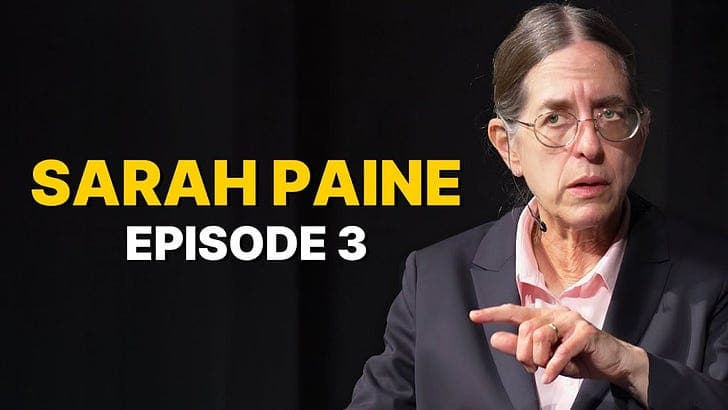
- Title: Sarah Paine — How Mao conquered China (lecture & interview)
- Description: The third and final episode in the Paine trilogy, exploring Mao's rise to power, his policies, and the impact of his leadership on China.
- Watch/Listen: Available on [YouTube](https://youtu.be/4l3Sa8ImGFQ) and major podcast platforms.
Key Themes
- Mao's Leadership: Examination of how Mao Zedong maintained power in a country historically fraught with internal strife and warlord conflicts.
- Impact of Mao’s Policies: Discussion on Mao's transition from a military genius to an economic disruptor, including the Great Leap Forward and the resulting famine.
- Influence on Insurgents: Analysis of Mao's strategies and theories that have influenced communist movements globally.
Major Points Discussed
Mao's Historical Significance
- Considered one of the most consequential figures of the 20th century.
- His military and political theories have influenced various insurgent movements worldwide.
- Noted as a brilliant yet notorious figure due to the human catastrophes his policies inflicted.
The Great Leap Forward
- Initiated the first nationwide famine in Chinese history, leading to an estimated 40 million deaths.
- Policies included collectivization of agriculture and backyard steel production, which led to food shortages.
Mao's Military Strategy
- Triangle Building: Mao's approach to establishing control through grassroots organizations and military structures.
- Historical context of the civil war, Japanese invasion, and how Mao maneuvered through these conflicts.
Mao's Propaganda Techniques
- Utilized effective propaganda to gain support among peasants and rally them against imperialism and warlordism.
- Developed slogans that resonated with the public, akin to modern political campaigns on social media.
Mao's Governance and Legacy
- The transition from military leader to governor saw a series of disastrous policies that contradicted his earlier military successes.
- Today, Mao's image remains complex; revered by some as a national hero despite his policies leading to immense suffering.
Notable Quotes from the Episode
- "Political power grows out of the barrel of a gun."
- "The peasant problem is the central problem of the national revolution."
Key Takeaways
- Duality of Leadership: Mao was both a military genius and a failed economic leader; his initial successes are overshadowed by the catastrophic outcomes of his later policies.
- Cultural Context: Mao’s actions and the subsequent perception in China can be understood within the broader historical and cultural narrative of Chinese civilization.
- Lessons for Today: The discussion highlighted the importance of understanding historical context and the complexities of governance, especially in countries with rich but tumultuous histories.
Conclusion This episode offers a nuanced view of Mao Zedong's leadership and its lasting implications for China and the world. The conversation underscores the importance of critically engaging with historical figures, recognizing both their achievements and their failures.
Additional Resources
- For further insights, listeners are encouraged to explore Mao's collected works and related historical texts.
- The episode is sponsored by Scale AI, emphasizing the need for innovative technology in modern governance and military strategy.
---
This structured summary encapsulates the key discussions and themes from the podcast episode featuring Sarah Paine, offering an accessible resource for understanding the complexities surrounding Mao's legacy in China.
Written by AI. May contain mistakes. Listen to the episode to check what was said.
Transcript
Automatic transcript. May contain errors.0:00What I'm about to say are my ideas. They don't necessarily represent those in the US government, the US Navy Department, the US Department of Defense or the Naval War College. You got that clear? Complain to me if you got problems. All right. I'm going to talk about Mao. He's an incredibly consequential figure. For the 20th century, he's one of the most consequential, political, or military figures. And he's also one of the most important figures of Chinese history of any century. and he's also a terribly significant military political theorist. And this is not an endorsement of Mao. It is rather just an accurate description of his global and enduring importance.
0:41And think about China. Historically, it's represented, I don't know, a third of the world's population, a third of the world's trade. That's a big slice of humanity. Moreover, Mao's theories have been used by many enemies of the United States states to take over failing states from within in order to assert dictatorial rule. He is also probably the most brilliant and most famous psychopath in human history, and that is saying a lot. So here we go. All right. This presentation is based on the first eight volumes of Stuart Schram's collected works of Mao. What Shramm did is he compared Mao's complete works as published in the 1950s to whatever he could find as the earliest version of whatever it was.
1:31And then he reinserted whatever had been cut in the italics, in italics. So tonight watch the italics. And Mao didn't put all of his best ideas in one place. He scattered them all over the place. And so what I've done is, got to come for you all prepared like a jigsaw puzzle of all of these different ideas. And then in order to make it comprehensible to you of all these random little tidbits, you have to have like a coat rack to hang all the hangers and that's called a simple framework and I'll get there. But in your own lives when you've got all kinds of complicated things to commands meant to others, you can look at what I'm doing tonight and you can do it for other things as well.
2:15So here we go with good ol' Mao and oh by the way a lot of those 8 ,000, 7 ,000 pages weren't that interesting. So in a way you owe me. All right. So, all right. These are major military theorists just to run you through them. Closewitz is the West's major military theorist of bilateral conventional land warfare. There. Sunza is Han's civilizations, great theorists of how you maintain power in a continental empire, multilateral world, using coercion and deception. The two fellows on the right are maritime theorists, in a way they're writing the missing chapters of Closewitz that doesn't talk about naval warfare at all.
3:02The top one is Alfred Thermehann, the naval war college's finest. And what he's writing about are the prerequisites for strategic possibilities for maritime power. And the Britain underneath them there, Sir Julian Corbett, is writing about how a maritime power, i .e. Britain, can defeat a continental power, i .e. Germany or France. But all of them are writing about warfare between states, and Mao is a different event. Now, it has to do with triangle building. The term triangle building comes from Closowitz. Closowitz has this nice little passage here where he's talking about these abstractions, passion, creativity and rationality as being mainly but not exclusively associated respectively with the people, military and government.
3:51A state has full up military and civil institutions that have some connection to their people. But an insurgent is going to be building these things from the ground up. So that's what Mao is doing is he's actually taking over the hostroom within by building a shadow government and eventually taking power and Many of the decolonizing world after World War II were really sick of the West. They've been colonized and went here and think about them But it seemed as if the Soviets or the Chinese perhaps offered a better model the communist and many thought that the Chinese These Mouth offered the better Mouth, or why?
4:30Because the decolonizing parts of the world were also agricultural and underdeveloped, unlike Russia, which had quite a military, excuse me, an industrial base. And so they thought Mouth was the more relevant guy. All right, here's Mouth at his iconic moment. He's proclaiming the victory of the Communists and the Chinese Civil War. China had been a broken state basically since 1911 when the last dynasty had fallen and the country had broken out into a multilateral civil war that he eventually wins. And there's a, I'm going to be talking tonight about Mao's theories and the not from the 1920s and 30s when he had the time to write, but there's a lot more to Mao than just that.
5:10He had quite a track record. Once he won the civil war, he imposed a social revolution. What's that? It's more than a political revolution. You're not just replacing the government. You're going to wipe out in higher social classes. And I don't mean then, hey, here's your one -way ticket out of here kind of way. No, no, social revolution is, here's a mass grave, dig it, and then you're in it kind of way. So if you look at these statistics of Chinese deaths and many of their wars, this is from much of the Malice period, I think it's 45 to 75. What you'll notice, the figures in white, I believe, are civilian deaths, not military deaths.
5:49and it gets really quite ugly. There are more Chinese civilian deaths here than all deaths in World War Two. And then for those of you who think the Chinese are all great long -term strategists, you need to ponder these numbers. How is it possible to kill so many of your own? That's generally not a mark of good strategy. Moreover, most of them died during the Great Famine, which was the only nationwide famine in Chinese history. Why? Because it's not caused by the weather. It's caused by policies set in Beijing. During the Great Leap Forward, Mao put all the peasants on communes. That meant the party was in control of the food supply, i .e.
6:31who lives and who dies. You don't get a meal, you're very dead. In addition, he decentralized industry, and you can see these backyard furnaces pictured here. As a result of this, production collapses, agriculture and industrial, but Mao keeps exporting food. Why? Because that's his pocket change. That is a major source of government income if he wants to be able to do anything. So they keep exporting food. As a result, 40 million Chinese starved to death, primarily in rural areas and disproportionately peasant chill girls, the least valued members of society. The statistic of 40 million deaths comes from this book by Yang Ji -shang, who's written the definitive work.
7:16The English translation is about one volume, the Chinese original is three. Yang worked as a journalist for many years, which gave him access to provincial archives, where he seraptitiously invested the statistics of people who were starving to death, including his father, for whom he wrote this book to serve as an eternal tombstone. So, on the one hand, Mao is the military genius who puts Humpty Dumpty back together again, when nobody else could and they tried for the previous 40 years. On the other hand, he is the psychopath incapable of running an economy in peace time. Yet, many Chinese revere him as a national hero.
7:56Why? Because in their minds, certainly of the Han, the preponderant group in China, one of the key things that their country should and must be is a great power. And now by reunifying China under the banner of communism and then fighting the coalition of all the major capitalist powers to a stalemate in the Korean War or their mind of victory, that constitutes ending what they consider the era of humiliation, starting them in the mid -19th centuries and with a communist revolution. So he's a hero at home. All right, to understand Mao's theories, I need to put it in the context of the wars that he fought.
8:38So in 1911, Qing Dynasty collapses. The country shatters into a multilateral warfare among warlords of these provincial leaders. And on this map, you can see the different colors and shading. Those are different warlord areas. But the nationalist party and the Communist Party forming a united front in 1923 in order to eliminate these warlords. And so, Shanghai Shek, who is the head of the nationalist party, General Lee Simo, not just the general, he is the man who's leading the Northern expedition to fight off all the warlords, except he stops midway near his power base in Shanghai. and he turns on the communists, massacres them in droves.
9:25This is the white terror. Why? Because he thinks that while he's away fighting, they're trying to take over his government. He's correct. So he keeps on moving there. There's a nominal unification of China under nationalist rule when this takes place. In addition, once he's done with that, then he wants to eliminate the communists for good. And so he runs a series of five encirclement campaigns around their base areas that are scattered in South China. The primary base area, base area is also called a Soviet, is the Jiangxi Soviet. And on the fifth encirclement campaign, Shankhai Shek is finally successful.
10:05And he sends them off on the long march up to way up north in Desolate Yanan. Long march is a real misnomer. It's the long route. and the communist lose 95 % of their forces. I believe in English decimate lose, it means to lose 10%. Losing 95%, I think you need a whole new verb for what's happened to you. But Shanghai Shack doesn't wipe them out because he's suffering from divided attentions. When the West did the original, well, it's both the United States and Europe. The United States does its original America first thing with a holly smooth tariff, putting tariffs up to historic highs, and then everybody, of course, retaliates.
10:45So now everybody's got high tariffs. Well, here's trade -dependent Japan that's always cooperated with everybody and suddenly they're toast. And so their solution is autarky, and they need an empire large enough to be autarkic. And so then that's when they invade Manchuria in 1931. So Shankishek is all of a sudden lost this area from China, that's greater than Germany and France combined, it's a mess. And so he has he's trying to balance what to do about Japanese versus Communists. The Japanese don't quit with Manchuria. They stabilize the place. They make massive infrastructure developments, they transform it into the most developed part of Asia outside of the home islands, but they keep on going.
11:25And it gets so bad that the Communist and the nationalist form a second United Front because they're facing this lethal threat called Japan. And they organized that in December 1936 and what's known as a Xi 'an incident and the Japanese react viscerally because they look at it and the nationalists have gone over to the dark side because they've joined up with the Communist and this is one of the Japanese escalating 1937 go down the Chinese coast up the Yangsar River and well but then they wind up stalemating. Once they get beyond the Chinese railway system which isn't that great in this period, the Japanese can't stabilize the place and the Soviets at start adding more aid and we add more aid.
12:09It's a mess. So the Japanese decide they're going to cut Western aid to the Chinese and that's where Pearl Harbor comes in. That's what the attack of her, Harbor is all about is telling American state of Asia, which of course, you know, we did just the opposite. And then the Nazis interpret their alliance with the Japanese broadly to declare war in the United States. So when that happens, you have a regional war that had already been going on over Poland in Europe and this other war They've been going on since 31 in Asia. They unifying to a global world war. Now understood That he was dealing with three layers of warfare and nested wars that he was fighting a civil war against the nationalist Within a regional war against Japan and then after Pearl Harbor there's going to be a global war that will eventually morph into a global cold war.
13:01Most of his writings are written before Pearl Harbor, so he's going to focus on the first two layers of what's going on here. So after the World War II is over, Mao goes after the Nationalist Fulbor, and the Japanese have already very much weakened the Nationalists and Shankha Mao wins the Civil War. Okay, these are the wars. Now I promised you a simple framework. Here's the simple framework. Simple framework should have three to five things because that's all about any of us could really handle on short notice. And so I got four here and I'm gonna use Clowsuits' definition of great leadership to analyze now.
13:44According to Clowsuit, in a general, two qualities are indispensable first as an intellect that even in the darkest hour and now had many of those retains some glimmering of inner light, which leads to truth, and second, the courage to follow that faint light wherever it may lead. The first of these qualities is described by the French term, kudai, koo is a glance, oi is an eye, taking in a situation with a glance of an eye, and the second is determination. Well, Mao had these things in numerous areas. He was, I'm going to first discuss Mao the propaganda. That's how he starts out. And then I've got what I say here is Mao the social scientist.
14:22But what he was really good is data analysis, data collection and analysis. He truly understood the country side because he collected all sorts of data about it and analyzed it. And then I will go on to Mao, the operational military leader, winning and fighting battles. And then at the end, I'll talk about Mao, the grand strategist, integrating all elements of national power. So that's my game plan. That's the simple framework and a way we go. All right, Mao began his public service career as a propagandist. And if you look at his early biography, he's born in 1893 to a prosperous, but not particularly well -educated father who tilled his own land.
15:02Mao hated his father and he hated farming, so he left as soon as possible. After the 1911 revolution for a little while, he worked as a soldier, didn't like that. He joined and then dropped out of a series of vocational schools. He tried being us. What was it? A merchant, a lawyer, I'm missing something else? A soap maker? Imagine, mal, three stages of personal hygiene, whatever. It was not to be, but he eventually gets an ed degree so he can go off and be a primary school principal. Okay, imagine setting your child off to the psychopath doing show and tell. Yeah, it's not. And then he joins the Communist Party and is during the first United Front.
15:46So he also joins the Nationalist Party. And he has very important positions. If you look at he's in the National Party, he's at their central headquarters and he's the minute taker. So he's the fly in the wall listening to everything. And then he's a stand -in for the head of the propaganda department, which is probably where he learned a great deal about the importance of propaganda. And here's what he says early on. The Communist Party can overthrow the enemy, only by holding propaganda pamphlets in one hand and bullets in the other. And if you look at the original organization chart of the Shadow Communist government, you'll see there are only six departments there, one of them is the propaganda department.
16:25If you have no power, words are, is your initial way into gaining power. I'm not going to use a framework from my wonderful colleagues, Mark Janess and Andrea Doe, this is theirs, about analyzing strategic communication in terms of messenger, message, and medium. And I'll go through each three. All three. What you see here is a propaganda poster. It's a woodblock print. That's the medium. And it's a very easy way to reproduce pictures back in the day. The message is about a model laborer. This always emulate Wumanyo, Lucky Us. and to do all the nice things he does with whatever is going on there.
17:07So that's what that is. Now, messengers were the delivery system, the broadcasting system for the Communist Party. So you've got the Communist Party, but you've got a reach -in audience, and that's what these messengers are doing. So they go into local areas and they identify local grievances for attention by the Communist Party, which when it fixes them or fixes somebody, that will generate loyalties and allegiance. So these propaganda personnel would be identifying local bullies to come and deal with them, organize mass rallies. During battles, they're gonna double as medics after battles are gonna propaganda, as POWs, between battles they are helping on troop morale, but what they're really doing is reporting back to communist central exactly what's going on.
17:57And civil and military messengers differ For civil messengers, they would be activists, maybe in the local government, labor unions, peasant organizations, women organizations, any number of these things. And it's your broadcasting system to reach a population and mobilize it. Military messengers are a little different. Every single military unit had about a 20 -member propaganda team. That's a lot of people. According to Mao, the propaganda work of the Red Army is therefore first priority work of the Red Army. This is very different from soldering in the West. This is not how it would work. Also Mao had his international broadcasting system.
18:39These would be foreign journalists while Mao is holding court up in Yunnan. He invited many of these journalists up there. Edgar Snow was by far the most famous. Why? because he was like the first one in and then he was the last one out. And he had really long interviews with Mao. And when he was a young man, he never asked, why does this a list political leader spending so much time with me? That never occurred to Edgar. But, you know, it's ours. And he was very fine writer, Edgar Snow. And what Edgar Snow writes, red star of China, you can probably go to Barnes & Noble and pick up a copy there.
19:19It's been in print ever since and it's the original footnote in Chinese history because no one knew anything about Mao And so then everybody starts citing Edgar snow and then we cite everybody and everybody everybody but actually it only goes back to Edward's Edgar snow so Mao got his his word out Mao thought you want to keep the message simple you want to make it epic grimp Maddox so that people can understand it rapidly in his day This meant having matching slogans to the equivalent of newspaper headlines to provide a lens for people to understand events rather like tweets in our own day. So when the white terror occurred when this is in Shanghai, Shek is turning on the communists in the first United Front.
19:59The slogan was arm the peasants. And then when the Japanese invaded Manchuria in 1931, the new slogan is down with imperialism and the nationalist party too, because you want to smear your enemy in the civil war while you're at it there. But there are a whole series of these slogans. And here Mao is one of the most popular poets in China, certainly, of the 20th century. He could write really simple couplets. If you look here, I think it's a total of eight characters so that someone who's semi -literate can make it their way through this poem. On the other hand, he wrote really complicated things, because he needed to garner the support of intellectuals initially before he'd educated enough peasants and workers to take over.
20:41And intellectuals prize poetry and also they prize what's called grass writing, which is that unintelligible Chinese stuff writing under there. If Mao set these poems to tunes that everybody knew, people could sing them on the long march and elsewhere and learn them that way. So he's an incredibly accomplished man. He also understood you have to manage the message through, and the way he did that is through political mobilization. Part of that is you've got to tell people what the policy objective is, which for him was abolishing imperialism, feudalism, and the landlord class, and then presenting a strategy for how to get there.
21:19And here are the media that he used, not only the written and spoken word, but also the dramatic arts in order to get the message out. And he also used an institutional medium of education. And here is Mao the primary school teacher and his element. Most of the people at his armies were illiterate, but Mao knew all about how to reach them. There are a lot of political commissars. What are they? Political and military commissars come in a pair. Military commissar is the military professional actually knows about the fighting. The political commissar is the one with the direct line to the secret police who will cap the military commissar if there are any problems whatsoever.
22:01So Mao has gotten an elaborate network to get the message out, offering all kinds of social services to people, not only medical but also education for peasant children. And he also educated their parents. This is for the first time in Chinese history. He did it during the winter slacks season. Now the nationalists had also tried to improve education, but once the Japanese invaded full bore, they had to drop it because the nationalist conventional armies are the ones that are fighting off the Japanese conventional armies. The Communist are a guerilla movement and they're operating behind enemy lines.
22:44So as the nationalists are drag -gooning people into their armies, the communists are busy offing social services and I'll get to land reform. And so for the peasants, before too long, it becomes a no -brainer whom they're gonna support. Mao also emphasized professional military education because he needs to turn peasants to cadres, to gorillas, to conventional soldiers. And there's gotta be an educational pipeline to do this. And if you look at this Northwest, counter -Japan Red Army University, The first four of the first original departments, political work is one of them. This is not professional military education the way it's done in the West.
23:25It's a separate thing. Okay. Part one over. Mal the propaganda. I've covered that. Now I'm going to go about Mal the social scientist. And here he says, the peasant problem is the central problem, the national revolution. If the peasants do not rise up and join and support the national revolution, the national regional solution cannot succeed. And if you look at his further along in his biography, while the first United Front was still operative, he's heading the Nationalist Party's peasant institute in Guangzhou, and also their central commission on the peasant movement, learning a great deal about it.
24:03But once the white terror hits, he needs to get out of Dodge fast or they'll kill him. And that's where he flees to Jiangxi Province to the Jiangxi Soviet, where he is going to become the political commissar of the Fourth Army. And he's also going to be in charge of land reform, as he figures out how to calibrate that to make it work. All right. For Mao, he's doing data -driven survey after data -driven survey does a whole series on between 1926 and 1933. He's trying to figure who owns what, who works for whom, who tells where, and inventories of down to the last picture work and last chicken.
24:44As he's trying to establish what is really going on on the countryside. He does. What he concludes is that 6 % of the rural population owns 80 % of the land, and 80 % of the population owns only 20%. and his solution is going to be revolution. And he goes further into the statistics and he identifies 70 % as poor peasants, 20 % who are like his father, they till their own land, their middle peasants, and then they're the exploitative 10 % who don't get their hands dirty with anything. And what Mao is trying to figure out is how you can incentivize 80 % of those people into actively taking part of the revolution.
25:29This is the key. And what he wants to do is take the bottom of the social pyramid and mobilize it to crush the top of the pyramid. And what he's going to do this is by determining class status through a land investigation movement, which he says is a violent and ruthless thing. We're going to talk about class, approval of class status, confiscation of land, redistribution of land in order to invert the social pyramid. And he's got a real plan for doing it. He argues that land reform is just essential for peasant allegiance. This is how you're going to get it to draw these hundreds of millions into supporting the communists.
26:17But you got to do it sequentially. You got to propagandaize first and then you're going to distribute land later. And he had a little bit later and he had a very bureaucratic way of redistributing land. The approval class status, he said, it's a life and death decision for the person in question. And so it starts out with a vote at the local level and then it goes through many layers of party approval before being sent back to the local level to announce who's going to get the land and who's going to take a bullet. And then Mao leverages the enthusiasm of this movement, movement for the people who are going to get the land, the other people not so much.
26:57And he's going to leverage this enthusiasm to get people to join the party and also to join the army. All right. Mao is planning to collectivize all land. That's what the communists are going to do. But he says, look, the system of landlords and tenants cannot be completely destroyed yet. and because he needs the peasants to join him and their peasants desperately want land. So, Mal gives it to them and he gets a great deal of support for doing this, but he also keeps the rich peasants around too. This is the leading portion of the collected words because rich peasants' production is indispensable until he wins the Civil War and can then turn the guns on them.
27:46and he's also got to doplicit his program for the middle peasants. It's a big bait and switch. It looks like you're going to get, see you got the land, now you do and now you don't because at the end they're all going to lose their land. In order to reform, to get the land, Mao is talking about a red terror to get it. And while he was still with the nationalist, he wrote a report on the peasant movement in Hunan, where he's talking about taking all the land from the landlord class and shooting them, and that won't cut it with the nationalist army because their officers are landlords. So as part of this program, it's not just land reform and educating people, warm and it's also coercion.
Read the full transcript
28:38Okay, that's Mao the social science enough of him. Now we're going to do Mao the military leader and you've probably heard this chestnut from Mao, political power grows out of the barrel of a gun. Mao spent his, it's still part of his early career, being right but being a minority view that he had certain views about military operations that was not shared by communist central. And Mao kept following that dim light wherever it may lead and eventually vindicated him. He survived a variety of encirclement campaigns, but then he had some troubles. And here are his critics. Leely Thon was a labor organizer.
29:27He was a Tefacto head of the Communist Party from 1928 and 1930. And after the white terror on the northern expedition, Moscow had told its communist buddies in China that the next thing to do was to take the cities. And so Lili -san tries to, with the non -Chung uprising in 1927, total disaster. And he tries it again in 1930 with the Changshha uprising, another disaster, and that gets him into exile in Russia. According to Mao, Kamarad Lili -san did not understand the protected nature of the Chinese Civil War. Lili -san is trying to fight the decisive, I .E. war -winning, winning battle far too early.
30:07You try to do that and you can get yourself ruined. Here's another critic, Shang -Ying. So Mao is in the Jiangxi Soviet. And he thinks that smart strategy is to lure the enemy into your own terrain, which is favorable to you. So let them get exhausted, then you spring the trap and you annihilate them. Communist Central in Shanghai thought this was nuts, that you shouldn't be seeding territory at all. So Mao for the longest time, he's often Zhang Xi, they're often Shanghai, they're a long way apart. And so Communist Central can't do anything about it. Mao does his own thing. So the Communist Central sends Zhang Ying to Zhang Xi, Soviet to fire Mao personally.
30:49and you can imagine how this works for his later career, not well. And he fires Mal, and this is where he winds, his strategy winds up producing the Long March. The Long Retreat, and went, which they lose 95 % of their people by trying to defend territory. So people began to get it that Mal may have known what he was doing. And then on the Long Retreat, Mao chose as his terminal point of retreat, like where are you going to wind up, as up in Yanan, way up north, in deep in Muslim and Mongol lands, but near the Soviet border. And Mao thought that was essential because they're the big benefactor.
31:32Whereas this gentleman, Zhang Guotao, who was the military commissar of the Fourth Army, thought nonsense. You want to be in Hanla, we're in Chinese, we want to be in Hanla, and say, we wanted to go into western Sichuan, which he did. And he suffered a series of defeats over the 1935. And as a result, he was never as important ever ever again and eventually defected to the nationalist. So Mao had proven himself prescient and right and determined. And he had kudai and determination. And people eventually recognized that. All right. Mao and Klauswitz defined war somewhat differently. Klauswitz has this famous line, war is thus an act of forced to compel our enemy to do our will.
32:15Mass is none at war. Politics by other means is something that is used to achieve political ends. So far, that's not incompatible. But then here's Mass Twist. A revolution is an uprising in active violence whereby one class overthrows the power of another. Klauswitz is not about a class warfare at all. In fact, his wife is always trying to wind and dine the aristocrats. So completely different in that department. Now is looking at the world and he believes the lynch pin of the social order are landlords and he's going to detonate them and try to destroy them. And he talks about the violence of all of it that you're going to get the peasant masses to overthrow these landlords and that this will, it's going to require terror and in rural areas, but this is absolutely necessary.
33:10And of course, this is what the Nationalists absolutely would not tolerate. Now also understood he was operating in a period of nested wars, and that the ones who are ongoing were the civil war with the Nationalists, and then the regional war with Japan. Pearl Harbor comes a little later. And he talked about defeating Japan in three stages. is a repeating Japan requires three conditions. First is progress by China, I mean the Civil War, which is the basic and primary thing. The second is difficulty for Japan, I mean the regional war. And the third is international support, the big friend. I'm gonna talk about each of these three things in turn.
33:52So in order to win the Civil War, Mao believes you need base areas, these Soviets. Where are they located? on the often on the boundaries of provinces and very difficult terrain where provincial authority, let alone national authority, simply does not extend. And Mao thought that there were certain prerequisites for a good base area and one is strategic terrain. It's got to be defensible so that the weaker communist forces can defend it against conventional nationals or conventional Japanese armies. So that's key. Pick your terrain carefully. Also, you have a strong red army presence there to make it work.
34:31You need numerous organized workers and peasants. You got to have some local support there. And then you need a good party organization. So this is now I idea what you need for a base area. And he believed that you needed to match your military unit, the type of military unit to the territory. And he said there are three kinds of territory. There's base areas. There is enemy control areas. And then And there is, is the interface in between, which is where Gorilla forces are going to be roaming. So he was all about deploying the Red Army to the comparatively safe base area. They'll protect that.
35:07Gorilla detach, you might send Gorilla detachments to some of the Gorilla areas, but really, only really small things would you ever send into enemy territory. Moreover, he has prerequisites to fight. There are six possible prerequisites, two, you got to have at least two before you find. The most important one is that people have to actively support you. You probably need a base area to pull this off. He said that the last three things about enemy weak points, the enemy exhaustion, enemy mistakes, those things could appear quite rapidly, but you better choose your terrain very carefully. Terrain is immutable.
35:42He also said that if you're weak, the way the commoners were, you had to follow a strategy you in annihilation. What you do is you annihilate one small enemy unit at a time and the cumulative effects will eventually change the balance of power. Only someone who is really strong can tough out an attrition strategy. So he's also about triangle building in these areas. So little gorilla detachments go out into the interface. If it works out well and it looks like they can start either a new base area or expand an existing one. That's what they're going to be up to. So these guerrilla forces are either a disposal force which you can send them out to do risky things and if they get wiped out, it doesn't endanger base area defense or they can become a nucleus of a new base area.
36:40So in small guerrilla groups, party members or toughened cadre is trained the party government mass organizations are consolidated. And if they're successful, then you bring in the Red Army to do higher level institution building and either greatly expand an existing base area or you're forming a new one is what's going on. Now had two military services, we always think of Army Navy Air Force. That's not what it was for him. It was guerrilla forces versus conventional forces. And what guerrilla forces are operating in the rear of the anime is so that there's no stability or security. In fact, there isn't even a front line.
37:20It's just so amorphous. And so what guerrilla forces are supposed to be doing is exterminating small enemy forces. We can larger ones attack enemy lines of communication, establish bases, force the enemy to the spurs, but they're doing all this in combination with conventional forces. Because here it's the thing, you think about Mao and its guerrillas. Well, actually here's what Mao really says. Regular forces are of primary importance because it is they who alone are capable of producing the decision like winning the war. There is in guerrilla war, for I know such thing as a war -winning battle.
38:03The relationship of the two is really important. Mao also thought that you needed to establish a fire escape if you had a base area like if it all goes south Where do you go and his terminal point of retreat for the long march was up in Yanan He thought it was important to figure those things out in advance. Mao also cultivated An unprecedented group of allies never before assembled in Chinese history not only peasants but women minorities Youth intellectuals enemy army most creatively For cultivating the allegiance of peasants, it wasn't just education and land reform. It was also Army discipline.
38:43This is where the three rules, six points for attention and a couple additional points, which were enforced through 1949 when the Communist win the Civil War. Why? You don't want to alienate the peasantry. These are the people that are forming your cadre, your guerrillas, everything. So maintain Army discipline. Don't mess with it. But Mao also took an incredibly forward -looking view about women. Here he is with his fourth wife, the actress. The other three had suffered respectively abandonment, execution by the Nationalists, and commitment to a Soviet psychiatric ward, not fates for the faint -hearted.
39:24But Mao calculated that women are about half the population. They're miserably treated, so they're natural for wanting a revolution. They're a force that will decide the success or failure of the revolution. He calculated correctly and he was way ahead of his times. He also understood that in a guerrilla war, you're sending all the guys off to be off -fighting and you've got to be building base areas and things, and this is where women came in to do those activities. And as a result, he offered women the unthinkable, which as many women are absolutely equal. Women have the right to vote, be elected, participate in the work of the government.
40:05He's just way ahead of his times. Now also offered minorities the previously unofferable, which was self -determination. And what the minority people didn't get is that a promise made in a really desperate civil war with a regional war overlaying it. Once you win those things and you can turn your guns on those trying to succeed That promise may be unenforceable. You can ask the Tibetans and Uighurs how it all worked out all right, so now strategy He had a strategy of disintegrating the enemy army and let me tell you how that one worked You in every county you select a large number of workers and pens and comrades people below the radar And then you insinuate them into the enemy army to become soldiers, porters, cooks.
40:56You can lose women to do this as well. Talk about people who are below the radar. And you're creating a nucleus of a communist party to erode them from within. And eventually it'll have a shattering effect. And he said also part of this disintegrating the enemy has to do with leniency. This is a son's advocate never put your enemy on death ground. Death ground means that you just have no, that you're a dead person if you don't fight. So your only hope is to fight. And if you put someone on death ground, they tend to fight with incredible willpower. And now, as don't do that. So what he did, when you capture people, propaganda is a little recruit the willing but release the unwilling so that the comparison of communist leniency and nationalist brutality becomes absolutely stark in this otherwise pedalist war.
41:54Okay, that's the Civil War. Now we're going to go to the second problem, which was Japan, the regional war. Mao made a really thoughtful assessment of what were the key characteristics of China that would determine what kind of military strategy would use it. And this is his assessment. He said, okay, China is a large semi -colonial country. It's an undeveloped country. Point one. Second, its enemy is really strong, point two. Thirdly, the Red Army's weak, and fourthly, there's an agrarian revolution going on. And from this, he concluded that revolution was definitely possible, but it's going to take a long time.
42:34So he didn't kid himself about quick wins. He's going to come up with a strategy for protracted warfare. And he thought that Japan had certain weaknesses that the Communists could leverage. For instance, the Japanese had inadequate manpower to garrison a country the size of China. This meant that gorillas could roam far and wide behind Japanese lines. Also the Japanese were brutal, just gratuitously brutal. And they're outsiders. and this means that the peasantry are naturally going to gravitate towards the communist. Just simply regardless of what the communists do, just simply but based on what the Japanese are doing, they're going to gravitate towards the communist.
43:13And also the Japanese had grossly underestimated the Chinese. And as a result of these underestimating the Chinese, they made errors. And when they made errors, they started quarreling among themselves and making more errors and the communists could leverage these things. Mao's most famous paradigm theory is his three stages of people's war. The first stage is the strategic defensive. It's the prevent defeat phase. The last phase, phase three is the strategic offensive, the delivery victory phase. In the first phase, you're focusing on the peasantry. In the last phase, you're annihilating the enemy army.
43:52And if you look at activities that go on in each phase, the activities of phase one and two never cease rather you add additional activities as components increases. So in phase one you're doing popular mobilization, base area building, triangle building, gorilla warfare. And then as you get more of these things you then you can start engaging in mobile warfare, try your hand a little conventional warfare, reach out with diplomacy, and then if you go further in stage three then you're talking positional warfare and you're going have the war -winning battle. And how do you get from the phases? Well, the transition from phase one to two is basically, you have a critical mass of base areas, cadres, armed forces that you can move into phase two.
44:41But the problem of being in phase two is what it looked like isolated acts of banditry in phase one to the incumbent government. Now the incumbent government gets it, that they're facing an uncertainty bent on regime change and the regime changes strategy. And so the communists are no longer under the radar, but they're in the crosshairs. And it's dangerous because their weak and the enemy is strong. So when you transition to phase two, initially it's quite dangerous. And here's a malwriting about these problems and saying, look, in this stage is one and two, So the enemy is trying to have us concentrate our main forces for a decisive engagement, ie decisive in their favor, that one of the works that will annihilate us.
45:28And of course, this is what General West Marlon was trying to do in the Vietnam War is getting the North Vietnamese to concentrate so he could blow them off the map. And of course, they'd read their mound and didn't do that nonsense. So now I was saying, you only fight when you're sure a victory. And also, in order to get to phase three, you need a big friend. Why? Because phase three is conventional warfare, which requires infinite supplies of conventional armaments that requires an industrial base to produce it. And somewhere like China lacks this industrial base. And so good Soviet Union played this role the world over.
46:17And so this is the secret sauce of People's War. If you want to get to Phase 3, you need a big buddy. And that's where the Soviet Union came in. And so this is why Mao determines that Yanan's going to be his terminal point of retreat. He's finding my way through to the Soviet Union. No kidding. You've got to have the conventional arms to fight this What's interesting about Mao's description of People's War is it actually applied not so much the war with Japan, which he claimed it applied to, but rather to the Civil War with the Nationalists. And here is the key. Mao didn't actually fight the regional war against Japan.
46:58The Nationalists did. The Nationalists did every bit of the conventional fighting except one. And that's the 100 Regions campaign that Malfaught North China in 1940 and he was smeared. The Japanese responded with the Three Alls campaign which is Kill All, Bernal, Lutall, which is what they did. And it wiped out loads of Chinese Communist -based areas in North China. So Malfa never tried that ever again. And he certainly didn't write about it in his collected works. You know, don't talk about failures there. So it's interesting what he's talking about really applies to the Civil War. And Mao understands these different layers.
47:39So as the nationalists are busy fighting the Japanese and actually being destroyed by them, the Communists are pretending that they're fighting the Japanese. They're later going to take credit for it and say, we won against the Japanese, which is nonsense. There was also the United States in that as well. Because he's using that to strengthen the communists during all of this, but the rural mobilization. So when the Japan's defeated and the communist, when Civil War resumes full board, he's in a good situation. Okay, that's it. On now the operational military leader at the operational level, now let's put it all together as now the grand strategist of linking all elements of national power into a coherent strategy.
48:22These are Mao's instruments of national power. The peasantry propaganda, land reform, base areas, institution building, warfare, and diplomacy. The US military, when they're thinking about elements of national power, love this little framework, dime, I guess, deist for diplomacy, eyes, intelligence, and for military, e for economics, as being critical elements of national power. It's better than only looking at the military elements, at least you got three more things. But if you look at what Mao, if this is not a cookie cutter event, this is a different society, different national elements of national power are available.
49:02You've got to get to the other side of the tennis court net to see what the other team is doing. All right, Mao is famous for all these reasons, but also for his signification of Marxism, where he makes all the things that I've told you about, it makes his version of Marxism much more applicable to these countries, the newly independent countries after World War II of how they put things together. And he positions himself to replace Stalin who dies in 1953 as the leader of communism. So Mao was pressient on numerous levels. He was certainly prescient about the centrality of the peasantry. He was way ahead of his times on the importance of women.
49:47He was calculating and cunning on how he was going to use minorities and POWs. He had proven his kudai in determination with his military strategy. He also anticipated when the Japanese war in China would stalemate. And he also anticipated more or less when the United States was going to get into the war in Asia. And he's the great sinifier of Marxism. All right, Mao produced all kinds of concepts and paradigms that are useful for insurgents who are trying to take over the hostroom within. And I've listed a variety of them here, and I'm going to go through them in turn. And these are the things that they counter insurgent that has to counter.
50:33All right, rural mobilization. This is obviously a big deal in Mao. And if you compare, I'm gonna be doing a lot of comparisons with the Vietnam War and the Korean War, because they're communist and all these things. And you can see Mao's rural mobilization was very successful in China. The North Vietnamese rural mobilization was also really good. South Korea not so much. Why? The leader, I mean, of North Korea trying to mobilize the peasantry in the South. That wasn't so successful. And why? Sigmund Reed, the leader of South Korea, immediately did land reform. And this glues loyalty of soldiers to the leadership doing this.
51:18And maybe that is not the only factor, but an important factor for why the Korean war turns out differently. base areas. Mouses, those are really important. The North Vietnamese used them to great effect. They had all kinds of areas in the South and then on the borders of South Vietnam. North Korea, not so much. It couldn't form base areas in the South. Why? It's a peninsula, which the U .S. Navy cut off. It's also cold. So where are you going to flee if you want to do a base area? I think it's up a mountain in South Korea, and that will get cold in the winter and you'll probably freeze to death.
51:57I believe Al -Qaeda means the base. That's the, I believe that's the correct translation. So if you're thinking about ISIS or whatever or whatever is left of it, you can go back to Mao's ideas about base areas that you need a particular kind of geography that's good for the defensive. Got a big party organization, a lot of local support. You got to have military forces there. Does Al -Qaeda, well, it's going to be ISIS or something? Do they have all four of these things, or can you remove any one of them? All right, another idea from Mao is luring the enemy in deep. Mao had done that very successfully in the first three encirclement campaigns, and then he was removed from commands, and he wasn't doing that anymore.
52:40And again, in the final phases of the Chinese Civil War, the 45 -49 event, And Mao Lures, the nationalist deep into Manchuria, and the nationalist are a South China phenomenon, right? Showed you the map, the map. Shank -I -Shek starts in the South and he goes way up north. So he's weakest in the north, but Mao Lures him way up there in Manchuria and then he springs the trap and destroys Shank -I -Shek's armies up there. And then the entire civil war wraps up within a year of that. So Mao also, Lord Guttal General MacArthur, who fancied himself a great Asianist in the Korean War, Mark Arthur goes all the way up to the Yellow River right on the Chinese border in the Korean War, and Mao springs the trap.
53:28MacArthur didn't realize that I don't know, 350 ,000 Chinese troops had been infiltrated around him. Oops, missed that. It did not work out well. But for the US Navy now, needs to think about what about being lured into the South and East China seas and then the Chinese pulling the trap. It's their places you don't need to go. The Chinese may have to go there but maybe you don't have to. Another one is terminal point of retreat. I've talked about Yan on being a really good one in that work. And then when the Manchurian campaign initially wasn't going well for Mao, he retreated up to Sippeng, which is a little bit north, and that worked well enough.
54:11But when Shankai tried to pick these Manchurian cities as a place to retreat in Manchuria, bad news, there's only one railway system that gets you south out of Manchuria. You suppose the communists don't know about it. And they encircled the Nationalists in these cities and destroyed them there. So when you're thinking about insurgents and things, think about, well, if you knock them out of one area, where might they go next? Alright, another concept from Mao is disintegrating enemy forces, which is what happens to the National think about Shanghai Shack had been fighting since the 1920s and Forever and ever and ever and he fought the Japanese they're brutal the United States had trouble fighting the Japanese and And Shanghai Shack fought them alone for a long time before we joined the war.
55:04And yet he loses a battle in 48 in Manchuria and that's it, the rest of the country wraps up. So what was going on there? Or the South Vietnamese, they've been fighting forever. And then the whole place just wraps up. And the same thing with Japan and World War II that they've been fighting all over the place forever, fighting us brutally. And then in 1945, we don't even have to invade the home islands. Think how unusual that is. The Germans fought every street on the way to Berlin. The Japanese, uh, Quay. And this is about disintegrating the enemy and why it happens. But what you can say in all those three cases is the warfare had been going on for an incredibly long time and it was ruinous and the places in question were ruined.
55:49So don't expect that to happen too fast. And of course Mao's big contribution are his three stages of people's war and Mao presents some as sequentially you'll from one to two to three and ta -da you win and they're cumulative right? You do certain things and then they're and then you get to phase two and they're you you've had this cumulative effect of destroying enemy forces and you get any more accumulating casualties on the other side and finally you win. A student of mine said that's actually not a great way to look at or even better way to use it. It's like a metric of how insurgency goes up and down so that ISIS may be on the cusp of going in stage three.
56:33I don't know they're really, well possibly with all the equipment they got initially or whether then they get knocked back to stage one where you wonder whether they still exist anymore and come back and forth. Anyway, that person's take, I thought it passed it along to you. All right, I have one last thing to talk about. Mao, is it when you read these 7 ,000 pages, and I don't recommend it? One is struck by all these dualities. And I think it goes back to Yin and Yang analysis, which is very prominent in traditional Chinese thinking. So if you look at Mao discussing triangle building, it's in terms of the presence or absence of factors, presence absence being opposites.
57:16So you're going from the absence of political power to the seizure of political power, from the absence of the Red Army to the creation of the Red Army. It goes on and on that's stunning the differences and connections between dualities is a task of studying strategy and it's really everything. So to defend in order to attack, to retreat in order to advance, it goes on and on and it and it's all about correctly orienting yourself with between these opposites. So opposed protracted campaigns in the strategy of a short war, uphold the strategy of protracted war in a short campaign. And I'm starting to lose it.
57:54And you've got to put everything in the context of each other, losses, replacements, fighting, resting, concentration in dispersion. And I think I don't get this, mouse bipolar disorder. So I went to this gentleman, Brigadier General Samuel B. Griffith. He is the only translator into English of Sun Zi, who has a distinguished military career. And also he went on to get a D -Fill, as I could PhD, from Oxford in military history. And if you look at his career, he's in China during the Japanese escalation of the Sino -Japanese War. He's back in China, does another tour at the end of the Chinese Civil War.
58:38He gets top marks in the military's Chinese language exam and oh look at these details Navy cross purple heart distinguished service cross He's a distinguished man and for retirement he decides he's gonna go get the the Oxford degree and he writes the translation of Sunza he is the only translator of Sunza who translates to the D as death ground other people is like oh, I don't know I can't remember the words like I I don't know, Contester Ground, something else. But I'm guessing that when he chose those words, death ground, it's because when he was thinking about it, it might well have conjured up his memories of what exactly it was like to be on Guadalcanal or New Georgia.
59:22So he has provided insights. Oh, also the other thing to mention about him, he's really modest. I had to dig around to find these biographical details. They're not on the cover of his book, which is where they should be. And his service to his country continues to this day because it's his translation that continues to educate office. There's now what is it over 40 years after his death. But here's his take. In every apparent disadvantage, some advantage is to be found. The YIN is not holy YIN and the YANG is not holy YANG. It is only the wise general said the Sonsa who is able to recognize this fact and turn it to go to account and of course, Mao could and he did.
1:00:06But in peacetime choices are not binary, they're graduated and evolution is much more conducive to economic development than revolution. Before we move on to the interview, a quick word from our sponsors, Scale AI. The AI race is the Manhattan Project for the modern age. Whoever wins, reshaves the balance of global power. That's why scale partners with the US government to fuel America's AI advantage through their data foundry. The Air Force, Army, Defense Innovation Unit, and Chief Digital and Artificial Intelligence Office all trust scale to equip their teams with AI -ready data and the technology to build powerful applications.
1:00:50Scale recently introduced Defense Slamma, scale's latest solution available for military personnel. With Defense Slamma, a military personnel can harness the power of AI to plan military or intelligence operations and understand adversary vulnerabilities. Whether through its work with the government or businesses like OpenAI, Google DeepMind, or Meta, scale is at the forefront of USEI innovation. If you're interested in learning more about how scale powers frontier AI capabilities go to scale .com slash Dwarkech. All right, back to Sarah. So here's something I'm confused by. You were talking about Mao as a shrewd commander, somebody who had studied not only the military, but had also compiled these rigorous records of farm life and agriculture and everything.
1:01:45And then you fast forward to when he's in power and you go to the Great Leap Forward. And some of the things that he was doing, you just, you can't imagine that somebody thought, this is a good idea, that peasants would take off the harvest, We're in the 10th of the craft, but they're gonna make iron in their backyards. They're gonna shoot the spirals, and they'll have a locust infestation. How do we square this shrewdness in the beginning and this adiocracy level ideas in the greatly forward? Oh, well, first of all, you need to think about what is objective is, which number one is stand power, right?
1:02:16And number two is probably Communist Party in power and his visions of revolution. So that's one thing. So then you're worried about welfare of people as if that's the primary objective. It most certainly is not. And then he may have assumed that it came along with these things. And that's a whole problem with communist ideology is people don't believe it because they know it's wrong. They believe it because it's right. And there's a whole problem with that about labor theories of value and things. It turns out there are things called services that are also valuable. and so the basic theory that he's implementing is incorrect.
1:02:54And it takes the Communist a little while, some of them haven't figured it out, but it takes him a little while to figure out their parts that don't work. But there's a whole other piece to him is, I think about our own world, how much expertise does any individual have? It's amazing, the man reunite a continent, and he did all those things, and then to expect him to then run a peace -time economy is crazy. But of course he wants to do it, so he stays there. Or think about, like in Britain, Winston Churchill, great wartime leader, but he booted out of office right after that war. If you think about different capabilities of people, so don't expect one individual to do everything.
1:03:38So that's a whole other problem. So when Mao's running stuff from afar, this is a country with how many people it hadn't hit a billion then, but it's hundreds of millions. And it's been shattered by warlord rule forever. And so how are you going to extend central control to the countryside? Really tricky. I suspect that's why he puts them on communists because it lines up with communism, but it also lines up with party control. Because if you put all this vast population, because most people are peasants on communists, Then you control whether they eat or don't, you truly control them. So it's those factors.
1:04:17It's so big. When you start putting a policy in place from Beijing and then how that actually fans out over the whole country, it's got to be a mess. Different localities and things. But when I compare him to other, even other communist leaders, which ones? So if you look at Stalin, for example, yes, he causes the hall of the morrow, right? Three million people die. But that was a detail, yeah. But that was an intentional famine where he was trying to root out the Kuwaitz. The greatly forward was, like, he wasn't trying to kill Ted Zimilian's of Chinese. And there's instances in the 20s where Stalin threatens to resign and people close to him that Molotov and others say, you can't do it because nobody else can run the government like you can.
1:05:01Oh, yeah, right. I, true. But the level of, yeah. It doesn't seem like Stalin was a devoted communist and that led to many deaths, but it didn't seem, he didn't seem diluted in the same kind of way the Maoist. Well, first of all, Russia is a quite a developed country compared to China. And if you think about it, Russia had been industrializing since the late 19th century. and China is a much later event. Russia also has all sorts of institutions and things that China was lacking. So already Stalin has many more tools and his disposal than what the Chinese communists are going to have. Also the kind of warfare, think about the warfare in China.
1:05:55And you get the Typing rebellion. It's only the biggest of the peasant rebellion to the 19th century. And I came where people estimate, I came where it was 20 or 30 million people. That's a large number, right? Because I think World War II is supposed to be like 55 million. So this is, there are a whole series of these peasant rebellions in the 19th century that go on for, I don't know, 25, 50 years, if one's here, one's there. By the end of it, they've basically devastated parts of every province. And then you overlay this with the warlords coming in and all of that, overlay that with the Communist Nationalist thing, overlay that with the Japanese, you're talking about a massively trashed country.
1:06:36And think about it. I'll give you another example for Americans in the room. And for others who aren't Americans, you'll have to, based on your dealings with Americans, this country had a civil war. It ran what? Four or five years. It was mostly in the South. Northerners came doing armies and then went to the South. the institutions of government didn't change in Washington. They certainly did in the Confederacy, but those were new things, right? Because they were trying to secede. And many, the losing side of that war still hasn't gotten over it, right? So if that's what's going on here, and that thing wasn't nearly as brutal as the kind of civil war, at the end of the civil war, who gets Lee's army is allowed to go home.
1:07:26They are shot on sight, which would be the kind of thing that went on in the Russian Civil War, Chinese Civil War. So if that kind of bitterness and unsettled this is still present in this highly institutionalized, wealthy country, this one, you better believe China is a mess. So then when you're wondering why Mao can't surf that wave, no one can. Just a linger on this. Uh -oh. So, new exit strategy. Even if he's not a specialist on agriculture or even if China is a hard country to govern, he was somebody who was shrewd in the sense of when these battles were happening. I imagine if somebody came up to him and said, we're winning these battles and it's a total fabrication.
1:08:12They're in fact losing these battles. He would have been quick enough to realize, listen, this is just wishful thinking. I realize you're just trying to make me feel obligated, but this is a lie and I'm not going to stand for it. Whereas if you go to the Greatly Forward, people will, the millions of Chinese are dying, and they come to say the grain harvest have never been higher, and he's like, great, let's export our grain. And just this ability to have this basic discernment of what is actually going on, that true situation awareness has gone. Okay, there's another, they were, Mao doesn't become canonized as Mao, or a mixing metaphor as the emperor of China until victory in the Korean War.
1:08:50So in the early period, a lot of that, oh, there, Mao is supposed to have written this book called on Grilla Warfare. It is not written by Mao. It took a time to figure it out for outsiders. It's written by Pung Du Huai and others, his generals. And so there were many people's ideas that went into winning the Civil War. It is not just Mao, it's, and then he winds up purging these people later. And so it's not until after the Korean War, he's busy purging everybody massively, because he can use it as a big excuse, right? We got this war, we don't want to hear from these people. And so he has purged more and more and more and more people so that there are fewer and fewer counter -arguments.
1:09:35It's a real case against dictatorship. For all the chaos of party politics, you're at least, you're forced to confront the counter -argument. It is a healthier situation to be in. Let's go back to the end of World War II. Okay. So if you look at basically all the main actors, none of them get even most of what they want. Some of them get the exact opposite of what they want. Germany and Japan initiate to expand their territory. Both of them end up with the smallest territory they've had in a long time. Britain starts the war or not starts, but enjoins the war in order to defend Poland, Poland ends up in totalitarian occupation afterwards, and the British Empire disintegrates.
1:10:15But Stalin ends up with the borders of the Soviet Union vastly expanded. China becomes communist. How do we make sense? Is Stalin just like a master strategist here? I believe there's a detail of how many tens of millions of Russians died on that thing. But so I grade it's a personal success for him. It's the numbers of Russians who were destroyed in that are incredible. So, okay, for dictators, yeah, they can have personal successes. I think more it's in these horrible wars that dictators can rise. Also, great depressions provide hot house conditions for dictators. So, yeah, I think the lesson is the last thing you want to do is fight a World War but has Britain discovered a World War II if Hitler's insistent to your stock.
1:11:08right? It might be a lesson for our own day. Right? Isn't this Ukraine's problem? They didn't want to fight a war. What are you gonna do? Putin launched. We don't exactly want to fight a war. Well, what are you gonna do? Let Putin do whatever he wants forever, forever long he wants. The reason you all are prosperous is there's a global maritime order in which people obey rules because they do so much cheaper to play rules. because what do you do when people break the rules? You hire a lawyer. It's not protection, money, or starting to blow up each other's buildings and destroying wealth at an incredible clip is what you're seeing going on in Ukraine.
1:11:43So these things are consequential. None of us makes all the choices. And when other people make bad choices, you're stuck responding to them. Before Mao, before the Communist, what completely won the Civil War, did people anticipate how truly how terrible the Communist power would end up being in China? I doubt it. I think communism was a new thing, right? So you've got it going on with the Russians. Yeah, I mean, the nationalists were telling us that it would be like this, and we looked at them and go, what could be worse than the nationalists? Because they were desperate situation with all what the Japanese were doing, and then they get blamed for it all.
1:12:24Well, yeah, there can be something worse than that. We'll be called Communist. But I don't know that anyone could have predicted, why can anyone do a crystal ball what the world's gonna be like in 10 years? Yeah, it seems, when you read the history books that it had to be that way, and yet in our own lies, we know that it's contingency of why things turn out as the aggregate of all of our choices. How would you ever calculate that? I wonder if there's a lesson in there that America should be more open about supporting corrupt somewhat autocratic regimes because especially when they're facing a fanatical ideologues because things really can get much much much worse.
1:13:07I think Americans need to worry about overextension. Any country has to worry about overextension. We have finite resources. Also, you're talking about sending your fellow Americans go get themselves killed. And that's quite something to ask someone to make that kind of sacrifice. See, it had better be worth it, right? And so there are 300 million Americans, well, the world's got 8 billion. Be cautious. And what's key on this maritime order, the big insurance policy of it all, is our allies and institutions. This is the great gift of the greatest generation of having created the UN, which is how many millions of lives have been saved from polio vaccines and other things that come through the UN.
1:13:53It do not dismiss these organizations. They've done a lot, or the EU work through these things. And listen to your allies. They will have insights. And there is power in allies. Tell me who China's allies are. The crazy man in Korea, who can't even feed people in the 21st century, although he certainly feeds himself, but that's a whole new... Yeah, I mean, it's incredible. A Chinese who are... Who are Chinese friends? I mean, Iran, a theocracy? I mean, talk about Passeh. Who does the theocracies anymore? Okay, the Iranians? Okay, good on them. So, after World War II, the Soviets are giving the Communist in China tremendous amounts of leftover weapons from the Japanese, a bunch of other goods supporting them tremendously.
1:14:46At the same time, Truman has, you know, wished you wish each, it does an actual arms embargo on Shanghai Shake in 1946. The Marshall Plan for Europe is 13 billion to help build up defenses against communist appeal. At the same time, Truman has to be forced in 1948 by Congress to give a couple hundred million to China, literally one hundredth of what was given to Europe. And by that time it's too late for Shanghai Shake. The, if you just look at that record, It just seems like sort of we've busomily messed up after World War II and how up being the nationalist state power, right? Do not exaggerate the capabilities of any one country for openers.
1:15:32But I think it's really important to distinguish between nation building and nation rebuilding. If you're rebuilding, which is what happens in Japan and Germany, they already had full up institutions, modern economies before the war. They had no problems with educational institutions going all the way up, judicial institutions, they had competent police forces, competent, they had parliaments and other things. So when you give Germans some cash, they know and Japanese as well. They know exactly how to recreate things and produce rapidly produced modern institutions. You're talking about China.
1:16:12They never had these institutions. There is no indigenous expertise. Oh, and by the way, what's the illiteracy rate in China compared to Japan? Whoa, no one reads in China and everyone reads in Japan. It's not quite that bad. So, and we've had this problem in Iraq and Afghanistan. So we decided we're going to do the debatification thing. And then we think the police are going to still show up and work, except no, that's not how it works. They haven't got these institutions. And so it's not feasible to a martial plan in China would not have worked. And also we had really competent foreign service officers in China in this period.
1:16:55Why? There are children of missionaries. And so they spoke fluent Chinese and had a deep understanding of China. And they were saying it's hopeless that there is no way Shankai Shex is going to win this thing because he's hated by the peasantry, which he was. Because for the reasons I've told you, if he's busy drooghruning them into his armies because he feels he has no choices, whereas the communists are giving them land and educating them, you better believe who the peasants are supporting. And the missionaries, they were then caught up in the McCarthy purges, and were just about ruined, lost their jobs in the State Department and elsewhere, only to be exonerated, I don't know, 10, 15, 20 years later, when they've already lost their careers and who knows how they raised their families.
1:17:44I thought it was the case, Dr. Marshall who was the on -white to China, the deployment. I thought it was the case that later on, they realized it was hopeless and so they stopped supporting Chang. But at the time, it's different people realize it at different times. But the reason they didn't support Chang as much as they should have was because they thought he was, he was in that, it was, I mean, the communist were all seemed like hopeless underdogs and it was just thought that Chang is gonna win and therefore we don't have to support him. No, no, no, yes. They're constantly going the nationalists to form some sort of ceasefire, do some sort of coalition government.
1:18:16When in fact what I should have done is like, no, you have to make sure that you keep China. No, it was considered hopeless. This is called making a net assessment of not what you want it to be, but the accurate one. They believed it was not feasible. Even in like 1945, 46. You're talking hundreds of millions of people. We can't even deal with Afghanistan today with what 20 million people? It's not feasible. It's at the end of World War II. American GIs are sick of it. And as are their parents, which are fighting more wars. I mean, we didn't have to send GIs. We just said they're like not cut off support.
1:18:53Europe has been leveled. And there's this absolute fear that the communists are going to move into Europe, which actually counts for Western economies in those days. The Italian and French Communist parties were incredibly strong. So all the focus of limited resources is going to make sure that Europe settles out. And we don't have infinite resources. I feel like you'd do better than one one hundredth of the Marshall Plan, or to keep trying off of turning communist. And the consequences was Vietnam, we had to fight Korea, we had to fight Cambodia, the genocide there. But you can't solve all these things.
1:19:27There are things that are not feasible. I'm going to leave you on this because you're an optimist. Maybe you're right, but anyway, But you've got my take on it and you've got, I can't prove I'm right. That would be my take. I remember in your book, which is to your right, the word, Shreja, there's a passage where you say, there's so many sort of individual contingent, intention things that led to the communist taking power. If any of these factors was off, the outcome might have been different. The fact of all these factors, the fact that American supporter lack thereof was not one of them. It just seems like it was a super contingent thing, but also America not being as strong as it should have.
1:20:03It doesn't matter. It's just inside. I don't know that it meant it. It's just not politically feasible. I mean, talk about it. You want to go put yourself back in those days. You've already done a three year tour in World War II because in those days you started serving whenever it was in the war and you weren't coming home until the war was over. It was none of this nine month tours, a year tour here and there. It was there for the duration. So you get home and then you're told, Go make nice to the Chinese and go get yourself killed there. How is that going to fly in your family? Probably poorly.
1:20:39I mean, again, you don't have to send the GIs there. You can just not do an arm's embargo on them. I think it was so minor. By then, it's too late. The great question is, some people would argue, then in 1946, when Marshall tells Shanghai I checked to stop Halt's advance. This is when he's doing quite well. And when I mentioned that the terminal point of retreat for the communist was up in Sipping, Manchuria, someone argue that Marshall should never have done that. He should have let the nationalist go all the way up. And that would have changed the outcome of the Chinese Civil War. You can make an argument that that might be true.
1:21:20Here's the counterargument. I don't know the answer. If you look at a map of China or imagine one, Manchuria's way up is like a salient into communist territory because it's bordering all the Soviet Union, and then it's got quite a coastline, but the Soviets had blockaded that, so nothing's getting in that way. The only thing, the only way, given the Chinese railway system, is literally one train line, connects Manchuria to South China. So it means Chiang Kai -shek's movements are incredibly predictable. So one argument you could make, and people have, and I don't know the answer, none of us does, is that, hey, that was the big error.
1:22:02So if that's the big error, the mistake, and this is a common one that Americans make, so this is worth talking about, is Americans often don't look at warring parties to understand And if they are primary adversaries, there is no way you're gonna make them make nice. So the United States had trouble for years trying to get Pakistanis and Indians to cooperate. And it would wanna give aid to both of them and just didn't get it. As long as they're primary adversaries, you aid one and furiorates the other. And they're never gonna cooperate the two of them. Or I suspect what was going on in Iraq and Afghanistan.
1:22:41So you wanna have a democracy and you want to have all the parties represented. Well, if they all want to obliterate each other, the last thing they want to do is have representation of the other side, right? So if you have parties that want to exterminate each other, the idea of getting them to cooperate is impossible. So don't try it. So that would be the lesson from this thing. We kept trying to do a coalition government with the Communists and the Nationalists. It's a non -starter. But the United States was a very isolationist country and didn't have the attitude of a great power in tell after World War II.
1:23:22And World War I, we felt dragged into it and these horrible wars and being quite irresponsible during the Great Depression and just ignoring everybody else's problems didn't want to hear about it. And then we get a World War II out of them and then we rethink that whole proposition. If you had to speculate, if suppose a nationalist win in Taiwan because they're forced to, they have a very sort of pro -American policy. But if they had won in the mainland China, would it have been similar where the mainland China just turns into Taiwan or would it have been different? No, I'm sure it would be different.
1:23:52One of the reasons Taiwan is Taiwan is after they lost the Civil War and they are on the island of Taiwan. They did big after action analysis and went what wrong. and they decided it was corruption and that it was land reform that they needed to fix those things. But they couldn't do land reform on the mainland because that's their officer corps. But when they come to Taiwan, they can more than redistribute Taiwanese land, which they do and it's bloody because the Taiwanese don't want their land redistributed. And the Taiwanese were given bonds and they thought those bonds would be like a pieces of paper that were issued in the mainland, i .e.
1:24:31worth nothing, but actually after time they became quite valuable. But land reform was bloody in Taiwan. But today Taiwan has a very equal income distribution. What is this equation for? You just had these tallies of numbers up of how many debts through different events. The famine obviously makes sense. A lot of people would die. But you And it's like one out of 10 items that happened within a span of a couple of decades. It's famine. If you have warfare, you have famine. Yeah, it's not mostly bang, bang, bang, or dead. It's just, that goes on too. But it's starvation. We disrupt things in this way.
1:25:17Why didn't the communists have the same trouble as that the Comin Tonga had in terms of not being able to pay its soldiers? I mean, it was the same China, right? It wasn't a developed economy. So why didn't they have trouble paying their soldiers in retaining them. Oh, I think it's because everyone's on board about the peasants who've got their land, the only way they're going to keep it, they think, is by supporting the communists. And then they're all now, isn't living any kind of luxurious life. There's no, that was another thing that you have these rich officer corps and the nationalists flaunting their wealth among absolutely starving people.
1:25:51And that's another reason why they're hated. Whereas the communists never had those people. So no one's flaunting their wealth. You saw the pictures of Mao and his beloved there in these incredibly baggy clothing. No one's got luxury wear or anything. Although after they went, Mao is famously a fan of luxury and has, right, in a way that I think I'm installing with Steve on his couch in his office. Yeah, I don't know the details on Mao. Mao had other things that he had to do with little girls, but anyway. Okay, so if you go, you're just mentioning China, this period of turmoil, constantly there's insurgencies and chaos.
1:26:31And then we go to all the turmoil that Mao causes, all the people when he gets in power, tens of millions of people are dying. And yet there's never a major insurgency after he takes power. There's never a coup that works. How many are good at this? When the North's getting a knees win, what do they probably get famine? And Vietnam, I think you have kind of three harvests. like how do you ever have famine in that place? But yeah, they did. This is the brilliance of communism. Is this commissar system and the party system and how they set up their government? It's incredibly effective about maintaining power.
1:27:10It's very effective about seizing power during warfare, maintaining it there after, but it does not deliver prosperity. It delivers compounding poverty. Take a look at North Korea. It's a mess, but the man's in power. Why don't the high -level officials in the CCP after they see the impact of the Great Leap Forward, the Lu Xiaokris and the Deng Xiaomeng Pangs? Why don't they... Well, he wasn't running day -to -day affairs, but in terms of making sure he's never in a position to in the future of the digital television. This is when you get Pang De Huai, who he was the general that was in charge of forces during the Korean War.
1:27:51and also long, long march generation. He'd lost several of his siblings to starvation over the course of these civil wars. And he and Ryushauchi pulled the plug on Mao, and then Mao is demoted from one of his positions, and that's when you get the cultural revolution, because Mao is on his way out of power from these guys. So what does Mao do? Is he rallies, he gets out of Beijing, and he rallies the youth, the red guards. These are the children who've been educated in communist education about how wonderful the communists are and beloved Chairman Mao, so Chairman Mao tells the teenagers that they should be in charge.
1:28:35Think about teenagers, not much life experience, but telling them they're in charge. And then they start out by killing off their teachers, right? They have teachers they probably don't like and it's incredibly empowering. and then they start working their way up the educational system and fan outward. And it's like a semi -civil war. And then this is when Lin Biao comes in, who is a military leader. And Mao is going to use him to restore order. But after he's ousted all the people who are going to get rid of him. That's what the Cultural Revolution is about. And it is ruinous for production, right, doing all this.
1:29:16and you're gutting your educational system, like all the people who gave the hard grades who actually know something they're gone. From mouse perspective, didn't the cultural revolution work extremely well? Because for him, yeah. For him, he launches it because he sees Khrushchev's speech in 1956 to announce Inc. Stalin and what he had done. He didn't want the same thing to happen to him after he dies. And today, look, the portrait of Mao hangs in the square and he's revered in a way that Hitler, or Stalin aren't revered in their countries despite killing more people. So, well, though, I think Stalin's telling a bit of a comeback with Vladimir Putin.
1:29:54So, and Vladimir Putin is starting to mimic more of the centralized, he's gonna re -centralize his economy in ways that start looking like the old one. When people say things like Xi Jinping is acting like Mao, how do you react knowing how Mao actually behaved? Oh, Xi Jinping apparently reveres Mao. My understanding about Xi Jinping's education is his dad was a very high -level communist leader who was purged but not killed and sent to sort of interior north somewhere in China. And so when Xi was on the, what is it, the down -to -the -country side movement where a lot of kids were sent to really horrible places, he was sent, I think, where his dad was.
1:30:34So, or where protectors who liked his dad were, so it wasn't as bad as it could be. But he was not well educated because he couldn't be in that period. He may have degrees from places, but the institution in question during the cultural revolution wasn't delivering an education. So he's a believer in communism. Don't ever kid yourself that the Communist Party of China doesn't believe in communism. Now they think they've modified some of the economic stuff under dunk -shelping. but now they're re -centralizing it right back away it was. Given the fact that he personally suffered during the Cultural Revolution, I think there's a story that at some point because his dad was announced, he was announced, and he tried to come back to their home to get fed by his mother and his mother had to turn him away.
1:31:24This happens to him during the Cultural Revolution. How do you explain these like, these CCP officials who personally suffered during the Cultural Revolution being pro -mau? I mean, Stalin was a viewist as a child, and then he's incredibly abusive. if Hitler was a biose as a child, why would you expect? When you're a sew, the man, I use the word psycho, sociopath or psychopath, they both apply to him. Don't think he's going to have any tender mercies for anyone. I mean, his own son is, oh, he abandoned various sets of kids who starved to death and died. And one son, he put him right up in Korea where he'd get killed and he promptly did.
1:32:06So, oh, installments. That was another great one. Well, the Nazis captured Stalin's son and wanted to trade him for something in Stalin's banana. How do people in China today think about Mao? And why aren't they more pissed off? You know, you look at these numbers. I'm guessing. I'm not Chinese. But I think all of us need to be proud of things. And of course, one thing to be very proud of if you're Chinese Chinese is Chinese civilization. These enormous achievements and philosophy and the sciences, all kinds of arts, it's incredible, but many Chinese also wanna feel proud of their leaders. And so Mao is incredibly consequential and I think it's also really hard to look at the dark side of your own country.
1:32:59This country has slavery. It is our original sin. We have not gotten over it. And the part of the United States, where St. Lavery was most deeply embedded to this day, has the deepest problems dealing with that. So if Americans who are rich and have everything have trouble with these things, why would we think? And this country has so much to be, that's just obvious to be proud of like in our... Just the wealth and innovation and things, of recent innovation and then we claim we won all these wars all by our loans. So I'm going to, of course, we had allies come on. But I think that's part of it is understanding the Chinese history has been so sad.
1:33:46If you ever go to a Chinese movie, you hear the R door, whatever the instrument is, or whatever it is. I've got the word wrong. It's just so sad, and melancholy. Whereas American movies are all happy. Millions of people talk about the good guys live, right? Yeah, it's always a happy ending. It was at the Arnold Schwarzenegger line and true lies. Oh, honey, they were all bad. I mean, that's... I want to try to an idea on you. So... We've tried many. What's the last song I guess?
1:34:19Uh, the... Well, one could claim that Mao being so terrible and being this strong counter example is what the reformers needed in order to create China's post -Mao growth. In a sense that if you're to like really abandon communism and pursue pro -growth policies, you needed viscerally the culture of revolution as a commoner example, the great lead forward to say, no, we got to try something else. Possible. Definitely possible because all the people who are ruined by it. But I think there's another one. You should give the Taiwanese great credit. Taiwan did an after -action report. They're one of the four Asian tigers that went from a very poor country to an absolutely wealthy country.
1:35:04And I think it's around 1990 -ish, where Taiwan is, I think this is just a royal try this, it's got one 50th the population of the mainland, it's got one 250th of the landmass of the mainland, and it has about 40 % of the GNP. And if you're trying a PRC mainland looking at this, how embarrassing the losers of the war have won the peace and put you to shame for how incompetently brutal you are. And that's Taiwan's problem to this day is that they are a rebuke to everything of the Communist Party is. There used to be this racist notion that, oh, oh, Han Chinese and democracy, incompatible, can't do that.
1:35:55Well, Taiwan has proven that wrong. And look at Taiwan. They have, what is it there? Chip Foundry? Incredible. No one can duplicate it, right? Impressive. Tell me something that China has that no one can duplicate, except for crazy stuff. What I find disturbing about communism in comparison to, I mean, even like especially Chinese communism is, when Hitler is killing the Jews, he doesn't make them first say, listen, we were responsible for World War I, which he falsely claimed, and we were announced there are submitted ways or something. And with the cultural revolution, with Chinese communism, there's a very important aspect where the victim must participate in their own victimization, they must be the one to say, I'm guilty in a way that they didn't seem necessary in other kinds of reviews.
1:36:47Oh, well, Hillary's just trying to annihilate people, so he didn't care what they're gonna tell him, he's just gonna kill them all. So that's the complete, he's into destroying every last year there is, right? Plus, Gypsy's and some other people. So that's a separate thing. China has a long tradition of education. I mean, what's Confucianism about? It's the scholars at the top, right? It's in Japan, it's the general, the shoguns at the top, and China, the soldiers at the bottom of the social pyramid. And it's all about educating people. And then the entire imperial system, how did you get mobility?
1:37:21And there was actually a way to mobility to take the imperial exams. And if you pass them and do well, you're often running. So, and there's also a tradition of reeducating people. You could shoot everybody, you could. but that's not the Chinese tradition. The loads of people dying is a lot of its starvation. So people like Deng Xiaoping, who, if he'd been in Russia, they'd just Stalin killed all the old Bolsheviks, right? There was no chance to come back, whereas the Chinese will put people in prison and try to re -educate them, and then you let them out afterwards. It's a tradition of educating people, different culture, different approaches to these things.
1:38:00Yeah, if you look at your mentioning Chankeshakh's purge of the communist where he just massacred thousands of them Whereas other people he's a soldier Whereas other people even other nationalists wanted to be accommodate the communist more especially early on and He I think he has one quote that you know the the the Japanese are a disease of the flesh with the communist are a disease of the soul so So what was the nature of his anti -communism? Because in retrospect, obviously the means we don't endorse, but he was right about that understanding what would happen in the communist power. He was interested in the communism, and he sent his son, Zhang Jinghua, to Russia to study, and actually his son was hostage up there.
1:38:46He married a Russian. And that's one of the reasons you don't have a Jiang dynasty because these children are not 100 % Han, right? Because their mom's Russian. And however, as he learned more about it, because initially he's interested in that, he's interested in buying fascism as well, and how you organize a side. And he studied in Japan, new great deal about how the Japanese had done things. I think he, military education there as well. But then he starts realizing how dangerous they are. He was accurate. He did not want to fight the Japanese at all. And he was forced to buy Chinese students, among others, and a lot of the urban elite that he depended on, who were horrified with what Japan was doing.
1:39:34But Shankai Shek knew you only take on one enemy at a time, you'll become overwhelmed if you do. And he believed that really you needed, he needed to accommodate or put the Japanese aside, fight the communists, get rid of them. And then he's helping the United States will get in or something that then he can deal the Japanese separately. But he got faced so much popular pressure that that's when he go the Xi 'an incident takes place in the end of 36 where he agrees to form the second United Front because he realizes he'll be overthrown by a popular hatred of the Japanese thinking they have to fight the Japanese.
1:40:13So he didn't have his choices on military strategies that they are in there. When you read Western journalists who are covering the communist in China sympathetically, people like Edgar Snow, and this is not just from China, Walter Duranty covering up the hall of the more in Russia, what's going on psychologically? How do you understand their naivety here? Oh, I don't know about the other guy, but I do know about Edgar Snow. So, Edgar Snow is in the depression. He's from the Midwest. He was bored. A young man, he wants an adventure. So, he goes off to China. So, this typical. And he's in these cities where he's seeing nationalist corruption and it's evident there.
1:41:00And Mao is looking for a foreign journalist. There had been a guy Jack Reed, who'd written however many days of the Russian Revolution back during the Russian Revolution, and really popularized it, and I suspect, but I don't know that mouth probably needed his own Jack Reed. And Edger Snow seen the perfect guy because he's a very good writer. You want someone who can write well, and he's young and naive. So what was it? Oh, Sun Yat Sen, the founding father of China, is married to one of the Song's sisters. Another one of the Song's sisters is married to Shanghai's and there's a third one is married to a banker.
1:41:40But anyway, it's the Communist one who puts Mao on, I think, to Edgar Snow. So someone goes to Edgar and says, hey, you want to come up to Yenon to interview the big man. And Edgar goes, sure. And they infiltrate him through Japanese lines and all the rest of it. And there's Mao the busy man who's spending hours with the 30 -year -old, or I don't even know if he says 20 -year -old, I can't remember how old he was. And Edgar Snow doesn't get it. like, why is he spending all this time with me? And he's taken by it. And he's, Mao's, of course, showing him all the good stuff, right? So Edgar Snow is seeing all the happy peasants who've got the land and they're cooperating in the gorilla this and that.
1:42:20And he is, what is it? He is the last person to get out of Yen -Anne. And then the Japanese and the war to shut it down. So no one's got any more information about Mao ever. So Edgar Snow writes his book, Red Star of the China. He gives the drafts to Mao. Oh yeah, he does the Mao interviews, and then he has Mao correct them. And his translator corrupt them back and forth, back and forth, which isn't the normal thing. And then over the different editions of Red Star of China, because I've actually read them and followed the changes. More and more of it gets eliminated. The original version has all kinds of pictures of people that Mao subsequently purges.
1:43:02So those pictures go away. All references, those people go away and they're no longer in the index. An Edgar Snow goes along with this. For the rest of his life, he is publishing books that are various, variation of a theme on this book since the only thing that makes him important. Before he dies, is he discredited? Now, Mao wanted him, it was right when Nixon was reopening China. Mao desperately wanted Edgar Snow to cover that. And Edgar Snow got pancreatic cancer and he was living in Switzerland. He'd run in trouble with the macarthiara, as you can well imagine, for good reasons actually. And so, now since his personal physician or something to attend to, Edgar Snow, but pancreatic cancer still kills and it killed him.
1:43:50So, no, and this was even though people, Edgar Snow knew had been purged during these various campaigns and also the great famine, he denied all of it till the very end, because this is what made him important. And so that's what he was to the end of his life. Mimi, Mimi, Mimi. When you had the slogans up about how a Maoist telling the peasants or the different slogans he would come up with, it's not tremendously sophisticated stuff. It's like one line that's catchy or something. It's a tweet. Yeah. So works. I mean, why was this enough? You know, you can just write one line and that's... It's not enough.
1:44:34I think it's, if you're talking about someone who has no power, the one thing they've got are words. And so this is how it turns out, it's strategic communication or whatever the jargon is for it, it's terribly important. And we're finding it now, right? We're wondering on what is actually fake news? What's disinformation, what's accurate, what's not, what's deliberately inaccurate? Who's posting it where? It's powerful. You can see it in the current election of how important information is. And now, and the communists play it well, and the Russians absolutely understand how to do this. This is their really good at understanding both sides fighting, and then you feed information both ways so that they're just at each other's throats and being more and more dysfunctional?
1:45:29Oh yeah. When was the last time you were allowed to go into the archives in China? Oh, it wasn't a question of being allowed. I got a fellowship right. It was supposed to happen right after 10 a .m. and that that got closed down. That was 10 a .m. it was in June of 89. So the fellowship was delayed for half a year and then we went for all of 1990. And so I used different archives, but then I did other things like I had two children and I stayed at home with them. And I was the spouse that didn't travel so that there would be stability in little people's lives. And now I would know more of his at China, you got to be kidding.
1:46:12And the archives have shut down now. And then the Russian archives, it was again, it was early Gorbachev when the archives were opening. They're slam shot now. It's funny here you say, I wouldn't visit China now. So in two weeks, I'm going to go to China. And I was my next question. My next question was going to be on. What is your advice? Be a good guest. And don't bring any computer, equipment that you ever tend to use ever again and link with anything. Yeah. When you're in these archives and you're studying all these atrocities that happen, I mean, if you look at this numbers themselves, it might be fair to call it genuinely the worst thing that ever happened in human history in terms of your number of deaths.
1:46:59And that's a hard record to match if you look at everything else that's happened in human history. Visually, what's the reaction just going through record after record of this kind of... Oh, it's just tragedy. It's tragedy. It's the human condition. And don't think that China is unique in this. The West has butchered itself. Butchered Westerners have butchered each other. In fact, the West industrializes warfare. So I said, before you had to go out with spears and that slowed people down with industrial equipment. So it's human, sadly. Humans have great capacity for creativity and doing wonderful things, and then they have great capacity to do awful things.
1:47:47So let's do one and not the other. That seems like a pretty good place to close. Sarah, this is, I mean, I don't want to say fun because we're talking about Mao here, but it was great. Interesting. You want to save your reputation. Great. Thank you. You're welcome. Thank you for coming.
From the publisher
Third and final episode in the Paine trilogy!
Chinese history is full of warlords constantly challenging the capital. How could Mao not only stay in power for decades, but not even face any insurgency?
And how did Mao go from military genius to peacetime disaster - the patriotic hero who inflicted history’s worst human catastrophe on China? How can someone shrewd enough to win a civil war outnumbered 5 to 1 decide "let's have peasants make iron in their backyards" and "let's kill all the birds"?
In her lecture and our Q&A, we cover the first nationwide famine in Chinese history; Mao's lasting influence on other insurgents; broken promises to minorities and peasantry; and what Taiwan means.
Thanks so much to @Substack for running this in-person event!
Note that Sarah is doing an AMA over the next couple days on Youtube; see the pinned comment.
Watch on YouTube. Listen on Apple Podcasts, Spotify, or any other podcast platform.
Sponsor
Today’s episode is brought to you by Scale AI. Scale partners with the U.S. government to fuel America’s AI advantage through their data foundry. Scale recently introduced Defense Llama, Scale's latest solution available for military personnel. With Defense Llama, military personnel can harness the power of AI to plan military or intelligence operations and understand adversary vulnerabilities.
If you’re interested in learning more on how Scale powers frontier AI capabilities, go to https://scale.com/dwarkesh.
Get full access to Dwarkesh Podcast at www.dwarkesh.com/subscribe