Ask ChatGPT
 Eat Sleep Work Repeat - better workplace culture
1 Dec 2025 · 43m · 14 chapters
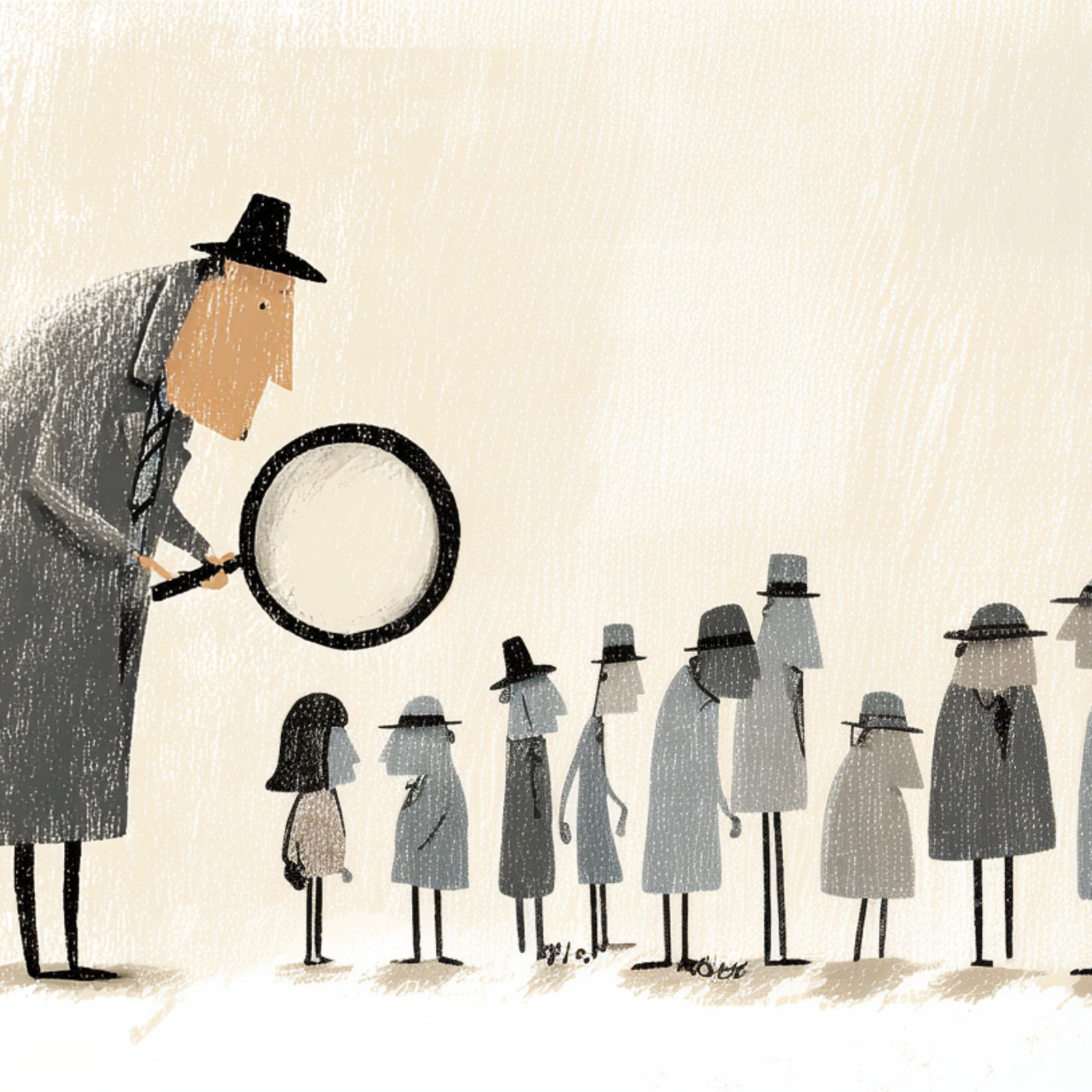
Workplace culture through “people-watching” using relationship psychology—self-reflection, attachment-style triggers, and how to build connection and psychological safety at work.
Dr. Karen Bridboard, licensed psychologist; currently chief talent officer at a construction company (Albarisi). Background in change management, human behavior, organizational and clinical psychology; previously consulted for workplace team and individual challenges. Trained by couples therapist Dr. John Gottman (Love Lab).
Workplace conflict and disconnection often come from unrecognized personal triggers and “fight-flight” reactivity to perceived social threat. Relationships require a “5-to-1” balance of positive engagement (“turning towards” bids) over negative/withdrawal (“turning away/against”). Connection is maintained through intentional behaviors like colleague “maps,” specific positive feedback, and conflict management (not just resolution).
“Bids for attention” (verbal mm-hmm or nonverbal cues) and workplace application (replying to emails promptly). Colleague maps (remembering details like a coworker’s dog). “Sound relationship workplace” levels: colleague maps, positive feedback, 5-to-1, conflict management, career support, and shared purpose.
Written by AI. May contain mistakes.
A deep dive into people-watching and psychological insights in the workplace.
“that's being dropped out and published in the field of work and workplace culture.”
Dr. Bridboard discusses the importance of self-awareness in personal and professional relationships.
“It's a discussion about psychology and how we can bring it to a degree of people watching in the workplace.”
Explore how interactions with others shape self-awareness and reactions.
“So I was just really interested in how you did that.”
Discuss the evolution of family dynamics and its impact on workplace relationships.
“On that topic there, I'm always cautious of generational suspicion or generational change.”
Examine the necessity of in-person interactions for building relationships.
“I will argue that I do think that it is extremely important, though, to have that in-person opportunity to be with others.”
Understand the concept of bids in interactions and their significance in relationships.
“And those kinds of behaviors over time lead to a disconnect that is way harder to repair.”
Learn why remembering personal details about colleagues enhances workplace relationships.
“think it's superficial to make a note of people's lives.”
Discover the necessity of scheduling personal connections to sustain relationships.
“It's like if you don't schedule it, it's not gonna happen, right?”
Understand key components that contribute to a sound relationship workplace.
“You need to work on it in order to sustain it.”
Explore the essential aspects that define a healthy workplace culture.
“as a, right, because we tend to trust those that we know a bit more than those that we don't know to some degree.”
Learn how shared purpose and meaning enhance workplace culture.
“relationship workplace, there's the importance of everybody's responsible for culture.”
Discover why it's crucial to rehumanize work amidst growing AI influence.
“And I thought the book was an elite guide to things that I think I've seen covered in slight detail before, but this was way more substantial.”
Discuss the irreplaceable value of human interaction and emotional exchange.
“So I would say that we need to remember that human touch doesn't just come from a physical touch, but it comes from an emotional exchange between two human beings that I don't believe AI will be able to replicate.”
Discuss the irreplaceable value of human interaction and emotional exchange.
“Mail and ship when you want, how you want with Stamps.com.”

Get the gist, explore an idea or ask about something said.
 Claude
On Eat Sleep Work Repeat - better workplace culture, what are the key points of this episode?
Searching your listeningAutomatic transcript. May contain errors.
0:00Parles-tu français? Hablas espagnol? Parle italiano? If you've used Babbel, you would. Babbel's conversation-based technique teaches you useful words and phrases to get you speaking quickly about the things you actually talk about in the real world. With lessons handcrafted by over 200 language experts and voiced by real native speakers, Babbel is like having a private tutor in your pocket. Start speaking with Babbel today. Get up to 55 % off your Babbel subscription right now at babbel.com slash acast. Spelled B-A-B-B-E-L dot com slash acast. Rules and restrictions may apply. Hey, Pablo Torre here.
0:41As a sports journalist, I've covered global sports for many years now. And there is one thing that I can promise you. Nothing compares to the World Cup. And this time it is even better thanks to McDonald's. you have the chance to take home one of nine legendary cups when you order the FIFA World Cup meal. The cups feature some of the biggest legends in football, like David Beckham, Terry Henry, and Ronaldinho, Christian Pulisic, Lamine Yamal, and Alphonso Davies. Right now, get one of nine legendary cups when you order the FIFA World Cup meal, only at McDonald's. At participating McDonald's, only for a limited time, while supplies last, all rights reserved, copyright 2026, McDonald's at the FIFA World Cup 2026.
1:30this is eat sleep work repeat it's a podcast about workplace culture hello i'm bruce daisley coming up to the end of the year i just want to thank everyone who signed up to the newsletter it's just hit 145 000 subscribers and i'm absolutely delighted with like the scale of it really i spent my whole working week doing that newsletter so it's a it's a delight that It's reached such a strong audience. And I'm always thrilled when people tag me when they forward it on to other people. So delighted about that. Make work better. You can see it in the show notes, but it's sort of the first place if you're interested in workplace culture, making the dynamics of work better.
2:06In addition, I think we've had some really sensational podcast episodes over the last few weeks and months. Always the podcast sort of guests are chosen by what I think is the most interesting stuff that's being dropped out and published in the field of work and workplace culture. And, you know, I scoured both things published online, but also new books. By far the biggest episode of the year was the discussion with Zach Mercurio about Mattering, the Power of Mattering book, obviously has been a sort of a big word of mouth hit with a lot of listeners. And today's episode is a discussion that I think in many ways takes that and advances it for the people who maybe wanted a bit more.
2:51The conversation today is with Dr. Karen Bridboard. She does a couple of things. The first thing you're going to get from the discussion is a, if you're a people watcher, you're really going to enjoy the sort of exploration into people's psyches that she invites you to take. So Karen is a workplace psychologist and what she effectively does is she says, maybe the reason why your body's behaving in the way they are isn't necessarily because who you are and how you're behaving with them, but because they've got maybe an avoidant personality type. And she explores maybe some elements of psychology that you are aware of, but she lays it out so that you can effectively sort of analyze what you're receiving really and try and interpret it.
3:36Fascinating from a people watching perspective to try and work out, oh, this is who my boss is, my colleague is, and this is why they're behaving in that way. and it's just kind of their operating system. Second part of the discussion goes into that mattering idea. And Karen talks about her mentor, Dr. John Gottman. And John Gottman ran something called the Love Lab, which was a sort of long-term, six-year-long study, tracking couples and their interactions with each other. Really interesting piece of work because what it did is it looked at the idea that quite often when we're in a relationship with someone, we send out what are called bids, bids for attention, really.
4:18So that might be, we say something to someone explicit, how you're doing, what do you think of that? Or it might be, we just do a sigh, or we give someone a look. The idea of a bid for attention, that bid is waiting for reciprocation. You know, so it might be, look, you know, the electronic world, someone sends you a text or a message. And what happens next determines how you interpret the relationship. What was really interesting about John Gottman's work is that quite often bad relationships have a 50-50 split between a movement towards that bid, you know, a reciprocation, a response and an engagement and a movement away from or an ignoring.
5:03That idea that a bad relationship has a 50-50 balance between ignoring and warmth is really interesting. You know, it suggests that relationships can go bad far easier than we think. Good relations, they needed a five to one nature of reciprocation, warmth, engagement for every negative response. That's really interesting. And Karen's going to take us into that because it has application directly. You know, John Gottman said that this isn't just about romantic relationships. This is about all relationships, whether it's parental, or whether it's with your siblings, whether it's workplace relationships.
5:40And so I think what you're going to get from this discussion today is a nice end piece to some of the conversations we've had this year. It's a discussion about psychology and how we can bring it to a degree of people watching in the workplace. This is my conversation with Dr. Karen Bridboard.
5:58My name is Karen Bridboard. I am a licensed psychologist who currently serves as a chief talent officer for a construction company called Albarisi. But my background is really in change management, human behavior, organizational psychology, clinical psychology. And I've had a career where I've spent time in both arenas, treating people clinically as well as working actually in the workplace on a day-to-day. I was really intrigued with the idea that you're a workplace psychologist It immediately struck me. I thought, wow, how common is that? How common is the idea that a workplace actually has a psychologist or whether they tap into one or they actually have one on the payroll?
6:48How common is that, Karen? Yeah, I don't actually think it's that common. And, you know, I call myself a workplace psychologist because that's what I do in essence or I have done. Now I'm actually spending more time leading a company and bringing in other people who help people one-on-one. But not so long ago, for about 20 years, that's what I did. Organizations would reach out to me. And mostly I was in a consulting capacity helping companies deal with human-type challenges in the workplace. And those challenges could range from having teams that need some support in working more effectively together or individuals challenged by some personal circumstances that could impact how they show up at work.
7:44I found my own academic background is in both arenas. So I studied organizational psychology as well as clinical psychology. And I think that mesh of background has really allowed for me to have a toolkit to borrow from as needed. From a clinical standpoint, I was trained by a guy named Dr. John Gottman, who is a well-known couples therapist. And I've taken quite a bit of my training with him with couples and have applied it to the workplace. place. So relationships are relationships. Granted, there are different boundaries when you're working with a colleague than you're working with your life partner.
8:30And when I say working, I mean just living together. You don't have to, you know, be in the same quote-unquote job. But there are basically principles that carry over no matter what the actual relationship is, whether you're working with your child around something, whether you're working with your colleague, whether you're working with your spouse, whether you're working with your parent, right? And there are some fundamentals that when people learn how to, for example, repair conflict, because conflict usually happens in the closest of relationships. People are very, very, you know, the reason that conflict has gotten such a bad rap is because of what can happen in conflict when there's a lot of criticism or stonewalling or contempt or defensiveness, which shuts down conversations, right?
9:24But in fact, when people learn how to have productive conversations, it frees them up and actually, I would say, brings them closer. I'd love to come back to something that Dr. Gottman taught us later on, but I wanted to set it up before that. I saw the book as sort of, And it was, if you're one of the fortunate people that you don't carry any baggage yourself, then it was a wonderful exercise in sort of informing your people watching at work, trying to decode what you were receiving. But I think in the first instance, the thing that was most taken by was the fact that you start with self-reflection that goes a good deal deeper than most self-reflection that I've seen in books before.
10:10So it extensively sort of reminded me of attachment theory and how we form attachments to people around us and invite the reader to appraise their own sense of that. And I just wonder if you could give us a beginner's guide for that. I wonder if you could just talk about how you, I was intrigued. I got the sense when I was reading that, that I thought, okay, this must be informed by some of the problems that you've had to decode before, that you've realized that this is not just a relationship problem between two people, but you need to help someone understand what's going on in their head. I wonder if you could just explain why you went in such depth to personal analysis.
10:54Yeah, no, I thank you for picking up on that person. That was the first, really the first, right, the first relationship is with the self, right? So we are continuously having a relationship with ourselves. And we are complex creatures who've been impacted by the past, by the present, and even the perception of the future. So understanding what our triggers are, what our strengths are, is incredibly important when interacting with others. I mean, the hallmark of emotional intelligence starts with self-awareness. So the idea is that when you have that insight about yourself, you have a greater likelihood of being able to manage your own reactions.
11:46I should say it doesn't always happen that way because certainly we all know people who appear very self-aware and yet they're getting themselves into trouble all the time in relationships. So it's not just about being self-aware, although that is absolutely the first step in understanding the self, but it also becomes about really being able to regulate at times your reactions, your reactivity. And when I say that, I don't want listeners to think that I'm saying to silence your voice. I think that it's really about having options and enough insight to be able to know maybe this, I'm getting triggered right now.
12:36I'm in a fight flight mode, by the way, our bodies, our minds perceive social threat the same way as we perceive the saber-toothed tiger, right? So if we feel excluded or we feel disrespected or we feel that we've been unfairly treated, for example, our brains will go into that fight-flight mode and that's when we can get into trouble around how we respond, right? So understanding the self is so key to being able to ultimately regulate how you respond to others that could result in greater success. It may mean saying, listen, I need to take a little bit of a break right now. Let me think about what you said and come back to you.
13:27You don't have to tell the person I'm triggered, I'm having a hard time by what you're saying. It allows your nervous system, that break to actually come itself so that you can come back to the table. Obviously, people who are self-aware have a greater likelihood of being able to leverage that option that is available to you. Yeah, it just, it struck me that the self-awareness that probably a lot of us think that we've got access to is quite superficial, you know, in truth. And so just going into depth and analyzing with a bit more structure that certainly informed some interesting conversations in my head and reminded me of things that, look, I've been casually aware of in science or in my own behavior, but like to have more structure to it, it helped me understand holistically relationship situations.
14:20So I was just really interested in how you did that. Yeah, absolutely. And, you know, just to that point, I would say that, you know, we learn so much about ourselves by bumping up against other people, right? We don't learn. So self-awareness seems like a very self-process, like an isolated process. In fact, the reflective piece can feel like it. However, by having reactions towards other people, right, it's only through those interactions, that bumping up, that we really get to know who we are. That's why being able to reflect after such circumstances, right, by either talking to a therapist, a coach, or even journaling, or even a friend, right, a trusted advisor can really help us make sense of our reactions.
15:12because sometimes we react to people based on just unexplored territory triggers we have from earlier relationships, earlier in time, right? If we felt like, I don't know, I'm gonna be very stereotypical and simplistic with my example right now, so excuse me, right? If we grew up in a home where we felt like our parents dismissed us continuously, right, and we never really did our work to understand that, we might find ourselves in a workplace situation where we are looking at situations where we're being, we're interpreting situations where we're being dismissed. And maybe we are, maybe we are being dismissed, but are we withdrawing ourselves and just, you know, not activating ourselves to help remedy the situation instead just saying, the world is going to dismiss me, so I'm just going to remain dismissed, as opposed to activating ourselves to foster healthier, more productive relationships.
16:20That's a small example, right? There are thousands and gazillions of examples that I can bring to the table around how early events in our lives, not just with our parents, but with our teachers, with our initial work experiences can impact how we interpret things and then how we respond accordingly. On that topic there, I'm always cautious of generational suspicion or generational change. However, you know, if our first ever group was broadly for most of us, our family, and so family systems are so formative for what follows subsequently about how we engage with others, how we understand the dynamic of power with each other.
17:04Has the group that people exist in as their family changed over time? And I'll give you a specific example. It might have been that it was a period of time that a lot of us might have spent adolescence watching TV side by side with our parents. Or we might have had evening meals with our parents. And actually, you know, for different cultures, international cultures that still remains sometimes when i talk to to spanish and french people saying oh you know actually they've got in the habit of having dinner together more they look at me like who stopped having dinner together you know like but but has the basis there's by the way a lot of research a lot of research that shows that families that eat together right are more connected yeah um and uh and and so there is a lot of validity to that and it turns out it's not just eating.
18:00It's just the spending time together because a lot of, you know, so yeah, go ahead. To my point. So in the old days where we might've watched television together, sitting side by side, and now maybe if our first group we do that, people might be on their phone scrolling with headphones on. Is that going to inform a different basis of our understanding of what it means to be in a group. Over time, are we going to expect Gen Z or Gen Alpha workers to be a little bit more estranged from a group dynamic in favor of individualistic? It is such a good, it's a great question. And to answer that question, I mean, I do think, I go into restaurants these days, I'm sure people look around and half the people are sitting across from someone else and are on their phones, right?
18:53So we've gotten into this. It's not only what's going on at home, it's also people going to restaurants and people not connecting. I do think that online, that phone has become something that we've grown accustomed to very quickly. And I think some would even argue that there's an addictive element to the phone that the dopamine receptors give us a reward system and the circuitry. And so we are drawn to the phone continuously. Do I think that the younger generations are using and will continue to use more than we did, for example, which I didn't grow up with a phone, a cellular phone the way I have now, right?
19:37Yeah. And just like they may find that their sense of connectivity is met more so through, you know, online mediums. I do believe that. It's just like we've gotten, it was once that we didn't really have restaurants to go to and to have someone else cook for us that we had to cook at home, right, in order to eat, right? Similarly, whereas we had to meet up with people to feel connected because we didn't have the phones, similarly, I think that the phones will serve in a way that and continue to serve where people are getting their connection met in that way. I will argue that I do think that it is extremely important, though, to have that in-person opportunity to be with others.
20:34That I do think that, and people ask me this all the time, I was just giving another talk, they said, do you think that it's okay to just be remote, be a remote employee? And that's okay. And I say, yeah, of course I think it's okay. But I think that for organizations where you have remote employees, any opportunity to bring people together, even if it's on a quarterly basis, will make a difference for connection. There's something that happens when we're live with individuals, right? And I'm not minimizing the fact that, thank goodness that we have Zoom, thank goodness that we have phones, and that it allows us also to create meaning and connection to some degree.
21:18But I think that we do miss out when we don't get to be with people in person. I do. I want to draw on that. One of the things that I said would come back to your mentor, Dr. Goldman, that you studied under before. And something that you referenced of his work helped me reflect on relationships. And you talked about bids and responses. This is a phrase I've heard a little bit elsewhere, but it bared reminding. And I'm suspecting the first instance this is most helpful for us is in our home life. But actually, there's a direct application for all of our relationships. And this idea that when someone asks for your attention, that's a bid.
22:04And what you do with that bid determines how the relationship feels. I wonder if you could just help me understand that a bit more and remind us of the science of it. Absolutely. Yes, absolutely. So I'll just break it down. Basically, in any given interaction, you have one of three choices in essence. So you and I are having an interaction, Bruce, right now, right? So you can either turn towards me, which you are. You're nodding. I feel like you're really following what I'm saying. You're trying to make sense of it. That's turning towards. You could turn away from me. So maybe you start getting distracted by something else in your environment and you lose focus.
22:50You lose your attunement to our conversation. That's turning away. Or you could turn against me. Turning against me would be to say, Karen, what are you talking about? This doesn't make any sense. This is, you're not, I don't agree with you. So really those are our three options. and you know like a game of tennis which we spoke about right before starting this uh podcast right you can literally um tally how two people are are communicating you could say oh that person she just turned against him oh he just turned against her oh he just turned away from her and within a 10 minute conversation you can you can actually create a numerical ratio within that 10 minutes, she turned towards him 10 times, she turned away from him three times, she turned against him once, and he turned towards her five times, he turned away from her, right, etc., right?
23:49And what Dr. Gottman found actually in his research, because he found that there was a ratio for that when people were having conflict conversations, when they were communicating within a conflict that for every one turning away or turning against, you actually needed five turning towards to buffer it. Let me repeat that because that's an enormous ratio that as psychologists, we were shocked by that amount. So that for every one turning away, meaning ignoring someone or withdrawing from someone or turning against, saying something unkind. You needed five turning towards. That's an enormous ratio.
24:37And so how does that translate to the workplace? It's really important that we recognize that how much more positive exchanges we need to have with people. And these bids are on a moment-to-moment basis. They can be verbal, but they can be a mm-hmm, mm-hmm. or they could be a nonverbal, which your audience can't see me, but it's like shaking my head no, right? So they're verbal and nonverbal. It shows that the impact really of the positive to outweigh that turning away or turning against. And by the way, turning away was found to be a little bit worse than turning against. Why? Because at least in turning against, there's some interaction, even though it's negative and hostile.
25:26And it is way harder to repair relationships when people are so disconnected from each other and turning away. There's no energy. I could tell you as a clinician, it is easier to work with people who are in high conflict than it is to work with people who are so disconnected, almost apathetic towards each other. So this has, and in the workplace, by the way, sure, there are situations where people are blatantly being hostile to each other, but I would argue that in a workplace setting, I see more turning away, where people are either freezing each other out, not responding to each other, shutting down.
26:16And those kinds of behaviors over time lead to a disconnect that is way harder to repair. Okay? That is way harder to repair. And I don't believe that people do this because they're malicious or angry. It's just, I really believe that many people never learned how to effectively repair relationship conflict. It is an art. And so that's been the challenge. That has been the challenge. You talk about sort of building maps of colleagues' lives. And I think just being kind to yourself about thinking, oh, Jesse's got a dog. I must make a note of that rather than just leaving it to the chaos of my memory so that, you know, I can go back and I can mention that.
27:08And we all find it, I mean, at the base level, there's nothing more. That's right. But there's nothing more enchanting than someone whose name you don't remember coming over and greeting you by your name. And you're like, and you're consumed with, wow, like what a wonderful thing. And you're like, you're riddled with your own embarrassment that you can't reciprocate. But like people remembering small details about us can be so important for us building connection. You talk a lot about sort of building connection. I just wonder if you could just reflect on all of that for a second, because some people might say it's cynical to keep a map like that, and whereas I saw it as actually something that was quite achievable.
27:47I just wonder, do you believe that, is that just a natural order of being a better human? Yeah, look, we've got so much information coming at us every day, and we filter, we've got to filter things through different lenses, I don't actually think it's superficial to make a note of people's lives. I actually think it's a caring thing. You know, I think it's something that even, and nobody needs to know that you're writing down, you know, Sandy has a dog, you know, named Will, you know, I mean, whatever it is, it's actually, I think, a kind thing to make note. and because people want to know that they matter, right?
28:31People want to know that you remember and especially if somebody has shared with you a piece of information such as my dog had to have surgery last week. How wonderful to follow up and say, hey, how does your dog feel, right? Because if people end up sharing a personal piece of information, something that's bothering them, something that may be worrying them, to be able to follow up and make note, I think is a nice thing. And it's not a calculated thing. It's being human and understanding that we only have so much cognitive reserve to remember all of these details. And so it's like, it reminds me, right?
29:12So as a couples therapist, when I tell people, you know, no, no, you should have date night, scheduled date night. People will be like, that's ridiculous. like to have to schedule a date night. It's like if you don't schedule it, it's not gonna happen, right? Because there's gonna be other things that come your way and even intimacy. When I tell people, yeah, schedule, that's terrible to schedule in. Are you kidding me? Schedule intimacy with my partner? Schedule having sex? That's egregious. No, actually, it actually helps relationships just like, you know, it's about making time, right? And similarly, we're so busy in these days with social media and with our online lives as well.
30:01We've got that much more information coming at us than ever before. And making note of these things can actually help us. A lot of people write down birthdays, for example, of people that matter to them because it's really easy to forget your best friend's birthday when you have your children's birthdays. And some days you may not even realize what day of the week it is. You may not even make that connection, right? I mean, at the end of the day, you know, connection matters. And I think that it's not just connection. I think it's also maintaining that connection. And that's why I keep on harping back to this idea of being able to repair when conflict occurs becomes so important because connection is one of those things that is dynamic.
30:49You need to work on it in order to sustain it. It doesn't just exist alone. It's like if you're working out a muscle, right? I mean, if you stop working out, that muscle is gonna atrophy. Similarly, connection needs attention, right? It needs attention. And so it does take work, it does take intentionality, but the fruits are great when it happens because it also helps with the difficult times, right? When people know that you have their back, when people know that you care about them, it's basically easier to have those difficult conversations that can occur at work. Yeah, that idea of having your back, I think is like an important part of my evolving understanding of psychological safety that if you know that someone's got your back, but they're giving you a hard time, you know, okay, they've still got my back.
31:45So like, they're not just digging into me to sort of make my life a misery. They're doing this with best intentions. And I just wonder if you could string some of this together. You know, what does a sound relationship workplace look like? How do all of these things work as system thinking? Yes. So the sound relationship workplace, which I kind of coined, has different levels to it, right? And these levels that I'll share in a moment, in essence, have all been validated by research. And just so your listeners understand, the book is very science-based. It's not just, this is a nice thing to have, but I do reference scientific research continuously because at the end of the day, at heart, I am a scientist, right, as a psychologist.
32:34And so basically, the sound relationship workplace entails what you mentioned earlier, colleague maps, which is the importance of getting to know your colleagues as human beings, not as just human doings. as a, right, because we tend to trust those that we know a bit more than those that we don't know to some degree. I mean, that there's enough safety that builds because you know someone's, you know, name, what they enjoy doing over the weekend. Granted, we all human beings have different comfort levels with how much information that they're willing to share, but there are definitely green lights that I think that make us all feel more comfortable when we know some things about people, right?
33:25And those colleague maps that we build and they tend to get stronger over time are important. They can be anything like, what do you enjoy doing over the weekend? What's your favorite food? What makes you laugh? What's your dog's name? Things like that, right? Those kind of build colleague maps. Certainly, there are colleagues that you may have a deeper relationship with. And as you know, I'm sure, Bruce, one of the better indicators of satisfaction at work is having a best friend, right? We have that research from Gallup and that in fact, people won't leave a workplace when they have a best friend because they're connected to the place.
34:08So colleague maps, certainly, you don't have to be best friends with everyone at work, but I think the idea is that you have enough of a connection, know enough about the person that you feel comfortable with them, right? Another aspect of building a sound relationship workplace is that positive feedback, right? Is that you are really catching people, catching people doing things well, and you're calling them out on it, right? That you're supportive, that you're appreciating people. And I'm not saying telling people, you did a great job. That's, of course, people like to hear, but, you know, people like to hear even more is specificity, such as when you gave that presentation to the client, you were so specific.
34:55And I think that really helped the client understand, right? So getting specific with feedback, whether it's positive or constructive, is super important. But people tend to, I think, forget how important specific feedback is in the positive as well. The third level of the sound relationship workplace is, in essence, having that five-to-one ratio, that turning towards, that you're turning towards, you know, more than turning away or turning against, just being mindful. Of course, in remote workplaces, right, this can end up looking like, you know, returning people's emails within a certain time frame, not waiting three days because somebody might think, I don't matter, right?
35:41Whether correctly or not, you know, assumptions are not always correct. But sometimes it can be helpful if you know you can't get back to someone to just say, hey, please give me a couple of days. So at least acknowledging that the email has come to you makes a difference. Otherwise, people may make assumptions erroneously, right? And this is what can happen in remote settings, actually more so than in person settings, believe it or not. Then there's the conflict piece, and I like to call it conflict management, not conflict resolution, because many conflicts aren't resolvable, right? People end up going a certain direction that you could say that kind of resolved the conflict because a decision was made in the workplace.
36:28But sometimes we kind of need to look at it more like it's managed rather than resolved because people have differences of opinion. And quite frankly, that's a really good thing. Research shows that better decisions are made when groups are involved than any one person. It's because we all see things differently. We can all look at different angles. as long as we have tools for really addressing those differences, acknowledging that there are differences, and building, as you mentioned earlier, psychological safety where people feel safe enough to say, hey, I don't agree with that, and here's what I think, without fear of being ridiculed or shamed for having a different opinion.
37:14And, you know, workplaces are not always democracies. And so people end up making decisions that, you know, not, you know, that there may be. But as long as you can process those differences and make it about the decision and not about the person, that's super important. Another place, another piece of really building a sound relationship workplace is attending to your colleagues' career aspirations to some degree. And that could mean, you know, sometimes you're in a position to give a person an opportunity, but sometimes you're not because you're not their manager. But sometimes you can absolutely, you know, give a colleague credit where credit is due and help elevate them and acknowledge them.
38:01Got to have kind of an abundance mindset where, you know, rising tides lift all ships. Sometimes we see in organizations that people are competing within rather than without. I always tell people external competition is okay, but when you're working within an organization, it's important to come together as a team, right, where you're supporting each other. It doesn't mean that, you know, somebody gets a promotion and you may think, I wish it was me, but hopefully you can learn from why they got a promotion and maybe you can get the next promotion, right? The idea is that you're a team and that together you rise together.
38:39And then, of course, in the sound relationship workplace, there's the importance of everybody's responsible for culture. If you have a chief culture officer of something like that, sure, it may be front of mind to them, but at the end of the day, culture is something that's really built by everybody, right? What does that look like to you? What does great culture look like to you? Oh, great culture looks like collaboration, where there's great communication, right? Again, it's not the absence of conflict, it's how conflict is managed that becomes key. It's resiliency. It's being able to be vulnerable.
39:20It's psychological safety. It's the ability of the group really to, and when I say the group, I don't mean individual teams. I mean the whole organization to be able to both celebrate that each person does still have their own identity as a human in the enterprise, but together, you're, you know, the whole is greater than the sum of its parts. You come together to make something greater than any of you individually, right? Like, great culture also is, I think, built around a shared purpose and meaning that actually even serves as an anchor, as an anchor for bringing people together, right? And people understanding how their piece fits into the whole, right?
40:13And so that to me is what great culture is about. where great decision-making is celebrated, right, where people feel connected to something greater than themselves individually. Thank you so much for this discussion. And I thought the book was an elite guide to things that I think I've seen covered in slight detail before, but this was way more substantial. One of the things that we often talk about is we talk about as we're entering this era of AI-assisted work, that it's the moment, if anything, for us to re-humanize work and for us to lean into the things that make humans effective and stronger and make sure we do them more effectively.
41:01And you seem to be a really big champion for doing that in an informed and empowered way. I think, I wonder if sort of in wrapping up, But you'd give us your case for that, why you think this is a moment for us to rehumanize work. Yeah, I absolutely do. And by the way, I don't think that AI, I mean, as incredible as it is showing us to be able to do so many different things at the end of the day, I don't think that AI will really be able to replace a human kind of a connection that is the sine qua non of human beings coming together. I'll be honest with you, I don't. And I do think that AI is going to be very helpful in helping humans connect potentially, but will not replace that real human connection, that human to human contact.
42:02This message comes from Jackson. Taxes aren't something you can only think about once a year. With investments, planning for tax days year round. Fortunately, Jackson offers tax-efficient products. Visit jackson.com for more information on how our products can make your tax bill a little bit less painful. Jackson is short for Jackson Financial Incorporated, Jackson National Life Insurance Company Lansing, Michigan, and Jackson National Life Insurance Company of New York. Purchase New York. Still waiting in line? Again? That's time you will never get back. Save time and money with Stamps.com. Over 4 million businesses have skipped the line with Stamps.com.
42:40Join them to save up to 90 % off carrier rates from your computer or phone right now. Print postage for certified mail, registered mail, and packages in seconds. Then schedule a pickup right from your home or office. For a limited time, go to Stamps.com and use code PODCAST for a free welcome gift. Taxes and fees apply. Your team just added its 67th AI tool and also your 67th security blind spot. The good news? The Vanta agent works like a GRC engineer in the background, finding every app your team uses, scoring the risk, and drafting fixes for you. Vanta is the platform used by over 16 ,000 fast-moving companies like Ramp, Cursor, and Harvey, who are shaping the future with AI and staying ahead of AI risk.
43:21Get started at Vanta.com.
43:26That we all need, that we are primed for. So I would say that we need to remember that human touch doesn't just come from a physical touch, but it comes from an emotional exchange between two human beings that I don't believe AI will be able to replicate. Although I think that AI will be able to help us, certainly help us, but it will not be able to take away that human touch, that humanness that we need from one another. So you're optimistic about the enduring importance of humans in the workplace? As humans in the world and of human contact and of human energetic exchange, the energy that happens when two people see each other, feel seen by each other, and help us feel, actually, we need each other, as I'm kind of circling back to what I said earlier, we need each other to know ourselves.
44:33that's you know it's that bumping up against the other that i talked about and so we need other humans to really understand who we are right because we don't know who we are in isolation thank you to karen a link to her book and to everything else in the show notes there's a full transcript on the website produced by computers so buyer beware i've been really grateful for your company this year. Thank you so much. If you shared an episode or shared the newsletter with anyone else, obviously I work for free on these things. So it's always great to see just the audience growing because it's sort of, it makes me feel like it's a worthwhile enterprise and endeavor.
45:15So thank you for your company. I've been Bruce Taisley. See you next time.
45:30So why waste time sending important documents the old-fashioned way? Mail and ship when you want, how you want with Stamps.com. Print postage on demand 24-7 and schedule pickups from your office or home. Save up to 90 % with automated rate shopping. That's why over 1 million small businesses trust Stamps.com. Go to Stamps.com and use code PODCAST to try Stamps.com risk-free for 60 days. Your team just added its 67th AI tool and also your 67th security blind spot. The good news? The Vanta agent works like a GRC engineer in the background, finding every app your team uses, scoring the risk, and drafting fixes for you.
46:09Vanta is the platform used by over 16 ,000 fast-moving companies like Ramp, Cursor, and Harvey, who are shaping the future with AI and staying ahead of AI risk. Get started at Vanta.com. Hey, Pablo Torre here. As a sports journalist, I've covered global sports for many years now. And there is one thing that I can promise you. Nothing compares to the World Cup. And this time, it is even better thanks to McDonald's. You have the chance to take home one of nine legendary cups when you order the FIFA World Cup meal. The cups feature some of the biggest legends in football, like David Beckham, Thierry Henry, and Ronaldinho, Christian Pulisic, Lamine Yamal, and Alphonso Davies.
46:50Right now, get one of nine legendary cups when you order the FIFA World Cup meal only at McDonald's. at participating McDonald's only for a limited time while supplies last. All rights reserved. Copyright 2026. McDonald's at the FIFA World Cup 2026.
Dr Karen Bridbord is the author of a new book, The Relationship-Driven Leader that invites us to bring a psychologist's lens to our job and the relationships with those around us.
Her perspective is to use psychology to understand the person in front of you to interpret the world through their eyes. If you’ve got a controlling boss or someone who behaves in a way that impacts your life she helps you unpick what’s going in their head.
Sign up to the Make Work Better newsletter or check out the best ever episodes at the website.
Eat Sleep Work Repeat is made and hosted by Bruce Daisley.
Hosted on Acast. See acast.com/privacy for more information.