Ask ChatGPT
 Eat Sleep Work Repeat - better workplace culture
2 Nov 2025 · 45m · 20 chapters
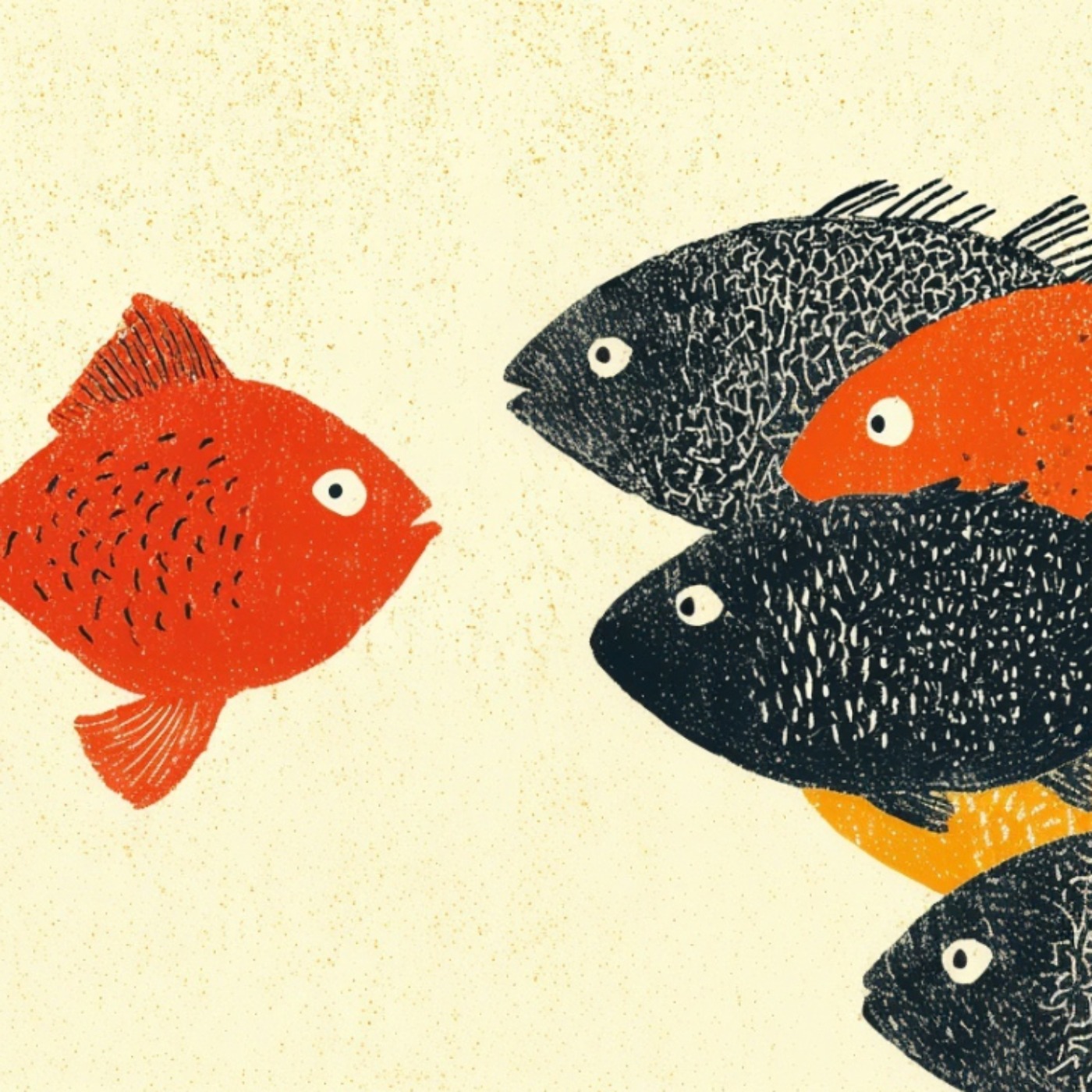
How strong team identity drives workplace and team performance, using social identity theory and Jeremy Holt’s “tribe” model (Traditions, Relevance, Identity, Belonging, Effectiveness). Episode emphasizes co-created shared beliefs, rituals, and practical conversation/challenge exercises.
Jeremy Holt, UK chartered occupational psychologist. Background includes occupational psychology work across investment banks, pharmaceuticals, and the military (training senior British officers). For about a decade he’s also worked in sport, including youth rugby coaching.
Talent isn’t the secret; identity is. Teams with strong shared identities outperform weak-identity teams by 53% (top vs bottom 20% of 45 sports teams). Identity is more powerful when co-created than handed down.
Holt’s work with Hove Spartans (U14s): first season bottom in league, then undefeated and league winners in the second season after building “lightning rugby” identity. LeBron James’ enduring school identity reference (class of 2003) and Great Britain wheelchair rugby using a “tribe canvas” on walls and induction materials.
Written by AI. May contain mistakes.
Discussion on how identity drives success in teams, linking to Professor Haslam's insights.
“Alex talked a lot about identity and how it's foundational to our self-esteem, how we interact with others.”
Introduction to Jeremy Holt and his approach to team identity and performance.
“I just really love the practical examples of it.”
Exploration of practical exercises to build team identity, citing Jeremy's book.
“So for example, I mentioned the Twitter bio, the Twitter sort of description of LeBron James.”
Jeremy shares his background in psychology and experience with high-performing teams.
“This is my conversation with Jeremy Holt.”
Jeremy discusses his coaching experience with youth rugby and building team identity.
“Yeah, so my job is working with senior leaders or officers or elite level sports people.”
Discussion on how identity can have a lasting impact, referencing LeBron James.
Jeremy explains how individual identity concepts apply to group dynamics in teams.
Insights from research on how strong team identities correlate with success.
Revelation that teams with strong identities outperform others by 53%.
“some sort of something that's an invention of recent politics that it's not necessarily what they want to associate with.”
Learn how a strong team identity significantly influences team performance and success.
“that teams that have a clear sense of shared identity are more successful.”
Discover the importance of co-creating team identity rather than imposing it.
“Yeah, so first of all, the word identity is thrown around a lot and I don't think it's often very well defined and people don't really know what it means.”
Explore tools and questions to foster discussions around team identity and beliefs.
“The reason why I was really taken with your book is that I had some Esther Perel relationship cards that I'd seen someone use for a corporate use.”
Understand how to build effective team identities in various group contexts and dynamics.
Analyze the failures of the English football golden generation in terms of team identity.
“are given of stories that didn't go well.”
Learn about the identity failures in England's football golden generation and how Gareth Southgate transformed team dynamics.
“And I'd love you to sort of talk about how there was a failure of identity in that golden generation era of football.”
Discover how the Tribe Protocol can transform team beliefs and identity in corporate and sports settings.
“And if you can get in in pre-season and do something, then that's probably your best opportunity.”
Understand the role of rituals in maintaining team culture and fostering a sense of belonging.
“That meant reminders all over the place.”
Hear about the coaching journey with Hove Spartans, focusing on team development and identity formation.
“for the team moving forwards without this person?”
Learn how developing a shared team identity can enhance performance and motivation.
Discover how practical exercises from a book can inspire positive change in workplace culture.
“Jeremy, the reason why I love the book is that almost everyone who listens to the podcast gets in touch with me and they've got this sort of desire to make their own workplace better.”

Get the gist, explore an idea or ask about something said.
 Claude
On Eat Sleep Work Repeat - better workplace culture, what are the key points of this episode?
Searching your listeningAutomatic transcript. May contain errors.
0:05This is Eat Sleep Work Repeat. It's a podcast about workplace culture. Hello, I'm Bruce Daisley. Today's episode was specifically created to act as an extension of the conversation with Professor Alex Haslam. Alex talked a lot about identity and how it's foundational to our self-esteem, how we interact with others. and by extension how we work in groups like all of it about company culture group culture really today's guest is jeremy holt jeremy is a performance psychologist who's worked with a huge range of sports teams rugby the olympics motorsport but also in corporate business and the military his approach is to build team success by leaning into identity now he says in his book that the secret of success for many teams isn't talent, it's identity.
0:53Identity isn't a byproduct of success, it's what drives success. The reason why I wanted to talk to him is that he's just published a book, For the Love of the Game, which gives a clear step-by-step guide to building group identity. And he uses it to talk about sports teams, in fact, youth sports teams. But the applications are really clear for work for me. The book sort of lays out the substance of his work and gives you, for example, conversations to start on the bus to games or conversations to start before training or conversations to start after a game, conversations in, you know, maybe a trip team away, really simple things to try and make the team feel like they are, I think, articulating the identity of a group, that they are shaping it, they're forming it, they're all having a say in it.
1:41I just really love the practical examples of it. It's sort of little exercises where anyone could apply it. Jeremy actually says that he started off as someone prompted him to use his own work with the sports teams he was coaching himself. And he suddenly realised that it was making him lean into it and become more and more focused on it. All of it is really an incredible resource for how any leader could create team identity and team culture. Along the way, there's a few things I mentioned, and I've linked to them in the show notes. So for example, I mentioned the Twitter bio, the Twitter sort of description of LeBron James.
2:19If you're interested in that, there's an incredible documentary on LeBron's school career at St. Vincent's and Mary when he was in the class of 2003. It's free on Amazon, and I've linked to it in the show notes. It's called More Than a Game. Absolutely brilliant that is. It's just like watching those players play with such a smile on their face and seeing how they feel, their identity is defined by it. And witness the fact that 24 years later, it's still in LeBron's Twitter bio now. That's going to be there. I've also linked to Jeremy's paper. If you fancy sort of delving into a bit of academic research, Jeremy's paper found that teams with strong identities are 53 % more successful than teams that don't have strong identities.
3:06And just to put that into real money, that's the difference between relegation form and promotion form. And I've also linked to his book, which I think is a really practical guide for anyone who's maybe just trying to make their team better. Really good discussion. I think it works very well as a partner piece for anyone who's interested in what Alex Haslam said and want to bring it to their own work. This is my conversation with Jeremy Holt.
3:34Jeremy, thank you so much for joining me. I wonder if to kick off, you could introduce who you are and what you do. Yeah, so my name is Jeremy Holt and my background, I'm an occupational psychologist, chartered occupational psychologist here in the UK. And I guess probably around about 25 years ago, I started getting really interested in high performing teams and what made high performing teams different to ordinary teams. So my work started off in the corporate sector, did a lot of work in investment banks, then shifted more into pharmaceuticals companies, but I've really worked across a very broad range of organisations.
4:13I also started working with the military and ran high performance teams training for senior British officers. And for about the last decade, I've been working in sport as well. So a bit of variety, but the same principles sitting behind working with all of those groups. I want to come at this slightly, probably reverse order angle, because some of the stuff you've hinted at there, I want to come back to. But you comment in the book that you've written, For the Love of the Game, you comment that someone said to you, how come you use all of your identity stuff in your work, but you never use it in your sport?
4:51And I'm just intrigued with that. If you could give us, to some extent, the story of Hov Spartans and you working with them. Yeah, so my job is working with senior leaders or officers or elite level sports people. But my hobby has been coaching rugby. And I've been doing that for more than 20 years. I was one of those weekend warriors who started off coaching my son's team. And then when he grew up and moved on, I decided to carry on coaching. and I was coaching at Hove Rugby Club and I got involved with a team who were under 14s at the time called Hove Spartans. When I first started working with them I guess I was doing what I think many sports coaches do which is really focus on the X's and the O's as they call it so tactics and skills and techniques and I wasn't really applying the identity work that I did in the elite level.
5:54And I got challenged by one of my friends who said, what on earth are you playing at? You know, that's surely that's what you should be doing here. And when I thought about it, I realized that there's a difference, obviously, between being a consultant who comes in and talks to leaders about taking a particular approach with their team, or helps them to take that approach with their team, and doing it with your own team and being the leader who's doing it. So I sort of tapped into my own reticence about doing things differently because you know when you start to lead in a different way um following a different understanding of leadership then of course it creates a degree of uncomfortableness or or anxiety so i think that's what i was experiencing and i i just reached a point where i thought right i better push on through this and uh and see what happens there's something where you mentioned that one of the former players had got in touch with you and, or had posted it in their bio, they'd referred back to this and it immediately brought to mind, I don't know if you ever saw it, but for a long time, the Twitter bio of LeBron James used to say, LeBron James, St.
7:03Vincent, St. Mary's school class of 2003. And it's just an illustration that sometimes when we get this identity right, when people feel part of something magical and really special to them that identity can be really enduring it can really have this visceral impact on us and that's what it immediately put me in mind of so I wonder if you could talk a little bit about how you set about in that example there of building identity in that team yeah I think it's a really good observation first of all so one of the questions I ask leaders at and many, many military officers that I've worked with over the years is think back to your best experience in a team, you know, your personal best experience.
7:49And you'd be surprised at the number of people who maybe have been out in combat zones or, you know, just achieved extraordinary things, but they'll refer back to some sort of childhood experience, which was maybe the first time that they really felt connected with other people. And it was often to do with sport. and so that's the power of sport is that it allows people to get that deep sense of connection and connection and belonging and the way that I approached it with with the team that I was coaching and the way that I approach it with the other teams that I work with at whatever level is to use this approach which we call tribe and it has its origins in social identity theory and so it's really looking at the group dynamics that happen the group processes that happen when somebody categorizes themselves as belonging to a group when you categorize yourself as being one of us and it changes your perception leads to all sorts of cognitive biases that can be really productive and and that we can tap into what i loved about your approach we've just had a couple of episodes talking to Alex Haslam.
9:01And I guess some people might superficially, when they hear the idea of identity mentioned, they either might wince from it or wonder if it's some sort of something that's an invention of recent politics that it's not necessarily what they want to associate with. Whereas your work and the way you would describe it here is a direct through line that connects Owen Eastwood's work that we've talked about you know his book superficially is called Belonging but really it's all about identity it's about group identity and and group identity extending back into tradition and extending forward into legacy all of those things are about identity um I'd just love you to sort of reflect on whether you actually communicate that theory to people when whether you bring people into that or whether you just talk about the practicalities of emotion and how people feel.
9:59Yeah, we do talk about the theory because I think it's important for people to understand what happens in groups. And we have an opportunity to give people a better understanding. So obviously, when I work with a team, I'm doing this work in a particular context, which will often be, you know, their work team or their work organisation. and what they're interested in is creating a culture where the sorts of behaviors that you see contribute to sustainable performance within that team or or that organization but what sits behind that is is this concept of identity and and the problem with identity is that it's quite an abstract concept so you know it's a it's one of those words that gets thrown around a lot and we don't really want to know what it means but if you step back from it and you think about it from an individual perspective to start with, then your identity, your individual identity is what makes you different from me, okay?
10:58And everybody understands that. And what the research has shown, and there's been a lot of research about this over, you know, at least the last 100 years, but particularly over the last 50 years, really looking at what are the components that create your identity, or so-called identity construction motives. And basically, there are six elements to your sense of self, six things that you're trying to achieve by being yourself. One of them is a sense of connection over time, so past, present to future. So we like to believe that who we are connects us with our past, our present and our future. The second is some sense of meaning or purpose or relevance.
11:46So we like to believe that we're on this earth to do something that people will remember that makes a difference that has value. The third is that we like to be different. We want to be different from each other. And so we need to know what makes us distinctive. The fourth is that we need to know where we belong and where it's safe and who's our gang, if you like, who's our tribe. The fifth is we want to feel competent. And so we define ourselves in ways that help us to feel competent. And the last is about self-esteem. So we like to feel good about ourselves. So what we're doing is we construct this sense of who we are.
12:28And if you think back to your childhood, you know, at times that's quite a painful process, isn't it? As you're trying to figure out who on earth am I, as I become separate from my parents, you know, where do I fit into this world what's my value well it has it has these component parts so if if you think about that from an individual perspective then you can also think about that from a social perspective so all of those factors have some relevance at a group level as well so when i define myself as belonging to a group and and alex haslam i'm sure has told your listeners about some of the um things that happen when people are defined as or define themselves as belonging to a group, categorize themselves as belonging to a group.
13:14When we do that, we want to know what is the identity of that group. And that group has these identity elements. Now, actually, we did some research with Sussex University a number of years ago. It was a three-year research project. And what we found was that five out of those six operated at a group level. So self-esteem was less important but the other five were very important and so if I can understand how belonging to a group feeds my sense of my identity and my social identity then I'm more motivated to to to put that group first to see myself as one of us and it goes beyond that doesn't it because I'd love you to go into that research because that research suggests that there's something material to this that teams that have a clear sense of shared identity are more successful.
14:07And I'd love you to give us that explosive finding, really. Yeah, that's right. So what our research showed was, and we did research with 45 teams. They were sports teams because we were interested in performance. And sports teams, obviously, you know what the measure of good performance is, so we could make comparisons between those teams. but the fundamental psychology that we're looking at is the same whether you're in a sports team a military team a business team it doesn't matter because it's about a fundamental level of being a human in a collaborative environment but what we found was that the teams that had the strongest identities so if you compared the 20 percent of teams with the strongest identities with the teams with the weakest identities the bottom 20 percent those teams at the top they outperformed by 53%.
14:58So not a marginal gain, but an absolutely massive difference. And if I can just explain that a little bit by using a metaphor, it might help. So who we are together, our collective identity, our team identity, or our organisational identity, is founded on a collection of beliefs. okay so this this is the the programming if you like that we run on so so one way of thinking about it is is thinking about a a team as being like a mobile phone okay so on your mobile phone you have a lot of apps and each individual within the team is good at using a particular app you know they're using a particular capability they're bringing a particular capability or or competency or skill to the to the way that this this thing operates um but what sits behind all of those apps is the phone's operating system and and the phone's operating system is the phone's identity so you know in a phone it's programs in your human brain it's also programs but those programs are collections of beliefs so where organizations go wrong is if half the organization is operating on android and the other half is our have got iphones you know we've got operating systems that don't communicate with each other so at the app level we might be quite good because we've got the skills that we need but the underlying operating system that joins us together and enables us to collaborate communicate and feel and emotions are really important at work and feel that sense of usness that sense of togetherness that sense of belonging that's very difficult if you're running on different operating systems one of the things that really struck me is that my football team of sort of mediocre football team but the manager talks a lot about identity and i wonder if he's seen your research or he's seen a trend of this and i've always had this recurrent feeling with the idea of purpose i'm sort of a bit um skeptical of purpose really because it's been appropriated by companies and leaders certainly in the way it's applied and I wondered whether identity might become the same that identity is incredibly powerful if you feel like you've discovered it or you feel like you've co-created it but might be ineffective if you feel like someone handed it to you on a piece of paper now your book seems to go into the exercise of saying to people here's how you bring this into conversation you make it sort of co-creation but I'd love your thought on that overall hypothesis first?
17:32Yeah, so first of all, the word identity is thrown around a lot and I don't think it's often very well defined and people don't really know what it means. So it's just a word that gets thrown around. We've lost our identity. And, you know, if you look at football clubs, there's probably a good example. So, you know, you've got Manchester United where you have the fans who are saying we've lost our identity. You've got Rangers at the moment where the fans are saying they've lost their identity. And really what it is, is it's a mismatch between the fans whose belief is this is what we're all about this is who we are and the key word here is the we um and and then the the management or the owners who who have ignored that and so they're building something different so in terms of our model the tribe model that means that there's discontinuity from past to present future so we've lost a sense of tradition or connection over time and so obviously that's going to be jarring in terms of sense of collective identity if we start to define what identity is more clearly then it becomes it becomes more meaningful and then the second point that you made which was around you know can you hand it to someone or do you have to co-create it well the evidence is absolutely clear on this it's so much more powerful to co-create something to co-create an identity than it is to be told what it is and and you just have to you know step back for a moment and think about that i'm going to tell you i'm going to come in i'm going to say here's what we believe and here's what we care about and here's what we're all about and here's what makes us different and this is what belonging means and you're going to say thank you thank you so much for telling me or not you know well the chances are not actually uh you're more likely to say well where did that come from i don't i don't understand that that's not who i am that's not my understanding but if i give you the opportunity to co-create this sense of us and because you know what in the work that we do with the tribe protocol we break this sense of us down into five component parts um it becomes manageable and then And then people are creating a new shared reality or a new shared operating system.
19:51The reason why I was really taken with your book is that I had some Esther Perel relationship cards that I'd seen someone use for a corporate use. And these cards were like sort of 120 cards that you would flip one over and it would invite you to reflect on like an emotional personal experience you had. And the intention was to build intimacy. and your book felt like the same but exercises for group identity so I love the fact that some of them were to provoke a discussion on the bus or to have a quick conversation before the team sat down to eat together and they were throwing questions about when are we at our best or you know what were what really sets us apart there were questions that wouldn't feel I think manipulative to the people participating in them, but might uncover some authentic truths.
20:46Was that your objective? Yeah, so the book is in four parts. So the first part is a general introduction and explains a bit about social identity theory, the research, how I came to write the book. So the genesis of my thinking. The second part is just a series of conversation starters, so questions. and then there's some guidance on how to set it up and follow on probing questions and what you might hope to get from having those conversations but it's based around the tribe model and uh so there's five uh foundations in tribe tribe is an acronym for traditions relevance identity belonging and effectiveness so for each of those uh foundations there are six questions so you end up with 30 questions overall.
21:35And then the second, sorry, the third part is exactly the same format, but now translated into challenges. And the difference between a conversation and a challenge is at the end of the challenge, we're trying to arrive at an outcome. So we have something which is an agreement. So if we think about creating shared beliefs, and that's what we're really trying to do here, the first step is that we need to put into people's minds that these beliefs are important that they matter and that if we can reach some sort of agreement about them then that would be helpful for us but you can do that very conversationally and quite you know openly and and the fact that I've said something means it can never be taken out so just the fact that as a manager or a coach I'm asking these questions I've already triggered new thinking in the people who are within the team so I've started the process and then so part three then the challenges is lead to agreements and the agreements lead to clear agreed actions and those actions can then be treated as experiments and we go out and we see whether what we've agreed makes us more like what we want to become or not so you sort of progress in this almost like a scientist exploring your own reality and and testing it out and then part four of the book is well that throws out all sorts of questions for um the person who's doing this so a coach or a manager um what if this happens what what should i do about in in sporting context what should i do about captains and player leadership what's their role how do i get other coaches involved in in this process um if you're if you're involved in youth coaching then you know cognitively in terms of people's brain development where are they at what are they able to do at different ages so part four is answers to those sorts of questions or ideas around those sorts of questions just to help people use parts two and parts three is there a minimum viable team you've mentioned that sometimes you've got people just turning up and playing for an hour a week or two hours a week and maybe training once twice a week um i guess i guess in the workplace we've got multiple teams haven't we but most of us are members of multiple teams and it might be firstly the team that we're managed by but then we are members of a project team or we're members of something additional and should we try to have the same level of cohesion in all of those teams you've worked with organizations suspect suspecting organizations like the marines there's a degree of cynicism to anything at times like like most workplaces is there a minimum viable team that we should be trying to impose these things on how do you think about that so i think there's probably a couple of answers to that so in terms of size you know you can make the argument that a team of two people is a team if they start to think of themselves as a team in other words if they start to think of themselves as us and we and acting in a coordinated way then then you start to get group characteristics if what's happening is that those two people are having an interpersonal relationship so it's it's me and you then really you're not psychologically you're not a team so that's one element the second is um what is the job that you do so do you need to collaborate so when i work with with um business teams often the start point is do you need to be a team because it's sometimes like a monkey on people's shoulders you know we've got to collaborate we've got to get together we work remotely but we've got to get together and and the underlying uh sort of question when you decide whether you need to be a team or not is do you need to collaborate in order to achieve a higher quality outcome or a higher quality product from your work?
25:12So if what we do is better because you and I have talked about it or a group of us have talked about it, if it's qualitatively different and better at the end, then that's when we should be a team. And whenever you have a circumstance where you should be a team because you've got to do collaborative work, then it makes sense to try and build an identity for that team around that piece of work. Now, the wonderful thing about human beings is that we have multiple group identities. So going back to social identity theory, this is the idea that who you are has two main components. One is your individual identity or your personal identity, and that's reasonably static over time, and this is the sense of yourself derived from perhaps some genetic characteristics, your neurological development, your family experiences, and so on.
26:01So that's you as an individual. and then the other component is your social identity and so this is you as a member of a group but your social identity consists of many groups so we all know that we could be at work behave in a particular way feel a particular type of attachment go home meet with friends behave differently feel a different sort of set of emotions and attachment go and watch football on a Saturday afternoon, perhaps behave very differently because we're now in a football crowd, making chants and all sorts of behaviours that we wouldn't ordinarily do. But that's because we understand that that's what's expected of us in this context.
26:44So to be one of us, I need to join in in that context. And I want to be one of us, so I do join in. And then on Sunday, you know, we go to church and maybe Sunday lunch with the family. And again, it's completely different our understanding is there so we are wonderfully complex dynamic creatures which is why a lot of the approaches which think about for instance leadership as an attribute struggle because it's actually leadership is an attribution not an attribute whether i'm a leader or not is something which is designated by somebody else i can have an official title but do people want to follow me that's the real question of leadership so that's an attribution it's not an attribute um and and we have many different contexts so we can switch sorry it's a long answer but to come back to your the question which i think you asked was you know we belong to multiple teams what can you do and what i'd say is you build an identity in each of those teams if it needs to be a real team if it needs to do some real work together what i really loved is sometimes um when examples are given of stories that didn't go well.
27:57You can see in that what didn't go well. And the contrast between, to use a specific example of football, the football golden generation with the Beckhams and the Gary Nevels and all manner of talent that England had a decade or so ago, two decades ago, not working, leading into maybe Gareth Southgate's success with maybe slightly lesser players. And I'd love you to sort of talk about how there was a failure of identity in that golden generation era of football. Yeah, so I think if you go back, you know, 15, 20 years, we didn't really, particularly in sport, there wasn't very much attention paid to the idea of collective motivation.
28:44So management was often through individuals who were good or not so good at the technical, tactical part of the job, but organized people and often worked with people one -to-one. So as individual characters and built good relationships with those individual characters. And that was certainly the case during the golden generation, as it became called. and a friend of mine Chris Neville was in that England camp as a sports scientist and masseur at different different points during his time there and Rio Ferdinand has talked about it very openly as well so there was no effort made there was no importance put on creating a sense of us or doing activities together so what happened is that the teams would turn up they'd turn up They'd sit at breakfast, dinner, and lunch and dinner in their club cliques.
29:41They'd continue in their club cliques. There was no attempt to create a sort of England identity. And what that meant was there was a lot of confusion. And there was also a lot of conflict between those different cliques because they didn't really want to cooperate with each other because they spent most of their lives competing against each other. so unless you actively do something about that um it doesn't change identity shared identity is there it's always there so in in organizations it's there and it and you can see it because it plays out in politics and cliques and and infighting and so the question for leaders is do you grab hold of this and start to direct it in a way that will help you achieve the outcomes you want which presumably around high performance and sustainability in other words it's got to be a good experience for people for them want to continue to be part of it um uh so do you pay attention to that or not well gareth southgate you know he he grabbed hold of that didn't he and uh there's uh his famous dear england letter where he talked about what the identity of england was and that's been turned into a really fabulous play which i think is with the national theater at the moment which itself is called dear england and it talks about how he crafted that sense of identity um within the england team when you do your work obviously you've written about sport you've studied sport you've you've released papers on sport and and you've had a lot of involvement with sporting teams but when you do your work with other organizations are there any adaptations you make or is it broadly the same stuff but apply the tribe model and everything that you've created and articulated is it the same stuff but just done in a different context what how would you how do you adapt it yeah it is it is generally the same stuff but done in a different context and and the probably the biggest difference is that in an organization i can usually get a couple of days with a team and take them through the the tribe protocol and we reckon that at the end of two days we can have transformed people's beliefs about who we are together which creates a springboard for them to go away and and perform well and as long as that's followed through in other words that the the manager and team members hold themselves to account around the agreements that they reached during the tribe protocol then it has a very positive impact for them.
32:11So the biggest difference is that ironically, it's much easier to get someone to dedicate time to developing and building an identity in a corporate world than it is in the sports world, because you've got competitions going on all the time. And if you can get in in pre-season and do something, then that's probably your best opportunity. So what we have to do in a sporting context is break it down into smaller chunks and disperse it you know through other elements of training but it's basically you know it's the same process and there's a logic to it so so the tribe protocol starts with traditions so we we look back we look at what's been good in the past how has this team functioned when it's been at its best what are the individual team members experiences of teams functioning well in their best and what would we like to take from that and take forward into the future what sort of quality we look at what's the purpose of the team so purpose of relevance we call it relevance is important so what's the value that this team exists to create who's going to judge it who are the stakeholders um and and and therefore you know what are we here to achieve i suppose in a sporting context that's always other than winning because winning is not really a purpose.
33:33Winning is something that you do on your way to achieving your purpose, whatever your purpose is. The third element then is identity. So we say, what is distinctive about this team that gives it an edge, that will help you to have a competitive advantage? And so there's facilitated, structured discussions around trying to find out what do we think will give us an edge? so these are the first three areas that really define who we are together and then the the last two are about well and so what like what do we do so belonging is about reaching some agreements about how we're going to treat each other in a way that sets expectations for inclusion and knowing what's expected of me you know to be one of us i have to do this okay right we're all clear on that.
34:25And then effectiveness, the E in tribe, is about what do we need to do, how do we need to organise, how do we need to behave in order to really fulfil our potential to be as effective as possible. So these are five areas of agreement and we put those five areas of agreement on a single piece of paper. So one page in the corporate world we call it the tribe canvas, in sport I tend to call it the tribe shield um but it's it's exactly the same document and the reason for a one pager is that all of those long discussions are summarized on one piece of paper so uh for instance when i was working with the great britain wheelchair rugby team before the tokyo cycle tokyo paralympics where they went to monogold medal every time there was a team meeting uh their tribe canvas was projected onto the wall they had stickers on their water bottles uh which had the the tribe canvas printed on it.
35:22That meant reminders all over the place. When a player got a new, you know, got their first cap, got their first Great Britain vest, the tribe canvas was there in front of them to tell them what we were all about. The players created an induction document so that when new players arrived, there was a standardised kind of process or series of rituals that would help the players to understand what they were joining and what they were buying into. so they were using all these you would call those traditional um uh cultural levers in an organization and they were using those to reinforce and bring to life the agreements about who we are together it was one of the reasons why i loved the little things that probably helped form that which is you know a team discussion a discussion over like the team meeting which is oh if we were going to describe our culture to a new joiner what would be one of the things in the past that we would mention and you've basically got this group creation of people saying would you remember that time that dot dot dot and they it adds to that legacy you mentioned rituals there and i'd love you just to lean on that a little bit rituals play such an important part in sustaining cultures when you've seen rituals worked effectively are they things that teams are already doing that you say let's double down on this or do you create new rituals and if you're creating a new ritual where would you even start well it's great if you do have a ritual that you can that you can repurpose or just or just use in the format that it is but really the point of rituals you know rituals exist in all societies don't they um and and have done throughout time because what they they do is they communicate meaning to people without having to go into long explanations so it's a moment that everybody has a shared understanding of what's happening here and so in organizations you know there are if you think of the life cycle of someone through an organization there are there are opportunities for us to put in place rituals so what do we do when someone joins our team what do we celebrate as we go forward with our team what do we recognize what do we celebrate maybe what do we reward but certainly what do we ritualistically celebrate and how does that become part of who we are together?
37:42And then what do we do when people leave the team? So how do we acknowledge their contribution and how do we create some sense of continuity for the team moving forwards without this person? So rituals and symbols are really great ways to do that. And most of the teams that I've worked with will, at a very simple level, put in place those kinds of things. So when we have a team meeting, we should always start by looking at our tribe canvas and just reminding ourselves what's on the tribe canvas. This is what we agreed. Are we going to do it? At the end of the meeting, we know that reflexivity or taking time to reflect on how effective your team is, is a really positive thing.
38:27It's an important part of teaming. So does the team take five minutes at the end just to reflect on, did we live by the agreements that we reached in our tribe canvas? and some teams will just take a quick poll. You can set up a poll on teams and then you can track it. So at the end of each team meeting, how did we do? Score out of five, okay, right. Oh, look, we're going down. What's happening here? You can track it over time. And it gives you some data to work with in addition to the subjective experience. You know, the thing that we're trying to create is a love affair in effect between the individual and the team so the teams that we belong to that really matter to us whether that's family or to do with our community or religion or sport or sometimes work but often not work um those that's like a love affair we put in a huge amount of effort into those uh groups because we want them to do well and when the group does well we feel great you know it's a really visceral thing if you're a football fan and your team wins a game it wasn't expecting to win you know people feel deep visceral joy at that experience and they also feel heartache when when their team loses so the status of the team is really important to us and when that happens at work what you get is the opportunity is two things really you get an opportunity for people to experience joy at work because they're part of something which feels successful and the second is you put you see people put a huge amount of effort into making sure that they do experience joy at work we kicked off i asked you um about your experience with hove spartans and i guess to to conclude maybe you just could tell us how the first couple of seasons went with hove spartans we i sort of asked you how you'd applied these things and then didn't give you the chance to actually tell us the outcome of that how did the first couple of seasons go yeah so the first season was difficult because I didn't have very much contact time with the players and so we're just ticking away asking questions doing sessions when the weather is poor when you can't get outside to train rugby and we'd you know we'd put some flip charts on the wall and we'd get the dreaded post-it notes out with a bunch of 14 year olds but they got it and they gradually got better at it and wanted to be part of it and we created this sense of commitment and we we created a distinctive playing style which we called lightning rugby so we thought that we could be competitive and win by playing faster than anybody else but obviously we didn't have the capabilities to do that when we started so we had to train in order to try and achieve that and it took time but we kept working at it going faster and faster and faster and we in in the first season I coached the boys we came bottom in the Sussex league and we lost all our league games we won a few friendlies but we lost all our league games and and I guess that maybe you would have expected a little bit of dissent but actually that wasn't what happened because they were starting to get tighter and closer together and they could see the possibilities as well and we were doing better towards the end of the season compared to the beginning beginning of the second season there were more players came along so even though we were the bottom team you know more players wanted to be part of it because the word had got out that something good was happening here we were able to stay we to avoid relegation because one of the teams in the top league dropped out so we played in the top lead and we went undefeated in the second season and won the league and that's because we started to develop the capabilities to be the kind of team that we agreed that we wanted to be and we stuck at it and it was a really you know emotionally intense and close experience for everybody involved um and as you said you know the the the comments from players even now you know some some years later is that it was a really uh happy and beneficial experience in their life and uh you know we have we have get-togethers and a lot of the team turn up so you know a very positive experience and the last thing i'd say is that that managers often look at this kind of initiative as something that they do to their team but not being part of their team but actually what happens is it changes you as well so i went from being someone who put a bit of effort into coaching this team to someone who put in a huge amount of effort to coaching this team because it had become part of my shared identity as well And so there's a transformation which is beneficial for everybody involved in terms of performance, in terms of motivation, and just in terms of that sort of satisfaction when you see things working well.
43:24I love it. Jeremy, the reason why I love the book is that almost everyone who listens to the podcast gets in touch with me and they've got this sort of desire to make their own workplace better. they might not be the big boss, they might just be a stakeholder in it. But they're often looking for directions, pointers, exercises, just something they can do. And your book is just filled with not only the substance of theory that explains how this works, but then the majority of the book is just practical exercises, how change makers can set about inspiring improvement in their own organizations and so for that it's just this incredible compendium of assets for you to try and make your own team better i i couldn't recommend it more and i i'm always reluctant to to give such full-hearted endorsements like that because i i read so many books but this i was really swept away by it well thank you very much that's very kind of you and and uh quite humbling because i I know that, you know, not only have you read many books, but written very successful books yourself.
44:29So that means a lot. Thank you.
44:34Thank you to Jeremy. Like I say, all of the links are in the show notes. If you are interested, that LeBron interview, that LeBron documentary is absolutely spectacular. And like I say, Jeremy's book is, I don't always give people like the full thumbs up saying that this is a book you have to buy, but I've really enjoyed it. If you've got maybe an offsite coming up or you're like, I want to do something special with this team and intentionally want to try and treat it like a project. I think you'll find Jeremy's book is just a huge asset, a huge resource for you. As ever, if you're interested in this, if you're interested in anything related to it, you can find more details on the newsletter and that's linked on the show notes.
45:16I've been Bruce Taisley. See you next time.
45:26Insurance isn't one size fits all. That's why drivers have enjoyed Progressive's Name Your Price tool for years now. With the Name Your Price tool, you tell them what you want to pay, and they'll show you options that fit your budget. So whether you're picking out your first policy or just looking for something that works better for you and your family, they make it easy to see your options. Visit Progressive.com. Find a rate that works for you with the Name Your Price tool. Progressive Casualty Insurance Company and Affiliates. price and coverage match limited by state law.
Jeremy Holt is a psychologist and leadership coach who has spent more than 20 years helping teams get better. Read his research about better team results.
This episode is the third part of a series about the power of identity in teams. Listen to the other Eat Sleep Work Repeat episodes about identity.
Watch the Lebron documentary More Than a Game
Jeremy's book For the Love of the Game
Sign up to the Make Work Better newsletter or check out the best ever episodes at the website.
Eat Sleep Work Repeat is made and hosted by Bruce Daisley.
Hosted on Acast. See acast.com/privacy for more information.