Ask ChatGPT
 Eat Sleep Work Repeat - better workplace culture
14 Oct 2025 · 46m · 25 chapters
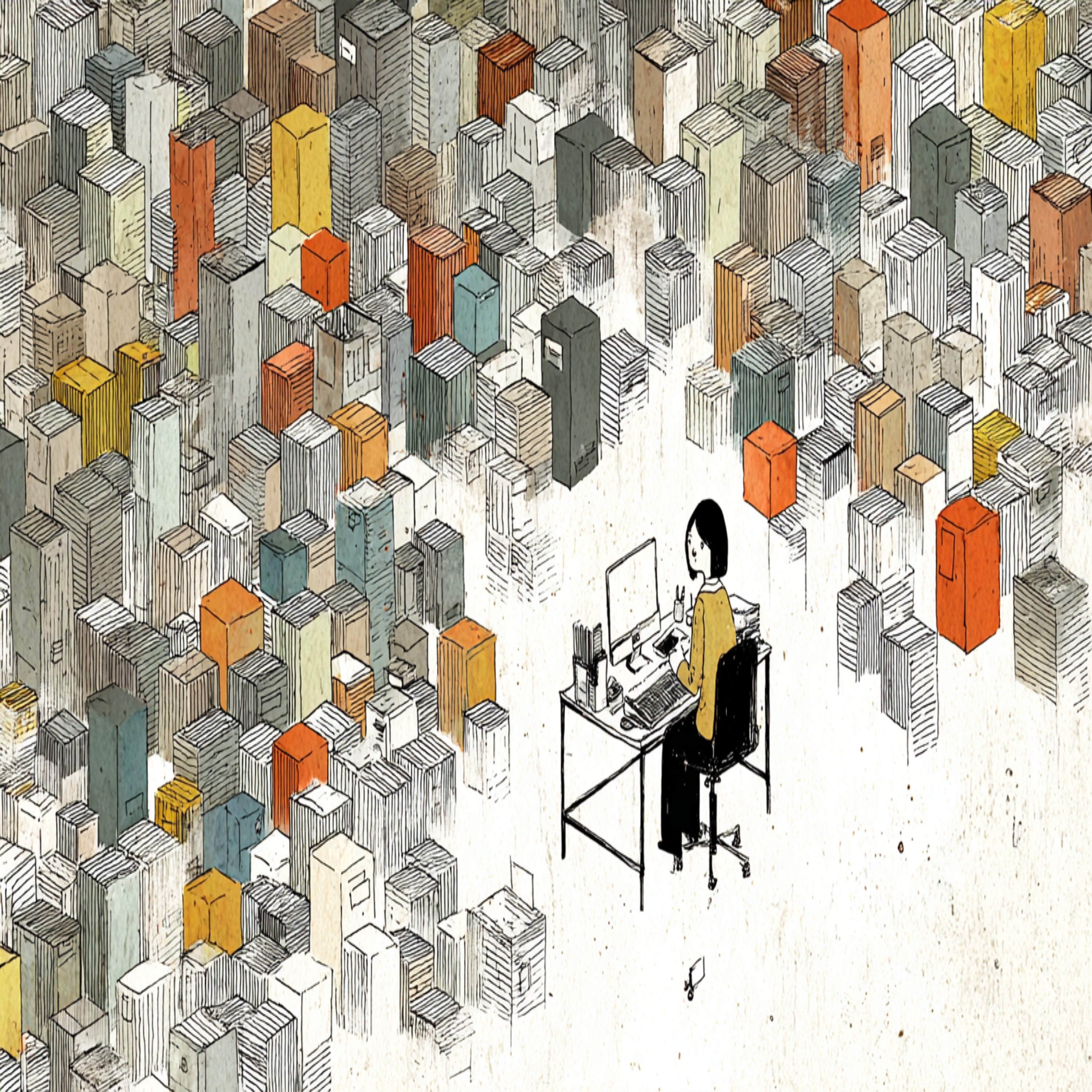
Workplace loneliness and how it affects mental/physical health, team dynamics, and productivity; why it’s not just a remote-work problem; and what individuals and organizations can do to mitigate it.
Professor Simon Gilbody, NHS psychiatrist (30 years), NHS cognitive behavioral therapy training, and professor of epidemiology/population science at the University of York. Leads behavioral therapeutics lab; conducted the largest COVID-era randomized trial of a telephone psychological intervention to prevent loneliness and depression; focuses on value-for-money and evidence-based interventions.
Loneliness is a mismatch between desired and actual social connection (quality and quantity). Chronic loneliness drives withdrawal, rumination, reduced concentration, weaker problem-solving, and demotivation. Health impacts include ~30% higher cardiovascular/stroke risk, increased obesity/type 2 diabetes risk via chronic inflammation, higher depression/anxiety risk (about double), and ~5–6% lifetime dementia risk contribution. Workplace loneliness incidence is similar for remote and in-office workers.
Greggs/comfort-eating analogy; John Cacioppo’s “loneliness as a basic drive”; British Red Cross report on loneliness at work (noting leaders are disproportionately impacted); U.S. Surgeon General and WHO social connection reports; Derek Thompson’s “elective isolation/JOMO” framing; exposure-based therapy example (agoraphobia) as a way to break avoidance cycles.
Written by AI. May contain mistakes.
Bruce discusses the rising loneliness in the workplace and its implications.
“Over 4 million businesses have skipped the line with Stamps.com.”
Bruce discusses the rising loneliness in the workplace and its implications.
“The first thing that a lot of people said when they saw the headline was, yeah, well, no wonder this is a consequence of remote working.”
Bruce introduces his guest, Professor Simon Gilbody, to discuss loneliness.
“I think you're going to get a lot from this, whether you're a leader or a group participant about how to think about loneliness at work and really how to mitigate it.”
Simon Gilbody shares his expertise and experience related to loneliness.
“I wonder if to kick off, you could just introduce who you are and what you do.”
Discussion on the impact of COVID-19 on loneliness and mental health interventions.
“And I also lead the behavioral therapeutics lab.”
Exploring how different age groups experienced loneliness during the pandemic.
“Did it look at the span of all of those things?”
Simon provides a definition of loneliness and its psychological aspects.
“So let's try and work our way through that.”
Discussion on how loneliness has evolved and its implications for health.
“You can have very few connections, but you can also feel quite contented.”
Explore the health impacts of loneliness and its surprising equivalence to smoking.
Learn about key studies linking loneliness to serious health risks like stroke and heart disease.
“So what she did, she pivoted to become an epidemiologist and she pulled all the epidemiological studies that had been prospective studies.”
Discover how loneliness affects cognitive capacity and increases depression risk.
“and then it was revisited earlier this year.”
Delve into the phenomenon of loneliness at work and its effects on productivity and team dynamics.
“You've spoken about this beautifully, Bruce, and it's a talking point.”
Understand how rumination worsens loneliness and affects workplace relationships.
“So those are the things to look out for.”
Examine the inverse relationship between work intensity and socialization in workplaces.
“Is there any way to help someone who finds themselves in that, maybe a colleague or a friend who finds themselves in that recursive loop of returning to conversations that they've had?”
Discuss the trend of elective isolation and its implications for social connections.
“And I see this in my own work, and I'm sure you see this and hear stories amongst people that you speak to, that we're forever firefighting tasks, never get to the bottom of an email inbox.”
Explores the rise of elective isolation and its implications for social connections.
“And I just wonder whether you perceive any of that, whether, even if it's bad for us, even if the data says this is the worst thing for us to do, we are choosing to spend more time alone.”
Discusses social anxiety's impact on workplace dynamics and individual behaviors.
“But I guess I've got a few thoughts on what it is that might drive that.”
Examines how generational shifts affect social interactions in the workplace.
“And that's how anxiety disorders become very quickly entrenched.”
Analyzes changing family dynamics and their influence on individual social skills.
“It looked at all demographics, actually, and it suggested that there was a rise in, or there was a decline in extroversion, there was a decline in conscientiousness.”
Discusses recent findings on personality traits and their implications for societal interaction.
Highlights the importance of longitudinal studies in understanding the impacts of loneliness.
“And so I think he's picking up a real phenomenon there.”
Explores effective strategies for reducing loneliness in workplaces and beyond.
“You've got to think at a societal level.”
Learn about inclusive strategies for team cohesion and social interaction.
“Good luck to them, but forcing everyone to sign up to the Tough Mudder and give up a whole of their weekend doing this perhaps isn't a route to an inclusive workplace, but people might still want to do it.”
Explore the loneliness experienced by leaders and how to navigate it.
Explore the loneliness experienced by leaders and how to navigate it.
“Over 4 million businesses have skipped the line with Stamps.com.”

Get the gist, explore an idea or ask about something said.
 Claude
On Eat Sleep Work Repeat - better workplace culture, what are the key points of this episode?
Searching your listeningAutomatic transcript. May contain errors.
0:00Still waiting in line? Again? That's time you'll never get back. Save time and money with Stamps.com. Over 4 million businesses have skipped the line with Stamps.com. Join them to save up to 90 % off carrier rates from your computer or phone right now. Print postage for certified mail, registered mail, and packages in seconds. Then schedule a pickup right from your home or office. For a limited time, go to Stamps.com and use code PODCAST for a free welcome gift. Taxes and fees apply. Your team just added its 67th AI tool and also your 67th security blind spot. The good news? The Vanta agent works like a GRC engineer in the background, finding every app your team uses, scoring the risk, and drafting fixes for you.
0:44Vanta is the platform used by over 16 ,000 fast-moving companies like Ramp, Cursor, and Harvey, who are shaping the future with AI and staying ahead of AI risk. Get started at Vanta.com.
1:04this is eat sleep work repeat it's a podcast about workplace culture hello i'm bruce dazley there was a fabulous article about 12 months ago in the wall street journal called the loneliness of the american worker which was i think really sort of provocative at the time because it illustrated the fact that more and more people were feeling disconnected and disenfranchised by their workplaces. The first thing that a lot of people said when they saw the headline was, yeah, well, no wonder this is a consequence of remote working. The really interesting thing that came from the data of that article was that the incidence of loneliness was as bad for people who were working full time in the office as it was for hybrid workers.
1:44So it wasn't necessarily the fact that we weren't going in and seeing each other every day that was leading to this disconnection. One of the UK's leading experts on loneliness and loneliness at work is Professor Professor Simon Gilbody, who teaches at York and at Leeds University. And I wanted to have a conversation with him. I saw him do a fabulous webinar about just before the summer with the Financial Times. I've linked to it in the show notes, but really just talks about the growing incidence of loneliness. I wanted to chat to him about that. I wanted to also reflect on some of the things that The Atlantic's Derek Thompson has said about elective isolation, about how some of us are choosing to spend more time alone.
2:23How should we understand that when we're thinking about group cohesion, about building group dynamics? It turns out to be a really, really good discussion. I think Simon's perspective of trying to understand the causes of loneliness and the consequences of loneliness give us a really empathetic lens through which to try and understand how we can make these things better for ourselves and for the people we love. As ever, I've linked a whole load of stuff in the show notes from the Derek Thompson article, called the Wall Street Journal article, links to Simon and the FT webinar. So you can check out all of those things.
2:56I think you're going to get a lot from this, whether you're a leader or a group participant about how to think about loneliness at work and really how to mitigate it. This is my discussion with Professor Simon Gilbody.
3:10Simon, thank you so much for joining me. I wonder if to kick off, you could just introduce who you are and what you do. Oh hi there Bruce it's great to see you so I'm Simon Gilbody I'm calling from Yorkshire God's Own County and in Yorkshire I'm two things so I'm a doctor and a professor so the first of those I'm a doctor and an NHS psychiatrist a 30 years service in the NHS and I also trained as a cognitive behavioral therapist so I've got lots of experience in helping people with problems like anxiety, depression, or stress. And so the psychiatrist bit in me would recognize the thing we're going to talk about today, loneliness, has been a really important driver of mental ill health and stress in broader society and in the NHS.
3:55But the other part of it, I guess my academic discipline is that as a population scientist, so I'm a professor of epidemiology at the University of York. And I've got an international research program. And in my own small way, I try to advance science to try and understand the causes of mental ill health and the flip side of that, mental well-being. So I'm deeply interested in what works. So we conduct large scale, randomized control trials. And it's a bit like you, I'm a Yorkie and I've been deeply influenced by economics down the years. So health and welfare is a big thing that we do at York.
4:30So we're very interested in value for money. And during the pandemic, we conducted the largest ever clinical trial of a psychological intervention to try and mitigate the impacts of loneliness. And I also lead the behavioral therapeutics lab. And so I'm trying to deprogram myself a bit as an academic and be a bit entrepreneurial. There's lots of visiting universities trying to do that at the moment. And I'm trying to drive impact in the NHS and think about mental health, how that plays out in the broader economy. And I guess increasingly in the workplace it's too much of a tease for you for me to not follow up with it but talk us about that research into loneliness in covid let's use that as a jumping off point so what did it set out to measure at what stage of covid was it and what were the findings oh it's a lovely thing to be able to talk about this piece of research because it's the piece of research if i was knocked over by the number 63 bus that I'm perhaps most proud of.
5:27So we're really interested in psychological health and physical health and how they might be on the same page. And at the threshold of the pandemic in 2020, we're feeling quite pleased with ourselves because we've got a big grant from the NHS's R &D programme to conduct a large trial of how we might optimise the psychological health of people who are experiencing long-term health problems. So it's a big pain point for the NHS just at the moment. And then we got a letter from Professor Chris Whitty, he of the next slide, and he told us that the NHS was now on a war footing and that unless the research that you were doing spoke directly to the challenges of the pandemic, then it was going to have to be furloughed.
6:13So we got a big grant and we got a team in place and it seemed a shame to pass over an opportunity. So we sat down as a team, we had a huddle and we thought, what is it that we know about the challenges of the mental health of the population just at the moment? What do we know personally? What do we know from research in epidemiology and what could we do during the pandemic? And it struck us that the mass imposition of lockdown and social distancing might be a cataclysmic black swan event for the mental health of the population. So at speed and with some agility. We took what we knew about what works in psychological therapies.
6:51We took our manuals off the shelf and we repurposed them such that we made the focus of the psychological interventions that we deliver. How we can help people maintain and enhance social contacts in order to prevent loneliness. And we knew from the research literature that loneliness is spectacularly bad for our physical health and our mental health. So we wanted to see if we could prevent the deterioration in mental health of people who had enforced social isolation. So we devised this quite neat telephone delivered intervention, very brief stuff over about eight sessions, 20, 30 minutes each session, delivered in the comfort of people's own homes.
7:34And we walked people through a manual and we got some great results with that. So this in time came to be the largest ever randomized controlled trial proper experiment to demonstrate both the clinical effectiveness so it prevented loneliness and it also prevented the onset of depression but also the cost effectiveness that york flavored thing where we can demonstrate the return on investment and the value for money from psychological interventions so this is a great piece of research and normally we park a piece of research as academics and then write the papers and we did all those but then we'd normally move on to the next project but this one stuck with us so we've been thinking more deeply about how we might measure loneliness how we might address loneliness in the broader population and how we might take some of the learnings from the advancements that were made in science during the pandemic and i don't know my kids were quite proud of it as well was it across all demographics because the interesting thing for me is that probably a lot of the interventions that we staged during the pandemic were overtly to protect older people and they're the first group we often think about when it comes to loneliness but it really strikes me that some of the most adverse effects of the pandemic have been among school-age kids and kids who maybe got out the habit of going to school.
8:54I'd love your perspective on that. Did it look at the span of all of those things? So it's a great question. So we tend to research older people or people with long-term health problems who do tend to be older people so the people that took part in our trial were the people you described older people but alongside that what we did was we took stock of all the research that was happening right around the world and we brought those together using some fancy analytic techniques that we've got we've been taking meta-analyses and we've shown the psychological strategies cognitive or behavioral therapy If you refocus that and focus on social isolation and social connection, you get really good impacts right across the age span.
9:37And you're dead, Bruce. People archetypally think that it was older people that were disproportionately impacted by the pandemic. But we now know that it was younger people and it was people whose schooling was disrupted. And those young people that are coming into the workplace. so we might want to talk about that a bit later but it's just really interesting that we think there are some fundamental truths there about how you can use psychological approaches to try and mitigate the impacts of social isolation to prevent loneliness which is spectacularly toxic for your health and your well-being let's go on and do that because one of the things that people might be interested to check out is the talk which is in the show notes the talk you gave recently which was a collaboration with the financial times looking at loneliness at work.
10:27And I guess one of the reasons why we're talking today is this intersection of the phenomenon of loneliness with the workplace and how it has an impact on those things. So let's try and work our way through that. Maybe in the first instance, I'd love you just to mark our card by giving us a little definition of loneliness, because I guess there are times when we all enjoy being alone. And what is loneliness specifically? So I guess I'm one of those people, Bruce, I've got a bit of FOMO, but JOMO, joy of missing out. So I quite like solitude. But loneliness, if we take a dictionary definition, it's something that we all recognize and it's part of the normal human condition.
11:04But the dictionary would tell us that it's unpleasant, unwelcome feeling of lack or loss of companionship. And just to unpack that a bit further, it's really important to keep hold of the quality and the quantity of people's social connections. And the fundamental thing that it's important to get your head around is that this mismatch is important. So it's a mismatch between the number and quality of relationships that we crave and the number and quality of relationships that we actually have. So if they mismatch, then you get loneliness. And there's a couple of things that follow on from that.
11:42You can have very few connections, but you can also feel quite contented. People think about Greta Garbo. She said, I want to be alone. some people are naturally lighthouse keepers and they crave solitude and a bit like me the joy of missing out but there are also people that can be alone in a crowd so there's something there about the quality of the relationships that you've had social connection is really important that's the dictionary definition and that describes the proximal causes but i'm deeply influenced by evolutionary thinking as well. If you think about this from an evolutionary perspective, you'd think not just about the proximal, but what we'd call the distal explanations, where loneliness comes from in our ancient civilizations and in populations.
12:31And there's a really strong evolutionary understanding of why loneliness is important. So I've been deeply influenced by a chap who's no longer around. That's Professor John Cacioppo from the University of Chicago. And he talks about loneliness being a basic human drive. And it's a bit like hunger and it's a bit like thirst. So when you're hungry, your evolutionary drive is to go and scavenge for food. And John Cacioppo would say that we are hardwired to be in groups. And when we experience loneliness, it forces us to come together in groups. Loneliness confers an evolutionary advantage on us because if we hang around in groups, we're more likely to be successful as hunter-gatherers.
13:14we're more likely to be able to repulse attack from outside forces. And importantly, from an evolutionary perspective, we're more likely to reach that point in our lives where we can pass on our genes and be successful in reproduction. So you can see that loneliness as a basic biological drive has evolved. And the problem is loneliness kicks in when it becomes chronic and it becomes unresolved and unsatisfied. So chronic loneliness is the one that we ought to worry about. I'm glad you taught me how to pronounce John Caciopo's name because I've read loads of his papers but as a sort of autodidact I've never heard his name actually said out loud so that's helpful for me the interesting thing there though a lot of people struggle with we can see why loneliness might historically have had a consequence for us but we maybe struggle to understand why today it seems to have a measurable health impact on us because we're not hunter gatherers anymore we're going down to greg's to buy a sausage roll we're going to sainsbury's to buy a bag of shopping those things are not going to be enhanced by whether we've got other people next to us on the savannah why does it still what is the mechanism what's the reason why loneliness is the equivalent of smoking 15 cigarettes a day it can shorten our lifespan by 10 years what what happens i don't understand why we would go from one to the other yeah great question so we're no longer on the savannah but we're hunter gatherers down at greg's aren't we and maybe that's not great for our health and if you take a pause to think about how loneliness might drive that lots of people talk about comfort eating when they're psychologically psychologically distressed and john cacciopo it gives a lot of thought to this so i became interested in loneliness for the reasons that we'd spoken about so loneliness wasn't a big theme in our research program until the pandemic but one of the advantages of being a professor is that you get to hang out with really clever people clever much cleverer than myself and sometimes those are younger people as well so i had a brilliant phd student about 10 years ago called nicole valtaurta she was proper clever she'd been to oxford she'd been to the sorbonne and what have you but she was a social scientist and she encouraged me to think about loneliness and She wanted to do a PhD on it.
15:32So what she did, she pivoted to become an epidemiologist and she pulled all the epidemiological studies that had been prospective studies. So they'd measured people at baseline that established people's social connection and their levels of loneliness. And they'd followed them up over time. And Nicole was really interested in whether loneliness was actually a risk factor of two important threats to human health. So that would be stroke and cardiovascular disease. And at the beginning of the pandemic, we started looking at what the epidemiological evidence was. And it's, as you say, loneliness is the new smoking.
16:07And there's an increased recognition of the impacts of loneliness. And there are two important reports that are kicking around at the moment. So one is a very influential one from the U.S. Surgeon General. And he described it as an epidemic of gargantuan proportions. And it's right up there with smoking. And he mapped out the health impacts. And there's recently been a WHO commission on social connection that's talked about the chronic inflammatory impacts of loneliness, so how it impacts both on our brain and on our bodies as well. And that pans out with what physical impacts, those things that Dr.
16:44Nicole Valtorta first described. So it increases your risk of cardiovascular disease, heart disease and stroke by about 30%. and it drives the Greggs thing as well. It confers risk to developing obesity and then obesity drives all the bad things that follow on from that. So cardiometabolic syndrome. So it tips us into type two diabetes and all that might be biologically mediated by this chronic inflammation that we see in all stress-related disorders. It also impacts on brain health as well. There's an important commission that was published about five years ago and then it was revisited earlier this year.
17:24It was called the Lancet Commission on the Prevention of Dementia. And Professor Jill Livingston from University College London, she mapped out what the modifiable risk factors were for dementia. And she recognised that social isolation and loneliness probably conferred about five, six percent of your lifetime risk of dementia. So, you know, that affects your brain health, but it also affects your brain health in other ways. So cognitive capacity is a really important thing. So social isolation and loneliness works against normal age-related cognitive decline. And our brains are a bit like a muscle.
18:03I know that my neuropsychological colleagues will be cringing at this analogy, but you've got to use it in order to keep your brain functioning and working. So there's really good evidence to show that people who are socially isolated, their cognitive function isn't as good as it would be if you've got good social connections. They're not using that brain-related muscle. We've seen some good examples just recently of tech giants wanting to live forever. We overheard that conversation. So there's no point in living forever if you're going to be ill and you're going to become cognitively impaired.
18:36So we know that loneliness works against healthy aging. So it does all the same things as these chronic inflammatory processes that John Cacioppo described. And it seems to amplify what happens later in life. And I'm a psychiatrist as well. And it's a risk factor for the common things that trouble the NHS, like depression or anxiety. Pretty much doubles your risk of developing depression or anxiety. Put together, these are real impacts on the body and on the mind. And so it might be mediated through the trip to Greg's as well. So like lots of health problems, they've got a deep evolutionary basis.
19:14And I think this is a really useful perspective to think about health, how it was and how it came about. The evolutionary perspective is helpful in this case, I think. Specifically then, we've considered loneliness and it's got this sort of wide ranging span of impact across so much of our health and well-being. i guess what a lot of people struggle with is the notion that especially in a in-person work that people could be lonely at work i guess the first thing that people might say is that if you tell them the headline is about loneliness at work they immediately imagine a remote worker sitting on a laptop at home who's having no social interaction interactions maybe spending their whole time in a spreadsheet but loneliness at work doesn't necessarily look at that the data I've seen suggest that people who are remote are just about as lonely as the people who are in the office it doesn't seem to be directly related I wonder if you could just explain to us the phenomenon of loneliness at work and where we see its incidence most most strongly yeah so the notion that it's people sat at home on a laptop and that working from home is driving loneliness I think for the birds, the levels of loneliness in the workplace and working from home are pretty much the same.
20:30But it's changed the nature of work. You've spoken about this beautifully, Bruce, and it's a talking point. It sometimes takes us down a blind alley as well. But if you think about it in the workplace, again, think about that evolutionary perspective. Think about what John Cacioppo says about chronic loneliness. And he would say that people who are chronically lonely, they're chronically over aroused, they ruminate and they also withdraw from human contact when it becomes a chronic thing. So if we think about how that might play out in the workplace, there's probably three ways in which it might play out.
21:04So the first is in you would see people, your work colleagues, they've got reduced concentration. They've lost that cognitive flex and they might be ruminating disproportionately on micro interactions in the workplace. They might find it very hard to focus. And in terms of the cognitively challenging tasks, they're not going to be great problem solvers. They're going to find it difficult to solve tasks generally. people are going to be present but absent at the same time so it's going to drive this sort of presenteeism thing um and this phenomenon that it impacts on the way in which you interact with others as well that john cacciopo describes it takes me on to the i guess the second area that you'd identify it impacts on the way in which you interact as teams so chronic loneliness causes us to withdraw socially and to communicate less and consequently if you've got chronic loneliness it's really difficult to work in teams so you might become quite isolated so lonely people might not necessarily be team players and they fall to the back and their performance within the team might diminish over time so that's another way in which you might play out in the workplace and I guess the third way and this is the sort of psychiatrist in me speaking so if it's a risk factor for low mood and for depression and anxiety so a lot of people with depression I meet are often quite profoundly demotivated it impacts on your well-being so chronic loneliness is linked to depression it's linked to fatigue it's linked to satisfaction with your life in generally and that might include job satisfaction so this is a basic cognitive bias that might emerge as a consequence of the experience of loneliness so that's going to lead to reduce drive and reduce creativity and productivity in the workplace so i guess those are the three ways in which you might notice it playing out in the workplace.
22:56So reduced concentration, its impact on team working and this way in which people are demotivated and withdrawn. So those are the things to look out for. There are some reports that describe this out there. So the things that you might want to put in the notes, there was a super report by the British Red Cross. They reported to the all-party parliamentary group on loneliness in the workplace. And this was commissioned during the pandemic. so it's got a bit of a pandemic flavour to it but they would also say that it disproportionately impacts on certain sectors of the workforce. Working from home as you say it's not caused some massive uptick in loneliness but it has changed the nature of the workplace and one of the things that this Red Cross report highlights is the fact that it's often managers and leaders who are disproportionately impacted for loneliness.
23:46So leadership can be quite a lonely place and it's also worth bearing that in mind often leaders are asked to solve problems like loneliness and they might be the ones that are impacted themselves there's a couple of things i want to delve into there i've included the red cross report in the show notes there's a couple of things i wanted to delve into there and it's that it's the idea of rumination and the idea that rumination actually produces a adverse cycle of interactions getting worse that when people ruminate on the things that are going wrong or the conversation that they've had with a manager or with a colleague that wasn't well that didn't go well and then they ruminate on that and it actually becomes a bigger deal in their head the dysfunctional connection that they've got with people around them actually compounds and it becomes a reason for that dysfunction going forward i don't think enough consideration is given to that by managers or by any of us really that to some extent the loneliness can almost produce this catastrophisation, this sort of snowballing adverse effect.
24:48Is there any way for us to understand that rumination or to cut it off? Is there any way to help someone who finds themselves in that, maybe a colleague or a friend who finds themselves in that recursive loop of returning to conversations that they've had? Yeah, I mean, it's archetypally something we see amongst people who are depressed and anxious. So I guess the insights that I've got will be drawn from the clinic about, we help that. Often challenging the validity of people's assumptions is one of the things that we do in clinical practice. So asking people to recognize negative automatic thoughts and ruminative cognitions.
25:25So it's important that you encourage people to themselves challenge that. And I think it could be helpful with your colleagues to not be afraid to challenge the validity of on people's ruminative assumptions but also be vigilant there are things that we can do to help this i trained as a cognitive behavioral therapist and we can take lower intensity versions of cbt self-help interventions and there are materials that we can perhaps point you towards in the show notes that might be helpful for people who are ruminating in that way lots of people who are perhaps listening will recognize that downward spiral of ruminative anxiety and i guess we all experience that a bit at three o 'clock in the morning when you start thinking about work or what's going to happen the next day and it's often quite ruminative and unproductive and if you imagine that rip big and right across your working day you can just begin to put yourselves in the shoes of someone who has ruminative anxiety and low mood do you think loneliness at work and the right of loneliness at work is is a reflection of the fact that we are less collectively minded now that we're less focused on building a cohesive team maybe because the responsibilities of managers have gone up or the expectations of us to deliver have gone up and so as a result work has been crowded out one of the things that we frequently see is that work intensity seems to be inversely correlated with work relationships that as the demands upon you go up or whether you've got all these back-to-back meetings and lots of emails to do or whatever your job is as work intensity goes We typically find the socialisation of workplaces goes down.
27:01Do you have a perspective on that? Is this loneliness at work, a reflection of the fact that we've made work now that is too busy and too intense? Yeah, it's probably the latter, isn't it? We're forever firefighting with tasks. And I see this in my own work, and I'm sure you see this and hear stories amongst people that you speak to, that we're forever firefighting tasks, never get to the bottom of an email inbox. and it's difficult to take time to do that more strategic thinking in the workplace these days. So I see that in academia, I see that in the NHS, and I guess you'd also see that in the more commercially driven workforce and workplace.
27:40So I think what you say there, Bruce, is absolutely right on the money. Before we delve into sort of interventions and thinking about what actions that any of us collectively or individually could take to deal with this, I would like to sort of reflect on how the world's changing, and not necessarily through a lens of thinking about hybrid working and remote working and what it's contributed there but when you're talking about loneliness you described it as an unwelcome subjective feeling of lack of companionship saying that humans are hired wide for connection but i'd love to explore whether we are seeing a rewiring or a distance between what we want and what we need i'm really unequivocally see the benefits of being around other people and And it's just, and this, every time you look for evidence, being around other people, being connected to other people seems to be beneficial.
28:26But there is a rise. Derek Thompson in The Atlantic talks about the rise of this phenomenon of people being electively isolated, choosing to have more time in the house, spending a hundred minutes a day more alone than they ever did before, and actually leaning into that. And I just wonder whether you perceive any of that, whether, even if it's bad for us, even if the data says this is the worst thing for us to do, we are choosing to spend more time alone. So we're all becoming a bit more like Virginia Woolf or Greta Garbo. We're all getting a bit more Jomo and we're all becoming a bit more like housekeepers.
29:02So that notion of elective isolation, I think it's really interesting. And I think Derek Thompson's onto something there. And so I think there is a genuine rise of JOMO and it's going to be complex. There's not going to be any single explanation for that. But I guess I've got a few thoughts on what it is that might drive that. The first thing I'll mention is social anxiety is a real thing and it's quite pervasive within society and even at quite low levels. And I've got some experience of that myself. So sometimes for some people, the workplace can be something that's a socially anxious place.
29:38So we've now got the option to perhaps avoid some of the micro interactions that are inherent in everyday workplace culture. So when people are anxious, the most logical thing their body tells them to do is to withdraw from that anxiety. And that's how anxiety becomes deeply entrenched. The other thing is that probably have always been people who are natural lighthouse keepers. And maybe now they've got the opportunity to live their lives as natural lighthouse keepers and have an existence away from some of the things that previously might have found just not particularly comfortable. I think there's also the rise in neurodivergence or people believing that neurodivergent traits are in fact sort of full-blown clinical disorders.
30:26So I think this plays out in the workplace a little as well. And maybe it's also a generational thing. Gen Z's now making contact with the workplace. And I guess also thinking a bit further on in the life course, people in their middle and later years, we've seen are quietly quitting. and for reasons that are often quite complex. I don't know, just to pick up on a couple of those things, the social anxiety one I think is really interesting. So I know a bit about this. We tend to avoid things that make us anxious. And one of the things that we logically do when we've got a place or a situation-based anxiety is to keep ourselves well and stay away from that source of adversity.
31:06And that's how anxiety disorders become very quickly entrenched. and my own experience of a bit of social anxiety myself is that the way we should cure that is to do something quite counterintuitive and that's to force yourself into situations where you're challenged where you make yourself a bit anxious and things get better over time so that's inherent in the main therapeutic response that we have to anxiety disorder so exposure-based therapy and that's where the magic happens so it's quite easy to retreat into our comfort zone and eliminate the sources of our anxiety and if you think about the thought experiments agoraphobia so i meet lots of people in the clinic who have been successfully treated for agoraphobia but they don't necessarily come to the clinic and that's because they manage their agoraphobia by never leaving the house and they often have quite functional lives often quite well until they leave the house you wouldn't treat agoraphobia by telling people to stay in the house for the rest of their lives you've got to get them to challenge themselves.
32:07There's a really interesting person at the University of Oxford, so Dr Lucy Fouch, she's written a great book on the purported rise of anxiety disorders amongst young people and she thinks that they might well be on the rise but what's changed is the way in which we respond as a society to low-grade anxiety. She's a great writer, she's written about it in The Guardian just recently. It's quite a challenging area to write in, she's not implying everyone as snowflakes she's implying that the way in which we respond to anxiety at a societal level has changed i wonder whether that's driving the the elective isolation that we see there's that generational thing as well we've got people coming into the workforce who experienced the pandemic and it became normalized that you might spend time in your bedroom or on tech and that's not necessarily conducive to to a productive and successful and happy working life so i see people who struggle when they get to their first job and that's a real shame they might become anxious and then they might drop out of the workforce and they're missing out on the important rituals at the foundation of our careers and once they fall out of the workplace they don't get back in and these young people sometimes become what sometimes call needs so not in employment education and training and it's a big social problem just at the moment and it's finally the quite quitting thing it's people whose social batteries perhaps run low and people sometimes with caring commitments they might have emerging health concerns themselves and and it's very easy for that group of people to become the the elective isolates in lots of ways it cuts right across the age span yeah it's it would say that Derek Thompson's on to something it's interesting because we do see it manifested there was some data published in the FT by John Byrne Murdoch which sort of showed the same at an aggregate level.
34:00It looked at all demographics, actually, and it suggested that there was a rise in, or there was a decline in extroversion, there was a decline in conscientiousness. And at system level, it does make those things happen. I'm just really intrigued, because if you describe the people who are showing the extremes of this, and they're instructed to get back on the horse, initiate more interactions, if you perceive everyone broadly as being on a spectrum of every attribute rather than the notion that you are suddenly in this box that you've got an issue with social anxiety there's probably a whole load of people who are somewhere on the scale of that and it's sometimes why the notion of introversion and extroversion isn't necessarily that helpful because i think you can find yourself in different places on that scale and on different days and in different situations but the notion that all of us might at times benefit with doing a bit more social interaction and explaining that and younger people aren't necessarily seeing that it raises a really interesting societal question the thing that i put it adjacent to is that i read recently and i think all the time about the idea that our first ever group as an individual is typically our family from in most functioning organizations our first group is our family and the way that families operated historically is rather different to how they operate now most families with teenagers now don't necessarily sit on the sofa and watch the same show with each other every night they don't necessarily sit down and eat meals together and so as a result being in a family now is typically cohabiting with each other obviously occasionally with friction points with siblings or with parents but it's not necessarily a place where you'd say it's my happy place you've just got a room in a building where you go back and scroll through your phone and so it's really interesting that when we then ask those people to perceive the benefits of being part of a group later in life they might not have the mental model of what the benefit to this is it just represents conflict it just represents our compromise yeah a sense that i'm not gonna get what i wanted compromise is where we both get what we didn't ask for and so the idea that maybe the selling point of groups the selling point of connection with other people has never been less clearly articulated that's what I'm interested from a societal level because that has direct bearing on how we seek to try and build teams at work yeah that's really great reflections I think in another life you would have been a great family therapist Bruce understanding the family dynamics I think would be something that comes quite naturally to you and thinking about those formative experiences when we're younger is absolutely fascinating and I think I saw the same data that perhaps you're alluding to as well John Murdoch he put something in the Financial Times and I was alerted to it by my wife who does a very different job from myself and it became one of those sort of across the table talking points about how people's personalities seem to be changing over time and this was quite a phenomenon A big shout out to John Byrne Murdoch as well, because a picture's worth a thousand words.
37:11I always show his work to my PhD students and say, try to spy to this, try and tell your story in this visual way. So it's a lovely thing. So he very clearly mapped out what we saw, which is an increase in neuroticism from the Big Five personality survey. And he also saw this reduced introversion, so especially amongst younger people. And so I think he's picking up a real phenomenon there. These were US data and I think it was describing the things that I mentioned earlier. That would perhaps capture this shift and rise in entrenchment of social anxiety and withdrawal from a lot of the micro-social interactions that are normalised and I guess are required in the workplace.
37:54And I guess the other thing to say about that work is as an epidemiologist, it's always nice to see the power of cohorts. So it just shows that doing the grunt work and getting large groups of people and following them up over time allows you to capture temporal trends. And that was a US study. And we do about that in this country. So there's the Millennium Cohort Study, which is a great resource for trying to understand these things. So we might want to go back and look at how that plays out there. I'm currently in Yorkshire, so I never waste an opportunity to run the tourist board for God's Own County.
38:26So I'm in Leeds. But close to here is the 2025 City of Culture. So it's the city of Bradford. And Bradford's home to the world's largest multi-ethnic birth cohort, something called the Born in Bradford cohort. And we've been following tens of thousands of young Bradfordians of all ethnicities and levels of social and economic advantage and disadvantage over time since they were born about 12, 13 years ago. We've recently expanded the cohort. So we actually were able to capture the scarring, the psychological scarring of the pandemic on those young people. And at my behest, we started recording loneliness.
39:09And we also record lots and lots of things around people's social connections and experience of family interaction. And also lots of things around their academic performance. any time when they leave school and we'll track them as they move into the workforce so we've set up a natural experiment and we're going to follow them up over time so next time john burn murdoch wants to draw some graphs we might have some data that we can show him i like as we try to understand the long-term impacts of loneliness on young people i like it so let's all come to the now what part the sense of trying to stage intervention so look if we've got loneliness at work or actually maybe if we just witnessed people who are lonely in our lives where would you as a from your clinician perspective where would you see the where should we start what should we be doing to try and reduce loneliness in others to help loneliness in ourselves yeah yeah we can think a bit about how we do that in the workplace but thinking about it as a broader societal problem The report from the WHO on social connection was quite helpful in this, and they would encourage us to think about it in quite a connected level.
40:26You've got to think at a societal level. We've got to think about how it is that societies become atomised, create opportunities for people to socially interact. We've got to think within local communities about why it is that, for example, older people or younger people are spending disproportionate amounts of time in their own homes. I've witnessed in my lifetime the death of youth clubs and youth services. And that's a real problem. These are the first thing to go when budgets get cut. I've also witnessed positive things. So down the road, we've got Park Run. Lots of people participate in that.
41:03And I've noticed the opportunities that are afforded through volunteering. So these are great community initiatives that we can think about. I guess in organisations, the challenge of trying to maintain good psychological health within the workforce or in your organisation, that's a difficult one. The challenge for managers is to think about how they might facilitate more socially inclusive workplaces and environments. I think some things that you shouldn't do don't encourage forced socialising. forced fun is something that people can smell from a thousand yards and it turns people right off but what you might do is try to promote psychological safety within the workplace but also try to enable everyday connections and spend some time thinking about how you run your meetings how your workplace helps include people so i found it useful trying to get people to check in at the start of meetings so have huddles and check-ins at the start of the day that's a really good way of bringing people together always acknowledge people's effort pair people up in projects and what have you so i guess those would be some of my top tips about how you do in the workplace um but your warning note your warning note about forced fun will probably have a few people on red alert so that means no team social events in your mind or where would you draw the line on that team social events tend to be funner when they happen in work time so for to interact outside of work time i think is really important so telling everyone you're going to go down the pub for drinks that might be the people something that people do spontaneously but it's not an inclusive activity right and forcing that as your only response to team cohesion in your organization you might want to do other things so doing things in the workplace might be more inclusive allow people to keep the weekends i see lots of people sign up just for the moment for something called Tough Mudder.
43:00Have you heard about that one? I have, yeah. Big phenomenon. It's a huge phenomenon. Good luck to them, but forcing everyone to sign up to the Tough Mudder and give up a whole of their weekend doing this perhaps isn't a route to an inclusive workplace, but people might still want to do it. But that's perhaps not the only response that your organisation might make to improve social cohesion. So events that are baked into the working week. And there was a great podcast a few weeks ago that was that was the that you undertook was looking at the psychology and the anthropology of the physical presence of the workplace and i think there's probably a bit more that we can do to think about how we could re-engineer the workplace to make it more inclusive and to facilitate good social interaction so again we're thinking at a systems level and how we might do those sorts of things but um yeah you mentioned along the way i know the one thing i wanted to finish on you mentioned the fact that is often never discussed which is that managers and leaders are often lonely and obviously that is a somewhat different nut to crack because you can't just force interactions with colleagues because often colleagues might not want that sort of relationship yeah what would you suggest and be if a leader if a manager is feeling isolated or lonely at work it's difficult because one of the things that you lose on your way up the greasy poll we see this in universities we see the NHS is that you move from being a colleague to being someone who has managerial responsibility of the people that you formerly called friends so the social networks that you used to have sometimes disappear as you move further up the organisation so it's really important to recognise that and also recognise that's something that's no longer in your life and try to find ways in which you deal with those changed relationships with colleagues in work but also find ways in which you might maintain connections and support perhaps outside of the organization there's quite a lot of thoughts about how coaching might support leadership and social connection might be something that gets brought into the conversation around coaching maybe that's i'm thinking on my feet a little but also the ability to reflect on your own social networks really important part of maturity and leadership i think it's really important to give people permission to think about that and bring it into the conversation also normalize it so there was the report from the u.s surgeon general the most senior doctor in the whole of the u.s and he did a bit of oversharing and i think in a good way that's facilitated a conversation amongst quite senior people in leadership roles so he talks about his own experience of loneliness when he was a junior hospital resident and how that had impacted on his own physical and mental health a few more people sharing their experience of loneliness might go a long way to shifting the culture in management and in leadership it's interesting isn't it because quite often managers will be will lean into needing to work harder and might i certainly know from my experience of management that friendships often get deprioritized because you just haven't got time to get anything done so you don't meet mate for a drink you don't have lunch with anyone because how could you'd be failing everyone you work with if you Still waiting in line?
46:17Again? That's time you'll never get back. Save time and money with Stamps.com. Over 4 million businesses have skipped the line with Stamps.com. Join them to save up to 90 % off carrier rates from your computer or phone right now. Print postage for certified mail, registered mail, and packages in seconds. Then schedule a pickup right from your home or office. For a limited time, go to stamps.com and use code podcast for a free welcome gift. Taxes and fees apply. Your team just added its 67th AI tool and also your 67th security blind spot. The good news? The Vanta agent works like a GRC engineer in the background, finding every app your team uses, scoring the risk, and drafting fixes for you.
46:59Vanta is the platform used by over 16 ,000 fast-moving companies like Ramp, Cursor, and Harvey, who are shaping the future with AI and staying ahead of AI risk. Get started at Vanta.com.
47:38Download it today and find your outside.
47:43If you took time out to do those things, it's an interesting one that we often deprioritise the things that ultimately are going to be most beneficial for us. Yeah, amen to that. Simon, I'm so grateful for the conversation. I've included a lot of the things you talked about from your FT webinar to the Red Cross report in the show notes. Anyone who's interested could check you out there. And you've also got a whole load of a huge amount of Google citations on the papers that you've published. So I'm immensely grateful on you giving us that lens on loneliness at work, because I think it's probably one of the big issues we don't talk about.
48:19Super conversation. Really nice to speak to you today, Bruce.
48:25Thank you to Simon. I really appreciate Simon taking the time to have that conversation. As I said up front, there's a whole load of links to things in the show notes of things you might want to find out more about. And you're going to all as ever see a lot of the links to the things I'm interested in or talking about or the latest research by joining the newsletter that's just hit about 130 ,000 people. So I'd love to have your company on there. I've been Bruce Taisley. Thank you so much for listening. I'll see you next time.
49:06never get back. Save time and money with stamps.com. Over 4 million businesses have skipped the line with stamps.com. Join them to save up to 90 % off carrier rates from your computer or phone right now. Print postage for certified mail, registered mail, and packages in seconds. Then schedule a pickup right from your home or office. For a limited time, go to stamps.com and use code podcast for a free welcome gift. Taxes and fees apply. Your team just added its 67th AI tool and also your 67th security blind spot. The good news? The Vanta agent works like a GRC engineer in the background, finding every app your team uses, scoring the risk, and drafting fixes for you.
49:45Vanta is the platform used by over 16 ,000 fast-moving companies like Ramp, Cursor, and Harvey, who are shaping the future with AI and staying ahead of AI risk. Get started at Vanta.com.
50:00ACAST powers the world's best podcasts. Here's a show that we recommend. Go touch grass. You have probably heard this phrase. Maybe you have even said it. But beneath the sort of lighthearted nature of this meme is something very real and important. A growing sense that staying in touch with our humanity and being present in our bodies matters more than ever in today's digital world. My name is Manoush Zamorodi, and I am taking over as host of TED Talks Daily this week to explore what technology is actually doing to your body and mind. In special interviews with scientists, doctors, parents, artists, and more, we're going to dig into your physical and mental health on tech.
50:50How we think about our bodies differently now. How we relate to new innovations that are amazing, but also a little scary. and how we can live a healthier life in this high-tech era. Tune in on TED Talks Daily wherever you listen to podcasts.
51:10Acast helps creators launch, grow, and monetize their podcasts everywhere. Acast.com.
Simon Gilbody talks loneliness at work
Professor Simon Gilbody is a psychiatrist and clinical epidemiologist at the University of York. His work specialises in 'taking a population approach to mental health', trying to understand the aspects of modern life that contribute to how we feel.
I was impressed by a talk that Simon did with the Financial Times on the topic of workplace loneliness.
In our discussion Simon reflects on the toll of loneliness, how workplace loneliness can leave us with invasive thoughts, and what to do about it.
Some links we discuss:
Dr Lucy Foulkes - I really enjoy her TikToks, I think I gave a shout out to her book on adolescents a few weeks ago.
Red Cross Report on Loneliness
Thank you to Mary Howarth at University of York for helping to arrange the discussion.
Sign up to the Make Work Better newsletter or check out the best ever episodes at the website.
Eat Sleep Work Repeat is made and hosted by Bruce Daisley.
Hosted on Acast. See acast.com/privacy for more information.