Ask ChatGPT
 Eat Sleep Work Repeat - better workplace culture
16 Apr 2026 · 47m · 20 chapters
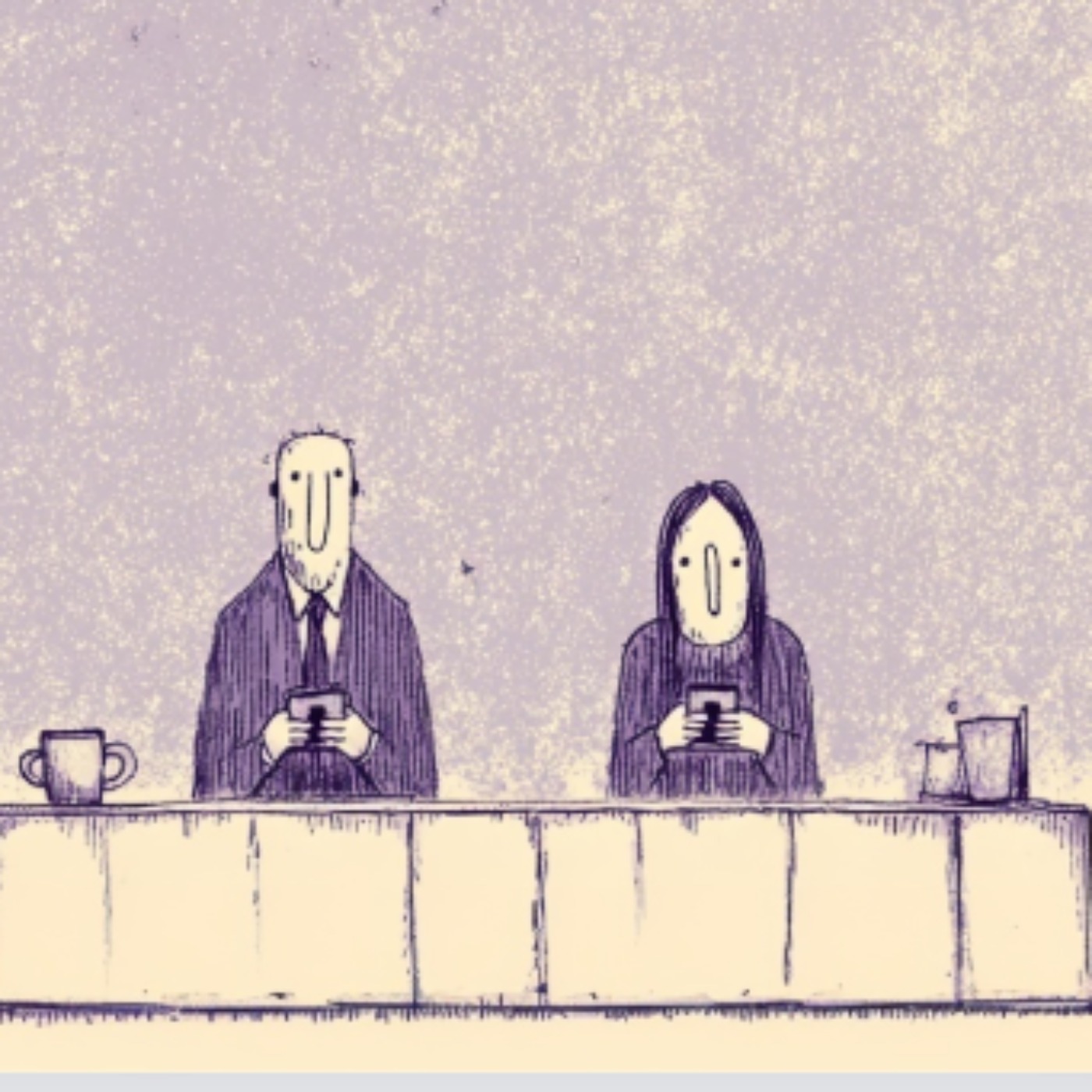
Workplace culture and well-being through “weak ties” and small conversations. The episode argues people underestimate how much others enjoy them (the “liking gap”), misread cues like phone use (“fubbing”), and therefore hold back from asking for help, being open, or building teamwork. It also claims talking to strangers improves mood, connection, novelty/richness, and meaning, and can be applied at work via brief, low-stakes interactions (break rooms, pre-meeting moments, Zoom cues).
Gillian Sandstrom is an associate professor of psychology at the University of Sussex and author of Once Upon a Stranger. She studies happiness and social interaction; her work includes research on strangers, weak ties, and workplace implications.
Rejection rates are about 13% and feel less bad than expected; people think colleagues like them less than they do; small talk supports organizational citizenship behaviors and trust.
“Hot dog lady” campus interactions; roommates/flatmates misjudging mutual liking; workplace advice/creativity linked to dormant ties and weak ties.
Written by AI. May contain mistakes.
Exploration of the benefits of talking to strangers and misconceptions about social interactions.
“Nick Epley's based in Chicago, but I saw that someone in the UK had done adjacent work.”
Introduction of guest Gillian Sandstrom and her background.
“I wonder if you could kick off by just introducing who you are and what you do.”
Gillian shares her unconventional path to psychology and the importance of small interactions.
“as really interesting because you've made your way into academia slightly later than some people do.”
Discussion on the fears and misconceptions that prevent people from conversing with strangers.
“And, you know, when you do a Ph.D., you have to kind of find your niche.”
Gillian explains the 'liking gap' and how we misjudge others' feelings towards us.
“We worry, are they even going to want to talk to us, right?”
Exploration of why casual conversations at work are undervalued and their impact on relationships.
“But people think that their conversation partner liked them less than they actually did.”
Explore how small talk can enhance workplace relationships and morale.
“but we're polluting that with that negative voice in our head.”
Discuss the human need to feel acknowledged and valued at work.
“So I think those are pretty interesting findings.”
Learn about the staggering 10% engagement rate among British workers.
“is that not just a consequence of how we're working?”
Discover how conversations with strangers enrich our lives and foster empathy.
“why on earth do I need to talk to strangers?”
Understand the psychology behind why people share intimate details with strangers.
“So I think, yeah, there's so many good reasons.”
Examine societal fears about strangers and the importance of connection.
“that when we need directions now, we don't ask a human, we ask our device.”
Explore how our perceptions of strangers influence our willingness to connect.
“Yeah, I mean, it rhymes really nicely, doesn't it?”
Discuss how to build connections in the workplace despite common barriers.
“And, you know, I was very much reading your work with a lens of us, firstly, interpreting the world around us and, you know, how we misjudge these things.”
Learn about the value of reconnecting with old friends and leveraging weak ties.
“People are busy and relationships take time.”
Discover actionable steps to improve social connections in daily life.
“I'd love to sort of have a perspective of someone's thinking, you know what, I want to do a bit more of this and make an effort.”
Understand the various dimensions of friendship and the value of casual interactions.
“to have the conversation are the ones where they can be most valuable.”
Explore how small social interactions enhance well-being beyond close friendships.
“So yes, we need to have some close relationships.”
Discover ongoing research into the benefits of engaging with strangers and weak social ties.
“Her name's Taylor West, and we've been doing a big project trying to understand what sort of more societal benefits we might see if people were to talk to strangers more often.”
Learn about the book 'Once Upon a Stranger' and its insights into social interactions.
“And so we've recruited, invited people to help us all over the world.”

Get the gist, explore an idea or ask about something said.
 Claude
On Eat Sleep Work Repeat - better workplace culture, what are the key points of this episode?
Searching your listeningAutomatic transcript. May contain errors.
0:00Weight Watchers now offers access to affordable GLP-1s. Weight Watchers has everything I need, from weight loss medications to nutrition support and help with my side effects. With our program, our members are losing more weight with expert nutrition and side effects support. Weight Watchers prescribing GLP-1 medications. It's been life-changing. Better results. Expert support. Lose more weight. Make it last. Get started for as low as$25 at WeightWatchers.com. All medications require eligibility and prescription. First month as low as$25 for the 12-month Med-Plus Plan. does not include the cost of GLP-1 medications.
0:34This is Eat Sleep Work Repeat. It's a podcast about workplace culture. Hello, I'm Bruce Daisley. I saw a tweet that said, smoking a cig outside a bar will yield you more dates than every dating app combined. That's sort of today's podcast, really. If you follow the newsletter, last year I posted about research conducted by Nick Epley at the University of Chicago that said that if we talk to strangers, we tend to anticipate the experience will be awful, but it tends to be delightful, tends to be one of the highlights of our day. Nick Epley's based in Chicago, but I saw that someone in the UK had done adjacent work.
1:14Gillian Sandstrom had explored sort of similar themes about strangers and our interactions with maybe people we don't know well or weak ties. One piece of work she did, she got people to record whether they had conversations with people they knew well or people they didn't. She found that both make us happier. There's joy in chatting to strangers. One of the challenges she found is that we misjudge these interactions. There's a liking gap where we feel that other people didn't enjoy them as much as we did. Interestingly, it also goes for flatmates and worker colleagues. We think people aren't into us.
1:50I think if you combine that, there's an interesting phenomenon I talk about in the newsletter today of fubbing, which is sort of phone-based snubbing that some psychologists have attempted to measure. And they've said that those environments where we find ourselves with someone and they get their phone out, quite often we interpret that as a sign that people don't like us or they're not interested in us. It's interesting because I guess if you combine this idea that we don't necessarily think people enjoy our interactions, then we're surrounded with people who appear to be sort of rejecting us, spurning us.
2:25It's no wonder that the amount of people saying they've got a friend at work is the lowest level ever. I was really interested in the relevance of all of this for work, of how talking to other people might be a skill that we can develop and actually just makes us happier. Gillian's written a new book called Once Upon a Stranger. It's one of those books where it was genuinely a real favourite of mine. And I've recommended it to a couple of people, I think because you can very immediately start applying it in your life and seeing the payoff. Here's my conversation with Gillian Sandstrom.
3:03Gillian, thank you so much for joining me. I wonder if you could kick off by just introducing who you are and what you do. Yeah, I'm an associate professor of psychology at the University of Sussex and the author of Once Upon a Stranger, The Science of House. small talk. I put that in quotes, small talk, because I don't think any talk really has to be small. Anyway, how small talk can add up to a big life. I actually discovered your work through reading some of your academic papers. And so, you know, I was really excited to see that you had this book coming out and imminently, and I was delighted to have a chat with you.
3:40It strikes me as really interesting because you've made your way into academia slightly later than some people do. you've managed to combine something which appears from the outside to be your life's passion with also your subject of interest. And I just wonder if you could tell us, maybe with an excursion by your dad, but I wonder if you could tell us how you became so interested in talking to strangers. Yeah. And I think, I think you're absolutely right. There was no straight line and it's just sort of accidental in a way, you know, just taking what life gives you. But yeah, so I, I did an undergraduate degree in math and I worked as a computer programmer for 10 years.
4:25And I was just feeling like I wasn't, the job wasn't as feeling as meaningful as I was hoping. And, you know, I didn't want to, I couldn't, I couldn't imagine doing that job for another 30 years and looking back and feeling like I made the best use of my one life, you know. And looking back now, I think, you know, probably I could have just got a different job in technology and that would have been fine. But at the time, I just decided I needed to make this huge shift. And so I started paying attention to things that I was finding interesting in the world and eventually noticed that there was this common thread of psychology and somehow wrangled my way into doing a master's degree in psychology.
5:09I'll leave out some details or the story will be very long. And while I was doing that, so that was on a different topic. It was on the topic of music cognition, so not related to this at all. But I ended up having this relationship with a woman who worked at a hot dog stand. And every time I walked past, this was on the campus where I did my master's degree. It was a very urban location in Toronto, Canada, the biggest city. And I had this relationship with the woman who worked at the hot dog stand. I'd smile and wave at her and she'd smile and wave at me. I don't know how that happened. It wasn't like a deliberate choice.
5:45It just sort of happened. And it made me start thinking about how we have all these smaller relationships in our life, smaller, you know, compared to the ones we have with our friends and family. And, you know, I'd never invite the hot dog lady over for dinner or tell her my deepest, darkest secrets. But she made me feel comfortable. She made me feel part of a community. You know, the fact that she recognized me just seemed extremely important. And it made me start thinking about all the other kind of people like that that I had in my life. And that was sort of the starting point. I'll skip a bunch of details, but I ended up doing my Ph.D.
6:23in Canada, in Vancouver, in a lab that studies happiness. And, you know, when you do a Ph.D., you have to kind of find your niche. And my supervisor said, what makes you happy? and what came to mind was the hot dog lady you know these little interactions um and yeah i think a lot of us do me search you know we i wanted to know is it just me is it just is it a weird thing that that i feel that this hot dog lady is so important or is it something that is actually important to all of us and maybe more important than we realized and you say in the book that your dad was a huge advocate of talking to strangers or, you know, he was your inspiration.
7:06Yeah. So my dad is the biggest extrovert and is impossible to embarrass. And he just absolutely loves talking to people and you can't stop him. It's like a compulsion for him. And I, you know, I wondered for a long time why he did it, you know, what he got from it. I never saw him get rejected, or I don't remember those times, which surely happened every once in a while. But I saw how much he enjoyed it, how much, you know, he'd make people laugh. And it was really useful. You know, if we needed an extra chair at the table at the restaurant, we'd just send Dad and he'd go get another chair. It would take him forever because he'd get a story and get talking to the people at the other table, but he would eventually come back with a chair.
7:50So I started to see just how, you know, enjoyable and valuable it could be to do this. But I thought I would never do it because I was way too shy. So I thought he had some special skills that I just didn't have. I wonder if we could go into, we'll sort of talk about the delight of talking to strangers in a second, but I wonder if we could just sort of explore some of the things that are often our barriers to talking to strangers that maybe we don't think we're going to enjoy it or the other person isn't going to enjoy it. Could you just give us sort of a top-line perspective on what we might instinctively believe and what the realities are?
8:32Yeah. I mean, when I started doing this research, I thought, okay, that's where I wanted to start. I realized that many people are a bit nervous about talking to strangers. So I thought, I'm going to figure out what people are worried about, and then I'll figure out some way to fix those concerns, and then everybody will find it easier to talk and live happily ever after the end. Didn't work out quite that way. For one thing, people are worried about so many different things. And so I've come to believe that if you just fix one of the concerns, people will just worry about something else instead.
9:07But there's, you know, long lists. So, you know, we worry about our behavior, how we're going to act during the conversation. So we worry that we'll talk too much or we'll talk too little or we worry about, you know, the content of the conversation itself. Like, will we know what to say? Are we going to have those dreaded, awkward silences? I think that's actually people's biggest fear. We worry about what the other person's going to think about us. We worry, are they even going to want to talk to us, right? Are they going to reject us? And yeah, the good news is that, you know, none of these things tend to happen.
9:40So in terms of rejection from a study I've done, it looks like the rejection rate is about 13%. People think it's going to be much higher. And I think we also think it's going to feel worse than it does. So I have some preliminary data about that. And yeah, awkward silences also, you know, people can talk to others for far longer and more, you know, it's just more enjoyable than we expect. So I've done a series of studies where I ask people to predict how it would go. Then I make them talk to a stranger and then they report back. And every single time we get these huge effects, like just compared to anything else that we've studied in psychology, it's just a massive effect.
10:28People enjoy it far more than they expect to. And all these things that we worry about don't tend to happen. So yeah, we just, we worry a lot more than we need to. I guess one of the critical things is that our conversation partners enjoy it more than we expect. I was particularly taken with that for a couple of different areas. Firstly, when we're talking to strangers, but also we see that extrapolated to work colleagues as well, I've sort of noticed. I just wonder, you know, what the effect of that is and why do we misjudge that? Yeah, so I don't know if this is what you're alluding to, but I've done some research with Erica Boothby and Gus Cuny on something called the liking gap.
11:10And so what we find is that when two people talk to each other for the first time, that's how we started studying it for the first time, you know, these first impressions. But people think that their conversation partner liked them less than they actually did. So we say, yes, we enjoyed our conversation, but we don't think they did. And so the liking gap basically in a nutshell is, you know, people like you more than you think. But it's not just first impressions. It lasts. So one of the studies that we looked at was roommates, flatmates living together at university. And even after months and months had passed of these people living together, they still thought that they liked their roommate more than their roommate liked them.
11:52And similarly in the workplace, so we've looked at that a little bit. But, and again, even after working together for months and months, people think that they like their colleagues more than their colleagues like them. And it does have consequences for work. So the more we underestimate how much our colleagues like us, the less willing we are to ask them for help. The more we feel like we can't be open with them. you know it affects our feelings of teamwork like our ability to to be an effective team yeah and that added with the the fact that probably people are busy or that the you know there might be distractible i guess there's there's a danger that we can misread someone's opinion of us you know that we have a conversation we don't think they like us then they look like they're sort of trying to avoid us and overall we can end up with this conclusion that's completely force that actually was surrounded with people who aren't that into us?
12:54Yeah, I think. So in my book, I named the negative voice in my head. I call him Sid because he's insidious. But I think we all have this voice in our head telling us that we are not good at this. People don't like us. And it really does seem that most of us feel this way. You know, there's research showing that we, although we tend to think we're better than average in almost every respect, you know, that we're more honest, we're better drivers, all this kind of stuff. We think we're below average when it comes to having a casual chat at a party or a social event. So on average, people think they're not good at this.
13:31So if you feel that way, you're not like, you're not alone. And so it's because we can't read someone else's mind, right? We don't know what they're thinking. And we have that voice in our head filling in the gap saying, saying all these negative things. And it's a funny thing, too, because in the studies where we looked at the liking gap, we had people observe conversations. They can't see the liking gap. So it's not that the person, you know, like there are signs that both people are getting along just fine, but we're polluting that with that negative voice in our head. We tend to focus on all the negative stuff or less than optimal stuff, less than ideal.
14:15You know, we have this sort of vision about how we need to be perfect and we have to say just the right thing at just the right time and tell the story in just the perfect way. Whereas our conversation partners just like, hmm, that was nice. Especially if it's a stranger, I think, because you don't expect it to go well and then you have a pleasant conversation. You walk away thinking, oh, that was great. That person was terrific. Because I think that, you know, that some of the reasons that people might be reluctant to reach out at work is this sort of not being aware of the value of doing it, right?
14:53Like feeling like it's a waste of time. We need to be efficient. We need to get to the real stuff, right? But I think, first of all, there's moments where it maybe doesn't take any extra time. These moments that maybe would have been wasted anyway, you know, those bits of time in the break room or the, you know, the moments before the meeting starts, you know, so I think we could, you know, use those as, you know, and make that investment in relationships, right? But I think there's also this idea that what are we getting from it? Is there a, you know, an instrumental value in having these kind of interactions.
15:31And there's some research by Jessica Methot showing that having small talk at work, the kind of water cooler moments, leads to people just feeling a bit more positive at work and doing more sort of organizational citizenship behaviors. It also makes people more distracted. So there's pluses and minuses. But there's also work showing that people who kind of get to know their colleagues a little bit. And often we do get that in these researchers, Ashley Hardin is one of them, studied these kind of inadvertent ways. So, you know, I'm seeing you on a Zoom call right now. I'm noticing that you have a lovely blue wall behind you.
16:17You know, I sort of was looking at the logo on your t-shirt. They're little things where I might learn something about you without you even intending for me to. And they might be really vivid and memorable. And that when we do that, you know, we feel more trust in our colleagues. We feel like it humanizes them and it makes us want to, you know, be more friendly with them, but also work more closely with them. So it does affect the work aspects of our relationship as well. So I think those are pretty interesting findings. The challenge there, I was chatting to someone the other day and saying, look, you know, people are not seeing the value of coming into the office.
17:00They feel like they can get their work done. They don't, you know, they've had a few good conversations, but they feel like they don't work with other departments. Why should they be there? and look it's very difficult to put a a reason out there other than vibes and other than look you know you're gonna you're probably going to enjoy it more than you think and it's sort of it's so difficult when you're presented you're asked to demonstrate something that could be better than efficiency in return it is and I think you know when we're thinking about managers and the people who are working for a manager.
17:37I know, again, I, you know, I translate to teachers and students because that's, you know, I can relate to that a little bit more, but it just feels like everybody wants to feel like they matter, right? Like that they're valued and that they're seen. And if your manager doesn't know your name or doesn't acknowledge you as a human and just seems to treat you as someone who's providing value and, you know, output in the workplace, it just doesn't make you all that motivated to put in that extra effort or offer an unsolicited opinion or do something proactively or, do you know what I mean? Like, so yes, vibes, but I think that has more consequences than people really think about.
18:23You know, it feels to me like that might be related to the sort of quiet quitting you know people just doing the minimum they're like well i'm not appreciated i'm not valued you know they don't care about me as a person so you know i'm just gonna do what i need to do but no more um yeah i i think it's hard not to feel that way i think we need to feel like we're part of something and we're valued and that that yeah we put in a different amount of effort investment and loyalty when we feel that way 100 % I couldn't agree more absolutely it's sort of that sense of feeling seen is a really important part of being human and and when we don't feel seen when we don't feel you know that the word you use they're mattering I use that word all the time because if we don't feel like we matter then you know we like you say we do check out and Gallup published some research last week that said that 10 % of British workers are engaged with their jobs and we might ask ourselves well is that not just a consequence of how we're working?
19:2410%. Wow. In a world that's obsessed with productivity, people might be listening to this thinking, why on earth do I need to talk to strangers? I've got enough to do. I've got enough to be getting on with. And I guess the reason I came away with, I'd love you to give an alternative reason if there is one, but the reason I came away with was what I took from your clicker study, which was that when you ask people to categorize their hot dog lady, their strangers that they chatted to, it had the impact, just these small chance encounters with a barista, with someone in a store, these chance encounters had the impact of making them happier.
20:07And it seemed to be like, you know, if we're looking for a reason to chat to strangers, it just adds to the richness and the the sort of empathy that we might extract from life. Is that right? Is that why we should be thinking about this? I find that a hard question to answer just because I think there are so many benefits. So I think you're right. I think I've been starting to think lately about what is a life well lived? And I think there's sort of three different answers to that. One is a life of pleasure. One is a life of meaning and purpose. And more recently, we've been thinking also a life that is rich, you know, full of diverse experiences.
20:46And of course, you can have more than one of those things. But generally, you need one of those to, you know, to feel that you've spent your life well. And I think talking to strangers ticks all those boxes, you know, because, like you just said, the research shows that having just small conversations with people makes you feel happier, you know, puts you in a good mood, makes you feel more connected. it makes your life more rich because you learn things more than you expect to. It's just a source of novelty and interest. I've met so many interesting people. You know, I've met a sperm bank manager and a bat first aider and someone whose hobby is hashing.
21:27And, you know, and I don't need to know those things, but it makes my life more interesting and rich. And then the third aspect is meaning and purpose. And it just feels like our world, we're designing out the need to interact with humans in many ways. And it's easy to depersonalize. We were talking about this before we started recording. And I think just having a small conversation with someone, just showing them that you see them and acknowledging that they're a fellow human is an act of meeting. It is a very powerful thing that any of us can do to make the world a little better. So I think, yeah, there's so many good reasons.
22:12And I think, too, I could go on for a whole hour about this, Bruce. I think, you know, I started talking to strangers kind of almost by accident, I feel like. And then I enjoyed it and kept doing it. And now that I've talked to hundreds and hundreds of strangers, I feel that there's a cumulative effect as well. So sometimes the individual conversations are interesting and fun and, you know, life changing every once in a while. A lot of the time, you know, the average conversation is average and some of them are boring. Right. But I think every single one matters because they add up to me feeling like I can talk to anybody and people are generally OK.
22:54So I feel like I walk through the world differently now. I feel more safe, more trusting, more connected and sort of part of the world. And that feels like it changes everything. Yeah, I was in the habit last year of asking people, just like an abstract question, just merely to see what their answer was. I was asking people what percentage of the world's population they felt were bad people. And they could define that however you wanted. And it was just interesting because I was so fascinated with the numbers I was getting back. Because, you know, some people were saying like 5%. I was saying, one in 20 people you think is a bad person.
23:34I'm not criticizing the end. Whereas my instinct was like the answer is 0.1. I don't even believe this thing is a bad person. But I wonder if a degree of talking to other people and recognizing the humanity in people is an important stepping stone to that. I remember chatting to someone who worked in the NHS and they told me that the amount of patient aggression they were experiencing at the moment, and retail says this, and I wonder if that's a direct consequence of us depersonalizing the world around us, that when we need directions now, we don't ask a human, we ask our device. And whether this might be just, even in ourselves, If all we can do is seek to improve ourselves, then just exercising this muscle might be a great way for us to rebuild that empathy.
24:30Am I right with that, do you think? I have the same instinct. I have the same instinct, yeah. And I think, you know, once I started doing this research and sort of feeling like I was having an impact and making a difference on people, it just makes me want to do it more and try to notice even more often. And there's been so many times, you know, and I feel like this is something more recent that it's probably changed, but I don't have any data on that. But times where I've, you know, sincerely asked someone, how are you doing? And had them say, thank you for asking. No one ever asks me that. I feel like waiters and GPs and volunteers at historical sites that I've visited on holiday, so many different kinds of people say, nobody ever sees me.
25:21Or at least that's what I'm hearing them say, is nobody ever notices me. And they really appreciate just being seen. And it's such a small thing that we can all do. But you're right. I think we have to, that our society is allowing us to not have to do that. And so we have to choose to do it. It's a little bit, has to be a bit more deliberate now. You touched on one thing there that's really interesting, which is this sort of interesting phenomenon that people often disclose more to strangers than they might do to the people in their lives. They use it as potentially like a sort of a fleeting confessional that they might tell you, you know, I'm pregnant or they might tell you something that's deeply intimate to a stranger that they wouldn't do elsewhere.
26:06Why do we do that? Why do we find the ability to confide in someone that we'll never see again? Yeah, I was surprised to see that there's a fair number of studies on this. A lot of them come from the health psychology literature, so it's about health-related disclosures. But there's some, although we might assume, and it's probably true, that the people that are closest to us are the ones who are most willing to help us and want to help us, they're emotionally involved and that can cause problems as well, right? So if we share something with someone we're close to, we worry about how they're going to take it and it could put that relationship at risk and we really don't want to do that.
26:54And then they sometimes can't be as supportive as we'd like because whatever's going on with us also affects them. So they're emotionally involved as well. And so it's hard for them to have that objectivity that can be helpful sometimes. And then in terms of health related information, if we're looking for, you know, information to help us make sense of what's going on and what might happen, we probably want to talk to someone who's been there. And that might not be someone that's close to us. But one of the single most reasons that we tend to confide in people we don't know is just because they're in the right place at the right time.
27:34We spend a lot of our time around people we don't know at all or don't know very well. And so it can be they're just in the right place at the right time. And we don't have to worry about all those things I just mentioned or them remembering what we shared with them every time we see them and worrying what are they thinking of me. yeah so there's lots of reasons when you think about it because some people i guess inevitably one of the pushback that you might get about talking to people you don't know is that sort of thing that we were taught as a kid this the idea that strangers represent danger and that there's something um risky in talking to someone that you don't know that you're potentially unlocking something that could become a sort of regret, a source of regret.
28:22Do you think we overblow that? Yeah, I mean, it rhymes really nicely, doesn't it? So it's hard to shake. I tried to come up with a new, you know, okay, can I come up with a new rhyme that works better? And so I said in the book, you know, for me, strangers have been game changers. So maybe we could start to rhyme that way instead. Funny enough, kids were taught this. It came out of the 70s when there were a bunch in America and there was a bunch of child abductions. And so that's when this phrase was coined. But actually, children are being taught now. It's a more nuanced message. It's that some strangers, you know, that there are tricky people that we have to be wary of, but also that if you need help, you can go to other strangers, you know, that there are trustworthy strangers, you know, and to talk to a police officer or someone who's in a shop or a parent.
29:18And of course, you know, there's always those very memorable stories about how, you know, when things go wrong with a stranger. And so, you know, it does happen some of the time. But more often, bad things happen with people we know. So we can't avoid all risk. But, But, you know, my message isn't you should talk to everybody all the time and dark alleys. Sure, go for it. But I think there's a lot less danger than we think. And it probably does, you know, make us not reach out as much as we could and sort of means that we don't get to enjoy all these benefits that come from reaching out and connecting with people.
29:58So we could choose to focus on the positives instead of focusing on the potential negatives, which are unlikely anyway. obviously this podcast is about sort of work and about the relationships we have with work. And, you know, I was very much reading your work with a lens of us, firstly, interpreting the world around us and, you know, how we misjudge these things. Secondly, you know, a lot of us now find ourselves in a working environment where maybe because we're not spending as much time together with colleagues, or when we do spend time together with colleagues, they've got headphones on. And so our connection with them is maybe less warm than it was before.
30:40Do you think there are any lessons from your work that are applicable either for workplace relationships or, you know, maybe picking up relationships with people we've had in the past and reaching out to them? Are there any lessons that we can draw about maybe already existing weak ties and how we might sort of strengthen those connections? Yeah, I mean, I think there is some direct relevance to the workplace. And I think, you know, some of the things that hold us back from talking to strangers out in the world are probably also true with people in the workplace. So, you know, maybe underestimating just how valuable they are, maybe just sort of an unwillingness to do it, like just not wanting to, not feeling like we have the skills to do it, feeling a bit just uncomfortable about it, worrying about being too open with people.
31:38So I think all those kind of concerns that we have do potentially transfer to the workplace. We might ask, you know, we might think it's not our job to be friends with our colleagues, right? There's work and then there's friends and, you know, we don't want to blur those lines. it's kind of I mean I know there's research on in terms of like professors thinking it's not my job to be friends with my students and that's absolutely true but if you're warm with your students if you connect with them and and they can sense that you're supporting them and wanting them to be the best that they can be it creates more positive outcomes right so there's no reason that We think in psychology that people form impressions based on two main dimensions, which is warmth and competence.
32:30And so I think in the workplace, we risk sort of thinking, in order to be seen as competent, I can't be too warm or people are going to underestimate or aren't going to think that I'm as competent. And that's just not true. We can be both and we tend to succeed more when we're both. sorry that was that was the first part of your question the second part was more about it felt like two different questions to me so apologies for but yeah the second part was about you know people that we've maybe lost touch with and yeah in terms of personal relationships I've done some work on reaching out to old friends and I think when we lose touch with people which maybe we did a lot during COVID in particular but you know I think it happens People are busy and relationships take time.
33:17So we do lose touch with people. And we like the idea of reconnecting, but we want the other person to reach out. We don't want the discomfort and what's going to happen. So we don't want to be the one to reach out. So, yeah, my colleague Lara Acknan and I did a series of studies and we just had a really hard time moving that needle. But there's other research finding that when you do reach out to someone, they really appreciate it. And I think people realize that, that if someone reached out to you, that it would feel really good. But still, we have this reluctance. But in particular with workplace relationships, I know there's a little bit of research on dormant ties and how we actually tend to, I mean, I guess in general, people that we don't know as well tend to have information that we don't have because they're less similar to us than the people we're working with all the time or the people we're really close to.
34:17We kind of have the same ideas, the same perspectives, so that people we don't know as well have access to new information. And so I know there's a study in terms of the workplace that if you need advice or ideas to help solve a problem, that people are more likely to get it from reactivating a dormant tie than from talking to someone that they're currently working with. So that's food for thought. Well, I really liked the fact that you said there as well, there's something in us that when we're talking to someone who's a weak tie, because we don't necessarily have the same area of specialization as them, we sort of listen a bit more attentively to what they're saying.
35:02You know, they're not doing the same work as us. So we activate a bit more curiosity and that seems to be an important element of this as well. Absolutely. Yeah. And there's a few studies showing that it's linked to creativity as well, because where does creativity come from? It comes from piecing together little bits of information. And we tend to get those little bits of different kinds of information from talking to people we know less well. So there's research showing that people, it's not just that people think they're more creative, their supervisors actually say that they're more creative, the people who have more connections with weak ties in the workplace.
35:40I'd love to sort of have a perspective of someone's thinking, you know what, I want to do a bit more of this and make an effort. And I most definitely, I adored your book. And I've made an effort. I had a wonderful discussion with someone I gave blood to the other day. I was having great discussions with people all week. Wonderful. But if someone wanted to sort of give themselves a few nudges or, you know, what are the actions, the nudges that any of us could take? Like, I think there's opportunity. I think the first step is noticing, right? Noticing that there are opportunities all around us.
36:15So I think we maybe fail to notice that there are opportunities all around us. And that is something that we can learn to do better to spot these opportunities. and then there's sort of baby steps like if people are anxious or worried you can kind of work your way up so you can start by just making eye contact with people smiling at people I tend to smile and nod because if you just smile people might think you're just a smiley person but if you smile and nod I think they know that you're smiling at them I play a little game on the on the escalator when I get on and off the tube and I try to make eye contact with someone going the opposite direction and see if I can get anyone to smile back at me.
36:57It's surprisingly hard because people aren't paying attention, right? But that's just like a way to try and make it fun for me and spread a little joy. So yeah, you can work your way up to the smile and nod, and then you can work up to a greeting, and then you can, you know, eventually work your way up to sharing a few words. And I think you can choose certain situations that are easier than others. So something that's time constrained might be a bit less scary. You know, if you're buying your coffee, there's a very small window of time and then you're just going to walk out the door. So it's not that scary.
37:34You know, you can just give it a try and know that you can walk away and not, yeah, have it stay with you for the rest of the day if it doesn't go well, which it probably will. So as someone who lives in London, even though I was deeply sympathetic to your book. There were moments in it where it was like, I don't want someone to have a conversation with me right now. I was on the tube somewhere. I was like, I'm too busy. I've got too much going on. I don't want to talk. But I was looking for moments to have conversations along the way. Not every moment needs to be. No, and absolutely, yeah, not saying that people should be talking to all the people all the time.
38:13But I think sometimes the very moments where we feel like we don't want to have the conversation are the ones where they can be most valuable. So, you know, it's kind of an ironic thing about us humans that when we're feeling a bit down or feeling a bit lonely, instead of reaching out, we tend to withdraw. We tend to want to be, you know, inside our own heads. And those are probably the moments when we most benefit from having a little chat. So I talk to people on the tube all the time. Partly it's a coping mechanism because I'm very much an introvert. And so if I get on the tube, I mean, it's noisy, it's crowded, it's hot, summer, winter, it doesn't matter, it's hot.
38:52And so I will turn to the person sitting next to me and have a little chat because that helps me shut out everything else. And then, you know, it's not fun being on the tube, right? Like you're probably rushing off somewhere, you feel like you're in a hurry, you have a million things to do, and yet you're stuck there. But it helps feel like I've spent that time well. You know, I haven't spent it getting anxious about what I have to do when I get off or I haven't spent it thinking, you know, why have we stopped in the middle of a tunnel again? I'm just able to enjoy the moment and then have that energy to take with me to the next thing.
39:27So I think there's a kind of ironic thing. You know, if you're waiting in a queue somewhere, you can get really frustrated and stress about your to-do list, or you can have a chat with someone. And either way, yeah, either way, you're not getting something done while you're waiting in that queue. but I think you know if you come away from it with with that bit of energy that sparked from having a nice conversation your to-do list is going to feel a bit less daunting you're not going to go back to that same feeling of stress so I think there's a bit of an ironic thing. Before we started I mentioned to you that stat which is that the biggest predictor of workplace engagement is having a friend at work and one of the things we can often find I think you've mentioned it along the way here is that people say yeah I don't want my work colleagues to be my friends i don't want them to be my best friends and this research by a researcher called jeffrey hall and he says you know he's trying to put a number on it so like you know 200 hours worth of connection is what it takes to become a really close friend with someone and you've got a perspective on that i guess which is to me suggests like that we shouldn't be seeing friends as like these binary categories can you give me your take on on how we should be thinking about friends and friendship and connection.
40:40Yeah, I mean, I guess I'm not saying anything so different, but I try to point out that all the relationships that you have are valuable in some way and you don't have to turn everybody into a best friend. It's very, like you said, it's very helpful to have a best friend, but there's value in just having a one-off conversation with a stranger and walking away. There's still value to be had there. And I think we put a lot of pressure on ourselves that we try to hold on too tight sometimes. We think, oh, we just had a nice conversation. We should exchange numbers and get together again. And if you want to, that's great.
41:21But I don't think you should feel like you have to. And acquaintances, you know, once people are sort of more, you know, they're known to you, but you're not that close to them. if you'd like to turn them into a closer friend that's great um but i don't think you should feel like you have to you know there's value in having uh you know a network of acquaintances we get value from all those relationships without feeling we shouldn't feel the need to turn them into something else there was a tiktoker who was posting at the end of last year that was sort of adjacent to this she was trying to make a friend a day and i guess when we're constantly told about either elective isolation or loneliness the the thing that she i think demonstrated it's sort of like a vivid coming to life of of what you've written here is that actually we're surrounded with potential friends or we're surrounded with people we could connect with and even though we're told that there's a disconnection crisis and our lives at times might be feel like suffering from disconnection actually we are we've got the the resources in all of our lives to actually sort of bridge out of that so um yeah i i really sort of saw that and and felt that you know these things these philosophies can be sort of life enhancing life changing in a very gentle way i think it gives people permission to like people have told me that they feel like this message is is telling them, it's okay that I have the people in my life that I do.
42:58I shouldn't feel bad about not having, you know, for example, in the media, you know, there's been some articles about having that group of friends, you know, we kind of idealize, you know, the group of six on the show friends, and everybody thinks, why don't I have that friendship group? And it's okay if you don't. So yes, we need to have some close relationships. I'm not saying that this replaces other things, but I think it can enhance it, right? I think we can have loads of social connections, small social connection, that that also contributes to our well-being, not just these really close ones.
43:34And you can feel okay about the social relationships that you have. So talking to strangers makes us happier. The people we talk to tend to enjoy it more than we realize and like us more than we realize. Even just the connections with people that we don't necessarily know serve to make us happier in our lives a lot of your the writing and your book is based on your own research and the research of sort of adjacent people you've mentioned early research that you or you said you you're doing other stuff and i'd love to know where you go next on this what are you researching next what's the you mentioned some sort of unpublished research but what are you looking at next about this yeah um a few different things going on i have a terrific postdoc working with me.
44:20Her name's Taylor West, and we've been doing a big project trying to understand what sort of more societal benefits we might see if people were to talk to strangers more often. So most of the research so far has focused on how do you benefit if you were to reach out and talk to people, and how do they benefit? But we're trying to look at more broadly, does it benefit our communities if people feel that they're able to have these conversations? So that's one thing. I've been more interested in digging more into rejection. So I hope what I'm going to find and what I'm finding so far, but it's early days, is that not only do we get rejected by strangers less often than we expect, but that it doesn't feel as bad as we think it will.
45:08So rejection from someone that we're really close to is obviously really devastating. And so we probably take that with us into our expectations with strangers. But when a stranger rejects you, they don't know you. It's not personal. And so I suspect that it doesn't feel anywhere near as bad as we expect. And hopefully that's yet another encouragement to be brave and reach out. And then I've been working with some colleagues in Turkey. We're just about to start up a giant project collecting data all over the world. So we've been finding, you know, that talking to strangers and weak ties, which is these little acquaintances like the hot dog lady, that those are related to well-being.
45:57And we found that mostly in North America, also the UK, and then my colleagues are in Turkey. So we found it there. But we'd really like to know if it's a general thing. And so we've recruited, invited people to help us all over the world. So we have 60 or 70 different countries represented. And we're going to look at whether we've, you know, greeting and thanking and chatting with people is associated with well-being everywhere and what kind of, you know, macro level factors might explain that. So I'm very excited about that. I'm really grateful for the chance to chat to you and just remind us your book.
46:38What's the book called? It's called Once Upon a Stranger. Fabulous. Well, strong recommendation from me. Thank you so much for taking the time. Thank you so much.
46:49Thank you to Gillian. There's a link to that in the show notes. And it's got a big piece about that in today's newsletter as well. So if you enjoyed that, please check out those things. There's a link to the newsletter in the show notes. I've been Bruce Taisley, always grateful for your company, and I'll see you next time.
47:13Business is booming, but you know what really helped? Zero, the accounting platform for small businesses. I used to think spreadsheets were just part of it. Ugh, but real-time cash flow? Wow. Invoices that chase themselves? Even better. Books that automate? That's a big one. and I can keep track from my phone while I get the job done. No spreadsheet in sight. What a life. Do right by yourself and your business and search X-E-R-O for your free trial. Conditions apply. The new WeGovi pill is now available through Weight Watchers. Powerful GLP-1 results in a simple pill at the lowest price available.
47:50And with Weight Watchers, you can get doctor support and personalized nutrition programs. See if you qualify at WeightWatchers.com. Adnot reviewed or approved by Novo Nordisk.
48:02business is booming but you know what really helped zero the accounting platform for small businesses i used to think unpaid bills were just part of it but batch payments wow automated accounts payable even better all in one place that's a big one and i can keep track from my phone while i get the job done no bills in sight what a life do right by yourself and your business and search XERO for your free trial. Conditions apply.
Dr Gillian Sandstrom is a researcher whose work explores her fascination with our conversations with other people - whether colleagues, friends or strangers. She’s just published a fabulous new book ‘Once Upon A Stranger’.
Her work says that we often have a ‘liking gap’ when we talk to people - we think they like us less than we like them - even if they are work colleagues. It turns out not to be true - our co-workers like us more than we realise.
It's a brilliant discussion - and potentially a prompt for you to change how you live your life.
This week's newsletter is about talking to colleagues.
Sign up to the Make Work Better newsletter or check out the best ever episodes at the website.
Eat Sleep Work Repeat is made and hosted by Bruce Daisley.
Hosted on Acast. See acast.com/privacy for more information.