
 Ask ChatGPT

- Podcasts
- Electoral Dysfunction
- Could Andy Burnham come unstuck on immigration and welfare?
Electoral Dysfunction23 Oct 2026 · 45m · 23 chapters
Could Andy Burnham come unstuck on immigration and welfare?
In short
The episode discusses whether Labour leader Andy Burnham can “hold” support on immigration and welfare, focusing on findings from a seven-person voter focus group in his Makerfield constituency.
Guests
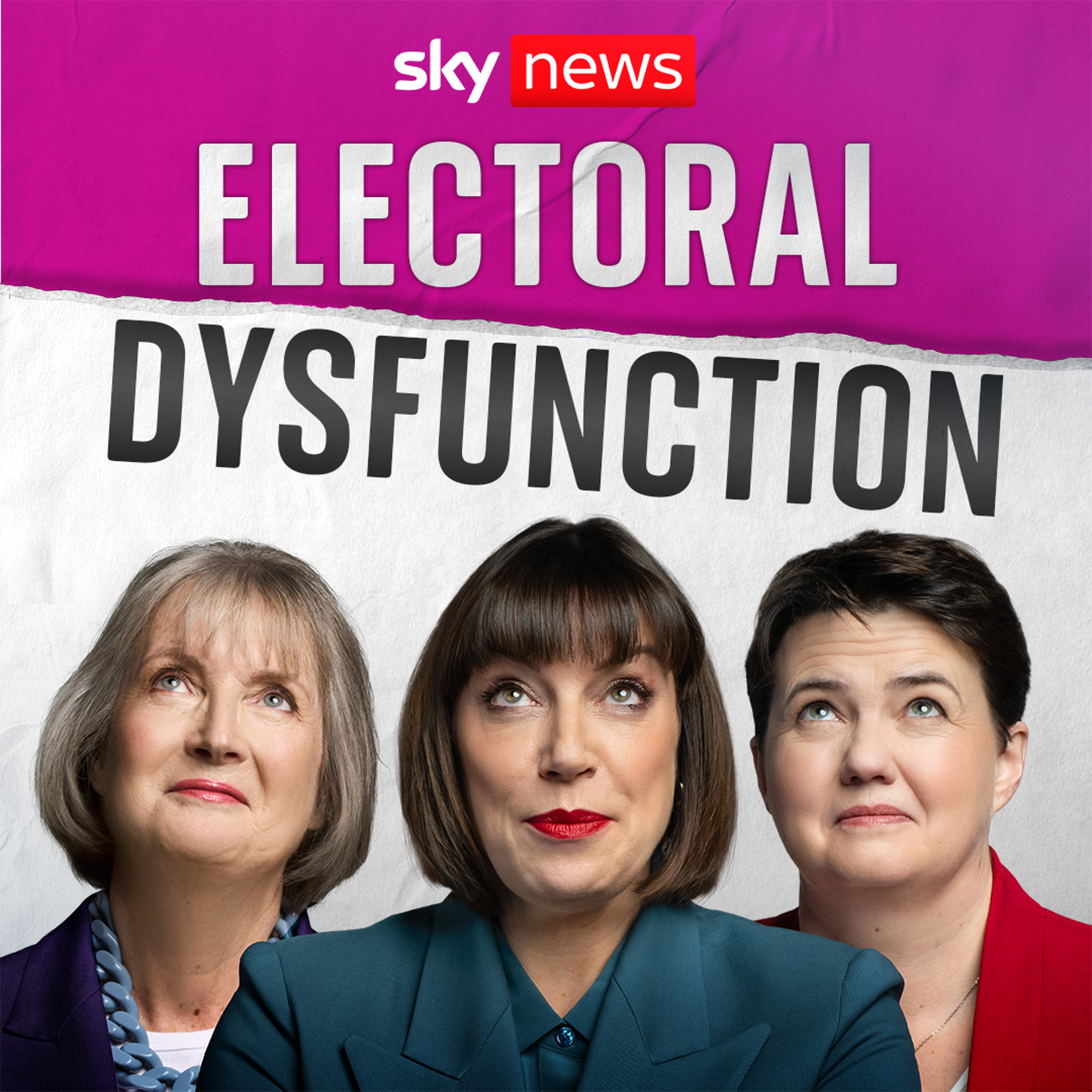
Beth Rigby, Ruth Davidson, Harriet Harman (hosts), and Luke Trill (pollster who ran the focus group). Backgrounds: Trill is a political pollster and “temperature taker”; Harman is a senior Labour figure; Davidson and Rigby are political journalists.
Key claims
Burnham’s strength is direct, frequent communication and “everyday” cost-of-living measures (business rates for pubs, school dinners, parking fines, train noise). Risks: welfare spending is ballooning and immigration messaging is distrusted; voters want immigration to “look like it is coming down.”
Notable examples
welfare legal leave for miscarriage/baby loss; early prisoner release; indefinite leave to remain reforms (suggested 15-year wait). Also covered: Brexit regret among leave voters; Reform UK fallout after an ITV undercover investigation. Final segment: government approval of the Jackdaw gas field (up to 6% of UK energy peak) and debate over whether Rosebank will be approved, hinging on “energy wealth fund” use of revenues for renewables.
Written by AI. May contain mistakes.
Chapters
0:45
Personal Anecdotes and Andy Burnham's Background
Hosts share personal experiences related to Andy Burnham and his constituency.
“And I am feeling somewhat refreshed after my short trip up to the Makerfield constituency.”
2:10
Focus Group Insights on Burnham's Performance
Discussion of a focus group evaluating Andy Burnham's communication and policies.
“An amazing focus group done by our favourite pollster, Luke Trill.”
4:02
Analysing Communication Effectiveness
Hosts analyze the effectiveness of Burnham's communication compared to others.
“And I think cutting business rates for pubs, pubs are shutting down left, right and centre up and down the country.”
6:36
Addressing Voter Concerns and Small Issues
Discussion on the importance of addressing small voter concerns in politics.
“In Burnham's case, what you heard there wasn't unusual.”
9:06
Welfare and Immigration Challenges
Hosts discuss the challenges Burnham faces regarding welfare and immigration.
“So I think that he's completely right on that.”
12:34
Voter Critiques of Burnham
Focus group participants express their critiques of Burnham's leadership.
“the sense that the welfare bill is ballooning, and then immigration.”
14:00
Immigration Challenges in the UK
Explore the increasing skepticism about immigration figures and policies in the UK.
“but the sad thing is that I think basically everything seems to be talked around you know, all these people coming into this country.”
15:00
Public Perception and Political Risks
Discuss how public perception of immigration could impact Andy Burnham's political future.
“that's just what they say but it's not happening.”
17:20
Taxation and Political Thermostat
Examine the shifting attitudes towards taxation and spending under different governments.
“I think it's important to remember that for lots of people, a bit like inflation has a lag, so does immigration, because you notice the change in your communities.”
19:10
The Brexit Debate Resurfaces
Investigate the renewed discussions on Brexit and its implications for the Labour Party.
“under this government in that high tax is coming up more often in focus groups and people are linking it to the cost of living.”
Show all 23 chapters
21:50
Focus Group Insights on Brexit
Analyze insights from a focus group regarding Brexit and people's changing sentiments.
“those leave voting parts of the country, they're not going to like this.”
24:20
Reform Party's Struggles and Future
Discuss the challenges faced by the Reform Party and its current standing among voters.
“Because it will be so easy if, you know, there is an attempt to negotiate, if there is a sense of what does Europe then want from us?”
28:00
Reform UK's Year in Review
Discussion on Reform UK's fluctuating support and internal challenges.
“And they have pulled back over this past year.”
29:36
The Role of ChatGPT in Voting Decisions
Exploring how voters are increasingly using ChatGPT for election guidance.
“You like spending time with us, which is fortunate because we take a lot of your time up.”
30:59
ChatGPT's Impact on Political Engagement
Analyzing the implications of AI assistance in political decision-making.
“And we've actually done some tests on the kind of ideological lean of models.”
32:49
Conversations with Experts on Political Strategy
Insights from guests discussing key political figures and strategies.
“Chat GPT and I've got quite an unhealthy relationship.”
34:23
Approval of the Jackdaw Gas Field
Coverage of the government's approval of the Jackdaw gas field and its implications.
“So that was Burnham, immigration, Brexit reform.”
36:18
Controversies Surrounding North Sea Projects
Discussion on the controversies and political implications of North Sea oil and gas projects.
“You know, if you just go up to Aberdeen, you see so many like for sale signs on all of the houses.”
37:54
Economic and Environmental Arguments for Oil Production
Debating the economic benefits and environmental concerns related to oil production.
“We can't have any new oil or gas fields and yet it's been approved.”
39:45
Revenue and Investment in Renewable Energy
Exploring how revenues from oil fields could fund renewable energy initiatives.
“Miata Fambula, when I read between the lines of what she said, she hasn't seemed so keen on Rosebank.”
41:03
Political Ramifications of Future Oil Agreements
Analyzing potential political battles surrounding upcoming oil field decisions.
“Which is the argument that Norway's meeting.”
42:10
The Politics of Energy Approvals
Discussing the political implications and strategies behind energy project approvals in the UK.
“Jackdaw's going to go through, it's gas, it hasn't got huge emissions.”
43:38
Economic Implications of Energy Decisions
Exploring the economic context and public sentiment surrounding energy prices and production.
“Yeah, for all the things that you've said, which is that you've already taken the pain for saying yes to Jackdaw, why don't you say yes to Rosebank?”

Ask about this episode
Get the gist, explore an idea or ask about something said.
 Claude
On Electoral Dysfunction, what are the key points of this episode?
Searching your listeningTranscript
Automatic transcript. May contain errors.
0:02Harriet Harman: Sky News, the full story first.
0:13Ruth Davidson: Which are the left-leaning ones? I mean, am I using the wrong one? I use ChatGPT.
0:20Harriet Harman: So the newspaper, I think, to have it in for Nigel Farage. You can't guarantee that every MP or every councillor has not got a pass. I don't think I've ever seen a Prime Minister communicate so much for a long while, if ever.
0:40Hello and welcome to Electoral Dysfunction with me, Beth Rigby. Me, Ruth Davidson. And me, Harriet Harman. And I am feeling somewhat refreshed after my short trip up to the Makerfield constituency. Have I mentioned to any of you that some of my family live there? Tell me a bit more.
0:59Harriet Harman: Is it your auntie? It's your auntie, isn't it? Auntie Rita, yeah. And I saw Cousin Jane. We went out for a nice meal. We had a lovely lamb pie. It was delicious. It's very handy, this Makerfield constituency thing for me, because I genuinely see more of my family now because of Andy Burnham. No joke. So I was up there because it was 100 days of Andy Burnham. It's not quite happened. He's celebrating with the budget. It's actually on October the 28th. So Andy Burnham's 100-day anniversary is the day of the budget. So what we did was we went up to Makefield. We kind of retraced some of his steps.
1:41I went to the Stubshaw Community Centre. I went to a local pub that he'd been to a lot. I went to the Ashton football ground where he did his victory speech. And actually, to be fair to Andy Burnham, all of those people had seen him. He'd come in. There's some work going on for Ashton Football Club. So to be fair to the guy, he didn't just win the seat and leg it. He actually has been going back. So we went up and we also we've done a focus group with some of the constituents, which we are going to have on this pod. An amazing focus group done by our favourite pollster, Luke Trill.
2:22Harriet Harman: We're also going to talk a little bit about the government's decision to approve gas drilling at the Jackdaw Field in the North Sea. And what, if anything, that means for the Rosebank oil field that's also under question.
2:31Ruth Davidson: But before we get on to that, I want to remind you that we do still have a few tickets left for our live show, which is on the 26th of November at Cadogan Hall here in London. We'd love to have you there. And I know it's just going to be a really excellent atmosphere with all the dysfunctioners there. And so do come along. There's going to be a lot of people who are inside us there as well. And we're very excited to meet you all and you'll be enjoying meeting each other as well.
3:03Okay, let's get into it because Harriet and I have got in the studio Luke Trill, the friend of the show, our pollster, our all-round political temperature taker. And Luke, you ran a focus group for us this week with voters up in Andy Burnham's constituency of Makerfield. So these are the people that actually put him on the path to number 10. So welcome to the pod, Luke. It's nice to have you. Great to be with you. It's nice to be here with you. So you did this group in Makerfield. It was absolutely fascinating. There were seven people, all very different, all very opinionated. Some of them had voted for Burnham.
3:45Some of them had voted Reform. We had Anne, who was a Conservative, quite rare up in Makerfield. Let's have a listen first to what they thought about Andy Burnham so far. I don't think I've ever seen a Prime Minister communicate so much for a long while, if ever.
4:02Harriet Harman: And I think cutting business rates for pubs, pubs are shutting down left, right and centre up and down the country. So anything to help your local is more than welcome. Can I just say one of my biggest things for voting for them is to get more awareness around women's health care. and I know he's now announced from April next year about people that experience his miscarriages, baby loss. You can now get legal leave for that. So for me, that was quite a big thing. I feel like Andy Byrne is sort of everyday little things that he's done for us as well, like us for. It's such a simple thing to raise a point towards, but that's the type of things that is every day I live in that does affect us.
4:53Harriet Harman: So I think that was good. And like the school dinners, my daughter now has three school dinners, whereas last year she didn't. For me, the main thing he's doing is communicate, you know, and communicate regularly. We always post something every day, sometimes more than once a day. What I like about him as an individual, he seems to have some compassion. However, I still think he's running with the concrete boots on Because convincing some of his colleagues to get those policies in place I'd like to see what actual policies get implemented, not talked about There was a lot of positives there on communication, Luke Although I do find it quite funny that somebody thinks that no other politician or Prime Minister has ever communicated as much And we sort of forget that there was daily Covid updates from Prime Ministers talking directly to camera but it's like we've excised those two years out of our lives.
5:47Harriet Harman: But that idea of sort of open guy telling us how it is, really good at telling us what's going on, is that sort of borne out amongst the country? It is. And it was interesting in a different focus group that I ran straight after his conference speech, people were quite gushing in the focus group. And someone said, you know, we've got what we haven't had for a long time, a prime minister who is one of us. and I think the fact that he places so much emphasis not just on you know communicating doing social media but almost narrating his thinking and why he's doing stuff means that stuff lands in a way that it just didn't with Keir Starmer because one of the things which we look at quite often is popularity of announcements versus cut through and actually there was lots that Keir Starmer did that was popular it just didn't cut through and winter fuel then drowned everything else out.
6:38In Burnham's case, what you heard there wasn't unusual. Normally, people can pick one of those early things he's done, whether it's the buses, whether it's the VAT off energy bills, whether it's the business rates, and people go, oh, he's actually done something, he surely gets it. And I contrast that with, you know, doing these focus groups around the country so often, these kind of what you might call everyday things really matter. In fact, I was doing a group last night and people were saying how pleased they were about the parking intervention that you know limits on when you can be fined and I think there's a bit of snootiness in Westminster towards some of that small stuff but actually something like a bus fare or a parking fine is a cost of living issue.
7:20You wrote something about this Luke which I felt really strongly about which is if I get a parking fine because I it was something that was just a slight accident or I feel really aggrieved because it's that idea that everyone's just trying to make money out of something and you get caught. I mean, it's really time, you know, like you get caught in a box junction because, you know, the traffic stops suddenly and it feeds into that sense of grievance. And I think to sort of say that these are not issues that people care about, I find it really patronising actually. And I think where Andy Burnham's been effective is he does understand about those everyday issues that do bother people and it does get to them.
8:04And he's trying to, when he says, I'm trying to give some breathing space and ease the burden, things like the parking announcement or indeed the noise on trains, it makes people feel like this guy feels what they're feeling and he's trying to help them. Do you think, Harriet?
8:20Ruth Davidson: Well, I think he really needed to full on, as soon as he became prime minister, to introduce himself to the country. And he's done that by direct communication very effectively. And also, he's needed to define himself rather than have other people define him. So by having this direct communication, people feel is communicating to me, not just standing behind a podium. And I think that Kemi Badenok and some of the other political leaders have got it completely wrong, taking the mick out of the pork scratchings and the daily socials and the small things. Because I think any way that people can relate to something, then that is good political communication.
9:01Ruth Davidson: And also, if you think that the government can't sort out for you the minor problems, why are you going to have confidence they can sort out your big problems? So I think that he's completely right on that. And they just have not caught up with the fact and they're just defending an old way of doing things whilst meanwhile, he's roaring ahead with what is the way of communication of the future.
9:21Harriet Harman: Well, it's a holding activity, isn't it? I mean, part of it is because if you fix the small things, you get credit for that. And the other thing is like banning people using speakers on buses and trains and stuff that really irritates folk. And all of this stuff is basically free. It doesn't cost the government anything and they've got no money. So how do you do politics when you've got no money? But also the big stuff he wants to do, he can't do without a mandate. So we're going to have to wait for an election. So what do you do in the meantime? You have to show forward momentum, purposeful activity, lay the groundwork for big things.
9:52Harriet Harman: But you've kind of got to get little things done well. And I think Harry makes a good point about Kemi Baden-Ock and other opposition leaders not really having a handle on him yet. Is he leaning into the mayor thing? Is he thinking big thoughts about Brexit and social care? Is he too laddy with the pork scratchings? And actually, I think that part could be a bit of a problem for him, talking about the football and all that sort of stuff, if he doesn't temper it by talking about other issues too. I mean, I also thought in the group, and I'd like to ask you this, Harriet and Luke, that comment that someone, I think it might have been one of the Keiths made, which was, I still think he's running with the concrete boots on because convincing some of his colleagues to get those policies in place.
10:35I'd like to see what actual policies get implemented, not talked about. And that's true, isn't it, Harriet? But he's lent into that.
10:43Ruth Davidson: He shared that. So for example, when it came to the early release of prisoners. He was saying, I've been told these people have got to be released in order to avoid an absolute prison crisis, but I'm not accepting that with certain categories of offenders. So he did say, look, it's quite hard to make the system work in the way why I want it, but I'm challenging it. So that's not something that would strike against him. He's joining them in their frustration. Yeah, I'm just making the point that what we saw with Keir Starmer was him partly brought down because of the party resisting some of the reforms he wants to make.
11:20But some of those reforms, difficult decisions on something like welfare, they're still there. It's just Andy Burnham hasn't kind of gone head in on them yet, right? They are still there.
11:29Ruth Davidson: And in fact, the economic situation has, you know, got, if anything, worse with Iran. But I think as far as the Labour backbenchers were concerned, and they were crucial to not letting this bill, which was doing the welfare cuts even get into its first stage. I think they know that you could do that once, but you can't do that with your second prime minister or the games up. So I think he's talking to MPs the whole time now. He's talking to everybody. They feel much more included and much more agency. So for those two reasons, they've done it once, they can't do it again. And also he's talking to them and bringing them with him and making it all about a moral case rather than just a quick fix of the financial deficit.
12:11I totally agree with Harriet that actually the way in which he narrates a problem and finding a solution I think is quite powerful. And I think Prisoner Release and Andrew Harper's Killers was an example of sort of taking the public on a journey with you. The challenge comes, though, and I'm sure we'll hear this in the sort of negatives that come up, or the risks for him is that the two areas where there was real frustration in this focus group, even towards people who were well inclined to Andy Burnham, the two areas were welfare, in the sense that the welfare bill is ballooning, and then immigration.
12:42And I think, you know, the signs from an interview on Sky yesterday with the energy secretary not giving wholehearted support to the Mahmoud reform. This is the indefinite leave to remain reforms to make it people have to wait longer to have indefinite leave to remain. I think she's proposing 15 years. We've given him his moment in the sun at the top of this discussion. But let's talk about and listen to some of those voters about things they like a bit less about Andy Burnham. Let's listen to that.
13:13Harriet Harman: Personally, I'm not convinced that he is statesman-like enough to be a Prime Minister. You can't just think small, you have to start thinking big. Labour, since they've been in power, you end up paying more tax on everything. They're always the same, you know, until they get where they want to be. and then you see then you don't do nothing, nothing gets done basically they're all the same what's happening in Paris over the last few days and I won't be surprised if that's something like that comes here. I really do like him and I think he did a lot in Manchester but the sad thing is that I think basically everything seems to be talked around you know, all these people coming into this country.
14:11Harriet Harman: I heard somebody saying about what's happened in France and it frightens me to think that people could get so angry and, you know, that could happen here. Another thing I want off this government is to show that they're starting to make immigration, make it look like it is coming down rather than coming out with these figures that are almost lies, you know what I mean? There's more people coming in every day.
14:45Ruth Davidson: Well, I think that's a huge challenge because the fact of the matter is this government have massively reduced the number of people coming on small boats and there's also been a big reduction on people who are coming here on visas. But there's scepticism about it, the argument that actually that's just what they say but it's not happening. So I think that is a really very big challenge for Andy Burnham to try and convince people that the figures and the work they're doing is actually for real. I mean, that is a very big communication challenge.
15:14Harriet Harman: I also think it's really interesting how the focus group people have projected what they think is wrong with our country onto what's going on with France right now. And there was two of them that did it. Actually, the France riots aren't really to do with immigration. They started off as a student protest about school conditions and then morphed into a much wider set of protests about austerity, cost of living, fuel prices, etc. etc. But when people see folk rioting on the streets in Europe, they immediately think that that's what it is, if they haven't been following it closely. And I think that adds to that sense that Harriet has there, that it's a very hard narrative to tell on immigration, that it's getting better if in your particular part of the country, you see something that's very different from what you saw 10, 15 years ago.
15:58This did come up when I was up in Makefield, because we went up this week, but also there have been specific issues, haven't there, as well, around migrant hotels and asylum seekers being housed around Wigan and around that part of the world, where, as we reported when we were covering that by-election, 97 % of the population is white. I mean, Luke, you know, that was a place that in the local elections, reform cleaned the board with every council seat that came up, reform won. It was a key target for Nigel Farage. And listening to that focus group for me, I thought if Andy Burnham backslides on immigration reform, he's got a real problem here, hasn't he, if he backslides?
16:42He's definitely got a change. And look, as you say, I don't think anyone other than Andy Burnham would have won that seat in Makefield. It was tailor-made for reform, particularly under Keir Starmer. And if you look at the Burnham bounce, this rise in the polls, it has come largely from winning back disillusioned progressives who think that Burnham is a bit more kind of actually left-wing in a way that they want, but also Zach Polanski's missteps as well have created the opening for him. He's done rather less well on the right and bringing people back. And I think a sense that the government might be wobbling on immigration, I think, will be a risk in seats like that.
17:21And I think just to build on what Harriet was saying and Ruth about the numbers, you know, sometimes I get people say to me, look, you know, the public don't get it, the numbers are falling, and yet they still think they're rising. I think it's important to remember that for lots of people, a bit like inflation has a lag, so does immigration, because you notice the change in your communities. And so if you think about the big influx under Boris Johnson, people are still noticing the changes now in their communities. And so that's why I think the numbers don't seem to tally up a bit like when we tell people inflation is lower as well.
17:55And of course, just like inflation being lower, it's not that immigration has stopped entirely. gross immigration is still pretty high for people. It's just growing a bit more slowly than it was. So I think those parallels are there for people and they're still noticing the change.
18:11Harriet Harman: Can I ask you something, Luke? Because one of the blokes that were in that clip said something that I thought was really interesting. He said, Labour being in power, you end up paying more tax on everything. And I'm just wondering if that's beginning to encroach more and more into some of the Labour narrative. Because I just wonder if that might be the wedge that the Tories could use, because it's something that people are saying unprompted now more often. Very definitely. We often talk about attitudes to tax and spend being thermostatic, a bit like your radiator. So what will happen is, you know, you'll have a Tory government for a bit and it will generally be sort of lower tax and lower spending on services.
18:46And a bit like when the temperature gets too cool and your radiator flips on, people start saying, actually, we should pay a bit more tax now for better services. You then generally have labour going in and taxes tend to go up and public spending goes up and people start to think, oh, no, actually, do you know what? We need to lower that now. And that's why we sort of call it thermostatic. What has happened and what surprised me is how quickly the thermostat has flipped under this government in that high tax is coming up more often in focus groups and people are linking it to the cost of living.
19:23The one that comes up, interestingly, the most is employers, national insurance and that rise, because people link it to jobs and young people. And so again, that might be an opening for the Conservatives. But of course, they've got to look credible. Well, look, we'll come back to that. But let's go back to something that we thought was settled. But now, baby, it's not settled anymore. It's Brexit. Luke asked the group, what did they think about Burnham saying that he would go and look at Brexit again, having said in the make-a-field by-election he absolutely wasn't going to do that. What did they say?
19:57I'm undecided because everything seemed better when we were in Europe.
20:02Harriet Harman: It just did. And yet maybe it was just the time. I think we were over-promised things. I think that was fair. I think we'd be much better as part of an EU against America, Russia, whoever, than being perceived to be on our own. I still think I made the right decision and I would still vote the same way if there was another referendum. I can't see us being able to rejoin, which I don't want us to do, without signing up to the euro so we'd lose our own currency. I voted to leave because I was much younger then, didn't really understand it and my dad told me to vote for leave. So as bad as that sounds, that's the truth.
20:43Harriet Harman: It's just quite a bit harder now when you're travelling. So, yeah, I'd probably say just for that reason, then maybe it would be better if we went back. Shouldn't the focus be more on, let's see, how we get around it, how we deal with the hand that we've got now, rather than trying to flip-flop with it?
21:02Ruth Davidson: One of the things that's so interesting about that is the sense that how we feel about Europe is affected by what's going on in America. I mean, that's so, so interesting. If we can't rely on America because they're just unreliable and Trump is all over the place and not a proper ally anymore, perhaps we should look over at the Europeans. I mean, Luke, I was surprised and I'm an old lady now. Well, I'm not that old, am I? You are in your prime. I'm a woman in my prime now. You are. No, but the point is I'm a woman with experience and I don't get surprised by a lot. But I was surprised by this because all of those people in that focus group voted to leave.
21:45And I, when Andy Burnham said this at conference, I thought, oh, Brexit betrayal, those leave voting parts of the country, they're not going to like this. And then you ask these people and they didn't seem to mind at all. Were you surprised? I think I've been surprised in lots of the groups that we've done since Andy Burnham made his speech that just the depth of I think what's known as regret is real. You're right. I mean, that was a leave voting focus group. They couldn't point to tangible benefits that we've gained. And I think Harriet's point is a really important one because we hear this a lot and not to bring back PTSD of the last referendum, but the frame for the future with Europe is going to be about control.
22:27And I wonder if the balance of the control argument for lots of people have flipped because they say, well, we're not in control because we can't rely on the US. We need some greater stability. We need the economic benefits as well. And I think that is pushing a lot of people. But also, it's interesting what the biggest barriers are. It's less an ideological opposition to going back in Europe. And basically lots of people thinking, to use a technical term, we'll be screwed in the negotiations, that we won't get a good deal. I think things like the terms, the euro and budget contributions looking at our polling are going to be the bigger flashpoints.
23:07Ruth Davidson: I think this is once again where his communication, I think, has been really remarkable because he's let people back in. He hasn't said you were duped. He's allowed them the space to reflect on the fact that they were overpromised. and with his phrase it's done more harm than good he's given a little space to the fact that they weren't so stupid because they were hoping for some good but actually it's overall more harm and that guy who was reflecting on being over promised you know we've got to reflect on why he did be believing that because we who were on the remain side we didn't get our arguments right Like we weren't clear enough.
23:49Ruth Davidson: You know, we can either blame him for being gullible. We can blame ourselves for not being convincing enough.
23:56Harriet Harman: So I think what's really interesting is that actually Andy Burnham's framing hasn't hit contact with the enemy yet. So at the moment, it's all being fought on the ground that Andy Burnham is trying to present it on because he raised it, he's framed it. That will not last. And you can kind of see Reform who've had a bit of a dip and they're looking for their comeback tour. This is manna from heaven for reform, right? Because it will be so easy if, you know, there is an attempt to negotiate, if there is a sense of what does Europe then want from us? The framing of we're now being asked to pay more, and it will be more than we used to pay because inflation for 10 years has gone up, so we'll be paying more.
24:38Harriet Harman: The deal won't be the exact same terms because we had so many carve-outs before. They then have the ability to say Labour's messed up the negotiations, Europe's had us over a barrel. We're going to pay them billions of pounds more to get a worse deal than we already told them to sort off from. And once that framing comes, that's going to be a much harder fight from Andy Burnham. And I think, Luke, you had a couple of reform voters in that group. And we mentioned earlier how the candidate, Rob Kenyon, so that was the reform candidate in the Make It Feel by-election, came second to Andy Burnham.
25:09Harriet Harman: So we then had to ask about all the recent reporting about reform and the ITV undercover investigation into the party that came out over the weekend. And if you haven't seen it, do check it out. But for context, it was an undercover investigation into the party that caught councillors calling Muslim voters parasites, describing black children as animals, among various other things. So I was very interested to hear to what extent that had cut through. So let's hear what voters in Makerfield thought and how they're feeling about reform in general. The media seem to have it in for, so the newspapers seem to have it in for Nigel Farage.
25:45I mean, you can't guarantee that every MP or every councillor has not got a past.
25:56Harriet Harman: I think in the summertime, early part of the summer, before Andy came in, I think that if there had been a vote then, I think he could have got in. because everybody was on their side. So really, by Andy coming in, it's quietened all that down. They are targeted by the media, but if there is something there to find, they will find it. They did exactly the same with Keir Starmer as soon as he became PM. I think I would have contemplated it a while ago, but I think it's just a crook. I think they're all the same. If you were to dig on Labour and other parties, you'd find exactly the same. And this is why I find it really hard because I feel like you just can't trust any of them.
26:41There's a few things going on there, isn't there, Luke? There's the Nigel Farage approach to this, which is everyone's out to get me in the media. That has cut through with one of the participants there who was a diehard reform supporter, wasn't he? That's one of the Keiths in the group. But also another, I think it was Andy, who was a soft reform voter, I think, that had gone back to Labour. he sort of was like he's a crook so the kind of uncomfortable about it but also the sense and there was maureen there saying it had been the summer he'd have got in maureen a labour voter actually she said you know andy's kind of broken the spell if you like of reform she said he's quietened it down what do you think's going on does it lend credence to the argument that you've been making lou that you think reform might have peaked i mean i actually thought that group was a perfect illustration of what's happened to reform.
27:35As you say, you get the sort of diehard supporters for whom they think this is a witch hunt. You get another group who think, well, they're all the same. So is this any worse? But are they any better? You know, what part of Farage's appeal was being different to the political class? But I thought it was really interesting. You just heard from this couple of exactly, as you say, soft reform voters. This time last year would have been saying, I'm at least considering, if not definitely going to vote for reform. And they have pulled back over this past year. And it's funny, if you remember, you and I at the start of, I think it was the start of last year, basically said that this was the year of Farage's choice.
28:13Can he build up to that 30 % plus and broaden his appeal? Or does he stick with the core? And it looked, if you flip back exactly a year ago, like he'd made the choice to build up and they were getting to 30 to 35 percent. Look, today, they are back down to 21, 22 percent, still up on the last election. But lots of those, well, I'm not sure, but I'm willing to roll the dice on reform people, now are saying I'm not going to do that. And they pull back, so they're definitely off their peak. The flip side, though, that I would say is, it's also interesting that given their torrid year, you know, so much has gone wrong for reform, they're still on 20, 21%.
28:56So there's one question, have they hit their peak? But there's another one, have they hit their floor?
29:02Harriet Harman: I just want to read what Reform UK have said about this so far. They say that three councillors have resigned, two have left the party since the investigation by ITV and that others are now under investigation. And a spokesman said, Reform UK has improved and prioritised its vetting procedures, but from time to time, a handful of individuals who do not share our values will initially make it through vetting. This is the same for all organisations. So that's what reform had to say. But before we, Luke's got to go, we've kept him over time again. Sorry, Luke. I'd rather be here. You like spending time with us, which is fortunate because we take a lot of your time up.
29:41My pleasure. But there was one other thing in this group that we've got to discuss because it was sort of my favourite like, oh God thing, but it jumped out at me. I wanted to ask you about the fact that more than one person in this group says that they are now consulting ChatGPT to decide how to vote, which is so going to put me out of a job. But anyway, I mean, I'm like, you're meant to be like using me. We're meant to be informing you on what politicians are doing. But honestly, I mean, ChatGPT, let's have a listen to what the focus group said.
30:21Harriet Harman: I weren't sure really who to vote for and he ended up asking ChatGPT to give me, basically, I'll compare them all. I'm glad that Rachel said that about ChatGPT because I did the same thing. And it was actually the way it broke down everything for me because in a way, I feel like I'm quite ignorant to politics because I very much turn a blind eye to negative things. How often is this coming up now, Luke? This is coming up increasingly, people relying on, particularly people who are less sort of traditionally engaged. And it could be, on the one hand, a really good thing for engagement. I know, I straight to the top, it is good in a way, isn't it?
30:58Or it could be, but also it could be a really negative thing. And we've actually done some tests on the kind of ideological lean of models. and they do vary between different models that you use. And so depending on whether you use Claude or GPT or Grock, it might give you a totally different answer. I just always assume they'll give a balanced answer because as a journalist, if someone asks you a question, it's kind of instilled in me that I try and balance out the argument because I'm reporting on it. But that is true, is it? I mean, Luke, do you think that the government are going to have to catch up with this and potentially put some guardrails in around this stuff.
31:37Ruth Davidson: And which are the left-leaning ones? I mean, am I using the wrong one? I use ChatGPT. I can't remember precisely off the top of my head, but we have a segment quiz which puts you into one of the seven tribes of Britain and we made the different bots do it and they came out as different ones. Really? Yeah. You're going to have to come back and tell us what they are. We'll do. But seriously, this is going to have to be seriously looked at. Well, politicians are going to have to reckon with it, right? If this becomes a primary source of advice, just like, you know, there are very strict, you know, obviously rules during elections on what you can do.
32:09This is a bit more of a Wild West. So, yeah, it's definitely going to be something they look at.
32:13Ruth Davidson: What did you make of that? The horse has bolted. People are using ChatGPT for this. And I think that that's why it is important that Andy Burnham and other politicians have their own direct lines of communication. but actually I think for the moment in time where chat GPT does balance the arguments and does say on the one hand this and on one the other hand that and then will offer you a proposed solution I think that that's really helpful and interesting and that's why people are actually using it and it will actually draw on things you've said there so basically you have not been toiling for nothing because chat GPT you're in there this large language model.
32:52Chat GPT and I've got quite an unhealthy relationship. I mean, I spend a lot of time with ChatGPT and all manner of things. There you are.
32:59Ruth Davidson: I was asked by the BBC are doing a documentary on Peter Mandelson and I was asked whether I'd go on it. And I thought, you know, I talked to my friends as most of them said, don't go on it. You've only got bad things to say. And then I spoke to my kids and my kids said, look, this is a matter of public record. This is history being written here. You were there. You need to say what you think. And then I flip flapped all over the place. And then I said to my kids again well my friends are saying actually i shouldn't do it and they said oh for god's sake mum we're too busy ask chat gbt so i said should harriet harman go on a bbc documentary like i not i am harriet yeah no no i said wow i said should harriet harman go on a bbc documentary about peter mandelson and the answer was absolutely brilliant because they said here's all the things about peter mandelson here's all what you know harriet harman said about him here's what the implications might be if she does or she doesn't do it and and on balance yeah they said I should do it so I did can I tell you at the end did you go I am Harriet Harman did you tell it I wonder whether it actually knows because I'm asking all sorts of other things about shopping and things okay well look Luke we've got to let you go sadly it's lovely to be with you it was really nice talking to you thank you for doing that focus group
34:23So that was Burnham, immigration, Brexit reform. My God, we've packed that in. But before we go, there's another mega political shift that happened this week. We finally got that decision on the Jackdaw gas field. The government has finally approved drilling in that gas field in the North Sea.
34:45Harriet Harman: And if a lot of the coverage has had words and phrases that you don't, or you're not familiar you're with or that you're not deeply into. Beth, give us a little bit of context, because this has been a long running political saga, right? Yeah, it really has. And actually, this Jackdaw gas field was actually approved, I think, under the Conservative government and then got held up in legal processes. It's one of two major planned developments for natural gas and oil in the North see. One is Jackdaw, that's a gas field. And the other is the Rosebank oil field. That one is still waiting a decision.
35:22It's a much bigger project. It's actually much more controversial. It's seven times larger in terms of carbon emissions. And actually, that oil, because we cannot, we don't have the capacity to refine it in the UK, it would be oil for export. So actually, Rosebank is a more controversial decision than Jackdaw. But this week, the government said that when it comes to Jackdaw, this gas field, it's going to start extracting energy from there. It will start supplying UK homes as early as the end of the month. It said it could deliver up to 6 % of the UK's energy at its peak. So look, it's a go-go.
36:05Ruth, how's the reaction been on Jackdaw?
36:08Harriet Harman: The Tories have made a lot of this because they were absolutely pounding on getting both Jack Doe and Rose Bank sort of opened up for development. If you remember one of the other by-elections this year in Aberdeen South, the Tories won that off of the SNP because they were talking about the betrayal of the North Sea oil and gas industry. You know, if you just go up to Aberdeen, you see so many like for sale signs on all of the houses. So the Tories are claiming this as a win. I think there's a big issue about net zero because there's been some backlash here. And I think that there's a lot of education that needs to be done on what the net in net zero means, because there will still be, even when we get to 2030, when we get to 2050, which is when we've got sort of commitments as a country to the successive governments have signed up for, there will still be oil that is needed to do some things.
36:58Harriet Harman: but the whole idea about netting it is that you offset that. So I think that some of the sort of green outcry from the progressive and left flank against this decision has been the idea that why are we opening up new stuff when we should be trying to taper off what we're doing and I think that some of the arguments from Andy Burnham have been sectoral arguments, they've been arguments that the industry's been making which is like for as long as we need this why are we hampering production at home? Why are we buying from overseas and having it shipped in when actually there's perfectly good oil and gas fields here that are ready to go?
37:34I mean, this whole discussion is so fascinating politically because obviously the Conservative government wanted to press ahead with these fields. Ed Miliband as Energy Secretary had been obviously quite opposed to it, in the past at least. Miata Fambula, the current Energy Secretary, said in 2022 to have a shot at staying within 1.5 degrees of global warming. We can't have any new oil or gas fields and yet it's been approved. Harriet, what is going on? Well, the government
38:06Ruth Davidson: are making a growth argument about agreeing for these licences, which will, it will help economic growth. It will help the Treasury by bringing extra revenue in. But they're also making a cost of living argument. They're saying actually part of the deal of agreeing this licence is that we'll look to cut or get rid of altogether standing charges on your fuel bills, which are really problematic at standing charges, because you say pay the same standing charge for getting your heating and hot water into a one bedroom flat as you do in a five bedroom house. But they're also making a green argument and they're doing it in two ways.
38:42Ruth Davidson: Firstly, they're saying it's better if it's going to be done and we know we're going to have to have gas as part of our energy mix. It's better that we do it near at hand because we can impose conditions which have less carbon emissions during this extraction. And therefore, we can impose good green conditions when it's our North Sea. So that's one green argument. But the other, and I think this is going to be a very interesting thing to watch, is this energy wealth fund. They're saying some of the benefits of doing this and getting this out, some of the money streams are going to go into a fund which is going to help us with our race to do more investment so that we can get to next zero by 2050.
39:26Ruth Davidson: And that, I think, points to where we might go with Rosebank. I'm going to jump in, Harriet, because Rosebank is a much bigger oil field. It's much more controversial. There's more emissions and that oil has to be exported. We can't use it domestically because we can't refine it here. Miata Fambula, when I read between the lines of what she said, she hasn't seemed so keen on Rosebank. What's your spidey sense? Do you think they'll approve it? I think it depends on whether or not what is forthcoming from Rosebank is a great load of money to be invested into renewables. If that's the case, there's a really strong green argument for it.
40:07And as far as what we said... That to me, so I'm going to jump in, Harriet, because that's partly, I think, your sort of pitch role in there, that they probably are likely to approve it because they'll use the revenue from it, the tax revenue, to invest in greens. And that's how they make the argument, because it's a much more controversial...
40:24Ruth Davidson: Well, it depends what they do because nobody in other government departments want to see all the extra revenue that comes in either from Jackdaw or even less, the extra money that comes in from Rosebank. They don't want to see that all going into energy. They want to see it going into health service education. They want to see it in reducing the deficit. This is the thing about hypothecation. It's soft hypothecation. It's OK, if you make us drill in the North Sea, we want the payback of actually getting those resources really turbocharging investment into renewables. And that then is a very green argument for doing road back.
41:06Ruth Davidson: Which is the argument that Norway's meeting. It depends on whether or not government as a whole is going to allow that energy wealth fund to absorb all those extra things. And of course, as Ruth was saying, in Norway, they did have this sovereign wealth fund where all the resources from their North Sea drilling of oil in the 60s and the 70s went into this big fund, which pays pensions in Norway. It pays public services every year. I think what's really fascinating about what's going to happen next, and I was talking to some MPs last night, I called around sources around the cabinet, etc, is that I think there's no disagreement on the Labour benches that Rosebank is going to be the much bigger political battle.
41:47And that's why, for me, Harry, it's so interesting the way you framed that as it depends what they do with the revenues. Because what you saw Miata Fambula do when they announced Jackdaw was there was a two billion new renewable energy pot in which the tax revenues from Jackdaw get moved into this energy pot to then develop renewals. And that's how you sell it to MPs, particularly in urban seats where people do not want this sort of drilling in those seats where people are more progressive, they're more left wing, they're more pro to vote the Green Party. but you know in terms of the politics of it you know I was talking to someone in cabinet who was saying to me if you've done one why wouldn't you you know if you've taken the political pain of doing one why go halfway why not go the full hog if if you can get jackdaw through the MPs or with voters why don't you you know go for Rosebank but then someone else pointed out to me that Ed Miliband had historically, and this was a Labour MP, this isn't an opposition figure, saying Ed Miliband had said in the past to green environmentalist campaigners, don't worry, don't sweat it about Jackdaw.
43:05Jackdaw's going to go through, it's gas, it hasn't got huge emissions. The really big battle will be Rosebank because of the size of the field, its oil extraction, it has to be exported, and the carbon emissions. So I am fascinated to see how this plays out. I mean, on balance, is my hunch right? Do you think it will get approved?
43:28Ruth Davidson: Well, my guess is they will approve it. I think they should approve it. And I think they should strongly make the green argument for doing it, of investing the proceeds into turbocharging our homegrown renewable energy. Interesting. What do you think, Ruth?
43:42Harriet Harman: Yeah, for all the things that you've said, which is that you've already taken the pain for saying yes to Jackdaw, why don't you say yes to Rosebank? But also for the idea that the time to do it is when petrol is at like 175 pence a litre, you know, and people feel that the energy is expensive. Now, I know as well as anybody that the oil that comes out of the ground in Rosebank is not going to be the petrol that goes into your car. But when people are seeing that there's an issue of fuel production around the world, it's directly hitting them in the pocket, then this is something you can do with it.
44:17What a packed episode of nourishing political insight that has been. It's all that we've got time for today, though. It's officially Budget Week, one of my favourite weeks of the year. Next week, and we're going to be back on Tuesday with our members episode.
44:34Ruth Davidson: But in the meantime, send us your predictions and what you're hoping for next week in the budget. If you're a member, you can find the link to the brand new forum in the show notes or the burner phone is still in action on 07934 200 444.
44:50Harriet Harman: Or you can email us at electoral dysfunction at sky.uk. But goodbye for now. Goodbye. Goodbye.
From the publisher
It’s been almost 100 days since Andy Burnham became PM, but do the people who voted him in in Makerfield feel he has been living up to their expectations – and do they think he will be able to take on the electoral minefields of immigration and welfare policy?
Beth Rigby, Ruth Davidson and Harriet Harman are joined by polling expert Luke Tryl, who has been speaking to ordinary voters to take the temperature of the nation.
Plus – did the government make the right call in allowing drilling at the Jackdaw gas field to go ahead? And will Rosebank be the next project to get the green light?
Tickets for our London live show are available now, join us on 26 November: https://cadoganhall.com/whats-on/electoral-dysfunction-live/book/1391434/
To listen without ads, get exclusive bonus episodes, and much more, become a Sky News Insider. Find out more and subscribe at https://skynews.com/electoraldysfunction
Got a question for the burner phone? WhatsApp 07934 200 444 or email [email protected].
Sky News Insider requires a paid subscription and is available to UK listeners aged 18 and over.
More from Electoral Dysfunction
All episodesWe use cookies.They keep VO running smoothly and help us improve it. Privacy policy