

 LIFTS - Latest Industry Fitness Trends & Stories
15 Jun 2025 · 35m

 Add vo to ChatGPT or Claude to ask about everything you hear
vo listened to this episode to put together the overview and transcript, so there may be the odd mistake.
Biohacking and wellness trends, plus AI coaching, wellness expansion by big tech, high-end digital fitness, and a viral budget Pilates reformer. Debra Strougo attended the Dave Asprey Biohacking Summit in Texas and discusses taking cues from technologies (PEMP/PMF, “biocharger” detox/mold/cognitive/anxiety/skin claims) and supplements for sleep/recovery (nitric oxide via beets; magnesium; stem-cell supplement line from Stem Regen).
AI health coaching should be “human empathy,” but users must question the evidence behind recommendations (Mo cites OpenAI HealthBench). Airbnb is expanding into global health/wellness experiences using personalization from guest data; SupraHuman promises “total identity reconstruction” via high-performance coaching.
Maxim AI Health Coached; Airbnb with Sarah Ali Khan yoga retreat in Goa; SupraHuman (NFL veteran John Madsen); Aldi’s £150 Pilates reformer causing demand and Reddit concerns about flimsy resistance-fan design.
Debra Strougo (biohacking/wellness conference attendee; discusses sleep, magnesium, stem-cell supplements). Hosts: Matthew and Mo (tech and industry commentary).
0:00In this week's episode, we discuss biohacking breakthroughs from Dave Asprey's conference in Texas, the rise of sleep supplements for deeper recovery and cognitive health, Maxim's AI Health Coached, designed with human empathy, Airbnb's bold expansion into the global health and wellness market, Superhuman's mission to lead total identity transformation through their new fitness app, and how Audi's viral reformer is turning a budget supermarket it into a Pilates disruptor.
0:36Welcome to this week's episode of Lifts, where we cover the latest industry trends and stories. Today, I'm here with my co-host, Mo. Mo, how are you doing today? I'm doing well. I'm excited for us to have the second week in a row of filming from, let's just call it our studio, but it's really our office. I think you're in a much better location than I am. I have not been on the road, so I'm kind of enjoying just being present, being at home, and working through a lot of catch-up work. And we're also joined this week by Deborah Strugo, who might be, Matthew, the most frequent guest on the list.
1:15I think she definitely was on the first episode. She's been on a couple others, but we haven't had you on in a couple of months, so it's good to have you back. we had a last minute and prompt to get together at hfa in the back room but other than that that's true it doesn't sound like what it is it actually was a really good episode yeah we were all in sequence um so it was an episode from always be ready to be on the lips podcast um but yes here we are thank you for having me it's always a pleasure to be with you guys? Well, I was going to start with last week, we were talking about a few of these sort of health hacks that we got into.
1:55And I was mentioning this nitric oxide supplement that I've been testing, which apparently plays a vital role in vascular health, immunity, and also potentially it's meant to help you improve sleeping. And I've been trying it for a few weeks. And I've been seeing kind of mixed results. Sometimes I have really good sleep and sometimes I don't. So I'm not totally convinced on how successful it is for me, even though as I was looking into it, I've seen some interesting research on PubMed. But then at the weekend, I bumped into Deborah. We spent some time together on Sunday and Deborah went to, I guess, the sort of event of events when it comes to biohacking, the Dave Asprey Biohacking Summit in Texas.
2:44And so I was curious to see, Deborah, you know, when I'm talking about sleep and some of these new health hacks, you know, what was a big takeaway from the event that you were at last week that you're considering implementing? Well, you know, it's interesting, Matthew, the biohacking conference was very, very exciting for For me, it's a lot of biohackers. It's a pretty niche group of people and it makes some of what we're doing in the wellness industry look very, very general, if you could say, watered down, right? There are things going on in the wellness industry that are extremely innovative, but when you look at it from the eyes of the biohacking conference, it's just innovation on crack, if you will.
3:33Um, so I think I spent a lot of time kind of just absorbing all the technologies that were there, whether they were actual, you know, technologies like the PEMP PMF or, um, the biocharger, which is this amazing unit that you sit around that could do molds, detox in four weeks, just for all different types of cognitive related issues or anxiety or skin issues. you know, all of these technologies. And then of course, everything in the world of supplements and nutrition and sleep and gut health and, you know, probiotics, all of that. So there's so many different things that you could accumulate or you could use or consume.
4:18But it's funny that you were bringing up the nitric oxide, Matthew, because, you know, there's these supplements we could take. And obviously people are so very tuned into the supplement world these days, but there are also very, very simple things like these. Do you guys know what I'm holding? Okay. So I think I kind of want to know, are you eating beets also, Matthew, or are you just taking supplements? Well, I have, I have, and I know this whole beet thing's been around for a while then there was a company that, that just had the beetroot, which apparently is one of the best sources of nitric oxide.
4:55I think it's like a little purple bottle thing that they sell in Whole Foods. So yeah, I, I'm not taking it at the moment. I have tried it and I probably need to become more educated on beets and nitric oxide because there seems to be a lot of benefits with including that in your diet. And I do like beetroot as they call it in England. Yeah. And you and I actually bumped into each other without planning it at the Natural Food Expo one year, if you remember. And I was always amazed because Super Beets is another one of those brands that always had a massive setup at Natural Food Expo, which costs quite a bit of money.
5:30And their product isn't even real beets. It was like the little beet chews. They're like these teeny tiny beet chews, but they have a massive setup at Natural Food Expo. So I definitely think people are consuming nitric oxide for whatever benefits beyond sleep, I would imagine as well. I don't really know. Well, recently, you know, one of my friends went to this company called Pillar Performance. It's a company that I haven't really heard about before. And we all get these samples sent to us and I'll go through it because typically it's another protein or it's another creatine or whatever. But this one was what they call a triple magnesium formula.
6:09But I've been taking it for probably the last 45 days, including when I travel and correlating it with my sleep scores with aura. And of course, that is also all over the place when you're traveling. And there's other factors that contribute to sleep, like alcohol, your last meal, exercise and all the things. But I have to say that I've been tagging aura, like tagging magnesium when I'm taking it. And my aura sleep is like two to three points better because of it. And I do feel I wake up a lot more refreshed. I'm getting more deep sleep as a result of it. But so I know magnesium too has been around for a long time for like calming you down and slowing you down, like more of a calming agent.
6:55But I've never really tried it for sleep. I did recall that a couple of decades ago, and Matthew probably and Deborah remember this, but in the 2000s and the 90s, there was a product called ZMA, which is, I think, zinc, magnesium, and aspartate. Yeah, I used to take it as well, right? When I started working out. And I remember EAS back in the day had one. And supposedly when you combine the three, it was the most effective. So some of these things that we've seen and we might have taken a couple of decades ago are coming back into fashion now. I think last week we spoke about the rise of creatine all of a sudden.
7:32Creatine has been around in our world for decades. And now they're fighting all to the uses of creatine. And most interestingly, it is being used by women a lot now too, whereas before it was kind of the thing that the guys did. But I'm always trying to improve my sleep because I feel like if you could get your sleep dictates the rest of your day, your workout, your mood, your mornings, your evenings. So I do think that there's a lot to unpack in terms of sleep biohacking and sleep supplementation. Yeah. And Matthew, you also asked about just in general supplements and what I'm taking or what I got tapped into.
8:13It was very interesting. The group from Stem Regen was a big sponsor of this show. And they're very focused in on stem cells. And it's a stem cell supplement. And I'm getting more tapped into this. You guys probably know far more about it than I do. But just generally, stem cell treatments are really helpful for a lot of people. And this is a supplement that helps you kind of kill the noise of what's surrounding your stem cells so that you can repair your body and repair your system better. And so I actually bought the whole supplement line. and I'll let you guys know if it, you know, makes a revolutionary difference for me or not in, I don't know, 30, 60, 90 days.
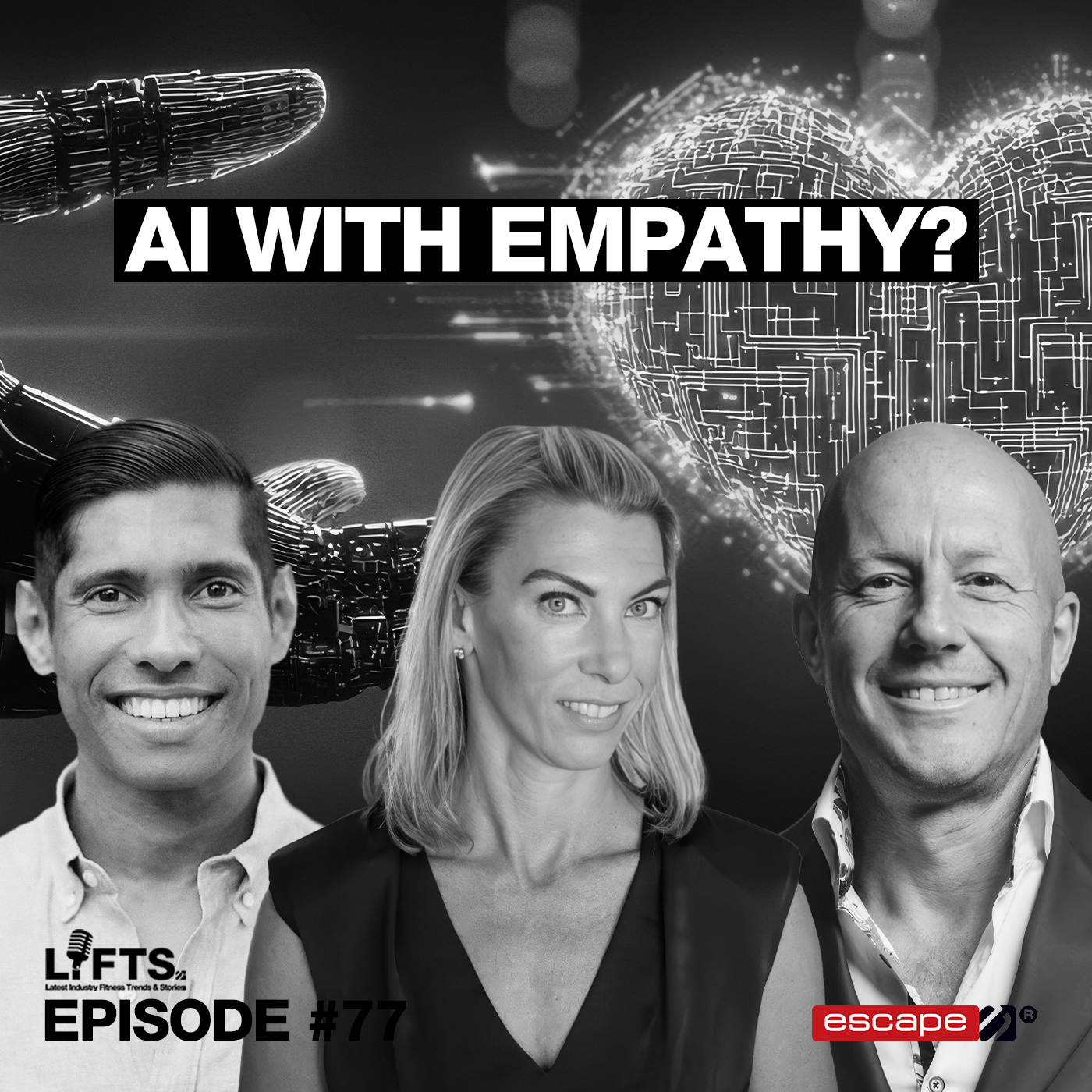
9:01But it's a really interesting concept that, you know, at the end, at the end of the day, it's really about all of our, our cells working in the best way that they possibly can. And how do you achieve that? I'll have to, I'll have to get that link and have a look at that one myself. Well, look, let's, let's move on to the first story today, which is, which is about Maxim, Human Centered AI Health Coach. And it says AI meets humanity. It seems as though this is some kind of the world's first human centred AI coach revolutionizing health performance. And the bit that seems to be playing on in the press releases is this AI coaching platform uniquely designed with human empathy.
9:44And doing a little bit of research on this, it seems as though that there's a bunch of marketing AI products that are also trying to incorporate this sort of empathy within the experience. And it's not something I'd heard anything about or seen anything about until I'd sort of read about this particular company, Maxiom. So I guess my first question to our sort of tech expert, Mo, is, you know, what is this AI human empathy and, you know, what do you know about this Maxium product? It's a new product. And actually, until Matthew, you sent it to me, I was not aware of it. So thank you again. You're always up on the AI kind of news before me, but I did have a chance to look into it.
10:30I don't know. Everyone uses the word revolutionary and I feel like it's back in the day disruption or being disruptive was a big word about 10 years ago. That was really popular. I AI is now what's popular too. But in terms of AI and empathy, and you've even seen this from ChatGPT, you could go ahead and prompt ChatGPT to say, I want this prompt to sound exciting. I want this prompt to have more empathy in it. So that's kind of what they're doing here. The bigger concern for me, and I did a post on this recently on LinkedIn around, how do we know what the AI is recommending to you, right? So in other words, OpenAI launched something called HealthBench a couple of weeks ago.
11:17And essentially what that is, is that it allows hospitals, pharmaceutical companies, companies in healthcare to take whatever AI model they're looking at and put it through HealthBench. And then HealthBench will then tell you, is the engine driving the AI coming back from research-back or evidence-backed sources? That's the key thing here. So right now we're seeing a lot of these AI companies come up with new tools, new integrations. But what is the underlying technology that's ultimately driving the recommendation? And from reading the press release and what I could find, there's not enough in there.
11:57I think we're going to see a lot of funding going to AI today. but ultimately and that's that is you know very normal in the innovation curve with an emerging and new industry so there's a lot of fraughtiness around it um but i'm typically on something like this going to take the wait and see approach deb i know you um after i chat the weekend you seem to kind of have an intimate relationship with your uh chat gbt so like what you know what are you what are your thoughts on kind of where this whole thing is going and um you know having almost like a personal empathetic wellness coach that's telling you what to do.
12:33That's a funny comment, Matthew. I do. I love that GPT. I think, you know, what it sounds like Mo is saying is that you have to question the messenger, right? The facts behind the messenger. And I agree with that, you know, from a personal standpoint as well, right? So if you have a trainer or, or chat GPT as your trainer, you still need to know the qualifications and what's being inputted and where this is all coming from. So I am trusting ChatGPT a bit, just as I would trust a professional until you tell me that I shouldn't trust ChatGPT. I'm trusting ChatGPT. And sometimes I ask it to try again because it's not working exactly right.
13:20But I do love the points about the empathy and the personalization. And I do think that if you're using any of these things, you need to have that tone sorted out and the personal elements added to the conversation. So I'm glad to see that AI is really, you know, taking that on in its business cases. One of the things I guess that kind of links into this in a slightly different way, but if you look at a lot of the popular apps that are out there, whether it's Uber, which my guess is using AI to sort of learn a lot about you and Uber Eats and that you know kind of links into the next story which is also Airbnb where I guess they sort of learn a little bit about your habits and make sort of recommendations and and so on a on a very big level we've got Airbnb which is also coming into this wellness space where they're talking about expanding into health fitness and wellness making health focused experience experiences accessible worldwide and it I suppose in the same way where you're getting some of these fitness apps that are making recommendations and there's obviously some underlying data that's allowing them to do that.
14:29I'm just curious to, again, probably start with Mo here, but curious to see how companies like Airbnb, potentially Uber, Amazon, et cetera, are sort of using a lot of the data that they've got from people. And do you think some of these brands that have already got a history of a lot of information are going to be able to maybe provide more effective recommendations to you because they've already got this sort of rich history of information that they can now sort of deploy AI by making other recommendations like this. So, you know, what are your thoughts on the move? And also from a technology perspective, does this, you know, have they got some unique position that other brands may not have in this particular space?
15:14Well, this is a smart move by Airbnb. be, look, consumers are spending a bigger share of their wallet on wellness, and they're going to look for these things. One of the more visited pages now with hotel sites that's recently speaking to an executive of Marriott is the wellness section, is the gym section to see what kind of services do you offer in the gym? Do you have a cold plan? So people are looking for these things. When it comes to technology, companies like Apple and Amazon are literally at the center of health and wellness and here's why apple obviously because of the apple watch apple health and all the integration stuff they're doing amazon knows so much about you let's look at my house for instance right my amazon account knows what we order we get two to three amazon probably more packages a day because my wife and kids will take the boxes before i can see them so we're getting packages coming all the time my irobot which is owned by amazon um knows the flow plan of my house literally right from vacuuming and mopping my floor.
16:14We shop at Whole Foods, which is owned by Amazon. And I'm always scanning my Amazon barcode so they know what I'm buying. We get our prescriptions and supplements from Amazon. So they've got such a complete picture. And by the way, with TV and Amazon Prime, they even know what you're watching. So they could now hyper personalize to you because they know you and give you relevant recommendations so that you click to buy. Airbnb is trying to do some of that now. They understand that wellness is top of mind. And a big reason today why people take a vacation in a very digital, high-stress world is to, what do you hear, right?
16:51Is to unplug, is to connect with nature. So it's not just to go to a hotel or the destination. A lot of times the wellness aspect of it is the destination for a lot of people. They're going to a destination to embrace wellness and they're seeking that out. So why not leverage that? And I think as hotels, and there's this good competitive battle happening between hotels and resorts and Airbnb. And so hotels and resorts really work to add premium amenities, better gym equipment, better spa facilities, better mattresses, darker rooms, soundproofing, and also food and cuisine. Now you're looking at Airbnb doesn't offer as much.
17:34It's not as compelling. So they're really offering something for the consumer because the hotels right now are looking like a better solution. I love talking to you guys on these things because so many interesting points come up. I think that, you know, really what's happening is it's just about creating more successful experiences for people. Airbnb is tapping into it. I agree. It's a great move. But they're offering these wellness experiences because they want people to have a successful trip. And they understand that more and more consumers are wellness oriented. and so they want to be successful.
18:05Mo, when you bring up how Amazon knows everything about what you're watching, what you're eating, what you're buying, what you're delivering, all of that type of stuff, it also makes me think just, we want a successful day. We want a successful trip. We want a successful voyage, what have you. And I think a lot about when I go to someplace new, my first day could be a little wonky because you're trying to figure out where do I get my coffee, where do I get my workout, where do I pick up my water? And so I think what's happening here is just, that is all becoming so much more streamlined so that you could have a great first day because you're going to show up in a town and know exactly what your like creatures of habit are.
18:45And so you don't have to have ever been there before, but it's going to feel like you have everything you need right at your fingertips. Yeah. It's also interesting that when it comes to these experiences, just to wrap off this story, there's another, um, uh, another article on, on the airbnb website where there's a lady called sarah ali khan who's a big bollywood actress curates and hosts an exclusive wellness and yoga retreat so this is um this this seems to be something where you can unwind with sarah ali khan a serene airbnb in goa where guests will enjoy a bespoke yoga session guided by the actress itself so i guess using technology um in this way you you could almost see how they can sort of move from some of these destinations where I understand in certain places, certainly in California, it's becoming quite difficult to have an Airbnb now because a lot of the restrictions, you can kind of almost see where they're almost like finding locations and then creating experiences for people to go, almost like a destination where I suppose there's a number of opportunities to sort of capture you outside of just staying at a place for an evening, which is an interesting development.
19:55So a company called SupraHuman. So this is an NFL athlete building, again, another somebody who's revolutionizing online training. NFL veteran, John Madsen and CEO of Nineveh Madsen, I think that's correct, have created SupraHuman. So it seems like this is a high-end digital fitness platform. And what he's proposing in this is total identity reconstruction. And I think this is a unique position because it's always going beyond a traditional fitness app. And it seems to like the wording itself, total identity reconstruction. So quite sort of curious in terms of where this is going. And I certainly, I guess the terminology that they use in particularly in the press release around about high performance humans, it seems as though now they're bringing in the fitness element clearly, but all the other aspects within their life.
21:00So again, probably start with you on this one, Deb, to see if you've heard anything about this superhuman and also your sort of thoughts on the direction that some of these, I guess, sort of fitness apps and coaching, particularly for this one, which seems to be positioned as very high ticket, are now going. So until you mentioned it, Matt, I was not familiar with superhuman, but I do love the space. I love the motivation behind and the inspiration behind and the education behind kind of the mindset, high performance culture. I think there's a lot of people out there that are kind of jumping on this.
21:44It's still pretty niche, which I think is why it's a high ticket item. I don't know that you could go out and be all things to all people on this, but it brings up even some of the talks at the biohacking conference. Damon John spoke also a very interesting stat, by the way, about how I think we have to fact check this, but I think it's seven of the other sharks are dyslexic. And some number, like 43 % of entrepreneurs are dyslexic. And so the rise of AI really helping people with dyslexia. So I could see how a brand like this, superhuman, and I'm not saying that this is what superhuman does, I don't know, but, you know, helps people kind of really go after what they're looking for, their high performance, their success in business, their overcoming adversity.
22:36You know, similar how Joe DeSena is doing it with all of the races. And I think, you know, when people are really motivated to go after it and also have the instructions and the tips and tricks and how to do it, you have a really great community that's very success oriented and driven. And so I'm seeing a lot of this in different spaces in the market. And personally, I'm extremely motivated by those brands. Well, I guess, Debra, because you're not a middle-aged man like I am. But Matthew, I assume that you've gotten these ads, right, from on Instagram or your socials. Have you not seen his ads?
23:08Clearly not. Okay. That's interesting because I'm getting - That's good targeting, though. Good targeting. It's really good targeting because I'm getting it like all the time. So I've seen his ads for, I think, a couple of years. And his whole spiel is you have to be making$150 ,000 a year to apply. The program costs anywhere from$10 ,000 to$30 ,000 a year. So it's not a cheap program. And I think really what they've done is paired you up with really trained, well-trained personal trainers and coaches. That's ultimately what the product is. And there is this air of exclusivity, right? saying, hey, if you aren't successful, then if you don't want to be a high performer, when you look at the ads, it kind of plays into that masculine drive of saying, I want to make a lot of money, but I feel out of shape.
23:59I'm going to take my shirt off and all those things. He plays that. He says, look, you're successful, but you don't feel confident. I think it's a good product, but really what it is, is there's nothing revolutionary about it other than he's taken very well-paid trainers. If you look at what a personal training package, a 10-pack of Equinox is a month, that's over$1 ,000 a month that you're going to be spending anyways. He's kind of made that digital and tried to make that more accessible. And I would also say made it more exclusive. But he's done a really good job of marketing and raising brand awareness.
24:35But outside of that, there's fundamentally nothing different that he's doing that you can't do anywhere else. It's exclusionary marketing. Like you say, the ads are very much like, you know, this is where you start. It's in, you know, in some ways, I guess it's, you could, from a marketing perspective, you could say he's making, you know, eliminating a big percentage of people that he doesn't want to get. So he gets the right type of people. I think I even watched a little bit of a podcast on it. But on the other side, I suppose in itself, it's a marketing ploy because it's like you've almost got to qualify to be good enough to join the club almost.
25:08Right. But in reality, for someone to offer to even think about a personal training, if you're making$40 ,000 a year, you're probably not going to be thinking about a personal trainer. Anyway, so he's speaking to the audience who would be thinking about spending that and making that type of investment regardless. But yeah, look, I'm glad that he's doing well. Yeah, I was just going to say, I mean, it's interesting. It's a brand's voice, right? Like that's the voice. To your point, it's all the same stuff. Fitness, it's all the same stuff too, right? It's just how do we attract the right brands, you know, population?
25:42Who are the people that are going to come to our call to action? And so it's interesting the way that they're delivering it. It makes me think of this guy that we've come across, I believe, John Sarasani, the 2000 % raise. I mean, it's a very provocative type of call to action. He's very provocative on Instagram and you either love it or you hate it. And so, you know, it just goes back to, yeah, I think this is high performance culture. there are people that want to shift their mindset they want to achieve more and then it's finding the right community whether it's superhuman or another one or equinox to your point you know that will help them get there i'm going to jump onto the next story uh this is the equipment gear section this this is a pretty interesting one um and and it's a budget supermarket which is called Audi.
26:27And they launched in the UK a Pilates bed, a Pilates reformer for£150. And if you read the story, people are apparently fighting over each other to get hold of this£150 Pilates reformer. Audi are this sort of budget chain. I think they're in Germany. They're definitely in the UK, maybe some other markets across Europe and I suppose it's it's it's now making something that was very exclusive and luxury accessible to to pretty much anywhere and as a result they've they've you know they've there's clearly a huge demand for people to get hold of this because they've literally been fighting and swearing at each other in the stores to get hold of these things so what are your thoughts on this um guys well i think well first off um all there's an all the a couple miles away from me so they will not have any yeah i don't have to have them in the i didn't know they're in america i was going to say that too i just looked it up matthew 109 lds in california yeah so so and here here's a quick side thing but you know all these is a german brand right so i knew that i knew that so all and so is so is trader joe's trader joe's is also a German brand.
27:44And weren't they actually owned by someone like that? That's right. So really, again, we're getting off topic here, but there's an Aldi's North and an Aldi's South in Germany. Aldi's South, when they wanted to come to the U.S., said, hey, we should go with different brands, became Trader Joe's. Aldi's North kept Aldi's name and became Aldi's. So you never know what you're going to learn on this podcast. No way. Yes, that's it. And you know Trader Joe's is my favorite brand. So if they sold a reformer, I'd probably buy it. but they would not sell this reformer. And listen, kudos to viral marketing.
28:18Clearly, it speaks to the popularity of Pilates. But I went on Reddit and tried to get some of the feedback of what people are thinking about. And it's not been great. These things are falling apart. It is based off of resistance fans, which I know is great for working out, but not on a reformer, which typically has a spring-based system on it. And it just looks really flimsy. Like, I don't know how comfortable I would feel being on that. What I'm hoping it doesn't do, it's almost like getting a cheap treadmill off Amazon for 200 bucks, and then you're getting injured running from it, and all of a sudden you don't get into running.
28:52So the thing I think to caution people on is, you know, if you want to try it, go for it. But if I were someone, I would say try to find a more affordable Pilates alternative, either at the gym or at a class or frankly, get a ball or some equipment, P-Ball, Deborah, a brand new and I have worked with, has Pilates-inspired movements. And there's a lot of other ways to get your Pilates fixed. I just don't think that this is, from a fitness perspective, the right approach towards a mass adaptation of a reformer. It's very interesting. I could see my mother being like, I was in Aldi's and they have a reformer and I could see how it could grow and kind of spread through a user group that to your point is not really in the fitness market.
29:41So it doesn't understand the other fitness offerings for Pilates reformer, but is shopping at Aldi's and is like, Oh, I heard Pilates is good because my friends or my neighbor or my whatever goes to Pilates class every day. I should try it. So I could see how it could tap into a market that we're not tapping into. And I think that's why Aldi's made this move, which is kind of cool at face value. But 100 % hear your point, Mo, that if consumers are getting on this piece of equipment and not enjoying it, not using it, not feeling good on it, and if it's breaking and all of that, then it just kind of gives Pilates and Pilates reformers the bad name.
30:13I can't imagine what the cost of goods is on that prior to shipping. Either it's a marketing ploy where they're just sort of washing it through just to get themselves in the press, which clearly they've done around the globe because of this. I think they did a similar one in Australia. But if it's a if it's that to generate a profit like that, that thing's got to be pretty basic. Well, I think we're up on time. And we, you know, takeaways really. Mo, what are your we've covered quite a bit, a little bit more than usual. What are your takeaways from this week? We did. I just think 2025 is going to be a year to remember for a lot of things.
30:55We've talked about some of that, they biohacking is becoming mainstream. It's no longer this like subculture. It's really becoming mainstream culture, at least in fitness and wellness. And I think, Debra, to the conferences like you went to, Dave Asprey is a household name and not because of Bulletproof Coffee, which is what he founded, but because of his biohacking things that he's doing now. So I'm excited to see what comes out of that and how a broader fitness community either embraces it or does not. My takeaways is I just love talking about this stuff with you guys. I think it's really inspiring.
31:27And yeah, going to the events is really inspiring as well, because you just see all of the people that are, you know, sucking it all up. So I look forward to seeing you all soon at whatever our next event is together. You know, and just watching what the industry is doing. I don't think we have to be consuming or, you know, being a part of every single thing that pops up. people need to pick and choose what makes sense for them for whatever reason they're looking for something whether it's weight loss or you know sleep like you mentioned Matthew or brain acuity and there's so many different things to choose from so you can't get lost in paradox of choice but follow brands that you trust that's my bottom line one of the things I guess I'm starting to it's not the first time we've spoken about this but I my my sort of circle of my connections within what I would call the space that we're all in is probably relatively small.
32:23And talking to you, Deborah, this Dave Asprey event, you know, totally new group of people that, as you said, you know, you met, you knew one or two people, but a whole, you know, thousands of people that you didn't, you know, were totally outside of the traditional area that we tend to sort of, you know, people we rub shoulders with. A number of the businesses that we've gone through today are all in this sort of health and wellness space. to gain business ideas and models that we don't traditionally see a lot of the events we typically go to in most cases. And I saw this Peter Diamantis thing that I'd been sending to Mo last week and they're calling this the next trillion dollar industry.
33:04And I think certainly as the industry continues to go through a lot of changes and you can call it disruption and And certain businesses are moving, you know, are definitely being disrupted. But there's all this new stuff that's out there. And I think it's just sort of curious to be able to piece some of these things together and to find out, you know, where the new crowd is hanging out that are talking about some of these things. Because clearly there's a lot of thought going into some of this stuff. And I suppose in some ways it really gives me a lot of optimism about the, you know, the area we're in, the impact it's having and how many people are, you know, looking to get involved.
33:50You know, even people like Audi or maybe even Trader Joe's. Yeah. And I just want to say one more thing. It's not completely accurate to say none of our community was there. I actually saw some great friends that I didn't anticipate seeing colleagues through the years, you know, maybe eight to ten or so. So I anticipate next year, I mean, we already talked about it, Matthew, we're going, we're doing our early bird right now. So, you know, this is these concentric circles, as you mentioned, they're all going to keep shifting and growing the pie and the innovation is going to keep seeping in. So that's how I stay motivated.
34:22And I know you guys are the exact same way just by seeing everything that's out there. Fantastic. Well, that's it. If you've enjoyed this episode, please do us a favor and share it with a couple of people so we can get it out there. If you've got any interesting stories or would even like to join us as a guest, then please contact us through the Lyfts page on LinkedIn. And thank you, Deborah, for joining this week, this week's episode. And thanks for listening. Always a pleasure. Bye, everybody. Thanks, everyone.
35:04Thank you.
Welcome to the latest episode of L.I.F.T.S – your bite-sized dose of the Latest Industry Fitness Trends and Stories.
This week, Matthew and Mohammed are joined by Debra Strougo (co-founder of Row House) to explore the cutting edge of wellness. From biohacking breakthroughs at the Dave Asprey conference to magnesium for sleep, AI coaches with empathy, and a viral $150 Pilates reformer from Aldi—this episode covers it all. Debra brings insights on stem cells, Airbnb's bold move into wellness, and how marketing voice defines success in high-ticket fitness.
A must-listen for anyone interested in the future of health and fitness.
This LIFTS episode covers:
Biohacking & Supplements – Insights from the Dave Asprey conference, including nitric oxide, magnesium, and stem cell supplements.
AI in Wellness – Exploring empathetic AI health coaches, personalization, and trust in tech like ChatGPT.
Wellness Tech & Data – How companies like Amazon, Apple, and Airbnb are leveraging user data to drive health and fitness experiences.
High-Ticket Fitness Programs – Discussion of Supra Human and the rise of identity-based, premium fitness coaching.
Mass-Market Fitness Trends – Aldi's viral Pilates reformer and what it says about wellness going mainstream.
👉 Learn more about Debra Strougo:
https://www.linkedin.com/in/debrastrougo/
Support fitness industry news by sponsoring future LIFTS episodes.
Contact us at wendy@escapefitness.com for advertising opportunities.
Subscribe on YouTube and turn on notifications so you never miss a new video:
https://www.youtube.com/user/EscapeFitness
🛒 Shop gym equipment: https://escapefitness.com/shop
📘 View our full catalog:
US – https://escapefitness.com/support/catalog
UK – https://escapefitness.com/support/catalogue
Follow Escape Fitness on social media:
Facebook: https://www.facebook.com/Escapefitness
Instagram: https://www.instagram.com/escapefitness
Twitter: https://www.twitter.com/escapefitness
LinkedIn: https://www.linkedin.com/company/escapefitness/
00:00 – Intro & Weekly Rundown
01:24 – Welcoming Debra Strougo
02:59 – Biohacking Conference Highlights
05:51 – Sleep Supplements & Magnesium
08:06 – Stem Cell Supplements
09:14 – AI Coaching with Empathy
12:14 – Trusting AI as a Wellness Coach
15:14 – Airbnb's Wellness Expansion
21:23 – Superhuman: Identity Transformation
27:18 – Aldi's Viral Pilates Reformer
30:50 – Final Takeaways & Reflections
Scan the code with your iPhone camera
Listen in the app.


