Ask ChatGPT
 Executive Decisions with Steve Sedgwick
27 Oct 2026 · 36m · 15 chapters
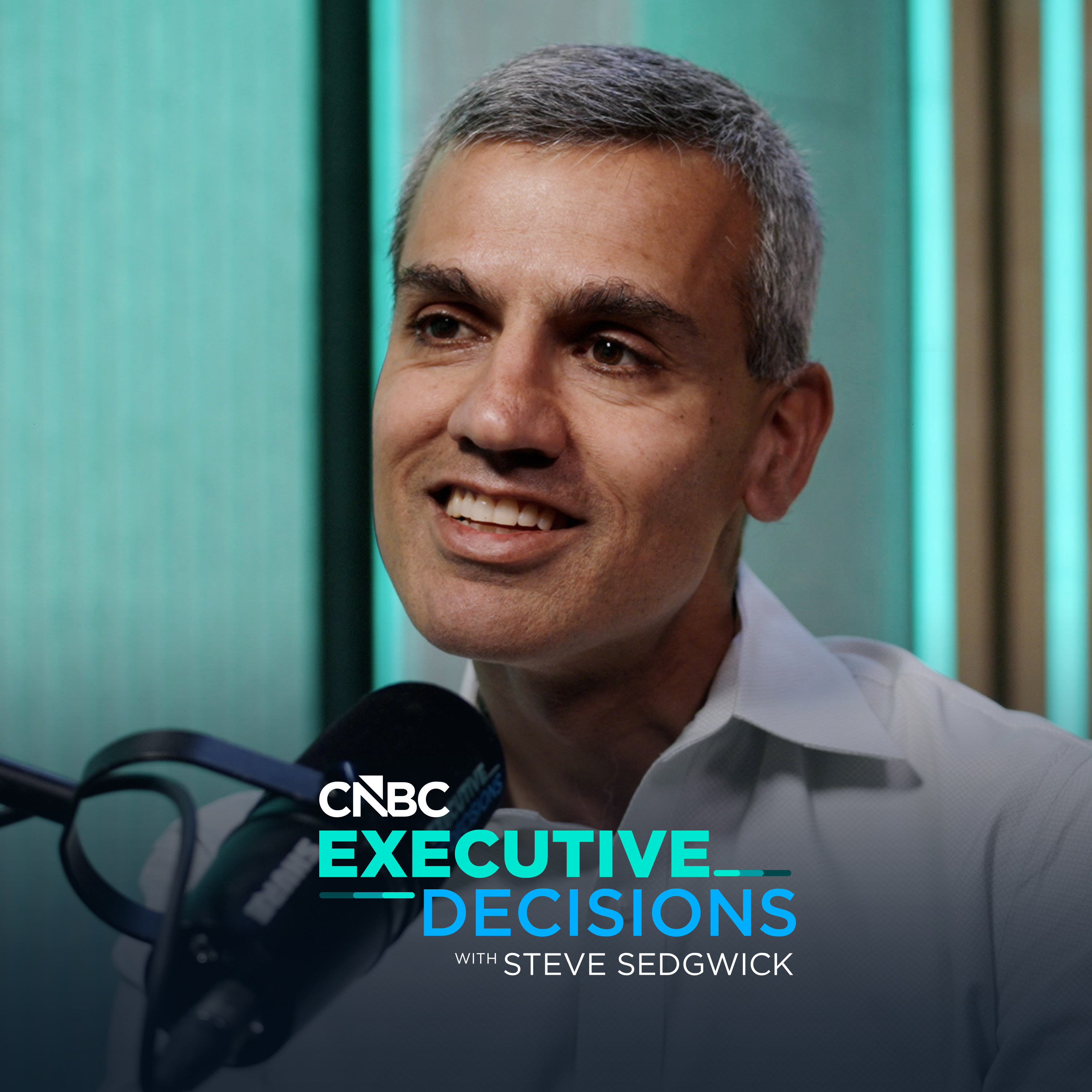
Kunal Kapoor, CEO of Morningstar, discusses choosing growth over stability early in his career, how his upbringing shaped his leadership, Morningstar’s evolution from managed-products research into broader investment data/services, and how he’s thinking about AI while keeping human judgment central.
Kunal Kapoor joined Morningstar in 1997 (small firm, ~200 people). He grew through roles during Morningstar’s rapid expansion and became CEO in 2017 after serving as president (2015). He previously studied in the U.S. and was drawn to investing through early fascination with numbers and markets.
He trusted his “gut” to join Morningstar despite a higher-paid banking offer; growth creates opportunity; culture values must adapt but values shouldn’t; he learned to be less hotheaded by “sleeping on it” and improving hiring methods; AI is an opportunity, but human relationships/judgment remain essential.
Boarding school at age five (St. Paul School, Darjeeling; later Cody International); contrarian investing lessons from India’s 1990s market downturn/Harshad Mehta era; Morningstar acquisitions including PitchBook, DBRS, and Sustainalytics; buying PitchBook as a turning point after “it’s about the data.”
Written by AI. May contain mistakes.
Kunal shares his childhood experiences that sparked his interest in numbers and investing.
“I think you're unique because you're the only CEO I've met who, to my mind, from my reading, knew the kind of job he wanted to do before he was a teenager, before she was a teenager.”
Kunal discusses key lessons from his early experiences in investing and horse racing.
“And in those days, you had to get the newspaper every day to open it up to see how things were pricing.”
Kunal reflects on his boarding school experience and its influence on his independence and personality.
“And I don't have what I'd say like massive numbers of interest, but the things that I really care about, I like to go deep in.”
Kunal discusses the challenges and benefits of navigating between Indian and American cultures.
“I was the youngest kid, the shortest kid, all of that.”
Kunal explains his decision to join Morningstar instead of pursuing a higher paying banking job.
“I learned in India and I'm proud of my roots and I try to keep them close as well.”
Kunal shares insights gained from Joe Mansueto, founder of Morningstar, on leadership and humility.
“But Morningstar is, certainly was the manifestation of Joe Mansueta himself.”
Explore how personal experiences shape leadership styles and decision-making processes.
“The example you set is super important, and he set an amazing example.”
Kunal Kapoor shares insights on the challenges and mistakes in hiring practices.
“And there's at least two people in this room.”
Learn about Kunal's journey from president to CEO and the experiences that shaped it.
“And I'm going to bring Joe back into this as well, because I know, I mean, you still speak to him on a regular, regular basis, don't you?”
Discover the challenges and strategies in adapting to an evolving investment market.
“One is sort of bring our energy and our go get after things on areas where we wanted to disrupt them, but also marry that with the reality that we wanted to be in places where investors were going to go to.”
Discuss the implications of technology and AI on business and the future of work.
“And you ended your question earlier by asking about today.”
The speakers discuss worries about the impact of technology on professional services and the future of employment.
“that I have the greatest concerns about.”
Kunal Kapoor reflects on his 29-year journey at Morningstar and the alignment of personal and company values.
“My colleague, our head of people, was telling me the other day that our team has developed some agents to mimic a few people to help that team see what kind of responses they're going to get.”
Kunal shares how he has evolved as a leader and person over three decades, focusing on listening and balance.
“In fact, the job I had 29 years ago doesn't exist anymore, speaking of technology change.”
Kunal discusses how he decompresses and his interests outside of work, including running and family time.
“And I think I've just gotten better at that degree of balance.”

Get the gist, explore an idea or ask about something said.
 Claude
On Executive Decisions with Steve Sedgwick, what are the key points of this episode?
Searching your listeningAutomatic transcript. May contain errors.
0:00A CNBC original podcast. Kunal Kapoor faced a choice early in his career. Take a better paid job in banking or join a little known investment research firm called Morningstar. I had another higher paid offer and everybody close to me thought I should take that job, including my parents. But Kapoor made a different decision. I just trusted my gut. He joined Morningstar in 1997, and nearly three decades later, he's still there, having risen to become CEO. That experience shaped his approach to career decisions. I do tell a lot of young people, you want to find a situation where there's growth, and I believe in growth innately.
0:43These are Kunal Kapoor's executive decisions.
0:50I think you're unique because you're the only CEO I've met who, to my mind, from my reading, knew the kind of job he wanted to do before he was a teenager, before she was a teenager. Am I right or wrong? Tell me a little bit about when you were very young and what was motivating you. Well, I mean, it may seem that way in retrospect, but I don't think it's quite as planned as you might suggest. I always liked numbers, and I had an early fascination with numbers. I was born in what was then Calcutta, and one of my early memories is my dad liked to go to the race course. And we'd be coming home sometimes after picking him up.
1:39I couldn't really go, obviously, because of age. but I was curious as to what the racing form had in it. And there's a street in Calcutta called Park Street. It's very famous. But in those days, at least, I don't know if it's the case anymore or not. They used to sell the racing form or racing book or whatever on that street. And I had no idea about anything other than the fact that it had all these numbers in it. And that sort of got me interested in horse racing. And I remember I told my dad once, like put a bet on this horse called Robin Hood. And I liked the name as much as the numbers. And my dad was like, sure, whatever.
2:20And that horse started to win actually. And so I was hooked because I was like, I maybe stumbled onto something. And you know, it was similar in the markets. I kind of started to get interested in investing and had this period where, because markets were going up, when I tell my dad something, And he'd go maybe do it, and it started to work. And so I was kind of intrigued by that. Now, we can talk about the fact that it also stopped working, and I've learned some good lessons in retrospect as to what happened. But I had this interest in numbers, and to this day, with just about anything, numbers kind of fascinate me.
3:04But even early at that stage, you were learning about markets, analysis, data, and some of the key markers of what makes a successful company and what makes an unsuccessful company. Yeah, yeah. And in those days, you had to get the newspaper every day to open it up to see how things were pricing. If you had to call a broker to make a trade, none of those things that we take for granted today existed at all, right? where you have now today the power of being able to whip out your phone and make a trade. And so it's amazing how rudimentary things were in that capacity. But even then, as an investor, you learn to be patient.
3:45You learned a few things about you just couldn't have access to everything immediately. But most of all, I just learned to have fun, and I was curious about it. And ultimately, I went to the U.S. when I was 18 to college. And ironically, that's when there was this sort of scandal in India involving this gentleman called Harshad Mehta. And the Indian markets in the 90s were terrible. And so everything that I thought I had done well turned out to be crap. And I think it was like a lost decade or some such period, even longer, and taught me a lot. And it's interesting, a lot of the investments and the things I've done later in life have stemmed from being contrarian as opposed to chasing things, partly because I think of early lessons and partly because of other influences who I picked up in life.
4:38I do think it's fascinating that as an 11, 12-year-old kid, you were analyzing numbers. I'm not nearly half the nerd that I'm sounding like right now. Not nerd, passionate, I would say. Yeah, of course. I love going deep in just about anything I'm interested in. And I don't have what I'd say like massive numbers of interest, but the things that I really care about, I like to go deep in. My understanding is you went to boarding school at five. Yeah. Now, my own story, I had an opportunity to go to boarding school at 13. I was not emotionally ready for that. I didn't go. I just couldn't have handled it.
5:17Yeah. What did it do for you? Because you've already mentioned your father a couple of times, and you clearly had a good relationship with him as well. In fact, he would take your stock advice as well or take your horse advice. I think he was just trying to get me off his back mostly. I'm not sure I believe that. I was pretty relentless and persistent, yeah. But, I mean, what did going to boarding school at such an early age do to you as a person? And what kind of skills did that give you later in life? Yeah. Well, my dad very much believed in independence. and in the time I was growing up in India, some of the best schools were boarding schools.
5:48And my dad worked for a company that at one point had been under British control and then was under Indian control, but his boss was a Britisher, Mr. Tai. And Mr. Tai said, send the boy to boarding school if you really want him to be independent. And at least the way I've heard the story, my mom was not keen and I was very close to my mom, probably more so than my father. And she was not keen, but they obviously sorted it out. And I went to St. Paul School in Darjeeling. And today, when people ask me, where's Darjeeling? I'm like, the tea, you know, if you're drinking the tea. In the US, it's maybe not as well known as it is here in Britain.
6:26But so I went off when I was five. And I don't have any siblings. So I was the only child. And so I think it was equally hard on my mom in particular. But what I will say is I learned not only to be independent, but my mother, even though I was in boarding school, showed up the most. And she also wrote letters to me all the time. And so I would get more letters than all the other kids. And interestingly, like this continued all the way to, I eventually changed schools. I stayed in boarding school, but I went to a boarding school called Cody International in the Southern part of India, which was sort of an American international school.
7:08and it was about the time my dad was retiring and interestingly when um that happened my mom said to him now you got to start writing the letters and so i have all through my life had these really interesting correspondences with my parents and i actually think about it today in the context of uh you know what has sort of happened where you don't do letter writing you kind of text when i'm talking to my kids it's like you know sometimes my daughter will write me a text and i'm like I'm not entirely sure I understand this text. But back to the topic of boarding school, A, it made me independent, but my parents also always ensured that I didn't feel far, even though I was.
7:51And so I felt like I had the right balance, although it was not easy in the first few years for me. I was the youngest kid, the shortest kid, all of that. And, you know, took my tumbles along the way. Really? Yeah, yeah. It was tough. Well, it was tough initially, but I can't imagine having done it any other way. And some of my friends to this day are kids I went to boarding school with. And, you know, I've sent my kids to boarding school now. So it clearly had a positive impression on me as well. That independence and that ability to feel loved by your parents, be loved by your parents, be close to your parents and be apart from your parents, did that make it easy for you to move to the States?
8:35after high school? I think relative to others, probably. And I wish I could say that it was very thoughtful on my part. Honestly, it was not. My dad had always been keen for me to go to the U.S. from an early age, largely because he thought the way I thought, the way I like to do things. I would be more in tune in an American environment relative to an Indian environment, which tends to be a lot more structured in the way thinking, you know, goes on. I read somewhere, or someone has given me the information that you felt you were between two worlds. Yeah. Why is that stuck with you? Yeah. I mean, to a certain degree, when you're immigrant, you're always thinking about the contrast of the world you used to be in and the world you're in.
9:23But I think I'm in a pretty good place in that context. I'm a very proud American. I can't imagine being any other way, but I'm still grounded in many of the things I learned in India and I'm proud of my roots and I try to keep them close as well. You're in the 1990s. You're in college. And again, I'm going to go back to this thematic about you and crunching numbers and your love of data. Am I right in thinking that you were reading Morningstar copy from the likes of John Reckenthaler. Yeah. I was interested in investing and I had gotten my first job in the US. I was what was called a resident assistant in the dorms.
10:06And so generating a little bit of money from that and I wanted to invest it. And I thought I would start investing in mutual funds. And I wanted to learn about mutual funds. And obviously Morningstar is the authority on managed products. And so the internet was in its infancy. Imagine that. And so I remember going to our library and used to go to these computer labs in those days at the bottom of the library. And I started to search for information on mutual funds. And I came upon Morningstar. And, you know, John Rackenthaler was one of the folks who, you know, was a commentator. And I loved his irreverent voice.
10:54You know, when you're all of 2021, even when you're into finance, you love irreverence no matter what. For sure. And many years later, when I became an analyst, one of my memories is I got my list of fund managers I was going to cover. And that irreference kind of bit me the wrong way because one of the first fund managers I covered, the previous analyst who had left Morningstar at that time, had written as his departing homage to this fund manager, this fund manager's eye for value needs a visit to the optometrist. And there I was all 23, 24 calling this person who was just hot and bothered. But, you know, like the point was still right there.
11:38And to this day, like, I think I love that. And I think there's a lot to be said for corporate cultures that, you know, are honest in that sort of way. So even before you were there, you thought this is the place for me or you didn't? I don't know. It's hard to say from the outside. So what other jobs were you looking at then? I was actually looking at some traditional banking jobs, and at the time I had to make the decision, I had another competing offer, which was a higher paid offer. And everybody close to me thought I should take that job, including my parents. No one had heard of Morningstar at that time for the most part.
12:16We were a small firm, I think 200-ish people, less than$30 million in revenue. and the other was a very seemingly stable kind of job. And I don't know, I just trusted my gut. I wish I could tell you that there was more to the decision other than I just kind of trusted my gut and liked the people and liked the culture and kind of went for it.
12:47I want to take a step back. But Morningstar is, certainly was the manifestation of Joe Mansueta himself. He started the company in 1984. He was the CEO up until 2017 as well. He's still got, I think, a 20 % stake in the company as well. And the company, certainly for the very early years, 84 onwards, was a manifestation of his own force, his own will, very strong character. Tell me a little bit about him and why he's so important to you. He's just a good human being. And maybe that sounds a little generic, but it's just the truth. Very few people who achieve the level of success that he has do so with humility and do so with sort of a calm, easygoing consistency about them.
13:38and you know I think like that's the important thing one important lesson I always learned from Joe is just to not be overly emotional about certain things and you know I was a bit of a hothead when I was younger I can still be I guess but I learned from him many things including just coming into a situation and especially when you're leading people feed off you The example you set is super important, and he set an amazing example. And so I learned many things from him. But first and foremost is that when you're a leader for an organization, it truly exemplifies who you are. And so you want to make sure that you set a very high bar in that context.
14:24Why did you say you were high? Give me an example of when you were a hothead and what you've learned from that and how you've learned to be a different kind of leader. Well, I think when you're a younger leader and you're on the rise, you tend to have some degree of overconfidence if you're rising quickly in an organization, which I was. And so I certainly went through phases where I would trust my instincts more than other people's instincts. And perhaps I didn't want to wait and hear the other opinion. And my mind was made up going into a meeting. You know those kinds of situations, Steve. You've seen them, right?
14:57I've been in those situations. Yeah. And so I still often find myself in places where my mind's made up. I've kind of decided what the answer is. But what's changed is I've learned to not start a meeting by saying this is where I stand because the meeting ends. I've learned also that sometimes it's okay to say I'm going to sleep on it because maybe my mind's not going to change, but sometimes it does. and I've also found that doing that calms me down and makes me a better thinker in the moment and you know emotion is a great thing because it sort of pumps you up and gets you going and so you should have emotion and passion about the things you're doing but it can occasionally lead to rashness and I still believe in speed and energy like those are really important to me balanced with knowing when to take a moment to weigh something, which is not something I was very good at earlier in my career.
16:02I feel the same. I've changed a lot. And there's at least two people in this room. In fact, there's two of them in this room with us who both know how I've kind of perhaps learned how to be calmer and more rational in my decision making and more collegiate as well. I'm still impatient though. Like if you'd seen me getting off that flight at Heathrow this morning, I was like charging. I was out ahead of everybody. I'm like, go, go, go. I got to get to the office. So like, you know, there are things like I have not traded my impatience altogether. I'm still going to push you. I want one example of when you were rash, you got it wrong, and you learned from that.
16:37I think in hiring decisions, when you're a smaller company becoming a larger company, you get to moments in time where you're like, I need a certain kind of skill set to get this company to the next level. And you convince yourself that you have to go out and get somebody and that their background immediately is going to be right. And I made some rash decisions because I thought we really needed certain kinds of talent in our company. And what happens when you bring in people who maybe have the right skill sets, but you kind to bring them in with sort of this hero mentality is the culture spits them out and they never adapt to the culture.
17:19And there's friction from the get-go. And I made plenty of mistakes when it came to hiring people from the outside early in my career. I was not good at it. And, you know, hiring is still very challenging, but I'm far more methodical about it. I'm much better at setting expectations. I get a lot of other people involved in senior hiring decisions. and I think we've had some success in that context. This is fascinating. You love the company you're at and we haven't even got to the bit where you'll see you yet but you love the company you're at because of its culture. You love the company you're at because of what Joe created and what you've adapted and brought on as well and yet in some of your decisions you were going against that culture trying to bring in these superstars who weren't necessarily part of the culture.
18:05Yeah, that's a learning curve. Well, it's a learning curve and also because we all think, the culture has to evolve. And that's a good instinct. And one of the things I've come to appreciate in time is your culture does need to adapt. Your values don't need to change. And I think I compromised in some cases on the values, and I don't do that anymore. There were always mistakes when I did. And I'm going to bring Joe back into this as well, because I know, I mean, you still speak to him on a regular, regular basis, don't you? Absolutely. How many times, a week, a month? We're usually texting frequently.
18:37Yeah. And we usually have lunch every other week. Okay. So when you've made those bad decisions, we'll say hiring decisions as well, and you've been a bit hotheaded or you preempted a meeting, Joe being such a mentor to you, such an important person to you, what has he said to you? Never second guesses, first of all. He gives ownership of the decisions to me or others. and it's funny sometimes when I've made a mistake and then I've kind of said it to him. He's like, yep. He's like, I've been waiting. Basically, he's been waiting for me to kind of come to that conclusion, but he's never, you know, stepped on my toes in that context unless he's had a very different opinion about something.
19:17You see, this is fascinating. So let's get into that transition as well because it was a big decision of Joe, 2015, to go to the ball and say, this is the guy. And I think the story as I've seen is the ball went back and said, okay, We think he could be the next CEO, but let's give him more experience at the top level. So let's make him president in 2015. And then 2017, you became the CEO. So tell me a little bit about what happened over that transition period. I don't want to, at least from my perspective, make it feel like it was that preordained. I would have been fine if Joe had kept running the business.
19:51And even when I became president, we never really talked about the fact that he was contemplating retirement. But he certainly gave me all the kind of responsibility to run the firm on a day-to-day basis. But in terms of your career, you say it wasn't apparent that you were the heir apparent, so to speak. But you joined in 1997. 20 years later, you became the CEO. I'm looking at the various roles you took on throughout that period, and I don't need to list them all. You did a lot of different things as well. It seems to me that you, and I think you've already said, you had a lot of successes, and it just seems a very linear, smooth progression.
20:33I'm sure it wasn't. Yeah, let me just start by saying when you join a small company that's growing rapidly, I do think that automatically if you're contributing, it's all hands on deck. And so careers do tend to move fast. And I do tell a lot of young people that you want to find a situation where there's growth. And I believe in growth innately. And to this day, that's like something I'm very focused on. And I think growth creates opportunity for everybody. And so it's true that my career grew, but it's against the backdrop of Morningstar growing massively during that period as well. In terms of mistakes, we talked about a couple of hiring the wrong people in certain spots was a mistake.
21:17Another mistake I would say is always sort of believing that you want to run the shiniest toy in the closet. And the analogy that I'll kind of use is that some of the most significant periods of growth for me came when I ran parts of the business that were ignored or not of interest to others or too small. because I had just more ability to do so without a ton of input. When you're running the shiny toy, and I ran a couple of shiny toys, the message is mostly don't change it. The shiny toys are shiny to begin with. Isn't it great to be the person who turns around? That's exactly right. And less a division.
21:58And I haven't met a CEO yet who doesn't relish rolling their sleeves up and getting in amongst the troubled bits of the company. And no one comes to you, as they say. No one comes to you when it's all going well. It's those divisions that are interesting. Yeah, they're certainly interesting. And especially when there's a growth opportunity coupled with, you know, taking something that's maybe a little bit ignored. It's a lot of fun to kind of get into it. And I found that the people in those parts of the business are also just generally, I think, the most creative because they're trying to execute on the opportunity as opposed to preserve the opportunity.
22:39What then do you bring to the table as a CEO that isn't just a continuation of what Joe does, but actually imprints on the company, Kunal Kapoor? With me coming into the role, the biggest change and the thing that I wanted to drive was this recognition that the investment landscape was changing and that investors would not only have access to public markets, they'd have access to private markets, that the VC ecosystem was growing. I also sort of had this belief that there were large parts of the investment market where Morningstar could still have a very positive outcome and so we had changed the playing field in managed products but if you look at credit ratings if you look at indexes so all places where we were hearing from clients that they didn't love the solutions that they had or that they were too expensive.
23:32And so I tried to do two things. One is sort of bring our energy and our go get after things on areas where we wanted to disrupt them, but also marry that with the reality that we wanted to be in places where investors were going to go to. And so we started to reposition the company in that context. What has been the biggest difficulty in that transformation? And one thing we haven't mentioned is during your career, during my career over the last 29 years, we have seen unbelievable oscillations in markets, huge downticks, enormous numbers of new record highs, amazing trends changing. What has been the biggest challenge during that period when you've been CEO?
24:14It's always the next big step up and how you bring everybody along for it. And when I say everybody, I'm talking about my colleagues. I'm talking about our customers. People are naturally skeptical or resistant to a certain degree to change, right? And probably the first big decision I made as CEO was purchasing PitchBook. And I remember at the time, it was met with a fair amount of skepticism because private markets were not really a mainstream agenda item at the time. And we spent more on that acquisition than we had on any other acquisition. So you already own 20 % of it. You spend another$185 million.
24:58Which in today's context of what private firms, private data firms are being bought for, seems like. Yeah. You know, not a whole lot. You bought that the same month, if I remember correctly, as Microsoft bought LinkedIn. Is that right? I don't know. I think it was very, and I didn't understand the LinkedIn deal at the time in terms of pure numbers. Yeah. And then someone just whispered in my ear, it's about the data. Yeah, yeah. And then suddenly my world opened up. Yeah, yeah. That changed everything, didn't it? And we started looking at data as a commodity. That's right. And so we moved into private markets.
25:28We made that acquisition. Then we bought DBRS to grow our credit ratings footprint. We bought Sustainalytics on the ESG side. So we started to change the complexion of the company away from what many people perceived as being more niche to being more broad and serving investors. but in every step of the way you have to bring people along. And you ended your question earlier by asking about today. And today is the biggest challenge because technology is changing so quickly. I think broadly people want to use it. People are excited about experimenting with it, but they're also daunted by what it means for them, whether their roles are going to matter or not.
26:17And so in all these steps, you know, one of the things as a leader you learn is you have to help people overcome that inertia. And it's very, very hard. But the one thing I've tried to do in all those instances is lead with conviction and example. And, you know, it's no different today.
26:43What does AI mean going forward to you and Morningstar? It's an amazing opportunity. I'm having as much fun as I've probably had in my time as CEO, just because of the level of change that's involved and the intellectual stimulation. Stimulation or challenge? Well, you're stimulated by challenges that all of it kind of brings. And so, you know, for us, it's remaking everything that we're doing and leading to rethinking. And I would say we don't have all the answers, nor should we. I don't think anybody has all the answers. But what I know we need to be doing right now is just a lot of experimentation, whether that starts with how we collect data how we do research what products we're building how we internally uh you know reach each other and the kind of tools we have for folks internally to interact with each other all of it is you know changing in some capacity or the other what's not changing is still sort of the human judgment human relationships aspect of it and so you have to think about well that's fascinating because it's the human side of it that I have the greatest concerns about.
28:02The technology is phenomenal and fast moving. I speak to owners of companies now who do analysis, who don't hire analysts. And that worries me about professional services. And in answer to a point you made earlier about taking people with you on this journey as well, there must be a lot of people at Morningstar who look at what's going on, who look at the speed of which the technology is growing, who wonder whether they are going to be part of the journey. Well, it's true. It's a very true statement. I think it's true at Morningstar and it's true outside Morningstar, right? If you look at what the surveys say, there's a lot of fear these days about it.
28:40You hear people who are doomsday sayers kind of definitely double down on that message. You also have optimists who say it'll lead to productivity and new jobs. And look, the truth is, I don't know the answer. But what I do know is there have been many pivotal shifts in technology over time, and they've left humanity better off. They've left business better off. And they've left, I think, the world generally in a better place. and so I don't know the exact answers but when I look at it in the context of Morningstar I look at it in the context of the world I want to be in I find it exciting and I'd rather throw myself into it versus you know spend a lot of time on something that I don't control which is this sort of debate about yeah good or bad I've got a few minutes left so I just want to ask you a couple of questions me or my agent that you know I'll send your agent as well I don't know it's when they start taking the place of anchors.
29:43That's what I'm worried about as well. My colleague, our head of people, was telling me the other day that our team has developed some agents to mimic a few people to help that team see what kind of responses they're going to get. And they've developed an agent to mimic me. And so far, I'm the most unpredictable relative to what the agent is saying. As long as you're not the most hot-headed anymore. No, no, no. Unpredictable. So I was kind of happy that the agent has not figured me out just yet. As long as your avatar is pretty flattering. That's the main thing as well. I fear that mine wouldn't be.
30:14Look, I'll let listeners and viewers into a secret. Today, at the day you're filming, you've been at your company 29 years. And I've already tried to build this narrative that this was your destined job. But it has certainly been the job that you've loved for 29 years and you've had this great progression as well. Why? Why are you the only interviewee I've had in 25, 30 interviews on executive decisions? Why are you the only one who started off the company and stayed there for three decades? I don't know, but I'll tell you why I think it happened in my case, which is that one, I'm motivated by growth.
30:49And I believe growth creates opportunity, as I said earlier. And I have ridden the coattails of the growth that Morningstar has had over time. So that's one thing. Two, total alignment between the values of the company and my personal values. Like I am motivated to be there. I'm motivated to see this thing grow because I know it's having the right kinds of impacts on our people and our customers. And those are good things. And so, you know, we're all faced with choices. And look, I mean, it's no secret. I've certainly had opportunities and stuff, but I never consider them because I love what I'm doing.
31:24I think it can have so much more impact. And I think the job I had 29 years ago is not the job I have today, clearly. In fact, the job I had 29 years ago doesn't exist anymore, speaking of technology change. But importantly, the job I had as CEO three years ago doesn't exist anymore. It's a different firm. And I think that's what I love about Morningstar and about growth. And it's what I say to folks always is get involved in growth. But that's very clear then that you as a person have evolved. You as a leader have evolved as well because you embrace challenge, you embrace growth, you embrace what the future can bring.
32:05What have you learned as a person in your three decades leading? You've told me what you've learned as a leader and how to certain skills you've picked up and other traits you've left behind. How have you changed as a person? Well, probably a few things. One, I'm a much better listener than I was, and I think that's important. Two, I have a greater appreciation for how different teams can be formed. And I'm very methodical when I look at my leadership team as to what the components of that team are. In fact, I'm always looking for different kinds of skill sets and personalities because I think you want that around the table.
32:55You don't want just a bunch of straight lines. You want some squiggly lines, some straight lines, and it leads to, you know, a better outcome. And three, I think I have found the spot where I feel great about my professional and personal life. and someone smarter than me said that when you think of work-life balance, it's not a question of hours. It's a question of the fact that when your work life is going well, your family life is going well. And when your family life is going well, your work life is going well. And that's because I bring both my family life to work and my work life to my family.
33:34And I think I've just gotten better at that degree of balance. It's not always the case. My wife was accusing me the other the day of always being on my phone. And on the off chance she's listening, you're also always on your phone, Monica. I can say it here. And so, you know, I'll say it's all those things. And I've just become comfortable in my own skin. So my final, final question to you is, and I think you've given us a hint of that with your mention of your family. How do you decompress? How do I decompress? Well, I am an outdoors person. I love being outside. And in Chicago, it turns out it gets pretty cold.
34:14And so you can't always be outside, but I find a way to be. And so among the things that I like to do to decompress is I'm a runner, so I love running early every morning. And I will run even when it's below freezing, as long as there's no ice outside. I love going for walks with my family, with two dogs. And so at least my wife and I try to get out. As the kids have gotten older, it's a bigger debate as to whether they'll step out or not. and, you know, I love to read. I love to invest. And I also, you know, I don't do it very much, but I love cooking when I get the occasional opportunity. I love getting on my bike.
35:01So, you know, I'm just kind of a normal human being. I love movies. I fancy myself a movie critic, although I haven't really seen a lot of movies off late. But, you know, those kinds of things, pretty normal. Sounds great. Kanael, it's been a real honor and a privilege. It's been fun. I've loved every minute of it. Kanael Kapoor, thank you very much indeed for joining me on Executive Decisions. Thanks for having me, Steve. Thank you for joining me on Executive Decisions. I hope you enjoyed the episode. Before you go, click on that follow or subscribe button. And I'd love to hear from you. So please leave a comment or a review.
35:35I'll read them all. On the next episode, I'll be speaking to the former CEO of BP, Lord John Brown. I never pretended that we could do everything but we could begin a journey to change what we were doing for the better I'm looking forward to it, we'll see you then
Kunal Kapoor faced a choice early in his career: accept a higher-paid job in banking or join a little-known investment research firm called Morningstar.
Despite encouragement from those closest to him to take the more secure option, Kapoor trusted his instincts and chose Morningstar. Nearly three decades later, he's still there — having risen through the ranks to become CEO.
In the latest episode of Executive Decisions, Kapoor tells CNBC's Steve Sedgwick why he believes it's important to find opportunities for personal growth, how his approach to leadership has evolved and what he learned from hiring mistakes earlier in his career.
He also discusses Morningstar's expansion into private markets, the challenges of leading through technological change and why AI is forcing businesses to rethink how they operate.
See Privacy Policy at https://art19.com/privacy and California Privacy Notice at https://art19.com/privacy#do-not-sell-my-info.