Ask ChatGPT

 Extraordinary Life Stories
12 Nov 2026 · 36m · 14 chapters
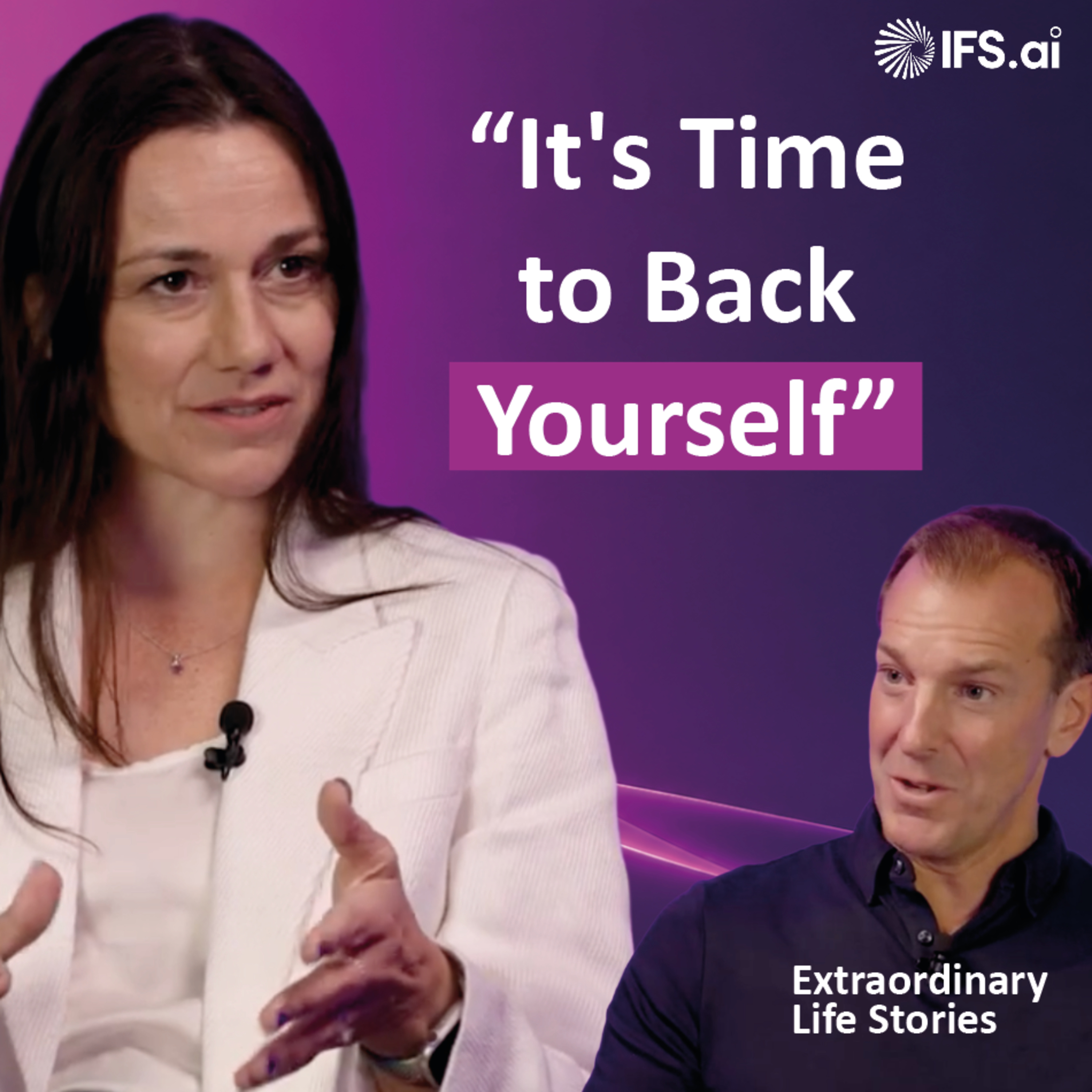
Janine Chamberlin discusses “backing yourself” through energy optimization, leadership, confidence-building, and a career transition from LinkedIn to independent leadership development. She reflects on 18 years of growth at LinkedIn (startup to IPO to Microsoft acquisition), how leaders inspire shared objectives by listening and bringing people along, and how AI changes work—requiring human skills like relationship-building, creativity, and judgment. She also argues social media’s future depends on trust and authentic, identifiable expertise.
Janine Chamberlin (main guest). She is a Dutch woman based in the UK, a mom of a 3-year-old and a 16-year-old, and is leaving LinkedIn after 18 years. She joined when LinkedIn had ~350 employees and ~20M members; she exits as VP in Talent Solutions, overseeing global sales and previously serving as UK country manager.
Confidence is a trainable skill; “tall poppy syndrome” can limit self-belief; there’s no algorithm formula—be human; AI should free time for human work; success equals happiness/contentment across work and home.
LinkedIn algorithm questions; her shift from marketing/online advertising to European leadership to global sales; using karaoke/concerts to recharge; the “AI bunny trampoline” example to illustrate trust in content.
Written by AI. May contain mistakes.
Discover Janine Chamberlin's journey, including her 18 years at LinkedIn.
“But when I think about my life, probably made a lot more progress than I ever thought was possible for myself.”
Explore Janine's reflections on leadership and growth at LinkedIn.
“squeezed in a master's degree at INSEAD in between my 18 years of doing different things for the company.”
Understand the importance of constant learning in a growing organization.
“But I almost don't know what the question is to ask you, but it's almost like, what are the learnings from that?”
Learn how to leverage opportunities that come with organizational growth.
“And I think the key thing when you're in an environment like that is that there's so much opportunity, right?”
Janine shares her career evolution and the roles she’s taken at LinkedIn.
“You started in that almost administrative role, but to sitting here right now, just talk me through that.”
Discuss the role of empathy in leadership amid rapid technological changes.
“But I think a leader is somebody who brings other people along to move into a direction that you set as a leader.”
Learn how organizations can adapt to AI by focusing on human skills alongside technology.
“organizations aren't getting the results that they need by just throwing all the technology out there and seeing what sticks, but actually we need to kind of start from that point of where do we actually want to get to?”
Discover Janine's journey of building confidence and the impact of cultural beliefs on self-worth.
“And I think by overcoming that, I'm a better version of myself.”
Discover how personal energy management can enhance parenting and daily life.
Explore the impact of children on morning routines and personal time.
“I can relate to that in my own way, where you do what other people expect, do what other people say works.”
Learn about the complexities of LinkedIn's algorithm and engagement strategies.
“and from such an incredible amount of growth.”
Discuss the evolving landscape of social media and the importance of trust.
“Like essentially the whole conversation that we had today is in that same vein.”
Examine the importance of trust in content creation amid AI advancements.
“Yeah, I think the trust is going to be really important because otherwise, you know, I'll give you a weird example.”
Discuss how to define success on your own terms, intertwining happiness and career.
“Sitting here now, how do you define success?”

Get the gist, explore an idea or ask about something said.
 Claude
On Extraordinary Life Stories, what are the key points of this episode?
Searching your listeningAutomatic transcript. May contain errors.
0:00How do you optimize your energy? Where do I get energy and what drains my energy? And how do I make sure that I have a balance in my life? There's always things that we need to do in life that are draining. But there are also things that we know give energy. Tell me, who is Janine Chamberlin? a work in progress. But when I think about my life, probably made a lot more progress than I ever thought was possible for myself. I'm closing out my chapter of 18 years at LinkedIn. I joined when we had about 350 employees. Today, we have 18 ,000 employees and 1.4 billion members. I'd love to ask you what you think truly defines a great leader.
0:40We used to have a sort of assessment framework at LinkedIn that talked about leadership as inspiring others to achieve a shared objective. And I think that's actually a really great way of describing what a leader does. Human skills, human capacity, human capability is so critical in this world that is changing and kind of being influenced by AI. And it's something that I've always been really fascinated about. I'm imagining people watching and listening things and you've got someone that knows LinkedIn so well, 18 years. what's the one question that you get asked over the time of Hamilton? How does the algorithm work?
1:27Thank you for having me. My pleasure. Looking forward to this. Tell me, who is Janine Chamberlain? Who is Janine? I think first and foremost, a work in progress. But when I think about my life, probably made a lot more progress than I ever thought was possible for myself. Professionally, I'm closing out my chapter of 18 years at LinkedIn, which has been a fabulous ride. squeezed in a master's degree at INSEAD in between my 18 years of doing different things for the company. So right now I'm kind of testing my identity. I literally announced today that I will be leaving the company. Whereas personally, I am a Dutch woman who left home about 20 years ago to come to the UK for a job and actually ended up with so much more.
2:26A very full, full life here. I'm a mom of a three-year-old and a 16-year-old. So there's a big age gap there, which keeps me on my toes for sure. My husband and I both love to travel. I'm really curious about different cultures and I love seeing the world. So we spend a lot of time doing that. And yeah, there's probably probably more to it, but in a nutshell, that's me. We'll open that up now, but what a day to film with you. Yeah, isn't it? Because that's 18 years, it's a long time. It's, I mean, in a tech company, in a company like LinkedIn, where some people question, has it even been around for 18 years?
3:04It's a very long time to be in the, in the same place. Yeah, and you've alluded to how you've grown, and we'll open that up, but also LinkedIn has grown in 18 years. How big was it when you got involved. Yeah. So I joined when we had about 350 employees. I joined the very first international office. So the UK is where we started expanding internationally. I was lucky number 13, I often say. From a membership perspective, because that's how we call people who use LinkedIn, there was probably about 20 million members. Today, we have 18 ,000 employees and 1.4 billion members. And just in the UK, we're a team of about 450 people.
3:44So yeah, it's been enormous. I could have never guessed or dreamed that it would have become the platform that it is today. Wow, that's huge numbers, isn't it? And massive acceleration and growth, which of course you've synonymously grown with, grown with the company, grown as a leader, and we'll come to that. But I almost don't know what the question is to ask you, but it's almost like, what are the learnings from that? What are the takeaways? that's sitting here now with probably for the first time a bit of perspective and reflection so i think the first thing is that when i was making my decision to join linkedin i remember very clearly my parents sort of who actually have always refrained from giving me advice but in this case somehow they had advice and they were like why would you leave the established world and go to this complete unknown startup.
4:34And so the first thing that I've really learned is that you can take risks and, you know, they will not always pay off. But if you get a good feeling about something, it isn't a terrible idea to just follow your heart and go into that. But when I think about the sort of 18 years, so I went to LinkedIn or I started at LinkedIn when it was a startup, then it grew. We IPO'd, so we went public. That's a huge transition for an organization and also comes with a huge expectation of growth. And so, you know, I was on my own. Then I had a team of seven. Then I had a team of 30, literally in the space of one year.
5:16And with that, you have to learn very quickly how you go from somebody who is delivering to somebody who is leading others to deliver to somebody who is leading others who are leading others to deliver. And so I had to learn, I had to mature very quickly, I think, as I was at LinkedIn. But I think, you know, regardless of the circumstances in the organization, whether it was from, you know, startup to IPO, whether it was the acquisition by Microsoft and another few years later, I think the key to, I don't know, continuous growth and success is as a leader or as any individual is just you have to constantly learn and adapt to that next phase.
5:57um when you when you do that in a company like this you can't really anticipate what's coming because i've never experienced it before um so i i i have really used like external networks to continue to bring in information so that i could you know um adjust on the fly as as we had to yeah we really had to push hard to make sure that the the system didn't break under the pressure of that growth that was really enjoyable though like thriving from progress forcing growth yeah the growth of the business was was probably so unprecedented and so perhaps almost unexpected that then you've got to keep up as the human being yeah yeah i was i was talking about this um actually just this morning i was talking to a founder of a very small organization um and they were sort of talking about their team and and kind of bringing their team along on this journey of growth.
6:51And I think the key thing when you're in an environment like that is that there's so much opportunity, right? Whether it's just to learn something new, to expand your range, your skill set, you really have to, you know, you have to run hard to keep up with that. But that's really exciting. And I think if you are part of an organization that isn't maybe growing as fast, those kind of opportunities to do something different, to do something new, they're obviously few and far between so I think that's been the most enjoyable is this the variety of things that I that I've been able to do when I started I was like the administrator of most of our software systems which is crazy when you think about that now I could literally influence you know all those different things but that's not a way to continue to grow but you learn so much about the fundamentals of a business when you're in the starting point like that yeah I was just thinking that the the knowledge you've got and the knowledge of actuals alongside the human leadership, you know, values, if you like, which I'd love to come to.
7:56But from being employee 13, if you like, to so long ago, just talk me through the roles. You started in that almost administrative role, but to sitting here right now, just talk me through that. Yeah. So LinkedIn, you know, for those who do not know, LinkedIn has a couple of different parts to the business. So there's an advertising business, there's a recruitment solutions business or a talent solutions business. And then there's a sales solutions part of the business. And my first 10 years at the company, I was always in marketing, online advertising. Started off very operationally, delivering advertising with a team, then grew that into account management, client solutions.
8:42and getting closer to the customer as I went along. So I was always in the background and then I learned that I also enjoy being a little bit closer to the external world and particularly the customer. And then after the first 10 years, and by that point, I was leading a team across Europe, which was very fun. I went to lots of different countries with LinkedIn. I then transitioned into a sales leadership role initially just in the UK but then that became a good sort of starting point for me to expand that globally so I'm exiting LinkedIn as a VP within our talent solutions business I oversee a global sales team working with our largest customers and and up until today I was LinkedIn's country manager for the UK so it was like a sort of dual role two heads UKG is the workforce operating platform with unified HR, payroll and workforce management built to solve the unique challenges of frontline work.
9:41Powered by People First AI and decades of labor data, UKG turns workforce intelligence into real-time decisions around staffing, pay, compliance and productivity, enabling every worker to confidently take action as work happens. Because when work works, everything works. Learn more at ukg.com slash work. UKG, HR, pay and workforce management. Buy stocks to sell. You might be missing the opportunity. You're not repositioning. Now it might be. My next is now is the time to go all in. Real traders still hear the noise. They just know when to stop listening to it. Find and research opportunities to fit your strategy with thinkorswim trading platforms from Schwab.
10:19Discover features like robust charting, nearly unlimited customization, and built-in risk management technology. Plus, get 24-7 support from real trading specialists. That's Schwab Trading. Learn more at schwab.com slash trading. it's a lot of responsibility there and there's a lot that would be covered under leadership yeah and I imagine from from coming into a company that albeit it was a startup there was a certain amount of leadership mentoring that you had to then almost flip the narrative where you have been that person yeah I'd love to ask you what you think truly defines a great leader so I'm not one sort of to talk about um you know here's my three bullets on leadership or here's the framework that I apply.
11:02But I think a leader is somebody who brings other people along to move into a direction that you set as a leader. In fact, we used to have a sort of assessment framework at LinkedIn that talked about leadership is inspiring others to achieve a shared objective. And I think that's actually a really great way of describing what a leader does. And so for me, that is really listening to the people around you. I think the minute you stop listening to people, you don't actually see what is happening. You start to make the wrong decision. So listening to people around you, understanding what makes them tick.
11:48How do you bring them in? How do you make it exciting? The sort of startup example of there's lots of opportunity. That's a really great environment to be in. But if you only ever then set out this vision of like, we need to grow and we need to deliver, that's not as inspiring. But if you can tell people like, when we do this, these are the opportunities that are created for others. So listen, set out really that clear direction and making sure that you bring people with you. I think, you know, especially the world that we are in right now, which is incredibly disruptive, right? AI is coming in.
12:24it is changing the way that we do our work and it's really unclear for people how is how it's going to impact their their jobs how it's going to impact their lives and so as much as possible like bringing that empathy but also clarity to what you're doing i think is really important as a leader to make sure that you don't lose engagement from your teams you need to all continue to be rowing in the same direction really powerful message that janine i think bringing a human part to the fact that we are in a huge advancement of tech and AI right now, but to humanize the fact that that message is probably really important for a lot of people.
13:03I'd love to just open the AI piece up. In the last couple of years, particularly, you would have seen so much change and implementation, if you like, within LinkedIn itself. Can you talk me through that and how it's being used? Yeah, I think, and not even just within LinkedIn, although LinkedIn made a very clear decision that AI is critical to the success of our business, both in what we offer to customers, but also how we operate internally. And I think what you're seeing, and I see this with a lot of the other companies that I work with as well. Three years ago, it was all about, it was kind of new and we started, you know, experimenting.
13:44I think we went from sort of experimenting within some parts of some businesses to widespread experimentation and kind of hoping that we just throw all the technology at everyone and we'll see what sticks. And I think over the last year, you're starting to see that many organizations aren't getting the results that they need by just throwing all the technology out there and seeing what sticks, but actually we need to kind of start from that point of where do we actually want to get to? How do we want to change as an organization as a result of AI coming into the way that we work or AI coming into what we offer other organizations?
14:24And then work backwards. How do we then adjust the workflows, the processes, and how does it impact the skills that our people need. And I think the skills piece is super interesting. What I'm seeing in organizations, lots of companies are hiring people with AI skills, absolutely. But alongside that, it's all about the human skills. Because the time that you free up with AI, you can reinvest that in things that AI cannot do, right? It's the relationship building, it's having a conversation like this, or putting out great sort of human content. Yes. It's creativity, it's judgment. and so all of those things are becoming increasingly important i love whenever i can bringing in perhaps how i got connected to put on from your word so steve tappan yeah he's a mutual friend he said that we would get on and we'd have a great conversation which we clearly are and i think that's a great sort of segue into the point where you're keeping that human connection yeah clearly to be in any way knowing steve and working with him you're looking to be the best version of yourself you're looking to have that whole growth as a human being i'd love to open up that almost like the awareness that you've got the self-awareness and how why you went looking to be the best version of Janine.
15:38Yeah um I think sort of deep down if I if I really look back it stems from like a serious lack of confidence when I was younger and I still I think confidence is not something I thought it was innate when I was younger so when I grow older I'll be more confident when I'm 18 I'll be more confident when I'm when I've got a steady relationship I'll be more confident and all of those things they don't actually happen because confidence as I see it now it's a skill and it's something that you need to train and it's something that you need to work on and so I think that's where that idea of like how can I be my best self kind of started and so I've had some fantastic coaches in my life who have really helped me to find confidence within myself and it ebbs and it flows right sometimes um it's uh it's more difficult to find than other times but that's really where that comes from and I've done actually quite a lot of work to figure out like what are all those influences from from my childhood and parents and and other figures of authority which are going to help us you know develop beliefs that are not always as empowering they can be very limiting and so I grew up in the Netherlands and in the Netherlands we have something that you would call my felt culture which in English best translates as tall poppy syndrome many years ago I worked with a psychoanalyst who said to me like oh you're like you've got tall tulip syndrome it's tall tall poppy but then the Dutch version of and it's really this idea of everybody needs to be sort of even and equal.
17:23Don't stand out. Don't get ahead from the rest. Don't be the person who knows all the answers. That's not very popular in Dutch culture. And so when I moved to the UK and then started working for an American organization where, you know, it is important to talk about your achievements because you want to share that with others but also it's much more common and normal to to operate that way I really had to learn that and to learn that I had to get over that idea of keeping myself small and getting over the the idea that you know what I contributed wasn't as valuable as others that's that confidence piece and and so for me a lot of it stems back to yeah sort of limited confidence if you will and And I think by overcoming that, I'm a better version of myself.
18:11So glad you said that because one of the things that I actually almost set out to do almost subconsciously with these conversations when I started Extraordinary Stories was to in any way provide conversations that my two daughters, who are now 15 and 17, could perhaps benefit from. Just thinking about that as a legacy plan. They're not going to listen to it now, but they will do one day. But one of the things that in my sort of parallel existence, particularly in the investment and business world, is that less than 2 % of VC funding goes to female founders. And I always thought that was because the system's archaic and chauvinistic and male-dominated.
18:50But I started to realise it was a lack of confidence in women to back themselves as entrepreneurs. And it was because of the lack of role models. It's because you can't be what you can't see. So I just think that's such a really interesting part of the conversation where you are sitting here as a role model and you have worked on yourself to overcome the obstacles that are in your head. They're self-beliefs, aren't they? They're limiting beliefs. Yeah, very. And so, like, first of all, I think that it isn't just women who struggle with confidence, for sure. But I do think, and there's plenty of research around this, that women hold back more on average than men would do because they believe that, you know, you need to be a 10 out of 10 before you can put yourself forward instead of a 6 out of 10.
19:42And then you learn the rest as you go. So and actually that level of awareness for me has been really helpful because you also need to understand how the world around you navigates different situations so that you can then also learn to maybe put yourself out there a little bit more, push yourself out of your comfort zone. And then and then you see that actually it's not that scary when you're out of your comfort zone. It's good. It helps you grow. So on that, not being scary to get out of your comfort zone, taking risks, which you said was a risk to join LinkedIn 18 years ago. According to my parents' goals.
20:16In your mum's there. But actually, that was with a paid role. That was employed. Now, sitting here, I feel like you're the best version of Janine that's ever been. And you're ready to take the entrepreneurial leap. So you say goodbye to the 18 years of safety, corporate, proving yourself. So, I want to understand the journey you've gone on in relatively recent times to back yourself and be able to say, I'm not going to take the paycheck anymore. I'm going to back to you. Yeah, I'm going to try my own way. Yeah. So, it's something that I've been working towards for a long time, to be fair. So, in terms of taking risks, I don't take them lightly.
20:57but um as as we were talking about like human skills human capacity human capability is so critical um in this world that is changing and kind of being influenced by ai and it's something that i've always been really fascinated about and when i think back of you know not just the last 18 years but let's say the sort of 25 years that i've been in the world of work probably the thing that I have been able to do best or the thing that I am best at is is leadership I I wouldn't say that I have a deep expertise in many other things I've done sales and you know the sort of marketing and all these different things but actually like leadership is something that I feel comes quite naturally to me and I really love it I love working with people So what I'm going to do now is to back myself in helping other leaders to work through the challenges that they face to become the best version of themselves, if you will.
21:59And I think the reason why now feels like a good time for me is, you know, I've done a lot of great things at one organization. I know that there is a much bigger world out there, even in the last few months since I've started talking about the fact that I'm going to do this. I've met so many great new people, you included, Steve Tappan included. And so I think the fear that that sort of world outside of LinkedIn wouldn't, you know, I wouldn't be able to make a success of that. I think that somehow disappeared because I don't know what changed exactly, but it's because I believe that following the thing that I'm passionate about is going to help me essentially to deliver the results that I want from that.
22:57And yeah, it's something probably inside myself that I needed to overcome wanting to be validated by being part of a brand, by different people that I've been surrounded by for so long and learning how do I validate myself? And I think that was probably the transition. I validate myself instead of waiting for others to do that for me. UKG is the workforce operating platform with unified HR, payroll and workforce management built to solve the unique challenges of frontline work. Powered by People First AI and decades of labor data, UKG turns workforce intelligence into real-time decisions around staffing, pay, compliance and productivity, enabling every worker to confidently take action as work happens.
23:43Because when work works, everything works. Learn more at ukg.com slash work. UKG, HR, pay and workforce management. Buy stocks to sell before the next week. You might be missing the opportunity of the year. If you're not being positioned right now, the buyback says now is the time to go all in. Real traders still hear the noise. They just know when to stop listening to it. Find and research opportunities to fit your strategy with thinkorswim trading platforms from Schwab. Discover features like robust charting, nearly unlimited customization, and built-in risk management technology. Plus, get 24-7 support from real trading specialists.
24:18That's Schwab Trading. Learn more at schwab.com slash trading. I want to almost say congratulations to you without in any way sounding concerning because there are so many people that I know that would love to step into entrepreneurship. They talk about it a lot. There's probably plenty of people watching, listening that would want to be brave enough. But actually, I think there's a really powerful message here where you've proven yourself, you've done the time, but you've also done the work on yourself. You've put yourself in that position where you feel ready because there's probably the element of trepidation and fear, which you flip into excitement and actually well this is my time yeah i'm ready for this yeah have i got that right yeah i think so i'm trying to think is there like was there a specific thing um but it but it is and my confidence and therefore the excitement has grown ever since i made that decision when i when i first decided that i would leave my job and i shared that news at work, I was like, yeah, I think I'm going to maybe go in this direction.
25:23I'm not sure. I'm kind of figuring it out. Right. And it took me some time to become clearer about, no, I really love working with people. And what I want to do is invest and maybe spend all of my time on leadership development, executive coaching, executive advisory. But it took me some time to find words because when you've been in one organization for as long as I have been and I'm not suggesting that I'm an absolute dinosaur but you know 18 years is a pretty long time and your identity and everything that you do become so linked and so associated with that one brand and even just with the culture of the company the way that you speak the way that you make decisions the way that you observe the world and so I think I sort of I needed to cut that umbilical cord and then I started finding better words to describe what it actually is that I that I want to to be yeah and with that comes the growth and the the human side of Janine that's had this uh because the leadership side of things is clearly something you understand and you want to then mentor you want to give back yeah but you so you have this brilliant understanding of leadership but to do that you've got to look after yourself you've got to almost follow your own discipline and rules and so i'm talking specifically about how you look after yourself physically and mentally almost like that fitness side of this and how has that evolved for me from the young janine yeah that was probably grafting learning uh dealing with things in real time to then build in a mechanism a coping mechanism that worked for you yeah i i think that's such a fascinating uh conversation actually um because it took me some time to work out what worked for me.
27:05If you read about, you know, how do you make sure that you're like mentally strong and how do you reduce stress and things like that, you very quickly come down to things like mindfulness, which might include meditation and yoga and things like that. And there's been a period of time where I was like, right, I'm going to do that. I'm going to meditate. And it's something that I'm not particularly good at. But what I realized is that for me, at least it's different for everyone, but it isn't so much about doing what other people tell me is good for me in that sense. But it's about how do you optimize your energy?
27:43And so it's really thinking about and observing in yourself, where do I get energy and what drains my energy? And how do I make sure that I have a balance in my life? There's always things that we need to do in life that are draining. like you know we all have to just get through that but there are also things that we know give energy and so how can you make sure that you give yourself enough energy and and so for example many years ago when I first became a mom I stopped doing things for myself and I think there's there's a lot of parents out there who do all of a sudden life is about you go to work you show up as the best version of yourself at work then you go home you're the best version of yourself as a parent and then you're exhausted and you go to bed and and after a couple of years of that i realized that that was very very draining for me but it's what gives me it is a little bit but what gives me energy isn't like meditation or yoga it's going to do karaoke or go to a concert and you know being around lots of people singing my heart out dancing doing something really fun that gives me energy and then if i sleep fewer hours all of a sudden it doesn't matter because I've done something that really energizes me so now I know I just need to make sure that my energy levels are optimized or or balanced if you will um I do do exercise that for me feels more like a chore than an energizing thing but you know it's part of it's part of what I do you do it because you know it's good for you if you know what I mean you sort of ultimately begrudgingly do it because this is what I yeah and then afterwards you're like okay yeah now I I know that you never regret it do you exactly you don't look forward to it but it's not the thing that for me it's like oh that's where I get my energy from but as long as I do things that that do give me that energy being with my family is very energizing sometimes it's sitting at home saying nothing for a few hours is also very energizing for me so it can be different things at different times but yeah I think you need to understand your energy levels more than anything I really like that because you bespoke that to you and you've taken the time to go through the journey.
29:48I can relate to that in my own way, where you do what other people expect, do what other people say works. Meditation's a great one. It's a parallel. You're like, I can't meditate. I have too much going on in my head. So I sit there, I think I'm doing it right, and then I realize I'm completely not concentrating. And so then go back to what feels like it's good for me. As that kind of proven leader and successful businesswoman, often people refer to a morning routine. They kind of win the morning, win the day, and you can't be successful without it where do you sit with that um oh my word honestly that is like that's a that's that's a i don't even know if i can answer that question normally um because it's changed so much and i don't know if i necessarily buy into the you know get up early to do all the things etc etc i have a three-year-old daughter she wakes up regularly in the night.
30:45When she first wakes up, she will join me and my husband in bed. And then, you know, I might wake up at four o 'clock with a foot in my face, or I might wake up at six o 'clock, very happy to have slept a little bit longer with two arms around my neck. But clearly my morning is very much influenced by my children. I have to get the 16 year old to the train to go to school and the three-year-old just sort of tags along on everything. So in that, there is no real time for me to have any other morning routine but to get up, have a shower and have a cup of tea. I've become very British in that sense.
31:24I have a cup of tea. I'm imagining people watching and listening thinking you've got someone that knows LinkedIn so well, 18 years and from such an incredible amount of growth. What's the one question that you get asked all the time about LinkedIn? Yeah, I think the main question, and I think this is an assumption that a lot of people make, is about how does the algorithm work? So in other words, how do I post to get the best possible engagement with my posting? um the assumption that people make is that i know exactly how the algorithm works which clearly is is not true the algorithm is like a constant work in progress um gets updated all of the time and i would say there is no formula for this is when your post will get the most uh engagement right it's not like tuesday morning at nine o 'clock you will get the best engagement because your network is entirely different from my network i have a lot of people that are in various different places of the world.
32:25Someone else might have a lot of people that are more concentrated in one place. Some people have a big network in specific industries, et cetera, et cetera. So it really depends on the network that you have. And again, it's just being developed all of the time. But the one thing that I would say about LinkedIn and kind of building a profile on LinkedIn and and maybe even posting if people want to do that, is coming back to be human, right? In a world where AI is influencing so much, in a world where there's a lot of AI slop, we even have a button on LinkedIn for that now. You can say, this is AI slop.
33:03I don't like this. But in that world, it's so important to just be your human self. People love learning from other people. What have you been up to? How did you get there? What was your path? Like essentially the whole conversation that we had today is in that same vein. So that's what I would say. Just be yourself, be human and don't overthink these things. I'd love to know your opinion, your thoughts on the future of where social media is going, where it might be in, say, 10 years time. It's clearly something that, you know, needs to be needs to be given some some thought by a lot of the different platforms.
33:40But when I think of the sort of changes that we're seeing at the moment, particularly when it comes to content and content generation, because a lot of content gets kind of absorbed into these large language models and then, you know, it spits out sort of knowledge in the form of JetGPT and Gemini and others. but when we go through uh you know an exercise like that it's not always clear where that content comes from um and i'm sure you know lots of people are familiar with some of the statistics that a lot of the content that's fed into systems is user generated content but you don't actually know if the user who generated that content was an expert in their field and so i think social media is actually has a critical role to play because especially a platform like LinkedIn, where we really value people like using their personal identity and not going by a nickname or some cartoon character, it's really important because that helps us to then link back to the expert that produced the content in the first place.
34:49And I think that's going to be really important in the future of content generation. UKG is the workforce operating platform with unified HR, payroll and workforce management built to solve the unique challenges of frontline work. Powered by People First AI and decades of labor data, UKG turns workforce intelligence into real-time decisions around staffing, pay, compliance, and productivity, enabling every worker to confidently take action as work happens. Because when work works, everything works. Learn more at ukg.com slash work. UKG, HR, pay, and workforce management.
35:28My guy says now's the time to go all in. Real traders still hear the noise. They just know when to stop listening to it. Find and research opportunities to fit your strategy with thinkorswim trading platforms from Schwab. Discover features like robust charting, nearly unlimited customization, and built-in risk management technology. Plus, get 24-7 support from real trading specialists. That's Schwab Trading. Learn more at schwab.com slash trading. It's almost that verification of integrity, trust. Yeah, I think the trust is going to be really important because otherwise, you know, I'll give you a weird example.
36:05But as so much as AI generated right now and sometimes, you know, we question ourselves, right? What is real? What is not real? I don't know if you've seen this like video of bunnies jumping in someone's backyard. They were jumping on a trampoline at night. This was posted. look at these bunnies they came into my and um i fell for it i really thought wow they're so smart they're going into this person's garden and they're just jumping on the trampoline but it was completely ai generated and so that's the kind of thing that i mean it's like understanding that the person who is posting something can be trusted because they are an expert in a certain field and that's why they're putting that out there i think that's going to be really important Yeah.
36:52And I've used that word success. Sitting here now, how do you define success? Yeah. And if I may just come back to what you were just saying, I think especially people who are, you know, looking to role models to kind of figure out, like, how do you do that? I don't believe in this, like, you know, bottle up the method to be successful. Because if we could, we'd be selling it. Right. And then everybody would drink it and then we would all be successful in that way. So I think it really is important to just understand what works for you. It doesn't have to be what works for somebody else. So that's just something that I think is great because I think with that, that sort of supposed role modeling, we also then set expectations that are so impossible for people to achieve that, you know, it's it becomes an unfair playing field.
37:48But no, it's great to share that. Yeah, but that to the side, for me, success, you know, success for me is very much interlinked with happiness and contentment. I live a very, very full life. And so I have loved almost every single day of my work at LinkedIn. I've always loved going to work. I am very excited about the work that I'm about to do next. But I also really love going home and spending time with my family. And, you know, those two things, having that go hand in hand, I think is really important that you are fulfilled in sort of different aspects of your life. I'm not going to say in every aspect of your life.
38:32But so for me, for me, that is that is what success is, that I'm happy in both places. Yeah, you can feel that as well. I think it's really something you've worked hard on. Again, I think that's a real underpinning of this. It hasn't just happened. you've really worked on the fact that you clearly uh making that career work where every day you've looked forward to it you've enjoyed it you've made the decision to back yourself yeah the next chapter i think it's a brilliant time to have met you and i wish you every success yeah with what you're doing now and i'd love to stay in touch with you because i'm super interested in following the next chapter of your your journey janine and good luck with it thank you so much for having me and on the day such an important day for you thank you for making the time to come and talk with me It's an exciting day.
39:15Thanks, Ginny. Thank you, John.
39:43dot com slash work. UKG, HR, pay, and workforce management. Are you ever shopping online and suddenly a discount that helps you save pops up? It makes your day. Sometimes even your week. Want that feeling month after month? Well, new customers who save by switching their home and auto insurance to Progressive save hundreds. Cue your happy dance. Get your quote today at Progressive.com. Progressive Casualty Insurance Company affiliates and other insurers. not available in all states.
After 18 years at LinkedIn, helping transform the business from a 350-person startup into a global platform with 1.4 billion members, Janine Chamberlin is embarking on an entirely new chapter.
In this episode of Extraordinary Life Stories, John Reynolds sits down with Janine on the very day she announces her departure from LinkedIn to explore an extraordinary career, the lessons of leadership and what it takes to back yourself.
Janine reflects on joining LinkedIn as employee number 13 in its first international office, growing alongside the business and progressing from an operational role to senior global leadership. She shares her insights into what makes a great leader, why listening and empathy matter more than ever, and how businesses need to rethink their approach to AI and the changing workplace.
But this conversation goes much deeper than professional success. Janine opens up about her own struggles with confidence, the limiting beliefs that held her back and the importance of learning to stop keeping yourself small. She discusses the decision to leave the security of an 18-year corporate career to pursue entrepreneurship, executive coaching and leadership development.
The conversation also explores the future of LinkedIn, how its algorithm really works, why human content and authenticity will become increasingly important in an AI-driven world, and the importance of understanding what genuinely gives you energy.
An honest and inspiring conversation about leadership, confidence, personal growth and having the courage to take your next step.
Extraordinary Life Stories is proudly sponsored by IFS.ai