
In short
Kevin Lane recounts his life story: early work/entrepreneurship, being wrongfully convicted for a contract killing after being “fitted up” by a corrupt police officer, years in the UK’s highest-security “triple category A” regime, and his ongoing fight for disclosure and appeal. He also argues the criminal justice and prison systems are broken, emphasizing lack of full disclosure, violence-driven culture, and the role of hope. He describes coping through writing thousands of letters, education via newspapers/radio/books, and intense fitness training. He discusses his post-release work and plans to commercialize his own alcohol, plus helping legal costs and publicizing Charlie Bonson’s rum.
Guests
Kevin Lane, former convicted prisoner (wrongfully imprisoned for murder/contract killing; later convictions challenged). Interviewer: John (host).
Written by AI. May contain mistakes. Listen to the episode to check what was said.
Chapters
Tap a time to open that second in VOMeeting Kevin Lane
0:00 to 0:10
Kevin Lane introduces himself and his background.
“That may include the bacteria that can cause meningococcal disease known as meningitis.”
Meeting Kevin Lane
0:32 to 1:01
Kevin Lane introduces himself and his background.
“I'm a former convicted prisoner for the hit man killing, covered by the media heavily, miscarriage of justice.”
A Young Entrepreneur
1:01 to 1:40
Kevin discusses his early work ethic and financial independence.
“quite way before his time in terms of ingeniousness and knowing how to put something together to earn money.”
Turning to Vigilantism
1:40 to 2:25
Kevin shares how he began taking justice into his own hands.
“Yeah, uniform, different trousers and shirt and different watch.”
Starting a Security Company
2:25 to 3:36
Kevin explains the establishment of his security business.
“shouldn't have done that the police weren't able to resolve.”
Kidnapping Incident
3:36 to 4:43
Kevin recounts a pivotal kidnapping event leading to his imprisonment.
“I had a meeting with an American company in Al's course at the time.”
Experience of Injustice
4:43 to 6:05
Kevin describes his wrongful conviction and experiences in prison.
“and I kidnapped someone who was primarily meant to have, put a knife to a young lady and a baby and said, I will cut you and I will cut the baby.”
Life in High Security
8:10 to 13:20
Kevin discusses the harsh realities of life in a high-security prison.
“Spent maybe 20 minutes out there chatting.”
Finding Hope in Prison
13:20 to 14:00
Kevin shares how he maintained hope during his time in prison.
“went through a quite traumatic time at school, he got run over, he had to wear a Mr.”
Determination to Overcome Injustice
14:00 to 15:00
Learn about the resolve to escape prison and reunite with loved ones.
“gonna beat this sentence i'm gonna get myself out and get back to my family and my loved ones you won't beat me and the hope was getting back to my loved ones and life again i didn't have a telly for 20 years in prison.”
Show all 25 chapters
The Journey of Learning in Prison
15:00 to 17:20
Discover how writing and learning became a form of education behind bars.
“But that sort of purpose to prove yourself innocent and to find the evidence and to be to fight your corner.”
Reflections on Revenge and Forgiveness
17:20 to 18:10
Explore thoughts on revenge and the importance of letting go for inner peace.
“It's a very intelligent way of going about it.”
Acknowledging the Larger Problem in Justice
18:10 to 19:30
Discuss the prevalence of wrongful imprisonment and its societal implications.
“I used to fantasise more about hurting people that had hurt my family or done wrongs to me and think, I'm going to get you.”
The Process of Fighting for Justice
19:30 to 21:00
Understand the lengthy process of appealing a wrongful conviction.
“There's a great number of people that are in prison for crimes I haven't done.”
Physical Fitness as a Means of Resilience
21:00 to 23:10
Learn how maintaining physical fitness contributed to mental stability in prison.
“Jim, we talked about, Jim, you were giving me advice, right?”
The Challenges of Life After Prison
23:10 to 24:30
Examine the struggles faced when reintegrating into society after incarceration.
“So with the training and releasing the happy hormones within your body from the training and the correct endorphins had a massive effect on how I am today.”
Urgent Reform Needed in the Justice System
24:30 to 26:30
Identify critical changes needed to ensure fair trials and justice for all.
“I need to get my case now back to the Court of Appeal through the Criminal Cases Review Commission who then will consider my conviction again.”
The Impact of Miscarriages of Justice
26:30 to 28:00
Discuss the far-reaching impact of wrongful convictions on individuals and society.
“Now you go back in in front of a magistrate who will argue the case.”
Reflections on Imprisonment and Rage
28:00 to 29:10
Kevin discusses his time in prison and the emotions it stirred within him.
“Yet my probation officer who did know about it said, no, no problem, Kevin, just carry on as normal.”
Entrepreneurial Spirit and Alcohol Production
29:10 to 30:20
Kevin shares his journey into alcohol production and recent successes.
Collaboration with Charlie Bronson
30:20 to 31:40
Kevin talks about his brewing endeavors and collaboration with Charlie Bronson.
“I'm really chuffed, so I'm hoping to go forward.”
The Harsh Reality of the Prison System
31:40 to 34:09
Discussion on the violence and hopelessness prevalent in the prison system.
“and I've been putting it out there now for some years.”
The Need for Reform in Corrections
34:09 to 36:50
Kevin emphasizes the need for systemic reform in the prison system.
“I remember the days where if you come into prison, I would come and ask you where you're from, what you want.”
Using Experience for Positive Change
36:50 to 39:02
Kevin discusses his desire to leverage his experiences to improve the prison system.
“My point being, you could be a huge asset to people that are trying to actually improve the system and get actual real information.”
Defining Success and Happiness
39:02 to 40:09
Exploring Kevin's definition of success and the importance of happiness.
“most of it and I believe I can do a hell of a lot and I would like to be able to do something to say I've made an impact on prisons.”
Transcript
Automatic transcript. May contain errors.0:00Teens share everything. That may include the bacteria that can cause meningococcal disease known as meningitis. Even if your teen's been vaccinated in the past, they could still be missing meningitis vaccinations. Ask your teen's doctor or visit meningitis.com today. Sponsored by GSK. And we're live on Match Day as Doug reaches for a buffalo wing. He's got it! Oh and he's gone for a can of Pepsi too! What a finish! There's no doubt about it. It just tastes better. Match Days deserve Pepsi. Welcome. Thank you very much. Pleased to meet you. Been looking forward to this. Have I? Tell me, who is Kevin Lane?
0:38I'm a former convicted prisoner for the hit man killing, covered by the media heavily, miscarriage of justice. So much more to you than that, right? But that's the attention headline grabbing. Yeah, so people have to understand that's the headline grabbing, but behind that is a young lad that's worked hard all his life. quite way before his time in terms of ingeniousness and knowing how to put something together to earn money. I like work. You bought your first house at 18? I bought my first house at 18, yeah. You're grafting? Yeah, mortgageable. I had an unsecured overdraft of£15 ,000 a month based on my wages.
1:20So that's quite something as a young man. That young man that had a good work ethic, prepared to work hard, clearly respectful. How did this whole journey into being wrongfully imprisoned happen? I met a young girl, I got expelled from school. And the headmaster said, you'll never amount to nothing. He said, well, I was buying my own clothes at 12 at school. Different uniform every day. Yeah, uniform, different trousers and shirt and different watch. I got expelled and I met a young girl at another school, started going out of her, her father and his brothers. they were well known in the area.
1:57I had never heard of them, it didn't mean anything to me, who was what, just didn't care about the Cray's or the Ridgstons, I didn't even know who they were. They run a security company I'd boxed and from that I started working licensed premises. From that, you're on a road then aren't you? Unfortunately, I started doing things that I hadn't done before visiting people who had wronged other people, done things that they shouldn't have done that the police weren't able to resolve. It's a key point that you were stepping in where, dare I say, the justice system wasn't doing its job if you like and then you were stepping in.
2:43Yeah and it could be all sorts of things where someone's sons or daughters had a really good beating by several people or one person and I'd say you better not be lying to me because I find out you're lying to me and the person who's been beaten up is there the aggressor or there was in the wrong and I'll come back and see you so let's be very clear about that and I always thought I was just doing a bit of a Robin Hood type character so off I went look on your front door you'd open and I'd lose your front teeth or whatever. And I'd say, don't be doing that again. Don't be hitting that girl or hitting that boy or whatever it is they'd done.
3:30And from that, but I'd always worked. I started my own security company because I realised that camera security was a way forward. I had a meeting with an American company in Al's course at the time. I was going to start introducing camera security. So I started up a security company as a stepping stone into hotels and licensed premises to supply camera security. But the security company took off. From that, I ended up having 120 doormen working for me through the weekend. And in the weekends, it just escalated again. Not something I wanted to be involved in, but from that, the path just continued.
4:11Proper entrepreneur makes me wonder what you would have achieved if you hadn't had 20 years behind bars. But we're coming to it. You know what I mean? You were formidable with what you were making happen. So I want to understand from someone that was, you know, anyone watching, listening, knowing that you were putting someone's front door in and sort of ultimately beating them up to try and have some sort of law and order that wasn't being done by the police. Did that get you on the wrong side of the police? Yeah, I kidnapped someone. I took a few people away in my earlier years and I kidnapped someone who was primarily meant to have, put a knife to a young lady and a baby and said, I will cut you and I will cut the baby.
4:56It didn't actually, it was the wrong, he was put forward as the culprit but it wasn't him, it was somebody else. But at that time, we were led to believe it was him, the police were led to believe it was him and I took him away and kidnapped him and I went to prison for that. And the judge said, I took the law into my own hands, I was a vigilante. and the jury made a decision and they came back after they made the decision and said it was the wrong decision and the judge said he had to take their first answer. So that was your first proper experience of injustice? Yeah. Because it only carried on from there right?
5:30Yeah I went to prison, I was meant to get, there was four charges so it totaled, I expected to get about eight years and the judge gave me two years. and he said I understand there's going to be an immediate appeal you'll be able to apply for bail and I said to my barriser don't apply for bail I did it, I haven't given evidence to say I didn't do it I'm happy with a sentence, I'll go to prison and serve my time so off I went Fair play, so in context of right and wrong you knew you were doing something that was above the law you got caught but the next chapter you were effectively framed Yeah, I was fitted up by a corrupt police officer who subsequently went to prison for four years and the original suspects who were his informers.
6:18I didn't realise at the time the in-depthness of that and I was arrested for a contract killing. Through that contract killing I was found guilty at a second trial. I was held in Balmarsh Special Secure Unit or High Secure Unit, they've changed the name a couple of times. The grade I was held at was the most severe grade you could be held at in this country in that I was the only person in this country held at what's called triple category A. A bit like the batteries, so you get double A, single A, and I was triple A whilst on remands. There's a set of rules that pertain to that grade in that everybody you see, whether it be legal team or family, is through a screen.
6:59for those of the certain age that remember the Holston Pills advert all the sugar turns to alcohol knobby maybe that's why I went into my prison ooch at some point but so I wasn't able to touch people I was checked every 20 minutes through the day and the night consistently I was always looking at the door because you'd hear the flap go I'd turn and look at the door for 20 minutes consistently day and night, day and night, strip searched regularly, moved cells twice a month. Every two weeks I was moved into another cell. It was consistently bantered around. There's other sets of rules that go with that, but that grade was quite intense.
7:41Trying to be a bit more mindful of things you buy for you and your family? Well, when it comes to laundry, choose All Free Clear. 100 % free from dyes and perfumes. All Free Clear uses only essential ingredients that tackle tough stains and odors. And it's gentle on the skin. It's a powerful clean you can feel good about. So go on, pick up a bottle of All Free Clear for your next laundry day. Spent maybe 20 minutes out there chatting. You know, there's some mutual small well stuff at Dodge Woodall, different people coming in. Dodge is great. You're a proper touchy-feely person. That must have been so difficult.
8:22And this is without even having the conversation about it. At that moment in time, you are in the highest security AAA for something you haven't even done. And now you can't have that physical contact. You can't have it. Because it's very clear you're a people person. Yeah, I am. Even in prison I was. Yeah. And there's also a feeling of like a real code manners about you. like you know stuff they make films out like Kingsman where it's like you know what if you're on my side and you're with me you're in my tribe I will protect you no matter what but if you wrong me or you wrong anyone around me that kind of code element then I love you.
8:57It makes me the goose pimper when you say that John very much so when I went into prison no conjugal visits like they do in Europe. They punish you for going to prison. They have many ways. One of them is no contact, but then they're punishing the children because they're not seeing their fathers. The wives go off and meet someone else and maybe someone else after that. Wrecking lives. Wrecking lives. We've had conjugal visits in a chalet with the father, barbecue of the weekend, in all different grades of prisons. If you don't meet the criteria for it because you're not behaving, you don't get it.
9:30But the families will stay together. I mean, we could talk about the criminal justice system in depth here, but it's not working. They need to revamp it and change it. So no conjugal visits. I never went with a prison officer in the prison system, and I could have done a few times, but I was heavily watched all the time by inmates and staff. So your prisoners cuddle a lot more. That's because they're starved of human affection. That dopamine, that feeling you get from hugging and closeness, you're craving something, which is why a lot of men turn to having prison wives in prison. Yeah, I get that.
10:05And they didn't think they were, but they go into a being homosexual whilst they're in prison. You are someone in there. There'll be people that you would have spent a lot of time with that, a bit like the first sentence you had, you were in there because you knew you'd done something, you accepted it, a different mindset. There must have been simmering anger and frustration in you, let alone then the sort of punishment element that was affecting you through not being able to see your kids, not being able to see friends. There must have been sort of almost a resistance to, and you're physical, you can handle yourself.
10:40So did you ever have a moment where you literally had to stop yourself from doing something you knew you'd regret because it would have only stood against you? It took me years, years. I was bouncing around the prison system for years. Once I came out of the special security units down to high risk, AA, I went on to the mainstream prison land, which is the high security estate still, But out of the prison within a prison, with its own fences, its own walls, inside of a prison. So like the Chinese Dole's Syndrome. It's really well described. Yeah. Yeah. So I then came out onto the landings and I was bounced about again.
11:15Prison system is run on violence. Let's have it right. It's run on violence in that do it or we'll wrap you up, bend you up and you'll be put in a concrete box strip naked if you use any violence. and I've spent days and days naked with sores onto my body. So they're using violence to control you. Cold at night because the sun's gone down, you're sleeping on a concrete floor, or you have a little wooden bed of solid wood, no mattress, no blanket. They want to be really tough on you, and you're shaking like you can never believe because of the threes and cold to break you mentally. However, if they're offering violence to you, I would always meet it with violence.
11:56as well as I'd walk into a prison system and there'd be people in there that I just didn't agree with ethically because of what they were in for or how they conducted themselves and that meant me and you were going to have a run in in that if there was someone on there that was doing something to you not you per se John but you know if you said you was in prison and you wasn't able to take care of yourself I used to self-talk a lot and I'd be saying listen Kevin, you can't let that fella do that what would your friend say if they knew you was letting that fella talk to that fella like he's doing you can do something about it Kevin I'd talk myself into doing something and off I'd go thank you for sharing that not good though you've gotten in a lot of trouble I get that but one thing it's very clear you sat here now looking in good shape proper twinkle in your eye you got through it so I want to know about hope when we were talking again out there you mentioned it three times it was the key word I had for you which was that there's a there's an element of whether it's revenge whether it's proving yourself innocent but there's in terms of what got you through it but that whole element of hope where did you get your hope from i think part of it's animalistic comes back as what you get from your grandparents that's handed down to your parents into you so it's in the genes but also that it can only get better it's something i don't know where it's come from but i've always said to myself i won't be beat as a child, I won't be beat, I won't be beat.
13:19I had a brother who used to get, he went through a quite traumatic time at school, he got run over, he had to wear a Mr. Magoo crash helmet, extended crash helmet in school because he had plates in his head. So I was fighting my brother's mates two years older than me from the early age and then from that I continued on that path as well so maybe that was also part of my journey when it was. however the hope on the horizon was you have to have hope because if you lose hope you just you'll die the fire inside you is not like a it's a little little and it goes out so what was your hope that i was going home coming from i would not be beat i'm gonna go home i'm gonna beat this sentence i'm gonna get myself out and get back to my family and my loved ones you won't beat me and the hope was getting back to my loved ones and life again i didn't have a telly for 20 years in prison.
14:12I wrote letters, over 10 ,000 letters by hand at first, and then I got an electric Olivetti, then I got a word processor, and then a laptop, but it was a glorified word processor still. And I wrote every day. You know what's fascinating about that, right, is that's a long time as well. You're not doing anything else, and now people that do have freedom and just watch TV, are sat in front of Love Island every night and then the extras and then on social media. So you consumed yourself with, I guess, purpose to be educated, to learn. So you went from writing letters to a lot of learning went into that period, which made you formidable, not just as a person now, very different to the person you would have been.
14:59You were already making money and finding your way. But that sort of purpose to prove yourself innocent and to find the evidence and to be to fight your corner. That was huge, wasn't it? I've got no idea. You get stonewalling in that, you know the answers are there. It took them 12 years to release a statement to me that I had evidence from information that was disclosed to me from the criminal CPS, Crown Prosecution Service, that said there was a statement in this man's name and I want it. Why haven't you disclosed it to me? 12 years of writing letters before they disclosed it to me and it turned around and said that the original suspects who was arrested for this murder had given this person the car that was used in the murder and asked him to burn it if i'd have had that would have been a major asset to me in my defense said well what am i doing sitting here when joe bloggs over here and his pal they were the original suspects and they gave it to him said burn it wasn't me he said he gave it to him where do you sit with revenge because i'm i'm getting a yeah this is i mean you've had a long time to think about this and dare i say visualize and because you know we've We all watch films like Taken, you know, and I don't know if you've watched The Count of Monte Cristo.
16:09Do you know the story? I think it's great. It's one of my favourite films. Excellent. Yeah, and there's another part to that as well, where the feeling of injustice in, like, I hope this is a one-off incident kind of thing, hence they make a film about it. It's something I want to come back to. But that story in particular, that someone's in prison for something that he clearly didn't do, and he's churning, and he's educated by the old guy in the cell. Yeah, in the cell next to you. Yeah, which your old guy was the internet and so on. You can learn, you consume. We had no internet in there, John.
16:37No internet. It was the Guardian newspaper. I read the Guardian newspaper and it educated me. We had no internet. It was articles that were sent in to me and what I achieved at the paper. And the radio. I had no TV, so I'd have Radio 4, Radio 2, I'd have LBC. And I'd listen to various shows and such whilst I'm toping and writing. That was my education. That plays. And back to the Count of Mosch-Crisco, his books. remember he's reading and then he's skilled up but when he comes out he goes straight after the perpetrator and he kills him I have got no revenge it kills you how have you dealt with that because that's a your story's extreme it's extraordinary literally the sort of name it but you seem very measured with that you seem at peace with that I learnt a long time ago that holding on to stuff just ate me away not being able to sleep for a whole night the next day till the next night because I'm sitting there and I thought did you fantasize did you have the whole there's a copper involved in this that was ultimately convicted you know for and proven guilty of fixing stuff up I believe he's now dead no he's alive still the copper is yeah got that right right so that's that's powerful for me to know that in no way you know you're thinking you know about doing him in I fantasize about meeting him and sitting down and talking to him and making him come clean about how he fitted me up.
18:02He didn't fit me up on his own. It's a very intelligent way of going about it. There was a whole police force that did it with him, that was aware of information that proved I was innocent. I used to fantasise more about hurting people that had hurt my family or done wrongs to me and think, I'm going to get you. And then towards the end, you get so worn down, the constant drip wears the stone. All I wanted to do was get out and lead my life again. So I was angry about being in prison. Prisoners direct their anger at each other. That's what you've got to understand. So they're angry about being in there, and then they direct it at each other, which comes out in violence or bickering or whatever.
18:36And I realised very quickly that's what I was doing because I didn't have a TV. I'm not sitting there channel-hopping, click, click, click, click, click. So I self-analysed myself a lot, thinking about my behavioural patterns and other people's behavioural patterns. And I say, I've seen him doing that, but I'm doing that. Which makes you know better, right? Know better. So I self-talk myself a lot. and then from that I started doing the stopped hating because that was just killing me inside and thought let's just make this the best life you can, this is your life you've got to make it the best you can whilst you're in here and get on with it Kevin and that's what I did.
19:12Powerful message. The feeling I had reading and watching a lot of stuff before we ended up having this conversation was, and you're the perfect person to ask this, is is your case extreme and in a very small percentage minority, or are there a number of people that have ended up in the prison system that shouldn't be there? Absolutely. There's a great number of people that are in prison for crimes I haven't done. Have you had to put a percentage on that? Various degrees. I'd say a good 15%. That's too many, right? Yeah, down to the smallest of crimes where we go out to the shops, you nick something.
19:44I don't. I'm nicked with you. Okay. I've eaten some of your chocolate I've done for receiving stolen goods. But you get the drift, don't you? But I was quite significant in that, where I was held at that grade. Michael Howard authorised legal bugging of my legal visits because of the grade I was held, triple category A. It wasn't, I'm not so sure if they did it for high risk, it was just triple category A. So I was quite unique in that sense where I was the only person on the mind at that time in the whole country, triple A, and they were bugging my legal visits to see what I was up to, but they weren't going to allow that to affect my trial.
20:25Well, of course they were. So it was unique. And I do believe, yeah, my miscarriage of justice is well documented now. And my case has just been referred back to the Criminal Cases Review Commission, based on the Panorama programme that was covered by Louise Shortier and Mark Daly on the forensic issues, as well as my book, Fitted Up and Fighting Back. And I met with a judge, and the judge reported that he met with me. He read my book and said, your case stinks of a fit-up and a cover-up and you've been fitted up so my case is quite unique because I researched it at great length uncovered evidence that took me years and you were relentless right you were just absolutely relentless in what I've seen and and read you know again no tv just constantly striving to clear your name imagine sitting in a cell and I can hear you laughing next door on a Saturday evening and someone laughing or a whole wing laughing at different things they're watching on X Factor and such and I'm tired I've trained twice that day I'm a gym orderly and I'm working away working away and I've got all these boxes of paperwork and I'm typing I've got to get this letter done I've got to get it ready to get out Monday it was Saturday now so it won't go out Sunday there's no mail on the Sunday I'm working and working and working next in that two o 'clock in the morning and I'm up in the morning to go to the gym on a Sunday morning at six o 'clock to get ready, get my breakfast in me, let it digest to get into the gymnasium.
21:52That is the type of drive that I had. Jim, we talked about, Jim, you were giving me advice, right? We were talking about pull-ups, things you did, stuff you were doing at your age that I couldn't do when I was fighting as a teenager. How important is keeping physically fit to you? And do you recognise it's ultimately... Healthy body, healthy mind. I do think also that you can wear your body out. That's something I've realised now. There is that saying train smart, fight easy. But again, certain sports you need to train really hard to build your lactic acid intolerance up. So you can take more pain and keep going for longer.
22:31So I do believe that training is an excellent piece of mental stability for you. It could make it more enjoyable rather than killing you. The rowing machine is an excellent piece of equipment. I would beast myself on the rowing machine for thousands and thousands and thousands of metres, millions of metres. I've done millions of metres recorded. So I got a lot of anger out there, a lot of stress. But then I could quite easily have done it if I was doing sports that were more enjoyable. So I played panor tennis in there sometimes. You never write, laugh. So you're releasing something. I used to drink a lot in prison, so I was laughing and dancing and drinking like I was John Travolta on the dance floor.
23:06If I didn't have that release, how would I have come out the other end? So all that is a form of enjoyment, not many people in prison get to have those parties that I had in prison. So with the training and releasing the happy hormones within your body from the training and the correct endorphins had a massive effect on how I am today. So training and being happy are two of the main factors I think you need to focus on as a person. I can see that's been a consistency for you. So like I can imagine you had all the time in the world when you were inside, right? So actually it makes sense to try and use all the fitness equipment and you can get down and do press-ups and so on and all the things I imagine you did.
23:45But you kept that going as a sort of non-negotiable, if you like, outside of it. What is the journey right now of being clear? You're sitting here now with a tag on. So you're out, but there's still clearly legislation to sort out. What needs to happen? In terms of with me or? With you. So what are you in control of? And what's almost sort of missing? Because to anyone watching and listening, there's evidence, there's an overwhelming... You've written in the book about the fact that you clearly never should have been in there for a crime you didn't do, but you're still sitting here overtaught.
24:21What has to happen for you to be a completely free man? The wheels of justice turn very slowly in this country. There's been many miscarriages of justice that have had four or five appeals before it's been overturned. overturned. I need to get my case now back to the Court of Appeal through the Criminal Cases Review Commission who then will consider my conviction again. Once that conviction is squashed I will be a free man and go about leading my life as a normal citizen. At the moment you can make an accusation against me and I will be heavily scrutinised if not reminded in prison. So I was recalled to prison on malicious allegations on my last one.
25:00I and a half months in prison for something I didn't do again. Because I'm a convicted murderer, two of that convictions squashed, I can be recalled to prison at any time. I've been recalled three times since I was released in 2015. Feels like the whole system is broken. It's broken to a tremendous degree. Is there one thing if you could have that control, having been on the inside, on the wrong end of justice and then being in a prison system that's clearly broken. It's one thing you changed. Disclosure. There's so many people that are held in prison that they do not have full disclosure. Documents that are withheld from your defence that would eliminate you from charges or prosecution.
25:45We don't have that. We have public community interests where materials help withheld from you. You get a corrupt police officer, or a police officer who has worked hundreds of hours on a case, he's not going to give you something because he believes you're, he's emotionally involved, he believes you're convicted, or his boss is saying you've got to get a conviction, his bosses are saying they've got a conviction, the MPs are saying to his boss, his chief constable, you've got to get a conviction. It comes through, you have to get a conviction, you're going to prison. So they will hide that under public community interest, sensitive material, and that's not right.
26:19and that's the way it happens unfortunately which is why there's so many people in prison today as well not as well about 15 that are in there wrongfully and of course there's the by association and so on like you mentioned the sort of two kids stealing something but only one took it but how many do you think are there through fitting up fitted up if you like and through wrongful behavior probably about eight to ten percent have been fitted up in that they never done it somebody else did it so for instance my friend Kenny Collins there used to be an old law called suspicion sus I used to call it you'd get reminded on suspicion he did two years on suspicion didn't do a thing he was coming home from a club with his mates there's three of them they all got done for what's called sus straight in the nick and no one's going to fight their corner right no one's going to fight their corner that's the law that's where it feels like there's no one in any way so what needs to change there it's not a fair trial not a fair trial at the moment if you're a lifer or you've got a lifer condition on you, it used to be you were straight placed back in prison based on a probation officer's say-so.
27:24Now you go back in in front of a magistrate who will argue the case. So I wouldn't have been recalled on the last one because my probation officer knew of the offence, knew of the difficulties I had with that person and said no we've got no concerns Kevin, we know what's going on. I then went to to another area, I was arrested by the police, again, based on an allegation by that same person. And I was recalled on a Saturday by an out-of-office, out-of-area probation officer who didn't know me, who didn't know what had taken place prior to that. I went to prison for 14 and a half months. Yet my probation officer who did know about it said, no, no problem, Kevin, just carry on as normal.
28:06Now that there is a bit of a gridlock, isn't it? 14 and a half months I spent in prison for that. You had to wind up. I'm sitting there looking at the four walls in the ceiling thinking, what am I doing here again? And I've got that in writing. And yet I'm not allowed to report on it. Another, I've been cuffed, I've been shackled in what I can and can't say. Why is that? Is it because I'm wrong or the system's wrong? now you can see the the rightfully the the rage emotion passion and I think that's the the bit that I was most sort of interested in in sort of feeling for myself and talking to you because I'll keep going back but I was quite young when I watched that whole month account of Monte Cristo and I was furious so I was also quite scared because I realized that could happen so it's quite a moment because I was like this is a film this is a story it's I think it's even a fictional story but actually nothing fiction about yours the entrepreneur in you never went away never still tucked away over there there's a bottle of hooch so that that young lad that was clearly on a trajectory to probably be some kind of crazy tycoon by now is still active and operating so what what were you plotting through all this time and what are you actually now making happen a friend of mine just sold his business was 30 million pound i was part of that business by name and I've always the metal I was into the metal many years ago now look where the metal is and the cameras so over there we've got a bottle of what's called Cheeky Chappies and Cheeky Ladies I make my own alcohol Max Fosh the YouTuber he put my alcohol in front of Tom Gilbey of the Gilbey family Hannah Cosby and another wine critic Jessica something off of a breakfast TV show and so he put my alcohol in front of them as a wine that had been purchased from the shop there were six in front of them one of them put picked mine as their favorite and the other said tom gilby said i'll drink this in a parisian and blah blah blah and i drink it with this and i need it with that and they all liked it so how'd that make you feel i've chuffed the bits because i've perfected it over a number of years and i do a champagne one made of champagne yeast and pop it like champagne cherry brandy and i do a couple of others i've had a smell of it out there it's But to drink something that is delicious to drink, not all, and you're drinking it and putting it down and think, oh, I'll have some more of that.
30:35I'm really chuffed, so I'm hoping to go forward. I'm on the Ideas Festival. I'll see you there. Yeah, I'm there on the stage talking about that. I'm hoping to go into production. Well, I will be going into production with you. I've met with a load of breweries, and they're all chomping at the bit. It's where I go with it, really. Yeah, there's a story. back to in the days of being inside with Charlie Bonson. Yeah, that's right. Elaborate. So Charlie's made his own rum. He's called it Charlie's Hooch. And when he made it, I said, Charlie, you know I'm doing mine. So I felt he was going off the back of me.
Read the full transcript
31:13He called it Hooch. So I'm now speaking to Patrick, who put a lot of money and effort into that. he's the gentleman who's working in conjunction with Charlie and hopefully we're going to get it back out there. So they put it on the shelf whilst I was doing mine. It was very decent of them. That goes back to the code. Yeah, Charlie's a very old principle man. Mutual respect. Yeah, and I said, you know I've been doing it for years, Charlie. I'm known in the prison system for being a master brewer and I've been putting it out there now for some years. And of course, no problem, put it straight on the shelf.
31:48But I'd like now to get that back out there to make some money to pay for his legal costs and do him some good. Because I have helped him in the past with the documentary about his parole and such. So now the time is right. Mine's got a good viewing. Let's get his some viewing as well and get some sales. That plays it. One thing that really struck me before we were talking was this element of the amount of people that have done nothing wrong to end up being in jail. and then they've either died as a result through losing hope or have actually, if you take America, the death penalty, they've been killed for it.
32:24Many people go into prison and they lose the hope because they're worn down by the system, applications, parole boards, probation. In that, psychologist, you'll have a psychologist in prison that'll turn around and say you're to be kept in, you'll have an outside psychologist say to be released. They're both professionals. They lose hope in that. They're fed up with what's going on in the prison. They don't see any justice in that hope to be released. They shouldn't be there in the first instance. It's very draconian, the English prison system. Extremely violent. Why are we still being violent to each other?
33:09When you lose respect for your fellow interns, then there is definitely no hope on the horizon when you're throwing boiling fat in someone's face or you're cutting them to pieces with homemade knives or you're having knives imported into prison through drones. 20 knives were delivered into a prison that I was at by a drone. Cost of£2 ,000. Why would you want to have a drone delivering knives? Nine of them flick knives. When you're doing time in a prison and you know that knives are being delivered to cause serious harm, Could you imagine the mental stability that has on you? Or unstability, I should have said, unstableness.
33:46You're thinking, God, they're having nice... Will there be a gun next? The authorities have to consider that. With that comes the violence and how much more of this you see in fact being thrown in someone's face and their ear falling off. That has an impact on you, even if it isn't you that's had that, such an atrocious crime inflicted upon you. But you're living in that environment. I remember the days where if you come into prison, I would come and ask you where you're from, what you want. Do you want a meal? Black or white? We'll take care of each other. That's gone. Now it's what can we get you to do?
34:25What you worth? What have you got on you we can take off you now? No respect. No respect. Completely out the window. So you're attacking each other, using each other, or being forced to do something. not me, but other people. That's an atrocious system. The humanity within each other is gone. It's now kill or be killed. The stronger the survival. Survival of the fittest. Yes. Which is basically primal. We're right back to being animals at that point. We've lost society. Yeah. Why do you think people train so hard in the gyms? I can do more than you can do. It's testosterone filled. Why is there more violence in the summer in prison than there is in the winter?
35:12Testosterone goes up. And they don't look at these facts, but they should do. So if you lose hope on the horizon based on a number of factors, significant factors, love, aggression against each other, no hope because of the way the system has run, it's completely fallen to pieces now. Two lengthy sentences, two longer sentences leave you with no hope. You're giving kids 30 years now because they've shot someone, joint enterprise. Well, listen, you might have had a gun. You might not have had a gun. You might have stabbed someone. You haven't stabbed someone. But you will all get 30 years. How long do you need to spend in prison to realise you don't want to come back?
35:49You don't need 30 years. You don't need 30 years to be released as a cabbage. Or you get 30 years at 36 or 26. You think, well, I've got to do 56 before I get out of 26. That's before they start to send me home. And you think, 30 years. Why is it you could get a 12-year sentence back in 1994 or 1990 for a lifer? Be released and do not re-offend. Lifers are the least likely to re-offend. However, they've upped the sentences to 20 or 30. So that was already working. For some reason, they've increased it. Increased it. In your capacity, with having, you know, there's so much knowledge here, right?
36:33Just feel like if I tipped you up, you've got it from a lived experience point of view. Also, again, not watching TV, learning about your own case to then be skilled up and trying to work and sort of manipulate the system that clearly was biased against you. Are you going to do some work now to try and help that system or are you kind of almost done with it? My point being, you could be a huge asset to people that are trying to actually improve the system and get actual real information. Is there a door open there for you? Are you being encouraged to give that information or is no one listening?
37:07I've been into Elstoke Prison recently. I've been asked to go into Felt and I'm still waiting on that. I haven't got, no one's approached me. I did an interview two weeks ago with a radio that's in a magazine in relation to prisons. I did that off my own back and I met with two people come down to interview me to try and improve the system. And I'm hoping that something will come of this because I believe people need to listen to inmates who have done a long time. They've not got an axe to grind. It's for the better of prisoners and staff alike, for the better of both parties to make it a better system.
37:44You go to Argentina, you have to study four years to be a prison officer. We do nine weeks. What is that? It becomes a skill, a trade to be a prison officer, not someone who's just coming in to get the money because they can't get a job and then they want to turn to all other sorts of devices to earn money. There's certainly a lot to be learned from a prisoner who spent a long time in prison for the better of everybody. And I believe I've got a lot to offer. I was asked once by Ian Van der Sluis to go on a board for the Ministry of Justice. I got released. I was the only inmate on that board. there was five recommendations that i suggested in relation to the prison that i was at at the time and they was implementing all five so i must have something to say i love hearing that there's hope there so you use that analogy of hope yeah got you through that i think um there's so much you could offer so much value you could give and it's great to hear that you want to do that because a different version you could be like you know what that's in my wake that was a ring fence part of my life that I'm very glad to be out of and I'm facing forwards there and so you're quite prepared to look back in and try and help that for other people.
38:52Every single day. I'd be a fool if I didn't use the skills that I've learned or the knowledge that I've learned. Not a fool, but I feel that I can do something with it, make the most of it and I believe I can do a hell of a lot and I would like to be able to do something to say I've made an impact on prisons. Give back. Give back. legacy that could actually be a huge part of your legacy and come through huge pain um you know your massive pain but actually that could that could help can i just say something to you john i was handing out food for two and a half years to the homeless until on my recent recall it's a very selfish thing to say but i i received so much warmth and love from that in people who have got nothing taught me a hell of a lot as well as i'd give food to anybody if i thought they needed it old women on mobility scooters with no teeth and come up and kiss me.
39:45I loved it. I said, come here and speak. How are you? People with mental health difficulties, but it's so rewarding. What I received from doing good was rewarding. And I think that's why so many people... You can feel that in you. I've got one final question for you. Sitting here now, what is your definition of success? To be happy. To be happy with what you do. Find a job that you enjoy doing. Be content with yourself and don't lead a life that I once led. Try and find that happiness without having to go through so much pain. There's certainly a path to do that. Think carefully about your decisions.
40:25I wish you luck with that. Thank you. There's so much more I'd love to talk to you about. What I am going to say, though, is you must put such a huge value on time now because there's a huge amount of time that I was going to say you would feel like you've wasted, but it doesn't feel like it at all. but you know what I mean? Time where you have just had four walls around you and that's it. No daylight. So for you to make time to come and talk with me today, it's been a privilege. You're welcome. I'm a goose for me because I've loved the interview. It's not long enough, right? No, you're very on the ball though.
40:57You're an astute interviewer. You've got the questions lined up and rather than letting people labour on, it's been chop, chop, chop, chop, chop. It's been a great interview. Yeah, honestly, I could go again. I could go. Maybe we should. That's what I said to her last night. I love it. I mean, you are good company. You are good company. Look, we're going to have to wrap up, but I would love to very much stay in touch, help you in any way I can. You're great company, by the way, John. You are. Thank you. Thank you so much. Thank you. Cheers, Kevin. Thank you very much.
From the publisher
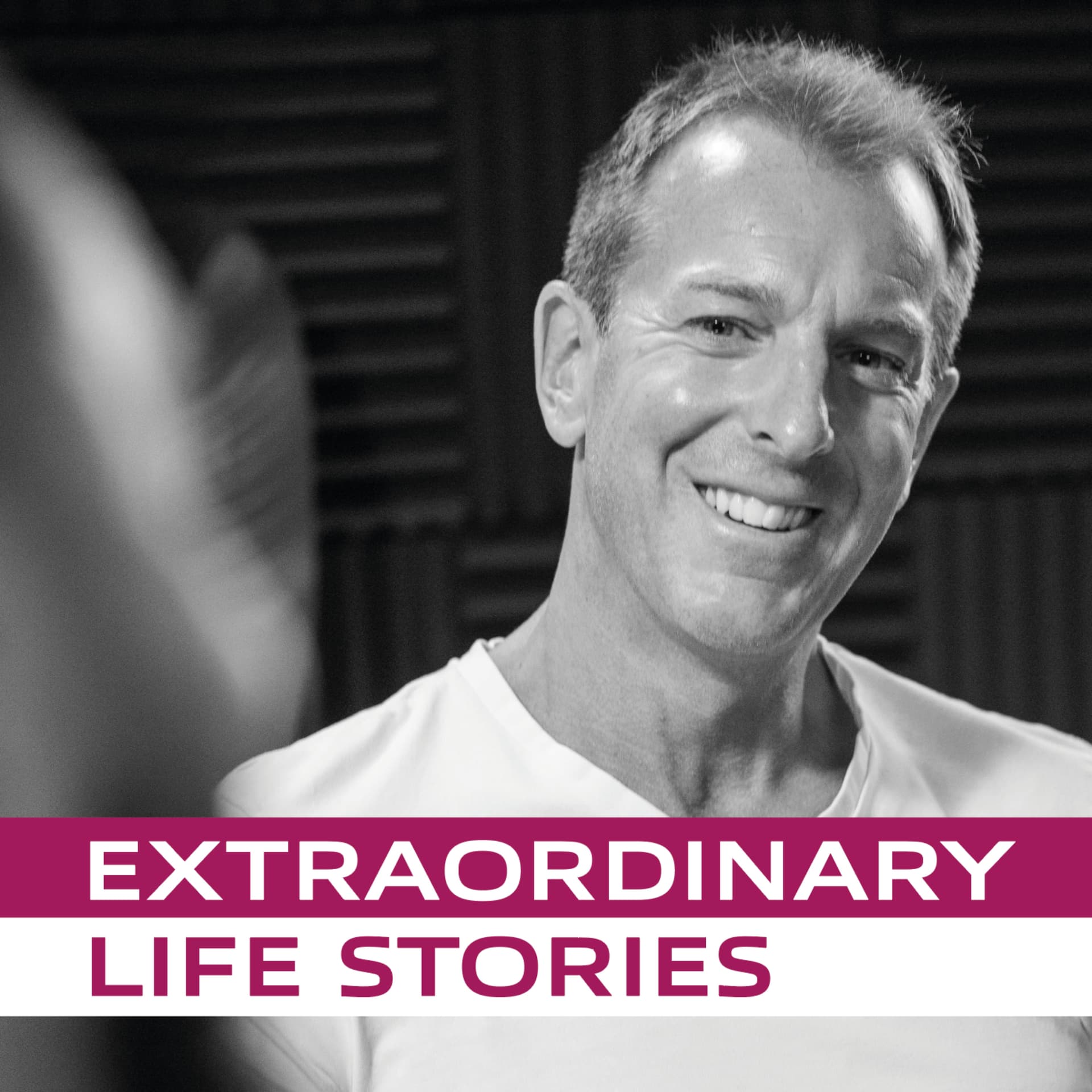
In this episode of Extraordinary Life Stories, John Reynolds talks with Kevin Lane.
In 1996 Kevin was convicted for a contract killing and spent the next 20 years in prison. Some of these years in the highest category prison in the UK.
One of the investigating officers himself ended up behind bars, admitting to misconduct in office.
Kevin published a book "Fitted Up and Fighting Back" from inside prison with fresh evidence he hopes will lead to his conviction being overturned.


