
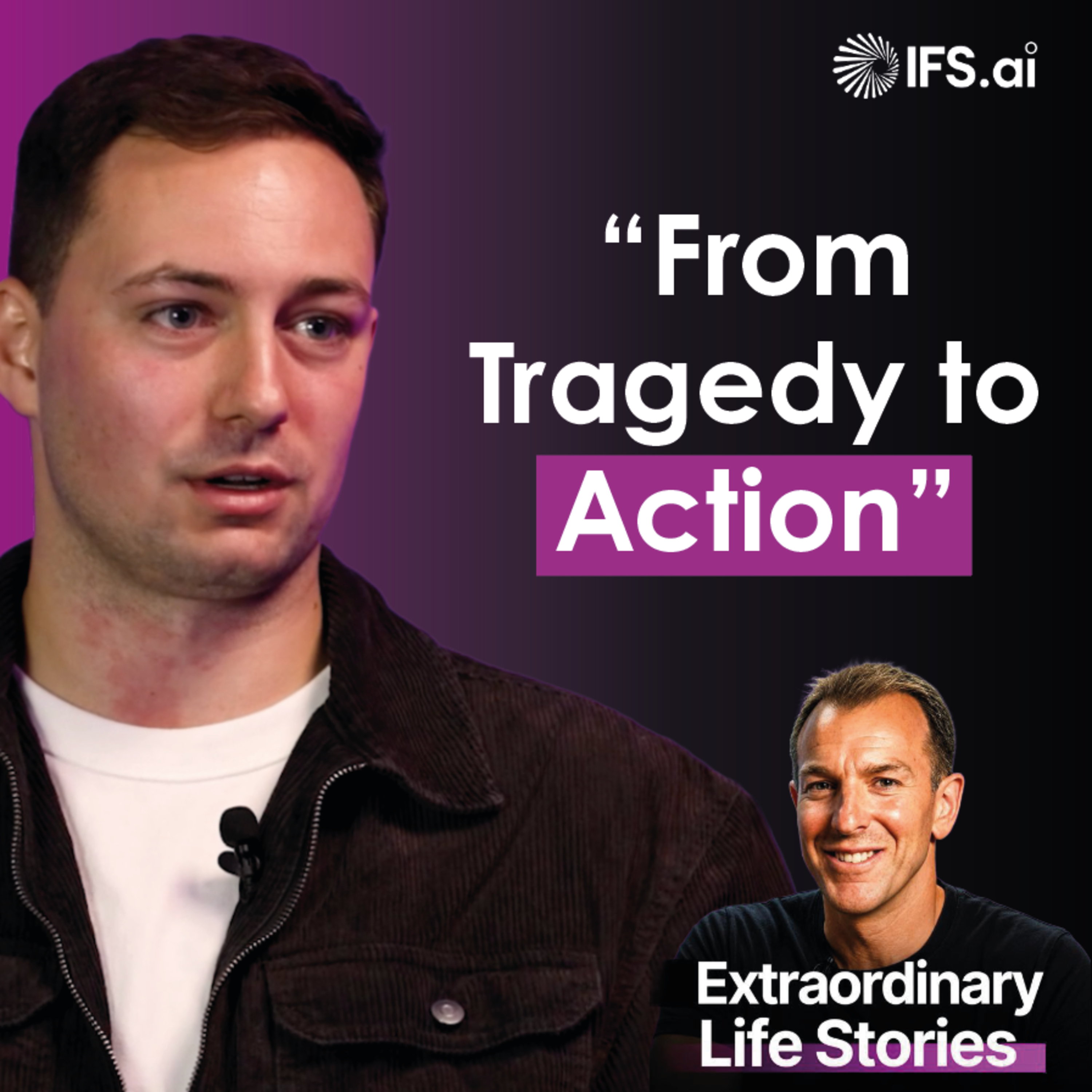
 Extraordinary Life Stories
29 Oct 2026 · 51m

 Add vo to ChatGPT or Claude to ask about everything you hear
vo listened to this episode to put together the overview and transcript, so there may be the odd mistake.
The future of AI and sport, focusing on how AI will change online trust and entertainment, why real human performance will still matter, and how women’s football can build “provably human” communities and data-driven ecosystems.
Alexis Ohanian, co-founder of Reddit; founded 776 and invested early in companies including Anthropic; resigned from Reddit’s board in 2020 over content moderation values; later founded Angel City FC (LA) after being mocked for backing women’s soccer. Aki Mandhar (Chelsea Women’s FC CEO), previously worked in advertising/media and journalism; built fan engagement and accountability; now leads Chelsea Women’s FC after the women’s club was spun out.
“Dead internet theory” is now real; much online content is AI-botted, so trusted, bottom-up sources will return. Sports is the ultimate anti-AI bet because outcomes must happen in real life. Women’s sport can be scaled with community, data, and performance-first investment.
Angel City FC’s viability; Chelsea’s women’s spinout; “provably human” via ticketing/merch signals; fertility partner model; using training/injury data and cohort-based matchday experiences; Champions League trophy ambition.
0:00As I look ahead 10 years, I have the most excitement for just how much is going to change 10 years out than I've ever had in 21 years of doing this. Tell me, who is Alexis Ohanian? I guess as of like six years ago when I resigned from the board of Reddit, someone who has tried to align the work that he's doing with not just great financial outcomes, but like a great story to tell my kids. All the ways that things have conventionally been done are worth being challenged. If you can stay adaptable, if you can stay flexible, this is an incredible time. We made social media to rail against, no offense, the institutions that would traditionally tell us top-down, here's what's news, here's what's important.
0:40And it worked really well. In fact, it worked too well. Then in the span of two years, AI blew through the Turing test, got so good, especially with text, and was trained on this data. You know, the dead internet theory is no longer a theory. Probably half of everything we consume online on social media is fake in some way. We all laughed at the Chinese Robot Olympics, but it is okay. At some point, the end state of those robots is they will be so good at kicking a free kick that it will actually be so good, it will no longer be interesting to watch them do it. I certainly believe sports is the ultimate anti-AI bet.
1:14Welcome, Raki Mendo, CEO of Chelsea Women's FC. When I look at the audience, we are younger, we are digital, we spend more, we're the CEOs of the household, we're making all the purchasing decisions. There is no reason why we can't do this. It's not just Chelsea FC, it's also the fact that you can shape football and perhaps by pioneering and leading the things that you do here. It's bigger than you, you can't phone in, you've got to make sure that every other girl who wants to be a footballer, wants to be an athlete, has a pathway to do that. Sports is a zero-sum game. If you are not good enough, you have to get another job.
1:46And oftentimes in the women's game, they still had to have another job, even while being the best in the world at what they did. And so just wait and see what happens. It's going to be awesome. Please welcome back to the stage, IFS Chief Product and Customer Officer, Kathy Hall.
2:11That's some creepies. This is nice. Welcome to the closing day of Unleashed and what a week it has been so far. But we're not done yet, are we? Are we? Woohoo! This morning, you're going to hear from companies like OpenAI, the Cadillac Formula One team, and customers including Coca-Cola and young Heinrich. You're going to see what it takes to build a sustainable future, and you'll even get a first look at the impact IFS Intelligence has already had since Monday. But first, we've got something a little different. A special live recording right here on this stage. John Reynolds is the host of Extraordinary Life Stories series.
2:59And he is going to join us shortly. Now, if you're not familiar with this series, it's built around candid conversations with founders, leaders, athletes, and innovators about the moments that shaped them. And his guest today is someone who has shaped more than a few moments himself. He co-founded Reddit. He went on to found 776, investing early in companies, including Anthropic. And now he's backing the next generation of women's sport. Please join me in welcoming to the stage John Reynolds and Alexis O 'Hanagan.
3:53Morning, everybody. Alexis. Hey. How you doing? You good? Doing well. Yeah, I feel like y 'all went to Disney World last night. Yeah. All right, all right. Take five to follow. Did anyone go Hulk the whole ride? Put your hands on if you want to Hulk. Yeah. Yeah, I felt that. That was awesome. What an amazing event as well. IFS Unleashed, another level. It was incredible. Right on. Very happy to be here on the final day. Thanks for going the distance with us. I'm looking forward to this. As of my job. Alexis, tell me, who is Alexis Hainian? Oh, boy. Who is he? Gosh, a proud father of two, and someone who is, I guess as of like six years ago when I resigned from the board of Reddit, someone who has tried to align the work that he's doing with not just great financial outcomes, but like a great story to tell my kids, and hopefully one day grandkids, that showed that I was trying to do my best to create a better world for them.
4:59And those two things, financial success and being proud of what you're doing, are not mutually exclusive. What were the early influences? Who or what influenced your career decision-making? The answer that's useless for all of you is, unfortunately, my mom and dad. I mean, there weren't many... I don't know. I don't think I had many... I certainly didn't have any tech titans that I looked up to as a kid. I mean, they're the obvious ones. But it wasn't... No, I think the biggest influences I probably had were a mom and dad that just relentlessly encouraged me to do things that I cared about. And I actually saw, kind of weird to talk about now, but a travel agent.
5:43My father was a travel agent. Most of you probably don't even know what that is. But there was a time when a human needed to book your travel for you. and you would pay them, not handsomely for it, but they would get a percentage from the hotels and the airlines. And my dad was a travel agent my whole life and then started a small travel agency in Western Maryland, him and one other employee, when I was in high school. And that was right at the time of the late 90s when the rise of online travel agencies happened. And on the one hand, it demystified entrepreneurship for me, which was great. On the other hand, it showed me just how devastating technology can be because I was learning to program for fun with books that I got out of the library.
6:30And I'd be making websites for random people on the internet just for fun because I guess I was a weird kid in high school. But I really loved programming. I loved building websites. And then all of a sudden I saw, I'll never forget the day my dad came home and Delta, sorry, Delta, was the first airline to cut their commissions to travel agents. So again, this is how they made their money was they booked the flight and get a small percentage of the revenue. They cut the commissions to zero. And my father sent a fax, also antiquated technology people used to do instead of email. And he sent a fax back to Delta that simply said, fuck you.
7:10and he doesn't like when I tell that story but it is true and but but you know he came home and he was like look and my mother worked night shifts as a pharmacy technician so like my dad was was really responsible for bringing home the money that made our middle class living and I'll never forget this because you know this new technology these online travel agencies these websites were disrupting an entire industry and it was the one that was this was an existential threat to my family's well-being, and it made me resolve to never be on the other side of that disruption and to always be the one building and to have a tremendous amount of respect for this technology that I was starting to learn that actually was more than just a fun thing to do.
7:51And also to his credit, you know, my dad did not lobby the government to ban online travel agencies. He simply adapted the business, and it was hard, but actually he wouldn't even let me retire him. He only retired a few years ago and managed to find a lane for being a travel agent well into the 2020s. And so I got a lot of great inspiration from that. But very, I think, just sort of practical day-to-day type demystification was what did it. And I think it's led me to this day to where I am, without a doubt. I love the fact you brought your parents up, because there's a role model piece there.
8:32You introduce yourself straight away as a father. So there's a whole continuation of the role model play, if you like. I'm trying, man. Those kids are watching. I mean, it was not easy resigning in protest from the board of Reddit back in 2020. I went through a whole identity crisis after I did it. But one of the fun things, and you can read all about it. I basically just was, I'd been the face of this company for 15 years. I'd given so much of my life to it. Started it, sold it, took it back, brought it independent, was executive chairman to help lead the turnaround. And I got to a place where the board and I, you know, as one versus four, just did not agree on some really core issues around content moderation.
9:13And I just believe that certain communities like involving gore and racism and violence just shouldn't have been on the website. And we agreed to disagree. And it happened far too often that I just got to the point where I just realized this wasn't a room I wanted to be in anymore. and I wanted to be able to look my then three-year-old in the eye and be like, yeah, this is what I do. This is why it's important and I feel proud that this is how I'm making a living. And what's been probably the most satisfying thing about that is one of the first things I did after resigning in protest at Reddit was I was rage-tweeting about how undervalued women's professional sports was.
9:50And as the internet does, I got dragged by millions of people who were like, you're an idiot, no one watches women's sports. And at the end of the tweet storm, I said I was going to start or buy a women's soccer team here in the US. And yeah, I mercilessly mocked for that. And I saved all those tweets and ended up starting a team in LA called Angel City FC. It's now the most viable team in the United States, women's soccer. I paid a million dollars for the expansion fee. Another gentleman recently paid$220 million for an expansion fee in the same league just five years later. So it's done well.
10:27And at the end of the day, to have gone from that very hard decision leaving Reddit to then have one of the first things I do afterwards starting this women's soccer team, not only be so wildly successful, but also spark another chapter in my career that now more people know me for just five years later has been such a deeply satisfying fuck you to all those people. Not just the ones who said it was never going to work, but also the folks who ever put me in a position to compromise on values. And it feels really good. And so to see where it's come now, I mean, I love the fact that my kids, I now have two, get to see me succeeding in business in a way that I'm also deeply, deeply proud of.
11:10And this is what they know me for. My kids, my oldest is only nine, so she has no clue what Reddit is, thank God. But I, you know, and I'm obviously very proud of that chapter and that's let me do all the things that I get to do now, but it feels really good to be succeeding in a way that I feel really proud of right now. Yeah, I can tell. There's a lot there. There's the whole pioneering, innovating, and having a vision that there are so others don't. You see things early. You've got to kind of a trend swatting. This audience is full of people that are innovating and pioneering. What advice can you give to people that are looking to try and think outside the box, go against the tide if you like?
11:46I, the reason I will never stop and, and only I flirted with retirement for like a week. Like I, I love, love the fact that especially right now there is so much change and, and if you can stay adaptable, if you can stay flexible, this is an incredible time because all the ways that things have conventionally been done are, are worth being challenged. and in the same way that people looked at women's sports and said there's no way there will ever be billion-dollar franchises. We had our first one with the Valkyries just announced last week. That team didn't exist three years ago. The rate of change is so swift in a lot of these industries that have been underinvested in, but then obviously because of technology, the rate of change now is moving faster than ever because of new tech like AI.
12:40Right. And I think the more probably my for sure superpower is living like maybe 10 years ahead. I don't do great a year ahead or two years ahead. I certainly don't pretend to do great 20 years ahead. But like 10 years ahead is my sweet spot. Why? Because most of the companies that I'm either starting or funding, I have to think like 10 years out is the sort of like a normal life cycle from an idea to roughly IPO. I know you've seen exceptions to that rule on both sides with companies like Anthropik, IPO, and even faster, and others taking longer than a decade, but about a decade is right. And I think I am convinced now more than ever, you know, 21 years into startups, that this period of time now, as I look ahead 10 years, I have the most excitement for just how much is going to change 10 years out than I've ever had in 21 years of doing this.
13:31And I think if you can maintain a relentless curiosity, ask a lot of questions, why is my favorite question, I beg my daughters to ask me why more often. I wish they would. Maybe it's because I tell them to always ask me why that they don't do it as much. I was told that that was a thing kids asked a lot, but I get like a couple and I'm just like, please more. It is such a powerful question, and I think we have an opportunity now, and certainly for all of you in the audience, the chance to ask that question, it has never been more valuable. And then the other fun thing is, for the newer folks within your organization, the ones who have less experience, they almost have a natural advantage if they are so inclined.
14:18And you give them a place to ask those questions like why. Because they are naive. Because they are inexperienced. They have to look at it with a beginner's mind. And I think the superpower of doing this kind of early stage investing and entrepreneurship is to maintain that beginner's mind. You have to work hard to do it because you're also spending a bunch of time learning stuff and getting cynical and getting jaded. And maybe I just have the mind of a child and so it's easier for me. But I do think for those of you who are so inclined, there's never been a better time because so much is up for grabs now.
14:52You are a community builder. You set out to build a community. You had all the right intentions and you've already said that you didn't like the way that trajectory went. We live in a world of AI moving at such a pace and you're working really closely with it. How are you kind of concerned and excited at the same time about AI and the trajectory, specifically about 10-year vision you've got? I think, I mean, even now, social media has obviously buttered my bread for a couple of decades. The dead internet theory is no longer a theory. It's this idea that I think is very real, which is probably half of everything we consume online on social media is fake in some way.
15:29It's botted, it's AI content, it's rigged, it's pay for play. There's so much content now in our feeds. We made social media to rail against, no offense, the institutions that would traditionally tell us top-down, here's what's news, here's what's important. And it worked really well. In fact, it worked too well. And then we began to trust strangers on the internet, which is the whole vision for everything from a movie review to what coffee to buy. And then in the span of like two years, AI blew through the Turing test, got so good, especially with text, and was trained on this data, that then all of the like SEO experts and everyone else basically moved all their attention to GEO or like basically so that when you ask a question of chat GPT or Claude or whatever you like, that they make sure your brand shows up well in those results.
16:26And because those results are trained on data from social media, especially Reddit, everyone was highly incentivized to cheat those systems. And so now we're at a point where overnight those systems have been all compromised. It's very hard to believe what is real online or what is genuinely popular online. And I think the pendulum has to swing back and we actually now go back to trusted sources. I think they look a lot more bottom up, Or they're more personality-driven versus brand, which kind of makes sense because the reason the New York Times has all of its Pulitzers is not because the logo did the work.
17:03It's because the journalist did the work. And then over time, the logo got the value from the journalist doing the work. And I think the part that will still remain from the social media era is the fact that individuals with trust are able to build a large distribution. And probably some of them will consolidate. Maybe we've seen some versions of this media. But we need, especially for folks who need to make decisions based on good information, we desperately need new sources of truth online, right? And so 10 years from now, we will have no shortage of content and noise and slop. And so what are the things that break through?
17:36I think it's individuals where there's a high trust. I certainly believe sports is the ultimate anti-AI bet. and I was on stages years ago saying this, basically after, I think it was Dali dropped, which was OpenAI's first image generator. I'm sitting there talking to the team and I'm like, these images are janky, but it's clear AI-generated images are going to come along faster than we realize. And if images come, movies are just moving pictures. And so at the end of the day, a few years out, it is almost certain that a Hollywood-style special effect is going to be pretty trivial because it's already mostly computer generated anyway.
18:15And we're looking across the landscape. This is about two, three years ago. And it's like, okay, well, the entertainment industry is not going to need those big budgets and those same sets in the same way. So that entire world is going to be reimagined. You could be a kid with a great idea anywhere in the world and create a proof of concept far cheaper, far faster, far better than ever before. The music industry is going to go through a version of that. Live performances will still be valuable, probably more valuable than ever. I'm seeing Metallica at the Sphere in two weeks. Believe me, I know, yeah, rock and roll.
18:46And I believe in that. But you think of a lot of one-hit wonders or pretty sort of superficial pop artists from Canada. Like, it's going to be much harder for them to have careers in a world where that kind of AI slop, derivative-type content is everywhere. But again, Taylor Swift, I'm still taking my daughter to those concerts. You know, Kendrick Lamar, the real stars are going to continue to thrive. But then sport, no matter how good AI gets, even when there's a pixel perfect version 10 years from now of an Alyssa Thompson goal, if it didn't happen in real life, it does not matter. And no matter how good the robots get, and I know we had one, I guess, kicking some free kicks earlier, chess is actually the perfect example of this.
19:32So we used to watch, I think it was Kasparov versus like IBM on the AI. And we won. Americans or humans won, right? For a while there, we were beating the AI. Now the AI annihilates any human. It's not even interesting. And yet chess is more popular than ever. Why? Because now we can train, humans can train with these AI for new techniques, more interesting behavior and play. It also makes learning chess way more accessible. I'm on Duolingo right now, learning chess, thanks to AI. If anything, chess is solved. And to the extent you believe it to be a sport, it's a sport, not like a sport, but it's a sport.
20:12It is solved by AI. The robots are undeniably better, and yet it's more popular than ever. And I'm sure we saw we all laughed at the Chinese Robot Olympics. That's funny because right now we're in the era where the robots fail and it makes us feel good, just like when Kasparov beat the AI. It makes us feel good. But it is okay. At some point, the end state of those robots is they will be so good at kicking a free kick or running in a race, that it will actually be so good, it will no longer be interesting to watch them do it. Again, just like chess. And then maybe, actually, we might get some new training techniques that come from seeing this sort of perfection of the form.
20:50But no one is going to watch a World Cup of Robots. They're going to more than ever want to see humans perform this. And if anything, our training gets better, our learnings get better. and I have a very sort of optimistic view of that. But it's not going to be that way for necessarily every single industry and there are bumps and that's the part where, like I said, I think Hollywood on the exact opposite end of that side has to now figure out what does that look like. Fascinating. Joining up community and sport and then all the technology you've got, there's a real opportunity to do women's sport differently to the traditional way that men's sport evolved.
21:25I'd love to unpick that with you. Yeah. That almost like chess strategy element You put all that together because the social media, it's become antisocial. There's an epidemic of loneliness and isolation. And you said about that sort of, it's amazing to hear, I mean, 50 % of users are bots, right? So people aren't communicating with people anymore. How can you put all that together to improve and increase fan engagement and change sport in that way? It is the big challenge and similarly, I think, the big opportunity. I talk a lot about now what I'm looking for and looking to build the provably human social networks.
22:04And so, you know, some things that have been proposed for social media to fix this problem, you know, in the most extreme form includes scanning a retina, which, you know, not for me. I don't think that's a solution necessarily going to be the total fix. and what's really interesting is I think there's a bunch of sort of Trojan horses out there. Sport is an interesting one where, you know, if you have, let's say, a fan base of millions and millions of fans, you have their emails. If you, you know, sell them merch, you now have proof, and email alone is obviously not proof of humanity, far from it, but all of a sudden you sell someone merch and now you have payment information and a credit card and an address that you shipped it to.
22:48Again, you can fake that, but again, more signs of humanity. But then of course, if you can integrate with your ticketing system, you now know that they have bought a ticket and at some point scanned a thing and shown up in your arena. Now you actually have a very, very clear picture that this is actually a real human being and it never got creepy. You never needed them to scan their retina or anything like this. And I actually think there are sports teams and leagues that actually have a critical mass of audience that are able to build. Like, the hard part is not building the forum anymore. The hard part is not building the, you know, forever swiping app with photos.
23:24The hard part is actually building a real community of people who actually want to spend time together and then having them be able to convene online and offline. And so I think sports is also a very unique way in. Not every sport or team can do it. I certainly believe the WSL. I certainly believe Chelsea can do it because you have that scale. And then you have that built-in tribe. And this is the thing that I knew Reddit was going to be successful, I think it was in year four, because I found this guy named Fernando Takai who got... So Reddit has an alien mascot that I created that he had tattooed on his torso.
24:03And this was in 2009. Like, this was not... Reddit was not a known thing back then. But when I saw this tattoo, I realized we were probably on to something because we had earned the right to be tattooed on someone's body. And so this is now my, this is my test. The only brands I want to build are brands that people tattoo on their bodies. And so I still, you'd laugh, but that is seriously a thing. I, because, and I still remember the first Angel City tattoo that I found. We actually, I have a golf team in Tigers League, LA Golf Club. And that, we actually just got a photo of the first LA logo for that.
24:42There have been plenty of Chelsea tattoos, obviously, for a long time. That, to me, is the ultimate test. And sport has this magical tribalism to it where we take for granted. Think of how many sports team logos, even bad sports teams like Arsenal, have... Sorry. I'm sorry. That was low. Not as low as their score against us this year. Anyway, the funny thing is, it is this built-in tribalism we've all accepted as a society, that that's actually a totally normal thing. But how many other organizations earn the right to have their logo tattooed on people's bodies? I mean, maybe the Nike swoosh, Disney, the mouse has definitely got a few.
25:25But it's rare. It's exceptional work. And so it's a tremendous privilege. And I think that is where it is, this Trojan horse of affinity and community. because, again, if I just abstracted away, we managed on Reddit to get people to bond over, like there's a subreddit called Staple Bread to Trees or Bread Staple to Trees. And it's a community of people who literally staple bread to trees. Doesn't matter, pumpernickel, rye, croissant, whatever. And they take a photo of it and post it in the community. And they talk about the bread they just stapled to a tree. I mean, it's insane. But they've bonded over this, right?
26:04And the internet's really good at connecting people over this weird stuff and making these tribes. Sport already has this socially acceptable at-scale version of the tribe. And asking a community of Chelsea fans for their favorite sports insights is sort of an obvious thing. But you could just as easily ask them for a restaurant recommendation or a pub recommendation or a vacation recommendation. The community is the really hard part. And sports gives us such a leap into, in some cases, massive, massive global community from the start. And I think the folks who can figure out how to build communities from zero now going forward are even more special and even more valuable because that is what's going to break through in a world of AI slop.
26:52I love that. I've got to bring Chelsea up now. I'm going to have to after that last part of the conversation. Why did you invest in Chelsea? to your women's FC? I had given a talk, sort of an off the record, I've been invited to speak at Wembley to a bunch of, it was Premier League owners at the time, and presidents, because they wanted to know how we did what we did with Angel City. And they basically said, look, we invented football. We've had women's football for longer than you all have, but it seems like this has just come out of nowhere. And how did you do it? How do we do it? and I'm always happy to talk about myself and talk about this stuff.
27:32And I was like, sure, let me read you the playbook. And it was a great dialogue. And I learned that all these women's clubs were technically like sub entities underneath the men's. And so they were basically on the same level as youth, as boys. And I was like, okay, well, there's your problem. Like if you treat it as a sub brand on the same level as boys, anyone within your organization who's really thriving on the women's side is just going to get promoted out to go work on the men's. Like your org chart curses the women to mediocrity. And that's, I don't know if that was an intentional choice, but like that's why you're not having this Angel City moment, but you can.
28:09And if you spin out the women's team, let them be run, again, from first principles, put a person in charge of just the women's team who wakes up every morning thinking just about the women's team, I think this stuff's going to change really quick. and I said and by the way I saw that the I think at this time I think England had just won their first it wasn't the second yet they were just about to win their second Euros and the women specifically and this is a big thing right you have to bring it home and the men had not brought it home for a minute and here the women were bringing it back home twice and back to back and it felt like a cultural moment where even on my American internet I'm watching this and I'm like oh wow okay like there's a bunch of boys and girls who are going to go to school throughout the UK proud proud that they brought it home and it doesn't matter that it was women who did it and and it was that moment that made me realize okay they're ready this is time to invest and uh and then I I got introduced uh to the folks at Chelsea and obviously was very familiar with the brand uh they had already spun out the women's club um they hired Aki and you spend two minutes with Aki and you're like, okay, she should be in charge of everything.
29:22And it was a no-brainer to then invest. And I really, I want this club to be America's team in the sense of, I obviously want Americans to have a team in the NWSL too, and hopefully it's Angel City, but every American should have that one team in English football that is their team to root for. And if you love women's football, it should be Chelsea. And the trophy case alone should prove it. But it's also a club that's just pioneered in a lot of great ways for supporting the women's game and women's sports broadly. And again, that's the kind of legacy that's an easy thing to want to latch on to.
29:55Yeah. We're going to talk more about Aki and Chelsea shortly. I just want to finish our conversation on legacy. When you introduced yourself, there was so much that was bigger than you. You actually used that word, legacy, then in Chelsea, the football team. And when that goes beyond, what would you like to be your legacy? Oh, man. It's so weird. Look, you guys obviously know I'm married to Serena Williams. That's a big deal. She's a big deal. Yeah. And it's funny, she has a very, very humbling perspective on legacy. She feels very... Indifference is not the right word, but very measured about it.
30:34And obviously she's someone who has a tremendous legacy, has changed the world in very, very meaningful, positive ways. And it's been eye-opening for me, so I'm very torn. Like, on the one hand, I do, okay, I love participating in and helping support institutions that are going to be around beyond me. I still know we're a speck of dust in the universe. I get it. I can be really fatalistic if I have to. And it's like, but I think it's either this much bigger, at the end of the day, no one really gets remembered. I mean, there's a few, I guess, historical exceptions, but institutions, especially hopefully good ideas that end up getting institutionalized can carry on for a lot longer.
31:17And that feels like a legacy. And I think Chelsea's built an amazing one for over a century, even before I showed up. And then on the micro level, I think the one that feels much more real to me is it's the reason my fingernails are still painted, because my three-year-old insisted on painting my nails, hashtag girl dad, is the mini legacy with the couple of humans that actually really, really care about me. There's a few more than that, but the people who are very close to me in my life. And I do think I am... You'd be hard pressed in tech, especially right now, to not be thinking about the broader implications of what we're building right now, because it does feel so much more impactful than it did 20 years ago when I was starting Reddit.
32:02I mean, then it was just, I mean, Zuck was already in conqueror, like world domination mode, but I, you know, I was just like, hey, I'm happy I don't have a real job and I can just be my own boss, right? It was, I was very naive in a lot of those ways. But now we know the implications of technology are profound and especially going to be over the next 10 years. And I want to be a part of institutions that are going to, again, be things I'll be proud to tell my grandkids about, hopefully. and uh and then i but i try to care more than anything else about what those two humans think about me while also still trying to do stuff that matters and and it's still um i don't know i think it's reframed i think when i was a lot younger i was um it was a much more abstract thing and as the the cliche goes once i became a dad it changed my perspective humbled me in a lot of ways because the things that I thought were so important just overnight became less so.
32:58And yeah, I don't know. I guess I want to be a part of things that are good for the world and I want to make sure my girls feel like they're proud of me and I still make it home in time for dinner. Trying to balance all that. And it doesn't always go perfectly. That's a whole separate question. Yeah. That's beautiful. And I said to you earlier, enjoy this period because I've got a 15 and nearly 17-year-old two daughters. You've seen it a little different, teenagers? Oh, man. I'm spoiled right now. Yeah, that's good. You're a pleasure to talk with. Oh, thank you, John. Thank you, Alexis. Thank you, brother.
33:34Thank you.
33:42So we said we were going to talk about Chelsea, women's FC, and Aki can now join us on stage. We're going to play a video first, though, while she comes on. High performance doesn't happen by chance.
33:59It takes focus, understanding, intelligence, decisions made in the right moment. The same principles that drive elite performance underpin the world's most complex industries. IFS AI powers industrial companies that build, service and protect our planet. Connecting people, assets and workflows in real time. Using AI where work actually happens.
34:43industrial AI is ifs.ai
34:54welcome back Amanda CEO of Chelsea Women's FC yeah best job in the world I talked to you yesterday your passion for it is phenomenal what are your challenges and what are you looking forward to in the role of the CEO? I guess the challenges are essentially getting people to see what Alexis and I and lots of others just see every day. And there's a bit of a laziness, I think, to be quite blunt, with anyone who doesn't quite understand how important and how fast and how amazing this club and this sport is. and I think once you go to a game, that all disappears. And so that laziness where people have a barrier of what women's football, women's sport is, I think that is probably the biggest thing.
35:46Once you are able to bridge that, whether that's by showing how many trophies you've won, the quality on the pitch, the revenue you're generating, the reach that you have and the engagement, I think that quickly goes away. So trying to get that story across to as many people as possible who don't quite understand what they're talking about, to say it politely, I think that's the biggest barrier. You've got a multifaceted background. Unbelievable that I have experience, but not within football. So what do you bring as almost an advantage now to shape the direction of the club? I think I like figuring things out.
36:25I like fixing stuff, and I love proving people wrong. so um that makes two of you i think and i think a lot of people here right like you like figuring something out and you want to try something you want to learn something and you want to do hard things i don't want to just do the same old thing and this felt like my previous experience of getting a fan to a passion in advertising and all the way through to holding power to account and doing something really important that changes the narrative with journalism and then this where I could see a segment of real deep fandom that nobody was catering for that no one was paying enough attention to that was just being put over here and it felt like the lack of figuring it out for that fan for that player for this audience who was completely different to any other sport and any other moment or job to be done in your day that felt like something that actually feels a bit easy when you look at it like that but from the outside it was like that's too hard to do so we're going to leave it alone and let's just figure out this same old thing that we have here and we'll we'll play around with the margins I don't want to do that um and then there's obviously the purpose part of that helping girls see themselves as real athletes that can get paid that can play sport every week twice a week sometimes and you can be that like I didn't I wasn't allowed to play football when I was a kid only the boys were allowed to play football we don't have title nine uh in the UK at least and that's crazy.
37:58My daughters only think women win Euros. They don't think the men can. They're like, oh, they don't know how to do that, right? Maybe the girls should show them. We got this. We're not going to show them. The purpose part of what we do makes you run even faster and push even further and you know it's bigger than you. You go to Cobham on any day, that's the training ground in London, and you see 38-year-olds with little shin pads on and red faces, and they're like, I'm going to be Lucy Bronze. And you're like, yeah, you are. Maybe you won't. But the fact that you're trying to be Lucy Bronze, the teamwork, the leadership, the confidence you have within yourself, the body image, the impact that has on you, especially when girls drop out of sports between 11 and 14, when they get their period, when their body's changing, and then they're online.
38:49That's a dangerous moment. And if we can be part of that moment to say, actually you're more than how you look. You're what you can do. You're like Hannah Hampton. You're like Alyssa Thompson. You are angry and you are fast and you are competitive and you can do things. And I think helping girls see themselves as that and helping boys see how they support girls as that, I think that drives me every day to make sure I don't bleep it up. You swore I should have sworn. All the time, yeah. You're in America. You can see where you're like. Oh, can I? Yeah. You heard me talking about Arsenal. I could get cancelled.
39:26Oh yeah, but Arsenal, that's fine. So the purpose part of what we do, I think, makes us run through walls and it's bigger than you. So you can't phone in. You've got to make sure that every other girl who wants to be a footballer, wants to be an athlete, has a pathway to do that, not just see it on TV. Like we have to build the whole ecosystem. So there's a lot to do, but it feels easy when you're doing it for the right reasons. Yeah. The role model piece is beautiful there. Lucy Bronze, you can't be what you can't see. The young girls know now that those people they can aspire to be. I call you out and champion you for being a role model yourself in business.
40:05I want to open up because I believe you're the only female CEO in the women's league. Have I got that right? Chelsea were the first club to separate its women's team out. I was the first CEO of a women's team only. I think I'm the only woman anymore. which is great. No, but where I'm going with it is it feels like that. I think I was for about 20 minutes, which is fine. I'll chat later. Yeah. But that piece, that role model piece, is something that you, I don't know if you embrace that and you feel that as an extra pressure. I think if you wake up saying I'm a role model, there's something wrong with you.
40:39You know, like, good morning, I'm a role model. Sorry if anybody thinks that. I don't think about it. I want to do the right thing. I want to work hard. I want to figure things out. And I want to make sure I take people with me and I create a path for other people who want to do the same thing. I think the spirit of what I bring with my team is we just want to help each other get there quicker and do that hard work. I don't really think about it. You can tell by my rambling answer. I have no idea how to do it. No, and it's endearing to be fair. I just do the job. Yeah. With both of you here, and I know we spoke yesterday about the principle of the fact that there is an opportunity to do things differently.
41:19Yeah. And you said it's bigger than you. You've already said it on the stage. it's not just Chelsea FC it's also the fact that you can shape football and perhaps by pioneering and leading with things that you do here others will copy and you you embrace that yeah it's quite unusual in sports often it's quite guarded and you're you're practicing things you don't want the other team to see but actually there's an element of like actually let's amplify and grow together you can't win alone firstly we are super competitive on the pitch and then off the pitch we need to build something that lasts every single one of those players cares about the legacy that they leave behind.
41:55Everybody who works at the club wants to make sure that there is another club, another academy, another player pathway that we haven't just kept it to ourselves. So we know everyone's watching what Chelsea does. That gives me a lot of nervousness and responsibility and accountability. And I wear that, you know, I don't wear it lightly. I think about that a lot. So when we think about new models for commercial growth, We do stop and pause and go, are we closing something for everyone else or is there a model here that other clubs can use? And so we launched a fertility partner just a couple of weeks ago, which is the perfect profit and purpose part of what we do, where we want to create a space where athletes can have a family, make that decision with real data, with real insight, not have to pause and sacrifice things that they really shouldn't need to at the peak of their athletic careers.
42:45that's something really important to them but also that's something that as a club we wanted to help provide the model we've come up with is a value in kind one where the clinic gets to talk about what they do and the athlete gets to choose if they want to access that that care no money comes to Chelsea that's all about the player but that will grow the game it will grow the the spaces they have in order to train differently to understand their bodies better and I think if we can build the ecosystem and build a model that other clubs can use then we're doing the right thing so we do stop and think are we closing the door or are we creating a path and um i i don't want us to be closing the door to anyone that's exciting ifs are a partner with chelsea and there's an opportunity to bring tech and ai into the growth now that wasn't perhaps previously available in growing sport how are you using it so first thing is data there's not a lot of data in women's sport i think only five or six percent of sports science is on women's bodies the rest is on men's so the first thing we're doing is collecting a lot of data and building out our training data filming the training sessions understanding how to apply that with the information we have on the players bodies on their um uh on their injury data like so we're building that out and then we're applying it to the fixture that we've got coming up so we can use the data based on uh what spurs are doing and plan around for how we play on sunday so we we're collecting data at early stages we do have on the business side a lot more and i think that's where we're using it where we're understanding more about what the game day should look like by cohort at a women's game you'll see um it's 50 50 male female split within that you have two cohorts one is here for the football and then the rest of the day and the other is here for the full day and then the football is is the additive next bit and so if you're going to go and get drunk on saturday on king's road you may as well come and watch lucy bronze at the same time or if you want to watch some amazing lionesses and other international players you could do that too so trying to use data to understand what is the perfect day for you how does john feel on that day how are his daughters going to experience that day what can i do before you get there the more you know about the game the more you'll enjoy it so how do i give you access to things ahead of time how do you pre-order whatever it is that you might want uh on average at women's games the um the spend is 30 per head higher than a men's game At a men's game, you might, no disrespect to people who go to men's games and don't do this, but on average you buy your shirt at the beginning of the season and then they might not see you again.
45:25You might buy a beer and a hot dog and that's about it. Maybe a pie. It's more hot dogs at the women's games actually. At the women's game you're buying jewellery, you're buying a Stanley Cup, you're buying a hat, you've had three drinks in your seat because you can drink at the women's games, not at the men's in your seat. And then every time you bought a drink, you're buying another hat. So the women's game, it's a little bit different. And we're using data and tech and AI to understand more about that customer, especially when we have half of that stadium is full of transient audiences that are just popping in for the day and the others are becoming diehard fans.
45:59How do I turn the transient into a diehard fan? And what data set do I need to track to make sure that I do that that feels natural and creates habit for them? Right, super interesting. I want to finish on, and you can both get involved in this, the goals and the mission you'd like to achieve looking forwards now with Chelsea. I really, really want a Champions League trophy. Do you want one? I'd love one. Anyone else want one? We can get a couple.
46:34Champions League would be amazing. I want us to be the number one women's sports franchise in the world and when I look at the audience we are younger we are digital we spend more where the CEOs of the household are making all the purchasing decisions there is no reason why we can't do this I think what if it all works out and I do think there'll be men's sports watching us going how did they do that how did they get that light fandom into a revenue model that funds the game in a completely different way that is sustainable and i think that's the win here is to take something beautiful and and and mean something to so many people and build an ecosystem around it that everyone else wants and to be the envy of the sporting world just small things love that ambition look you can see You can see why I invested.
47:29The wild thing is, as a technologist coming into sports, these teams, these leagues are remarkably devoid of it. Despite having tremendous, tremendous success, this is an opportunity to have, it's basically Greenfield. And on the women's side, this is the silver lining to the history of underinvestment, is that there's not a ton of people who are like, this is the way it's always been done in the same way there is on the men's side. and it's an opportunity. I mean, I love this idea of other clubs looking at Chelsea being like, how the hell are they doing this, right? And that's not just limited to European or global football.
48:07That's the NFL. I want Dallas, I want Jerry Jones flipping over a table. Maybe kids are a little old for that. But like wondering how is it possible this team... AI can make that happen. AI can make that happen, that's true. I think I might have seen one of those videos actually. I think you started it. The, like, we have a chance, because the audience is younger, because it is so digital native, because we have a new organization within a larger historic organization to move faster, to ship, to execute, to build stuff, we can just do things that other clubs can't, but with a legacy that is massive and global and a fan base.
48:45I mean, there are, what is it, more followers on Instagram for just Chelsea women than all of the WNBA teams combined? And more than 11 Premier League men's clubs. Like that's... There is a lot of skill. And it's not just reach, it's engagement. People really care. Alyssa really wants to tell her story so that other girls can see that story. It's not snackable. It's actually... There's depth there. And in that storytelling, I think there's something beautiful that I don't think other sports can do. And the last part I'll say too, just to advocate for the women's game too, which is like, the fun thing is historically you know we've at best framed these athletes as role models which is true they are they are absolutely and that is a great thing and none of these athletes want to just be role models they want to be all the things male athletes can be right and what's really exciting about this new wave here is these athletes have stories to tell they have ambition they have drive they want to win And for all of time, basically until maybe five, six years ago, the orientation on women's sports has been always around, like, almost at best, like a charity mindset.
49:59And yet, these athletes have never been able to get away with anything other than being excellence. Sports is a zero-sum game. If you are not good enough, you have to get another job. And oftentimes, the women's game, they still had to have another job, even while being the best in the world at what they did. And so just wait and see what happens when they actually can be in spaces, in leagues, on clubs that are just as performance oriented as they have always had to be. It's going to be awesome. And they over deliver time and time again with brand partnerships, not just on the pitch, but also off the pitch.
50:35Like it is a dream to work in women's sports because the athletes are just so fired up. They see the moment. They've been dying for it. And it's here now. and so when you're looking to build any kind of a business it comes back to the team, the people on the field, on the pitch, in the office and it is just a cheat code to get to work with women athletes. Well said well said the team off the pitch clearly, I mean just amazing formidable, so I wish you all the success of it and guys thank you Naki, thank you so much you're welcome, thank you thank you have a good
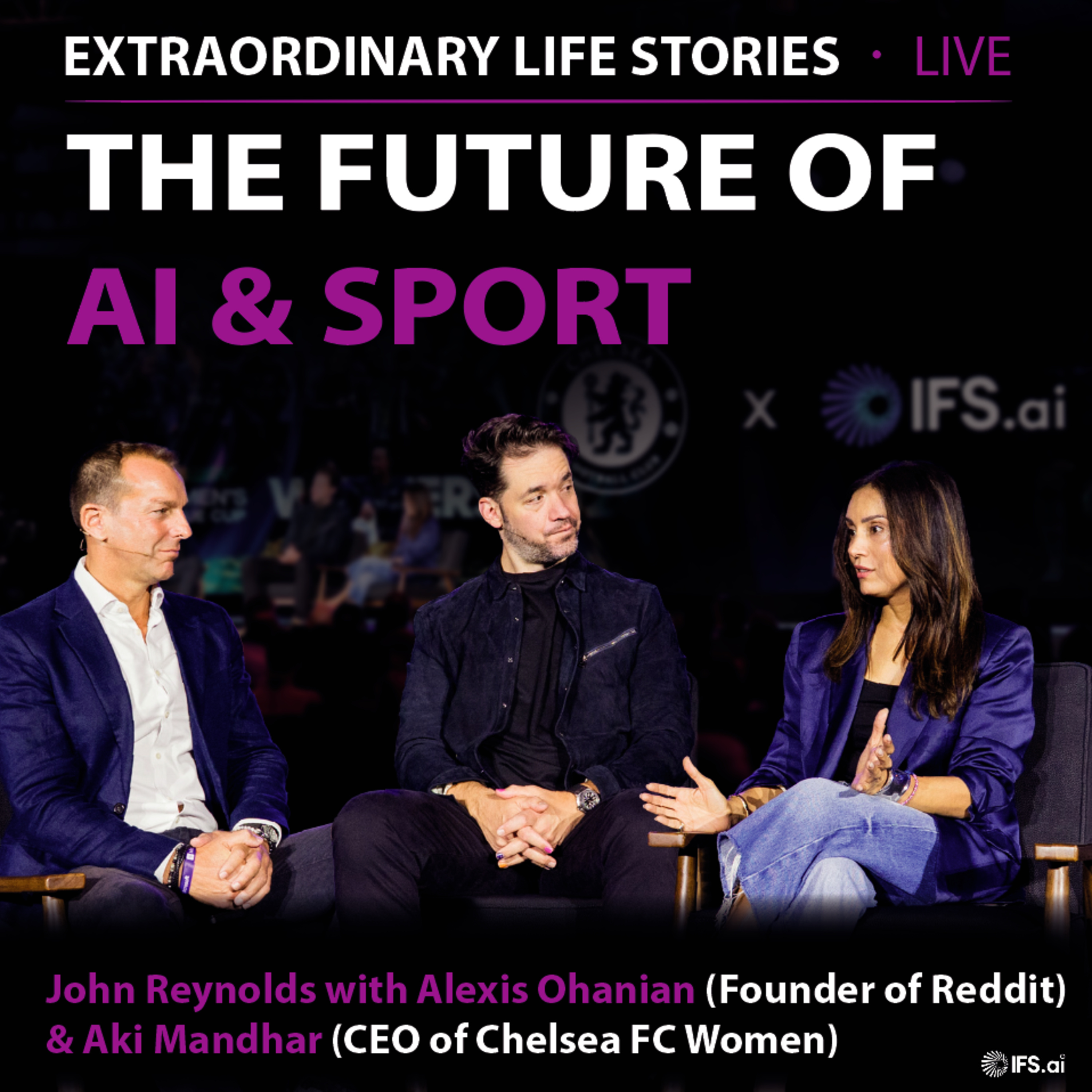
Recorded live on stage at IFS Unleashed in Orlando, Florida, this special episode of Extraordinary Life Stories features host John Reynolds in conversation with Alexis Ohanian, co-founder of Reddit, founder of investment firm 776 and investor in pioneering technology companies, alongside Aki Mandhar, CEO of Chelsea Women's FC. Together, they explore the future of AI, entrepreneurship, innovation and women's sport, asking how technology can unlock new opportunities and help build a lasting legacy.
Alexis reflects on the experiences that shaped his entrepreneurial journey, from learning to code as a teenager to building one of the world's most influential online communities. He shares why he believes we are entering one of the most exciting periods of technological change in his career, with AI creating unprecedented opportunities for entrepreneurs, investors and innovators willing to challenge conventional thinking.
Drawing on his experience investing in emerging technologies, including Anthropic, Alexis explores how AI is reshaping industries, changing the way we discover and consume information, and opening the door for people everywhere to turn ambitious ideas into reality. He also considers why, in an increasingly digital world, trust, authentic human connection and real-world experiences could become more valuable than ever.
The conversation turns to one of Alexis's greatest passions: the future of women's sport. He explains the thinking behind his investments in Angel City FC and Chelsea Women's FC, and why he believes women's football represents a significant opportunity to rethink the traditional sports business model.
Joining the discussion, Aki Mandhar shares her vision for Chelsea Women and explains how AI, data and technology are helping the club better understand its players, improve training and performance, and create more engaging experiences for supporters. From using data to inform player preparation to understanding what makes fans return, she explores how technology can help build a stronger, more sustainable future for women's football.
Together, Alexis and Aki discuss the importance of staying curious, embracing change and using innovation to solve problems that once seemed impossible. They also consider how technology can support human potential, strengthen communities and inspire the next generation.
Extraordinary Life Stories features candid conversations with the founders, leaders, athletes and innovators whose experiences reveal what it takes to achieve extraordinary things.
Subscribe for more extraordinary conversations exploring the people, ideas and innovations shaping business, technology, sport and society.
Extraordinary Life Stories is proudly sponsored by IFS.ai
Scan the code with your iPhone camera
Listen in the app.