
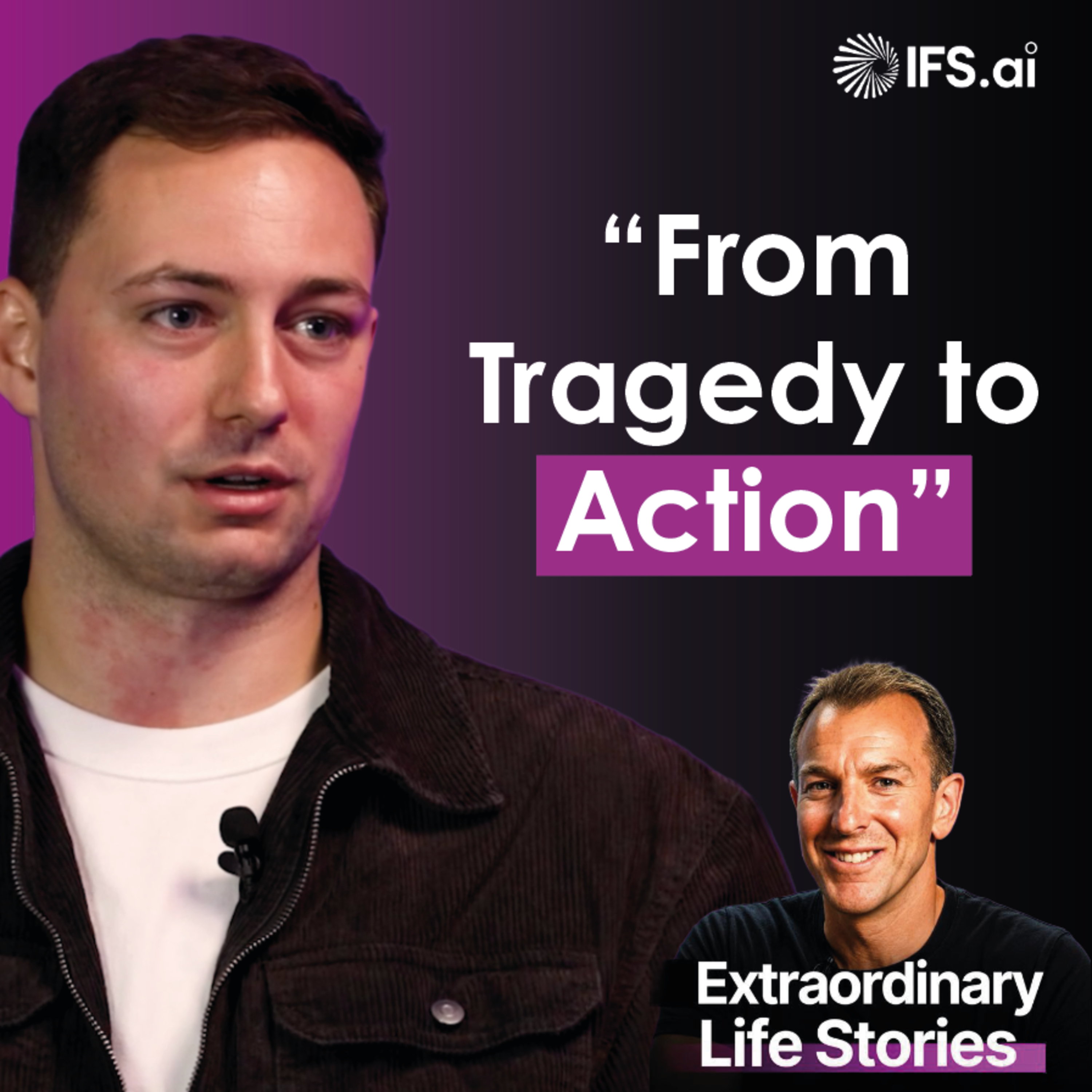
 Extraordinary Life Stories
5 Nov 2026 · 40m

 Add vo to ChatGPT or Claude to ask about everything you hear
vo listened to this episode to put together the overview and transcript, so there may be the odd mistake.
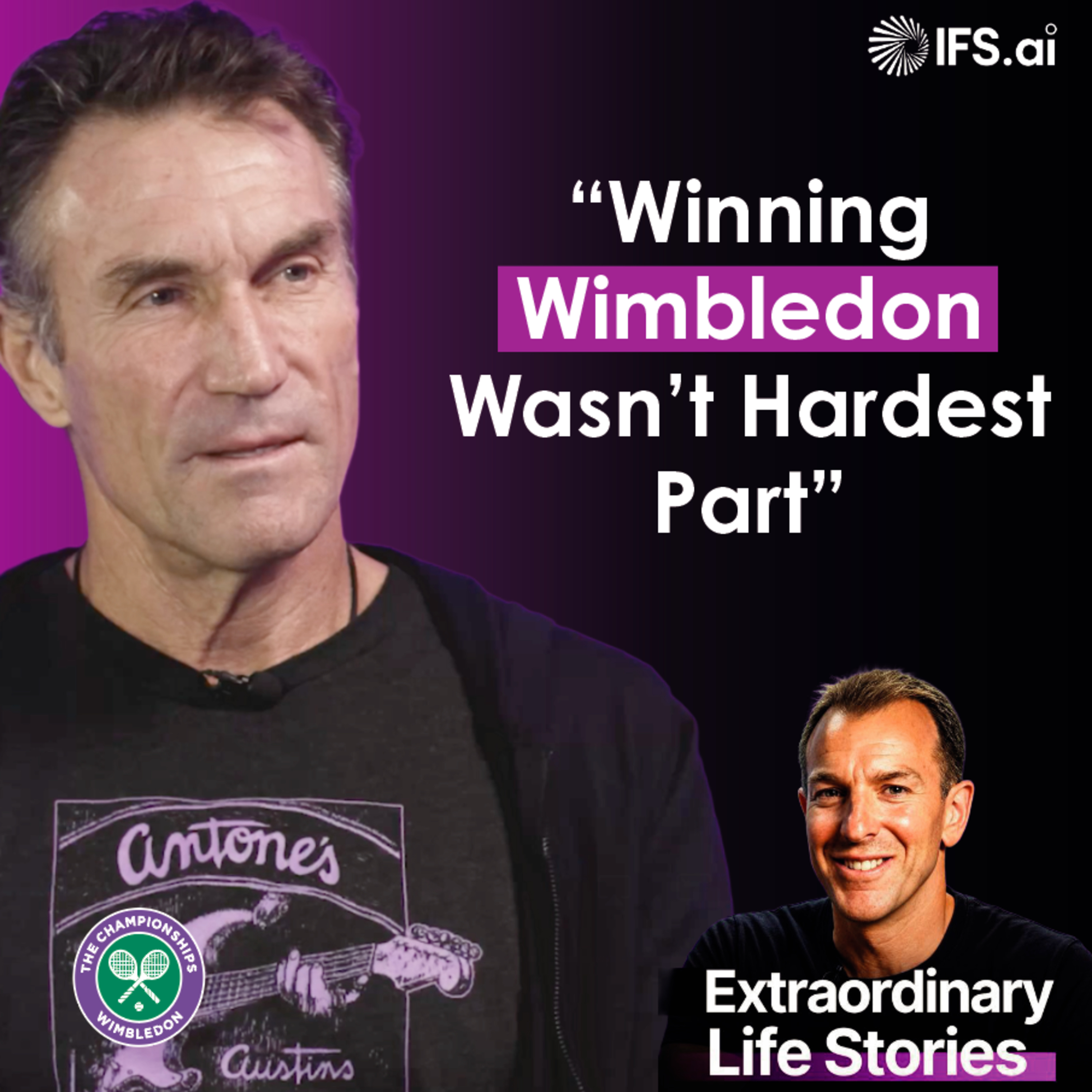
Pat Cash reflects on his life from junior tennis stardom to winning Wimbledon, then battling burnout and repeated injuries, rebuilding confidence, and redefining success through purpose, coaching, mentoring, stoicism/meditation, and family. He argues that “being the next big thing” is invasive, that modern sports science and mental training helped him, and that physical activity and learning are essential for mental health.
Pat Cash is a former Australian tennis champion (Wimbledon winner; also mentions Australian Open, Davis Cup, and Australian finals). He grew up in Melbourne, played Aussie rules, struggled with school, and later became a coach/mentor and tennis academy builder; he has four kids and five grandkids.
Wimbledon wasn’t the hardest part; injuries and identity crisis were. He rebuilt self-belief through therapy, stoicism, meditation, and spiritual learning. He says success is well-being “at all costs,” not results.
junior tournament “winning board” names (Bjorn Borg, Goran Ivanisevic, etc.); injuries (broken Achilles, back, knees); sports-science pioneer Dr Ann Quinn (speed/agility, nutrition testing); stoic idea of controlling controllables; rebuilding his game via biomechanics/sports science.
0:00Pat Cash: And being the next big thing is not fun. If you had a camera and a press ad, you could go anywhere. You could walk into the locker room and just say, I'm taking photos of you guys. It's quite invasive. Unbelievably invasive. Who is Pat Cash? So I'm just a tennis player at heart. Four kids, five grandkids now. I've been around the block. It feels like I've lived five lives. At 17, you were the best from a junior's point of view in the world. And then 22, you won Wimbledon. I want to play tennis. I saw the names on the winning board of this junior tournament. Bjorn Borg, Gennig Noah. My dad was there, my mum was there.
0:31If you can win this tournament, you can quit school.
0:34Pat Cash: And I said, I didn't hear anything else after that. So it was an escape. I heard quit school. Yeah, and ended up winning a couple of years later. This was a key thing. It was like a message for me. I felt that I identified with you. You're a tennis player. You lost. My self-belief, my self-confidence. I had to rebuild that completely. How did you do that? I hated tennis for a while. And I think that's when the injuries started coming. There's the coach, there's the physio, there's the stringer, there's the manager, blah, blah, blah. That didn't exist in my day. You were kind of lucky to have a coach.
1:06But I realized that to be the best that I wanted to be, I needed help. I needed experts.
1:25Pat Cash: Looking forward to this. Great. I've got a massive smile on my face. You make me smile. Everyone I say, I'm going to be talking with you today. They smile as soon as I say your name. I wanted to pass that on to you. Right, okay. I'm not sure what that is. Maybe they think, oh, I know where he is. I'm going to get my money back from him. No, I take it. It's a really affectionate big smile. Oh, thanks. Tell me, who is Pat Cash? Oh, where do you want to start? I feel like I've had about 15 lives. But, you know, I grew up in Melbourne playing Aussie rules, loving Aussie rules, Aussie rules father, just not particularly liking school but I couldn't, the school was only in between my sporting you know sporting times before school after school at lunchtime so sports mad you know I went through went through high school year 10 and the opportunity to travel overseas as a junior got very very lucky had an amazing coach my father moved from one side of Melbourne to the other side of Melbourne and just happened to drop in.
2:29I mean, you talk about luck. I happened to drop in with the best coach who had all the best kids in the state and then the country. I started traveling and as soon as I hit overseas, overseas as we call it, Europe, I mean it took about 48 hours to get there. I thought, you know, this is what I want to do. I want to play tennis. I saw the names on the winning board of this junior tournament, Bjorn borg and ganic noah yvonne lendell martina never had the lova and the list went on i went oh my
2:56Pat Cash: goodness my dad was there my mom was there because you know i was 13 sure i went oh if you can win this you can make it you can uh if you can win this tournament you can quit school and i said i didn't hear anything else after that so it was a great school and so uh yeah and ended up winning a couple of years later and uh then get invited to junior wimbledon so i'm just a tennis player at heart, love my sport, love my family, a family man, four kids, five grandkids now. I've been around the block, I've lived five lives and I'm only 61 and still lots to do. Makes life interesting, doesn't it? It does.
3:35You tell. Yeah, I was reflecting on this actually yesterday and people said, well, your career wasn't very long, you had a lot of injuries, you know, I did well, you know, about 40 years ago now you know Wimbledon Australian Open Final Davis Cup in Australian Finals but I think well I just kind of burned out because I went really hard and I went maybe too hard at it I'm very passionate about tennis and everything else and and I think I was sort of not sure if I was exactly supposed to be a tennis player for a long period it's not like Novak Djokovic 30 or 40 or whatever the hell he is now and still playing great level i just kind of thought tennis players in my era it's like move on that's just part of your life move on do something else once you get 30 it's like yeah i'm starting to think of living my life now not like oh just having fun playing tennis or
4:28Pat Cash: doing my fun thing i love the fact it was fun though because you know in the context you can love of sport i mean you're such a high level you can lose the love for it did that ever happen for you oh yeah yeah i think every tennis player has done that um and i guess he wrote that i wrote my book too autobiography but I hated tennis you know for a while and and I think that's when the injury started coming you know I'm a huge believer in the mental the mental side the brain the heart making you ill making you happy making you fit whatever happens to be but you know I was not happy and I was burned out and breaking up with a mother and my kids all that sort of stuff and then boom it one injury after the other after the other after the other after the other after the other i just went oh i mean literally that's the way it was broken achilles did my back broke me did my knee did my other knee you know it was just every time i came back it's exhausting coming back it's exhausting it's not like oh you know having a few few weeks off or off season tennis is an off season so when you're off you go back to basics you know nine nine months a year off broken achilles come back the fighting i mean you think as an athlete and you can't even jog around, you can't walk up and down the stairs without pain.
5:40And I went through that four or five times until I was just like, I can't do this anymore. And I had kids and everything else.
5:46Pat Cash: No, it's clear, you can feel it off you. You're super resilient and very resourceful and driven. You're all in. You're that guy, aren't you? And the youngster looking up at that board, seeing the names. And did you bottle those feelings? Did you hide the fact that you had lost the love for tennis? Because you don't really want to tell your coach that, right? the thing with tennis is why I've played it so there's that moment where you are on the court and it's just you and obviously I haven't got a coach and so you've got that extension of but there's there's there's an element of very much being your own person and so on how much did you share about how you were feeling oh man look at all all sorts of stuff was happening then I was injured so much that I didn't really had my original coach he's ended up working for tennis Association LTA here for you for years and living here because we're sort based here and I said mate go off and get a job I'm still injured but at least you're on your own again though right yeah I'm on my own but I had a great team behind me so great I wasn't was the first person to create a tennis team sports a team that you saw up now you see up in the box see running you know there's oh there's the coach there's the physio there's the there's a stringer there's the manager that was didn't exist in my day you're kind of lucky to have a coach you know it was usually a coach to like two or three players and you'd travel around the world and uh to find a gym we'd be lucky to your hotel gym that was about it there wasn't gyms at tournaments now and uh but i realized that i want to be the best that i wanted to be I needed help.
7:23I needed experts and I was very lucky to find those. I just think Dr. Ann Quinn who was then just a tennis coach with my coach and she was became, she was, went to college in the US, she became the world's speed and agility expert. I mean she was number one, she was going to East Germany and Russia and studying and like this, you know she knew exactly what was going on. She was just passionate and she knew how many carbs, how much protein, all that stuff. This was before, amino acids. Let's find some amino acids. What's amino acids? There was one place in the world that did the testing and that was Atlanta, Georgia.
8:00She said, I know the place. I'm going to get your urine, you've got to get your blood, you've got to get your head. I've got to do that every few months and send it across. I'm like, what the hell? I loved it. You could bring back these fatty acids and this stuff and you take these. Now you buy them. Chemists, right? He bought a pharmacy. But anyway, there was none, zero. But we wanted to, how can we get the best? Bring in a sports psychologist.
8:26Pat Cash: That was all pioneering at the time. I mean, it's another now. But back then, that was all. But I love the fact that you embraced that. You're like, how can I be the best? Yeah, how can I be the best that I can be? Give it a shot. Because at 17, you were the best, from a junior's point of view, in the world. And you won Wimbledon at 20, well, statistically. And then 22, you won Wimbledon. I mean, you came out of the blocks. and it's really frustrating listening to you because I didn't know until this conversation just how plagued with those injuries and the way you labelled them all up by them and that frustration where actually you've proven to the world that on talent, you're the best.
8:59Well, I don't know if I was. I never really got to be the best but I think the thing that really kick-started that passion for me, I think naturally I went top junior at 17, 19, I was top 10 in the world. Wimbledon semifinal and US semifinal, which was a great relief because I was the next big thing, you know, and being the next big thing is not fun. You know, play Davis Cup for your country, that's fun with your mates and the guys you look up to, that's fun. Being the next big thing after that and you probably don't remember, but you know, if you had a camera and a press badge, you could go anywhere.
9:38You could walk into the fucking locker room and just say, I'm taking photos of you guys you love i mean i went everywhere so yeah oh unbelievably invasive so you're being the next big thing in australia it wasn't wasn't great i was really happy to get the hell out of there but one significant thing happened is i did my back in uh and my girlfriend got pregnant about the same time um don't ask me how that happened um but uh so all of a sudden i've got a baby on the way uh and i'm like the surgeon's like well we're going to try some new injection we hopefully it'll work we're not sure how how strong your back will be after this blah blah blah um and that sort of okay i gotta pull my finger out so i was just focused on okay i'm gonna be the best and the strongest and i met this guy did these crazy hanging exercises and i used to do all this well your stuff you sort of seen that the gymnasts do um you know i was just getting ripped and strong and uh it was a bit like a rocky movie type of thing but i was imagining that yeah yeah but I wasn't the best player in the best player I mean there's Boris Beck was one member at 17 but you know and I meant at that moment you've been the best at that moment yeah yeah I had a period for about two or three two years probably 18 months where I was the best I felt I was the best player in the world um what for you and then that was as I said I only had
10:57Pat Cash: two maybe three good years between the injuries and that was that was kind of it I packed a lot in then yeah but that competitive part to you and just me listening to that now it's like if you've reached that and you know you can then that resilient piece to just keep fighting to get back to that because you've you've climbed it almost so early and then you're just constantly trying to get back to that and then having these different things what would you do differently now when you brought up the amino acids there's so much we know now plus you've got perspective maturity sitting here what would you do differently well i mean it's mentally and physically i think I was really into stoicism or sports psychology, which is stoicism.
11:36That really helped me through a lot of tough times. But when you only know tennis and then all of a sudden it's taken away from you and you've got this injury, you've got one option. It's just get back and to fight. And I think the biggest battle for me was no doubt not winning Wimbledon was everything that came after that. the recovery of your injuries the very very rare issue I had with my knee that it was you know nobody could work it out except that guess what I found the person though Jenny McConnell from Sydney she'd become very very very famous for fixing knee and shoulder issues that were unfixable getting that you know weekly injections into the into the side of the knee and then getting getting the band stretched and putting tape I mean there's a lot we know about that issue may not have happened if I'm, you know, the modern physios and rebalancing and everything else that goes with it.
12:32So the physical side might have, but I think it was, the reality I've come to realise is that I'm not, I'm known as Pat Cash the tennis player. People go, oh, you're Pat Cash the tennis player. And I go, yeah, yeah. But in my mind, I'm not the tennis player. I play tennis, but there's so much more that I do. I'm a teacher, I'm a coach, I'm a mentor, I'm a whatever that happens to be. And it's not going to be front, you know, back page story what I'm doing. But I'm not, I wasn't born to be a tennis player. God didn't say, you know what, I'll make you a tennis player. But I'll keep, you know, you'll make some people happy.
13:13You'll have some fun doing that and people will watch. But that's, is that really a life? What is your life ambition? What is your life goal? What are you supposed to be here for? Your purpose. what's your purpose exactly and it's not to be a tennis player no running around chasing a ball it's to do something else and you know kids and family and you've just given me that and mentoring and stuff like that book you've just done for the kids i'm going to enjoy reading it
13:38Pat Cash: yeah i'm a dad of two daughters right yeah and so i love the fact that purpose element you love the mentoring piece you love giving back and i just it's interesting because you know right at the beginning of this chat you said that you didn't get on at school i can i can relate to as well. I was not a bad kid, but I struggled to concentrate in algebra and physics. And actually, I was never able to pursue sport. It's boring as hell, though, that shit. But what's interesting is you love learning. It's so clear. Yeah, I love learning. Exactly. You lit up then. You love it. Open mind. And you love passing that knowledge on.
14:06And so... That is the greatest thing, having an open mind and a willingness to learn, isn't it?
14:11Pat Cash: Isn't it? Because everything's exciting. But what's interesting is we're both aligned in the fact that we didn't get on to school. No. So you probably put a relentless pursuit into your tennis because it was an escape from the academic side of things. But actually, you love learning. It's an issue. Yeah. I had a lot of people say I'm a rebel, but I had tremendous respect for my coaches and all that. I love them. They tell me stuff, and I was like, yeah, yeah, yeah, yeah. Tell me more. Tell me more. Biomechanics had to restructure my whole game. They do it in golf. You get a player, Tiger Woods or whoever.
14:44they say, oh, I've restructured my, and you go back to the drawing board and fix stuff. I never do it in tennis. I mean, gradually, but I had to. I went, scrapped everything, went back, sports science, biomechanics, you know, for a year and a half to try and get myself better. And I was just like, oh, I don't know. Well, this is awesome. And the whole concept of playing tennis and now to coach and everything just completely changed.
15:07Pat Cash: Yeah, different viewpoint coming in. Complete difference. You said rebel. I've got your bandana here, which you've kindly given me. Yeah, yeah. I used to watch you play. I loved watching you play. And there was something different about you. And of course, this was a key thing. It was like a message. And is that where you think the rebel side of things came from? Because for me, I felt that I identified with you. I was the kid that enjoyed playing sport, didn't enjoy academia, and was watching you in your peak. So, you know, I was at school age and you were smashing it and winning Wimbledon. But where's the rebel label come from?
15:41I don't know. I found it very hard to be pigeonholed. I couldn't really conform. Yeah, because I'm actually pretty shy and quiet naturally. But I was a family man at 21, but I love heavy metal, Judas Priest, Iron Maiden, whatever. I go out there and rock concerts and then go and have some fun. So I'm like, oh, is that the right... Well, it doesn't fit with the all-whites of Wimbledon, does it? fit with the old lights you know you couldn't question anything it's like i'm like why is this done i mean but i had a bit i had temper as well which didn't go down well because i came straight off the back of john mackenroe who's a who's one of my idols not that i copied him in that way but he was the first guy to say question stuff that ball was on the line i mean that was the classic you know that ball was on the line you know what are you talking about you know you know it was
16:37Pat Cash: the biggest story of all time how dare you question the law umpire at wibbley even though it was right on the line so you know i was like yeah what and my father was being a lawyer he always said yeah you had the right to say something if you feel like it but do it in the right way so i probably did it slightly better than john but the headband i'm sweaty person and uh i i always had a head the other headband the old beyond ball or whatever just round headband and i hear actually i'm playing a tournament here, pre-Wimbledon tournament, and a fan just came up to me and gave me this toweling bandana.
17:14I was like, that's cool, that's exactly what I need. Just a white one, basically a towel ripped up and sewn up, really. It was really sweet of it. And I went, that's cool, and I want to make it check, because my guitar hero growing up, Rick Nielsen from a band called Cheap Trick, I don't know if you know a band called Cheap Trick, American band, I want you to want me and this anyway he's um he always said this good check basically this is uh this is his
17:42Pat Cash: guitar strap that's his guitar strap yeah gotcha yeah yeah that's his guitar strap brilliant so there was me thinking this is some proper pirate kind of rebel uh the earring was there was one guy oh you're the first one in my earring no it was victor petschey from he was from south america He had an earring, big handsome guy. I went, oh, he's cool. He's a bit older than me. I said, I'll have an earring as well. And I was, you know, parents are horrified. An earring? My mum was kind of cool. My mum's sort of a wild one. You gave permission to others to be able to do that. I mean, asking questions is fundamentally how we learn, right?
18:20Pat Cash: You know, and if you shut down and kind of this is how we do it or don't ask questions, it's not a good way to live. No. And I really respect that that's what you brought. The government will say that. Don't ask questions. There's a lot of stuff going on in the last few years. Don't ask questions. Just do it. Otherwise, we'll lock you up. Well, that's kind of... Yeah, let's not go there. School. Physical activity. PE has been phased out of schools, right? Just looking at your career now, looking at how you used sport probably to keep you out of trouble. Oh, yeah. Yeah? You probably recognise that.
18:50Pat Cash: And then the fact that that kept you physically fit, which helps your mental health. Sure. We know this now. And yet right here as we sit in 2026, physical activity is less and less in the schools and then there's the screen time and so on. What's the messaging there? What have you got the energy? What have you got energy? Exactly. Where's it going to go out? That's a great point. Look, I don't know. It doesn't make sense, right? That's a really good question. No, you've got to, young people have just got to get there. I don't feel right unless I do some exercise a day. I go home at night, 20-minute walk, half an hour walk, whatever.
19:26If I don't do exercise, I just feel like, oh, I don't sleep very well. You know, it's just, just do something. Just keep moving. And, you know, I've had, I've lost count, about 14 surgeries because of sport. You know, I bet I keep going. You know, I mean, you saw me probably limping in here because I've got some injury of some sort. But you've got to keep going. You've got to keep moving. Yeah, it's powerful. You know, it's just, as you said, for the brain. Yeah. More than even the body, but yeah, keep going.
19:58Pat Cash: In my own way, it's the same for me. I have a gym at home. It's deliberate. It's part of it because it keeps my brain, keeps me mentally fit. Yeah. In some way, keep physically fit. And I think it's a really important message to put across. You have competed at the highest level. How would you get that stimulation now from competitors? Because you clearly, you look super fit. You're clearly keeping that. So what about that bit that you had that dopamine at one time in your life? How do you keep the competitive side of things going now? Oh, Luke, I probably thought towards the end of my career and after my career, it was going out and fun with nightclubs and doing some stuff I probably shouldn't be doing.
20:32But it was a bit of fun. That lost steam? That wasn't a long... A lot of athletes tend to do that. They don't want to sit in a bottle or whatever. Was there an identity crisis there as well?
20:42Pat Cash: Yeah, yeah. You're transitioning from what you were doing into something else, right? Absolutely. Ironically, I had no self-confidence whatsoever. My self-worth was based purely on my results in tennis. you're a tennis player. You lost. I mean, it's incredible. You go to a tennis tournament, you see if you go around with a player and how much attention you get and as soon as you lose, it's like crickets. Nobody will talk to you. When you win, there's the media all over you, the people doing that. Can you come and do this? Can you do that? If you lose, it's just like... Might as well not be there.
21:16Hi, you're playing today. It's very, very weird. So my self-belief, my self-confidence um i had to rebuild that completely yeah i believe you took about 40 years of therapy and and and and yeah really uh looking into myself stoicism helped uh a lot of uh i wouldn't call rehab but a lot of therapy um searching um different things different modalities of spiritual awakening, shall we say, and had some fantastic gurus and fantastic people. A Course in Miracles is an amazing book. There's another course out called 1111, Divine Mindset. These are non-religious things, though A Course in Miracles tends to be a bit Christian-based, but I needed to find myself and I needed to trust that I was going to be okay.
22:18And that takes, it took a while. It took a long while. So I'm still at it.
22:23Pat Cash: I was just going to say, it's a continual journey, right? Still at it. Yeah. Some of what's in this? Everyday meditation, whatever it takes. I was going to ask you, what is almost like the non-negotiable? Because I imagine this, because you're all or nothing. I've already said that, too. When you go into something, so now you're trying to find yourself and pull yourself away from the identity crisis and dark times. And then there's probably this whole kind of up and down. but just sitting here now you've probably got really good context on what has really worked for you what what would you swear by can you pass it on to someone watching this that might be struggling uh yeah meditation's huge i think uh yeah and and get some modality of some sort it could be stoicism could be a religious religious thing of some some form i'm you know i was raised catholic you know i went to school forced to go to school every forced to go to church every weekend And not that Australia is pretty relaxed to a church, but, you know, I came away from that because I started.
23:18Yeah, let's just say that, you know, certain parts of the indoctrination didn't necessarily agree with me, but I still love the principles of great teachings. Another teacher, Jesus, Buddha, Krishna, whoever it happens to be, great teachers. Let's learn from them. Hey, Epictetus, Marcus Aurelius. Wow.
23:37Pat Cash: okay these guys have got some stuff amazing how much they they got right so long ago that's relevant into those with ai level it's still so relevant well stoicism is basically the the self-help uh industry and and is also sports psychology and they did that 2 000 years ago epictetus seneca marcus aurelius uh xeno from it was uh the original from there's a shipwrecked off in Cyprus and that's what it is you're a sports psychologist oh we're just going to play one game at a time we're going to play one match at a time we're going to play one point at a time well we can't control that but we'll control we can control the controllables that's the principle of stoicism the foundation of stoicism learn what you can and cannot control that would be your happiness so and that's 2 ,000 years ago and we're still rewriting the book I mean they really should be getting some money for this stuff you know what I mean But you talked about having that.
24:36I lost the interest in competing. I hate competing now, though I do like my football team winning. But when you do it so hard for so long and you're still playing the Legends tournaments at 40 and 45 and edging up to 50 and McEnroe's out there wanting to rip your head off and playing Goran Imanisovic, he's serving these young guys just retired, serving bombs at 300 miles an hour. And you're like, I can't. and you still want to win it's just like i can't stand there i know i can't win it i can't fight anymore you know so you do lose the fight yeah but that's growing older isn't it sort of trying to find that that right balance and life is how many balls you gotta juggle you're trying to get it right you know oh i'm not enough family time with my beautiful fiancee sitting over here soon to be my wife luckiest guy in the world you know not enough family i've spent too much time with her not enough time with this oh my kids are over in norway my granddaughter's just been born i gotta to go and see her next week.
25:33You know, oh, I feel bad. I should have gone straight away. No, dad, stay away. You can't breastfeed. You know, don't worry. Come when you can. You know,
25:40Pat Cash: and the business, oh, I'm going to do this. So I tend to get a bit like that. So meditation is in the morning just to start off the day. Don't always do it, but you know, I'd say at seven, five days out of seven, I'll do something like that just to center yourself. Yeah. So I'm still learning. I love that. there's a real humility to you about that and i'm going to call it out as vulnerability is strength you know two guys having a chat where i've asked you that genuinely for myself later than anyone watching this thing because we're all at any one time fighting our own battles in the head all the juggling you know you've got your family stuff i've got mine i screw it up a lot but i it's getting back on the course quickly that's the thing jeez sorry apologize i'm sorry i really fucked up there but you know i correct get back get the hands on the steering wheel as quick as possible and you know that's no I get it I'm the best you can do but yeah I appreciate you saying you know I'll say some things I could like yeah no I think the word success I'll bring that in now I think you're doing super well and and that word success can relate to winning Wimbledon to all of the tennis career and then that the 40 years of working on yourself to be sitting here now still with a twinkle in your eyes still battling and fighting but with perspective maturity how do you define success yes that's a beauty isn't it um uh well success it's it's interesting because to define goals i think of a change you can have a goal general goal but you know what's your pathway towards something and what at what cost i think that's at what cost is is and then this is what a lot of the meditation and focus is is what what cost are you losing yourself and your soul and you're for to get a ferrari you live you know you know what my car this is so embarrassing i've got an old 20 year old golf golf tf something or other yeah it's falling to pieces and i'm almost embarrassed coming into the all driving into the all england club as a member coming in and that thing and people just sort of look at it and the security guys go oh sorry buddy who oh mr cash go ahead you know it's i don't care about a car do you quite like that though I think that's really cool.
27:53Pat Cash: Especially if you're wearing this bandana. He's part of his golf. Not usually in the car, but what is my success? Okay, look, to some people, it is a beautiful Ferrari. And hey, I'd have one if that was something that I really needed to do. But my priority is my well-being at all costs. And my partner and my family, but my well-being. And you're constantly changing that. It was tennis. It was money. It was oil. I go down and have some fun. Hey, I was playing guitar. I was nightclubs. Whatever it happens to be. Oh, no, it's the kids. And you're constantly refining that. And you may never get it right.
28:32But, you know, I think your mental well-being, you just can't sacrifice that. And what does that mean to you? To you and me, it's, hey, going to do some exercise and feel better about ourselves and do a bit of whatever it happens to be. Somebody else might be, you know, I just need to spend some time on my own. I love time on my own. um you know just sitting there and doing nothing uh watching documentaries or whatever you know for somebody else something else yeah you know i need to be i'm a single mother of three there's my hero single mother of three no you know and trying to get their kids through college that's my hero not some guy i'm just chasing a tennis ball right i'm just doing that's my hero um you know what does that mean you know i gotta look after my kids or i need a break whatever it happens to be whatever that happens to be everybody's different no you're right and that's
29:19Pat Cash: linked to purpose again and actually another thing to bring in is i crave this i crave connection and and learning from someone prepared to be authentic and and that is happy to share the lived experiences which you get energy you get energy from people i'm getting energy from you right now yeah see i i get drawn and my energy gets drawn from people i have so i can't be around groups for more than a couple two or three hours i'm just i gotta go it's funny i worked on that forever to try and put boundaries around and stuff you've got to learn yourself or you've got i i'm all in with you now and you and i can tell you are now and then at some point later i will need to decompress i need to be away from you know we have a crew of people in here where they so i need to then i need to go but i but i know that's the balance but i just wanted to bring that connected because i feel like that's i can feel that's important as well yeah everybody's different and my partner, she's full of, she loves community.
30:12And, you know, I said, I went to dinner with your brother for six hours the other day. She goes, yeah. I'm like, I mean, he's a great guy, but. But it's also, it's good to be challenged
30:21Pat Cash: because if you were allowed to, and my wife's got things that challenge me as well in a good way, then you perhaps would spend too much time isolating yourself and so on. So actually it's quite good. That's my danger. The yin and the yang works. I think you're right. Yeah, that's my danger. Yeah, I want to finish on tennis. Do you still play? because you mentioned earlier you lost the love of it at some point in your life do you go out on a court now and hit a ball and do you enjoy it i love it i love hearing that i i just love i lost lost the passion you know when it's too intense and that sort of stuff it's like whoa but now you can go out and you can hit a ball you can love coaching it's my it's my passion uh teaching the kids uh players tour players that's been my majority as i'm sure i mentioned that in the in the intro but the majority of my 60 of since i've retired has been has been coaching and touring, starting a tennis academy, that sort of stuff.
31:11You know, might be known for commentating or doing this and that. But, yeah, I love getting out and playing. I mean, it's a bit more painful and it's a bit more frustrating. I'm like, God, I used to be able to hit that shot. Yeah, yeah. I used to be able to get to that ball easy and get back, you know, with all my injuries. But I still love getting out there and playing and love coaching. And I love, you know, kids, like somebody who's enthusiastic, you know. It's the last thing. as soon as kids go like that, I'll go, right. You know, I've lost him, but okay, I'll come back to you, but you know,
31:44Pat Cash: oh yeah, tell me what's... Well, you see yourself in the kid, right? Yeah. Because you were that kid. Yeah. Especially if they're hungry to learn and you're like, you can teach them. And it's finding that passion. You know, I mean, I would have been that kid in maths, you know, the teacher would have gone, forget about him, I'll focus on you. Okay. But when it came to sport, tennis, yeah, yeah, tell me more. There'll be somebody the other way around. I'm like, oh my God, my mum's made me come here today and learn piano. My auntie made me, my mum forced me. I used to, I love my auntie but then I hated her for a while because she was a piano teacher and I had to get a piano lesson.
32:19So, it's like, Patrick, you need to go and practice. Stop playing tennis or sport and play for this piano. I kind of wish I had.
32:29Pat Cash: I've been that dad and you try and give, you're giving opportunity to kids but you locked on something that clearly you got very good at. Find that passion. Yeah. Who is the greatest player that you ever played? Oh, shoot. There's some good players. I think maybe overall Becker. I say Becker because he didn't really have a weakness. And I've said this a lot. Most talented, at his best, McEnroe. He's untouchable. You had no clue. He hit every damn line. He was untouchable. But Becker in general, Lendl had the power. It's the first power player. Villan and then Mr. Bloody Ball. Edberg was the light and fastest guy I've seen around the net.
33:08I never played Sampras, just missed him. Played Agassi a few times. I'm a great player, didn't seem to... But Becker had everything. He had the power, he had ferocity, he was physical. He didn't have a weakness. Most of the guys have a weakness. Lendl, okay, I can attack his second serve mackenroe okay if he's having a day off he'll miss a few this and that vilander blah blah blah you know doesn't volley as well there was always something you go you know if i play well i'll beat him you know i'll try and attack that uh if i'm a fraction off these guys you know as top level they'll beat me but with becker i'd go what's the game plan well let's hope he misses a few that was kind of the game plan you know it was like if i serve his point he can be a winner So if he's backhanding, he can win.
33:57He can serve five aces in a row. He can dive in three great volleys in a row. And then he'll fight like hell for hours. And you think, I had a good, decent record against him, but I just never felt safe, ever. It's really interesting.
34:14Pat Cash: Especially having been the punter watching. Yeah. I said, I played Sampras in my career. I think Sampras was one of those guys. He had no control over the game. I just hope he misses something. actually yeah I played actually played Rafa Nadal and had with Djokovic as well but not properly of course a different era never really got to hit with Roger Federer which was something I'd love to have done because I think he's a it's one of those things beautiful he's played just my next question should be like who's the greatest ever and it's like it's unfair question isn't because yeah you were in your world with Becker and uh Makima and so on and then it goes into the era you're talking about and so on but is there someone that you had to choose one person and I'm going to exclude you because...
34:56Pat Cash: Yeah, of course. But just almost like, who's the greatest? I don't think you can say there's the greatest. And I think this is why we'll be having this conversation. It's completely opinion. Why I'll be paid for after-dinner speeches until I'm 90. You know, it is very... You'd say maybe the greatest year of players was Nadal... Nadal Federer, Djokovic with Murray and Veverenka thrown in there and Cilic. That was some serious tennis playing. Very good at what they did. Federer could do everything. And Nadal developed a volley. But remember, the way that the game is played, it's played differently than it was.
35:37So I often say, would you get Pete Sampras or McEnroe or Becker to play Nadal on a grass court back in 1985 or 1986 on a grass court at Wimbledon? How would they go? I'd say, Nadal wouldn't have a chance. Becker would crush him. No doubts. No doubt. Flip it around the other way, go, well, Nadal will crush him. Wouldn't Becker adjust and Nadal adjust? Of course, because Nadal is such an amazing player, or Djokovic, that they would work it out pretty quickly. Okay, this racket that I've got now is not working like my racket that I'm used to playing. That's a really good point. I can't hit that topspin anymore.
36:17Whatever it happens to be. The bigger rackets make a big difference. But also, the one thing I like to throw out is the guys from the 70s, around that era, the Rod Labors, the Jimmy Connors. Have you seen the rackets that they were using? It's like this.
36:36Pat Cash: Tiny, aren't they? Yeah. And they were lightning-fast players. The courts were fast. The ball wasn't that great a bounce. The crappy shoes that they had. And these guys, Laban, Rosewood. Who's more talented? somebody can hit the ball in the middle of that or somebody can hit the ball anywhere on that and it has the same result you know it's like playing on a golf golf club that's this big and hitting in the middle anyone's this you know who's got in the shoes and everything else so who's more talented who's the best who's more talented who's at the best results you know it's one of these is a great conversation and we can do this for hours i'm grinning and i'm thinking of all the things you could bring into this and we haven't got time for it like you didn't mention just using that amino acids thing the players now have got nutrition they've got a mental health team they've got chefs with them the guys in the 70s was like it was man up yeah yeah no you'd be like yeah you were somewhere in the middle of that so it's like actually it's a really interesting conversation it was a really interesting period for me the 80s because everything was changing the rackets were changing from wooden to the aluminium to and the shoes were changing the grips were changing the strings were changing the sports science was coming in so all the the training that I was doing, and the mental stuff, it was changing every couple of years, and I'd always be looking over his shoulder and saying, hey, what's he doing?
37:51Oh, what's something new? What's that grip? I mean, the guys are pretty cool. Oh, I've got this new grip, or I've got this new string, try it out, or new rackets were different shapes. It was a really fascinating time. It was, you know, hairstyles were changing, clothes were changing. You know, it was a great period of the 80s, actually. It was a great experimental period. We're sort of, yeah, up the back,
38:11Pat Cash: punk and rebellion 60s and you know not quite cool uh yet but you know mind you that i think agassiz uh denim denim nike stuff was disaster i don't think anything could be worse than that but you know when we played when shorts were shorts right yeah i'm gonna label you cool i i was the i was sort of 10 years younger than you uh but got that right in 49 what are you now yeah 61 yeah Yeah, so for me, the lad at school, you were cool, Pat, and I've looked forward to this conversation so much. I want to thank you for just bringing you, entirely you, to this conversation because I've learnt more about the tennis, I've learnt more about you, and some of the things that I wouldn't have known until I had this chat where I didn't know that the bandana was for sweat, I thought it was a more of a statement, and the fact that you have struggled and you're winning.
39:00Pat Cash: You're winning sitting here right now with a smile on your face, and congratulations. Sitting here, for me to be sitting here, is a win, yeah. I feel that. I genuinely feel that. There was one moment I walked to the edge of the balcony and then I went, what am I doing? But that was, yeah. So that was a dark moment, but we all have those somehow and you've got to keep going. As somebody said to me, if you're going through hell, keep going. No alternative. Keep doing that. You're a tough competitor, but you've got a big heart as well. Yeah. You brought mega energy to this, Pat. Thank you. Yeah, thanks, mate.
39:39Pat Cash: Really, really enjoyed it. Thank you very much. Thank you.
Pat Cash is one of tennis's most recognisable characters. The 1987 Wimbledon champion, known for his iconic checked bandana and rebellious personality, joins Extraordinary Life Stories for a fascinating and deeply personal conversation about sporting success, adversity and finding purpose beyond the game.
Pat reflects on his journey from a sports-mad youngster in Melbourne to becoming one of the world's best tennis players, winning Wimbledon and competing against some of the greatest names in the sport. But behind the success was a far more challenging story, involving career-threatening injuries, burnout, losing his confidence and struggling with his identity when professional tennis was taken away from him. He opens up about the importance of mental wellbeing, meditation, Stoicism and learning to measure success differently, as well as his passion for coaching, mentoring the next generation and passing on the lessons he's learned along the way.
An honest and inspiring conversation about resilience, rebellion, family, self-belief and why sometimes the greatest victory in life comes long after the final point has been played.
Pat's book UNFK Your Serve is out now at unfktennis.com
Extraordinary Life Stories is proudly sponsored by IFS.ai
Scan the code with your iPhone camera
Listen in the app.