In short
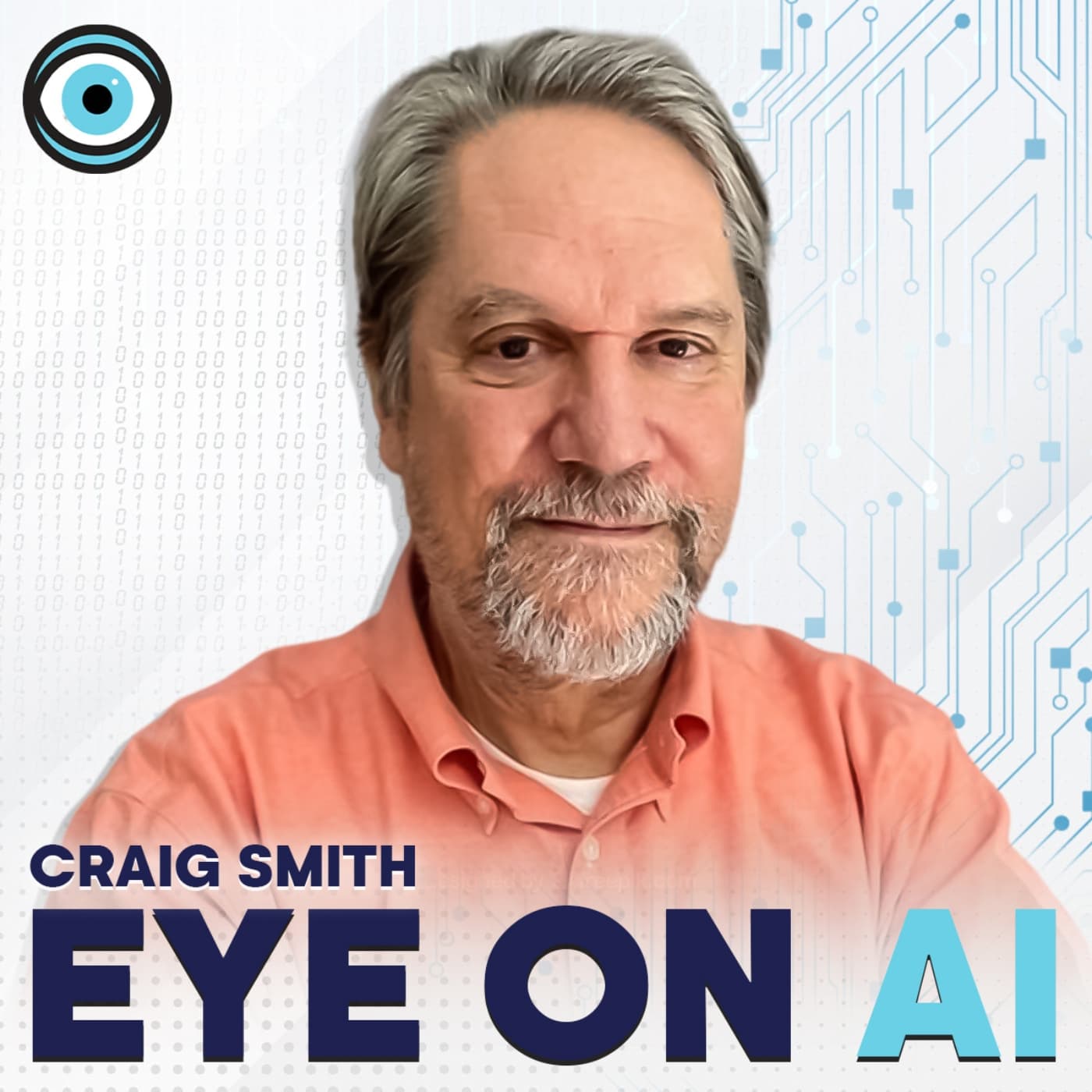
Podcast Summary: Eye On A.I. Episode #135 - Diaa El All: How AI Could Change Music Forever
Overview In this episode of Eye On A.I., host Craig S. Smith interviews Diaa El All, the founder and CEO of Soundful, an innovative AI platform designed for music creation. The episode explores the intersection of artificial intelligence and music, focusing on how AI tools can empower creators while navigating industry challenges such as copyright and monetization.
---
Episode Highlights
Introduction
- Sponsor Mention: MindStudio by YouAi offers tools for building AI businesses without coding knowledge.
- Guest Introduction: Diaa El All, with a diverse background in music, sound engineering, and entrepreneurship, shares his journey leading to the creation of Soundful.
Soundful's Origin Story (3:53)
- Background: Diaa's musical journey began in Cairo, transitioning from piano studies in London to a career in sound engineering and music production.
- Entrepreneurial Ventures: Prior to Soundful, Diaa founded a digital marketing agency and developed proprietary AI tools for marketing.
Soundful Overview (6:25)
- Mission: To democratize music creation for all, enabling diverse creators—from podcasters to professional musicians—to produce and monetize music easily.
- Function: Soundful allows users to generate royalty-free music quickly, solving copyright issues common in the industry.
The Role of AI in Music Creation
- Generative AI: Soundful employs generative AI to produce high-quality music without relying on copyrighted material.
- Innovation: The platform focuses on music theory and human-like playing styles to create unique tracks (25:50).
Industry Impact and Monetization (33:16)
- Target Users: Both content creators (e.g., vloggers, podcasters) and music producers utilize Soundful to overcome creative blocks and streamline their production processes.
- Monetization Model: Users can monetize their creations directly without the traditional complexities of music licensing.
---
Key Concepts & Discussions
AI and Creativity
- Human vs. AI: Diaa emphasizes that AI is not meant to replace human creativity but to enhance it. Those leveraging AI will gain a competitive edge in their creative endeavors.
- Imperfection in Music: The discussion highlights the value of human touch in music—imperfections add character and relatability to songs.
Future of Music Production
- Trends: The episode speculates on the future of music production, suggesting that creators will increasingly become "one-man bands" with access to tools for all aspects of content creation.
- Collaboration: Soundful aims to work alongside established artists to create premium templates, ensuring that artists can monetize their unique sounds.
Legal and Ethical Considerations
- Copyright Concerns: Soundful's model avoids using copyrighted materials, addressing a significant concern in the music industry about infringement and licensing.
- Proprietary Technology: The platform uses a unique approach to sound creation, focusing on one-shot samples and music theory to build compositions without replication.
---
Conclusion The episode concludes with a reflection on the transformative potential of AI in the music industry. Diaa expresses optimism about empowering the next generation of artists and content creators, ensuring they have the tools to share their voices and creativity with the world.
---
Additional Resources
- Soundful: [Soundful Website](https://www.soundful.com)
- Diaa El All LinkedIn: [LinkedIn Profile](https://www.linkedin.com/in/diaaelall/)
- MindStudio by YouAi: [MindStudio Website](https://YOUAI.AI/mindstudio)
---
Note: For anyone interested in the evolving relationship between AI and creative industries, this episode provides valuable insights into how technology is reshaping music production and licensing.
Written by AI. May contain mistakes. Listen to the episode to check what was said.
Transcript
Automatic transcript. May contain errors.0:00Currently, no. And we have no plans to allow users to upload musical instruments or sounds into the platform. One, because we can't tell really if they have the clearance of that sample and it can open a soundfall for infringement. Again, soundfall training materials and data and everything that is in under the hood for us is proprietary 100 % on soundfall and it's not infringing or trained on anything else. With any technology, there comes a lot of scare. And there's a lot of people that are saying, with Soundflow or others, like AI generative work is going to replace the human, whether it's a musician or an artist, et cetera.
0:39I completely disagree with that. AI is not going to replace human. Who's going to replace you for doing your job? It's the person that is leveraging AI and the technology to advance and become from human to superhuman. I'm Craig Smith, and this is Eye on AI. This week, I speak to Dia El Al, co-founder and CEO of Soundful, an AI music creation platform that helps artists, creators, singers, songwriters, and producers analyze, create, and monetize music. I'm fairly selective about the founders that I have on podcasts. I prefer to interview researchers. But Dia caught my attention because AI is changing the way that music is created and produced.
1:29And Soundful is unique in that it doesn't depend on copyrighted training data. I want to give a shout out to our new sponsor, Mind Studio by UAI, which is giving creators an opportunity to build and deploy generative AI apps for fun and profit. Now is the time to build AI businesses. Imagine if you could go back to the early days of the mobile app marketplace. Don't you wish you were one of the few that built an early app making millions today? The AI marketplace is emerging today, and MindStudio is the best way to build an AI business. Start driving some serious revenue before everyone else. Anyone can do it.
2:19MindStudio allows you to use conversational language to program incredibly powerful AI tools. No coding knowledge is needed to start your AI business today. There are countless ideas that can be transformed into AI solutions, which means there are limitless opportunities for MindStudio developers to capture interest in customers. It's easier than dropshipping or building an e-commerce site. All you need is an idea or a problem to solve, and you can build an AI application with MindStudio. Publish it everywhere and start monetizing. Check out Mind Studio today at uai.ai.
3:09It'll be worth your while. Oh, excuse me, sir. Did you remember to mention Mind Studio by UAI? I'm building a virtual butler to supplement my meager income. Tell your listeners to visit y-o-u-a-i dot a-i today. Carry on. Oh, is that Beauregard? Yeah, yeah, that was Beauregard. Why don't we start by having you introduce yourself, give us some of your background, your educational background, how you came to your current position, and then we'll talk about what you guys are doing. Sure, absolutely. So my name is Dia and I am the founder and CEO of Soundful. I'm originally born and raised in Cairo, Egypt.
4:10Started playing piano and into music since I was a little kid and went and studied classical piano when I was 13 in London. And from there, moved to the US and I wanted to make a career out of music. So went and I got a degree in sound engineering and music production. And during that time, I was a sound designer for one of the largest gaming studios in the world. And then from there, my career transition to a touring artist, DJ, producer, working with some of the biggest artists and major record labels and signed to a few of the majors and signed to a few others out in Europe in the Middle East.
4:49And from there, my career shifted into ghost production. and this is when i started writing for a lot of the big names back in the day and i left the industry that time and went into the finance to get my feet went into the business world and from there went the entrepreneurial route started multiple ventures had successful exits and the last one that resulted into starting soundful was a digital marketing agency smart boost and we started as three guys in the garage me and two my business partners and we wanted to get an edge into the market to work with some of the bigger brands not just like your your local moms and pops so we started hiring our own data science and software engineering team and developing our own ai and ml tools in-house that helps us you know from running campaigns to content creation and analyzing content to SEO optimization, CRO optimization, etc.
5:49And that gave us the edge to work with some of the biggest brands in the world from Ferraris and Lamborghinis of the world to multi-billion dollar SaaS companies to large enterprise corporation. But during that period of time, I am not a software engineer, but I am a sound engineer and a product and a marketing guy. So during that period of time, I got the exposure of what the power of the machine is and what you can teach it. And this is when Soundpool Idea was born. This is when I linked up with my co-founders and born Idea in 2020. Give us a sort of an overview of what Soundpool does. Absolutely.
6:30So what Soundpool is in a very easy brief sentence, it's a human-aided AI music creation platform we help artists producers content creators tv and film production houses anybody any creator from the creator economy today that wants to create or monetize music whether it's behind their videos whether it's on the streaming platforms whether it's on an ad or just the background music in their home we're able to help them the mission and vision of example is to democratize music creation to the masses the same way the phone has democratized video creation and broke the barrier to entry yeah when we spoke before i mentioned google's jukebox which is the only um ai engine that i was familiar with to generate music um and I'm not sure if they're using generative AI, but generative AI is sort of pulsing through the economy now.
7:35Is Soundful using generative AI? And if so, can you talk about how that's done? Of course. There are a lot of players out there. And as you mentioned, AI or AI music or generative It is the hottest word out there. But soundful, we go way beyond that. For the mission from the beginning is that can we create studio quality output, high fidelity, that will not be infringing on anything and not trained on any proprietary materials like, you know, like what Google has done recently with Google Music LM. They trained on 280 ,000 hours of copyrighted materials. And by doing that, then they started infringing.
8:21But Soundfall took a completely different approach. We are my core engineering team. We are music producers and software engineers, and we call them music dump. And that's where really the secret sauce of Soundfall is. We trained only on proprietary materials. And also, when we are developing our algorithms and training data, it's not one size fits all. it's how we can mimic the human way of playing an instrument and build an algorithm and train it the same way a musician plays a guitar it is a completely different from the way a musician plays a piano if you're playing a piano you're going to hit certain notes that a guitar player there is no way they're able to do it and this is when it starts sounding generic and it started sounding synthetic like and created by you can tell that it's created by machine but when we were creating Soundco, we went back to our roots.
9:16How can we deconstruct a music producer brain and a musician and teach it to the machine to follow the same building blocks? So first, we trained on music theory rules based on the specific style and genre. So taking core progression, melodies, and bass lines and training on that. And then leveraging also what is called one-shot samples like a one-shot sample is a curriculum sampled once a c-note is sampled once arguably soundful developed and owns one of the largest one-shot sample libraries in the world today and then the last part is automation so it's combining generative you know generative AI quote unquote so it's really like our algorithms that are trained you know to play chord progression melodies and baseline along with automation along with mimicking the human way of playing an instrument and this is how Soundcore has an output.
10:10Yeah and this is all on a web interface I would guess. That is correct we're mobile web and a web interface but we are having plans towards end of the year to be launching our mobile app and early top of 2024 we will be launching our BSTs and plugins as well that will be whether it's integrating into a DAW like Logic, Pro Tools, Ableton or integrating with Final Cut Pro, Adobe, etc. Yeah. Are you guys integrating with ChatGPT like seems everybody is? So they can use natural language to instruct the platform to do what they want it to do? We are looking into integrations with that. However, it's not going to be more driving the creation of the of the music itself but how we can integrate and um as a step further democratizing for helping songwriters etc to have a tool inclusive within the platform as well partnering up is in our dna and we're looking into partnering up whether with with other generative ai whether it's chat gpt for lyrics etc or whether it's dolly 2 or you know other other platform for image and video generation, all the way to partnering up with distribution platforms and really bringing in the full circle into Soundpool that it's a one-stop solution for any of the creator economy, whether from the start of the creation, distribution, monetization as well.
11:44Yeah. And with Google's model, you tell it that you want a song to sound like something else, right? And because it's been trained on so much stuff, or you describe the kind of song you want, I would imagine, I haven't used it, but you know genre and tempo and key and all that uh and it it generates a song uh is is it even though the the underlying tech is different is it the same for soundful and as i recall you don't generate vocals. This is purely instrumental. Is that right? Correct. Soundflow is completely different than Google Music Alumn. Google Music Alumn, as I mentioned, they train on 280 ,000 hours of copyrighted materials.
12:54It's not public domain. They're not going to be deploying the project and they're keeping it as a research project or research paper right now but what's been said is that one percent is infringing direct infringement and replication of the materials that they created well first they didn't get the rights to actually train on these materials and the record labels being close with the record labels like soundproof they're extremely extremely upset about that and of course um as you know they live the record industry, they're getting right now their legal themes up and running and getting ready for that.
13:34However, Soundpool sits in a very unique situation where because we've never trained on any copyrighted materials and we broke everything down to the fundamental building blocks of how styles of music is created and teaching it to the machine, so it doesn't impringe on anything else. And that's why Soundpool today is working with some of the biggest major record labels to the because gaming studios, the TV and film production houses, helping them expedite the process in a very short period of time without getting any problems with the quality whatsoever. So our vision and mission is to make human, super human, and leveraging these relationships and working with them.
14:16Now, going back to how Soundforce does music today, the user will go online, they select the genre, which is let's say hip hop, EDM, raw, you name it. Then they select the template. What a template is, is the style of the genre. So for example, if they're selecting hip hop, are they selecting trap or old school? If they're selecting EDM, are they selecting deep house or drawn bass? And from there, they select certain parameters, the BPM and the key, which is the tempo and a key. And we're introducing mood as well for the content creators that don't understand And the key from there, they click create in three to five seconds.
14:57The platform creates a brand new composition that can trigger the human ear to believe that it was done by a human rather than a machine. If the user saves that track, then there is a metadata locking into the backend that it would never sound or would never reproduce that track twice. what's the main use case right now for this and how do you see the use cases developing currently we have two target markets that we're and it's kind of like an equal split to be honest with you um we have the music from the b to c side and we don't really like to call it business to consumer it's business the creator so it's split into two parts we're seeing music creators and content creators.
15:43Music creators, you have your producers, singer-songwriters, etc. And in that specific cohort, we have people from the up-and-coming that want to understand and learn an instrument, all the way up to Grammy Award-winning producers, singer-songwriters that are using the platform today to get over creativity blocks, to come up with records quick if they're in a studio and in a rush, or to tap into different genres that they were never really producing before and come up with different ideas that's one second which is the content creator side we have we're seeing vloggers podcasters marketing agencies anybody that creates content on a daily or a weekly level they're leveraging sound pool because first of all we're different than any of the music libraries out there because the music libraries out there you're using the same songs that are available to a lot of different people and when you're monetizing when you come to monetizing from youtube youtube will send one check to the content creator and another check to the music library but with soundfall we're flipping that whole ecosystem upside down by allowing the users if they did the paid subscription that month which is 9.99 extremely affordable they're able to monetize on the content not only that but every creation from soundfall it's exclusive to the user so it would never replicate the same track life so you will never hear the same song on multiple videos.
17:08And you're going to be able to monetize on it from YouTube. YouTube is not going to send South for a check for the music. You're getting that check. So it's allowing the creator economy now to monetize and simplifying the licensing problems and copyright strikes, et cetera. Yeah. Since this is primarily an audio podcast, Could you give us a little demo? Absolutely. Absolutely. So once a user logs into the platform, this is the UX UI that they're able to see. We're democratizing music creation for the masses, so we didn't want to include any of the complex music production or music theory looking kind of UX UI.
17:54So left-hand side, we're currently in the navigation bar. Home, we're currently in the homepage. page templates. This is where we template eyes every genre and sub genre tracks is a global royalty free library that gets injected by hundreds and thousands of new tracks on a daily level. If users don't want to create from scratch, they're able to leverage this library. But let's say a user want to create something new. They're selecting the red button, click create a track, it opens up a drawer, then they're selecting a genre, let's say a hip-hop and then they're selecting a subgenre let's select lo-fi for example speed key major minor that's it and they click create three to five seconds it produces a brand new unique track
18:47so let's say leaving the same exact parameter is the same and click and create again it will never produce the same track twice, it will stay into the style of it, which is a template, but it will be different arrangement, maybe different sounds every single time.
19:12That's amazing. Right now, is it primarily a creative tool that people are using either for inspiration or for, you know, one track in a multi-track production? Or do you see people producing commercial music? Are they using it and just taking it from Soundfull and putting it out, maybe doing a vocal over it? We're seeing a lot of different ways. We're seeing some professionals in the music space on the B2C side that they are leveraging the track. They create some ideas, they create the tracks, and then they export the full stem files. They're able to export MIDI and WAV every single instrument.
20:04Then they drag it into their DAW and they manipulate it a little bit. or in certain cases also for vocalists and songwriters that they don't know how to produce, they use Soundfull, then download like the full track instrumental, and then they sing on it, and then they publish it. So that's one side. The other side is that we're working with, as I mentioned earlier, is that with large TV and film production houses with major record labels on leveraging SoundFull being a tool for their producers. So SoundFull, we look at it as we augment human creativity rather than replacing it. It used to take, you know, I don't care if you are an up-and-coming person or you are the Timberlands and Dr.
20:49Dre's of the world, you get creativity blocks. You get in runs. Sometimes you can't just flip over to another genre because just the creativity gets shut down. um so sample we see sample as a tool for that and for the tv and film side they want to build a lot of different cues in a very short period of time like a thousand cue for like for example unscripted tv show or scripted tv show and with soundful it used to take like a normal producer like six months to a year to complete a build of a like you know a thousand library cue or two thousand With Soundfold, they're able to leverage the technology and we're seeing four to five X more output in a much shorter amount of time for the producers because now they have the idea started.
21:39They put on their secret sauce, if you would, and tweak a few things and then it's done. And just for myself and listeners, what is a cue? I'm not a musician. yeah a cue is uh it's not a complete track so a complete track is usually you know sometimes it's two minutes three minutes five minutes ten minutes in certain cases a cue is usually a transition in a it's it's a term for the tv and film where you hear like a 30 seconds or one minute or minute and a half and it's that even the layout for the cue is completely different because you need to be like for example like a suspense suspense like a high rise and then a drop so different and we cater to both does the platform allow musicians to load in a again i don't know the the terminology but a a melody or a a phrase of music that then uh the ai can build on great question that will open And currently, no, and we have no plans to allow users to upload any musical instruments or sounds into the platform.
22:52One because we can't tell really if they have the clearance of that sample and it can open a sample for infringement. Again, sound for training materials and data and everything that is in under the hood for us is proprietary 100 % on sound for and it would start infringing or trained on anything If we allow users to do that, then there is a lot of different steps of clearing music, you know, whether it's a loop or a sound that the owner. However, towards the end of the year, we're going to allow users to be able to sing them to the platform, introducing a vocal capability that users would be able to sing onto the platform, upload vocals and just mix it and match it with the music.
23:38Right. And so they would be able to sing onto the platform and then the platform would match to what they're singing or they're singing over a sound full generated track. The second part, the users will be able to do the second part. There is without saying too much, I can't share too much about it yet, but there is a huge R &D project that we're going under right now in regards to vocals and matching vocals, music, etc. This is fascinating. How do you think this is going to change music and music generation? I mean, already production costs have plummeted, allowing people in their bedrooms to produce music, but they still have to learn how to produce.
24:32you talk about democratizing is is how do you see this developing i mean it's a little bit like the generative image platforms or text platforms that are allowing people to to do a lot more work than they would otherwise if they were creating out of their heads taking a step back and looking at the creator economy and all the tools that are launching right now. My personal thesis is that the creator will be a one-man band, for lack of better terms, empowered and entitled to be able to create everything that is surrounding whatever they do. So let's say, for example, if they're a blogger, they will have tools that helps them without any background in video editing or vocal processing to be able to do that as well as they have access to generate like to be a graphic designer they're going to be a music producers they're going to be a content creator right so it's really the technology is going to be advancing the careers of a lot of people and then also forcing other people to come out of their you know their shell and be able to leverage the technology with any technology there comes a lot of scare and there's a lot of people that are saying, you know, sound, with Soundful or others, like AI generative work is going to replace the human, whether it's a musician or an artist, et cetera.
26:02I completely disagree with that. It's AI is not going to replace human. Who's going to replace you for doing your job is the person that is leveraging AI and the technology to advance, to advance and become from human to superhuman. And especially in the music industry, we've seen advancement, like, you know, exactly as you step from a multi-million dollar studios their laptop and we have now way more artists and producers that we all love and it's thankful to the democratization but with any technology that comes from the music industry same thing happened when we've done you know the drum machine when the drum machine came out or the synthesizers came out like the synthesizer for example like the orchestral people like said the musicians like said no this is cheating we don't want it we hate it but now it's integrated even with them right it opened up the creativity for other people that don't have the talent to play these other instruments but they found their niche with this right you can take anything in the world and make it work for you for good or for bad it's all about how the user is standing to do but with us how we can simplify things simplify licensing which is a legacy issue in the industry and it's going to continue to be an issue and we're trying to do our part of how we can simplify it, allow the creators to own exclusive music and to empower them.
27:26I want to be the reason that the next, you know, Taylor Swift or Ariana Grande or Justin Bieber be discovered because they can't afford to be in a studio or they don't have the talent to produce. Well, Soundfull is a tool for them to take that step and help them be discovered. Is there anything out in the public domain that's getting traction that Soundfull has played a part in producing any songs or television commercials or movies. Yes, yes, yes. The only, the above, unfortunately, can't hear yet because, again, with any technology, people want to use it their own first and see how the public will take it.
28:13And then from there, they can be out and loud about it. Yes, there are songs out there that hit top 100 on Billboard that were, you know, whether it started or helped by Soundfall, etc. And to be honest with you, Craig, it's not the song, you know, Soundfall when it creates a song. it's not the perfection that makes it a hit it's the imperfection of the human element that gets added to the song we fall in love with the song because the the voice of the singer on it we fall in love with the song because the drummer took it and lift around and took out the drums and made it their own and unique it's the imperfection that catches your ears that's where you're not going to replace and that's where i stand tall about you know you're not going to replace human by by the technology it's going to advance the output but it's always the human touch to it that makes us human connect with the song you said earlier that the there are a lot of players in the space is there where do you think the industry is going i mean is there going to be a shakeout or consolidation at some point?
29:29The majors are looking about how they can adapt and work with with companies like Sample. There is going to be the biggest question. And it's funny because I had two of the biggest major record labels. And the first question, I'm not even exaggerating. As soon as I sat down with their heads, the first question that I got asked, what did you train on? And if I set copyrighted materials and it's not my proprietary data, then they would have said this meeting is over. we're not doing proceeding with everything right now um working with the biggest publishing houses and working with the biggest major record labels on how we can adapt soundfall in their day-to-day operations and whether it's in enrs or for their producers and artists they are adapting it right now because it's just a tool to to help them get from point a to point b faster now with soundfall even like the way that we approach it is that we're not using any loops pre-made loops and it's only using the fundamental building blocks, which is the one shot samples that opens up the variation for us more in flexibility onto the platform.
30:34Meaning we're also sound for is going to be doing major collaborations with major artists and producers, some of the biggest people on the planet building, as I showed you the template, the style to bottle the artist's sound that it's not, it's using the fundamental building blocks of some sound, but it's not trained on any of the copyrighted materials that the artist has produced. But this allows the artists and producers to enter in a completely new category and demographic that they were never able to enter before. They get ripped off by people trying to duplicate their music and put it off on YouTube and sell it as Thai beats, etc.
31:12But now Soundful is trying to make an effort how we can allow the artists to monetize onto the platform as well, not just leveraging as a tool. So give me an example of how that would work? Working with ex-name producer, Soundfall works together and building the one-shot library like, you know, how they do a bass sound or some of their drums that they use, but it's not pre-made loops. So there is no publishing or it falls under a mastering agreement or anything. And then my team builds it based on the style of the artist. We'll build a template based on the style of the artist. And then we'll start working on collaborating with the artists of how they do the mixing and mastering onto their music and send it back some point now then once it's done and it's in a place that it's agreed upon with soundful team and the artist then we will put it up as a premium template let's say it's $9.99 or$19.99 not a part of the subscription when a user buys this template they're able to create thousands and hundreds of thousands of tracks from it but when they buy it then there's a split that goes to the artist and a split that retains with soundproof and then if a user even wants to buy a copyright for that for one of the the records that they produce from that template then the same split applies to the artist and applies to the sample but think about it this way as a creator economy as a whole we sit at a 1 billion creator um we're a little bit over that actually right now and it's forecasting to be 2 billion by 2028 i believe it's going to be way more the biggest pain point in that category for content creators or the creator economy as a whole is music licensing copyright strikes that they're getting all the time and the major artists they're locked in a way that it's just monetization on spotify or selling records and it's not tapping into the biggest, you know, TAM to sound for trying to marry both sides of the equation together.
33:20It's too early for us to tell where, where the industry is going. Licensing in the music industry is a disaster, even like dealing with publishing and mastering and it's, it's really complex. So we're trying to do everything we can to protect the artists and producers DNA to allow them to be able to monetize and enter in a new category. What I found interesting is that you're building up these tracks from a library of discrete sounds, as you were saying, like one one shots. Yeah, so can you talk about what a one shot is? I mean, and particularly when you're talking about known artists doing this, these premium templates.
34:09Is it, you know, a particular artist tunes a guitar a particular way or has a particular kind of guitar that sounds distinctive? Is it that sort of thing where they, they, they strum a chord and you capture that? Or is it each guitar string, you capture sound from each string and then build up chords. I mean, how do you do that? What a one shot is, it's like the kick drum is sampled once or a C note on a piano is sampled once, is sampled and then, you know, C and then, you know, we sample every single note on the, whether it's the piano and what type of pianos or what type of guitars. And we've built these libraries ourselves.
35:00We developed it in-house. We rented studios, brought in, you know, musicians to help assemble different amps, different things like that. And when we're working with a premium artist, they usually have their signature sounds, whether it's coming from a specific guitar, how they tune their guitar, like which amps they use, et cetera, to like how they use synthesizers, for example, like a VST plugin that they use on Ableton or Logic onto the EDM side. And then my team samples it in a very specific way that we've developed and it's proprietary to Soundpool. And from there, it's the fundamental granular building block that builds the songs from there.
35:44And we have like, you know, one of our patent technologies that it's also, it lies into sound synthesis, that it will take some of these sounds, it will layer them together, whether it will EQ then compress and distort it to its infinite amount of even sounds out of the libraries that we have. Are there any tracks that you developed that you guys are particularly proud of that I could use in this podcast? Absolutely. We've done songwriting camp end of last year where we had some of the biggest songwriters on the planet to came for two days. We've rented Paramount Studios in LA. By the end of the day, we came out with over 10 tracks that are completely done.
36:31This is just normal songwriters put them in the studio to write songs using the technology they created from the normal traditional what everybody sees today on Soundpool. And they started writing to it. And again, you have a monthly subscription model. Is that what you were saying? Correct. Currently, it's a premium model and then a paid one paid subscription model, which is$9.99, and it's unlimited creation and downloads. However, we're introducing another tier very shortly in regards to specifically for content creators or the monetization side on the social media platform, etc., which is going to be even lower than$9.99.
Read the full transcript
37:14That's it for this episode. I want to thank Dia for his time and for the music. I also want to thank our sponsor MindStudio by UAI, which is giving creators the opportunity to build and deploy generative AI apps for profit. UAI has an emerging AI marketplace and MindStudio is the best way to build apps with generative AI. Anyone can do it. MindStudio uses conversational language to program incredibly powerful AI tools. No coding knowledge is needed to start your AI business today. Check them out at uai.ai and start building your AI app today. And remember, the singularity may not be near, but AI is about to change your world.
38:17So pay attention.
From the publisher
This episode is sponsored by MindStudio by YouAi. MindStudio is the best way to build an AI business. Start driving some serious revenue before everyone else. Mind Studio allows you to use conversational language to program incredibly powerful AI tools. No coding knowledge is needed to start your AI business.
Sign up - YOUAI.AI/mindstudio
On episode #135 of the Eye on AI podcast, Craig Smith sits down with Diaa El All, founder and CEO of Soundful, an AI tool that generates royalty free background music at the click of a button for your videos, streams, podcasts and more.
From its integration with natural language processing to major industry partnerships, Soundful is paving the way for creators to not just produce, but also to monetize their content without worrying about being copyright striked.
As we venture into the future of music production and licensing, we question the impact of AI on the music industry and what it means on the business side as well. We breakdown how AI can enable musicians to boost their creativity by drawing inspiration from generative AI music.
Finally, we delve into the debate surrounding the role of imperfections in crafting a successful song. Imperfections have long been considered an integral part of what makes music human and relatable. Is perfection still the goal, or is there room for quirks and idiosyncrasies in AI-generated music?
Tune in as we unravel the transformative power of AI in reshaping the music industry and propelling its evolution.
Diaa El All LinkedIn: https://www.linkedin.com/in/diaaelall/
Craig Smith Twitter: https://twitter.com/craigss
Eye on A.I. Twitter: https://twitter.com/EyeOn_AI
(00:00) Preview and Introduction
(01:36) MindStudio by YouAI
(03:53) Soundful's Origin Story
(06:25) Can Creators Benefit From AI Music?
(16:24) Who uses Soundful?
(25:50) Future of Music Production and Licensing
(33:16) How AI Creates Music
(37:15) MindStudio by YouAI


