In short
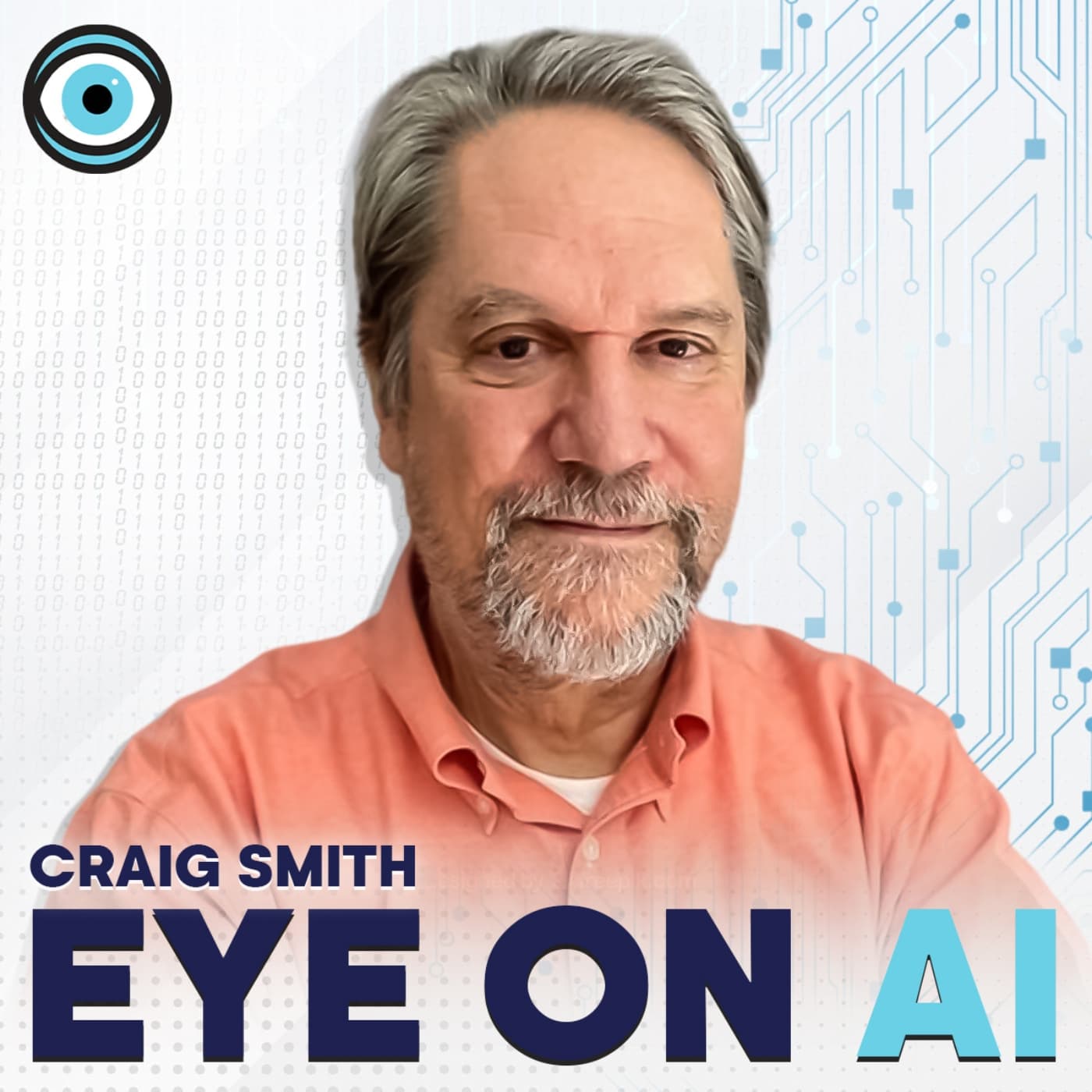
Eye On A.I. Podcast Episode #142: Arjun Subramonian - The Intersection of AI, Diversity, and Ethics
Episode Overview In this episode hosted by Craig S. Smith, the conversation centers on the intersection of artificial intelligence (AI), diversity, and ethics, featuring Arjun Subramonian, a PhD student from UCLA specializing in AI fairness and ethics. The episode dives into the impact of technology on marginalized communities, particularly the LGBTQ+ community, and discusses the importance of inclusivity and equity in the development of AI.
Key Themes
- AI Fairness and Ethics: Arjun's research focuses on ensuring AI technologies are developed with fairness, inclusivity, and social justice in mind.
- LGBTQ+ Inclusion: The discussion highlights the efforts made by the Queer in AI community to foster a supportive environment for queer individuals in AI research and to advocate for equitable practices in technology.
- Intersectionality: Emphasizes the importance of recognizing multiple identities and experiences within technology development, particularly for marginalized groups.
- Challenges and Pitfalls: Arjun discusses the biases present in AI technologies and the systemic issues that perpetuate these biases, particularly in academia and tech development.
Episode Highlights
Introduction
- Craig's Opening: Discussion about the evolving landscape of AI and the importance of ethical considerations.
- Sponsorship: Introduction of Celonis, a company specializing in process mining and AI solutions.
Arjun Subramonian's Background
- Path to Academia: Arjun shares their journey from Silicon Valley to academia, motivated by experiences of marginalization and the desire to create equity in tech.
- Queer in AI: The decentralized organization that promotes LGBTQ+ representation in AI research and deployment.
Promoting LGBTQ+ Inclusion in AI (03:12)
- Queer in AI Initiatives: Education programs focused on equitable policies and advocacy for LGBTQ+ individuals in technology.
- Creating Safe Spaces: Importance of fostering environments where queer individuals can thrive without fear of harassment or exclusion.
Decentralized Organizations (15:29)
- Structure of Queer in AI: Emphasizes a community-driven approach; anyone can organize initiatives or discussions.
- Diversity of Voices: Acknowledges the intersectionality within the queer community, urging the importance of listening to diverse experiences.
Pitfalls of AI and Academia (22:29)
- Bias in AI: Discussion of systemic biases in AI technologies, including challenges faced by LGBTQ+ individuals.
- Content Moderation Issues: Examples of how AI systems often fail to protect queer identities and experiences.
AI Evolution and Challenges of Inclusion (30:59)
- Historical Context: Arjun reflects on the evolution of AI and the need for inclusivity.
- Democratizing AI: The necessity of localizing AI development to solve community-specific issues rather than centralizing it in tech hubs.
Intersectionality and Inclusivity in AI (38:26)
- Understanding Complexity: Importance of recognizing complex social identities and the inadequacies of traditional models of inclusion.
- Cultural Contexts: The need for global communication to address diverse inequities in AI development.
Conclusion (45:20)
- Call to Action: Urging the AI community to prioritize inclusivity, equity, and awareness of intersectionality in future developments.
- Celonis Sponsorship Reminder: Closing remarks and reiteration of the transformative potential of AI.
Key Takeaways
- AI technologies must reflect diverse experiences and promote inclusivity, especially for marginalized communities.
- Intersectionality is critical in understanding the unique challenges faced by individuals within the LGBTQ+ community in tech.
- Community-driven initiatives like Queer in AI play a vital role in advocating for equitable practices and fostering support networks.
- Awareness of the biases present in AI systems is essential for developing ethical and fair technologies.
Additional Resources
- [Celonis](https://www.celonis.com/?utm_source=eyeonai&utm_medium=referral&utm_campaign=ai/)
- [Craig Smith's Twitter](https://twitter.com/craigss)
- [Eye on A.I. Twitter](https://twitter.com/EyeOn_AI)
---
This episode emphasizes the importance of inclusivity and equity in the rapidly evolving field of AI, encouraging listeners to consider the broader implications of technology on marginalized communities.
Written by AI. May contain mistakes. Listen to the episode to check what was said.
Transcript
Automatic transcript. May contain errors.0:00They were using block lists that contain words like gay and lesbian. and you know we kind of were like hmm this seems like this is like very meta like we're here we're talking about like bias and equity but the acontextuality of that is very stunning right it's like how can you just take a sentence and see the word gay and say immediately that's going to be a bad thing we are a very decentralized organization so of course i'm here talking to you about the organization but i wouldn't consider myself a leader or an organizer or anything anyone can become an organizer at any point anyone can take a step back anytime they want it's all about realizing that there is some kind of initiative that you want to put on, or there's a program that you want to help out with, or there's just something you want to learn more about.
0:40Hi, I'm Craig Smith, and this is Eye on AI. This week, I talked to Arjun Subramanian, a PhD student researching AI fairness and ethics. Subramanian discusses the work of Queer in AI, a decentralized community promoting inclusion of LGBTQ plus people in artificial intelligence, research, and deployment. Subramanian explains how queer and AI runs education programs, advocates for equitable policies in AI, and makes visible the diverse challenges queer people face in tech and academia. While optimistic about improving AI, Subramanian notes achieving true inclusion requires expanding awareness of intersectional identities and listening to marginalized voices globally.
1:41Overall, Queer in AI aims to shape AI positively by surfacing harms, fostering representation and embracing flexible epistemologies. I hope you find the conversation as enlightening as I did. This episode is sponsored by Salonis, the global leader in process mining. AI has landed and enterprises are adapting, giving customers slick experiences and the technology to deliver. The road feels long, but you're closer than you think. You see, your business processes run through many systems, creating data at every step. Solonis reconstructs this data to generate process intelligence, a common business language.
2:31With process intelligence, AI knows how your business flows across every department, every system, and every process. With AI solutions powered by Solonis, enterprises get faster, more accurate insights. a new level of automation, and a step change in productivity, performance, and customer satisfaction. Process intelligence is the missing piece in the AI-enabled tech stack. Search Celonis, C-E-L-O-N-I-S, to find out more. So my name is Arjun Zubramonian. I use they, them pronouns. I just started the second year of my PhD at the University of California, Los Angeles. and my research focuses on the intersections of machine learning on graph structure data as well as things like algorithmic fairness, bias, social justice, and ethics.
3:25So looking at the ways we're doing machine learning on things like social networks but in a way that's very inclusive and equitable for everyone that's being impacted by these algorithms. I grew up in Cupertino in the Silicon Valley and I think when I was growing up I was just like absolutely inundated by technology surrounded by a lot of very famous companies. In fact, walking to school, I kind of walked through Apple campus adjacent areas, and there were self-driving cars being tested. And so it kind of was, for better or worse, has pushed in that direction effectively of going into computer science, of being very interested in artificial intelligence, intrigued by these things.
4:01I have to ask, were your parents' academics or in the tech space? They were also in the tech space. So my mom is a software engineer at Oracle, and my dad used to be an electrical engineer at Texas Instruments and then he just recently moved to a startup. So they're all very involved in tech. It's kind of like a tech family, tech neighborhood. And I went to UCLA for computer science. I was like, this stuff is cool. But then at the same time, this is when I was coming, figuring out my identity, especially with relation to queerness. And I think like when you're marginalized in certain aspects, you start realizing that there are ways in which technology doesn't work for you.
4:33There are a lot of other communities that are also being potentially negatively impacted by the technology that we're building. And so as much as I was interested in artificial intelligence, I wanted to bring in that equity aspect as well into my work. I was doing a lot of diversity and inclusion organizing. Like, for example, at UCLA, we organized with some other amazing people, the first LGBTQIA plus hackathon in the U.S. and at the college level. And then I was doing some other advocacy work just around like the UCLA computer science department. And that really fed my desire to add equity to my research.
5:06right like I was thinking about all these ways in which I was working directly with people who were unable to afford even just applying to college or who felt unsafe in their computer science classes and I was just like I need to this is very important to me so I'm going to bring responsibility into my work and yeah and then I noticed Queer and AI existed actually I didn't I'd never heard of NeurIPS until 2020. NeurIPS 2020 was my first virtual conference and I attended the Queer and AI workshop actually that's the only reason I went to NeurIPS and I was just amazed by everything that was being done.
5:36It was like a community education and empowerment event. We were learning about what it's like to publish academically as like a transgender researcher. There was stuff, there was like a social space as well. Like I was meeting all these really cool queer academics who were like role models. I realized I hadn't had many queer role models before. And then, yeah, that was like the last thing I needed to be like, I'm going to go into grad school. I'm going to go become an academic. I really love this work. I love this community. And then the rest is just like this history. Like I'm now organizing with Queer and AI and I still talk more about what Queer and AI does, but that's a little bit about my background.
6:09Yeah, that's fascinating. When you talk about equity in technology, when you were first thinking that you want to get involved in that, I mean, certainly everyone understands the inequality of access to technology. But But what's interested me about the affinity groups in general in AI is I assumed initially that they were just social clubs. I mean, you're black, you come to a conference, there's an organization where you can meet other people of color, or you are gay, there's Queer and I, AI. It's like a networking club, you meet other people. But then the more I've listened, and particularly on the bias issue, I interviewed Tinmut Jabru for a piece that I did for the Times, and I began to see that this is a field that's critical to the future of humanity, and it's being developed and controlled primarily by white men.
7:14and that there are biases in the data that might not be recognized. Certainly, there are all those early stories that we've all heard of AI systems doing things. But maybe there are areas that one group, like white males, are unaware of or wouldn't see. And so the technology doesn't develop in that direction. So when you started saying that you wanted to work on equity in tech or in AI, were there specific issues that you could see? Or were you assuming that there were issues? Or were you talking more about the access question of who gets a computer, who gets educated? Yeah, that's a great question.
8:00I think it definitely is a combination of the two. I think when I was growing up in the Silicon Valley, like it's very much a bubble. Of course, even there, I realized there are dramatic differences in access to technology. If you're outside the Silicon Valley, it's a completely different place. The Silicon Valley, everyone goes to school. They have access to science classes. They have access to actual computers. You can go study AI if you want to. In fact, a lot of people study it from a very early age. And so studying at UCLA, you meet people from so many different backgrounds. And if people are interested in these things and they want to study them, everyone should have the opportunity to.
8:33And so that's partly where I was coming from. Like, I met people in computer science classes, women, black computer science students, etc., who just, like, were like, I don't see anybody who looks like me here. And that's also, like, an access issue, right? Like, even if you have the tech now, it's like, how do I access education if it's not, like, if it's a very toxic environment to be learning? The other thing is, like, yes, like, I'm sure Tim Neat probably talked about this a lot, and she would probably say things a lot more eloquently than I can on this topic. But I think the first thing I saw was actually Joy Bulamwini and Team Neat and Deb's work on the commercial face recognition technologies and how there were disparities, intersectional disparities between like white men and black women, like whose faces were being recognized.
9:14And I was like, wow, this is really bad. In fact, like black women could put on a white mask that looked nothing at all like a human. And that would enable the technology to recognize them, but it just would not recognize them. And then as you learn more and more, you realize it's not just about these biases. It's like, how do these biases translate into real-world harms? You see a lot of queer people online because of how acontextual and how, I guess, not very granular and there's not a lot of consideration of societal context and also representation that people who are building content moderation systems, queer people are being censored online.
9:49You see that trans people are being harassed and bullied through things like dog whistle transphobia, which is where you don't say explicitly, like, you don't use curse words, you don't use anything explicitly profane, but you're still saying very hurtful and harmful things. Right now I'm talking about social media, but of course this happens in tech communities. Tech workers face this stuff all the time, where there are kind of like these microaggressions or like snide comments that like just make it like an inhabitable space. But yeah, just like in the context of like social media, for example, like these content moderation systems don't catch things for queer and trans people.
10:20And then, if anything, they over-police the language that queer and trans people use themselves. If you use the word, like, actually even in Europe's, the Rocket Chat system, we noticed during the first Queer and AI workshop, you couldn't use the word lesbian in the Rocket Chat system. And that made the workshop hard because, like... Is that right? It blocks that word? Yeah, they were using block lists that contain words like gay and lesbian. And, you know, we kind of were like, hmm, this seems like, this is, like, very meta. Like, we're here. We're talking about, like... Bias and equity. And that's a third-party app that they're using, right?
10:54And that app had these block lists just in their product, not specifically for this conference. Right. But the acontextuality of that is very stunning, right? It's like, how can you just take a sentence and see the word gay and say immediately, that's going to be a bad thing? And it's not just limited to RocketChat. There are these amazing papers on these large data sets, like these huge text corpora that we're using to train our large language models. and the kind of filtering processes that go through that data before we train our models on them. And like about 40 to 60 percent, my belief, I'm quoting the statistic correctly, of documents that have the word queer or gay or lesbian, homosexual, are removed from the training corporate, even though they don't contain anything like explicitly sexual or profane.
11:37And the rules are being set manually, or is that an effect, a knock-on effect of some other policy? They are being set manually, but I also think it's about tendency in this community to not inspect our data or think about our practices super critically. It's not like people are going in, not everybody at least is going in and making these lists and saying like, yeah, I'm going to remove like the documents with the word gay or lesbian. It's like we have these repositories of block lists that just get recycled and repurposed over and over again. And people just take them without being critical about their contents or like the downstream effects of using that kind of block list yeah and even you know the documents that you contain where it's like queer and lesbian it's almost never like the data we scrape just because of how vile the internet can be is it's over-representing like cases where queer people are hyper sexualized and there's not a lot of cases where queer people are just treated as like normal human beings that lead like very complete lives it's all about this kind of almost fetishization of that moment where people are coming out or like people are transitioning and that's the focus like there's this mysticism about it that is like they call it like the cis het gaze like the cis gender like heterosexual gaze yeah it's like the people who are being centered here are like the people who are the perceivers of the queer community and what matters to them is like what they find like to be centered in queer people's life just coming out whatnot which is almost never true obviously kind of have had to come out multiple times but that's not what i think about on a daily basis but when a language model sees something like this it's gonna perceive that like this is kind of what goes on in queer people's lives and i could keep going like social media you can have recommendation algorithms that are outing like queer and trans people because people are have these are private accounts where they post like more personal content that they share with a small group of people but then if you recommend someone's profile to like someone else and now like these people have discovered that you exist and there's this aspect of identity that they weren't comfortable sharing with you that's not particularly good in we know in like egypt and some other countries the police use like grinder to identify where queer men live and come after them so yeah you realize like it's not just bias like of course bias is one part of this but there's so many like tangible harms that result from just the ways in which these systems are being deployed that kind of go beyond just bias it's like the infrastructure in which we're deploying these systems are often so agnostic to social context.
14:02And so maybe like, they're not, we're not considering the like the very complex social inequality faced by queer people. There's so many ways that the people again, because it's predominantly cishet white men who are building these systems, they could not even fathom like that the system would affect people in this way. And the other aspect of it is even when these harms do become apparent to people, even like I've been part of a lot of efforts to voice harms, people still don't do anything about it because they treat queer people as some kind of negligible minority, like there's a utilitarian perspective that kind of comes in.
14:34That's fascinating. So the queer and AI is an affinity group. I mean, and I assumed as much so of my saying that I thought it was a social group. I kind of assumed there was some something more purposeful there, but I just haven't spoken to anybody. So forgive me for that. So there is a real purpose to having the group. And that is not only to raise awareness among the AI community, but to work on how does the group work? Are there projects or is it a place for people to talk about these and learn from each other and then go back to your organizations where they might be and spread the word about, hey, we should pay attention to this.
15:17So how does it work? Yeah, again, another amazing question. It's a little bit of everything. And I think that very much is the result of it being a ground up, community driven effort. We are a very decentralized organization. So of course, I'm here talking to you about the organization, but I wouldn't consider myself a leader or an organizer or anything. Anyone can become an organizer at any point. Anyone can take a step back anytime they want. It's all about realizing that there is some kind of initiative that you want to put on or there's a program that you want to help out with or there's just something you want to learn more about.
15:50You know, as a queer person, like it's not like the whole organization is not monolithic by any means. There's just so much diversity and intersectionality that kind of comes in. And I'm constantly shutting up and like listening to other people's experiences, people who are like queer and Dalit. So like you're like you're oppressed on the basis of caste or if you're like queer and black. Like I have privilege along so many axes. And so it's about listening to all these people, realizing there are ways in which I can support and uplift their voices and then putting my time towards organizing these programs.
16:19And anyone can do that. So I can talk really quickly about some of the programs that we do run. Of course, like you said, there's a lot of socializing. And this is great because we actually run our we run a demographic survey every year to get like a pulse of like the queer community within artificial intelligence. 85 % of people said that they don't feel like they have any role models. And 80 % of people said that their mental health was really bad in the past year. And those are like considerable, very high numbers. A lot of people say they don't feel like welcome at conferences, but relatively, they feel very welcome at Queer and EI events.
16:55People describe it as pure joy to be there and just to even talk to other folks. But the workshops also double as community education and empowerment. It's an opportunity for you to listen to people from the community who are very well-versed in certain areas, like the experiences of trans people in academic publishing or what it's like to be intersectionally marginalized based on queerness and caste. And in the past, we've done things like non-binary people in the global South. So we're really taking the effort to not just focus on cis gay white men. It's about the true complexity of the queer community and for people to have the opportunity to learn about these issues.
17:31And I really like those events. And I think the one thing that you actually even the NURPS board is not fully aware of is the breadth of activities that we do outside of the conferences. The conferences, like we are a full year organization always running. We have a graduate application fee aid program. A lot of people in our community, because of how you might get disowned or financially disenfranchised, do not have the funds to pay for just their grad school applications. Forget like actually living and actually attending grad school afterwards. But just the fee to apply to school is so much.
18:05And this is even worse for people from Ethiopia. The fee to just take the GRE is three times the average salary of a person. Absolutely ridiculous. And so we have this program. We provide people with, it changes every year, but like up to$1 ,000 for people to take their tests, to apply to five to six schools. And this has prevented people from, one third of people from skipping buying groceries, half of people from not being able to apply to certain schools. So it's very impactful work. We also do a lot of research and advocacy. So on the research end, we try to talk about biases and harms and try to make it like have these bodies of work papers that kind of talk about all the ways in which queer people are marginalized in the design, development, deployment of artificial intelligence systems.
18:52On the advocacy side, we work with a lot of organizations to make their policies, their work a lot more queer inclusive. So NeurIPS is actually something that I did a lot of work on. If you registered for the conference in 2019 and possibly even 2020, the form asked you for your gender, which to me is I'm ordering a coffee. Like, why are you asking me for my shoe size? What do you need to know? And then the options were actually like male, female, trans male, trans female, which is, again, like that distinction is weird. Why are you not specifying cis? Like, why are you even asking whether someone is trans or not?
19:25So we removed that question. We gave them the opportunity to ask more about pronouns, which is how you're going to refer to other people at the conference anyways, and make those options inclusive. If Semantic Scholar, they now give you the opportunity to include pronouns as well. And that's something that we worked on them with to make sure it was very queer inclusive. And like we have a guide, we have a diversity and inclusion, making your virtual conferences more queer inclusive guide, where we just put all our recommendations there. everything from how to have more queer speakers, how to ask about gender and pronouns in your forums.
19:58And this has been helpful to so many different organizations. They've emailed us and been, thank you, like we were looking for our answers to this and they're all here. Other advocacy workers might have seen the stuff with Google Scholar and the dead naming of trans authors. If you change your name when you transition and you no longer, of course, want anybody to use your dead name, your publications don't get the signal that they need to change their names as well. And in fact, it's really hard to get like a name change on your publications. People view it as like a threat to the quality and quotes of publications, but this is really dangerous.
20:29If you don't want to be out to your colleagues, if they go in and find a different name on your past publications, this could put you in a situation where your privacy is compromised. You may be subject to more violence. You're stripped of dignity and also credit, right? Publications matter. Your citations matter in this field. And if you're not getting due credit for the work that you do that's not fair and now you're put in this position of ongoing epistemic labor ongoing corrective labor to go and fix your name in fact there's a whole spreadsheet for each publication where people record trans people have transitioned change their name like record the steps that they had to take the people they like emailed and they're like this person actually doesn't even respond to emails so like maybe this route is better and on the one hand i love how ground up and community driven this is it's an act of care for each other like you don't want everyone to go through the same problem.
21:17You're working to communicate, do this well. But at the same time, it makes me so sad that it's so hard to do this. And Google, of course, does not let you update the names on your publications. So we've had to meet with Google over multiple meetings. They've been very stubborn. They still don't have a good solution. This is a taste of the advocacy work we do as well. And the last thing I'll quickly touch upon is at the conferences, you might have seen the Affinity Workshops poster session, which as Affinity Workshops share this year. I was very happy to help organize because I think like that's wonderful.
21:47Like a lot of the people who are coming from these communities have been sidelined for so long and a lot of them are junior folks who are just getting involved in the field. That was my experience in 2020 and the poster session gives them the opportunity to have a low stakes environment, a very chill environment to present to people who share their identity. If you've been to the main conference poster session, it's a little bit like overwhelming, a lot of folks. And so if you're just starting out, it's nice to have this space and to also just get an easy win right i wrote this paper i'm not sure if it's any good but i want some like confidence it'd be nice to have a little boost from going and having people tell you yeah like this is amazing work your work is valuable especially a lot of work that you wouldn't see at the main conference on the intersections of queerness and ai like blackness and ai this is i think honestly some of the best research is there and their posters and papers on technical aspects so both it's like talking about identity and like the humanities and social sciences and artificial intelligence, but also a lot of very technical content, like scientifically technical.
22:44And so there's a good mix of everything. And actually, at least for a queer AI, they don't even have to be papers. It can be like, we allow everything from like videos to like posters to poems. People have written really nice poems in the past. It's just, it's supposed to be very laid back just to get your ideas out there. Can you talk about trying to address some of these problems that exist in the tech now, or as the tech is being developed and how do you do that? So in ensuring that or trying to find ways for large language models, for example, to not absorb the kind of toxic biases that exist out in the internet, can you talk about how Queer and AI addresses some of those things?
23:28Yeah. So our view on this is like a lot of the conference has like a lot of technical solutions. There are quite a bit of like bias and fairness papers that you see. I think there's a lot of discussions on how the efficacy of these methods, because they work on our nice curated data sets and nice benchmarks and how they translate into actual bias and harm reduction in the real world is a little bit questionable. So I think we focus on making the harms visible to people rather than necessarily providing like technical solutions. And there's this really nice quote from this researcher, you don't see harm that's done to people who you don't see as people.
24:02And so if you're building this, there are a lot of people, unfortunately, that you're just not going to see as the people, like you're going to ex-nominate some particular group of individuals using your technology. And our goal is to expand that vision just by surfacing a lot of these harms, making it more apparent and making people more aware of them. At the same time though, I think one, maybe still like less technical, but way we believe in which we can improve the quality of our tech. Actually, it's a little bit twofold. One is just increasing representation of queer people in research, in industry, who are the people who are building these systems.
24:36I want to emphasize that's not enough. We need to be creating inclusive environments for them as well and also giving people the opportunity to comment and be more critical. Maybe sometimes it's just best not to build something. And if a queer person says that, maybe it's a good opportunity to have a discussion and have more opportunities for education. I think generally in this field, we write a lot and produce a lot, but don't read enough. We don't, we're not diverse enough in the kind of literature that we consume in the conversations that we have. So I think that representation can really help broaden people's just like breadth of knowledge.
25:08I think it's super important to have knowledge from other people. We're constantly like talking about ourselves and our identities and that generation of new knowledge based on our personal experiences is so valuable. Like having these queer people in design, development and deployment is essential because I have a paper about the harms of being exclusive with respect to gender, like what the treatment of gender is binary within machine learning and how there are challenges to actually representing trans and non-binary people in our language technologies. And we see a lot of times that there's both fear from the community, but also in reality, when people, trans people who are more inclined not to disclose their gender, like their data just gets thrown out, right?
25:47Like you get erased. We see a lot of, as I mentioned earlier, association of highly sexual and not representative content associated with trans people. We see like a lot of systems failing to recognize trans people as even entities, failing to tag them, failing to recognize like singular they as a pronoun that could be used. And I think having more queer people building these systems, like you're just inherently more alert to these things. Like you are like, that's definitely a possibility. I've actually probably even experienced this before. Let's take a look and run these tests to see how our model is doing on like, for example, recognizing singular they.
26:22And then I think like, on the other hand, I think we're so focused on like how not to harm people that we don't think about the unique ways in which we can benefit certain communities i had a wonderful friend and z built this transformer model that writes stories but using neo-pronouns for different people and that brings a lot of joy to see other people who use your pronouns and just like a nice story and something that's not hyper sexualized something that's just this person went for a walk they were like going to look at birds z really enjoys birds I think that kind of euphoria that comes from just thinking of the ways in which these technologies can have a positive impact that can make people happy is also good.
27:02It's not enough to just strip things of toxicity. I think everyone deserves to be happy when they use AI technologies. It's interesting when you talk about queer people not feeling safe at conferences or in the more broadly computer science community. And I always thought that the academic community was much more inclusive and a much safer space for people than, I mean, simply because of the level of education that community has. Certainly a lot safer than rural America, where maybe there isn't that level of education. Do you think that the level of inclusiveness is higher or lower in the computer science AI community than other academic communities?
Read the full transcript
27:49Or it just kind of exists everywhere? The question makes sense. And I guess I would say the ways in which people feel uncomfortable are just so diverse that it's very hard to compare one place to another. Of course, in rural America, a lot of the issues that people face are super awful and they deserve a lot of attention. and I don't think they're the same as things that people face in academia, but in academia I feel like a lot of queer people face a whole other host of issues. And I had mentioned even like this fee aid program, people are disproportionately unable to apply to graduate programs because they're financially disenfranchised.
28:24Not to mention a lot of colleges don't have like gender-neutral restrooms and that actually ends up becoming a problem because if you have some kind of like gender non-conforming presentation, people do get very harassed. In bathrooms, people are told they're in the wrong restroom. People are genuinely touched in inappropriate ways. Like, it's an awful situation. And there's also a lot of statistics on how queer people, how susceptible queer people are to sexual harassment on college campuses. In fact, bisexual women, 28.3 % or something like this, based on some survey that was run a few years ago, have faced serious sexual harassment at some point during their college experience.
29:01And so that's just one side of things. I think the other aspect is there's a lot of people in leadership in academia who are just not aware of how queer people are affected. I think academia, because of that, I think academia thinks it's like self-contained, isolated system from the rest of the world. We see like this, we're in our little ivory towers and like everything here is perfect. And then like we forget that there is a life like outside of academia for many folks. Right. And so like I think professors forget to have empathy sometimes. where people are going through a whole lot of mental health crises, issues with family, issues with immigration, whatever.
29:36I think queerness tends to be intersectionality incomes in here. Queerness tends to be one of those things that just counts everything. Immigration is hard enough. It's impossible to get a visa to the U.S. But if your gender marker does not match the acceptable gender markers in the country, you're going to. That's going to be a whole other set of issues that are added to this and make that situation infinitely worse. Even just traveling is really hard for most trans people because when you're, there was an example of this at the Queer and AI workshop. The scanner that you have to go through at TSA, you have two buttons, man or woman.
30:09And they like click the button based on what they guess you identify as or how you present. And then you inevitably get pulled aside. And then they like search you for 30 minutes. And then at that point, you're like, hmm, maybe I can make my flight now. So it's horrific. Like beyond like the sexual harassment aspects in college campuses and like the fact lab environments, there's no role models and people in leadership are not very empathetic. There's more sexual harassment outside, of course, always sexual harassment. Tons of horrific experiences that people face traveling to conferences away from conferences.
30:39And like it's just impossible to separate these two. People have lives outside of academia and these things bleed in, especially in a field where everyone is just constantly like working. People become very absorbed in their work, and some people just have a whole lot of other things that make it impossible to just survive and actually just do the work that they want to do. Two things. One, we're early days in this technology, in deep learning in particular. And are you hopeful that your involvement or the queer community's involvement in the technology at this early stage will help it evolve to something healthier and more inclusive more quickly than it would otherwise?
31:22That's one question. And then I want to ask about, we're in the United States, but this is an international community. And when you go to some of these other countries, the issues are much more extreme. And that creates kind of weird conflicts. Tidmint wanted and worked very hard to get the conference. I think it was Kenya. I think I clear in Ethiopia. Ethiopia, yeah. But Ethiopia is not a safe place for gays. So on the one hand, you're trying to balance, draw the community into countries that are not dominated by white males. But then that conflicts with the queer population. So there are all these kind of conflicting problems.
32:10So anyway, the first question, are you hopeful that the technology will develop in the right direction? Actually, I'm quite optimistic. Although you have to say, I think nihilism is potentially not very revolutionary at all. I think we have no choice as a community to help shape this technology in a way that, one, obviously doesn't harm us, but also uniquely benefits us and gives us what we want out of it. And I think there are a couple of ways in which I see the queer community actively shaping this technology in a very positive way. And one is just breaking it. I think you might see this a lot on Twitter where people don't adversarily test our models in this way.
32:47You're just cherry picking the ways in which this thing behaves poorly. But I think we're used to being out of distribution, right? These are the kinds of questions that we want to ask when we interact with models and we don't want toxicity in response. My distribution is not going to be the same as yours, and you can't invalidate the kinds of questions that I might ask or the experiences that I might have. So I think it's good to break things. Breaking things is good for progress. However you conceptualize progress, of course, we're going to differ on that, but I think it's really good to see where things fail.
33:14And I think it's good to be comfortable with things like not being correct and not being able to define what is correct. My biggest concern is that this technology is scaling so fast at the cost of any kind of context. My goal, and I think it aligns very nicely with the distributed AI research community that Tim Neat has spearheaded, is I would like to distribute the development of AI. I want it to be in the hands of a bunch of different people in local communities all around the world, using it to solve problems that are close to them. Because I think as soon as we start making bigger and bigger models that we claim are working for everybody, that's just not going to happen.
33:51In fact, this is where bias, in quotes again, arises from. it's this kind of presupposition that we can mitigate like bias it's not going to happen like we cannot get rid of bias because we're trying to build one thing for everybody that's never going to work so i think we need to be moving in a direction where we equip everybody with the ability to build things locally where we democratize this a little bit to solve help people solve their own problems i remember timney talking about a farmer who's building like a local ai local computer vision model to detect disease in like their cassava plants that's cool right That's not something that the model that Google and Facebook and the other handful of corporations that are making these things available could probably do for you really well.
34:32And I guess the other thing is, I think epistemologically, there's a lot of solutions that the queer community can make. So within the Western context in which we do science, we have the scientific method. This is how we know that we're doing things correct. But these are our assumptions, right? These are, if you follow these steps, if we repeat something a bunch of different times and we observe similar results or we control for external variables, whatever. then we know that it's like the correct answer. But it doesn't always have to be that way. There's a lot of easy ways to break things. People are not going to fall into rigid categories.
35:01There's no one thing that's causing anything else. It's good to just be interpretive. It's good to care. Like, it's good to have empathy. Like, maybe we shouldn't be using these tools to put blame on certain people or isolate the cause of something. But instead, just use it as like a way to communicate how we think the world works and what different factors could be. I think everyone's going to have a different dag in their head, right, when they're looking at causal problems. And I think it's great to look at the diversity of DAGs and how people's worldviews differ. And again, because queerness is very much about not fitting any kind of mold about that flexibility.
35:35But you talked about the democratization of the research and building of systems so that they are more localized. But I mentioned the issue is it happens, the pandemic intervened of having a large AI conference in a country that is racially different than the US or China, the two sort of dominant AI research powers. And that's a healthy thing. But the politics of the country that was chosen, Ethiopia, is very hostile towards the queer community. So I guess one question is how international is queer in AI? And how do you, for all of the issues that you identify with the technology that's being developed in U.S.
36:27academia, at least you're in an environment where you can talk about these things. And China is on par, if not, pulling ahead of the U.S. in its AI research. And they're certainly not addressing the queer community. I mean, you could be sure of that. So how do you democratize the science without inevitably putting into the hands of people that are not as enlightened or inclusive as for all of its constraints and faults as a society like North America? That's a great question and something that I do not have the answer to. I think we have to remember that like AI is although there are a lot of aspects of our of this of our technology that are very totalizing like we want to capture everything about the world we want to represent everybody and we're not gonna do that even when we do put in the hands of certain people if it's not used correctly and in fact if it's used very like maliciously that's also going to have a really bad effect and it will not be representative of a lot of people but at the same time like artificial intelligence is just one thing there are so many other political issues around the world that we're not going to be able to solve and that we have to exist within queer AI has to exist within this graduate application fee aid program it sounds great like a lot of people are like you're doing amazing work but at the same time should we be putting a lot of queer people through a very like violent institution where they might face a lot of discrimination just so that they can participate in an industry job where they might face even more discrimination right There's so many things that we cannot control for, and we're just trying to do our best within the context in which we exist.
38:05And I also am glad that you actually brought up the question about how inclusive or how representative queer in AI is. While we do try our best to be as inclusive, and I mentioned earlier, like touch upon very intersectional topics, we fail. Truly, I don't think we do. We are nowhere close to doing the best that we can possibly do. In terms of having a diverse membership. Right. Like we want to have people from, there are tons of queer people in Ethiopia, right? And I think there's just, it's so hard to do that. And part of that is, of course, like most of the people who are very actively involved are white, tend to be men from the U.S., even though they're queer.
38:43And that makes a lot of other people's experiences very invisible to us. Oh, that's interesting. I hadn't even thought of that. Yeah. Right. So this is where the intersectionality aspect is so important. Like you, we need to be continually thinking about the complexity of social inequality. It's not a black and white picture. It's never going to be like the cishat people and then this whole queer community. There's just so much diversity in people's experiences within the queer community. And again, even more marginalization. I feel like I personally feel, even though I am from the US, my group in Cupertino, I have a lot of privilege in many ways.
39:16I don't feel included in a lot of queer spaces because I'm not white, and that tends to be the dominant thing there. And so I think that's important to consider. And then we see on Twitter, for example, that people are very upset that EMNLP, which is the NLP conference, is being held in Abu Dhabi because they're worried about the safety of queer and trans people, which is completely understandable. But again, this is my personal opinion of this matter and does not reflect Queer Nei's like official statement by any means, there are going to be compromises that we have to make. I think it's good to have it in Abu Dhabi.
39:48People from India, from a lot of places in Africa can finally have easier access to a conference that they wouldn't be able to attend in like Louisiana, for example. I know in India, like the next visa appointment is in 2024, right? They're not going to make it to the next NeurIPS or probably not even the NeurIPS after that if we continue to post it in the US, but they can make it to Abu Abu Dhabi. And I think rather than, this is again what the teaching of intersectionality says, is we shouldn't be pitting ourselves against each other. It's not people who need visas or people who are queer. Queer people don't just exist in the U.S.
40:19They exist everywhere. What about the queer people in the UAE, in Ethiopia who want to go access this conference? Like, why are we not giving them the opportunity to do that? And then moreover, I think we have to remember that a lot of the vectors of oppression that all these different groups face are the same source. like things like immigration a lot of this is very like racial right like borders are racist policy in many senses like who gets a visa to a country is an objectively racist kind of system and that's a lot of the stuff that we that people face in the u.s as well and i think like we need to do more work on relationality we need to embrace the differences that exist between different communities but remember that we're all working towards this collective same mission of improving the inclusivity of this field for everybody.
41:04So I hope in the future we continue doing it in places even if they're not particularly queer inclusive just because we've done it in the U.S. so many times. I think like we're going to have to continue making these compromises within these difficult situations and rather than feel like we're being pitted against each other remember that we're in this together and trying to give opportunities for everyone. There's this kind of intersection right now of social awareness and technological advances. You're optimistic that that it's happening early enough in the technology, the development of the technology, that it'll develop in a healthier way than it would have all happening in the 40s or something.
41:42But at the same time, there's attention being paid to all of this in North America, not exclusively, but in North America, but that's a very powerful geography for the development of the technology. But there's very little attention being paid to that in China, where the technology is developing equally fast. And I'm not talking only about biases against queer people, but all kinds of things. The way that technology is used, the ethics, and I worry that as AI becomes more important in the management of societies, that the world were divide into two different AI zones where you have a more inclusive AI system or systems operating in the West and a much more authoritarian or oppressive system operating in the East.
42:40Do you have any thoughts on that as that we're now beyond queer and AI? I guess I don't know how much I can comment or I have to say about that. I would say to maybe add some complexity to this I think like even in the U.S. our understanding of inclusivity is extremely not inclusive all right like the way that we do fairness and bias research is like we're not doing enough recontextualization for other countries and I think even like the fact that I work in this field and I know a lot about issues around fairness in India and I know a lot of issues around fairness here but my like conceptualization of queerness is very American centric.
43:16And so I just, I can only say that I'm doing a good job in this context. And I don't even know how inclusive I can say that I'm being. And this kind of goes back to like my earlier comment, but there's so much that I'm extremely ignorant about and I need to learn more. And that's, I guess that's the reason I can't really comment on like the situation in China or other countries, because everyone has different values and everyone has different ways of tackling inclusivity and equity. And I think there are definitely lots of people outside of the U.S. that are working on issues or in equity and inclusivity that are just not framed in a way that I would personally frame them.
43:51And to minimize that at all, I guess I probably cannot do that. I just want to go to countries like China and talk to people who are thinking about issues of equity and inclusion, because I know there are tons of them, and just discuss which issues they prioritize. I think the issues that people tend to bring up is these models that are being released by teams in India or teams in China do not conform to the kinds of racial biases that we understand within the U.S. context. And I'm like, would they? I think for the same reasons that a lot of the models that we build in the U.S. don't consider biases around caste, for example.
44:23We just need to keep on recontextualizing, like adding more complexity to people's experiences from different identities. And there's very good work that I think everyone should read at the workshop on AI and culture that showed that there's a significant portion of researchers from China who attend this conference and also researchers from the US, one of the most represented groups. But there's, if you look at citation networks and things like this, there's almost no, there's no referencing of each other's work. There's a lot of like parallel work that's being done even, but because of racism, because of a lot of other factors, we just are not communicating.
44:59And we ought to be because we both, like everyone brings so much value, especially in the context of equity when we're building these technologies. I think the paper is a great starting point, but we do need to be having more cross-globe communications. This episode is sponsored by Salonis, the global leader in process mining. AI has landed, and enterprises are adapting, giving customers slick experiences and the technology to deliver. The road feels long, but you're closer than you think. You see, your business processes run through many systems, creating data at every step. Solonis reconstructs this data to generate process intelligence, a common business language.
45:44With process intelligence, AI knows how your business flows across every department, every system, and every process. With AI solutions powered by Celonis, enterprises get faster, more accurate insights, a new level of automation, and a step change in productivity, performance, and customer satisfaction. Process intelligence is the missing piece in the AI-enabled tech stack. Search Celonis, C-E-L-O-N-I-S, to find out more. That's it for this episode. I want to thank Arjun. If you'd like to read a transcript of today's conversation, you can find one on our website, ey-on.ai. And remember, the singularity may not be near, but AI is about to change your world, so pay attention.
From the publisher
This episode is sponsored by Celonis, the global leader in process mining. AI has landed and enterprises are adapting. To give customers slick experiences and teams the technology to deliver. The road is long, but you're closer than you think.
Your business processes run through systems. Creating data at every step. Celonis recontrusts this data to generate Process Intelligence. A common business language. So AI knows how your business flows. Across every department, every system and every process. With AI solutions powered by Celonis enterprises get faster, more accurate insights. A new level of automation potential. And a step change in productivity, performance and customer satisfaction Process Intelligence is the missing piece in the AI Enabled tech stack.
Go to https:/celonis.com/eyeonai to find out more.
On episode #141 of Eye on AI, Craig Smith sits down with Arjun Subramonian, a PhD student hailing from UCLA, with a focus on AI fairness and ethics. Arjun's work encompasses the intricate intersections of machine learning, algorithmic fairness, social justice, and ethics, all while ensuring inclusivity and equity in the realm of technology.
In this episode, we embark on a journey through the power of technology, exploring the potential biases in tech development. Arjun shares his personal journey from Silicon Valley to academia, shedding light on the challenges faced as a transgender researcher.
Arjun guides us through the ways technology can have a positive impact, from using neo-pronouns to fostering inclusive environments for the queer community. We also venture into the complexities of democratizing AI research, the risks of AI misuse, and the limitations of the scientific method.
Our conversation wraps up by emphasizing the importance of inclusivity and equity in the global context, underlining the need for cross-globe communication in building a more inclusive, equitable technology landscape.
Craig Smith Twitter: https://twitter.com/craigss
Eye on A.I. Twitter: https://twitter.com/EyeOn_AI
00:00 Preview and Celonis Ad
03:12 Promoting LGBTQ+ Inclusion in AI
15:29 Decentralized Organizations
22:29 Pitfalls of AI and Academia
30:59 AI Evolution and Challenges of Inclusion
38:26 Intersectionality and Inclusivity in AI
45:20 Celonis


