In short
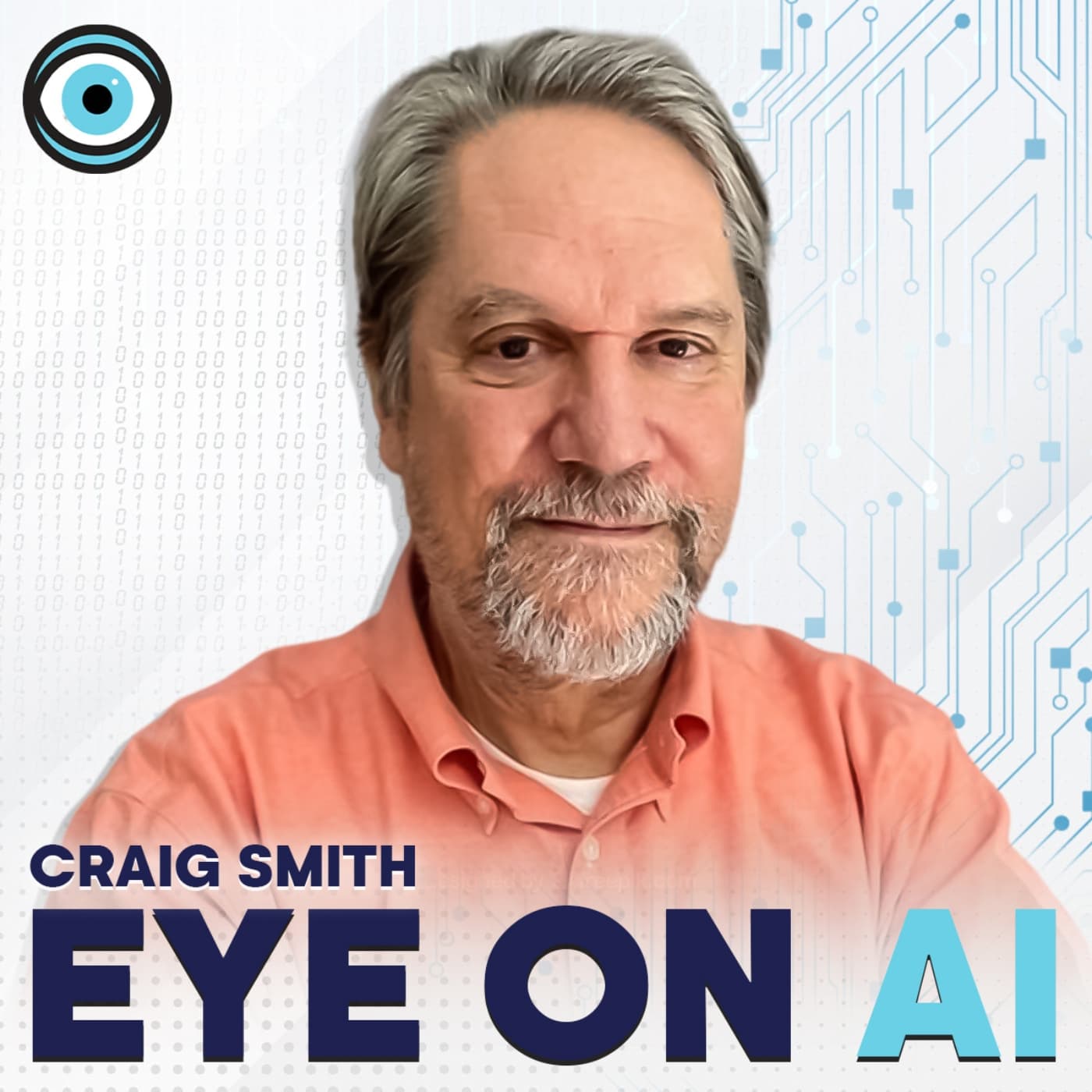
Podcast Notes: Eye On A.I. Episode #143 - Scott Aaronson: Revealing the Truth About Quantum Computing
Episode Overview
- Host: Craig S. Smith
- Guest: Scott Aaronson, Schlumberger Centennial Chair of Computer Science at The University of Texas and director of its Quantum Information Center.
- Sponsor: Crusoe Cloud - a clean and scalable cloud service optimized for AI and HPC workloads.
- Release Date: [Insert date]
Introduction
- Craig introduces Scott Aaronson, a long-time expert in quantum computing.
- The episode focuses on demystifying quantum computing and its implications for AI, cutting through the hype surrounding the technology.
Key Themes and Discussions
- Demystifying Quantum Computing
- Current State: Aaronson emphasizes that many available quantum computers may not provide advantages over classical computers for practical problems.
- Key Concepts:
- Quantum Annealing vs. Grover-type Speedups: Explanation of various quantum computing methods.
- Hybrid Solutions: Combining classical and quantum computing elements.
- Practical Applications of Quantum Computing
- Optimization Problems: Discusses how quantum computing is currently used in optimization tasks (e.g., vehicle routing).
- D-Wave Systems: Specific mention of D-Wave and its applications in solving complex issues.
- Limitations: Critique on the current utility of quantum computing in real-world applications; many claims lack rigorous comparison against classical methods.
- Quantum Computing and AI Safety
- AI Misuse Concerns: Insights from Aaronson's work at OpenAI on ensuring AI safety.
- Language Models: Project aimed at improving detection of AI-generated text.
- Watermarking: Discussion on techniques to attribute text to AI models.
- Technological Advancements and Challenges
- Quantum Computer Capabilities: Current capabilities of quantum computers and their fidelity.
- Error Correction: Importance of achieving fault tolerance for scalable quantum computing.
- Future Directions: Discussion on whether it’s feasible to achieve practical quantum computing benefits before reaching fault tolerance.
Key Takeaways
- Hype vs. Reality: While quantum computing holds potential, many current solutions are overstated in their capabilities compared to classical methods.
- AI Safety: The integration of quantum computing with AI opens up discussions on safety, misuse, and the need for robust detection methods like watermarking.
- Future of Quantum Computing: The conversation highlights a cautious optimism regarding the advances in quantum computing, particularly with error correction and hybrid solutions.
Notable Quotes
- "I think that probably none of these devices that are available right now are going to give you a speed up over a classical computer for any practical problem."
- "The real issue with a lot of these quantum annealing approaches is that... we don't actually know that these approaches would be classical."
- "If we did just the whole thing entirely with a classical computer... then would I get a solution that was just as good and just as quickly?"
Conclusion
- Craig Smith thanks Scott Aaronson for his insights.
- Emphasis on the importance of understanding quantum computing as AI technologies continue to evolve, and highlights the critical need for ongoing discussions about its implications for the future.
Additional Resources
- Crusoe Cloud: [Visit Crusoe Cloud](http://crusoecloud.com)
- Eye on A.I.: [Eye on A.I. Website](http://eye-on-ai.com) - Find transcripts and more episodes.
- Follow Craig Smith: [Twitter](https://twitter.com/craigss)
- Follow Eye on A.I.: [Twitter](https://twitter.com/EyeOn_AI)
---
These notes summarize the key discussions and insights from the podcast episode, structured for clarity and easy reference.
Written by AI. May contain mistakes. Listen to the episode to check what was said.
Transcript
Automatic transcript. May contain errors.0:00The real issue with a lot of these quantum annealing approaches is that even theoretically, even supposing that you had a perfect quantum computer that was as big as you wanted it to be. We don't actually know that these approaches would be classical annealing. The basic way that a quantum state can change over time. Well, there are two ways. One is measurement and the other one is unitary transformation. For me, the single most important number to look at is actually the two qubit gate fidelity, which means like with what degree of accuracy can I apply a single two qubit entangling gate of my choice?
0:36Hi, I'm Craig Smith, and this is Eye on AI. In today's episode, we dive deep into the intricate world of quantum computing. We've got Scott Aronson, a computer science professor and director of the Quantum Information Center at the University of Texas, Austin, to help demystify quantum computing. Scott has worked in the field for almost 25 years and is here to disentangle the confusion, debunk the hype, and enlighten us on where quantum really stands today. From quantum's role in AI to its practical implications in the real world, prepare for a deep dive into the quantum realm. Let's get started.
1:24This episode is sponsored by Crusoe Cloud. High-performance cloud computing or low environmental impact, Crusoe Cloud was built because the innovations of the future need both. Crusoe Cloud is a scalable, clean, high-performance cloud optimized for AI and HPC workloads and powered by wasted, stranded, or clean energy. Crusoe offers virtualized compute and storage solutions for a range of applications, including generative AI, computational biology, and rendering. Visit CrusoeCloud.com to see what climate-aligned computing can do for your business. So I'm Scott Aronson. I'm a computer science professor at University of Texas, Austin, and I direct the Quantum Information Center here.
2:30I'm actually on leave for a couple of years right now. I'm working now with OpenAI on theoretical foundations of AI safety. So that's actually not about quantum computing, but I still run my research group at UT, you know, a half dozen PhD students. And, you know, so I've been working in quantum computing, I guess, for almost 25 years. and you know my interests have a lot of them have been about the limitations of quantum computers you know what we can't do even with a computer that we don't have and you know and and you know but I've brought into a bunch of other topics like quantum advice, quantum proofs, quantum software copy protection, quantum money, you know, and then computational learning theory applied to quantum states, you know, learning properties of quantum states using few measurements.
3:42Then, you know, the connections between quantum computing and the black hole information problem, which has become a major topic over the last decade. So yeah, those are some of my interests. And, yeah, happy to, you know, I mean, I also write a blog. I've been writing it since 2005. And, you know, this wasn't the original intention. It sort of became a, you know, a main clearinghouse for, you know, countering quantum computing hype, you know, just out of necessity because no one else was doing that. Right. And, you know, like whenever there would be some breathless announcement, you know, I would start getting emails and calls from journalists asking me to respond to it just because, you know, no one else was writing a blog like that one.
4:38And so then I would try to do that. And so I've learned something about, you know, how to talk about this to a broad audience. It's still like I get calls from journalists like asking, okay, I need you to explain what quantum computing is in one sentence. I've been trying for 20 years. You know, I think I can do it in 10 minutes. Yeah. Well, they've now. But not in a sentence. They've now got ChatGP2 who can do that. Yeah. Of course, I've tried asking it. It gives, you know, right now I would say a mediocre explanation. explanation. And what especially hurt my feelings is that even if you ask GPT to, you know, explain quantum computing in the style of Scott Aronson, you know, it still doesn't do that great of a job.
5:28Now that I'm at OpenAI, maybe I can get someone to do it. That's right. Fine tune the model. Exactly. The Scott Aronson version. So, yeah, and I'm interested about the safety work. I heard you on the collective intelligence webinar talking about that work. So we can get to that. But to start, and, you know, actually, ironically, I'm in the house. I live in my father-in-law's house. He's now back in Japan. And he won a Nobel Prize in quantum, in the tunneling. Leo Asaki, he won with Gustafsson. It was in 73. They split the prize through. Anyway, and he worked at IBM Research, which is a couple of towns over.
6:32so I'm embarrassed that I don't understand Are you close to Yorktown Heights? Yeah, exactly I know that area Yeah, and as a matter of fact I want to go over and I've been invited to come over and look at their quantum computer Yeah, well I mean you've got a bunch of experts in the subject who are right there Sergei Bravye, actually my former student Patrick Rohl is now working there. So I'm sure they'd be happy to talk to you. Yeah. Yeah. Okay. But so I guess the first question that puzzles everybody is you've got all these quantum computing companies, both who are offering quantum services. You've got clouds that offer quantum computing, and you have companies that are commercializing quantum computers.
7:34So what exactly do those computers do? Can they do? Well, the main use of them right now is just to do experiments to understand what these particular kinds of quantum computers do do. I mean, so to a first approximation, and here, you know, I realized that I am up against a tsunami of hype, you know, asserting the opposite. Okay. But, you know, I am, you know, because you're asking me, you know, I'm going to tell you that what I think is the truth, that probably none of these devices that are available right now are going to give you a speed up over a classical computer for any practical problem.
8:17Okay. That might change in a few years. Okay. But I think that that's a true statement as of right now. So beyond the research aspect, and I was talking to a guy at a company, he's talking about optimizing financial models. And he just lost me. I'm wincing here, okay, because there are possibly hundreds of startups right now that are about that, you know, about using quantum computing for, you know, optimization, especially machine learning and finance and things like that. And, you know, I think that, you know, this is, you know, at least as things stand right now, this is almost all phony. Okay.
9:19So, you know, we, you know, eventually, if you have a full, you know, scalable quantum computer with error correction, we do know of algorithms that would give you modest advantages for these types of problems. OK, in particular, there is a famous quantum algorithm called Grover's algorithm that was discovered in 1996. You know, and it basically lets you solve just about any search problem in roughly the square root of the number of steps that a classical computer would need. Right. So, you know, getting a quadratic speed up, you know, that could be a big deal. Right. But that's not an exponential speed up.
9:58Right. Like if I had 10 to the thousand power possibilities to search through, well, the square root of that is 10 to the 500, right? Still a quite big number, right? But, you know, that could eventually push forward, you know, the frontier of what sizes of problems we could handle. But I think that it will be a long time before any Grover type speed ups are actually a net win in practice. Okay, after you have to factor in all of the, you know, expense and all of the slowdown that comes from just needing to run an error corrected quantum computer in the first place. Right. And so then what does that leave?
10:38Okay, well, so, you know, there are, you know, these quantum algorithms that get, you know, exponential speed ups over anything we know how to do classically, right? But most of those are for two specific categories of problems. One of them is breaking cryptographic codes. And this was the famous application that put quantum computing on the map in the first place 30 years ago, a Shor's factoring algorithm. Factors large numbers exponentially faster than any known classical algorithm. algorithm, okay? And, you know, and it and its variants could break most of the public key encryption that currently protects the internet, okay?
11:24So, you know, that would be a big deal. It's not clear that that's a positive for humanity, you know, it would just, it would mean that we all have to upgrade to new methods of encryption. And then, you know, if that goes well, then we'd kind of be right back where we started, right? And then the second application, you know, I think this is the one where most of the real promise of getting a practical benefit from quantum computers is, and certainly a benefit anytime soon, is just in quantum simulation. This was the original application that Richard Feynman had in mind when he gave a now famous speech 42 years ago proposing the idea of a quantum computer, that you would have this programmable device for simulating any chemical reaction, you know, any material, you know, if you're trying to design better batteries, better solar cells, you can now simulate the dynamics of all the interacting electrons, you know, even though the wave function is this enormous object, you know, and it has a number of parameters that grows exponentially with the number of particles, you know, a quantum computer would be sort of the purpose-built device for handling that because it itself would have the same exponentiality.
12:41So those are the two big applications where we're quite confident that you could get an exponential speed up, code breaking and quantum simulation. OK, but, you know, but but then, you know, that that that's not the reason why there's been this rush of, you know, venture capital and, you know, money for startup companies and, you know, and so forth over the last decade. Right. That's mostly been because of this narrative that quantum computers are going to revolutionize optimization and AI and machine learning and finance. And a lot of that is based on what I would consider to be a foundation of sand, basically.
13:31It's based on quantum algorithms that are heuristic, which means none of us can really analyze or prove much of anything about their performance. Right. But in particular, like if no one can prove that they won't give an exponential speed up, then people in the business world feel free to make the most optimistic assumption imaginable. Right. And say, oh, well, then let's just assume that this will get an exponential speed up. Right. Because one thing that they learned about, you know, 15 years ago is that, you know, when you say the word quantum, it was like people's brains shut down. Right. They think it's magic.
14:11Right. And like they're just ready to believe anything. Right. And and and so I think, you know, the you know, what I would encourage people to do who are like looking at quantum computing startups. The number one question to ask that people don't ask is, but does it beat a classical computer, you know, in a fair comparison, right? Don't tie the classical computer's hands behind its back, you know, by using some stupid algorithm, right? Don't rig the comparison, right? Look at actually the best that you could do with classical heuristic algorithms, such as simulated annealing and methods like that.
14:55Compare that against the results from the quantum heuristic algorithm. And is there an advantage? And if so, do we expect that advantage to widen as you go to larger and larger problems? Is there any empirical or theoretical reason why you expect better scaling behavior? These are the very first questions that anyone going at it with a scientific mindset would ask. And it is flabbergasting just how much there is where people can raise tens of millions of dollars saying, well, I'm using a quantum computer for vehicle railing. And that's enough for people. And they don't ask, OK, but do you actually beat a classical computer?
15:40doing the same vehicle routing problem, right? And somehow they never even reached the point of honestly asking that question. Yeah. And it's sort of by design because once you do ask that question, then there's so little of this stuff that actually survives. Yeah. Well, why then would, I mean, you mentioned annealing-based quantum computers for optimization. Why would someone, other than research, why would someone advertise that they're using a D-Wave system? Well, because it sounds cool. And because empirically, this has worked, right? It's good for D-Wave. D-Wave gets to say that people are using our quantum computers to solve these impossible vehicle routing problems.
16:35So that sounds great. Right. The company that's doing the vehicle routing, they get to say we're using a quantum computer, you know, the most advanced thing in the world to do vehicle routing. Right. And so everyone is happy. Right. You know, and the only problem is, well, you know, you know, you know, and strictly speaking, it's not even false. It's just it's simply irrelevant. Right. Because none of it beats using a classical computer for the same task. Right. And it's certainly not cheaper. Right. Right. That's right. And so but but on this optimization problem, using D-Wave, annealing based quantum.
17:14Yeah. And the truth is, like, you know, I don't even care if it's if it's enormously more expensive. Like if you have a proof of principle that, yes, there is better scaling behavior here. Right. Then, you know, we can take advantage of that and, you know, costs can come down in the future. That's fine. The real issue with a lot of these quantum annealing approaches is that even theoretically, you know, even supposing that you had a perfect quantum computer that was as big as you wanted it to be, we don't actually know that these approaches would be classical annealing. yeah and that's that's the truth of the matter that i can tell you as a quantum algorithms theorist right we know that you know these algorithms could eventually get the grover type speed up which is a modest you know square root speed up uh you know but in the you know but we don't know that they could get more than that uh uh hardly ever or at least at least not for most of the problems that we care about and in the near term you know we don't even know that they can get any speed up at all.
18:18Yeah. And can you describe, but these D-Wave are actually doing the computation for these optimization problems? Well, I mean, I presume so. It's like, you know, I haven't, you know, for the most part, I haven't like looked into the exact details of like, Like any time that someone says they're using a quantum computer to do such and such, like you have to think of the quantum computer as this special purpose, you know, accelerator, right? That's only used for one little subpart of the whole problem, right? It's like no one uses a quantum computer to do, you know, the user interface or, you know, the compiler, the programming language, right?
19:06We, you know, we have all of these layers in our abstraction stack where, of course, we do and we should use classical computers because they're perfectly adequate, right? And so what people really mean when they talk about these things is that, you know, you're feeding a classical computer, you know, your optimization problem. problem, you know, it is then, you know, you have a classical algorithm that's breaking it up into little pieces. And then it is trying to find pieces that are, you know, small enough that it can then feed them to the quantum computer, right, and get back, you know, answers to those sub problems, right, that then have to be, you know, further processed classically.
19:53Okay, now that's fine, you know, as far as it goes, right, that's, you know, how I expect us to interact with quantum computers, you know, going forward. The, you know, the issue, you know, well, what's always the issue is, is, well, if I, if I did just did the whole thing entirely with a classical computer, right, if I just, you know, eliminated the part that, that, that sends things out to the, to the quantum chip, you know, then, then, then would I get a solution that was just as good and just as quickly. And I think right now, as far as we can tell, the answer is typically yes for basically all the optimization problems that people have looked at.
20:39Yeah, and what you were talking about a second ago is a hybrid solution where you just take portions of the problem and give them to the problem. That's right. And then sometimes people will talk about, oh, we're hybridizing quantum and classical computing as if that's this amazing, this revolutionary new idea. Well, of course you're hybridizing them, right? Of course we use classical computers for everything we can use them for because they already exist and they're so good, right? And we're only going to use quantum computers where there's some chance that they'll actually give us a benefit.
21:19And then the main question is, do they give us a benefit there? And on these, because then there's very quickly in talking to people, you start talking about quantum inspired computing, which I really don't understand. I can tell you about that. Okay. But before we get there, so you have a D wave and it's got, I don't know how many qubits they're up to in a commercial D wave. By the way, most people have, you know, you know, it's amazing how quickly D-Wave sort of fell off the radar. You know, most people's radar, like I would say six or seven years ago already. Right. And, you know, and there's a reason for that.
22:03Right. It's because, you know, they they were like, you know, they were the earliest ones who realized, like, we can just build systems with hundreds or thousands of qubits. And if we do that, then people will be excited. And they're not even going to demand to know, well, how good are these qubits? How long do they maintain their quantum state? Is it actually good enough that I could get any benefit over a classical computer? Right. So they were, you know, in a sense, they were pioneers. Right. And sort of, you know, realizing that people just didn't care that much about the, you know, the reality of are you beating a classical computer?
22:46Right. But, you know, since then, you know, now there are, you know, hundreds of companies, you know, I'd say like of every possible level of seriousness, you know, from just like, you know, from from companies that are, you know, you know, just some of the best scientists, you know, that exist working on this. and who, you know, I really hope that they succeed, you know, all the way to like, you know, complete frauds who are just like sprinkling the word quantum onto things that have nothing to do with quantum computing. Yeah. Right. So, so, you know, but, but in particular, you now have a bunch of companies that can make qubits of enormously higher quality than D-Waves.
23:29Okay. So like, you know, D-Wave had superconducting qubits that maybe maintain their quantum state for a matter of nanoseconds, right? And now, you know, the like table stakes would be, you know, some tens of microseconds, right? So, you know, it's just orders of magnitude better. Like if you look at what Google or IBM or Rigetti can do, you know, it's a much smaller number of superconducting qubits, but, you know, but the thing that I care about is that they're of a much higher quality, right? They're of a quality where like it's still not good enough to get a practical benefit over a classical computer, but it is getting there, right?
24:10It is, you know, instead of being like, you know, four or five orders of magnitude away in terms of the error rate, now maybe it's only one order of magnitude away, right? And so that is a genuine cause for excitement, I think. And meanwhile, there's been corresponding progress in the other architectures, in trapped ions, in photonics, in neutral atoms. And people have been trying to scale with all of those approaches. So I think that that's the main reason why D-wave has sort of mostly fallen off the radar at this point. Right, right. You know, I've done a fair amount of reading, but I still don't understand.
24:59So maybe in the simplest terms you can, you've got this array of qubits, whether they're, you know, whatever flavor of qubit they are. They are in superposition. Yes. How do you activate them to perform a computation and how do you read the result? In all my reading, I can't find that answer. All right. Well, I mean, of course, it depends on at what level you want an answer. Yeah, yeah. There's a mathematical answer and then there's a physics or an engineering answer. The engineering answer, I suppose. Okay, okay, okay. So basically, what we're doing, do you understand the basics of what is a quantum state?
25:59You know, what are amplitudes? What is a unitary transformation? Okay. Well, unitary transformation, I'm not sure. All right. All right. Well, then let's start there then. Okay. So, you know, the basic ways that, you know, the basic way that a quantum state can change over time. Right. Well, there are two ways. Right. One is measurement and the other one is unitary transformation. OK, you know, measurement is, you know, when you look worse. And then that's the only part of quantum mechanics where probability enters the picture. Right. When you know when you make a measurement, you can sort of force your quantum state to collapse, you know, and it makes a choice probabilistically.
26:44Right. That's actually the one place where probability ever enters in in any known fundamental physics. But then if you leave a quantum system isolated from its environment, then it's changing over time in a way that's actually completely deterministic. And this is described by the Schrodinger equation, one of the most important equations in all of physics. And translated into words, the Schrodinger equation basically just says that isolated quantum states change over time via unitary transformations. So what is a unitary transformation? So our quantum state is a vector. right it is a which basically just means a giant list of numbers right in this case uh they're complex numbers okay they're called amplitudes okay and and like a central thing that quantum mechanics says is that you need one amplitude for every possible configuration that you could see your system in when you measure it right so for example if i have a hundred qubits uh so you each one of them could be measured as either zero or one.
27:58So that means that I need two to the hundred power amplitudes. I need one amplitude for every possible hundred bit string. Okay. So now I have this, this, this vector, this list of two to the hundred complex numbers. And, and now, you know, the, in, in math, the basic way that we change a vector is by, you know, what's called a linear transformation, right? We just multiply it by a matrix and we get a new vector, right? Okay. And now a unitary transformation is just any linear transformation that always preserves the length of the vector. Okay. Why does it have to preserve the length? Because that corresponds to the physical statement that the probabilities of the various outcomes always have to add up to one, right?
28:49So, you know, I always need a vector of unit length, okay? And as long as I have that, then my probabilities will always add up to one, which means that, you know, I can interpret them as probabilities at all, okay? So unitary transformations, you basically, you can think of them as rotations or reflections, but not in our three-dimensional space in this enormously, you know, high dimension, like this two to the hundred power or whatever dimensional space, you know, depending on how many qubits I have. Right. So so now, you know, if you like the engineering goal in building a quantum computer is to do, you know, you know, not just any unitary transformations on your qubits, but the specific unitary transformations that you want, right, that will, you know, cause the vector of amplitudes to evolve in a particular way that solves your computational problem, right?
29:45And so now, you know, in a classical computer, right, we also, you know, we're trying to build up these extremely complicated operations, you know, like in order to, you know, run the video software for a podcast or anything like that, right? But inside of the microchip, it's all ultimately broken down into Boolean logic gates, right? And, you know, these very, very simple operations that we can think of as acting on only one or two bits at a time, right? And the most famous Boolean logic gates are and, or, and not, right? And now, you know, a very important theorem in Boolean logic says that if you string together enough and or and not gates, then you can express any function, Boolean function of any number of bits.
30:43Right. So once you have those very simple operations, then they're already universal. Right. Then it's all just the question of how many of them do you need, you know, and in what order should you apply them? Right now, I'm telling you all of this because in quantum computing, the story is closely analogous. OK, so so our goal with our quantum computer is to do some giant unitary transformation on all of our qubits, like, you know, all thousand or million of them or whatever. But in order to make that practical, we're going to break up the unitary transformation into a product of little tiny unitary transformations, each of which acts on only one or two of the qubits at a time.
31:33Okay. And so these are called quantum gates. Okay. And quantum gates are basically the building blocks of any quantum computation. Right. So some of the famous examples of quantum gates, so the not gate that maps zero to one and one to zero, that's a classical Boolean logic gate, but that's also a perfectly valid quantum gate. Right. We can have that in a quantum computer. OK. But we can also have gates with no classical counterpart. Like, for example, there is a gate that maps a superposition zero plus one to the superposition zero minus one and vice versa. Right. Right. So so it like like if the qubit is zero, it does nothing.
32:23But if the qubit is one, then it flips the sign of the amplitude. OK, then there is a gate called Hadamard. OK, Hadamard is is is one of, you know, one of the most popular building blocks. And what and that's a gate that can take a qubit that wasn't originally in a superposition and put it into a superposition. Okay, so the Hadamard gate maps a zero qubit to zero plus one, and it maps a one qubit to zero minus one. Okay, that's, you know, you can define it in that way. And so if I have a bunch of zero qubits and I apply Hadamards to all of them, then I get an equal superposition over all of the possible strings.
33:11Right. So, OK. But then I also need gates that can create entanglement between multiple qubits. OK, so a famous example of such a gate is called the controlled knot or the CNOT gate. OK. And what that does, if I have two qubits, if the first one is zero, then it does nothing. But if the first qubit is one, then it flips the second qubit. OK, so that's why it's called controlled knot. Right. It's, you know, you apply, you can either not the second qubit or not, depending on the state of the first qubit. Okay. And if I do, if, you know, just using Hadamard and C0, I can already create an entangled state from a state that was originally not entangled.
Read the full transcript
34:00So let's say I have two qubits in the state zero, and now I Hadamard one of them. And now, so now one of them is in the state zero plus one. and now I do a controlled knot from that qubit to the second qubit. So now what I'm actually going to have is, well, in the zero branch, it's still just zero, zero. But in the one branch, I flip the second qubit. So now I've got zero, zero plus one, one, which is an entangled state, right? So, you know, by just putting together these gates in an appropriate pattern, I can create entangled states, you know, even very complicated entangled states, on hundreds or thousands of cubits.
34:41What I described to you so far is not quite a universal set, but you can throw in just about anything else. Like let's say a gate that rotates a cubit by some angle, like pi divided by eight or 22 and a half degrees, something like that. And then you get what we would call a universal set of quantum gates. And what universal means in this context is just that if you apply enough gates from that set, then you can affect any unitary transformation on any number of qubits to any desired precision. Okay. So it turns out that with just a small discrete set of one and two qubit gates that you already pass the threshold of universality.
35:40And that was something that people discovered more than 30 years ago. OK, and so now, you know, you could say that, you know, in quantum algorithms design, you know, what you're always doing is you're thinking about here is my collection of qubits. And now here are my allowed gates. And now which gates do I apply, you know, to which qubits when, you know, and we have a notation for for this called quantum circuit notation. You know, it looks almost like a musical score, you know, when you see it written. It's like each qubit is a line going from left to right, you know, and then the gates are like different musical notes that we write down, you know, over those lines.
36:19Okay. And then that, like, you know, you could say, you know, once they've written the quantum circuit, then that's when the quantum algorithm designer's job, you know, or the quantum programmer's job is done. And now this is when the quantum hardware engineer's job begins. Right. Because now what they need to do is take the sequence of gates and translate it into actual pulses that will, you know, act on these physical qubits, you know, in a way that has an effect of doing these gates. OK, now the good news here, you know, is that, you know, when we when we think about what what our qubits actually are in different quantum computing architectures.
37:04Well, like in the trapped ion approach, you know, each of our qubits is a usually it's a ytterbium nucleus. OK, so we have this like row of ytterbium nuclei and each one. And usually it encodes the qubit in its spin state. So like if it's spinning counterclockwise about some axis, then that represents zero. And if it's spinning clockwise about that axis, then that represents one. And it could also be an arbitrary superposition of the two. Okay, so now we have this row of nuclei suspended in a magnetic field. And now what people actually do in the trapped ion approach, you know, and this is not speculation anymore.
37:53This is all actual experiments that they're, you know, that they actually do now. They can pick up the individual nuclei and move them around using lasers. They just sort of grab onto a nucleus with a laser. They move it around. And now when two nuclei get close to each other, right, they have a natural electromagnetic interaction, right, that causes some, you know, two qubit unitary transformation, right? And now, you know, the hardware person's job is just to shape that, you know, natural unitary into something that looks like a CNOT gate, or, you know, whatever was the gate that the quantum algorithms, you know, designer asked for, right?
38:38Right. But, you know, but but but but but the good news is, like I said, you know, there are many, many different choices of one and two qubit gates that will be universal. Right. So so they'll like like, you know, they'll they'll they'll all be more or less as good as any other. Right. So. So so now, you know, what what they're doing is they're shaping a pulse sequence. So they're programming, you know, the, well, a classical computer, which is controlling a microcontroller, which is controlling, you know, the lasers, okay, to move around, you know, the different ions in a, you know, particular choreographed pattern, you know, that will have the effect of implementing this quantum circuit on the qubits, right?
39:27and then at the end there's a different thing that you have to do to measure the qubits you asked about measurements but before we get to the measurements so when you talk about gates I understand classical computing transistors create gates that are open or closed and that's the zero and the one and you build that up So in taking these nuclei, for example, manipulated by, what is the gate? I mean, is it the laser that's? I mean, the gate is a mathematical abstraction. A gate is the unitary transformation that is to be affected on this pair of cubits. The laser is a way of realizing that gate.
40:23That's what I mean. Okay. And then measurement. Yeah, measurement basically means you have to take your spin state and now it has to get recorded in something macroscopic, right? And typically, the way that measurement devices work, I mean, we have technology like electron microscopes that are able to see things at tiny scales, right? But typically there is a kind of amplification effect that goes on, right? Where like, you know, you'll have a single, you know, photon that let's say, you know, deflects in a different way depending on whether, you know, this nucleus is spinning clockwise or counterclockwise, right?
41:14And then that photon could trigger a cascade of additional photons, right? Which, you know, then ultimately you have a whole photo detector array and it becomes something that's macroscopically detectable, right? So, but, you know, you have to be very careful to only make the measurements when you're ready to, right? And in some sense, you know, a large part of the engineering problem of building a quantum computer is to prevent the environment from measuring your qubits before they are ready to be measured. Yeah. Right now, how advanced, how many qubits have they gotten to that you're able to write and read on?
41:59So, okay. So you can't just ask about how many qubits, right? You have to ask, what can you do with these qubits? How good are they? Because D-Wave will tell you, oh, yeah, we have thousands of qubits, as many thousands as you want. But then they're just trusting that people are not going to be asking, okay, but can I actually beat a classical computer with them? Or at any rate, that was the D-Wave of a decade ago. You know, it's, you know, I've heard that they've become more cautious since then. OK, but, you know, for me, you know, the single most important number to look at is actually the two qubit gate fidelity.
42:48OK, which means like with what degree of accuracy can I apply a single two qubit, you know, entangling gate of my choice? OK. And, you know, when I entered the field, you know, 20, 25 years ago, right, it would have been spectacular if you could do a single two qubit gate with 50 percent fidelity. Right. And, you know, and then, you know, maybe a decade ago, it became 90 percent fidelity and then it became, you know, 95 percent. And then, you know, with Google's quantum supremacy experiment in 2019, right, they had like a thousand gates roughly applied to 53 qubits, you know, and each one with 99 .5 percent fidelity.
43:35OK, now the more the most recent numbers from the past year that I'm hearing from, you know, both the superconducting and the trapped ion people is like ninety nine point eight percent or ninety nine point nine percent fidelity. And this is typically in systems with 50 or 60 qubits. And some people have scaled up even to, I think IBM has scaled up to hundreds of qubits, but not with fidelity that's quite that good. Right. And now just to help orient people, you know, where we are. Right. Like the key discovery in the mid 90s, you know, that made people feel like, OK, you know, building a quantum computer is merely a staggeringly hard engineering problem.
44:32Right. And it doesn't require any new fundamental physics. It was this discovery of quantum error correction. Right. And what quantum error correction effectively said was that in order to build a reliable quantum computer with as many qubits as you want and as many gates as you want, you know, you don't have to get the error all the way down to zero. Right. Like that. That was the fear. Right. Because if you had to get error all the way down to zero, that's just never going to happen. Right. It's just unrealistic. OK. But what people discovered in the 90s was that, no, you only have to get the error down to some very, very low, you know, non zero, but you know, but non zero level.
45:15And then there are these very clever quantum generalizations of error correcting codes that can take care of the rest for you and that can push your effective or encoded error rate all the way down to zero. OK, so, you know, so at that the original estimate from 1996 was, I think, that you needed like 99.9999 percent fidelity of two-cubit gates. So basically, like you could you could tolerate a one in a million chance of error. OK, you know, and that just seemed ridiculously far from from where anyone was technologically. Right. But it at least proved the principle that, you know, that there like there is only a finite amount of engineering that has to be done.
46:03Right. And not an infinite amount. And and, you know, now, you know, I tell you, you know, with the with the more recent error correcting codes that people have developed, it looks like you could build a scalable quantum computer with, you know, if you have two qubit gates with ninety nine point nine nine percent fidelity. Okay, so four nines, let's say. Okay, and if you remember, you know, where I told you, you know, we are right now, you know, I think the experimentalists are now closing in on 99.9 % fidelity. Okay, on three nines, right? So, you know, if you just plot that on a graph, like it looks like it's pretty on track, right?
46:45It looks like, yeah, you know, if this effort continues, then, you know, we should eventually, you know, get to the threshold where, you know, after which error correction becomes a net win. And now once you've crossed that threshold, then how many qubits you want is just a question of cost. Right. It's just just like with a classical computer. Right. It's you know, it's like, OK, if you want, you know, you know, two million qubits instead of one million, then, you know, then that's more engineering that you have to do. But, you know, you have figured out how to keep your qubits alive for for as long as you need them to be.
47:26And then there's no fundamental limitation on how many more you can add. OK, so that's so that that's the real goal to get to this fault tolerance threshold. right and you know the things that people can do now with 50 or 60 qubits you know they're they're very cool as demonstrations you know and they're important as proofs of principle right but none of this yet is has been error corrected right and and and and and that's the real goal right right and and none of it is i mean certainly the quantum supremacy experiment but none of it is beating a classical computer. Yeah, well, I mean, the quantum supremacy experiment, you know, arguably, you know, sort of is, right?
48:11You know, not for a useful problem, you know, but at least for some contrived benchmark, you know, and, you know, that came out of work that my student and I did in 2011, where we said, you know, hey, you know, it's not, You know, people are talking about like, what can you do that's useful with a non-error corrected quantum computer? But, you know, maybe we should just first try to pin down, can you do anything at all that is classically hard, right? Even if it's not useful. And we came up with a proposal for how you might do that, which was called boson sampling, which was adapted to optical quantum computing.
48:54Right. And then, you know, the optics people got very interested and started doing very small scale experiments with, you know, five or six photons. Right. At that point, it's still trivial for a classical computer to simulate. But then then what happened was that Google in 2014, I think, hired John Martinez, who was one of the leading superconducting experimentalists. And Martinez actually said, like, let's go for this. Let's just do a quantum supremacy demonstration, you know, with with with, you know, I think, you know, they were hoping for 60 or 70 qubits. Okay. And, and, you know, this wouldn't exactly be boson sampling because, you know, their, their, their, their, their hardware was not designed for it.
49:45But they said, you know, let's do something like boson sampling, but, but adapted to our hardware. So, you know, so we talked to them at the time and we helped, helped them figure out what that experiment would be, you know, and then we sort of adapted the theory of boson sampling to the kind of hardware that they had. And then in 2019, they actually announced results that with 53 qubits and about 20 layers of gates, about 1 ,000 gates in all, they solved this sampling task. At the time, they estimated that maybe it would take 10 ,000 years for a classical computer to do the same thing. And then that number got quoted all over the press.
50:27Unfortunately, you have to be really careful with these numbers, right? Because then what happened was that the classical computer scientists came along and said, no, we can actually spoof this a lot faster with a classical computer. And now they can, I would say, if you're willing to spend enough money to just have enough parallel classical processors, then you can actually simulate the Google experiment faster than the experiment itself. Right. So it all just comes down to like energy and money. Right. You know, and by those metrics, I would say, you know, on these quantum supremacy benchmarks, the quantum computers are still winning, but only by, you know, a couple of orders of magnitude.
51:15but not by a whole lot. So there's an urgent need for better quantum supremacy experiments that will reestablish a clear speed up. I think, you know, given the way that the technology has advanced just within the last four years or so, you know, that should definitely be possible. But, you know, in the meantime, a lot of the companies have said, you know, they don't really care about quantum supremacy anymore. They just want to go straight for error correction. Right. Right. And so error correction is kind of the... That's the holy grail. The foundation or the frontier across which we'll be into practical quantum computing.
51:54Yeah. I mean, again, some people hope that we will get lucky and be able to do practical things even before fault tolerance. Okay, there's a term people use for this, NISC, coined by John Preskell, noisy intermediate scale quantum computing. You know, I mean, by analogy, right, before the transistor was invented, you know, we had only much noisier building blocks for classical computers, like vacuum tubes or electromechanical relays. But, you know, those were still they still worked well enough for people to do various useful things with them, among which was was winning World War Two. Right. So, you know, so you could hope that maybe the same will happen here, that even before we get truly error corrected qubits, you know, we'll have qubits that last just long enough that we can eke out some advantage.
52:52And I think, you know, if we're going to do that, then the best hope by far is that we'll do that for some sorts of quantum simulation problems, such as simulating the properties of various materials. Okay. And, and, and, and, and there's a much better hope of doing something that is scientifically interesting, you know, and, and, and new and classically hard than there is also doing something that's commercially useful, which is kind of a higher bar to clear. And people are working on that. But the point is, there is no guarantee. Nature will have to be kind to us for us to get clear quantum computing speed ups before error correction.
53:42After error correction, then we're much, much more confident that we could get such speed ups. Yeah. Well, we're almost up to an hour. Yeah. But but I do. Can you just give a synopsis of your safety work at OpenAI? You did a very good job on the collective intelligence webinar. All right. Well, so OpenAI approached me a year and a half ago because, you know, several people there were fans of my blog. I think. And they said, you know, would you take a leave of absence and, you know, work with, you know, work for us on what can computational complexity theory do for AI safety? You know, and my first reaction was, you know, why do you want me?
54:29I'm a quantum computing person. Right. You know, we know what, you know, I mean, I've been, you know, and already at the time I was, you know, I had seen GPT-3, you know, I was bowled over by it. I knew that it was this unbelievable advance from the previous state of the art in chatbots. But I was like, first of all, the progress in machine learning has been driven almost entirely empirically. For the most part, it hasn't depended on theory. It's depended on having lots of data and lots of computing power. Right. And, you know, and then and then tweaking the algorithms until you find the ones that just empirically turn out to work well.
55:17Right. And, you know, no one no one really understands, you know, at a at a at a deep mathematical level why any why any of this works. Right. They just you know, they just train the models and then they try them out. And, you know, and it turns out that when when they're big enough, they do work. Right. So, you know, and then and then furthermore, you know, none of it has anything to do with quantum computing, you know, except that, OK, you know, machine learning and quantum computing both involve extremely high dimensional vectors. You know, so, you know, but but but but but beyond that, you know, they're they're just they're just very different fields.
55:58But, you know, they they made a case to me that, well, no, you know, like like the problem going forward is not just going to be how do we get this to work, but how do we ensure that it's safe? Right. And that does seem like a problem where where we have to go back to first principles, where we have to think about it theoretically. You know, and they gave examples of, you know, some of the big results that we know in computational complexity about how like a weak verifier can check the behavior of a super powerful but untrustworthy prover. And they said, well, you know, that's basically the situation that we're in.
56:36Right. You know, the super powerful prover is the AI and, you know, the limited verifier is humanity. Right. and maybe you can port these results over. And I said, well, it sounds like at any rate I'd be able to find something interesting to work on. But so I'm teaching like quantum computing courses. I'm supervising my students. I have a whole, so maybe some future year I get involved. And they said, well, trust us. this is going to be a really big year for AI. You want to get involved this year. I said, you know, and, and, but, you know, they were nice enough to let me do it from, from Austin where my family is and just, you know, travel to San Francisco periodically.
57:26So, you know, they made it very hard to turn down. And so I, so, so I did, I started working for them and, you know, I found, you know, so it's now been a little over a year since I started. and, you know, I found various projects to work on. Maybe the easiest one to explain is a water market. Okay. So, you know, like I've not been able to, you know, predict where all of this is going, you know, even like, you know, decades in the future as like people constantly ask me to do now. But I'm proud that at least I was able to see about three months into the future, right? So before ChatGPT was released, I just had this moment of terror when I thought, oh, my God, every student in the world is going to be using this to cheat on their homework, aren't they?
58:21Or at least is going to be tempted to. Right. And, you know, and every troll is going to, you know, have this amazing tool for spamming every forum on the Internet. Right. Or impersonating people or, you know, you know, what about propaganda campaigns or fraud? And for all these different categories of misuse, they would all be much harder if only we had a way to detect which text was generated by large language models and which was not. So then I realized that this provenance or attribution problem was going to become really central. Right. And, you know, there are a bunch of different approaches that you could imagine to it.
59:13But one one particular approach that I've worked on is called water marking. OK, and this is where we slightly change the way that our language model, you know, such as GPT operates. So language models are inherently probabilistic. Right. You know, they're always like, you know, you have this transformer, you know, neural network. That's always taking as input, you know, the context of like the previous however many words. And then it's generating a probability distribution over the next word. Right. And, you know, now now like in normal operation, all that would happen next is that we sample according to that distribution.
59:58Right. Sometimes the distribution will be very, very centered on one possibility. Like if I say the ball rolls down the, you know, then GPT is nearly certain that the next word is hill, right? But, you know, in other cases, it's balanced between several possibilities, right? Or, you know, even dozens of them. Okay, so with watermarking, what we do is we choose the next word, the next token, you know, in a way that is secretly deterministic, okay, but which looks random, right? It looks like we're doing it according to the distribution that GPT said to sample from. You know, casual user can't tell the difference at all.
1:00:44But we're actually choosing the next word deterministically in a way that is biasing a score that we can calculate later, given only the text. Right. So we're sort of we're doing it in a way that systematically favors certain combinations of words over others. right, you know, combinations that would be like otherwise arbitrary and, you know, meaningless. Okay. And then, you know, if later some teacher gets a term paper and they suspect that it was written by, you know, using chat GPT, they would be able to submit it to a detection tool. And that detection tool would calculate that score, you know, using the key of the pseudorandom function, you know, which it would have.
1:01:30And, and then, you know, if that score is like really, really unusually large, then you would be, you know, depending on how many, on how long the document was, you could be statistically almost certain that yes, GPT must have been involved in writing this. Right. And would that, would that work if only portions of the document were? Yeah, that's an excellent question. So I do have an algorithm also to do that, to take a long document, portions of which were, you know, we believe were written by GPT, and then identify which were the most likely regions to have been GPT generated. Okay, now, none of these approaches are foolproof.
1:02:14Okay, you know, one can think of attacks, you know, that would get around them, some of which are, you know, like, imagine a student who asks GPT to write their term paper, but in French, and then they put it into Google Translate, right? That would remove any watermark that we currently know how to add. right and so you know how do you watermark at the level of the ideas you know at the semantic level like at a way in a way that would survive you know all these sorts of you know rephrasing or sort of you know you know mere changes to the to you know local changes to uh syntax and things like that i think that's a very very hard question but that's that's fascinating uh and and you're optimistic about the...
1:02:59Well, I mean, I'm optimistic that we can deploy things, you know, that will, you know, that will help at least somewhat, and especially that we'll be able to learn more by deploying them, right? You know, I'm optimistic that AI safety, you know, after decades of like armchair speculation about it is finally an empirical subject. And, you know, I think it It might be very difficult to stay one step ahead of all of the misuses that people come up with. Right. It might be a cat and mouse game. But, you know, in other cases, you know, people have just bitten the bullet. Right. I mean, I mean, you know, we we have a giant thriving software industry, you know, despite, you know, the ease of pirating software.
1:03:49Right. We have, you know, search engines like Google, you know, despite all of the attempts to to game their results. Right. So, you know, so it might just be that, you know, it will take a large effort to stay ahead of the misuses. But, you know, at least in the in the near to medium term. Yeah, I'm reasonably optimistic that we can make progress. We can break down the problems into sub problems and tackle them. Now, once you have AI that is just better than humans at everything, right? Or, you know, let's say AI that, you know, is to humans as we are to orangutans, right? Then, you know, I don't know what kind of world that leads to, right?
1:04:36I don't know how to ensure that that world is safe. But, you know, my defense is I don't think anyone else knows either. Yeah, yeah. And I have one last question. All right. I've been talking to people about the pros and cons of open sourcing generative AI. Yes. And there is an argument that it's great because, you know, it expands the use cases and you get this network effect of people improving. And then the other side who says, well, really, it's such an asset, intensive game that open source really doesn't have the resources to compete. But what I'm interested in is even at the lower with smaller models, that once they're open source, I mean, things like this watermarking is not going to, that will work on a proprietary model.
1:05:44But once it's open source, it's anybody's game. Is that right? No, you're absolutely right. And that's true, not just for watermarking, but for pretty much any safety mitigation that you could possibly think of. Right. Once the model is open source, then people can do what they want with it. And, you know, and empirically, like, you know, you know, if you if you fine tune your model by like this RLHF reinforcement learning with human feedback, you know, to be, you know, to only give, you know, safe, you know, helpful, inoffensive answers. It takes about two days for people to take an open source model and remove that fine tuning.
1:06:24You know, the model will spell, you know, whatever racist, invective or bomb making instructions you want it to. Right. And so so that so that that that's the trade off with open sourcing models. Right. And so I think it fundamentally depends on how powerful the model is. Right. Stuff that's at the level of GPT-2, you know, has already been open sourced. Right. You know, and stuff at the level of GPT-3, you know, probably, you know, you know, is in the process. Right. Or, you know, will, you know, either is or soon will be. Right. GPT-4, you know, you know, I feel that, you know, OpenAI made a very defensible decision to not open source that.
1:07:05Right. Because there is probably some mayhem that people could already do with it if they had access to the weights. I mean, even just aside from the obvious commercial reasons why OpenAI doesn't want to open source it, I do think there's also a safety issue there. And eventually, you may get AIs that are powerful enough that open sourcing them is kind of like open sourcing thermonuclear weapons. right? It's, you know, it's just a thing that you don't want to do. This episode is sponsored by Crusoe Cloud. High-performance cloud computing or low environmental impact, Crusoe Cloud was built because the innovations of the future need both.
1:07:51Crusoe Cloud is a scalable, clean, high-performance cloud optimized for AI and HPC workloads and powered by wasted, stranded, or clean energy. Crusoe offers virtualized compute and storage solutions for a range of applications, including generative AI, computational biology, and rendering. Visit crusoecloud.com, that's C-R-U-S-O-E-C-L-O-U-D dot C-O-M, to see what climate-aligned computing can do for your business. That's it for this week's episode. I want to thank Scott for his time. If you want to read a transcript of this conversation, you can find one on our website, IonAI. That's E-Y-E hyphen O-N dot A-I.
1:08:47And as always, the singularity may not be near, But AI is about to change your world, so pay attention.
From the publisher
This episode is sponsored by Crusoe. Crusoe Cloud is a scalable, clean, high-performance cloud, optimized for AI and HPC workloads, and powered by wasted, stranded or clean energy. Crusoe offers virtualized compute and storage solutions for a range of applications - including generative AI, computational biology, and rendering.
Visit crusoecloud.com to see what climate-aligned computing can do for your business.
On episode #143 of Eye on AI, Craig Smith sits down with Scott Aaronson, Schlumberger Centennial Chair of Computer Science at The University of Texas and director of its Quantum Information Center.
In this episode, we cut through the quantum computing hype and explore its profound implications for AI. We reveal the practicality of quantum computing, examining how companies are leveraging it to solve intricate problems, like vehicle routing, using D-Wave systems. Scott and I delve into the distinctions between quantum annealing and Grover-type speedups, shedding light on the potential of hybrid solutions that blend classical and quantum elements.
Shifting gears, we delve into the synergy between quantum computing and AI safety. Scott shares insights from his work at OpenAI, particularly a project aimed at fine-tuning language models like GPT for detecting AI-generated text, highlighting the implications of such advanced AI technology's potential misuse.
If you enjoyed this podcast, please consider leaving a 5-star rating on Spotify and a review on Apple Podcasts.
Craig Smith's Twitter: https://twitter.com/craigss
Eye on A.I. Twitter: https://twitter.com/EyeOn_AI
(00:00) Preview and Introduction
(04:13) Demystifying Quantum Computing
(16:04) Leveraging Quantum Computers for Optimization
(31:01) What is Quantum Computing?
(42:40) Advancements and Challenges in Quantum Computing
(54:57) Machine Learning and AI Safety


