In short
Eye On A.I. Episode #164 Summary: Hrant Khachatrian - Deep Dive Into The Breakthroughs & Challenges of AI Research
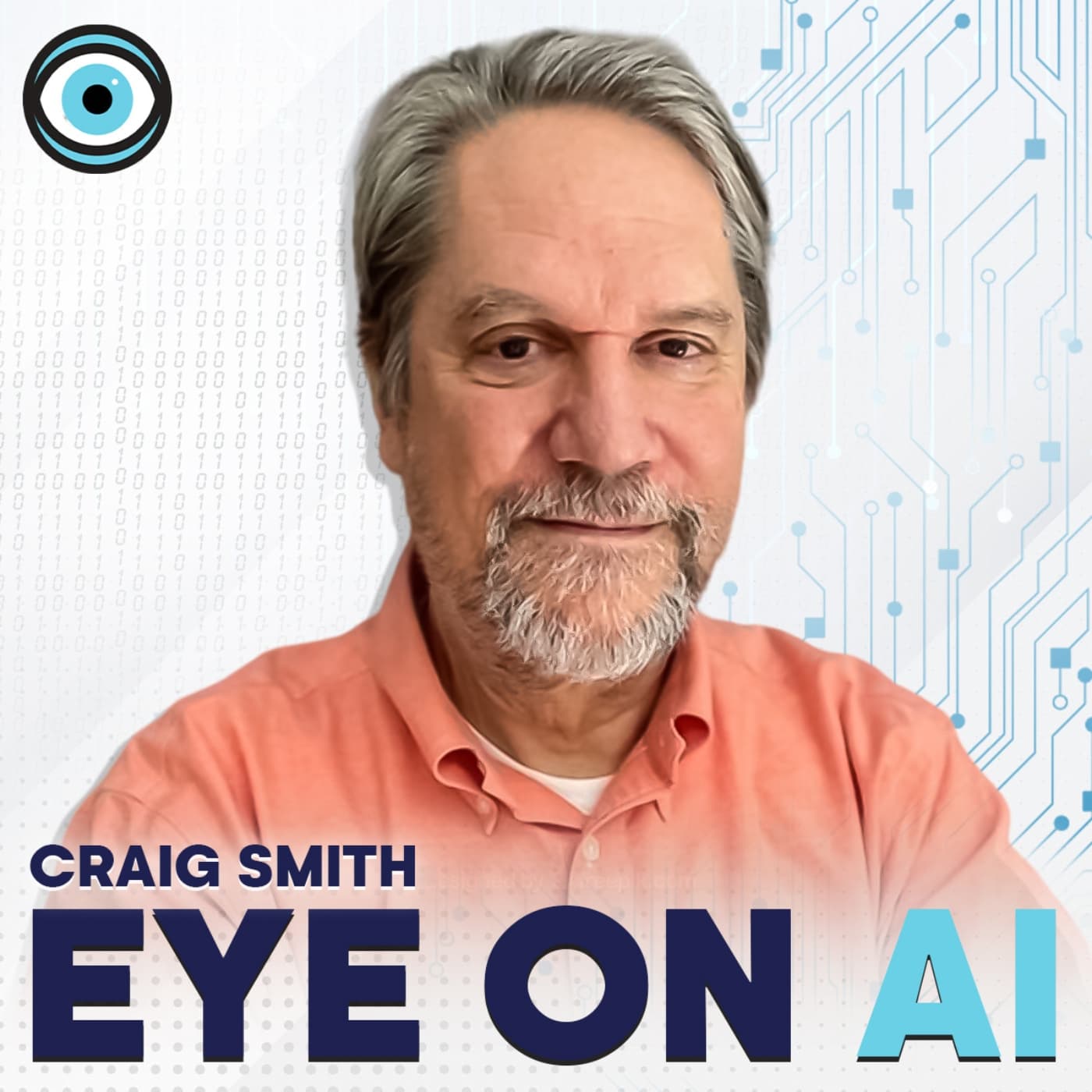
Podcast Overview Host: Craig S. Smith Guest: Hrant Khachatrian Focus: Exploration of AI advancements, challenges, and community building in Armenia through the lens of Hrant Khachatrian's work.
Episode Highlights
Introduction
- Overview of the podcast's focus on significant figures in AI and their contributions.
- Introduction of Hrant Khachatrian, founder of the Yerevann Machine Learning Research Lab.
Hrant's Journey
- Transition from a computer science background to founding Yerevann ML Research Lab in 2016.
- Initial challenges included limited access to mentorship and computing resources, leading to the lab's humble beginnings with a single GPU.
Goals of Yerevann ML Research Lab
- To foster an environment for students to engage in machine learning research.
- Provide opportunities for students to advance in their careers, whether in academia or industry.
Career Pathways in AI
- Discussion on the divergence of students into academia or industry.
- Recognition of the importance of creating pathways for aspiring professors.
AI Development in Armenia
- Overview of the current AI landscape, highlighting both challenges and opportunities.
- Discussion on the growth of AI education and the establishment of new programs in local universities.
Computing Resources for AI Research
- Insight into the importance of sufficient computing resources for conducting relevant AI research.
- Discussed the challenges faced due to limited access to GPUs in Armenia, impacting research capabilities.
Research Directions
- Focus on two main research directions:
- Drug Discovery: Using language models to analyze chemical properties of molecules for drug development.
- Aerial Navigation: Developing models for drones to navigate environments with multi-modal data integration.
Global Research Community Engagement
- Strategies to keep connected with the global AI research community, including attending international conferences and inviting prominent researchers to Armenia.
- Importance of maintaining high research standards and publishing in top-tier venues.
Future Aspirations
- Vision for Armenia to become a significant player in the global AI landscape.
- The ambition to focus on impactful research areas that align with both the capabilities of the local community and the broader trends in AI.
Key Takeaways
- Capacity Building: Focus on building a research community capable of competing on a global scale, balanced between academic and industry output.
- Research Strategies: Emphasis on selecting research topics that leverage available resources while exploring emerging fields in AI that are less crowded.
- Global Collaboration: Recognition of the Armenian diaspora's role in enhancing local research efforts through collaboration and knowledge exchange.
- Innovation in AI: Acknowledgment of the rapid evolution in AI, requiring constant adaptation of research agendas to stay relevant.
Closing Remarks
- A call for continued attention to AI advancements and their implications on various sectors.
- Encouragement for listeners to explore AI developments as they unfold, recognizing their potential to reshape the future.
---
Listen to the full episode for a deeper understanding of the discussion with Hrant Khachatrian on the evolving landscape of AI research in Armenia and beyond.
Written by AI. May contain mistakes. Listen to the episode to check what was said.
Transcript
Automatic transcript. May contain errors.0:00At that time there were no good supervisors in our neighbourhood. So we started just to rent an apartment, buy a GPU and play with it. We wanted to make sure that there are interesting and relatively well-funded opportunities for those students who want to get deeper into some specific topic and actually get to the like world-class level of knowledge. Yeah. So we are trying to make it as a career, like end-to-end career with like my own experience being a case study. But yeah, there are people who actually at some point decide that that's not what they want to do with their lives. And then they go to industry.
0:42Some people go to PhDs in other countries and then go to industry. Our goal is to make sure that those who want to become professors, they have good opportunity to do that. There are 200 people now in Armenia that are working in community, right? And I think almost all of them have never really touched big computers. Hi, I'm Craig Smith, and this is Eye on AI. In this episode, I speak to Hrant Kachatrian, a notable figure in the field of machine learning and data science in Armenia, and he's the founder and director of Yerevan, that's Yerevan with two N's at the end, of Machine Learning Research Lab.
1:23His research is mostly focused on deep learning for sequential data, including natural language and clinical time series. In addition to his role at Yerevan, he also works as a data scientist at Intellinaire, and he's contributed to the field of computational linguistics with work published in the proceedings of the annual meeting of the Association for Computational Linguistics. Most importantly, Harant gives us insight into the development of machine learning in Armenia, an amazing country that I recently visited. I hope you find the conversation as fascinating as I did. Hi, I wanted to jump in and give a shout out to our sponsor, NetSuite by Oracle.
2:11I'm a journalist and getting a single source of truth is nearly impossible. If you're a business owner, having a single source of truth is critical to running your operations. If this is you, you should know these three numbers. 36 ,000, 25, 1. 36 ,000 because that's the number of businesses that have upgraded to NetSuite by Oracle. NetSuite is the number one cloud financial system, streamlining, accounting, financial management, inventory, HR, and more. 25 because NetSuite turns 25 this year. That's 25 years of helping businesses do more with less, close their books in days, not weeks, and drive down costs.
3:02One, because your business is one of a kind. So you get a customized solution for all of your KPIs in one efficient system with one source of truth. Manage risk, get reliable forecasts, and improve margins. Everything you need, all in one place. As I said, I'm not the most organized person in the world, and there's real power to having all of the information in one place to make better decisions. This is an unprecedented offer by NetSuite to make that possible. Right now, download NetSuite's popular KPI checklist designed to give you consistently excellent performance, absolutely free at netsuite.com slash ionai.
3:51That's I-ON-A-I-E-Y-E-O-N-A-I, all run together. Go to netsuite.com slash ionai to get your own KPI checklist. Again, that's netsuite.com slash Ionai, E-Y-E-O-N-A-I. They support us, so let's support them. So we'll just talk, but why don't you start by introducing yourself, and then I'll just start asking from there. And tell us a little bit about your educational background and this lab that you're running or institute and that sort of thing. Great. Yeah. So I'm Hrant. I have a PhD in computer science in graph theory from Yerevan State University. I studied here in Yerevan in this university, both undergrad, master's and PhD.
4:57went into computer science research from I think early years of undergrad I had a great supervisor and got interested in in academic career I worked in industry as well so I was part of a company called Intel in Air that's a US-based company with Armenian roots that is doing computer vision for agriculture mostly operates in midwest states so at some point i was leading the computer vision team there but then i realized that staying both in academic life and in industry is not really possible yeah so i had to choose and i chose the academic path so with a group of friends we founded here a woman which is a non-profit research lab it's yeroban yeah it's yeroban n so yeroban is the name of the town and double n is like oh neural network type of thing right so we chose that name i think it was in late 2015 when there were like lots of papers being published with something NN.
6:15NN, right. So, yeah. Yeah, so the goal was to create an environment where students can work on academic projects in the field of machine learning. At that time, there were no good supervisors in our neighborhood in Europe and nearby. So, we started just to rent an apartment, buy a GPU and play with it. Really? And so, first of all, who was funding this? Yeah, so initially it was donations, like even myself and other friends who were in industry also. We were funding the initial operations. Later, we started to find new sources. So initially, it did not really require a lot of funding. All of us were students, did not have many needs.
7:15But eventually, all these problems started to become bigger and bigger. And the big help that we got was from Aram Galestian, who is, at that time, he was a research director at the University of Southern California, ISI. So we started to work with them. the most important thing was he started to supervise projects, he started to connect us to other researchers from his team and so on. And then we got into their projects that were funded by other sources, right? So we kind of started to subcontract USC projects. And then government grants in Armenia started to pop up and we started to get those grants.
8:03we had several opportunities to work with some local other foundations nonprofits that were funding those type of capacity building stuff and more recently we started to also accept donations and there are people who actually donate to us and that enables to engage more students from young age and then connect them to the research projects that we are working on Yeah. And that was what year that you started? We started in 2016. Like officially we started in 2016. Right. Right. Right before the transformer craze. Yeah. At that time there were no transformers. We had a project in NLP that was about extracting knowledge from biomedical literature.
8:57And none of the initial experiments were transformers. All of them were based on LSTMs. Right. Yeah, that's fascinating. And so, I mean, I'm interested in how it's developing, just the capacity building, I mean, how the community is developing. So when you started out, how many students did you have in the apartment? It's fascinating. You had one GPU. That's amazing. Yeah, it started with like five people. And then some sort of flow started. so one of them went to phd in the u.s then other students joined uh i think in two years we had the first case when someone from industry left his job and joined our team so that was something that we did not know when and how will happen right because in armenia the tech industry is growing very well and it's very well funded so a lot of students that know something that can benefit industry they start to work at a very early stage now and to not develop like deeper skills in uh research and in like more deep topics right so uh that's that was one of the one of the phenomena that we wanted to change with our approach right we wanted to make sure that there are interesting and relatively well-funded opportunities for those students who want to get deeper into some specific topic and actually get to the like world-class level of knowledge so that they could publishing that are not good conferences good journals and so on right so so this so making this path as a visible career part for a student that was an important goal for us and somehow we we can say that we achieved that so now there are many students including it like masters level even after masters that are joining us because they feel that it's it's possible to build a career on this way right so so build a career meaning that that at the lab you call it a lab or an institute the lab at this moment that that gives them the experience that then they go into industry or that gives them the experience and then they go into academia or or is there enough funding that that's actually a career doing research through the lab yes so we are trying to make it as a career like end to end career with like my own experience being a case study right but yeah there are people who actually at some point decide that that's not what they want to do with their lives and then they go to industry some people go to PhDs in other countries and then go to industry or come back so two of our alumni the way we call them are actually co-founders of tech startups in Armenia now.
12:13This also happens and I mean it's very natural, right? Like it's a funnel and most of the people do not end up being the professors. But our goal is to make sure that those who want to become professors, they have good opportunity to do that. Right. And you went to Yervan State University, which is the best school for, I guess, for AI. Is that right? So at that point, it was not really like there were no programs or even subjects on AI. so it had some traditions of like more fundamental mathematics so we started calculus and like mathematical analysis pretty well so which enabled all of this to happen right so in that sense yeah it was good but in terms of AI it started like the first I think master's program that our colleagues started at the rma state was in maybe 2017 or 18 and now there is a relatively good master's program there and then also a few other universities started so nowadays there are several undergrad master's programs and also like private training centers that provide pretty good education in this field so all of that happened essentially after we started right and and uh Are there labs, AI labs at the university?
13:49Yes. So the university started an AI lab last year. And we are in the process of integrating in some ways, right? So the government strategy is to invest mostly in the university, not in private initiatives. And there is this general understanding that we should join the airports. And we are in this process, I think. Yeah. So we will be more affiliated with the university. Yeah. Well, I think, and actually what got me interested, I was at the Digitech conference and you had a sign on the wall that said, Arminia needs more GPUs or something to that effect. are the universities do they have more compute resources at this point and and and talk about that about how growing this community is is constrained by by hardware in many ways yeah so you know initially like if I start from the early years of starting all those activities is we were trying to position ourselves to uh as like uh less compute intensive research less compute intensive work in ai right so uh there are projects there are directions that you can do with less resources and i personally as like a leader of the lab was trying to cut those projects that could grow into computing intensive stuff right and then this article came out with by richard satan which said that the bitter lesson right so and at that point i i remember that i was very much against that like i was like no this is not true we will prove with our example that it's not the case you can do a lot of good stuff without large compute and i think when gpt3 was announced and the paper came out and we started to read and i started to understand what's going on i started to kind of doubts appeared about how correct was i am in yeah and i started to realize slowly that it's it's getting increasingly hard to do relevant research without much compute so the entire education that happens in armenia in ai is also built around this non-computing intensive approaches right so there are a few hundred people now in armenia that are working in machine learning the way we know it we organize a conference every year it's called data first year event and we look how many people come right and it doesn't make sense to come to this event if you don't understand machine learning because like the content is very technical so this year we had like i don't know more than 600 participants so i think that's a relatively good estimate because there are people who do not come and there are people who come and are not very relevant, but on average, I think this is a good estimate on the size of the community, right?
17:18And I think almost all of them have never really touched big computes. Hi. Good tech solves problems that you've thought about. Great tech solves problems that you haven't even thought of. What can the commerce platform trusted by millions of merchants do for you? It's time for Shopify, the commerce platform revolutionizing millions of businesses worldwide. Whether you're a garage entrepreneur or IPO ready, Shopify is the only tool you need to start, run, and grow your business without the struggle. Shopify puts you in control of every sales channel. So whether you're selling satin sheets from Shopify's in-person point of sale system or offering organic olive oil on Shopify's all-in-one e-commerce platform, you're covered.
18:09Shopify powers 10 % of all e-commerce in the United States, and Shopify's truly a global force, powering Allbirds, Rothy's, and Brooklyn, and millions of other entrepreneurs of every size across over 170 countries. Plus, Shopify's award-winning help is there to support your success every step of the way. Sign up for a$1 per month trial period at shopify.com slash ionai. That's shopify, S-H-O-P-I-F-Y dot com slash ionai. That's E-Y-E-O-N-A-I all run together. Give them a try. They support us. So let's support them. Which is getting scary now because you either become a user of open ai's technology or you go to more compute and try to do something with more compute that could be competitive with those big ones right again you do not compete compete directly on chatbots right it's impossible to compete with judge gpt if you don't have 20 000 gpus right but there are many things that you can still do in a research with like i don't know 100 gpus right and if you don't have those 100 gpus you are slowly diverging into this situation where you become user of the technologies that others develop with more compute.
19:55So this is essentially the situation and we are in a stage that we have the capacity to utilize a lot more compute than is now available in Armenia. So getting back to the first part of your question, so the university has access to scientific equipment grants and with those grants we have bought a couple of nodes of NVIDIA DGX boxes but we believe it's not enough so like the science funding in Armenia works in a way that it's hard to invest several million into one direction right so the general budget is limited it so uh yeah uh but like we got to i don't know half a million right uh but i uh we we're looking for more options so we're working with the government like other parts of the government because it's not only about science right it's about enabling the next generation of ai companies that will have economic impact so you do need to do this capacity building now so that in two three years you have the teams to compete in the business side of things right so this is the strategy that we have right now we're working with the government we're trying to explain everyone what's going on what are the risks that the general ai community faces with the developments that open ai and google are doing right because this is the the challenge is very general like i was at icml this year it was in hawaii in the united states and i was asking like many researchers how did chat gpt change your research agenda and it's obvious that it's a big pain for everyone yeah right so uh one of them told me like okay research agenda is something else i'm more concerned now what i need to teach to students he was teaching computation linguistics for decades right so um and there are some people who are still in kind of denial phase they don't want to accept how many research directions kind of got obsolete in some sense right so so this is a big problem for everyone to stay relevant even in academic circles even in the US right and if we have this decision to capture more of the AI value that is being created with all those technologies we need to have these bold steps now to invest in capacity both in human capacity and in hardware capacity yeah i mean google and and aws and and various i'm sure azure i'm i don't know specific programs but there are scholar academic programs that make compute available uh have you leverage that and and also how many gpus do you think there are in armenia today oh it's hard to say because uh most of it is in like uh private companies and you know uh there are many companies that the teams in armenia have access to gpus but these gpus are not physically in armenia yeah that's also hard to count right it's a methodological problem so uh like for research purposes the equivalents of i don't know a100s which are like the you know previous generation best gpus i think there are less than 20 available for like research for universities for this type of things and i think maybe around equally uh to that like maybe another 20 available to private companies but like there are companies like pixart who are investing a lot now for their local needs but this is not directly accessible for i don't know students or researchers right so they have their own problems they are they have their own competition and actually pixart is i think one of those companies that understood the risks very early and started to invest very early So I think there is a good chance that they will stay relevant.
24:52NVIDIA has an R &D operation here now. Do they bring GPUs to the country and make them available? Not really. You know, sometimes I have a feeling that even inside NVIDIA, there is some kind of shortage. hmm so when I talked to Nvidia Fox at ICML by the way like not in Armenia and we were discussing some of their new supercomputing architectures and new hardware and I was like do you have access to them no so this and the team in Armenia is mostly on computer graphics side you know so they have access to gpus it's not the same essentially gpus that are used for uh large-scale training of ai nvidia has couple of teams internally i think not very much connected to armenian office that do large language modeling they have that megatron model and a few stuff like that but yeah it's not directly accessible to to researchers here and it's obvious right like I mean they have a lot of internal demand as well so it's it's hard to yeah yeah and so how many do you have at the lab now yeah so now we have access to eight a 100 from your advanced state university we have like eight other GPUs a smaller scale that we do for smaller experimentation and we're waiting for another eight age 100s that will come hopefully a couple of months so we have again through government grants yeah and and what kind of research then are you doing I mean there's a we were talking last night and there's there's a lot of research right now in in data pairing or trying to you know get more productivity out of fewer compute resources so is that one of the directions you're involved in it is yes so for many years we were working again with our colleagues from USC we worked on semi-supervised like object detection and things like that right and this year a model from meta segment anything came out and we realized that most of the research that we were doing is not relevant anymore so this was again one of those small bitter lessons right so they used a lot more compute and they achieved much better results and i think the past that we were following did not we would never came up with the same type of result right so and at that point we started to revisit our research agenda and we started to focus on two big directions mm-hmm so the first one is language modeling for essentially for drug discovery for molecules for small molecules that can become drugs can cure diseases right so there is some public data available about them biologists do not really trust that data there are many funny stories about like how unreliable that data is but we are confident that there is something to learn from that data so again we kind of apply those language modeling ideas to that so we encode these molecules as text and code this data as text so that we could kind of leverage transformers and then other good things that happened that were developed over these years and that project will go towards interactions with proteins like more biological effects of the molecules now we are like a little bit more focused on kind of simpler things like chemical properties not directly attacking the biological aspects of it then on the roadmap we have like the synthesis problem because it turns out that people can generate molecules in the computer and do some simulations and show that it's good but then you go to chemists you ask them to create this molecule and they say you know I I cannot synthesize this or it doesn't make sense, right?
29:46So that's another interesting challenge that there are some computational approaches right now that people use, but the power of language models has yet to be demonstrated in this field as well. So that's one general direction. I think we have like five, six, seven people working generally on this direction. And just before you go to the next research direction, what models are you using? Are you using open source models? Yeah, so it's an interesting question whether you need to start from an open source model or you can start from scratch depending on the size of the data. So we are also examining that aspect now.
30:33Right now we are starting from Meta's models, like Galactica, which was trained on scientific texts. But we don't have a clear demonstration that it really transfers this knowledge to the new data, right? We're in the process of evaluating right now. Yeah. And then the other research direction. Yeah, so the other direction is more related to vision, computer vision. it's more like a compute constrained foundation model for mostly like aerial navigation type of things like you are a drone and you want to navigate some environment maybe you are very high you use satellite data as well maybe you're flying low and you need to i don't know avoid obstacles So you need to be able to understand your environment with not a very big model, but not also very small, right?
31:38So we're trying to see what is the balance there. You also want to capture in many modalities with many cameras. You don't want to rely only on RGB. You also want to understand infrared and maybe some radiometric data like radars, whatever. so this is the general direction and also joining it to control related stuff like not the control at a lower level but like decision making on what action should I make right now right like not at the level of how fast should I spin my one of the motors but like on a higher level like what would a human drone operator do right I don't know use a joystick to to navigate right like can these models understand the instruction like the mission and understand the environment and make a decision whether I need to go to left or right right so this type of model so we were designing this like a half a year ago and I think in July there was a great paper from DeepMind it's called RT2 I think it's a way to leverage language models to perform actions of a robotic arm so it's arm on the table there is a data set that some people actually annotated it so it you give it an instruction like I don't know move this bottle to this computer and it actually uses robotic arm to perform the action and you record like what it did right so it rotated this part of hand this many degrees and yeah and then you give this to a language model so language model has a camera sees it's we call it language model but it's obviously beyond text right so yeah it has a text instruction it has an image and the output is another text that is interpreted as an action how many degrees you should rotate this right and then they show that if you start from a huge language model that they have internally it can bring world model world knowledge in some sense so So you ask it to, I don't know, push this bottle to Germany and you put like flags of many countries on the table and it pushes towards the flag of Germany.
34:16Because it knows what is Germany, what is flag, how it looks like. It has read the entire internet right before. So it kind of brings this interesting effects that you can transfer this general proposed knowledge into specific robotic tasks. Right, so this is exactly what we wanted to do. And yeah, we are in some sense getting behind because like obviously these guys with a lot more compute and a lot more resources are faster. but on the other hand the field is very wide so there are many things to do there and their models are not open and are huge so there is no chance you can run on all the gpus that we have in armenia these models they are like i don't know how 500 billion parameter models so i think yeah that that's another big direction that we're working yeah on on that i mean that's That's interesting.
35:21That work's being done where, did you say? At DeepMind. At DeepMind, yeah. And for you, what language model are you using? So the early experiments that we did on that were based on what's called Open Flamingo. Flamingo was another DeepMind's model, a closed source. and I think a team from University of Washington started to replicate that using open data. And yeah, we started from there. I think we will switch to more powerful things. Looks like there are a few other things that became available over the past couple of months. But yeah, I mean... And when you say others, you mean closed models that you access through APIs?
36:12No, no. it's uh those things are i think at this point they are not it's not possible to access them through apis because um you need to fine-tune them yeah so uh what we're doing we're taking open flamingo or something else and we are fine tuning them on the robotic or drone related data some of that is available uh actually recently deep mind with many many partners maybe like 30 partners released a large data set for table-based robotic stuff so very different robots very different tasks and they are trying to build a unified model for all of them like one model for all robots and a lot of data is available there and we are also looking for actually collecting our own data maybe our own sensors our own missions like for example agriculture is pretty interesting like you know go this way and find the tree that does not look good and maybe spray something on the tree right oh i don't know count the number of apples in the field right so you know there are these type of missions that you can plan and someone like an experienced drone operator can fly and generate data and then you can try to teach those models to perform the actions.
37:42On the robotic arm thing, the control mechanism is AI as well? So I think it's at the level of go left go right. Or at the joystick level you would push this button. So AI pushes the button but whatever happens underneath it's the underlying control system takes care so actually i think it's it will be one of the interesting research questions like down to which level you would want to cover with ai yeah right and then pass to the more traditional control I think the level that we are looking at right now is this push the button level but who knows I think there is possibility that it will go beyond that when when you go beyond that you have speed concerns you have to be very very fast which brings all these questions about the model size and everything and And then there are safety side.
38:57Yeah. So a lot of these control algorithms that are employed by these robots or drones have some safety guarantees that can be somehow mathematically proven. When you go to AI, you will have challenges there. Right. I know it's an open research direction. We are not looking into that right now. Do you then vectorize the movements so that you could use a large language model, a transformer-based model to give the instructions to the… Yeah, you can vectorize or tokenize everything, right? yeah so the way people do right now with chat GPT like systems like every action can be kind of expressed as a function call right it's you could say like it's this is a function name and then you have some arguments which are probably numbers right and this entire thing can be expressed as a string as a text right like character by character output the function name and the numbers like digit by digit right this might sound stupid like you could do more specific things but if you're operating in the language model mindset right this is very reasonable thing to do so deep mind was doing that so to get into more specifics to a robotic arm is a six axis object so the you control it by uh deciding six numbers so they their language model explicitly could always put those six numbers in text so that's it yeah i have seen papers that trying to get more clever like the way you tokenize the numbers is non-trivial like in gpt like models do you just i don't know every digit is a token or maybe a couple of digits pairs of digits are tokens some papers try to do very clever things like i don't know the if the digit is right next to the dot it has some different embedding than the digit that is further like if it's in decimals it's one thing and so on I personally believe that you really don't need to do these things if you have a big enough model because those are like very simple mathematical tricks that transformers will be able to learn easily right but i cannot be sure about smaller models like if you really want to squeeze your model into a very energy efficient thing maybe those clever tricks are still useful right it's obvious that in the big models these are not like I'm sure ChatGPT does not use any specific tokenization for any specific symbol or context.
42:19So it all works with the same basic principles. So how do you feel about, I mean, certainly the communities develop tremendously since 2016, did you say? But, you know, and the research community is very open and, you know, there's information passes very quickly. Do you feel that you're part of the global research community or do you feel isolated in Armenia? And as you build the human capital here, do you feel like Armenia has an opportunity to push the – I mean, right now, you're – I don't know how to put this, but you're not at the leading edge. your sort of following research trends, but is there an ambition?
43:32I would imagine there is that then you could rise to the leading edge in some areas. Absolutely, yes. So I think the international research community in AI is open to the extent that no matter where you are, you have the opportunity to be connected and not feel isolated and when I say you have the opportunity it doesn't mean that everyone is using those opportunities right so you could easily get isolated as well but the opportunities are there and we spend a lot of effort to stay connected it and i think we are relatively successful in that so the way we do this is to make sure that almost everyone in the team attends one international conference every year right no matter how far they are the other way is to invite like well-known people in the field to Armenia so we have this datafsdrevan which is a joint effort with our colleagues from industry so it's not like an academic event it's more like more focused towards industry but we bring scientists as well so So every year, like 10, 15 people come and we do networking and conversations.
45:11So we're trying to make sure that this flow exists in both directions so that whoever wants to be connected and not get isolated, they have the opportunity. Another way we do this is to raise the bar of the work that we're doing. right so in our team we like everyone knows that if you don't publish in a top machine learning conference it's not like you can't say you did your work right so so everything you do has to be published in a good place you should be put on github so that others know right otherwise like that's the criteria for success so this is the second thing that like if you come to our office you know we have a list of journals and conferences ranked by google scholar written on the wall so that everyone every day is aware of what are the good ones and what we we want to target right um the other thing that is very helpful in case of Armenia is the diaspora so we have many Armenians that are publishing in those top places and attending these conferences and working on this research both in academic environments but also in companies like Meta Google so we have very good relationship with them they help us a lot they engage us in some of their research projects even so we have like this year we had I think three papers with different ratio of contributions with Meta so our colleague there are men of a genuine he started this but and then it grew into larger collaborations with more people I think give a four papers yeah and the fifth one is will be sent maybe in a month so all of this requires very high bar of quality because those folks are not interested in low-quality research or mediocre research right so I think it's it's very important that even the undergrad students who come to our environment they start to feel the pressure of staying on top of things in general so we have the papers in the top conferences like a couple of them every year but that's not the level that we are aiming for so we're aiming for more impactful and uh and like more involvement in in those uh top of the news so you know initially our research agenda was like more more governed by those supervisors that we were able to find in different places so we were doing that and we could we could work on 10 projects with 10 people right because there is one supervisor who can lead one student and yeah so that's the early stage of capacity building right now we are at the stage that we are designing our research agenda and the two big directions that I mentioned are already kind of our own products right and again obviously we consult with all our colleagues from here and there Armenians non-Armenians everyone we can get access to and uh yeah the ambition right now is to uh to become a center where we uh produce high quality research regularly in these two directions for many years right so that like uh we secure our uh place on the on the map of of this yeah direction so we were careful not to include like a lot of nlp in that because it's very very hard to compete there right so these decisions like why we chose chemistry and uh this aerial navigation stuff is based on many many factors like our background our connections uh the competition in research it's not really competition but you know what I'm talking about so our chances to be competitive essentially our resources current resources and prospective right what we can expect in the next couple of years uh yeah and and uh also the the way we see where armenian industry can go right for me it's obvious that uh the big part of ai uh the deval the big part of the value that ai will create in the world will be in biotech and i believe it's strategic to develop capacity in this direction so that's another important factor why we you know got stuck into this direction uh and also like arl-based everything is also important for armenia for many reasons like including agriculture like disaster handling so all right yeah I don't have much time left actually I'm sort of but but let me ask we were talking last night I mean so you're constrained by hardware and the current generative AI or transformer based research is very compute intense.
51:21But there are other research areas that I think are promising and personally, I think, have a better chance of reaching artificial general intelligence or that, you know, which is kind of the ultimate goal for a lot of researchers. And I'm thinking we talked last night about Jan LeCun's JEPA models and Rich Sutton's work. You mentioned Sutton in reinforcement learning. Why not, given the hardware constraints, why not pick those areas where, frankly, it's not as crowded, there aren't as many people doing research doesn't require as much compute and i would think there's a better chance of of having a breakthrough or doing something significant yeah good question so like in terms of reinforcement learning we don't do reinforcement learning it's not in our background like we cannot do a shift like that right and personally I'm not convinced to be fair that it's a better approach to solve many problems right I'm even skeptical about this recent RLHF stuff that is being built on top of language models like I believe that the pure pre-training of language models is a lot more elegant and uh beautiful and powerful and the rlhp part sometimes uh has this feeling i have this feeling that is a little bit of a hack yeah i agree to make uh language models i don't know um more user-friendly so that people do not complain or i don't know like so the general learning that happens inside the best models we have right now is actually happening in the pre-training phase so like I believe that the big challenge in AI research now is to actually extract like properly extract this information from the big models and I think we're not doing that well enough so these models actually know more than we are able to expose right with the strategies we have right and I'm sure reinforcement learning based solutions can be part of the solution we are more interested in other aspects so one paper that we have submitted recently was about looking at vision transformers which are like not that big uh like i don't know a couple of billion parameters maximum and the smaller versions of them and we're trying to see how much knowledge they already have about parts of the image and how much you can extract from it without any further training right so and it's an interesting set of opportunities that what can you extract and what are the tools to extract right like how do you deal with it like it's it's almost like a psychological like process like how do you convince the model to expose the knowledge that it has so uh so these type of things are very interesting so i think that to directly to more directly answer your question i think that the way language models capture knowledge is unbeatable now and i i'm not sure that other approaches will be better i appreciate the work that people do outside of it it's not that obviously you should not put all the x right in the same place so people should work on other things our approach is to stick with these approaches to to see to to try to understand how much those transformers could extract and how we can expose it and how we can utilize it and then do this for chemistry like there are no chemistry gpts now right so let's see if we put the whole publicly available chemistry related data to these transformers what will be the model and then what we can extract from it like which biological important problems in drug discovery pipeline can be accelerated if you have this this model right it it's not really obvious how to do that and and what can be extracted there and i think at some point we will just release the model to the public and see what other people can do that we didn't think of right so uh that's the strategy we're we're taking so part of it is computer intensive but a lot of it is not computer intensive because you are playing with the existing model yeah i remember in one of the interviews ilia's cover also so there was a question like how much time do you spend on like generating new ideas and how much time you spend on implementing those ideas and he was like you know like 90 of the time we spend this to understand what these models are capable yeah yeah that's right when I heard that I realized that a lot of the work that we are doing is the same yeah many of our papers like last year we published at CVPR which was about like failure modes of domain generalization like if your model was trained on some distribution of data and then the distribution is changed how your models fail there are we discovered that there are many different ways to fail all right so you look at the numbers all numbers are bad but then you realize that in the detail there are very they are very different yeah right so uh this approach is uh pretty interesting and uh exciting for for us and i think a lot of our research will be on those lies.
58:19Hi, I wanted to jump in and give a shout out to our sponsor NetSuite by Oracle. I'm a journalist and getting a single source of truth is nearly impossible. If you're a business owner, having a single source of truth is critical to running your operations. If this is you, you should know these three numbers. 36 ,000, 25, 1. 36 ,000 because that's the number of businesses that have upgraded to NetSuite by Oracle. NetSuite is the number one cloud financial system, streamlining accounting, financial management, inventory, HR, and more. 25 because NetSuite turns 25 this year. That's 25 years of helping businesses do more with less, close their books in days, not weeks, and drive down costs.
59:16One, because your business is one of a kind. So you get a customized solution for all of your KPIs in one efficient system with one source of truth. Manage risk, get reliable forecasts, and improve margins. Everything you need, all in one place. As I said, I'm not the most organized person in the world, and there's real power to having all of the information in one place to make better decisions. This is an unprecedented offer by NetSuite to make that possible. Right now, download NetSuite's popular KPI checklist designed to give you consistently excellent performance, absolutely free at netsuite.com slash ionai.
1:00:08That's I-ON-A-I-E-Y-E-O-N-A-I, all run together. Go to netsuite.com slash ionai to get your own KPI checklist. Again, that's netsuite.com slash IonAI, E-Y-E-O-N-A-I. They support us, so let's support them. That's it for this episode. I want to thank Harant for his time. If you want to read a transcript of today's conversation, you can find one, as always, on our website, IonAI. That's E-Y-E hyphen O-N dot A-I. In the meantime, remember the singularity may not be near, but AI is already changing your world. So pay attention.
From the publisher
This episode is sponsored by Netsuite by Oracle, the number one cloud financial system, streamlining accounting, financial management, inventory, HR, and more.
Download NetSuite's popular KPI Checklist, designed to give you consistently excellent performance - absolutely free at https://netsuite.com/EYEONAI
Explore the frontiers of AI with Hrant Khachatrian and discover how Armenia is carving its niche in the global AI landscape on Eye on AI.
In this episode Hrant shares his journey from industry to academia, detailing the establishment of YerevaNN at a time when machine learning was scarcely present in Armenia.
The discussion revolves around the challenges and breakthroughs in AI research, particularly in areas like natural language processing and clinical time series. Hrant also delves into his lab's efforts in developing deep learning algorithms for a wide array of applications, from electronic health records to image segmentation.
His insights provide a unique perspective on the growth of AI research in Armenia and its global implications, so make sure you watch till the end.
This episode is sponsored by Shopify. Shopify is a commerce platform that allows anyone to set up an online store and sell their products. Whether you're selling online, on social media, or in person, Shopify has you covered on every base. With Shopify you can sell physical and digital products. You can sell services, memberships, ticketed events, rentals and even classes and lessons.
Sign up for a $1 per month trial period at http://shopify.com/eyeonai
Stay Updated:
Craig Smith Twitter: https://twitter.com/craigss
Eye on A.I. Twitter: https://twitter.com/EyeOn_AI
(00:00) Preview and Introduction
(02:03) Sponsorship: Netsuite by Oracle Evolution
(04:40) Hrant's Journey: From Computer Science to Founding Yerevann ML Research Lab
(06:15) What Are The Goals of Yerevann ML Research Lab?
(11:33) Career Pathways in AI: Industry vs Academia
(14:22) AI Development in Armenia: Challenges and Opportunities
(21:41) Leveraging Compute Resources for AI Research
(25:46) Drug Discovery and Aerial Navigation in AI
(33:54) Exploring New Avenues of AI Research
(41:15) Building a Global Research Community from Armenia
(49:53) Future of AI Research: Potential Areas and Strategies
(57:10) Closing Remarks


