In short
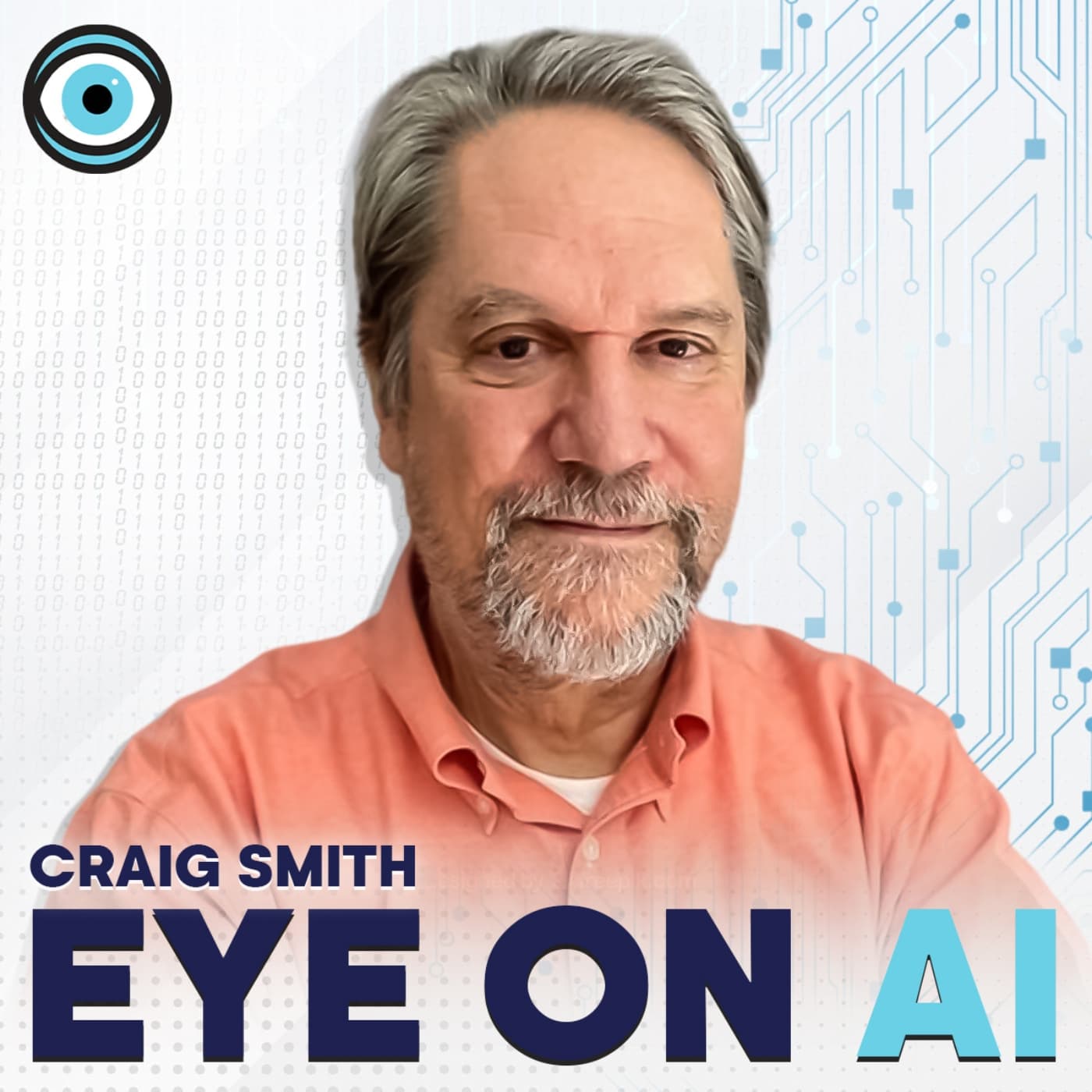
Podcast Notes: Eye On A.I. - Episode #168 Ian Bremmer on Regulating AI for a Safer Future
Episode Overview In this episode, host Craig S. Smith converses with Ian Bremmer, founder and president of Eurasia Group, discussing the intricacies of AI regulation amidst global political dynamics. The conversation centers on the challenges of AI governance, the need for international cooperation, and the role of nation-states in shaping AI technology's future.
Main Themes
- AI Governance: Challenges and the necessity of a regulatory framework for AI.
- International Cooperation: Importance of collaboration across nations to manage AI risks.
- Comparisons with Other Regulatory Challenges: Drawing parallels between AI governance and other sectors like climate change.
Key Discussions
Introduction to AI Governance
- AI's rapid development poses significant governance challenges.
- The influence of tech companies in shaping societal rules through AI.
Ian Bremmer's Background
- Political scientist and president of Eurasia Group.
- Experience leading discussions on AI regulation.
AI Regulation Discussion
- The evolution of regulatory frameworks in response to fast-paced AI advancements.
- Recognition of the need for humility regarding governance capabilities due to the speed of technology.
Limiting AI Compute Power
- Discussion on the feasibility of regulating AI compute capacity globally.
- Comparisons to nuclear weapon control and the challenges of enforcing limits.
The Role of AGI and AI Regulation
- AGI (Artificial General Intelligence) is a concern, but immediate regulation of current AI applications is prioritized.
- The potential for significant social and economic disruption if AI is mismanaged.
EU's Approach to AI Regulation
- The European Union's efforts to create robust AI regulations as a benchmark for global governance.
- Challenges faced in balancing innovation with accountability.
Hybrid Regulation Models
- Need for a combined effort of private sector and government in regulating AI.
- Examples from climate change initiatives where public and private sectors collaborate.
Comparing AI Governance with Other Industries
- Insights on how AI governance could learn from established regulatory frameworks in other sectors.
- The importance of creating adaptable governance structures for the rapidly changing landscape of AI.
US-China Competition in AI
- The geopolitical race between the US and China concerning AI development and regulation.
- Potential for collaborative regulatory frameworks amidst competition.
The Role of Open Source in AI Governance
- The implications of open-source AI models for global democratization of AI technology.
- Risks associated with open-sourcing powerful AI technologies.
Ian Bremmer's Thoughts on AI's Future
- Concerns about the rapid development of AI outpacing governance efforts.
- The need for proactive measures to address potential harms from AI technologies.
Key Takeaways
- Urgency of Regulation: AI technologies require immediate and effective governance to mitigate risks.
- International Cooperation is Essential: Global collaboration is crucial in addressing the challenges posed by transformative AI technologies.
- Balancing Innovation and Accountability: A hybrid model of regulation involving both governmental oversight and corporate responsibility is necessary.
- Need for Transparency: Companies developing AI models must be held accountable for their impacts on society and should engage in transparent practices.
Closing Thoughts Ian Bremmer asserts that while the potential of AI to enhance human life is immense, the governing frameworks must evolve quickly to ensure that these technologies benefit society rather than pose risks. The conversation emphasizes that AI is changing the landscape of human interaction, governance, and security, necessitating close attention and action from all stakeholders involved.
Additional Information
- Host: Craig S. Smith
- Guest: Ian Bremmer, President of Eurasia Group
- Episode Length: Approximately 45 minutes
- Sponsorship: Netsuite by Oracle - financial management solutions.
- Social Media: [Craig Smith Twitter](https://twitter.com/craigss), [Eye on A.I. Twitter](https://twitter.com/EyeOn_AI)
For further insights and a transcript of the conversation, visit the [Eye on A.I. website](https://www.eye-on-ai.com).
Written by AI. May contain mistakes. Listen to the episode to check what was said.
Transcript
Automatic transcript. May contain errors.0:00Digital world order, it's increasingly run by tech companies that are sovereign in that space. And that's particularly true in AI, where the foundational models and what they do, what their inputs are, the data they train on, all of that stuff is determined. The rule set of how you as a human being, as a citizen, as a consumer will engage with them. Those things are determined wholly by the people that are running the tech company. I do believe that there is a very, very tall mountain to climb to have effective governance of that space. And unlike on climate change, where it started late, but at least it's comparatively slow moving.
0:43I mean, I know it doesn't feel that way because of all the things that are happening in the world on climate. But, you know, at the end of the day, like we still have years in principle to stay to 1.5 degrees centigrade. And if we don't, it'll be two. And we're kind of, we have the ability over decades to course correct. Hi, my name's Craig Smith, and this is Eye on AI. Today, I have Ian Bremmer with me, the renowned political scientist, to talk about AI regulation, the potential for a global regulatory framework, and the role of nation states in AI development. Ian also talked about who should be held accountable for AI harm, and the U.S.-China competition and collaboration over the technology.
1:26I hope you find the conversation as engrossing as I did. AI might be the most important new computer technology ever. It's storming every industry and literally billions of dollars are being invested. So buckle up. The problem is that AI needs a lot of speed and processing power. So how do you compete without costs spiraling out of control? It's time to upgrade to the next generation of the cloud Oracle Cloud Infrastructure or OCI OCI is a single platform for your infrastructure, database, application, development and AI needs OCI has four to eight times the bandwidth of other clouds Offers one consistent price instead of variable regional pricing and of course nobody does data better than Oracle.
2:21So now you can train your AI models at twice the speed and less than half the cost of other clouds. If you want to do more and spend less, like Uber, 8x8, and Databricks Mosaic, take a free test drive of OCI at oracle.com slash ionai. Okay, so Ian, let's start since I'm recording. Introduce yourself. I mean, obviously, I know who you are, and a lot of people listening will know who you are, but it's always good to have you introduce yourself. Sure. I'm Ian Bremmer, a political scientist, and I'm president of Eurasia Group. I'm interested personally about your journey, about how you got to not only running Eurasia Group, but making Eurasia Group as prominent as it's become.
3:20Can you just talk a little bit about how you developed the organization and your profile? Well, I mean, it's always been a misnomer in the sense that when I started it, it was focused just on Eurasia, but it wasn't a group. It was just me. It was Eurasia guy, which doesn't sound very credible as an organization. And as I started getting clients that wanted access to the research that I was doing as a political scientist, as a former academic, and I started hiring people. And I've done it now for 26 years. I started with nothing, and now it's a big company. Globally, we've got about 250 folks. It's just kind of a really cool political science story.
4:10For someone who really cares about trying to understand the world, that really matters to me because I think the world is becoming a much more dangerous place. You've spent a lot of time recently talking about AI regulation in particular. And I read your piece in Foreign Affairs with Mustafa Suleiman. And you guys talked about, in that piece, about developing a regulatory framework or kind of a stocked framework with various levels. piece. Does that represent your latest thinking or has your thinking evolved? In that piece, you talked about kind of a three-tier regulatory framework. I'd be interested in hearing about that.
5:00And I'd also be interested in hearing what you are thinking about AI development in general. with? I mean, look, it's evolved in the sense that the field is changing very quickly. There has been some regulatory efforts that have come about since Mustafa and I wrote that piece. And I think they've all been informed by it, actually, which is first time I can really say that in my career, which is sort of interesting, in part because there's so little out there. And also because Because I helped get the Secretary General of the UN interested in AI five years ago. And he's now launched a high-level panel on AI that I'm on the executive committee of and serve as a rapporteur.
5:51So I'm sort of writing up, you know, hopefully what will be the global direction of governance on AI. So, again, kind of the first time in my life that I'm sort of a policy practitioner, even though I don't in any way think of myself that way. Right. But but again, it's this is a very, very fast moving space. So that's my that's my kind of immodest rejoinder to how I want to how I would answer the question. It's changing. It's changing a lot because of my experience in the field as much as the field is changing. But yeah, look, I mean, I guess I want to say a couple of things to start. The first is a level of humility about what governance can do, given how fast the technology is moving.
6:38the utter lack of interest in any of the technology companies, the leaders of those companies in slowing down at all. They want to speed up because this is a very well-funded, extremely smart group of people that have competitors breathing down their neck. And so, I mean, they're not the bad people, but I mean, their incentives are overwhelmingly to get this out and faster, faster, faster, right? So you put those things together and the fact, you know, what I call a technopolar world, that when we talk about the digital world order, it's increasingly run by tech companies that are sovereign in that space.
7:25And that's particularly true in AI, where the foundational models and, you know, what they do, what their inputs are, the data they train on, all of that stuff is determined. the rule set of how you as a human being, as a citizen, as a consumer will engage with them, those things are determined wholly, wholly by the people that are running the tech companies. So I do believe that there is a very, very tall mountain to climb to have effective governance of that space. And I would argue the technology is moving a lot faster than the governance is, even though in the last 12 months, the governance has been a priority.
8:10It's been urgent. It's been, you know, on the top three, top five issues of all the major policy leaders around the world that you speak with. And I'm very heartened by that. And they are legitimately trying to figure out what to do. They are not coming to the table with preconceived notions of these are the equities that I must defend. So that's all to the good. But, but, you know, it's, it is, it is starting late. And unlike on climate change, where it started late, but at least it's comparatively slow moving. I mean, I know it doesn't feel that way, because of all the things that are happening in the world on climate.
8:51But you know, at the end of the day, like we still have years in principle, to stay to 1.5 degrees centigrade. And if we don't, it'll be two. And we're kind of, we have the ability over decades to course correct and have some impact on the world. You don't have generations on AI. You've got years. You've got years, a single years, right? So that's the backdrop. That's the context for talking about the geopolitics of AI, the governance of AI. Yeah. I talk to a guy periodically. Do you know Connor Leahy? He's a smart guy. He's young and a bit of a rebel. But he had this group, Eleuther AI. He now has a startup focused on alignment.
9:44But Luther AI developed the first open source large language model, GPT-J, and has gone on to develop larger models. And he's now very focused on regulation. And he says some very interesting things that I just wanted to hear what you said. because what you had in foreign affairs is kind of high-level framework. But in terms of specific regulations, he says, for example, the world got together and decided that human cloning is a bad thing or that we're not ready to go there. And it was banned globally through various structures. Is that possible with AI? Could you set a limit on how many flops per training session or how large?
11:00I mean, compute is an easy thing to track. uh i mean is that one of the things that one of these global bodies or or at least nation states could could do just outright ban something no well first so first of all um it's the right question to ask it's a very interesting question um and uh as a political scientist um i would start by answering it as if you were asking that question of nuclear weapons after the americans and Soviets already had a bunch and say, well, I mean, in principle, couldn't we just ban? Because it's obvious that we don't want them. It's obvious they're incredibly dangerous.
11:43We don't think they're usable. We're really worried about proliferation. We're really worried about what could happen in the world if we keep building them. As it turned out, we believe that at least once we were one in three at destroying humanity as a consequence of them. So it's a really bad idea to have them around, right? And yet, and we've got countries down with like Pakistan and North Korea that we clearly don't want to have nuclear weapons. It's utterly unacceptable. We can't do anything about it, right? And so the genie is out of the bottle, and we cannot wish it away. There is way too much money.
12:20There are way too many powerful companies with influence. It matters way too much for growth. There is already way too much proliferation. And the geopolitics are already way too competitive. If we don't do it, somebody else will strategically, never mind technologically, never mind from a business perspective. So for all of those reasons, absolutely not. You saw there was this one letter that was signed by a number of, you know, sort of AI, let's say, concerned enthusiasts and scientists. and it got, I think, several thousand people signing, a lot of whom actually mattered. It was only to limit one very small part of AI development.
13:06And it went absolutely nowhere immediately as anyone touching the field could have told you it was going to. So we've now had this high-level UN panel together for several months. We've put out our interim draft report. And that question that you just raised, and remember, this is 35 plus people, public sector, private sector, ministers, public policy types. It's a really good cross-section globally of people with expertise and power over and around AI all over the world. That question that you just raised has not taken up a moment of conversation over the months of our meetings. Not in any working group has not been discussed because it's not relevant.
13:55It's not credible. It's not anything that we think we could put muscle into. Now, keep in mind, when you're working at the global level, you understand, number one, the United Nations has no power, right? Number two, the United Nations has no money. What it has is legitimacy at the global level, a voice. It actually brings everyone together. So you can try to understand what the lowest common denominator is. You can steer it. You can create analytic ground truth that everyone can come together around, which is a really important thing to do in my view. And occasionally, especially if you have a crisis, you can raise the lowest common denominator, at least among a group of players, a subset of players, and maybe you can then broaden it out.
14:43Those are all worthy goals. The question that you just asked me, can you just stop it from happening? No, that is several factors of extrapolation beyond what anyone thinks is remotely possible. Even in, say, because this is not the level of compute we're talking, I'm talking about massive compute, something that no one has reached yet, but that is probably in the current trajectory necessary for AGI. Just say, have a treaty between the U.S. and China and Russia and France, maybe, that no training session or no AI system can go beyond a certain number of floating point operations per second, you know, and set it high beyond what's being done today.
15:46just as a limit? You don't think that would work? Oh, I mean, that's an interesting thought experiment for the future. So a couple of caveats before I try to answer that question. The first is, we don't know what the state and diffusion of compute will be like when that conversation becomes more relevant. In other words, how many actors will have access to it? is it going to continue to become logarithmically more expensive as it is presently projected to be using the same kinds of energy inputs, for example, that only a small number of states would have? Because if that's the case, then it's no longer a massively proliferating technology.
16:32It's something that only the U.S. government together with tech companies and the Chinese government together with tech companies can probably do, right? So you won't need a treaty because it won't be relevant. And then there's just a question of what mutually assured destruction looks like and what the Americans and Chinese decide to share. So it becomes a geopolitical question. That's one point. Second point is to what extent the advances in AI technology are likely to continue to be on the back of more and more explosive data sets, which have enormous amounts of garbage in them? Or is it on the basis of more finely trained data that is smaller, that you have full confidence in?
17:23And that's a very different kind of advance that will be massively more available at lower scale to governments, to companies, to rogue actors, you name it. Now, I also would say that the AGI question is, I mean, I am worried about so many other things and excited about so many other things in AI before we remotely get to whether or not an AGI is either technically or even philosophically possible. I'm much more concerned about people destroying the planet using AI than I am about, or destroying humanity, I should say, than I am about robots taking over, about artificial intelligence becoming sentient.
18:12I just think that what we have right now is an incredibly powerful, incredibly economically disruptive for good and for bad, and politically disruptive for good and for bad new technology that very soon everyone is going to have in their hands and be able to do stuff with it. And we are not ready for that. We're not ready for the economic upside, but I'm sure we'll figure a way. But we're also not ready for the economic, political, social, and security downside. And everyone with money in the field is going to take care of the upside problems. I'm not worried about not reaching the upside, that governance is going to stop the upside because the power is all there, the trajectory is there.
18:58I'm worried about the stuff that people aren't spending the money and time on. Because, you know, again, I'm a political scientist. I'm kind of that's what I'm paid. I'm paid to do. That's my concern. Yeah. Another question that I'm sorry to dive. Can I ask you, why did you start with AGI? Is it just because that's the really big, like high level, long term existential thing? Or are you more concerned about than I am. AGI I'm not concerned about. And I think as I mentioned AGI, it's as something that we'd want to control if it ever happens. We'd want to have controls in place to prevent it if we don't want it to happen.
19:42But I thought the idea of limiting the amount of compute that can be marshaled for any particular AI system as a practical way of guarding against not necessarily AGI, but just super powerful systems. I thought that was an interesting idea. The other thing, and I'm sorry to dive right into the specifics of regulation. But to me, that's more interesting than, you know, you have this body and it's going to be responsible for this and that body is going to be responsible for that. It's the specifics that interest me. Another big question that's been debated in the EU AI Act is the responsibility of model developers or model purveyors.
20:40Where do you stand on that? Because again, this is a frustration for me in the gun debate that gun manufacturers are free of liability and that in social media, the social media companies are free of liability. And there's been a lot recently about the plastics industry. I don't know where that debate started, but people saying, hey, you know, the plastics industry knew that this was going to be a problem and they just shifted it to the consumer with this whole, you know, you should be recycling. So is there should should these potential harms fall on the model developers? And that would be a way of of creating some some caution on their part.
21:41They certainly have to have some level of accountability. How much of it is solely on them? How much of it is shared in the industry? How much of it is with government actors? That's that's where the decision has to be made. But your question is obvious because, I mean, these companies, it turns out Americans are incredible capitalists when we talk about profit. We understand where the profit's being made. We know how to build business models that will create extraordinary world changing enterprises. And we make sure the shareholders get it. And that's driven a lot of growth. But when it comes to losses, we are the world's best socialists.
22:16We really want to make sure that we socialize those losses. Not on me. It's on the public. It's on the general public and preferably it's on the general public in the future so that we don't have to pay for it. Our kids do. Whether you talk about climate change and carbon and methane emissions, whether you talk about plastics, deforestation, biodiversity, social media, you name it. Right. And I, of course, is is the same thing that we have completely failed on social media, completely failed. And I think everyone knows this. It is addictive. It is horrible for our children. It is damaging them in ways that we do not know or understand.
22:55We would absolutely, if this was a GMO, if it was a vaccine, we would have testing regulations before we would allow them to be injected into the bloodstream, the consciousness of our kids. And yet here we're testing them real time on people, on societies, on democracies. And you see the implications. It is undermining American democracy. We are exporting tools that undermine democracy around the world. That is not the United States I grew up in. And, you know, we now have AI. And it's a much more powerful version of the social media challenge. You know, so, I mean, yes, I believe that foundational models need to be tested and that there needs to be transparency around that.
23:43There needs to be red teaming that should be done by folks that are either outside of the organization or if they're inside. There is some level of outside participation so that you know exactly what's being done. But not just in terms of breaking the model to have it do things that the company doesn't want it to do, but also in terms of testing the actual business model on society. Like we want to understand what it means when AI bots are released and people use them before they are released broadly. We kind of need to know what's the impact on society. And if the companies really don't want that, then there need to be some level of legal recourse to help ensure that they are accountable for damages that eventually might occur.
24:35My point here is not that there's a fundamental problem with like an advertising driven model for social media, or the monetization models that the AI companies will soon roll out everywhere around the world. Rather, I'm saying that all of the money that is made from them also means that those profits will need to pay for the social costs that come from those business models. And there are two ways to pay the social costs. You can pay them ex ante by by testing and trying to help ensure that those costs are limited or ex post once the costs have already occurred and you need to clean it up. And that would be true for a company that's dumping its waste and ends up causing cancer and a bunch of a bunch of people in a community.
25:28You know, as I saw growing next to where I grew up, like, you know, Woburn, Massachusetts and stuff like that. Or it's going to be true for AI. But those things are all these are all challenges where the business model does not yet account for public goods. that matter, that are part of GDP. That's a fundamental issue. By shifting responsibility to the model developers, to me, that would immediately clean up the problem because model developers would be terrified of putting something into the public space that could be abused or could cause real harm. Do you think that that's a serious consideration in the United States or in the EU?
26:23Well, even in the EU, where it would be most likely, you've seen the French in particular, but also the Germans and others pushing back very strongly against that, because they do not want their own existing unicorn companies and nascent unicorn companies to be cut off by a much less permissive regulatory framework than what their competitors enjoy with, you know, a big market and with a head start in the United States. In the United States, that's generally not the cultural orientation of how the sausage politically is made. I mean, the first thing that was done was bringing the corporates and the government together to create voluntary commitments that the big AI companies were going to follow.
27:15And then there was an executive order, which is not the same as legislation, but still very much a, what are the common sense things that we think we can regulate that the companies agree to. And so I think that the real answer to your question is it's going to be in between a full responsibility of the companies and some level of oversight, however inadequate in cooperation from the governments. But it will be better than what we've seen in social media, which has been hands off and nothing. It's been a disaster. I do think that the failings of regulating social media in any way have informed some of the concerns that everyone has around artificial intelligence, especially when you talk about the disinformation side, for example.
28:09Yeah. It would be more akin to what exists in the auto industry or the aircraft industry, that you have to ensure that your product is safe before releasing it. Is that right? I mean, to me, that seems like a simple. I don't think we're going to get there. I think that that is I'd love that to be the standard. It is not the standard. I'd love I personally I think that governments are a better position to make policy than corporations. They have you know, they have more people focused on it. They have the resources. They have the experience. There are lots of problems with governments. But when it comes to making public policy in the public interest, I would rather them do it.
28:53In this case, I think you need a hybrid model. You need the tech companies and the governments doing it together because the governments don't understand it. It's moving too fast and the companies have the resources and they're making all the decisions. So I think we're going to have to accept that the outcome is going to be made in larger part by self-interested parties. And you'll try to restrain that impulse by not having them do it by themselves. But that's where I think we are. Yeah. Is there an industrial model that you can point to where that kind of hybrid regulation has worked? I would argue climate change is probably the closest where, you know, the reason that you now have a COP process every year with 90 ,000 people attending this year, and it was private sector and public sector and academics and activists.
29:50And they are they have driven an awful lot of investment towards renewable energy. And the question is just how big, how fast. But we all know the end point. And that's because the hybrid model at base created ground truth, created an environment where one hundred ninety three countries around the world all accept that climate change is happening. It's driven by human beings. It's not cyclical with the earth. and that we are now at 1.2 degrees of warming. We are now at 440 plus parts per million of carbon in the atmosphere. We know where it came from. We know the implications. I think that if we could have a process where we can get to that on a, where the public and private sector together can create ground truth around the opportunities and the disruptions coming from AI, the state of the AI universe, which is very different from climate because you'll have to update it all the time, like continually.
30:52It can't be a once a year summit or report. But that I think would actually help quite a bit because any regulation structure you put in place, any governance structure is going to be wholly inadequate in a year, in three years. It's going to need to be inherently flexible to change as the technology changes in ways that we can't actually conceive of now. And yet most institutions and frameworks, when we set them up, they're actually quite rigid because we want to protect our equity since we're the ones setting it up. We don't want anyone else coming in and changing it so that we're not powerful anymore.
31:26Well, you actually have to have the flexibility. The creative destruction needs to be in the fabric of the architecture, which is a lot harder. Yeah, that's interesting. That's one thing that struck me in your foreign affairs piece, this idea of inviting the tech companies to the table. And certainly I agree with that in an advisory role or something. But in climate change, this is a good example. You know, every corporation, fossil fuel in the fossil fuel chain, you know, has responded at the margins. They've responded much more vociferously in their PR. I mean, there is just tremendous greenwashing.
32:26And I just, I think that at some point, that's the role of government. It has to draw a line and whether it stifles innovation or not, until the governments have the expertise to make informed decisions. I think relying on the industry to develop. I mean, that's, again, what happened with social media. It's, you know.
Read the full transcript
33:23are even beginning to be right now. Now, I'm less concerned about, you know, at the eventual tables of these, whether it is a, you know, a geotechnology stability board, or it's an intergovernmental panel on AI, or any of the other, you know, sort of modalities for governance that I've spoken about, that Mustafa and I have spoken about, that have come about in other places. whatever it is, I'm less concerned about how the private sector participates than the fact that they have to be there. They have to be there. Because if they're not there, the alternative is, I don't think the realistic alternative is that the governments govern it.
34:08I think the alternative is the tech companies do it and no one knows what they're doing. By the way, I also, one other thing to be a little bit less pessimistic here, on climate, the role of the fossil fuel companies was necessarily adversarial, because what you're trying to do with climate change governance is end fossil fuels over a period of time. But I mean, still, it is an existential risk for the fossil fuel companies, which is why they have acted in such a, you know, with the green washing as vociferously as they have. With AI, it is not that, right? With AI, it is, you know, some of the business models may end up in challenging places, but we all believe that AI has incredible, unprecedented capacity to improve the human condition and our interaction with the world and worlds around us.
35:05So I don't think that the private sector necessarily has to have an adversarial relationship at all with this process, but there will be clearly very significant points of friction. This is nation states competing at one level, and compute is a constraint, certainly in China, and China's mobilized to our detriment. Ultimately, I think it's revitalizing its chip industry. I mean, that's a separate conversation. I think the U.S. has not approached that the right way. But the U.S. has talked about building a national resource, compute resource, and I know a lot of countries have. The U.S. certainly has the financial resources, why not invest in a national AI initiative where the government builds a foundation model and gathers expertise in a national program, you know, a Manhattan Project.
36:21I don't understand why the government is shying away from that because this is such a fundamental shift, why leave it to the private sector? Not exclude the private sector, but why not have a national initiative that could compete with the private sector? First of all, I'm not ideologically opposed to that idea. I mean, some of the reasons not to do it is because you would think that the government would be too slow moving. It's too polarized. The efforts would be changed too much or vulnerable to political change too much from election cycle to election cycle. Funding cycles are more challenging at this point, for example.
37:15But I mean, you look at the IRA and you look at the CHIPS Act, and in both of these cases, I would say you would see successful pieces of U.S. industrial policy that were much overdue, infrastructure policy as well. So it's not like the Americans can't do 10-year shovel-ready projects when they put their mind to it. Why wouldn't you be able to do it here? My orientation towards a solution here would be less about a Manhattan project, because I don't think it's necessary, because I think you've already have big companies that are doing incredible work, it would be more towards number one, trying to ensure that the Americans are getting access to the high quality talent around the world that we need, which means, you know, we've been focusing so much on illegal immigration, but we've been failing at legal immigration.
38:12And we're creating these, you know, Gordian knots that make it impossible for talented people to come to the United States. This is where they want to come. Instead, they'll pick Canada. They'll pick India. They'll pick Singapore. They'll pick another place because, I mean, number one, they can work remotely. Number two, it's just too hard to get the visa status. It's too uncertain. It takes too long. So that's one area I'd like the government to lean in. A second is to provide data. I mean, we have some areas where the Americans have repositories of data. You look at the National Health Institute, for example, and there's incredible data there.
38:48I mean, there are going to be areas where the U.S. government will be uniquely well positioned to have data resources that can be used by universities, that can be used by private sector players that are big, but also by startups that will help support entrepreneurship, will also help to facilitate U.S. aid to developing countries around the world, giving them access to data that otherwise the private sector companies might not be interested in providing. Again, public goods to create data that we have the business model for, I think is really, really important. And this gets me to another point that I think is underappreciated, which is the biggest challenge to the development of AI, in my view, is not technology limitations.
39:36It's business model limitations because the private sector is only interested in investing in areas where they think they can make a profit. So we aren't reverse engineering the human brain right now. We're barely reverse engineering the brain of an earthworm, even though Ray Kurzweil said we'd be able to do that way before now in age of spiritual machines, way back when, decades ago. And the reason is not because we're technologically incapable, but because that's not where the money's at, right? So if the U.S. government thinks it's important to do that, if the U.S. government thinks it's important to support CRISPR, for example, development for, you know, new types of exotic challenge diseases that you wouldn't be able to get people to pay actual money for, well, but would matter for citizens, then we should do that.
40:26We should figure out what the public goods are that aren't, that are adjacent to or completely unaligned with the business models and where they're going. That should be, there should be an entire like department in the US that is focused on investing in that. That's where we need industrial. That's what industrial policy should really do fundamentally because the market works. It just doesn't work for everyone. Yeah. You talk also about open source and the danger of open source. And I've been talking to a lot of people about that. I speak every three or four months with Yan Le Koon, who is, I'm sure you know, is a great proponent of open source.
41:06How do you feel about that? I mean, I tend to agree with his view that open source will win, quote unquote win. And one of the strong arguments for that is that, and I just had a call actually, I was just in Armenia talking to the AI community there. And then I got a call from a guy in Georgia who saw that I was in Armenia. And he was saying, which is what Lacoon says, is that Georgia doesn't want OpenAI's model. It wants its own model. It wants a model that's trained on its data so that it reflects the cultural norms and all that of its society. And certainly China is not going to want to have to depend on a U.S.
42:08corporate model. So open source is a way to disseminate these models and fine tune them for each particular use case. But then there's the, you know, as Jeff Hinton says, you wouldn't open source thermonuclear weapons. You know, there's so how do where do you stand on that debate? Well, so first of all, kind of getting to my inability to adequately, quote unquote, govern AI, the genie is out of the bottle. I think that we're going to have crises and we're going to have to respond to them. And the best purpose of AI governance right now is to get us in the best direction we can with all the players so that when the crisis happens, we are better set up.
42:56We're better prepared to recognize it as a crisis and respond to it. In that regard, I see AI as more akin to the financial markets where we have a global financial market. We know we need it. But we also know that lots of individual players can create systemic damage. So we try to minimize that, but we know it's coming. And when it happens, we all have to respond. Like the Americans and the Chinese, we have completely different economic systems. We have completely different central banks. One has a closed currency. One has an open convertible currency. But when there's a financial crisis, we both know that we need the financial markets to keep working.
43:32So the Chinese will have huge amounts of like investments in treasuries. Wait a second, don't they hate us? Doesn't matter. Like we all need to have global financial markets that work. So I think AI is going to be like that. I think AI, especially when some of the models are open source and the technology moves so quickly, is going to be like that. But you're absolutely right that what you don't want are models that are only trained on data that's being created by the Americans and the Chinese, because, you know, that's going to lead to outcomes that are, you know, very uninteresting and maybe even counterproductive to lots of other countries around the world.
44:10And that's one of the reasons I suggested that if the U.S. developed data, that that can be useful for foreign aid. And by the way, that's something that the United Nations needs to call for, too. There should be global data banks that models can be available to train on, because otherwise, who's going to help ensure that any of these AI applications are going to make it to lower developed countries? And these challenges aren't about AI themselves. It's also about hard infrastructure. I mean, if 45 % of Africa doesn't have electricity, then don't tell me how you're going to get them AI. You've got to get them electricity first.
44:45So these are, I mean, AI is going to be such a force multiplier for human capital, but only in places where human capital can already access the markets. So for those that can't, right, the explosion of inequality is going to become much greater, much more desperate, much more volatile. And we need to be aware of that, prepared for that. You say the genie's out of the bottle, but it doesn't mean it's too late to regulate them. And one thing that surprises... I just think you're not going to stop them. In other words, I mean, like when you look at the U.S. executive order, there was massive disagreement between the corporations of whether or not you should go closed model or open source.
45:29And as a consequence, you didn't end up getting any regulation in the executive order. As I mentioned, lowest common denominator among really powerful players. Do you think that companies that deploy these models, whether it be closed or open source, should be legislated to reveal their training data to at least to a regulatory body? I don't know. I mean, that's a better question for Mustafa than it is for me. He has the technological expertise. I'm certainly I'm not opposed to it in principle, but I can I can certainly see environments where that would be considered proprietary for good reason.
46:16and you wouldn't want, you're more interested in the test results and in a transparent process around the testing. And the testing needs to be much broader than it presently is than I am around the nature of the data itself. Certainly, I can see that that strikes me as likely to occur in China, but hard to see that happening. Yeah, it just surprises me. For example, in the New York Times OpenAI case, or even LAMA too, an open source model, no one knows what data it was trained on. And it puts the public at a disadvantage if you're trying to protect your data from being included in the training data of these large models.
47:13Look, I think there's a huge question as we think about the next couple generations of AI, about whether they're going to be massively centralized or massively decentralized. And I don't know. I don't think we know yet. I mean, I think that the most important question to me in terms of affecting society and affecting you and me as human beings is when we all have AI bots that are trainable on our data, all of our individual data, so that they're maximally useful to us. Because right now you and I are using the same AI bots and they're all trained on the same corpus. Right. But when we have the ability to have our individual bot that is our AI, it's so important that we would never turn it off.
47:56It really becomes a part of us as human beings. And this is, you know, if anything makes us more than homo deus, this is the, I mean, excuse me, do that again. If anything makes us more than homo sapiens, but not homo deus, this is the next step. When we're actually full time using an AI that is trained on our individual corpus. Now, my big question is, when that happens, to what extent is that data ours? And to what extent does that data belong to a much bigger company that is using it with other data for purposes that we have no say into? And the business model will determine that. The CEO will determine that.
48:36I hope that is something that governments will have something to say about, to be able to nudge. But historically, it's been the technology and the business model that's driven most of these answers and not the government. Okay, this will be my last question. I'm sure you and Mustafa talked about this, about using AI in AI governance. And you talked in that piece about auditing and that sort of thing. you know, that sounds to me like a perfect use case for a large model to be able to look at other models and understand what they're doing or maybe have access to the training data. And have you guys talked about that?
49:30We have. And, you know, my view is you'd want that to be AI crowdsourced. I mean, if you've got 10 or 15 or 20 great models out there, you should be applying all of them to AI governance of specific issues, and you should be determining what they together have to say. The wisdom of crowds has nothing on the future wisdom of AI crowds. And that's right now, most people use AI individually, which makes no sense to me whatsoever. They're trained on different data. You'd want to be able to crowdsource it. If you get enough AI out there, eventually there'll still be systemic biases, just as there are systemic biases in humanity, but it'll still bring you closer to accuracy.
50:11You want those as inputs. I would not want those as autonomous inputs without oversight, but I would want those as inputs. They'd be critical. In fact, I don't think you'll be able to do governance without having those sort of inputs. Yeah. I said that was my last question. Can we just end on the U.S.-China competition relationship, whatever, with regard to AI? Do you think that the two countries will come together in some sort of regulatory framework that's mutually beneficial? Or do you think that we're drifting so far apart that we're going to end up in, you know, there's the Asian AI sphere dominated by China and the Western AI sphere dominated by the U.S.?
51:01Look, I think the Chinese are much more interested in AI regulation than the Americans are right now because they understand the threat that it poses to a government that wants control over information. And the Americans don't seem to worry about that, but increasingly we will. And so, I mean, I have seen the Chinese be constructive both in the UN process, but also with the Americans in accepting at the recent APEC summit between Biden and Xi, the idea of a track 1.5 on AI, bringing the governments and private sector members together. Now, we don't know who those members are yet. The Chinese have not decided.
51:44It's still early stage. But I think the Chinese have an interest in being constructive around this. The problem is, and it gets to something you teased a little earlier in our conversation, is that one of the big reasons the Chinese want to be involved in AI with the United States is that they're hoping that they can find a way to stop a technology cold war from occurring. And the biggest concern they have is the American slate of export controls against semiconductors and cloud computing and the rest, which, you know, if that continues, will force the Chinese who are five to 10 years behind on the Americans and others in the West to invest enormously in building their own.
52:27They don't want to have to do that. And it could be that absent finding any dialogue on that issue, and right now we're far from it. It's not impossible, but we're far from it, that that is going to prevent us from going anywhere on AI. AI might be the most important new computer technology ever. It's storming every industry and literally billions of dollars are being invested. So buckle up. The problem is that AI needs a lot of speed and processing power. So how do you compete without costs spiraling out of control? It's time to upgrade to the next generation of the cloud. Oracle Cloud Infrastructure, or OCI.
53:07OCI is a single platform for your infrastructure, database, application, development, and AI needs. OCI has four to eight times the bandwidth of other clouds, offers one consistent price instead of variable regional pricing, and of course, nobody does data better than Oracle. So now you can train your AI models at twice the speed and less than half the cost of other clouds. If you want to do more and spend less, like Uber, 8x8, and Databricks Mosaic, Take a free test drive of OCI at oracle.com slash IonAI. That's it for this episode. I want to thank Ian for his time. If you want to read a transcript of today's conversation, you can find one on our website, IonAI.
54:02That's E-Y-E hyphen O-N dot A-I. We love to hear from listeners. So drop us a line at Craig at Eye on AI. Put listener in the subject line so I don't miss it. In the meantime, remember, the singularity may not be near, but AI is changing our world. So pay attention.
From the publisher
Join host Craig Smith on episode #168 of Eye on AI as we sit down with Ian Bremmer, the founder and president of the Eurasia Group, a leading global political risk research and consulting firm.
In this episode, we delve into the complex world of AI governance and the geopolitical challenges of regulating transformative technology.
Ian Bremmer shares his expert insights into the rapidly evolving landscape of AI development and its implications for global politics, security, and economy. We discuss the necessity of international cooperation and regulatory frameworks to manage the risks and harness the potential of AI technologies.
Bremmer also draws parallels between AI governance and other regulatory challenges, such as climate change, highlighting the importance of strategic foresight and adaptive policies in addressing the multifaceted issues presented by AI.
Whether you're interested in the geopolitical dynamics of technology, the intricacies of AI regulation, or the future of global governance, this episode offers valuable perspectives from one of the leading thinkers in the field.
Make sure you rate us on Apple Podcast and Spotify if you enjoyed this episode!
This episode is sponsored by Netsuite by Oracle, the number one cloud financial system, streamlining accounting, financial management, inventory, HR, and more.
Download NetSuite's popular KPI Checklist, designed to give you consistently excellent performance - absolutely free at https://netsuite.com/EYEONAI
Stay Updated:
Craig Smith Twitter: https://twitter.com/craigss
Eye on A.I. Twitter: https://twitter.com/EyeOn_AI
(00:00) Introduction to AI Governance
(00:59) Craig Smith's Introduction
(03:00) Ian Bremmer's Background
(04:19) AI Regulation Discussion
(11:17) Limiting AI Compute Power
(19:21) The Role of AGI and AI Regulation
(26:23) EU's Approach to AI Regulation
(29:24) Hybrid Regulation Models
(32:08) Comparing AI Governance with Other Industries
(35:19) US-China Competition in AI
(42:32) The Role of Open Source in AI Governance
(45:17) Ian Bremmer's Thoughts on AI's Future


