In short
Eye On A.I. Podcast Episode Summary
Episode Title
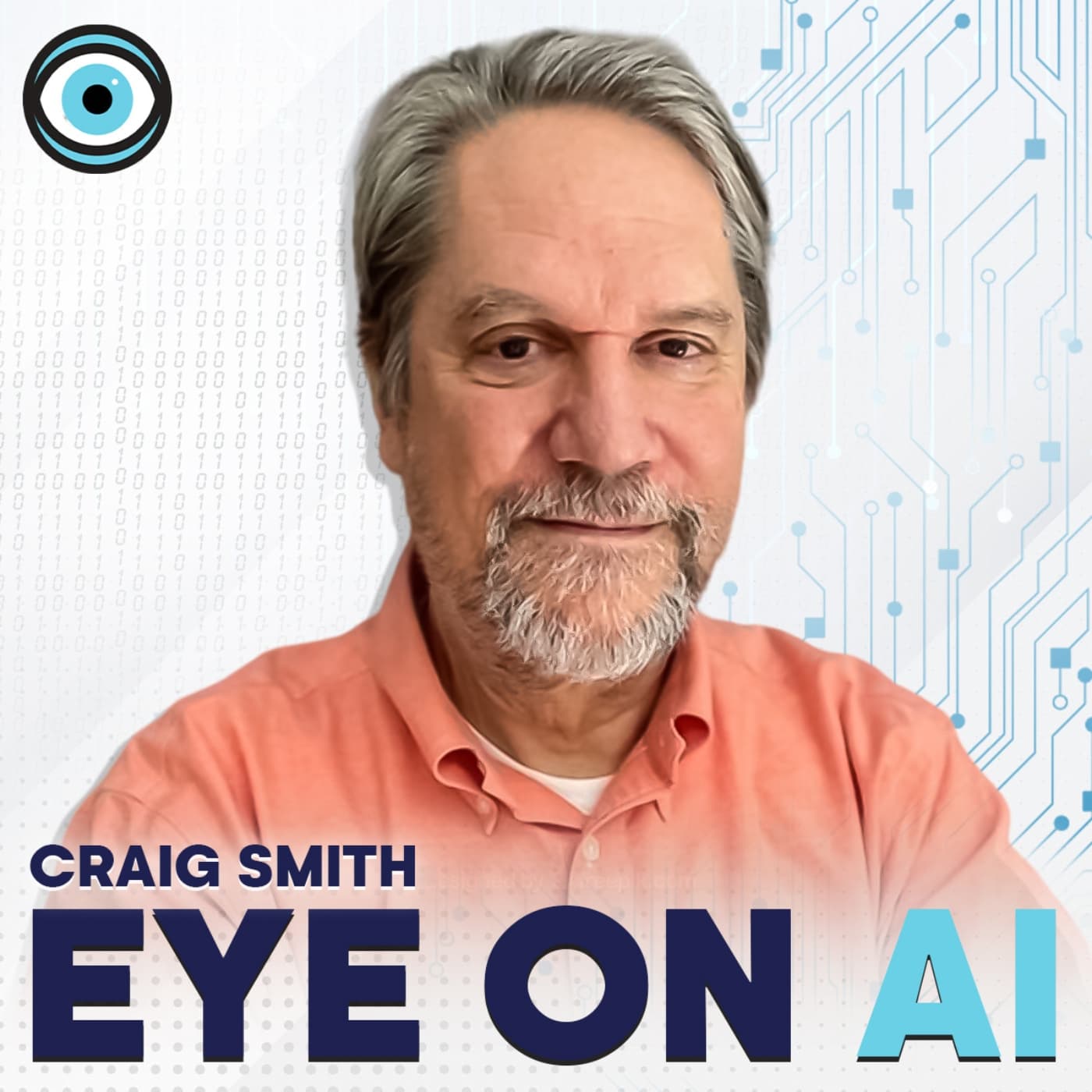
#179 Ylli Bajraktari: AI and National Security - The Race with China
Host
- Craig S. Smith, New York Times correspondent
Guest
- Ylli Bajraktari, President and CEO of the Special Competitive Studies Project (SCSP)
Episode Overview In this episode, Craig Smith and Ylli Bajraktari explore the escalating artificial intelligence (AI) race between the United States and China, highlighting the strategic initiatives that both nations are undertaking to secure their positions in this critical technological frontier. The discussion covers various topics including the implications of the CHIPS Act, the OffsetX strategy, and the importance of AI for national security.
---
Key Themes and Discussions
- Origins of the Special Competitive Studies Project (SCSP)
- The SCSP is a follow-on to the National Security Commission on AI, established to maintain U.S. leadership in AI.
- Inspired by a 1950s project led by Dr. Kissinger, the SCSP aims to develop a comprehensive framework for addressing technological competition with adversaries, particularly China.
- Emphasis on the significance of national security in shaping AI policy and strategy.
- Current AI Competition Landscape
- Bajraktari outlines that China has a centralized strategy to advance its AI capabilities, leveraging both government and private sector resources.
- The U.S. must organize and finance itself effectively to remain competitive, with initiatives like the CHIPS Act aimed at bolstering domestic semiconductor production and innovation.
- The OffsetX Strategy
- Focuses on the implications of AI for military operations and future warfare:
- Distributed Platforms: Emphasizes the use of drones and uncrewed systems in modern combat.
- Software Supremacy: Highlights the need for cutting-edge software to maintain competitive advantages.
- Human-Machine Teaming: Advocates for training human operators to work alongside AI systems in military contexts.
- National Security and AI
- The importance of AI in national security is underscored, with Bajraktari explaining the dual-use nature of AI technologies that can be applied in both civilian and military applications.
- The U.S. and its allies face significant challenges from adversaries that are rapidly advancing in AI capabilities.
- Implications of China's Semiconductor Strategy
- Discussion around the threat posed by China’s efforts to dominate semiconductor production and technology.
- The SCSP warns about the implications of export controls and the need for a national plan to strengthen U.S. semiconductor capabilities.
- Upcoming AI Expo
- An AI Expo is planned in Washington, D.C. in May, aiming to connect technology companies with government agencies to foster collaboration on AI technologies.
- The expo will showcase innovations and facilitate discussions on AI applications across various sectors including national security, health, and disaster response.
---
Key Takeaways
- U.S. vs. China AI Strategy: China’s centralized approach allows for rapid advancements, necessitating a coordinated response from the U.S. to secure its AI leadership.
- OffsetX Strategy: A focus on innovative technologies and human-machine collaboration in military applications will be crucial for maintaining a competitive edge.
- National Security: AI's role in national security is paramount, with both domestic and international implications requiring comprehensive policy frameworks.
- Collaboration and Innovation: The upcoming AI Expo represents a significant opportunity for public and private sectors to engage and innovate collaboratively.
---
Conclusion The podcast episode provides a profound insight into the strategic dimensions of AI development as it relates to national security, particularly in the context of U.S.-China competition. With growing global reliance on AI, understanding these dynamics is crucial for shaping future policies and ensuring technological leadership.
Call to Action Listeners are encouraged to engage with the content and stay informed on AI developments, as it continues to reshape societal and global landscapes.
---
Social Media & Sponsorship
- Follow Craig Smith on [Twitter](https://twitter.com/craigss).
- Follow Eye on A.I. on [Twitter](https://twitter.com/EyeOn_AI).
- Sponsored by Shopify: Sign up for a $1 per month trial at [shopify.com/eyeonai](http://shopify.com/eyeonai).
Written by AI. May contain mistakes. Listen to the episode to check what was said.
Transcript
Automatic transcript. May contain errors.0:00In terms of US versus China, did they have a centrally pushed policy to invest and get ahead in AI? Yes, they did. It's a public strategy that they had where they're organized for that competition. Yes, they were just because they have a different political system. They can drive their private sector in this competition because there's a similar fusion that they have. Did they put enormous resources behind this? They did. Did they appoint national AI champions to serve as the companies that will propagate and advance like the CCP agenda globally? Yes, they did. We all know that. And so I think in some aspects, the pre-Gen AI period, they were moving fast.
0:39We have to get ourselves organized. We have to finance ourselves, put enough resources. I think CHIPS Act is one of the elements, I think, towards that end. Hi, my name is Craig Smith, and this is Eye on AI. In this episode, I sit down with Ili Baraktari, Executive Director of the Special Competitive Studies Project, which is a follow-on organization to the National Security Commission on AI, focused on maintaining the U.S. lead in AI. Ely provides invaluable insights into the current state of the AI race between the U.S. and China, discussing the implications of the latest advancements in generative AI.
1:21He also sheds light on the so-called OffsetX strategy, the National Plan for Microelectronics, and the upcoming Special Competitive Studies Project AI Expo in Washington, D.C. in May. Join us for an in-depth look at the critical role AI plays in shaping our national security. I hope you find the conversation as important as I did. Hi. Good tech solves problems that you've thought about. Great tech solves problems that you haven't even thought of. What can the commerce platform trusted by millions of merchants do for you? It's time for Shopify, the commerce platform revolutionizing millions of businesses worldwide.
2:10Whether you're a garage entrepreneur or IPO ready, Shopify is the only tool you need to start, run, and grow your business without the struggle. Shopify puts you in control of every sales channel. So whether you're selling satin sheets from Shopify's in-person point of sales system or offering organic olive oil on Shopify's all-in-one e-commerce platform, you're covered. Shopify powers 10 % of all e-commerce in the United States. And Shopify is truly a global force, powering Allbirds, Rothy's, and Brooklyn, Lennon and millions of other entrepreneurs of every size across over 170 countries. Plus, Shopify's award-winning help is there to support your success every step of the way.
3:01Sign up for a$1 per month trial period at shopify.com slash ionai. That's shopify, S-H-O-P-I-F-Y.com slash IonAI. That's E-Y-E-O-N-A-I. All run together. So sign up for a$1 a month trial period at Shopify.com slash IonAI. That's Shopify, S-H-O-P-I-F-Y.com slash IonAI. That's E-Y-E-O-N-A-I. all lowercase, all run together. They support us, so let's support them. I'm here at the Special Competitive Studies Project with Ili Baraktari. It's a follow-on organization from the National Security Commission on AI, which Ili was also the executive director of uh ely when maybe we can start just by explaining uh the the the project how it originated i i know the story of the rockefeller project with his kistinger but if you could give that and then we'll start talking about absolutely and thanks thanks for uh hosting us on your podcast i mean as as i've told you many many times we're big fans of your podcast i mean And you're one of the first supporters of our work with NSEI.
4:30And we had an amazing series with you. So truly appreciate it. And it's a unique podcast, just so you know, as I told you before, because it's more specialized about AI. And you have incredible guests. So it's an honor to be on your show. The origins of the Special Competitive Studies Project, or the SESP, really go back towards the end of the commission's work. At that point, Eric was writing a book with Dr. Kissinger on the age of AI. And Dr. Kissinger spoke fondly about a project he led in the 50s called Special Studies Project. I didn't know much about the Special Studies Project. It's, you know, 1950s, not much you can find online.
5:09But as you noted, Rockefeller Brothers Fund back in the 50s thought that we are at the turning point in the history in which, you know, we're facing a competitor in Soviet Union. obviously the word competition and competitor was not used back in the 50s more like adversary and so they thought that we still have not created a framework or a vision for how we should address that competition i mean and this was a battle of systems when you when you look in the 50s it was a communist system versus a democratic system and i think the outcome was still unpredictable who's going to win at that point so i think rockefeller brothers fund funded a project that Dr.
5:47Kissinger led called Special Studies Project. And over the course of three years, they brought some of the most thoughtful leaders we had in the 50s from private sector academia and government to think about how do we get ourselves organized first? How do we get our society organized? How do we build our military to face such a competitor? And then how do we bring our allies and partners around the world to believe in the system values that we were projecting versus what the Soviet Union was projecting. And so Dr. Kissinger, late Dr. Kissinger now, in the summer of 2021, talked to Eric about relaunching that initiative.
6:24I had initial conversation with Eric about this. And when you think about it in 2021, same with the establishing of NSEI, we were really at the crossroad at the beginning of this AI revolution, but also a changing geopolitical world order. And so I thought we were positioned in a really unique place to create special competitive studies project. I added competitive in the title because I called my old boss and mentor, Bob Work, and I said, hey, I'm thinking about launching this project. Eric is really interested. Would you join? First of all, what do you think about the project? And he said, you got to add competition in the title because we're in competition with China.
7:12And in competition with China, you either win or lose. And you're familiar with Bob Ward. You hosted him numerous times on your show. He's a really thoughtful leader when it comes to grand strategy, China competition, and AI. And so obviously, I listened to him, and we added C in our title to make it a little bit different from the project in the 50s. And so with that in mind, we created SESB. initially the conversations with Eric were that we were focused on a three-year project just because in my mind and I think in Eric's mind is if we are here in March of 25, 26 and we're still talking about the same topics that you and I have talked many times on your podcast I think we might be risking of falling behind China now you see also a convergence of what we call the axis of disruptors, China, Russia, Iran, and North Korea against the Democratic bloc.
8:09And I think the challenge in 25, 2030 timeframe, it's much, much higher of a conflict that could become between these two systems of thoughts, of political systems and beliefs. And so I think a CSP could play a vital role there in terms of like, how do we get ourselves organized? How do we, you know, increase awareness of what's going on and play a role like they did in the 50s in which, you know, when they published their book, which sold 400 ,000 copies, and it's really difficult to find it, they called Prospect for America. You know, they educated the and informed American citizens, obviously, of what we were facing against in terms of Soviet Union challenge.
8:53And I think that then I'll get ourselves organized from the 50s to the end of the Cold War, where we ultimately won. And so that's sort of the origins of SESB, Greg, but happy to have answered your questions. Yeah. And you've come out with a series of reports. And my understanding is your audience is really the legislative branch and the executive branch, right? You're trying to influence policy. And I know shortly after the end of the National Security Commission, there was the CHIPS Act, which I don't know the inner workings, but it sounded like it came right out of the NSEAI's final report.
9:39So can you talk about how that pipeline gets implemented? Yeah, so first of all, let me talk about the NSEAI. When you go back in 2018, when I think the legislation got passed for the creation of NSCI. I think, you know, in 2018, the issue of AI and the geopolitical competition was not on everyone's mind probably. And so I think what I give Congress credit to is they were getting signals, A, from private sector, that there's a powerful technology coming that you have covered for such a long time, and that B, China, our competitor, our main competitor, really is putting all the resources also like the energy behind this technology, because at that time, they came up with this strategy that they wanted to be the global AI power by 2030.
10:32And so I think with these two factors in mind, Congress created the commission. I also think it's the first time that in absence of our federal government having a clear strategy on a specific technology, Congress stepped in to fill that void. And I think they do this with commission, as you know, occasionally. And so I think we stepped into a space in which was number one um highly bipartisan uh you know the chips act but like when you when you put technology competition in china uh there's a huge bipartisan support in congress right because i think there's a wide recognition that failure to uh stay behind in this technology could have consequential uh impact for our society and our economy and ultimately national security.
11:17And so I think the NSCI really moved into that space. We were lucky and fortunate that Congress appointed 15 individuals with a huge difference in their background that I think benefited us as a staff at that point. But also, when we were going around departments and agencies and looking at what they were doing with AI and what do they need to do more, I think these individuals really step forward to serve the country. I don't think that gets much credited in today's environment, to be honest with you, but having some of the top technology leaders, some of the top academic leaders, and some of the top former government officials looking at what can we do more for our country in this competition, I think that would deserve a much bigger praise.
12:04In terms of the audience, our job with NSCI was pretty straightforward. we had to provide Congress with recommendations on how do we maintain global AI leadership for national security purposes. And I'd like to underscore the national security piece here, because the commission was not what can we do with AI in terms of our education and our society and our healthcare. You know, the commission was tasked by the Armed Services Committee on the Hill. So the number one customer were the Armed Services agencies and the Intelligence Committee. And so we had a really narrow focus. What we tried to do with SESP from the beginning, Craig, is that we take more of a whole of nation approach.
12:43And so we have a team that is focused on the economic impact of AI. We have a team that is focused on, you know, what are the next generation of technologies that we have to stay ahead. We cover the impact on education, impact on workforce. Some of the topics that were not included during the NSEI war, in terms of audience. You're right. Obviously, Congress is a major piece of who we try to inform. We also work with all the departments and agencies in Washington and more broadly with governors and state levels and anybody else. Because I said we try to take a different approach with SESP, like more of a whole of nation.
13:26If you and I believe that AI is a transformative technology or once in a generation technology, then I think this is more than just a national security challenge or opportunity we have. We have to take a more of a holistic whole of nation transformation approach to this. And so with SESP, we take more of that approach. So we spend a lot of time, you know, at the state local level. We spend much more time with allies and partners. And so we try to analyze what are some of the implications and what are some of the huge opportunities I will have across domains from economy and society and national security.
14:05Right. Let's talk about some of the specific reports and recommendations. You came out with this offset X strategy, which is sort of a reference to the third offset strategy under Ash Carter, I think it was. And Bob Work. What's that? And Bob Work. I'm sorry. Yeah, Bob was kind of the driver. And that's, as you just said, you're really focused on the competition with China. I'm curious, you guys look at China closely, you track it. There has been a debate about how advanced China is. There was this Australian think tank that came out and said China's ahead in, I don't remember, 33 or 47 categories or something.
14:59I'm sure you know Jeffrey Ding at George Washington here in D.C. His argument is that you can't look at those top line numbers, which are patents and papers and funding. You have to look at the diffusion, as he calls it, of AI into the economy. And that if you look at through that lens, the U.S. remains far ahead of China. And he argues that there's a certain amount of hype around the China threat in order to get policy passed. So you guys look at this. Yeah, absolutely. So you raised a lot of questions there. You started with OffsetX, which I can come back later if you want, Craig. But in terms of U.S.
15:51versus China, so we have looked into this for a while. And there's a pre-Gen AI period probably, and there's, I think, post-Gen AI period, which I think people sometimes, as you know, mix both what AI and Gen AI is. The first interim report we published within SEI, which was a requirement from Congress, we came up explicitly saying that, you know, we are ahead by maybe two years. but they're catching up fast. And so I think that was our first judgment that we made with NSCI. And I think our thinking there was similar to what you mentioned, Jeff Ding and everybody else talking about, like it's not just the level of investment is the application, adoption, people, hardware.
16:36There are numerous factors you can compare here. And sometimes, as you know, this is not like a apples to apples analysis just because they have a different system and we have a different system. But when you look at it on just some high-level themes, did they have a centrally pushed policy to invest and get ahead in AI? Yes, they did. It's a public strategy that they had where they're organized for that competition. Yes, they were just because they have a different political system. They can drive their private sector in this competition because there's a similar fusion that they have. did they put enormous resources behind this?
17:19They did. Did they appoint national AI champions to serve as the companies that will propagate and advance the CCP agenda globally? Yes, they did. We all know that. And so I think in some aspects, the pre-Gen AI period, they were moving fast. And I think that was the concern that led Congress to create NSCI because all the signals coming out of Beijing where they have taken this technology so seriously. And I didn't mention data. I didn't mention the application that we have seen against the minority population they have done, the use of surveillance cameras and all those things. So all these small tactical elements, when you add them at the strategic level, was a source of concern for our country, I think.
18:07So that's one. The second thing I would argue is that, as you know, this is a dual purpose technology so i think like you cannot in isolation say oh let them get ahead in ai because we are leading in other elements of the technology competition i believe because ai is more akin to a um general purpose technology you cannot have your main competitor who also is a completely different political system get ahead in that space and so That's why I think the concern was in 18, 19, and 20 is that with those elements in mind and those signals coming out of Beijing, we have to get ourselves organized. We have to finance ourselves, put enough resources.
18:55I think CHIPS Act is one of the elements, I think, towards that end. So that's one thing. Post-Genie, I think it's a little bit different conversation. First, because most of the, I think, best models came out of U.S. companies, number one. so there's an advantage there that i think we have secondly is that a lot of these models as you know need a lot of data to be trained uh and internet is 60 in english and i think it's two to five percent in mandarin if i'm not mistaken yeah and so the the training of these models requires a lot of data in your native language and i think that's what probably holds china back in some elements.
19:32Third is we placed a lot of controls on cutting edge chips, which I think makes Chinese companies really difficult to get to these models without having access to these cutting edge chips. And you're familiar with the export controls we placed on high-end chips. And then the last element here is that we live in a democracy. You can easily prompt these models to say something about you or me or political system or political leadership and they'll do it so long you know you're not offending somebody or you're not seeking to to use it for malign purposes as you know you can't do this in china and i think that will hold china back in probably in these models um because uh they'll probably have to place much more um or heavier control on the models and these models get better and better by using them as you know so i think gen ai gives you a different picture.
20:29Will this stop China? I don't think so. Because as you know, they understand that this is a critical technology. Are they going to seek a different architecture to go after, you know, different AI models and, you know, like take a pass on Gen AI competition? Probably because I think there are multiple ways here to get to the next generation of AI models. But I think right now with these models being released from primarily US companies, you can make a I think a serious bet that we are definitely in two to three years time space on the Gen AI it's interesting the idea that maybe we'll take a pass on that but already the technology or the research is moving beyond large language models into multimodal models combinations of LLMs video and audio Yeah, language.
21:26I mean, large visual models. I mean, DeepMind has some amazing work out and OpenAI just came out with Sora, which people look at as kind of entertainment, but there is the kernel of AGI in there. so things are moving so fast how do you guys keep up with that how do you keep Congress and the executive branch work with them to keep them at the leading edge because governments everywhere are notoriously slow well I mean I think the release of ChadGPT really gave us a new momentum and you know this all of a sudden And, you know, everybody started to talk about AI. People are using these models now.
22:22And we're facing probably a phase, which I think in the next three years, we're going to live in this co-piloting phase where, you know, everything we do is with these models. So I think the conversation has changed dramatically, Greg, as you know, from like 2019 and 20, because now AI has become a mainstream. And so to a certain degree, this is no longer a difficult space to explain to people what it means. Because I think if you look at just in the last 12 months, what has happened in this space, you have the White House releasing the White House executive order on AI. It's probably one of the longest EOs you have ever seen.
23:04And I think that is a demonstration of how seriously the White House has taken this technology. I cannot recall a technology that we have released such a deep and thorough executive order to all the departments and agencies. So that's one. You have a massive effort on the congressional side led by four senators, Senator Schumer, Senator Young, Senator Heinrich, and Senator Rounds, that have organized hearings after hearings called the AI Insight Forum in educating members of Congress and Senate about AI from all aspects of our lives. You had civil rights leaders, you have technology leaders, you had national security leaders really coming in front of senators explaining the implications of Gen AI for our country.
23:54On our allies and partners side, you have the EU AI Act that was passed a month ago or two months ago. So just in the last four months, you have this enormous activity on the policy side of trying to get ahead on a technology that is moving so fast, as you know. And so we will always face that challenge. Like how do you stay ahead on a technology that constantly changes, new models are released, and then you have the open source path, you have the proprietary models path. But I think from the awareness perspective, I think everybody's aware this is moving. And there are efforts to understand how do you stay ahead?
24:38How do you get organized to stay ahead? because I think if you look at our government institutions, they are built after World War II with the 1947 Act. So I usually use the example of Department of Commerce. If you look at our key elements of our competition with China reside within Department of Commerce. But that Department of Commerce was built for the Cold War competition. And now we're in this techno-economic competition with China. So do we have to reform institutions? Do you need to create new ones? After 9-11, you know, we created a range of institutions. We used the example that even at the White House, you need a different constellation of councils to go after the technology competition.
25:26I think I used this example in the past, but after World War II, we created the National Security Council at the White House because security was the predominant domain of competition between us and Soviet Union. after the cold war ended we created the national economic council because the economy became you know as part of that globalizing uh you know discourse the key component of the world order and then after 9 11 we created a domestic policy council uh to focus on uh you know issues related to terrorism counter-terrorism you know um our presence in middle east and whatnot so are we now in a new era?
26:04I believe so. Are we organized for this era? Not yet. All the departments and agencies in New York are moving, but usually our government moves when something bad happens and requires us to wake up. I think 9-11 was that wake-up call and we created D &I and we created all these other agencies and offices. I think AI has that momentum for us to re-look, are we organized for the AI era. And I think we were at the beginning, as you know, of the AI era because it will have huge implications for the education and workforce and government and everything else. So I think that is when I think we step in as SASP because we have the luxury to think outside.
26:46We're also surrounded by technologies, academics, private sector leaders who think a lot in this space. And so then what we do is we take all these conversations and we put it in a format to help our government move forward on all these conversations. Yeah. There's so much to talk about. Can you give us a quick overview of the OffsetX strategy? And then I want to talk about the action plan for microelectronics. No problem. So OffsetX, one of our lines of effort here is focused on, you know, the implications of AI and all these emerging tech for the military and the future of warfare. and so you mentioned third offset i was really fortunate to work for bob work and you know like a lot of things that bob was trying to push through inside the department of defense really was early identification that the the warfare is changing and so i'm talking about 2014 15 and 16 when i think he started talking about the implications of technology and ai the future warfare, China really trying to get ahead, us losing sort of like the military supremacy and whatnot.
28:02And so what we tried to do with OffsetX is really looking at, you know, what are some of the key technologies that are happening right now that could give us an edge on the battle space? We also looked at what's happening in Ukraine now. So with those two elements in mind, we thought that the future of warfare really will be characterized by three primary factors. Number one is we will move into the space, and you can see this in Ukraine and elsewhere, of many network distributed platforms. These are small. You can think of drones. You can think of uncrewed systems. But the future of battlefield, as you see in Ukraine, is that of drones, first-person view drones, many highly networked communicating with each other, communicating with humans in sort of like deployment and execution of the mission.
28:58And so that is one of the elements of the OffsetX. The second element is software supremacy. When you look at what we have as a country, a comparative advantage over probably our main competitors, is that, you know, we have some of the top leading software companies. And software is changing everywhere. It has changed how we work, how we receive information, and it's changing the warfare. And so how do we, and our department is really notorious in terms of buying software and updating it regularly. So how do we stay and how do we make the Department of Defense a software-oriented department for the future of warfare?
29:41if you look at what's happening again in ukraine in middle east and elsewhere is that you know if you have cutting edge software it will give you you know information advantage it will give you situational advantage it will allow you to defend against information operations that the enemy is pushing towards you but also you can you can launch information operation against your adversary so staying ahead in the software space was the second element we thought the offset x should be focused on. And the third element was really the human machine teaming. Human machine teaming because if you look at all these systems, there's a degree of human control, and there's a degree that these systems will complement human advantages.
30:24And so I think as we move into the future of battle space, we will have human machine teaming in how we do intelligence analysis, in terms of how we do military operations, and in terms of how we get situational awareness and whatnot. So I think training humans in using better these capabilities will allow us to have an edge over our adversary. I think our military is always ahead when it comes to the traditional training, but I think the situation is changing. If the drones have proven to be so successful in the battle space of Ukraine, You know, I believe that we should have a drone unit in every other services that people are trained on how to use these drones.
31:12Because Bob Wood has the saying that every military technology revolution that has happened, especially in the military space, has allowed us to focus on precise attacks and the execution of the mission. that in itself has limited and diminished the collateral damage because the attacks have been more precise, more targeted. And I think this new wave of technologies will allow us to enter faster into that space by having AI-enabled systems that have meaningful human control and they're deployed for all aspects of the military operations. Yeah. There are a couple of things in the offset X strategy that struck me.
Read the full transcript
32:02One, you talk about, with regard to drones, counter autonomy capabilities. The U.S. has been pretty clear to date that they don't endorse lethal autonomous weapon systems. but it's a little bit like refining uranium. It's the same technology. You just go a little bit further and it's autonomous. What does that mean, anti-autonomy? Counter-autonomy. Yeah, counter-autonomy. I'm sorry. So there are two things, and I think we've talked about lethal autonomous weapon systems. um like chapter four of the nsci really covered the lethal autonomous systems and i think we came up with some conclusions number one was that the department is really well positioned to build and deploy these systems and i think we came to that conclusion because you know the commissioners that came from as i said private sector academia and former government were exposed to briefings and policies and procedures that the department has in place before it builds tests and evaluates and deploys these capabilities.
33:22Because I think you have to separate fact from fiction sometimes in this conversation. I think we were heavily influenced by a number of movies in this space, but the reality is a little bit different. You know, when you look at the first memo the department under Secretary Austin issued when it came to AI, it was on the responsible and ethical use of artificial intelligence. And I think the leadership of the Pentagon wanted to demonstrate that they take this technology seriously like every other technology they have used in the past. There are certain procedures and certain rules in which they have before they test, they take, they test, evaluate, and then they deploy these capabilities.
34:05So that's one. On the second, the second aspect of this is that there's a political declaration the State Department has issued. And I think you have dozens of countries that have signed into that political declaration that no matter how the future of warfare changes because of these systems, I think we should make sure that these systems are built and deployed in a responsible and ethical way. obviously I don't think up to now China or Russia have signed that political declaration I don't expect that because as you know we have never seen anything coming out of Russia or China in terms of how they plan how they build and how they're going to use these systems and they've used them I mean we all know Russia has used autonomous systems in Syria they failed but still nonetheless it's not that I think they they follow some kind of policy procedures like we would in those circumstances.
34:57The second aspect of your question was about... Well, when you say develop counter-autonomy... Yeah, develop counter-autonomy. So the counter-autonomy is a different space here because we're entering a phase in which you have a lot of these systems being deployed autonomously. And obviously, every autonomous system will have a counter-autonomous system that seeks to, you know, block it, shut it down and whatnot. And so are we positioned even for that space where a lot of these systems will be systems against systems over the air, in the battle space? And so how do you make these systems resilient, cyber-proof that your adversary cannot take it over and turn it against you?
35:50So I think that is another area that will probably evolve, in an accelerated way in the next three to five years. Because as you can see from the Ukraine battle space, a lot of these systems are becoming autonomous. I mean, one of the articles we published was that the Ukraine airspace is dominated by autonomous systems, small drones or medium-sized drones of both sides. And so in that environment, how do you build these systems that you can ensure that they are proof of cyber attack, that your adversary cannot hack them and turn them against you. So that is the counter-autonomy piece that I think will enter into the battlespace policy in the next couple of years.
36:33Okay. Yeah, that's interesting. I thought more that counter-autonomy were systems because if the U.S. is not using autonomous weapons and the adversary is, you at least need a way to counter their autonomous weapons because it becomes asymmetrical very quickly. The other thing in the OffsetX, you talk about disrupting adversaries' communications, and I assume because the OffsetX is really looking at China, you now have Russia reportedly planning to field anti-satellite weapons in outer space. of which would devastate our ability to communicate. So, yeah, can you talk about that? No, I mean, absolutely.
37:27Look, if you look at the importance of space that has grown over the last couple of years, both in terms of where our adversary has invested, deployed and tested capabilities, but also if you look at the private sector on our side and how much the space has proliferated, both in terms of launches, in terms of satellite constellations, and then reliance on Starlink, for example, in Ukraine. That tells you a lot of how space is a key component now of the battle space and the warfare. I think some of the analysis that we have probably published is, I think the first move by the Russian military against the Ukrainian military was to try to shut down their, I think, satellites.
38:16And so this goes back to like, you know, because space gives you information, awareness, communication, command and control. And so space is a critical component of, you know, how we're organized now for the future of the warfare. You talk about on the national plan for microelectronics, you talk about addressing the threat of China's massive build out of legacy chips. And there's some other really interesting things in there, this innovator visa category, which I'm all for. On the Chinese chip zone, there's been a big debate about whether the export controls haven't created a bigger problem. First of all, I think the export control really aimed to what I think the National Security Advisor said, you know, high fence, small garden approach.
39:14The export controls were designed, I think, in a way and targeted to prevent China from having access to the cutting edge semiconductors. Not all semiconductors, but the cutting-edge semiconductors. So that's one thing because I think, as you know, these are the semiconductors that allow you to get to these high-end AI models. So that's one. I don't think that has prevented China from investing on all other aspects of semiconductor industry. nor I think it has prevented China from trying to circumvent export controls by getting access to clouds in third countries or buying a new design of a similar chip from certain companies.
40:04So I think the issue of export controls, I think it did have an effect. I mentioned earlier, look at the general AI models where our companies versus the Chinese companies. So that's one. Secondly is these expert controls have been in place since October 2022. So usually, you know, these effects will not be immediate. You have to think about it in terms of three to five years and how much I think that has an effect on the Chinese access to these capabilities. And I think as I think the White House has said many, many times, these were not intended to slow China down forever. They were intended to give us a competing edge, a window that we stay the leading technology.
41:00And while we did the protect side of the export controls, we also did the promote. We have invested through the Chips Act$52 billion on domestic fabs. and then you know companies have also came on top they came on top of that to announce their investments here and so i think not only you have to slow them down you you continuously have to evolve in this space secretary raimondo said yesterday that maybe we might need another chip sack yeah um and i think the demand as you can see from what's happening right now with the chips worldwide is so big uh that i could probably foresee another chip sack uh in the next because I think the first chip tag was like just trying to catch up.
41:40Yeah. And I think staying ahead in this space will probably require more investment. Yeah. I guess what I'm referring to is it's also spurred China to have a national plan to become independent in high-end semiconductors, you know, everything from lithography on. And that's not necessarily a good thing if they're no longer dependent on Western supplies. No, and I understand that argument, Craig. I would argue that China would have done that anyway, because I think if you look at the China policy made in China 2025, which is also known as the dual circulation policy, is they have a strategy in place.
42:30and this is a public document that they want to be independent from the world supply chain, but they want the rest of the world to be dependent on their supply chain. And so I think they would pursue the semiconductor path of independence, regardless of our export controls, just because they look at what's happening in Ukraine with us sanctioning Russia and their access to semiconductors. And I think the technology aspect of their national security approach is it shouldn't serve as a weak point in whatever they decide to do around Taiwan, wherever the global ambitions are in Southeast Asia. And so I don't think they would have let the technology piece be their weak point in pursuing their regional and global goals.
43:20So I think bottom line, as I said, I think they would have pursued the path towards semiconductor design, fabrication and production independent of our export controls. I think we have managed to slow them down. And I think this will have implications for the next couple of years. Can you talk a little bit about the National Semiconductor Technology Center, that proposal? And so the National Center was part of our recommendation with NSEI because what we argued in NSEI report is not only resources to catch up and build some of these manufacturing capabilities back to the United States. You need a center that brings together probably our government labs, university labs, to look at what's the next generation of semiconductors we have to look after.
44:07If you think about it, we're getting close to the end of the nanometer or the Moore's law. And so there are different paths now that you can take in terms of how is the future of semiconductor going to look like. And I think we need a center like that. We need a center that the only job and the only objective is to look at what is the post-mortem law world look like in terms of semiconductors. I think with the right actors, with the right leadership, and I think Secretary Raimondo has been a force of nature in this space, that center should focus on really coming out with a couple of options that we should have as a country, as a government in pursuing, you know, the next three, 10 years of this technology.
44:51Okay. Can you talk about this expo that's coming up in May? So the expo is probably a unique gathering in D.C. It's a classic AI expo in a sense that nobody has ever organized this in Washington. You have AI expos around the world. You have the CES in Vegas. But in Washington, nobody has ever brought together the technology companies, small, medium size and large companies with government agencies, with academic labs in one place where they can showcase technology. so this is not just a conversation this is not just releasing another policy document this is really bringing together in one place people to see demos of these technologies to have conversation around these technologies to exchange business cards because our government desperately needs to modernize when it comes to these technologies there's an enormous capacity in private sector to offer these technologies to government so this will be a unique place over the course of two days at our convention center, May 7th and 8th, for all these stakeholders to come together, talk, engage, and really deepen their relationship when it comes to AI and emerging tech.
45:59Yeah. How much of that will be focused on national security? A fraction, Greg, because what we have said is, you know, there are probably 19 departments and agencies in Washington, D.C. And so I think what we want to focus on is there's a certain elements of the conversation and companies that are tailored for Department of Defense and the intelligence community. But I believe we can provide a useful service here for health and human services, FEMA, because as you know, these models can do an incredible prediction of hurricanes, weather forecasting. So by bringing not just DoD and IC-related companies, but other companies that have services and have technologies in this space, I think we would really do a huge service to other non-DOD and non-IC related departments in DC with the AI Expo.
46:52Okay, great. Well, I'll be there. And I appreciate the time. I know you've got a tight schedule. Thanks for having me, Craig. It's always a pleasure. And I'll see you on May 7th. Hi. Good tech solves problems that you've thought about. great tech solves problems that you haven't even thought of. What can the commerce platform trusted by millions of merchants do for you? It's time for Shopify, the commerce platform revolutionizing millions of businesses worldwide. Whether you're a garage entrepreneur or IPO ready, Shopify is the only tool you need to start, run, and grow your business without the struggle.
47:34Shopify puts you in control of every sales channel, So whether you're selling satin sheets from Shopify's in-person point-of-sale system or offering organic olive oil on Shopify's all-in-one e-commerce platform, you're covered. Shopify powers 10 % of all e-commerce in the United States, and Shopify's truly a global force, powering Allbirds, Rothy's, and Brooklyn, and millions of other entrepreneurs of every size across over 170 countries. Plus, Shopify's award-winning help is there to support your success every step of the way. Sign up for a$1 per month trial period at shopify.com slash ionai.
48:23That's shopify, S-H-O-P-I-F-Y dot com slash ionai. That's E-Y-E-O-N-A-I, all run together. So sign up for a$1 a month trial period at shopify.com slash IonAI. That's shopify, S-H-O-P-I-F-Y dot com slash IonAI. That's E-Y-E-O-N-A-I, all lowercase, all run together. They support us, so let's support them. That's it for this episode. I want to thank Ely for his time. If you're in the Washington, D.C. area in May, be sure to check out the special Competitive Studies Projects AI Expo. I'll be there, and if you see me, say hello. In the meantime, remember, the singularity may not be near, but AI is changing your world, so pay attention.
From the publisher
Dive into the heart of the AI race between the US and China with Craig Smith in episode #179 of Eye on AI.
This discussion features Ylli Bajraktari, the President and CEO of the Special Competitive Studies Project, as he unveils the strategic maneuvers and policies shaping the future of artificial intelligence on a global scale.
In this episode, Ylli provides an in-depth analysis of the current state of AI development and competition, illuminating the actions taken by both superpowers to secure their position at the forefront of technological advancement. From the pivotal CHIPS Act to the formation of national AI champions, learn how these initiatives are influencing the global AI landscape.
Uncover the essence of the Special Competitive Studies Project and its mission to ensure the US retains its edge in AI through a comprehensive, nation-wide approach. Ylli discusses the critical importance of AI in national security, the transformative potential of the OffsetX strategy, and the implications of the National Plan for Microelectronics.
Whether you're fascinated by the strategic dynamics of international technology competition or passionate about the impact of AI on society and security, this episode offers invaluable insights into the challenges and opportunities ahead.
Don't forget to rate us on Apple Podcast and Spotify if you're inspired by the strategic discourse on AI's role in shaping the future.
This episode is sponsored by Shopify. Shopify is a commerce platform that allows anyone to set up an online store and sell their products. Whether you're selling online, on social media, or in person, Shopify has you covered on every base. With Shopify you can sell physical and digital products. You can sell services, memberships, ticketed events, rentals and even classes and lessons.
Sign up for a $1 per month trial period at http://shopify.com/eyeonai
Stay Updated:
Craig Smith Twitter: https://twitter.com/craigss
Eye on A.I. Twitter: https://twitter.com/EyeOn_AI
(00:00) Preview
(00:46) Introducing Ylli Bajraktari
(04:21) Origins of the Special Competitive Studies Project
(09:14) Influence of National Security Commission on AI
(14:05) What is the OffsetX Strategy
(15:42) US vs. China: The AI Competition Landscape
(19:00) Post-Gen AI Period and Its Impact
(21:03) The Future of AI Research
(24:41) Reorganizing Government Institutions for the AI Era
(32:48) Understanding Lethal Autonomous Weapon Systems
(35:05) The Concept of Counter-Autonomy
(39:04) Addressing the Threat from China's Semiconductor Strategy
(44:54) Preview of the Special Competitive Studies Project's AI Expo


