In short
Eye On A.I. - Episode #181 Summary: Nick Bostrom: The Meaning of Life in a World where AI can do Everything for Us
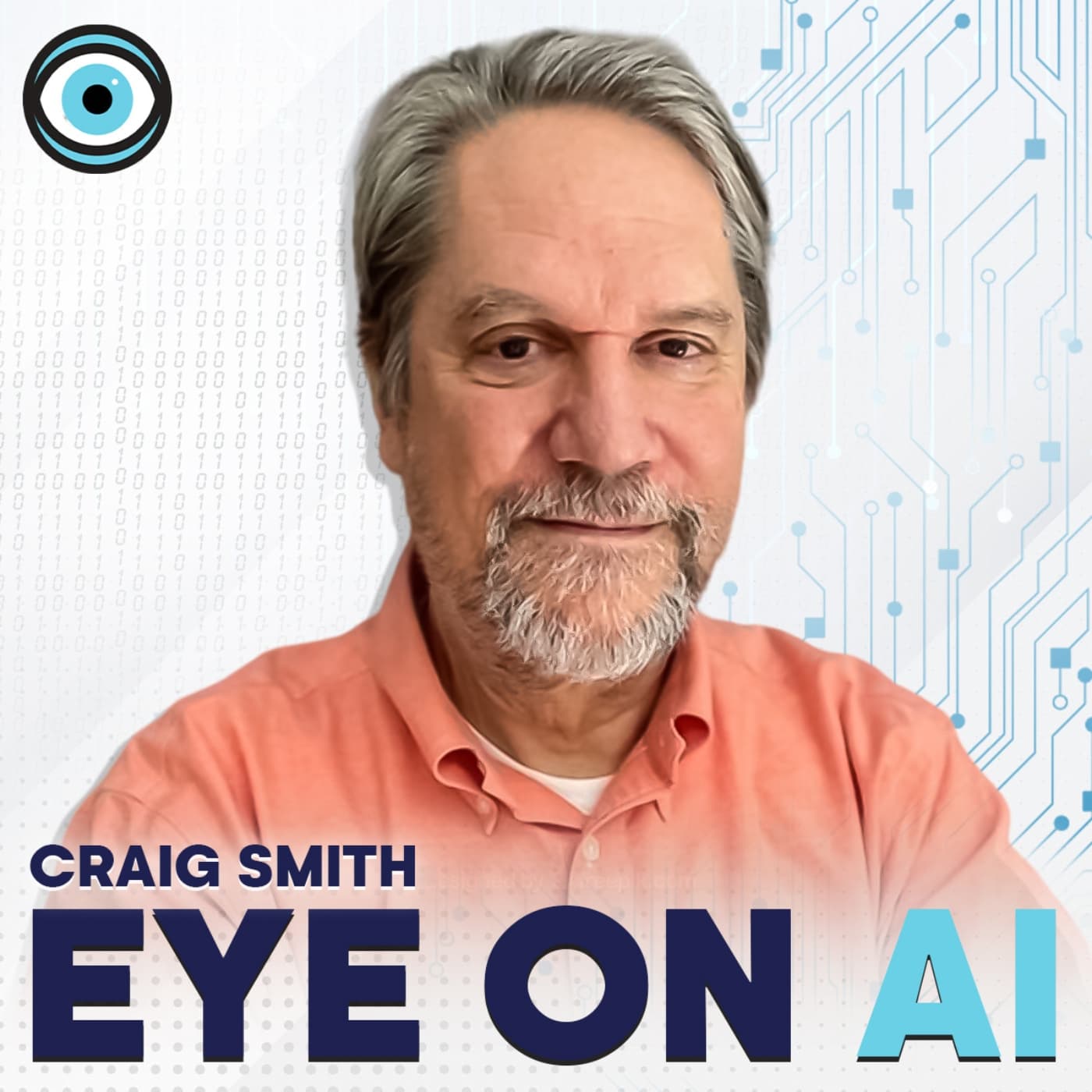
Podcast Overview Title: Eye On A.I. Host: Craig S. Smith Episode: #181 Guest: Nick Bostrom Description: In this episode, Craig discusses with philosopher Nick Bostrom the existential implications of a future where artificial intelligence surpasses human capabilities. Bostrom explores themes from his book "Deep Utopia," addressing how humanity might find meaning in a technologically advanced society.
Key Themes and Discussions
- Introduction to the Concept of a "Solved World"
- Definition of a "Solved World": A future where AI and robotics can perform all tasks better than humans.
- Human Experience: Raises questions about living a fulfilling life when traditional labor and instrumental efforts become obsolete.
- Nick Bostrom's Background
- Philosophical Focus: Bostrom is known for his work on existential risks, superintelligence, and the ethics surrounding these technologies.
- Previous Work: His book "Superintelligence" highlighted the risks of advanced AI and set the stage for deeper discussions about meaning in a technologically advanced future.
- Evolution of AI Discourse
- Shift in Public Perception: Since the release of "Superintelligence," AI has gained mainstream acceptance, with more researchers and policymakers recognizing its potential risks and implications.
- Public Concern: Bostrom discusses the newfound urgency for AI safety and alignment research, reflecting a more profound engagement with the potential dangers of AI.
- The Search for Meaning in "Deep Utopia"
- Existential Questions: Bostrom probes how humans derive meaning when AI can handle all tasks.
- Post-Instrumental Condition: Examines the implications of a life devoid of instrumental efforts and the potential loss of motivation and purpose.
- Life in a Technologically Mature World
- Automation of Activities: Envisions a future where even mundane tasks can be automated, raising questions about the essence of human experience.
- Potential for Existential Malaise: Contemplates how the removal of challenges could lead to widespread feelings of purposelessness.
- Philosophical Implications of a "Solved World"
- Human Identity and Meaning: What constitutes a fulfilling life in a world where traditional labor is no longer necessary?
- The Role of Striving in Happiness: Reflects on whether fulfillment is reliant on overcoming challenges, and how a lack of struggle may affect happiness.
- Engineering Happiness and Neurological Adjustments
- Neuroscience and Well-being: Discusses the possibility of using technology to enhance happiness, which could lead to ethical dilemmas about the manipulation of human emotions.
- Existential Risks of Superintelligence: The discussion includes the potential consequences of reaching a point where human values and motivations may be engineered rather than developed.
- The Future of Humanity
- Cultural Values and Human Tasks: Discusses how cultural traditions may continue to necessitate human involvement and the importance of maintaining human connections.
- Diversity in a Technologically Mature Society: Explores how advancements could lead to greater diversity and opportunities for humans and AI to coexist in new ways.
Key Takeaways
- AI's Impact on Human Purpose: The conversation highlights the urgent need to explore and redefine what it means to live a fulfilled life in a future dominated by AI.
- Balance Between Risk and Progress: Acknowledges the necessity of not only mitigating existential risks but also embracing the potential benefits of AI advancements.
- Philosophical Reflection: Encourages a philosophical examination of humanity's future trajectory and the fundamental values that may emerge in a technologically advanced society.
Conclusion The episode offers a thought-provoking exploration of philosophical questions surrounding AI's potential to reshape human existence. Bostrom emphasizes the importance of contemplating how to maintain meaning and purpose as society transforms, urging listeners to pay attention to the evolving landscape influenced by artificial intelligence.
Additional Information
- Sponsor: This episode was sponsored by Netsuite by Oracle.
- Follow Craig Smith and Eye on A.I.:
- [Craig Smith on Twitter](https://twitter.com/craigss)
- [Eye on A.I. on Twitter](https://twitter.com/EyeOn_AI)
---
This summary encapsulates the core discussions from the episode, providing a comprehensive yet concise overview of the major themes and insights shared by Nick Bostrom regarding AI's impact on humanity's search for purpose.
Written by AI. May contain mistakes. Listen to the episode to check what was said.
Transcript
Automatic transcript. May contain errors.0:00If you start to think it through, it's not just human economic labor that would become superfluous in this scenario where AI succeeds and we end up in what I call a solved world world. but all kinds of other instrumental efforts as well. And then that raises these questions about, yeah, like could you still live a good life in those circumstances? And if so, what that would look like. Hi, I'm Craig Smith, and this is Eye on AI. Today I speak with Nick Bostrom, the philosopher and author of Superintelligence Paths, Dangers, Strategies. In Superintelligence, Bostrom explored the potential future of artificial intelligence and the existential risks it may pose to humanity.
0:46His work has been instrumental in shaping the discourse around AI safety and has influenced many of the leading minds in the field. Today we'll be discussing his latest book, Deep Utopia, which asks the question, how will humans derive meaning in a world that is technologically solved, where AI and robotics can do all tasks better than humans? It's a fascinating, if disturbing, discussion. I hope you find it as fascinating as I did. Hi, I wanted to jump in and give a shout out to our sponsor, NetSuite by Oracle. A little quick math. The less your business spends on operations, on multiple systems, on delivering your product or service, the more margin you have and the more money you keep.
1:37But with higher expenses on materials, employees, distribution, and borrowing, everything costs more. So to reduce costs and headaches, smart businesses are graduating to NetSuite by Oracle. NetSuite is the number one cloud financial system, bringing accounting, financial management, inventory, HR into one platform and one source of truth. With NetSuite, you reduce IT costs because NetSuite lives in the cloud with no hardware required, accessed from anywhere. You cut the cost of maintaining multiple systems. You improve efficiency by bringing all of your business processes into one platform, slashing manual tasks and errors.
2:26Over 37 ,000 companies have already made the move. So do the math. See how you'll profit with NetSuite. Now through April 15th, NetSuite is offering a one-of-a-kind flexible financing program. head to netsuite.com slash ionai. Ionai all run together, E-Y-E-O-N-A-I. That's netsuite.com slash ionai. Again, netsuite.com slash ionai. Let's go ahead with introduce yourself. Well, I'm Nick Bostrom. I'm currently a professor at Oxford University, where I've been since 2003. Then before that in the U.S. for a bit, did my PhD in London. I grew up in Sweden. You're best known in the United States, at least, for your book, Superintelligence, which didn't directly address the question of the meaning of life in a world dominated by superintelligence.
3:34It was more about the risks and managing the development of such a technology. But before we talk about your notebook, can you talk about the recent advances in AI since you wrote super intelligence because uh it's certainly come a long way and a lot of leading researchers are now uh talking about agi within the decade and super intelligence presumably would follow fairly closely on agi super intelligence came out in 2014 and that roughly was also when the deep learning revolution began. And so we've seen a string of apparently accelerating advances since then. It's a very different era now. Back when I wrote superintelligence, the whole idea of AI eventually succeeding at becoming fully general and being able to do everything humans can do was already a very radical and sort of fringe thought.
4:45certainly in academia, mostly dismissed as sort of science fiction or idle speculation. And of course, the further step that it could then become super intelligent, even more so. And I wrote the book to try to draw attention to the set of risks that would arise if we do attain transformative AI and super intelligence. Now, of course, that has become completely mainstream. all the leading AI labs have research groups focusing on AI alignments, trying to develop scalable methods for AI control that could continue to work even at sort of arbitrary levels of capability. And just in the last couple of years, we've seen a big shift in the public discourse and even top-level policymakers are now paying attention to the possibility of transformative AI, including existential risks, with statements coming out of the White House and the global AI summit in the UK and really around the world.
5:45So, yeah, a lot has shifted in terms of how this set of issues is viewed. Has that changed your view on superintelligence or it's the possible advent of superintelligence and the timeline? I guess gain some confidence just from seeing that things are actually playing out, no matter how sort of coherent some argument seems theoretically. Like it's hard to be really convinced in your gut until you also start seeing it around you or at least see a whole bunch of other people also sharing your beliefs increasingly. I think that there is more granularity in the precise forms that AGI might take. I mean, with the rise of the current large transformer models, and it's strikingly how anthropomorphic these AI systems are in many ways, that it's almost like they have a psychology, like a human, like with foibles.
6:53Sometimes they need to be encouraged in the prompt to do their best. which is kind of weird from like certainly from what the old school AI used to be right it wasn't that you needed to give it sort of emotional support to encourage it to perform and we also see leading edge systems being very compute intensive and so that's seemed always kind of likely but it seems more likely now that we see that the frontier systems are kind of gaining in capability as you throw more compute at them. And so it does certainly shift probability mass a little bit and concentrates it on certain kinds of scenarios.
7:43And we might be on the sort of slightly shorter end of the timeline. It was always a wide probability distribution. And roughly, you know, we are more or less kind of on track, i guess of what i would have thought would be the sort of the median of that probability distribution but maybe slightly faster than than expected yeah yeah i mean there's uh i don't remember whether it was in your book or kurtzweil's ever but there's this hockey stick graph uh that you know and at a certain point of the machine intelligence surpasses human intelligence and it's beginning to feel like we're on that curve, the more acute curve now than we have been.
8:32Do you have a view on that, of where we are on that graph, if you believe in the graph? Yeah, well, I certainly think things seem to be moving quite rapidly, and I mean we still have uncertainty, but But yeah, I think non-trivial probability mass on sort of single year timelines. But with remaining uncertainty, it could take longer as well. But it's been, I guess, surprisingly smooth in terms of the growth of capabilities. It seems kind of year by year, they have become incrementally better. so that might continue in which case we might have more of a sort of a median speed takeoff I don't think we should be too confident in that though because there could still be a transition point when you have AI systems that maybe incrementally and slowly improve but then at a certain point they become capable of very substantially driving further advances, like particularly when you can sort of fully substitute for the labor of human AI researchers and chip designers, et cetera, then it might still be that it kind of goes smoothly, but fast up to a certain point.
9:59And then you might get an intelligence explosion when you hit this kind of strong feedback loop that I think remains in the cards. Yeah. How do you feel about the threat debate, which your book contributed to. I mean, I see the paperclip analogy all the time, that sort of nightmare scenario. But since Max Tegmark's group came out with the pause letter, I mean, that did seem to focus regulators and researchers on safety. but at the same time it spread a lot of fear and mistrust in the public which I found unfortunate. Yeah, that's maybe the most dramatic shift since 2014, the mainstreaming of this AI doom concern, which I think is broadly for the good in that there is now actually research done to try to find solutions to this.
11:08Whereas back then, there were kind of a handful of people scattered around the world communicating on the internet. But now there is more resourcing for that and talent flowing into that, which is positive, I think. But it's reached a point where I'm thinking one might soon start to worry a little bit also about the worry overshooting its target. I don't think we're quite there yet. I still think a higher level of concern than we currently have would be optimal. But humans being herd animals, like once a stampede starts, it's very difficult to fine tune it. You can maybe set it off, but you can't necessarily call it back when it's reached the optimal point.
11:53So I still think it's unlikely, but less unlikely than two years ago, that we could end up somehow on a trajectory where AI has never developed because it is either permanently banned or sort of moratorium that they lay it long enough that we then destroy ourselves in some other way instead without ever even getting the chance to roll the dice with AI. It's like a fine balance, and it would be good if instead of being super polarized into sort of AI throughout all the stops, let's just rush forward, there is no risk at all, at least no existential risk that's just silly on the one hand and then on the other hand
12:38I wouldn't call it doomongering because I do think that the existential risks are very real but I think at some point there is a certain amount of risk that we will need to take in order to have a shot at realizing the benefits and there are risks also not to going forward with this that should be entered into the balance yeah uh the latest book deep utopia of uh considers uh i mean the the the main theme is how do humans derive uh meaning and and purpose in a world that's technologically solved by ai is that did how did that emerge from from your work on super intelligence was is is that sort of the next step in your thinking or is it because the progress in ai has been so rapid that you uh you started thinking about what what happens if we really to reach technological maturity, as you call it?
13:44Both sides have always been there in my outlook. Superintelligence focused mostly on the downsides, what could go wrong, because at the time that seemed the most urgent thing to bring attention to, to get a clear understanding of where the pitfalls were so that we could then hopefully steer clear of them and to develop some conceptual framework to allow people to start to make progress on this, to develop solutions to scalable alignment, etc.
14:19Now I think that there is much broader recognition of that. So I think there's less value perhaps in just repeatedly harping on the risks because there are a lot of people now actually recognizing that and working on it. And I think there is like kind of still a certain naivete and blind spot in our conception of what happens if things go right with AI. And we've begun hearing some conversations about impacts on the labor market. You know, what if AIs and robots can take over more human jobs? you know will we need some support for the unemployed like in the more radical conceptions even the question what if ais could do all economically valuable labor at some point in the future you know maybe with some carve-outs then what like do we need like a universal basic income how would the education system need to change and i think we will hear more of those debates, but they still, I think, take only one step on a sort of path that allows many more steps to be taken.
15:31If you start to think it through, it's not just human economic labor that would become superfluous in this scenario where AI succeeds and we end up in what I call a solved world, but all kinds of other instrumental efforts as well. So if you imagine somebody who doesn't work today. Maybe they have entered early retirement. Let's suppose they are rich, and so they don't need to work. But they presumably still spend a large fraction of their day engaged in various activities, which has the structure that they do a certain thing, put in a certain effort in order to achieve a certain outcome, separate from the effort itself.
16:13From the trivial, like Bill Gates brushes his teeth every morning, and he has to do that. That's the only way that he will have, you know, a healthy mouth, right? And if he wants to be fit, he would have to go to the gym. If you want to have good friendships, you have to put time and effort into, you know, talking with your friends, understanding them, you know, being there for them if they hit a difficult spot, etc.
16:42If you want to have the particular kinds of items that you would enjoy. You have to maybe spend some time going shopping or looking for different things to find exactly. But all of these activities as well, you know, could be automated at technological maturity or other advanced technologies would make them unnecessary. So like if instead of having to go to the gym to be fit, you just pop the pill and it would have the same physiological effects, then would there still be any point in going to the gym? If instead of going shopping, which some people enjoy, you had recommender systems that would be able to pick out better items and then just order them, it might kind of undermine some of the point and purpose in the shopping activity.
17:30Because at the end of the day, you end up with worse items than if you had just let the AI do its thing. It kind of at least puts a question mark about that. It would kind of seem to lose its allure. And if you go through and there's like a bunch of case studies, it seems like a very large fraction of what fill our lives today when we are on holiday or retired or even when we don't work is of this instrumental character. And at technological maturity, if things go well, we would enter, I think, a post-instrumental condition where, to a first approximation, it would seem that there are no instrumental reasons for us to do anything, to put out any effort.
18:07um and then that raises these questions about yeah like could you still live a good life in those circumstances and if so what that would look like i mean you use the example of bill gates or or someone that's wealthy and doesn't need to work but there are a lot of people already who are unemployed or retired laying on their sofas, flicking through television channels and experiencing either depression or, as you called it, a deep existential malaise. And, I mean, this is something that concerns me about the United States, the state of education. And education takes effort. It's uncomfortable to carve those neural pathways until you reach a certain critical mass, when then it becomes more enjoyable.
19:10And large swaths of the American public are pretty uneducated and easily manipulated and not content with their lives and all of that. So if the world is technologically solved, I don't see the motivation for people to go through the difficulty of getting educated. And without education, to me, it looks like a very dark future unless as you talk at one point in the book about neurotechnological interventions, you know, sort of stimulating the brain in certain ways to overcome, you know, lack of purpose or lack of motivation. Or as you intimate at the end of the book, using recreational drugs to alleviate that malaise, How do you see that looking at sort of the common man as opposed to the educated elite?
20:28How do you see that developing in the technologically mature age? Yeah. So technological maturity is this concept I have for a condition where basically all technologies that are physically possible and that are in principle feasible to develop have been developed. And with superintelligence, that might be attained relatively quickly because the superintelligence would then be doing the further R &D. And yeah, you would then enter this condition of technological maturity where you shouldn't just think of it as AIs and robots, but all kinds of other things. So with learning, it's one example of an activity where right now you have to put in effort in order to achieve a certain outcome.
21:20Like if you want to understand mathematics, the only way to get there is by first studying mathematics and you have to put in the time to read the textbooks and do the exercises and there is no shortcut. You can't pay to know mathematics without studying it. But at technological maturity though, I think that would be a shortcut. That would be technologies that that would enable you directly to have your brain altered into a new condition where you possess arbitrarily high levels of knowledge of mathematics. If we're still organic, you could imagine some either like a neural interface or some sort of swarm of nanobots that go around and changing the weights of your synopsis, all sort of masterminded by some unfathomable super intelligence.
22:07If you are uploaded at that point, then it's presumably even easier to go in and edit the file of your weight matrix of your brain. And this starts to show just how deep this problem goes. Like, it's not just that there are a few sort of chores that we no longer have to do, but even very fundamental things like learning and understanding our own personality. also becomes malleable in this condition, like in a plastic world. And so, yeah, I don't think the problem would be that humans, unless they are somehow still finding the motivation to sit through 20 years of education, would remain incompetent and ignorant.
23:02Like, I think there would be shortcuts to that.
23:07But those wouldn't necessarily involve an extended period of you yourself putting out effort unless you chose to do it the hard way. So the book, yeah, basically brackets all these practicalities. It doesn't talk about how we would get from here to there or what the risks are or what the policy solutions are or how society should be organized. All of those are, of course, super important questions, but not discussed in this book. I basically just assume that we reach this condition of a solved world in order than to be able to actually explore the question of what happens then. Is it possible for a human to have a future trajectory that leads there that still constitutes a good life?
24:00and I think ultimately probably the answer is hopeful but it is not there is a sense of ambivalence I think it would require like it will feel quite alien probably to us now at least until one gets used to it and a lot of the things that kind of define the current human condition would likely go by the wayside we are so shaped by these instrumental necessities that we confront in our lives that it's hard to imagine what life would be without them. It's almost like a little bug that has an exoskeleton that holds these sort of squishy parts in place. And if you imagine taking that off, then what becomes of the insect?
24:42Similarly, these instrumental constraints are kind of an exoskeleton for our souls. And if we remove that by being able to automate everything and having a plastic world, then one possible outcome is that we become kind of blobs, pleasure blobs, like kind of some super drug is giving us immense pleasure, but we have no real character, no structure to our existence, no effort. And that is one possible vision of a utopia. I think it is easy to dismiss it very quickly. I think it's actually a very deep question whether there is something better. probably there is and that's kind of what the book explores the more subtle values that could give shape to our lives the the idea of being able to upload education into your brain is a hill beyond what i was looking at because um short of that is where i see the dilemma if you could do that then you could engineer happiness you can engineer fulfillment yeah subjective happiness yeah like any feeling you want so this is another instance of something that would fill the time of a leisured person today there's a lot of stuff they have to do put out effort in order to experience joy and pleasure and subjective happiness but there would be shortcuts to this I mean in fact there already are today it's just they're not very good like drugs that could sort of temporarily give somebody a great level of subjective well-being without putting out any effort then it's just that they come with side effects etc but like obviously it could develop super drugs in the future that would not be addictive or have direct ways of manipulating or altering the neural pathways that underlie our sort of hedonic experiences So, yeah, it becomes quite a radical question.
26:40It really starts to, when you sort of take this to the extreme, you really confront these very old questions that philosophers have wrestled with about the ultimate value that we have, the meaning of life, the purpose of human existence. You see them, though, from a very different angle. when you look at them under these extreme conditions postulated in this book. It's almost like a particle accelerator where you smash nucleons together at extremely high speeds and at these immense energies, you then see their constituents. You may see quarks flying around and stuff like that. And then you can infer that those same constituencies are present in ordinary matter at other times as well.
27:33It's just we can't observe it. But just, and so similarly here, you can think of it as a philosophical thought experiment. You consider this very radical condition where the world is completely plastic, and then you sort of see what happens to our values in that scenario. It's like smashing them together and seeing them. We are forced to look at their basic constituencies. Now, you could read the book as a philosophical thought experiment like that, which could be of interest even if this was guaranteed never to happen. To me, though, it is also not at all impossible that we will eventually reach something like this if things go well.
28:13So there is also a kind of more practical motivation for thinking about these questions. Yeah, although if sort of neurological engineering, if that's the end point, then a lot of these questions are kind of moot because you can solve them through engineering of the brain. But short of that is when it seems to me there's a crisis. And also, I want to ask, why do you think of this as a hopeful or optimistic book? Well, I mean, the reader can decide for themselves. It's not really a book that, it's not a book of conclusions so much as it's a book about, that tries to help the reader to bring certain questions into focus.
29:10focus and yeah I think it's ultimately a helpful book because I think there is something extremely valuable that could be constructed in this condition of a plastic world that will be very worth having but I'm not pretending it's like very obvious I mean there is an aspect to it that is obvious which is the most obvious is like all the horrific negatives that pervade the current human condition with
29:54people dying in horrible cancer pains and kids not having enough to eat to develop properly and bombs blowing up in neighborhoods and ruining people's lives and somebody getting a call and their spouse has died in a car accident. As well as the smaller things that we shouldn't forget that just makes a lot of ordinary existence and drag, like the little headache that you have or all these kind of things that just the boredom of many jobs, eight hours every day, feeling tired and doing something pointless that you don't enjoy like just getting rid of that all in itself i think would be an enormous boon um and then there's the extra on top of that which i think could be uh immensely valuable as well yeah you said at some point in the book you were talking about thaddeus metz's philosophy of, or his theory of meaning.
30:58And one of the things that he talks about is striving and then achieving a goal. And a lot of things you just mentioned, certainly there's a lot of pointlessness to it, but maybe happiness and fulfillment exists in contrast to despair and disaster and frustration. I mean, if you take those things away, then fulfillment and happiness may lose some of its value on a relative scale. On a relative scale. I mean, I know some people who are just kind of basically happy all the time. They have personalities that are naturally sort of cheerful. and I don't know, they seem pretty happy and I'm not sure it's taken away from them.
31:55And other people who are like depressed all the time and their suffering is not less because they might not have the bright moments to contrast it with, I think. So I don't know about that.
32:10And certainly the subjective aspects would be completely up for choice in this world. Now, Now, I should say, at the first approximation, like I said, the challenge becomes, it looks like there is nothing we need to do for instrumental reasons in this condition. Now, I think there are important qualifications to that. If you look more closely, there are various activities where there might still be a need for human effort. It might be most obvious in cases where you have consumers that have a preference that a certain thing be done by humans. And we already see this, like maybe people prefer to see humans compete rather than robots in an athletic race or something like that.
32:56Sometimes people might pay more for like a trinket if it was done by a certain category of person that they like, like in some indigenous community or like rather than in a sweatshop in Malaysia. and so already we sometimes have sort of products that achieve higher value not just because of what they are but because of the specific preference that generated them and we can have preferences over that and so to the extent that we do even at technological maturity a preference that certain tasks be performed by humans that could then create instrumental reasons for other humans to perform those tasks and i think this generalizes and there are many more subtle forms of this where there might be cultural traditions that we want to uphold.
33:43And the only way to do that is by doing a bunch of stuff ourselves. It wouldn't count as carrying on the tradition if we just programmed a robot to do the ceremonies and to, you know, do the mass or like whatever the spring, rite of spring, whatever the different things. So as you start to zoom in, I think there are possibly a lot of reasons we would have for doing things ourselves. And more generally, I think there might be a bunch of quiet values that we can't hear very much right now because we're living in this den of screaming moral imperatives all around us. There's like, you've got to make a living.
34:27Otherwise, you've got to be kicked out of your apartment. Like, you've got to help this needy person because they are really suffering. You've got to do this, that, and the other. And these should, I think, have priority in our current condition. But if we imagine somehow all of that went away, then I think there are these more subtle values, like some of them quite like almost of aesthetic quality that then ought to have a bigger influence on how we spend our time and our behavior. It's almost like when you go out at night, your pupils dilate and you realize that there is this big starry sky up there.
Read the full transcript
35:11And it was there all along. You just couldn't see it because there was the blazing sun, right? that kind of just took up all the focus of your visual system. But in this different situation where the sort of loud moral imperatives quiet down and die away, then I think we should sort of sensitize ourselves more to these subtler reasons for doing things. And that might reveal a whole iridescent sky of sort of values that we are more or less oblivious to at present that could give structure in utopia. Wow, that sounds very optimistic. I guess I know too many depressed people to imagine a lack of, you know, when you remove all the imperatives that there will be motivation and that there wouldn't just be mass depression.
36:16Yeah, well, I mean, if people don't want to be depressed in this condition, right, that would be trivial to change unless they also had a preference for not being changed. So that's another thing that could create sort of instrumental obstacles is even if there is a shortcut, but there's some other value that sort of blocks you from taking advantage of it. But again, and I think this is like a little bit of a ponza scenario, like the idea that we would be subjectively depressed or unmotivated and wishing that we had more motivation or felt better, but not being able to get there, I think is implausible in this scenario because we already have crude ways to do it.
37:06of manipulating human mood and motivation. And clearly, if you had complete control over the entire neurochemistry of our brains with the kind of super-duper neuroscience that would be developed by artificial super-intellects, then that would be amongst the easier things to manipulate. And it would be more like a kind of, you know, like whatever a control panel with different knobs you could choose to fine tune, to feel however much motivation you want it to. And so the question then becomes rather the values that guide our selection of A, do you touch this control panel and manipulate your own internal psychology?
37:53And if so, how or with what constraints? Because if your only criterion is kind of do you actually enjoy it at the end, then it it would be easy to crank up kind of pleasure dial to the max. And then we would have this scenario where we become kind of blobs. And as I said, it's not at all trivial to say that that is not a good thing. But if one doesn't ultimately think that that's the best thing, then there is this much more complex discussion about the various subtle values that kind of come into view. yeah you talk about uh uh population growth of reducing individuality and compelling life stories why do you think there would necessarily be a population growth because uh you know there wouldn't necessarily be a population growth uh i mean right right now there's like a population I mean, it's still growing, but kind of set up.
38:59Right. I mean, no, that's a very open question. I think if we did have a scenario with a lot of uncoordinated replicators, eventually you would have replicators that figure out a way to make a lot more of themselves, like with kind of the history of life, which fills every niche and nook and cranny, you know, high on the mountains, deep in the ocean floor, in the desert, in the polar caps, like everywhere where there possibly could be life, there is kind of life. But you might imagine certain scenarios into the future achieving a kind of form of global coordination, which would have the option of instead having, you know, slower population growth or no population growth and then having sort of per capita resource endowments increase instead you could have both as well because the future is very big you could have a fair amount of population growth and still have average income rise enormously but at some point obviously there are like ultimate physical limits that yeah i mean the thing on population growth i've spoken to people who are very focused on longevity studies and engineering, different forms of combating aging.
40:36And that's something I always ask, well, what happens if everybody can live to 150 or 200, 500, that it's just going to overcrowd the earth? because even with a declining birth rate, any added birth is going to increase the population. And so in that kind of a scenario, I found it fascinating when you talked about the reduction of individuality or compelling life stories because there would be a kind of a reversion to the mean of what people are like or what they do. There would be not as many choices because technology would take care of so many things that needed to be done. Can you talk a little bit about that, about your thoughts on that?
41:48Yeah, well, I mean, I think there could be a lot more diversity in a technologically mature condition than there is now, just because, well, for many reasons. First, we could share the world with all kinds of digital minds that don't yet exist. They could come in an enormous variety, much bigger variety than the space of biological minds that we have. Then, And hopefully we would take better care of the non-human animals that we are currently often mistreating and abusing horribly. And some of those might get uplifted in various ways so that they could sort of communicate in a sort of shared animal-human AI society.
42:37Also, the set of forms that the human being could take could increase greatly with various kinds of enhancements or modifications that could give us much more ability to shape our not just the world around us but ourselves according to our deepest values and then yeah just being able to continue to develop for longer than is currently vouchsafed us we kind of grow up for 20 years and then there's kind of stasis or slow growth for another few decades and then we start to rot just as maybe we have gone to acquire the rudiments of wisdom. It's all erased by old age and it kind of just seems sad and I don't think we have any particular reason to think that 80 or whatever it is is like the optimum for a human.
43:35I mean it might be given the constraints that if you are going to biologically decay maybe it's just as well at some point that like you put an end to it so that like if they if it were like leaving to 200 but you were like on a respirator in a in a sort of care home for the last 100 years i agree that that doesn't seem great but if instead you could continue to to grow and develop with full vitality uh and you know exploit new careers and and build on your learning and uh um i think that might be very great at least that people should have the option to do that and in this scenario our lives wouldn't need to be truncated by this kind of artificial cellular decay process that currently cap what we can do I mean I think it would be great if some people of the past were still with us that you read about and you read their works and you wonder what would they think about the world today if they were still here, with full vigor, and they could have continued to be active.
44:43And I think, yeah, it would be nice if everybody had that option. Yeah, although there are a lot of people who it might not be nice to have around. Yeah, but then there are also a lot of new people coming into existence, some of whom will turn into jerks and tyrants and stuff. So I'm not sure the turn changes the ratio of good to bad people. Yeah. It would be interesting to see. Like, we don't know what the human would, like, what level of kind of maturity of personality or wisdom even or a spiritual, I don't know, growth that some people could attain if they were 200 years old or 500 years old.
45:32or if I had seen history over a larger time span.
45:39I mean, but that's even setting aside the upgrades that could be accessible to humans in that scenario. Anyway, I think we are kind of rather blinkered in our view of the possible. And if there is this future, I think, yeah, people will look back on our current time with both wonder and horror, like a horror at what we had to go through, what lives were like in 2024, even in the most privileged places, let alone in all the horror spots of the world. And then wonder at us living at this critical juncture in all of human history if maybe the long-term future for humanity gets shaped in this century, in the coming decades.
46:28It's like imagine being alive at that time. These people living maybe millions of years into the future in this technological maturity, like a more or less static condition perhaps where everything has been kind of developed to its maximum. And then thinking like, wow, they were right there when it happened. Like it was their choices that shaped this whole future that would not last until the heat death of the universe. and lo and behold they mostly didn't care or paid attention. They were too distracted with their social media feeds or what they were going to have for dinner. What is, in going through this thought experiment, what interests me is not technological maturity but maybe the period short of that when there is presumably universal basic income and a lot of people are unemployed.
47:27I mean, how do you give meaning to people during that period before you have the ability to alter them neurologically? I think it's like personality and attitude and your cultural and spiritual outlook. because there's like so much that needs to be done in the world today there's like no shortage of things that would be worth doing I mean if there is like one person you could help somewhere like or be kind to somebody who is down or something that's already like worth doing and then various people in various places have other opportunities to do things as well. And so if somebody is feeling a lack of motivation, I don't think it's like the world that is lacking opportunities for useful action.
48:19I think it somehow doesn't get their hooks into their motivation system. And yeah, but I think if we want to think of this kind of intermediate condition, like I don't know how long that would last, but if we imagine such a thing, I think, for example, the education system would need to change, which right now is a sort of factory for producing workers. So you like take kids and discipline them to sit at their desks and do what they are told and to be able to tolerate boredom so that they can then, you know, like enter either the factory or with some more processing in the education system can become like apt for office work.
49:06and that I think is very sad I mean kind of maybe it's necessary today because we do need a lot of workers to actually make the world go round but it would be much nicer if we could have an education system optimized for training people to have a great life like to to cultivate the art of living well um teaching just sort of conversational skills appreciation for art creativity uh taking enjoyment in the outdoors and in nature and in sports and in like developing deeper relationships and understanding themselves through spiritual practice like all of these things that are the things you would need if you really wanted to like squeeze the last drops of value out of a human life those could be taught instead of a lot of the stuff that is currently the focus of the education system.
50:01And I think that all should and would happen. I'm not sure we are quite yet. I mean, it's an interesting question for kids who are in school, like young kids. So suppose you have somebody who's just like seven or something who enters first grade. So it's got to be like, I mean, over a decade until they enter the labor forum. And their lives, even without any life extension or advances, might continue for another 80 years or something. So that's a long time for any of this to start happening. And so it does make you wonder a little bit. Like if you have young kids, like if you think about what does it actually make sense to teach them?
50:42What kind of person do you want to encourage them to become? given that the world that they will enter when they grow up is either already so different or is soon about to become so different than it is today. But yeah, anyway, I think that would be a huge transformation in culture and education that would be called for if we imagine this intermediary stage where robots can automate most human economic work but where we still don't have a fully plastic world. How do you personally maintain a sense of purpose I mean you're very motivated and active but we all face those moments when we ask why am I doing this we're basically just biological hosts for these blind and dumb genes whose purpose is just to replicate and so we're these confused we've developed consciousness and we're trying to figure out why we're here.
51:46And the fact is that's the only reason why we're here. And that leaves us without much purpose on an individual level. But how do you think about those things personally? Well, I mean, I have a lot of stuff to do. And so it's more like the shortage is not sort of in things that seem worth doing, but more in the time available to do them. And there has to be a sort of brutal triaging of things. But what would you say to someone that doesn't have that motivation? As I said, I know people that are sort of living in this existential malaise. Yeah, well, like, yeah, figure out whether it's the problem that you're sort of in a life situation that is bad, like stuck in a dead-end job that you don't like, in a relationship that gives you no fulfillment.
52:56and if those are the problems, then I think, if possible, change them. Or for another set of people, it's not that their lives are objectively bad in their circumstances, but it's like the cause is themselves in their brain. And then trying to figure out the way to fix that, whether it is some underlying health issue in many cases or some hormone that is not at the optimal level or whatever. And then, yeah, in either of these two cases, there is also, and it's like in many secular communities, this has kind of fallen a little bit by the wayside, but the idea of community and spirituality as a sort of meaning.
53:46And if one is missing that, then one, I think, is more likely to fall into this malaise of, of feeling sort of unanchored and demotivated. So finding some group of people and, or some set of spiritual values that you could devote yourself to could be another place to look for those. Now through April 15th, NetSuite is offering a one of a kind flexible financing program. Head to netsuite.com slash IonAI. I on AI all run together, E-Y-E-O-N-A-I. That's netsuite.com slash I on AI. Again, netsuite.com slash I on AI. That's it for today's episode. I want to thank Nick for his time. If you want to read a transcript of the conversation today, you can find one on our website, I on AI.
54:49that's E-Y-E hyphen O-N dot A-I. In the meantime, remember, the singularity may not be near, but A-I is changing our world. So pay attention.
From the publisher
This episode is sponsored by Netsuite by Oracle, the number one cloud financial system, streamlining accounting, financial management, inventory, HR, and more.
NetSuite is offering a one-of-a-kind flexible financing program. Head to https://netsuite.com/EYEONAI to know more.
Venture into the future of AI with Nick Bostrom, a philosopher at the University of Oxford known for his work on existential risk, the anthropic principle, human enhancement ethics, whole brain emulation, superintelligence risks, and the reversal test.
On episode #181 of Eye on AI, Nick Bostrom, explores the existential and societal implications of AI reaching and surpassing human capabilities. As we contemplate a world where all tasks are performed by AI, Nick discusses the potential for a 'technologically solved' society and its impact on human purpose and motivation.
Join us as Nick provides insights into his latest book, "Deep Utopia," where he questions how humans will find meaning when artificial intelligence handles every aspect of labor and creativity. He elaborates on the risks, ethical considerations, and philosophical dilemmas we face as AI continues to evolve at an unprecedented pace.
This episode is an essential exploration of the shifts AI may bring to our societal structures, labour markets, and individual lives.
If you find yourself intrigued by the philosophical journey into AI's potential to redefine humanity, hit the like button and subscribe for more thoughtful discussions on the future landscapes shaped by artificial intelligence.
Stay Updated:
Craig Smith Twitter: https://twitter.com/craigss
Eye on A.I. Twitter: https://twitter.com/EyeOn_AI
(00:00) Introduction and the Concept of a 'Solved World'
(03:05) Nick Bostrom's Background
(06:06) Exploring the Anthropomorphism in Modern AI
(08:02) Predictions and the 'Hockey Stick' Graph
(10:13) AI Safety and Public Perception
(12:58) Deep Utopia and the Search for Meaning
(15:46) Life in a Technologically Mature World
(18:17) Existential Malaise in Modern Society
(20:43) The Potential of Technological Maturity
(23:51) Philosophical Implications of a Solved World
(28:20) Engineering Happiness and Neurological Adjustments
(32:18) Remaining Human Tasks and Cultural Values
(35:45) The Future of Humanity
(47:03) Closing Remarks and Sponsor Message


