In short
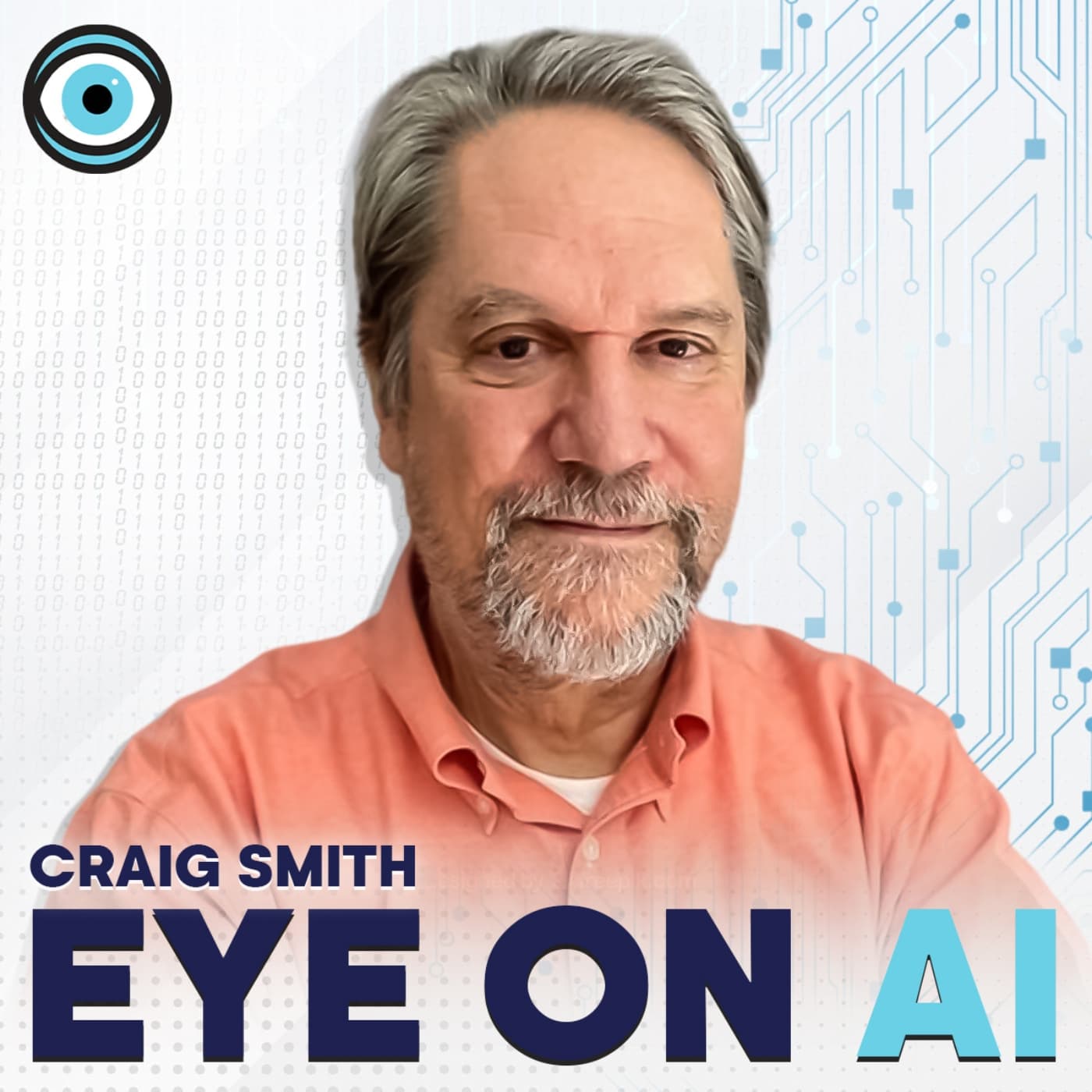
Eye On A.I. Podcast Summary: Episode #284 - Pat Utz: Inside Abstract, The AI That Decodes Laws and Regulations
Episode Overview In this episode of Eye On A.I., hosted by Craig S. Smith, Pat Utz, CEO and Co-Founder of Abstract, discusses the innovative AI technology developed by his company to analyze and track laws and regulations across the vast landscape of over 145,000 government entities in the U.S. The episode explores topics such as the evolution of Abstract, the impact of AI on lobbying and compliance, and the future of democracy in relation to transparency and public engagement.
Key Themes and Discussions
- Abstract's Mission and Evolution
- Background: Abstract started as university research in natural language processing focusing on legislative texts.
- Transition: The company pivoted towards providing tools for lobbyists and legal teams to navigate the complexities of governmental regulations.
- Goal: To bring transparency to the legislative process and allow users to understand complex laws and amendments more easily.
- The Role of AI in Legislative Processes
- Proactive Intelligence: Abstract focuses on providing proactive insights rather than just reactive compliance measures.
- Scanning and Monitoring: The AI scans updates from regulatory bodies and legislative entities while also ingesting data from news and social media to discern relevant changes.
- Examples of Use: The platform helps identify risks and opportunities for businesses, impacting areas such as labor laws and taxation.
- Functionality of Abstract's Technology
- Data Processing: The technology analyzes bills and legislative changes, offering summaries and highlighting critical amendments.
- User Interaction: Users can query the platform to obtain specific insights related to legislation, making it easier to digest complex documents.
- Data Tracking: The platform maintains a living archive of legislative history, allowing users to see changes over time and understand the context of amendments.
- Impact on Businesses and Legal Firms
- User Base: Primarily targets large law firms and corporate legal teams engaged in government affairs.
- Application: Law firms can track regulatory changes affecting their clients and strategize accordingly based on potential impacts.
- Strategic Planning: Abstract aims to provide strategies for lobbying and legislative influence based on AI-derived insights.
- Future of Democracy and Public Engagement
- Transparency: A vision where citizens have direct access to legislative changes that affect them, enhancing public engagement and informed voting.
- Potential for a Consumer Platform: Although currently focused on enterprises, there is an ambition to develop tools accessible to individual citizens for better understanding of government actions.
- Challenges and Market Position
- Costs and Accessibility: While currently a high-end solution for enterprises, there's a commitment to making similar tools available to the general populace in the future.
- Competition and Data Integrity: The platform emphasizes using official government data to provide accuracy and trustworthiness, differentiating itself from other AI applications that may deal with disinformation.
Key Takeaways
- Regulatory Superintelligence: Abstract utilizes AI to provide insights into legislative processes, aiming to transform how businesses and individuals interact with government regulations.
- Democratization of Information: There is a strong potential for AI tools to enhance democratic engagement by making governmental processes transparent and accessible.
- Innovative Use of AI: The application of AI in this context is not just about compliance; it’s about enabling proactive governance and informed public discourse.
Conclusion This episode of Eye On A.I. presents an insightful discussion with Pat Utz about how Abstract leverages AI to decode complex legal landscapes, aiming to enhance transparency and understanding in the legislative process. The conversation highlights the transformative potential of AI in shaping not just corporate compliance, but also in fostering a more informed and engaged citizenry in democratic processes.
Written by AI. May contain mistakes. Listen to the episode to check what was said.
Transcript
Automatic transcript. May contain errors.0:00We're scanning updates across these regulatory bodies and legislative bodies. And we're using AI to figure out what's relevant for a law firm and their clients. Or in the case of a company, what's relevant to that company and their business units. If a company has a big labor force, they have to understand how government is changing laws and codes as it pertains to their labor force, right? The local, state, and federal level. There's over 145 ,000 government entities in the U.S. alone. You know, we're talking Congress all the way down to your local school district, right? That school district is a government entity of itself.
0:37So our tech is going out and picking up any updates from these government websites and also picking up signals from news and social media. Thank you for having me on, Craig. So my name is Pat. I'm one of the co-founders and CEO at Abstract. And we've been at this for about six years now. A little bit of background on us. We started in classical research in natural language processing back in 2019, computer engineers and electrical engineers by trade, but really passionate about trying to make sense of laws and codes and sort of bring transparency to the opaque, you know, legislating process. us.
1:20What ended up happening is we sort of got tapped on the shoulder by the head of entrepreneurship at Loyola Marymount University. And he said, hey, I think this research that you're doing can apply to people in the lobbying space. So we ended up spending about two and a half, three years selling a collaborative sort of stakeholder management tool for lobbyists, worked with over 200 firms, and then raised venture capital to expand to our current focus, which is mostly working with fake law firms and large companies with their legal teams, taking in all the changes across regulatory and legislative bodies and using the reasoning capability of AI to distill what may be a risk or an opportunity to that business.
2:06So we've got a chance to really get a deep understanding of how the sausage is made. And, you know, sort of using AI to distill what's actually relevant across all of this. Yeah. And describe exactly what the platform or product does. I've had another company on probably four or five years ago that was using AI to identify targets for political fundraising, and I found that fascinating. But this is specifically looking at the legislative process and helping lobbyists. So how does, describe how the product works? Yeah. So if you look at our government structure, it's sort of the classical three-tier structure, which is the executive branch, the legislative branch, and the judicial branch.
3:13And we have a flavor of that at the federal level, the state level, and sometimes at the local level as well. So what we're focused on right now is mostly the executive and the legislative branches. And that is in the form of legislative bodies. So think a state legislature or Congress. And specifically within those legislatures, it is the bill that is being introduced and amended to essentially create a new law or change an existing set of laws. And on the executive side, it's usually a regulatory agency and they're introducing changes to the rules that they've set out or which we've seen a lot of recently, their executive orders or governor orders at the state level.
4:06So these are all sort of key parts of how government dictates what society does. And what we're doing at Abstract is we're scanning updates across these regulatory bodies and these legislative bodies. And we're using AI to figure out what's relevant for a law firm and their clients, or in the case of a company, what's relevant to that company and their business units. And the reason it matters is usually one of a couple of key examples, which is usually product or labor. Right. So if a company has a big labor force, they have to understand how government is changing laws and codes as it pertains to their labor force.
4:54Right. The local, state and federal level. On the product side, if you're in the financial services space, as an example, you need to know what are the changes that may happen on the regulatory set of framework that may impact your product roadmap and your ability to sell in a certain market. So increasingly, we see sort of those two sides. The last piece is taxes and finances. So how a government changes laws may impact a company's ability to actually sort of change their tax outlook. And that happens also at the local, state and federal level. Yeah. And how do you do that? I mean, are you, well, first of all, let's go back to the original research before you guys were tapped and told this would be applicable to government.
5:47What was that research originally? Yeah, so the research was pre-OLMs. So we were working with classifiers and we called it natural language processing. Very simply put, it was the area subset of AI focused on processing natural language. So the idea was to use these classifiers to essentially take bills and legislation at Congress level and make summaries of them, which is why we called it abstract. And the idea was actually to make a consumer application. We said, hey, if we can make summaries of these complicated bills, we can bring greater transparency to this process as a whole. And I think, you know, to this day, it still rings true in terms of our mission of making all this data more accessible for the everyday person.
6:41And even though we're a B2B company, right, we sell primarily to law firms and enterprises. I definitely think there is a path forward in the future for us to expand these services for the daily use case for each individual. And does the platform track everything that's published in, say, the congressional record, or does it depend on a user uploading documents and asking for analysis? Yeah, so this is part of what took a while to build and develop expertise around. So there's over 145 ,000 government entities in the U.S. alone. You know, we're talking Congress all the way down to your local school district, right?
7:32That school district is a government entity of itself. So our tech is going out and picking up any updates from these government websites and also picking up signals from news and social media. part of the unlock here and i think this is going to transform the way a lot of this was the work is done in other industries is agents and their ability to go out and autonomously pick up these signals and process that right for an application so that's been an unlock on our end although we've been working on that for about three years now um but yes we're picking up all these signals and we've built that in-house and including the text of uh table bills or those that are abled i mean yeah yeah yeah so so the way it works is there's usually the existing set of codes and laws um in that state city county or federal entity and then every year or every session, the legislature works on all of the proposed bills.
8:43And just for context, you know, in California, there's about 5 ,000 to 7 ,000 bills a year. That's a lot of bills. And there are oftentimes spot bills that are introduced, which have no language at all. And their primary focus is to just exist and just go through the process until the very end where they're gut and amended, which implies sort of what we hear right there. The name might have to do with water rights, but it's gutted to be some sort of tax amendment, right? So that's a very common process. Yeah. I didn't know that. In other words, it's sort of like, what do they call that? A SPAC or what in Asia they call a backdoor listing where you have an empty vessel that's listed and then you can fill it with whatever you want.
9:40Is that right? That is what a spot bill is, yes. Especially one that's gutted and amended because it's gutted and amended to talk about something else. That's one tactic. Another tactic is using the budget or trailer bills to get policy through. So the thing is that bills that need some sort of appropriation, they need some sort of budget to get something done. They have to go through a separate process. And those bills end up being quite large in nature, sort of like this big, beautiful act or big, beautiful bill that we're seeing at the federal level. And this is where, you know, lobbying firms, associations, elected officials, they take the opportunity to sort of add their amendments because on the legislative process, it's easier to get something through that big bill instead of sort of making a bill in and of itself for that issue.
10:36Right. So all this information needs to be tracked. Historically, a company or a nonprofit or a law firm had to hire people to actually read these bills and figure out what's relevant. And from there, they would figure out a strategy if they want to lobby to change it or do nothing and let it become a compliance issue down the line. But AI is fundamentally changing how we think about this process as a whole. Yeah. But again, the Big Beautiful Bill is an example. Does your platform pick that up once it's published? Or you're not relying on a user to upload it and ask questions about it? Correct.
11:27We're providing the data. We're scanning and monitoring that twice a day. So we have like millions of records every day coming in. And then for each client, we then use that reasoning capability of this model to figure out what's actually relevant for each of them. I see. Yeah. Can you, on the big, beautiful bill, because a lot has been made of its various amendments, and so unwieldy few members of Congress have actually read the entire thing, does it, is there a conversational interface then where you can ask questions about a specific piece of legislation like that bill? You can ask lists, all of the, you know, the things have been added in that are not directly related to the budget, that sort of thing.
12:29Yeah. So that's a really core part of the workflow, which is asking deeper questions about the document. And especially relevant when the document is as large as that big, beautiful bill. and sort of where we're building expertise is giving abstract that context on, okay, I am an expert at understanding public policy, regulatory changes, right? Connecting that bill with other bills, other regulatory amendments, because if you look at governance as a whole, everything's connected, right? Even down to the judicial level. So all this is being done with context on what the business does. And that is a core part of sort of the value that we're building with OutShark.
13:20Yeah. And you said there is a conversational interface for the user? You can just ask questions like, hey, what part of this bill is relevant? Can you highlight pieces I need to focus on? So you don't have to read the bill itself. And we're seeing this sort of flow in other industries as well, where AI is leveraged with some sort of industry expertise to analyze a dense document or a dense data set. Yeah. And for your analysis engine, is that a fine-tuned model, open source model, or are you hitting one of the proprietary models with an API or how do you manage that? Great question. So what I can say is we are pretty adamant about not building a custom model in-house just because our philosophy is such that the big foundational model companies like OpenAI, Anthropic, that's their focus.
14:20They're going to continue pouring millions, not billions into that. And we want to leverage benefits of that as they get better. so we are though fine-tuning aspects of these models in-house and then we're also pairing it with context on each business there's a lot of work that's been done with retrieval augmented generation and or you know what people call rag and that's just providing more documents that you're telling the model just pick context from here and don't hallucinate right this is sort of like your universe where you can reason. There's a lot of frameworks being developed on that that we just gain better every day.
15:00But yeah, to answer your question, we're doing a mix of both as we've been developing expertise with the actual models. Yeah. And can you give an example of how a law firm, for example, or yeah, so let's say a law firm that's handling compliance for a bank, how they would use this? Yeah, so with a law firm, the first issue, if they're a big law firm, is understanding what changes in regulation and legislation are relevant for which clients. So the first step is having abstract, with its context of their clients, understand that, hey, this regulatory change is actually going to impact this bank, you know, banking industry type client, right?
15:58Once it identifies that, then it's a matter of calculating how it's going to impact that client, right? It may be an impact to their upcoming product that they're developing, or maybe an impact to their labor that they have in that state. So depending on the risk that arises, Abstract's able to reason through and calculate how that's going to impact the client. And then from there, that's where strategy sort of takes place with respect to hiring a lobbyist or doing nothing and letting this turn into a compliance issue. What I will note is that compliance is a reactive measure, and I can touch on this in a bit, but there is a difference between compliance and being reactive, and then sort of what we're focused on, which is more on the proactive side of the space.
16:48yeah uh and who who are the main users it's uh i mean is it law firms is it lobbying firms is it uh uh congressional staffers is it media it sounds like a wonderful tool for media yeah yeah yeah so really the universe of of users is anyone that's trying to understand what the hell government's doing right uh which is a pretty big universe and only increasing However, right now, we're very much focused on large law firms and in-house legal teams within companies. And those legal teams usually work with government affairs or public policy. Those are dedicated, you know, lobbyists and experts within a company, right, that work on that.
17:37So those are the two focus areas that we have is law firms and corporates. Within that realm, you know, sort of varies who's working on trying to understand, trying to understand the government. But usually we get pull from like the research people within these law firms or the business development units. And then within the company, usually the poll is, you know, whoever's ripping their hair apart about the tariffs that, you know, they're still trying to figure out or, you know, whatever it is that's that's coming out that's going to impact the company. That's that's our that's our user typically.
18:19Yeah. Does it also flag contradictions across legislation? I mean, as you said, it's a big universe of stuff. And that's one question. And does it cover a global, I mean, for example, you know, the AI Act in Europe or GDPR, does it cover changes because that's a whole other animal? Yeah. So, I mean, it's a good example. You know, over the last year, about 700 proposals were created just on AI policy across the states. And that's because at the federal level, especially with this administration, there is very much this lack of appetite to do any sort of federal oversight on AI in the US. Whereas in Europe, this has become increasingly a priority to regulate at the EU level.
19:28So touch on your first sort of question, comparing these bills and seeing if there's contradictions is a very core piece of what we do. And it's the reason why we have to ingest this data ourselves. It's why we're scraping and structuring all this noise ourselves. So with that corpus of data, we can draw connections and ties, right? And maybe even see if there's contradictions. On the international sort of stage, it's very much top of mind. You know, we're definitely focused right now on within the U.S., but we plan to expand internationally soon thereafter. Yeah. Wow. And you mentioned that there may someday be a consumer platform because that, I don't know how many people are really interested, but it would be wonderful to be able to go to something authoritative and ask what's being done on self-driving legislation at the federal level and across the states.
20:47And your platform would pick up all of that, right? It ingests only at the federal level, but at the state level. Yes. Yeah. So the the vision raised across even local, right, local, state and federal. Being able to abstract and distill what's relevant to the individual and that should guide who you want to vote for. You know, the issue is that we we now vote based off of voter guides and whatever we're seeing on, you know, Facebook or friends are telling us. Right. But ninety nine percent of what, you know, these elected officials do is what we're talking about is legislate is create bills. Ninety nine percent of the constituent body has no idea what these bills are.
21:36So if we're able to make sense of and, you know, sort of break down the impact that these bills have to the constituents. we should be a much more educated constituent body and therefore elect officials align more closely with what we actually believe in. So that is definitely, you know, sort of like the end goal, the end vision. And that same concept applies to business. You know, it's just different priorities. Yeah. And you, when you were talking about government bodies, you said all the way down the school districts. Does this cover the school district level across the country? Yes. So that's why there's 140 ,000 plus governments in the U.S.
22:22is because of all the special districts, cities and counties. So yeah, even your local school district has some sort of board. That board meets on a regular cadence and they're putting together rules that they follow. And we're able to track that as well because they're all required by law to post this online. Wow. And just cumulatively, it seems that the burden of that data would grow exponentially. Do you archive data? I mean, as you update data with new information, do you archive the stuff that's being overwritten or is this kind of a living snapshot that moves through time? Yeah, it's definitely a living snapshot, right, that moves through time.
23:23But, you know, we have all the archives. So I describe it very similar to like GitHub where, you know, you have a piece of code and some people add some code and, you know, that's an addition. They delete it. You know, it's an amendment. It's deleted. So we track all the changes and that's all archived. So nothing's lost. And there's insights there as well, right? If there was some tax policy that came out in California and that was amended over the years, seeing how it was amended, seeing who amended what, these are insights that are valuable. So this was very hard to do a decade ago. But funny enough, I predict that the sort of corpus of data here is still much smaller than the foundational model companies and what they're doing, although it's non-truel.
24:20Yeah. And can you track, I mean, you were saying you can track amendments. Can you track where certain amendments originated? Yes. So amendments to policy come from the elected officials, right, as the bill goes through the legislative process. So if we have a bill that's introduced today, it has usually about 12 to 24 months to pass through all the committees and then go through the other House, pass through those committees, be voted on unanimously, and then it turns to a bill signed by the governor or signed by the president at federal level. But when the amendments are proposed, that is posted publicly.
25:11So we do pick that up. And we know which committee amended a bill or who proposed the amendment. Yeah. I mean, it just comes to mind that the lowering of the excise tax on tanning salons, you know, that they got a lot of press. And I've never seen the person identified who introduced that, but I would your system. We'll get closer. Yeah, we'll get closer. The thing is that amendments sort of come from the lobbying process and the lobbying process, you know, has various aspects to it. So being very concrete here, you can have a lobbying firm, a contract lobbying firm, you know, testify or talk to the elected official about, hey, we need to change this, right?
26:12Because the client I represent wants this change. It's a very direct way of lobbying. There's also trade associations and nonprofits that bring together a group of companies and they lobby on behalf of those groups. They're purposefully trying to hide who's the sponsor behind that, but you just see the trade association. On top of that, there are associations of associations, right, to further add distance between who's actually trying to propose the amendment. And the last piece, which I think is one of the hardest, but one most effective, and we saw this a lot with Uber and the contractor sort of definition of the contractor, the gig workers, which is using PR and marketing to sway the public to vote and send amendments to their legislators a certain way.
27:16Because at the end of the day, the elected official cares most about their constituents. So if their constituents are saying you need to vote a certain way, they're going to listen to them. So if you have the ability to sway the public vote, that's usually the most effective, but it's the hardest. And the platform, you said at the beginning that it helps guide lobbyists for the most effective ways to influence legislation. Does it come up with a plan? Like if you want to influence this clause, these are the committees you should approach or these are the jurisdictions that you should run ads or something like that?
28:10Yeah, so that is what we sort of label as like the strategy aspect. It's the most nuanced piece. it's what you know to the extent I can share something that we're very much working on and we're very close to getting to a point where that is you know sort of exceeding the capabilities of any individual or team of strategists because that involves understanding the industry the client the existing laws and codes right now that involves law firms, lobbying firms, industry experts, right? But this is what we're able to now accomplish with AI and agents. Yeah. I mean, again, that world is very complicated.
29:00And right now, it relies on relationships, right? If you're, I have a niece who works in Alzheimer's research and lobbying, and they know which congressional staffers pay attention to that or which congressperson is likely to act on their behalf. but it's all through relationships, this would make it more scientific, so to speak, right? In that you could, even if you didn't have a relationship, you could identify people who maybe you didn't know about or firms that you weren't aware of. Is that right or... Correct. Yeah. Yeah. And even beyond that, not to get super technical, but there is we're just talking about the legislative process.
30:09Right. What goes under the radar typically is the regulatory process. That's sort of where the bill is implemented, the rules are applied, and the people that work in the regulatory agencies are, you know, they're not elected. And that is a totally different process. You can't really influence them, but you can get really granular and almost get to a level of influence where the way that those officials are looking at the public comments for the regulatory agency are swayed one way or the other. But I believe that the personal relationships, so that's not going to go anywhere far anytime soon.
30:59It's going to be a while before we have AI legislators. That's a whole other topic. But I think what this sort of technology is bringing to the space is, to your point, making it much more calculated and more scientific. And as a result, it becomes more accessible and more transparent. So it should level the playing field in certain ways. So it's fascinating sort of seeing it unfold in front of our eyes. And how do you charge for this? Is this a subscription model or is it by seat? Yeah. Yeah. So a lot of AI companies have had to like redefine their approach to pricing because a lot of the value is more akin to what a team of people would do.
31:54So we actually do not charge off of seats. We charge off of coverage. The more government entities that we are abstracting for you, the more that we charge accordingly. but that's the value that we sort of see tied to the output for them. Right, right. I see. So, yeah, you could have, you know, down to the school district level or you could just focus on the federal level or something like that. You would be charged differently. Is that right? Exactly. If I'm a big law firm and I'm trying to cover 20 more cities or regulatory agencies, without Abstract, I'd have to hire more people to cover those government entities.
32:44So that's why we charge off a coverage because the alternative would be hiring more headcount. Yeah. Have you had any, I mean, your job is not to affect legislation is to provide the tools, but have you, have you had any, are there any examples of legislation that was impacted by people using your platform and by the information that was surfaced? Yeah. So like, you know, one example is a city in the state of California that's one of our customers. And, you know, there's like a dam, right, that they were working on and sort of getting try and get funding for it. And so Abstract was able to identify that this is a relevant bill that if you were to amend a section of it, you will be able to obtain funding for the city to fund this dam project, no pun intended, literal dam for the lake.
33:54So that was an example where Abstract identified something that's relevant, helped them sort of provide an amendment to that bill. And the bill was able to be codified and they're able to obtain that funding to go forth. That's sort of a best case scenario for us. Yeah. Does the platform, can it draft legislative language to propose? Yeah, so drafting is part of sort of the generative AI aspect of what we do. Right now, there's a couple of use cases in terms of generating content that we've been exploring. It includes that, also includes reports and whatnot. But the short answer is yes. That's part of the generation of content that we are creating around this.
34:45Yeah, I mean, you can imagine that it could be really powerful in generating lobbying campaigns across all of the various channels. I mean, does it do that where you identify a piece of legislation and some language that is going to affect your company and you want it to change and abstract gives you kind of a plan of attack. And then it generates emails and legislative language to propose and, you know, web ads and all kinds of things. Does it do that? Well, yeah. So when we talk about the strategy and the overarching next steps like that, what you're mentioning are all aspects of that, right?
35:39That is a key focus. And it's what we're sort of fine-tuning and developing with our current customers. So I can't speak too deeply about it as of today as we're developing and keeping some of that under wraps. But I would say thematically what you're hitting on is right on the nail. Wow. Yeah, I mean, I would encourage you to open it up to the public because there is, you know, there's a lot being written right now about people using AI to generate false narratives or deep fake videos and that sort of thing and how that's eroding democracy. But the other side that I've always imagined is that AI could be a tremendous accelerator or driver of participatory democracy, where individuals or communities could use a tool like this to see how different proposals at different levels of government are going to affect them.
Read the full transcript
36:58I know in my town, there's this millennial proposal to, you know, rebuild the downtown. And, you know, it'd be a full-time job to keep track of what's going on there. It's like every few weeks you read something and you feel a little out of the loop. But if you have a tool like this, you could check it daily. Or another question, does this give alerts? If you follow a particular subject, would it alert you that something's changing that you should pay attention to? In real time, yes. That is a core part. So, you know, you're looking at this downtown rebuild, you know, if the city council met and they decided, hey, we're actually going to kill the planters and we're going to do trees instead, right?
38:06You get an alert saying, hey, I know you care about this because I have context on the fact that you live here. And they just said that they're going to introduce trees. Do you want to reach out? Maybe, you know, maybe you want the flowers back. But that's a really good example of sort of how it would alert you and do that based off of context of, you know, one knows about you. Yeah. And is this prohibitively expensive? I mean, your core market, as you were saying, are really large corporations and law firms. Could it be made available at a price that individuals or communities could afford? Yeah, so that's, I mean, this is why we're starting here and then expanding, you know, outwards towards the consumer.
39:01It is very expensive, right? Especially now in the earlier phases of AI is why we're an enterprise grade software. It's very bespoke, very custom, white glove solution. but as I said I really I see this as an investment to make this more accessible for the masses and I don't think we're that far off I think in the next 5-10 years it's going to happen and it's like with any technology right you look at it's an overplayed example but Tesla didn't start with everyday car they started with the premium cars and sort of got things right before they were able to make that available to the masses yeah and what's your view of democracy that you're looking at this closely because I'm a great believer in the strength of America's democratic institutions, but there's a lot of concern.
39:57There's a lot of concern as I said about disinformation. But for years now I've talked to people about how AI could knit together the the populace and sort of take a real-time measure of their opinion. And that could be really powerful for democracy. So do you think the tools like this are going to shore up democracy? I mean, I spent a lot of my life in China, and there's a concern both among some Chinese, but certainly among people outside China, that the AI surveillance will be used to lock down dissent and reinforce the Communist Party. so it can be used against democracy. But yeah, I'm just curious, since you are in this space, what do you think?
41:11I think that a lot of what we see now is a result of companies, you know, I'll be very clear, like companies like Meta, right? Where their sort of North Star was retention and eyeballs, right? And that's a North Star that can be taken in directions that are not productive for society, right? And sort of focus on amplifying content that attracts eyeballs, but maybe not for the right reasons, right? And so, you know, I think a lot of sort of where we're at right now is a result of this increase of what I call noise and silos of noise that are, you know, very much catered towards communities, you know, based off what they care about.
42:06The original intent was to create audiences, you know, for meta, for Google and whatnot to serve advertisements and monetize upon. But, you know, as a lot of us now know, that same technology is what led to a lot of these silos which created, at the worst end, extremist groups. And so I think in order to, from an optimistic perspective, see where things are going, I think this is now a main concern across most executives at companies, across most of the government officials as well. I think the fundamental fabric of American democracy is still built on the constituents, less people. Right. And I think that the people that we elect, the elected officials, they succeed or die based off of our vote.
43:04Right. And so I think what's going to happen is there's going to be a greater sort of like shift in people trying to figure out what are the elected officials doing. And and and that's going to be amplified through all these channels. so I have an optimistic viewpoint where I think AI is going to help us bring more accessibility and sort of more factual updates on what the officials are doing but we're going to get a lot more fake data and fake news around that as well so I know that was a roundabout way of saying there's hope but it's going to be a nuanced and complicated road ahead Yeah. And that fake data or disinformation, how do you guard against that slipping into your...
43:55Great question. So we don't have much of that issue on our end because our data by nature is all official. It's all facts, right? It's the official documents that governments are outputting. The only sort of areas where there can be fake data is maybe in the analyses or the strategy and documents that abstract creates. But this is all worked on by professionals, right? I think one of the areas where fake data becomes problematic is when it's used to sway the public a certain way, you know, especially when that's not factual. So that's my read of the scenario. Yeah. Do you work with news organizations?
44:45So we have, I can't disclose here, but we have, yeah, we're working on partnerships with news-like organizations. We're actually in that process right now. I think news and social media is a critical component now to understand the pulse of government. also because a lot of your local state officials and federal, they're tweeting and they're putting things on LinkedIn, right? And so you may want to know about that tweet because they're talking about the next bill that they're going to change, right? So it's a critical component. Yeah, and I'm just thinking it would be amazing if you partnered with a news organization.
45:30they had a website that just gave this kind of analysis of, for example, the Big Beautiful Bill or anything that comes up. So because you're right, democracy in America rests on people, but the people are grossly uninformed or misinformed in many cases. and that's the breeding ground for populism but if people could actually see what's being done, understand that it would be a much healthier constituency I can't agree more, I think that's I'm going to note that down I think that's in fact could be a good sort of pre-marketing for us too while doing some good. I like this. I like this. Where do people find you?
46:32Is there any sort of a freemium layer that allows people to look at the product before signing up? Is it self-service SaaS or is it, do you have to engage with a salesperson? All of that. Yeah. So long story made short, you can just Google my name, Patrick or Pat Uts. I'm actually Argentinian. So some parts of the internet will say Patricio if you're bold enough to type that in. But just Google me and you can find my LinkedIn and information. But everything about abstract is at abstract.us. You can also just Google abstract US. The way that we operate, again, given it's enterprise and white glove is and we have all the information on the website but we essentially walk through a sort of intake process and scope everything out if people want to learn more.
From the publisher
What if AI could decode government in real time?
In this episode of Eye on AI, Craig Smith sits down with Pat Utz, CEO and Co-Founder of Abstract, the AI startup building “regulatory superintelligence” to track and analyze laws, bills, and regulations across 145,000+ government entities.
Pat explains how Abstract evolved from university research into a venture-backed company helping law firms, enterprises, and policymakers cut through the noise of Congress, state legislatures, and regulatory agencies. From uncovering hidden amendments in massive bills to proactively identifying risks and opportunities for businesses, Abstract is transforming how we understand legislation.
We cover:
-
How AI is reshaping lobbying, law, and compliance
-
Why Abstract is focused on proactive intelligence, not reactive compliance
-
The role of AI agents, LLMs, and retrieval-augmented generation (RAG) in policy analysis
-
Real examples of AI influencing funding and legislation
-
The future of democracy when citizens and businesses have true transparency into government
Whether you’re in tech, law, government affairs, or just curious about how AI is changing democracy, this conversation reveals the future of policy intelligence.
🔗 Learn more about Abstract: https://www.abstract.us


