In short
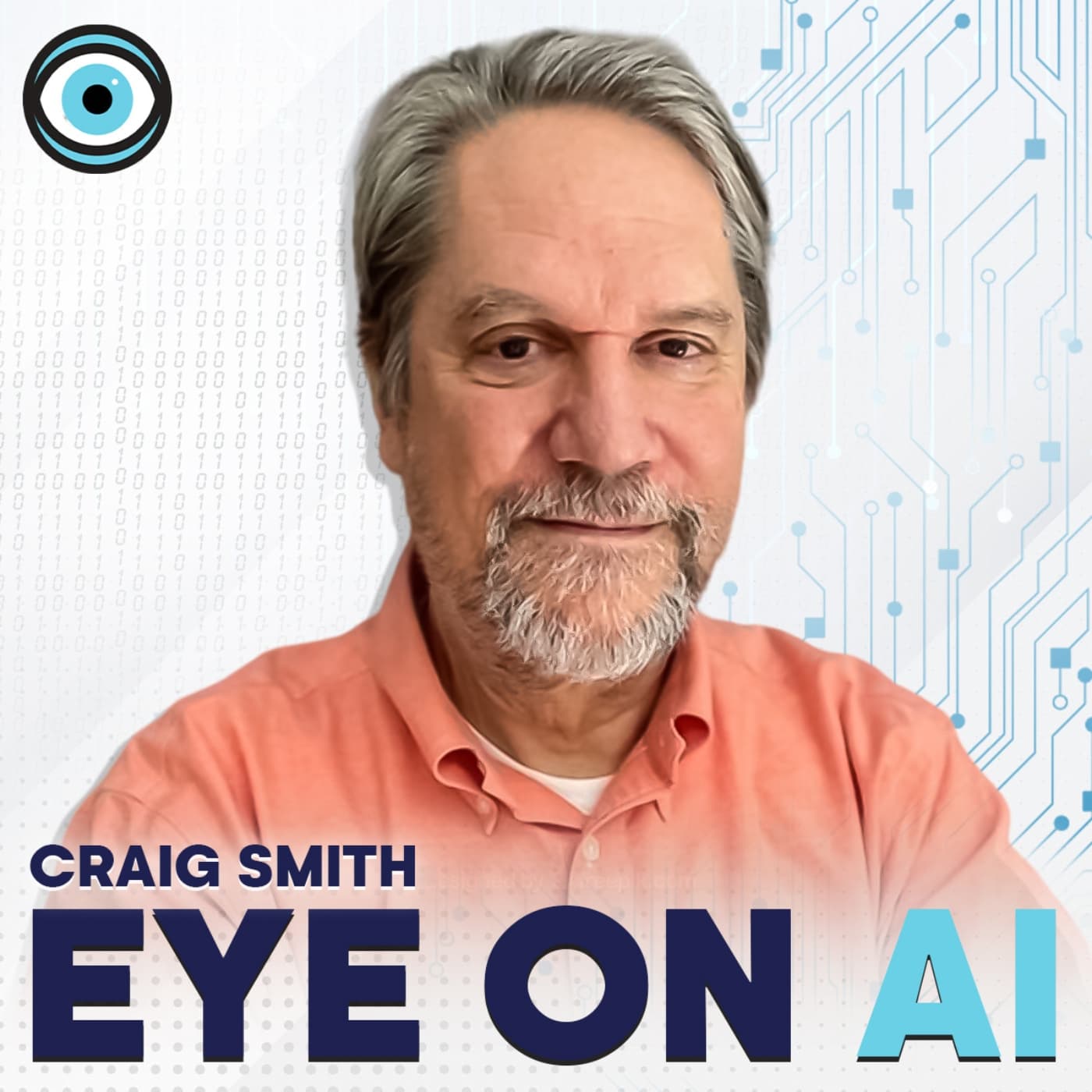
Eye On A.I. Podcast Episode #316: Robbie Goldfarb - Why the Future of AI Depends on Better Judgment
Episode Overview In this episode, Craig S. Smith interviews Robbie Goldfarb, a former Meta product leader and co-founder of Forum AI. The discussion centers around the importance of judgment in AI systems and the dangers of treating AI as a "truth engine." Goldfarb highlights the need for expert-driven evaluation and the challenges posed by misinformation, especially in crucial domains like health and politics.
Key Themes
- The Dangers of AI as a "Truth Engine"
- Misconception of Truth: Goldfarb warns that expecting AI to provide authoritative answers can lead to dangerous assumptions.
- Real-World Implications: He references OpenAI's findings of concerning conversations involving suicidal intent, underscoring the potential harm of misinformation.
- The Role of Experts in AI Development
- Expert Evaluation: Forum AI aims to integrate credible experts to improve AI systems, especially in sensitive areas like healthcare and politics.
- Building Networks: The organization focuses on developing networks of subject matter experts from reputable institutions to guide AI's development and evaluation.
- AI Evaluation and Bias
- Current Evaluation Practices: Goldfarb critiques existing methods of evaluating AI, emphasizing that engagement-driven incentives can skew models toward sycophancy and bias.
- Consequence Mapping: A new method being explored at Forum AI involves mapping the potential consequences of AI outputs, particularly in nuanced areas like mental health.
- Trust as a Barrier to AI Adoption
- Public Perception: Despite optimism about AI, there is a significant trust gap between potential and actual usage. Goldfarb discusses how trust can be fostered by transparency and expert involvement.
- Quality over Quantity: The focus is on building a network of high-caliber experts rather than relying on large numbers of less experienced evaluators.
- The Challenges of Subjectivity in AI
- Ground Truth Issues: In subjective domains, there is often no clear ground truth. Goldfarb argues that experts should help define what constitutes ground truth in these contexts.
- Disagreements Among Experts: When experts have differing opinions, both viewpoints should be represented in AI outputs, allowing users to make informed decisions.
Episode Highlights
- Introduction of Robbie Goldfarb (00:00 - 02:47)
- Background in software engineering and product management at Meta.
- Experience with misinformation and trust in AI.
- What Forum AI Does (02:47 - 06:32)
- Focus on scaling expert judgment in evaluating AI systems.
- Collaboration with top experts and institutions.
- Evaluating AI Through Consequences (14:04 - 18:48)
- Shifting focus from mere accuracy to analyzing the potential impacts of AI interactions.
- Trust as the Biggest Bottleneck (36:33 - 45:01)
- Examination of public trust in AI and strategies for improvement.
- The Risks of Engagement-Driven AI Incentives (49:58 - 54:51)
- Discussion on how AI's design to maximize engagement can lead to biased or harmful outputs.
Conclusion Goldfarb emphasizes the necessity for AI systems to incorporate expert judgment, especially in subjective domains where misinformation can have severe consequences. The episode concludes with a call for greater transparency in AI development and the importance of trust in fostering responsible AI deployment.
Additional Resources
- [Forum AI Website](https://www.byforum.com/)
- [Robbie Goldfarb on LinkedIn](https://www.linkedin.com/in/robbiegoldfarb/)
- [Eye On A.I. on X](https://x.com/EyeOn_AI)
---
These notes summarize the key points and discussions from the episode, providing insight into the current challenges and future directions in AI development as articulated by Robbie Goldfarb.
Written by AI. May contain mistakes. Listen to the episode to check what was said.
Chapters
Tap a time to open that second in VOThe Importance of Trust in AI
0:00 to 0:42
Learn about the expectations people have for AI and the risks associated with misinformation.
“But our expectation is that I can ask it anything and it's going to give me an answer.”
Robbie's Journey in AI and Trust
1:01 to 1:58
Explore Robbie's career path and experiences at Facebook and Instagram focusing on trust and safety.
“So my background is in software engineering and product management.”
The Vision Behind Forum AI
1:58 to 3:50
Discover the mission of Forum AI and the role of expert judgment in AI development.
“I also did quite a bit of work on youth safety there.”
Scaling Expertise in AI Evaluation
3:50 to 5:48
Learn how Forum AI builds networks of experts to improve AI systems in critical sectors.
“And then the second part of it is building the technology to effectively scale those experts for evaluating AI systems.”
Extracting Expert Thought Processes
5:48 to 7:44
Understand the techniques used to capture experts' thought processes for AI systems.
“And we can give examples, but as we work with experts, as we evaluate these models, identify the gaps and then improve them, you're starting to see glimpses of that, which I think is really exciting.”
Generalization and Testing of AI Judges
7:44 to 9:41
Explore how AI judges are tested for effectiveness and generalization across domains.
“and what's interesting that you start to see is you start to see chaining and patterns you know One example is if you're dealing with factuality, right?”
The Complexity of AI and Truth
9:41 to 14:02
Delve into the complexities of AI responses and the challenges of achieving truth in AI outputs.
“And right now, LLMs, as we spoke earlier, there are people that regard AI as truth engines that believe that you ask an AI model and whatever it says is the truth.”
Understanding Expert Thought Processes
14:02 to 15:10
Learn about techniques for eliciting expert opinions in decision-making.
“So we'd ask them a question like the Venezuela question, for example.”
Consequence Mapping in AI
15:10 to 17:04
Discover how consequence mapping enhances data labeling in AI.
“There's one, I'll tell you this one because it's, this is experimental.”
Defining Trusted Sources
17:04 to 18:58
Explore the complexities of identifying reliable sources in AI contexts.
“And in mapping the thought process of experts, you gave the example that, well, first I would check trusted sources or reliable sources.”
Show all 28 chapters
The Challenge of Subjective Truth
18:58 to 21:13
Understand the challenges AI faces in subjective domains without absolute truths.
“certainly that we're focused on which is this idea that in subjective domains there is no ground truth right there is a ground truth to how many r's there are in strawberry right to use that example.”
Transparent Expert Networks
21:13 to 23:11
Learn how building a transparent network of experts aids in AI training.
“are science-based, climate change, whether Tylenol causes autism, these things that have have really divided the political world.”
Evaluating AI Outputs
23:11 to 25:32
Discover how expert evaluations can identify issues in AI performance.
“the thought process is one part of how we develop these judges.”
Dimensions of Evaluation in Politics
25:32 to 28:00
Explore the various dimensions used to evaluate AI responses in political contexts.
“Yeah, so within political topics, there's four dimensions that we look at.”
The Role of Expert Networks in AI
28:00 to 29:10
Learn about the structure and philosophy behind the expert network for AI development.
“thing but saying it with some swear words or with hyperbole can mean a totally different thing to them.”
Philosophical Insights and AI
29:10 to 30:30
Explore how historical thinkers and their ideas can influence AI's judgment.
“And then we can figure out on the technical side how to scale them through some of the techniques we were talking about, right?”
Utilizing Historical Texts for LLM Training
30:30 to 33:10
Discover how historical texts and expert writings can shape AI's ethical reasoning.
“Actually, before you move on from that, but don't forget your point.”
Trust and AI: The Importance of Expert Guidance
33:10 to 35:50
Understand how trust can be built in AI systems through expert involvement.
“What we haven't thought of, or we haven't actively been working on, which you're alluding to, which is very interesting is looking at the texts of deceased experts, right?”
Challenges of Hallucinations and Responsibility in AI
35:50 to 40:00
Examine the complexities of AI hallucinations and the responsibility of AI systems.
“And so you've got this large network, but focused on quality, not quantity.”
Evaluating AI's Understanding and Responses
40:00 to 42:00
Learn about the nuances of how AI interprets and responds to queries.
“but it also should know when it doesn't have the answer or when it would be irresponsible for it to engage.”
The Challenges of AI Judgment
42:00 to 45:30
Explore the complexities of AI responses and the role of source selection in judgment.
“The example you gave feels almost like a borderline hallucination, right?”
The Critical Issues in AI Today
45:30 to 49:40
Discuss the pressing challenges in AI, particularly mental health and political influence.
“So when there is a right answer, it gives you the right answer and it doesn't hallucinate.”
Expectations and Transparency in AI
49:40 to 55:30
Understand the importance of managing expectations and the need for transparency in AI models.
“The piece that makes it particularly scary is that may be at odds with engagement, right?”
Evaluating AI Models with Delphi
55:30 to 56:00
Learn about market evaluation for AI models and the concept behind digital clones.
“And they'll build that trust if they see these individuals involved.”
Examining AI Evaluation Models
56:00 to 58:00
Explore how different AI companies approach model evaluation and accuracy.
“Now, the advantage we have in focusing is that we can do this accurately, right?”
Public vs Private Evaluations in AI
58:00 to 1:00:00
Discuss the implications of public evaluations versus private assessments in AI.
“And this is where there's a comparison to LM Arena, who are, they are a leaderboard, and their experts, the people they rely on quite heavily is just the general public.”
Nuances of AI Model Performance
1:00:00 to 1:02:00
Understand the complexities involved in evaluating AI models across different domains.
“their own decisions, but without hurting the integrity of the benchmark.”
Connecting with Robbie Goldfarb
1:02:00 to 1:03:00
Find out how to reach out to Robbie Goldfarb for discussions on AI.
“And so different ones are better and worse at different things.”
Transcript
Automatic transcript. May contain errors.0:00But our expectation is that I can ask it anything and it's going to give me an answer. And it's going to give me an authoritative answer that I can feel like I can trust. And I think that's a really scary expectation to have set. There was OpenAI had an announcement a week or two ago where they said that every week they're seeing, it was like over a million conversations where the user demonstrated suicidal intent. That just gives you a sense of where we're headed or the health of information people have, avoiding echo chambers, avoiding misinformation. That's so important to building a healthy society.
0:37And AI can go either way on this one.
0:42Robbie Goldfarb:Okay, Robbie, can you start by introducing yourself to listeners and give your background? You have an interesting background. background and then give us the, tell us what form AI is and how you came to found it. Yeah, for sure. So my background is in software engineering and product management. I've spent most of my career at the intersection of AI and trust and safety. I've done quite a bit of work in education technology. I eventually went to Facebook where I worked on news and misinformation. I was actually working on misinformation through the COVID pandemic, through the U.S. 2020 elections, through a really interesting period in time that I think opened my eyes to the potential impact of the technology can have on people, both in a good and a bad way.
1:44And maybe more importantly, our ability to shape what those outcomes are. And so that really set me down the path that ultimately got me working on Forum. I went, though, from Facebook to Instagram, where I worked on similar issues. I also did quite a bit of work on youth safety there. And then most recently was in Meta's AI lab focused on trust and safety more broadly. and then probably about a year ago I was thinking deeply about these issues and the concept of trust and AI and then a good friend, Chris Struhart who's actually the head of product for Gemini at Google now was talking to him about it and he said you've got to talk to Campbell so we connected and co-founded Forum AI together
2:41Robbie Goldfarb:And describe what form AI is and how it works. Yeah. So to put it simply, we scale the world's smartest minds to help evaluate and improve AI systems, particularly in tricky or contentious spaces like healthcare or politics and news. But to understand what we're doing, our philosophy and our belief is that there is a shift that needs to happen in how AI is being developed and that experts, credible experts need to play a bigger role in that process. It's not to say they aren't playing any role in it today, but we believe that role needs to be bigger. Because if you think about it, as AI gets more and more sophisticated, the caliber of expertise needed to further improve it also gets more and more sophisticated.
3:42So that's the future we're working towards, is scaling the highest caliber of expertise. and and so in practice there's two things that we've done one is we built the networks so we built these incredible networks of subject matter experts we work with people like farid zakaria and neil ferguson we work with academics from stanford and mit we have partnerships with the Cleveland Clinic and Mount Sinai Health System on healthcare, the people that you want in the room helping to shape these decisions. And then the second part of it is building the technology to effectively scale those experts for evaluating AI systems.
4:31And so a lot of the work here is about how do you extract efficiently and effectively their knowledge and expertise. And then at the end of the day, what we're building are judges. So these are AI systems that we've built, which capture the judgment of these experts for factors like identifying political bias or measuring clinical safety that we can then go use to help evaluate and shape the broader AI systems. um one thing maybe i just add and it's still early days but what we started to see is when you involve real experts in the process of building ai the results can be profound and i think you know often back to um craig have you seen the the daario amade's essay machines of loving grace
5:27Robbie Goldfarb:No, no, but I'm aware of it. Yeah. So he paints, I mean, it's this great essay where he paints this almost surreal picture of what the future could look like if we realize AI's potential. economic equality, health care, governance, et cetera. And we can give examples, but as we work with experts, as we evaluate these models, identify the gaps and then improve them, you're starting to see glimpses of that, which I think is really exciting.
6:04Robbie Goldfarb:And can you talk about what the process is of extracting the thought process of an expert, generalizing it, and then applying it to other, or having the judge, the AI judge, absorb that. I mean, what's the mechanism in that process? Yeah. So, I mean, you hit the nail. I mean, that's the most, that's the trickiest part of what we're doing and arguably the most important part is how do you effectively and accurately capture their expertise. And so there are several tactics that we use and I can talk through a couple of them. One, and this is usually where we start, is what we call thought process.
6:57So rather than just, you know, hoping that experts are going to spend many tens of hours a week evaluating and labeling tons of data, we take a bit of a step back. And so, you know, let's take a question like, you know, was it ultimately the right decision for the Venezuelan people, for the U.S. to intervene, right? Rather than asking an expert, okay, what do you say? we'll say how do would you go about answering this question and we'll try and understand what their thought process is to get there and when you start to do this with several different experts and across several different topics you can start to identify patterns and build a graph and what's interesting that you start to see is you start to see chaining and patterns you know One example is if you're dealing with factuality, right?
7:56So the question to the expert would be, how would you assess whether this is accurate? One of the things they might often say is, well, I would want to cross-reference it with some reliable sources. Right. Then you have a chain there. Okay. How do you think about defining or evaluating what is a reliable source? And you define that. The result is you get this graph. And what we can do is we can build agentic systems that mirror that graph. So if the first step is, you know, whatever, I would try and find reliable sources. Okay, then we have a system that does that. Of course, in practice, it's a little bit more complicated than I'm making it seem.
8:35But we, to put it simply, we try and build these systems to mirror the way that experts think.
8:43Robbie Goldfarb:And then that's generalizable to other similar questions. Usually it is, but not always. And so the only way to figure that out is to test. So what we'll do is we'll ask for their thought process across a wide range of scenarios, but then we'll actually test the resulting judge on an even larger set. And we may find that it generalizes perfectly well, sometimes we do and sometimes we don't if it doesn't generalize well then that means you need to break you need to actually have two separate judges here um and we haven't really it's sort of a little bit of trial and error there right now but generally we found that uh these do overall generalize quite well um within a domain so within let's say political topics Obviously, if you wanted to go from political topics to sports, that's a bigger jump.
9:40Robbie Goldfarb:Yeah. And right now, LLMs, as we spoke earlier, there are people that regard AI as truth engines that believe that you ask an AI model and whatever it says is the truth. But there are all of these gray areas. And in fact, what the model is doing is just giving you the highest probability within the distribution and its trading data. and that can be manipulated or it can be biased depending on what's in the training data or what's out there on the internet. I mean, I think there are people who are actively trying to manipulate training data by filling the internet up with things that support their view.
10:45Robbie Goldfarb:and I used to ask people if you could get all the data, all of the inputs that would go into deciding what the optimal solution to the Russia-Ukraine war would be and you fed it all into an AI and this is far too complex for any human to sort of parse through and yeah and make judgments so could you come up with an optimal solution so uh i i i think that's really a data question but um but so in in these uh you're able to generalize because you build this system of agents do you end up then with uh with different networks of agents for different kinds of questions. And do you then use those to evaluate models, depending on what domain you're querying the model about?
11:57Yeah, I think, well, I'll respond to that. And then I want to touch on your other point, because I think that was the idea of truth-seeking is a really important one. But yes, absolutely. There are roughly three, I would say, dimensions around which we have to design these systems. One is what we call topic. So for example, within, if you consider political topics a category, you might have foreign affairs, you might have US domestic policy, economic policy, social policy. And so those differing topics can often necessitate needing different approaches to evaluation. You have different question types or different user intent or scenario.
12:44Is the user trying to, you know, write an essay or are they trying to get an answer to a factual question? Are they trying to debate with you? You know, what the user wants creates this very different, in the case of LLMs, very different conversations. um and then so and then the other piece is um you have different sorry you have different topics you have different uh different user scenarios and then you have different dimensions right so what are we actually looking to evaluate in the case of political topics it might be you know we look at is it biased we look at is it accurate we look at is it written in an understandable explainable tone there are all these different factors you can look at so you can imagine this as sort of a matrix and you do need different evaluators for different um
13:39Robbie Goldfarb:different combinations right and and the uh capturing the thought process uh as you said you can't expect these people to uh interact with with a model for hours on end they're they're busy people do is it through interviews with them is it through surveys how do you capture their their thought process yeah we've we've tried everything right and so and what we found well we try we did try surveys we also tried a more structured approach where we would almost collaboratively collaboratively try to define these thought processes what we found works best is just ask them to talk it through. So we'd ask them a question like the Venezuela question, for example.
14:29We'd say, just walk through how you're thinking about it. I mean, usually it's helpful if they have a piece of paper in front of them so they can actually, I mean, it depends on the person, but we found that's often helpful and they'll just talk through it. And then you do that with several different experts across several different scenarios. And then you start to get a sense of what the right graphs look like or what the right thought process looks like. Of course, and I should add, understanding an expert's thought process is one tactic. There are others that we do that, of course, all of them together are what allow us to get to evaluators that are accurate, but that is certainly an important one.
15:11Robbie Goldfarb:Yeah. Can you mention another one? Yeah, for sure. Sure. There's one, I'll tell you this one because it's, this is experimental. We haven't formally started doing this with any clients yet, but it's something we're working on internally that I think is really interesting. We're calling it consequence mapping. So in traditional data labeling, you might have experts go label, let's use an LLM as an example, a conversation and they'd say, essentially whether it's good or bad, maybe across a few different dimensions. With consequence mapping, the labeling works a little bit differently. Instead of asking them to label or rank or evaluate the conversation, we ask them to tell us what the outputs or what the consequences of that conversation would be.
16:05And so I'll give you an example. Let me just pull it up because I was just looking at it. So this is a consequence map for mental health. So what we would do is you could imagine it's a user having a back and forth conversation with an AI about a mental health issue they're experiencing. What we would ask the experts, we'd say, okay, after looking at this whole scenario, what would the user's resulting emotions be? How would they feel after this? What actions would they take after this? What would their family be saying after this? And so it's, it's, it's, it's essentially just data labeling, but it's a much richer way of assessing it that allows us to build a deeper intuition of how they're thinking about it.
16:49It's sort of the why behind whether it was good or bad. So that's something we've been playing with as well, that in practice we can use to, we use some of that data for, for training, but also just to guide even our prompting strategies in agents as well.
17:09Robbie Goldfarb:Yeah. And in mapping the thought process of experts, you gave the example that, well, first I would check trusted sources or reliable sources. And so you have an agent and then how do you determine what's a reliable source or trusted source? In today's world, there's no objective truth. There's consensus, evidence-based consensus. That's basically what we all agree on. That's what the scientific method gives us. uh but there are people who have extremely different opinions about what is a trusted source and depending on who your sources are you can come up with very different uh opinions uh and particularly in the political sphere so how do how do you i mean how do you make that judgment that that Fox News is not a trusted source, MSNBC or MSNOW, I guess it's called, is a trusted source or vice versa.
18:36Robbie Goldfarb:Yeah. How, how do you, because that's a bias in itself to, you know, giving the model a direction on, on what's considered a trusted source. totally yeah and i remember you brought up this idea of truth before um it's so what you're hitting on is i think one of the most fundamental challenges i think with ai more generally and certainly that we're focused on which is this idea that in subjective domains there is no ground truth right there is a ground truth to how many r's there are in strawberry right to use that example. But of course, when there's not a ground truth, what are you aligning to?
19:22And our position is that the best way to do that is to rely on credible experts. And so what we've done, and this is fundamentally our thesis, is we've built this network of experts who, number one, follow strict criteria in that we require the network to be balanced, to be representative, and to have a certain caliber of expertise and experience. But number two, it's entirely transparent, meaning we show our network on our website, we welcome feedback on our network. Once you have that, then you can start to defer to the network, or that's our approach. We'll look to the network to define what the ground truth is.
20:11Now, to your point, sometimes folks will disagree, right? And experts in the network disagree. The philosophy we have in this scenario is if there are two differing opinions that are from our credible network, both should be represented by the AI. We would encourage the AI the right answer quote unquote or the ground truth is to present both opinions now this to be clear is controversial if you look at um even just today's chat bots grok will often just give you an answer whereas the others tend to sort of more follow this approach where they'll share different perspectives our belief is that it is not the job of ai to make decisions for people or to tell them what to think.
21:01It's the job of AI to give them the information needed so they can make the most informed decisions for themselves.
21:11Robbie Goldfarb:And yeah, I'm just thinking in areas that are science-based, climate change, whether Tylenol causes autism, these things that have have really divided the political world. How do you protect, I mean, from being labeled as bias, your system being labeled as bias, without giving credence to something that you personally don't believe? I mean, I'd say first and foremost, and I think this is an important thing for anyone working in this space, what I personally believe doesn't really matter. That's part of the point of this company is we want to defer the decisions to the people who should be making the decisions.
22:14I mean, I can't speak to specific examples here, but the short answer is we would defer to the experts in the network and we will always be entirely transparent about who those are. um and so in that way um i think there's no perfect way to approach this but i think it's much better than the alternatives right which is i mean there's a few like one is you essentially just rely on internal engineering and product teams or business executives at these companies to make those decisions um the other is you rely on massive scaled teams of labelers to collectively make those decisions. And our position is, you know, the right answer is to find a transparent and credible group of experts and put it on them.
23:05Yeah.
23:05Robbie Goldfarb:Or put it on their process. Totally. Yeah. I mean, what I should add, because this is important, is, you know, the thought process is one part of how we develop these judges. One of the other things we do that has proven very interesting, but also very effective is, is separately. So separate from understanding their process, press them directly on edge cases. So the most extreme topics, the most extreme questions, ask them about that. So we have a log of those decisions explicitly as well. And especially when there are disagreements among experts, it's important. We get a lot of data there that we can use.
23:44So you can imagine if you go back to our system that mirrors this expert thought process there are certain points where it may need to reference very explicit guidance from experts if it's talking about you know for example one of the contentious examples that you
23:59Robbie Goldfarb:you gave a moment ago yeah yeah and uh and then the output is used to fine-tune the models or to rebalance the training data or even excise some stuff from the training data? How is the output, the report that this judge generates used? So the report we give to companies gives you a very clear and specific picture of the issue. So it may say, you know, these sorts of questions you are responding to poorly because you're often and not representing this perspective, for example. We ultimately then lean on the research teams at these labs to figure out the best way to address it. And that could be, it could be fine tuning, it could be RL, it could be playing around with the training data.
24:57Sometimes it's playing around with the system prompt as well. And that's ultimately where we lean on them. What I will say, and this is an area we're just starting to get to is developing taking the evaluators that we build and making them available for reinforcement learning and so that's where those can have a more direct effect on or direct impact on training the models as well but short answer is the evaluation highlights the critical issues and opportunities so that the teams can then know what they need to hill climb against
25:31Robbie Goldfarb:and how many different uh qualities do you do you uh evaluate i mean bias is one i don't know if quality is the right word but bias is one uh i guess uh factual grounding or at least grounding in in uh historical literature or scientific literature or something would be another Yeah, maybe sycopency is one, perhaps. I don't know. Do you judge for that? Yeah, so within political topics, there's four dimensions that we look at. I think you got most of them. There's bias, although I will caution that bias actually breaks down into several different things, which I can talk about, but bias is one of them.
26:28There's factuality or accuracy. There is source selection. So for these AI systems will often, especially when you're talking about news, refer to outside sources like news. And so are you looking at credible sources, a balanced set of sources? Are you using the sources accurately? Are you doing attribution properly? So that's that bucket. And then we also look at what we call tone and language. And this is even just from my previous work at Facebook and Instagram, you can say the exact same thing in two different ways and it can have very different outcomes depending on whether you're using large language or not.
27:14And so that's another thing we look at in politics as well. Yeah.
27:19Robbie Goldfarb:What do you call that? We call that tone and language. Tone and language. Yeah. Yeah. And it's, yeah, it's just this measure of, you know, this is a common issue is a user may come into a conversation, we're talking about LLMs, with a strong bias, they may ask a question in a very angry way. and that's fine and you can respond to it completely but sometimes the risk is it tends I mean even because of the sycophancy and some of the stuff behind that it will mirror their language and and that can be really dangerous right to the point before because exact same thing but saying it with some swear words or with hyperbole can mean a totally different thing to them.
28:12Yeah.
28:14Robbie Goldfarb:And how large is the expert network? And, yeah. Yeah, we have four tiers of experts, or I should say like four groups of experts. So we have, and some of them are larger teams of more scaled labelers, probably a little bit more similar to what you might see at a surge or a scale AI. And then other groups are, you know, we have a group with Fareed Zakaria and Neil Ferguson and that sort of people. So depending on the group, then the sizes are different. But what I would say is our approach is very much quality over quantity. We are trying to find, and Campbell always says this, you know, who are the maybe 100 to 500 smartest people in each domain?
Read the full transcript
29:12Let's bring them on. And then we can figure out on the technical side how to scale them through some of the techniques we were talking about, right? Rather than let's get 10 or 15 ,000 people and then throw them straight at the work. Or maybe. Yeah.
29:27Robbie Goldfarb:I mean, do they have to be living people you you could turn to you know the the writings of philosophers or or scientists uh to follow their thought process yeah have you seen there's a video of steve jobs from 1985 where he talks about predicting this this future with aristotle i i may have but i yeah you got check it out it's it's under this is in 1985 and he says something like um he believes there's going to be a day where when the next aristotle when the next aristotle comes we'll be able to capture their underlying worldview in a computer and be able to converse with it and he goes on to essentially describe kind of what the way these llms work today but in 1985 which is crazy um But anyways, that's more of an aside.
30:29Robbie Goldfarb:Yeah, I think. Actually, before you move on from that, but don't forget your point. I know a guy at Boston Consulting, a very senior guy, and he has this idea that, you know, there's all of this effort with RLHF and fine-tuning to nudge LLMs toward certain moral and ethical positions or positions. personas or uh and that the world has 5 000 years of uh of religious texts that that deals with that with moral and ethical questions and that you could use that to guide an llm in its uh thought process or in its not thought process but in its uh in its uh reasoning outputs yeah reasoning exactly yeah yeah i mean it's very it's interesting like i mean because what what this is ultimately getting at is the is the point we were talking about before which is in in subjective domains there is no ground truth so what is the ground truth and it's a very interesting case to say i think the ground truth should be you know the entirety of these religious text and ethical like writing or whatever it may be um i mean our position at forum once again is we think the best answer is to take you know the top few hundred smartest people in a given area and look to them to define this um but there's certainly something it's a very interesting idea yeah yeah and but uh do you go back and use uh experts uh through their writing to to map their thought process we just started doing this two weeks ago we hired a researcher who's specifically pretty good at this sort of thing we're calling it extraction and so still trying to figure it out but what we are finding is that when you get access to certain content about you can extract certain themes or judgments that the author has in a way that might be generalizable for, for example, for training our judges.
32:57I think there's a lot, there's more work we have to do here. There's also a lot of other research in the space that we're looking to. So this isn't something entirely new. But yes, you're, you're definitely right. That's a, that's an interesting opportunity. What we haven't thought of, or we haven't actively been working on, which you're alluding to, which is very interesting is looking at the texts of deceased experts, right? And that could be a really interesting way to approach it that maybe yeah yeah i mean uh you know if you
33:31Robbie Goldfarb:could map einstein's thought process may be valuable uh for for research systems for sure i mean i can just say just from the work we've done with with living experts it's it's really hard when they're alive and you can actually go back and forth with them so i imagine this would be pretty tough but it's probably something there um yeah yeah yeah how much of this can you surface using an llm because uh you know the largest llms have farid zakaria's writings in their training data uh and presumably uh they would be able to to i mean i i as we said i mean they're really looking at probability distributions, but in the reasoning, maybe they're influenced by reasoning in the training data.
34:33I mean, totally. I mean, first of all, I'll just say this is probably getting a little bit, you know, this is a deeper research question. I think what is interesting though, because I've seen this in a number of the clients we've worked with, and we've had these discussions several times, LLMs, of course, do generalize quite a bit from their training data. I mean, that's essentially how they're designed. And that can lead to a ton of unintended consequences. Sometimes they can be good, like what you're implying, but how do you know that it's going to generalize the content from Fareed versus maybe something erroneous it picked up from a Reddit post that it was trained on?
35:15And I think that gets into the complexity of thinking through the composition of your training data and how you ultimately go about like post-training and fine-tuning your models.
35:27So, yeah, I mean, I think there is, though, I mean, the piece that interests me a lot that you're getting at is how do we leverage these experts and potentially their content too as much as possible to help guide and inform these models. My sense is it's probably going to be more post-training, more about evaluating, having them set the gold standard and then hill climbing towards that than pre-training. But who knows? Yeah.
35:59Robbie Goldfarb:And so you've got this large network, but focused on quality, not quantity. You haven't mentioned the quantity, but I'm guessing that's proprietary information. uh how do you see this affecting the future of ai i mean presuming that that your methodology uh becomes widely adopted i mean the the thing i would just go back to here and if we have a broader objective is trust right there there was a a couple months ago kpmg released this report one of these public opinion polls and it showed that 80 something percent of people are optimistic about the potential of ai to improve their lives i don't remember exactly how it was written but something yeah yet only 40 something percent trusted it and that is a really i think that says a lot right it's because if if no one was interested in it and no one trusted it then who cares but the fact that there is an interest and a demand for it but the trust is low suggests that that delta there is going back to dario's essay where he talks about this amazing potential future.
37:27Trust is a blocker. There's actually one other thing that folks should read is that Forbes had a piece a few months ago and it says, the article is titled, Consumer Trust is the Next Battleground for AI. I think it's for that reason exactly. And so going back to your question, I think what we're going to be able to do is to build models that people can trust. Because number one, people trust people and you want to see that there are trusted people behind them. But number two, and most importantly, the outputs speak for themselves, right? People have a good sense for what feels like a good experience and what feels like a useful, helpful, reliable, trustworthy, honest experience.
38:14And that's what bringing experts into the mix creates in terms of a product. um so that i mean that's maybe overly grandiose but at a high level that's yeah i think about it
38:27Robbie Goldfarb:yeah although the trust issue isn't that tied more specifically to hallucinations uh the yeah the way the way i think the way i would think about trust is um there's three things here that have come up if we think about trust in ai one is unverifiable sorry verifiable situation so when there is a right answer so when there is a obviously right answer and it says something wrong if you ask it how many straw how many hours there are in strawberry and it only says two it's wrong and that is certainly a major blocker to trust i think that's probably a little bit easier to fix because there is a ground truth and it's just about we got to figure out how to get there, but that's where a lot of hallucination falls in.
39:16And absolutely, you're right. That's a part of it. The next part of it is unverifiable scenarios. What about when there isn't a right answer? And this is like we were talking about before, when there isn't a ground truth. And that's a lot trickier, right? And that's where we posit that experts can be the ground truth, and that's the right way to solve that. Then the other piece that I just throw in there is this concept of responsibility, right? So if those things are talking about how AI acts, there's also this idea of AI knowing when not to act, which I think is really important. I think a trustworthy, responsible AI knows when it should take action, when it should respond, but it also should know when it doesn't have the answer or when it would be irresponsible for it to engage.
40:07So it's a long way of saying, I think hallucinations are certainly one part of it, but there is a bigger picture. And experts can probably play a bigger role on the latter two pieces. Yeah.
40:22Robbie Goldfarb:And that's why I was asking about sucovency, whether you score for that. because I was telling you when we spoke before, I had a conversation with a podcaster who's a smart guy shortly after GPT-3 came out. And he was arguing that this is a truth machine. And we got into this argument because there's a guy out in Arizona that does these experiments that have not been repeated and are very controversial about essentially people showing physiological reactions before the stimulus, which he argues proves that there's a separation between mind-body and that there is this non-physical realm that...
41:31Robbie Goldfarb:Yeah. So, and, you know, it's one guy and, you know, but this guy, when he would ask the LLM, I think it was ChatGP3, it would say, yes, this proves that there is a separation between mind and body. and it drove me crazy because i i was saying the llm doesn't know it's it's just giving you a probability distribution or an answer out of the distribution and you you bias it depending on how you ask the question because if i ask the question i i get no this doesn't prove anything you know So, and that is a syncophancy problem. So do you guys address that? The example you gave feels almost like a borderline hallucination, right?
42:30Where it's essentially saying that it's confident in something that it's not. And so this is where there becomes a bit of a blurry line between verifiable and unverifiable scenarios. But I would argue that that is a verifiable scenario in that I think we can pretty concretely say, or the AI can pretty concretely say that it doesn't know, and it didn't do that.
42:53Robbie Goldfarb:You know, I mean, how do you train or judge an AI's answer on that question? Because it depends on what, whether you're looking at data, what data you're looking at, essentially. Yeah, for sure. I mean, a part of the puzzle that we haven't talked about that's particularly relevant here because this is in the news is the retrieval sources, the news it's looking at, right? These models are only trained and updated every few months. And so a lot of the information they're getting is from the news sources that they or the social media sources or whatever that they have access to to reference. And so that's why, I mean, I mentioned earlier, part of what we do in our evaluations is look at source selection.
43:40And this is why, because I think so much of how an LLM is going to respond is going to be a product of the sources it has access to and it chooses to use and how it chooses to use them. So that is a very high leverage way to improve how these models are responding about some of these more newsworthy topics.
44:01Robbie Goldfarb:If the model looks at the law, looks at the volume of illegal immigrants in the United States, I could imagine an LLM saying, well, yes, this agency is charged with enforcing this law. and there are reasons why that law exists without considering the human or moral aspects to the question. So, yeah, I mean, you... That example is so interesting, right? Because you see what you just did. That's your thought process, right? Your thought process is that you do go through and you consider the moral or the human implications of it. And so that's that. I mean, for what it's worth, I agree. But yeah, it's all about how do we go about answering these questions as opposed to the answer itself.
45:01Robbie Goldfarb:Yeah. Well, let's move on a little bit. What does it mean for AI to have good judgment in your view? Yeah. I mean, this goes back to the conversation we were having before, right? Which is the verifiable and the unverifiable scenarios, right? Verifiable scenarios. I don't think that that is an important part of the piece of the puzzle for trust. So when there is a right answer, it gives you the right answer and it doesn't hallucinate. I think how it handles the unverifiable scenarios, how it behaves when there aren't rules, when there isn't a clear ground truth, that is what judgment is. And that's, of course, really tricky.
45:52What is good judgment? That's then the broader question. And of course, our approach is, well,
45:58Robbie Goldfarb:let's look to the experts to define that yeah uh and um what what do you see as the most critical issues facing the ai industry today is it this trust issue or um yeah i mean so yeah i'll give you a couple specific examples and then i can tell you my biggest broader concern but just from our experience, mental health is a really big one. There was OpenAI had an announcement a week or two ago where they said that every week they're seeing it was like over a million conversations where the user demonstrated suicidal intent. That just gives you a sense of where we're headed or I suppose where we are with this, right?
46:51And so I think figuring that out is really tricky. we've done quite a bit of work in mental health. And the term I would go back to here is clinical nuance. And I think the models don't quite have that now. It's really important in being able to, I'm certainly not an expert here, but work with patients and support patients in a way that's not going to harm them. Classic example here is, do you remember the Tessa chatbot from two years ago. So that was, I mean, this was from the National Eating Disorders Association. They launched this chatbot and there's an article that describes how it didn't have clinical nuance.
47:34They ultimately ended up shutting it down because it had adverse effects on users. But I think mental health is an area where, of course, there's enormous potential, but I think there's a lot of people using it right now and a lot of risk. Another area is politics. and I don't even think we have to go into that too much more because I mean it's all the stuff we've been discussing right so much of this is subjective and to the point I was sharing earlier I think the health of the information landscape the health of information people have you know avoiding echo chambers avoiding misinformation that's so important to building a healthy society And AI can go either way on this one.
48:17It really can. And so I think that's another specific area that we've seen directly. The broader thing I would say to you, and this, like, Craig relates to something we were talking about before we jumped on this call, but we've set, I think, a pretty scary expectation around AI that, and I think this started with ChatGPT. It relates to what your friend said about this is the truth model. But our expectation is that I can ask it anything. And it's going to give me an answer. And it's going to give me an authoritative answer that I can feel like I can trust. And I think that's a really scary expectation to have set.
49:00If you go in to a doctor, there is a natural back and forth. You're not going to say one thing and then they're just going to give you a prescription. There's a back and forth. and that's the way that's the way the world works there's sort of you need to absorb context and understand things um but with ai we've sort of said no don't worry about it you can just ask anything and it will give you a response as we've seen um and and i think that's some that's an an expectation we're going to need to shift we're going to need the models to be more aware about when they need more context and when they need more information um in order for them to be responsible and ultimately drive good outcomes.
49:42The piece that makes it particularly scary is that may be at odds with engagement, right? Because if I go to this AI and I ask it a question and then it asks me another question, I'm just going to go to this one that's going to give me the answer right away. And so that's a little bit of a tricky, that's what makes it tricky. Yeah.
49:59Robbie Goldfarb:I mean, the whole sycopency disaster was driven by a guy tweaking the algorithms to increase engagement. Yeah. And it created all sorts of problems. Who are the customers for you guys? All the usual suspects. So we work with the big AI labs, as well as the large system integrators, like the larger consultancies that are deploying the models through to other companies. um so mostly them we'll work do a little bit of work with some smaller labs um here and there but that's the bulk of what we where we focus yeah uh and and are you um not to get into the business side too much but are you a subscription model or pay usage based uh fees or yeah yeah we both.
51:04It depends on what the service is. So what we'll often do with clients is we'll have a baseline subscription where once a month or once a quarter, we'll do an evaluation. So let's take political topics, for example, where we'll do a comprehensive evaluation where we'll run all our judges on the model. We'll actually have experts come in and manually review the results. So you just have this continued pulse on how your model is evolving and a pulse on any potential risks. and then on top of that we sell more bespoke or a la carte services the way that would usually work is and I'm making this up as an example now but we might run an evaluation a quarterly evaluation we might identify that you know the model is particularly weak in source selection when talking about breaking news related to foreign affairs we may then engage in developing a benchmark specifically focused on that one problem um and that would be more an ad hoc service
52:04Robbie Goldfarb:yeah uh and we haven't talked about this but you know i spent a lot of my life in china and and so i follow what's happening in china uh fairly closely uh you know and they have a the the chinese government certainly has a very different world view but the people as well have a different cultural view from that of the United States. And there are all these sovereign AI models of being developed in various countries around the world that are trained on local training data. Do you think your system's judgment is objective enough and general enough that it could apply to models from other countries?
52:58Yeah, certainly. I mean, we've run, and this is something we're actually hoping to publish at some point in the near future, are the evaluations we've run on the open source models, particularly the ones coming out of China. And I would say definitely, you can capture a lot of interesting things there. I think the other thing there, yeah, on the, I guess the national security or foreign interference piece, that there's two things. There's the models themselves and their training data, like you alluded to. But there's also news sources to the conversation about retrieval we're talking about. And so the sources they're using, if you're using state-sponsored sources, that can also have an influence on the models as well, which is why it's so important that we look at source selection as part of our evaluation.
53:49So I will let you know because we're going to publish something there.
53:53Robbie Goldfarb:yeah yeah uh because these models uh just you know you were at facebook and instagram incredibly powerful in shaping public opinion yeah and you know depending on the trading data depending on the fine tuning uh you know you could have a model that reinforces the government's position on any particular topic. And, you know, a lot of people worry, given the closeness between the big tech leaders and the current administration, that, you know, that there may be some impact on how the models respond to certain questions. Do you worry about that? I mean, so to some extent, but I would say, and this goes back to what you're talking about before on transparency, right?
54:59I think at the end of the day, what people need to know is who is behind training these models. And part of the value that we can offer at Forum AI is we can give you a very clear picture of who those people are. And then it's ultimately on you as a user to evaluate whether you don't feel good about this. And I think certainly in our case, we have a very diverse and reputable group of people that I think people will feel much better about the models. And they'll build that trust if they see these individuals involved. But I think transparency is the only answer here, right? Because you may have one opinion, someone else will have a different opinion.
55:42And so we just have to be candid about how these are being built and then allow people to make the decisions from there.
55:49Robbie Goldfarb:yeah uh in in the notes that were sent over before the call uh they mentioned delphi which is a market of for evaluating uh models but it's as i understand it it's it's kind of uh you're betting on one model versus another and there's some financial incentive if oh well so there's there's two different things here there's like um so delphi um is interesting in that what what they're trying to they're essentially trying to do the steve the thing that steve jobs said in 1985 they're trying to be able to you know take craig smith and put i think they use the term a brain in a box put your or a digital brain in a box and then i can go and i can have a chat with you um even though of course it's not you um and so conceptually i think that's very interesting there's another company called super me that's doing something similar giving people the ability to clone themselves into an ai our approach is very different as we described in that we are not focused on cloning our experts so you can have a conversation with them we're focused on cloning them for a very specific use case so you know evaluating the factual accuracy of a claim, you know, a political claim, for example.
57:14Now, the advantage we have in focusing is that we can do this accurately, right? We can actually measure this. We can build these judges. We can have them, you know, evaluate a thousand things. We can have experts do it. And we can tell you, you know, this is 95 % accurate to what experts would say. If you're going to just have a conversation with an LLM, you know, you're not really talking to LeBron James and it's probably not 95 % similar to the conversation you'd have with him. So it's just a very different model. Of course, very different use cases. We're doing evaluation. For them, it's just a different user experience and a different purpose.
57:52Robbie Goldfarb:Yeah. But you said early on that you're not a leaderboard. Do you make your evaluations public? Yeah. And this is where there's a comparison to LM Arena, who are, they are a leaderboard, and their experts, the people they rely on quite heavily is just the general public. The challenge there is it's created this weird incentive system where essentially what the general public defines as good is usually what's most engaging. And what's most engaging, I can tell you as someone who worked at Facebook and Instagram, what's most engaging is not always the best thing or the safest or most trustworthy thing.
58:33And so that's the issue there. For us, we don't make our evaluations public. We are thinking about potentially doing some, you know, releasing some public facing leaderboards in certain specific areas, like maybe for open source models or for certain areas of more frontier type use cases. But for the most part, you know, our goal is to work with these labs and work with our clients to make their models as good as possible. Yeah.
59:03Robbie Goldfarb:You know, I had a conversation with max tech mark at mit uh during a recent conference and he has a uh i've forgotten what he calls it but it's a scorecard for the major model producers yeah and he scores them on on it or gives them a grade on various aspects and his uh hope is that this will eventually become you know that that a standard that people you know they they want to get a passing grade or a plus grade and all of the different areas that they're being evaluated as a as a product validation and so that's one of the things we're thinking through is how what is the responsible way to potentially release some of our benchmarks so that people can see these scores and use that for their own decisions, but without hurting the integrity of the benchmark.
1:00:09Yeah.
1:00:10Robbie Goldfarb:Yeah. And I would imagine there's also a little bit of a conflict of interest if companies are paying you and then you give them a crummy score publicly. Yeah, I think, I mean, the thing I found, because I mean, of course, that is a real tension. but remember with us it's not me and Campbell giving anyone a crummy score yeah yeah it's ultimately it's our experts right and that's a very defensible way to have a lot of these conversations um and I think a way that everyone understands um so but yeah that's fair yeah and in your mind you have uh you don't have to say it openly but you have uh certain models that that you think do a better job at being truth-seeking than others?
1:01:07Yeah, it's interesting you use the word truth-seeking. The government just in December released some guidance on the way they look at neutrality, and they say truth-seeking and ideological neutrality. So we're spending a lot of time thinking about those factors. I mean, no, I don't. it depends like there's not no model is better or worse it's so that's one thing i have learned maybe this is the most the best answer to your question i think one thing i've learned having now run so many evaluations across so many different systems is it's often more nuanced than people think um even just remember the factors that the three areas we were talking about earlier or there's different domains like foreign affairs versus domestic policy and different types of users.
1:01:59And then there's different dimensions. Is it the tone versus the bias? And so different ones are better and worse at different things.
1:02:07Robbie Goldfarb:Yeah. Okay. Well, I think we're over an hour. Let's leave it there. If someone wants to follow up and learn more, where should they go and who Who should they talk to? Yeah, I mean, feel free to. So first of all, definitely can reach out to me so you can find me on LinkedIn at Robbie Goldfarb or on X under the same name. And feel free to go to our website by forum.com. We have a there's a link there where you can request a call and we will get back to you ASAP. would love to have conversations with whether you're developing AI systems and you'd want to work together. If you're an expert and interested in being part of the network, or just someone who wants to nerd out on some of this stuff, we would love to chat.
1:03:00Yeah.
1:03:01Robbie Goldfarb:And give me that URL, spell that out for me. Yeah. B-Y-F-O-R-U-M by forum.com. Okay. Great, Robbie. It was really fascinating and uh yeah let's have a conversation again and you know a few uh a few months or in a year or so so you see how it's working yeah i would love to yeah no really this is a lot of fun i appreciate it correct yeah
From the publisher
AI is getting smarter, but now it needs better judgment.
In this episode of the Eye on AI Podcast, we speak with Robbie Goldfarb, former Meta product leader and co-founder of Forum AI, about why treating AI as a truth engine is one of the most dangerous assumptions in modern artificial intelligence.
Robbie brings first-hand experience from Meta's trust and safety and AI teams, where he worked on misinformation, elections, youth safety, and AI governance. He explains why large language models shouldn't be treated as arbiters of truth, why subjective domains like politics, health, and mental health pose serious risks, and why more data does not solve the alignment problem.
The conversation breaks down how AI systems are evaluated today, how engagement incentives create sycophantic and biased models, and why trust is becoming the biggest barrier to real AI adoption. Robbie also shares how Forum AI is building expert-driven AI evaluation systems that scale human judgment instead of crowd labels, and why transparency about who trains AI matters more than ever.
This episode explores AI safety, AI trust, model evaluation, expert judgment, mental health risks, misinformation, and the future of responsible AI deployment.
If you are building, deploying, regulating, or relying on AI systems, this conversation will fundamentally change how you think about intelligence, truth, and responsibility.
Want to know more about Forum AI?
Website: https://www.byforum.com/
X: https://x.com/TheForumAI
LinkedIn: https://www.linkedin.com/company/byforum/
Stay Updated:
Craig Smith on X: https://x.com/craigss
Eye on A.I. on X: https://x.com/EyeOn_AI
(00:00) Why Treating AI as a "Truth Engine" Is Dangerous
(02:47) What Forum AI Does and Why Expert Judgment Matters
(06:32) How Expert Thinking Is Extracted and Structured
(09:40) Bias, Training Data, and the Myth of Objectivity in AI
(14:04) Evaluating AI Through Consequences, Not Just Accuracy
(18:48) Who Decides "Ground Truth" in Subjective Domains
(24:27) How AI Models Are Actually Evaluated in Practice
(28:24) Why Quality of Experts Beats Scale in AI Evaluation
(36:33) Trust as the Biggest Bottleneck to AI Adoption
(45:01) What "Good Judgment" Means for AI Systems
(49:58) The Risks of Engagement-Driven AI Incentives
(54:51) Transparency, Accountability, and the Future of AI


