In short
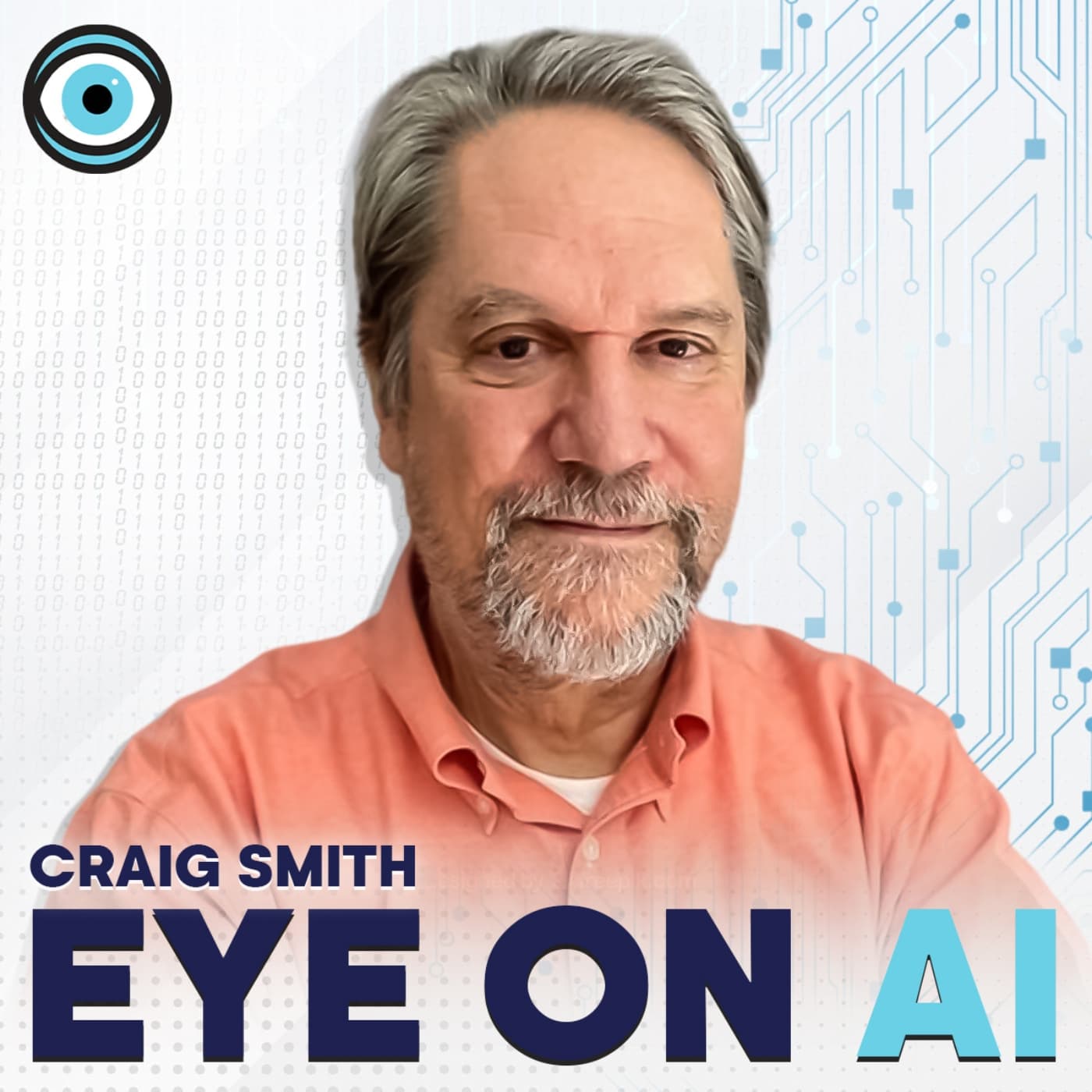
Eye On A.I. Podcast Episode #317 Summary
Episode Title
Steven Brown: Why Modern Medicine Needs AI-Assisted Decision Making
Host and Guest
- Host: Craig S. Smith
- Guest: Steven Brown, founder of CureWise, who shares personal experiences and insights on how AI can transform healthcare.
Episode Overview In this episode, Craig Smith engages in a deep conversation with Steve Brown about the transformative impact of agentic AI on healthcare, particularly from the patient's perspective. The episode discusses the challenges of modern medicine, specifically in diagnosing complex conditions, and how AI can aid decision-making without replacing healthcare providers.
Key Points Discussed
Personal Journey
- Steve's Background:
- Experienced a rare blood cancer diagnosis that was initially missed through conventional medical pathways.
- Utilized skills in AI developed during his tech career to analyze his medical records and improve his healthcare experience.
- CureWise Development:
- Founded out of necessity to enhance patient empowerment and decision-making through technology.
- The platform emphasizes patient education, data organization, and collaboration with clinicians.
Challenges in Modern Healthcare
- Fragmented Medical Data:
- Difficulty in accessing and integrating diverse medical records leads to missed diagnoses.
- Time-constrained medical environments hinder in-depth examinations of complex cases.
- Complex Case Management:
- Traditional healthcare often struggles with edge cases, leading to misdiagnoses or late-stage identification of conditions.
AI's Role in Healthcare
- Multi-Agent AI Systems:
- Use of various AI agents to analyze medical records and offer diverse perspectives on treatment options.
- Agents emulate specialists (e.g., oncologists, hematologists) to debate and refine medical recommendations.
- Patient Empowerment:
- The significance of patient education in obtaining better healthcare outcomes.
- Encouragement for patients to advocate for themselves and ask informed questions during medical consultations.
- Precision Medicine:
- Emphasizes individualized treatment based on genetic and personal health data.
- AI can help identify relevant clinical trials and alternative treatments based on genetic mutations.
AI Tools Discussed
- Reliability Through Consensus:
- Leveraging multiple AI agents to cross-validate medical information and reduce the likelihood of errors.
- Contextual Data Organization:
- Organizing medical data effectively to provide relevant and up-to-date information for AI models.
- Decision-Making Support:
- AI aids in facilitating shared decision-making between patients and doctors, enhancing collaboration and treatment selection.
Future of CureWise
- Launch Plans:
- Currently in private beta with plans to expand access in early 2024.
- A focus on education for patients to maximize their engagement in healthcare decisions.
- Business Model:
- Subscription-based model designed to be affordable and accessible.
- Support for family members and friends to contribute to a patient's care management.
Conclusion The episode underscores the critical need for integrating AI into healthcare systems to enhance patient experiences and outcomes. By promoting patient education and leveraging AI for decision-making, CureWise aims to redefine the future of healthcare.
Stay Updated
- Follow Craig Smith on [X](https://x.com/craigss)
- Follow Eye on A.I. on [X](https://x.com/EyeOn_AI)
Episode Timestamps
- 00:00 - Using Multi-Agent AI to Analyze Medical Records
- 04:35 - Steve Brown's Tech Background and Return to Healthcare
- 08:25 - How a Rare Cancer Diagnosis Was Initially Missed
- 13:55 - Why Modern Medicine Struggles With Complex Cases
- 18:29 - Multi-Agent Consensus and AI Reliability in Healthcare
- 24:12 - Large Context Windows, RAG, and Medical Data Organization
- 28:24 - Why CureWise Focuses on Patient Education, Not Diagnosis
- 33:10 - Precision Medicine, Genetics, and Personalized Treatment
- 47:45 - Why CureWise Launches Direct-to-Patient First
- 53:19 - The Future of AI-Driven Precision Medicine
Written by AI. May contain mistakes. Listen to the episode to check what was said.
Chapters
Tap a time to open that second in VOSteven's Journey Back to Healthcare
0:46 to 2:50
Steven shares his personal health challenges that led him back to healthcare.
“but after the pandemic, I got back into tech and especially with AI because it was so such an exciting time to be in tech.”
Innovations in AI and Healthcare
2:51 to 8:13
Discussion of Steven's AI projects and past experiences in health tech.
“And that's where I ended up having a severe abdominal pain and all kinds of things that's led me to the emergency room, thinking that I was obstructed from steak dinner.”
Navigating Medical Records with AI
8:14 to 13:45
How Steven used AI to analyze his medical records and advocate for his health.
“What was that company that you were doing the health care work with?”
Developing AI Agents for Medical Analysis
13:46 to 14:00
An exploration of the creation of AI agents to simulate medical specialists.
Developing AI Agents for Medical Decision Making
14:00 to 16:40
Learn how AI agents are developed for assisting in medical decision-making.
“your medical records from before the diagnosis you said you trained one on to act as each of the specialist, I imagine.”
Contextualizing Medical Records for AI
16:40 to 19:20
Understand the importance of organizing medical records for AI interaction.
“Well, let me intentionally try to get a diversity of answers, you know, like I would with a board of directors or a tumor board or a medical advisory board.”
The Concept of Agency in AI
19:20 to 22:20
Explore the concept of agency in AI and how it influences decision-making.
“That's new data that came out of a database that is data that's specific to you.”
Managing Complex Health Conditions with AI
22:20 to 24:10
Discover how AI can assist in managing complex health conditions and treatment options.
“We're somewhere in the middle right now.”
Organizing Medical Data for Effective Use
24:10 to 27:20
Learn about the methods of organizing medical data for better accessibility and use.
“And the medical data that you organize, when you say organize, are you curating that data?”
Interoperability and Standards in Medical Data
27:20 to 28:00
Examine the challenges and advancements in interoperability of medical data.
“It's not putting it in MyChart credentials, but after the Cures Act, you're legally entitled to get your medical record.”
Show all 23 chapters
Organizing Medical Data for AI Use
28:00 to 29:10
Learn how AI can organize and analyze electronic medical records.
“And there's pretty good electronic medical records.”
Foundation Models and Their Application
29:10 to 30:20
Explore the different foundation models for AI in healthcare.
“with closely because it's still in development.”
Customizing AI Agents for Medical Needs
30:20 to 31:30
Understand how AI agents can be tailored based on medical conditions and specialties.
“you know, there's an easy way to just get going.”
Preparing for Doctor Appointments with AI
31:30 to 33:55
Learn how AI can help patients rehearse questions and prepare for doctor visits.
“So when I go in, if I only have a few minutes, you know, just make sure that I'm I'm I'm focused.”
Diversity of Opinions in Medical Decision Making
33:55 to 36:55
Discover the importance of diverse perspectives in medical diagnoses and treatments.
“the heart, you know, but it's a, you know, it's a point of view.”
Navigating Treatment Options and Clinical Trials
36:55 to 39:35
Find out how patients can explore different treatment options and clinical trials.
“There's all kinds of new things coming out.”
AI's Role in Patient-Doctor Interactions
39:35 to 42:04
Examine how AI can facilitate discussions between patients and doctors.
“Look, that's something that somebody like me who wants to dig deep and, you know, to explore and try to see, did I miss anything?”
AI-Assisted Patient Management for Cancer Care
42:04 to 45:08
Learn about an AI application designed to enhance patient interactions and tracking in cancer care.
“We're, we're going straight to the patients and we're, you know, we're, we're saying, look, you, you, you, you already are going to chat GPT.”
Empowering Patients Through Shared Decision Making
45:08 to 48:56
Discover how involving patients in care decisions can improve outcomes and engagement.
“So when you're going into chat, it's like, OK, I want to talk to the chairman of the board and I want to I want to talk about this.”
Navigating the Complexities of Cancer Treatment
48:56 to 56:01
Explore how the right information and proactive communication can enhance treatment efficacy.
“And there are people who've signed up on some people that we're starting to let in.”
The Journey of Precision Medicine
56:01 to 57:27
Learn about the evolution of cancer treatment through precision medicine.
“for autoimmune diseases, neurodegenerative diseases, other diseases.”
Building Trust in Health Technology
57:28 to 59:16
Explore the importance of trust and security in AI-assisted health solutions.
“into oncology because our goal is to accelerate the cure.”
The Business Model for Accessible Care
59:17 to 1:00:19
Understand the business strategies behind making AI healthcare accessible.
“I kind of, you know, I resisted at first and I said, oh, I'm just going to tell everyone what's going on with me.”
Transcript
Automatic transcript. May contain errors.0:00What I'd been doing in AI was a concept of using a mixture of agents and models to try to create different pathways and pathways and pathways. the knowledge that's compressed into these large language models. But when all of this happened to me, I repurposed what I was doing, took some of the softs I'd been working on related to working with multiple agents and multiple points of view and multiple models. And I started having them all look at my medical record because I had been feeling like there was something going on and feeling like I was ill for some time.
0:37I'm Steve Brown. I've been an entrepreneur and much of that time in medical technology, working on things like chronic care management and patient monitoring and kind of left health care for a while to become a documentary filmmaker. but after the pandemic, I got back into tech and especially with AI because it was so such an exciting time to be in tech. I didn't think I was going to go back into healthcare, but then I actually had a health issue myself personally. About a year ago, I was diagnosed with a rare blood cancer and that dragged me back into healthcare. So I started taking what I was doing in AI and applying it to my own medical record, to my own situation.
1:29And what I'd been doing in AI was a concept of using a mixture of agents and models to try to create different pathways and through the knowledge that's compressed into these large language models. And I was doing a lot of that in the kind of educational field, a lot of things with Peter Diamandis and Abundance 360 and for that community. And I thought I was going to be not doing healthcare, but when all of this happened to me, I repurposed what I was doing, took some of the software I had been working on or the concepts I'd been working on related to working with multiple agents and multiple points of view and multiple models.
2:13And I started having them all look at my medical record because I had been feeling like there was something going on and feeling like I was ill for some time. And but I wasn't really being diagnosed with anything. My doctors were thought it was a fishing expedition. But then things got a little worse after our this is kind of a crazy story. I know, but it's like our house burned down in the big fires in L.A. That displaced me from the health care system where I was and the doctors where I was. And I ended up in near Palm Springs staying with friends. And that's where I ended up having a severe abdominal pain and all kinds of things that's led me to the emergency room, thinking that I was obstructed from steak dinner.
3:07So I went into the emergency room and I said, I need a CT scan to rule out obstruction. After I got the CT scan, they found a bunch of things on there, lymph nodes and things that I guess they hadn't noticed when I had my CT scan just two weeks before. And including, you know, I had a colonoscopy, an endoscopy, a whole bunch of tests just in the weeks prior, but hadn't really been diagnosed with anything serious. So it was kind of a surprise that to get a really serious life-threatening diagnosis where the prognosis, if you catch it too late, is not very good. But luckily, because of the fire, I actually caught it just in time.
3:55I say just in time, it's not too much damage had been done. And I got on kind of the standard of care therapy for it. It's a it's it's I basically have a version of multiple myeloma, which is a cancer in your plasma cells and your bone marrow. But the version I have, they create a misfolded toxic protein that can accumulate on your heart and your kidneys and in your gut and cause all those organs to fail if you if you don't catch it soon enough. So I knew it was very urgent and I needed to get this under control very fast because I needed to prevent getting my heart damage and kidney damage. Yeah.
4:36Let me ask just to establish your bona fides for listeners. I mean, give a little bit of your tech background. You were working with Peter Diamandis when this happened. Is that right? Yes. I was his chief AI officer. And, you know, what did that mean? That means he's got a really interesting organization that has an annual conference and some other things. And I was building apps for the membership of Abundance 360 for the conference. I built a kind of full conference application. And then I was building in a lot of AI features into all of these applications. And then I was doing workshops and I was doing a bunch of things.
5:18Like I spoke on stage the year before. I'd give a 35-minute main stage presentation talking about what I was doing in education, which was I had brought back to life, or back to AI life, all these great thinkers from history, you know, Socrates and Plato and Aristotle and, you know, 100 great thinkers from history. And I created them in a way where they could talk to each other. So when I could have them debate things and talk about topics and all kinds of things. I even made this thing where you could ask Socrates to write an app for you and then he would take over your computer, write an app, and they'd just show it on screen.
6:01So I was kind of demonstrating all of this sort of mixture of things, doing a lot with AI, which is just a fantastic playground, learning a lot. But I was very hands-on. I was actually, you know, I'd been a CEO of tech startups a couple times before, and I had always had a chief technology officer and an engineering team, and I was dealing more with the business side. But my background was studying physics and computer science at Stanford. And, you know, I started off my career as, you know, writing code. But with the pandemic, I went back to, you know, hands-on writing code. Kind of inspired a little bit, I heard And Sergey Brin from Google talking about going back to the office and actually writing code and how this is such an amazing time to be working hands on in technology.
6:47And I'm like, I'm going to do that too. I started writing code and the leverage today with AI, I mean, I could do things in a weekend that used to take like 10 people a year to do. So what does that do? If you have like ideas, it means you take on more ambitious projects. So I was taking on more and more ambitious projects and doing a lot of different things. I just wasn't doing health care because it's like I'm done with health care. Health care is too slow, you know, too painful. Life's too short to do another health care deal. But then, you know, so I had a lot of technology that I'd been working on.
7:26And I mentioned that I became a filmmaker for a while, but I was maybe a little bit sort of tired of, you know, the solution to every problem as, you know, some version of a software. where I kind of went a little bit different direction for a while, but my startups were all tech startups building pretty serious technology platforms in healthcare. We were the pioneers of remote patient monitoring and chronic care, the technology side of that. And we were the ones that got the national contract with the VA, the Department of Veterans Affairs, which was the largest health system. And then based on that data, we got our model and our ideas into an act of Congress.
8:09And that led to getting into Medicare. And we were very early in kind of paving the way with new technologies in health care. But everything just took forever. Yeah. What was that company that you were doing the health care work with? Yeah, it was called Health Hero Network. And it was really, I mean, we were focused on the patient in developing applications where the patients could be monitored from home in a way that kept them out of the hospital because you would identify problems early. But really, kind of the heroes in the picture were the nurses and case managers who are kind of the front line of chronic care.
8:52And we had a system where, on one hand, we're monitoring for patients. and a lot of kind of education and feedback and behavioral stuff for patients. Like, you know, every day asking people how they're feeling and collecting information about symptoms. And on the other side is a management system related to chronic disease and identifying problems early. Yeah. And then so when you went when you became ill, you went back to that software. And instead of pointing it at the patient for the doctors, you pointed it at the patient yourself in this case for your own management of care. Is that right?
9:38Well, I didn't go back to that software because that software was old news by the time I got sick. But I had I had been since then, since the pandemic and over the last three years, I had been developing all kinds of new applications, AI applications, applications that were using the APIs of the foundation models and doing pretty extensive ideas in a lot of different fields in education and entertainment and, you know, things related to movies. and I was doing a lot of different things with AI. I just wasn't doing healthcare. But the, so I had a lot of experience. I'd accumulated a lot of experience of developing agentic AI applications at the point that I got sick.
10:34So I, you know, when I'm in the hospital, I'm, when I started feeling, you know, like, you know, I'm on pain medicines, I'm on Oxy, but I'm like writing code. So I started writing code to take and organize my medical record and create kind of a context and kind of perspective of different medical perspectives. So, you know, I had I had a oncologist and a hematologist and a gastroenterologist and a cardiologist and an emergency room doctor. I had all these doctors. So what I did is I made agents kind of modeled on all of my doctors and I had them all like analyze my medical record and then debate each other about my medical record.
11:20And the interesting thing is, like everyone had a different opinion about what it might be. But they all agreed that in order to settle this argument, you should go get this test and that test. And that turned out to be exactly what I needed. Now, I was doing this after I was already diagnosed. I basically went back in time with my medical record and asked the question, why didn't they catch this sooner? So I was looking at my prior data and saying like my doctors at the time were saying it's just stress. It's just gas. You know, it's like it's something that's it's no big deal. So, you know, I was I was, you know, might have been a fishing expedition, but we were fishing in the wrong pond.
12:02But I went back and I said, well, why didn't they catch this earlier? So I took all of my old labs and imaging and everything that I had, and that's what I had the agents looking at. And everybody agreed, everybody meaning all of these agents, they all agreed that I needed certain tests. I needed a free light chains test, and maybe I would need a bone marrow biopsy. So that was very enlightening to me because if I had known about that test, I would have asked my doctors, I would say, hey, what about this test? and they would have given me that test if I would have asked for it because it would have made sense.
12:38They just didn't think of it at the time, but they would have given me that test. I probably would have been diagnosed, you know, maybe even a year earlier if I had known what to ask. So, you know, like in health care, you know, you if you just walk in and you don't advocate for yourself or you don't ask any questions, you just say, do what you're going to do. You're going to get kind of whatever's in the checklist most of the time. I mean, you know, like the doctors, my doctors are great and they care, but, you know, they're also like stressed and they've got a lot of patients and they don't have a lot of time.
13:10So the default for most people is you're going to get whatever's in the checklist of what you're supposed to do, given what we know. And, you know, there's not going to be a huge amount of digging deeper until things get, you know, much worse. But if you, you know, like, you know, your doctor has like a lot of patients and there's maybe 10 minutes or five minutes to deal with you, but you only have you. So if you have something going on and you want to make sure that you're getting the right care, you need to become a bit of an expert in what's going on so you can ask the right questions. So I saw that for myself and I realized, look, I need to become an expert in my disease if I'm going to get the best possible care yeah and the agents this initial pilot or whatever that you developed that was looking at your medical records from before the diagnosis you said you trained one on to act as each of the specialist, I imagine.
14:15How do you do that?
14:19Are you fine-tuning a base LLM? Is it an open-source LLM and you're fine-tuning it on hematology or on oncology? How do you develop these agents, just not in the product that you have now, but when you were working this out, what were those Asian agents based on? So if you hear, you know, you have an audience of people who know a little bit about AI, I assume, but that you hear these, you know, this new model came out and it has a million token context window. What the heck does that mean? That means every time you interact with the model there's a potentially like you know like 750 000 words you know like like hundreds of pages of documents that can go in with that prompt you might be prompting something let's says hey what's going on you know hey what's going on four words but if in the background of that prompt is you know 100 pages of your medical record you know it's setting a context so you're not actually training the model on your medical record.
15:34What you're doing is you're organizing the context for your question. And that is part of what is prompting the model. Now, there is such a thing as fine-tuning the model, adding your layer of intelligence on top of the model. We're not doing that yet. But the first test was what kind of training already is there in the foundational models. And can we get to it in a way, can we get to the medical knowledge in a way that we can trust? Because one of your challenges, you go to ChatGPT and you can cut and paste stuff from your medical record and put it in ChatGPT and say, what's going on? There's nothing that stops you from doing that, except when you've got cancer, you might have a really long, complicated medical record.
16:19So it's really not feasible to do that. And their terms of service say, don't do it. because there's a lot to organize and there's a lot of kind of quality assurance that's needed. So my methodology of getting to a more kind of reliable result was to rather than saying, hey, every time I ask a question, I get a little bit different answer rather than a deterministic response. Well, let me intentionally try to get a diversity of answers, you know, like I would with a board of directors or a tumor board or a medical advisory board. Let me get a bunch of different opinions and have them kind of cross-validate each other.
17:00Let's have them sort it out. And it turns out that when you do this with a mixture of agents, with a mixture of point of views, and you get a diversity of ideas, when you find convergence around ideas, that's pretty important. Now, it's one thing. It's like, you know, like if you've got like a, you know, whatever chance of getting some sort of hallucination. I mean, this is a problem that the foundation model companies have been working on like crazy over the last couple of years. And so it's gotten really, really good. But let's say there was, you know, like, you know, some finite chance that, you know, something is a hallucination.
17:39Well, the chance of getting two agents or three agents or four agents or five agents to have the same hallucination is almost zero. So, you know, this is a methodology of getting to a more reliable result. And I think some of the models are doing some of this kind of mixture of agents in the background. I mean, they're doing that. You don't even know they're doing that. But we're doing it kind of intentionally and kind of transparently because in the real world, you have a bunch of doctors. In the real world, they have a difference of opinion. Like, who are you going to listen to? I kind of want to listen to them all, get all the ideas, learn what you can about what all of this means for you.
18:21And, you know, like if you have cancer, there's a whole bunch of things where they're saying like, hey, we could do this or we could do that. Steve, you decide. Right. You know, like how do you make a decision like that? You need to get educated. So what we're building now, it's really in this category of like, let's help educate you. The doctors are diagnosing and treating you, but it really helps to get educated. Yeah. Now, I have a couple of questions. So you're architecting this mixture of agents. The agents, you're feeding them context in the context window, not using RAG or necessarily fine tuning.
19:04there's there reg means you know what am i taking something out of a database somewhere you know whether it's a vector database you know or you know there's sort of a semantic search with all these ai tools or it's just like pulling data out of a database rag means retrieval augmented generation what and what how am i going to augment what goes in there so when i take your medical record and i kind of format the most recent relevant things you know i don't need data if you don't need your metabolic panel from 10 years ago i need your most recent stuff but i need your you know like when you kind of take that um out of this sort of messy large medical record and and compress it down into a really organized way that is a form of rag that is going in okay so that plus a pretty extensive uh you know rag puts things in the context window that's right right right but with search i mean you're not taking all of your your curated medical documents and dropping them physically into the prompt you're you're having a rag search for the relevant i mean no well it's a i mean so so rag you know there's there's a lot of different versions of rag i mean if you just when you know whenever the whenever you go to um you know chat chiptina says hey searching the web you know that's that's rag it's searching for some stuff it's going to add that into the context it's not in stuff that's not in the foundation model um anything from your medical record, obviously that's not known to the model.
20:33That's new data that came out of a database that is data that's specific to you. That's a form of RAG. We retrieved it from your medical record. We actually did a lot of organizing it to make it processable by the AI because you can just dump it in. You need to organize it. You can call that RAG, but everything that we're doing, whether it's coming out of your medical record or the guardrails around how the agents are supposed to behave or the perspective of the agents themselves, that's all organized into the context. Yeah, I understand. And then agents, in what way are these agents? simply because they can look things up or, yeah, I mean, as opposed to just an LLM that you're having another LLM talk to.
21:37Right. So, I mean, agent is a term. Here's how to think about agents. Agents, that comes from agency. It depends on how much are you trusting them to do things where it wasn't exactly what you told them to do. The minute I take two of these agents and have them talk to each other, you know, that that's, you know, like they're prompting each other, you know, that's an agent. Now, you know, it's a lot of agents means it means there's some set of actions that they have some level of autonomy that they can go have agency make decisions and do things. But certainly when when they're talking to each other, that's an agent.
22:13Now, you know, but there's a spectrum from, you know, just a, you know, chat bot to, you know, something that's going and autonomous and going and doing a bunch of things. We're somewhere in the middle right now. And the agency part is talking to each other, cross-validating each other. And that's where agent comes from. But as over time, this evolves and there are more tasks that we allow the AI to do to help you do, you know, it becomes more and more agentic. So agentic is a spectrum of agents. And some of those some of those features, I mean, you're like, you know, there's one aspect of like, I need to get educated.
22:55What does this mean? I had this genomic test. What does this mean for me? Like, what is, what, what do these terms even mean? It looks like Greek. You know, a lot of it is Greek, Greek symbols in these three words. Like, like, how do you even know what that means? Like, there's a lot of it is just, you know, like it, that's chat. But there are a lot of other management tools. You know, if you get a serious disease like cancer, and this is true of, you know, pretty much anything serious, it's not just, you know, you have a lot to manage over time. And, you know, there's a lot of lifestyle factors and, you know, like, you know, if you're putting off diet and exercise and sleep and stress and all these other things, well, you know, if you're in chemotherapy, you got to worry about those things.
23:33I mean, they interact with your treatment. So, you know, and if clinical trials, it's not just, Hey, is there a clinical trial that I match for, but, you know, can I, can I monitor those clinical trials and can I get notified whenever there's something new that I, that I match for And there's AI that's determining the match and whether or not you qualify or might qualify. And so there's a lot of management and work to be done. So there's a lot more pieces of that where the kind of the grunt work of it can be offloaded to AI. So those are all part of the features and roadmap of what we're doing.
24:07But the on-ramp is I've got questions and I need to figure out what's going on. Right. And the medical data that you organize, when you say organize, are you curating that data? And are you, you know, putting it into like a graph, knowledge graph or into a vector database? What do you mean by organizing? And is that something that a layperson will have to do once your product is in general availability? Think of it this way. When you go to a doctor and if a doctor refers you to another doctor, they do a write-up or work-up on you and say, hey, this is Steve. Here's what's going on with Steve. And then here's a few pages of stuff about Steve.
25:05you know and it's you know they're not going to put in you know the fact that I had a flu shot 20 years ago they're not going to put in stuff that's not relevant to the the issue at hand they're going to try to be complete you know we're basically reproducing that well if you just pull the electronic medical record I mean there's there's a bunch of stuff in there that doesn't have anything to do with cancer there might be things that do have something to do with cancer but, you know, we only care about the more recent values, not the 10-year-old values. So, you know, there's a, there's a, and then we have a chief medical officer and we've got a lot of medical input on this.
25:44It's like, the real question is, what is the, what is, what is the kind of out of your medical record, what is the kind of essential information for asking, you know, and what's going on. I mean, it's not everything. It's a lot. And we don't want to miss anything that's relevant. But if you look at the, you go to my chart and you go like, you know, look at it. There's a lot of data and it's scattered in different places. There's a lab section and there's the visits and then there's a click on something through the note from the visit. And, you know, there's a lot of stuff and it's kind of all over the place.
26:31and how do you know? We need to categorize all that stuff. We need to put all the labs together. We need to just care about the recent stuff that's relevant. There's another category of genomics and molecular profiling in cancer. That's a special category. So it's more like categorizing and organizing your personal health record so that it makes a little more sense. It's not just a data dump. When you have a medical record, you pull your medical record, you get this like massive JSON file. It's kind of a data dump. That's not particularly useful. We need to organize it. Yeah. And are you automating that organization so that you can put in the URL and
27:18credentials for your MyChart and it goes and pulls everything? It's not putting it in MyChart credentials, but after the Cures Act, you're legally entitled to get your medical record. It's your record. And these things are, there are health information exchanges and these things exist. And a lot of this work, I remember what you mean years ago when I was doing healthcare information technology and remote patient monitoring and chronic care, all the conferences, all everyone ever talked about was interoperability and standards and all this stuff. A lot of that stuff has kind of been, you know, I think a lot of people in the industry will say, oh, it's still a mess.
27:59But a lot of that stuff has been worked out. And there's pretty good electronic medical records. The data is there. You still need to organize it. And the fact is, if you don't have it and all you get is a, you know, PDF that was a fax from a lab to whatever, but then we can OCR that and analyze those documents as well. Yeah. And then how many agents do you have? Does that expand and contract depending on the complexity of the case? And what foundation models are you using? Is it like you've got one based on Claude, one based on chat gpt one based on grok one base you know like that or or uh do you yeah i mean how does how does that work the model is independent from the actual context management so you can the models are interchangeable uh in that sense and and when i was doing this for myself and you know the first version of this which is in a private beta with just people that were are able to work with closely because it's still in development.
29:18All the models are in there. I mean, all the foundation models are in there. Too many models are in there. But as we go now to market with it, we're narrowing that field to the major foundation models that we can do in a HIPAA compliant way. So, you know, that's Anthropic and OpenAI and Gemini are the main ones. But all the other ones work, whether or not they add, it's kind of like if you go to perplexity, for example, it's like you can go to ChatGPT and you're just dealing with open AI. If you go to perplexity, it's kind of the same thing, but you can decide, hey, do I want to use open AI, Anthropic?
29:57You have a choice of models. So right now, there is a choice of models, but we're not expecting the average person to have any idea, well, which one should I choose? So we're doing some work there to kind of, to sort that out, to make it easier, to kind of have a default mode where you can, you know, there's an easy way to just get going. And we, you know, we made like 36 agents, but, you know, we based on your, kind of the summary of your condition, we recommend, you know, here's five that would be good for you to use. Like, you know, like, you know, if you've got something going on with your liver, you know, then you should add a hepatologist in there.
Read the full transcript
30:44If it's, you know, some cancer where it's like surgery or radiation or whatever, you know, add a radiologist or add a, like a radiation person, add a surgeon. So, so what we do is we kind of say, hey, here, here, you can talk to anyone. And we have some that are just modeled after, you know, like different branches of medicine. And we have some that are sort of more sort of scientific, like, you know, like immunology or, you know, immunotherapy and genetics, things like that. So so, you know, there's a we come up with, you know, like a kind of recommended list of here are some that you can talk to.
31:24Part of it is kind of point of view. We want a diversity of points of view. and we want things that are more kind of relevant to you because a lot of the way people use this a lot it's like hey I have a I have an appointment with my doctor coming up I have an appointment with my cardiologist coming up let me go talk to the cardiologist agent for a while to kind of get to practice I'm only gonna get 10 minutes with this guy if I'm lucky you know like can I make sure every minute counts can I kind of rehearse that's just how I use it today before I have a I go in and I kind of like rehearse it and make sure that I've kind of asked all my naive questions and kind of got educated.
32:03So when I go in, if I only have a few minutes, you know, just make sure that I'm I'm I'm focused. Yeah. And I asked this before and I'm sorry to ask it again, but I don't. So you've got let's say you're using Claude and Gemini. uh let's for simplicity sake two agents one based on cloud one based on gemini i understand that you've cured the the system has curated my medical uh documents and has access to them organized organized okay what what differentiates a hematologist agent from a cardiologist agent So you said you are looking at fine-tuning. Is that right? But what is it? So, yes, we are looking at fine-tuning, but for a different purpose.
33:04Not to fine-tune on, like, you know, fine-tuning the point of view of a cardiologist versus a hematologist. Now, in the end, if you talk to the cardiologist, if you talk to the hematologist, and you have your medical record organized in there, you're gonna you're gonna hone in on the same result but the fact is the the point of view matters um and there's a reason you have a cardiologist because there are things that you know if you have a cardiologist I mean like in in my condition it affects your heart um so I have a cardiologist and it's like hey you know there's a bunch of stuff I want to measure didn't know whether or not did I have any heart damage is my heart getting better so you know like like that's I don't go to the cardiologist and talk about, you know, other stuff.
33:48I talk about that stuff. My cardiologist, my new cardiologist knows a lot about what I have because it affects the heart, you know, but it's a, you know, it's a point of view. Now, does it really, you know, how much does that matter? Where it matters is when there's, when you're not sure what's, when nobody is quite sure what's going on or what the right thing to do is, to have a diversity of opinion, you're surfacing more ideas. So in my case, you know, like my doc, my initial doctors were misdiagnosing it. They had different ideas and none of them were right. Well, then, you know, then I got to, you know, diagnose, okay, well, that's, you know, that's one and done it, but it's, you know, I got my diagnosis, but then the, the, the question is, well, what, what do we do next?
34:36And, you know, my, my main doctor was like, okay, well, this is what we do. This is what the standard of care is. We're going to put you on this. Well, there turns out there's a bunch of different genetic mutations in the cancer, which do point to the fact that the standard of care is going to be less successful with me. And there are some other options. Well, how did I find out about that? I found out about that by, you know, talking to the agents. It's like, Hey, you know what, there's, you know, And then I wanted to monitor it really closely. It's like, okay, let's start with the standard of care.
35:09Let's see what happens. But I could see after the first month, I had a good response. And then it flattened out the second month. It was like plateau. And I'm getting this data and I'm going back to the agents and I'm saying like, you know, what's going on here? Should I be worried about this? So, you know, what are the alternative? What are the kinds of things? What else should I talk to my doctor about? And so I get to a point. It's like, hey, there are other treatments that actually are, you know, that's a lot of interesting things going on for this genetic mutation. You should ask your doctor about this other stuff.
35:45So I did ask my doctor about that. And my doctor, who is not at a center of excellence, he's an oncologist that has, you know, lots of different kinds of cancers. You know, he was not going to stray from the standard of care because, you know, it's not his expertise in that. But I ended up getting referred to a much more specialized hematologist at an academic center of excellence. And I went to, I didn't just go to one, I went to a couple of other ones too for a second and a third, a fourth opinion. And, you know, from that standpoint, from the center of excellence, you know, the kind of the academic medical center, I have that conversation.
36:27It's like, yes, we can't, that, you know, if I were you, the doctor is saying, if I were you, that's what I would do too. But it's not approved for your disease. It's approved for something else. So it's off label. So, you know, to get this through, we're going to have to write an appeal letter to the insurance company, you know, which they did and which they got because it was the right thing to do, which actually highlights another challenge with precision medicine. There's all kinds of new things coming out. If you watch cable news, you're going to see, you know, hey, do you have this gene and this mutation and this?
37:05Ask your doctor about Keytruda. And like, it's based on genomics, the genomics of the cancer and all these new precision medicines that if you happen to have that specific mutation, This thing is really, really good. But sometimes this stuff is not, it hasn't even had a full clinical trial because there's, you know, it's a, if you have a rare disease, it's too small of a group. It's not worth it for anyone to do the trial. So, so there's a lot of off-label use in precision medicine and a lot of things that are stuck in phase two and never even got a phase three clinical trial. So, but it's like there's, you, you, you need to ask for this stuff because this is new medicine that's going to be that might be exactly the right thing for you yeah now i'm and i'm sorry i'm going to go back to this because i i don't is it is is so you have clod and you have gemini do you simply prompt one of them let's say gemini say you are a hematologist and and assume that it will adopt that point of view i mean how in the other one you say you are a cardiologist and assume that it will adopt that point of view?
38:21Or is there data that you have to give the model to have it adopt that point of view? We, you know, the kind of guardrail on that is we have like, it's probably about a whole page of, you know, a couple pages of content that are kind of defining what a top, what is a top hematologist like? Yeah. Okay. How do they think? what do they do what's their kind of and all of that is doing is and you know same thing for a cardiologist what that's doing is it's creating a different pathway through the knowledge um and it's right it's it's surfacing different um ideas and you could use the same agent you know because that's all built into the whole agent uh uh perspective you know this all of this kind of content of kind of defining what a great hematologist is like.
39:16And that's independent of the model. So you can use the same agent. You can say, Hey, I want to see what happens if I use this agent. And, uh, and I, I, I let all the models talk to each other. Yeah. Name agent, different models, or, you know, same model, different agents. Um, so you can mix and match the, the, the agents and models. Yeah. Look, that's something that somebody like me who wants to dig deep and, you know, to explore and try to see, did I miss anything? You know, I want all those options and I want to go deep and I want to try to figure out. And then I end up kind of settling on, you know, my favorite one.
39:55And I was like, OK, that's the one I like to use. Now, if you don't want to think about any of that, you know, we kind of do a lot of that for you and kind of set up the defaults so you don't have to think about that. Yeah. Now, that's fascinating, and that answers my question. So this is designed for the patient to manage their care, to understand what the standard of care is, to have these multiple agents debate the standard of care, given your medical data, and surface, as you said, tests or hypotheses that may not have been explored by your doctor that then you can take to your doctor. Is that right?
40:44Is there going to be a version of this that sits with the doctor where they can, you know, listen to the patient, look at the medical records, and then have the system debate for them to see if there's anything they're missing? So that's a really important idea right now. People who are using it, most of the people are using it, are using it with their doctor. So, you know, I think that there's a lot of there's a lot of interest in the medical world of like, how can AI help us? I think there's also a lot of trepidation about AI, like how is this going to make our lives miserable? So there's a lot to work out on, I'd say, how does this fit in with the doctor?
41:37And in my prior businesses, that's what we focused on. We focused on that. We were really going in from the doctor's point of view. So I'm very familiar with that, and I know how important that is. Um, initially when we're doing this, we're saying, you know, we can't wait until we've kind of convinced everybody in the health system, um, you know, to, uh, about this. We're, we're going straight to the patients and we're, you know, we're, we're saying, look, you, you, you, you already are going to chat GPT. You already have questions. You already are doing, you're going to Google. They're going to chat GPT.
42:17or asking your questions. We can help you do that, what you're already doing. We can help you do that in a much more organized way because we built this whole application that kind of organizes that in a way that is really organized for someone with cancer. So it's going to be, it's a much better way to do it. And it remembers that whole history. And, you know, once your medical record is in there, you don't have to keep like cutting and pasting it. into a model. It kind of keeps track of all that. Plus there's a whole bunch of other tools that we're adding on there. Like, Hey, I actually do want to monitor, you know, my diet and exercise.
42:57Actually, I do want to track my symptoms. Actually, I do want to search clinical trials. Hey, I actually do want to go reach out to clinical trials and going to keep track of, you know, whether or not there's one relevant to me. So, so there's a whole bunch of other management tools beyond that so yes you can go to chat gpt and ask medical questions all day long and you can even upload some documents but if you're you know like like if you have a medical record like mine or like people that are using it that is just very unwieldy sure and it's also just chat gpt and it's like what about claude and what about gemini and what else is out there like how I want to be able to bring that together and do it all in one place.
43:42Yeah, and I can see that going to a single model or even a couple of models, the idea of having these models debate each other, that's behind the scenes, right? And then they come up with a consensus view. I mean, I can see how powerful that would be. Or can you look in and see the debate? Yeah. I mean, so first of all, right now in the beta version, it's a pretty extensive product with a lot of features. And one of them is you can actually ask two different agents to debate each other and you see the whole thing. there's another feature where you can choose a whole panel of agents make it like your tumor board and your medical advisory board and you can have them all respond to the same prompt at the in parallel and then you can ask another agent to go look at all those responses and synthesize it until you kind of like give you kind of a synthesized like the kid to give it like your board medical advisory board and then the you know the the the chairman of the board You know, that's going to kind of like take all those different things and kind of synthesize them.
44:54And when you kind of synthesize them and what that does is it really does a great job of of surfacing more of the possibilities and weeding out the the things that might be less relevant. And then when you take all of that, you can go into chat. So when you're going into chat, it's like, OK, I want to talk to the chairman of the board and I want to I want to talk about this. You have the medical record plus the synthesized view of all these agents, you know, plus the, you know, the agent definition of the chair of the board. So but, you know, if you think of it that this is all like, let me have let me have a whole bunch of people look at this.
45:32Let me surface and kind of synthesize a lot of the ideas and kind of prioritize this and make sure that that's all there in the background. And now when I go into chat, I'm going into chat. It's not a blank slate. It's a very informed chat. Yeah. And so you developed this for your own care. You mentioned that there are some tests that may not have been given or ordered by your doctors that this system suggested. Can you talk a little bit about how this helped you direct your care in a way that it might not have been otherwise? Yeah, I mean, there's this concept in medicine called shared decision making and another one called collaborative care.
46:26It's it's it's you've got a high stakes, serious thing and a lot of decisions to make. the outcomes are better when it's not just doctor just saying, just do this. The outcomes are better when it's a shared decision making, when patients are involved in their care and they're participating in that. And their outcomes are better for all kinds of reasons. Part of it has to do with just the more agency you have as a patient, the more you feel like it's possible, the more engaged you are with that, the more hope and, you know, the more energy you have for it and you don't give up and you, you, it takes, it takes some energy to, to, to get through something like this.
47:10You know, and, and the fact is, you know, a lot of people don't get through it. It's still like, you know, 60 ,000 people are going to, are going to, are going to die this year of cancer in the United States. So it's still a hugely unsolved problem, but there There are better treatments every day and there's a massive amount of research published every day. Your doctors can't keep up with all that. It's just too much. So, you know, you're going to get something that's a guideline for most of the time. Now, it's considered like a pretty good therapy in cancer if it works 30 % of the time. Right.
47:45You know, if the response rate is 30%, you know, it's like, well, that means 70 % of the people are getting no benefit from it. And, you know, what if there was something else that you might have done if you're in that 70 % group? Well, that's where all this precision medicine stuff is coming in. It's like, hey, this thing didn't work for you, but you have this, and I have this for myself. There's a specific mutation in your cancer cell that makes that cancer cell particularly vulnerable to this other treatment. So it's not quite as sensitive to the other stuff that's in the standard of care. so you might not get the response you want from that, but it's super sensitive to this other thing.
48:24So, I mean, it's something you kind of want to know about if something like that exists. You can't give yourself that drug, but you certainly can ask your doctor about it. And, you know, doctors want to do the right thing, but, you know, they're also overwhelmed with, you know, there's a shortage of oncologists and cancer is on the rise. Yeah. And so where are you in the product journey with this? And is it you talk about people that we're using now, is it on the market or? Not yet. It's in a private beta. You can sign up on the waiting list. And there are people who've signed up on some people that we're starting to let in.
49:09They're people that we only when we can kind of closely work with them right now. But early next year, we're going to open that up so that people can just do it for themselves and, you know, have a really great cancer copilot that can help them become more of an expert in their disease. What we're going to market with is patient education. You know, every single thing we do says, you know, you might want to talk to your doctor about this or, you know, this is a patient. You know, whether or not we have all the information about you kind of depends on whether or not you gave us all the information.
49:43So it's an educational tool. And when you become educated or on behalf of a family member, some people are doing this for a parent or a relative. It's like, you know, they're the ones having the conversation with the doctor. But when you go in, you kind of want to have done your homework first and not be dumping a bunch of stuff on the doctor that might not even be relevant to you, but try to figure out what's relevant to you before you go into the doctor and be really smart about it so you can be an active participant in your care with your doctor. Now, the examples we talked about, there was a lot about diagnosis.
50:27But that diagnosis is, you get your diagnosis and you got your diagnosis. The most important thing is things keep changing. You need to keep monitoring how you're doing. You need to understand if something's going, if you're getting a relapse or if something's going sideways, you want to know about the stuff. You want to know what to look for. you want to be educated in all these things because you're going to go back to your doctor. If you have cancer, probably go back to your doctor every month in that first year. And you're going to get a lot more tests. And so in my case, I identified some ideas that I talked to my doctor about.
51:08And, you know, I ended up finding doctors that said, yeah, that's what I would do if I were you. And it's like, OK, well, then please do it. Please prescribe it for me. And I got on to a much better treatment. And, you know, but then the question is, was, well, should I, you know, what, what, what other things should I be doing? So a lot of the cancer therapies and my cancer and cancer therapy was immune compromising. Like my plasma cells that are supposed to make antibodies, we're not making antibodies. They're making something else. They're making something toxic. So I need to stamp all that out, but now I'm immune compromised.
51:43So what can I do about my immune system? How do I keep healthy? You know, I, I, a friend of mine, an old friend of mine, when he heard that I had, um, you know, I've a variant of it's related to multiple myeloma, but it's, you know, I had basically a variant of multiple myeloma. And, and he said, oh, my brother died of multiple myeloma. And then he said, well, he didn't actually die of multiple myeloma. He died of an infection. And I'm like, oh, man, you hear about, you know, immune compromised people get COVID and those are the ones that died of COVID. Or you hear about, you know, people dying from the flu.
52:16Well, those are people like, you know, immune compromised people are on chemotherapy. So my question was, well, what do I do about that? How do I, you know, so I'm trying to understand what are all the possibilities. And, well, it turns out you can get infusions of antibodies from other people. and i didn't know about this but the minute i asked for it it's like oh that's a good idea steve yeah we'll prescribe that yeah then then i'm monitoring very closely on the key marker and it's going down going down but it has a little blip it didn't go down for a couple weeks i'm like what's going on um so i'm talking to the agents about this like you know is there something i don't know is there something about uh this new drug i'm taking you know is it like how would i know if i'm getting resistance i'm getting educated so i can ask my doctor like should i be doing something different like do i need a different dose what do i you know i what's going on here well it turns out you know the pharmacist said just take this drug with food well it turns out it's something that you actually need to take it with fat oh but it's just it's buried there in the you know in the you know the detail that thing you get on the label says take with food somewhere down in page 10 of the fine print it probably says you know take it with high fat but um that You know, I didn't I didn't know that.
53:36I mean, you know, who reads the whole 10 pages of all the things that come with a prescription? I mean, and no one mentioned it to me, but I basically started taking the same medicine. I started taking it with dinner and not doing low fat. You know, I did it with fat. And instantly I see in my next results, it's back on track. So, you know, there's all these factors that influence how you're doing. and you got to get educated. Yeah. And I'm not interested so much for business reasons, you know, how the startup is funded, but is this going to be affordable and is it going to be a subscription or sort of pay-as-you-go?
54:29Because you were talking about had you had this a year earlier, you may have caught it, but maybe you weren't necessarily feeling that you needed it a year earlier. Is this something that people will be able to dip in and out of or have available every time they go see a doctor and they put their tests into the system and just kind of to monitor their health and see if anything's surfacing that they aren't aware of? I'd say over time, we're going to expand. But the initial focus is people who've been diagnosed with cancer or a family member of a person diagnosed with cancer. Right. Those people, first of all, because I get to go to my own experience and I've gotten to know a lot of other people and we have other people in our company.
55:31who've had similar experiences and like we know what the need is there. You get diagnosed, you have a lot of stuff to manage, a lot of stuff to deal with, a lot of decisions that you're being asked to make. And you have a lot of questions. You need something that can help you get educated in what's going on so that you can be a more effective participant in your care. That's the initial go to market. A lot of the same principles and tools would work for autoimmune diseases, neurodegenerative diseases, other diseases. But our point of entry is you got a serious diagnosis. Now you have questions and you've got a lot to manage and you've got a lot of decisions you have to make.
56:17You need to get educated. That's where we're starting. But over time, I think that we're going to keep going and we're going to see what people need and what people want and this will evolve. But we got our starting point is that there is a, I mean, we put in this mission of the company is to accelerate cures for cancer. And that's a bold kind of ambitious, but that's why we're doing this. And we know that the pathway, you know, and we don't know how many years it's going to take, but we know that the pathway is this thing called precision medicine. The fact is every cancer is different because it's your genes mutated in a unique way.
57:04So every cancer is just by definition, everybody has a unique cancer. Some point, everybody is going to have a unique optimized treatment that's uniquely tailored to their cancer. That's the ultimate problem that we're going to solve. Right now, we're doing patient education over time as we have more and more people that we're working with, we will start to train our own models with this and we will go deeper and deeper and deeper into oncology because our goal is to accelerate the cure. Dr. Yeah. Well, that's fascinating and commendable. If someone wants to track the development and when this might be available more generally, where do they look?
57:54Go to curewise.com and it's going to say you can join the waiting list. When you join the waiting list, it asks you a few questions about like, are you a patient? Are you a family member? Are you a clinician? And we ask them, ask about what you're dealing with. from the waiting list. You know, we, right now it's a small team and we're hiring and we're growing, but, but we, we, you know, we, we, there are kind of a few people that we're starting to invite in and we're still going to invite a lot more in. And then when we feel like we've really gotten this, you know, solid, we've done it with enough people and we, we, we've kind of gone through um also all of the kind of security audits and those kind of things and we make sure that it's really we want this to be something that people really trust that um that people know has their back that's done you know the the founder of the company me i founded this because um i i i it's like i did this for myself initially because i'm dealing with this and um you know i wasn't sure whether or not i wanted to tell anyone that i was dealing with this you know it's like a lot of people, you know, it's, it's, you kind of feel like, gosh, you know, my, my career's over, you know, like, I don't know, my life's over.
59:15I don't know what's going to happen to me. I kind of, you know, I resisted at first and I said, oh, I'm just going to tell everyone what's going on with me. And I'm going to see if hopefully we can do something that helps a lot of people. And so far, the people that we have worked with on this, I think, I think everyone has had a, It's impacted them in some significant way. So I know that there's so much possibility here to really help people. And that's what we want to do. So we need to get the word out for people to try it. We're working on the business side of it. There's a reason why it's in the news.
59:55AI all the time is in the news and data centers and all this stuff. I mean, this stuff does cost money. We're going to charge a subscription fee for it. We're going to try to make it as accessible as possible. We're also going to make it easy for family members or friends to chip in. So, you know, we're going to make this as accessible as possible, but we also have to make this something that where the business works so we can grow and serve more people. Yeah.
From the publisher
In this episode of the Eye on AI Podcast, Craig Smith sits down with Steve Brown, founder of CureWise, to explore how agentic AI is reshaping healthcare from the patient's perspective.
Steve shares the deeply personal story behind CureWise, born out of his own experience with a rare cancer diagnosis that was repeatedly missed by traditional medical pathways. The conversation dives into why modern healthcare struggles with complex, edge-case conditions, how fragmented medical data and time-constrained systems fail patients, and where AI can meaningfully help without replacing clinicians.
The discussion goes deep into multi-agent AI systems, reliability through consensus, large context windows, and how AI can surface better questions rather than premature answers. Steve explains why patient education is the real unlock for better outcomes, how precision medicine depends on individualized data and genetics, and why empowering patients leads to stronger collaboration with doctors.
This episode offers a grounded, practical look at AI's role in healthcare, not as a diagnostic shortcut, but as a tool for clarity, context, and better decision-making in some of the most critical moments of car
Stay Updated:
Craig Smith on X: https://x.com/craigss
Eye on A.I. on X: https://x.com/EyeOn_AI
(00:00) Using Multi-Agent AI to Analyze Medical Records
(04:35) Steve Brown's Tech Background and Return to Healthcare
(08:25) How a Rare Cancer Diagnosis Was Initially Missed
(13:55) Why Modern Medicine Struggles With Complex Cases
(18:29) Multi-Agent Consensus and AI Reliability in Healthcare
(24:12) Large Context Windows, RAG, and Medical Data Organization
(28:24) Why CureWise Focuses on Patient Education, Not Diagnosis
(33:10) Precision Medicine, Genetics, and Personalized Treatment
(47:45) Why CureWise Launches Direct-to-Patient First
(53:19) The Future of AI-Driven Precision Medicine


