
In short
F1 Nation Podcast Episode Notes
Episode Overview Title: F1 Explains: Flashing Lights, Fast Fixes + F1 Engine Customers Date: (Date not provided in the transcript) Hosts: Christian Hewgill and Lawrence Barretto Description: The episode focuses on the first race of the 2026 F1 season, answering listener questions regarding new features like flashing lights on cars, engine modes, rapid car repairs, and the dynamics between engine manufacturers and customer teams.
---
Key Topics Discussed
- Flashing Lights on F1 Cars
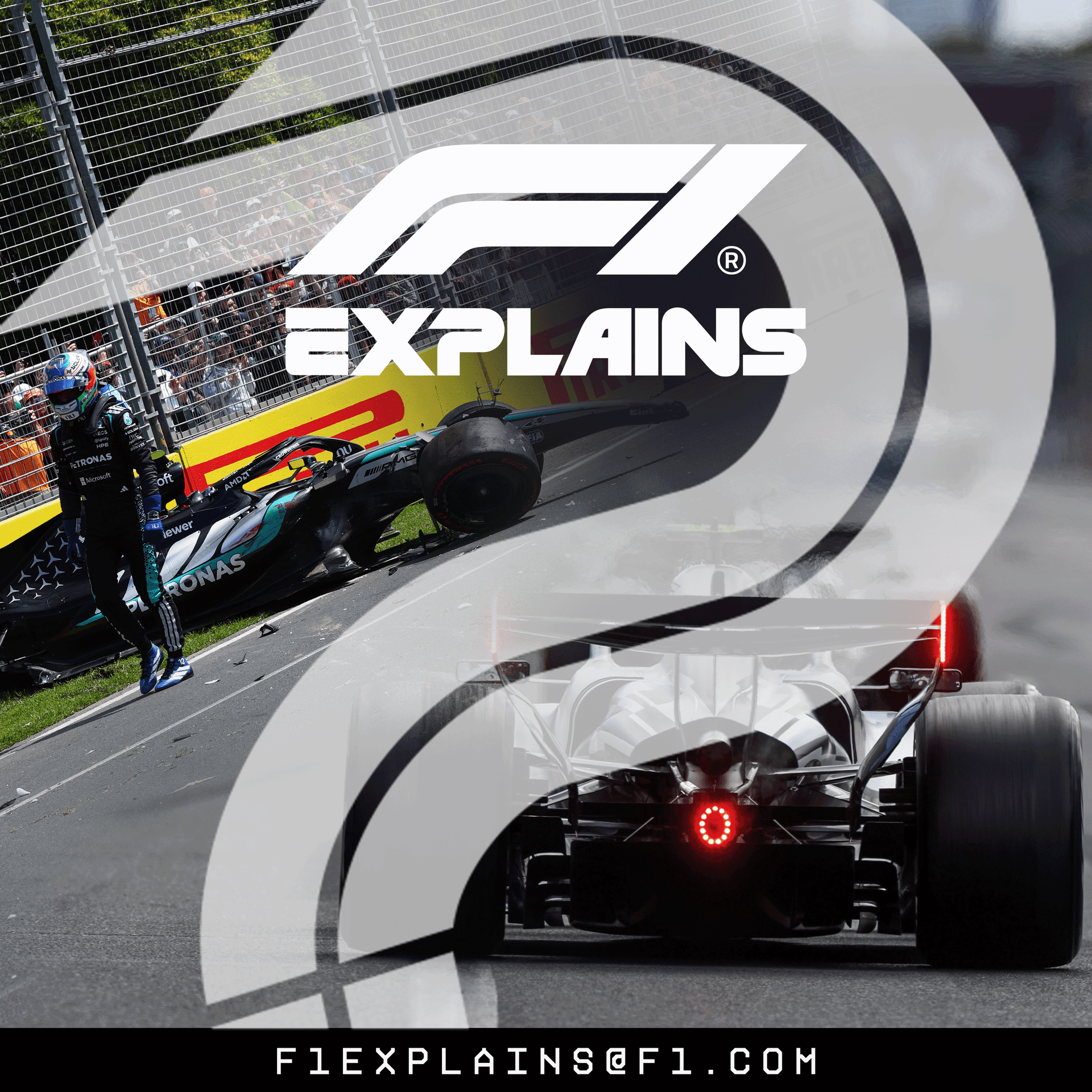
- Question from Adam (Boston, USA): Why do the red flashing lights on the rear of the car flash during battery recharging?
- The new power units have a 50-50 split between petrol and electric. The flashing lights serve to alert drivers behind that the car in front is recharging its battery and may be slower.
- Flashing Sequence:
- Single flash: Power delivery is below maximum (350 kW).
- Two flashes: Power delivery has stopped completely.
- Multiple quick flashes: The car is actively recharging.
- New Engine Modes
- Question from Patricia (Sydney, Australia) and Christopher: What is the difference between the boost button and the overtake button?
- Boost Button: Provides extra electrical power, usable at any point on the lap.
- Overtake Mode: A state activated when a driver is within one second of the car in front, allowing more energy deployment.
- Drivers can utilize these modes strategically, leading to multiple overtakes during a race.
- Customer Teams and Engine Dynamics
- Question from Karen (Greenwood, Indiana): Are customer teams allowed to modify the power units they receive from manufacturers like Mercedes?
- No, customer teams must operate identical power units as those in the works teams. The main limitation is that customer teams often lack the extensive understanding of how to maximize the performance of these units.
- The discussion highlighted that customer teams, like McLaren, may initially struggle until they adapt to utilizing the engines effectively.
- Rapid Car Repairs
- Question from Kenny (Sonora, Mexico): How did Mercedes rebuild Kimi Antonelli's car so quickly after a crash in practice?
- The mechanics are the best in their field and work collaboratively to repair damaged cars. The presence of a qualifying delay allowed additional time for repairs.
- Traditions of Gratitude
- Question from Jonah (East Greenwich, Rhode Island): Do drivers typically thank their teams after a crash?
- There isn’t a formal tradition for thanking mechanics after a rebuild, but drivers like Lewis Hamilton often treat their teams to dinners or outings to express gratitude.
- Understanding F1 Terminology
- Question from Karen: What does "stacks it" mean?
- “Stacks it” refers to crashing or falling over, often used informally.
---
Key Takeaways
- The introduction of flashing lights and new engine modes represents significant changes in the 2026 F1 season.
- Customer teams face challenges in maximizing engine performance compared to works teams, highlighting the importance of experience and understanding in F1.
- Quick car repairs are a testament to the skill and coordination of F1 mechanics.
- The podcast illustrates a blend of technical insights and light-hearted discussions, reflecting the passion and community surrounding Formula 1.
---
Future Topics
- Discussions on F1 commentary techniques.
- The role of media in F1.
- An examination of the evolving role of race engineers.
---
Note: For questions or suggestions for future episodes, listeners are encouraged to email [F1Explains@F1.com](mailto:F1Explains@F1.com).
Next Episode: Preview of the 2026 Chinese GP will be available on the same feed.
Written by AI. May contain mistakes. Listen to the episode to check what was said.
Chapters
Tap a time to open that second in VONew Era of F1: Questions and Answers
1:40 to 3:04
Discussion on the first race of 2026 and viewer questions about changes.
“A second appearance in three weeks for you on the podcast.”
Understanding Flashing Lights on F1 Cars
3:04 to 4:15
Explanation of the new red lights that flash during battery recharging.
“about the red lights that you see on the back of the cars.”
Driver Boost and Overtake Mechanisms
4:15 to 7:18
Insights into the new boost button and overtake rules in F1.
“So it'll be super easy for the drivers to see.”
Customer Teams and Engine Considerations
7:18 to 12:26
Discussion about customer teams using engines and their limitations.
The Impact of New Engine Manufacturers
12:26 to 14:01
Exploring how new engine suppliers affect F1 competition.
“It's partly what inspired Alpine to stop its program of making its Renault engines and buying another engine.”
Engine Manufacturers: Initial Successes and Challenges
14:01 to 16:59
Discussion about the performance of new engine manufacturers like Audi and Red Bull in F1.
“But as Lawrence, I completely agree with Lawrence.”
Reflecting on the Season's First Race
17:00 to 17:12
Hosts reflect on the first race of the season and introduce listener questions.
Active Aero Systems Explained
17:13 to 19:38
Explaining how active aero systems work and the implications of front wing damage.
“I'm with F1 correspondent Lawrence Barretta as we take a moment to reflect on the first race of the season and answer some of your questions from all over the world.”
Kimi Antonelli's Quick Car Repair: A Mechanics' Triumph
19:39 to 22:35
Discussion on how Mercedes managed to repair Kimi Antonelli's car quickly after a crash.
“So yes, with the electric toothbrush analogy that we enjoy so much, it will work, but it will work once you've got it on.”
Drivers and Their Teams: A Culture of Gratitude
22:36 to 26:06
Exploring if drivers show gratitude to their teams after accidents and discuss rituals.
“He was clearly overdriving the car because it wasn't quite how it felt before he had that accident.”
Show all 15 chapters
Understanding F1 Slang: What Does 'Stacks It' Mean?
26:07 to 27:46
Clarification on the slang term 'stacks it' and how it relates to crashes in F1.
“I mean, he very luckily got away with it back in Hungary 2020.”
Discussion on Pierre Gasly's Dog
28:01 to 28:40
Learn about Pierre Gasly's dog and a lighthearted diversion into pet ownership.
“I'm not a dog person, so you're going to have to check it out.”
Exploring Drivers' Lives Off the Track
28:41 to 29:40
Gain insights into drivers' personalities and activities outside of racing.
“And strolling around Geneva with Esteban Ocon.”
Upcoming F1 Explains Topics
29:41 to 30:34
Discover the upcoming topics and guests for future episodes of F1 Explains.
“and then we raced remote controls, remote control cars.”
Engagement and Listener Interaction
30:35 to 30:56
Learn how you can engage with the podcast by sending questions and checking out related content.
“has changed in these new rule sets with Laura Muller, the race engineer of Esteban Ocon.”
Transcript
Automatic transcript. May contain errors.0:00Lawrence Barretto:With the American Express Platinum Card, you can access over$3 ,500 in annual value with benefits and eligible purchases across travel, entertainment, and more. There's nothing like Platinum.
0:09Christian Hewgill:Learn more at AmericanExpress.com slash Explore-Platinum. Enrollment requirements, monthly, and other limits in terms apply.
0:15Lawrence Barretto:It's a strange shift, isn't it? The parent who raised you needs some help, and you want to be there. With Care.com, you don't have to do it alone. Whether you're clear on the kind of care your aging loved one needs or still figuring it out, we've got support. Find background-checked in-home senior caregivers for anything from companionship to dementia care. Or browse senior living communities, read reviews, even schedule a tour. Plus, access to safety checks to help with your peace of mind. Still not sure what's best? Our senior care advisors, who are all master's-level social workers, can help you build a plan.
0:51Lawrence Barretto:For a limited time, use the code PODCAST20 for 20 % off your initial Care.com subscription. That's PODCAST20, all one word, good for 20 % off. Start your senior care journey with confidence.
1:09Christian Hewgill:Hello, everyone. Welcome to F1 Explains. I'm Christian Hugill, just back from Australia, and this is the official Formula 1 podcast, which answers your question about the sport. So we've seen the first race of 2026 and you have sent your questions about it to F1explains at F1.com. We thought this was a good opportunity to take a step back and just think about what we've witnessed. The first race of a new era. Inevitably, there'll be questions. So let's get you some answers from F1 correspondent and presenter Lawrence Barreto. Lawrence, welcome back. A second appearance in three weeks for you on the podcast.
1:44Lawrence Barretto:I feel honoured Christian especially because I've just spent the last week or so with you in Australia and the first gig I do on the way back is with you virtually so it's an absolute joy mate
1:54Christian Hewgill:well that's lovely of you thank you for saying nice things the eagle-eared amongst you will have noticed at the end of the last episode I said we'd be with Alex Jakes but such is Lawrence's commitment to the cause he's stepping in as a super sub due to some connections issue to Alex Jakes in China so we appreciate it Lawrence We appreciate your flexibility, versatility and commitment to Formula One. And we appreciate you coming on the podcast twice in quick succession. We're considering renaming it Lawrence Barreto Explains. Is that OK with you?
2:26Lawrence Barretto:I'm happy with that. Yeah, you can have me anytime, mate. Thank you.
2:32Christian Hewgill:Thank you. Excellent. Right. Let's get to those questions. Let's get to those questions quite quickly, actually. F1explains at F1.com is the email address. As we say this, send us questions up and down the season. A lot of you will be new to F1 Explains, given we're in our new home on the F1 Nation feed. Sometimes we're tackling an individual topic that might have absolutely no relevance to the race you've just saw. Sometimes we'll do some quick-fire episodes, very much like this one, where we'll dig into stuff we've seen in the last few weeks. And, of course, loads of questions recently given our new era.
3:04Christian Hewgill:So Adam from Boston in the USA has a question about the red lights that you see on the back of the cars. This is new, of course, for 2026. Adam says, hi, guys, I'd like to know why the battery recharging requires the red lights at the back of the car to flash. Seems a bit ostentatious. Lovely use of the word ostentatious, Adam from Boston, for such a private matter. And it looks like a normal car braking, which is confusing. I mean, there are more private matters in the world, Adam, but still. Lawrence, why, despite Adam thinking it's a bit ostentatious, why does that happen?
3:42Lawrence Barretto:Well, things are a little bit different this year in terms of the way that the power unit works. We've got a 50-50 split between petrol and electric, and the engines are going to be doing a lot of recharge around the lap. It just means that this year on the straights, cars won't be going full pelt for the whole distance. And therefore, for various reasons, they'll be going at different speeds. So it's just to give the driver behind a heads up, really, as to the nature of just how slow the car in front is going for recharge reasons. So it's this new oval shaped light. It's at the centre of the rear of the car.
4:16Lawrence Barretto:So it'll be super easy for the drivers to see. And so if a team or driver decides to lower the maximum power, so to save it and to save the battery, then a sequence of a flashing light sequence will begin. Now, a single flash means that the MG UK is delivering less electrical power than the set maximum, which this year is 350 kilowatts. If you get two flashes, it means it stopped delivering power completely. and so you're going to get multiple quick flashes that follow that shows the mduk is recharging so essentially it will just give the driver behind an idea of the level um of pace that will reduce
4:53Christian Hewgill:for the driver in front hopefully that makes sense nice stuff and it makes perfect sense some of this stuff will take a little getting used to that's why we're here and this next question actually got sent in from two separate listeners on similar lines with some of the new things we're getting used to this season so patricia from sydney hello patricia and christopher we don't know where christopher's from by all means let us know christopher they both asked about the new engine modes for this season they say i'd love to know where on track drivers are using the boost button as well as the overtake button before you get onto the actual question lawrence probably worth reminding ourselves given this is new as i say firstly what's the difference between the boost button and the overtake button and then when might the drivers be using that on track
5:38Lawrence Barretto:I think that's a good idea, mostly because myself, all other commentators, reporters have probably reminded ourselves consistently.
5:44Christian Hewgill:We're all still getting used to it. Yes, of course we are.
5:46Lawrence Barretto:Because there's lots of new things for F1 this year. So, OK, you've got a boost button and then there isn't such a thing actually as an overtake button. It's more of a state, but I'll explain that in a second. So to kick off with a boost button, that will allow drivers to sustain electrical power at its maximum for longer on a straight. So essentially, they'll have this use of extra energy to deploy at any point around the lap. Now, we saw in Australia when Charles Leclerc and George Russell were fighting for the lead. There were seven overtakes in 10 laps and it was at different points in the circuit.
6:20Lawrence Barretto:So one driver might choose to use their electrical charge to get past. But as we saw in that battle, the other driver will have stored up their energy and then can use that energy again from the boost button to repass later on in the lap. so it is a good kind of cat and mouse um opportunity for the drivers to fight each other consistently for more than once over a lap so you've got the boost button that will normally be configured up to 350 kilowatts but it depends on how the teams will map their engines so it gets quite technical um from this perspective but essentially teams can have up to 350 kilowatts of power and that will just obviously allow them to maximize that down the street now you've got overtake now overtake is a kind of a replacement for drs in the sense that last year when you're following a car within one second uh you got use of the drs but obviously that's not um within the rules this year we've got active aero so the flaps on the rear and for this year the front wings will be open um on all straights in what we call straight mode so overtake is what i said at the beginning it's a state so effectively when you cross the detection point within a second of the arrival ahead like with DRS you can have access to more energy so you can kind of recover more energy over the course of the lap and then use that within the boost function so if you can use that energy plus the energy you get for boost the idea is that it should help you in the bid to do an overtake.
7:49Christian Hewgill:Now I worked out at the weekend why this was taking me a bit of getting used to Lawrence see if this makes sense with DRS back in the day it was activated when you were within a second of your car in front but it was an aerodynamic thing it was a flap on the rear wing the thing that is activated within a second of the car in front in this new era is a battery related thing the boost button however we're also now getting used to straight zones where the drivers can use their aerodynamic thing the active aero which is sort of similar to drs but you can use the active aero at any point can't you so long as you're in a straight zone you don't have to be within a second of the car in front i've got that right haven't i you have exactly so every time you
8:39Lawrence Barretto:enter a straight mode zone which will normally be all of the straights um on a grand prix circuit you don't it doesn't matter where you are you might be several seconds behind the car in front you might be out on your own or you might be in a long train of cars all within one second but the flaps will open for the whole entirety of the straight whether or not you're close enough
9:00Christian Hewgill:to the car in front or not so being within a second of your arrival is now an advantage using the battery as opposed to using a piece of the aerodynamic wing which i think i don't know if that's just me i think that's partly why it took me a little bit of getting used to but again i think we said this on the first episode lawrence it's amazing that a weekend of watching it and i'm now like oh okay yeah fine that's the thing i think that was a big part of it is that we obviously
9:23Lawrence Barretto:went through pre-season testing we had the shakedowns but we didn't get the opportunity to see a lot of this technology and these new terms put into action until we saw it in racing format and we saw it through qualifying and the race and i think it just made a lot more sense then when we saw it in reality and it will only become clearer in a couple races and i'm convinced that by the time we get to sort of april may uh june it'll be so much clearer that we won't even and be thinking about it. It would just be very good to us all.
9:49Christian Hewgill:Yeah, it's muscle memory, isn't it? Right, we're going to Greenwood in Indiana now and to Karen. Apparently, Karen has another question at the end, Lawrence, about a highly technical piece of F1 jargon. So we're going to double Karen this week on F1 Explains. But let's do Karen's first question. Karen says, we saw in Melbourne that Mercedes seemed to have an advantage over their customer teams. So Karen has a question about those teams who buy their power units from other teams. So McLaren, Alpine and Williams use Mercedes. Haas and Cadillac use Ferrari, for example. Karen asks, are customers allowed to make any changes to those power units?
10:32Lawrence Barretto:So no, is the simple answer to that. Essentially, a manufacturer like Mercedes or Ferrari, they will create a power unit for their works team. and then it is within the rules that you have to give that exact same power unit to your customers so everything is equal you can't give them a power unit that is down on power operates in a different way is calibrated in a different way it has to be the exact same unit so what mercedes have in the back of the car will be the same as the power unit in the back of the mclaren and the alpine and the williams what is different is that in the the knowledge you've got off that power unit now obviously if you're a manufacturer and you've been working on this power unit for for years you will have known how it's come together you will you will have the extra know-how into how to get the best out of it obviously when you're a customer you get given this power unit you get given the instruction manual essentially of how to make the most out of it but you won't have qr code nowadays i would imagine yes or they'll have to watch a youtube video that's how i learn how to do stuff yeah exactly very sustainable as well so yeah i like that christian um that's what i was thinking saving the trees you know saving the trees uh one step at a time uh so essentially all of the customers have just got to go through a learning period and i was talking to a well-placed source actually um in australia on sunday night and they explained it to me really well obviously we use ai a lot more these days and when you input um a question you get the answer and everyone can have access to the same answer but what is key to making the most out of ai is asking the right question and i think when you are the manufacturer you have more know-how into how to phrase the question in the right way to then get the best performing answer and i think the customers will obviously not have that same know-how because they've just been given the power unit and so it's going to take them some time to essentially ask the right question in order to get the most out of the power unit so i think at the moment that's why you're seeing teams like mclaren and Williams and Alpine not being able to get the most out of the Mercedes power unit but let's not forget it is only race one and let's also not forget the McLaren have won the last two Constructors Championships as a customer so I think towards the end of a reg set or a few years into a reg set it is clear that it won't be a it won't be a barrier to you fighting for a World Championship it would just take you a little bit of time to get on top of it.
12:55Christian Hewgill:Yeah I completely agree and I'm really glad Karen's brought this up it's a great question we coming into these rule sets you heard a lot of people in the know say we're expecting mercedes to be strong we're expecting ferrari to be strong a couple of reasons for this number one is these are teams with resources and know-how in making new engines so when a rule set is engine dependent you expect these big names to come out the blocks well because they've got the history they've got the staff they've got the know-how previously in previous generations of formula one it was always seen as such an advantage to make your own power unit to be what we call the works team we've seen in recent years mclaren almost break that rule by being really the quickest car in formula one ever since sort of really miami what 2024 overall being the quickest car in f1 and buying an engine from someone else.
13:53Christian Hewgill:It's partly what inspired Alpine to stop its program of making its Renault engines and buying another engine. Well, listen, it's not stopped McLaren being successful. But I think we're seeing, as Lawrence says, albeit probably temporarily, at the start of this new rule set, we're seeing the advantages lie with Ferrari and Mercedes who immediately know how to get the best out of this power unit. And I think it will take time. But as Lawrence, I completely agree with Lawrence. I mean, I don't like to disagree with Lawrence Barreto at any point in my life. But yeah, I completely agree with Lawrence.
14:23Christian Hewgill:I don't think this will be a permanent thing, but I think this is why we're seeing the likes of McLaren take a little bit longer to get used to it. I just also want to say on the engines front as well, Lawrence, we should say, you know, a couple of our newer engine manufacturers, so brand new in Audi, making an engine for the first time, to come into F1 as an engine manufacturer and score points in your debut weekend, immensely successful. and I was actually at the launch of Red Bull season, which was heavily influenced by Ford and celebrating Ford coming back into the sport who are Red Bull's technical partner on the engine side.
15:00Christian Hewgill:They don't fully make the engine, but they assist. They've been, I think, pleasantly surprised by how immediately competitive they've been out the blocks and real good efforts from the likes of Red Bull, powertrains, Ford and Audi this weekend on the engine side of things.
15:14Lawrence Barretto:Yeah, absolutely. I think Audi taking them first. They are the only team that are running the Audi power unit. So they have less data to analyze, you know, relative to Mercedes, who have got four teams effectively running their power unit. I think the job that Red Bull have done to start from scratch. So whereas Audi are obviously a successful automotive manufacturer and have had success in other motorsports, Red Bull have started an engine facility from scratch with no expertise.
15:40Christian Hewgill:It's not a brand known immediately for making engines, is it? They make other things famously very well. But, you know, they've surprised us. They've been brilliant.
15:48Lawrence Barretto:But they were very smart. You know, they went and got technical know-how from the very best. A lot of Mercedes staff who worked at their Bricksworth base made a move over to Red Bull. They left no stone unturned in terms of the quality of the facility that they bought, that they built rather, and Milton Keynes. They partnered with Ford, who obviously got huge experience, particularly on the electric battery side, to partner up with. And yeah, I think the job that both Audi and Red Bull have done, Red Bull Ford have done is very impressive from a reliability perspective. But I think it does show that still, if you look at the power difference between those two manufacturers and Mercedes and Ferrari have been in the sport for decades now.
16:29Lawrence Barretto:I think it just shows that you, no matter how much experience you've got, when you're starting from scratch, you can't just turn up and mix it with the best straight away. And I think that is a good thing because I think otherwise everyone would do it essentially. so it will take time and I'm sure they will do and I think as this regulation cycle becomes more mature I think that the Red Bull power unit and the Audi power unit will chase and catch Mercedes and Ferrari out but it will take time and it also speaks volumes for the quality of the job that Mercedes and Ferrari have done to react to these new roles
17:00Christian Hewgill:Lovely stuff Lawrence stay there back with more in just a moment
17:12Christian Hewgill:Welcome back to F1 Explains. I'm Christian Hugill. I'm with F1 correspondent Lawrence Barretta as we take a moment to reflect on the first race of the season and answer some of your questions from all over the world. F1 Explains at F1.com is the place to send us those questions. We will be answering them all season. This one comes in from Alex in Bucharest. Now, we love every listener who sends us a question, every single one, but we especially love those who have one question answered and then come back for more. Alex from Bucharest is already notching up a second question of the season. Excellent from you, Alex.
17:47Christian Hewgill:Because, or excellent in many ways, because, you know, obviously we don't pick every question. So this means not only is Alex coming in with a good number of questions, but also strong quality of questions. So well done, Alex. Excellent from you. Alex asks, if it is a good question, this. Alex asks, if the drivers break the front wing, will the active aero system be ruined for the rest of the race? or can they change the wing at a pit stop and it'll just be fine? Really good question. Lawrence?
18:17Lawrence Barretto:Yep, completely agree. So just to explain, the active airway system is different for this year in that last year we had DRS, so there was a rear wing flap. This year we've got that rear wing flap, but it will, as we discussed earlier, open on every single straight. We've also got the same functionality on the front wing as well. So you'll see both flaps open at the same time when you enter the straight. So here's a good point. if there was damage to the front wing if there was contact saying to the first corner or they're going wheel to wheel will that have an impact on the active aero well the good news is it's kind of like changing the head on an electric toothbrush so essentially you take the old head um that's kind of frayed no use anymore take it off you put the new one on and then it works
18:59Christian Hewgill:um as effectively as it did beforehand it's a lovely analogy is that your analogy or producer chris's i style it from producer chris lovely from producer chris there excellent well done producer chris that's a lovely analogy i really like that some of his finest work so some of his finest work yeah hello to all the dentists out there as well um but just to note that obviously
19:22Lawrence Barretto:when a driver is out there say there is a just a tiny bit of damage to the to the front wing and a driver might decide to stay out um with that wing even if the front wing flap say is damaged so long as the active aero system is still working so they don't have to necessarily pit immediately to get a new front wing they might be able to continue and not lose that time that you would lose when you make a pit stop to change the nose unless of course the damage has damaged the active aero functionality and then of course you'd have to pit to get a new front wing i can't remember
19:55Christian Hewgill:what session this cropped up in over the weekend but there was definitely some talking commentary about the length of time it takes to change a front wing increasing. So yes, with the electric toothbrush analogy that we enjoy so much, it will work, but it will work once you've got it on. And the theory was that the act of putting it on, particularly during a race, might take a few seconds longer, particularly in these early stages of the season, than it did before. So again, that might be something to watch out for. If there's only a minor piece of front wing damage, and you're losing something aerodynamically, how much time would you lose during the race?
20:36Christian Hewgill:Bearing in mind to change that front wing will take longer than it did before. If you're newer to Formula 1, a front wing change is very possible during the race. We see it all the time. A rear wing change is impossible. If you've broken your rear wing, you are 99.9 % of the time out of the race. That's a much more complicated beast of change. So that's something to watch out for. Lovely work, Alex from Bucharest. Great question. I do love the global nature of this podcast because we're now going to Sonora in Mexico. Firstly, I hope I pronounced that right. Sonora? Lawrence, you're a well-travelled man.
21:09Christian Hewgill:Sonora? I mean, that sounds right to me. Sounds right. Kenny's in Sonora in Mexico. Kenny, let us know if I've messed that up. It's possible. Kenny asks about how Mercedes rebuilt Kimi Antonelli's car after he crashed in final practice. Kenny's question is simply, how did the mechanics manage to repair it so quickly? He ends his email by saying, possibly unsurprisingly, go Checo. Lovely to have Checo back in Formula One. Of course it is. But yeah, what an effort that was from the Mercedes team. I have to admit, Lawrence, I looked at that crash and thought, Kimi's not getting out in qualifying.
Read the full transcript
21:44Christian Hewgill:And he did. Wonderful effort.
21:46Lawrence Barretto:Massive effort. And particularly impressive because obviously that session had been red flags. The gap between FP3 and qualifying was even shorter than it normally is. um but the question is how did they do it well effectively they are the best in the world you know if you're working in Formula One and you're a mechanic in Formula One you are the best in the world and you find a way to try and rebuild it um in the best way possible what will have happened here is they would have pulled over a few mechanics as well from George Russell's side and they would have been all hands on deck to try and to rebuild this car in time they were helped of course by the fact there was a delay in qualifying and so there's a red flag in qualifying and that allowed a few extra minutes to allow Kimi to to get out there but um fantastic job from the team um and then really great job from Kimi to to get on it and then stick the car on the front row considering they didn't have time to set that car up you know in those kind of scenarios you're rebuilding the car and then you get what you get effectively there's no time to
22:44Christian Hewgill:tweak it you're lucky there were wheels on this thing let alone the right setup off you go exactly
22:50Lawrence Barretto:And that's why actually the job that Kimi did was so phenomenal, but also why we saw him. He ran wide a couple of times. He was clearly overdriving the car because it wasn't quite how it felt before he had that accident. So, yeah, really fair play for them.
23:05Christian Hewgill:Yeah, absolutely. A follow up on the same topic, actually. Jonah in East Greenwich, Rhode Island says, Hello, team. It's not uncommon in American football for the quarterback to give a gift to their offensive line as a gesture of gratitude for providing protection during the season. What a great fact that is. I didn't know that. Which made me think about Kimi in Melbourne. Is there currently or has there ever been a ritual or tradition of drivers tangibly thanking the garage after a shunt during practice or quali for getting their car ready in time, in Kimi's case, or for the Grand Prix, as we've seen many times before, drivers crashing, you know, I don't know, shortly before recession.
23:46Christian Hewgill:I know the point I think you're going to raise here about there was a Max Verstappen example of this, but maybe watches a nice dinner, Jonah asks, an engraved gold-plated spanner, Jonah suggests. Lawrence, my mind immediately went to a certain Max Verstappen here. I don't know about you.
24:02Lawrence Barretto:Yeah, well, I've got producer Chris to thank again for this because he's gone deep into a deep dive to remind me of this moment. But yeah, there was Hungary 2020 when Max Verstappen crashed onto the way to the grid, break the front wing and the front suspensions. Front wing normally isn't so much of an issue, but breaking the front suspension on the way to the grid is not good. It's not ideal if you need to Formula One.
24:25Christian Hewgill:It's not the optimum tactic.
24:27Lawrence Barretto:No, and it's a huge effort to replace that. But the team managed to do it on the grid in just 20 minutes. they finished the job with only 25 seconds to spare and max went on remarkably to finish second in that race there's actually a really cool video and telling the story of that on f1 tv so i'd definitely recommend checking it out yeah but after the race the team mechanics tried to give max pieces of this broken suspension as a present suggesting perhaps he could wear them as a necklace which i thought is a very nice touch i imagine he gave them short shrift to be honest i'm not sure good luck lads exactly but um i'm not i am not entirely sure i'm not aware of any stories where drivers have gone out and got the team's gifts specifically for repairing the car but generally speaking drivers are very thankful to the mechanics and the engineers that work on their cars across a year so often they'll take them out for dinner lewis hamilton famously likes to take his team out bowling in japan every year i think he's taking them paintball in as well so drivers will kind of bond with their teams, doing various activities, dinners across the year to say thanks.
25:34Lawrence Barretto:But I don't know if anything specifically for a rebuild like this. So I'll have to ask Kimmy when I next see him whether or not he did anything for the mechanics.
25:43Christian Hewgill:A good question to ask young Mr. Antonelli. And also, me and Lawrence were both on the ground in Australia. I don't know about you, Lawrence, but for me, comfortably, the saddest moment of the weekend was realising Oscar had crashed on the way to the grid. and the heartbreak of his fans because the fans are amazing in Albert Park. Absolutely amazing. But Oscar Piastri fans, I give you something to cling on to there that we saw that very same mistake. I mean, he very luckily got away with it back in Hungary 2020. But listen, if Max Verstappen can make a mistake like that, it just shows you all of these superhuman drivers just make mistakes like that every now and again.
26:22Christian Hewgill:If Max can do it, Oscar can do it. Max bounced back. I'm sure Oscar will do the same. Now, as promised, back to Karen in Greenwood, Indiana, for the final question. Karen says, relatively early in the F1 movie, we're covering some topics today, aren't we? The actor playing Brad Pitt slash Sonny Hayes' race engineer says, 20 quid says he stacks it. Would you please explain what stacks it means? Lawrence, this is one of the more left field F1 Explains question we've had in the three years of doing this podcast.
26:56Lawrence Barretto:aspect go on Lawrence yeah I think this is probably my favorite question uh that we've had in um effectively stacks it at least as I understand it is falls over but I think within this particular context means obviously it's going to crash so I appreciate that stacks it is uh probably not known parlance around the world but um as producer Chris reminded me he used to hear it all the time when he was in the playground at school uh referring to children uh stacking it as in you know falling over whether that's playing football uh hopscotch perhaps just generally um falling
27:29Christian Hewgill:over stacking it yeah this does come up a bit in formula one what is british slang and what has been heard around the world this has come up quite a bit in my f1 career so far but yes stacks it usually means falling over i guess falling over slash sticking it in the wall same thing excellent uh lawrence thank you uh do check out lawrence's brilliant off the grid series on f1 tv and the f1 YouTube channel where he spends time with drivers away from the racetrack. There is remote control car racing with Oscar Piastri. There is playing with Pierre Gasly's dog in Milan. I've not seen this one. What dog does Pierre Gasly have?
28:04Lawrence Barretto:His name is Simba. I'm not a dog person, so you're going to have to check it out.
28:09Christian Hewgill:Hang on. I'll Google this. Pierre Gasly. I didn't know. This is one of the lesser spotted dogs. Oh, he's got his own Instagram, Simba underscore Gasly, if you'd like to know. What breed's this? Oh, it's one of those fluffy ones. Yeah, I'm not sure. I'm not... Oh, hang on. This is just Lawrence Phil.
28:28Lawrence Barretto:We're down a rabbit hole now, aren't we, while you assess what type of green is?
28:33Christian Hewgill:Oh, it's partly a brown poodle. That's not what I thought. There you go. A brown poodle. Very cute, though. Very cute. Anyway, sorry, I got distracted. Yes, the series. And strolling around Geneva with Esteban Ocon. So search off the grid for that. I bet that's fun, Lawrence. Good bit of insight there into the drivers away from the track.
28:48Lawrence Barretto:Well, I very much appreciate that plug, Christian. here thanks very much oh it's great because i think we often see or we spend most of our time with drivers when they're in the heat of battle you know it's a race weekend there was a certain pressure level so i think having the opportunity to go um to where they hang out generally and when they switch off for formula one and just see what they get up to really um yeah it was great hanging out with all three of them um they gave me their own time which was very nice of them pierre loves to go shopping he likes to drink coffee and he likes to walk his dog in the local park so it was quite a nice way of um just seeing what he likes to do esteban uh there's an interesting clip where i spill something on his white carpet so i'll let you watch that um i feel very bad and i'm very sorry still esteban no sorry he's not sure if a few quid he can pay for a cleaner did it come out uh yes mostly yes mostly sure yeah let's move on let's move on from that and then oscar he gave me a spin around monaco in a mclaren which was very cool and then we raced remote controls, remote control cars.
29:51Lawrence Barretto:We managed to get the remote control car that he won championships with, shipped over from Australia. It was the first time they had seen it in about a decade. So it was pretty cool. And then he raced it around the track that we found in Monaco. So yeah, it was awesome.
30:02Christian Hewgill:Lovely stuff. Yeah, do check that out on F1 TV. Coming up on F1 Explains, within the next few weeks, we are going to be explaining the art of Formula One commentary with Alex Jakes. That's if he turns up for that one. We will be speaking to Bernie Collins, firm favourites of this podcast, making her first appearance of 2026. We will be talking about the role of the media in Formula One, which is something we get a lot of questions on. Something, again, Lawrence Barreto can offer us insight on. So that's coming up. And we will be talking about how the role of the race engineer has changed in these new rule sets with Laura Muller, the race engineer of Esteban Ocon.
30:44Christian Hewgill:There you go. It all comes full circle. Hopefully Hassel still talk to us, providing they're not furious on Esteban's behalf about the carpet. Let's keep our fingers crossed. Keep sending your questions to F1explained at F1.com. Check out Tom Clarkson and F1 Nation and their preview of the Chinese Grand Prix. It's on this very feed. And speaking of Tom Clarkson, he also presents F1 Beyond the Grid and has been talking to the Cadillac CEO Dan Tauris about the team's first race over, as I say, on our sister podcast feed, Beyond the Grid. Lawrence Barreto, this has been a pleasure. Thank you. Enjoy the Chinese Grand Prix.
31:21Christian Hewgill:Like myself, you'll be watching from home this weekend, won't you?
31:24Lawrence Barretto:Yes, absolutely. I can't wait. First sprint weekend of the year. Just one practice for these teams to get their cars set up for the rest of the weekend. I can't wait. It's going to be great.
31:34Christian Hewgill:An early alarm for me and Lawrence watching from the UK. Lovely stuff. Lawrence, thank you very much. Appreciate your time as always. As I say, Tom's back to review and preview every race here on this feed with F1 Nation. And I will see you next Friday for another episode of F1 Explains. Until then, bye for now.
From the publisher
What do the red flashing lights on F1 cars mean? When do drivers attack and defend? How do F1 mechanics fix crashed cars so quickly? F1 Explains answers your questions after the first race of 2026.
F1 Correspondent and Presenter Lawrence Barretto joins Christian Hewgill to explain battery recharging, the way drivers are using Boost and Overtake modes, and what the new active aero front wings have in common with electric toothbrushes...
And, after Mercedes showed their speed in Australia, we look at how power unit manufacturers work with their customer teams.
Get your question answered on the podcast
Send your questions to F1Explains@F1.com
F1 Explains + F1 Nation have teamed up for 2026
Find the latest race previews and reviews on this feed - 2026 Chinese GP Preview out now with Tom Clarkson and Jolyon Palmer
This week on F1 Beyond The Grid
Cadillac CEO Dan Towriss talks about launching the team