
In short
How an F1 Grand Prix start is initiated and controlled, from formation lap through lights out, including rules for grid positioning, false starts, pit-lane starts, and procedures for extra formation laps or aborted starts.
Guest backgrounds
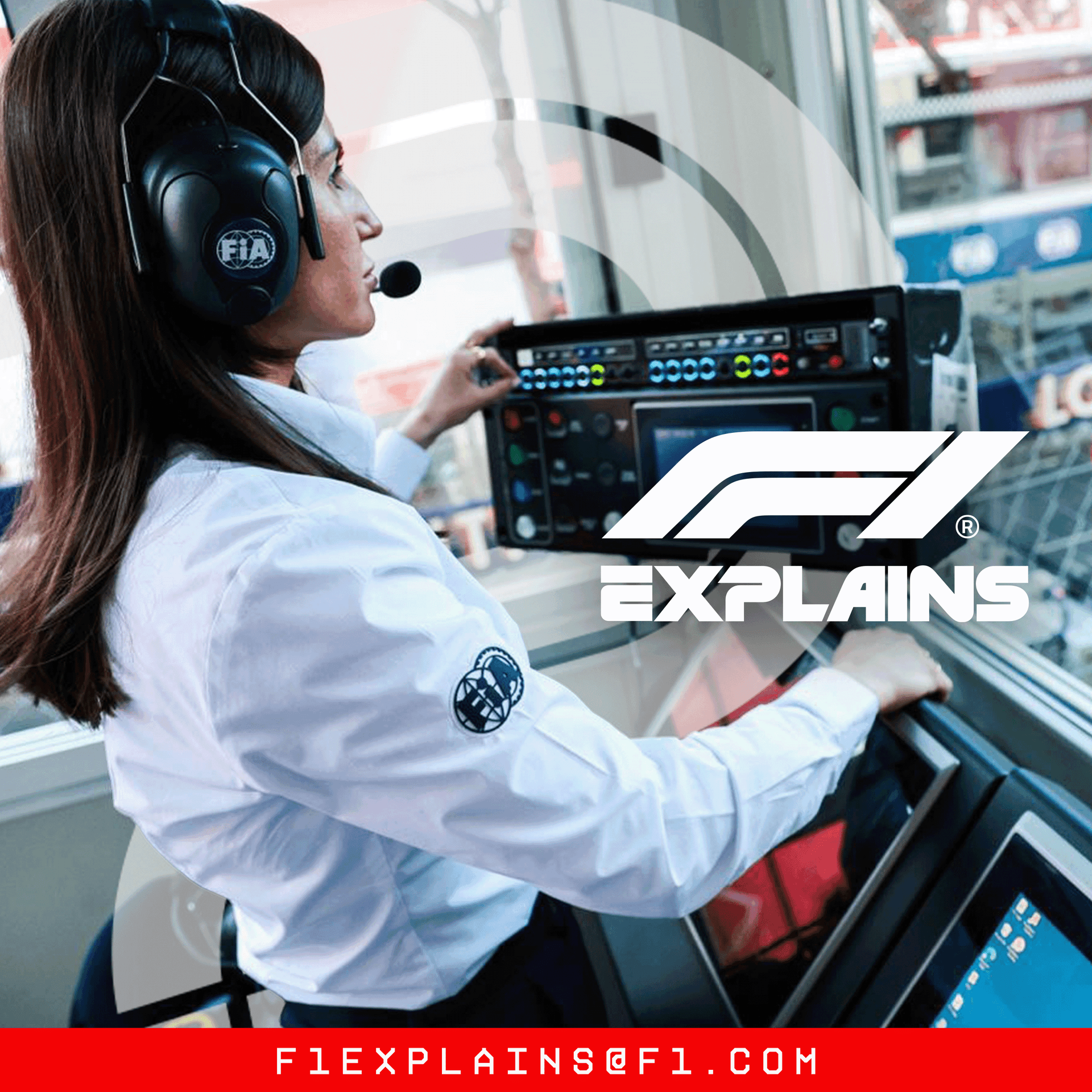
Rebecca Lee is head of single-seater operations at the FIA and F1’s permanent race starter. She oversees race-weekend single-seater operations, including facilities, legal compliance, contracts, suppliers, budgets, projects, and coordination with local motorsport federations/marshals. She previously installed FIA grid-light systems and supported race starts for Porsche W Series, F2, and F3.
Key claims
The start sequence is manually initiated by the race starter; safety drives timing. Grid position is verified via grid cameras and transponders linked to start lights. False starts are detected by transponders/telemetry and reviewed with stewards.
Notable examples
Monaco start line breach (Russell wheels within white lines); Perez wrong grid box; Canada extra formation lap after Arvid Lindblad waved hands; Canada aborted start if recovery can’t be completed; safety car/rolling-start protocols.
Written by AI. May contain mistakes. Listen to the episode to check what was said.
Chapters
Tap a time to open that second in VOGetting to Know Rebecca Lee
0:03 to 1:16
Christian Hugel introduces Rebecca Lee, the FIA's race starter.
“Since its first Formula One victory in the 1965 Mexico Grand Prix, Honda has always taken what's learned on the track and used it to build better cars for everyone.”
Getting to Know Rebecca Lee
2:10 to 3:38
Christian Hugel introduces Rebecca Lee, the FIA's race starter.
“We're recording this first thing in the morning on a Thursday of a race weekend, media day, which if you were listening a couple of weeks ago, we were talking all about.”
Understanding the Race Start Procedure
3:38 to 8:11
Rebecca explains the detailed process leading up to a race start.
“There are plenty of questions you've sent in about all things race starts to f1explains at f1.com.”
Observing Driver Positions and Compliance
8:11 to 9:39
Learn how grid positions are monitored and enforced during starts.
“So I am also relying on the marshals to report back to me.”
Final Preparations Before the Lights Go Out
9:39 to 11:03
Rebecca describes the final checks before a race start.
“So let's take us back to what would be a normal race start.”
Handling Driver Movements Before the Start
11:03 to 14:01
Discussion on how premature movements by drivers are detected and managed.
“So I'll begin the start sequence and then obviously make sure that everything's safe.”
Listener Questions on Race Starts
14:01 to 15:02
Learn about the detection of false starts using transponders in F1.
“There's a reason I'm talking about it now.”
Listener Questions on Race Starts
15:06 to 16:09
Learn about the detection of false starts using transponders in F1.
“Honda has always taken what's learned on the track and used it to build better cars for everyone.”
Starting Procedures for Pit Lane Cars
16:20 to 18:09
Explore how cars starting from the pit lane differ in procedures.
“I'd never go back to the pit lane in that eventuality.”
Race Control During Starts
18:10 to 21:48
Discover what happens in race control during a race start and under safety cars.
“is the red flag when the race is stopped, that's when they go into the pits.”
Show all 15 chapters
Rebecca's Journey in Formula 1
21:49 to 24:04
Learn how Rebecca became in charge of the F1 start procedure.
“Sounds a fascinating job do you enjoy it?”
Insight into Formula 1 Roles
24:05 to 25:12
Understand the multifaceted roles people have in F1 beyond racing.
“And again, another reoccurring theme of what we often see in this podcast.”
Listener Feedback on the Podcast
25:13 to 26:02
Hear how listeners engage with the podcast and their learning experiences.
“we know our listeners are wonderful multi-talented people listening all over the world.”
Listener Feedback on the Podcast
27:27 to 28:00
Hear how listeners engage with the podcast and their learning experiences.
“From pushing limits in F1 to engineering the next generation of hybrids like the Prelude Hybrid and Civic Sedan Hybrid, Honda proves that racing doesn't just inspire innovation, it drives it.”
Engineering Excellence in Formula One
28:00 to 28:31
Explore how Formula One engineering influences everyday vehicles.
“Decades of engineering in the demanding world of Formula One have helped shape the performance and efficiency you see in Honda's road cars today.”
Transcript
Automatic transcript. May contain errors.0:00This episode is sponsored by Honda. Since its first Formula One victory in the 1965 Mexico Grand Prix, Honda has always taken what's learned on the track and used it to build better cars for everyone. From pushing limits in F1 to engineering the next generation of hybrids like the Prelude Hybrid and Civic Sedan Hybrid, Honda proves that racing doesn't just inspire innovation, it drives it. And that idea of taking lessons from the racetrack and applying them to road cars has always been a part of Honda's DNA. Decades of engineering in the demanding world of Formula One have helped shape the performance and efficiency you see in Honda's road cars today.
0:44And now that same thinking is shaping the next generation of hybrids as well. Cars like the 2026 Prelude Hybrid and Civic Hybrid show that electrification can be both efficient and genuinely fun to drive. The 2026 Prelude Hybrid and Civic Sedan Hybrid are engineered for fun. From the racetrack to your driveway. Learn more about the Prelude and Civic and the latest innovations at Honda.com.
1:15It's the moment everyone is waiting for. Last car approaching the grid. The tension is high, and so are the stakes. Cars in formation. We await the green flag at the back. Everyone holds their breath as the red lights appear, and heartbeats start a thud.
1:37And then... Who's got the launch? It's Charles-Claire! Spinning! It's a spin for Max Verstappen! Can the pack avoid him? The Ferrari leads! Antonelli went wide! Max Verstappen spun! and Charles Leclerc takes the lead of the Grand Prix. What a dramatic getaway we've had here.
1:57Yes, the start is one of the most exhilarating moments in Formula One. It's where a race can be won or lost, so the pressure is huge. And not just for the drivers, but also the woman who makes it all happen. Welcome to F1 Explains.
2:16and this is the circuit to catalonia and we are at the 2026 barcelona catalonia grand prix hi everyone i'm christian hugel my first time at this racetrack far from my first time in barcelona it's a city i absolutely adore but i've never been to this race before you're listening to this Well, the episode is released on a Friday. We're recording this first thing in the morning on a Thursday of a race weekend, media day, which if you were listening a couple of weeks ago, we were talking all about. And it's very much in full setup mode. So we're sat here at the FIA's hospitality building, where Roman from the FIA is currently bringing us some water for the interview we're about to do.
2:56Thank you, Roman. Roman, would you like to say hello to the F1 Explains listeners? Hello, I'm Roman and I'm press officer for the FIA. Roman is a wonderful man who is looking after us very well. And opposite Roman, we can see Aston Martin. There is a man in a drawer with a piece of paper and a notebook, checking some things that are in that drawer, I presume. He looks very important. We wish him well with his duties. And then next to them is the RB team, who are all donned with Vicarb FC for the World Cup, which, of course, is underway by the time you're listening to this. So a little bit of World Cup fever here in the Formula One paddock.
3:28As the World Cup starts, we are talking about race starts. Now, we had an email from George in the Netherlands who wants to know about the race starts procedure. So George, we are devoting this episode to you. He's not the only one. There are plenty of questions you've sent in about all things race starts to f1explains at f1.com. And that is how this podcast works. Send your emails to that address and we find the best people in the paddock to answer those questions. And for a podcast all about the race start, which let's be honest, can often be the most exciting bit of a race, who better to ask than the person responsible for getting the race underway i'm not sure i'd want that responsibility could you imagine rebecca lee is the head of single-seater operations at the fia and f1's permanent race starter rebecca firstly a warm welcome to f1 explains thank you i'm fascinated by how you answer the question of what you do for a living when people say what do you do do you say well you know formula one you know the start i i do that like how on earth do you explain what you do because it's a fantastically niche job yeah um it's not actually the biggest part of my job it's probably the smallest element of my job really yeah um so i head up the operations for the single seater department within the fia so i have to make sure that um we've got all of the relevant facilities in order to run a race weekend um i'm looking after the legal compliance managing contracts managing suppliers budgets projects and then i'm also working with the asn so when you see all the marshals and asn's being so all the motorsport the local motorsport federations so when you see all of the marshals and the recovery and all the intervention on a race weekend i've been working with the locals prior to the event months prior to the event to ensure that those guys have got exactly what they need.
5:22Could I make a bold guess at something? Yeah. You sound like a busy human being. Very. Yeah, sounds like a lot. We're obviously on this episode focusing on that small but important part of your job, the start. Let's break it down. Just before the start of the race, the mechanics step away from the cars, the drivers complete a formation lap. Firstly, and we covered this on F1 Explains a couple of weeks ago, but for anyone who might have missed it, Why do we have a formation when the cars are already on the grid? Like they're there. Why do we send them around again? So the formation lap is basically the final check and the final test so the drivers can make sure that the cars are operating as they should be.
6:01They can warm the brakes. They can warm the tyres. Assess the track conditions. And it also gives us the FIA an opportunity to make sure that we're happy with everything before we deploy all of our cars at full speed into Turn 1. Now, that's what the drivers are doing and what the teams are doing. It's final checks time. It's making sure everything's warmed up and in the right temperature to be able to go racing. What are you doing at that point? I'm at the start gantry at that point and I am on the race control channel observing the cars going round to make sure that we don't need to abort the start or do any intervention.
6:35I think there was a couple of years ago one of the drivers crashed on the formation lap so obviously we had to abort our starting procedure. So at that point I'm alert and observing all of the cars going around, waiting for them to come back to me. So if that happens, if a driver spins or goes into the tyres or breaks down even, is that your decision to abort the start or is that someone around you? So, yeah, obviously when I'm in the start gantry, if I physically see something, then of course I'll abort. But if the race director picks it up because they've got more camera visibility, then he'll let me know and say, look, we need to abort or we might be able to just do an extra formation lap.
7:12But of course the race director needs to communicate with the locals and the marshals to see how quick we can get the incident recovered so it's a collective sort of agreement and is the race director because obviously there'll be lots of race officials around everybody who had different responsibilities is the race director sort of the boss in overall charge yeah so obviously he'll make all of the final decisions and he's also the safety delegate as well so that's very critical to all the decisions that are being made Very, very important. Now the cars come back round to their starting positions.
7:44What are the rules about where they line up on the grid? Is that the next thing you're thinking about when they've got through the formation lap and everybody's fine? Yeah, so the tyres need to be within the white lines on the grid. We have grid cameras so we can check the positioning. We also have got the transponders as well so we can check if there's been any non-compliant movements. So yeah, it is quite hard actually when you're up there to see exactly the positioning of the cars. So I am also relying on the marshals to report back to me. and we've got a team of people from the FIA that are on the side of the pit wall as well and then we've got race control checking the cameras just to make sure that everyone's in position.
8:27Monaco, for example, that start finished straight is not actually straight. It goes round on a bend so it can be optical illusion sometimes. Sometimes it's very easy, you know, you can see it but completely depends on the visibility that we've got so I am relying on other people on that point as well. Was Monaco last weekend a busy one for you in that regard? Yeah, very busy. Yeah, so let's talk about a couple of those things. So, of course, for those that missed it in Monaco last weekend, George Russell was investigated for a potential start line breach. But his wheels were within the white lines of the grid box.
8:58So in those situations, you don't get a penalty. But Sergio Perez, unfortunately for Sergio, lost out on Cadillac's first point in Formula One. Why was that, Rebecca? He pulled up into the wrong grid box. So I don't know if you can see sometimes on TV, we've got our grid lights on the side as well. and that also acts as an aid to the drivers as well so they can see the grid position that they need to be in. So it's the driver's number and the abbreviation on top of the light. So next time you watch the start, have a look for them. Were you tempted to let him off because it was Cadillac's first point?
9:34I would have been. That decision is not on me, unfortunately. You're harsh taskmasters here at the FIA. You're all harsh taskmasters. So let's take us back to what would be a normal race start. The cars are all lined up in formation. The medical car is behind the last row and that's there ready to follow them around in case there are any incidents on lap one. Well, let's be honest, the risk of accidents are highest. We see someone behind that car waving a green flag. Now, Rebecca, just describe where you're positioned at this point, what you have in front of you, who you're in communication with.
10:07What happens next? So I'm stood at the start gantry, of course. All the cars will go into position. We'll see our marshals activate the grid light. so once the driver's stationary in the grid box, the grid marshals will activate the lights so they all come to a 90 degree position. So if we need to deploy a yellow, the drivers behind the driver in that position will see the lights and we can deploy a cascade. So once all the cars are in position, all the grid lights will go green. Flag marshal will wave and then once the flag marshal at the back is happy that all the cars are in position because obviously he's got a better visibility than me at the back, I'll communicate to race control that we're good for the pre-start once we're good for pre-start all the grid panels will flash green for five seconds and this will then enable the drivers to prepare the cars spin the turbos and then obviously after that when we deem it's necessary we will start the start sequence the preparing the cars and spinning the turbos that's different this year isn't it that wasn't there that last year is that the main difference to the 2026 regulations and the change of start procedure compared to last year yeah and just explain the moments of lights out now it's always very exciting for us watching at home and one thing we've covered on f1 explains before is when you get the five lights and when they go out it is a different time from all the lights being on to all of them going out so the drivers don't get used to it in muscle memory knowing it's always 1.4 seconds between the last light going on and them going out explain how that works is it somebody deciding is it a computer how does the lights out and away we go moment work?
11:40So I'll begin the start sequence and then obviously make sure that everything's safe. I'm happy that everyone's prepared and good to go and then I'll extinguish the lights. So it's all done manually. It's nothing done automatically. It's all me behind the panel. So Rebecca, that's your decision as to how long to wait to make the lights go out. Yeah. That's a lot of power and responsibility. How does it feel? It's a good feeling, to be honest. Obviously, you get an adrenaline. The sound, you know, when all of the cars are revving up, it's quite unreal. But, no, ultimately, all I'm thinking about is keeping everybody safe.
12:22So it's relief once everyone gets deployed and everyone's completed lap one. I do get a feeling of relief, and I just always want to rent you with that. Everyone's deployed in a safe manner. I think if I did it, it'd depend what mood I was in. You know, if I'd had a bad day, I'd be like, I'm going to leave them. I'm going to make them sweat. Or I'd just be like, take it off straight away and be like, I'll catch you out. But is there a minimum and maximum amount of time you can leave them for? No. Again, like everything goes down to safety. If I need to wait a couple of extra seconds because, you know, we think that there's a gate not closed or we might see a marshal or we might see something on track.
12:56Or I might think that drivers give us the signal, you know. I'd always, you know, give it a second. We've always got a couple of seconds. so I'd always wait and then obviously extinguish the lights. At the same time, you don't want to unnecessarily make the guys sit there sweating. They spend enough time in them cars during the race. Oh, forget it. They paid loads. I wanted to make them sit there longer. It's great fun. And you guys must have to have your eyes and ears to the ground at all points because the situations like in Canada where poor Arvid Lindblad was struggling, he couldn't get off the line.
13:27Do you have to sort of manually, if you like, keep an eye out for those moments? yeah i was lucky that i seen him actually because he didn't wave his hands for very long it was like a quick wave and then down at that point in time i am completely focused i'm looking at the drivers i'm looking at the drivers in the cockpit obviously i check you know all the areas around i make sure that everything's safe around and then before i deploy before i extinguish the lights i'm looking at the drivers so i'm looking up and down the grid at the guys in the cockpit and that's when i seen i've rid wave his hands you do get taught about that right from the grassroots of motorsport i I did a bit of racing when I was a kid, which our listeners get bored of me talking about.
14:04But it didn't last long, Rebecca. I wasn't very good. There's a reason I'm talking about it now. But you are actually genuinely told, like, if your cart or your car is stricken, wave like a mad person. Because people like you need to spot them. So we'll pass that on to Arvid. In future, Arvid, a bit of a bigger wave from you would be helpful. Thank you very much. Now, let's get on to some listener questions. F1 explains at F1.com. Shanna is from North Carolina. Shanna has asked you, Rebecca, what happens if a driver moves before the lights go out how is it detected so we've got transponders if there's a move detected the report will automatically come through and then we can review that with the stewards so with our grid cameras any onboard cameras the telemetry and then obviously it'll be a combination of the report from the transponders and obviously all of the infrastructure that we use for additional checks with the stewards
15:02This episode is sponsored by Honda. Since its first Formula One victory in the 1965 Mexico Grand Prix, Honda has always taken what's learned on the track and used it to build better cars for everyone. From pushing limits in F1 to engineering the next generation of hybrids like the Prelude Hybrid and Civic Sedan Hybrid, Honda proves that racing doesn't just inspire innovation, it drives it. And that idea of taking lessons from the racetrack and applying them to road cars has always been a part of Honda's DNA. Decades of engineering in the demanding world of Formula One have helped shape the performance and efficiency you see in Honda's road cars today.
15:47And now that same thinking is shaping the next generation of hybrids as well. Cars like the 2026 Prelude Hybrid and Civic Hybrid show that electrification can be both efficient and genuinely fun to drive. The 2026 Prelude Hybrid and Civic Sedan Hybrid are engineered for fun. From the racetrack to your driveway. Learn more about the Prelude and Civic and the latest innovations at Honda.com.
16:20and what about the cars starting the race from the pit lane how is it different for them well obviously if a car starting from the pit lane they'll still join the formation lap and then once the last cars cross the exit i'll release the car i'll release the driver canada's a little bit different actually if you really i'm releasing the driver from the um pit lane basically the exit line is short of in going around turn one ultimately it means the driver would get there quicker than the drivers that are starting on the grid so i need the race director to let me know when to release the driver yeah of course that makes perfect sense and there are times when you'll need another formation lap in fact we've just mentioned arvid limblad at the canadian grand prix that's one very good example what's the procedure for something like that in what circumstances would you by the rule book say right we need another formation lap so exactly what happens in Canada so if there's a driver waving his hands he's got a problem we do an extra formation lap in the hope that during the formation lap we can get the car off the grid in the relevant time before the other drivers get back to the starting grid and obviously in Canada we didn't achieve that just due to the positioning of the gates and things like that so yeah otherwise you know if there's something more sinister than you know just a driver's got an issue we just abort the start and then we'd have to redo the starting procedure right sure Oh, sure.
17:36I'd never go back to the pit lane in that eventuality. It's completely aborted. No, so they only go back to the pit lane when we've red flagged. Fine. So obviously if we get on track and, I don't know, there might be somebody on track, a fan might have gone on the track, for example. Yes, sure. And so obviously we don't want to do an extra formation lap. We don't want the cars going near the people. We need to find out where the problem is. So we'll abort completely. The cars will stay where they are. And then all the teams, the engineers will come back onto the grid and we redo the starting procedure.
18:04and then we need to give the teams at least a 10-minute warning prior to the new official start time. I'm with you, but the difference between what I was getting mixed up with is the red flag when the race is stopped, that's when they go into the pits. But if the race has been aborted, it's a more simple case of stay where you are, guys, everybody comes to you. If the start's been aborted. Yeah, that makes sense. Now, once the race has started and the race is underway, is it time for you to switch off a little bit? I'm guessing not. Given the description of your job, it doesn't sound like you ever switch off.
18:31Unfortunately not. no um so i'm listening into the race control channel um and of course i'm watching the race and as we had in monaco if there's a red flag i need to be there on standby and ready and prepared to do any race resumptions because we do see that i mean monaco is a good example where we had the red flag when a race is starting under the safety car how's that different in terms of what you do and also why would a race start under the safety car obviously i'd need to make sure that i program the start system under a safety car start and sometimes we do it so if it's wet conditions sometimes we want the drivers to go around and do multiple laps behind the safety car so they can get used to the track conditions or maybe we want to clear some standing water off the racing line and then obviously if we're going to do a rolling start if the starting grid's not equally parts wet on both sides we don't want to do a race start because it'd be unfair on one half of the grid and not the other so yeah the protocol is pretty much the same i just need to manipulate the system with some additional steps but yeah at the end goal is still the same you know nothing there's nothing drastic that changes george in the netherlands has emailed and said watching on tv we hear the heartbeat noise when the five red lights come on at the start
19:53can the drivers hear that i didn't even know there was a heartbeat at the start I've got headset on and I'm listening to various different channels so I can't hear anything else outside of what's going through my headset apart from the engines I will be honest me and Rebecca spoke a little bit about this before we started recording obviously for us fans watching at home the sort of heartbeat noises have become an iconic part of our weekend and there's Rebecca at the heart of the action said to me I didn't know we had them so for you it's just lights isn't it there's no sound effect to anything like that yeah exactly And the start procedures moved on quite heavily, hasn't it?
20:29Back in the 1950s, when the F1 World Championship began, the race was started by just a bloke waving a flag. And then in the 70s, lights started to be used. Red lights came on above the starting grid. Then green lights came on below to signal the start of the race. The current system of five red lights coming out one by one, then all going out, was first used in 1996. Rebecca, why is that a good start procedure? Why does it work? But why have we stuck with it since, you know, a few decades ago, back in the 90s? I think the main aspect of that is safety. We've got repeater lights as well. So for the drivers that are further back on the grid.
21:05Yes, there's a second set. Exactly. So, you know, I think it makes it more fair. And same again, safety. I spoke earlier about the transponders of the cars, you know, to detect any false starts and movements. Them transponders are also linked to the start lights. so we can see where in the start sequence if someone's crept forward. The drivers are getting themselves prepared with the clutch and things like that, so sometimes there can be accidental movements, but ultimately all of our systems are pretty much linked and speaking to each other, so we've got one system to detect a certain element, but also the lights are also supporting that other software and technology that we've got in place, so I definitely think it's a good thing.
21:47Rebecca, we speak to Formula One drivers on this podcast. but frankly we hear a lot from them so one thing we try and do is speak to people who you don't normally get to hear from and we would put you in that category now often our listeners are very intrigued as to how people like you got into this mad formula one world how on earth did you do a journey to eventually becoming in charge of the formula one start procedure plus all the many other things that are in your job role how do you get into something like this um i never planned it i don't think you could plan it could you yeah a niche plan wouldn't it i never thought when i was younger i never thought right that's what i'm gonna do i'm gonna i'm gonna be the f1 race start what do you want to do when you grow up you know the start of f1 races so i started with the fia in 2022 prior to that i was a supplier to the fia i used to do the installation you know i spoke about the grid lights earlier on the side of the pit wall and we've got like the information panel on the start and gantry so i actually used to do like the installations there like all of the electrical installations and then I started you know doing the training with the marshals and then I started to do the support category so I was doing the race starts for Porsche W series at the time F2 and F3 and then got asked if I'd be interested in stepping up to do F1.
23:04Sounds a fascinating job do you enjoy it? Yeah I love it I'm blessed I'm very lucky. Now this podcast is a very international listenership so you're from the northeast of England right? Yeah. It's an unusual accent to hear in this paddock. Graham Loudon the team boss of Cadillac is another one who has it but for those that aren't aware the northeast accent is often known as the friendliest in the UK. Oh that's I never knew that but that's nice to know yeah. Often called Geordie for those that don't know. Geordie people are generally delightful. It is a very friendly accent but you were saying that people around here think you have an accent but when you go home they don't think you've got the accent anymore.
23:37No they think I speak too slow when I go home and when I come here everyone thinks I speak too fast. I've got a very Midlands accent and people say the same to me. Go home and say you've not got an accent and when I'm around people in this paddock they go oh yeah sound really Midlands so there must be something about it. It's a fascinating journey and as I say we love on this podcast sort of shining a light on people you don't usually get to hear from so it's been lovely to hear your story Rebecca and how you got into this ridiculous world of Formula 1 but also really appreciate your insights onto how you do your really cool job so thank you for coming on F1 Explains.
24:04Thank you. Thanks for having me.
24:09I love a niche Formula One job. Rebecca's job's absolutely fascinating. And again, another reoccurring theme of what we often see in this podcast. Sorry, I'm going to interrupt myself. I mentioned at the start of the show, everybody sort of building the circuit for the weekend because we're here early on a Thursday morning. A little pickup truck has just drove past us with two absolutely massive potted plants. And it's only in the Formula One paddock could a pickup truck be going on the right side of the paddock with a load of potted plants. and then on the left somebody wheels down Esteban Ocon's soft tyres for the weekend it's just a strange world of the Formula One paddock anyway what was I saying yes a lot of people in Formula One have two or three jobs and that Rebecca's so important job of the race start is just one element of a lot of what she does and last year on the podcast in fact we put it on the feed this year we recorded an episode inside the garage with the Haas team and again so many of the people we met and that episode have such an important job on the pit stops, for example, but then do so many other things across the course of the weekend.
25:07People in this paddock tend to be multi-talented people, is what we've learnt. And speaking of multi-talented people, we know our listeners are wonderful multi-talented people listening all over the world. A little message from Kim in California. Kim says, Hi Christian, I recently started watching F1 because my partner is obsessed with it. He even took me to my first race last weekend in Monaco. F1 Explains is really helping me understand what's going on. there's so much to learn but thanks to this podcast i'm keeping up came in california that is exactly what we are here for and any questions you've got it can be about literally anything in formula one there'll be sometimes on this podcast where we talk to drivers we had lando norris on last season for example plenty of times we'll talk to formula one drivers but sometimes we need to dig into the role of someone who you'd never normally get to hear from like rebecca and that's what we did this week lovely stuff well enjoy this weekend i know i will i'm looking forward to seeing whether Kimmy Antonelli can keep going with this frankly ridiculous winning record of his and we will debrief all the action on F1 Nation with Tom Clarkson and I'm guessing producer Jamie James Hinchcliffe will join Tom Clarkson this weekend yes lovely there you go I'm learning and of course there is Tom's other podcast our sister podcast Beyond the Grid producer Jamie often at this point tells us who's coming up on Beyond the Grid as he produces it as well Jamie hi hello Christian thanks for having me no it's a pleasure who's on Beyond the Grid well it's a man who's going to make some history this weekend.
26:31Oh yeah. Alex Albon is going to become the driver with the most race starts in Williams history. So it's him, of course. What a man. We love Alex Albon. I hope it was pure chaos like the couple of times we've had Alex Albon on this podcast. A very famous moment of this podcast is where we walked in to use the loo when we were interviewing James Vowles because the loo wasn't in James' office but it was within the building structure. Anyway, that happened. Have a look on my social media for that. Alex Albon is one of my favourite people to interview. That will be fantastic. make sure you check out Beyond the Grid with TC.
27:02Of course, you can keep up with all the action on F1 TV, depending on where you are in the world. And there'll be highlights on F1's YouTube channel as well. And we have new episodes every week. So we will be back next Friday to explain some more things from the wonderful world of Formula One. I'm Christian Hugill from Spain. Speak to you soon. Bye for now.
27:24This episode is sponsored by Honda. Since its first Formula 1 victory in the 1965 Mexico Grand Prix, Honda has always taken what's learned on the track and used it to build better cars for everyone. From pushing limits in F1 to engineering the next generation of hybrids like the Prelude Hybrid and Civic Sedan Hybrid, Honda proves that racing doesn't just inspire innovation, it drives it. And that idea of taking lessons from the racetrack and applying them to road cars has always been a part of Honda's DNA. Decades of engineering in the demanding world of Formula One have helped shape the performance and efficiency you see in Honda's road cars today.
Read the full transcript
28:08And now that same thinking is shaping the next generation of hybrids as well. Cars like the 2026 Prelude Hybrid and Civic Hybrid show that electrification can be both efficient and genuinely fun to drive. The 2026 Prelude Hybrid and Civic Sedan Hybrid are engineered for fun. From the racetrack to your driveway. Learn more about the Prelude and Civic and the latest innovations at Honda.com.
From the publisher
Five red lights go out and the race is on! The start of a Formula 1 Grand Prix is a high-pressure moment - not just for the drivers, but for the woman who controls the start.
Rebecca Lee is the Head of Single-Seater Operations at the FIA and the F1 Permanent Starter. She joins Christian Hewgill to answer your questions about the race start procedure. What are the rules at the start of a race? How does she keep everyone safe? Most excitingly, how does she decide when to push the button which turns the lights off, and send 22 Formula 1 cars into battle?
Send us your F1 questions - we'll find the best person to answer them
Emails and voice notes welcome - F1Explains@F1.com
Listen to more official F1 podcasts
F1 Nation's preview and review of the Barcelona-Catalunya Grand Prix is on this feed
Alex Albon talks making Williams history on F1 Beyond The Grid
Keep up with the Formula 1 Barcelona-Catalunya Grand Prix
Follow @F1 on social media
Download the F1 app or visit F1.com