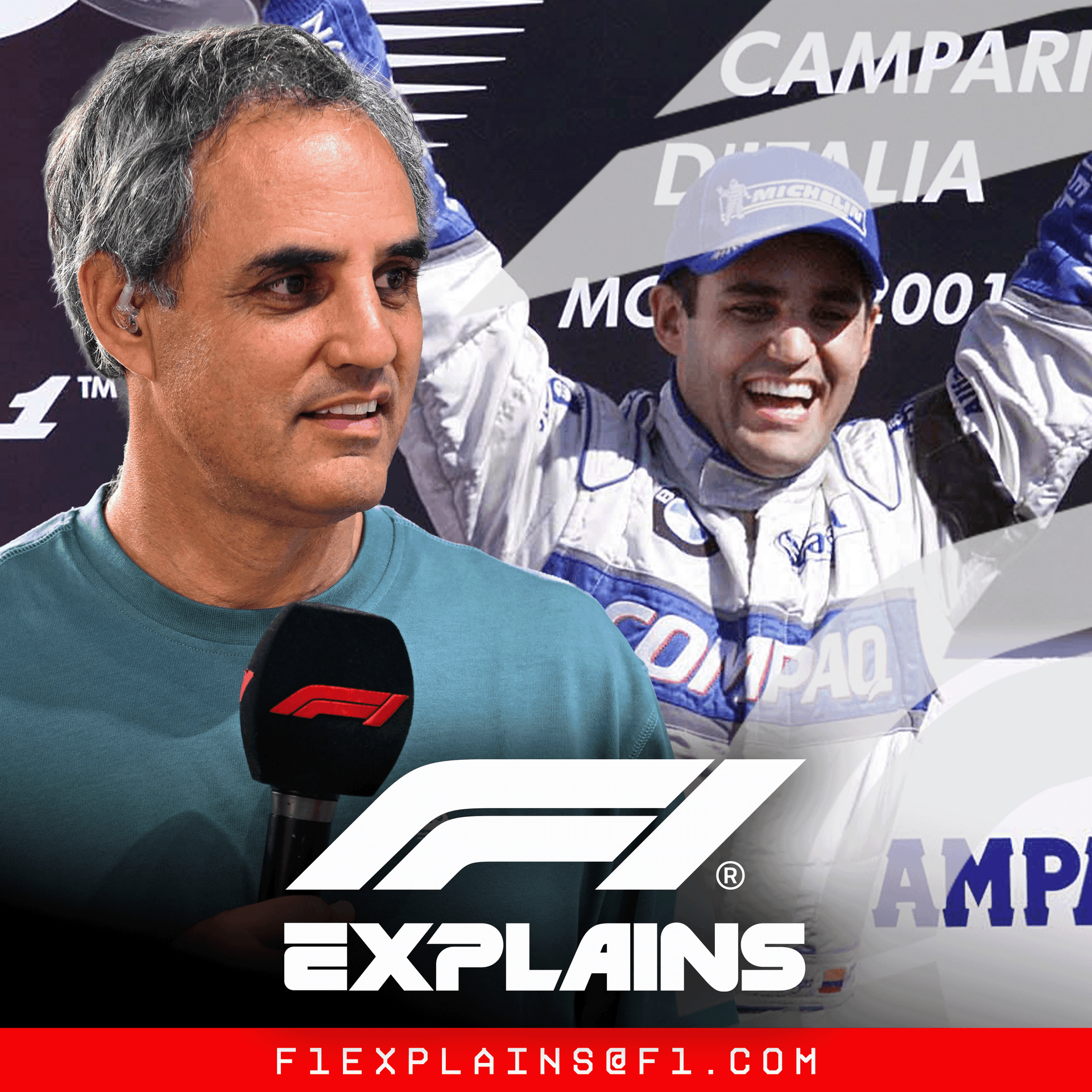

In short
How drivers reach Formula One, focusing on Juan Pablo Montoya’s path from karting to F1, and what his son Sebastian needs to do to follow.
Guest backgrounds
Juan Pablo Montoya (Colombia) started in go-karts, moved to Europe, became a Williams test driver, won 7 F1 races in the 2000s including Monaco, and also won the Indy 500 twice and the Daytona 24 Hours three times. He’s now guiding his son Sebastian, racing in F2 with Prema.
Key claims
Talent alone isn’t enough—luck, timing, and opportunities matter; modern junior ladders are more money-driven due to academies; go-karts build crucial fundamentals and feedback.
Notable examples
Montoya learning from Jackie Stewart’s road-car day; comparisons to driver luck affecting race outcomes (Kimi vs George); Sebastian’s qualifying as the hardest area and his teammate Gabriele Mini as a benchmark.
Written by AI. May contain mistakes. Listen to the episode to check what was said.
Chapters
Tap a time to open that second in VOThe Path to Formula One
0:34 to 2:22
Juan Pablo Montoya and host discuss the journey drivers take to reach Formula One.
“You also have to be in the right place, the right team, the right racing category, and all at the right time.”
Montoya's Early Racing Career
3:16 to 4:24
Juan Pablo shares his early experiences in karting in Colombia and moving to Europe.
“But Juan Pablo, we said it's your debut on the podcast.”
Learning and Development in Racing
4:24 to 6:37
Discussion on the importance of learning and adapting in the early racing days.
“because, at least in Colombia, the thought is, you know, if you go to a world championship, you're going to learn a lot.”
The Impact of Junior Academies
6:37 to 9:18
Juan Pablo discusses the evolution of junior driver academies and their impact on racing careers.
“Now, junior academies, driver programs were much, much less common in those days.”
Driving Styles and Adaptability
9:18 to 11:44
Montoya elaborates on how different racing experiences shaped his driving style.
“It's more unusual, not completely out of the question, but it's more unusual to go into cars.”
Mindset and Coping with Pressure
11:44 to 14:00
The discussion revolves around the mindset needed in racing and handling pressure.
“when my Formula One fandom was really being born and was passionate, it coincided with your arrival into the sport.”
Juan Pablo's Early Racing Experiences
14:00 to 14:29
Juan Pablo Montoya shares his childhood racing experiences and challenges.
“I actually think my mentality was worse than my driving.”
Sebastian's Racing Journey
14:30 to 16:33
Montoya discusses his son's career path in racing and the challenges he faces.
“and he has a psychologist and his psychologist, the guy he uses as a reference, it's me.”
The Impact of Legacy in Racing
16:34 to 18:21
Exploration of how a famous name affects a young racer's career.
“And personally speaking, I think he deserves a chance to be looked at.”
Skills and Attributes for Success in F1
18:22 to 21:14
Montoya emphasizes the importance of luck and hard work in racing success.
“and it sounds like you're not afraid to do that, what would you say that he needs to do to make it to Formula One?”
Show all 11 chapters
Advice for Aspiring Racers
21:15 to 22:31
Key life lessons from Montoya about passion and sacrifice in racing.
“Kimi's won the last two races and he's done a really good job.”
Transcript
Automatic transcript. May contain errors.0:00Missed calls and slow follow-ups are silent killers. That's how businesses lose money without even realizing it. Quo is the business communications platform that lets your whole team handle calls and texts from one shared number. Everyone sees the conversation so nothing slips, and customers always get a response. Try Quo for free. Plus, get 20 % off your first six months at quo.com slash hello. That's q-u-o dot com slash hello. When money's on the line, always say hello with Quo. To race in Formula One, you have to be fast, but it takes more than that. You also have to be in the right place, the right team, the right racing category, and all at the right time.
0:46Most of all, you have to get noticed. f1 explains listeners jack dagan jill and rachel from texas have asked us how drivers make it to f1 let's get the answers from f1 legend one pablo montoya one pablo montoya from colombia is going to win his 15th grand prix down goes the accelerator he can almost see the checkered flag Now there it is, Montoya wins in Italy. Generally speaking, the drivers on the current F1 grid started by winning in karts and then graduated into cars. They made their names by racing in Europe, driving single-seater, open-wheel cars in junior categories. But for those born outside Europe, it means moving across the world to chase their dreams.
1:37Oscar Piastri left Australia. Oscar Piastri wins for the first time in Formula One. In order to be able to do that. And he's not alone. Franco Colopinto left Argentina. Gabriel Bortoleto left Brazil. And looking further back in F1 history, Juan Pablo Montoya left home in Colombia to race in Europe 2. His racing record is amazing. A few highlights. Seven wins in F1 in the 2000s, including the Monaco Grand Prix. two Indy 500 wins, three Daytona 24-hour wins, one made it, and now he's guiding his son Sebastian, who's racing in F2. So he is the perfect person to explain how to make it to Formula One.
2:21Welcome to F1 Explains.
2:31Hello gang, welcome along. My name is Christian Hugill and this is the official F1 podcast that lives and breathes to explain the wonderful world of Formula 1. We're excited to have racing back in Canada this weekend. And a man who knows a thing or two about racing on that brilliant, amazing circuit in Montreal is Juan Pablo Montoya, who is our guest this week. And as I say to Juan in the interview, listen, I make no apologies for doing a bit of fangirling here. Always nice for me when I get to interview someone from my era. The early 2000s is when I fell in love with Formula One and Juan Pablo roared into the sport, making a huge impact going wheel to wheel racing with the likes of the great Michael Schumacher.
3:13So I was extremely excited to talk to Juan. We caught up a couple of weeks ago in Miami.
3:21Juan Pablo Montoya welcome for your debut on F1 Explains it's a joy to have you here thank you very much it's happy to be here it's pretty exciting I'm sure it's a real exciting high point of your career Juan Pablo is also a bit husky with the voice so we're keeping things it's okay I need to figure out because I'm doing a lot of TV today so I have to do Spanish and English so I do all the previews and posts in English and then during I'm running and doing Spanish. This will just be in English. Trust me, my Spanish is extremely poor. But Juan Pablo, we said it's your debut on the podcast. As a 2000s child growing up at F1 in the 2000s, it's exciting for me to have you here.
4:00I can remember you bursting onto the scene and taking on Michael Schumacher. So it's exciting for me. I've allowed myself to geek out a little bit as the presenter that we've got somebody from my era of Formula One on the podcast. It's great to meet you. Nice to meet you. Now, Juan Pablo, we're talking about the journey into Formula One. of course. You started racing karts in Colombia, then moved to Europe. Why did you initially make that move? So I did go-karts in Colombia and my father brought me to two world championships because, at least in Colombia, the thought is, you know, if you go to a world championship, you're going to learn a lot.
4:34And a lot of Colombians and young Colombians went there and they struggle and they learned a ton. They actually came back being quite competitive. When I did it, it was like, okay, we're going to go, we're going to try. And I was quite competitive. You know what I mean? I was shockingly competitive, to be honest. I was terrible at the beginning, but no, no. Shockingly competitive is a lovely way of putting it. You're like, oh, I can do this. This is good. Yeah, but it took me, you know, my dad did it well. We were there for a few weeks practicing and stuff. And at the beginning, it was hard. Oh, my God, if we were bad.
5:11You say you were bad at first. seems a really silly question how do you get better how did you find your feet in those really early days on the first part of the motorsport ladder um so that weekend that for the world we were lucky to get together with a guy named bosco he worked for bdl art and he used to build engines for them and he was free and we went testing with him and he basically from what i was used to driving a Goco and what I needed to, how I needed to drive in different, in Europe was very different. And he got me to, okay, do this. Okay, do that. With time, I got decent at it. But it's amazing that at that young age, you're already developing things like your driving style, which becomes so important when, well, it's important then, but that's something we hear a lot talks about right at the top of the ladder in Formula One.
6:03Yeah. You know what I mean? I think every person is different. Every person bursts in a different time and a different opportunity in a different way. Um, so yeah, it's, I mean, it's a little bit of what it is, you know what I mean? It's, there's no magic. Uh, you need to be lucky enough to get a break. Honestly, I initially I thought I was really lucky when I got the break to be a test driver for Williams and I thought, and at the end of the year I was really competitive. I was quite good. So I thought, no, this is really good. And at the end of the year, Frank didn't take me. And I thought, I'm done.
6:39You mentioned there catching a break. Now, junior academies, driver programs were much, much less common in those days. But you were introduced to Sir Jackie Stewart, who gave you a... So what Jackie did is they had their own team and stuff. And where I was lucky enough is they had a lot of sponsors themselves. So what we had to bring was smaller than normal. That really helped. and that was informal voxel at the beginning and the biggest thing there was what i learned from jackie you know they took us on a road car for a day with all the six drivers um magnish was there for example elio castroneves was there alan mcneish is now back in the f1 paddock with audi exactly personally speaking i thought was you know when they tell me you know this old guy because you know and this is 95 so he wasn't that old then it was what 30 years ago yeah our concept of age changes as we get older doesn't it yeah like they're probably the way they look at me today oh that guy's so old same with me exactly yeah exactly we're all old compared to these kids driving f1 cars so when when he took us around i look at it i'm looking at him drive and I'm going, there's nothing special here.
7:57Like, what are you doing? Like, I can do this so much better than you. And he was going so much faster than me with like 10 % of the effort. And I learned a lot from him that day. And I started applying that in the normal car and that made a big difference. Another funny conversation I had once was with Alan Prost in Monaco the first year I was there in the F1. He said, oh yeah, the first year here is difficult. And inside I'm going, yes, so hard. And I went, no, it's pretty easy. And inside I was going, oh, this is so hard. But yeah, I wasn't going to accept that it was going to be difficult.
8:38But it sounds like even though externally you might not have accepted it was going to be difficult, it sounds like you were good at soaking up and learning in things like a driver academy with Jackie Stewart. You mentioned in karting when you said I started bad, then ended up good. it sounds like you were good at soaking and listening and learning yeah not accepting it but yes i would learn a lot and i think in my time you never wanted to show any weakness you know i think it was really important to be cut through to do whatever it needed to be done to get the job done where nowadays the human side is an important side of it and they look at it like an important side of it i look at it different but Now, most of the current grid starting carts, they go into a single seater racing formula, into Formula 3, Formula 2.
9:26It's more unusual, not completely out of the question, but it's more unusual to go into cars. You did go into cars on your way up. A, why has that changed? Why is that more unusual now? But B, looking back, how much did it help you? Yeah, the go-kart is a big fundamental base for feeling. I think what you get out of go-karts is the feedback of what you need to get with the changes, race lines, basic driving, and the racing side of it. The overtaking, the understanding how you need to do, the aggression, the crossover. All this is really important and you pick this really well in go-karts. and more, you know what I mean, in cars, it's nearly impossible to see it how you saw it in a go-kart.
10:13The thing nowadays that is hard in cars is you have a few guys that are very lucky that from young age, academies grab them and they put all the money and all the effort into them. And they have a huge advantage on laps and, you know, on information compared with other guys. So I think that makes a big difference. And, you know, I think it's more money driven nowadays than it was in my time. I think in my time, it's like if you had talent, they would look at you. When nowadays, if you have money, they look at you more. Did cars help you and does it help drivers change their different styles? And for those new to motorsport, when I talk about single seaters, I mean Formula 3, Formula 2, Formula 1 cars.
10:59But when I talk about cars, I mean, the more traditional, you know, what you'd look at as a five-seater car. As I say, they are less common for drivers to go into nowadays. But you do see drivers like Max go off and race them in non-race weekends. Did going between the different styles help you as a racing driver, do you think, help you on that journey up through the ranks? Yeah, I think driving the variety of things I drove made a big difference, especially with my career. I mean, as my career changed, because I grew up driving little saloon cars in Colombia. I dropped prototypes in Mexico. I drove all kinds of things.
11:33So when I left F1 and when I drove NASCAR, when I went and drove the endurance racing and the Indy cars and everything was different, that was, I could adapt really quickly. As I mentioned at the start of the interview, when my Formula One fandom was really being born and was passionate, it coincided with your arrival into the sport. Correct me if I'm wrong, but I remember my vision of you being just so exciting for the sport you came in and you almost you almost didn't have as much respect for it as some of the other drivers because you were you weren't intimidated by it you came in and in some ways you had great respect and in other ways you just it felt like you didn't give a monkeys you you were here you were there you got your elbows out and you got noticed so quickly do you think that's important making an impact and getting noticed because it felt to me like you really did that i just didn't really care about anybody that's what it came across like and it was great to watch.
12:26You know what I mean? And it's funny because he helped me a lot, but at the same time, I look back at it today and I still don't. I always thought, you know, the day I stopped racing, I'm going to look back at my achievements and I'm going to go, oh my God, I did all this. I'm such a good driver. I'm more worried today about my golf swing and anything else. Like today. How is it? Yeah, that's quite good. That's okay. It's okay. Not amazingly, but it's decent. I played pretty decent. Like today, I'm really excited because when I get home to die, I have the new McLaren irons. Lovely. Now that is good F1 merch.
13:04That is. That's excellent. Yes, I'm getting that. I have a lunch monitor that I order. So I have that at home. So when I get back to Europe, I got a new lunch monitor and new irons, new everything. Something that comes up a lot on this podcast when discussing Formula One is dealing with the pressure. To me, from what you're saying, didn't sort of feel like you felt pressure if you just had this sort of quite carefree attitude? Is that something you had to work on or did it come naturally to you? No, for me it wasn't about the pressure. It's about you either deliver or you don't. There's no medium ground and you have to deliver.
13:40So when you're so focused on beating your teammate and trying to win races and be performing and you work so hard at it that the day it happens, it becomes a relief, not an excitement. Yeah, because you talk about being quite carefree. I raced karts when I was young. I actually think my mentality was worse than my driving. Don't get me wrong. I wasn't a brilliant driver. There's a reason I'm talking about it. I would have never made it to a Formula One. Well, I'm talking about it too, so. Yeah, but you've done it, so that's fine. But I think I struggled to cope. I got too nervous, for example.
14:17I got sort of overawed by the big world around me. You were thinking about the... the overall picture and what could have been. Yes. And what could have been, it doesn't change anything. Absolutely. Absolutely. It's funny because I give my kid quite a bit of advice and we talk a lot and he has a psychologist and his psychologist, the guy he uses as a reference, it's me. My kid met somebody that is playing golf and they go, oh, you know, my psychologist uses your dad as an example. And I go, really, what's his name? And they gave the name and I was like, oh, that's my psychologist. So the mindset came so naturally for you, which must have been so helpful when rising through the ranks and not being...
15:02Not helpful. I just, I knew how difficult it was and I just, I wasn't happy losing.
15:17We've talked a lot about your rise through the ranks. We should talk about your son, Sebastian, racing in Formula 2 with Prema. Just tell us briefly what his rise has been. Where did he start and how did he get to where he is now? For him, it's been tough because I think he's been underrated on how good he is. And it's funny because I tell people, people would go, Abba, is that talking? And I think if you know me, and I told him the day he screws up, I go, you're an idiot. And I'm okay calling him an idiot, by the way. Thanks, Dad. But when he does well, it's the things he can do on a car nowadays.
15:56It's unfreaking believable. It's been tough because this year, I mean, we're just getting started. But there was a lot of drama in the team where he's in. A lot of changes and a lot of instability. So it made it a lot harder for him. But I think it's a good mental exercise. You know what I mean? And it's sometimes the rougher road makes you a better person and it makes you want it more. And we're just hoping he can get a break. And I think he really wants to have an opportunity to drive an F1 car and show people what he can really do and get a test and get in a simulator. And they go, oh, because I think he's done everything he needs to do.
16:37And personally speaking, I think he deserves a chance to be looked at. And I'm guessing he started in carts. Where did he go from there before getting into F2? He did go-karts in the States and then we came to Europe, did some go-karts. And then we did F4, regional, F3, F2. You know, we did two years of F3 and this is the second year of F2. Well, Pablo, you mentioned earlier that sometimes you felt Sebastian has been underrated in some ways. I wonder if that has anything to do with your name. We obviously know that Max Verstappen had his dad racing. Josh Verstappen, we've seen another recent example, Nico Rosberg with his dad Keke.
17:22You could name plenty. Obviously, your son is coming in with the name Montoya and there's been a very successful Montoya in Formula 1. He was a great driver, won races. Can that help? Can that hinder? What do you think it's like having the famous dad who's done it before you? I don't think for him it matters because I'm just a dad. I think that is something that is difficult for a lot of the teams is when we're having conversations about what they're doing and where the car is going and things. Their shock of my knowledge base of information on not on the driving, but on the technical side. I was never well known for being good technically because I didn't want people to know that I was very good technically.
18:06If this is what's making the difference, you don't want to share this with anybody. So I always was a carefree guy that really didn't care how the car was. But behind closed door, I worked harder than anybody else to make sure the car was how I wanted it. If you had to critically analyze your son, and it sounds like you're not afraid to do that, what would you say that he needs to do to make it to Formula One? Honestly, the first thing for him is a bit of luck. Like he needs, you know, things just need to line up a little bit. I would say the hardest thing that he had to work on was qualifying.
18:42And we had last year, probably one of the brightest young guys that is Gabriele Mini, that everybody looks at him like, I don't think he's ever been beaten by a teammate. And we had him in the F4 when we started cars and he was way more prepared than us. And he whipped us all year round. He was really good in F4. he was very good in F3 and everything. He's always been the best out of the three teammates all the time. And, you know, to have him last year as a teammate was going to be a tough challenge. And if you look at through the year, we were much better than him through the whole year. So when you're much better than a guy like that through the year, and if you put yourself in my kids' shoes that you go, look, this, everybody rates this guy like unbelievable.
19:27And I'm beating him every week why are people not paying attention and he does have a point i guess it's a lot of what you said that you need that break you need that little bit of luck you need you know you just need the right timing the right opportunity uh and that's why i think a lot of it becomes a thing the team looks more for funding you know it's like a lot of the people that end up going testing and things is because they have sponsorship of course though i'm imagining that sponsorship you know it is important but you've got to have the level of talent as well right oh yeah yeah there's a lot of people with a lot of talent but there's always people with talent and money and there's all the people that don't have the money but they have the talent and they were lucky enough to get you know the support early on there are thousands of racing drivers hundreds of thousands of racing drivers young racing drivers looking to get brakes all over the world 22 make it to formula one at the moment if you could summarize what are the skills and attributes that you would say are needed to be one of those elite 22 having been there yourself so something i told him yesterday he had a rough qualifying and they made a mistake with the car and he had a rough rough day and he was really frustrated and i said i said it doesn't matter he then he told me it doesn't matter how hard i'm working just things don't seem to work and i go the problem with what you're thinking is things don't happen when you want them.
20:51Things will happen when they're meant to happen. And so you need to keep working because this is where the point where a lot of people give up. And from what you're telling me, you don't want to give up. And I can see you don't want to give up, but you need to understand that the effort and the results are never lined up. You know what I mean? And I'll give you a simple example is, you know, Kimi's won the last two races and he's done a really good job. But was the result would have been the same if the guy with the luck would have been George? If the safety car would have been in Japan, George's side, not on Kimi's side, who would have won the race?
21:32And things can change so fast, can't they, on that luck? So, and it's what I said, like, you start, like, we go to Europe with the F2 and, you know, you have two, three really good weekends and people change, you know, the memory of the people here in this paddock is very short memory. Well, Pablo, I've really enjoyed this. It's been great to get to know you. Formula One has a lot of drivers come through. You made such an impact and the sport was really lucky to have you and is lucky to still have you around. So wishing you all the best and also good luck to Sebastian as he continues to push through.
22:02We hope to see him in a Formula One car sooner rather than later. No, thank you. And honestly, for all the kids that want to come here is, and I told my kid this, it's a really hard road and you need to love it. You really need to love this and you need to be willing to sacrifice everything for it because the only way you're going to succeed as this is sacrificing everything. Excellent advice to end on. Juan Pablo Montoya, thank you so much. No worries.
22:32I really enjoyed that. Great to speak to Juan Pablo Montoya. Great to meet somebody I grew up watching. What a cool thing. So thank you so much to Juan Pablo for taking the time to talk to us. And of course, all the very best of luck to Sebastian as well as he continues in his battle to make it to Formula One. A really interesting insight from two generations of Montoyers, really. Right, let's say hello to a few of you out there. So many people have sent us nice messages recently. We get all sorts of statistics here at F1 Explains and we know there's loads more of you listening than there was last year.
23:07new people finding us all the time so we hugely appreciate that on last week's episode about press officers with sophie og we wondered aloud when the thursday f1 media day started and it was a fact that eluded me and producer chris lee and jen from australia emailed to say they were at the first f1 race in adelaide in 1985 and they went to the circuit one thursday and wandered around looking at the cars, drivers and the circuit. And the drivers were mainly watching their cars being assembled and answering questions from people, signing autographs, having a sort of media day. They end by saying, cheers from Oz, go Oscar.
23:47So there you go. Media day was sort of happening around 40 years ago. Good insight, Lee and Jen from Australia. We appreciate that. And yes, good luck to Oscar this weekend in Canada. Vinetta on Instagram also messaged about our episode with Sophie. She said, oh my God, this is so cool. Sophie, you're such an inspiration. Thank you, Christian, for this interview. Vernetta, you're very welcome. Vix, also on Instagram, says, F1 Explains, you are killing it with these interviews. Some of the literal best people and interesting stuff we don't usually get to hear about. Well played. Vix, if you'd like a job marketing Formula 1's podcasts, you're very welcome, because that's exactly what we try and do with F1 Explains.
24:25So brilliant. Thank you very much. We'll put that in the episode description or something. Adrienne talks about our episode with Laura Muller, which I also recorded in Miami a couple of weeks ago. Laura is Esteban Ocon's race engineer. If you missed it, she was on talking about not only the role of the race engineer, but also how it's changed under the new rules in 2026. Adrian says, I love it when you get female engineers on the pod. And Laura explains everything really well. She does. Laura's brilliant and a lot of fun. Hello to Antra in Sydney, Australia, going back into Oz. Antra says, hi team.
24:56Just a quick note to say. I'm a 46 year old mother of two. before falling in love with F1 brackets a quite recent event I never in a million years would have considered listening to a whole podcast about tires about tires of all things listen Antra I think if you'd have told me a few years ago I'd be presenting an episode of a podcast about tires all about tires of all things I probably wouldn't have believed you but Antra says but the chat with Mario Isola from Pirelli was actually genuinely interesting and I learnt a lot thank you Antra you're very welcome yeah that was really good Mario's great j spider on spotify says ah so this is about our episode where we went behind the scenes with has to say what happens at a race weekend we broadcast it a few weeks ago but we actually recorded it last year in miami miami 2025 so j spider on spotify says while the inside the garage episode was probably the noisiest episode in the history of f1 explained yep very true i found it to be one of the show's most insightful the in garage perspective was very informative for fans who are new to the sport and are trying to learn as much as they can about the world that goes into a Grand Prix.
26:01Thank you, Jay Spider. I appreciate that. And the WM family on Spotify says, my only complaint about F1 Explains is they're not longer. Listen, WM family, appreciate your sentiment, but always leave them wanting more. And on that bombshell, we should end this week. Don't forget, while Pablo Montoya is part of the team, you can see on F1 TV in selected countries and on Apple TV in the US. Plus, for the 2026 Canadian Grand Prix, you can watch one on the team on Netflix. How exciting. If you're in the US, that's all very exciting, isn't it? And he's doing a track guide feature with his son, Seb, who is racing there in F2 this weekend.
26:39So look out for that. Lovely stuff. And don't forget as well, on this feed, Tom Clarkson and the team will debrief the Canadian Grand Prix in the early part of next week. Here on F1 Explains, we have new episodes every Friday and we will be back next week with a new episode of F1 Explains. I'm Christian Hugill. Until then, have a great week. Thanks so much for listening. Bye for now.
From the publisher
Why do some drivers move across the world to pursue their racing dreams? How important is it to compete in different series on the motorsport ladder? And what mentality do you need to make it to Formula 1?
Seven-time Grand Prix winner Juan Pablo Montoya joins Christian Hewgill to talk about the route to F1 – a journey he completed successfully and one he’s reliving again through his son Sebastian, who’s currently competing in F2.
Juan talks about leaving Colombia at a young age, how Sir Jackie Stewart helped him in his early racing days, and what Sebastian needs to make that final step up to F1. Plus, Juan Pablo shares his advice for young kids hoping to reach the pinnacle of motorsport.
Picture: Clive Mason/ALLSPORT/Getty Images