In short
How Formula One press officers/media managers shape what drivers say to the media, why interviews are recorded, and how messaging is coordinated across a race weekend and social media.
Guests
Sophie Ogg, former F1 Communications Director at McLaren and previously Head of F1 Communications at Williams; long-time press officer standing beside drivers in the media pen.
Key claims
Her job is translating what happens inside the team into accurate external messaging for fans. Press officers record interviews for accuracy and to prevent out-of-context reporting. Thursday “media day” is the most controlled day for gathering content before on-track uncertainty. During races, comms align with engineers, broadcasters, and social teams to avoid inaccurate speculation. Drivers get guidance but must remain authentic; press officers protect them emotionally after incidents.
Notable examples
She recalls emailing to get George Russell interviewed for the BBC early in her career; she discusses handling major on-track incidents without scripting; podium finishers change in the cool-down room after champagne.
Written by AI. May contain mistakes. Listen to the episode to check what was said.
Chapters
Tap a time to open that second in VOMeet Sophie Ogg
1:13 to 2:24
Introduction to Sophie Ogg, former F1 Communications Director at McLaren.
“The drivers are usually saying something insightful, like it's a long race or we have work to do or looking generally cross if they've had a bad session.”
The Role of Press Officers
2:24 to 4:49
Sophie explains the multifaceted role of press officers in F1.
“Prior to that, she was head of F1 Communications at Williams.”
Recording Drivers' Interviews
4:49 to 7:56
Sophie discusses why press officers record interviews with drivers.
“hours in terms of what goes into that, you know, working with the partners, working with everybody within the team.”
Typical Race Weekend Structure
7:56 to 11:51
Sophie outlines the activities of press officers during a race weekend.
“that if your driver's doing an interview with anyone, Canal Police, the BBC, you won't have access to the BBC, Canal Police's system, where that interview goes.”
Adapting to On-Track Events
11:51 to 14:00
Sophie reflects on how press officers adapt during races.
“I can remember them talking about doing interviews on the Thursday.”
Navigating Press Responsibilities During Races
14:00 to 15:11
Learn how press officers manage media communications in high-pressure racing environments.
“guessing that can be a very different job.”
Protecting Drivers from Media Pressure
15:11 to 18:58
Understand the importance of managing driver emotions and preparing them for media interactions.
Collaboration Among Press Officers
19:14 to 21:36
Explore how press officers from different teams collaborate and communicate to ensure consistent messaging.
“Welcome back to F1 Explains, where this week we are digging into the role of press officers, media managers with Sophie Og.”
Driver Autonomy in Media Relations
21:36 to 26:13
Discover the balance between guiding drivers and allowing them to maintain authenticity in media interactions.
“So if a driver's leaving one team and going to another, that's one place where you really do collaborate and you do make sure that that is sort of handled respectfully, should we say.”
Career Path to Becoming a Press Officer
26:13 to 28:00
Learn about the various routes and experiences that can lead to a career in motorsport communications.
“Pivoted away from that slightly and obviously went down the PR route.”
Show all 14 chapters
Building Connections in Motorsport
28:00 to 29:40
Learn how to create opportunities and connections in motorsport.
Importance of Celebrating Others' Success
29:40 to 31:06
Understand the value of supporting others in your field.
Navigating Media Relationships
31:06 to 34:26
Discover the importance of respect and relationships with media.
“together so and that example is exactly why you know it's lovely words Sophie are lovely words Right, two questions to end on, Sophie.”
Press Conferences and Podium Protocols
34:26 to 36:58
Find out what happens after drivers leave the podium.
“And sometimes, you know, sometimes journalists will just write things and things will get leaked because they want that.”
Transcript
Automatic transcript. May contain errors.0:00Hurry into Menards right now and save big money. Miracle-Gro raised bed soil helps you grow bigger, more bountiful plants. It provides the right foundation your plants need to thrive with a 100 % organic formula that requires no mixing. Add Miracle-Gro raised bed soil to help your plants grow with organic nutrients you can count on. Visit our garden center or check out our weekly flyer on menards.com for more great deals happening now. Save big money at Menards. When F1 drivers speak to the world's media after a race... Kimi Antonelli, Grand Prix winner, first Italian to win a Grand Prix in 20 years.
0:42How do you put all of that into words? Yeah, I'm speechless, to be fair. There's always someone standing next to them. They're wearing team kits, they're usually pointing a phone at their driver, they're possibly holding a water bottle. You've probably seen these people on TV. me. Colleen from South Africa is one of many who has told us she has. She asks, who are they and why are they there? We have had so many questions about these people, so let's get the answers. This is F1 Explains.
1:21Hello, everyone. Welcome along. I'm Christian Hugill, and this is the official Formula One podcast which answers your questions about F1 not just what happens on the racetrack but off it as well you can send us questions about anything within reason please and we will find the right person to answer them and we love how fascinated you are with every aspect of Formula One this is my fourth season doing this podcast now and the detail you guys go into it never fails to amaze me those details include the people you see standing next to the drivers when they're speaking to the likes of Lawrence Barreto on F1 TV.
1:58Other reporters are available. The drivers are usually saying something insightful, like it's a long race or we have work to do or looking generally cross if they've had a bad session. You know, we need more pace, that sort of thing. And standing beside them, listening closely as a team press or communications person, it is a very interesting job done by very interesting people. And we shall now meet someone who has done it. Sophie Ogg was F1 Communications Director at McLaren. Prior to that, she was head of F1 Communications at Williams. She has stood next to drivers in interviews hundreds of times.
2:36But, Sophie Og, there is a lot more to it than that, isn't there? Welcome to F1 Explains. There is indeed. And thank you for having me. It's good to be here. It's an utter pleasure. And I would like to start this interview with a story and I was a young presenter and reporter at a radio station in the UK working for the BBC and I was tasked with finding fun cool stories about young people and being a Formula One fan when Formula One was just starting a bit of a rise in popularity I thought hang on a minute this sport that I love so much is fundamentally young people doing cool stuff so I said we shall try and get an interview with a Formula One driver ahead of the start of the new season my boss has said to me great go for it I went on to the internet I went on to the Williams website I wrote an email and said there's this new exciting talent called George Russell would he be interested in coming to speak to us on the BBC and I got an email from Sophie Argg saying come to Williams and talk to him.
3:40And Sophie, we've known each other now for around about a decade, can you believe? I know, I know. It's a long time ago. I remember looking back at those photos and we all looked quite fresh-faced, including George. Including George. Yeah, but that's what we do. We're here to facilitate. We're here to help you guys tell the story. So that's exactly what it's all about. Right, let's just start with a bit of a broad brushstrokes before we dig into some listener question. Sophie, if you could really concisely summarize the role, what is it? Oh, that's a very good question. You know what? It's the thing that everyone loves about it is that it's actually really difficult to summarize what you do in communications in a very simple sentence.
4:22I mean, essentially you are taking what's happening in the team and you are translating it into the external world for the fans. I mean, that is literally the job. The job is to make sure that people know what's going on in a nutshell. But how that happens is, you know, from being trackside, from reacting to things, for organizing interviews, for helping manage the drivers, helping manage the team principals. I mean, there's so much. We could literally be here for hours in terms of what goes into that, you know, working with the partners, working with everybody within the team. And there's the event, the non-event, everything that's going on.
5:00But essentially the role is we know what's going on inside the team and it's our job to help facilitate that information and getting out to all the fans and everyone that wants to know what's going on. Now the most visible part of your role I would say is as we've just said in the media pen for those brand new to Formula One every single F1 paddock has a media pen it's where the drivers come to be interviewed the team principals as well actually at various points in the race weekend and at every point stood next to the drivers, you see a press officer, a media manager like yourself. So we have had, honestly, Sophie, so many questions on this in the years we've been doing F1 Explained.
5:41So Paul from the Philippines, Colleen from South Africa, among many who've said, when you're stood next to a driver in the media pen, you're often seen holding phones or dictaphones when they're being interviewed. Why do you record those interviews and what's done with them afterwards? It is genuinely the question I get asked the most as well, because I think it's that visible role, isn't it? But it's very much the tip of the iceberg, what you see there. So yes, you record everything that the drivers say. And the main reason for that is just for an accuracy point of view. So if something comes out in the press, following that race, you can kind of trace back exactly when the driver said it.
6:20And if they actually said it, because a lot of the time stuff gets taken out of context. And so it's kind of a bit of a protection from that point of view. so that we have the facts that if we need to go to a media outlet and we need to kind of have the conversation about this isn't really representing what was said we have the facts available and we know exactly what was said so that's that's kind of the baseline of why you would record it but then on top of that you know you've sort of spoken to the drivers before about things that they're going to get asked so you're kind of listening to hear what's what's being said you are reacting in the moment as well so it sometimes looks like we're kind of just stood there doing nothing but actually there's a lot going on in your brain at that point because you're not only trying to figure out who you need to speak to next who you haven't spoken to what broadcasters are currently live who's not live you know where the story's going are there any questions that are coming out that you hadn't anticipated are there things being asked of the drivers where maybe they weren't aware I mean they've just been in the cockpit usually for however long so there's sometimes things that get asked that they haven't they haven't watched back or they haven't been made aware of so you kind of give them a little bit of context if needed um and then yeah you kind of just you're sort of supporting them through that moment so that they don't have to think too much they kind of just focus on what they're trying to say and you just kind of help guide them if needed but then you have that backup of you record everything I mean you record everything because then you've always got a reference and a lot of the time that just sits in the archives and you don't ever have to use it again.
7:52And that's a good thing if that's the case because it means everything's being reported fairly. Well, yeah, and it should be said, shouldn't it, that if your driver's doing an interview with anyone, Canal Police, the BBC, you won't have access to the BBC, Canal Police's system, where that interview goes. And it might not immediately go on social media or the telly or the radio. So you can't necessarily see it. And that's something I didn't realise at first. So where we see each other, Sophie, is at a race weekend. Just talk us through what a typical race weekend looks like for a press officer.
8:29Again, I'm aware describing a whole weekend of your job could take some time. So again, feel free to summarize. Yeah, yeah, yeah. So in a nutshell, I mean, it's extremely fast paced. And that's, again, what a lot of people love about it. but there is a huge amount of structure around it so you will always kind of do the same sort of preparation in terms of processes going into the race weekend before you even get onto the ground you know you're looking ahead to what interviews you're doing what stories are happening you know what you need to be managing and then when you get there media day obviously first thing you do which is which is a thursday which is a thursday um some races it's a wednesday like Vegas for example but like most times it's all right it's on a typically it's on a Thursday um and there you're just setting the scene for the weekend you're you know responding to anything that's happened previously anything that's happened in between races um but you're setting the scene for this weekend ahead um and then when you get into Friday you know the track running starts and it is it is very structured in terms of you know the drivers would be on track they'll have appearances they've got media that they need to do they need to speak about everything after they've done it essentially you know they go on track they then come and talk about it's the media and there's a very sort of structured way in which that happens but equally that's where it's also kind of exciting because you don't know what's going to happen so you're you're always having to react to what happens but until it happens you you know you don't know what you're you don't know what you're going to be dealing with so now i'm aware that we've only got to thursday and my question was describe your typical race weekend we'll come back to the rest of the weekend but but olivia is one of the people who's been in touch on f1 explains at f1.com and olivia says has there always been a media day during a race weekend and what happens on it now you've been touching upon what happens on it there sophie because as well as the structured stuff that you mentioned like the media pen which is always always happens on a thursday and then it always happens as well after free practice too on a Friday doesn't it but also that's when a lot of special requests I guess are dealt with and and content is gathered because if I'm sat at home watching F1 TV or Sky Sports coverage a lot of that content might have been gathered on a Thursday and an interview with a driver that's happening before a qualifying session as part of a television package might have been gathered on a Thursday, right?
11:01Yeah, exactly. It's the calmest day of the weekend. It's the day that you have the most control over because you don't know what's going to happen the following days once you get on track. If there's been an incident in the garage, you might not be able to get in the garage for a bit because the team are busy. So Thursday, you know exactly how that day is going to unfold. And you can do additional interviews, you have additional time with the drivers, you can do partner requests, broadcast media, You can do different things off track, maybe, you know, around the circuit because, you know, you can go and walk the track.
11:34And a lot of it's kind of a preparation day as well. You know, the drivers use it to talk to their engineers and to kind of get themselves ready for the weekend. So it's a really useful day. Like it's been a thing for as long as I can remember. I mean, you've always I mean, it obviously makes sense. You're setting the scene for the weekend. but it's it's a useful day to get as much as you can as much of that content done so that when they do get into the sort of sharp end of the weekend they can focus more on on the actual job at hand and all those nice things that you can kind of see on tv ahead of qualifying in the race you know you've kind of got them in the bag again uh olivia you asked has there always been a media day and this is one of the very few times on f1 explains as i say season four now i can't remember ever saying this we don't actually know olivia me producer chris who is an oracle of f1 knowledge and sophie all got our heads together and we've all been looking at did media day ever like formally start and we don't think it did as far as we can work out it's sort of just organically started to happen that as f1 got more popular the media got bigger as weekends got elongated stuff started to happen on a thursday and it around 15 years or so ago just started to happen But again, Sophie, I grew up watching F1 in the 90s.
12:50I can remember them talking about doing interviews on the Thursday. So it just started to happen, I guess. But listen, F1Explains at F1.com. If you know better than us, we'll happily direct it. Yeah, please let us know. Yeah. We have no, I mean, it's always been a thing. And I think there's always been it. It's been in some form. Yes. I think it obviously became more formalized because of the, you know, amount of teams, amount of drivers and amount of media, because the media has obviously grown over the years and the output of that media as well. You know, you've not just got newspapers printing things on a Monday morning, looking back at the race weekend, you now have stuff that's going out literally as it happens.
13:30Podcast. Yeah, exactly. So it definitely, it's definitely become a more structured day in the last sort of decade, hasn't it? But I think there's always been some form of media day as such, just in different guises. Absolutely. Now, let's just take a step back because we were describing what a typical race weekend looks like. We've sort of covered off media day quite well. Sophie, talk us through what happens with your job when cars are on track, because I'm guessing that can be a very different job. You worked at McLaren when they were winning races and championships. ships you also worked at McLaren in some really tough times how do you respond to what happens on track and how does that change your job yeah it's um it's a different challenge depending on how things pan out um on the circuit but you're I mean you're constantly you've got information coming in from all angles so you can see what's happening on track you can hear what the media are saying you can see what the media are saying and how they're reacting to things you also can hear the engineers so you have a bit more context as to how things are playing out and what's going to happen so you're always kind of formulating in your brain how this is going to play out and what you might need to do in terms of what the media are going to want to know the information that they're going to need and and then making sure that everyone is aligned at the right moment so you know everything really kicks in in a race for example everything kicks in you know at the end of that race and at the end of that race you need to have known everything that's gone on anything that could be potentially controversial anything that the drivers are going to need to know anything that you need to relay to the team principal and and vice versa because you know when you see kind of comms people almost you know having to have these little conversations with the drivers before they do media like it's not like there's anything sinister going on it's genuinely they don't have the context that even you as a fan have got watching the race you know they haven't seen this all play out they they have their experience of it from sitting in their car and what they saw happen so and then they're about to go on the world's media and be asked to talk about it so you know imagine you throwing yourself into an interview and you're going to be asked about something that you've actually not really seen so um so you're kind of this is all going on in your head in terms of the preparation you need to do there's also now the element of social media so from a comms perspective you know you're constantly talking to your social teams because they're also talking about the race as it unfolds and you need to make sure that they're not putting something out there that is inaccurate because they don't always have the same information and context as you do in comms so you have to kind of make sure there's a lot of moving parts um aligned and up to speed and also you're not talking to your social team are you because i know that's where we've spoken during a race where if something i don't know for example a a driver has broken down and people are speculating as to why that's sometimes where somebody like me covering the race might drop you a text and go uh you know well what happened to your driver and you say oh no it's an electrical issue etc so you're constantly talking um just before we go for a break sophie you mentioned there that that you know it's not about sort of telling the drivers not to say this not to say that but i guess there has to be an element of protecting these drivers the the immediacy of media in formula one is is is quite amazing you know you can step out of the car and immediately in the pit lane be grabbed by a journalist by a presenter i sometimes feel find myself saying look don't forget drivers have come out of an unbelievably high pressure situation with adrenaline pumping there must be times where you have to sort of say to them okay you know they might be furious if an incident happened they might be gutted if they've lost out on a race they might be full of euphoric highs and the emotions are going the other way there might i'm guessing there must be moments where you have to sort of say something okay let's take a step because we don't want to be saying something that you're going to regret at this point yeah exactly i mean they're human and emotions run high like you say either way good or bad and you yeah you you do have a duty to protect them in that situation and they yeah if something has happened that hasn't gone their way on track like I say, the pressure of that situation, it's kind of on you to get them to just step away and go, okay, let's just talk to me about what happened.
18:04Talk to me about what you want to say. And then let's work out the best way for you to articulate your point. And I think it's helping them in those moments because essentially, you know, you want them to be the best version of themselves. You don't want to tell them what to say. You don't want to say, just don't talk about this you know they have to acknowledge reality if something's happened you know getting them to stand in front of a journalist and just pretend it didn't also doesn't reflect well on them so yeah I think there's there's definitely an element of of protection but also just helping again give them that context give them that understanding and also just just have a minute because sometimes sometimes all it takes is you just need to decompress for a minute and then you can kind of go, okay, I can see the bigger picture now.
18:51And then it's kind of better for everyone because the media also then get a better answer and a better response. And Sophie, you mentioned earlier that part of your job is dealing with, as you called them, partners, but sponsors or advertisers to the team. That's something we take very seriously in the world of podcasting as well. So we'll pause now for some messages from people who would like you to spend your money on their goods and services. Back in a moment.
19:24Welcome back to F1 Explains, where this week we are digging into the role of press officers, media managers with Sophie Og. Sophie was the F1 Communications Director at McLaren prior to that. She was head of F1 Communications at Williams. Sophie, I don't mind telling you that I did have to go back to my notes for your exact job titles, which I could never remember, which is a consistent thing in Formula 1. Everybody has incredibly complicated job titles. It's a joy interviewing a team principal because you know what that is. Anyway, moving swiftly on, we will now speak about an F1 Explains superfan.
19:58Ryan from New Zealand has several questions and also says, Hello guys, you officially took my number one spot in my 2025 Spotify wrapped. Thank you for making my commutes and downtime as well as ironing in the garage. So much more interesting. Ironing in the garage is an interesting place to do the ironing. Sophie, where do you do your ironing? You're asking me the question like I do much ironing. I was going to say, Sophie has someone to do a ironing for her, I reckon. Anywhere in front of a TV. Yeah, ironing in the garage is interesting. Anyway, I've been sidetracked. Ryan, thank you for listening.
20:30We very much appreciate it. Ryan sent several questions on this, and as an F1 Explained super fan, we shall answer them all. Ryan says, Sophie, is there any collaboration between the different teams press officers to ensure consistent messaging, especially following a major on-track incident between drivers? That's a very good question. Yeah, it's an interesting one as well, because I think like all roles in the team, you do talk to your equivalents in other teams. Everyone does it from the drivers obviously talk to each other, but all the way through to logistics, team managers, everyone will talk to their equivalents because it's a useful thing to do to be aligned.
21:08I think in terms of collaboration, in my experience, I don't think I've ever collaborated as such in those moments. But you definitely do align on things. Maybe not on track incidents. There's definitely alignment around sort of race weekends, media events. You know, you'd ever want to clash in terms of what you're doing over a weekend with media, for example, and car launches. And there's probably a lot of collaboration actually around driver announcements. So if a driver's leaving one team and going to another, that's one place where you really do collaborate and you do make sure that that is sort of handled respectfully, should we say.
21:47But in terms of on-track incidents, I think you would talk. So if there was something that was particularly heated, I would sort of reach out to colleagues at other teams. But you wouldn't necessarily try and script anything as such in terms of that kind of collaboration. I think the only times I've ever really reached out to teams when things have happened is if maybe the other team or driver has put something on maybe social media or their driver said something that isn't actually quite accurate and is maybe not representing what happened in the right way. I think your focus in that moment is more just ensuring that your own driver has the information and what they're saying and how they play out.
22:27And in your mind, you know immediately if someone's at fault or if someone's made a mistake. So I think your focus at that point is on your team. But I would reach out if we felt there was a need. And the other team would as well. You know, you don't want it to be, you don't want it to become unnecessarily big. No, sure. And I do remember things like, I mentioned we first started speaking when we were talking about a young George Russell as he was coming up through the ranks. He made his debut in 2019 alongside Lando and Alex Elbon. I can remember an event years later with the 2019 rookies where Lando was there, George was there and Alex was there.
23:03And I guess for things like that, you'll all talk to each other and things like that. Or when drivers do features with a driver they may be friends with who works for another team, for example. Yeah, exactly. It's good. And everything's like elevating the sport as a whole, isn't it? So there's a vested interest from everybody to do things that help benefit the sport as a whole. If you need to step back and protect your own team and your own driver, then you will do because that's the job. but you also have the context of knowing what's going on. An untrack incident is always a really interesting moment.
23:35I think if it's an untrack incident with another team, most of the time the drivers are pretty good. They know how to navigate this stuff. They also don't want to, they'll kind of move on quite quickly. If it's an inter-team thing, that's maybe when it's a little bit more challenging. Actually, you've come on to Ryan's second question here. Ryan's second question feeds into exactly what you're saying so apologies for interrupting but Ryan said how much autonomy does a driver have to speak to the media are they coached or are they required to give scripted responses yeah I mean this is also a thing that I think gets asked a lot because if drivers look like they're being scripted you know people don't like it and at the end of the day you know they're not scripted like we do guide them we give them key messages we give them context but authenticity is like so so important like they need to speak in their own voice you know they are human beings and they need to be able to to speak I mean I know different teams will take very different approaches into maybe how much autonomy that they will allow them to have but essentially like your goal is to support a driver to be the best version of themselves right so they want to they want to kind of convey their message whether it's a a positive or a negative message you know there's always there's always a good way to articulate it to get your point across.
24:54Even if there's something that you're saying that's maybe, yeah, not particularly positive, there's usually a reason for them doing it. So kind of helping them articulate it in a way that people can kind of understand where they're coming from. That's kind of where you would guide them. And I think it's different guidance depending on, you know, if they are doing a launch at the start of the season, then yeah, there's certain key messages they need to hit because they are the spokespeople for the team. If it's them responding to something that's actually happened to them that's on the track you know they have to be able to speak to an extent their own feelings and their own experience and actually if if I could answer a little bit of Ryan's question as well the majority of my work before Formula One in sport was in football or in soccer if you're in the USA or wider I would definitely say that Formula One drivers are given way much more autonomy than a lot of the football clubs and football players I worked around.
25:51There's definitely a willingness for F1 drivers to be individuals and to talk and to show their character. I think that's something F1 drivers are encouraged to do more than other sports. I would argue as well, it's part of the reason why Formula One has had its upsurge in popularity in recent years but because of that because people like to see these guys sense of humor they like to see these guys personalities yeah exactly that i mean it's what is what everyone wants to see you know you want to watch the driver talking and feel like you're listening to the driver talking so you know you don't want them to look scripted you don't want them to look like they're just a corporate machine a lot of these guys are pretty young and you want to see that personality but you just have to make sure that you protect them where needed and give them guidance where needed but it's got to be them it's got to be authentic otherwise yeah why would why would you follow and final question in the ryan from new zealand section this is the thing if if f1 explains is number one in your spotify route to get your own section guys so get listening you know uh ryan says how did you get into your role and what sort of background do you need to become a press officer great question we get we get asked a lot about getting involved in formula one on this podcast sophie yeah i mean there's so many different routes and to try and put my 25 years of motorsport into a very quick sentence for you is it's quite challenging um but I I mean I came in with no connections I had no motorsport connections whatever um and I just fell in love with it as a as a teenager and then reached out to a local racing team to start doing some work experience when I was what 15 16 so I started by washing wheels polishing bodywork just literally doing anything to be around the industry itself and originally wanted to be an engineer or an aerodynamicist.
27:38Pivoted away from that slightly and obviously went down the PR route. But I didn't really know what role I wanted in motorsport until a little bit later on and then just got experience through agencies, small race teams, junior formula and kind of then worked up to going to Williams in 2010. And it was all through contacts that I made in those roles. but it all started by me literally just finding a local race team up in Yorkshire ringing them up and saying can I come and do some work experience for free and I used to go and help out on race weekends so I think I you know there's there's so like I said there's so many different routes you can get in now and there's so many different ways but it's that experience and the one thing I always say to people is like don't wait for things to come to you like make them happen because that's that's kind of how I started I literally just picked up the phone and said can I just come and be around it um and then from then just just worked up and it is it's all about the people it's all about the connections you make but you don't have to have them to start with you know you create them you make them you reach out to people you start being visible you kind of show them what you can do before you almost have the job it's always that age old saying isn't it is like sort of do the job that you want not the job that you've got and kind of keep just showing people that it's you know it's something that you've got a passion for and be prepared to work hard as well you know I think that's a lot it's an easy thing to say but I think it is you know everyone's so accessible now you can get in touch with people so much easier I mean I had news like newspaper clippings on my walls out of like anything I saw in the newspaper trying to track down and I have you know I have letters from F1 teams that I wrote to when I was like sort of 17 18 because you know the only contact I had for them was a postal address um you know now just you reach out and get experience and just start doing stuff just start getting experience in the role that you want to do but also in the industry itself and it doesn't necessarily need to be formula one I think a lot of people fixate on you know it has to start with formula one there is so much motorsport out there I mean I did 10 years of like junior formula international racing single seaters full touring girls all sorts of stuff um and a lot of those contacts are still people that i talk to now or they're journalists that cover f1 so just yeah just kind of look at look at all the avenues in don't and don't let anyone tell you that you can't do it because that's that's the big one it's excellent advice uh and you reminded me actually of laura winter on this podcast last season sophie who said exactly the same about other forms of motorsport also other sports you know you can get experience in other sports and look to move across and Sophie it's what I've got a lot to thank you for because as I say go back nearly 10 years now I think you were one of the first I was the same you know my story I had no motorsport connections whatsoever and I again was firing off emails to Formula 1 teams as a young journalist saying I want to cover Formula 1 and Sophie you were I think the first to come back to me so thanks mate appreciate it you're very welcome and it's the one thing I always say as well and the biggest piece of advice that I've given is it's really important to celebrate everyone else's success and you want to see other people do well you know and responding to you is a case in point of that you know it it helped you but celebrating other people's success doesn't limit your own success and I think that's one thing in this sport that people need to remember because essentially it is a team sport and we all need each other and it's better if we all work together so and that example is exactly why you know it's lovely words Sophie are lovely words Right, two questions to end on, Sophie.
31:19The first one is a slightly cruel one, but I think you'll understand why I ask it. Now, I, as I said, can vouch personally for the fact that you like your drivers to be open. You like your drivers to be honest. There must be times, though, where there are things that you don't want to be in the public realm, maybe at all, or maybe quite yet. But are there ever examples of that where you are having to say to people, look, we don't want people to find out about this just yet? And how do you deal with that? Yeah, and that comes back to relationships, isn't it? It's about people in the sport. It's really important, especially with the media, it's important to have respect.
31:59And I think I've always worked on the basis that, you know, I respect everybody is doing their own job. you know media want to get stories out there but equally you all need each other and it's those relationships that you lean on in those moments and it's the same thing that I always say about you know media want access when you're doing well but if you give them the same access when you're doing well that you give them when you're not doing well you kind of hope then that they'll still talk about you if you're not doing well as much as you know you will kind of help them out when you're in a situation where actually you've got, you've kind of got more to offer them.
32:38And I think, yeah, it's genuinely the relationships. And I have, I've had so many conversations over the years where media will, I mean, it's a, the paddock is one of those environments where things don't stay quiet for long. Things are known. Old people love a gossip. Everybody loves to have a gossip. And it is, it's almost impossible to, we always say it's impossible to announce anything new. But I think where you have those responsibilities, respectful sort of relationships with the media you know the journalist will come to you and they'll say look we've got the story we know this is happening or we know this is going on and then again it's um sorry that was the cat jumping up um i'm actually i'm actually going to leave this in the edit sophie because sophie was saying beforehand my cats come towards me whenever i'm talking and we've got right to the end of the podcast and was that was that The cat jumping off the desk.
33:29That was a cat jumping up onto the cupboard above me. So it may come down again before the end. What's the cat's name? This one is Molly. Thanks, Molly. Molly's interrupted, Sophie. Sophie, you were saying. Yes, I was saying. So, yeah, journalists will get wind of things. And that's when you lead on those relationships. That's when your relationships really are the one thing that you need in this role in terms of that sort of working, respectful relationship with the media. Because you can sometimes offer something else to say, look, we'll give you this exclusive if you hold this. Or you're just speaking to say, actually, there's a reason why we can't say this now.
34:14There's a reason why we want to say this at this point. Work with us. We'll give you more if you kind of hold it and work with us. And then you'll kind of work with the journalists on what that story is and how those things come out. And sometimes, you know, sometimes journalists will just write things and things will get leaked because they want that. But for the most part, the ones that you're going to be working with and have been in the sport for a long time and they understand it and they have that kind of mutual respect, you can find a way through it. And it is tricky. But like I say, that's where it's really important to have that mutual respect.
34:52and it's very important in this role to be able to cope with the unexpected including cats doing acrobatic moves in the middle of answering questions and he passed the test with flying colours well done Molly Sophie this has been really interesting on to end with a fantastic question from Rachel from Cork in Ireland lovely part of the world I went on Stag do there once lovely part of the world do excellent whiskey which I enjoyed responsibly anyway Rachel says when the race podium finishers have sprayed the champagne speaking of enjoying responsibly and taken the photos, do they go straight to the press conference and media or do they get a chance to dry off or change?
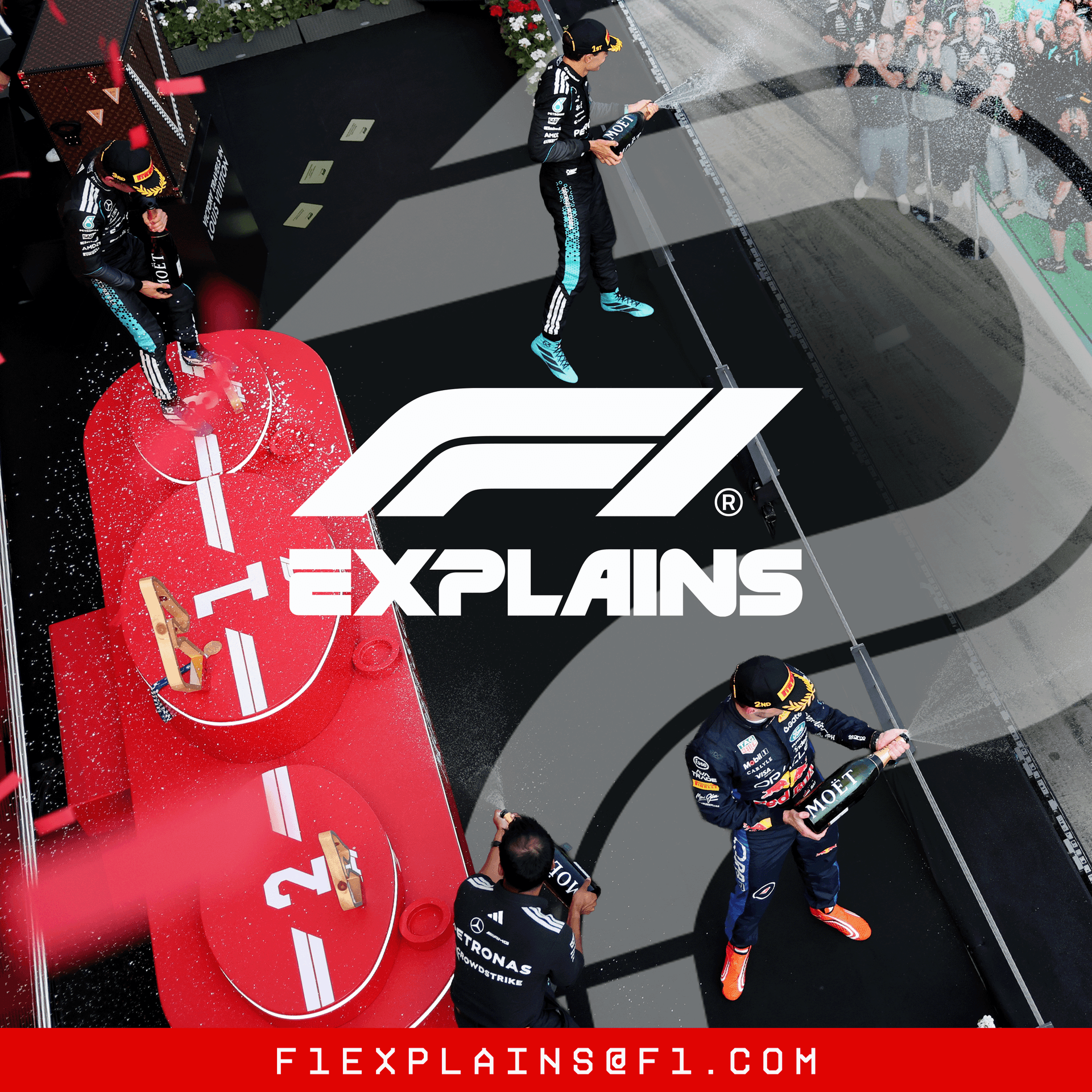
35:28Great question. Yeah, really good question. And it depends how much you were expecting that podium as to how much preparation you will have in place. So, yeah, that was Molly jumping down. That's Molly jumping down. Good. Thank you, Molly. Perfect. Perfect. Yeah, so they do have an opportunity to change and they'll go back to the cool down room so the cool down room which you actually see on tv now you know you see them sort of chatting away um they will have spare kits in there they'll meet their driver trainers so their driver trainers will basically take their kit and when they come off the podium they can change because they'll probably be uh ridiculously sweaty and ridiculously sticky by that point so it is nice to have a change of clothes however if you are potentially not expecting that podium and you haven't got into the process of doing that then you may not have a change of clothes and that's when you often see drivers that they weren't expecting to necessarily finish on the podium or they haven't had a podium for a while when they do go to do media they will still be very sticky and you can kind of tell because it's it's not very easy to hide it if they are kind of covered in champagne but at that point because it's something that's maybe not expected, they don't mind it because it's kind of just adds to the moment.
36:48But yes, for the most part, they are all very prepared. And this is where I learned that champagne absolutely stinks. It was doing an interview, stood next to you, Sophie. When I was interviewing Zac Brown, Zac had just been sprayed. I didn't realise that champagne once dried to a human. Yeah, it is. It really has taught me that. And I told Zac on the television that he smelled and he laughed and didn't mind, fortunately, but he didn't mind he was on cloud line yeah in those moments you don't tend to mind absolutely Sophie thank you this has been fantastic was somebody stood next to you holding a phone during this interview or was Molly the cat doing it perhaps no I feel I feel like I should have had somebody here just for the moment but no I'm I'm all good Sophie this has been brilliant I think so many of our listeners have asked about this I think this has been a real fascinating insight into some of the bits of Formula One you don't normally get to see which is exactly what we try and do on this podcast so Sophie you are one of Formula One's best humans.
37:43I really appreciate you coming on F1 Explains. Thank you, Sophie. Thank you. Thank you for having me. An absolute pleasure. Keep your questions coming. They can be about any aspect of Formula One. If you're more new to us, as I say, sometimes we do talk about the more on-track stuff, but you can ask about any aspect of F1 on or off track. Just email us, f1explained at f1.com. You can write your email in words or you can send us a voice note. Check out the latest episode of F1 Nation on this feed. Of course, Tom Clarkson and his guests have raced previews and raced debriefs. And don't forget our other official Formula One podcast, F1 Beyond the Grid, for interviews with some of the biggest names from in and around the sports.
38:22We are back with new episodes of F1 Explains every Friday. So until then, we'll say goodbye. Bye for now. See you next week.
From the publisher
You've seen them standing alongside F1 drivers in TV interviews. They're holding phones, recording every word the driver says. Who are they and what are they doing?
F1 Press Officers and Communications teams arrange the interviews you see and hear every race weekend. They're the link between the team, the drivers, the media and fans around the world.
Sophie Ogg, who was formerly F1 Communications Director at McLaren, joins Christian Hewgill to explain what's involved in the job: dealing with media requests, working with adrenaline-fueled F1 drivers and reacting to breaking news - all with the aim of letting fans know what's going on inside a Formula 1 team.
F1 Explains is here to answer your F1 questions
Send them to F1Explains@F1.com
Listen to more Official F1 Podcasts
In-depth conversations with big F1 names on F1 Beyond The Grid
Expert opinion every race weekend on F1 Nation - find the latest episode here on this podcast feed
This November, F1 takes over Las Vegas
The Las Vegas Grand Prix returns November 19 - 21, 2026 — and tickets are on sale now! Be there for the fastest weekend of the year. Click here for tickets