
In short
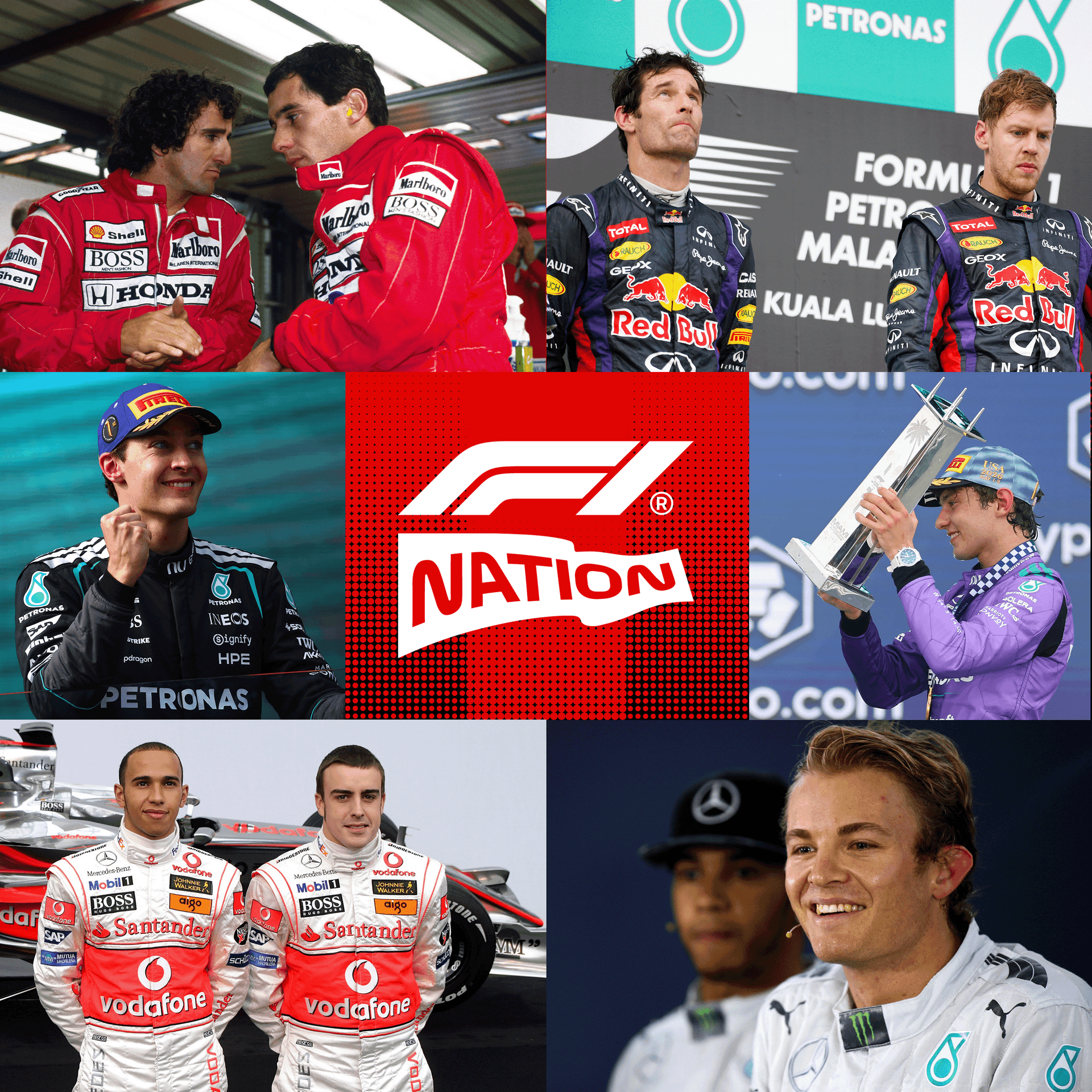
Intra-team Formula 1 rivalries—why teammate battles turn hostile, how teams try to manage them, and what triggers “blow-ups,” using historical examples and current context (Mercedes title fight).
Guests
- Jolyon Palmer (former F1 driver; F1 TV analyst/host).
- James Hinchcliffe (IndyCar race winner; F1 Nation co-host).
Key claims
- Rivalries usually intensify when teammates are fighting for the championship; stakes raise quickly once one is champion and the other isn’t.
- Teams can worsen tensions by trying to keep things “even” (e.g., McLaren’s attempts with Norris/Piastri).
- Driver personality determines outcomes; you can’t “manage” a Rosberg–Hamilton scenario away.
- Media jabs and perceived unfairness (sim/strategy/parts) can destabilize relationships.
- Over-manufacturing rules can backfire; fewer stipulations may reduce perceived wrongs.
Notable examples
- Hamilton–Rosberg: Monaco 2014 qualifying yellow-flag incident; Bahrain 2014 “duel in the desert”; later “skullduggery” and escalating animosity.
- Hamilton–Alonso (2015): Alonso felt “mugged off” by Ron Dennis; Hungary qualifying pit-lane incident; Spygate and team/driver fallout.
- Senna–Prost: Imola 1989 trigger after a lap-1 overtake dispute; Suzuka 1989 collision and ethics/mind games.
- Vettel–Webber (Red Bull): Turkey 2010 crash blame; Silverstone 2010; Malaysia 2013 “Multi-21”; parts taken from Webber to Vettel.
- Current focus: Mercedes intra-team title battle—Kimi Antonelli vs George Russell; discussion of pressure dynamics for “established” vs “young hotshot” drivers.
Written by AI. May contain mistakes. Listen to the episode to check what was said.
Chapters
Tap a time to open that second in VORivalries in F1: An Overview
2:46 to 4:00
Explore the dynamics of teammate rivalries in F1 history.
“All the great rivalries that we can think of that are, you know, intra-team are always when they're battling for a championship.”
Analyzing Recent F1 Races
4:25 to 6:27
Discuss recent races and key performances from drivers and teams.
“Hinch, I would counter that by saying Ferrari might be a little bit disappointed after what they achieved or didn't achieve in Miami.”
The Challenges of Simulators in F1
6:27 to 8:24
Understand the limitations of simulator technology for drivers.
“And if you think back to the sprint, Leclerc was actually hounding Piastri for the second part of that.”
Teammate Rivalries: Hamilton vs. Rosberg
8:24 to 9:18
Delve into the famous rivalry between Hamilton and Rosberg.
“But I do think sims have come on a long way since even sort of the last nine years.”
The Nature of Rivalries in Racing
9:18 to 14:02
Examine the factors that intensify rivalries among F1 teammates.
“Kimi Antonelli leads George Russell at the top of the World Championship standings by 20 points after the opening four rounds.”
Managing Teammate Rivalries in F1
14:02 to 18:50
Explore the complexities of managing rivalries between teammates in F1, focusing on McLaren's recent strategies and challenges.
The Competitive Nature of F1 Drivers
20:20 to 28:00
Delve into the competitive nature of F1 drivers, discussing notable rivalries and the psychological aspects of their racing mentality.
“Right, there's a common denominator here.”
Alonso vs. Hamilton: A Historic Rivalry
28:00 to 30:06
Explore the intense rivalry between Alonso and Hamilton during their time at McLaren, revealing the dramatic events that unfolded.
“There was no world in which Alonso thought that this guy was going to hassle him for the title.”
The Dynamics of Teammate Rivalries
30:06 to 33:08
Discuss the common patterns in teammate rivalries, focusing on the challenges faced by established drivers against young challengers.
“Loads of teammate rivalries are young Hotshoe, who everyone thinks is a supreme talent, finally gets a shot in the top team, and is wickedly quick.”
Young Challengers and Established Champions
33:08 to 36:48
Analyze the pressure dynamics between seasoned drivers and their ambitious young opponents in Formula 1.
“The Villeneuve example is actually pretty good because he came in as a rookie into a top team.”
Show all 17 chapters
Senna vs. Prost: The Legendary Rivalry
36:48 to 42:01
Delve into the iconic rivalry between Ayrton Senna and Alain Prost, examining their contrasting styles and the impact on F1 history.
“he'll be a 19-year-old multiple race winner with a championship in him at some point.”
The Tensions of Championship Rivalries
42:01 to 46:08
Explore how mind games and media interactions impact rivalries in F1.
“And this is almost where Prost was kind of using the FIA relationship, right?”
Management Challenges in Heated Rivalries
46:09 to 50:14
Discuss the struggles team managers face in handling driver rivalries.
“I think an interesting point as well is that when you talk about team managers, team principals having to manage these situations, right?”
The Vettel-Webber Rivalry: A Case Study
51:16 to 56:00
Analyze the breakdown of the Vettel-Webber relationship at Red Bull.
“Finally, JP, I think it was you who mentioned Vettel Weber.”
The Tension Between Webber and Vettel
56:00 to 58:00
Explore the mismanagement and dynamics of the Webber-Vettel rivalry.
“He played a big part in keeping it harmonious.”
Analyzing Current Rivalries in F1
58:00 to 1:01:48
Discuss the implications of age and personality in current rivalries.
Favorite Teammate Rivalries
1:01:48 to 1:02:36
Reflect on memorable teammate rivalries in F1 history.
“and the$100 million fine that McLaren were given and they were thrown out of the Constructors' Championship.”
Transcript
Automatic transcript. May contain errors.0:00This episode is sponsored by Honda. Since its first Formula One victory in the 1965 Mexico Grand Prix, Honda has always taken what's learned on the track and used it to build better cars for everyone. From pushing limits in F1 to engineering the next generation of hybrids like the Prelude Hybrid and Civic Sedan Hybrid, Honda proves that racing doesn't just inspire innovation, it drives it. And that idea of taking lessons from the racetrack and applying them to road cars has always been a part of Honda's DNA. Decades of engineering in the demanding world of Formula One have helped shape the performance and efficiency you see in Honda's road cars today.
0:44And now that same thinking is shaping the next generation of hybrids as well. Cars like the 2026 Prelude Hybrid and Civic Hybrid show that electrification can be both efficient and genuinely fun to drive. The 2026 Prelude Hybrid and Civic Sedan Hybrid are engineered for fun. From the racetrack to your driveway. Learn more about the Prelude and Civic and the latest innovations at Honda.com.
1:13James Hinchcliffe:If modern life feels a little loud, you're not alone. At Miraval Resorts, mindfulness has never been about perfection or performance. For more than 30 years, it's been about presence and about slowing down enough to listen. At Miraval Berkshires in Lenox, Massachusetts, each season brings its own rhythm. Rolling green hills, quiet forests, and a sense of stillness that feels like a sanctuary. Here, well-being takes many forms, meditation, yoga, hiking, equine experiences, and time set aside simply to be present. These aren't just experiences for the moment. They're simple, intentional practices, tools you can carry with you long after you leave.
2:01James Hinchcliffe:Because wellness doesn't live in one place. It lives in how you show up again and again. Miraval Resorts, wellness for real life. Learn more at miravalresorts.com. 102 miles ago, the oil light came on. 100 miles ago, you noticed. Now, it's time to head to take five. This oil change, fall in love with your car all over again. In just 10 minutes, your dream technician will check your tire pressure, top off fluids, change your oil, and verify with Carfax exactly what your car really needs. all while keeping you in the driver's seat. Take 5, the stay-in-your-car 10-minute oil change. Find your nearest shop at take5.com.
2:46James Hinchcliffe:All the great rivalries that we can think of that are, you know, intra-team are always when they're battling for a championship.
2:52Jolyon Palmer:They've all got a trigger point, haven't they? In a way, it was a recipe for disaster putting those two together. Anytime you can say something in the media that might get under the skin of the other guy, you use it.
3:05James Hinchcliffe:I don't think you can manage a Rosberg-Hamilton scenario any differently.
3:11Jolyon Palmer:I think Mark started to feel that he was up against Seb and his own team.
3:16James Hinchcliffe:The one that I just remember the clearest was Hamilton-Alonso, and just blown away by the level that it deteriorated to. This all started because Alonso felt he'd been mugged off by Ron Dennis.
3:28Jolyon Palmer:Let's do Senna Prost, guys. I was looking through the stats, and I can't believe that this was even a rivalry.
3:37Hello, everyone, and welcome to F1 Nation. I'm Tom Clarkson, and as usual, I have my teammates from F1 TV alongside me, former F1 driver, Jolian Palmer, and IndyCar race winner, James Hinchcliffe. Guys, very warm welcome to the show. How are you both, first of all?
3:55Jolyon Palmer:Very good, TC. Back from Miami, back to the cooler temperatures, and back to another couple of weeks off, aren't we? So back into the garden and getting ready for Montreal already.
4:07James Hinchcliffe:The garden must be coming along nicely.
4:09Jolyon Palmer:It's so good, Hinch. Hinch, you've got less of a restful period ahead, I think.
4:15James Hinchcliffe:Yeah, yeah. But well, otherwise, you know, obviously back in Indianapolis now, and it is well and truly the month of May. And, you know, we've got the Grand Prix coming up, the on the road course here this weekend. But events have already started. Prep has already started. it's uh it's fully fledged it's pretty flat out from here until the 500 now just before we get on to the meat of this show jp you couldn't join us post-race in miami so can we get your thoughts now when you look back at what happened last weekend what was the biggest headline for you
4:49Jolyon Palmer:uh well i think there were there were two big ones weren't there one antonelli i thought it was a statement race from him a statement weekend from him to be that good i think we we sort of previewed that he was going to be strong there but i don't think we saw him being that strong compared to george all weekend uh the other headline is though how good everyone else was as well the mclarens the ferraris and pretty much everyone that bought upgrades found the right amount of pace or more than i think we expected but like a really good amount there wasn't anyone really scratching their heads with um new parts on the cars so it made it pretty intense and i really enjoyed the Grand Prix.
5:26Hinch, I would counter that by saying Ferrari might be a little bit disappointed after what they achieved or didn't achieve in Miami. They brought more upgrades to their car than anybody else. And of course, then we had the Charles Leclerc spin on the final lap. Do you agree with me? Do you think Ferrari will be head scratching back in Maranello?
5:47James Hinchcliffe:I mean, here's the thing. I mean, if you take the Leclerc spin out of it, you know, running for a podium contention until the final lap. Hamilton's race was compromised lap one from the Colopinto contact and losing a significant amount of downforce and damage to the car. The results will be disappointing, certainly, but I think that they can take a lot of positives still away from the weekend. Was the upgrade package the instant second faster they wanted it to be? No, probably not. But in a sprint weekend, it's so hard to maximize and optimize everything. So yeah, result probably a little bit disappointing, but I don't think all is lost there just yet.
6:26Jolyon Palmer:They also, they led half the Grand Prix or nearly half the Grand Prix, didn't they? And if you think back to the sprint, Leclerc was actually hounding Piastri for the second part of that. So the pace for a lot of it seemed pretty good. And also, we mentioned it before Miami, they already have basically the best chassis so upgrades for the best car are not going to be as effective as upgrades for everyone else basically so what they need is a power unit upgrade and then i think we'll see how good their car really is all they need to turn up to maybe canada uh certainly monaco there was one interesting comment hamilton made on sunday night which was that he said he's being misled by the simulator uh back in marinello he i don't know what you guys make of that um charlotte claire doesn't say the same thing about about the sim there seems to be a sort of correlation issue between the sim and the human rather than you know the sim and the car itself
7:24James Hinchcliffe:it's very plausible it's i've been there i've had that experience before you know ultimately a simulation is just that it's a it's a simulation it's not the real thing and i think it's actually easier as challenging as it is and it is very challenging to get the the tire model the aero model the engine model the track model all the different elements that you have to get right in a simulator to try and get it to correlate well to the racetrack the one thing you cannot do is replicate the feeling of a race car from inside the cockpit you can have it move around the room and simulate a fraction of the G that you actually feel in the car, fine.
8:05James Hinchcliffe:But it's not going to talk to you. It's not going to really give you that visceral feedback in the same way. So I've certainly had situations in the past. I don't know, JP, if you've had it too, where the car felt a certain way in the sim and that same setup when put on to the actual race car just kind of gave it a different feeling.
8:23Jolyon Palmer:A thousand percent. But I do think sims have come on a long way since even sort of the last nine years. and the idea is that they can get really, really close now, but also for the drivers, sometimes each driver is different as well to how they're feeling grip and how they're feeling balance through their core, their hands, their feet, all the parts, and if Charles finding it okay, and his performance is stronger than Lewis at the moment, obviously with new parts coming on, I feel like Lewis closed the gap through the Miami weekend, but initially there was quite a solid gap on the Friday, So maybe that is an indication that Charles is happier and the Sim is kind of, or his driving isn't as badly correlated between Sim and track.
9:11Right, guys, let's get into the bulk of the show. All right, we're going to talk teammate rivalries. Kimi Antonelli leads George Russell at the top of the World Championship standings by 20 points after the opening four rounds. McLaren, Red Bull and Ferrari made big steps forward in Miami. We've just established that. And they could yet join the fight with Mercedes as the season progresses. But at the very least, it looks like we've got an intra-team title battle on our hands at Mercedes Antonelli versus Russell. And with a bit of a break between Miami and Montreal, I thought it'd be a good chance to take a look at the greatest teammate rivalries in F1 history.
9:52What made them so iconic and how different are they to some of the rivalries we see today? Now, I'm going to go first and I'm going to serve up Hamilton versus Rosberg at Mercedes 2013 to 2016. Although I feel the rivalry only really kicked in in 2014. 2013, I seem to remember, it was the last year of the V8s and Hamilton was betting in at the team. Of course, Rosberg had been there a wee while already. But in 2014, it really started to kick off. And I feel that the moment that it teed off was at Monaco 2014. I don't know if you remember it, guys, but we're into the final bit of qualifying and Rosberg just runs wide at Mirabeau and brings out the yellow flag, which prevents Hamilton from getting a clean lap at the end of qualifying.
10:47Rosberg starts on pole and away we go. And then it seemed to just amplify from there and there's all sorts of other moments I could mention. Barcelona 2016 when they crashed on the opening lap. What do you guys think was the reason behind that level of, I think animosity is the word. By the end of it, I think it was animosity. Just looking from the outside in, what did you guys make of that?
11:17Jolyon Palmer:The first thing I think that's pretty obvious to me is the difference between 2013 and 2014. what's the difference they're fighting for a title so the fact that hamilton came into mercedes in 2013 and outscored rosberg yeah great you know he was a big signing it was a coup for mercedes to get him but it was it was close enough as you said they both won races um happy days we get on well we're old mates brilliant as soon as one of them will be champion and the other one's not champion the stakes just get raised so high so that that's that's the first the first big thing that happens across the board i think i remember the bahrain race in 2014 because that was a brilliant race wasn't it was the duel in the desert we've spoken about it already this year and that for me set the tone between them because it was the one they were hugs afterwards brilliant fight and then it emerged that uh i think rossberg had been using some some sort of frowned upon engine modes in the race to attack Hamilton and it was the start of things a little bit of skullduggery going on between teammates that before you have one of these like eureka moments of like hang on that's not ethical in the battle that we're doing it can be harmonious if fierce as soon as you think someone is actually taking extra measures that you're not yet prepared to go to could be risking a crash could be uh the Monaco situation with with Rosberg where he sort of looked like he went off potentially deliberately there um any of these sort of things and you think whoa that was one below the belt and the tension start to rise i think i think jp nailed it you know the only
12:57James Hinchcliffe:thing that matters to racing drivers is winning so these little squabbles these you know one driver did something maybe uh you know a bit below the belt to a to a teammate they happened up and down the grid on most teams at some point in every season but the only time when you really hear about it is when it's at the front because if it's over sixth place yeah you're annoyed and it might might temporarily you know sour relations between the drivers but at the end of the day you're not there to finish sixth but it's all the great rivalries that we can think of that are you know intra-team are always when they're battling for a championship i'm sure there have been epic ones But you were battling for 10th.
13:40James Hinchcliffe:It just doesn't it doesn't feel the same for the driver doesn't carry the same weight. So I completely agree that it's it's such a function of, you know, we're on the grid that that you're racing. And I think some people are willing to do more than others. And what's interesting in those situations is how that other driver responds. the one that makes that first blow are you willing to step up and then also kind of maybe go against your your morals and what you would have done had somebody not drawn first blood what's the team's role in all of this because toto wolf has said quite recently actually that he thinks he mismanaged the relationship between hamilton and rosberg um the team by trying to keep things even sometimes just exacerbates the problem and i look at mclaren last year actually with uh with piastri and norris they were trying so hard to keep things level that they ended up almost tripping over themselves and you know let's look at look at monza trying to sort of keep it fair but almost by keeping it fair you're forgetting that racing isn't always fair right sport isn't always fair sometimes you don't get the rub of the green and that's just the way it goes they sort of got away with it didn't
14:53Jolyon Palmer:they mclaren because they won the championship they won both championships so they were spinning plates the whole way through the season and it must have given them so much extra work that the other teams weren't having to do imagine you're on the McLaren pit wall and you're thinking oh do we swap these guys back do we not you've got probably Zach and Andrea Stella in communication with the race engineers how much communication how much thought process is going on to how you manage those races the start in Singapore you've got Norris sort of barging his way past Piastri again McLaren was spending the early part of that race looking through their own teammates little bit of contact and they gave themselves a massive headache but in the end because they got away with it I feel like that is probably a case study of how it was quite well handled ultimately because we're into the next year and the drivers are still harmonious although they're not yet in in the championship battle but I just think it's I think it's so difficult it depends on the personalities you've got doesn't it and i think at mclaren both of those guys neither of them had a championship both of them needed the team on board to take the championship whereas when you look through some of the big ones in the past you're dealing with at least one guy that's already a champion uh and it becomes way harder if the other guy is ready to roll up his sleeves and and do a little bit more to take the championship so if You take Hamilton and Rosberg, you've got Hamilton more talented than Rosberg.
16:20Jolyon Palmer:It's tough to argue any other way. But Rosberg then throwing everything at him because he just thinks, to hell with the team. If I ever want to beat this guy, I have to start thinking outside the box and doing some of the other stuff. So that's where it becomes impossible to manage, I think. What could Toto really do in that position? Just on the McLaren thing, let's suppose for a second that the McLaren end up with the same advantage that they had last year. And we have Norris versus Piastri take two in 2026. I think it's not going to happen because Mercedes are too quick, etc. But just suppose for a second that happens.
17:01Do you think Piastri and Norris would approach the championship in the same way they did last year? Would Piastri be as benign this time around?
17:11Jolyon Palmer:that's so this interesting because they're now in a different position aren't they norris is now a champion piastri's had that experience of fighting for a title and maybe they wouldn't be both as as subservient as they were to mclaren last year maybe they wouldn't maybe they would because the relationship is still there but maybe we will find out at some point tc but uh you know characters even if you take other people if you take nika rosberg earlier in his career or lewis hamilton earlier in his career would they have raced things differently with the experience and the the sort of fight that they ended up having at their stage when they were at mercedes no i think you nailed
17:49James Hinchcliffe:it in the first answer it's it purely comes down to personality i think i think mclaren lucked out that the two very talented drivers that they picked also happened to have the personalities that they did. I don't think you can manage a Rosberg Hamilton scenario any differently. I think ultimately the driver's desire to win a world championship is going to, you know, it's going to overcome whatever, whatever barriers you put or bumpers in the bowling alley, you know, you put up to try to keep them going in the right direction. I think, I think Lando and Oscar are just different human beings and different personalities and say, you know, because I know we're going to get into some other ones, I won't jump ahead.
18:36James Hinchcliffe:But some of these other rivalries that are going to come up, you look at the personalities and there's no way you can tell me that's the same kind of guy as Oscar or as Lando. This episode is sponsored by Saley. I'm sure I'm not alone when I say that when I'm traveling, I want my phone to work the moment I land somewhere new. Whether it's checking messages, finding my way to the hotel, or just letting people know I've arrived, having a data connection straight away makes a huge difference. And that's why I like using Saley. Saley is an eSIM app from the creators of NordVPN that gives you affordable mobile data in over 200 destinations.
19:18So instead of worrying about roaming charges or trying to find a local SIM card at the airport, you can just connect as soon as you arrive, which is such a safety net for me now that we're back racing again. And what I really like is that you only need to install the eSIM once. After that, you can travel between countries and stay connected simply by adding a new data plan. It also includes built-in security features like a VPN and ad blocking, which helps protect your browsing and can even reduce mobile data usage by stopping ads from loading. And if you travel frequently, like I do, They also offer the Saley Ultra Plan, which includes extra perks like airport lounge access, fast track services and priority support.
20:03So download the Saley app in your app store and use the code F1Nation at checkout to get 15 % off your first purchase.
20:20Jolyon Palmer:actually guys if you look at the rest of the grid and let's say mercedes have a big car advantage they're going to win the title if you could put any one of the teammate pairings as having the best car that one of them will win the title which pairing do you think would create on paper the most difficult to manage situation. Right, there's a common denominator here. I think Leclerc-Hamilton would kick off. I agree. And I think there's a ferocious competitiveness in Lewis that just leaves no stone unturned. And I'm not saying he's dirty in any way, but just that level of ferocious competitiveness would, I think, end up leading to trouble.
21:01Jolyon Palmer:And there's a bit of ego there as well. There's ego in everyone. but I think if you you've got to not be accepting second place haven't you you've got to be thinking I'm the best this is my title it's completely what I was thinking Leclerc Hamilton you've got a guy that's won seven you've got a generational talent that hasn't yet won one I don't think back to what Hinch said I don't think there's a way that that Fred could manage it if they're even on pace and they have the best car like that and so Toto we had examples of uh Nika Rosberg said that they had to foot the bill after Barcelona or some incidents.
21:39Jolyon Palmer:Toto said maybe we should have benched them for a race and that was the last threat. Well, he's never going to get to after Barcelona and say, right, we're going to put in two reserve drivers. You can't put one reserve driver in. How unfair is that? So these things are pie in the sky. They're not doable when you're actually in position there. On top of that, you've got all sorts of contracts in place so i just think ultimately if the characters are there it's unavoidable for the for a team principal do all racing drivers hinge have a similar desire to be champion that sounds a stupid question i know but some guys are there because they just love driving and i think other people are there because they love the competition and it's the latter category that causes the problems, right?
22:30But do you agree with me that some want it more than others? Or is that just too much of a sweeping statement?
Read the full transcript
22:36James Hinchcliffe:No, I think some want it more than others. I think they all want it. I think that's what gets you up in the morning, right? In F1 especially, it's so hard to win, right? You have to be on one of two, maybe three teams. So if you're on one of the other, you know, seven or eight teams, it's hard to motivate in the morning if your sole motivation is winning, right? Because you know, you've got no chance to win your you have to kind of recalibrate your brain to think, well, my win today is an eighth. And then, you know, that hopefully gives me the opportunity to move up the grid and eventually be in a car that can fight for a win.
23:14James Hinchcliffe:But so every driver wants to win first and foremost. But yeah, there are some that are willing to do things and push the limits and the boundaries, I think more than others. It's not a it's not a difference in desire i think it's a it's a difference in what you're willing to essentially sacrifice to get there is it a bit of morals as well a bit of like your your racing ethics yes i i really do and i think that the rossberg hamilton example is a is a great one and you know you obviously go back to prost and senna and i think that comes up a couple times We've seen Michael Schumacher make some very questionable decisions on the racetrack when a championship was on the line.
23:58James Hinchcliffe:Not every driver would do that. Not saying it's right or wrong, good or bad, but I do think there's a discrepancy between how far certain drivers are willing to go.
24:08Jolyon Palmer:I think that Hamilton-Rosberg year showed us as well a great example of that. You had Rosberg chipping away any possible time he could, he was getting under Lewis's skin. and bearing in mind he was kind of the inferior driver in terms of talent the fact that he brewed up this rivalry probably helped him in trying to make something get under Lewis's skin and make it more more difficult for him anytime you can get your opponent's concentration or get him out of out of his sort of steady state that's going to be a good thing and on the other side you had Lewis on the final lap or the final laps going against Paddy Lowe on the pit wall slowing down the whole field and these were lengths that I don't think a lot of other drivers would do I think a little bit like we saw Max last year not do that Max 2021 would Max 2025 wouldn't and is a pretty clear examples I think of the mentality and obviously if you would again it's impossible to manage I think there's a relentlessness to Nico Rosberg isn't there I mean I love Nico I've known him for years I used to write his press releases for him when he was in Formula 3 that kind of thing but when I ran the marathon a couple of weeks ago the only text I got from him was can't believe you let Vettel beat you that was it that was it I just thought he's got high hopes for you TC that's the good thing but I thought that was I mean he was joking obviously but I thought that was actually a great insight into the mentality of Nico Rosberg he just can you imagine being his teammate where it's just relentless the whole time he won't let anything go he won't give up he won't you know he won't just turn the page it's all about winning and
25:49James Hinchcliffe:that's where you have to give nico so much credit because you know he was up against lewis hamilton 99.9 percent of formula one drivers can't beat lewis hamilton in a straight-up fight at that time in his career and he managed to do it by utilizing all of these tools everything in the toolbox even some tools that other people wouldn't have been willing to do he saw that was his opportunity. It took absolutely everything out of him to the point where he was like, I'm done. I can't go through that again. It's almost like he didn't, he didn't even enjoy it. He didn't enjoy it. Right. He was so focused on winning that he had no opportunity to enjoy it.
26:25James Hinchcliffe:And it was miserable to be in that scenario, to have to sacrifice everything, to have to have every waking minute of not only how can I beat him? How can I slow him down? How can I make his life worse? Because it wasn't just his focus wasn't just solely on him because because i agree with you joey he was not as quick you know he wasn't as total it was complete a racing driver so to beat lewis you had to do more you had to go above and beyond so his his effort wasn't even just on making himself better it was every minute he could but there was also an element of how can i rattle lewis and slow
26:58Jolyon Palmer:him down he's just a tenacious person isn't he yeah imagine for for our newer listeners who weren't watching in 2016 but have watched recent years nico rosberg the pundit imagine being on the other side of the garage of that guy who holds everyone to account you can't get away with a soft answer you know is is difficult and you know ultimately that can really be a skill and it was for him to win a championship very good point right that's hamilton rosberg um hinge what have
27:30James Hinchcliffe:you got for us give us another rivalry the one that i just remember the clearest because you know i was i was old enough and and in the sport enough to really get it and just blown away by the level that it deteriorated to was hamilton alonso that one for me you know it's just such a good story you've got the two-time champ who's moved over to mclaren you've got the rookie the the the prodigy coming up through the ranks. There was no world in which Alonso thought that this guy was going to hassle him for the title. And you want to talk about tenacious and willing to do anything to win, Fernando Alonso's face is going to be in the dictionary next to tenacious.
28:16James Hinchcliffe:And the level of skullduggery, you know, and tomfoolery that followed was unbelievable to the point where it was the most spectacular, you know divorce in driver team history at the end of the season uh and ultimately their rivalry and and their inability to play well together cost them the title uh cost mclaren you know a driver's championship so to me that one was was just an unbelievable display it's one of the
28:45Jolyon Palmer:all-time stories isn't it and also imagine on the receiving end of that you've got ron dennis at McLaren, one of the hardest taskmasters that Formula One team principals seen. And he can't control a Fernando Alonso new signing, a Lewis Hamilton rookie partnership. I bet Ron could not imagine how that was going to go when he signed Lewis at the start of the year. But again, it shows you've got Toto, you've got Ron, two old timers, especially Ron at that stage. And if the drivers want it badly enough you can sack him at the end of the year you can do what you like but you you can't stop things blowing up like this well this all started because alonso felt he'd been mugged off by ron dennis he thought he was coming in as the number one driver and as i mean from almost lap one of the first race it became apparent that that hamilton was was his equal from the get-go and so suddenly there was no number one status and it very quickly spiraled out of control and we were left in Hungary.
29:50Who can forget qualifying in Hungary when Alonso just sat in the pit lane so that his teammate couldn't get a final lap in? And then from there, you know, the Spygate,$100 million fine. I mean, it was one of the most spectacular seasons in F1 history.
30:07Jolyon Palmer:So I think you've got another textbook. Why does a rivalry blow up? Number one, a championship on the line. number two old older hand experienced driver has young upstar coming up against him so if you take a load of rivalries from there it's actually pretty rare that the young hot shoe doesn't do a great job against the experienced experienced hand so you've got Vettel v Weber similar story Vettel coming up gets under Weber's skin beats him difficult then you've got Ricciardo v Vettel you've got Leclerc v Vettel, Verstappen v Ricciardo. Loads of teammate rivalries are young Hotshoe, who everyone thinks is a supreme talent, finally gets a shot in the top team, and is wickedly quick.
30:54Jolyon Palmer:An established guy can't quite handle it. And then you have this clash. And I was actually thinking, can we even name many drivers where the established guy just sees off the young challenger, who we all think is that good? it's quite difficult to come up with names of the establishment that succeeded against the young hot shoe.
31:15James Hinchcliffe:Damon Hill, Jacques Villeneuve, 96.
31:18Jolyon Palmer:Different case. Different case, I think.
31:21James Hinchcliffe:He wasn't an F2 driver coming up. He was already an IndyCar champion.
31:27Jolyon Palmer:And he's a rookie. It's a good shout, but it's... Hakanen Coulthard, McLaren. Senna Hakanen at McLaren. So we're going back a long way, though, aren't we? we're all straight into the 90s guys we're all into the 90s here's here's what i think is is a
31:44James Hinchcliffe:big part of that and i'd be curious to hear your thoughts on it the the rookie comes in with so much less expectation and expectation can be you know the the the seed of of disappointment right i think when you are the established driver that that expectation that weight that pressure is so much greater than a rookie coming in being like everyone thinks he's fast everyone's you know supporting of him being there, but he's going to take a couple of years to learn. And the experience of a list, all those other drivers out will ultimately, you know, reign supreme over the course of the season. When you can drive free from that kind of expectation, I think drivers perform better.
32:25James Hinchcliffe:And I think being, being the chaser is in that kind of scenario is, is easier than being the chase. We always talk about in a championship battle, you'd rather have the lead and, you know, not be the chaser necessarily. But I think when it comes to global expectation and the pressure that comes with that, there, yeah, there are just so many examples of young drivers that can come in that have been told, you're good, we believe in you, but no pressure to perform at, you know, a crazy high level this year. You can just kind of come in and do your thing as a driver. Whereas when you're the established guy and there's a young guy that's trying to dethrone you and take that mantle, immediately there's an extra element of pressure that you're dealing with that the other driver isn't.
33:09Jolyon Palmer:The Villeneuve example is actually pretty good because he came in as a rookie into a top team. So in recent years, I was thinking, right, let's say since even 2000, you've got Hamilton and Bottas. So Bottas replaces Rosberg, has a few years at Williams. People saw him as a bit of a hot shoe, gets the Mercedes shot, but Hamilton absolutely dispatches him obviously you've got the whole run of uh of red bull drivers since verstappen so gasly maybe people thought was going to be a bit of a challenge hajar now i think in between you got perez and sonoda maybe weren't quite as as well touted albon yeah yeah albon exactly another one had a quick rise um so verstappen saw them off but these are like hamilton and verstappen top top line drivers who were able to beat obviously drivers who are not yet proven the other one is Norris and Piastri so you've got Piastri f3 champ f2 champ gets to Formula 1 has the title shot and actually Norris dug in so deep but held him back last year which felt like a seminal moment in there obviously one of them's a champion now and in their teammate rivalry as well the fact that Norris stopped the charge of Piastri so moving it forward you've got Antonelli Russell Number one, they're fighting for a title.
34:26Jolyon Palmer:Number two, young Kimi Antonelli, second year up against George Russell. And hence, I feel like this is another time where it's a huge season, particularly for Russell, to see if he can be one of these outliers that holds off a prodigious young talent.
34:41James Hinchcliffe:But he's got that pressure, right? He's got everything that you described that creates these scenarios, these really fractured team scenarios, is what we're looking at. established guy with the pressure and expectation of being the champion young upstart with tons of potential but still kind of given some leeway in a car capable of fighting for a title it i mean how could be blockbuster yeah and how the young upstart if he doesn't win the title bounces back i look back to to hamilton in this 2007 scenario alongside alonso hamilton was leading that championship by 17 points with two races to go and he loses it equally Oscar Piastri last year he was what 34 points ahead just after the summer break and he loses it Hamilton then comes back and wins the title in 2008 where we see Piastri go from here I think will be fascinating how he bounces back I think he's resilient enough to do that he obviously just needs the right car But still, I'm watching Piastri with fascination to see how he copes with the disappointment of last year.
35:49Jolyon Palmer:They fell away for different reasons, didn't they? I mean, Hamilton was literally in the gravel in Shanghai and then his gearbox failed in Brazil. So you could pinpoint two unlucky reasons. I mean, you could argue the Shanghai one either way. Whereas Piastri lost it for a run of form, really. So there's a slight difference in that. but in in the similarity as these these youngsters just come out just swinging for the fences and a bit like Kimi right now every weekend is a bonus yeah I'll win another race well wow this is going really well same with Oscar last year you come out this is Lando's title Lando wins the first race and then hang on I'm all right hang on we're going on a big run now I'm championship leader what I'm suddenly fighting for something you've got nothing to lose in this situation and As you say, TC, Hamilton then went to go and be a seven-time world champion, but the next year a champion.
36:41Jolyon Palmer:Piastri's got a lot of time left in his career to actually convert a championship. And if Antonelli misses this year, he'll be a 19-year-old multiple race winner with a championship in him at some point. If Russell misses this year, it'll be way harder to stomach, particularly if Antonelli's the champion. That'll be tough because it will feel like all of the Mercedes momentum will stop with Russell and it will go towards Antonelli as the future guy. Well, JP, what have you got for us when it comes to rivalries? What is a standout one for you? Well, let's do Senna Prost, guys, because this one for me was, right, disclaimer, I was born in 1991.
37:21Jolyon Palmer:So when they were teammates, I was not alive. But it's such a well-famed story. and because I was looking into this in anticipation for this pod, I've just looked through their time as teammates. Two years, 1988, 1989. And TC, you probably know better than me this era, but I was looking through the stats and I can't believe that this was even a rivalry because you've got Etten Senna out-qualifying Alain Prost 14-2 in 1988 and he wins the championship. He does the same in 1989. He out-qualifies past 14-2. In his run coming through to McLaren, he's barely had a teammate. Johnny Dumfries and Satori Nakajima, do you know what their average qualifying deficit was to Senna?
38:16Jolyon Palmer:I've had a lot of fun doing this, right? Yeah. It's somewhere between three and four seconds per lap. What does that debrief look like? well Satoru how can you go quicker what do you need from the car we're just looking for like a second a corner please mate I mean so Senna Senna's arriving to McLaren
38:44you're saying he was an unknown quantity when he came to McLaren
38:48Jolyon Palmer:and he's never really had a team
38:55what do you need from the car
39:04it's the best stat you've ever discovered but you've ever worked out honestly i had a lot of fun doing that i had a lot of fun having a look jp it raises a really interesting point doesn't it so you've got senna arrives in 1988 he's never
39:19Jolyon Palmer:really had a proper teammate and then he's up against Prost.
39:27Jolyon Palmer:So Senna arrives to McLaren in 1988. He's never had a proper teammate.
39:37Mate, you're going to have to start this chat with a different line.
39:39Jolyon Palmer:Yeah, yeah. Oh, this is one for the outtakes reel. Okay. oh man
39:53what is happening
39:55Jolyon Palmer:it's not even that funny we just can't pick up now oh man so you've got Senna arriving to McLaren I just can't look at the screen I can't look at the screen
40:14oh god so you've got Senna arriving to McLaren in 1988 he's never had a proper teammate in
40:25Jolyon Palmer:Formula One he's up against a multiple world champion already and the matchup is just fascinating because basically he's just ruthlessly quick and he's a lot quicker than Prost wins the title in 1988 and then it all blows up doesn't it so in this case you've got young Hotshoe coming through looking really good and then it all happens in 1989 I look through and Senna seems to be really unlucky in this year as well he looks a bit stronger than Prost and it comes down to the wire in Japan and and we know the outcome of it but it's another indication of the professor, Alain Prost, trying to do everything he could to get under the skin of fundamentally a faster driver.
41:08Well, that's what I loved about Prost though, JP, was that he realized he couldn't, you know, he couldn't hold a candle to centre over one lap. So he never tried. It was all about Sundays for him. And as a result, he was able to keep the championship going till the end of the year and in 89 of course you know he gets that championship after the collision um at suzuka
41:31James Hinchcliffe:it's a great point jp because the the real sort of you know uh shenanigans kind of didn't start till son had that first championship and i wonder if i wonder if even pross knew what he was capable of and how far he was willing to push the boundaries the the ethical boundaries you know before that time is this something that drivers had kind of been doing their whole junior career as well and there were you know examples of it that maybe we just don't know about or do you think when you're in that pressure cooker situation championship on the line refusing to lose that's
42:07Jolyon Palmer:when it just sort of comes out you've got sort of mind games in this as well haven't you so it's in the interest of the guy that's that's fundamentally not as quick to do things differently to try and force the rivalry, try and close the field.
42:25James Hinchcliffe:And this is almost where Prost was kind of using the FIA relationship, right? Because that was a big part of the mind game part of it with them.
42:34Jolyon Palmer:Precisely. And obviously that went against Senna in 89. And you have that in the back of your mind if Senna did at the time. And I just think if you're in that position, you're Nico Rosberg, you're Alain Prost, you're a really thinking calculated driver you're a very fast driver but probably well you're definitely not as fast as these these absolute goats alongside you hamilton or senna so you start to pull everything back into your skill set and anytime you can say something in the media that might get under the skin of the other guy you use it you use that as an opportunity every time and fernando's another driver that's always had this in his locker in his career obviously in 2007 it was uh the start of the sort of political side that we saw of Fernando but you feel like every time he speaks to the media he knows what he wants to get out of it and I think with some of these rivalries as the tensions rise you you sometimes want to get underneath the other guy's skin you don't want to just have a straightforward media session you want to think if I can have a little poke here a jab there unsettle them somehow it starts to to level the skill set out and maybe he'll get to the grid and he'll be more worried about me in second than than this or that and sometimes we've even seen that with max and max and lando in in their championship battle in 24 and other non-teammate rivalries as well well and it was ethics where that was the reason that it actually fell to pieces between senna and prosted imola in 1989 prosted proposed that whoever was leading into turn one should stay in front for the opening lap of the race there was of course that big accident of Gerhard Burgers so there was a restart and Prost got to the first corner first Senna overtook him on lap one and that was the trigger point for all the animosity that followed now you could argue I think that Prost was just playing games with the team and playing games with Senna why would Senna agree want to agree to a stipulation that you don't overtake on lap one because maybe it was because Prost thought, well, he's faster than me, so I've got to think of every reason to keep him behind me.
44:46And then when it didn't happen, of course, it all exploded. And then what I find extraordinary about this relationship is that even when they weren't teammates in 1990, Prost, of course, went to Ferrari. It ended at turn one at Suzuka at the end of that year, which ultimately gifted Senna the world championship.
45:04Jolyon Palmer:but even when they weren't teammates it's still boiled over they've all got a trigger point haven't they all all of these rivalries we mentioned um uh i think monaco was one in uh in the alonso hamilton year as well uh where lewis was told to hold position and and there was a sort of tenseness about alonso they're thinking he had it under control anyway and um and and this in that you've got the 2016 and 2014 examples of the mercedes duo and that imola one as well you always have something where one of the guys is like hang on that's not that's not quite how i thought we were playing it so maybe that was prost thinking he was completely wronged by senna who passed him and they had this gentleman's code um maybe it was it was senna on the other hand thinking hang on why would i agree to follow you bearing in mind you're at the front and and And, you know, that doesn't make any sense.
45:59Jolyon Palmer:He's experienced hand playing his cards. So you've got all of these things. And when you have then a championship on the line as well, in all of these examples, the small tensions become massive tensions. I think an interesting point as well is that when you talk about team managers,
46:13James Hinchcliffe:team principals having to manage these situations, right? One of the most difficult things to manage, you know, is a driver in the heat of the moment. So the fewer stipulations you put, the fewer rules that are in place, I think the better. If that rule of whoever leads into turn one, you know, wins the race, if that doesn't exist, then Pross can't be mad when Senna passes him, at least not in the same way. So I think when you're dealing with these types of scenarios, almost the best way to manage it is to step back and kind of let them do their thing. Yes, there's the golden rule. You can't hit each other.
46:51James Hinchcliffe:There should be repercussions for that. Team first, all that stuff. But I think as soon as you try to over manipulate or over manufacture it, and this is where McLaren kind of flirted with that line, I think a few times last year. I think that's where it gets a little bit trickier, because if those if those rules don't exist to be broken, then no one can feel wronged by somebody else breaking the rule.
47:11Jolyon Palmer:Yeah, sometimes you can overcomplicate things, can't you? I'm interested, TC, do you remember when DC and Mika Hakkinen then were at McLaren title fighting? I watched over the winter your Memory Box series with DC, and he was going through, and he mentioned the 1998 first race where they had this agreement. You've still got Ron Dennis as the boss, who was there the decade before with Senna and Prost, and they've kind of come up with the same agreement again in Melbourne for the season opener. So suddenly you've got Coulthard in the lead of the race, and he has to wave Hakenham back through again for the win.
47:48Jolyon Palmer:And, you know, he said that that makes a massive psychological difference on you. And then Hakenham became a double world champion and Coulthard at that point becomes kind of the second driver, always punching against the opposition driver, your teammate and the team. So it's another case of sort of kind of difficult management. It worked out, I guess, for McLaren because they won the championships that year, but it's not great for the second driver. well and talking of management just back to senna prost um julian jacoby was managing alan prost and et and senna at the same time when it was all breaking down between them to have been a big money deal though isn't it yeah wow somebody was in this yeah yeah just can you imagine being a fly on the wall of some of the conversations you know i would imagine he's in chatting to senna and then five minutes later he's in with Prost, he said, she said, all this kind of stuff.
48:40It must have been incredibly difficult for him to manage quite literally.
48:45Jolyon Palmer:Well, how do you do that? Because you must always have one driver thinking that there's a preference for the other one. So, I mean, he must have some unbelievable negotiating skills to do that in such an intense rivalry because you're always going to think that a little bit like last year, McLaren ran the risk of Oscar thinking the team's behind Lando or vice versa. But, you know, where you see every little thing is swap the positions in Monza or, you know, the repercussions after Singapore or after Austin or all of these little things. And you think, hang on, that's not fair or that's not fair.
49:22Jolyon Palmer:But imagine if that's your manager, your personal manager, who's also looking after the other guy. You think, hang on, if my own manager's not in my corner, then really what are we doing here?
49:34James Hinchcliffe:Well, because the manager's role, right, is to argue with the team if there seems to be some sort of imbalance. That's really hard to do. It's the same guy, and you were in a situation where there was already, you know, the perception that Ron was favoring Senna, right? There's, of course, the whole protest against Prost's win in Suzuka because of what happened at the chicane and the marshals and all the rest of it. So you've got one driver already thinking that the team's against him, And then the manager whose job it is to try to smooth that over and make that better. Well, he's also he's also representing the other guy.
50:11James Hinchcliffe:That was a situation that was just destined to fail.
50:15Jolyon Palmer:I wonder if if Ron Dennis and Julian Jacoby have a good relationship because that either goes, oh, he's happy with everything or every race. Julian Jacoby is there with a problem. Hey, you wronged Senna. Next race. Hey, you wronged Prost. And he's like, what? How do I play this out?
50:29James Hinchcliffe:Yeah. The phone rings and Ron just sees it's Julie. Oh, not again. Which one is he upset about today? Yeah.
50:44This November, F1 takes over Las Vegas. The Las Vegas Grand Prix returns from November the 19th to the 21st, 2026, and tickets are on sale now. Year 4 brings fan-favorite experiences, elevated hospitality and non-stop entertainment all set against a 3.8 mile circuit where drivers reach speeds of over 220 miles per hour be there for the fastest weekend of the year las vegas formula one like nothing before go to f1 lasvegas gp.com forward slash tickets
51:31Finally, JP, I think it was you who mentioned Vettel Weber. Teammates from 2009 to 2013 at Red Bull. One of the great modern rivalries, wasn't it? Just it very quickly broke down. I think of Turkey 2010 when they crashed. I think of Silverstone 2010 the same year. Not bad for a number two driver. Malaysia 2013, Multi-21. The list goes on. why do you think that broke down to the extent it did uh well example was the the young hot shoe
52:06Jolyon Palmer:and the experienced guy but also there it's a little bit like uh we were talking about before where i think mark started to feel that he was up against seb and his own team in 2010 particularly so the the incident in turkey uh you had vettel coming across on weber they had contact fighting for the lead of the race and uh mark was very adamant that it was it was seb's fault and i think he was frustrated that the team didn't kind of completely agree and put that on on vettel and then you had a couple of races later you had vettel had a uh was it an incident in practice or just a faulty the new front wing that failed and they only had one other and they took it from Mark Webber's car and put it on Sebastian Vettel's car.
52:57Jolyon Palmer:Can you imagine that? I mean, that would be an outcry if it happened nowadays. But, you know, that's difficult for a teammate in title contention to have. And I think they said it was worth about half a tenth. Vettel put it on pole. Webber won the race. Not bad for a number two driver. But you would feel like a number two driver. You literally are a number two driver at that point when you're at Silverson. And it's neither driver's home race. And the new part gets taken off your car and put on the other guy's car. You're both in title contention. Neither of you have won a championship before. Brutal.
53:33Jolyon Palmer:So I'm not surprised at that one. That one flared up from at least that moment on.
53:37James Hinchcliffe:And again, the one that I always look at the multi-21, it's a rule that was broken, right? By setting a rule, you gave a driver a chance to break it. And then that leaves the other driver feeling wronged. So I think all those things kind of contribute. There was a lot of different things in that situation, because to your point about that wing, I mean, drivers already have a certain degree of paranoia, right, about whether the team's favoring the other side of the garage. When something like that happens, it's no longer paranoia. It's confirmed. And now you do feel like you're not just up against your teammate, you are up against the whole team.
54:14James Hinchcliffe:And then he's got, you know, freedom to break these rules that the team has made really without, you know, seemingly without repercussion. So that was probably a better example of a poorly managed situation that allowed the rivalry to become quite as contentious as it was.
54:30Jolyon Palmer:The great thing for us fans watching on is that Mark Webber says what he thinks and allows these things to be just brought up in the open, deal with it matter-of-factly, multi-21 Seb, in the cool-down room. There's no, like we'll talk about it afterwards, there's no, it was just hammer blow. That wasn't what we agreed for the world to see. But I think what we're saying here is no team orders, right, is the way to keep team harmony. I think in every example here, the instigating part comes from an instruction from the team that's not followed. So whether it's Bahrain, a bit of engine tweaking from Rosberg, the holding positions in Monaco that started the catalyst for Hamilton and Alonso, the Senna-Prost-Imola moment, all of these ones, it's a team order rather than a sort of natural fight where they figure it out.
55:21James Hinchcliffe:But this is where you have to give Piastri a lot of credit because in Monza, that could have been taken as one of those scenarios where it was confirmation that the team was in Lando's corner and not his. And he didn't let it spiral and he didn't let it get to him, at least not publicly, at least not in a super outward facing way. So I think Oscar does deserve a fair amount of credit for how 2025 developed, because ultimately, if they don't swap those positions back, they do lose the championship. So it was the right move for McLaren. And hopefully in hindsight, that also makes it a little bit easier for Oscar to take as well.
55:59James Hinchcliffe:But again, I think credit where credit's due there. He played a big part in keeping it harmonious.
56:05Jolyon Palmer:and the fascinating dynamic there is you've got mr no-nonsense mark webber in his corner so all of these years on playing it out from the sidelines mellowing perhaps but just back to the vettel webber i i very much felt at the time that it was mismanaged by the team whether it was turkey 2010 the crash where helmet marco came out after the race and said that was mark's fault whether it's the front wing at Silverstone, whether it, you know, and let's not forget that I think tension between Mark and Sebastian goes right back to 2007, Seb's first full season in Formula One, Fuji, they're behind the safety car, it's a wet race, and Seb crashes into the back of Mark taking both cars out of the race.
56:49And I think Mark very much felt that was a race he could have won. He hadn't won a Grand Prix at that time as well. So in a way, it was a recipe for disaster putting those two together kind of all along because whether it's the personal tension that started at Fuji whether it's you know I always felt the two-prong management of Helmut Marco and Christian Horner never quite worked because we never we from the outside looking in never knew who really was making the decisions whereas I think if you're on the inside if you speak to Mark he'll say it was Helmut making all the decisions because he was the Red Bull guy so it was a very complicated relationship but back to what we've all agreed is it seems that it's the teams that create most of these problems a lot of the time same kit don't crash go for it so is that going to be the secret for mercedes this year yeah well do you think on the secret of mercedes i'm fast do you think kimmy at only 19 years of age is almost is he almost too young too raw to play silly games you know even if he was three years older he might be more inclined to to get involved in a bit of skullduggery where he seems just so fresh that i just it would be for me it would feel very out of character if he if he did something untoward let's say towards george i
58:07James Hinchcliffe:don't know do you agree yeah we and we've spoken about this haven't we we kind of talked about how we're not even sure kimmy's got it in him uh from a personality standpoint kind of in the same way we didn't see it out of lando and oscar but but jp says he's seen flashes of of george in the past that would make it maybe uh more likely if if the gloves needed to come off he'd be the first to drop them and and if that does happen it'd be interesting to see how kimmy reacts because whether it's an age thing or just an inherent personality thing i kind of i tend to agree with you that it would it would seem kind of out of character he's young he's out of contract at
58:43Jolyon Palmer:the end of the year currently which is it seems amazing right now um and so yeah i don't i don't think he's gonna nuke the team by by going all acrimonious on on george for the for the gain of sort of seven points or ten points or whatever the swing might be at least at this stage maybe if they're close in september october we'll start to see if what you know what the real kimmy is like at that point and the other thing is I don't see Toto favoring Kimi in the same way that Helmut Marco was absolutely in in Sebastian Vettel's camp at Red Bull I think Toto will be completely fair because he's had this experience as well with with Rosberg Hamilton he knows now well he'll have a better idea in his head how he's going to manage it and right now I think having 19 year old as a championship leader at least in that sense will make it so much easier than the last time he did it well let's hope antoneli russell becomes one of our favorite teammate rivalries but guys what a wonderful chat um i love these off weeks when we discuss some slightly different stuff look have you got a favorite rivalry just to end this of all the stuff we've talked about have you got a favorite guys i think i'd i think i would go i think i would go hamilton rossberg i think the story of genuine friends turned bitter rivals.
1:00:05Jolyon Palmer:Rossberg gets his championship, retires because it's exhausted him to beat Lewis. And I was there on the grid with him that year as well. And seeing some of the tension in the drivers' briefings and all of it around, it was a great rivalry that brewed for a few years and gave us plenty of fireworks. Yeah, there's going to be a movie on that one, isn't there?
1:00:26James Hinchcliffe:How about you, Hinch? I think for me, it's got to be Senna, nakajima just was um just really what we needed hinge was nakajima dumb freaks to see really who had the extra 10th not honestly i think i think jp nailed it you know the the the rivalry on track was so good the backstory to it was even better the fact that you know total wolf admits maybe it was not handled poorly from or not handled well sorry it was handled poorly from the teen side or at least at very least there's things he would do different if in that scenario again And I think it really does kind of make it, you know, one for the ages.
1:01:03James Hinchcliffe:Prost and Senna were never friends. Hamilton and Alonso were never friends. Vettel and Weber were never friends. But growing up with someone and staying friends throughout the whole journey to F1 and then ultimately having it come all undone and, as he said, leading to Nico's retirement because he was just emotionally and mentally exhausted from it. I think it's an incredible story. Yeah, it really was. What about you, Tucci? Well, guys, it's hard to think beyond that, isn't it? The way you've described it, the way you've summed it up, really does it justice. I mean, I did love the Hamilton Alonso in 2007, having been there and witnessed it all.
1:01:44But in a way, I think my memories of that season are also slightly muddied by the Spygate scandal and the$100 million fine that McLaren were given and they were thrown out of the Constructors' Championship. it was the most epic season all told but i it wasn't all because of the teammate rivalry so i i will agree with you guys that it's hamilton and rosberg well guys thank you very much great to chat to you both uh enjoy the indie grand prix this weekend hinge thank you thank you appreciate it and and jp no racing for you this week no racing uh so i will tune into the
1:02:22Jolyon Palmer:Indy Grand Prix. That's what we like to hear. Thank you both very much for your time. And just before I go, a couple of parish notices. Don't forget to check out F1's other official podcasts. My guest on this week's F1 Beyond the Grid is 2009 world champion Jenson Button, 20 years on from his first F1 Grand Prix victory in Hungary 2006. It's fascinating to hear his memories of that special day. And that's out on Wednesday, and you can watch our chat on the F1 YouTube channel. And on the latest episode of F1 Explains, Laura Muller tells Christian Hugel how the role of a race engineer has changed in the new era of Formula One.
1:03:00That's just below this episode on the F1 Nation feed. Thank you very much for listening. We'll be back next Monday looking ahead to the Canadian Grand Prix. So speak to you then. F1 Nation is produced by Formula One and Audioboom Studio.
1:03:29James Hinchcliffe:If modern life feels a little loud, you're not alone. At Miraval Resorts, mindfulness has never been about perfection or performance. For more than 30 years, it's been about presence and about slowing down enough to listen. At Miraval Berkshires in Lenox, Massachusetts, each season brings its own rhythm, rolling green hills, quiet forests, and a sense of stillness that feels like a sanctuary. Here, well-being takes many forms, meditation, yoga, hiking, equine experiences, and time set aside simply to be present. These aren't just experiences for the moment. They're simple, intentional practices, tools you can carry with you long after you leave.
1:04:17James Hinchcliffe:Because wellness doesn't live in one place. It lives in how you show up again and again. Miraval Resorts. Wellness for real life. Learn more at miravalresorts.com. 102 miles ago, the oil light came on. 100 miles ago, you noticed. Now, it's time to head to Take 5. This oil change? Fall in love with your car all over again. In just 10 minutes, your dream technician will check your tire pressure, top off fluids, change your oil, and verify with Carfax exactly what your car really needs, all while keeping you in the driver's seat. Take 5, the stay-in-your-car 10-minute oil change. Find your nearest shop at Take5.com.
1:05:00James Hinchcliffe:If modern life feels a little loud, you're not alone. At Miraval Resorts, mindfulness has never been about perfection or performance. For more than 30 years, it's been about presence and about slowing down enough to listen. At Miraval Berkshires in Lenox, Massachusetts, each season brings its own rhythm. Rolling green hills, quiet forests, and a sense of stillness that feels like a sanctuary. Here, well-being takes many forms, meditation, yoga, hiking, equine experiences, and time set aside simply to be present. These aren't just experiences for the moment. They're simple, intentional practices, tools you can carry with you long after you leave.
1:05:48James Hinchcliffe:Because wellness doesn't live in one place. It lives in how you show up again and again. Miraval Resorts, wellness for real life. Learn more at miravalresorts.com.
From the publisher
With an intra-team title battle brewing between Kimi Antonelli and George Russell at Mercedes in 2026, Tom Clarkson is joined by Jolyon Palmer and James Hinchcliffe to chat about some of the greatest teammate rivalries in F1 history.
The guys discuss Lewis Hamilton’s battles with Nico Rosberg at Mercedes and Fernando Alonso at McLaren, the major flashpoints during Sebastian Vettel and Mark Webber’s time at Red Bull, and the politics between Ayrton Senna and Alain Prost at McLaren.
Why were those rivalries so fierce? What are the key ingredients for an intense fight between teammates? How much involvement should the team have? And of the current grid, which driver pairing do Tom, Jolyon and Hinch think would have the most heated rivalry if they were competing for a title?
LAS VEGAS. FORMULA 1. LIKE NOTHING BEFORE.
The Las Vegas Grand Prix returns November 19th – 21st, 2026.
Get your tickets for the fastest weekend of the year at f1lasvegasgp.com/tickets.