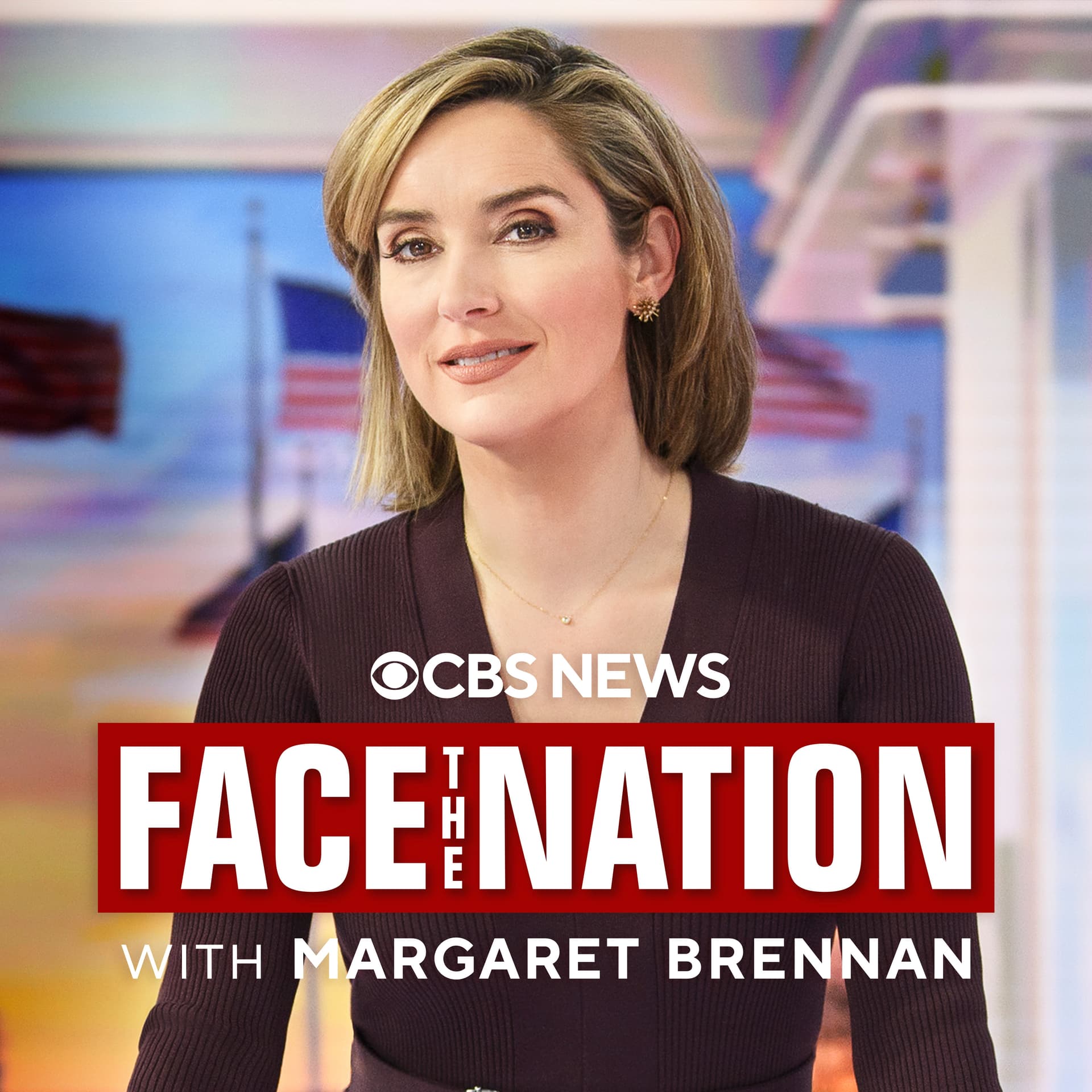
In short
The episode is about post-shutdown affordability in the U.S., especially health insurance premiums and deductibles, plus military readiness for drone threats and related cyber issues.
Guests
Rep. Tom Suozzi (D-NY) and Rep. Don Bacon (R-NE), both House Problem Solvers Caucus; Sen. Bill Cassidy (R-LA) and Sen. Jeanne Shaheen (D-NH); and Secretary of the Army Dan Driscoll.
Key claims
enhanced Obamacare premium tax credits are set to expire, risking large premium increases; Republicans and Democrats discuss bipartisan fixes like extending credits with income caps and directing more money to consumers rather than insurers; Cassidy argues for giving funds directly to patients to cover deductibles and lower premiums, criticizing $6,000 deductibles.
Notable examples
Suozzi cites potential savings “$1,000 a month”; Bacon warns about insurers pulling out (Aetna losses cited). Driscoll highlights AI-enabled drone cyber espionage, “flying IEDs,” and plans to buy a million drones, plus “Sky Foundry.”
Written by AI. May contain mistakes. Listen to the episode to check what was said.
Chapters
Tap a time to open that second in VOAddressing Healthcare Costs
1:31 to 3:35
Discussion on rising healthcare costs and potential bipartisan solutions.
“Good morning and welcome to Face the Nation.”
The Need for Tax Credit Extensions
3:35 to 6:05
Debate over extending tax credits for Obamacare and their impact.
“The Affordable Care Act is unaffordable, and I think we need to have this extension to give us time to work on something bigger and deeper that will help lower costs overall.”
Reforming Affordable Care Act
6:05 to 8:02
Exploration of necessary reforms to make healthcare more affordable.
“Republicans haven't really been proposing a lot of alternative Obamacare options here.”
Political Distractions and Focus on Health
8:02 to 10:20
Discussion on political distractions and the importance of focusing on healthcare issues.
“in America and to get health care to more people, we should be doing that.”
Cybersecurity Threats from China
10:20 to 12:34
Congressman Bacon discusses rising cybersecurity threats, particularly from China.
“So for example, like 30 ,000 pages was released late last week.”
Challenges Faced by the U.S. Military
12:34 to 14:01
Secretary of the Army Dan Driscoll addresses military challenges and funding issues.
“Well, we will continue following that important story.”
Military Readiness and Drone Threats
14:01 to 22:23
Explore the implications of military readiness and the emerging drone threats
“How do you insulate the force so that the next shutdown doesn't hit these families the way it did this time?”
Health Care Reform Proposals
22:23 to 28:00
Discuss the proposed reforms for health care funding and patient empowerment
“And we think it's important here that the American people hear about their own security as well as the military's 3 million or more employees.”
Discussion on Premium Tax Credits
28:00 to 29:16
The complexities surrounding the extension of premium tax credits and their impact on health care costs are explored.
“assumes it's easy just to extend the premium tax credits, the enhanced premium tax credits.”
Concerns Over Deductibles and Policies
29:16 to 30:28
The high cost of deductibles and their effects on individuals seeking insurance are discussed.
“And I tell my Democratic colleagues, first, let's not be Democrats and Republicans.”
Show all 20 chapters
Vaccine Advisory Group and Public Safety
30:28 to 31:27
Discussion about the safety of vaccines and the implications of potential changes to vaccine schedules.
“I would talk to people when they'd come to see me, And they would tell me, I can't afford that.”
Hepatitis B Vaccine Insights
31:27 to 32:49
The effectiveness and importance of the hepatitis B vaccine in preventing disease are highlighted.
“this should matter for American parents.”
Addressing Misinformation on Tylenol and Autism
32:49 to 34:27
The discussion centers on misconceptions linking Tylenol use in pregnancy to autism.
“Well, the president of the United States also told American women not to take Tylenol or give it to their kids.”
Senator's Reflection on Confirmation Vote
34:27 to 35:35
The senator reflects on his confirmation vote for Secretary Kennedy and the implications for healthcare oversight.
“But that's why clarifying these statements, I think, is important since you interpret them differently.”
Future of Health Care Policy
35:35 to 36:11
The senator discusses his long-term commitment to health care policy and improving affordability.
“And so it's been my priority for 30 years.”
Legislation on Tax Credit Extensions
36:21 to 38:09
Senator Shaheen discusses her goals regarding the extension of Obamacare tax credits.
“Well, you have spent a good part of the past year trying to get legislation through to extend those Obamacare tax credit subsidies.”
Bipartisan Solutions for Health Care Costs
38:09 to 40:08
The need for bipartisan cooperation to manage health care costs and tax credits is emphasized.
“this should be a bill that is not partisan, but it should be a bill to extend those premium tax credits because, as everybody has talked about, there is real urgency to get this done.”
Releasing Internal Communications on Epstein Case
40:08 to 42:02
Senator Shaheen supports the release of documents related to Jeffrey Epstein's case.
“We're in this situation because Donald Trump and Speaker Johnson and the Republican majorities in the House and Senate have refused to address the cost of health care and are trying to throw people off their health care.”
Discussion on Jeffrey Epstein's Case and Document Release
42:02 to 45:04
Learn about the push for transparency in the Justice Department's handling of Epstein's case.
“in meeting with the insurance industry, they've indicated that while it would be difficult, they could address some of the challenges around not getting agreement until December.”
Concerns Over Venezuela Policy
45:04 to 45:21
Explore the implications of U.S. military strategy in Venezuela and its risks.
“He's been involved in illegal drugs, but he is not a threat to the United States of America.”
Transcript
Automatic transcript. May contain errors.0:00Margaret Brennan:I'm Margaret Brennan in Washington and this week on Face the Nation, the shutdown is over, but the problems that led to the crisis persist and politicians are scrambling to make prices affordable for Americans. Affordability is the new buzzword in Washington and President Trump is testing ideas to help consumers, including potential tariff dividends and 50 year mortgages. Those may be a tough sell, but Mr. Trump did move to help consumers by rolling back tariffs on some food imports, like bananas, beef and tomatoes. Just had a little bit of a rollback, but some foods like coffee, as an example, where the prices of coffee were a little bit high, now they'll be on the low side in a very short period of time.
0:45In terms of affordability, it's not a good word for the Democrats, it's a good word for because our prices are much lower. It will soon be much, much lower.
0:54Margaret Brennan:One price spike that can't be fixed by easing tariffs, health care premiums, especially for those covered under Obamacare. We'll look for solutions for that fix and more with two members of the House Problem Solvers Caucus, New York Democrat Tom Suozzi and Nebraska Republican Don Bacon, along with Dr. and Louisiana Republican Senator Bill Cassidy and New Hampshire Democratic Senator Gene Shaheen. And as we move into a new era of warfare, what does our military need for readiness? We'll talk with the Secretary of the Army, Dan Driscoll. It's all just ahead on Face the Nation.
1:48Margaret Brennan:Good morning and welcome to Face the Nation. Although we're all trying to put the pain of the shutdown behind us, the 43-day standoff on Capitol Hill exposed and amplified the need to address the rising cost of health care premiums. And our CBS News polling out today shows that two-thirds of Americans think their premiums will increase in the coming months. We begin today with two members of the so-called House Problem Solvers Caucus, New York Democrat Tom Suozzi and Nebraska Republican Don Bacon. Good morning. Good to have you here in a bipartisan conversation. You both recognize there's a problem here.
2:28Margaret Brennan:Congressman Bacon, let me start with you. One out of every five dollars in this country that is spent goes to health care. We know these COVID era tax credit subsidies for Obamacare will go away at the end of the month. That's going to hit about 22 of the 24 million Americans who use that program. What can you do in the next six weeks to make costs go down in January? Well, we need a temporary extension of these tax credits to keep these prices down. Republicans nor Democrats want to see premiums skyrocket, and they will if these expire with nothing in its place. That's why I worked with Tom Swasey and other Democrats and Republicans to find a compromise.
3:10We just want to do a clean extension. Most Republicans don't anyway. So we think there needs to be some caps on income. And we want to ensure all these credits go directly to lowering people's premiums. And right now, about a third of the money doesn't make it to the premiums. So those are some reforms that we would like to see. And if we can get those accomplished, then we can extend these tax credits and keep these, you know, the prices lower. But we do need a longer term fix. The Affordable Care Act is unaffordable, and I think we need to have this extension to give us time to work on something bigger and deeper that will help lower costs overall.
3:47I'm proud to work with Tom Swasey on this, and I appreciate his partnership.
3:52Margaret Brennan:Congressman Swasey, I understand this is a two-year proposed extension of those enhanced premium tax credits and an income cap that phases out for those making between$200 ,000 to$400 ,000. dollars. But when you look at the breakdown, though, that's a pretty small portion of the overall recipients of the tax credits. It's like less than 10 percent. So what does this accomplish? How does this make it more affordable and fair? Well, it helps everybody else who makes under two hundred thousand dollars dramatically. And the number one concern people have in America is affordability and health care affordability is right at the top of the list.
4:29So we need to do something to extend these premium tax credit. It'll save people thousands and thousands of dollars, literally$1 ,000 a month for some people. So it'll be dramatically more affordable. The people who make above$400 ,000 are the teeny little percentage of people that are not a very small group of people that would benefit from the existing tax credits. Most of the people are below$200 ,000. That$200 ,000 to$400 ,000 is a way to taper it off so there's not a cliff.
4:59Margaret Brennan:And how much Democratic support do you have for this at this point? I think the Democrats are going to strongly back the idea of extending premium tax credits so that we can keep people's insurance affordable. Even with these caps? We've got to come up with this compromise. Even with the caps. Democrats have always said that they want to direct the policy towards lower and middle income folks. People making under$400 ,000 a year are bread and butter issues, that we want to try and make things affordable for those folks. And that will be like literally 95%, 99 % of the people that are affected right now.
5:42Margaret Brennan:Congressman Bacon, sorry, go ahead. I was going to say, in Republicans, we push back on the thought of someone earning$600 ,000 getting all these tax credits. So when I listened to the speaker or leader Thune, that was one of his big concerns on these. So that's why I wanted to ensure that we had this in our framework. But a tweak with a not permanent, just a two-year extension. extension. Republicans haven't really been proposing a lot of alternative Obamacare options here. Do you think the entire system needs to be rebooted? And when will we see that plan? Well, I do think Republicans and Democrats are going to have to sit down at the table and figure out what can we really do besides just throw more money at this.
6:27Right now, the premiums are just going up so much faster than inflation. It's unsustainable. But we can't do a Republican-only fix it. It's not going to work. You're not going to get 60 votes in the Senate to do it. And I'm certainly some folks propose that back in Congress. Let's go up with our plan. Well, it can't just be a Republican plan if we want to pass something. So we've got to sit down with Democrats and figure out what can we do. And there's some good ideas out there. So for example, you know, I've heard, you know, if we can directly subsidize high-risk people and put them in a separate pool and just lower their premiums through subsidies, and then the, I would call it the healthier folks, their premiums are going to go down significantly if we do that.
7:07So there's different concepts that we can do that can have an impact. But it's going to have to be a bipartisan way forward. It's not going to be a Republican-only bill because you'll never get it passed.
7:17Margaret Brennan:Congressman Swazi, Aetna pulled out of the Obamacare marketplace this year after CBS said they expected to lose as much as$400 million. Other big insurance companies have been pulling out if insurance companies themselves are having problems with Obamacare, do Democrats need to be more open to broader reforms of the Affordable Care Act? Yeah, we absolutely should be looking at any kind of reform. I want to mend it, not end it. You know that over the past decade that there have been over 70 attempts, mainly by the Republicans, not guys like Don Bacon, who's a very reasonable guy, to try and get rid of Obamacare altogether.
7:57We think that's a terrible idea. But if people want to try and make it a better system to make health care more affordable in America and to get health care to more people, we should be doing that. That's what the people want. That's what reasonable people in Congress want. We should be working together to try and expand health care coverage, lower prices for everybody, and make health care more effective and less expensive for people. Now, that's not going to happen with everybody yelling and screaming at each other. Everybody who says, why don't you just doesn't know what the hell they're talking about.
8:29You cannot solve complicated problems in an environment of fear and anger. You need reasonable people to sit down and talk to each other and say, I think this, well, I think that, and then work your way towards finding compromise. Very hard to do in this toxic environment. People like Don Bacon and other members of the Problem Solvers Caucus want to do that type of thing.
8:47Margaret Brennan:Yeah, well, but private health care costs are also going up. But on this topic of toxic environments here, Congressman Swazi, Democrats who won elections just a few days ago credited their wins to this affordability issue and the message focused on that. Can you explain the focus this past week in the House by Democrats on the Jeffrey Epstein files? Is this a tactic to distract from the failure to extract health care changes? Or is there something else going on here? I mean, does the speaker putting it to a vote end this issue? I think it's a combination of factors of people shining their lights on the most hot topic at the time.
9:35You know, Jeffrey Epstein, of course, is an important topic. I'm sure I'll vote to release his files, but that's not my priority. My priority is to focus on the things that the American people care about, affordability, immigration, taxes, crime and health care. That's what people are fighting about. That's what they're concerned about. That's what we should be focused on in Congress.
9:53Margaret Brennan:Well, Congressman Bacon, does the speaker putting this to a vote end the Epstein issue and get you back on to health care? I mean, the speaker said this is all a political exercise. Certainly the families of the victims don't think it is. I think the speaker realizes the train has left the station on this. Let's rip the Band-Aid off and get it done. I wish the president realized that the more the White House pushes back on this It's you know, it just looks bad, right? I mean it was the Attorney General came out said all these white binders We're gonna release all this information and then a month later said oh no we're not So it's been a PR blunder from the beginning and I think the speaker is right This is gonna happen So let's get it done and vote on it and we got to realize this last to go to the Senate That has to go to the president for signature Meanwhile, our oversight committee is releasing thousands and thousands of pages of evidence concerning Epstein.
10:43So for example, like 30 ,000 pages was released late last week. So the oversight committee, Republicans and Democrats, are putting out the data. They're putting out subpoenas. I think it's already working, but like Tom, when this comes on the floor, I'm going to vote yes on it. I want transparency. We want to protect the victims, but everything else should be open.
11:05Margaret Brennan:You also, Congressman Bacon, run the Cyber Subcommittee. I'm going to ask you about something significant this past week. That AI firm Anthropic said that Chinese state-sponsored hackers use their technology to automate break-ins and carry out the first cyber espionage operation largely using AI. It hit like 30 different companies. What can you tell us about the scope and the targets of this attack? I can't say much more than what was just released. Other than I could say this, China has replaced Russia as the most formidable cyber threat. They have much higher technology. They are using AI, which gives you a lot more capability in finding weaknesses in your adversaries' cyber defenses.
11:49What concerns me more than anything, while China is attacking us every single day, and Russia we've had no commander in charge of Cyber Command for over eight months you know the White House or the president fired the Cyber Command commander over eight months ago and has not replaced them also the top two positions at the National Security Agency the top two are vacant for over eight months and we've been cutting CISA which is the the agency that protects our private sector right our businesses our infrastructure and we've cut it by about a third. And so our cyber capabilities are going backwards.
12:26We don't wear rudderless in a time where China is attacking us every day. And that's something that really concerns me. And I've been pushing the White House to deal with this and to confront the cyber threat.
12:38Margaret Brennan:Well, we will continue following that important story. Congressman, thank you for trying to be problem solvers with us today. FACEBOOK NATIONE will be back in a minute. Stay with us. We want to turn now to some of the challenges faced by the U.S. military. And We're joined by the Secretary of the Army, Dan Driscoll. Good morning. Thank you for being here. Thank you so much for having me. A lot to get to with you. Just quickly on news of day, the president did say he sort of made up his mind on Venezuela. I know this is the Marines. This is the Navy that are deployed. But does the Venezuelan Army pose any kind of threat to the U.S.
13:10Margaret Brennan:if action's taken? I think that the president and secretary of war have spent a lot of time thinking about what is the best thing they can do for the American people. And I can speak from the Army's perspective. which is we have a lot of training in that part of the world. We're reactivating our jungle school in Panama. We would be ready to act on whatever the president's sec war needed. But no orders beyond these exercises at this point? We don't talk about those kinds of things, but we would be ready if asked. OK, I do want to ask you about what has been happening with this shutdown. The government's now funded through January 30th.
13:46Margaret Brennan:You did get from Congress full year funding for Veterans Affairs and military construction, and a few other measures in this short-term bill. But we have seen the shutdown hit military bases and hit military families costly,$400 million or more in emergency loans from USAA. How do you insulate the force so that the next shutdown doesn't hit these families the way it did this time? I think the shutdown is indicative of one of the bigger problems that we as a nation have had. And so if you look back for the last 30 or 40 years, one of the reasons we've had such bad outcomes, when we spend the American taxpayers hard-earned dollars and we go buy things that our soldiers will need to fight, when we build things where our soldiers and their families will live, we are such a bad customer because when you're on the other side of the deal with us and you have to deal with shutdowns, I mean, this shutdown will take months and months for us to get back and going on these projects.
14:40And this is part of the calcification of our system that under President Trump, we are uniquely able to try to go after a lot of these things and actually get our army and their families living in better areas and get our soldiers ready for the modern fight. And the shutdown does not help.
14:56Margaret Brennan:Let me ask you about the modern fight. Tom Cotton, who is the chair of the Senate Intelligence Committee, told our Olivia Gossies here at CBS that the threat to military sites and large civilian gatherings is severe and growing. He cited gaps in law enforcement authorities. Some of them lapsed during the shutdown, I understand. And he's talking about trying to close enforcement gaps when it comes to drones. What authorizations do you need? So under Secretary of War, Hegseth, the United States Army has been put in charge of the counter drone threat for the Pentagon. And then we are working hand in fist or hand in glove with the broader law enforcement agencies.
15:36We just last week had a meeting right outside the White House where what we are trying to do, because this problem is different from nearly anything we faced in a long time. It is a flying IED. And so this IED.
15:47Margaret Brennan:IED. IED. Explosive. IED. Impromised explosive device. They're cheap. You can 3D print them at home and they cross borders incredibly quickly. And so what you basically need is a digital layer to exchange information and exchange sensing and allow the closest person on the ground or the closest vector on the ground to be able to take out a drone. And Senator Cotton is right. I mean, this is the threat of humanity's lifetime. What's occurring in Ukraine, what's happening in Russia, if you look at the speed and scale of the devastation that can come from drones, we as a federal government have got to lead on it.
16:19But I'm really optimistic. This is actually something we are doing right. We are partnering with both federal law enforcement. In a couple of weeks, we're having the Sheriff's Association come. We were just at the NYPD. We're including all of the different law enforcement agencies, thinking about the borders and the ports and the upcoming NFL games and Olympics and World Cup. This is something we as a nation can lead on. And so under President Trump's leadership, we are moving fast at this problem.
16:44Margaret Brennan:And this is about radar jamming of drones to take them out, not exploding them. So the problem with the drone fight is you need all sorts of layered defense. One solution does not work if you just try to jam them. If you look at what's happening in Ukraine, people have started to hardwire drones. And so you can't do RF jamming on a hardwire drone. And so there are things like net guns that are coming back. We're using all sorts of solutions and tools. And it makes it even more complicated when you're by an airport and you're doing it in your own homeland. You just have different authorities. And so a lot of this is a human problem of communication, command and control, and having a layered set of solutions that you can use for any given problem.
17:25Margaret Brennan:So you're talking about here at the homeland, things like the U.S. hosting the Olympics, the World Cup, even just these Super Bowl games that are coming up. Should there be restrictions in this country on who is able to own and operate drones? I'm pretty optimistic that we will be able to figure out a solution where we will know what is in the sky at every moment across our country all at once. And so if you think of the president, we're not there yet. But under the president's Golden Dome, I would think about this like a golden mini dome, where if you took one of the sites for the World Cup, we are heavily focused on being able to see everything in the area, have all of the interceptors we will need, have all of the training for all of the different forces that will have to be able to act.
18:06And so to your specific question, I think we are trying to design a system so that Americans are able to fly drones so that commercial companies like Amazon, like the future of delivery in a lot of ways is commercial drones. And so we will just have to de-conflict the skies working with the FAA. But this is a big topic. I check in with Secretary of War Hegseth on this almost weekly.
18:26Margaret Brennan:So when we last saw the president of Ukraine, Zelensky, at the White House, he brought up to President Trump on camera, we've got great drones we want to sell to the United States or provide to the United States. You refer to Ukraine as the only Silicon Valley of warfare right now. What do you mean by that? Are they really ahead of the United States on innovation? I think if you look at what's happening, Operation Spider's Web in Russia, The Ukrainians used probably a couple hundred thousand dollars worth of drones and took out almost$10 billion worth of equipment in Russia. And Russia's in that fight.
19:02And so I think what is amazing about our country is we are able to recognize where we need to innovate quickly. And what we're doing for drones completely differently, I think, than we have done as an army in probably 50 or 60 years is we're welcoming in American industry. So we just did an AI war game where we invited 15 of the top CEOs in the nation. They were worth probably$18 trillion in enterprise value. And we said, how do you, can you please help us? What do you have in your tech innovation pipeline to help us with data in contested environments? How do we do logistics 6 ,000 miles away if we're facing an enemy who's trying to contest us?
19:41And we are working with them, no joke, daily to basically take their innovation and apply it to this problem.
19:47Margaret Brennan:But what I heard you saying there is you look at the battlefield in Ukraine as kind of like a test lab for where warfare is going. Can you convince some of your fellow Republicans that there is value in that fight in terms of, you know, those who are so isolationist, they don't want to be involved in Ukraine, even financially? Well, I don't think I've talked to a single person who has said we shouldn't be learning from what's occurring in Ukraine. all of our equipment, all of the exquisite features we will need are definitionally going to come. The data set that the Ukrainians are getting for their generative AI models of when they have drones and they're flying and they're learning and they're doing counter drone and they're taking all of this information from their sensors and trying to figure out what's going on.
20:30There's not a single person I know that doesn't think that is an incredible treasure trove of information for future warfare. I think a lot of the questions are, how do we actually execute on the president's agenda of peace in that part of the world? where I have not been to the White House, where it has not come up, that we just want peace so that the American industrial base can thrive everywhere. And we have to focus on that part of the world unnecessarily right now.
20:55Margaret Brennan:Well, you're at the Department of War. Yes. So you announced that the Army wants to buy a million drones over the next two to three years. Navy, Marines, Air Force, they will obviously be very involved in any war in the Pacific. But you've got to defend those American bases. Yes. So how do you think of the threat from China there? Because I've read that you think they're ahead of America. So we're working on something with Congress called Sky Foundry. And basically, the idea is to, again, do it right from the beginning. What the Army has historically gotten wrong in the last couple of decades is we're either all in or all out, meaning we either use our organic industrial base and we make the drones ourself, or we say this is too complicated for us.
Read the full transcript
21:36we're going to have private industry do it. We are not doing that with drones because if you look at Ukraine's manufacturing, 4 million a year, China, I think, is at 12 to 14 million drones a year. And we as a nation will have to have our private sector able to help us. And so what we are going to do is we are going to invest in things like sensors and brushless motors and circuit boards and a lot of the components that are really hard for the private sector to get right now. The United States Army is going to build those on our bases and empower the private sector to purchase from us. And so we will make drones, our private partners will make drones, and we will catch up and surpass the Chinese incredibly quickly.
22:12Margaret Brennan:Secretary, thank you for your time. And I do want to make the point that you are taking questions, and that is unusual these days since the Pentagon has restricted access to reporters. And we think it's important here that the American people hear about their own security as well as the military's 3 million or more employees. So thank you. The Trump administration has launched another immigration enforcement operation, this time in Charlotte, North Carolina, a blue city with one of the fastest growing immigrant populations in the country. The operation called Charlotte's Web by the Department of Homeland Security started Saturday.
22:51Margaret Brennan:Federal agents from the CBP, U.S. Customs and Border Protection have been seen making arrests, questioning gardeners, patrolling a Home Depot parking lot and smashing windows. Trump administration officials tell our immigration reporter, Camilo Montoya-Galvez, that New Orleans is the next Border Patrol operation planned for this month.
23:18Margaret Brennan:Welcome back to Face the Nation. On Friday, we spoke with the chairman of one of the Senate committees responsible for crafting health care legislation. Louisiana's Bill Cassidy, who is also a doctor. We began by showing him what the president is thinking of for health care fix. I'm calling today for insurance companies not to be paid, but for the money, this massive amount of money to be paid directly to the people of our country so that they can buy their own health care, which will be far better and far less expensive than the disaster known as Obamacare. So are you, Senator, coordinating with the White House on this proposal?
23:59So we're absolutely in communication with the White House and with the administration because there's a lot of stuff that you have to work out to do that. But let me give a little meat on the bones of what the president's speaking about. If you look at an Obamacare policy now, there's a$6 ,000 deductible. Democrats are fighting to lower the premiums. You lower a premium on something which has$6 ,000 deductible. It's basically a catastrophic policy. Now, I like to speak of the cost of being insured, not just the cost of the health insurance. The president is proposing that we take the$26 billion that would be going to insurance companies if we just do a straight-out extension.
24:36And by the way, 20 % of that$26 billion, 20 % will go for profit and administrative overhead. give it directly to the American people in an account in which 100 percent of the money is used for them to purchase health care on their own terms. Now, now that makes them an informed consumer. It also helps address the need to have coverage for that deductible. And if they get that policy with a higher deductible, they can actually lower their premium. It's a sweet spot. Lower premiums help with the deductible, making the patient the informed consumer. The president and I are united. We should all be united about that.
25:12Margaret Brennan:Well, the president's economic advisor, Kevin Hassett, was on this program last Sunday. He said the president was just brainstorming things aren't formally put together among Republican senators yet. But I just want to clarify what you are coordinating with the president on here, because is it to buy your own insurance policy, which is kind of complicated, or is it to use this flexible spending account you've talked about for related health care needs? Like, are there restrictions on how you can use that money? So first, there's two types of premium tax credits. There's the baseline premium tax credit, which was part of Obamacare.
25:49That would stay in effect and people would still buy a policy, for example, they get in a car wreck, something disastrous. They need somebody negotiating on their behalf with all the providers. That stays the same. What we're talking about, and the shutdown was over, the enhanced premium tax credits. policies that become so expensive under Obamacare that under Joe Biden, Democrats passed another subsidy on top of the first subsidy. That's what we're fighting about. And what Republicans are saying, and I'd like to hope Democrats will do. Hey, wait a second. If we can have lower premiums and help people with their deductible by giving the money directly to the patient, by the way, 20 % doesn't go for insurance company profit and overhead.
26:29100 % goes for healthcare. Why don't we unite Republican and Democrats in doing that. That's where the president is. You've got to figure some things out, but we're a lot further along than you might imagine.
26:40Margaret Brennan:So do you want to fix Obamacare or do you want to eliminate Obamacare? First, you have to like we're going into 2026. That's like a month and a half from now. Right. And so you've got to work with what you have. But on the other hand, Obamacare was a top heavy, administratively heavy type system in which a lot of money and responsibility is taken from individuals and given to insurance companies as one example. I'm a doctor. I worked for 20 years in a hospital for the uninsured. I found that if you give the patient the power, good things happen. That's supported, by the way, by the medical literature.
27:20If the patient is engaged in her health care and the health care of her family, she's going to be a wise shopper, wise for her health and wise for her pocketbook. We need to have a new model. And that model is to engage the patient in her own health care. Doing so is good for her. Good for us all.
27:36Margaret Brennan:OK, but you said we need to work with what we have. That is, as you just said, you have a short amount of time before the end of the year. Do you think you need to extend the health care tax subsidies that are currently in place until you figure out all the rest of this complicated policy making. Let me back you up just a little bit, Margaret, to say everybody assumes it's easy just to extend the premium tax credits, the enhanced premium tax credits. It's not that easy. Fifty percent of the states did not plan on them being extended, and they don't have rates as if they were to be extended. So that means if we pass this mid-December, they've got to recalculate rates in time for, wait a second, by that time we're already into 2026.
28:22It's not an easy matter. And by the way, did I mention, the policies that people want to lower the premiums for have$6 ,000 deductibles. It is basically something for insurance companies to make money off of and for the individual to wade through$6 ,000 of debt before they can finally access it. Now, the kind of proposal I am proposing, Republicans are, and I hope Democrats will join, is let's take that money and we have a mechanism to do so. We give it to the patient. By giving her that money, she could choose a bronze level plan, which is to say lower premiums. So now her premiums are down, but she has money in an account to help with the deductible.
29:01And I think we can figure that out about as easily as we could figure out what we would do if we just did a straight out extension.
29:07Margaret Brennan:So you want to do all this, though, by the second week of December when the Democrats have been promised they'll have a vote on an ACA bill of their choice? Yes. And I tell my Democratic colleagues, first, let's not be Democrats and Republicans. Let's be Americans representing all of Americans. Let's recognize what you're doing just gives money to insurance companies, but we can do it better with lower premiums and with money and accounts to pay deductibles. And then why don't we come together? There can be a Democratic bill and a Republican bill and both fail. Let's do an American bill where the American people benefit and let's work together, collaborate to lower those premiums and to help them with that first dollar coverage in the deductible.
29:47Margaret Brennan:So we looked and there are about 293 ,000 Louisianans, your state, enrolled in Obamacare currently. Six weeks from now, those expanded tax credits that you've been talking about will go away for individuals making$62 ,000 or above. Individuals making less than that amount will see their tax credit shrinks. So are you telling those hundreds of thousands of Louisianans that that tax credit is going away no matter what, that they should make plans for higher prices? I'm telling them that we are working to make it work better for them. And they would tell you, by the way, wait a second, I got a$6 ,000 deductible.
30:27That does not work for me. Margaret, I'm a doctor. I would talk to people when they'd come to see me, And they would tell me, I can't afford that. My deductible is too high. That's reality. And that reality is being lost in this discussion. We've got to do something about sky high deductibles. Maybe you can afford the premium. You can't afford the policy. Let's lower the cost of having health insurance focusing by not just on the premium, but the deductible. And I think we can do both.
30:54Margaret Brennan:Well, even in the private market, health care costs have gone up about six to nine percent when you look at the projections. But I want to ask you about your oversight rule. Secretary Kennedy has this handpicked panel of vaccine advisors. You know them at ACIP. They're going to meet in a few days and potentially vote on changing the hepatitis B vaccine schedule for infants. That same vaccine advisory group is also considering the safety of vaccine ingredients like aluminum, which would impact a number of childhood shots. this should matter for American parents. Are you comfortable with what they are about to put to a vote?
31:35I'm very concerned about this. As it turns out, my medical practice focused on hepatitis B. And so we know that because of a recommended dose at birth of hepatitis B vaccine, recommended, not mandated, the number of children born contracting hepatitis B at birth or shortly thereafter has decreased from about 20 ,000 20 years ago to like 200 now. That's effectively a clerical error. We have decreased the incidence of chronic hepatitis B by 20 ,000 people over the last two decades with this kind of recommendation. And by the way, if you're infected at birth, you're more likely, you're 95 % likely to become a chronic carrier.
32:15The vaccine is safe. It has been established. And these ingredients they're speaking of have been shown to be safe. This is policy by people who don't understand the epidemiology of hepatitis B or who've grown comfortable with the fact that we've been so successful with our recommendation that now the incidence of hepatitis B is so low they feel like we can rest on our laurels. I'm a doctor. I have seen people die from vaccine-preventable disease. I want people to be healthy. I want to make America healthy and you don't start by stopping recommendations that have made us substantially healthier.
32:49Margaret Brennan:Well, the president of the United States also told American women not to take Tylenol or give it to their kids. This is based on a theory that it causes autism somehow. And he also in a social media post, the same one called for the measles, mumps and rubella shot to be broken up into three different shots that was then endorsed by the acting CDC director. Are you concerned by this kind of suggestive linkage at the top of the CDC and from the White House? Again, I'm a doctor, and so I'm going to go where the evidence takes me. And the best evidence is a study out of Sweden with 2 million children that found no causality, no association, if you will, between taking Tylenol in pregnancy and getting autism.
33:34And, of course, that concerns me because there's going to be a mom out there. Again, I'm a doctor. I talk to patients in a room. And her child is autism. She took Tylenol for a high fever during pregnancy, and now she blames herself. That's just the way mamas think. And that's wrong. We don't want her to think that. The best evidence is there is no relationship. By the way, if you have a high fever during pregnancy, that may be a risk for autism. Now, of course, if you're pregnant, talk to your physician before you take anything. But point being, the best evidence is that there is no relationship between the two.
34:11And I don't want women putting themselves on a guilt trip when the best evidence shows not. By the way, the president has spoken out strongly in favor of immunizations in other cases. And I noted when he got his physical, he got the flu and COVID shots. So the president has demonstrated that he believes in immunization.
34:27Margaret Brennan:But that's why clarifying these statements, I think, is important since you interpret them differently. I wonder, do you regret your confirmation vote for Secretary Kennedy? I smile because every reporter asked me that. Well, because these questions run right into a pledge that you extracted from him not to tinker with some of the structures that were set in place to have oversight of these vaccines and this process. So you live life forward. Again, you just do. Let the days on troubles be sufficient for the day. And I'll credit the secretary. He's brought attention to things like ultra processed food that has frankly never received this sort of attention before.
35:10And people praise him for that. So he and I have publicly disagreed on some matters, but I strongly agree with him on others. And so so that's how I'll answer your question.
35:19Margaret Brennan:That sounds like yes. Is if this is your final year in office or will you make overhauling health care your top priority? Well, I sure hope it's not my final year in office, but I've been thinking about health care for 30 years. Because when I worked in a public hospital for the uninsured, I saw the burden that could be on middle income families who have middle income but couldn't afford the insurance or couldn't afford the health care. And so it's been my priority for 30 years. And I will continue to do that. And if there's a silver lining, if there's a silver lining in the shutdown we just had, the silver lining is now we are focused on how do we make health care more affordable for the American people?
36:00That should be our goal, not to be partisan one way or the other. How do we make it more affordable for fellow Americans? If we can accomplish that, I will feel like I've done my job.
36:10Margaret Brennan:Senator, thank you for your time. And we'll be right back. We go now to New Hampshire Democratic Senator Jean Shaheen. Good morning to you, Senator. Good morning. Nice to be with you. Well, you have spent a good part of the past year trying to get legislation through to extend those Obamacare tax credit subsidies. Last Sunday, you crossed the aisle. You agreed to reopen the government and the shutdown without a guaranteed extension, but with a promise to have some kind of vote on an ACA bill of Democrats' own choosing. Do you have consensus among Democrats that this needs to be a vote simply to extend the tax credits as they stand now?
36:52Margaret Brennan:Or are you open to a broader reform of Obamacare? Well, from the beginning of this shutdown, I've had two goals. One is to get government up and running again to end the suffering that too many Americans were experiencing because they lost food assistance or they weren't getting paid federal employees. And the second was to address the high cost of health insurance that people are looking at because insurance companies are setting rates based on the fact that those premium tax credits are supposed to go away at the end of this year. I think people are now very aware of the fact that they are going to see huge rate increases double for so many people and an unaffordable cost of health insurance if those premium tax credits go away.
37:44And what I think we need to do, and these are conversations that we need to have, is we need to work with our Republican colleagues to try and get a bill that can be supported, that can get through both houses of Congress. We've been talking to our Republicans, Senator Cassidy, throughout the shutdown about what we might be able to agree to. We've been talking to House members on both sides of the aisle. And so now we need to work together. I agree with Senator Cassidy. this should be a bill that is not partisan, but it should be a bill to extend those premium tax credits because, as everybody has talked about, there is real urgency to get this done.
38:25And if we don't address it, then people are going to see huge rate increases. So we can work together, we can extend the credits, but we probably can't implement significant reforms that Senator Cassidy was talking about in the time frame that we've got. So we need to look both in the short term and in the long term for how we address the cost of health care.
38:47Margaret Brennan:Okay, so that's an important point. So the$26 billion or so that he talks about as the cost for extension of these that he wants to redirect into these cash accounts, these flexible accounts, you're saying you can't get that done in six weeks' time? No, you can't. And again, there's real urgency to do this. There's some good bipartisan legislation that has come out of committee in the Senate that I think we should take up, things that would expedite approval of generic drugs and biosimilars, that would address PBM reform, which is a huge cost increase for health care. But that's a longer-term issue.
39:25Right now, we need to address what people are facing in terms of those high rate increases because of the threat that these premium tax credits are going to end.
39:34Margaret Brennan:Just to put a fine point on it, when we heard the congressman at the top of the program talk about, you know, caps on income and restrictions on who can benefit from those tax credits. Can you get your fellow Democrats, who, by the way, are pretty angry at each other, angry at you as well, about this decision to reopen the government. Can you get everyone on board or can you at least get to 60 votes to be able to extend those subsidies with tweaks? Well, first of all, we need to put the shutdown behind us in the circular firing squad and remember why we're in this situation. We're in this situation because Donald Trump and Speaker Johnson and the Republican majorities in the House and Senate have refused to address the cost of health care and are trying to throw people off their health care.
40:23Can we get to consensus? Well, we need to if we're going to get a bipartisan bill out of the Congress. I think we've seen and heard from health insurance companies that implementing significant changes in the first year is going to be really difficult to do, almost impossible. But we ought to be able to agree on some changes, like capping the income of people who receive those premium tax credits. Right now, 94 percent of people who get the credits earn under$200 ,000 a year. And the average income for a single recipient is about a little over$30 ,000 a year. So most people who are getting these tax credits are not in that high income level.
41:08And so we should be able to agree on that. We should be able to agree that we don't want any fraud and abuse in the program. That's something Republicans and Democrats believe in. So let's focus on what we can agree to. Let's look at what we can get done in the time frame we have and recognize there is real urgency to get these premium tax credits extended.
41:29Margaret Brennan:So you're going to have this vote around the second week of December, but premiums are already notified out. They are already sort of baked in here for certainly for Americans who buy government health care. Is it too late to extend open enrollment? I mean, Senator Cassidy was saying like ship has sailed here. No, we could actually decide that we were willing as part of this legislation to extend open enrollment. Obviously, we need support from the administration, but insurance companies, in meeting with the insurance industry, they've indicated that while it would be difficult, they could address some of the challenges around not getting agreement until December.
42:15Again, that's why there's urgency to get this done.
42:19Margaret Brennan:I want to ask you about another matter. Survivors of convicted child sex offender Jeffrey Epstein, as well as some of the families of those survivors, wrote a letter to lawmakers supporting the release of Justice Department internal communications in regard to his case. In that letter, they said there was no middle ground here. There was no hiding behind party affiliation. We will remember your decision at the ballot box. You know this House vote is set to come up this week. Should there be a vote in the Senate, and would you support it to see the release of these documents? Absolutely. We need to release the documents.
42:59The American people need to see what's in them. And if President Trump says there's nothing there that he's concerned about, then why doesn't he support release of the documents?
43:09Margaret Brennan:Well, we will see if the Republican leader in the Senate takes up your proposal there. There has not been a commitment to have that kind of vote. But on Venezuela, since you are a ranking member on Senate Foreign Relations, I want to make sure I ask you. The president said he has sort of made up his mind on what to do about Venezuela. You were one of the very few senators who have received briefings within the past few weeks from Secretaries Rubio and Hegseth regarding the strikes that are being carried out on these small, fast-moving boats. Is there a clear endgame here? And is your understanding that ousting Nicolas Maduro from power is part of the administration's plan?
43:56I don't think it's clear what the endgame is for this administration with respect to Venezuela. They're relying on a legal opinion, excuse me, in terms of the boat strikes that they have not released. They have finally made it available to members of Congress, but they haven't released it to the public. They are escalating in a way that, talking about a land strike through special operations that puts at risk our men and women in the military. We have so much firepower now in the Caribbean. And the Gerald R. Ford has been taken from the Red Sea so that now we don't have any firepower really in the Middle East.
44:42As we look at the threats there, we don't have what we need, I think, in the Indo-Pacific or in Europe. And so what the president has done here is to put at risk other parts of the world and Americans in other parts of the world for this fascination on trying to get rid of Nicolas Maduro in Venezuela, who clearly is a bad character. He's been involved in illegal drugs, but he is not a threat to the United States of America. And what the president is doing is raising real questions.
45:21Margaret Brennan:Senator Shaheen, thank you for your time this morning. That's it for us today. Thank you for watching. Until next week.
45:53Margaret Brennan:Schwartz. Face the Nation originates from CBS News in Washington. For more, we're online at facethenation.com and on YouTube. We're also rebroadcast on our CBS News 24-7 streaming network at 1230 on Sundays, and we're available through our apps, CBS News and Paramount Plus.
From the publisher
The shutdown is over, but the problems that led to the crisis persist, and politicians are scrambling to find ways to make prices affordable for Americans. President Trump is testing ideas to help consumers, including potential tariff dividends and fifty year mortgages Those may be a tough sell, but Mr. Trump did move to roll back tariffs on some food imports not widely produced in the U.S. One price spike that can't be fixed by easing tariffs: health care premiums, especially for those covered under Obamacare. We hear from those offering solutions for that fix and more with two members of the House Problem Solvers Caucus, New York Democrat Tom Suozzi and Nebraska Republican Don Bacon, along with Louisiana Republican Senator Bill Cassidy and New Hampshire Democratic Senator Jeanne Shaheen. And, as we move into a new era of warfare, what does our military need for readiness? We talk with the Secretary of the Army, Dan Driscoll.
To learn more about listener data and our privacy practices visit: https://www.audacyinc.com/privacy-policy
Learn more about your ad choices. Visit https://podcastchoices.com/adchoices