In short
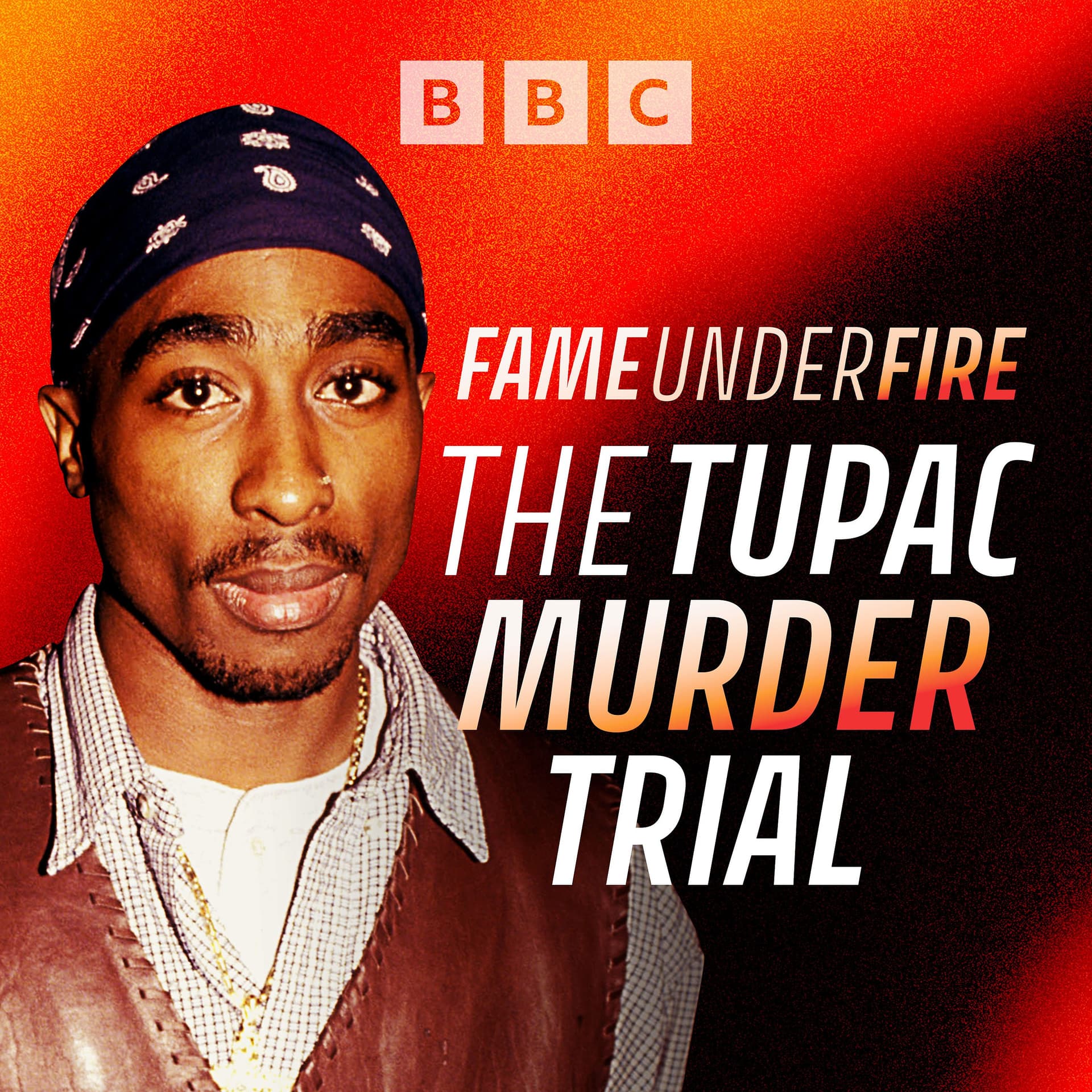
Day 2 coverage of the Tupac Shakur murder trial, focusing on courtroom conflict, retaliation/gang culture evidence, and security leadership around the 7 Sept 1996 shooting.
Guests
Cathy Kinzora, host of the self-funded podcast History of the 90s, covering the trial.
Key claims
James MacDonald (ex-mob pyro, former Club 662 security; worked for Suge Knight “unofficially”) testified as a hostile witness, said he wouldn’t “put another black man in jail,” and claimed retaliation was expected after the shooting. He also said people in Mob Piru behind Tupac’s car knew who shot and warned Compton, making Orlando Anderson and Dwayne Kifidi Davis targets. MacDonald denied Reggie Wright Jr.’s involvement, calling Tupac Death Row’s “meal ticket.” Reggie Wright Jr. testified he was head “in name only” after Suge Knight’s MGM beating led to jail, and claimed he told security not to carry firearms due to permitting/“above board” concerns.
Notable examples
heated cross-examination about “retaliation”; autopsy photos and bullet-wound cause-of-death evidence; no firsthand shooter witness so far; Tupac allegedly took a taxi to the Mike Tyson fight because Suge didn’t pick him up; only one security guard despite a rule requiring two.
Written by AI. May contain mistakes. Listen to the episode to check what was said.
Chapters
Tap a time to open that second in VOThe Day's Courtroom Drama
0:30 to 1:06
Discussion about the explosive moments in court involving James MacDonald.
“Hello and welcome back to Fame Under Fire, the two-pack murder trial from BBC Sounds with me, Anushka Matanda-Dawati.”
Testimony of James MacDonald
1:06 to 4:40
Detailed examination of James MacDonald's testimony and its implications.
“He was someone who was running security at Club 662 on the night of the Tupac shooting.”
Implications of Retaliation and Guilt
4:40 to 6:42
Exploring the dynamics of retaliation in gang culture and implications for Keefe D.
“Are you trying to send your client to jail?”
Reggie Wright Jr.'s Involvement
6:42 to 8:56
Discussion on Reggie Wright Jr.'s potential involvement in Tupac's murder.
“he does say there were people in the entourage from Mob Piru behind Tupac's car who knew who did the shooting.”
Security and the Night of the Shooting
8:56 to 12:30
Examining the security measures in place on the night of Tupac's shooting.
“Well, he was interesting because part of it focused on who became the head of Death Row Records after Suge Knight went to jail.”
Graphic Evidence Presented
12:30 to 14:02
Discussion of the graphic autopsy evidence presented in court.
“All we knew is there was a lot of eyes on the Reggie Wright Jr.”
Courtroom Testimony and Autopsy Evidence
14:02 to 16:01
Learn about the courtroom proceedings and the graphic autopsy evidence presented.
“and she escorted the majority of them out before the pathologist came on the stand and the crime analyst came on the stand.”
Transcript
Automatic transcript. May contain errors.0:00Michael Sanft:This BBC podcast is supported by ads outside the UK.
0:30Michael Sanft:at Whole Foods Market.
0:38James McDonald:Hello and welcome back to Fame Under Fire, the two-pack murder trial from BBC Sounds with me, Anushka Matanda-Dawati. Today was pretty explosive towards the latter end. Joining me now is Cathy Kinzora, who has her own podcast, History of the 90s, which you can find anywhere you get your podcast, who's actually self-funding to be out here to cover this trial and is very dedicated to this. Today was a slower start, but my goodness, that afternoon. Let's talk about James MacDonald. Wow.
1:03Duane Davis:Yes, exactly. Things got very heated pretty quickly. He was someone who was running security at Club 662 on the night of the Tupac shooting. He worked for Suge Knight, maybe unofficially under the table, as he said, but he was running security that night. And so they brought him on to testify about what he knew about what happened that night, but it quickly became a conversation about what he knew about what happened after the shooting in the days following what happened in Compton. And he got very upset. He didn't want to talk about it. He said, point blank, I don't like Keefy Dee. I don't like this man.
1:42Duane Davis:He looked right at him and he said, but I don't want to put him to jail. I've been to jail. I don't want to put another black man in jail. And he said to Keefy Dee a couple of times, like, what is your lawyer doing when the defense was asking him questions about what happened after the shooting when everyone went back to Compton? And he said, what is your lawyer doing? Get him to stop because I don't want to say something that's going to put you in jail.
2:05James McDonald:Yeah. And we've heard a lot about gang activity in this trial because, of course, there is a gang enhancement and they're trying to establish what the culture of gangs was like. But today is the first time we've actually heard from somebody who is a self-described gangbanger, an ex-mob pyro, James McDonald. James takes a stand and almost immediately says, treat me as a hostile witness to the prosecution. I do not want to be here. I was subpoenaed. And they said they were going to hold me in contempt of court in California if I didn't turn up.
2:29Michael Sanft:Like I explained to everybody in here, you ask me something, I'm going to be honest about. You ask me something I don't want to talk about, you're going to have a problem. Treat me as a hostile witness. You're not going to talk to me and tell me, as a grown man, what I have to do up here. I'm not going to send him to prison. You are.
2:49James McDonald:Now, we'll start kind of with what the prosecution had to say. Obviously, they've got the burden of proof. They brought him onto the stand. And they're asking him questions about retaliation. They said at one point, if Tupac hit you, would you have to retaliate?
3:00Duane Davis:What did he have to say? He said, I would have killed him. I would have shot him. Tupac, because I guess there's a rumor. I hadn't heard that rumor. There's a rumor going around that Tupac may have actually clocked him at some point. Mob James, I think is what his moniker is. And he said, no, not true. If that happened, I would have shot him. He would have been dead.
3:19James McDonald:And I think this speaks to the idea that the prosecution have been trying to present from the beginning that within this culture, when somebody attacks somebody physically, there has to be retaliatory action, which they're talking about what happened at the MGM and trying to paint the picture that Keefe D absolutely had to retaliate for what happened to Orlando Anderson. But other than that, the prosecution, you know, examining the witness, talking to the witness was pretty smooth. But then Sam stands up and it gets weirdly hostile really quickly because, like you say, he's at Club 662. So what the defense are trying to do is say, you weren't anywhere near the shooting.
3:53James McDonald:So how are you relevant here? You're just another witness. You heard about what happened. But McDonald testifies pretty quickly. But everybody knew. Everybody knew. Talk to me a little bit about what happened.
4:02Duane Davis:Yeah, he said that everybody knew quickly what had happened. And within hours, people were driving back to Compton. It takes, like he said, three hours to get back home. And word was on the street about what had happened and that there was going to be retaliation for what had happened. So people, it sounded like we're like getting prepared. He said, if you're not prepared, you know, you're in trouble. You have to be prepared. So he was being pushed by the defense to give more details. And he just he wouldn't because he didn't want to implicate Sam's client. And so it was such a weird, bizarre moment because he had to say to the defense, like, hey, man, what are you trying to do?
4:41Duane Davis:Are you trying to send your client to jail? Like, don't ask me any more questions.
4:45James McDonald:But you could see what the defense were pushing for. They were pushing for him to say, I wasn't there. It's hearsay. Someone told me. Someone told the people in Compton, but we actually don't have any real witnesses to the shooting. But what ended up happening was him saying to Keefe D, I mean, guys, come on, in the middle of a courtroom, to the defendant, who he has already said he doesn't like, you need to check your lawyer. This dude is tripping. And then at one point he says, I'm not going to send you to jail. This guy is, the guy that you've hired to defend you in this court case. It was unbelievable.
5:13James McDonald:He also turned to the judge and said, am I supposed to answer this? You're asking me questions that can hurt him.
5:20Michael Sanft:And I, like I told them, I'm trying to avoid to answer the questions that they might look at me and say, something is wrong. Well, let me, let me, let me put this way. Let me help you out with this. Okay. So these people right here, what they want to know from you is, did you see who shot Tupac? I told you no. Correct. So outside of that question, right? The next question I'm asking you is, when you went back to Compton, was it like a Southside Crib that shoots a Piru blood, and then a Piru blood shoots a Southside Crib? Is that the tension that we're talking about?
5:59Michael Sanft:Do I answer this? That's a straightforward question. It's a yes or no answer.
6:04James McDonald:It got emotional towards the end because he actually then addressed Keefe D directly about why he didn't really want to be there and turning his own life around and what he's doing with his own life now.
6:13Duane Davis:Yeah, and then after court, he waited in the lobby and he eventually spoke to the defense lawyer to apologize, to say like, hey, I don't know you. I didn't mean to be hostile. I just, I didn't want to be there and I want you to know. And they seemed to shake hands and be okay. And then when he was speaking to reporters, he said he's a different man now. He's 61 years old. He's raising his grandchildren. He wants to put that life behind him. He doesn't want to have to be on the stand and talk about things that he did that he's embarrassed about or ashamed about now.
6:41James McDonald:But ultimately, it was pretty damning testimony because after the cross-examination from Samt, he does say there were people in the entourage from Mob Piru behind Tupac's car who knew who did the shooting. And they got on their walkie-talkies and they told people in Compton or they drove back and told people themselves. And after that, Orlando Anderson and Dwayne Kifidi Davis were targets in Compton.
7:02Duane Davis:Yes, that is the part that was incredibly damning. And there was no way out of that. You know, Samft may have been disappointed that that's what it came to.
7:09James McDonald:I mean, the hostility was apparent. He kept saying, just answer my question, answer my question.
7:14Duane Davis:And with with Michael Samft, the defense attorney, too, he's been very cordial so far. And he is very friendly with the witnesses and with the prosecution. So it was surprising to see him at a certain point say, like, can you just answer the question? Yes or no? What is the answer? So it was definitely a vibe change in the courtroom.
7:33James McDonald:Absolutely. But the other interesting part about McDonald's testimony was pertains to Reggie Wright Jr. And we've heard this name over and over again. Keefe D in the last couple of weeks did interviews before this trial saying, I'm pointing the finger now at Reggie Wright Jr. No longer Sean Diddy Combs, who I previously was. So we've been waiting to hear what the theory is from the defense. And they kind of skirted around it in opening statements saying this guy was working security for Suge Knight and told everybody not to carry guns. This guy's dad was in the Compton Police Department. Reggie Wright Sr.
8:02James McDonald:was in charge of the gang unit there. But when James MacDonald was asked pretty directly, did Reggie Wright Jr. have anything to do with the death of Tupac Shakur? He gave a pretty clear statement.
8:11Duane Davis:Yeah, he said absolutely not. He said there is no way he could have been involved or would have been involved because Tupac was their money ticket, their meal ticket, because he was death row records at the time. He was their biggest act. So why would you go and arrange to have him killed? so he came right out and said he does not believe that Reggie Wright had anything to do with it.
8:33James McDonald:The issue with accusing Sean Diddy Combs as Kifidi has done in the past is it's consistent with his guilt not inconsistent with his guilt. If Sean Diddy Combs ordered the killing but you carried it out you're still criminally liable so pointing the finger at Reggie Wright Jr. is a convenient defense strategy because that is inconsistent with the guilt of Kifidi and now that's kind of been eliminated by James McDonald's testimony. But then we heard from Reggie Wright himself. What did he have to say?
8:59Duane Davis:Well, he was interesting because part of it focused on who became the head of Death Row Records after Suge Knight went to jail. And he went to jail after that beating at the MGM grant that led up to the shooting because he was in violation of his probation. There's this fight. Why wasn't Reggie Wright Jr. there to stop the fight or to keep Suge out of it? That one night, conveniently, he wasn't there, and then Suge Knight ends up in jail. And who's the GM? Who becomes the head of Death Row Records? Reggie Wright Jr. does. But I thought they did a good job of making it clear that he was the head, but in name only.
9:38Duane Davis:He wasn't really having access to all the money at the company. He was just basically shuffling papers and bringing them back and forth to the attorney and to the prison where Suge Knight was serving his time, as far as his testimony anyway.
9:51James McDonald:The defense are trying to introduce this idea that Reggie Wright Jr. had a lot of control over who had security, Tupac and Suge Knight. They said at one point on the most important night for Suge Knight, you let him down. And he said, unfortunately, yes. And then they're introducing the idea that he benefited monetarily from what happened to Suge Knight and Tupac, saying, did you know that on the night of the 7th of September 1996, that death row record was valued at$500 million?
10:17Duane Davis:I mean, it just represents sort of the quality of security that was being provided. He revealed a story that Tupac ended up having to take a taxi over to the Mike Tyson fight because Shug didn't show up to pick him up. And the fact that there was only one security guard with Tupac when they had instituted a rule that there needed to be two after Tupac released his diss track against Biggie, and there was only one, that was brought up as, You're saying the most famous rapper in the world at the time, you didn't make sure he had two security guards. And he's like, well, you know, if I had have known what was going to happen that night, I would have done a better job of looking after him.
10:58James McDonald:Yeah, absolutely. I mean, we got a bit of a picture of what the security situation was from McDonald earlier saying, yeah, there was Reggie's security team, but there was also Mob Pyro and we would drag you out of the club. We'd do whatever we wanted. And then Reggie later says, I trusted the mob pyro guys. So I saw them as extra security. And Tupac was with them and Suge Knight was with them on that night. But something else that was really interesting, which was brought up in opening statements by the defense, was the fact that Reggie Wright Jr. had communicated to his security team that they should not carry firearms on the night of the 7th of September.
11:28James McDonald:And Reggie spoke to that.
11:30Duane Davis:Yeah, that was an interesting story. I don't know if it's true just by what he said was that that club, Club 662, the club that Suge Knight owned, He didn't actually own it, we learned. He was in the process of it being transferred into his name. And they had some permitting or something that they needed to do still to get it transferred over. So that particular night, their attorney had said, you know, you need to put on a good show. Everything needs to be above board because we're, you know, in the process of getting permitted. So I want you guys to, like, be on your best behavior, basically.
12:02Duane Davis:So apparently, word was sent out to Reggie's guys. no firearms tonight, nobody carry your sidearm, whatever, because we want to not have guns in the club. We want to make sure everything's above board tonight. So that was his explanation as to why no one was carrying a firearm.
12:19James McDonald:Which was really interesting because that was a big question that was set up by Sampton in opening arguments. And that question appeared to be answered today, whether there's going to be testimony that contradicts that later on down the line. All we knew is there was a lot of eyes on the Reggie Wright Jr. testimony. And it definitely, towards the end of the day, we started to see and hear from some of those people that they've been teeing us up to hear from. But the beginning of the day, there were slower moments. There were experts on the stand. We took a long time going through the MGM footage and establishing what a VHS recorder is and how it can be recorded over.
12:51James McDonald:Another interesting thing, I didn't know jury members could talk here. The jury members were cracking jokes in the middle of, you know, not knowing what a cell phone was and all this kind of stuff.
12:59Duane Davis:That's crazy. It's very interactive, this courtroom. I'm really surprised too. I'm from Canada. So the American justice system is also a little bit of a novelty for me. But I have to admit, I've never seen where jurors are allowed to ask questions during the trial. Often they're allowed during deliberations to send in questions. So yeah, no, it's been very interactive. And I think the judge has kind of set the tone of the court. And even before during jury selection, or at the end of jury selection, she said to them, like, if you want to bring in snacks, if you want to bring in a drink or stand up and stretch.
13:30Duane Davis:So there is kind of a casual atmosphere that is very surprising.
13:33James McDonald:Yeah, absolutely. At one point, the judge was like, if you can smell burning, don't worry, it's just a burnt bagel at the back of the room. And I was thinking, what the hell is going on here? But it's a weird juxtaposition because at the beginning of the day, you actually went through some very graphic photos of Tupac's body during the autopsy. Just talk to me about that.
Read the full transcript
13:52Duane Davis:Yeah, I mean, I got an indication that that's what was going to happen because there is a court worker who is sitting with the family of Tupac Shakur. There's about seven family members that are here sitting in the front row, and she escorted the majority of them out before the pathologist came on the stand and the crime analyst came on the stand. Three did remain in the courtroom, so they were there when autopsy photos were put on a courtroom monitor so everyone could see them. So it was a bit jarring, obviously. It started by showing us a green body bag with a name tag with Tupac's name on it, and, you know, the police seal.
14:29Duane Davis:And then it went straight into autopsy photos of his body, pictures of the profile, his face profile. He still had a lot of the medical equipment attached. He still had like tubes and wires from, I guess, from his ventilator and different things. But then there were up-close photos of bullet wounds and of his tattoos for identification. But the reason they were entered as evidence is the medical examiner was communicating to the jury what the cause of death was. And by showing the entrance wounds from where the bullets entered in his chest. And I guess there was one that went in his thigh up into his abdomen.
15:07Duane Davis:And she communicated that those would have been the bullet wounds that killed him.
15:11James McDonald:And she spoke about there being like two litres of blood in his lungs at some point. It was very graphic. Cause of death was bullet wounds, but manner of death ruled a homicide. But we have still yet to hear from anybody who says they witnessed the shooting firsthand. hand.
15:26Duane Davis:Yeah, we've heard from two people now who heard the shooting, one on the first day, one on the second day, but no one who actually saw, even saw the shooting. They were in the vicinity, heard the bullets or heard the gunshots, looked and saw like the other cars, you know, Suge Knight's car keeling away and the entourage pulling away as well. But no one that has testified so far has actually saw the shooting.
15:49James McDonald:Yeah. I mean, the closest thing we got was James saying there There were people who I know who saw it, but that's still secondhand. Yeah. That's still hearsay. Exactly. I mean, we'll see. We'll see what happens in the rest of this trial, but it definitely took a turn today. Thank you so much for coming and breaking that down for us.
16:02Duane Davis:My pleasure.
16:05James McDonald:That was Catherine Kinsara from History of the 90s. And that's it for this episode of Fame Under Fire, the Tupac Murder Trial, with me, Anushka Matanda-Dawati from BBC Sounds. Make sure you subscribe and turn on those push notifications because you do not want to miss a thing. We are doing daily coverage of this trial.
16:22Michael Sanft:Brian Brendan Wright, known as The Milkman, was the UK's biggest cocaine trafficker in the 1990s. There weren't many groups in the UK that could access direct into the Colombian market. When you think of a narco-trafficker,
16:36Duane Davis:you're thinking cold, calculating, likely violent.
16:40James McDonald:How did The Milkman build a transatlantic cocaine empire?
16:45Michael Sanft:We just sat down for lunch, and there's Britain's most wanted bloke.
16:48James McDonald:Gangster, the story of the milkman Why was he called the milkman?
16:53Michael Sanft:Supposedly because he always delivers Listen first on BBC Sounds
From the publisher
Day two of the trial takes a dramatic turn as James “Mob James” McDonald, a former Mob Piru member who worked security for Suge Knight, takes the stand in the Tupac Murder Trial.
Duane "Keffe D" Davis is charged with murder and accused of orchestrating Shakur's death. He has denied the charges and pleaded not guilty.
McDonald tells the court he does not want to testify and clashes repeatedly with defence lawyer Michael Sanft during a tense cross-examination.
The jury is also shown graphic autopsy photographs as a medical examiner gives evidence about Tupac’s fatal gunshot wounds.
Anoushka Mutanda-Dougherty is joined by Kathy Kenzora, host of the History of the Nineties podcast, to break down the key moments from court.
For Fame Under Fire: The Tupac Murder Trial Anoushka will be in the Las Vegas courtoom every day to bring you updates. Make sure you lock in so you don’t miss a thing.
Host: Anoushka Mutanda-Dougherty Series Producer: Louise Clarke Digital Journalist: Daniel Raza Production coordinator: Phoebe Lomas Technical Producer: Cameron Ward Editor: Clare Fordham Commissioning Producer: Adam Eland Assistant Commissioner: Chris Walsh-Heron Commissioning Editor: Rhian Roberts