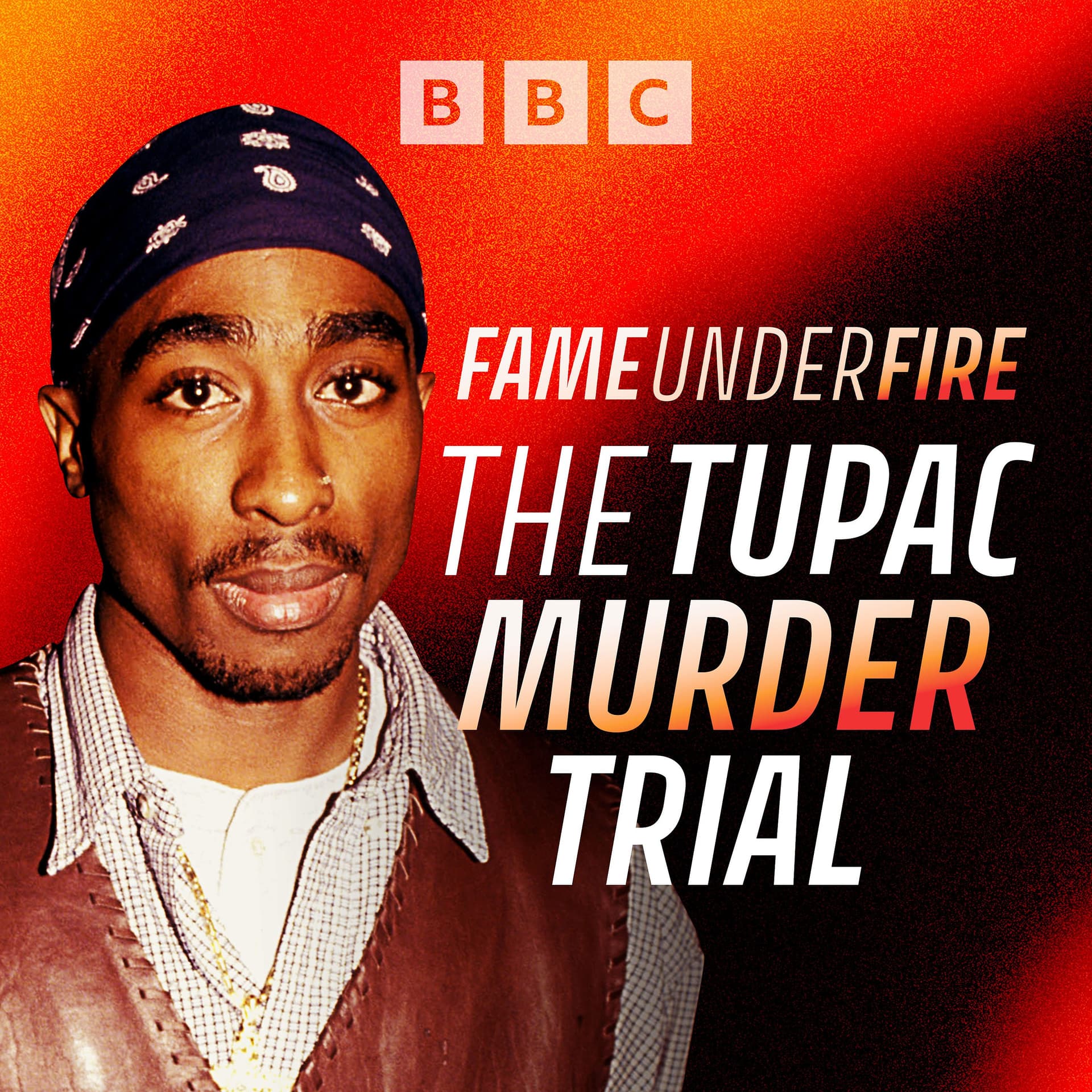
In short
Day 5 of the Tupac Shakur murder trial coverage, focusing on (1) a heated in-court dispute where Dwayne “Keffe D” Davis alleges threats to his family due to cooperation, and (2) witness testimony and recordings tying him to the 7 Sept 1996 Las Vegas shooting.
Guest backgrounds
No podcast guests appear in the transcript; host is Anushka Matanda-Dowity. In-court witnesses include Leonard Jefferson (took the famous Tupac/Suge Knight photo) and discussion of documentary consultant Greg Kading (former LAPD officer; wrote Murder Rap).
Key claims
Jefferson says the photo was not staged and corroborates police interactions. The prosecution uses BET documentary clips and 2008 proffer recordings, arguing public admissions mirror private confessions. Defense argues Davis is monetizing statements and that the documentary is influenced by Kading’s book and editing/artistic license.
Notable examples
Jefferson’s pizza trip leading to the “legendary shot”; Davis alleging his address was leaked and his family vandalized; Davis saying he first told “y’all” and never told siblings; BET clips claiming he was the “only one alive” who can tell the story; Kading’s alleged role supplying audio and stealing Tupac/Biggie files.
Written by AI. May contain mistakes. Listen to the episode to check what was said.
Chapters
Tap a time to open that second in VOCourtroom Atmosphere and Keefe D's Family Threats
0:31 to 1:25
Discussion of courtroom proceedings and Keefe D's claims about threats to his family.
“Hello, everyone, and welcome back to the Tupac murder trial from Fame Under Fire with me, Anushka Matanda-Dowity.”
Reactions and Rumors in the Courtroom
1:25 to 3:38
Exploration of the shockwaves felt in the courtroom and emerging rumors.
“So it took a little while for everybody to clock on to what was going on.”
Leonard Jefferson's Testimony
3:38 to 6:01
Testimony from Leonard Jefferson regarding the infamous Tupac photo.
“Everybody in the courtroom was sort of conversing.”
Dwayne Keefe D's Documentary Admissions
6:01 to 7:58
Discussion of Keefe D's admissions in a documentary and their implications.
“Now, it wouldn't be a day at the Tupac murder trial if we didn't hear more recordings of the defendant, Dwayne Keefee D.”
Greg Kading's Role and Controversies
7:58 to 11:10
Examination of Greg Kading's involvement in the case and his background.
“So there you have made manifest the prosecution's claim that the public confessions mirror his private admissions.”
Keefe D's Claims and the Defense Argument
11:10 to 14:01
Analysis of Keefe D's claims and the defense's strategy surrounding them.
“He's been a central figure since the beginning, the defense calling him a disgraced LAPD officer and saying, this is who your witness is?”
Keefe D's Reflections on Tupac
14:01 to 16:39
Discussion of Keefe D's statements regarding Tupac and his regrets.
“Where's the hotel booked under their name?”
Transcript
Automatic transcript. May contain errors.0:00This BBC podcast is supported by ads outside the UK.
0:31Hello, everyone, and welcome back to the Tupac murder trial from Fame Under Fire with me, Anushka Matanda-Dowity. Now, I'm here at the Regional Justice Center in Las Vegas, Nevada, to cover this trial. And mostly that means communicating to you the evidence that is shown to the court and presented to the jury. So if a conviction or when a verdict rolls around, you're not left scratching your head going, we don't remember these facts being presented. How have we ended up here? But today I actually want to start by talking about something that didn't happen in front of the jury. So in court, what happens is you all rise for the jury when they're coming in.
1:00You all rise for the jury when they're going out. They leave and then the judge will ask the court, are there any issues that we need to discuss without the presence of the jury? And today there was. Now, we didn't actually all immediately notice what was going on because the courtroom is pretty relaxed. If you were with us for the Diddy trial in the Southern District of New York, it's nothing like that. You can eat, you can talk. Someone was eating a burnt bagel at the back of the room the other day. It's a very relaxed atmosphere. So it took a little while for everybody to clock on to what was going on.
1:28But suddenly we heard the voice of the defendant, Dwayne Keefe-Dee Davis, and not for the first time on a recording. He was speaking in court and he was saying to the judge, people are attacking my family. People have come to my family home and they vandalized it. You are putting my family in danger. So there was a discussion taking place about the revelations that have happened in the case, whereby it appears that Dwayne Keith-Dee Davis has been cooperating with law enforcement for a rather long time and how this is having a real-world impact on his family members. Please rise for the joke. They keep giving out my address.
2:05They've broken my house, banalized my house, banalized my wife's car, you know what I'm saying? Because they keep giving out my address. Not any game about my sister's address. This stuff is wrong. I've heard it's going on both ways, that there's concerns both ways. They're wrong. I get beat up by the cops. The guy will attack me in here, send me to prison. This is wrong. And it's mostly this job. That's what he's alleging. His lawyer stood there while he said this to the judge, and it did get a little bit heated. In fact, the judge responded saying, well, I've actually heard this is happening on both sides.
2:45And, you know, I admonish you both, the prosecution and the defence, to tell your witnesses to not contact each other and to keep this under check. But Keefe D kept going. He was saying, this is not OK. This is not OK. The cops kill us, he said at one point. And now we have to deal with this. At which point the prosecution then jumped in and said, quote, I think he's upset that he's being prosecuted for murder. So downplaying the grievance that he'd brought up in court today, which is that he feels that his family are under threat. For the record, I think he's indicating he's upset I'm prosecuting him for murder.
3:15No, I'm not upset because you're prosecuting me. You're a danger in my family's life. Now, as we all shuffled out of the courtroom, quite shocked by what had just happened, one comment that was made by a member of the public is that this is still very real for some communities. This isn't something of yesteryear and something confined to the past. The revelations that are coming out at this trial are having real world impacts. And this really changed the tone for the day. The security staff were more on edge. Everybody in the courtroom was sort of conversing. And suddenly you hear rumors that his son was shot at, that his house was vandalized, that people have been going to his house.
3:48There was also other members of the public saying, yeah, it's been happening the other way as well. People who've testified against him, people have been going to their house. And it was a shift today because we've been focusing on what happened before. And now we're focusing on what's happening now. But let's get to the witnesses. So first up today, we had Leonard Jefferson. And if you don't know his name, he's the person who snapped the photograph of Tupac Shakur and Suge Knight on the night of the 7th of September 1996. It is a very, very famous photo. And he tells the story that he was in Vegas at the time.
4:19He went out actually to get himself a pizza. He saw Tupac, who he had a bit of a relationship with. He said hello. And Tupac said, you know, we're going to the club. You should follow us. At which point he says, yeah, I'll follow you. But let me snap a picture first and then takes that what is now a legendary shot. Now, he wasn't just there because of the photograph. He also corroborated some of the accounts that we've heard earlier on at this trial. Namely, he spoke about seeing the police officer who arrived on bicycle first and found Tupac in the car and spoke to him, who'd previously already had a conversation with him about his big gold chain.
4:50So you're starting to see how the prosecution are bringing in these different members of the evening to go, well, this person saw this person and this person saw that person. And so this interconnected web is stronger and stronger. Now, we know the defense are arguing against this. And they're saying, actually, you've got no material fact that placed Dwayne Keefe D. Davis in Las Vegas at that time. And Jefferson didn't testify that he saw Dwayne Keefe D. Davis. But the prosecution did ask him something which I thought was quite interesting. They said there are conspiracy theories flying around that that photograph was staged.
5:20In fact, that the whole thing was staged. And Jefferson said, yeah, I've got a background in film and TV, which doesn't help. And it's a conspiracy theory I've seen flying around the Internet. The internet is going to do what it's going to do, but it absolutely was not staged. And, you know, this is a gentle nod to Michael Sanft, lead counsel for the defence, who's been picking at the idea that there ever was an altercation at the mall, that there ever was a Dwayne Keefe D. Davis in Vegas at the time, who's been pulling the threads of what the prosecution are claiming are the material facts of their theory of what happened that night.
5:50And so it was an interesting nod to conspiracy theories. And it was an interesting nod to everything not being as it seems and saying it absolutely was. He snapped the picture. He saw the police officers. He saw what happened to Tupac and Suge Knight. Now, it wouldn't be a day at the Tupac murder trial if we didn't hear more recordings of the defendant, Dwayne Keefee D. Davis, talking about that night and alleging that he knows the real truth and he can communicate the real truth. This time it was in the form of a BET six part documentary series about the rise and fall of death row records. This is something that Keefee D.
6:21was part of. We heard little clips of it in opening statements. It's something the prosecution say he told the story then publicly and his public admissions mirror his private confessions that he made to the police. So we can see them building up on that theory by introducing these recordings in. We heard some of the recordings him say it was a crazy night and I was witness to everything that happened. I'm the only one who can tell you the story. Setting himself up is the surviving person who can really verify what happened to Tupac Shakur on that night.
6:54I'm the only one alive. Everyone needs to tell you the story about the two-five children. People have been pursuing me for 20 years. Newspapers, magazines. I'm coming out now to tell the story because I've got cancer. I've got nothing else to lose. All I care about now is the truth. It was a crazy night and I was a witness to everything that happened. And then he told the story of what he alleges took place on the 7th of September 1996 in Las Vegas. And I want to remind you of something the prosecution said in opening statements. They said, remarkably, you're going to hear these confessions from the defendant themselves and their public admissions mirror their private confessions.
7:31And that is what is put forward in this BET footage because they have interviews that they've done with Dwayne Keefe D. Davis specifically for that project where he's talking about what happened in Vegas. But they also had access to the 2008 recordings from that proffer agreement that we heard about yesterday. If you haven't listened to that episode, please do go and listen. That is really the bulk of the prosecution's, what they claim is their evidence. So in the BET footage we were hearing, it was oscillating between Dwayne Kifidi's admissions in the interviews they'd done with him and the proffer agreement recordings that we were hearing.
8:05So there you have made manifest the prosecution's claim that the public confessions mirror his private admissions. So we were hearing that back and forth. But it's also really important because you have to go, how the hell did they get hold of that audio? That's a proffer agreement. It's supposed to be private, as we've heard time and time again. It's supposed to be this unshakable, unbreakable thing that's entered into by law enforcement agencies and the person that they're speaking to. And as long as you tell the truth, these words will never become public and will never be used against you.
8:35And yet here they are in this footage. And that is because one of the people who was a consultant on this documentary is Greg Kading. Now, he's a former LAPD officer. I believe he's going to testify. He's somebody that Michael Samp spoke about quite a lot, actually, in opening statements to discredit him as a witness. He said he is a disgraced officer. He stole the murder files of Tupac Shakur and Biggie Smalls and then disseminated it, wrote a book about it in 2011 called Murder Rap, where he alleges that Keith Fede was the architect of the shooting that killed Tupac Shakur. And actually, this BET documentary, this six-parter, was based on and heavily influenced by Greg Kading's book.
9:14And it became clear through testimony that we got from Mario Diaz, who was the showrunner, that he had supplied the audio for those 2008 interviews that were a result of the proffer agreements. Now, in cross-examination, one of the first things I wanted to highlight was the fact that Dwayne Kefini Davis was a paid contributor. In fact, one of the witnesses testified that he received probably around$10 ,000 to$20 ,000 for his contribution for the interviews that he did. And we know that the theory from the defense is my client is, quote, I say in this every episode now, my client is talking a lot of crap.
9:45He goes on, he's monetizing this, he's trying to make some money. But essentially, he never signed anything to say, I will tell the whole truth and nothing but the truth. So he could have gone in there and said whatever he wanted. And Sampd kept drawing this out. Did he ever say, I was going to be absolutely honest in these interviews? Was there artistic license? Did he get to review it before it went out unedited to see what you were saying? Could you take liberties with the editing, put different music under it, cut up what he was saying? So he's offering that idea that, yeah, you're hearing this audio, but not only has it been highly manipulated by the producers and the directors, it's also being given by somebody who's trying to make a quick buck.
10:20But then it comes back to the idea that one of the texts that was kind of studied for this six parter was Greg Kading's book and that he was also a consultant on the project. He was there, one of the witnesses testified, to verify what Dwayne Keefe D. Davis was saying. And you can see Sanft introducing in cross-examination, this six-parter is based off of what Cading wrote. And we know Cading was trying to make money out of claiming that he had solved the murders of Tupac Shakur and Biggie Smalls. And so therefore, it's influenced by him from the beginning. And I know members of the public who've been coming into the courtroom every day have been left with the question of going, well, how does one come to steal or acquire or take with them the murder files of Tupac Shakur and Biggie Smalls, two of the biggest hippopotamists in the world?
11:05How do they do that? And then publish a book about it. Now, this is far from the end of what we're going to hear about Greg Cading. He's been a central figure since the beginning, the defense calling him a disgraced LAPD officer and saying, this is who your witness is? Prosecution? You're going to put this man on the stand to testify to the veracity of these claims, who stole these files, who published this book to make some money. What's the difference between him publishing that book to make some money and Dwayne Keefe-Dee Davis going on this BET six parter and saying whatever he needs to say to get that alleged$10 ,000 to$20 ,000?
11:37This is the constant questions that are coming from the defense. And we know this is what their argument is because they told us in opening statements. And Sam's actually closed out that cross-examination by clarifying the difference between something like a documentary and reality TV. He was offering to the jury the idea that reality TV is more naturalistic. You follow people around. You just, you film what is there. You film what is actually happening. Whereas the documentary that was being made was more interpretive, more artistic license. So therefore, once again, introducing the idea that, yes, you may hear my client saying this, but it's, you know, it's a little bit of this.
12:11It's peppered in with the artistic license of the producer director. It's peppered in with what the channel want. There's music cut under it. his words are being chopped and changed and he didn't have final approval. Now, we also heard from those interviews that were done in 2009. If you remember from the beginning, we've been talking to you about a batch that were done in 2008, a batch that were done in 2009 that were concerned with what happened in Las Vegas on the 7th of September 1996. This was really focused on a lot of the questioning was about, hey, Keefi, who did you tell about what you say you've done?
12:41You've told us now that you were the architect of this crime. You told us that in 2008. You've been very candid. You said you supplied the weapon to the back seat, that it was your nephew, Orlando Anderson, who fired the shots that took Tupac's life. We've heard this from you, but who else did you tell? And you hear him say, quote, I never told anybody that. The first time I ever told anybody it was y 'all. I always feel weird saying y 'all in an English accent, so do forgive me, but it was y 'all. I never told my brothers. He goes on to say I was going to keep it a secret my whole life, talking about what actually went down on that night that ultimately ended in those shots being fired out that white Cadillac.
13:16The first time I ever told somebody was y 'all. I didn't tell my sisters. I didn't tell my brothers. I didn't tell nobody nothing. I didn't tell nobody nothing. We did kill everybody. None of that shit, never. I've had one deep secret in my life. And this is really important. And I don't need to tell you that because the detective at the time says it in the interview. It brings it all the way back to corroboration, being able to match up what Keithy is alleging with what other people might have seen, heard, heard smell at the time. They say, quote, what we're looking for is corroboration. Someone else you told this story to.
13:49And that's really important because corroboration is kind of the word of the trial for the defense. They've been saying consistently, yes, my client has said they were sat second row at the Mike Tyson fight. Where are the pictures? Where are the ticket stubs? They've said they were in Vegas. Where's the hotel booked under their name? Where's the phone calls? Where's the evidence that can actually pinpoint them in this city at this time? And you hear the investigator, the detective saying that we're trying to corroborate what you're saying you're telling us you never told anybody about this and KFD's saying yeah and then they move on and they say well you know how do you feel about the death of Tupac how do you feel about it now and then he follows that up with I wish I'd never met Puff Daddy and if you don't know why we're referencing Diddy although he keeps being called Puffy because we're being era accurate although technically now we should call him Love I guess but if you don't know why we're bringing up Diddy please go and listen to Thursday's episode because it was all about the allegation that Sean Diddy Combs had offered a million dollars for a hit on Tupac Shakur and Suge Knight.
14:48And you can hear Keefe D reflecting on this. And Sean Diddy Combs has repeatedly denied any involvement in the death of Tupac Shakur. He's currently incarcerated on transportation for prostitution on two counts. And he was cleared of RICO and sex trafficking, but he's never been charged in relation with this murder, with this crime. Again, he made that allegation, but he's saying, I wish I'd never met Puffy Combs. I regret what happened to Tupac. And he sounded relatively calm when he made those statements. Now, this is heavily juxtaposed with what we heard in opening statements from the prosecution, where they played some audio from a jail phone call that he made in the early 2020s, where he's absolutely furious about Tupac Shakur.
15:26He's calling him a slew of slurs that we will not be repeating here and basically saying this guy's not an icon. He's not an icon. He beat up a kid referring to his nephew. And part of the prosecution's argument is that he has a visceral rage up until this day towards Tupac Shakur because of what happened to Orlando Anderson, which one witness has testified saying Orlando was the prince of that family and Dwayne Davis loved him. And therefore, the prosecution's theory is if he's this angry now in present day about what happened, imagine how angry he was on the night of the 7th of September 1996.
15:59However, in that audio we heard today, we didn't hear much of that anger from the 2009 tapes. We heard more of a reflection and more regret. Now, I wish I could tell you who's on the stand next and how much time we have left. But in this court, you can eat burritos in the courtroom. The jurors can crack jokes. They can ask questions, but no one will tell you who the next couple of witnesses are. My big question is, are we going to hear from Foxy Brown? She's on the witness list. Keefy D says that he saw her in the car with Eric St. Martin when he went to pick up the gun. She got out of the car.
16:29She was wearing a pink outfit. Surely Foxy could verify whether he was in Vegas on that night. But for today, that's it from the two-part murder trial from Fame Under Fire with me, Anushka Matanda-Dowity. And make sure you subscribe and turn on those push notifications so you never miss an episode. I'm here every day at the Las Vegas Courthouse bringing you the updates. Listen on BBC Sounds.
16:56Duane 'Keffe D' Davis:Hey, I'm Laura Whitmore. And I'm Ian Sterling. Anyone who knows us knows we love talking all things true crime. Each week we revisit cases that you won't actually believe. Murder, fraud, catfishing, heist, blackmail, brainwashing, betrayal and even a case solved by chewing gum. It's less whodunit and more. They did what? Murder They Wrote with Laura Whitmore and Ian Sterling. Listen now on BBC Sounds.
17:32It shows like Evil Genius, Good Bad Billionaire and You're Dead to Me with a subscription to BBC Podcasts Premium on Apple Podcasts. You can also enjoy a range of our podcasts ad-free with an Amazon Music subscription.
From the publisher
Duane "Keffe D" Davis speaks out in court, telling the judge his family is being threatened and that his home and his wife's car have been vandalised.
Davis is charged with murder and accused of orchestrating Shakur's death. He has denied the charges and pleaded not guilty.
Davis said the disclosure of addresses connected to his family was putting them in danger. The judge said she had heard concerns about behaviour on both sides and warned the prosecution and defence about witnesses contacting each other.
The jury also hears more recordings of Davis discussing the night Tupac Shakur was shot, including footage used in a BET documentary about Death Row Records and interviews Davis gave to investigators in 2009.
For Fame Under Fire: The Tupac Murder Trial, Anoushka is in the Las Vegas courtroom every day to bring you updates.
Make sure you lock in so you don’t miss a thing.
Host: Anoushka Mutanda-Dougherty Series Producer: Louise Clarke Digital Journalist: Daniel Raza Production Coordinator: Phoebe Lomas Technical Producer: Richard Hanniford Editor: Clare Fordham Commissioning Producer: Adam Eland Assistant Commissioner: Chris Walsh-Heron Commissioning Editor: Rhian Roberts