
 Ask ChatGPT
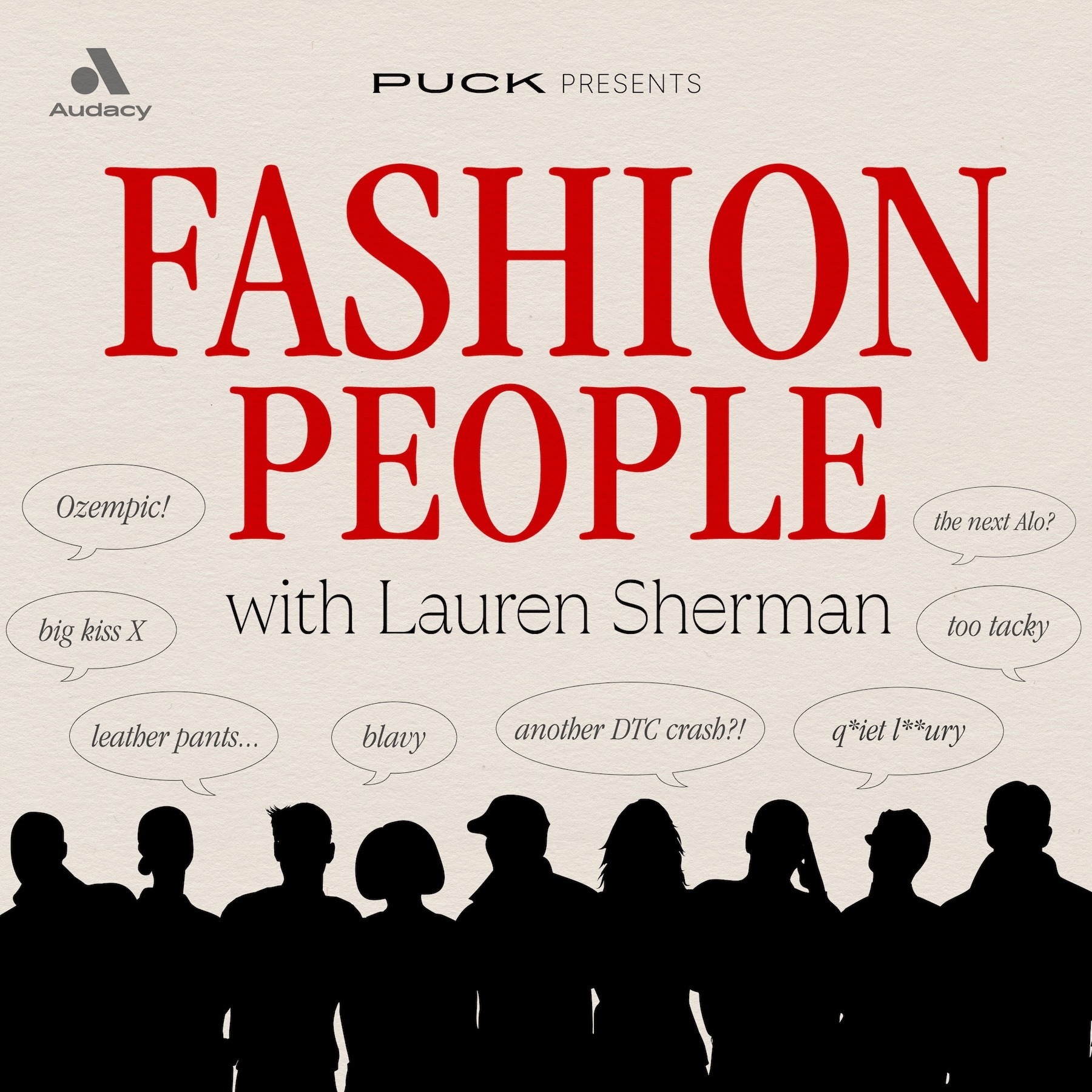

- Podcasts
- Fashion People
- Taste-Tested
In short
“Taste-Tested” explores why “good taste” has become a cultural obsession in the AI era, and how fashion taste is shaped by algorithms, editing, and human preference—especially through resale and secondhand shopping.
Guests (backgrounds)
- Elizabeth Vondergold, Chief Revenue at Poshmark; 30+ years in luxury fashion; runs The Circularity Project (designing out waste) and storytelling platform Still Got It.
- Indra Rockefeller, fashion journalist; former Wall Street Journal fashion director and chief columnist; launched the Hamptons Chronicle.
- Rory Sattram, longtime fashion journalist and editor; focuses on fashion reporting and local publishing.
Key claims
- AI-driven feeds flatten self-expression by optimizing for what’s most data-backed, not what resonates emotionally.
- Taste is less “good vs bad” and more a differentiated point of view, built through exposure and strong editing (knowing what to reject).
- Resale platforms can preserve human discovery and provenance.
Notable examples
- Poshmark’s “taste graft” uses user interactions to personalize beyond basic recommendations; search spikes (e.g., Esprit up 900%).
- Diana Vreeland’s Allure as “fashion 101” reference curation.
- Tom Sacks’ Chanel shop recreation as an example of taste-by-selection.
Written by AI. May contain mistakes.
Chapters
2:25
Fashion Events and Industry Insights
Explore industry events and concerns over sales during the holiday season.
“I did go to one of the conferences, but I spoke at it.”
4:25
Discussion on Taste and AI
Delve into the obsession with taste and the influence of AI in fashion.
“I also contemplate what it means that there are so many women getting these big jobs right now.”
7:15
Guest Introductions and Perspectives
Guests share their backgrounds and thoughts on taste in the fashion world.
“Finally don't need to ask her how to pronounce it.”
9:45
Evolving Notions of Taste
Discuss how the concept of taste has changed over time in fashion.
“And my breakfast was leftovers from my kids' second day of school breakfast.”
15:12
Exploring Authentic Self-Expression
Discussing the importance of individuality and authenticity in taste.
“Andrea, what about in all the conversations you're having?”
16:54
Pre and Post-Instagram Taste Evolution
Analyzing how social media has changed the perception of taste in fashion.
“She just started being represented by my friend Delphine Delvall and they were announcing it.”
18:04
The Role of Algorithms in Taste Development
Examining how algorithms shape personal taste and shopping experiences.
“And so much of the conversation I've had this week has been about being offline and analog.”
20:58
Creativity and AI in Fashion Choices
Discussing the creative potential of AI in curating personal style.
“Andrei, how do you feel like developing taste has changed?”
23:02
The Importance of Editing in Taste
Highlighting the significance of editing in developing and curating taste.
“And so as long as we're not passing off all that work that we have done over time to an engine, an AI model, then I guess that's what's being discussed around holding on to that element.”
24:25
Curating Retail Spaces: The Return of Personalized Shopping
Discussing the resurgence of curated shopping experiences and second-hand markets.
“And then I just got my copy of W Youth, which has a cut out like doll, paper dolls.”
Show all 14 chapters
28:00
The Rise of Vintage Shopping
Explore how vintage and second-hand shopping is becoming more popular and its cultural significance.
“And like, for example, like the, so this probably shows my age, but when I was like nine to 11, I literally only wore Esprit head to toe.”
31:48
Taste and Personal Style
Discussion on how personal taste evolves and the role of vintage in shaping individual style.
“Rory, what's your relationship to vintage, and how has it helped you develop your personal taste?”
38:30
The Future of Taste and Technology
Insights on how taste may evolve in the context of technology and consumer culture.
“Where do you think this conversation is going to evolve to?”
42:06
The Sounds of Captivity, Rescue, and Freedom
A poignant auditory representation of the experiences of bears in captivity and their rescue.

Ask about this episode
Get the gist, explore an idea or ask about something said.
 Claude
On Fashion People, what are the key points of this episode?
Searching your listeningTranscript
Automatic transcript. May contain errors.
0:00Okay, so we all know how frustrating it can be when life gets overwhelming, everything is annoying, stress starts piling up, and you decide finally to seek help only to realize how hard it is to find a licensed therapist who actually takes your insurance. We use our benefits for physical health all the time, so why should our mental health be any different? That's where Rula comes in. Rula is a healthcare company that partners with over 100 insurance plans, bringing the average copay to just$15 per session. Depending on your coverage, it could even be as low as$0. Instead of taking a one-size-fits-all approach, Rula considers your specific goals, preferences, and background to help you find a therapist from their network of over 15 ,000 providers who truly fits your needs.
0:47Whether you need individual therapy or medication management, Rula supports you every step of the way with vetted professionals. No wait lists and appointments available as soon as tomorrow. Thousands of people are already using Rula to get affordable, high-quality therapy that's actually covered by insurance. Visit Rula.com slash fashion to get started. That's R-U-L-A dot com slash fashion. You deserve mental health care that works with you, not against your budget. It's that magical time of year when Designer Shoe Warehouse becomes your Designer Shoe Wonderland and you become everyone's favorite gifter because you know that good things come in shoe boxes like cozy slippers, on-trend kicks, boots made for snow stomping, and party shoes that sparkle and shine.
1:33Plus, stocking stuffers that bring joy from head to mistletoe. Who doesn't love more joy? Find shoes for you and yours at your Designer Shoe Wonderland. Shop in-store or visit dsw.com. DSW, let us surprise you.
1:51Hello and welcome to Fashion People. I'm Lauren Sherman, writer of Puck's fashion and beauty memo, Line Sheet. And today with me on the show are Elizabeth Vondergold, Indra Rockefeller, and Rory Sattram. We're talking good taste in the age of AI. Before we get going, I wanted to remind you that if you like this podcast, you'll definitely love Puck, where I send an email called Line Sheet. If you're a fashion person, you get that reference. it's an original look at what's really going on inside the fashion and beauty industries line sheet is scoopy analytical and above all fun along with me a subscription to puck gains you access to an unmatched roster of experts reporting on powerful people and companies in entertainment media sports politics finance the art world and much more if you're interested listeners of fashion people get a discount just go to puck.news slash fashion people to join puck or start a free trial
2:53happy friday everyone hope you are having a wonderful week it was a very busy one here in paris always there's always something going on uh there were two major luxury conferences the jp morgan conference bank of america conference it's interesting to see and i have lucas silka on next week he and i talked this week um see how those conferences kind of trickled into the reporting in at the wires and at Bloomberg because I don't think there are any reporters at those conferences. I don't know. I did go to one of the conferences, but I spoke at it. So I don't I don't know if I'm able to see what I saw, but it was interesting.
3:28Anyway, the big fear right now is that sales are going to be very soft this holiday season, especially in the U.S. and Europe, where there have been protests and demonstrations, not only in Paris, but also Madrid and Milana and all these places. It's a valid concern. And I think it's probably true, like just talking to people who individual brand owners, but then also talking to people at the groups like it's not good right now, especially here where they're used to having like lots of tourists. So yes, you are seeing a lot of private sales early this season. I think like individual brands are doing more private sales.
4:03And I'm always hesitant to say anything about that, because like who knows when this stuff actually starts like you think it starts earlier every year but it doesn't actually i think this year it was like a bit usually it's like a week before for before thanksgiving or black friday this year it was a week and a half or two weeks so yeah it's real there's gonna be a lot of discounts at the end of the season i guess in line sheet i did write about this a bit uh and have some obviously proprietary reporting but molly from style analytics is back she did an amazing analysis of like how people feel about this new wave of creative director appointments feedback was interesting like some of them are obvious and other ones you're like oh you know nobody likes this person that's why they needed to leave i'm not sure how much executives listen to like consumer sentiment online but they do listen or to editorial sentiment i think it's a real mix i think if it's selling they don't care If it's not selling, they're like, well, no one likes you.
5:03You got to go. I also contemplate what it means that there are so many women getting these big jobs right now. It's an interesting debate. I've had a lot of good conversations with many of you about it. It's also an interesting time to be alive and a very interesting time to be covering the fashion industry. It's like going with Elizabeth, Indra, and Rory. I enjoyed this conversation. It happened a few months ago in New York. A big thanks to Elizabeth and Poshmark who made it happen. We had a great time. I think Elizabeth was my first guest on Fashion People or my second guest. I'm her number one fan.
5:38She's truly amazing. She's super smart. Speaking of taste, she has amazing taste. And also, it's just like she really gets shit done. And I admire it. We had this conversation during Fashion Week at Nine Orchard. And thanks to all of you who came out, too, because it was really nice. I got to meet some of you. I was running around. I'm always doing like 15 things on those nights, but it was, it was a really awesome, awesome event. And obviously thank you to the comms team of like the puck team that, that supported on this, our events and, and marketing and strategy and, and partnerships teams, but also to Gabby Katz who supported.
6:18And of course to Beth Newman, who, you know, has, I've been with her since the Jay brand days. I think that's the denim line. Don't, don't have me, Beth, if it was, that was it. No, yeah, it was Jay Brand. Whatever. Anyway, Jay Brand had a poor day and now Poshmark. So it was, it was really fun. But again, Rory and Indra are amazing. They're so smart. It's really fun to talk to them. And Elizabeth is truly the greatest of all time in so many ways. I just think the world of her. She's so smart. You should listen to everything she says and does. Let's get going. Hi, everyone. Welcome to Fashion People.
7:00I am Lauren Sherman. I am Puck's fashion correspondent. And I am here tonight to have a conversation about good taste with the one and only Elizabeth Vondergolds, Indre Rockefeller, and Rory Satrin. Finally don't need to ask her how to pronounce it. and we're going to chat about like what that means in the age of AI and huge thanks to Elizabeth who I've known forever and admired forever, not only because she is gorgeous, for partnering with us on this. I'm a huge Poshmark user and it just felt like talking about good taste in the context of secondhand shopping and figuring out your style and all that stuff made a lot of sense.
7:54So we're going to officially start the podcast now. And I guess to start, be great to hear about who you all are, what you do, what brings you to the stage and also what you had for breakfast. Elizabeth, let's start with you. Okay. First of all, it's so great to be here with Lauren and with everyone. You guys were amazing and I'm so happy and I see all these familiar faces out there so it's glad to see you. I'm the chief revenue of Poshmark. I joined the business in January and I've been in luxury fashion for three decades, over three decades now and I really you know what brought me here is that you know as I've gone through e-commerce, brick-and-mortar, marketplace, I really thought about like what's next and the circularity of Poshmark, the idea that it's people's closets and really humans behind everything that's on there and where resale is going and that we're actually a social commerce platform as well, like kind of just all came together.
8:52So what'd you have for breakfast? So I don't eat breakfast. Um, all right. So I have green tea every morning and I have a lot of supplements. And so like, yeah, look at your skin. I'm going to take them all. Yeah. We'll have another, we did do another show on that. Okay, so my answer is a medley, both what I ate for breakfast and what I do. So in terms of what I do, two hats. I have a nonprofit called The Circularity Project, and I work with designers to help them use their creative toolkit to design out waste. A lot of that is built around circularity and that idea of how do we make things that last.
9:36and then on with my other hat I run a storytelling platform called still got it and it is also about things that last but telling the story through craft repair reuse but really the human story people working with their hands people really passionate about what they do whether it's the oldest pastel maker in Paris or a really dedicated pizzaiolo which is a word I learned in Brooklyn, and that has given me so much inspiration, and it's sort of the two sides of the same story. And my breakfast was leftovers from my kids' second day of school breakfast. We're not on the right timeline yet. We're working on it, but it's like three quarters of a muffin and a half a bowl of granola yogurt.
10:24So we're getting there. A little protein, that's all that matters. And I'm a longtime fashion journalist. I started my career at Self Service Magazine in Paris, then moved to New York, worked for Opening Ceremony, ID Magazine, and most recently was at Wall Street Journal as fashion director and chief columnist. I left to become a local news entrepreneur. Really great move. So I started my own local newspaper called the Hamptons Chronicle this summer. Everybody needs to subscribe. It's so good. And if you're obsessed with quote unquote good taste, there's a lot of investigations of that within each issue.
11:10So the first question I had for all of you is why are people suddenly obsessed with taste? Like why is having good taste, and we could debate forever on what good taste actually is, but why has it become such an obsession especially elizabeth you're out in silicon valley with poshmark and obviously everyone's talking about ai but all the ai people are also talking about good taste what what's happening right now that this is kind of the center of the world is it just laura piana and quiet luxury that has forced all of this or is it something more that people are trying to grab for as AI takes over?
11:50I think it's a combination of those, but I do think with AI and this idea of this algorithm that's running everyone's life today, everything you see, everything that's shown to you is chosen by literally AI. A lot of brands are scraping the web and seeing what's trending and creating stuff versus actually creating something. So I think especially in the taste obsession, a lot of it comes from Silicon Valley because they actually are only using AI. right so they're like how do we relate to people and how do we so they're using it almost as a marketing tool whereas you know taste is so deeply personal and I think for everyone it is something that like whatever it is to you it resonates with you right and you see something or you see someone and I don't know it's like you're like look look at that look at them and maybe it's you aspire to be that or you aspire to something but I do think that whether it's you know whether it's fashion or whether it's a home thing or whether it's food like there's this like idea of something that's like aesthetically pleasing and there's an emotional resonance to it and I think people kind of miss that like things that make you like bring you joy and you feel it's special like that feeling and I think that physical feeling is what people are missing and want and that's why I think like again like that taste keeps coming up yeah Rory in your reporting over the years when did you notice that this idea of taste becoming a bigger part of it like you've written a lot about the way people dress on wall street and tiny tiny trends when did it kind of become about being good or bad or knowing more than everyone else in a way yeah i mean there have been so many waves in this conversation around taste right i was thinking about when i came up as a fashion journalists was the big street style era.
13:38So it was when Taylor Tomasi Hill started wearing these incredible outfits and Tommy Tom was taking her picture. So that was really a moment of expression, I would say sort of before social media kind of started flattening what we were wearing. So I think it's accelerated recently with all of these conversations around AI. But before that, we had Instagram and the algorithm kind of, yeah, flattening. I know we use that word a lot, but just kind of smoothing off the edges of self-expression, that's definitely something I've noticed.
14:35you. Crushed it! Head to Sierra or Sierra.com for the brands they want at the prices that let you gift them all. From athletic to athletic, Sierra's got it. Hi, I'm Niecy Nash. And I'm Dia Nash, her daughter. Most nights, you'll find us in bed, chatting, watching true crime. So on our new show, Mother Knows Murder, a Crime House original, we're letting you in on our hang. Each week, one of us brings a case and the other one hears it for the first time. And once justice is served, baby, we drag the murder. Listen and follow Mother Knows Murder available wherever you get your podcasts. I know that's right.
15:13Mm-hmm.
15:16Andrea, what about in all the conversations you're having? Because you're talking face-to-face with people all the time about all these different types of things. And how is it filtering through for you? I think the people that I'm talking to are so passionate about what they do and it that authenticity shines through in a way that I think really grabs onto something deeper for people who are in the audience so to speak and for me as someone who's fortunate enough to be able to speak to them you know I think that as we think about taste it's sort of I don't know if it's the right word or the wrong word but so be it that's the word that's kind of been pulled in because taste for me historically has had this connotation of there's like good and bad.
16:01And I don't think that's what the discussion is about, that it's about right or wrong taste or good and bad. I think it's about having differentiated point of view perhaps, and something that feels original. And perhaps in this era, we're looking for something human and different and imperfect. And with AI, I almost think about it as this process of taking something and distilling it to like the average like what is the most you know if it's choosing something a trend or whatever it is where it's had the most data points as opposed to sometimes taste or whatever that word may be that we are gravitating that we mean I think in its best sense is actually something that was super different and individual and not necessarily about right or wrong or beautiful or not but really a strong point of view that we gravitated and like shout out to Taylor who was my um co-worker at Moda because I used to go around in our Moda van and like when she'd pop out in the morning out of the hotel every day I was like I love how did you do that um and she had her completely her own sense and it was so intrinsically driven um but there's lots and lots of examples of people like that throughout you know but you'd brought her up and and I love her but I I really think it's just that like it's not the average and it's not the most data points it's really just individual.
17:23You know what's so funny? She must be, I wonder if she'll, this will definitely center her, but I swear I'm psychic because this morning I was looking at an old photo of a Raph Simmons, Jill Sanders show because a woman who is part influencer, part she does something else. She just started being represented by my friend Delphine Delvall and they were announcing it. And she re-imagined a Raph Jill Sander look. And the still, I could see Joanna Coles in it and Taylor Tomasi Hill. And I was like, I wonder how she's doing. So she's in the water. But it's interesting thinking about pre-Instagram taste and post.
18:10And so much of the conversation I've had this week has been about being offline and analog. and I went to the Tom Sacks Chanel shop yesterday. And it was yesterday, Wednesday, yes. So I went yesterday and I was blown away. And obviously that's like bootleg Chanel and handmade and created, but they were so specific about which Capto shoe they used, which bag they modeled it after. And if you, I'm sure you all know, but Tom Sacks on a 245 center recreated a Chanel shop from scratch. It's truly incredible. I was blown away. Go wait for three hours in line. I'm not going to act like I did, but I would have, I would have, or just go stand outside.
18:53It's amazing. But the jackets they picked were so specific. And that to me is taste like deciding which of the jackets in all of Chanel history to put in this dream Chanel shop. That's what having an opinion or, or what have you. But I'm curious with what you're doing now, seeing people online and Poshmark's obviously the internet, but it's very analog in terms of the interactions between people. They're messaging people. It's, it feels very pure in some way. What do you see, how do you see taste being developed in the algorithm that you're, that you're watching? I think so. I mean, we, we have actually a whole new ML team, right?
19:42because we have 200 million listings on Poshmark. It's just like this incredible inventory. So we need that because as much as it's a human closet and they're pieces, we want to make sure we're like serving up to each person who's on there the right, what they're going to like. Like what are you going to want to see? And we want to do it in a way that's really, we're calling it the taste graft. And we're actually using a lot of people and the way they interact and what they're putting up and their finds as the way we sort of train it. So there's always a human element to it because you're never going to be able to do that through just pure algorithms, and you have to keep doing that.
20:18And I think that this idea of what you can find are like there's so many treasures on there, and it's like how do we make sure people understand like how are they, yes, maybe you're a very certain way that you dress, and there's a certain look that you always have your uniform, but you always want those surprises and those discoveries and things that are different, and that's something that you're like, oh, I never thought of that, right? And that's something that we are working and we're doing now. Because I think that's really important in terms of how the algorithm works. It's like making sure we're bringing you inspiration and discovery and surprises.
20:52And I think most people can serve up. Like personalization, what you looked at last and what you shopped at last. We need to go way deeper than that. And that's what we're doing. Andrei, how do you feel like developing taste has changed? because I feel like my taste is changing because I use AI sometimes for recommendations or the more you feed it. My husband, for instance, gets tons of shopping advice. And he's not, I mean, he's shopping at CHCM or whatever or Venn's Face. Like he's not just shopping at a random mall store and he's using it for recommendations on shoes and things like that because he's feeding it so much.
21:35And there's something creative in that too. Over the years, how do you think the way people develop taste has changed? So when I think of using AI for that, I'm not an expert, but it would seem to me that the writing of the prompt is part of the creativity. Knowing what you're asking for, knowing what your references are, it's almost like if you're researching and asking for help in filtering through your specific POV versus asking for it to come up with your POV. Those are two different approaches. And depending on whether you're seeking medical advice or a shoe shopping, you would treat that differently.
22:29But I think that in that writing of how you're writing, what you're asking for is probably that ability to harness some of that information that may be like discovering unknown, you know, whether it's brands that work for your husband or artisans in, you know, where I'm going and part of the world I've never been, for example, but, you know, in terms of how it's shaped, I, sometimes I think about that, like 10 ,000 hours, that Malcolm Gladwell concept, where whatever your focus area is, I believe that we can have quote unquote taste, um, in, in whatever area we sort of specialize in, But that exposure constantly to information, to choices, to inputs that we've developed as our own sort of filtering mechanisms have helped all of everyone, right, develop their own point of view and their own taste.
23:37And so as long as we're not passing off all that work that we have done over time to an engine, an AI model, then I guess that's what's being discussed around holding on to that element. and I also really think the importance of no and knowing when to say no and reject something you think of great editors sometimes the most important thing they do is what they don't want the story they kill the piece they don't go with the the the things that gets pulled off of the rack and that ability I think is is really important to hold on to too and that is something that is developed over time with a lot of experience on works not things that work and don't work so to the extent that we can hold on to that i hope we do yeah i was thinking about the putting in the work and and magazine making and looking at rory what you've done with hampton's chronicle and you've been making magazines forever but so much work has gone into these print issues that you've done and looking at all the indie magazines that were released this week, Prototype, which has, I think it's like 12 zines in one magazine.
24:59And then I just got my copy of W Youth, which has a cut out like doll, paper dolls. And one of them is Chloe Sevigny. So it's like too good. There's stickers. I was like, well, I can't wait to just look through this, but that takes a lot of work. Do you think that developing taste is about putting in work? I mean, we've always done this work of finding references. I pulled out Diana Vreeland's book, Allure, which to me is like fashion 101. If you don't have this book, you should find it. It was like a very early Tumblr or a very early Pinterest because Diana Vreeland, who had unparalleled taste pulled photos from all over the place like photos of Maasai warriors and they're juxtaposed with fashion photos and art photos and then strange little snippets of text so we've always done this exact same work but before it was a lot more laborious and now we kind of have everything at our fingertips but I agree with Andrew that it's also about editing and saying no.
26:04And when I worked at self-service, I was so shocked. I think in my first week, Ezra Petronio and Suzanne Collar just killed a story that cost probably$50 ,000 to shoot. And I didn't even know that you could do that. But I saw later that the proof was in the pudding and the magazine was so much better without that specific story. Elizabeth, how do you feel like that has shown itself in retail? I mean, I come from this world where we curated everything, right? So like, you know, we see something in my past. I saw everything six months before anyone else did. So like sometimes there's history on stuff that you know is going to work well, but sometimes you're seeing something so different, like so unexpected.
26:50And that is purely an instinct of like, I believe someone's going to love this. But we said no. I mean, you know, I mean, a lot of designers know, said no to a lot of people. so you know it takes time and you really you know when you edit a collection and you go through something like every little thing matters right like you're looking at the fabric you're looking at the cut you're looking at the buttons you're looking at the shape you're looking at all these things and you're constantly you're like it's it is this like editing and curating and um i think people miss that idea of curation too because i think everything looks the same every store looks the same everything looks the same and back in the day we had these so many amazing multi-brand like personal owner boutiques where they was like really like they knew their customer intimately and you really like really pick through like special pieces and you really curated and I think it's you see that coming back like I see that coming back like I see that coming back in stores in real life experiences you know we're working with a lot of like editors and stuff to pull curations together and people are gravitating towards it like they're really loving that you talk about these men's stores I mean those are super highly curated men's stores right like these are really special places and in resale and vintage like their specialty like there's vintage stores that like just do like a certain era of this or someone who just does like you know they're this idea of like people who collect and curate I think it's um it's you see that people are really like like loving that right now and gravitating towards it yeah yeah it feels like the rise of second hand as a, I always say this and it does sound a little bit, uh, MBA ish, but like part of the customer journey, like you're not just going to, I, when I was coming to New York this week, I was with a friend for lunch last Friday and she said, Oh, here are some shops that someone recommended.
28:41They were all vintage. Like it's not, it is, it is what people, there's something inside us like human nature where people are grabbing for second hand and obviously with circularity you're thinking about it also with social impact and all of that stuff but it all goes hand in hand like people want something real and to be able to find something that feels totally original even though there's probably thousands of them in the world but you just only see one there's something i don't know it it feels extremely instinctual or something are you how do you see the way people are shopping on the app reflecting that i i really am just very curious yeah no it's it's interesting listen there's some people who are like true thrift so they are like looking for historic archival pieces there are there's a huge group of our super, we call them the super buyers, they're like using as a business, they're using Poshmark as a business, right?
29:42But you, what you see is like what really retains value, like we see in, like we have 160, like 165 million users, so the data we see in like not only what's selling, but what people are searching for is super interesting. And like, for example, like the, so this probably shows my age, but when I was like nine to 11, I literally only wore Esprit head to toe. I could have been in Esprit, like, I don't know, poster child. But like our searches for Esprit in the past month have gone up like 900%. It's like so interesting. Why would you think that? Seeing these things. Did something happen in the culture?
30:18Well, they did something with Target or something. But it's, oh, Costco. Okay. Yeah. Costco. That's why we didn't know. Yeah. Yeah. Shout out to Maddie Kahn, who wrote a great story for the New York Times, I believe, on Costco. But you see these things happen, and it's just super... And you see you actually... And I'm sorry, I hope... And I don't mean anything to Adidas, but Sambas, August, down 35 % in searches. So you were like, oh, it's moving. Everyone's moving on. You see all of this happen. It's really interesting. And it's fascinating.
30:56A beautifully designed Squarespace website is the difference between thinking about photography school and selling your portraits online. It's the difference between giving away those cookies you just made for free and running your cookie empire. A beautifully designed Squarespace website is the difference between having a movie-reviewing hobby and a movie-reviewing career. Squarespace, because no matter what you're into, a website makes it real. Use offer code DIFFERENCE for 50 % off select plans. Terms and conditions apply. Are you ready for Brown Friday? Four Seasons is... Brown Friday? Don't you mean Black Friday?
31:32Nope. After Thanksgiving, toilets clog, sinks back up, and suddenly your plumbing's more stuffed than the turkey. Now that's Brown Friday. When Brown Friday hits, call Four Seasons. For all your plumbing needs, you know who to call. For all the right reasons, call 866-4-SEASONS.
31:58Rory, what's your relationship to vintage, and how has it helped you develop your personal taste? I remember once I saw you in a vintage collarless Armani jacket, like before the collarless Armani jackets were a thing, and I was very jealous. Yeah, I'm just thinking that, to me, the people that have great taste always manage to stay ahead of the curve, which is sort of the hard part, right? Like they know when to move on. I was very early to Zoran and it was a big part of how I was constantly looking for Zoran on eBay, on Etsy, Poshmark, all over the place. And then it became more well-known and I sort of felt like I have to know when to move on.
32:43And that's true with any kind of reference, right? Like one of my favorite photographs was always that Bruce Weber photo of Sofia Coppola's office, really messy and now it's everywhere and I'm like I still love this photo but I think it's time to move on I think true taste there's like a certain restlessness and that comes up you know whether you're searching for vintage or whether you're looking for references but you kind of have to know when to move on. Andrea what do you think? So I was thinking about Taylor again because I was going to tell a story, just to finish the story we were talking about before, is I remember when I was referencing that moment when she would get sort of in the van, we were all going off to the shows, and trying to, I was like, oh, where'd you get that, or where'd you get this, and trying to imitate that, and it just looked totally wrong on me.
33:37And I think it's so important as part of this conversation of taste, what is truly for you unique to you, like really having the confidence to, you know, if you're drawn to something and it happens to be in trend, great, that's part of you, but not to, you know, it's having that independence. And that's why I'm so drawn. I love finding at vintage shops or secondhand shops, unbranded vintage. It just gives me this element of freedom, like, oh, that is not this season Gucci or that it doesn't fall into a bucket I don't have associations it feels like this fresh start yes there is the element of it feels one of a kind which feels special and this sometimes if it's sort of imperfect that real human touch and this idea of a provenance but I always feel truly connected to those pieces because I have no preconceived notions coming into that.
34:41I'm just drawn to that piece. And that experience when I can be in a shop, I love going to other cities and going into secondhand shops. Like it is for me the best way to start sort of sightseeing because you get a sense of people's style and the sort of general culture. And, you know, every time I go to Copenhagen, like some of my favorite secondhand shops are there, but just seeing sort of the difference between what's there versus what's in Tokyo and what's in New York. You know, you have these real, you feel like you're going, you're connecting to people's provenance in a way. And I love that, that that's sort of an important part of it for me too.
35:22Just to connect to that, Kara Swisher asked Ina Garten what is taste on her podcast last week. And Ina said, it's about finding your inner voice and like pulling out your inner 10 year old, like reconnecting what did that 10 year old like and sort of sharing that joy and I think there's a lot of truth to that like what did you like when you were little and how does it connect to your style today I agree and it's interesting the idea of copying something else into find your own because Rory and I share Sofia Coppola as a and and I was just thinking about this that at some point in my life I'd be like would Sofia Coppola wear that and then I realized like I'm tackier than Sofia Coppola.
36:07Like she is not tacky at all. She always looks, and I like a little tackier and I'm totally happy with that. But you have to, it's almost like when you're young, I remember reading, is it Joan Didion who used to type out Ernest Hemingway sentences? Like to practice, don't at me if this is incorrect. but it's like a famous writer typed out another famous writer sentences to see how they were structured I think it was Joan Didion Ernest Hemingway and you you do have to sort of find the people you like and connect to what they have to be able to develop your own thing I don't know if you have any thoughts on that Elizabeth given your years of people copying you but also just like observing how consumers shop.
37:01And like you said, we were talking earlier, you can see a trend three months before anyone else because you see these searches. But in all of your work, you've experienced that. Listen, I think, again, it's really going back to, and it's interesting because we just launched our new brand campaign and it's try yourself on. And it's so much about like, yes, there's going to be trends. There's going to be people you admire. or there's going to be like celebrity whatever it is right like but it is about like how do you do it for yourself like how does this become you how do i try how do i play with fashion like how do i try different like try different looks in a way that still feels like yourself and you think you feel comfortable that idea of confidence and like being comfortable is so important um and there is you are you know there's so many things that influence you right so there are like you know that story you love, like someone chose those things, that art in that museum, like there is a curator who curated that, there's like all these, and I always say like there's always things that are going to influence you, but then it's like how do you make them your own, you know?
38:06Yeah, that's a good point. We have to wrap it up, but the one final question I have for you all, and maybe you won't have an answer because it's trend forecasting, but right now everyone is obsessed with this idea of taste. And I think it's like evolved out of COVID and people having more time to think about this stuff. And then post COVID wanting to think about it more. And also everything in our life is so easy. So you need to make some things harder. Where do you think this conversation is going to evolve to? Because people in Silicon Valley are not going to be talking about good taste in five years.
38:42So what do you think they're going to be talking about? Okay, good question. I think it's going to be, listen, I mean, because we're in Silicon Valley, so I think like innovate, it's always about innovation. I think the idea is like, what does innovation really mean? And I think people understand now in Silicon Valley that as much technology that's out there, like, and it's a consumer, like there's someone out there that you're making it for. And as long as that connection and that need and that use is that that's there, that's what it's going to be. And Steve Jobs, like, you can't, like, he was, like, he created amazing technology that had taste.
39:20Like, he was obsessed with taste. Obsessed with taste. Why do you think people carry an iPhone over almost any other phone, you know? It's like, it's just this. What do you think about the new iPhone flip book or whatever? I know, my husband was like, what do you think of this? But I think that idea is, so I do think that this idea of what I like about Silicon Valley having this obsession with taste is we're finally, and this is also why I'm in Silicon Valley, everyone's like, we realize we're creating all this stuff, but we don't even know if a consumer wants it or likes it. And I think now they're like, oh no, this is for people.
39:52I mean, you understand people better. Yeah, I think the diametric opposite of all this is the handmade and the craft and the hand-drawn, which we're seeing more and more of. I think that's going to become extremely tiresome because people are going to say, I want to do something that doesn't look like AI and then automatically go toward hand knit or hand drawn. Um, so I'd love to see what's after that. I was going to say human, but I think people will be searching for what is, what makes something human. I mean, there've been some pretty scary headlines in the news around the future of humanity so fingers crossed but um just like what what is it that innately makes us human that differentiates us from these machines that are going to take over more and more and and and I think the answer to that will be a constant evolution right now it's the word taste because that's differentiated from like large data sets and how you parse through and say no, but over time, I'd like to, you know, like I'm rooting for humanity, but I'm also rooting for that keeping the things that make us human and whether that's the passions and the imperfections and the challenges and the, you know, the three, like living life in three dimensions.
41:17There's so many aspects to that. And I think that that will always be skirting around that while we're in this dialogue. Well, I'll check back with you all in five years. Thank you so much. Thank you to Elizabeth. Indre, thank you. Rory, thank you. This was awesome. You all have very good taste. And thank you all for being here. Fashion People is a presentation of Odyssey in partnership with Puck. The show is produced and edited by Molly Nugent. Special thanks to Puck co-founder John Kelly, executive editor Ben Landy, Producer Maya Tribbett And Director of Editorial Operations Gabi Grossman An additional thanks to the team at Odyssey Kelly Turner and Bob Tabador
42:06This is the sound of captivity This is the sound of rescue And this is the sound of freedom Give Armenia's captive bears a second chance by supporting International Animal Rescue. Call 508-826-1083 or search The Great Bear Rescue to learn more.
From the publisher
In this special live episode, Lauren is joined by Poshmark chief revenue officer Elizabeth von der Goltz, The Circularity Project’s Indré Rockefeller, and Hamptons Chronicle editor Rory Satran to contemplate the idea of good taste in the era of A.I.
More from Fashion People
All episodesWe use cookies.They keep VO running smoothly and help us improve it. Privacy policy